← Today in Focus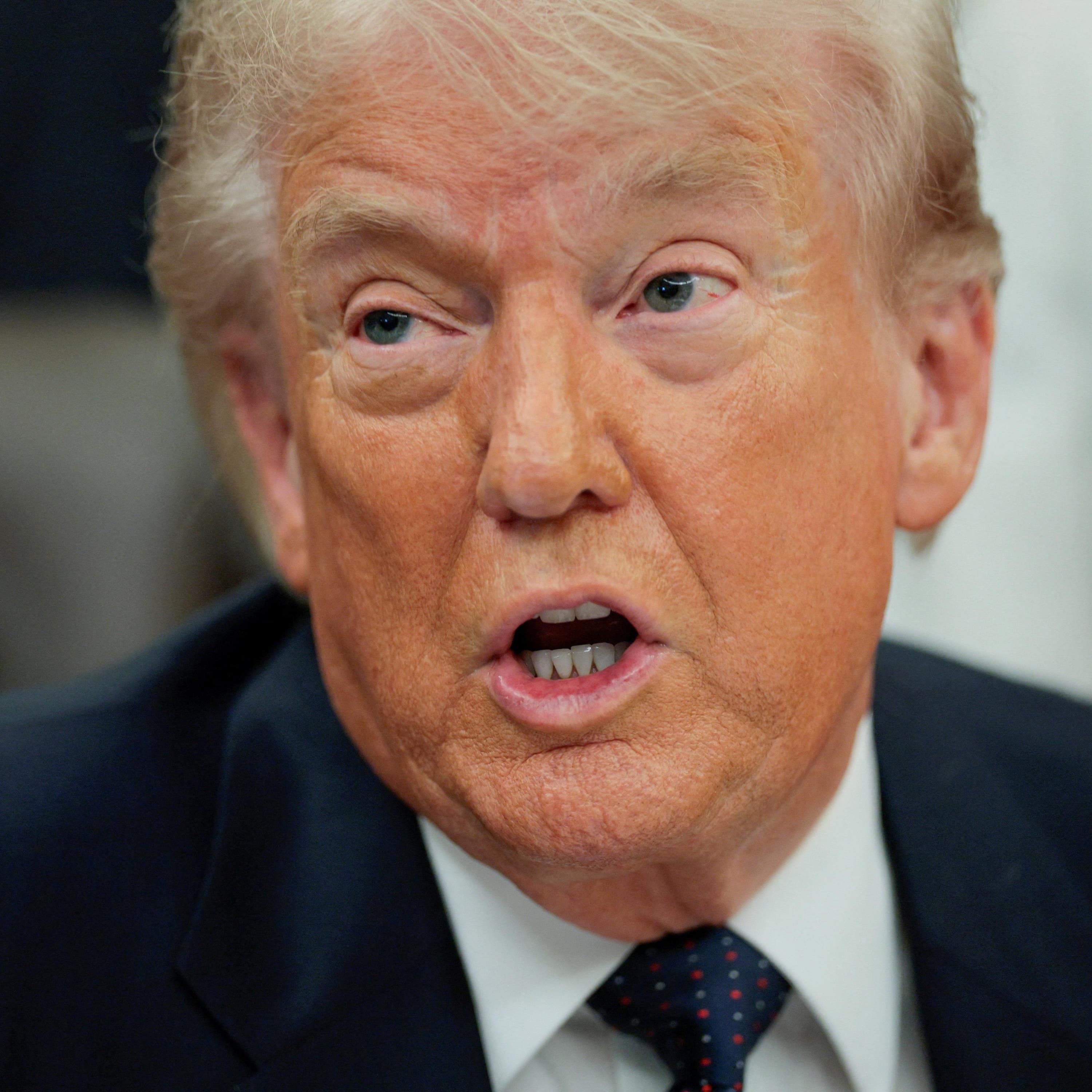
Today in Focus
US strikes Iran as Trump faces backlash over ‘disastrous’ peace deal plan - The Latest
00:11:26
The US has launched fresh strikes on Iran as Trump faces growing criticism from Republicans over a proposed plan to end the war. But could a peace deal still be imminent? Lucy Hough speaks to diplomatic editor Patrick Wintour
Loading summary
Transcript35 lines
- [00:00]
Narrator
This is the Guardian.
- [00:10]
SOFI Personal Loan Advertiser
Today we'll attempt a feat once thought impossible, overcoming high interest credit card debt. It requires merely one thing, a SOFI personal loan. With it, you could save big on interest charges by consolidating into one low fixed rate monthly payment. Defy high interest debt with with a SOFI personal loan. Visit sofi.com stunt to learn more. Loans originated by Sofi Bank NA member FDIC terms and conditions apply. NMLS 696891.
- [00:47]
Patrick Wintour
I think we are probably within 24 hours of an agreement. Trump might just at the last minute balk because there's so much political backlash to what he's agreed to do. There were words, you know, that there will be an unconditional surrender by Iran. This is not an unconditional surrender. And as ever, predicting the next steps of Donald Trump is a mug scheme.
- [01:08]
Lucy Hoff
Donald Trump is facing a backlash at home over his proposed Iran peace deal. But as the US Carries out fresh airstrikes, could an agreement still be within reach from the Guardians today? In focus this is the latest. With me, Lucy Hoff. Well, joining me is Patrick Wintour, our diplomatic editor. Patrick, over the weekend we were hearing positive noises from the White House about the shape of a deal forming, that the steps were being taken that were close, that we were within reach. But now there are fresh strikes by the US on southern Iran. What's going on and what can we read into these mixed messages?
- [01:46]
Patrick Wintour
Well, what the American Central Command has said is these were defensive strikes, which I guess are trying to mollify the Iranians about what they've done. But they've claimed, particularly down in the south near the strait, Bandar Abbas, they have str what they said was an attempt to set up missile launchers and that also there was some evidence that the Iranians were trying to lay further mines in the Strait of Hormuz. And at the moment, the Iranian reaction is, by their standards, relatively muted. And I think they're going to try and still focus on getting this deal rather than going into a kind of mode of saying the ceasefire is over and we're back to fighting.
- [02:33]
Lucy Hoff
Yeah. Because there has been an insistence from the United States that talks are still ongoing. So even with this sort of what it sounds like, unilateral action, the talks are still taking place.
- [02:44]
Patrick Wintour
Yeah, it's a bit of a caravanza. But at the moment, I think the talks are going on in Doha because one of the big issues has been around the issue of Iran's frozen assets and whether they can be unfrozen by the Americans and whether Qatar would be where I think some of the big money is, could be released. And from the Iranian point of view, it's really important that that money is released right at the start of the process, not sort of, that it's conditional on something else. They want it right up front.
- [03:14]
Lucy Hoff
And meanwhile, Trump domestically is facing a lot of criticism, even from sort of former allies, real Republican hawks. They are sort of criticizing Trump for having failed to achieve his war aims, that we're entering into a process where the deal that might emerge from this would be substantially weaker prior to the conflict. Interesting that we're hearing that quite open criticism from people within Trump's own party.
- [03:39]
Patrick Wintour
Yeah, I think it was really kind of messy landing for the proposals over Saturday and Sunday. And you have Lindsey Graham, who's probably one of his closest allies, extremely critical. Ted Cruz, the senator from Texas, also saying that this was a disaster and you know, key people on the Armed Services Committee as well, very critical. So it was a really bumpy reception. And I think the key point they're making is they feel that the whole nuclear file has been deferred to later and that the, the sole focus is trying to get the straight of four moves reopened, which had obviously been previously open before the war started. So everyone's saying, well, what was the point of all that?
- [04:21]
Lucy Hoff
Yeah, and we're hearing this sort of bombastic language from Trump claiming this as a victory. But if you listen back to his speech delivered on 28 February, the first day of this conflict, when Ayatollah Ali Khamenei, Iran's former supreme leader, was killed in US Israeli airstrike. The aim was about eliminating the imminent threat from Iran, but also Trump was calling for regime change. We are very far from that at this point. If anything, it feels like Iran has been emboldened, given that it's realized it's got this leverage of the Strait of Hormuz and also that it can withstand U S. Israeli military action.
- [04:56]
Patrick Wintour
Yeah, I think they, they do feel emboldened. I mean, if anything, the regime has changed, but it's changed into a much more security orientated, less clerical, less centrist regime than before. And I think they feel that they've managed to ride out a storm, that the big deterrent that's always been hanging over them, which is an attack by America, has happened and they've survived it. So it's a kind of transformatory moment for Iran in terms of the leadership. But Trump, I think, is going to have a real job trying to sell what he's managed to negotiate so far because there's going to be awful connotations of the Barack Obama deal, whereby loads of money was given to the Iranians, and Trump was incredibly critical of that. And I don't think he's made any progress on the nuclear issues, which was the Kasus Bella, if you remember, we were told it was a very imminent threat of a nuclear strike by Iran. And even though no intelligence assessments coming out of America was endorsing that, and there were words to the effect that this will be, in fact, not to the effect, to exact words, was that there will be an unconditional surrender by Iran. This is not an unconditional surrender, no.
- [06:08]
Lucy Hoff
And indeed, there's been criticism from people within Trump's own party that this would be substantially worse than that Obama deal agreed in 2015, and that we were better off where we were around the Geneva talks prior to this conflict. But, Patrick, what are some of the other sticking points in the talks? Because we've also had a fresh wave of strikes from Israel in southern Lebanon, saying they want to crush Hezbollah. Iran is saying that Hezbollah must be included in any ceasefire deal that would reopen the Strait of Hormuz. That feels like another complicated issue to work through.
- [06:40]
Patrick Wintour
Yeah, I think, if broadly, I think there's four sort of sticking points that were being negotiated over the last few days. One was the one about the frozen assets, which were already discussed. And then you're right, the issue of whether there was going to be a full ceasefire in Lebanon. The Iranian phrase, it has to be a ceasefire on all fronts. And Israel's really kicking up very hard about that issue. And then there's a question of how the Straits of Hormuz are going to be managed in the future. The Iranian Foreign Ministry spokesman on Monday was saying, we're not seeking to impose tolls, but we are thinking of that there could be fees for navigational services. And the issue there is, are those navigational services something that you can apply for, or whether they'll be compulsory? That is, it will be atoll. And we're just. It's a distinction without a difference. We're playing on words. So that is also going to be very difficult. And then lastly, the Americans are trying to get into the agreements something on the nuclear issue to the effect that there will be the dispatch of the stockpile of highly enriched uranium. And Trump, up until yesterday, was saying it had to be exported to America, but he then switched and said he could tolerate the uranium being destroyed inside Iran. And I think what Iran is after is that it's what's called down blended, which is technical term for just basically you dilute it. So it's got the enrichment goes down to 3.67%, which is regarded as kind of what you would need for a kind of civil nuclear program. So those are the sticking points. But as of the latest, latest reports, it was the, the money issue, that is, it was holding things up and it's as much as $24 billion.
- [08:36]
Lucy Hoff
Right.
- [08:37]
Patrick Wintour
And now obviously that sounds a lot, and you, the IRGC would be buying some new gleaming weapons with that. But you've got to also bear in mind that Iran's probably foregone as much as 250 billion through this war. So it's, you know, it's a drop in the ocean and there are people inside Iran sending letters to the speaker demanding that they don't concede anything at this stage. There must be straightforward reparations and the Straits of Hormuz must remain under full Iranian control.
- [09:08]
Lucy Hoff
And meanwhile, the Strait of Hormuz remains closed, which is sending shockwaves through the global economy and will continue to do so. It feels, Patrick, like we're just stuck in some kind of stalemate given the multifaceted, complex talks that you're describing.
- [09:22]
Patrick Wintour
Well, I completely understand that if you're watching it from outside, which in a way I am as well. But the reality is that there is progress and I think there is a kind of movement towards an agreement. And the agreement is very much one framed by Iran that we're going to get the Strait of Hormuz opened, we're going to get the US Blocking blockade of Iranian ports lifted, and then we will negotiate about the nuclear issues. And that is the kind of framework in which everything is being worked on. And bit by bit, the hiccups are being dealt with. And I think we are probably within 24 hours of an agreement, Trump might just at the last minute bulk because there's so much political backlash to what he's agreed to do. And as ever, I mean, predicting the next steps of Donald Trump is a mug scheme.
- [10:10]
Lucy Hoff
It sure is. Well, Patrick, thank you so much for your time.
- [10:13]
Patrick Wintour
Pleasure.
- [10:14]
Lucy Hoff
That's it for today. My huge thanks again to Patrick Wintour, the Guardian's diplomatic editor. You can keep up with his reporting and his analysis over@theguardian.com and don't miss today's episode of our sister podcast, Science Weekly, which is exploring red light masks and whether their claims about their benefits stack up. Thanks for listening to this episode of the latest today in Focus. We're back in your feeds as usual tomorrow morning. The latest will be back tomorrow night. This episode was presented by me, Lucy Hoff. It was produced by Nada Smjunich. The senior producer was Ryan Ramgobin. The lead producer was Zoe Hitch.
- [10:46]
Kai Wright
I'm Kai Wright.
- [10:47]
Cara Sherman
I'm Cara Sherman.
- [10:48]
Kai Wright
And we are here to tell you about our new show, which is rooted in this feeling that at least I have. I know you have. Where, you know, it's kind of like when you wake up in the morning and you pick up your phone and you're just hit in the face with a fire hose of news, right?
- [11:05]
Cara Sherman
Like there's war, there's authoritarianism. Our planet is burning. I could go on and on and
- [11:11]
Kai Wright
on and on and on and on. But like, we're trying to figure out how to manage it, right? Like, how do you manage it?
- [11:15]
Cara Sherman
I manage it by leaning in and trying to learn more and trying to figure out, okay, how can I be smarter about this particular topic and who can I talk to that's going to make me feel better about it?
- [11:26]
Kai Wright
And who can tell me who's responsible for the mess that I'm reading about? So that's our mission. That's the show.
- [11:32]
Cara Sherman
Welcome to Stateside with Kai and Carter. We're a new show from the Guardian.
- [11:36]
Kai Wright
We're talking to big thinkers and the best journalists just trying to understand the world through smart conversation and honest reporting.
- [11:43]
Cara Sherman
We don't have billionaires telling us what to say.
- [11:45]
Kai Wright
Stateside with Kyan Carter is out now every Monday, Wednesday and Friday.
- [11:50]
Cara Sherman
Follow on Apple podcasts or catch us wherever you watch or listen.
- [11:54]
Lucy Hoff
This is the Guardian.
- [12:04]
SOFI Personal Loan Advertiser
Today we'll attempt a feat once thought impossible. Overcoming high interest credit card debt. It requires merely one thing. A SOFI personal loan. With it, you could save big on interest charges by consolidating into one loan. Fixed rate monthly payment. Defy high interest debt with a SOFI personal loan. Visit sofi.com stunt to learn more. Loans originated by Sofi Bank NA member FDIC terms and conditions apply. NMLS 696891 Close your eyes.
- [12:36]
Narrator
Summer smells like sunshine, fresh citrus and salty air. What if your living room could feel just like that? With Pura's new summer collection, it can restore your sense of well being with fragrances designed to move with your day. From bright, energizing mornings to soft, relaxing evenings. Make the invisible unforgettable this season. Visit pura.com to find your new favorite summer scent. Summer smells like citrus in the sun. Turn your home into a daily getaway with Pura's new summer collection. Find your flow and fragrance and explore the scents@pura.com.