← Today in Focus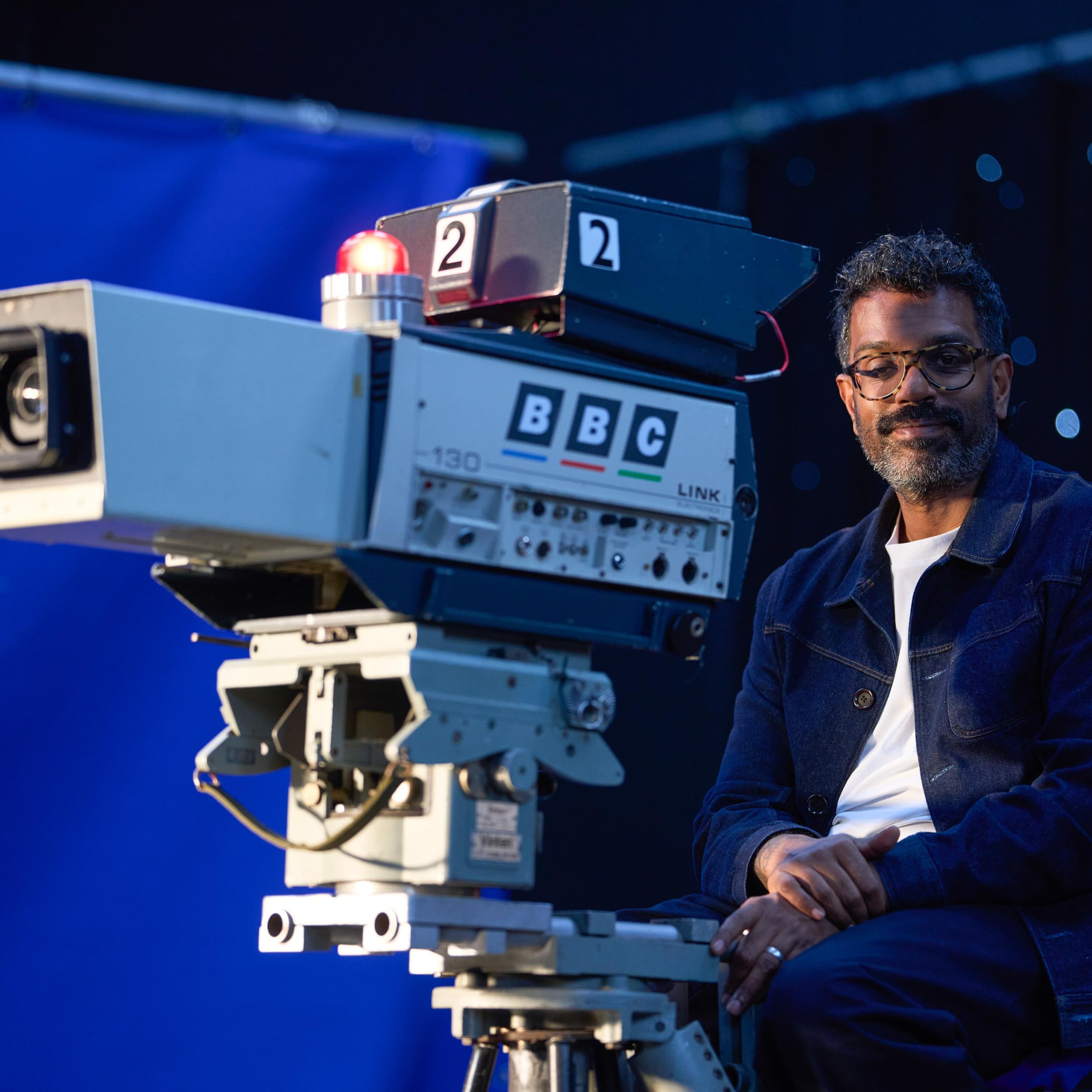
Today in Focus
What does the BBC do for you?
00:26:11
Media critic Mark Lawson discusses with Nosheen Iqbal why even the BBC director general has lost faith in the current licence fee model, and explore what options the national broadcaster has to secure funding
Loading summary
Transcript100 lines
- [00:00]
Nosheen Iqbal
This is the Guardian. Today. Why can't the BBC catch a break?
- [00:19]
Mark Lawson
From globalization to innovation sustainability to market
- [00:23]
Nosheen Iqbal
volatility, there's always more than one side to a story. Explore different perspectives on today's most important
- [00:29]
Mark Lawson
business and economic issues with the Flipside podcast from Barclays Investment Bank.
- [00:34]
Nosheen Iqbal
Hear two research analysts in a lively debate and get insights from every angle. To further inform your view, listen to the Flipside on your favorite platform.
- [00:52]
Mark Lawson
There were two big clashes on Sunday night. One was Argentina versus Spain in the World cup final. The other one, and I think will end almost as bloodly actually is between BBC management and the people who refuse to pay the license fee. Oh, it says here that the money we pay for the BBC creates over six and a half billion pounds for the economy, which actually sounds pretty good.
- [01:24]
Nosheen Iqbal
It may sound dramatic, but the number of people paying the BBC's license fee fell much faster than expected. In the last year, half a million more households have opted out of the payment. It's one of the biggest declines in its history.
- [01:37]
Mark Lawson
I mean, the BBC is in a real fight.
- [01:39]
Nosheen Iqbal
And in response, the BBC has produced an advert for itself fronted by Ramesh Ranganathan to answer the question, what
- [01:51]
Mark Lawson
has the BBC ever done for me?
- [02:02]
Nosheen Iqbal
It's a lavish four minute ride through the Bead's biggest hits. On the Doctor who traitors strictly with dozens of household names from Graham Norton to Greg James, Claudia Winkelman to Cate Blanchette, all making a nostalgic case for why the BBC matters.
- [02:26]
Mark Lawson
They introduced the nation to someone called One Fisherman in Amazon about a tiny swell.
- [02:37]
Nosheen Iqbal
The BBC is a unique proposition. A public service broadcaster that receives almost £4 billion a year in public funding and employs around 21,000 people on and offline. It's the most widely used source of news in the UK and has created some of the nation's most popular entertainment. But it's in real trouble.
- [02:56]
Mark Lawson
I think we're in a moment of real jeopardy, not just for the BBC, but for Britain and for public service broadcasting.
- [03:03]
Nosheen Iqbal
From the Guardian, I'm Noshi Nikval. Today in Focus, the BBC fights back. Mark Lawson, welcome back to Today in Focus. Now, you're a Guardian journalist and a broadcaster. You commentate frequently on the BBC, which is why we're here today. Let's start with this ad, which debuted on Sunday night during the World Cup. What has the BBC ever done for you? Who is it for?
- [03:38]
Mark Lawson
So the advert is very specifically aimed, I think, at one group of people and that's why it went out during the World cup final. There are various people who don't pay the license fee for various reasons, but there's a particular large block of people who say, I love football, I only watch football. I spend £1,500 a year to watch TV. On all the other channels, you don't have very much football at all. And so I'm not paying it. The problem with it is, is that the ad was arguing for the uniqueness of the BBC and the very same program was on ITV at exactly the same time. And if you were a serious license fee or refuse make, you would just be watching on itv.
- [04:20]
Nosheen Iqbal
Mark, you say that, but I think the BBC could fairly argue that while ITV was also showing the World Cup Final, four times as many viewers did choose to watch it on the BBC. And that says something. And you say the advert was just for Refused Nicks. And you're speaking in broad terms, however, you know, it's possible that it's also a real reminder for everyone else about why they value it, what they use, why the BBC has become an integral part of people's lives at every stage. And so understanding that, what are its most prized assets? What do people enjoy about the BBC?
- [04:59]
Mark Lawson
Well, it would be clearly the Traitors. Clearly Strictly Come Dancing. Slightly surprisingly, for many people, the Apprentice still performs spectacularly well.
- [05:12]
Nosheen Iqbal
I'm surprised by that.
- [05:14]
Mark Lawson
It does, though. It's one of the major brands. Someone would always have at least one thing that they said, well, I watched the BBC for that. You know, I meet a lot of people who would once have paid the license fee because of the art. Yeah, the Proms, certainly. I have laid relatives who paid the license fee respectively, for the Archers and for Songs of Praise. And that was a real thing. You have these very few events, essentially, the final of the Traitors, the final of Strictly Come Dancing, where you have to watch on the night, because otherwise you'll find out who's won. So you have to. But those can still get very big audiences. But there is no one area now in which the BBC produces the absolute best CBeebies. I'm just coming back into that via grandchildren. But yes, I mean, arguably. But if they were going to make the case on children's. The children won't be paying the subscription or whatever replacement household levy. Yes.
- [06:17]
Nosheen Iqbal
And the parents would prefer, perhaps potentially. And I'm giving myself away here, you know, a CBeebies to a carousel of YouTube and ads.
- [06:26]
Mark Lawson
I can see that the tide has
- [06:30]
Nosheen Iqbal
shifted quite dramatically, I would say, in my lifetime, when it comes to the BBC and the way it's talked about. I mean, there was a time where it was a given, there was something that we were just like proud of and it was cherished as this sort of national thing. And now there is very little commentary on the corporation on any side of the political spectrum that doesn't come with the words beleaguered in crisis. And I wonder if you can sort of pinpoint when that shift occurred and why it's basically so mainstream to hate on the BBC.
- [06:59]
Mark Lawson
It spent a lot of its 104 years in crisis because in fact of the funding mechanism that this curious thing that the money is effectively collected and enforced by the government and then given to the BBC to spend. But you've got to be quite saintly not to start exerting some power over the BBC. And Margaret Thatcher. Margaret Thatcher, but also Harold Wilson before that. They both exerted really terrifying political pressure on the BBC and also because they appoint the chairman and all this kind of stuff and they put people on the board and so it's always been legal in that way. However, you are right, but it's the three asses scandal, salaries streaming. So what you were asking earlier, which is perfectly fair, which is that everyone has something that connects them to the BBC in terms of programming. And I think that's true. Unfortunately now almost everyone has something that disconnects them from the BBC. And unfortunately everyone who has on one side of the ledger, this is why I paid the license fee, now has on the other side, this is why
- [08:05]
Nosheen Iqbal
I don't want to these three S's. We'll start with the first, the scandals. From the seismic abuse revelations around Jimmy Savile to their disastrous handling of the Cliff Richards story, which actually changed media law in the last handful of years. Specifically, the BBC has continually lurched from crisis to crisis. I mean, can you give me a rundown of I guess it's worst hits?
- [08:29]
Mark Lawson
Yes. There are three types of scandals. There are the police level scandals.
- [08:35]
Nosheen Iqbal
As Hugh Edwards leaves Westminster Magistrates Court following that sentencing. The suspended six month sentence for child abuse images. Former BBC presenter Scott Mills was questioned under caution in 2018 in relation to serious sexual offences against a teenage boy. The Metropolitan Police has released a statement saying a man in his 40s was investigated a decade ago. No charges were brought.
- [08:59]
Mark Lawson
And then there are the HR scandals.
- [09:01]
Nosheen Iqbal
So I think it's best for all concerned that I step down from BBC
- [09:05]
Mark Lawson
presenting duties altogether and not do next season's FA cup or World Cup. 45 out of 83 allegations made against Greg Wallace during his time on MasterChef, including one of unwelcome physical contact were found to have been substantiated. And then there are the editorial scandals. The BBC and the British Academy Film Awards BAFTA both issued apologies today after broadcasting racial slurs shouted during yesterday's award show. It happened while two prominent black actors, Michael B. Jordan and Delroy Lindo, were on stage.
- [09:36]
Nosheen Iqbal
Glastonbury 2025 and the cleanup begins. But the headlines after the festival are not about the music. Punk rap duo Bob Villain's performance on Saturday condemned as appalling hate speech by the Prime Minister chanting Free, free Palestine and then death, death to the idf, referring to the Israeli military. The BBC streamed the performance live from the Westholst stage.
- [10:06]
Mark Lawson
I think the ones that people don't talk about, I think that the Brexit result and Trump's two election victories were editorial scandals for the BBC. And there's a real problem there, which is groupthink. Some people argue at the BBC that because they very much didn't want to leave Europe or for there to be a President Trump that affected the coverage. This then leads to the Trump Panorama and there was also a newsnive report where they'd done a similar similar thing, but it got less attention. Someone had falsely edited film in order to make it look as if President Trump had said something that he didn't. That is inciting people to violence. It was gross editorial malpractice what they did.
- [10:48]
Nosheen Iqbal
Given all of that, how much damage do you think it's done to the BBC's reputation in terms of public opinion?
- [10:54]
Mark Lawson
I think all of that has done enormous damage and I think it's seen in the number of people who are refusing to pay the license fee. There are so many different reasons now that people don't want to support the BBC either they say we don't use it either. They say it's because of what they've done. The reason I mentioned Brexit and the Trump as scandals is that it led to the rise of GB news and also to the clear upward tick for LBC and other BBC. So in that sense it damaged the BBC quite badly because it led people elsewhere to look for their news.
- [11:33]
Nosheen Iqbal
Another consistent talking point is your second s salaries. And the irony here, of course, is that as a public service broadcaster, the BBC has to publish those figures and we have the right to know in the way that we wouldn't for someone being paid by Netflix or Disney or sky or what have you. Mark, why has this become a particularly sore point both in and outside the organization?
- [11:58]
Mark Lawson
It went disastrously wrong because the figures were eye watering.
- [12:04]
Nosheen Iqbal
Well, the women could see that they were being paid far less and it caused them a lot of trouble.
- [12:08]
Mark Lawson
They could certainly see that. But also the general sums were eye watering. So the BBC gives huge amounts of the license fee money to BBC studios to make its programs. They were given an exception that people employed by BBC studios didn't have to reveal that part of their salary. It's not clear how anyone ever got to setting the salary for presenting Match of the day at 1.35 million. And so this gets into another allegation against the BBC which is that they're not very good at spending our money.
- [12:41]
Nosheen Iqbal
Well, let's talk about the mechanics of the actual license fee. How much is it right now and what's the take up? Why are people so angry about it?
- [12:48]
Mark Lawson
It's now £180 and it's rising. It brings in the BBC about £4 billion, but that figure is falling. They say 94% of British people consume the BBC, but now only 80% of people pay for it. The BBC entered full crisis mode last week when the new Director general Matt Britten, said the license fee is a busted flush. Yes, we can and should be doing as much as possible on license fee collection under the current model, but it's yesterday's model, It's a busted flush, it's no longer fit for purpose. And that's why we need to make the case for the BBC and a shift of the license fee model.
- [13:29]
Nosheen Iqbal
And that's an extraordinary thing.
- [13:30]
Mark Lawson
Quite astonishing. Until then, every BBC Director General had said the license fee is the least worst option. And the crucial thing is it was half a million people stopped paying last year, 300 the year before.
- [13:45]
Nosheen Iqbal
So those numbers are just going down.
- [13:46]
Mark Lawson
Well, you have to be incredibly optimistic to think they're not. What the BBC and some statisticians would argue is that it's at risk of becoming exponential because if people see 500,000, didn't they say, well, why am I? And so it's a moment of crisis.
- [14:03]
Nosheen Iqbal
Director General Matt Britton, he took over from Tim Davy about three months ago and announced first round of cuts in June. And instead of taking that sort of salami slicing approach, he's just gone wholesale. Big cuts on entire shows. The news I would say especially has been hit hard. So could you just give us a top line on what we've actually lost and what we're losing?
- [14:25]
Mark Lawson
Yes. So the World Tonight, one of their best news programs, has gone. A lot of programs will go, but it will be done in their terms on Duplication. So if from our own correspondent on Radio 4 goes, they will say, well, we have an equivalent of that on
- [14:43]
Nosheen Iqbal
World Service, which has also had massive cuts.
- [14:47]
Mark Lawson
Yes, but it is a very, very expensive organization. I don't, you know, I would pay.
- [14:53]
Nosheen Iqbal
It's small to the, to the impact that an influence it arguably has.
- [14:58]
Mark Lawson
Arguably. Look, historically the BBC unions have been very, very powerful and they have managed to avoid any job losses. Probably that has ended. So Matt Britten has got a funding crisis and the BBC's future funding is being renegotiated with Lisa Nandi still Culture Secretary continuing. And it seems to me pretty clear that she said to them, you've got to show some willing here. I can't give you the status quo, I can't give you the license fee, I can't give you 22,000 staff. So just, you know, meet me not halfway, but maybe 10% of the way there. And I think that's what these cuts are there for.
- [15:41]
Nosheen Iqbal
What is the long term strategy here when it comes to journalism? Because one would argue that so much more investment is needed given the way that people find their news these days. I mean, isn't there an argument that the BBC needs to defend its journalism more than ever?
- [15:55]
Mark Lawson
There is that argument. The counter arguments are that in certain areas, such as children's, the BBC doesn't really have competitors in news. It has a quite astonishing number of competitors and therefore if you are forced to make cuts, then they are forced to make cuts. Whatever the unions say, they do have to do this.
- [16:26]
Nosheen Iqbal
So going back to what we discussed at the beginning of this episode, which of course is this bells and Whistles promo and, you know, the BBC wheeling through those legacy shows, the remakes, the reboots, and the stars that have been there for absolutely decades, aids blink and you'll miss some of them. It speaks to a bigger issue that the BBC is having, which is trying to attract a younger or newer audience. Mark, how does the BBC stay relevant to young people?
- [16:50]
Mark Lawson
Well, it's not just young people, I think. I mean, I hate to be depressing, but its problem is remaining relevant generally. And the reason for that is the third of my S's streaming. So the traditional BBC argument against the streamers was, yeah, it's all fine, but, you know, do you just want to watch stuff about, you know, people being shot in Kansas? We make stuff about people being shot in Rotherham. And that's, you know, it's. And that was always the argument was that streamer content was foreign. If you look at the programs that are Most talked about in recent years got the figures by all metrics, won the Bachelor awards. Adolescence, Netflix, Mr. Bates versus Post Office. ITV Rivals, Disney, Slow Horses, Apple TV, Louis Theroux in the manosphere, Netflix. Now, the point is they need to explain quite urgently to their audience and to the select committee why they didn't make any of those programs. That's really quite a big question. But the other problem for the BBC, you know, they'll struggle to hang on to Diane Morgan. I think they lost Phoebe Waller Bridge, they've lost Louis Theroux, at least for the moment, is that their biggest risk is becoming, as we say in football, a feeder club for the streamers.
- [18:08]
Nosheen Iqbal
But they've always been about apparently making and breaking the talent that's been. They're supposed to be the hot house in which British talent gets discovered and gets to make things. That is supposed to be one of the reasons the BBC exists. So if that talent then succeeds and goes elsewhere, then technically, job done.
- [18:23]
Mark Lawson
No, they've tended to keep them. And in that original, what did the BBC do for you? Ad those were people who'd been in the BBC 40, 50 years, you know, and that's much harder to bring off. Now.
- [18:33]
Nosheen Iqbal
There was also this quite astonishing headline early this year which revealed that more people had watched YouTube than they had the BBC. Must that have sent quite a shiver down the spine?
- [18:46]
Mark Lawson
Yeah, and that's why the BBC is going more and more onto YouTube. And actually one of the big rounds with its journalists was where they said it would be TikTok first now and YouTube first.
- [18:56]
Nosheen Iqbal
And this is constant chasing of the format moment.
- [18:59]
Mark Lawson
But yeah, that, that was a huge moment and. But it all comes back to the same thing, which is that when in the past and when the BBC did that original beepsie ever done for you? Ad they were the biggest beast in the jungle, to borrow from Sir David Attenborough. And they're not, they're just not. And YouTube was just another one. And also from Walking With Dinosaurs, we can see if you're surrounded by much bigger beasts and there are a lot of them, then you're in trouble, which is why they're in trouble.
- [19:32]
Nosheen Iqbal
Coming up, if the license fee model isn't the answer, how will the BBC survive?
- [19:51]
Commercial/Advertiser
Shipping, billing, admin, payroll, marketing. You're managing all the things, so why waste time sending important documents the old fashioned way? Mail and ship when you want, how you want, with stamps, dot com, print postage on demand 24, 7 and schedule pickups from your office or home. Save up to 90% with automated rate shopping. That's why over 1 million small businesses trust stamps.com go to stamps.com and use code podcast to try stamps.com risk free for 60 days. Most of us are one good deal away from finally replacing that worn out rug, fixing up the backyard or getting the bedroom we actually want. Good news, that deal's almost here. Wayfair's Black Friday in July sale. Get up to 80% off area rugs and up to 60% off outdoor and bedroom furniture. Shop Wayfair's huge selection of styles and find the piece to fit your style, budget and space, plus free shipping. Black Friday in July ends July 27th. Shop today@wayfair.com Wayfair Every style, every home.
- [20:55]
Nosheen Iqbal
Mark the future funding of the BBC. We all know it's in existential trouble over the current license fee model. What other options does the broadcaster have?
- [21:05]
Mark Lawson
You can't overestimate the significance of Matt Britton saying the license fee is a busted flush. Clearly, that's for you in government. So therefore you look at what could follow, what could replace it. Broadly, there are four alternatives, major ones. The first one is advertising. There's only a certain amount.
- [21:23]
Nosheen Iqbal
Everyone's struggling with advertising.
- [21:25]
Mark Lawson
Yeah, everyone's struggling with advertising. So to introduce a big beast to the advertising jungle would lead to extinction. Therefore, that's not going to happen. So then there is the digital license fee. Now, this is something that the BBC itself has been pushing quite heavily. Their argument is that the digital license fee should extend to include Netflix, Amazon, all the rest of them, possibly even YouTube.
- [21:52]
Nosheen Iqbal
Interesting. And how would that possibly be agreed? That the BBC gets the money for other people having the rights.
- [21:57]
Mark Lawson
That's why it's another bf, as they say, there, busted flush.
- [22:00]
Nosheen Iqbal
None of these options.
- [22:01]
Mark Lawson
That won't happen. No. And then we're getting to the two that are broadly plausible. Again, huge moment. Recently, Dr. Samir Shah, the chairman of the BBC, he came out in the most recent edition of the Sunday Times saying, we want the Burnham government to look at the household levy.
- [22:17]
Nosheen Iqbal
What is the household levy?
- [22:18]
Mark Lawson
The household levy is that every household would pay for the pbc. And there are various ways it would be done. It could be added to your electricity bill. As an argument, as it used, that
- [22:29]
Nosheen Iqbal
that will go down well.
- [22:30]
Mark Lawson
It will go down really well, won't it? You can see. So it's added to your electricity. Another popular argument from within the BBC is that it's added to your council tax. They're working backwards. They have decided whatever funds, the BBC should be universal. Everyone should Pay for it. Everyone should have access to it. They worked backwards from that. The only one that can deliver that is a household levy. You've mentioned several of the problems with this. One is that just as we're talking, Prime Minister Burnham has said that he will take VAT off electricity bill, off
- [23:05]
Nosheen Iqbal
electricity bills, replace it with the PBC.
- [23:08]
Mark Lawson
When people suddenly discover they're paying 180 or whatever for Laura Kuenssberg and others, much as they deserve it. And for the Archers, it's not going to go down well. They will then say, okay, council tax. But at the moment you have a number of councils who are run by reform. You have a number who have no overall control. You have pretty much every council where people think the council tax is too
- [23:28]
Nosheen Iqbal
high and the council services aren't good enough. I mean, just ask Birmingham in their bins.
- [23:31]
Mark Lawson
Well, quite, quite. Well, some councils will say, we're not collecting this and it's not clear what the BBC then does. And many other people will say, you're having a giraffe. They will say, I am not paying this money to go to all those BBC logs.
- [23:46]
Nosheen Iqbal
Okay, These all sound rubbish.
- [23:47]
Mark Lawson
That leaves you one, okay, which is subscription. And the BBC is completely against subscription for the reason that they say it wouldn't be universal because people would choose whether they paid for the BBC. There is a libertarian argument that maybe people should be allowed to choose whether they pay for the BBC, but that's not where the BBC is.
- [24:07]
Nosheen Iqbal
I mean, under the Wreathian principle, it's always been a bit like, you know, you should eat your greens. And that's what the BBC does.
- [24:13]
Mark Lawson
It's that. So I personally believe it's going to end up at stepped subscription, in which there will be a series of subscription levels. The first one, I think, will be available to everyone. It will be a basic package. The basic package would give you news and then you get interested. Do you throw in Eastenders or the Archers into that package? And then you have, as with all other subscription packages, you have a series where you decide what it is you want. You can also, on certain things, go pay per view, or crucially, not pay per view. So the BBC iPlayer mechanism would allow you to say, everyone can watch the World Cup Final on Sunday except those people watching on itv because we're going to make it free.
- [25:01]
Nosheen Iqbal
It's interesting what they would throw into that sort of premium package.
- [25:04]
Mark Lawson
That was really fascinating. I'd love to be on that committee. You would, but no, because you have different packages and it gets really interesting. Do you hold Back the Archers and eastenders, and particularly Strictly Come Dancer.
- [25:15]
Nosheen Iqbal
Or Traitors.
- [25:16]
Mark Lawson
Or Traitors. Or do you not? It would be really fascinating to be on that panel because there are clearly persuasive arguments for making traitors.
- [25:24]
Nosheen Iqbal
We're both making the case that we should be on that panel.
- [25:26]
Mark Lawson
Yeah, we are. But there are clearly persuasive arguments for making traitors free and making people pay for it.
- [25:32]
Commercial/Advertiser
It.
- [25:42]
Nosheen Iqbal
So, Mark, you've worked at the BBC, you understand how it works, you've observed it, you've written about it, we're talking about it. In your view, how existential is this
- [25:52]
Mark Lawson
moment for a director general? Six and a half weeks, as he kept saying into the job, to announce the license fee is a busted flush. That in itself and alone tells you how existential this is. They have to find a new funding mechanism, so it's huge. And my advice to them would be not to make it the on off switch like Louis Theroux in the ad. Louis Theroux. You know, none of this has to exist if we don't want it to. Well, no, look, I'm not saying that those are not the two options. The option will be somewhere not even in the middle, I think. I think the option will be somewhere quite recognizably close to where it is now. But they have to be realistic and not hold out for the status quo because they won't get it even with the same culture secretary.
- [26:45]
Nosheen Iqbal
Wow. I guess we'll both wait for our invitations to various BBC panels to decide on its future. Mark, thank you so much for your time.
- [26:50]
Mark Lawson
Thank you, Nosheen.
- [26:54]
Nosheen Iqbal
That was journalist and critic Mark Lawson. My thanks to him. And that's it for today. This episode is presented by me, Noshi Neqbal. It was produced by Casey McGlaw, Belinda Gurung and May Robson. Sound design is by Breen McNamara and the executive producer was Danielle Stevens. Just a quick shout out to Stateside, where this week Kai and Carter are chatting to Mary Beard about Christopher Nolan's latest box office hit, the Odyssey. Find that on YouTube or wherever you get your podcasts. We'll be back with the latest this afternoon and today in focus. We'll be back with you tomorrow morning. This is the Guardian.
- [27:49]
Commercial/Advertiser
Most of us are one good deal away from finally replacing that worn out rug, fixing up the backyard or getting the bedroom we actually want.
- [27:58]
Mark Lawson
Good news.
- [27:58]
Commercial/Advertiser
That deal's almost here. Wayfair's Black Friday in July sale get up to 80% off area rugs and up to 60% off outdoor and bedroom furniture shop. Wayfair's huge selection of styles and find the piece to fit your style, budget and space. Plus free shipping. Black Friday in July ends July 27. Shop today at Wayfair.com Wayfair Every style, every home, shipping, billing, admin, payroll, marketing. You're managing all the things, so why waste time sending important documents the old fashioned way? Mail and ship when you want, how you want with stamps.com print postage on demand 247 and schedule pickups from your office or home. Save up to 90% with automated rate shopping. That's why over 1 million small businesses trust stamps.com go to stamps.com and use code podcast to try stamps.com risk free for 60 days.
- [28:49]
Mark Lawson
He's dribbling the ball with everything on the line. He's driving down the pitch. He's facing price hikes and cuts past up carrier contracts.
- [28:55]
Commercial/Advertiser
Tries to block him.
- [28:56]
Mark Lawson
Oh, he leaves him in the dust. He's at the edge of the box. He cuts past the non stop group chat trash talk. He clears on goal. He shoots no unlimited data for $25 a month forever. Visit your local Boost Mobile store today to get unlimited data with a price that never changes. Boost mobile after 30gb, customers may experience lower speeds. Customers will pay $25 a month as long as they remain active on the Boost $25 Unlimited plan.