← Today in Focus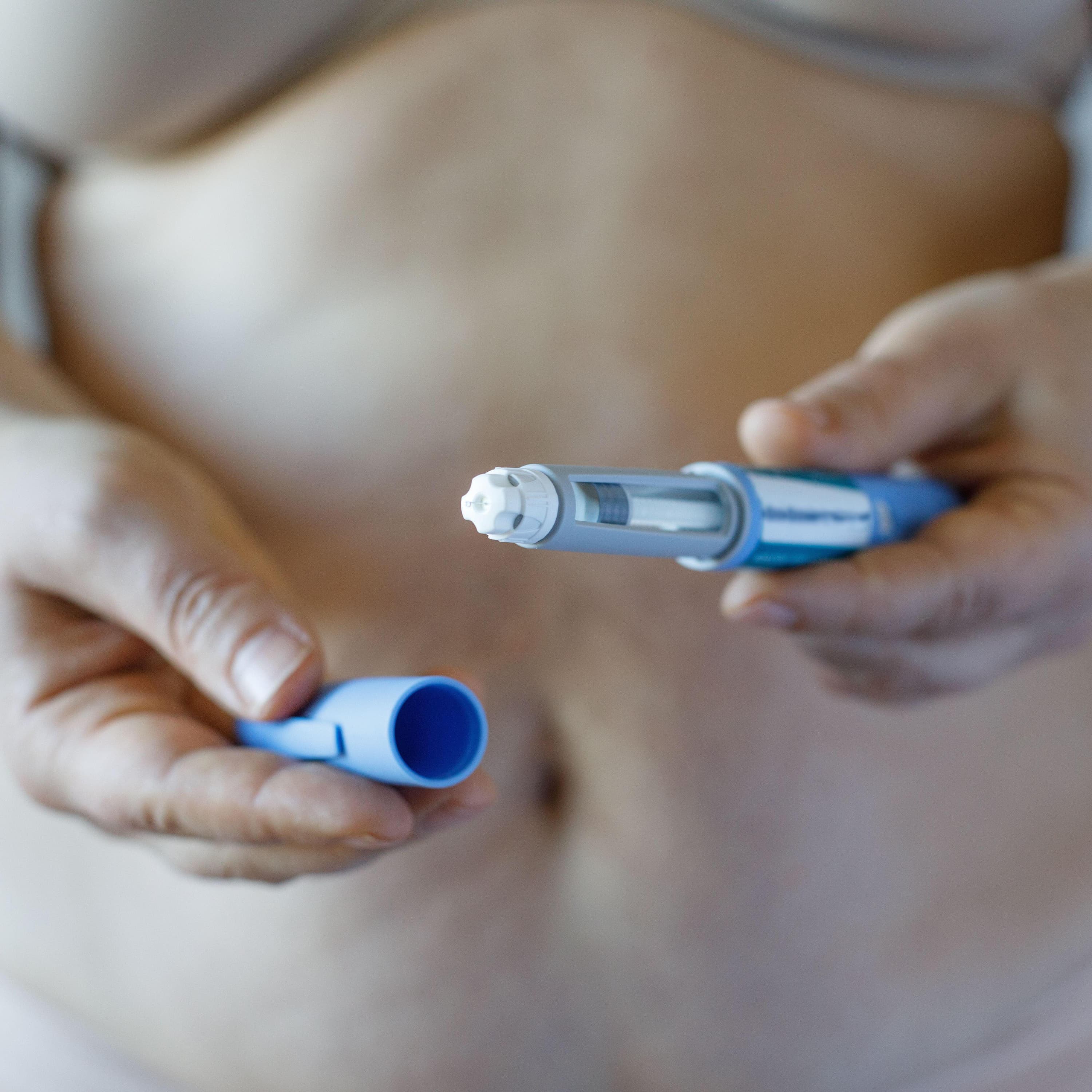
Today in Focus
What happens when you stop weight loss jabs?
00:26:48
Science editor Ian Sample talks through the dilemma facing more than a million people in the UK as the cost of the jabs jump
Loading summary
Transcript86 lines
- [00:00]
Amy Young
This is the Guardian.
- [00:09]
Helen Pitt
Today. What happens when you come off weight loss jabs?
- [00:20]
Bombas Advertiser
You buy a pair of socks, that's two socks. You buy a pair of Bombas socks, that's four socks. Because one purchased is one donated. Socks are the number one most requested clothing item in homeless shelters. So when you buy a pair of super comfortable Bomba socks, you're also donating a pair. Bombus customers have powered over 150 million donations. So Bombas would like to thank you 150 million times, but we only have like 30 seconds. Go to bombas.com and use code audio for 20% off your first purchase. That's B O-M-B-A-S.com and use code audio at checkout.
- [00:58]
Amy Young
I've always been a curvy girl. My whole life I've been a curvy girl and I kind of settled on the fact that that was just the card I and didn't matter how much I worked out, I would always be a bit bigger.
- [01:08]
Helen Pitt
This is Amy young. She's a 38 year old career coach who lives in Kent. She didn't actually mind being overweight.
- [01:16]
Amy Young
So I've always been obnoxiously body confident, I'll be really honest about that. And I kind of have to be in my line of work as well because I talk about this all the time with people.
- [01:26]
Helen Pitt
As her life got busier, her weight crept up.
- [01:29]
Amy Young
I'd stopped exercising, I'd fallen out of love with that and it had had other kind of effects on my. As I got more stressed, I got bigger, suffered burnout, all kinds of stuff.
- [01:41]
Helen Pitt
She started to feel heavy.
- [01:44]
Amy Young
What changed for me is towards the end of last year I started to notice that I had really creaky knees. So I'd go upstairs, you know, I'm only 38. I'd go upstairs and I'd be like, oh God, this doesn't quite feel right.
- [01:55]
Helen Pitt
At Christmas last year, she was looking through photos of herself on a beach on holiday and decided she wanted to make a change. And that's when the algorithms delivered a solution.
- [02:07]
Amy Young
So I, at my heaviest, January, beginning of January this year, I weighed 18 stone 9. To give you some context, I'm 5 foot 10, so I was obese tipping into the dangerous part of that, obesity. And that's when I saw these ads and I was like, let me just give it a go.
- [02:26]
Helen Pitt
Like an estimated million and a half people in Britain. She decided to give weight loss jabs a whirlwind. She was prescribed Mounjaro, paying £99amonth. And it worked a charm. She lost 50 pounds. That's three and a half stone or 23 kilograms.
- [02:46]
Amy Young
Three and a half stone in eight months is a huge amount of weight to lose and a noticeable amount of weight to lose for your health, but also how you look as well. It's really nice to fit into clothes and not have to worry about that.
- [03:03]
Helen Pitt
She was planning to stay on Mounjaro until she reached her goal weight, hoping to lose another 20 pounds. And then an email arrived out of the blue.
- [03:13]
Amy Young
Last month I got an email from my provider to say that I had three days to make a decision as to whether or not I wanted to carry on on the drug for £99, but I would have to be on Wegovy or I would have to pay £310 to stay on Mounjaro.
- [03:35]
Helen Pitt
Eli Lilly, the manufacturer of Mounjaro, announced that from 1 September, prices would rise dramatically. And suddenly patients like Amy faced a stark choice. From the Guardian, I'm Helen Pitt. Today in focus, going cold turkey from weight loss drugs. Amy, the umbrella name for these drugs is GLP1s, and a lot of people will have heard of Ozempic because that's the one that a lot of Hollywood stars seem to be on, but it's not available for weight loss in the UK yet. You started on Mounjaro earlier in the year. How was it for you?
- [04:15]
Amy Young
I started on the 2.5 milligram dose. The provider I was with would move you up gradually. Pretty significant side effects. I really struggled the sort of first 48 hours after the injection. I felt really sick, really headachy, kind of rushy in the head. So I would kind of hack the system and inject just before I went to bed.
- [04:38]
Helen Pitt
And that was for essentially two days out of every seven, every week.
- [04:42]
Amy Young
Yeah, you're feeling well, when you say it like that, you're like, what are you doing, Amy? But really, you get into this place, you know, there's forums and communities that I was a part of and where you support each other. And it's amazing how resilient people are. They just kind of navigate, navigate that for quite a long time.
- [05:00]
Helen Pitt
And how did it change your eating habits? What difference did it make to the way you thought about food as well?
- [05:06]
Amy Young
What you'll hear a lot from people is they'll talk about food noise. I sort of would say, oh, I never think about food. It's not really a problem. You know, I could go without dinner. Not, not true, not true. I would get the train and worry about whether I had a snack for a 45 minute train journey, it really changed what I wanted to eat. I would make healthier choices when we went out for dinner. So if I'd go for dinner with my husband, typically he'd be like, oh, this is a treat, I'll have a burger. But actually I would have white fish and vegetables. I wanted nourishing, light meals and food and that was very different for me. And drinking? I don't drink as much as I did before I was on the medication at all. You know, I would drink at home on a Friday night. I don't do that anymore.
- [05:47]
Helen Pitt
And were you, when you were on the medication, were you eating three meals a day? Were you skipping meals?
- [05:52]
Amy Young
Oh, never three meals a day. Honestly, I would very rarely have breakfast. So it's similar to what you could describe as intermittent fasting now, I think. Wouldn't have breakfast. I would have a very light lunch, honestly, sometimes crackers. So I'm not a nutritional blueprint for how you should live your life on GLP1 at all. And then I would have dinner, which would be very light. Two days, you know, the two days after jabbing, I would have a cup of soup. Really? And sometimes that would be all I would have for the entire day.
- [06:20]
Helen Pitt
And you just didn't fancy. You just didn't fancy anything. You weren't hungry, Just not hungry.
- [06:24]
Amy Young
And it is so fascinating. You just do not have hunger cues. Just doesn't occur.
- [06:29]
Helen Pitt
Was that weird?
- [06:30]
Amy Young
Yeah, it was. But you know what? I really welcomed the fact that I didn't have to think about something else. I kind of, I had that decision fatigue of like, oh, what shall I have for breakfast? It just didn't play into my mind. And I would find myself at my desk working. I'd get to four in the afternoon, I'd be like, oh, I feel weird. I should probably eat something. That is an alien concept to me.
- [06:51]
Helen Pitt
And not eating meant that you lost a lot of weight. Three and a half stone.
- [06:55]
Amy Young
When you look in the mirror and you can see that your face is slimmer and that you start to notice that your waist is getting a bit slimmer, your legs are skinnier. When people start to comment on things like that, you feel great, you feel amazing, you can't really deny that.
- [07:11]
Helen Pitt
And what about your creaky knees? Did you gone really?
- [07:16]
Amy Young
It's amazing. And I'm actually training for the Surrey Three Peaks, which is happening in about six weeks, which is where I walk 23 miles.
- [07:32]
Helen Pitt
And you got mounjaro privately, didn't you, like most people in Britain. And I think it was a bit cheaper because you were taking part in a clinical trial.
- [07:41]
Amy Young
So the adherence study that I was on was slightly different. So one of the things that attracted me was the price. It was 99 pounds a month for.
- [07:47]
Helen Pitt
A year for whatever dose you were on. Even when they upped it?
- [07:50]
Amy Young
Whatever dose. Okay. Yes, even when they upped it. And that's the reason I came off, is because the price has changed significantly. It was gonna go from £99amonth to between 279 to 310 pounds, which is an astronomical monthly cost.
- [08:06]
Helen Pitt
Wow. And the provider just said, sorry, there's nothing we can do about it. It's the manufacturer. Their hands are tied.
- [08:13]
Amy Young
Hands are tied. Really sorry about that. Here's your option. You either stay and you pay or you end your contract.
- [08:19]
Helen Pitt
Right. And how much notice did you have of this?
- [08:22]
Amy Young
Quite literally about three days.
- [08:23]
Helen Pitt
And what advice did you receive about coming off Manjaro?
- [08:27]
Amy Young
None. This is what's so shocking, is that a lot of people, from a lot of providers as well, not just mine, a lot of people have found that they've almost been abandoned and left. And I think one thing you're told when you're on the medication is that you will need to taper off. You will need to have support. You know, in terms of. They don't talk about the psychological support around coming off the meds. They talk really about the actual medication support. There's a lot of people, not just me, that have had to make the decision to just go off cold turkey, and you're really left on your own.
- [08:58]
Helen Pitt
Gosh, that does surprise me. How have you been trying to educate yourself on how to carry on losing weight and how to cope with essentially going cold turkey?
- [09:10]
Amy Young
A lot of reading, a lot of YouTube, just talking to people is one of the reasons that, you know, I put this video out, and it's on something like 195,000 views. There are a lot of people in the same boat. I lost three stone on my Jaro, and now I'm off it cold turkey.
- [09:28]
Helen Pitt
It got fed to me. Goodness knows what I've been Googling. I get loads of GLP1 videos. I've never taken them. But, you know, this is the sort of siren call is. Is I'm hearing. It's louder and louder. Yes. You came up my feed, and I was like, oh, she's interesting. And here you are on the show algorithm.
- [09:43]
Amy Young
It's amazing. But, yeah, so many people have been dropping into the DMs, into the comments. You know, I feel the same way. I've been abandoned or I'm trying this, or I'm actually just starting my Manjaro journey, but I want to figure out how to do it. So there's a huge community of people of varying degrees on their weight loss, weight release journey. I feel like we jumped on this bandwagon of this availability of this drug, this amazing drug that again is so great. But what we're not talking about is what happens when you come off. Because actually when you're on the drug, you don't deal with the psychological relationship you have with food and your health and your exercise. Right. You just have this gorgeous, wonderful science that's suppressing your appetite and you feel fantastic because you're losing the weight. But then when you're not on it anymore, what are your daily habits? Where's the behavior change? That's the real power? And not enough of us are talking about that. And we're going to have, I think the next sort of two to three years because you can't be on this medication forever. Next two to three years we're going to see a lot of people who are facing this kind of crisis of confidence, this re education, this retraining around nutrition and how do I live my life no longer on this medication.
- [10:54]
Helen Pitt
Yeah. And I've heard really conflicting accounts. Some people who have come off the drug seem to say that it's kind of reprogram their brain in a way that this food noise that they talk about has been turned off and that they don't fancy burger and chips anymore. How has it been for you in terms of the choices, what you hanker after, what you're hungry for?
- [11:17]
Amy Young
That's a great question. I can tell you that last week I had a couple of drinks with a friend and the next day I had a McDonald's. And I can't remember the last time I did that. And that was the old absolute being like, hey girl, have a Macca's, it'll be fine. But then what was interesting is about the rest of the day is the choices I made were really healthy because I knew it had the McDonald's and I really didn't want to continue the binge, which is pre GLP1. I would have, I really would have. And I was saying to a friend last year, I would have happily sat on the couch, honestly, and I would have had a family sized bar of chocolate. And I really can't see myself ever doing that again. I really can't. And I think that's great. And that for me is a behavior change. But this is intentional. I have to wake up every day now and choose. Yeah. How I'm going to eat, what I'm going to put in my body. Yes, you still get the cravings that will always be there. I think that's part of our human nature. But what I'm really interested in is retraining my brain on the hunger cues. And am I really hungry? Am I bored? Because you don't have that. It's like when you're on GLP1s, you're on autopilot, and then when you're not on it anymore, you're flying the plane manually and you've got to figure it all out again. Foreign.
- [12:35]
Helen Pitt
Sample. You are the Guardian's science editor. We're talking today about weight loss drugs. And I think most of us now know somebody, a friend or a family member who has been on one of these GLP1s. Do we actually know how many people are taking them?
- [12:48]
Ian Sample
It's estimated that about one and a half million people in the UK are on these weight loss jabs like Wegovy Manjaro, but the NHS is rolling them out really slowly and the bar for getting them on the NHS is pretty high. So most people are buying Mounjaro from online pharmacies after having, like a short consultation. I mean, it's probably 80%, possibly more, getting these drugs from online pharmacies.
- [13:17]
Helen Pitt
And these drugs weren't originally developed specifically to help people lose weight, were they? Can you just briefly explain what they were developed for and how they work?
- [13:25]
Ian Sample
Wegovy and Mounjaro, they both mimic a hormone in the body called GLP1. And that hormone is released in your gut when you eat food. And what GLP1 does is it stimulates the release of insulin and that takes down the blood sugar levels. Okay. And that's really helpful if you have type 2 diabetes. And that's what these drugs were developed for to help people with type 2 diabetes who don't have that sort of insulin response, who don't have control of their blood sugar levels. And what you see with these injections is that they, as well as that impact on insulin, they also slow the passage of food through your stomach, so you feel fuller for longer. And they also acts on parts of the brain that are responsible for motivation and reward. And the impact of that is that they help suppress your appetite and cravings.
- [14:22]
Amy Young
Right.
- [14:22]
Helen Pitt
And it's almost two years now since the UK medicines Regulator approved the prescription of Mounjaro for weight loss and about 18 months since it became available here commercially. And if I look around with my eyes, I can see just what a dramatic effect these drugs are having. But what does the scientific research show?
- [14:40]
Ian Sample
Oh, these drugs are having a huge impact on weight loss. I mean, one of the best trials that I've seen recently showed that people were losing about 20% of their weight loss body weight over 72 weeks. So, you know, over, you know, 14 months or what have you. And so for people with obesity, that is profound. As. As you said, you know, I think most of us will know someone by now, if not many people by now who are using these drugs. And many people say, look, it's the only way they've managed to lose weight. But the benefits are much wider than just weight loss because obesity raises your risk of so many other problems and conditions, because it's a metabolic disorder, essentially. So if you treat obesity, you're also going to have an impact on these things that obesity raises your risk for. Heart disease, stroke, type 2 diabetes, as we've already talked about, high blood pressure, cholesterol, cancer. You know, the massive list of things that obesity itself is a risk factor for.
- [15:41]
Helen Pitt
And I mean, the people in my circle who are on these drugs, they have worked absolute wonders for them, but they are all, I would say, pretty apprehensive about what will happen when they stop taking them. And for quite a lot of people in the UK at the moment, that's a very real dilemma, because the cost of Mounjaro, and of course, as we say, most people are taking this drug privately, so they have to pay for it, is going to go up steeply. Can you just tell us why that is?
- [16:07]
Ian Sample
So Eli Lilly, which manufactures Mounjaro, said that from September, the price was going to rise over here by up to 120, 70%. And that would have meant a month's supply of their highest dose going up to about 330 quid from about 120. Now, it hasn't been that bad, but the price has still gone up. And the reason that's happened is that Donald Trump has been pressuring the US drug makers to increase their prices abroad to make them more affordable for Americans back home.
- [16:43]
Helen Pitt
And what about the nhs? Are they also having to pay more? Because there are people who prescribe this, aren't they?
- [16:48]
Ian Sample
There are people prescribed these drugs, absolutely. But as I said, the bar is high for getting them on the NHS and the rollout has been slow for various reasons. But the price rise shouldn't actually affect NHS prescriptions because the health service negotiated a rate that isn't going to change. But we know that there's already this postcode lottery around who gets Mounjaro on the nhs. I think it's something like less than a quarter of the commissioning boards for NHS England have enough money to actually prescribe this drug to, like, 70% of their eligible patients. And the bar is high to be eligible.
- [17:26]
Helen Pitt
And we can anticipate that a lot of people are going to come off these drugs because of the price hikes. And we spoke to one of them earlier in the episode, Amy, who said that she couldn't afford it anymore. She was going from about 100 quid a month to about £300amonth, and. And she was only three weeks into what she called going cold turkey. But what does the science say about coming off these drugs? What happens to your body and your weight when you stop taking them?
- [17:55]
Ian Sample
The vast majority of patients who come off these drugs put weight back on, all of it. One recent trial showed that when people stopped the jabs, they put pretty much all the weight back on in 10 months. Now, there are other trials showing that people put on two thirds, three quarters of the weight over a particular time period. I think the message from them is, although there may be differences in those trials, is that a substantial amount of that weight lost tends to be regained. And there are understandable reasons for that. You know, these drugs work as long as you are taking them. So when you stop taking them, your appetite and your cravings for food return to where they were beforehand. That can clearly be pretty awful for these people, because not only, you know, obviously they've spent a lot of money on these drugs, but the. The health impact and the emotional, psychological impact of putting a lot of this weight back on is difficult, and it tends to come on pretty rapidly unless you've done the kind of preparation to really try and do your best to ensure this doesn't happen.
- [19:03]
Helen Pitt
And what preparation would that be?
- [19:06]
Ian Sample
So, for a long time, we haven't had in this country at least any sort of formal guidance around how people should deal with coming off these drugs. But last month, our National Institute for Health and Care Excellence, nice, as we call it, they issued advice to healthcare services who prescribe these drugs. And they said that you really need to monitor people for at least a year when they come off and you need to offer them support. And this means finding ways for them to ensure that their weight loss is locked in and that they maintain A kind of healthy eating and exercise when they come off. Now, look, for a lot of people on these drugs, they are swimming against a strong current when those cravings come back. And coming off the drugs suddenly, I think, is a real worry. And it certainly seems to be that you want to taper coming off and maybe taper that coming off over two or three months.
- [20:03]
Helen Pitt
And as you said, a lot of the studies so far suggest that people put back on a lot, if not all of the weight when they come off the drugs. And why might that be?
- [20:12]
Ian Sample
Well, there's a bunch of different sort of ideas around this, but. But one of the ones I find quite intriguing is if you sort of think evolutionarily in our far and sort of almost geological past, if you think, you know, the humans that would have survived would be those ones that when there was food, they could get a lot of it, they could utilize a lot of it, as in, they could extract all the calories, all the sugars, all the nutrients from it, and they could get up to a good weight so that when they go into a period of food scarcity, they survive and they survive to pass their genes on to another generation. Right. Whereas if you couldn't do that, then you would toast.
- [20:52]
Helen Pitt
Yeah.
- [20:53]
Ian Sample
Okay. So there is some thinking that our genetics, our. Our physiology is such that when we are in the habit of taking on a lot of calories, we don't want to get out of that habit. And so if you then sort of go into a sort of a state of chemical fasting, which is almost what you're doing on these weight loss drugs, when you come off them, your body's, you know, rubbing its hands again and you're thinking, okay, calories, bring it back on. And so this is hard stuff to combat. It's biological and it's, you know, probably pretty well ingrained into who we are.
- [21:28]
Helen Pitt
And it feels like we're having as a society. I don't know, two years ago, I don't think I'd heard of Ozempic or Mounjaro. And it's only really in the past year that people I know are on it. And we're having to learn so quickly how to take them, how to stop taking them. I mean, is there a lot of science ongoing? Are there lots of clinical studies that are trying to work out what the potential risks are and how to use these drugs to their best effect?
- [21:53]
Ian Sample
There are literally hundreds of clinical trials that are underway, but I'd have to say most of those are looking at what other conditions you can Use these drugs for things like heart disease, Alzheimer's addiction, cocaine, alcoholism, things like liver disease. So that is what a lot of the clinical trials are aimed at, because obviously the companies want to be able to sell them for more conditions. Right. And if you can sell these for Alzheimer's or for, you know, liver disease, for all the people who are addicted, then you've expanded your market dramatically. And I would say the other big tranche of trials that are going on at the moment are to look at the next generation of these drugs. And the ones coming down the line are either in the form of sort of an oral pill that you can pop or monthly injections rather than weekly injections. That would not only make these drugs easier to take, but they're probably going to be more effective as well.
- [22:51]
Amy Young
Mm.
- [22:52]
Helen Pitt
And knowing what, what we know now and what you know about these drugs, do you think that they're going to only get bigger and more popular?
- [23:01]
Ian Sample
Well, we're in a world where high calorie junk food is everywhere and various health policies, as much as they've existed, have not changed that. So I think for an awful lot of people, these drugs are their best hope, perhaps even their only hope, of getting to a healthy weight. Now, you know, it's not the answer to the obesity crisis. And the danger is that governments think that these drugs are and do even less in terms of policies to encourage healthy lifestyles and make it easy for people to eat healthily. But in terms of a great tool to have in the toolbox, absolutely. I mean, there's been nothing like these drugs.
- [23:43]
Helen Pitt
Coming up. Has Amy started to put the weight back on?
- [23:58]
Bombas Advertiser
I'm no tech genius, but I knew if I wanted my business to crush it, I needed a website. Now, thankfully, bluehost made it easy. I customized, optimized and monetized everything exactly how I wanted with AI. In minutes, my site was up. I couldn't believe it. The search engine tools even helped me get more site visitors. Whatever your passion project is, you can set it up with bluehost with their 30 day money back guarantee. What have you got to lose? Head to bluehost.com to start now.
- [24:30]
Babbel Advertiser
If you've used Babbel, you would. Babbel's conversation based technique teaches you useful words and phrases to get you speaking quickly about the things you actually talk about in the real world. With lessons handcrafted by over 200 language experts and voiced by real native speakers, Babbel is like having a private tutor in your pocket. Start speaking with Babbel today. Get up to 55% off your Babbel subscription right now at babbel.com acast spelled B-A B B E L.com acast rules and restrictions may apply.
- [25:10]
Helen Pitt
Amy, you have taken clearly the quite daunting decision to go cold turkey from Mounjaro. Tell me, honestly, would you still be on it if the price hadn't gone up?
- [25:20]
Amy Young
I would have, because I really wanted to see the year out. And that's the thing that's been the hardest, I think, for me is, like, the psychological contract was broken a little bit, and I'd really committed. Every New Year's, I'd do an intention, and I was like, this year is going to be different, Amy. You're going to lose the weight. Look after yourself. Be really focused. Think about your career. Do all the stuff you want to do. And for a small amount of time, I felt like that choice and that power had been taken away from me. And I've had to work really hard to reframe and think, actually, the GLP one was a tool. I'm the person that actually gets to make the change, and I get to make the active choice.
- [26:00]
Helen Pitt
And have you put the weight back on in the three weeks since you've come off the jabs?
- [26:04]
Amy Young
You know, when I first came off the GLP1, I did some calculations, and they were saying I had to have 2,500 calories a day, and I nearly had a heart attack. But I tried it for a week and a half, and I put on two pounds, and I'm like, okay, well, now actually, we're just gonna take some calories off and just try that. And I'm not gonna get upset or cross or angry or derailed. I'm just adjusting my calories. I'm going back to how it used to be before GLP1s just being really conscious about exactly nutritionally what I'm having and planning and seeing how it goes. I have to give myself credit and grace. Otherwise I will fall back into those patterns that you go into, and you end up in a binging cycle. You end up really letting yourself down.
- [26:46]
Helen Pitt
And finally, do you worry about other people coming off this medication? Because many people are not going to be able to shoulder these price increases of Mounjaro.
- [26:55]
Amy Young
I do worry, and I do think that we have a bit of a psychological crisis coming up the hill. I don't want to be dramatic, but there are a lot of people out there who feel scared, who. When this medication came into our lives, it really, really was the game changer. Who are now, through real, you know, no real will of their own, forced to make a decision between whether or not they can carry on funding it or whether they've got to do this by themselves. And we haven't spent enough time learning a what happens to you when you come off and b how you really support yourself throughout the journey, however long you're on the medication for, so that you're really successful when you transition back to, you know, your regular eating or your calorie deficit or whatever that is. Post GLP1.
- [27:51]
Helen Pitt
That was Amy Young. Thanks to her and to the Guardian Science editor Ian Sample. He is the presenter of our sister podcast Science Weekly, which you can find on all the usual platforms. And you can of course follow all of the latest science on weight loss drugs@www.theguardian.com and that's all for today. This episode was produced by Marie Lennon and George McDonagh and presented by me, Helen Pitt. Sound design was by Ross Burns and the executive producers were Huma Khalili and Sammy Kent. We'll be back tomorrow.
- [28:26]
Amy Young
This is the Guardian.
- [28:38]
Ian Sample
Change isn't coming. It's already here. Commerce is going digital and tax complexity is multiplying. Tax rules evolve, rates shift, data floods in. Vertex connects it all. A global tax compliance platform powered by tax ready data and intelligent systems. Smarter tech, continuous tax compliance built in confidence. Learn more@vertexinc.com Parle tu Francais hablas espanol Parl italiano.
- [29:11]
Babbel Advertiser
If you've used Babbel, you would Babbel's conversation based technique teaches you useful words and phrases to get you speaking quickly about the things you actually talk about in the real world. With lessons handcrafted by over 200 language experts and voiced by real native speakers, Babbel is like having a private tutor in your pocket. Start speaking with Babbel today. Get up to 55% off your Babbel subscription right now at babbel.com acasta spelled B A B-B-E-L.com acast rules and restrictions may apply.
- [29:46]
Maya and Sim
Hey, it's Maya and Sim from the Girls that Invest podcast. If you are an IT or security pro, you know managing devices, identities and applications can feel overwhelming and honestly risky. That's where Trelica by1Password comes in. It helps conquer SaaS, sprawl and shadow it by discovering every app your team uses, managed or not. With pre built app profiles you can assess, risk, manage access and even optimize your software spend. Plus IT simplifies onboarding, offboarding and compliance. All while cutting costs by eliminating unused licenses. Take the first step to better security for your team. Learn more@1Password.com SPECIALOFFER.