← Today in Focus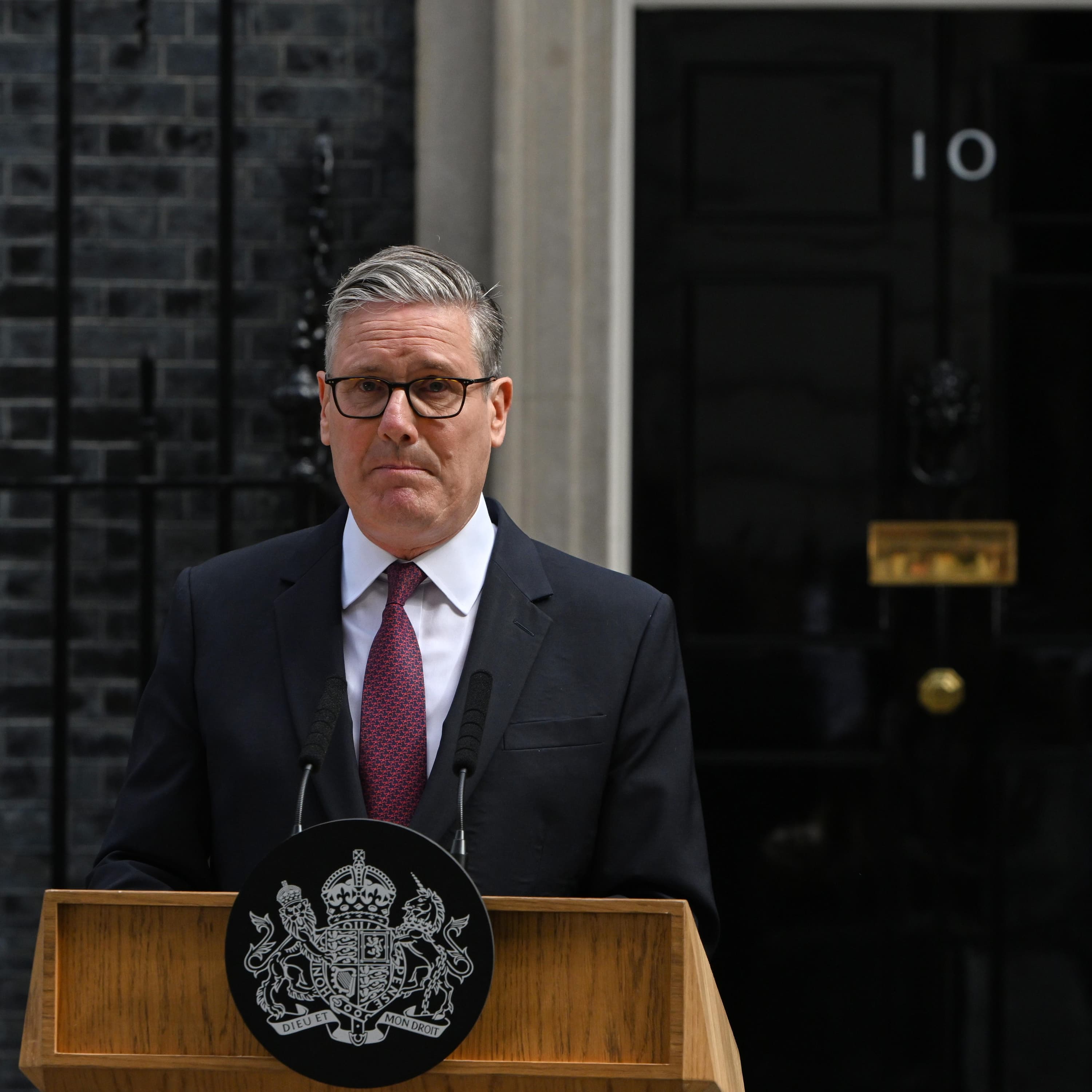
Today in Focus
Where did it all go wrong for Starmer?
00:25:11
The UK has lost its sixth prime minister in a decade. How did Keir Starmer go from landslide victory to resigning in two years?
Loading summary
Transcript78 lines
- [00:00]
Narrator/Host
This is the Guardian.
- [00:08]
Nosheen Eqbal
Today, a farewell to Keir Starmer, Britain's sixth Prime Minister in just under a decade.
- [00:20]
Advertisement Voice
Running a business means juggling a lot of moving parts. And when your communication tools can't keep up, things start to slip. Missed calls, slow replies, scattered conversations. They're not just frustrating, they're lost opportunities and revenue left on the table. That's where quo comes in. Spelled q, U, O. Quo is the number one rated business phone system on G2, trusted by over 90,000 businesses. One shared business number for calls and texts, so every conversation stays visible, organized and accountable. It works from an app or computer. You can keep your existing number, add teammates and sync your CRM, letting you scale without adding complexity. And with built in AI, Quo logs calls, summarizes conversations and flags next steps, even after hours, Stop missing customers, stop leaving revenue on the table. Try Quo free and get 20% off your first six months@quo.com tech. That's quo.com tech. No missed calls, no missed customers.
- [01:34]
Narrator/Host
We did it. You campaigned for it, you fought for it, you voted for it. And now it has arrived. Change begins now.
- [01:56]
Nosheen Eqbal
When the former human rights lawyer, full of ambition, won by a landslide in the 2024 general election, hope was in the air.
- [02:06]
Rafael Baer
Yeah, excite. Excited for something new to happen.
- [02:08]
Nosheen Eqbal
I think.
- [02:09]
Rafael Baer
I think the country needs it. So since the Labour Party is in
- [02:13]
Nosheen Eqbal
power now, I think the country will move better in terms of job, in terms of safety.
- [02:18]
Rafael Baer
I think they've got sensible qualities.
- [02:20]
Nosheen Eqbal
I feel like having competent adults in
- [02:22]
Narrator/Host
the room again is going to be a big help.
- [02:24]
Nosheen Eqbal
So Keir Starmer had arrived on a promise to repair 14 years of Conservative damage. Just two years later, with anger and disappointment swelling across the country, he's been frozen, forcibly ejected from the job. He's a decent man, we're told repeatedly, but he's the most disliked Prime Minister since modern polling began. As Starmer stepped out to the lectern outside Downing street, he certainly looked the part. Elegant grey suit, immaculately slicked sidequiff and the dignified gravitas you'd expect from a Prime Minister.
- [03:04]
Narrator/Host
Thank you. Walking up this street two years ago was the Prime Minister. Proudest moment of my life. A new Labour government, the first in 14 years.
- [03:17]
Nosheen Eqbal
But he just couldn't deliver. It was an emotional departure. Whatever your political opinions, it was a sad moment.
- [03:28]
Narrator/Host
And when I leave the biggest job in the country, I shall spend more time on the most important job, being the best husband I can to my fantastic wife, Vic, who has been a rock by my side through good times and bad and being the best dad I can. To my beautiful children who are my pride and my joy. Thank you very much.
- [04:09]
Nosheen Eqbal
How did it all go so wrong? And will Labour now convince voters that things can only get better? From the Guardian, I'm Nosheen Eqbal. Today in Focus, will losing Keir Starmer reboot Labour? Ralph Baer, welcome back to Today in Focus. Now, you have been a political columnist for the Guardian for well over a decade, and in that time we've seen six Prime Ministers. Is that unprecedented in British history? And how's your whiplash?
- [04:47]
Rafael Baer
Well, in the whole of British history, as far as I'm aware, it's not entirely unprecedented. I must say. This isn't my speciality, but I believe in the 1760s there was a period of great turbulence. And I read that between 1827 and 1837 there was a 10 year period where there was a lot of chopping and changing. But no, I mean, obviously the last seven or eight years in particular have felt extraordinarily febrile. And I think the measure of that is the sense that that point where the lectern is brought out and put in front of Downing street and the Prime Minister steps up and makes one of these resignation statements, as we've seen this morning, has started to feel like a regular ritual in British politics. Everyone knows the routine, everyone recognizes the people who come and install the lectern.
- [05:31]
Narrator/Host
This guy here, I've seen him come out and do the testing of the microphones umpteen times over the last few years. That's. I mean, he probably never thought that when he got that job that he would be doing it quite so regularly.
- [05:42]
Rafael Baer
But I think he's known on the
- [05:43]
Narrator/Host
Internet as Hot Podium Guy John. But that's.
- [05:47]
Advertisement Voice
I don't think that's a reference.
- [05:48]
Rafael Baer
So that in itself is just a measure of quite how narrow, how short wave the cycle has become.
- [05:54]
Nosheen Eqbal
Well, let's look at some of those very recent outings of the lectern, as it were. I mean, how did Keir Starmer's speech go down? What did you make of it? Because it felt like quite an unusual atmosphere on Downing Street. Like he walked out and there was a lot of whooping and clapping and cheering. And of course, yeah, it was a very somber statement to an extent.
- [06:11]
Rafael Baer
It was quite standard and boilerplate in the way of these things. I think most people want to give a resigning Prime Minister an element of dignity and to give them the opportunity to say what they want to say. And he said the sorts of things you'd expect a Prime Minister to say, which is, I was elected to do certain things, I've actually achieved quite a lot. Open brackets. A lot more than you people seem to think. Close brackets. The inevitable concession where you say, although open brackets, I think I could have carried on and actually would have been much better at this. And you realize, close brackets. It appears that I can't.
- [06:43]
Narrator/Host
The question my party is asking now is whether I am best placed to lead us into the next general election.
- [06:53]
Rafael Baer
He did that with a lot more dignity than, for example, Boris Johnson, who, when he did his resignation speech effectively, said, well, you're all just sheep and you're following a media herd and frankly, this is a terrible mistake, but so do you.
- [07:06]
Narrator/Host
The baton will be handed over in what has unexpectedly turned out to be a relay race. They changed the rules halfway through, but never mind that now.
- [07:15]
Rafael Baer
Or for that matter, David Cameron, who ambled back into number 10, whistling a happy tune to himself, which felt vastly inappropriate for the gravity of the moment. Right. Whereas Starmer, what really struck me was how uncharacteristically emotional the Prime Minister was at the very end. His voice was catching when he talked about how he was going to move on to the most important job, which was being a good husband and a good father to his children. He sounded very close to breaking down, actually.
- [07:52]
Nosheen Eqbal
You could hear the tears. Really?
- [07:53]
Rafael Baer
Absolutely. And given that one of the criticisms of Keir Starmer has been the lack of emotional connection, the fact that he can come across as stiff and robotic. I just think for him to have showed that amount of emotion at that moment was setting aside the politics of it, I thought, very poignant.
- [08:19]
Nosheen Eqbal
Well, Raf, if you try to zoom out and look at this situation that we've got in Britain, this sort of sense of political perma crisis, what, you know, would be described as systemic volatility and chaos were it anywhere else. You know, how do you make sense of and explain Keir Starmer winning this massive landslide just two years ago?
- [08:37]
Narrator/Host
And as Sir Keir Starmer heads to the palace to be become the new Prime Minister, with a forecast majority now
- [08:42]
Rafael Baer
of 176, I believe the third biggest
- [08:46]
Nosheen Eqbal
in neighbour's history to being so unpopular that he's effectively been booted out, it
- [08:51]
Rafael Baer
is extraordinary when you look at it. You think the UK constitution is such that a Prime Minister with a majority of 160, 170, can do more or less whatever he wants. And so I think the big picture answer to the question, well, why didn't he do that? Why didn't he exercise that power? Why didn't he dominate British politics?
- [09:11]
Nosheen Eqbal
And, I mean, it feels like such a waste, I think.
- [09:14]
Rafael Baer
And the answer is, you can use those powers. That constitutional opportunity is available to you if you know exactly what you want to do. And I think that is where it really unraveled the sense that he came in thinking that ultimately someone who had a good sense of duty, civic obligation, heart in the right place, not a chaotic, wicked Tory, would bring a kind of ethics and pragmatism to the job, which would necessarily succeed, because everything that had gone wrong before was a function of just the wrong people being the job.
- [09:46]
Narrator/Host
It's easy to comfort yourself that your opponents are bad people. I don't think Boris Johnson is a bad man. I think he's a trivial man. I think he's a showman. He's a showman with nothing left to show.
- [10:02]
Rafael Baer
He's a trickster and it just wasn't enough. The tough job of Prime Minister involves making really hard political choices. And he didn't have, it seems, that clear sense of what his political destination was, that when he was confronted with a problem that couldn't just be solved by the way he had when he was a DPP Director of Public Prosecutions, when he was a barrister, you could just look at the evidence and stare at the problem hard enough and the solution would present itself to you. That doesn't work when you're Prime Minister, there are sort of insoluble problems and you just have to make a hard political choice. What are you going to spend the money on? If you haven't got the money, who are you going to take the money away from? All those things? And that was deficient. He just didn't have the heuristics, the political ideological compass inside himself to say, okay, this is a really hard choice. I'm going to have to really annoy some people here. But ultimately I know where I'm going with this and I'm going to make the case and I'm going to stick with it. And he looked like he was adrift within months, really.
- [10:59]
Nosheen Eqbal
So if you were conducting a post mortem on this premiership, where did things start to go wrong?
- [11:05]
Rafael Baer
The original sin was very possibly, and I would say probably fighting the general election on a manifesto that meant you tied your hands on promising not to raise revenue from income tax, VAT or national insurance.
- [11:17]
Nosheen Eqbal
What said doomed before he even started?
- [11:19]
Rafael Baer
Not necessarily doomed, but if you come into office wearing a straitjacket, it's pretty hard to grab the levers of power and steer effectively. And a lot of people, the MPs, ministers, who supported that manifesto and thought it was the right political judgment at the time will now privately say it. In hindsight, that was a mistake. We should have had the guts to make an argument for a more radical tax agenda. That would have at least given us some kind of capacity to do some of the hard things. Because once you'd made that choice, you're then locked into finding money down the side of the treasury sofa here and there. And then you get into things like taking money from winter fuel payments, changes to inheritance tax for farmers, not paying the WASPY compensation, whatever it is you're desperately trying to get little pots, and the political cost, you pay for that. Just basically annoying each little constituent here and there, rather than just doing some big, broad, bold tax change, really meant that the authority of the government was just dissolving day after day after day, and they weren't even making that much money out of it. So that, I think, is structurally, in hindsight, a terrible mistake that was made. I mean, there were so many missteps very early on, stories about the freebies, getting the concert tickets, the suits, the posh glasses.
- [12:30]
Narrator/Host
The truth is that successive Prime Ministers, unless you're a billionaire like the last one, do rely on donations, political donations, so they can look their best, both in the hope of representing the country if you're in the opposition or indeed as prime ministers.
- [12:49]
Rafael Baer
These are the sorts of things that they were embarrassing, but a more able communicator or someone with good political antennae could have jumped on top of it really early on. And I think a lot of people would say in the garden of number 10 Downing street, the big speech saying, by the way, this is going to be really painful and horrible and it's going to hurt and things aren't going to be better for a long time, which is a reasonable thing to do if you want a mandate to make hard choices. But. And this is a crucial thing, without having the final paragraph that says, but I promise you it'll be worth it, because this is what you'll get at the end of it. This is what we're working towards. This is the country we're going to be. And I think Starmer probably thinks he tried to do some of that, but it is just not a gear that he could ever really get into plausibility, setting hope effectively. Yeah. And if we're Talking about why MPs lost confidence in Keir Starmer, I think the point at which the Parliamentary party was really lost was the welfare rebellion. And there was an available audience in the parliamentary party for reforming the benefits system. I think a more gifted political leader could have navigated that. But what happened was that together the Prime Minister and the Chancellor realized that they had about 10 billion missing in fiscal headroom. And lo and behold, they said, and by extraordinary lucky coincidence, there's 10 billion in savings that you can make from the, from the welfare budget. And we're not just taking money away from disabled people. And no one bought it and it was just not credible. And so rather than making a case for benefit changes as part of a social reform, they essentially said, we're going to take money from some people to fill a fiscal black hole. And then when lots and lots of Labour MPs who didn't come into Parliament to say, actually, we want to take money away from disabled people, people said this, you're going about this completely the wrong way. Number 10 just said, well, you're all basically predictable lefties. You don't get it. Shut up, do what you're told.
- [14:38]
Nosheen Eqbal
I am now one of the only visible physically disabled members of Parliament. I am proud that our manifesto committed to championing the rights of disabled.
- [14:47]
Rafael Baer
It was just such a misjudgment of the presentation of it, the mood, who the people were who were worried about this, why they were worried about it, and he just lost the parliamentary party over that and never really got it back.
- [14:58]
Nosheen Eqbal
And to add to all of those obvious missteps, it feels like the political climate was changing around them and they were bleeding votes to the left, to the right and they just kind of struggled to respond to that.
- [15:09]
Rafael Baer
Yeah, it was bad enough when people started to think, well, you know, we're losing a lot of vote share to reform and Nigel Farage is insurgent and this is damaging. And then they start to see, also coming from their left flank, the Greens surging. And if you're an MP facing a Green challenge, you think, well, why aren't we the leading progressive party in this country? And there are a couple of things that fed into that. I think the Prime Minister's earliest interventions around Gaza were just the best that can be said. They were tone deaf, tinnit, had to row back. But eventually, but really upset a lot of people gave people the impression that he just didn't really understand the seriousness of what was happening there. And then, obviously on the immigration policy, separate to how much of it could have been a perfectly sensible, workable way to reform the immigration system, the tone around it felt so obviously presented. To try and appeal to reform voters, then the Prime Minister makes this speech.
- [16:05]
Narrator/Host
Without them, we risk becoming an island of strangers, not a nation that walks forward together.
- [16:13]
Rafael Baer
So when you have the phrase redolent of Enoch Powell, it just told a lot of Labour MPs they were never going to be able to go to their constituents or to their activists or to their people, the core centre left, liberal progressive tribe, and go, we are with you. We are the main body for your kind of values in this country. And when you've got Zach Polanski coming up on the left and Nigel Farage attacking you from the right, that left a really not very wide bit of terrain that the Labour Party was standing on. And so no wonder Labour MPs panicked.
- [16:43]
Nosheen Eqbal
And I suppose the Mandelston stuff, people really did care about that saga unfolding and the decisions that were made behind the scenes.
- [16:51]
Rafael Baer
Yeah, I think that really reinforced a sense generally of doubt about who Keir Starmer was, who his people were, what he really believed in. It was so important for his self image as prime minister in 2024, that he was a decent, honorable person. And that was going to be, culturally, ethically, a fundamental rupture from the Tory era to then be, just by association, by proxy, bundled up with Jeffrey Epstein at a couple of removes. Obviously, it just meant, on top of everything else that had been going wrong, it was going to be impossible for him to ever appear in the public eye as a man of tremendous integrity.
- [17:30]
Nosheen Eqbal
But, Raf, what would you say was the final straw for the public?
- [17:33]
Rafael Baer
Keir Starmer's poll ratings have been very, very low for quite a long time. So I think a lot of people had essentially given up on the idea that he could do this job and he was good at it. But in terms of what the damage that was done to him as Prime Minister from which he could not recover. And then just a couple of minutes ago, this letter from John Healey to the. I do think John Healey, the Defence Secretary, resigning essentially on the day that you were supposed to be launching a defence investment plan, saying, this Prime Minister cannot make the necessary choices required to protect the country to keep us safe. There's no coming back from
- [18:15]
Nosheen Eqbal
coming up. The end of Starmer drama. So what now?
- [18:29]
Advertisement Voice
Running a business means juggling a lot of moving parts. And when your communication tools can't keep up, things start to slip. Missed calls, slow replies, scattered conversations. They're not just frustrating, they're lost opportunities and revenue left on the table. That's where quo comes in, spelled Q, U, O. Quo is the number one rated business phone system on G2 trusted by over 90,000 businesses. One shared business number for calls and texts so every conversation stays visible, organized and accountable. It works from an app or computer. You can keep your existing number, add teammates and sync your CRM, letting you scale without adding complexity. And with built in AI, Quo logs calls, summarizes conversations and flags next steps Even after hours Stop missing customers. Stop leaving revenue on the table. Try quo free and get 20% off your first six months at quo.com tech. That's quo.com tech. No missed calls, no missed customers did you know that passive fixed income ETFs only capture about 50% of the US public bond market? But with JP Morgan Asset Management's active fixed income ETFs, we can help you capture 100% of the US public bond market and explore twice as many opportunities. Visit jpmorgan.com getactive to learn more. JP Morgan Asset Management is the brand name for the asset management business of JPMorgan Chase Co. And its affiliates worldwide. This communication is issued by JPMorgan Distribution Services Incorporated, member of FINRA.
- [20:13]
Nosheen Eqbal
All that said, Raf, A lot of the problems that Starmer has faced won't go away with a new Labour leader. Whether it's Andy Burnham or anyone else, they will still come in and face some of those persistent economic challenges. You know, the cost of living crisis, high public debt, inflation and so on. What is it specifically about Starmouth that you think has failed?
- [20:32]
Rafael Baer
It's very difficult to sell misery and cost of living crisis and ongoing malaise when you've promised change anyway. It's particularly difficult to sell it if you're a terrible salesperson. If there's no collective sense of what the enterprise is, if you're not balancing that pain with both a sense of where it's all going, but also a galvanising idea of solidarity, you're fermenting and churning the anger, the bitterness, the grievance that then boosts politicians who really feed on that stuff, particularly obviously Nigel Farage. And so I think for Starmer's big picture deficiency was not having that concept of what it was all for. That meant that when Farage, when Reform UK really started surging in the polls, there wasn't a counter story about the kind of country we could be. Something he could say to people who are interested in voting reform, who thought maybe reform was the only thing that was going to address their grievances.
- [21:32]
Nosheen Eqbal
Irrespective of that, Ralph, there have still been triumphs in these two years. What would you Characterise as solid Starmer achievements.
- [21:39]
Rafael Baer
Triumphs is a strong word, but I think Ed Miliband's Department, Energy and Climate Change, he has driven this forward quite hard and against a lot of opposition, but actually he stuck with his guns. I think it shows that he'd been a cabinet minister before in a previous government, he'd had that portfolio before. So unlike so many people, including the Prime Minister, he was really able to hit the ground running. And actually, in the world that we live in, war in Ukraine, Russian threat, war in the Gulf, the argument that we could really do without being totally dependent on hydrocarbon imports and we could really move towards a green transition is a great progressive story that actually reaches a large number of people. It's broadly a majority position in this country. So I think that's probably a good idea. And I think actually Ed Milibands has done well to cement that and I actually think the EU reset has gone okay. Personally, I think it's been a bit slow and it's been a bit frustrating, but broadly speaking, he has done some of the necessary diplomacy so that if someone now wants to come in and say, you know what, we're really going to transform Britain's relationship with the European Union, the foundations for that will have been laid by Keir Starmer and the other things the government would name workers rights, renters rights, starting the process of changing the planning legislation so you can actually get some houses built. These are all things that, you know, if they are going to make a difference to people's lives, it will be incremental and it'll be something that people will look back on and go, the foundations were laid by Keir Starmer. You don't get popular in politics generally for laying foundations, and particularly not in a political climate where attention spans are short and people want the payback now, not in 15, 20 years time.
- [23:21]
Nosheen Eqbal
Well, let's zoom forward in 15, 20 years. I mean, what do you think Starmer's political legacy will be? How will historians look back?
- [23:29]
Rafael Baer
I think winning the landslide election is not to be sniffed at. The Labour Party was in a terrible, terrible state. And actually, as he said at the lectern in front of number 10 in his resignation statement, people thought maybe the Labour Party was finished and certainly it was going to take a couple of terms of opposition, really, to get back and to win on the scale he did. It was a significant achievement. And on the foreign affairs portfolio generally, he's actually handled a very, very difficult diplomacy quite well. I think people might criticise the relationship with Donald Trump saying he got too cozy too early on. But actually, I think a lot of that was very necessary, particularly when a priority was trying to forestall a Donald Trump total betrayal of Ukraine, which he was instrumental in doing and has so far not fully happened yet. But other than that, there isn't a whole lot, because what was Keir Dahlmer's thing, what was he about that you could then say, and at least he achieved? And the answer is, no one really knows. No one knew, and that's why he's resigned.
- [24:34]
Nosheen Eqbal
So Keir Starmer has announced a formal exit plan, which means we could have a new Prime Minister as early as July 17. Andy Burnham, meanwhile, didn't even give Starmer a day before announcing his leadership bid.
- [24:47]
Rafael Baer
We now come to Andy Burnham, member for Makerfield.
- [24:56]
Nosheen Eqbal
Just, you know, the pictures of him being sworn in as MP yesterday, it was quite something to behold, all the label art, giddily lining up to take selfies with him, treating him as the coming messiah. Even we're streeting his main rival. Up until this point, he's taken note of what he's up against and said that he's backing Andy Raf. How optimistic are you about what Andy Burnham will bring to the job and to the country at large?
- [25:27]
Rafael Baer
I think the win in Maker Field is important not just because Burnham won that by election, but the scale of it, because that does suggest that, as Andy Burnham's supporters will say, he has something that can reach voters, that Keir Starmer clearly, if he ever had it, had lost, and that he brings an ability to at least get a hearing and start from a position of a bit of benefit of the doubt, people ready to give you a chance. And what Makerfield showed also is there are an awful lot of people in this country who, if they don't know very much about politics or what they want, one thing they know very clearly is they really, really don't want Nigel Farage to be Prime Minister. Lots of people voted for Andy Burnham in that election because they thought he could be the person ultimately to stop reform. And so that's a kind of a proof of concept for what the next general election is going to be, not exclusively about, but substantially about for Labour. On the downside, something that is often said about Andy Burnham by people who served with him in government, which is, to be fair, a long time ago now, is that he's not someone who likes to annoy people. He's a people pleaser and he will duck hard choices. And the feeling that.
- [26:44]
Nosheen Eqbal
Not again.
- [26:45]
Rafael Baer
Well, exactly. And the counter to that is people will say yes. But then he went to Manchester and people are allowed to grow and change. There are a lot of people who are Burnham skeptic, precisely on the grounds that it's not entirely clear he can really fight for something and win when there are strong headwinds against him, especially given the media climate he's going into, and is always hostile. Whether he has the fight in him for that and withstand that, we'll have to wait and see.
- [27:18]
Nosheen Eqbal
Raf, thank you so much for your time.
- [27:20]
Rafael Baer
You're very welcome. Thank you.
- [27:27]
Nosheen Eqbal
That was political columnist Rafael Bair. Read everything he has to say, Check in with our sister podcast Politics Weekly with Pippa Crerar and Kira Stacey and find out more about this story, all@theguardian.com this episode was presented by me. Noshi Nikbala was produced by Ivan Manley, Guy Safman and Aisha Riaz. Sound design is by Rudy Zagadlo and the executive producer is Huma Khalili. We'll be back this afternoon with the latest.
- [28:02]
Narrator/Host
This is the guardian
- [28:08]
Nosheen Eqbal
foreign.
- [28:13]
Advertisement Voice
This message comes from Jackson Taxes aren't something you can only think about once a year, with investments planning for tax days year round. Fortunately, Jackson offers tax efficient products. Visit Jackson.com for more information on how our products can make your tax bill a little bit less painful. Jackson is short for Jackson Financial, Inc. Jackson National Life Insurance Co. Lansing, Michigan and Jackson National Life Insurance Co. Of New York Purchase, New York Marketers.
- [28:39]
Nosheen Eqbal
You know that feeling when your creative clicks, when that social post sends engagement through the roof, when your outside of the box campaign hits ROI positive. When a personalized homepage turns prospects into customers. It's utter marketing bliss. Contentful helps you create tailored omnichannel experiences without working overtime. No stress, no limits, only possibilities. Get the feels@contentful.com today we'll attempt a
- [29:07]
Rafael Baer
feat once thought impossible. Overcoming high interest credit card debt. It requires merely one thing. A SoFi personal loan. With it you could save big on interest charges by consolidating into one low fixed rate monthly payment. Defy high interest debt with a SOFI personal loan. Visit sofi.com stunt to learn more. Loans originated by Sofi Bank NA member FDIC terms and conditions apply. NMLS 696891.