← Today in Focus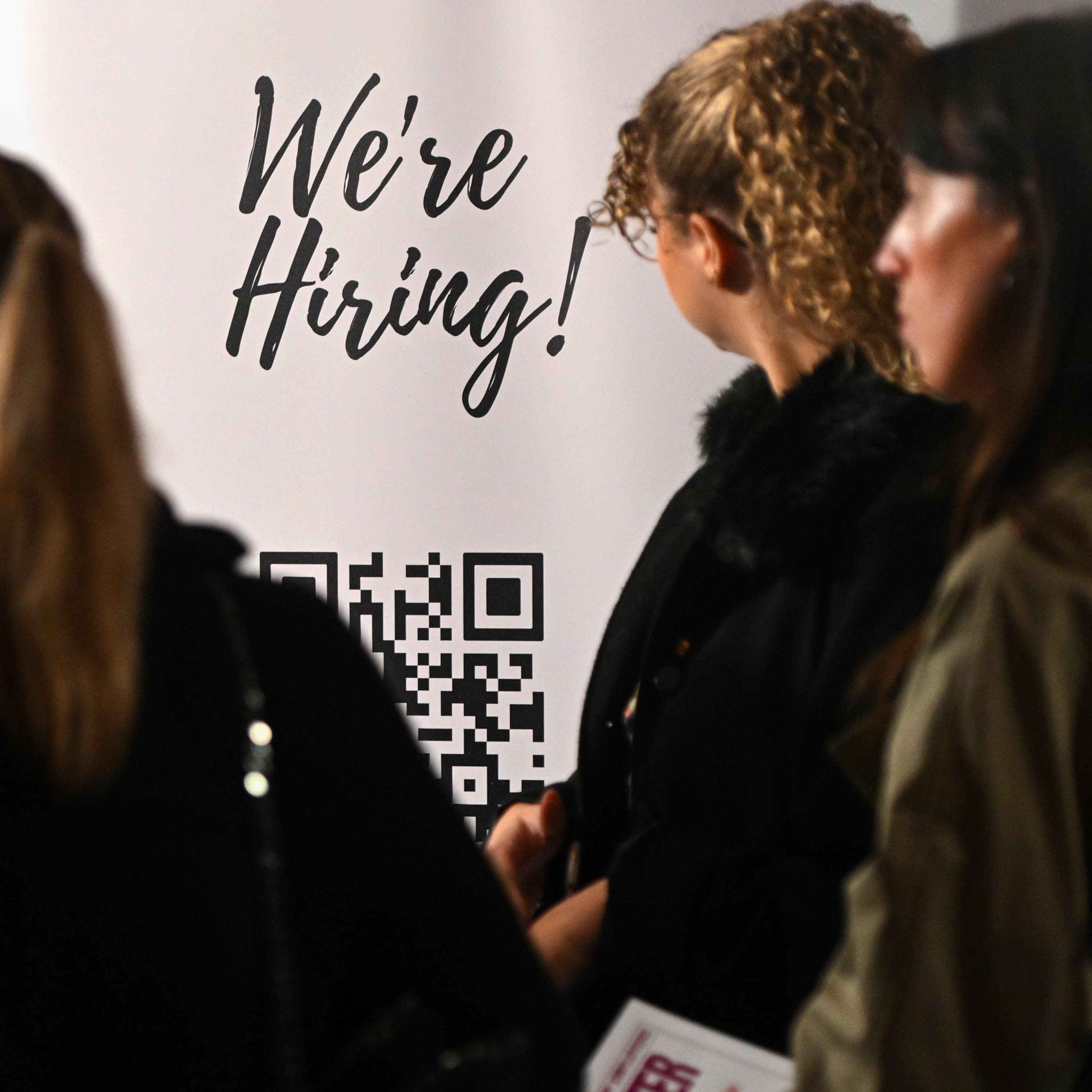
Today in Focus
Where have all the first jobs gone?
00:25:49
The number of young people in the UK not in work, education or training is spiralling. How much damage could it do to their long-term prospects – and the country? Sammy Gecsoyler reports
Loading summary
Transcript83 lines
- [00:00]
Annie Kelly
This is the Guardian.
- [00:10]
Today. Where have all the first jobs gone?
- [00:20]
SoFi Advertiser
High interest debt is one of the toughest opponents you'll face unless you power up with a SOFI personal loan. A SOFI personal loan could repackage your bad debt into one low fixed rate monthly payment. It's even got super speed since you could get the funds as soon as the same day you sign. Visit sofi.compower to learn more. That's sofi.com p o w E R Loans originated By SoFi Bank NA Member FDIC Terms and conditions apply and MLS 696891.
- [00:58]
Annie Kelly
Do you remember getting your first proper job? Maybe it was after school or graduating university. Chances are it felt like you'd taken your first step into proper adult life. For a lot of young people in Britain today, that moment just isn't coming.
- [01:18]
Hannah
It just feels like the odds keep getting stacked against us, against me, against my brother, against so many of my friends.
- [01:26]
Annie Kelly
This is Hannah. She's 24.
- [01:28]
Hannah
I come from semi low income, state educated. I'm just an average person.
- [01:35]
Annie Kelly
After years of hard work, she defied everyone's expectations and managed to get a bursary to Oxford University from her small rural town. She thought her future was secured.
- [01:47]
Hannah
I thought that was it, that was my life made effectively. I always thought I would go into some kind of international role, something civil servicey.
- [01:58]
Annie Kelly
And everyone at university also told her that getting a job would now be easy.
- [02:03]
Hannah
The advice I got was that I should just apply for any of the FTSE list, apply for all of the top hundred, see what happens. This particular fellow made statements like, well, you can all read and you can all write, so there'll be a job for you, sort of thing.
- [02:23]
Annie Kelly
So she sent off her applications and then nothing. For nearly two years, Hannah has been looking for a job.
- [02:35]
Hannah
One of the organisations, they told me we've had 70 applicants for this role and we usually only get about five. I've applied for nearly 70 roles. I made a spreadsheet the other week and about 36 of them I've heard nothing. And the other 30 have been automated rejections. It has been completely demoralizing, quite, almost dehumanising sometimes.
- [03:05]
Annie Kelly
Hannah has become a neet, a young person not in education, employment and training. Former government Minister Alan Milburn released a report setting out the scale of this escalating cris and calling for urgent action. The scale and impact of this problem
- [03:23]
Dr. Divya Giotti
can no longer be ignored.
- [03:25]
Hannah
We cannot throw a whole generation of
- [03:28]
Annie Kelly
young people on the scrap heap before their adult lives have properly begun and Yesterday, Andy Burnham also promised to take action if he became Prime Minister.
- [03:38]
I take very seriously the findings of the recent report. We need a complete rethink of how we support the next generation to succeed.
- [03:54]
In the meantime, the lives of hundreds of thousands of young people are on hold and the emotional and financial impact could leave long term scars on a whole generation. From the Guardian, I'm Annie Kelly. Today in Focus, the UK's youth unemployment time bomb. Sami Gedge Soiler. You're a Guardian reporter and you've been doing some really great reporting on this huge and growing problem of NEETs. That's young people aged 16 to 24 who are not in employment, education or training. And there was this big government report out recently that exposed the scale of all of this. What were the key findings?
- [04:41]
At the end of May, Adam Milburn released the first part of his report into youth unemployment and needs. The headline stat was 1,000,000 16 to 24 year olds are out of work, employment or training.
- [04:53]
And how does that compare to previous generations?
- [04:56]
A lot more unemployed young people now than there were previously.
- [05:00]
While in 2005, 4 in 10 of those out of work or training had never had a job, that number now stands at 6 in 10. And the options for help have been reduced to the number of apprentices.
- [05:12]
The last time that it dipped to similar levels was during the pandemic. And there's another really striking stat from University College London which says that those who are persistently NEET in early adulthood are six times more likely to be out of work at age 51 compared to their non NEET peers.
- [05:27]
Oh, wow.
- [05:28]
Yeah, it's quite stark.
- [05:29]
Yeah.
- [05:30]
If you look across Europe, unemployment levels amongst young people did dip. But most other countries in Europe have managed to bounce back and their young people are now in employment. Whereas the UK has been an outlier and continued to see unemployment be prevalent amongst young people. Wow.
- [05:46]
What are the factors that have made the UK so bad for young people trying to find jobs or training?
- [05:53]
Well, it's a long, long list due to Covid more recently, and I think also back to austerity as well. All of these factors have come together to make getting a job as a young person really, really hard. And I'm actually going to read out a little bit of what Alan Milburn mentions in his report. The impact of housing, poor transport links, especially for young people in smaller villages and towns. It's not simply a matter of there aren't enough jobs, there aren't enough jobs. But it's also the world that young people face and how it impacts their way of going about things. It also mentions the impact of social media and smartphone use and how that ties into mental health. Because when you think of it, that also feeds into depression and anxiety.
- [06:35]
You've been out there talking to young people across the country who just can't find a job. Could you start by telling us what they're going through?
- [06:42]
Absolutely, yeah. They've tried really hard to apply for jobs. Some of them applied for hundreds, thousands of jobs in that space of time and haven't heard back, haven't had any luck. It's a punch in the face every time. And after a while it really, it takes a toll. On top of that, a lot of them are relying on universal credit. And one of the people I spoke to, Thomas, after his bills are paid and after his dog's food is accounted for, he gets £25amonth to live on, so.
- [07:05]
£25amonth?
- [07:06]
Yes. Yeah. So it's not just joblessness. Joblessness needs to quite start poverty. So in his case, he was surviving on one 1 pound Iceland meal a day just. Just to get by.
- [07:19]
How old is he?
- [07:20]
24.
- [07:21]
24.
- [07:22]
Okay. And he's resorted to lying when friends invite him out just because he can't afford it. So he says that his dog is sick so he can stay home with Thomas. He's a really great case of someone who's not work shy, not lazy. Not all of these stereotypes that people throw at young people. He was dying for. He was a bar manager until his 23rd birthday, at which point he lost his job. And for a year and a half after that, he's been looking for work. He said he's applied for 2,000 jobs. Yeah. So quite a lot. And one thing that I thought was quite interesting and important was so he gone to the job center. One thing that the job center does do is they give young people training courses. And one of the training courses that he took part in was a railway repair training course, which think lasted about six weeks. But he put all that hard work in, was like, okay, finally this might be something to get a job. After that, he was offered one shift in total from. From all that work, all that training. So it sort of shows as well, the opportunities that young people are being given by the government aren't really working either.
- [08:23]
Hannah
No.
- [08:23]
Annie Kelly
There was one quite striking story that he told me about going to a jobs fair in a stadium and he got all dressed up for it, got a suit on, got a tie on, fancy shoes, hoping to impress his prospective employers and he gets there and all the stalls are manned by QR codes.
- [08:40]
No.
- [08:41]
Yeah, yeah. So there, there's no one there to impress and he's just. Yeah, they're scanning his phone just to be sent links online.
- [08:59]
And you heard from another young man called David, who was just talking about the scale, like how many entry level jobs he was applying for. It was kind of dozens, wasn't it, and not getting anything back. Can you tell me about him, David?
- [09:14]
He's a college leaver, so he's just dying to just get some experience. The only job he's had is working in Ms. For two weeks, which he said he loved, but that was a sort of temp placement and when that came to an end, that was it. He was back looking for work. He's applying for 40, 50 rolls a month and he's not hearing anything back.
- [09:32]
I mean, that all paints a pretty bleak picture, doesn't it? I mean, one of the most striking stats in that report for me was Alan Milburn saying 45% of the 24 year olds who are not currently in education, employment or training have actually never had a job. What kind of effect is this all having on them?
- [09:58]
The older Neets get, the more nervous they are that they could be trapped in long term unemployment despite the skills and positive attributes that they have. The constant rejection as well doesn't help. It really impacts their confidence and their mental health. And one thing that the report does mention is that 45% of NEETs who are 16 to 24 have a disability and mental health diagnoses make up a large proportion of that. Everyone that I spoke to felt like they were one of at least 100 Clicking Apply for a job and that they felt really hopeless. Thomas I spoke to, he said they just whittle away because he's just in his bed scrolling on job stuff to no avail. If you have got mental health needs, particularly around depression, anxiety, when you do take a step out there and put yourself on the line, apply for jobs and you're not getting anything positive back, yeah, that can be a real hit to their confidence and they sort of retreat. Another thing that the report mentions is people who have got mental health needs who do get going to the workplace can often find that those workplaces are hostile to their needs and aren't accommodating and that puts them off from getting into employment as well.
- [11:08]
And I guess it must be a kind of chicken and egg thing that the job, relentless job search and the relentless rejection is going to exacerbate mental health problems. Which in turn is going to exacerbate the, the difficulty in finding work. You've also spoken to business owners as part of this reporting. How are things looking from their perspective? What are they saying about young people just not getting the jobs?
- [11:32]
So a lot of them cite the government's rise in minimum wage and national insurance contributions, particularly in hospitality, where a lot of young people do get their first jobs. And, and they also cite rising business rates, rents and bills. So costs have gone up across the board. And I think it is important to say that a lot of these businesses, business owners, they aren't low tax enthusiasts. Many understand that for a functioning society to run, fair taxation is needed. They just feel that they're being unfairly asked to bear the brunt of it.
- [12:02]
There is also this idea, I think, that largely pushed by the kind of AI tech titans who are talking about how their technology is going to wipe out most entry level jobs, that business owners are turning to AI as a way of saving money and are essentially going automating all of the entry level jobs that young people before might have been getting and working their way up through a company. How much of a challenge has AI proved to this changing job market? What, what are the people that you've spoken to talk told you so?
- [12:34]
I think it's too early to say for sure that AI is taking away jobs and completely transforming the job market. But the first trickle of research that has come out that suggests that we are heading that way. So a report last year found that the number of new entry level jobs in the UK had dropped by almost a third since the launch of ChatGPT in November 2022. So I spoke to one business who had admitted that he previously had employed one to two apprentices a year, but in the past 18 months has adopted AI into his business and he hasn't employed any since.
- [13:09]
So, Sami, this is a huge crisis, isn't it? Are the government on top of all of this?
- [13:15]
On Sunday, the government announced that employers in Great Britain will be given £3,000 for every long term unemployed person they hire. They will aim to get 60,000 people aged 18 to 24 into the workforce. And I spoke to Howard Williamson, an expert on neat. He was a key part of Tony Blair's efforts to clamp down on youth unemployment almost 30 years ago. He said the impact would be relatively marginal, particularly when it comes to the volume of people who are currently outside of the labour market. But the thing with this question is the government at the minute could change quite soon. We've got Andy Burnham, who seems to be marching on to number 10 and he made a big speech yesterday. One of the key things that he did mention was how the days of a school system focused in university will come to an end under his leadership. He wants to introduce a parity between academic and technical skills and qualifications. Williamson said that it was absolutely spot on. And also he mentioned a devolution of employment support, so giving mayors the power to lead on this issue. And I think it's important to note that these are just announcements of schemes that are yet to come and it's yet to be seen the impact they could actually have. The second part of the Melbourne report is due to be released and that's going to present potential solutions to the crisis. But I think now we're just left to sit on just how bad it is for young people to find a job.
- [14:52]
Hannah, how long have you been applying for jobs? Has it changed the kind of positions you're going for as. As time has gone on?
- [15:01]
Hannah
So I've been applying for maybe a year and a half now, and to begin with, I was applying for higher level reasonable roles that were for new graduates. And then I started claiming universal credit and my job coach told me I should apply for 16 jobs a week. Then you start applying for everything you can possibly think of. And then I got told a few months later by my job coach that I have to accept minimum wage. And then those roles which pay minimum wage won't hire someone who graduated from Oxford.
- [15:47]
Annie Kelly
Do you know other young people of your age in your life in a similar situation?
- [15:52]
Hannah
Absolutely. Out of my friendship groups and wider circles, there are two sort of sections. Either they've been hanging on to staying in their university bubble for as long as possible to avoid becoming a neet, or they are people spending all their time applying for jobs too, like me, have found nothing. It's important to remember that it doesn't stop the point you turn 25. So my brother's 27. He did a graduate scheme where they said, oh, it's a really, really niche sector, it's really desirable, you'll get a job at the end of it. He didn't. He's been unemployed for a year now.
- [16:37]
Annie Kelly
Could you kind of talk a bit about how that feels to also, you know, be still at home and without the prospect of being able to move on to independent living as well.
- [16:51]
Hannah
So I came from a year abroad and the independence of Oxford to my little rural village. The average age here is 60 or 70. Public transport is expensive, so I haven't Got the opportunity or the ability half the time to meet up with some of my friends. So purely on the social front, it's really harrowing. You lose your independence completely. Because I always thought if I was living my best life, I would be in my own home, I would have my own kitchen, and I would have a job.
- [17:29]
Annie Kelly
Hannah, it's so striking to me that you work so hard at college to get into Oxford, only to find out after all of this that it's so hard for you to get a job. And, I mean, it's probably a stupid question considering the conversations we've just had, but, you know, do you feel hopeful at all that things will change for you?
- [17:49]
Hannah
I don't see any change in the near future. I'm a really resilient person, but obviously it's hard being a family of four adults and the only income earner at the moment is my mother. So between her and my universal credit payments, that's what we're living on. It's a mood drainer. Every morning, really, my brother and I will wake up. We go, what was the point in waking up? Because there's nothing to go to. There is no purpose in life without employment with people who thrive on hard work. I won't let myself stop yet. But obviously, for people who've got other mental health issues, people who are struggling in other ways, it's an immense burden to try and cope with. And it's no surprise that most claimants have mental health issues. I mean, I'm developing mental health issues from this whole experience. All I get told is the right thing will turn up eventually. If that's the only hope there is to cling to, I suppose it's as good as any.
- [18:59]
Annie Kelly
Coming up, how the youth unemployment time bomb is a problem for all of us.
- [19:17]
Then I thought, what if I've scaled businesses? What if I scaled my philanthropy? What if I did as much in one year as I've done in my whole life? See how your wealth could have even
- [19:26]
Hannah
Greater meaning@creativeplanning.com impact high interest debt is
- [19:30]
SoFi Advertiser
one of the toughest opponents you'll face unless you power up with a Sofi personal loan. A Sofi personal loan could repackage your bad debt and into one low fixed rate monthly payment. It's even got superspeed since you could get the funds as soon as the same day you sign. Visit sofi.compower to learn more. That's S-O-F I.com P-O-W-E r loans originated by Sofi bank and a member FDIC. Terms and conditions apply. MLS 696891.
- [20:03]
Annie Kelly
Doctor Divya Giotti, you are a lecturer at the University of Lancaster and you have recently co writt report which looks at youth unemployment in the uk. I guess one of the most basic questions is where have all the entry level jobs gone?
- [20:20]
Dr. Divya Giotti
What we have found within the study is not only are jobs declining, but that the starter jobs are declining at a much faster rate than, you know, the overall job market decline.
- [20:31]
Annie Kelly
So the latest unemployment rate for 16 to 24 year olds is the highest level in more than 10 years. And you've got companies like recruitment agency Reed reporting jobs, advertised rolls down by 77,0% compared to 2023.
- [20:47]
Dr. Divya Giotti
I think we have been in economic kind of stagnation. The cost of living crisis has not really left us since the pandemic. And I think we are still reeling with the aftermath of that, particularly for young people. Retail for instance is one of the go to avenue and that has rapidly declined availability of jobs there because in person stores are shut. So there are those structural factors at play. And of course also to talk about the advent of AI and its implications for the job market because it is the new kid in town employers are looking at, okay, what aspect of our jobs perhaps can be automated. It is a fairly early stage to understand the nuance of what kind of roles can potentially be replaced. But the challenge is that it is the early roles which are being replaced. And I mean to take a classic example is the tills at the supermarkets, right? How many self checkout tills have we seen?
- [21:47]
Annie Kelly
What are the knock on effects of an entire generation, it seems facing this kind of delayed but you know, potentially long term unemployment?
- [21:57]
Dr. Divya Giotti
It has multiple ripple effects. The first is life skills. When we get a job, go out, live on our own, we learn so much, you know, we become independent, whatever that job is. All of that give us a particular kind of social skills and life skills.
- [22:12]
Annie Kelly
You've got these kind of formative experiences that people are missing. But what also about the economy if
- [22:20]
Dr. Divya Giotti
we are not having young people enter the job market, where are the leaders of tomorrow? Internships have actually been slashed and the numbers have drastically, they are drastically reducing. This is about the next generation of workforce, but also which has wider implications. I mean who spends most on shopping and bars and pubs, you know, on games and a lot of other avenues. So they are a key consumer who would spend and that spending capability is limited. So we have that ripple effect on the economy. So almost like a vicious circle, if the young people's entry into the job market is delayed. I think we are going to see a further stagnation of the economy.
- [23:04]
Annie Kelly
People are getting delayed. They're going to have to delay even further getting on the property ladder, starting families. All of those markets going to get pushed back. But I was really interested in your report that you identified this really stark geographical divide as well. I was just wondering if you might be able to explain that where you
- [23:23]
Dr. Divya Giotti
are shapes the chances and gives you the opportunities. And for every neet young person within the uk, for every three young people, there's only one job. Because if you start looking geographically, for northeast, for example, it increases. There is only one job for six young people. So it's that stark. To give you a, I would say practical example of why place matters is something as simple as when you have a job, you need to be able to get there. So you need connectivity to be able to even apply for jobs, you need to be able to get to the place where you will have your interview. Now somebody will say, oh, but why don't you drive again? One, we know you know, the reality of, I would say procuring a driving test, but driving also has cost implications. If we do not address this, if we do not think about equalizing in some way or the other, the divide is going to get even more and more stark.
- [24:20]
Annie Kelly
I mean, it's just a very, very distressing situation for so many people to be in, isn't it? So if there were three things that you would be able to identify, you know, that might help change this or turn this situation around, what would they be?
- [24:35]
Dr. Divya Giotti
I think the first thing that we need to do is kind of get rid of our obsession with the entry level qualifications which act as a barrier, because obsession with GCSE English and maths, we should be able to widen our spectrum of how we talk about skills and recognize those skills and bring those into the job market. The second is thinking about the transitions. Those who are coming from disadvantaged backgrounds are somehow struggling to stay in school. There are particular moments where they can fall through the cracks. The third is more structural in terms of the local based approach that the government perhaps can take. When thinking about the job market, think about local labor markets, you know, those place based opportunities which can be created. Why should everyone come down to London or Manchester for jobs, right? But when you think about, you know, farming, you look at the local conditions and then you think about what fruit can I grow which is going to flourish here. It's almost like, you know, you need to think about a similar approach when you're thinking about places and how they develop and what kind of skills are potentially needed for that.
- [25:41]
Annie Kelly
Andy Burnham's focus on place does sound like he's on the right track. So let's hope it happens. Are you optimistic things will get better?
- [25:49]
Dr. Divya Giotti
Yes, if we do something about it. If we kind of go beyond, you know, articulating the problem to start actually taking action towards solution. And I think if we make a commitment to do so, they can, because it is not a problem which is outside of our power and capabilities as employers or as, you know, the policymakers and decision makers. I'm curious to see what comes out as from a government perspective, you know, from Alan Milburn's report. So, yeah, I wouldn't say I'm completely disillusioned. I would like to keep a little bit of hope alive.
- [26:23]
Annie Kelly
Thank you so much. Thank you. Sounds like a very big problem that we're going to have find ways to solve. And that's it for today. My thanks to Sami ghej Sola and Dr. Divya Joti. And a special thanks to Hannah. This episode was Produced by Casey McGlaw, Guy Zafman and Jacob Antigua and presented by me, Annie Kelly. Sound design was by Brian McNamara and the executive producer was Homa Khalili. And we'll be back later on this afternoon with the latest.
- [27:03]
This is the Guardian. Because you didn't just say, how can I provide these investments? How do I holistically provide everything? How do I bring in the legal, the accounting, all this and do it at a price point no one else is doing it.
- [27:21]
Learn more about how we approach wealth
- [27:23]
Hannah
management@creativeplanning.com integrated high interest debt is one
- [27:28]
SoFi Advertiser
of the toughest opponents you'll face unless you power up with a SOFI personal loan. A SOFI personal loan could repackage your bad debt into one low fixed rate monthly payment. It's even got super speed since you could get the funds as soon as the same day you sign. Visit sofi.compower to learn more. That's S-O-Fi.com p o w E R Loans originated By SoFi Bank NA Member FDIC Terms and Conditions apply. NMLS 696891.