← Today in Focus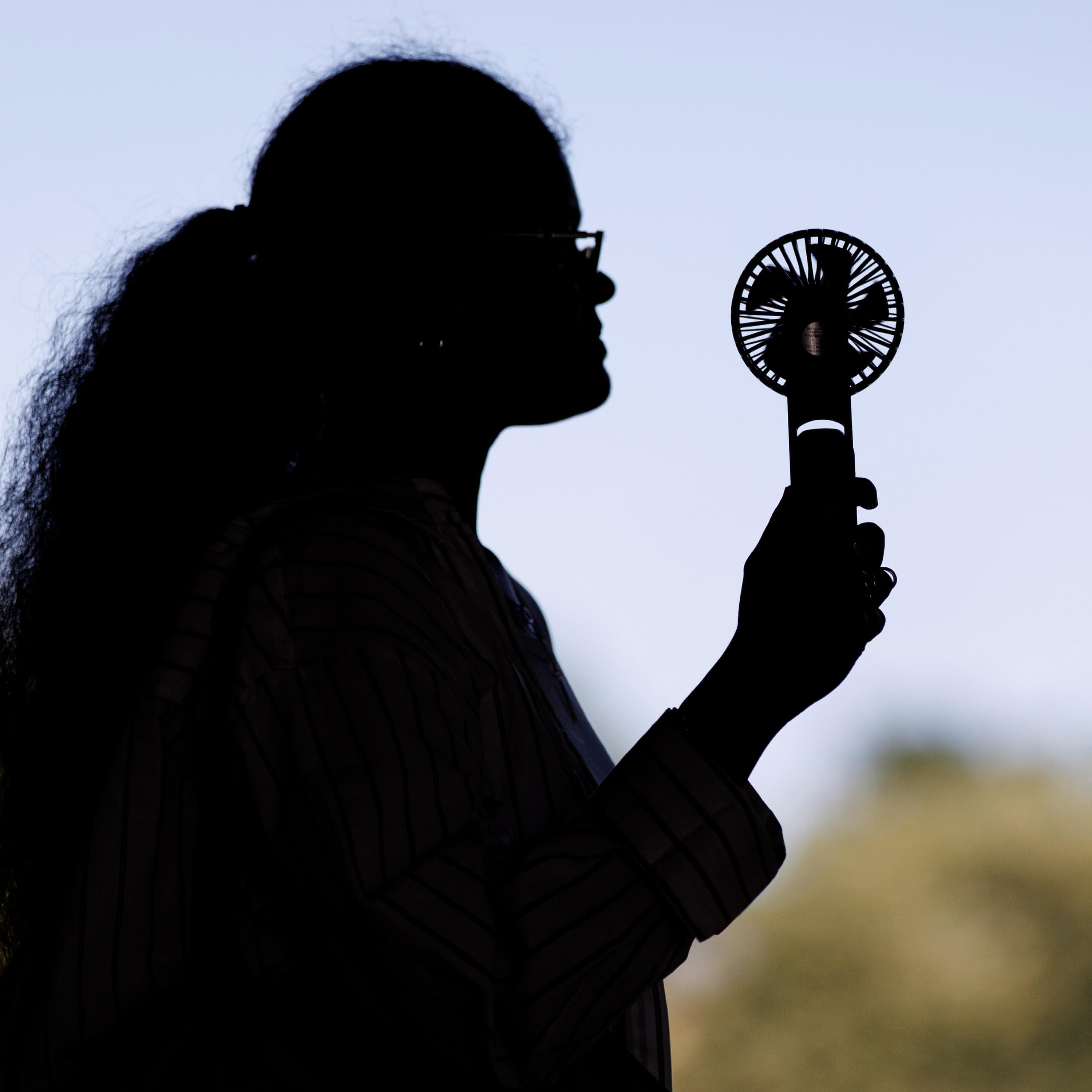
Today in Focus
Why are our homes and cities all so hot?
00:24:23
In the week when the hottest May days were recorded, environment editor Fiona Harvey examines a new report on how the UK can better withstand extreme heat
Loading summary
Transcript65 lines
- [00:00]
Guardian Announcer
This is the Guardian.
- [00:09]
Noshi Nikbal
Today. Why can't the UK cope when it gets hot, hot, hot?
- [00:21]
Jackson Financial Advertiser
This message comes from Jackson. Taxes aren't something you can only think about once a year. With investments, planning for tax day is year round. Fortunately, Jackson offers tax efficient products. Visit Jackson.com for more information on how our products can make your tax bill a little bit less painful. Jackson is short for Jackson Financial Incorporated, Jackson National Life Insurance Company, Lansing, Michigan, and Jackson National Life Insurance Company of New York Purchase, New York.
- [00:54]
Noshi Nikbal
If you're listening outside the uk, you might be forgetting, given the eye roll, the Brits obsessing over the weather tell us something new. But this week's heat wave across Britain and much of Europe doesn't feel like an ordinary event. Take it from Fiona Harvey, the Guardian's environment editor.
- [01:15]
Fiona Harvey
You know, we get heat waves in this country, but they're usually in July or August. We're still only in May, and just a few weeks ago, people had their heating. People were running around in jumpers and long trousers and so on.
- [01:29]
Noshi Nikbal
You know, at its hottest, the country saw a record breaking 35 degrees. Sweaty, maybe feeling unwell, unable to sleep.
- [01:39]
Fiona Harvey
We've been talking about these tropical nights, which is astonishing for the uk.
- [01:45]
Noshi Nikbal
In short, I am allowed to be cranky because it's very, very hot.
- [01:48]
Fiona Harvey
That's what I'm hearing.
- [01:49]
Noshi Nikbal
I'm not getting enough sleep.
- [01:51]
Fiona Harvey
We should all be cranky. We've become a nation of toddlers.
- [01:56]
Noshi Nikbal
And this isn't just about the fact that we're not acclimatised to tropical nights. It's our entire infrastructure homes, schools, hospitals, office blocks, most of which weren't built for the climate we now have.
- [02:15]
Fiona Harvey
We've seen the heat records for May not just surpassed, but really shatter. You know, normally heat records are surpassed by, you know, a fraction of a degree, something like that, but this time we're talking about more like 2 degrees nearly.
- [02:34]
Noshi Nikbal
And that's a lot from the Guardian. I'm Noshi Nikbal. Today in Focus. If this is the new normal, how do we adapt? Fiona, it is hot. It was much hotter earlier this week, but it is still very warm today. You are the Guardian's environment editor, our cool, calm voice. Now, before I get to the big questions of climate change, how do you deal with a heat wave?
- [03:05]
Fiona Harvey
Well, I think it's important to try to take the basic measures first. If you're out, obviously, wear sunscreen, wear loose clothes. You know, light clothes can help. I'm not doing that today, but, you know, the cottons. Do as I say, not As I do, but take those kind of obvious precautions. Wear a hat. You know, something to shade you.
- [03:30]
Noshi Nikbal
Are you a baseball hat? Bucket hat. What kind of hat do you wear?
- [03:33]
Fiona Harvey
Bucket hats. You know, let's come over like it's mid-90s again. You know, why not? Yeah. But whatever it is, just do whatever suits yourself. People talk about wetting a tea towel and putting it over their fan, keeping some ice on hand. Really important to stay hydrated, obviously. And if it gets really hot, there's no shame in having a nap at the hottest time.
- [03:56]
Noshi Nikbal
I'm glad you've said it.
- [03:57]
Fiona Harvey
That's what people do in hot countries. They have a siesta nap at the hot time, and then they come out at night when it's cooler. The core thing here is that we in this country are not used to thinking of ourselves as living in a hot country. It always comes as a massive surprise to us. We need to get used to it and to say, okay, we need to adopt these habits, these traditions that people have evolved over millennia in other countries, and that can help us.
- [04:34]
Noshi Nikbal
Well, according to a new report from the Climate Change Committee, the ccc, as you say, we can expect this in the UK and in Europe to become our new normal. Fiona, can you tell me about the report's other key findings?
- [04:48]
Fiona Harvey
Well, this was a massive report, and it's been several years in the making. And it's a warning shot to the government, really. It's to say, look, none of the plans that have been brought forward for adapting the UK to the impacts of the climate crisis are adequate. They said very clearly none of the plans are fit for purpose.
- [05:11]
Noshi Nikbal
What are those plans at the moment?
- [05:12]
Fiona Harvey
It's been more about telling people to expect higher temperatures than it's been about telling them, you know, what to do. And a lot of it has been about flooding because, you know, you forget about this in a heat wave. But one of the big impacts of the climate crisis is that we get wetter weather in shorter bursts. So a lot of what the UK has done to date has been about flood prevention, flood risk, building sea walls, concrete barriers around rivers, also trying to do some natural flood prevention, like trying to rewet some peatlands, some wetlands. Some of them have been very effective, but they require a huge amount of investment, and not all of that investment has been made. But there are other areas where we are really behind. Drought planning, for instance, the opposite side of the coin has been neglected. We need places to store water. We haven't built a new reservoir in this country for 30 years. And yet the population has increased in that time and the demands for water and our rainfall patterns have changed. So we need these new reservoirs and we need ways of moving water to where people need it.
- [06:21]
Noshi Nikbal
And this is what the report's recommending.
- [06:23]
Fiona Harvey
The report is very clear about that. The report is also saying a lot about farming because obviously farmers are extremely affected by all of this, by both drought and flood and by higher temperatures which affect the yields of many plants. And they need to start adapting. It's hard for them to do that because a lot of farmers are very
- [06:44]
Noshi Nikbal
stretched and it's so unpredictable. Right.
- [06:46]
Fiona Harvey
Yeah. It's making the farming year completely different to today's farmers than it would have been for their grandfathers or even for their parents, you know, farming. So we need to look at our food production and how we maintain that at the moment. You know, we get about 60% of our food from the UK and the committee on Climate Change is very clear that we need to maintain that because of course, of course, we don't exist in a vacuum. You know, this heat wave is all over Europe. There have been heat waves in the us, we're seeing massive heat waves in India and various other countries. And what we're seeing this year could get a lot worse. This issue used to be just regarded as weather. You know, it's of interest. You know, do I need my brolly today?
- [07:31]
Noshi Nikbal
Or, you know, it's a national obsession.
- [07:33]
Fiona Harvey
Exactly. But it's much more than that, it goes much deeper. And now what we're seeing is the climate being seen as a national security issue. Because if you're in a country that you turn on the taps one day and nothing comes out, then that's a really serious issue for everyone. It's a business, an economic, a health issue, it's a political issue, national security issue. It encompasses everything.
- [08:05]
Noshi Nikbal
Fiona, can we focus on the heat aspect for a moment? Because your write up of this report was so stark, I was actually reading it out loud to my partner in which he wrote, you know, nine out of 10 homes in the UK will overheat. We need to be installing air con basically everywhere now. Quite a lot to process for a country that's always had a pretty mild climate. Now, according to that CCC report, it sounds like the uk, as you say, is way behind in terms of adapting to a hotter world. Why is that?
- [08:37]
Fiona Harvey
We haven't taken it seriously enough in the past. We still have this mindset that we are a cold country and for a lot of the year we are. There's also A danger in this report. We could actually become a colder country as well as a hotter country. The system of currents and winds in the Atlantic, usually people call it the Gulf Stream, which isn't quite accurate, but that's how people know it. And it brings warm weather to Europe generally in the winter and makes our climate milder than it would otherwise be. That could be faltering and it could stop or reverse and that would bring much, much colder winters to the uk. We would be seeing a lot of the country ice bond for huge swathes of time every winter. Temperatures could drop to, you know, sort of minus 10 and minus 20 across a lot of the country in those kind of winters. And yet we could still get hot summers like this one. That's really, really hard to get your head around.
- [09:41]
Noshi Nikbal
If we look at the impact of heat waves, it seems like other countries did take lessons from earlier examples. We think about the 2003 heat wave in Europe that killed 70,000 people. Other countries in Europe took action, but the UK didn't really. Can you give me other examples of, you know, adaptation that could be made or examples where this work is being done and being done?
- [10:02]
Fiona Harvey
Well, Trees can make five degrees of difference, which is huge, really. We need to be planting them all over the place, providing fountains and public access to water. You walk around a European city in Southern Europe, in Italy or whatever, and you will see fountains all over the place. You might have seen in some European cities, you get these kind of misting machines. They kind of spray out water in a fine mist, which is very, very cooling. You can have green roofs where you kind of grow plants on your roofs and that can be cooling, that can cool a city. Or you can paint roofs white to reflect more of the sunlight back into space. So we have technology to do this and we have natural methods as well. We just need people to use them.
- [10:46]
Noshi Nikbal
They seem like quite simple, easier fixes. Why is a take up not really there?
- [10:52]
Fiona Harvey
People haven't really needed them. There have been efforts to do it, I think, you know, there are tree planting schemes and so on, but you need to follow through. It's not enough to just dump these trees off the back of a lorry. They need to be nurtured and looked after, and that's expensive. Green areas are really important. There's a frightening number of people in this country who don't have access to any green areas. We saw that during the lockdowns, you know, where people were cooped up all day every day and couldn't get access. We need to. When we are building new homes, new housing build in green areas, you know, don't pave over every single surface. You know, when you. When you pave over surfaces, it creates problems with flooding, you know, with the runoff, but it also, it creates more heat.
- [11:51]
Noshi Nikbal
Fiona, let's talk about buildings in the uk, because they do play a big part in why it feels like we're melting. What's wrong with the way they've been built and why are they coping so badly in the heat?
- [12:04]
Fiona Harvey
Well, a lot of them were built a long time ago. We had a different climate than. So a lot of our housing stock is just not built for this. But you can adapt it. But it's not just those older houses. A lot of the modern houses we've built have not been built very well. A lot of the flats that we allow builders to build are tiny, you know, and if you're in a very small flat, it can feel like a rabbit hutch.
- [12:32]
Noshi Nikbal
Have building regulations adapted to climate change so that, you know, anything that's built now has to be fit, really, for hot temperatures.
- [12:40]
Fiona Harvey
We have this new future home standard which is coming in. A lot of that has focused on insulation for keeping homes war, so that you use less energy to heat homes, but you've got to provide means of cooling homes as well. And actually that has been a bit of a blind spot in those regulations. There's one solution which is probably going to become more popular is heat pumps. Now, we're used to thinking of them as a replacement for gas boilers, but they can also be used the opposite way around. They can be used to cool cool rooms during hot weather. Insulating hose as well can. Can help to keep heat out, but people have got to use it, right? People have got to be taught, in a sense, how to use their own homes.
- [13:28]
Noshi Nikbal
It's not just homes, is it, that potentially need this retrofitting with heat pumps and better insulation. It's also the places we work, shop and what have you.
- [13:37]
Fiona Harvey
Well, if the government were to say that, you know, people can't be expected to work in temperatures above a certain level, then that would mean that employers would have to ensure that. That all of their buildings were capable of being cooled to that kind of level. Workplaces have not taken this seriously because they haven't been regulated to do so.
- [13:59]
Noshi Nikbal
For instance, in Spain, you know, the recommendation is that workers shouldn't work above 27 degrees. Here in the UK, where's the pressure for government to impose those new rules for working?
- [14:12]
Fiona Harvey
I think the pressure is coming from unions at the moment. And from workers, workers themselves. And I think we will see that, that pressure increasing because, you know, more and more this will impact on. On productivity, workplace efficiency. Yeah. When it starts affecting the bottom line, companies will pay attention.
- [14:38]
Noshi Nikbal
Fiona, what were the short term fixes recommended in the report and how easy are they to implement?
- [14:45]
Fiona Harvey
The report notes that there are a lot of people in vulnerable situations who are particularly at risk and are not being looked after. And so the report demands that within 10 years we should have air conditioning in all hospitals and care homes, because old people are really very much at risk here.
- [15:07]
Noshi Nikbal
And what about children and young people? They were also mentioned.
- [15:10]
Fiona Harvey
Right, children and young people. We will need to have air conditioning in schools as well. The committee has given the government a bit longer to do that. We will need to have air conditioning in schools by 2050. But that's quite a big thing to do. I mean, refurbishing the UK schools is going to be a big operation, really. But the school year as it's currently constituted is based on farming from centuries ago. That's where our school year came from. There's no reason why you couldn't change that. Why do we have people taking exams in June?
- [15:43]
Noshi Nikbal
From what you're saying, air conditioning is really at the moment at the heart of what could make things cooler and easier for us living here. But isn't there an uncomfortable contradiction at the heart of that? Because everything we've learned about living sustainably says that air con is bad. It requires huge amounts of energy and contributes to climate change. How does one square that?
- [16:02]
Fiona Harvey
Yeah, it is. And global cooling. Air conditioning around the world produces more greenhouse gas emissions than many countries. It's a conundrum. It's clear that we will need air conditioning in a lot of homes, but you can mitigate the impacts of that by not having it at too low temperatures, by only using it when it's necessary. In this country, we're not likely to need air conditioning all the time. If we're telling people get air conditioning, we need to also be saying, well, you know, don't turn it up too much. You don't need your home to be icy. Give them kind of operating temperatures within that. They've done that in France where they've said, actually, you know, don't have aircon if it's below 26 degrees. And, you know, that seems to work. We need to prepare for the fact that we will need a lot more electricity. Once you've accepted that, you know, all of our electricity needs to be low carbon and we need a Lot more of it. Then it becomes a bit easier, really.
- [17:09]
Noshi Nikbal
But isn't there still a fundamental question of inequality here? In the same way that some people can't afford to heat their homes, some people won't be able to afford to cool them.
- [17:19]
Fiona Harvey
There's a real danger here that the UK will become a much more unequal society as we become a hotter society. And that's for a lot of reasons. One is just affording air conditioning, affording to adapt your house. Another is food. Food prices are going to go up as a result of this, you know, because farmers are facing more insecurity. So we will be paying more for our food schools as well. The government wants all schools to have air conditioning, but not until 2050. If you're a private school, you're probably going to have air conditioning a lot sooner, so your pupils are probably going to be better looked after. There's lots of ways in which our unequal society today will become more unequal in future if we're not very careful.
- [18:04]
Noshi Nikbal
But given our struggling economy, you know, the current housing stock, the state of the schools, a government that is trying to scrimp and save. How could this practically be done, even if there was political will for it?
- [18:17]
Fiona Harvey
Making electricity cheaper, renewable energy is the way to do that. We've seen the consequences of fossil fuel wars twice now in the last five years. We've had fuel crises and inflationary crises, economic crises coming from fossil fuels. How many more of these crises do we need to see before we learn? You can't shock off the supply of wind or sun. And the UK is generating an awful lot more of its electricity from renewable sources now than it was going for. Green electricity has already brought down electricity prices in. You haven't noticed that because the electricity prices are still hitched to the price of gas, which is a really silly way to operate now and which the government should be changing and can change. But that's why people are seeing increases in electricity prices, even though they should be seeing falls from the amount of renewable energy we've got. When we sort that out, we will have cheaper electricity and we should should have more abundant electricity as we build out more wind farms and more solar panels.
- [19:30]
Noshi Nikbal
Coming up in the hottest week in May we've ever seen, Enter Tony Blair and his call to abandon net zero.
- [19:53]
Guardian Announcer
Summer smells. Like summer road trips, ocean breezes and long evenings under the stars. It's a feeling you want to hold on to restore your sense of place. With Pura's new summer fragrance collection, we've captured the magic of the season in clean premium scents that transform your home into your favorite destination. Discover the art of sunscaping and bring the summer in. Visit pura.com to to explore the collection.
- [20:18]
99% Invisible Announcer
A History of the United States in 100 Objects is a brand new podcast from 99% Invisible and BBC Studios. Each week we're looking at a different object from across American history with a unique story to tell about who we've been, what we've built, and what we've allowed ourselves to forget. Some of these objects are well known, many are not, but all of them carry the story of how we got to this moment. Find A History of the United States and 100 objects on the 99% invisible feed. Wherever you get your podcasts.
- [20:53]
Noshi Nikbal
This week, Tony Blair reentered the public imagination, made headlines with his grandstanding essay on what the country needs. And one of the things he argues for is an end to aiming for net zero. What do you make of that and the current conversation around it?
- [21:08]
Fiona Harvey
Tony Blair obviously has his views, and he was prime minister a long time ago. Now, he never really grasped the climate crisis when he was prime minister, and he doesn't appear to be grasping it now. Net zero is not some arbitrary target that a politician dreamt up. It comes from science. It comes from the world's leading climate scientists telling us what we need to do to avoid the worst ravages of climate breakdown. Now, if we have a breakdown in the climate, then our economy will be destroyed. You won't be talking about gdp, you won't be talking about inflation. You'll be talking about rat barbecues. And we need to avoid that at all costs. And the way to avoid that, the only way to avoid that is by cutting greenhouse gas emissions to net zero. So suggesting that you can just kind of put that off, that's not really an urgent problem, is insane. This is not some kind of mad, faraway future that, you know, a few scientists think might happen. We're seeing the planet change in front of our eyes. The other thing that Tony Blair doesn't take account of is that wedding ourselves even more closely to gas in the short term doesn't make sense because we're in the midst of a global fossil fuel crisis where fossil fuel prices are going through the roof. Now, Tony Blair very close to many petro states. They want us to remain hitched to oil. Other voices in Tony Blair's ears from big tech, and they want these big data centers everywhere, and they're worried that renewable energy can't be built fast enough for them to build them. So they are agitating for more gas and so on. Is that really where you want to put your children's future? Gambling on a resource that is declining and that is killing us and that is causing massive problems that will cause our planet to become unlivable within your children's lifetimes? Is that really where you want to be?
- [23:31]
Noshi Nikbal
Fiona, do you think these heat waves are helping people re engage with this urgent need to slow the climate crisis, do you think? Are they helping environmental campaigns or does that urgency seem to drop off as soon as the temperature goes down?
- [23:44]
Fiona Harvey
I think that people are seeing heat waves to such a degree that it is changing people's consciousness. A few years ago in London, we saw temperatures go over 40 degrees for the first time. And I think people find that quite a shock. I think people are very aware of the climate crisis to an extent that our politicians, past and present, do not understand. From the discourse that our politicians have, you would have thought that it was a minority interest to care about the climate crisis. That's not true. The Reform Party keeps trying to tell us that people don't want net zero. Actually, 2/3 of people in this country want us to meet our net zero targets, and that's a pretty big majority. You know, in anybody's book. It's a problem that our politicians have and that our media has, rather than a problem that ordinary people in this country have. People are voting with their feet as well. You know, people are putting their own solar panels on, people are buying electric cars. So the public in the UK is way ahead of most of our politicians on this. Please, please catch up.
- [25:05]
Noshi Nikbal
No better way to say it. Fiona, thank you so much for your time.
- [25:08]
Fiona Harvey
Thank you.
- [25:13]
Noshi Nikbal
That was the Guardian's Environment editor, Fiona Harvey. Do look up her analysis of that CCC report. Follow her work and much more@theguardian.com where you can also read our coverage of that Tony Blair essay, if you're so inclined. And that's it for today. This episode was presented by me, Noshi Nikbal. It was produced by Angelica Jobson and Eleanor Biggs. Sound design is by Ross Burns and the Executive producer was Sammy Kent. We'll be back this afternoon with the latest.
- [25:47]
Guardian Announcer
This is the Guardian.
- [25:56]
99% Invisible Announcer
A History of the United States in 100 Objects is a brand new podcast from 99% Invisible and BBC Studios. Each week we're looking at a different object from across American history with a unique story to tell about who we've been, what we've built and what we've allowed ourselves to forget. Some of these objects are well known. Many are not. But all of them carry the story of how we got to this moment. Find a history of the United States and 100 objects on the 99% invisible feed. Wherever you get your podcasts.