← Today in Focus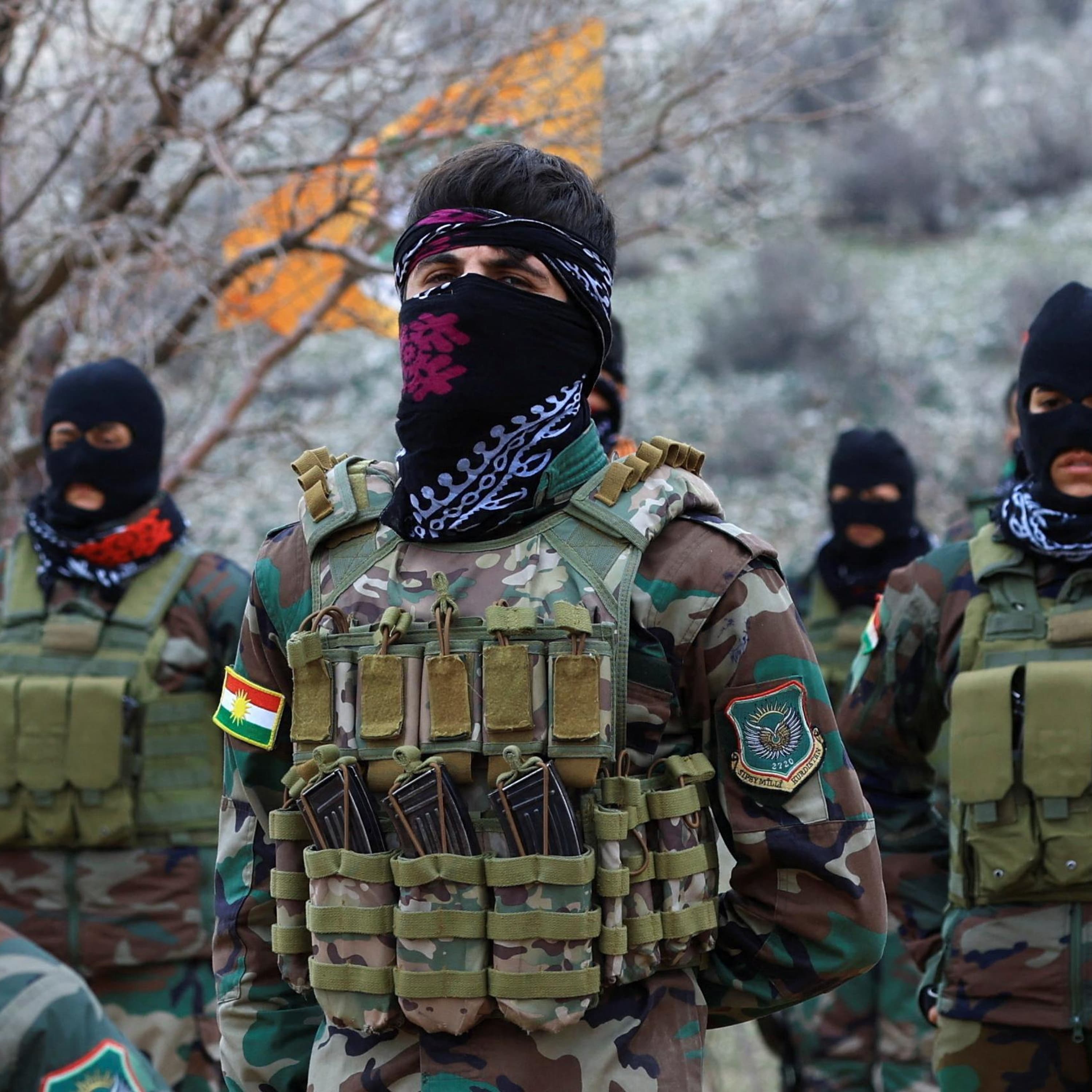
Today in Focus
Why does Trump want Kurdish fighters to join the war in Iran? – The Latest
00:09:07
Iran has warned ‘separatist groups’ against joining the widening conflict in the Middle East and launched strikes against Iraq-based Kurds. Could the involvement of these groups increase the risk of a civil war in Iran? Nosheen Iqbal speaks to deputy head of international news Devika Bhat
Loading summary
Transcript26 lines
- [00:00]
Devika Bhatt
This is the Guardian.
- [00:10]
Farnoosh Tarabi
Hi, this is Farnoosh Tarabi from Sew Money with Farnoosh Tarabi. And today I want to talk to you about Boost Mobile Quick Money tip Stop paying a carrier tax. If your phone bill feels trapped in a pricey plan, this is your sign to unlock savings. Boost Mobile helps you reset your spending. With the $25 Unlimited Forever plan, you can bring your own phone, pay $25 and get unlimited wireless forever. And that simple switch can unlock up to $600 in savings a year. That's money you could put towards paying down debt, investing or something that actually brings you joy. Those savings are based on average annual single line payment of AT&T Verizon and T Mobile customers compared to 12 months on the Boost Mobile Unlimited plan as of January 2020. Details Visit boostmobile.com.
- [01:04]
Devika Bhatt
This looks like it's a new front. There are increasing suggestions that the Americans and Israelis want to work with Kurdish forces on the ground in Iran. It's difficult to know whether Trump and his advisors really have a sense of what they're dealing with in terms of the complexities of Iran and Iranian society. It feels like there's a very real risk this could collapse into something much worse for Iran, the Iranian people and the world at large.
- [01:31]
Noshi Nikbal
As the US And Israel look to armed militia groups in Iran, could it spark civil war? From the Guardians today In Focus, this is the latest. With me, Noshi Neqbal. Joining me today is the Guardian's deputy head of international news, Devika Bhatt. Devika, thank you so much for joining us.
- [01:52]
Devika Bhatt
Thanks for having me.
- [01:54]
Noshi Nikbal
Now, from everything we're reading, this war is about to take on a dramatic new phase. There's reports that the US And Israel are about to armed fund Kurdish militia groups to launch an attack on Iran. Could you explain first of all, Devaka, just how do the Kurds figure in this conflict?
- [02:13]
Devika Bhatt
Yeah, sure. So yes, you're right. This looks like it's a new front. And indeed, what we've seen happen today is actually Iranian forces attack Kurdish territory in Iraq so preemptively. Well, so this feeds, I think into what we think might be happening. So Tehran is sort of saying it's hit hit Iraqi based Kurdish groups. So huge waves of airstrikes hitting dozens of military positions, the frontier posts. And yes, this comes as we think there are increasing suggestions that the Americans and Israelis want to work with Kurdish forces on the ground in Iran.
- [02:54]
Noshi Nikbal
And this isn't the first time that the US has called on Kurdish peshmergas to be their Boots on the ground, so to speak. Devika, what has that relationship looked like in the past? And why would the Kurds want to take up this so called opportunity? What's in it for them?
- [03:08]
Devika Bhatt
So in Iran, it's a Persian majority, but there are lots of other significant minority groups, including the Kurds. There are Kurdish groups in other parts of that sort of neck of the woods too, regionally. So there's this sort of informal Kurdistan area. But the Kurds have never had their own state. But yes, in Iran they constitute about 10% of the population and have long been repressed by the ruling regime. So it has to be said, so far are, we think, on the American and Israeli side, this is definitely an objective. The extent to which the Kurdish groups want to do this is unclear. There have been various sort of statements about that today. There's been some denials about the extent of their involvement, but it's clearly an objective from the Americans and the Israelis, as far as we can tell. But yes, you're right, there's been a long history of cooperation between the US And Kurdish groups. We did see that during the second Gulf War in Iraq, but most recently we saw that in the fighting against Islamic State in Iraq and Syria. To the extent that the Kurds ended up playing a huge role in that conflict, really kind of supporting the Americans, really helping in that effort. To the extent that by the time we got to the defeat of isis, Syrian Democratic Forces, which was a Kurdish force, was controlling huge swathes of the territory.
- [04:24]
Noshi Nikbal
I guess they're not the only militant group that have also been approached. Right. I mean, we're reading reports about balochies and other armed forces, like small ethnic minorities are being recruited potentially by the US And Israel. And I mean, one has to wonder, is the aim here for there to be a full blown out civil war? Like what? How does one explain that?
- [04:43]
Devika Bhatt
Yeah, so I think that's a really interesting question that we have to now see play out. It's going to be critical to what happens inside Iran. As you say, Iran is this very kind of complex society made up, you know, of a huge number of different groups. And it's unclear whether the US Understands the nature of that complexity. You know, of course, the shadow of the Iraq war sort of looms large in one's memory here at the start of the war. It's unclear how much the sort of Western occupation of Iraq was even thinking about sort of Sunni, Shia tensions. And we saw how that ended up. And here it's difficult to know whether Trump and his Advisors really have a sense of what they're dealing with in terms of the complexities of Iran and Iranian society. So it feels like there's a very real risk this could collapse into something much worse for both Iran, the Iranian people and the world at large.
- [05:36]
Noshi Nikbal
And all the while, of course, we talk about the big geopolitical questions, but it is the Iranian civilians who are absolutely suffering in this. And you know, largely their stories have been underreported. Obviously there's difficulties in getting information out of Tehran, but we know that the US and Israel, they're striking hospitals, they're striking schools. We've seen that horrific incident in southern Iran where that girl school, the minab, 165 children dead. Devika, how on earth does the US and Israel explain that when the line is that this war is about targeting military targets, it's about that and not about the Iranian people and targeting them.
- [06:16]
Devika Bhatt
So I think what we've seen this time, and it's really interesting because I think that is right, typically in this sort of situation, the US does say it's a very kind of calculated targeted military operation. In this occasion, actually, I don't think we've necessarily seen that. We've seen Hegseth, the Defense Secretary make these statements that have met with a lot of kind of international criticism because it seems to be sort of saying straight up that this is not a war in which they feel bound by the usual rules of engagement. Indeed, he used the phrase stupid rules of engagement.
- [06:48]
Mike Pompeo
America, regardless of what so called international institutions say, is unleashing the most lethal and precise air power campaign in history, all on our terms with maximum authorities. No stupid rules of engagement, no nation building quagmire, no democracy building exercise, no politically correct wars. We fight to win and we don't waste time or lives. As the President warned, an effort of this scope will include casualties.
- [07:19]
Devika Bhatt
And so it feels like the fact that the gloves are off in this war is being fully broadcast by the US up front with the result that of course you get these horrendous civilian casualties. And it feels like the US is sort of making it very clear that this is a war it wants to win regardless of the cost, which is a really kind of terrifying proposition for everyone.
- [07:42]
Noshi Nikbal
And then in Tehran, of course, there is a succession process to replace Ayatollah Khamenei. And the frontrunner at the moment seems to be his son, Mujtabar Devika. What can you tell me about him and what would his leadership do with the regime? Like how would it impact what that regime then does.
- [07:58]
Devika Bhatt
So what we know about him is so far he hasn't been hugely public facing, but he is believed to be hugely influential behind the scenes. He is a hardliner. He is believed to have played a key role in the sort of suppression of protesters in 2008 where we saw some really, really big protests. And he's believed to have played a big part in sort of putting those down. So he is very much a hardliner. And what that means both inside Iran and in terms of the international or American response feels uncertain. So inside Iran there have obviously been these huge protests in the run up to the war. And having another hardliner who is indeed the son of the previous hardliner feels like that wouldn't be something that would be satisfactory to the people who are out protest. And similarly in the U.S. i mean, Trump has said this week that the worst possible outcome would be, in a typically sort of Trumpian phrase, someone who was worse than the last guy. And again, it's hard to see how this appointment would make the US happy.
- [09:03]
Noshi Nikbal
But presumably he's also a sitting target, right?
- [09:06]
Devika Bhatt
Absolutely. And actually Israel has made that clear. So Israel has said that he is a sitting target. Now, this war is far from over and Israel and the US has made that clear. And it's made clear it is going, going after the very top of the Iranian leadership. So, yes, it does feel like there's a bit of a target on his back now.
- [09:24]
Noshi Nikbal
Well, Devika, thank you for your time.
- [09:26]
Devika Bhatt
Thanks so much for having me.
- [09:28]
Noshi Nikbal
That's it for today. My huge thanks again to Devika Bhatt, our deputy head of international news. Thanks for listening to this episode of the latest Today in Focus. We'll be back with you as usual tomorrow morning and we'll be back tomorrow night. This episode was presented by me, Noshi Nikbal. The producer was Nicola Alexandru, the senior producer was Ryan Ramgobin and the lead producer was Zoe Hitch.
- [09:54]
Devika Bhatt
This is the Guardian.
- [10:04]
Babbel Advertiser
Par le tu francais, hablas espanol? Par le italiano. If you've used Babbel, you would. Babbel's conversation based technique teaches you useful words and phrases to get you speaking quickly about the things you actually talk about about in the real world. With lessons handcrafted by over 200 language experts and voiced by real native speakers, Babbel is like having a private tutor in your pocket. Start speaking with Babbel today. Get up to 55% off your Babbel subscription right now at babbel.com acast spelled B-A B-B-E-L.com acast rules and restrictions may apply.
- [10:44]
Stamps.com Advertiser
Shipping, billing, admin, payroll, marketing. You're managing all the things, so why waste time sending important documents the old fashioned way? Mail and ship when you want how you want with stamps.com print postage on demand 24. 7 and schedule pickups from your office or home. Save up to 90% with automated rate shopping. That's why over 1 million small businesses trust stamps.com go to stamps.com and use code podcast to try stamps.com risk free for 60 days.
- [11:13]
Mike Pompeo
A password manager should be the first security purchase you make for your team. Why? Because compromised passwords are the number one way bad actors attack companies, and small businesses are their favorite targets. But unlike a lot of security challenges, passwords actually have a pretty simple solution. 1Password lets you manage all your business's credentials so you can feel confident that your data stays secure as your company grows. Find out more at 1Password.com specialoffer and start securing every login.