← Today in Focus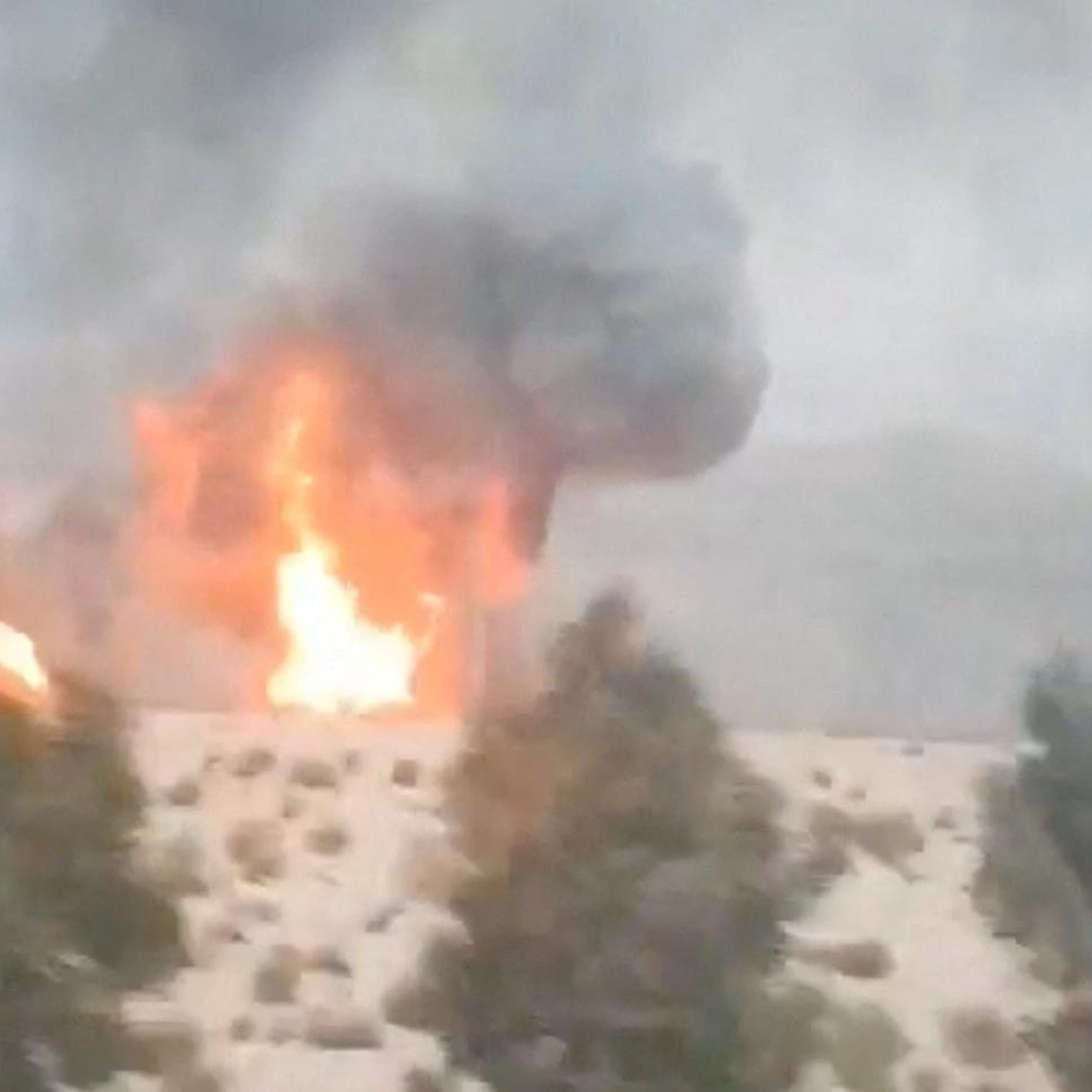
Today in Focus
Why gasfield attacks are major escalation in Iran war – The Latest
00:10:42
Donald Trump is threatening to ‘blow up’ a major Iranian energy facility, as attacks on gasfields across the Middle East send gas and oil prices skyrocketing again. Lucy Hough speaks to senior international reporter Peter Beaumont
Loading summary
Transcript31 lines
- [00:00]
Lucy Hoff
This is the Guardian.
- [00:10]
Farnoosh Tarabi
Hi, this is Farnoosh Tarabi from Sew Money with Farnoosh Tarabi. And today I want to talk to you about Boost Bubble Quick Money tip. Stop paying a carrier tax. If your phone bill feels trapped in a pricey plan, this is your sign to unlock savings. Boost Mobile helps you reset your spending. With the $25 Unlimited Forever plan, you can bring your own phone, pay $25 and get unlimited wireless forever. And that simple switch can unlock up to $600 in savings a year. That's money you could put towards paying down debt, investing or something that actually brings you joy. Those savings are based on average annual single line payment of AT&T, Verizon and T Mobile customers compared to 12 months on the Boost Mobile Unlimited plan as of January 2026. For full details, visit boostmobile.com.
- [01:06]
Peter Beaumont
There is a genuine degree of panic over this. It creates the possibility of an energy crisis that drags on, you know, for months, if not for several years.
- [01:15]
Farnoosh Tarabi
We hold the cards. We have objectives.
- [01:18]
Peter Beaumont
Those objectives are clear. You know, when this started, I had my head in my hands because none of this makes sense. It doesn't make sense in terms of how you manage a conflict diplomatically. They don't seem to have a story.
- [01:29]
Lucy Hoff
The White House claims it knew nothing about an Israeli attack on a gas field in Iran. But can it be believed? And what does it mean for already soaring energy prices around the world? From the Guardians Today In Focus, this is the latest. With me, Lucy Hoff. Joining me is Peter Beaumont, the Guardian's senior international reporter. Thanks so much for coming up to the studio, Peter. So Israel has struck Iran's South Pas gas field, which is this enormous. It's the biggest gas field in the world, isn't it?
- [01:59]
Peter Beaumont
Yes, it's the biggest gas field.
- [02:01]
Lucy Hoff
At the same time that there is this effective blockade of the Strait of Hormuz, this very vital passage in the Persian Gulf, which has hugely disrupted the oil market. Tell me about this strike that Israel has carried out and why it is so significant as an act of aggression.
- [02:17]
Peter Beaumont
Well, as you said, the South Pause gas field is the biggest part of the biggest gas field in the world. It's shared with Qatar and I mean, it's all one system. So I mean, it's not like, you know, here's the Qatari part and here's the Iranian part. It's all joined up. So this produces some of, you know, most of the world's liquefied natural gas. And it's the first time that we've seen Tit for tat strikes on kind of, you know, upstream oil production extraction facilities. That is where the stuff comes out of the ground. And that's kind of really important because up till now it's been on kind of port facilities, on tankers, things that can be sort of, like, reversed quite quickly. But this is kind of the pointy end of kind of energy production. It's kind of, you know, where it comes out of the ground, it's where it's kind of packaged up, sent into the world. And the issue with it is that these things, when they're damaged, take a very long time to repair. So it creates the possibility, even if the war were to end tomorrow, of an energy crisis that drags on, you know, for months, if not for several years. Yeah.
- [03:26]
Lucy Hoff
Because you've damaged this vital source of supply, these complex infrastructures that are incredibly comple. And difficult to rebuild. So, like you say, even if the war ends, we're not talking about weeks or months. This could be a year long.
- [03:39]
Peter Beaumont
Exactly. Look, after the war in Iraq, which I covered, I mean, there was lots of kind of energy facilities that were damaged during the invasion. The Americas were in control of Iraq's south. It took two years, even with access of American contractors, to get sort of oil production roughly back to where it was before the invasion. Here we're talking about sort of LNG facilities. They're particularly problematic in terms of natural gas, liquefied natural gas. You know, they're particularly vulnerable to damage. You know, a lot of the experts are assessing the. The, you know, these are not things you can fix quickly. It's a big job. And that means that you're effectively choking global energy supplies. I mean, you know, it's a problem for Iran because it's the South Pars field, but they've retaliated by hitting Qatar's and doing extensive damage to Qatar's LNG production facility. And that's kind of, you know, one of the biggest sources of natural gas globally in the world.
- [04:45]
Lucy Hoff
And a nation that is very keen not to get drawn into.
- [04:47]
Peter Beaumont
And a nation that is very keen not to get drawn into this war.
- [04:50]
Lucy Hoff
Yeah. And we'll come on to a bit more of the implications of that, but I think. Interesting to listen to what Trump's been saying since this happened. He claims that he knew nothing about the strikes, but there is reporting at the Wall Street Journal and elsewhere at Axios that he was informed about it. I mean, regardless of that, and we probably won't know for certain the fact that Israel would carry out the Strikes, even if there was hesitation in Washington, speaks to something about the way that this conflict is being led by Israel.
- [05:20]
Peter Beaumont
I mean, look, I mean, it's not a credible denial. I mean, we know from the Snowden files that the US Keeps a very close eye on what's going on in isra. This is a joint military operation that's basically an air campaign. I mean, they're going to have extensive kind of joint military air control. You don't want to be flying a jet up there and not know what your other partner's doing. They're going to have a sense of what the Israeli flight plans were. They almost certainly knew this was going to happen. I mean, are we surprised that Trump's lying because it gets him out of a hole? Well, not particularly, because, I mean, he lies all the time. But it does suggest that, you know, there is a genuine degree of panic over this.
- [06:05]
Lucy Hoff
We've just been hearing from Pete Hagseth, the US Defense Secretary self Secretary of War, who has been addressing the US Public directly. He's accusing the media of wanting Americans to think we're somehow spinning towards an endless abyss or a forever war or a quagmire that couldn't be further from the truth. But again, we just can't take that as plausible, given the complexity that you've been.
- [06:28]
Peter Beaumont
Absolutely not. I mean, look, you know, I spent four years covering the war in Iraq, and during that period, you know, US Officials endlessly say, look how brilliant it is. We got rid of Saddam. Look at, look at how much better everything is. And you go to them and say, well, there's been a sectarian murder in this suburb, or this. And I've just come from the funeral and it's like, yeah, well, you expect a few broken eggs, that kind of stuff. And it was always the same thing. No, this isn't heading towards civil war. And then, oh, wow, we're in the middle of a really, really violent civil war. I mean, I was talking with an expert about this yesterday, and, you know, the US Officialdom in those days and their planning was profoundly unimpressive. Yet it looks like leagues ahead of kind of the people who are involved in this conflict. And in terms of analysis, criticism, organizational skills, I mean, you know, when this started, I had my head in my hands because none of this makes sense. It doesn't make sense in kind of diplomatically, it doesn't make sense in terms of how you manage conflict. It doesn't make sense in terms of a kind of story that you tell yourself if you're in charge of this war about where you think it's going, because they don't seem to have a story. They don't have a story. And it's unclear to me how you can then plan for a name that isn't clear in your mind, which has
- [07:44]
Lucy Hoff
also so severely damaged global supply chains, oil prices to surge, it's caused stock markets to tumble. People already seeing their energy, petrol bills starting to rise is going to be politically very damaging, not just for Trump and for other governments too.
- [08:01]
Peter Beaumont
I mean, it's absolutely toxic. I woke up this morning, you know, gas, gas price month ahead, Future is what, 30%? You know, about an hour ago, I checked the stock market. I mean, the footsie was down over 2%. You know, those are our pensions. I mean, that's kind of how we heat our homes. I mean, these, you know, how we fill up our cars and. And it's. You've got to remember that this isn't just about kind of energy. You know, there are byproducts to these extraction processes. I mean, the production of sulfur for phosphate fertilizers. I mean, some of these plants feed into other downstream products, you know, including, you know, chemicals. I mean, this isn't just about sort of gas and kind of the black, oily stuff. It's about every corner of the economy. You know, the flights we take to go on holiday, plastics. It's everything. And it's kind of. It's staggering that no one thought this through.
- [09:01]
Lucy Hoff
And so just lastly, briefly, Peter, I mean, can we look at this act of aggression in the South PAS gas field as a kind of final flurry of aggression before some kind of diplomatic solution is tried to be thrashed out? Or do you think this is the start of a much longer protracted conflict? Obviously, we live in incredibly unpredictable times and it's very difficult to predict the future.
- [09:26]
Peter Beaumont
I'm torn between the two. I mean, kind of wars can end quite violently. I mean, two, 2006 war in Lebanon. It's possible that this is kind of a final gesture by Israel to say to Iran, we've done this, now stay down. The alternative is that the war does drag on, but my feeling is that the global economic shocks have been so profound that there's going to be huge pressure on Israel and Washington, which you would hope would lead them to try and find a way out. But I mean, given individuals involved, I mean, who can predict?
- [10:02]
Lucy Hoff
Who can predict, indeed. Well, thank you for your expertise and thank you for your reporting, Peter.
- [10:07]
Peter Beaumont
Thank you.
- [10:09]
Lucy Hoff
That's it for today. My huge thanks again to Peter Beaumont, Guardian senior international reporter. You can keep up with his reporting over@theguardian.com and do listen to today's episode of our sister podcast Politics Weekly, which is looking at mounting pressure on Kemi Badenoch to sack her Shadow justice secret after he described an event where Muslims gathered to pray in Trafalgar Square as an act of domination. Thanks for listening to this episode of the Latest, the new evening edition of Today in Focus. Today in FOCUS will be back in your feeds as usual tomorrow morning. The Latest will be back tomorrow night. This episode was presented by me, Lucy Hoff. The producer was Bryony Moore. The senior producer was Ryan Ramgobin. The lead producer was Zoe Hitchcock. Chicago, 2011 A cop is murdered.
- [11:02]
Farnoosh Tarabi
Police and prosecutors swear they have the trigger man.
- [11:05]
Lucy Hoff
He swears he didn't do it. How far will each side go to prove they're right?
- [11:10]
Farnoosh Tarabi
Like it's just one bombshell after another. You know, you're like, what? What? The story of a PlayStation, a brain
- [11:18]
Lucy Hoff
eating amoeba and the relentless pursuit of justice. Off duty out now.
- [11:24]
Farnoosh Tarabi
Listen wherever you get your podcasts.
- [11:27]
Lucy Hoff
This is the Guardian.
- [11:39]
Farnoosh Tarabi
Hi, this is Farnoosh Tarabi from so Money with Farnoosh Tarabi. And today I want to talk to you about Boost Mobile. Quick Money Tip Stop paying a carrier tax if your phone phone bill feels trapped in a pricey plan, this is your sign to unlock savings. Boost Mobile helps you reset your spending. With the $25 Unlimited Forever plan, you can bring your own phone, pay $25 and get unlimited wireless forever. And that simple switch can unlock up to $600 in savings a year. That's money you could put towards paying down debt, investing or something that actually brings you joy. Those savings are based on average annual single line payment of AT&T Verizon and T Mobile customers. Comp months on the Boost Mobile Unlimited Plan as of January, 2026. For full offer details, visit boostmobile. Com.