← Today in Focus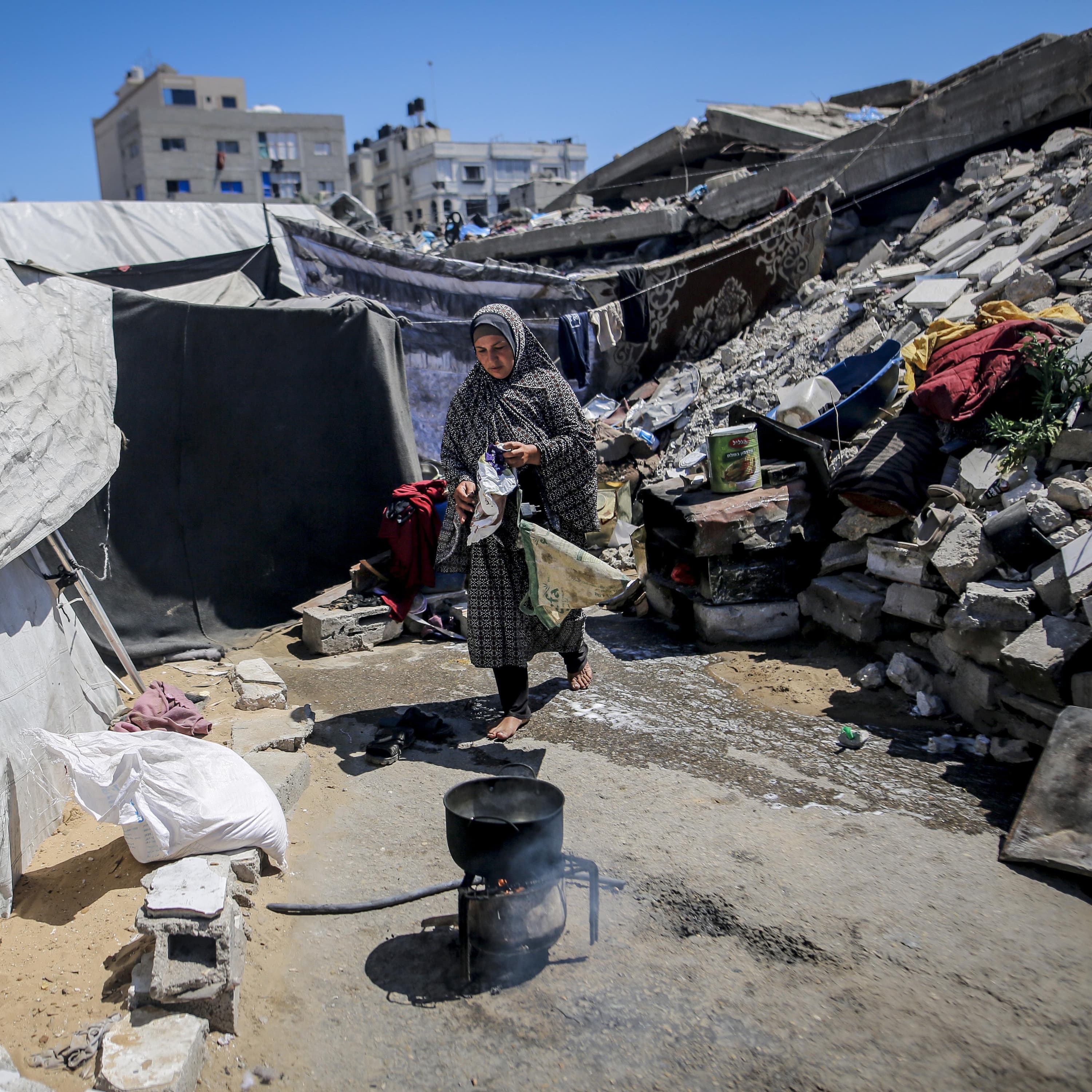
Today in Focus
Why has the world lost sight of the suffering of Palestinians? – The Latest
00:13:09
While the world’s attention is on the war in Iran, the suffering of Palestinians in Gaza and the West Bank has all but fallen out of the headlines. Annie Kelly speaks to the Guardian’s chief Middle East correspondent, Emma Graham-Harrison
Loading summary
Transcript30 lines
- [00:00]
Annie Kelly
This is the Guardian.
- [00:11]
Quo Advertisement Voice
Running a business means juggling a lot of moving parts. And when your communication tools can't keep up, things start to slip. Missed calls, slow replies, scattered conversations. They're not just frustrating, they're lost opportunities and revenue left on the table. That's where quo comes in. Spelled q, U, O. Quo is the number one rated business phone system on G2, trusted by over 90,000 businesses. One shared business number for calls and texts. So every conversation stays visible, organized and accountable. It works from an app or computer. You can keep your existing number, add teammates and sync your CRM, letting you scale without adding complexity. And with built in AI, Quo logs calls, summarizes conversations and flags next steps. Even after hours. Stop missing customers. Stop leaving revenue on the table. Try quo free and get 20% off your first six months@quo.com tech. That's quo.com tech quo. No missed calls, no missed customers.
- [01:25]
Emma Graham Harrison
You can question whether this should really be called a ceasefire. Over 100 people a month on average since the ceasefire began. Being killed would be considered an active conflict. The situation in Gaza just does not seem to be a priority for governments around the world who are concerned about the war in Iran, the impact of higher oil prices on cost of living and inflation and things like that. So certainly at the moment, we see a lot of condemnation, but very little in terms of practical steps that might mean an improvement for people in Gaza who are living in this terrible limbo.
- [01:57]
Annie Kelly
While the world's attention is on the war in Iran, the suffering of Palestinians in Gaza and the west bank has all but fallen out of the headlines from the Guardians today. In Focus, this is the latest. With me, Annie Kelly. Joining me today is Emma Graham Harrison, our chief Middle east correspondent.
- [02:19]
Annie Kelly (Interviewer)
Emma Graham Harrison, you're the Guardian's chief Middle east correspondent, normally based in Jerusalem. So it's really great to have you here in the studio with us today.
- [02:26]
Emma Graham Harrison
Thanks. It's great to be here.
- [02:28]
Annie Kelly (Interviewer)
So six months after the ceasefire, we know that conditions on the ground in Gaza are really horrendous. No aid getting in or not enough aid getting in. Same with medical supplies. People are living in these really dire, appalling conditions. So first off, I was hoping that you would just tell us, you know, what is life like for people inside Gaza at the moment?
- [02:48]
Emma Graham Harrison
So living conditions are still absolutely horrendous. There's still widespread shortages of food for many people. There's a lack of access to clean water and sanitation. People don't have enough water to drink, to wash themselves, to make food safely. Sewage isn't being taken away. So we're seeing tent camps being flooded repeatedly, particularly when it rains. The latest horror is a rat infestation. We're hearing that rats are biting people as they sleep, particularly children. They're gnawing through the sort of few possessions that people have managed to save from, you know, over two years of war, multiple displacements. People who can't get the medical help they need inside Gaza because of the situation, also can't get out. You know, there's not much access to medical evacuation. So it's really, in humanitarian terms, a terrible crisis. And the thing that's particularly frustrating for humanitarians when you to them is that this isn't really a logistical issue. It's simply that there are Israeli restrictions on what can get in, whether that's food, the spare parts they need to mend the water system, medical aid.
- [03:55]
Annie Kelly (Interviewer)
Has that flow of humanitarian aid, has that got worse since the war in Iran? Has it been affected at all over
- [04:02]
Emma Graham Harrison
the last couple of months, it was interesting. You know, the war on Iran sort of immediately sucked up most of the political, diplomatic, media attention in the world. And we did see in the days that followed, Gaza was put under a complete siege again by Israel. Nothing was allowed in, which we hadn't seen for. For over a year. I think at that point, the last time that had happened was in early 2025. That has been lifted. There has been aid allowed in, but it's not been enough. And in April, 29,200 tons of food went in, which sounds like a lot, but there's 2.1 million people in GAZ, and to meet basic needs with sort of, you know, food staples, rice, flour, things like that. The UN says you need 62,000 tons of food a month, so that's well below what's needed. There are some commercial shipments, but, you know, very few people in Gaza have the money to buy food now after this war. Lack of employment. And another really shocking statistic. The UN estimates that a quarter of a million children are going to need treatment for acute malnutrition in 2026 this year. Quarter of a million in Gaza? Yeah.
- [05:12]
Annie Kelly (Interviewer)
And this is with no real capacity of the healthcare system to treat them.
- [05:18]
Emma Graham Harrison
Absolutely. This is in a healthcare system that's on its knees.
- [05:20]
Annie Kelly (Interviewer)
It's also the fact that people are also still living under airstrikes. You know, the UN, I think, now says that more than 800 Palestinians have been killed since the ceasefire. What's going on? What's the scale of those attacks and who are being targeted?
- [05:35]
Emma Graham Harrison
I mean, absolutely. I think it's, you know, you can question whether this should really be called a ceasefire because, you know, in a lot of places that rate of death that's, you know, over 100 people a month on average since the ceasefire began, being killed would be considered an active conflict. Many of the people being killed are civilians. These are both shootings near the yellow line or the so called yellow line that delineates the Israeli controlled part of Gaza and airstrikes really across all of Gaza where Palestinians are still living.
- [06:05]
Annie Kelly (Interviewer)
I saw just this week that a paramedic had been killed. It's kind of aid workers, journalists as well, who are also being seemingly targeted.
- [06:14]
Emma Graham Harrison
I mean, last week, you know, coming back to this issue of the shortages of clean water, two drivers who take trucks of water from a water pipe to tented camps where obviously people don't have any piped water, were shot when they were at the water collection point. You know, the Israeli response was that troops were acting in self defense because they perceived a threat. But you know, certainly this is an area that should have been very much known as a humanitarian place where troops should be extra careful.
- [06:40]
Annie Kelly (Interviewer)
It's not just Gaza, is it? I mean, you've also been reporting a lot about violence in the west bank against Palestinian civilians, which seems from the outside to have been kind of ramping up since the war in Iran began as well, what has been happening there.
- [06:56]
Emma Graham Harrison
So there's been a really striking surge in violence by both Israeli settlers and, and Israeli soldiers in the occupied west bank since the beginning of the war in Iran. You know, people I've spoken to, diplomats, Israeli activists who monitor it, say that their sense is that the people behind this violence feel empowered by the fact that, you know, their own government and the world are very much focused on what's happening, you know, in Tehran in the Strait of Hormuz. And, you know, the violence has got so bad that this isn't just something that's causing alarm among activists or critics. We've seen very senior members of the Israeli establishment raising the highest level of alarm about this. So for instance, last week, Tamir Pardo, who was head of the Mossad intelligence agency under Netanyahu from 2011 to 2016, went to the occupied west bank to see some of the places that have been attacked, meet some of the survivors. And on that trip, this is a man whose, whose mother is a Holocaust survivor survivor. He said that the violence he saw reminded him of attacks on Jewish communities in Europe in the last century. And being there, he felt ashamed to be Jewish.
- [08:11]
Annie Kelly (Interviewer)
I mean that's so. That's really strong, isn't it? From a really unexpected source.
- [08:15]
Emma Graham Harrison
Absolutely. From, you know, from the heart of Israel's security establishment. And you know, a couple of weeks before that I spoke to former Prime Minister Ehud Olmat who called for an intervention by the icc. He called for the International Criminal Court to intervene to save Palestinians and Israelis from what he called terror attacks in the occupied west bank because he said the Israeli judicial and security system was no longer functioning there.
- [08:46]
Annie Kelly (Interviewer)
I mean, some of the cases are so heartbreaking. This week we had 14 year old boy killed in the west bank when settlers opened fire near his school. I mean it's those individual stories that really bring it home, isn't it?
- [08:59]
Emma Graham Harrison
So we went to that village to speak to his family, to his community. We saw the place where he was shot. We went a couple of days later, there was still a very large blood stain on the ground. He was barely a meter outside his school gate and the shooter was aiming towards the school when he killed this boy called Alse. And to put it in further context, this was the second bereavement in their family. Alice's father had been killed seven years earlier, shot by a settler. We've seen other targeted attacks on education throughout the West Bank. The same day that Aus was killed, a school a few dozen kilometers to the north was bulldozed. Settlers went in overnight. This was a school funded by European governments, including the British government and the French government. They went in with bulldozers and just knocked the whole school down, leaving just a sort of pile of rubbish. The French have asked for compensation, but there's this sense that really there's nothing stopping these settlers. And in the south of the occupied west bank, settlers have just put razor wire across a road that children from the village of Omelhe used to get to school. So they can't go to school.
- [10:10]
Annie Kelly (Interviewer)
So you've got this expansion of violence in the west bank which looks like with complete impunity. And you've also got this, what looks like a kind of pushing back of that yellow line that Israel put into place at the end of the ceasefire. So what kind of is Israel's end goal here do you think, at the moment? Where is all of this leaving?
- [10:31]
Emma Graham Harrison
You know, I think that's a very good question. And Israel has elections later this year that I think are going to perhaps provide some answer to that because there are people in the current government who are in the cabinet who are very clear that they want to annex the occupied West Bank. That a lot of what they're doing now is with the specific aim of preventing the creation of a Palestinian state. They want to go back into Gaza, they want to set up settlements there. And, you know, in a couple of months, the elections have to be held by October. They and other leaders are putting that vision to the Israeli public, and we'll, we'll. We'll see what they. What they decide. But certainly at the moment, there are large sections of the Israeli establishment that support what's going on. I mean, you can see that in the fact that when you talk about impunity, no Israeli has been indicted for killing a Palestinian in the occupied west bank since an attack in 2019. So that's this entire decade. There's a couple of people who've been arrested, but none of them have been charged. So every Palestinian who was killed, you know, since 2019 in the occupied west bank, there has been no legal accountability for any of those deaths.
- [11:53]
Annie Kelly (Interviewer)
I mean, you know, for the last 10 minutes, we've been talking about killing of children, killing of, you know, civilians, starving civilians of AIDS and water. With their war ongoing in Iran at the moment and the world distracted, can you see this ending anytime soon?
- [12:11]
Emma Graham Harrison
So, you know, there's two sources of potential change to behavior. There's internal domestic pressure inside Israel and external pressure. We're seeing this really unprecedented increase in domestic pressure inside Israel over violence by settlers and soldiers in the occupied West Bank. And it'll be interesting to see whether that affects what's happening there. We've saw last week when there was a soldier who attacked a statue of Jesus in Lebanon, that international pressure can be brought to bear very rapidly and with a great impact. But unfortunately, when it comes to Gaza, that the situation in Gaza just does not seem to be a priority for governments around the world who are concerned about the war in Iran, the impact of higher oil prices on cost of living and inflation and things like that. So certainly at the moment, we see a lot of condemnation, but very little in terms of practical steps that might mean an improvement for people in Gaza who are living in this terrible limbo. Really neither war nor peace. A sort of really bitter, difficult present where, you know, they really struggle to hold onto dignity and really no hope in the near term for a better future.
- [13:36]
Annie Kelly (Interviewer)
Really, you know, terrible to think of all those people having to suffer in those conditions. And thank you, Emma, for all for coming here today and also for all of your reporting.
- [13:45]
Emma Graham Harrison
Thank you.
- [13:46]
Annie Kelly
And that's it for today. My thanks again to Emma Graham Harrison, and you can read all of her brilliant reporting@theguardian.com and thanks for listening to this episode of the latest Today in Focus is back on Monday. The latest is back on Monday night. This episode was presented by me, Annie Kelly. It was produced by Bryony Moore and Nicola Alexandru. The senior producer was Ryan Ramgobin and the lead producer was Zoe Hitch. This is the Guardian.
- [14:27]
Barclays Brief Advertisement Voice
Today's markets move fast. Get the insights you need in 10 minutes with the Barclays Brief, a new podcast from Barclays Investment Bank. Through sharp dialogue and scenario based analysis, our leading experts analyze key market themes each week. So whether you're managing a portfolio or leading a business, the Barclays Brief podcast can help you make smarter decisions today. Stay sharp, Stay brief. Find Barclays Brief Wherever you get your podcasts.