← Today in Focus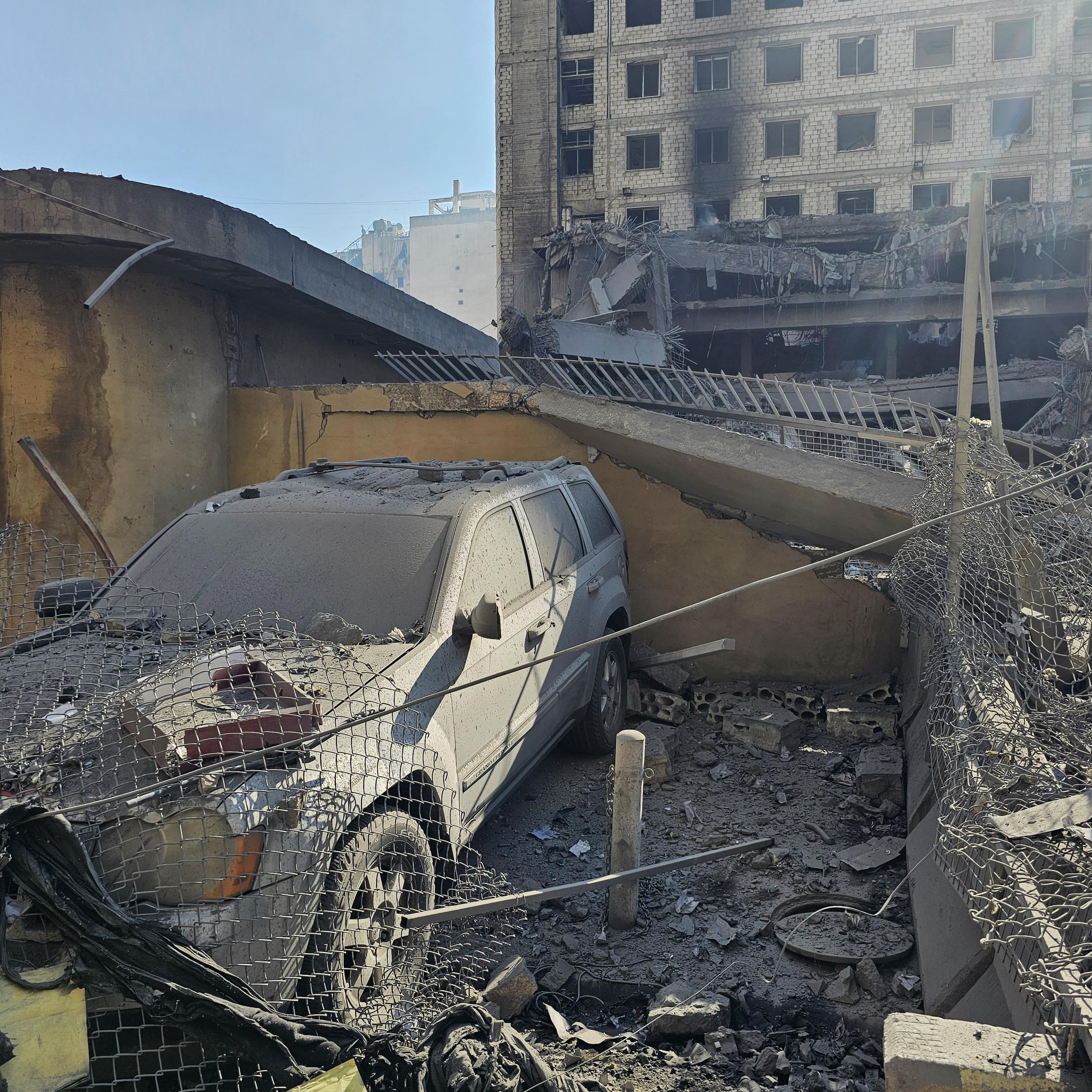
Today in Focus
War widens in the Middle East – The Latest
00:09:43
Israel has deployed soldiers on the ground in southern Lebanon and is carrying out heavy airstrikes in the country as conflict in the Middle East continues to spread. Nosheen Iqbal speaks to the Beirut-based journalist Will Christou
Loading summary
Transcript26 lines
- [00:00]
Noshi Nikbal
This is the Guardian.
- [00:11]
Stamps.com Advertiser
Shipping, billing, admin, payroll, marketing. You're managing all the things. So why waste time sending important documents the old fashioned way? Mail and ship when you want, how you want. With stamps.com print postage on demand 24, 7 and schedule pickups from your office or home. Save up to 90% with automated rate shopping. That's why over 1 million small businesses trust stamps.com go to stamps.com and use code podcast to try stamps.com risk free for 60 days.
- [00:44]
Will Christou
Instantly, I knew that we were at war again and people were just displaced in the streets lying there, some on thin mattresses, some with nothing. Hezbollah joining in is just one more actor that's joining in and one more step towards, towards a fully regional war. It feels very like World War I Bismarckian system of alliances. Right. The danger with that is you send a missile to the wrong place at the wrong time across a red line you didn't know existed. Things get bad very quickly.
- [01:10]
Noshi Nikbal
The war on Iran spreads across the Middle east as Israel sends ground troops into the south of Lebanon. From the Guardians today In focus, this is the latest with me, Noshi Nikbal. Joining me today is Will Christou, our reporter based in Beirut. Well, thank you so much for joining us today. Now you're speaking to us from Beirut, the capital of Lebanon, which has been under serious bombardment from Israeli military strikes since the early hours of Monday morning. Now, Israel has sent ground troops into southern Lebanon. But I wonder if you could just give me a sense of what it's like where you are right now because you can quite literally hear the strikes, right?
- [01:48]
Will Christou
Yeah. The first indication that the war had started was a series of explosions at like 3:00am you know, I popped out of bed and instantly I knew that we were at war again. And everyone in Beirut remembered those sounds from two years ago. And very quickly, you know, sort of a warlike atmosphere sort of took over the country. And the city streets were full of traffic and I went to do some reporting and people were just, you know, displaced in the streets, lying there, some on thin mattresses, some with nothing. And these are scenes that we've seen before. You know, we talked about 18 months ago, back when the first Hezbollah Isra happened, and it was exactly the same. And we've just returned back to the same thing. And so I think for a lot of people here in Lebanon, they're very wary of what's happening and they're tired.
- [02:34]
Noshi Nikbal
And in terms of the geography of the city, could you explain a bit about where the strikes are taking place and where People are evacuating to or trying to take shelter.
- [02:43]
Will Christou
So the strikes that I described being woken up by were in Dahya, the southern suburbs of Beirut, Hezbollah stronghold. And since the strikes on Monday night, Israel has been hitting periodically throughout the day. About an hour ago I heard a couple more strikes and we saw smoke coming over the skyline of the city. So most people in Beirut have fled from that area to safer areas downtown, to shelters that have been opened up. And then you also have the south of the country and the Bacal Valley. And Israel has been widely hitting there, hitting over 100 targets over the last 24 hours. And people have been fleeing northwards, whether that's to Beirut or cities even more northwards like Tripoli.
- [03:20]
Noshi Nikbal
And as you said, it's only been 18 months since that last conflict erupted. And I wonder what the mood is amongst civilians because, you know, last time you reported there was a real sense of solidarity, that there were queues coming out of blood banks. But how does it feel for people now?
- [03:36]
Will Christou
Yeah, I think last time, you know, it happened with the boom, Israel just started bombing southern Lebanon and hitting the southern suburbs of Beirut and people were shocked. It's not nothing like that had happened before. And like you said, there was a real sense of solidarity or at least a feeling that was were in this together because it felt disproportionate, it felt like it came out of nowhere this time around. This round of conflict was started by Hezbollah firing weapons at Israel. And this was in support of Iran. So now there's not that feeling of solidarity. And to many Lebanese, even people within the power base of Hezbollah, this was something that wasn't needed. Hezbollah didn't have to enter the war. They didn't have to drag Lebanon into a war with Israel and, you know, cause all this destruction. And many people, particularly within Hezbollah space, are tired of all this happening.
- [04:22]
Noshi Nikbal
Well, could you just explain Hezbollah in this context and their relationship with Iran, why they did strike against Israel in those early strikes in retaliation for the killing of the Ayatollah. And also I guess their relationship with the Lebanese people and the Lebanese government.
- [04:38]
Will Christou
Yeah. So Hezbollah is a group that came out of the Israeli occupation of southern Lebanon in the 80s. They were so called resistance group, they were trained by Iran, but their primary goal was to evict Israel from southern Le on 2000, that happened, Israel left and since then they've dominated Lebanese politics for the last 20 years or so. Now what people are saying, what analysts are saying, that since the killing of Hassan Nasrallah and since the last war, which saw Hezbollah really just demolished. What they're saying is that Iran has taken a much stronger hold of the group. They've helped reconstruct it, they've helped reconsolidate power. And so a lot of the decision making is less in the hands of the leadership here in Lebanon and more of the leadership in Iran. And so people in Lebanon are questioning, even those who support Hezbollah, whether or not this decision to enter the war was one that was the interest of the Lebanese people, or one that was on behalf of their patron, Iran.
- [05:30]
Noshi Nikbal
And of course, the group has been in deep conflict with Israel. I mean, this isn't the first time we've seen fighting break out between the two. I mean, most people remember the horrific pager incidents of 2024. Ground troops have now from Israel, entered in southern Lebanon. How do you think Hezbollah will respond and what is the goal here?
- [05:49]
Will Christou
Yeah, so I think what Israel has done for the last 24 hours is they've issued evacuation orders for vast swaths of southern Lebanon. This morning they issued an evacuation order for another 80 towns. Yesterday it was 50 towns and some more after that. The effect of that is that they've essentially emptied out most of south Lebanon and then they moved troops onto the border and said that they would advance further into the territory. So what they've created is an empty, let's say, swath of land near the Bor. Now, how Hezbollah is going to respond, we have to see. Up until now, they've just been launching rockets at Israel, but they this morning declared what they called an open war with Israel. Does that mean they're going to go and they're going to fight guns in hand with Israeli soldiers in the south? I don't know. And another thing to say is that this group, you know, it's not the group it used to be. It used to be bigger than most European militaries, strongest non state militia in the world. But since the war two years ago, it's been pounded every day by Israel. So what can it actually do? I don't know.
- [06:45]
Noshi Nikbal
That actually leads to my next question. In terms of Hezbollah's resource and its capability, I mean, how big is the group? And given the absolute decimation of Iran's leadership, how will it fight this war? And how long do you think it can go on for?
- [06:59]
Will Christou
It's a good question. You know, Iran was its main sponsor. It used to receive weapons through Syria. But after the fall of Bashar Al Assad, it's not been receiving those weapons, it's not been receiving that money. And so It's a reduced. You know, so it's kind of a shadow of what it used to be. Nonetheless, it entered this war. And so the question is you, what can it actually do to help Iran? If anything, you know, the last three rocket volleys it sent at Israel were intercepted. Didn't do any damage. But, you know, something that someone said to me the other day, I think that that's applicable is in the last war, everyone overestimated Hezbollah. They thought it was much stronger than it was this time. People are underestimating Hezbollah. It might be a shadow of what it used to be, but it still has the capacity to do strong damage.
- [07:40]
Noshi Nikbal
And in the meantime, Israel has declared that it will keep going until the threat from Hezbollah has been extinguished. Will, if that's the case, how long could this war go on? And is there anything the Lebanese government can do to save its people?
- [07:55]
Will Christou
I think that's what everyone's wondering. How long is this going to last? You know, Israel's definition of Hezbollah being defeated might be quite a tough one. You know, they might want to get rid of every last soldier, get rid of every last arm. So this could go on for quite a while. I mean, we've seen Israel bomb Hezbollah almost every day for the last 18 months. So for them, it's not a huge cost to continue. Now, the Lebanese state that they're trying to intervene, they want to stop Lebanon from being pulled into a war, but it seems like it's not up to them. The army so far has not been able to stop Hezbollah from launching missiles at Israel. And Israel now seems determined to finish the job that they didn't finish two years ago and will.
- [08:37]
Noshi Nikbal
Finally, where does this leave the broader regional conflict? I mean, if Israel is fighting this war on multiple fronts, where does it leave the rest of the region?
- [08:47]
Will Christou
Yeah, I think what's been pretty crazy to watch is just how quickly this war that was supposed to be just between Washington, Tehran, Tel Aviv and Tehran just turned into a regional war overnight. You know, within hours, we had Iran hitting the Gulf, and now we have nine countries pulled into this war. Hezbollah joining in is just one more actor that's joining in and one more sort of step towards a fully regional war. It feels very like World War I, Bismarckian system of alliances. Right. It seems like everyone's on someone else's side, and one thing leads to another. The danger with that is that what seems like a straightforward conflict at first gets very complicated very quick. You know, you send a missile to the wrong place at the wrong time, you cross a red line you didn't know existed. Things get bad very quickly. So right now you know there is bombing in Lebanon, for example. There's bombing across the region, but damage could be much, much worse.
- [09:39]
Noshi Nikbal
Well, will do. Stay safe.
- [09:42]
Will Christou
Thank you.
- [09:42]
Noshi Nikbal
We'll speak to you soon. That's it for today. My huge thanks again to Will Christou. Thanks for listening to this episode of the latest Today in Focus will be back with you as usual tomorrow morning and we'll be back tomorrow night. This episode was presented by me, Noshi Nikbal. The producers were Bryony Moore and Nicola Alexandru. The senior producer was Ryan Ramgobin and the lead producer was Zoe Hitch.
- [10:11]
Will Christou
This is the Guardian.
- [10:20]
Babbel Advertiser
Par le tu francais hablas espanol par le italiano. If you've used Babbel, you would Babbel's conversation based technique teaches you useful words and phrases to get you speaking quickly about the things you actually talk about out in the real world. With lessons handcrafted by over 200 language experts and voiced by real native speakers, Babbel is like having a private tutor in your pocket. Start speaking with Babbel today. Get up to 55% off your Babbel subscription right now at babbel.com acast spelled B-A B B E L.com acast rules and restrictions may apply.
- [11:00]
1Password Advertiser
A password manager should be the first security purchase you make for your team. Why? Because compromised passwords are the number one way bad actors attack companies and small businesses are their favorite targets. But unlike a lot of security challenges, passwords actually have a pretty simple solution. 1Password lets you manage all your business's credentials so you can feel confident that your data stays secure as your company grows. Find out more@1Password.com specialoffer and and start securing every login.
- [11:31]
Tommy John Advertiser
Guys, it's no use putting it off. The best time for an underwear refresh is now. Tommy John Underwear is designed for a perfect fit that stays put all day. There's zero chafe, thanks to four times more stretch than competing brands and their innovative horizontal quickdraw Fly is a game changer. With over 30 million pairs sold. There are thousands of men out there more comfortable than you. Don't settle for less. Go to tommyjohn.com today for 25% off your first order or with code comfort. That's TommyJohn comfort. Tommy John Comfort Perfected.