← Today in Focus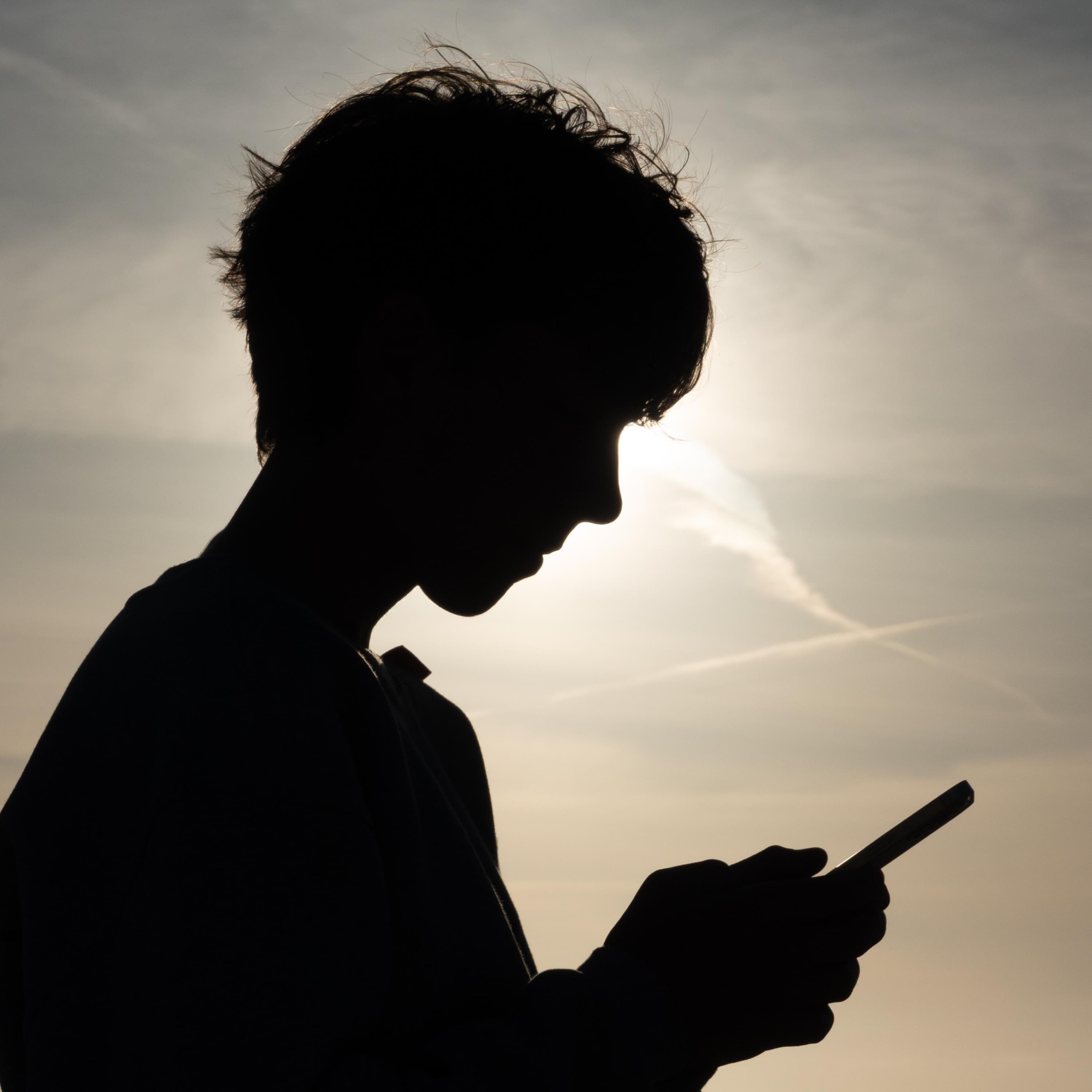
Today in Focus
Will a ban keep the UK’s kids off social media?
00:32:13
Governments around the world want to keep under-16s off YouTube, TikTok and Instagram. Australia has introduced a ban and now the UK is doing the same. Stephen Byrne and Chris Stokel-Walker report
Loading summary
Transcript114 lines
- [00:00]
Chris Stoeckl Walker
This is the Guardian.
- [00:07]
Helen Pitt
Today. The UK's social media ban for under 16s.
- [00:16]
Podcast Advertiser
Today In Focus is supported by Paramount plus the agency. All episode streaming June 21st on Paramount. In the world of espionage, truth is a moving target and every decision carries a dangerous consequence. This new mission explores what it means to live as a double agent. Twice the lies, twice the risk. The lines between ally and enemy blur like never before. And survival depends on trusting no one. Starring Michael Fassbender, Jeffrey Wright, Jodie Turner Smith and Richard Gere. Don't miss the Agency. All episode streaming June 21st on Paramount Plus.
- [01:17]
Keir Starmer
Today is a big moment for our country. This is a big step, real change for our children and our future.
- [01:28]
Helen Pitt
On Monday, Keir Starmer made a big
- [01:31]
Keir Starmer
announcement because today I can announce that the government will ban access to social media for all children under the age of 16.
- [01:43]
Helen Pitt
Nine out of ten parents support the ban, according to the government, but children, well, they are not quite so keen.
- [01:50]
Nicola (Fabio's Mum)
So what do you think of that social media ban for under 16s?
- [01:53]
Fabio
Does it include YouTube? Yeah, I'm probably just going to watch every single YouTube video in the world before then.
- [02:01]
Helen Pitt
This is 11 year old Garvey talking to his mum, Rosie.
- [02:04]
Fabio
My friends, they're not very happy with the decision either, so they're probably. They've said, Keir Starmer's so annoying.
- [02:18]
Grace
Snapchat, for example, is one of the best things that's happened to me and that sounds really sad and this is what this generation has come to, but I don't think adults understand it's not going to affect them. That is how we talk to our friends and fit in.
- [02:32]
Helen Pitt
This is Grace, she's 13.
- [02:34]
Grace
I just genuinely love how I can communicate with my friends, but also TikTok like I love sending memes to my friends and that sounds like little things, but we've grown up with this in that generation and I think instead of completely removing it, we should be allowed to explore it in a safe way.
- [02:53]
Fabio
I like watching funny animal videos and seeing what my friends are up to with their stories. I normally scroll on these apps, but from time to time I post dance videos because I really like dancing.
- [03:11]
Helen Pitt
This is Fabio, age 12.
- [03:13]
Fabio
I believe I'm mature enough to use these apps because I know if I say anything bad that will stay on the Internet forever and there will be consequences. If everyone knows that, then nothing bad will happen on social media.
- [03:31]
Helen Pitt
Fabio's mum, Nicola disagrees.
- [03:34]
Nicola (Fabio's Mum)
I used to let my son post videos of himself dancing. He sold this to me because all of his friends were doing it. So he wanted to connect with them, he wanted to connect with other people in the dance world and he also wanted to see himself improving over time. I allowed him to do it. And then after the first few videos, I went and had a look at the viewer analytics and it was all men between the ages of 40 and 60, not other young dancing children. And that just was horrible. So I suppose this law gives them a little bit of protection, but it also gives us parents a legal basis to disallow things. And it's not just Mum being a party pooper.
- [04:35]
Helen Pitt
From the Guardian, I'm Helen Pitt, Today in Focus. Is this the end of Infinite scroll for our children?
- [04:41]
Adam
Foreign.
- [04:47]
Helen Pitt
Walker, welcome back to Today in Focus. Great to see you.
- [04:49]
Chris Stoeckl Walker
Thanks for having me.
- [04:50]
Helen Pitt
So you're a technology journalist who's been following the anti social media wave across the world very closely in recent years. And Keir Starmer, for reasons that we will probably speculate about a bit later in this episode, announced a pretty draconian ban for the UK on Monday. Can you just tell us first, what exactly is included in this ban, what is not, and how is it going to work in practice?
- [05:11]
Chris Stoeckl Walker
Well, it's exceptionally difficult to actually know, Helen, because as we have probably going to get onto a little bit later on, this seems relatively last minute, but we understand the broad brushstrokes of what this is going to be. So it's been touted as an Australia plus approach. Some of the platforms that have been named as being targeted as part of this ban include the likes of YouTube, Instagram, Snapchat, TikTok, a few others as well. That's the Australia part of this. The plus side is where the government is claiming this is really revolutionary and that, as far as we can tell, seems to encompass two broad areas. Number one, they're going to be tackling live streaming and gaming services, right? And then also they have this element here of a curfew which is plus borrowed from China, effectively, where actually if it's a certain time of night, you probably won't be allowed to use your phone if you are not of age.
- [06:09]
Helen Pitt
And which apps are not included in this ban.
- [06:12]
Chris Stoeckl Walker
So messaging apps are seen as outside of the purview of this. That's the one thing that we really do know in detail. So things like WhatsApp, you will still be able to use.
- [06:21]
Helen Pitt
And what about Telegram Discord? Are they on the banned list or not?
- [06:25]
Chris Stoeckl Walker
We don't know. I'm not certain that they are. Telegram, obviously. Hugely concerning, actually, in terms of all of the messaging Apps.
- [06:33]
Helen Pitt
The latest app that is sounding the alarm is Telegram messenger, commonly known as Telegram. And just this week the app's CEO is now under preliminary charges with over alleged criminal activity on this platform that
- [06:46]
Chris Stoeckl Walker
is probably the one in which you wouldn't want your kid to necessarily be on. Yet there seems to be these odd loopholes that might well be ironed out in the fullness of time by the government. It just, they, they're not necessarily so strong on the detail at this stage yet.
- [07:00]
Helen Pitt
But I think YouTube Kids is also not included. Right. So that, so it's not that children can't watch YouTube anymore, but they can only watch the one that has been specially curated for them.
- [07:09]
Chris Stoeckl Walker
Yes, that's correct. They can watch cartoons for five year olds if you are a old, which I'm sure will thrill the 13 year olds of the UK. I mean that is an interesting distinction. Right. Because YouTube sits outside of this whole thing in a weird way, yet he's included in this social media ban and I'm not really certain why other than perhaps Keir Starmer doesn't like MrBeast or something like that.
- [07:34]
Helen Pitt
I don't like Mr.
- [07:35]
Chris Stoeckl Walker
Beast, nobody likes Mr. Beast. But there are, there's a world of YouTube outside of MrBeast, Helen, which you can watch and many of, many of the people on there are actually really useful and really informative.
- [07:45]
Helen Pitt
Yeah, one of the children that I asked about this, he's called Adam, he's nine and he's from Glasgow. He goes on adult YouTube to watch
- [07:51]
Adam
tutorials and I don't think there should be a ban on YouTube for under 16 because some people don't use it just for scrolling and scrolling and stuff like that. Like me, people use it for Lego tips or how to build and art and miniature painting and drawing tutorials and stuff like that. So that's why I don't think there should be a ban on it.
- [08:28]
Chris Stoeckl Walker
That touches on, I think one of the problems here, which is it doesn't feel like this whole thing has been thought through necessarily because actually you could say, well, it's certain types of content on YouTube that shouldn't be watched, but actually it's just all of YouTube and so good luck to you, you are in the GCSE Class of 2027 trying to do some last minute revision on YouTube for important complicated stuff because you are not going to be able to.
- [08:53]
Helen Pitt
And I mean there were some reports, weren't there, that the onus is going to be on the phone companies. So Apple, Samsung, etc. And that when the devices are sold that they're going to have to be checking who's going to be using it. The government has suggested on Tuesday morning that that isn't the case. So whose responsibility is it going to be to make sure that there isn't a 13, 14, 15 year old who's borrowed somebo else's passport or just simply put in the wrong date of birth when they apply for an account?
- [09:21]
Chris Stoeckl Walker
Whoever fights the least against the government to have the responsibility for that is the truth telling. We've seen this not just in the uk, but we've seen this in Europe and elsewhere. There is a game of passing the parcel going on here and every company in and around the tech space doesn't want to be the one still holding it when the music stops. So we've also seen that the tech companies themselves saying they believe it's not their responsibility and saying actually it'll be far easier for the device. Yeah, exactly. Everybody is passing the buck here. They say that it would be easier for this to be a one size fits all approach done on the device. The government seems to be saying that they want it to be done individually at a social media app by app level. That to me seems like madness. But then truthfully, the whole thing to me seems like madness.
- [10:11]
Helen Pitt
Yeah. And Keir Starmer described the ban as a line in the sand for tech companies. As you've already said, they're trying to pass the book to others. But what are their primary objections? I mean, I saw Elon Musk tweeting on X that he called it a censorship law and that the real goal is to enable the UK government to track everyone.
- [10:32]
Chris Stoeckl Walker
I think that's certainly the view of those who ascribe to Donald Trump's sensibilities on this. And frankly, a lot of the tech sector at the minute is very much playing to the Trump administration because they know that that is the ultimate body that they have to answer to. I think it's not that. I just think it's a really poorly thought through Sol. So it is an attempt, I think, to try and tackle a real issue. We've had internal documentation from many of these big companies that has been released through whistleblowers, through reporting by the Guardian and others, saying that actually they believe that there are elements of their apps that are harmful to younger users, but they don't want to say that.
- [11:16]
Nicola (Fabio's Mum)
Mr. Zuckerberg did meta purposely designed the platform to farm children.
- [11:20]
Keir Starmer
He may be the CEO of a trillion dollar tech giant.
- [11:23]
Helen Pitt
Do you have a message to the parents?
- [11:24]
Keir Starmer
But Today, Mark Zuckerberg was facing not just questions outside court, but also a lengthy cross examination inside as well.
- [11:33]
Helen Pitt
You can imagine that within these social media companies there is a certain amount of panic about the direction of travel globally over these sorts of issues. And I'm sure, like me, you've read the book called Careless People about life at the highest echelons of Facebook. It's by a woman called Sarah Williams who worked very closely with Mark Zuckerberg. There's gag order that prevents it from talking about the allegations in the book now, but if you read it, it is clear that actually when countries were taking measures to ban or restrict Facebook, Zuckerberg and co were seriously worried about it. So can we assume then that these bans are causing serious consternation among Zuckerberg and his ilk?
- [12:12]
Chris Stoeckl Walker
Yeah, they are absolutely worried about this. I mean, we only need to look, for instance at the fact that there has been public lawsuits that have found against these platforms for the harm against Kayleigh kgm, as she was known, a teenager in the United States, and the fact that after that suit, big tech platforms have subsequently settled before they got to court other actions in the similar sort of vein. So I think there is a recognition here that social media platforms are a bit on the back foot when it comes to these sorts of things and that the tide is turned.
- [12:46]
Helen Pitt
Yeah, and let's not forget that it's fantastically lucrative for them, this market. There was research from 2023 which found that the social media companies make $11 billion a year from advertising to American young people. And on Snapchat, nearly half of overall advertising revenue in 2022. So actually ages ago now was estimated to have come from people aged under 17. So how worried are they about this really hitting their bottom line?
- [13:13]
Chris Stoeckl Walker
I think that there are significant market young people to these platforms, not necessarily just for the here and now, but for the years to come. The idea of building, yeah, building brand loyalty is a really important thing. Right. So if you say that we are the destination of choice for young people, you ingrain in them habits and this is in part, I think, why the government's approach of something needs to be done to try and get us out of this kind of horrible, vicious cycle of almost addiction to these platforms.
- [13:53]
Helen Pitt
Stephen Byrne, you're an executive producer for Guardian Australia and you specialise in short form videos, the kind of videos that end up on Instagram, TikTok YouTube shorts, which children in the UK will be banned from watching come springtime and which Aussie kids and you live in Australia, of course, have not been able to access, in theory, for the past six months. How is the ban going so far down under?
- [14:15]
Stephen Byrne
That's a huge question because when you look at it, it's only been just over six months. So to make any total evaluation of it, I think we'll need a little bit longer in time. We do get this question from the UK all the time. How is it going? What's happening? There are stats flying around that seven in 10 young people are still on these social media platforms and they're still accessing it either through or other methods, speaking to people, though it's been mixed. My godmother and cousin over in Sydney has spoken quite openly with me about how incredible it has been for her 13 year old and her 10 year old how they'd stopped asking for social media.
- [14:56]
Helen Pitt
We've heard from children and young teenagers at the top of the show, many of whom can acknowledge that there are harms of social media. They've all been taught it at school and yet they are aghast at the thought that they won't be able to go on YouTube, that they won't be able to go on Snapchat, they're gonna lose their Snapstreak and all that kind of thing. And I wonder, was it the same in Australia at the start? And do you still hear a lot of thrashing and wailing from children?
- [15:20]
Stephen Byrne
Yes. I mean, those few months before the ban came in in December, there was definitely a lot of outspoken young people speaking about how they were gonna not only lose access to, you know, their favorite apps, the media they consume, but also at the exact same time, access to conversate with their friends. They were afraid that the communication they friends after they went home, which back in the day I would have used MSN the second I got home, brb, TTFN and all that sort of stuff. That was one of the biggest kind of fears of them was not being able to communicate with their friendship groups. There are other ways that they can do that since it has come in. Yes, Facebook is blocked, but messenger isn't. WhatsApp isn't one of the apps that is blocked. So there is still ways for young people to communicate in that way.
- [16:05]
Helen Pitt
And I confess I wanted to have you on the show today not just because you're an expert in vertical video, but also because you were a child Internet back in Ireland. So if people are slightly confused by your accent, you're what, half Irish, half Aussie?
- [16:18]
Stephen Byrne
It's all over the place, isn't it? Yeah. Grew up In Australia originally and then moved to Wicklow and Dublin in Ireland and then moved back to Australia a number of years ago.
- [16:28]
Helen Pitt
And tell me about how you made it big online.
- [16:30]
Stephen Byrne
YouTube had only just begun, so it was in its infancy. And I would have been 16 or just about 16 when I made my first video. So that would have, yeah, been in 2006, I think it was actually. I know the date. January 27th, 2006. There you go. I was a really quiet kid. I didn't have a lot of friends in school, but deep down I wanted to do some form of creative work. I wanted to be an actor or a host or a presenter or something like that. And YouTube for me was a community that I found online that felt private. I was also a queer kid who didn't really know it yet. So within that too, it was a way for me to meet people that I wasn't meeting in my everyday life.
- [17:06]
Helen Pitt
And what kind of videos were you making?
- [17:07]
Stephen Byrne
I used to do vlogs, which would be kind of heightened character vlogs and then in between have little sketches. So it was very much comedy and very much character based. And very much of the time, I can tell you, we can't wait until he strikes. We have to leave this galaxy. You don't mean.
- [17:27]
Chris Stoeckl Walker
Yes.
- [17:29]
Stephen Byrne
Enter slipstream.
- [17:31]
Helen Pitt
Your channel was the most subscribed channel in Ireland at one point. Top 50 in the world.
- [17:37]
Stephen Byrne
Yeah.
- [17:37]
Helen Pitt
And you started making money off it as well, didn't you?
- [17:39]
Stephen Byrne
Yeah, so just before I turned 18, they started offering these contracts. So it's actually the first time any social media website had started paying its creators back in 2008, which was a huge deal. And it almost felt like a validation for me because, you know, my mom hates me saying it, but she was like, what are you doing? This is weird. And all my friends in school as well said the same thing. A lot of people were quite nasty about it and they didn't understand it. Almost all of them made fun of me for it. So, yeah, it quickly became very big. I remember one day, I think I got about 6 million views, which was insane. Back in 2008 or 2007, it was a crazy experience.
- [18:15]
Helen Pitt
Look at you now, working for the
- [18:17]
Stephen Byrne
Guardian, talking to you.
- [18:18]
Helen Pitt
Dreams can come true. You're on Today in Focus.
- [18:22]
Stephen Byrne
Absolutely.
- [18:32]
Helen Pitt
And when you sort of say that you were able to kind of find your tribe online. Yeah. That's the same justification many teenagers give for why they need social media now. That especially if you're queer, maybe you're trans or you're Struggling with something, you're getting bullied, but you can find people who are into same things. And I just wonder, bearing that in mind, do you support these bands?
- [18:53]
Stephen Byrne
Maybe I'm a hypocrite, but the Internet has completely changed. It is not what it was back then. With everything that you know that you can witness by just opening X, you know, you never know what you're going to see the second you open up that platform, if you do still use it, the pressure to even just be online, the anxiety that can come from posting a story and over watching it and overanalyzing it and looking at yourself
- [19:15]
Helen Pitt
that much and wondering why you don't get enough likes. Does that mean everybody hates you? You know? Yeah.
- [19:21]
Stephen Byrne
So I do believe that we need to look forward to regulations and ideas around protecting young people online. I think this model of it maybe isn't the end game. Does that mean I don't think that there are great things for young people to experience thanks to the Internet? No. But I think any move towards regulating these platforms is a really important thing.
- [19:53]
Helen Pitt
So, Chris, some of the children that we spoke to are determined to find a way around the ban. Here's Fabio again.
- [19:59]
Fabio
And if this ban stays in effect, I will probably just find a way to bypass it. Proxy, VPN, whatever.
- [20:09]
Helen Pitt
I'll still probably get through 13 year old Grace.
- [20:13]
Grace
I have heard so many of my friends talking about using their parents passports to be able to ID that they were a certain age or using burn phones or fake accounts. So I think this has just caused a mass backfire and now countless people are going to be trying to get in. So I think, because how easy do
- [20:28]
Helen Pitt
you think it will be for kids to get around the ban?
- [20:30]
Chris Stoeckl Walker
Polling by the Molly Rose foundation, which is a UK based think tank set up by Ian Russell, the father of Molly Russell who killed herself after being bombarded with terrible imagery on Instagram. They did surveys of teenagers in Australia about a few months after the ban was put in place, asking did you still have access to social media? Did you still have your usual way of life? 61% of them said, yes, we do. So in reality, kids are wily. Kids find a way around this. And actually Keir Starmer was saying that actually himself, he was kind of rolling the ground in his announcement on Monday to say this thing won't be 100% successful. We appreciate that, but something at least is better than nothing.
- [21:15]
Keir Starmer
Will it mean that no child ever logs onto social media again? No, but look, this might shock you, but it doesn't shock parents of Teenagers, they get around other laws too. But we don't say, oh, look, a teenager managed to get a drink somehow, so let's not bother banning alcohol sales to children. We don't do that, do we? That would be utterly ridiculous.
- [21:44]
Helen Pitt
And Australia, of course, is not the only country to have had a go at tackling this issue. Which other countries have made moves to do this and what have other countries tried?
- [21:55]
Chris Stoeckl Walker
They're mostly congregating around the same idea of blocks and bans effectively. So there are a slew of different countries that are starting to do this. One of the challenges that we have is all of them have done it relatively recently, with pretty much the exception of China, which has a curfew and has a kind of staggered approach to social media access. And truthfully, China, for a bunch of different reasons, including the way in which its society operates and people like that isn't a good comparator to look at. But you've got countries like Indonesia, like Malaysia, who have introduced bans on generally under 16s, although sometimes the ages differ. Then you have a bunch of European countries that are kind of rowing in behind ideas of either bands at 15 or 16. So you have Emmanuel Macron in France who is really welcoming the UK move. Yesterday, he kind of, I think, tweeted something like welcome to the club, saying this is a good move, this is very smart. Greece is looking at something similar. There are lots of other countries thinking about this, but all of those are to come in the future.
- [23:00]
Helen Pitt
And you've said that it's really unclear how this ban will be enforced in practice. But has the government said what penalties, what punishments there will be for social media companies who allow under 16 year olds to still use these services?
- [23:16]
Chris Stoeckl Walker
There are a bunch of different regulatory regimes being put up by other countries, including giving fines to different platforms. But the amounts that we're talking about here are chump change. An individual issue might be tens of millions of dollars of fines, but in reality that is something that they can earn probably within a day or so at least.
- [23:40]
Helen Pitt
Yeah. Though I think that Brazil is bringing in a law next year that could fine social media companies 10% of their Brazilian revenue.
- [23:48]
Chris Stoeckl Walker
It's kind of your risk versus reward appetite as a government of how much you want to risk potentially going towards a court case that you may or may not win versus trying to keep those platforms in line
- [24:05]
Helen Pitt
coming up. Is a ban really the best solution?
- [24:23]
Barclays Investment Bank Analyst
From globalization to innovation sustainability to market volatility, there's always more than one side to a story. Explore different perspectives on today's most important business and economic issues with the Flipside podcast from Barclays Investment Bank. Here, two research action analysts in a lively debate and get insights from every angle to further inform your view. Listen to the Flip side on your favorite platform
- [24:48]
Podcast Narrator
A History of the United States in 100 Objects is a brand new podcast from 99% Invisible and BBC Studios. Each week we're looking at a different object from across American history with a unique story to tell about who we've been, what we've built, and what we've allowed ourselves to forget. Some of these objects are well known, many are not, but all of them carry the story of how we got to this moment. Find a history of the United States and 100 objects on the 99% invisible feed, wherever you get your podcasts.
- [25:22]
Helen Pitt
So Chris, it sounds like the jury is out on whether the existing bans, including the one in Australia, are actually working. But you've been pretty vocal about how you think that bans generally are not the way forward and that they're ultimately doing Doomed to fail. Can you just explain what is your essential beef with the idea?
- [25:43]
Chris Stoeckl Walker
It doesn't tackle the actual issue. For one thing, lots of the features on social media are really pernicious, and particularly so for young people. Banning and blocking doesn't tackle those problems at all. All it does, in fact, is get rid of the problem and sweep it under the carpet. It kind of absolves the company's in question question of the responsibility to try and fix the issues that have been caused. There's also just the fact that if you ban something, you are losing out on a key part of growing up. These days we transact our lives digitally. It is important that people learn the rules of the road online and ultimately, yes, also important that sometimes they make mistakes. But then there's also just the impact that it has on their lives now. And you we cannot overlook the fact that young people's lives currently are not fantastic, right? If you are, let's say, 18 now, you were born into the immediate aftermath of a financial crisis. You have grown up under austerity as you were starting to get to your GCSEs, your A levels or whatever it is, you were hit by the COVID pandemic which upended your education. And then you graduate into a job market where suddenly AI is sweeping everything in front of you. You and you're told that actually there might not be a job for you in the future. Is it any wonder that young people are upset about what they're doing? If you Take away the ability to interact with one another on social media, you lose the ability for them to connect, to find their identity and to find their tribes.
- [27:17]
Helen Pitt
I know, but I just find it, I find it Sad. So the two teenagers who are in my life, my 17 year old stepdaughter and my niece who's 16, I was with them this weekend, we went to see Harry Styles at Wembley and I was watching them watching the concert through their. Their whole thing was they wanted to be videoing it. And I feel sad looking at them and think you've missed out on such an important part of just being free and experimenting without everything you're doing, being on show to the world. And so many of the statistics do suggest a correlation at least between the rise of social media and anxiety, hospitalization for self harm. And this has all occurred at a time when social media has absolutely ballooned. So surely I just feel, isn't it worth doing something even if it's imperfect,
- [28:05]
Chris Stoeckl Walker
it's worth doing something. It's not worth doing something that's imperfect. Because as soon as a ban is put in place, that becomes the default. But it will also have an impact on all of us. You will now be expected to show ID or to show your face to companies that you may not necessarily trust because you have to do so in order to access it, because you might also be under the age of 16. And there was a bunch of data that was published alongside this announcement on Monday, which was both parents, the general public and also the kids. Turns out that the support for a ban is much smaller amongst the representative sample of the public. But what was most interesting to me was the kids were asked these things. There was a really interesting chart in this Savanta survey, representative again of the kids population, which asked, do you think that social media attention, its benefits outweigh its negatives? People said that at twice the level that they thought that it was better for friends and family than they were worried about it making them anxious or being judged by others. But they are perhaps looking at this with a little bit more nuance than with respect. An awful lot of parents here.
- [29:17]
Helen Pitt
Yeah. But also a bit of naivety. I mean, I'm sure if I was 14, 15, I would have been vehemently against this. And you can think that you're so streetwise, can't you? You as a young teenager, but you have no idea.
- [29:30]
Chris Stoeckl Walker
You do. That's true. But my worry is this is part of a broader movement where we're wrapping people in cotton wool, allowing them to not ever make Mistakes to think that the world is perfect. But unfortunately, we have to think as parent. I mean, I'm not yet a parent, so full admission here. So, you know, there'll be lots of people who listen to this. At that point will go, right, well, your, your thoughts mean nothing and you were absolutely fine to think about that, but I will be a parent at one day. And so do I want to just have them grow up in a world where I mollycoddle them, or do I want them to realize that actually there are issues here and for them to try and figure it out themselves, hopefully with my support as well, guiding them along the way?
- [30:11]
Helen Pitt
I think we all feel helpless because so many of us are just completely addicted to our phones. It just sort of feels like if we as grownups with developed brains can not control ourselves, then how can we expect young people to? And given how these. The algorithms are designed to keep us on the platforms for as long as possible. The infinite scroll, I think that's why people just think we're just so desperate for some kind of solution.
- [30:43]
Chris Stoeckl Walker
Great, tackle the infinite scroll, then. Yeah, why bother?
- [30:46]
Helen Pitt
How do you do that? Yeah, how do you do that?
- [30:47]
Chris Stoeckl Walker
Well, you just say you're not allowed to do infinite scrolls. So there are degrees of interference that you can have here to try and stop this sort of problem. The problem here is that we don't yet have the evidence of what does work. And what's most disappointing to me is that the government was going to have that. They did announce around about a month and a half ago that they were going to put into the field a scientific test that would look at different interventions. So it would test a curfew, it would test an outright prohibition on social media, it would test, I think, a smartphone ban as well, and also have a control group where nothing happened. But they've now put the cart before the horse and said, well, we're going to ban this anyway, so that becomes pointless. We could have waited until Australia came back with results. This is the consequence of 20 years of let them just do what they want approach to regulation.
- [31:41]
Helen Pitt
And you just suggested before that it would be perfectly within the power of social media companies to just change their algorithms to stop the infinite scroll so that you just watch one video and then another one doesn't immediately come up. So you'd have to actively search for something else. Why don't governments ask tech companies to do that? And what else could be done to actually make them toe the line? Like, could big fines be the answers given the sort of billion dollars income that these companies rake in each year.
- [32:12]
Chris Stoeckl Walker
They don't do it because I think it's not necessarily a vote winner to say, say we have stopped the infinite scroll in the same way that it is to say we have banned social media. This is the thing that really hurts and annoys me the most about this is there are people saying, the parents saying, yeah, this is fantastic. This is brilliant. Perhaps not realizing or just choosing to ignore the fact that this isn't done for that reason. This is because this is a vote winner.
- [32:38]
Helen Pitt
You think?
- [32:39]
Chris Stoeckl Walker
Yeah. Why is this done now? The week of the make a field by election rather than six months ago rather than six months time. Time. Why is it done now?
- [32:48]
Helen Pitt
Well, Keir Starmer needs a big, flashy popular policy, doesn't he?
- [32:52]
Chris Stoeckl Walker
It's a vote winner.
- [32:53]
Helen Pitt
Yeah, but I mean, things that are popular are not always bad.
- [32:57]
Chris Stoeckl Walker
No, I, I don't disagree. But I also think that to, to claim that this is, you know, bravely saving the kids on a Monday before a by election rather than the Monday after a by election or a Monday two weeks or three weeks or six months before a by election, like, come on, this is.
- [33:18]
Helen Pitt
You cynical man. Chris, thank you so much.
- [33:20]
Chris Stoeckl Walker
Thank you.
- [33:23]
Helen Pitt
That was Chris Stoeckl Walker. You can find his books, including the TikTok boom and YouTubers, wherever you get your reading material these days. My thanks to him and also to Stephen Byrne. Before we go, I just wanted to recommend a video made by our colleagues in the New York office and it's all about the boom in peptides. And the video reveals how the US got hooked up on unregulated miracle drugs. You can find it@theguardian.com and that is all for today. This episode was produced by guys Afman, Saskia Collette and Jacob Antigua and presented by me, Helen Pitt. Sound design was by Rudy Tagadlo and the executive producer was Hummer Khalili. We'll be back in your feeds this afternoon with the latest.
- [34:07]
Chris Stoeckl Walker
This is the guardian
- [34:11]
Stephen Byrne
foreign.
- [34:17]
Podcast Narrator
A History of the United States in 100 Objects is a brand new podcast from 99% Invisible and BBC Studios. Each week we're looking at a different object from across American history with a unique story to tell about who we've been, what we've built and what we've allowed ourselves to forget. Some of these objects are well known, many are not, but all, all of them carry the story of how we got to this moment. Find A history of the United States and 100 objects on the 99% invisible feed. Wherever you get your podcasts.