← Today in Focus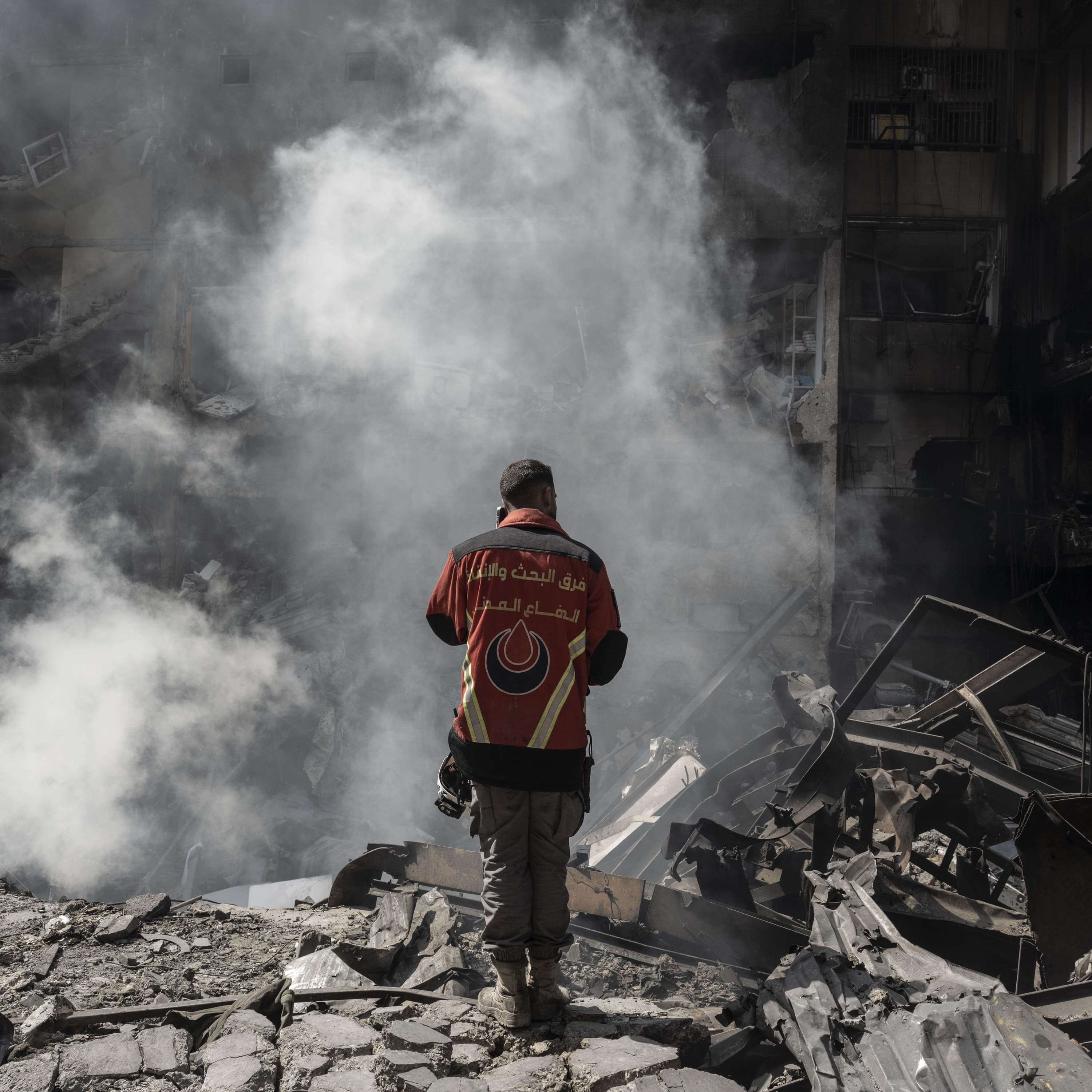
Today in Focus
Will deadly Israeli attacks in Lebanon shatter US-Iran ceasefire? – The Latest
00:11:18
Israel has intensified its bombing campaign in Lebanon, killing hundreds of people and prompting Iran to warn it could withdraw from the ceasefire agreed with the US. Lucy Hough speaks to Beirut-based reporter William Christou
Loading summary
Transcript29 lines
- [00:00]
Lucy Hoff
This is the Guardian.
- [00:10]
Babbel Advertiser
Par le tu francais, hablas espanol? Par le italiano. If you've used Babbel, you would. Babbel's conversation based technique teaches you useful words and phrases to get you speaking quickly about the things you actually talk about in the real world. With lessons handcrafted by over 200 language experts and voiced by real native speakers, Babbel is like having a private tutor in your pocket. Start speaking with Babbel today. Get up to 55% off your Babbel subscription right now at babbel.com acast spelled B A B-B-E-L.com acast rules and restrictions may apply.
- [00:54]
Will Christieu
They committed one of the largest mass killings in the last four decades in Lebanon in just under 10 minutes. It's sort of hard to imagine that the people in the negotiating room didn't realize that Lebanon could be the stumbling block that breaks the ceasefire because Iran was very clear, Pakistan was very clear that Lebanon should be included.
- [01:14]
Babbel Advertiser
I think this comes from a legitimate misunderstanding. I think the Iranians thought that the ceasefire included Lebanon and it just didn't. We never made that promise.
- [01:23]
Will Christieu
It seems like Israel is determined to make sure that whatever ceasefire happens, it doesn't happen in Lebanon. It wants this war to keep going.
- [01:31]
Lucy Hoff
Israel bombards Lebanon with a massive, massive wave of airstrikes, including in Beirut, which Iran now says is a blatant violation of the ceasefire. So is the agreement already collapsing? From the Guardians today. In Focus, this is the latest with me, Lucy Hoff. Well, I'm joined by Will Christieu, a Guardian reporter based in Beirut. Will, thanks so much for dialing in. You're in East Beirut at the moment right after sort of extraordinary 24 hours of Israeli strikes and violence, including in Beirut, where you are, are, I mean, 100 bombs in, in 10 minutes, hospitals reported to be in, in very overwhelmed and dire condition and, and hundreds killed. Just tell me what it's like where you are and what the last 24 hours have been like.
- [02:21]
Will Christieu
Yeah, thanks for having me, lucy. The last 24 hours have been very happy. You know, immediately we heard a series of explosions that were, were louder than the things we're used to. Yesterday around 2pm and then pictures started to come in of buildings that were collapsed, plumes of smoke all over the city. And you just started hearing ambulances. I lived next to a hospital, so I heard the ambulances nonstop, you know, and immediately the health Ministry asked people to clear the road so ambulances could get to the, could get to the strike sites and you know, I went down to one of the strike sites in central Beirut. You know, Lebanon has been at war for about a month, but there's always sort of this idea that there are safe areas. You know, the war's over there, war over here, depending on where you live. But yesterday, that sort of shattered those conceptions because the strikes were everywhere all at once. And Israel was bragging about the operational logistics of what they did. They put out a statement saying that hit over 100 targets in just 10 minutes. The other side of that, here in Lebanon, meant that they committed one of the largest mass killings in the last four decades in Lebanon in just under 10 minutes. And the results were horrible.
- [03:32]
Lucy Hoff
Yeah, a tragedy. And Israel's justification was that this was targeted strikes for Hezbollah. But the fact that these strikes involved so many civilian casualties is. Is just devastating. What's the feeling in Beirut now? Because. And across the country, because there must be, as we touched on on the show yesterday, huge confusion about people's safety, whether they can return home, what they should do. There were no evacuation orders issued yesterday. Why the strikes felt so shocking and devastating.
- [04:07]
Will Christieu
Yeah, I think, you know, everyone's in mourning. Today has been declared a national day of mourning in Lebanon, and people are just sort of taking stock of what happened. People are still being pulled out of the rubble. The death toll, we have about 254 people, is initial. They're still finding people, oftentimes not intact. So I think people are sort of reeling. And everyone knows someone who was affected. You know, a good friend of mine, her entire building was destroyed. Her mom was in the building five minutes before. You know, you can imagine what sort of feeling that puts in you. And then I was talking to doctors. You know, one of the doctors I spoke to was Dr. Ghassan Abu Sitti, who was present in Gaza during. During the war. And he said what he saw yesterday was similar to what he saw in Gaza. Children coming in without their parents, their parents, some of them dead, elderly patients, mass amputations. It's really. It's a grim scene.
- [04:58]
Lucy Hoff
It's just unbelievably grim that there's been this level of civilian death. I mean, yesterday we were talking about this fragile ceasefire that just. I mean, it seems like there's no ceasefire at all today. But at the time that this was all agreed, Pakistan had said that Lebanon was part of the ceasefire agreement. Trump is now saying, to quote him, it's a separate skirmish, but Iran is saying they will not proceed with the ceasefire unless Lebanon is included. So it just feels like the whole thing is in total jeopardy.
- [05:33]
Will Christieu
Absolutely, absolutely. And it's sort of hard to imagine that the people in the negotiating room didn't realize that Lebanon could be the stumbling block that breaks the ceasefire. Because Iran was very clear, Pakistan was very clear that Lebanon should be included. But at the same time, Israel and the US said there was a misunderstanding. But there's certainly no ceasefire in Lebanon. There's still bombing today. Yesterday was the deadliest day of the conflict in decades. And so people here are wondering what's happening. You know, people are sending back and forth statements from Trump, who as always is contradicting himself. So it's a little bit like reading the tea leaves.
- [06:10]
Lucy Hoff
And in terms of what Israel's intentions are, I mean, obviously weakening and wiping out Hezbollah has long been an aim of the Netanyahu government. Back in 2006, intensive war. But that really focused on the south, didn't it? Do you think that the aims of the Israeli have changed or that they are acting perhaps with greater ambition?
- [06:37]
Will Christieu
So Israel also has been a bit contradictory in its statements in terms of its war aims. What it said at first is that it wanted to disarm Hezbollah, and then last week it said that might not be possible just through an invasion ground campaign. What we know is that they said they'll occupy the southern part of the country up until the Litany river, and that they'll continue their strikes until, I don't know, they see fit. Their war aims are achieved.
- [07:00]
Lucy Hoff
I mean, there was talk of, at that time of a security zone, which is exactly what we. The language we hear about Gaza, right?
- [07:06]
Will Christieu
Yeah. I mean, that in effect is occupation of the south. And now in Lebanon, we have 1.2 million people who have been displaced. Hundreds of thousands of those people have been displaced from the south of Lebanon. If Israel does go through with that occupation, where do those people go? And an unfortunate side effect of these strikes, which are hitting non Hezbollah affiliated areas, many of them, which, you know, are housing displaced people, is that people are increasingly nervous about the presence of displaced people. Many people, you know, there is solidarity. That's not the case for everyone. But there are groups in Lebanon who are reluctant to take in displaced people. And so, you know, what's going to happen to these 1.2 million people?
- [07:48]
Lucy Hoff
And all this ahead of these talks that are supposed to happen in Islamabad, led by Pakistan about this, you know, so called ceasefire. Given the escalation that we're seeing, given the clear difference in the position of the US and Israel versus that of other invested parties in this Imran being one of them. But also there's been really strong criticism of Israel's actions from European governments, the uk, France in particular today. I mean, do you think that there's a chance the cease fire can be pushed through, or do you think we just risk going back into a re escalation?
- [08:26]
Will Christieu
I think it really depends on Iran. If Iran really sticks to its guns and says that it will not proceed with a ceasefire without Lebanon, then maybe Trump will blink. Maybe if they don't open the Strait of Hormuz and oil doesn't start flowing again, maybe he'll capitulate. But until now, it seems like Israel is determined to make sure that whatever ceasefire happens, it doesn't happen in Lebanon. It wants this war to keep going. And yesterday's actions, the sputzkrieg, we saw the mass civilian casualties. This seems, seems it's something that definitely could disrupt this ceasefire. And to many people in Lebanon, it seems designed to create chaos in the ceasefire process.
- [09:07]
Lucy Hoff
And just lastly, Will, you said that Lebanon has been in a war situation for a month now. Much of this, of course, about weakening Hezbollah. But what sort of estate are Hezbollah in? There was a very senior official that has been killed in the last 24 hours. Right, but, but much like in Gaza, if the Israeli intention is to wipe out Hamas, to wipe out Hezbollah, that has proved time and time again to be unsuccessful.
- [09:33]
Will Christieu
Yeah, I think you said it best yourself. People talk about how we're seeing the Gaza playbook in Lebanon, right? Attacking civilian infrastructure, hitting medics, mass displacement, these sorts of things. And yesterday was another example of that. Conducting strikes in residential areas, densely populated areas, with seemingly little regard to civilian life. But what we saw in Gaza, like you said, is that even though they fought a war there for two and a half years, and even though there's an incredibly high civilian death toll and they razed the place to the ground, Hamas has not been disarmed. So trying to repeat that, you know, that doctrine, that experiment in Lebanon, a country that's many times the size of the Gaza Strip, with a group that's more powerful and more well entrenched, like Hezbollah, you know, I don't see how it ends any better than it did in Gaza.
- [10:20]
Lucy Hoff
And who is of course, an Iranian proxy who has been weakened but emboldened by this month and a bit long war. Well, thank you so much for your time and stay safe in Beirut.
- [10:31]
Will Christieu
Thank you.
- [10:34]
Lucy Hoff
My huge thanks again to Will Christou, a Guardian reporter based in Beirut. Do keep up with his brilliant reporting over@theguardian. Dot com. He's also been filming from Beirut for us, which you can find on Guardian social media platforms. That's it for today. Thanks for listening to this episode of the Latest, the new evening edition of Today in Focus. Today in Focus will be back with you as usual tomorrow morning. The Latest will be back tomorrow night. And in the meantime, I'd highly recommend today's episode of Science Weekly, which is all about what we've Learned from the Artemis 2 moon mission as the crew make their way back home. It's fascinating. This episode was presented by me, Lucy Hart. It was produced by Bryony Moore. The senior producer was Ryan Ramgobin. The lead producer was Zoe Hitch.
- [11:24]
Podcast Advertiser
Chicago 2011 A cop is murdered. Police and prosecutors swear they have the trigger man. He swears he didn't do it. How far will each side go to prove they're right?
- [11:37]
Lucy Hoff
Like it's just one bombshell after another. You know, you're like, what? What?
- [11:42]
Podcast Advertiser
The story of a PlayStation, a brain eating amoeba and the relentless pursuit of justice. Off duty out now. Listen Wherever you get your podcasts,
- [11:54]
Lucy Hoff
this is the Guard.
- [12:06]
Will Christieu
From globalization to innovation sustainability to market volatility, there's always more than one side to a story. Explore different perspectives on today's most important business and economic issues with the Flipside podcast from Barclays Investment Bank. Hear two research analysts in a lively debate and get insights from every angle to further inform your view. Listen to the Flipside on your favorite platform.
- [12:31]
Babbel Advertiser
Par le tu francais hablas espanol Parl italiano? If you've used Babbel, you would Babbel's conversation based technique teaches you useful words and phrases to get you speaking quickly about the things you actually talk about in the real world. With lessons handcrafted by over 200 language experts and voiced by real native speakers, Babbel is like having a private tutor in your pocket. Start speaking with Babbel today. Get up to 55% off your Babbel subscription right now at babbel.com acast spelled B A B-B-E-L.com acast rules and restrictions may apply.
- [13:11]
Podcast Advertiser
Shipping, billing, admin, payroll, marketing. You're managing all the things, so why waste time sending important documents the old fashioned way. Mail and ship when you want, how you want with stamps.com print postage on demand 247 and schedule pickups from your office or home. Save up to 90% with automated rate shopping. That's why over 1 million small businesses trust stamps.com go to stamps.com and use code podcast to try stamps.com risk free for 60 days.