← Today in Focus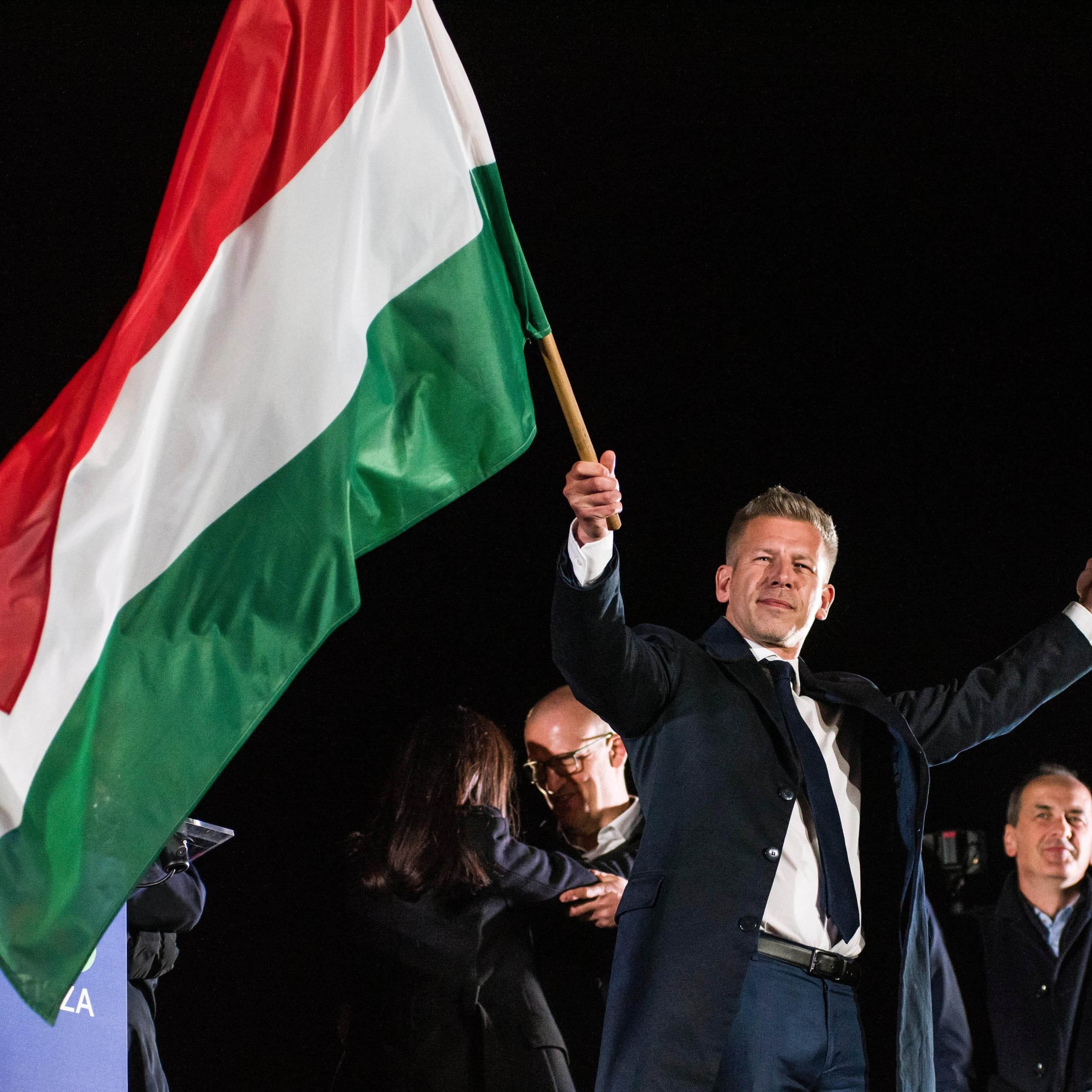
Today in Focus
Why Viktor Orbán lost in Hungary – The Latest
00:11:53
Viktor Orbán’s 16-year rule in Hungary has come to an end after the opposition Tisza party, led by Péter Magyar, secured a landslide election victory. Lucy Hough speaks to Ashifa Kassam, the Guardian’s European community affairs correspondent
Loading summary
Transcript24 lines
- [00:00]
A
This is the Guardian.
- [00:11]
B
This episode is brought to you by Progressive Insurance. Do you ever think about switching insurance companies to see if you could save some cash? Progressive makes it easy to see if you could save when you bundle your home and auto policies. Try it@progressive.com Progressive Casualty Insurance Company and affiliates. Potential savings will vary. Not available in all states.
- [00:36]
C
People just can't believe that it happened. The amount of young people that told us, if Orban wins again, I don't see a future for myself in this country. The country was really at a crossroads.
- [00:48]
B
Thank you for believing that. We ourselves, Hungarian people write our own history.
- [00:56]
C
Lots of people said, I know he's not a saint. There was a lot of people who almost, you know, held their noses and voted for him. Regardless, it's a really huge moment on the global stage and I think it should rightfully so force people to ask a lot of questions, what's next? And what this actually means in practice.
- [01:14]
A
Hungary enters a new era as Viktor Orban is ousted after 16 years in power in an election that will be critical to Europe and likely to rattle Washington. From the Guardians today. In Focus, this is the latest with Lucy Hoff. Asifa Qassam, you are a reporter covering Europe for us and you're currently in Budapest, where you have been there for this historic moment, that Prime Minister Viktor Orban of Hungary has finally been ousted From Power After 16 years, this new era under the opposition candidate Peter Magyar. So first of all, just tell me what the vibe, the atmosphere has been like in Budapest overnight.
- [01:56]
C
And today it's been really incredible. I mean, so last night people were out, I think I was out until about 2:30 in the morning, just chatting with people, getting a sense of what was going on. And people were so excited. This is something that lots of people had wanted. They didn't think it was going to actually happen. They were so nervous. Just even the idea that there was so many people who didn't think that they would actually get to this vote, that something would happen and it would be canceled. And so they were so excited. And then this morning I was out again speaking to people, and now kind of, you know, a few hours later, maybe a little bit of sleep, people just can't believe that it happened. And they're kind of still grasping the enormity of it. And there's lots of questions about what this means for Hungary and what will happen next and how this will all play out. But they're so excited right now.
- [02:45]
A
Yeah. And we'll come on to some of those Questions about what this means for Hungary in a bit. But, I mean, to your point that people weren't sure that this election would happen at all. There have been allegations, suggestions that Orban and his Fidesz party would try to deny the vote, that there would be election rigging or fraud, that he would refuse to concede. But in fact, there was huge turnout and a sort of landslide victory for Magyar. And Orban conceded very quickly.
- [03:13]
C
In the end, it was a surprise to everyone. I think nobody expected it to be that easy in some ways. And I think part of that is just how big of a victory it was. It was such a landslide, as you mentioned, that there was no way to say that, you know, the foreign interference had changed the vote or that this had happened and changed the vote. We did see in the. In the day kind of some of the. The Orban officials, you know, sending out social media posts about little things that they had seen at polls that they didn't agree with. And so the idea was that they were setting up for that if it was a difference of five or ten seats, but, I mean, we're talking about triple the seats. And so there's no way. And so there is. Lots of analysts have pointed to the idea that it was just too big of a victory to be able to talk your way out of.
- [04:03]
A
And the other part of this, as you mentioned, was foreign interference and specifically Russian disinformation. So for people to turn out in such numbers and defy those sorts of forces is extraordinary, as was the size of the turnout. Nearly 80% of people, including a massive youth vote turnout. What was it about this election that made people turn out in such numbers? Or what was it that made them want to get Orban out so strongly?
- [04:29]
C
No, we spent weeks before the election speaking to people kind of across Hungary and different parts of the country. And there was really a sense that this was a landmark election, that the country was really at a crossroads. And part of that was this idea of kind of how close the Orban government had become to Russia. And so we did see kind of allegations of them sharing information, confidential EU information with the government, as well as some of the phone calls that came out, just this tone of deference between the way that Orban's officials spoke to Moscow. And so there was this idea among lots of people that this was a drift away from the EU towards Russia. And for young people in particular, the amount of young people that told us, if Orban wins again, I don't see a future for myself in this country. I'M going to have to leave. I want to be European, I want to be part of Europe or just even for opportunities. And so for them, it was really this defining moment of which way will the country go and do I have a place here?
- [05:27]
A
Yeah. So, I mean, understandably, EU officials and European leaders are absolutely delighted. We've had statements from the leaders of France, Germany, the UK here, but also the chiefs of the European Commission and Council. Hungary has, for so long, as you touched on, been a thorn in the side of Europe. In the last few months, in particular, he has blocked a sanctions package against Russia. He blocked 20 billion euro loan to Ukraine. So much of this is not just about being part of Europe, but about Ukraine as well, and increased support for Ukraine. What do we know about that?
- [06:04]
C
So it really was a point of pride for Orban to say, I am standing up for Hungarians and I'm kind of countering what Brussels wants us to do. And that was something he had ran his campaign on. It was what his government had really kind of stood for for a long time. And it was always out of step with what surveys showed that Hungarians actually wanted. I think as many as 70% had always said that they wanted to be part of the eu, they wanted to take part in what Europe was building together. And so that type of kind of antagonism just really was never quite in step with what it felt like the people wanted. And we saw some of that play out in this election, that people really said, no, we want to belong, we want to be part of this, and we don't want that kind of strained relationship.
- [06:51]
A
So let's talk about Peter Magyav, who will be the new prime minister of Hungary today. In Focus did a long look at this election and who he is last week that I really recommend that people listen to. But we should be clear that this is not some kind of radical shift to progressive politics in Hungary. Right. He is a conservative. He is of the right. He was born in his political career in the Fides Party, Orban's party, and then set out in the last couple of years on his own. But he's pro European and he's liberal, and that's what's meant so much to voters.
- [07:26]
C
I think you've captured it really well there. So he is a Fides insider and he broke ranks with the party and started speaking out about corruption. But he really does come from that world. And when we were talking to people across Hungary, lots of people said, I know he's not a saint, but he's the one that we think can take down this system. And so people, there was a lot of people who almost, you know, held their noses and voted for him regardless. But there is questions about what that means when it comes to the relationship with Ukraine. He's spoken out about migration. His party has taken a harder line than Orban when it comes to migrants. And so there are questions about what's next and what this actually means in practice. He hasn't said anything about Orban's ban on Pride events, things like that. And so it remains to be seen. And so much. It's kind of one of the big questions that's still hovering over this election and how it will play out.
- [08:21]
A
Yeah, and the question of LGBT rights has been such a. Such a big one in Hungary, hasn't it, with the banning of Pride marches, the censorship of books in schools, but all part of this kind of broader Orban project. Viktor Orban once said that he wanted Hungary to be a petri dish for illiberalism. And so that's clamping down on the judiciary, you know, press freedoms, the rights of LGBT people, as you say, lots of questions, but notably, Magyar has not been vocally supportive of things like LGBT rights, has he? But has he suggested that he's going to try and undo or restore liberalism to any of these institutions?
- [08:58]
C
There has not been any mention at all of that issue in the campaign, which is quite incredible considering. I mean, he published a 240 page manifesto, but a lot of it is believed to be by design because essentially he was trying to build this big tent party that could bring in people that were dissatisfied with the government. And so even kind of in the lead up to Pride, when people were reeling from the fact that it was banned here and there was this kind of, okay, but he's not going to speak about that because he just does not want people to then divide their support and say, okay, well, if he's anti or pro this. And so he really kept away from those questions. It is assumed he had made a big point of saying kind of, that he wants to restore democratic checks and balances and he wants to repair the relationship with the eu and the LGBT rights was a point of friction. And so it's assumed that he will kind of move in the right direction, but we actually have no idea, we
- [09:56]
A
don't know how far. So, I mean, it's all pretty embarrassing, I think, for the White House. Donald Trump, he's long expressed his admiration, his close ties with Viktor Orban. JD Vance, the vice president, was in Budapest for two days last week endorsing Orban. What does this tell us? I mean, it seems in a way that that visit may have had the opposite impact of what it was intended to do.
- [10:20]
C
Yeah, I think it, I mean, it does seem that way. I saw jokes, people joking in the wake of it, saying, we'll get JD Vance to come support AFAR right here in Spain, or something like that. And so you did see this idea that it is kind of the curse of death. But there had long been this assumption rumbling in the background of all this, that these kind of illiberal movements are somehow legitimate and can continue kind of on their own because they're speaking for the people. And I think oftentimes that was put forward to everybody and this was really a moment where the resilience of those movements was tested and we saw that it's not necessarily that way. And they don't. That experiment that they were building wasn't necessarily in line with what Hungarians wanted. And I think it's a really huge moment on the global stage. And I think it should rightfully so, force people to ask a lot of questions about what these movements are doing, who they're speaking for and what we're actually getting out of them.
- [11:17]
A
Fascinating. Thank you so much, Ashifa.
- [11:21]
C
No, you're very welcome.
- [11:24]
A
That's it for today. My huge thanks again to Ashifa Kassam, the Guardian's European Community affairs correspondent. You can keep up with her reporting as well as our live blog on this story over@theguardian.com and do listen to today's episode of our sister podcast, Politics Weekly, which is looking at the government's plans to align more closely with EU rules and Keir Starmer's decision not to support Donald Trump's blockade of the Strait of Hormuz. Thanks for listening to this episode of the latest, the new evening edition of Today in Focus. Today in FOCUS will be back with you as usual tomorrow morning. The latest will be back tomorrow night. This episode was presented by me, Lucy Hoff. It was produced by Bryony Moore. The senior producer was Ryan Ramgobin and the lead producer was Zoe Hitch. This is the Guardian.
- [12:21]
B
This episode is brought to you by Progressive Insurance. Do you ever think about switching insurance companies to see if you could save some cash? Progressive makes it easy to see if you could save when you bundle your home and auto policies. Try it@progressive.com Progressive Casualty Insurance Company and affiliates. Potential savings will vary. Not available in all states.
- [12:40]
D
Today's markets move fast. Get the insights you need in 10 minutes with the Barclays Brief, a new podcast from Barclays Investment Bank. Through sharp dialogue and scenario based analysis, our leading experts analyze key market themes each week. So whether you're managing a portfolio or leading a business, the Barclays Brief podcast can help you make smarter decisions today. Stay Sharp. Stay Brief. Find Barclays Brief wherever you get your podcasts.