← Today in Focus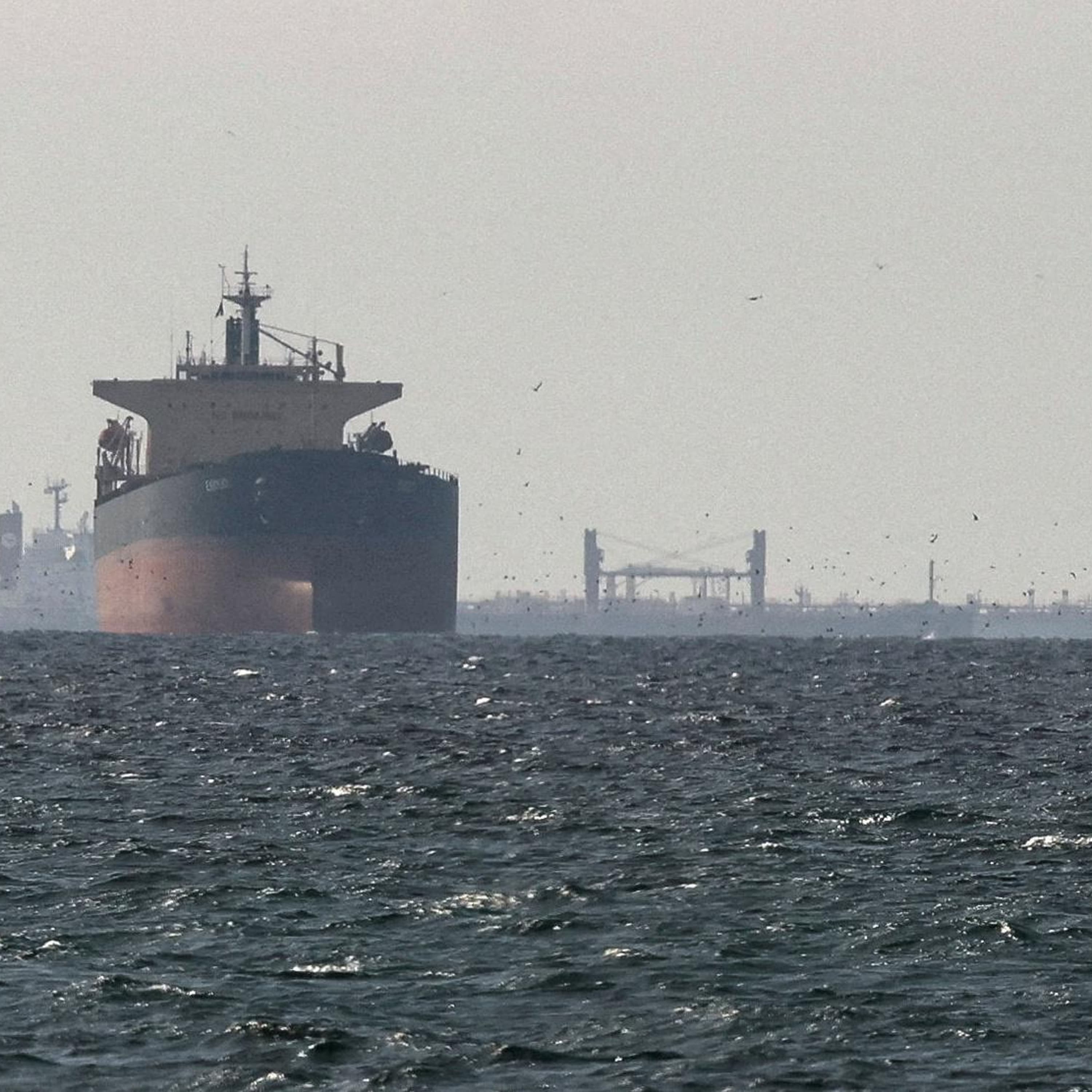
Today in Focus
Will the strait of Hormuz torpedo Trump’s war?
00:26:28
Events in the narrow waterway are causing chaos around the globe. Jillian Ambrose explains why
Loading summary
Transcript82 lines
- [00:00]
Guardian Announcer
This is the Guardian.
- [00:08]
Gillian Ambrose
Today.
- [00:09]
Noshi Nikbal
Could the Strait of Hormuz dictate the end of the war?
- [00:21]
Guardian Announcer
Running a business means juggling a lot of moving parts. And when your communication tools can't keep up, things start to slip. Missed calls, slow replies, scattered conversations. They're not just frustrating, they're lost opportunities and revenue left on the table. That's where quo comes in. Spelled Q, U, O. Quo is the number one rated business phone system on G2, trusted by over 90,000 businesses. One shared business number for calls and texts, so every conversation stays visible or organized and accountable. It works from an app or computer. You can keep your existing number, add teammates and sync your CRM, letting you scale without adding complexity. And with built in AI, Quo logs calls, summarizes conversations and flags next steps, even after hours. Stop missing customers. Stop leaving revenue on the table. Try Quo free and get 20% off your first six months@quo.com tech. That's quo.com tech quo. No missed calls, no missed customers.
- [01:35]
Gillian Ambrose
I started my career as a journalist, as a market reporter covering energy commodities. And the Strait of Hormuz was always this example used to terrify young market reporters.
- [01:47]
Noshi Nikbal
Gillian Ambrose is the Guardian's energy correspondent. Understanding how oil and gas move around the world is her thing.
- [01:55]
Gillian Ambrose
This is a tiny choke point in the Middle east which can affect the entire global market in minutes, if not hours. It's almost mythic in its proportions. It's the ultimate sum of all fears for the market.
- [02:13]
Noshi Nikbal
The Strait of Hormuz, you've probably heard quite a lot about it by this point. It's a stretch of water between the Gulf of Oman and the Persian Gulf out to the Arabian Sea. And it's kind of like the world's petrol pump.
- [02:26]
Guardian Announcer
20% of the world's oil is transported through a strip of water that is just 21 miles wide.
- [02:33]
Noshi Nikbal
And as the US and Israel's war on Iran has ramped up, the thing that keeps energy reporters up at night is it's happening.
- [02:43]
Guardian Announcer
Today will be yet again the highest volume of strikes that America has put over the skies of Iran. Ramping up and only up.
- [02:56]
Noshi Nikbal
While the US and Israel have been bombing Iran from the sky, Iran has launched its fight back from the sea. Iran's Revolutionary Guards warning that any ship passing through the narrow strait is a target. It's shut down the strait.
- [03:14]
Gillian Ambrose
This crisis has reverberated from a tiny geographical quirk in the Gulf, rippling through the global economy and will affect absolutely everyone, from schools in Bangladesh being closed down to stone cottages in Northern Ireland running on heating oil, which has more than doubled in price.
- [03:33]
Noshi Nikbal
From the Guardian, I'm Noshi Nikbal. Today in focus, the narrow channel of water pushing the world into chaos. Gillian Ambrose, you're the Guardian's energy correspondent and you've been keeping a very close eye on the impact that the war on Iran is having on global oil and gas prices. Let's begin with why the Strait of Hormuz, a stretch of water between the Persian Gulf and the Gulf of Oman galaxy. Can you tell me a bit more about the geography of it and which countries border it and why it's so crucial to understanding this story?
- [04:16]
Gillian Ambrose
Absolutely. This really is a story about geography. If you think about the Strait of Hormuz and the Persian Gulf, it's useful to think of a literal geographical bottleneck. It's not a two way system. It's enclosed. And you've got this really small narrow neck where 20% of global oil trade flows through from this very oil rich into the global market. As well as 20% of global seaborne oil trade. There's also the world's largest exporter of gas, which is Qatar. They are also within the Gulf. And this flow of vessels that needs to go through really doesn't have any other options. There's one or two pipelines which can connect to the Red Sea or bypass the Strait of Hormuz. But other than those very few pipelines, the only way is through the strait. And Iran knows that and the market knows that. And the narrowest part is right below Iran. And that is something which the regime has always threatened to exploit. It's something that even days before the attacks began, I think analysts were still seeing as a worst case scenario that the kind of last resort tactic of a desperate regime. And it happened far sooner than we thought.
- [05:41]
Noshi Nikbal
So as you said, it is an essential passage for some of the world's largest oil producers and exporters. And crucially, with Iran overlooking its narrowest point and using it as a frontier in this war. So where the US And Israel have used airstrikes and bombarded the country, Iran is fighting back with the Strait. Gillian, can you tell me about what it's actually looked like out there and the impact that that's then had on the global supply and price of energy?
- [06:06]
Gillian Ambrose
Absolutely. We're now entering the third week of this conflict. It began on Saturday morning with airstrikes from the US and Israel on Iran. What we didn't realize perhaps was that Iran would effectively close the strait.
- [06:22]
EU Representative
Iran's Revolutionary Guard is sending radio transmissions to ships warning them that quote, no ship is allowed to pass the Strait of Hormuz. That's according to the eu.
- [06:30]
Gillian Ambrose
They've not formally officially shut it down, but they have said that they will set ablaze any tanker that tries to move through. For any shipping owner, for any insurer, that is as good as closed.
- [06:43]
Noshi Nikbal
Donald Trump has threatened Iran with death,
- [06:46]
Gillian Ambrose
fire and fury if it jeopardizes the transport of oil through the Strait of
- [06:51]
Noshi Nikbal
Hormuz, which is the main.
- [06:53]
Gillian Ambrose
We've seen the number of vessels moving through the strait absolutely dwindle. And these vessels are now effectively stuck. I think there's around 200 tankers still stuck in the Strait of Hormuz. Right. I think in the first week of the crisis we actually saw quite a muted response from the market. It was almost like everyone was holding their breath waiting to see what would happen. Would this be a short lived thing and would a trade through the Strait of Hormuz be able to resume as normal?
- [07:21]
Donald Trump
It's doing well. The market's holding up well. I figured we'd be hit a little bit, but we were hit probably less than I thought. And we'll be back on track in a pretty short while.
- [07:33]
Gillian Ambrose
But what we've seen since is that this could be a far more drawn out conflict than they had originally assumed. As missiles fly over the Middle east, crude prices are busting at the seams. Oil prices have risen at one point
- [07:46]
Noshi Nikbal
hitting $100 a barrel, again briefly surging
- [07:49]
Gillian Ambrose
towards $120 a barrel.
- [07:52]
Donald Trump
Prices are coming down very substantially. Oil will be coming down. That's just a, that's just a matter of war.
- [08:00]
Gillian Ambrose
We saw prices in the second week absolutely rocket up into, I think it was $116 a barrel at one point. And this has been allayed in some senses because the International Energy Agency, the sort of unofficial energy watchdog of the world, has called on governments to release emergency stocks of crude into the market to help cool the market a little bit. As soon as that was on the table, I think we did start to see prices moving down again.
- [08:27]
Noshi Nikbal
CNN is learning Iran has begun laying mines in the Strait of Hormuz. It's another major complication as the world's top.
- [08:36]
Gillian Ambrose
But everyone has been very clear that unless ships are moving through the Strait of Hormuz, oil prices will continue to rise.
- [08:49]
Noshi Nikbal
Well, Gillian, over the weekend the US Attacked Iran's Khaeg Island. It now says that it may attack again, to quote, just for fun. I don't know if you saw over the weekend, but you know, as long ago as 1988. Trump, in an interview with Polly Toynbee, had his eye on Kag Island. He said, I'd do a number on Kag Island. I'd go in and I'd take it. And it's just astonishing, given that where we are now. But what can you tell me about the island itself and why it is so significant?
- [09:18]
Gillian Ambrose
Yeah, the island is absolutely the heartbeat of the Iranian economy. This is where 90% of its oil is exported from. It's effectively an island which hosts a giant processing facility and export hub. So this is where tankers will arrive, they'll load up with Iranian crude, and they will then transit through the Strait of Hormuz. By taking that, you're taking the petrostates economic lifeblood. It is a major blow to the Iranian regime at the moment. There has been no damage done to the oil infrastructure there. And I think that is really important because if it did, that would be crippling to Iran, not just now, but potentially for years and years into the future. But it would also compound the crisis that we're seeing in the global oil market, too. And that is something that I think Trump would definitely want to avoid. So he's talking quite tough, tough, but I think it would be a case of cutting your nose despite your face, if you did damage that oil infrastructure on Carg Island.
- [10:23]
Donald Trump
President Trump today reiterating his calls for allies to help protect global oil shipments through the Strait of Hormuz, saying that protecting the waterway is supposed to be a team effort.
- [10:35]
Noshi Nikbal
Well, on Sunday, he did also then urge a number of countries, including the UK to deploy warships to the strait, which sort of goes some way to indicate how crippling the Iranian stronghold of the Strait could be for the global economy, or is rather. Julian, how did the UK and its allies respond?
- [10:54]
Gillian Ambrose
I would say it's been tepid. The response. I think this plan to have military escorts help these tankers to cross through the strait into the global market is something that could help a little bit, but it certainly wouldn't resolve the crisis. I don't think you'd be able to move tankers through at nearly the pace that the market. Japan and Australia have said that they are not sending military assistance at this stage. The UK is, I believe, offering minesweeping to help in. In that regard. But what. What I cynically noted on Sunday with. With a lot of this talk about military escorts is that Trump makes these comments right before the markets open and start trading again in the new week in Australia. And a lot of these comments, I think perhaps might be designed to calm the markets before trading. We didn't see that. We saw a 3% rise instantly as soon as markets opened, oil jumped back up to $106 a barrel. And it just shows that this is not the solution that the market is looking for. The market is looking for business as usual. They want tankers moving through the Strait of Hormuz. They want barrels of crude getting into the global market. An escort might help a little bit. Pipelines rerouting might help a little bit. But the market doesn't need a little bit of help. It needs a solution.
- [12:19]
Noshi Nikbal
So, Gillian, is it fair to say that we are currently facing a new oil crisis? And if so, just how bad could it get?
- [12:28]
Gillian Ambrose
I would say not only is this a new oil crisis, but it is the greatest oil supply shock in the history of the market. Wow. That was the message from the International Energy Agency last week that its member states would need to release more emergency crude stocks into the market to temper prices than has ever been seen before. They only do these releases every so often. It's really to address major crisis situations. And it is by far the largest release of crude, more than double what was released in the 2022 crisis after Russia invaded Ukraine. I've seen some banking analysts, notably Goldman Sachs, which is a major player in the oil market, saying that the impact of shutting the Strait of hor will be 17 times the impact of Russia stopping its exports.
- [13:18]
Farnoosh Tarabi
Wow.
- [13:18]
Gillian Ambrose
So it is massive. It's hard to quantify, it's hard to wrap your head around. But this is a major crisis for the oil market and it leaves nothing untouched.
- [13:36]
Noshi Nikbal
Gillian, could you explain how that this crisis in the oil market then does just trickle down and affect everyone? Because what does the oil industry ultimately become and why is it having the impact it has?
- [13:51]
Gillian Ambrose
Absolutely. The energy costs in so many ways are the ultimate economic contagion. It just gets into absolutely every part of the economy. If you think about your day to day life, the goods that you consume, the services that you use, they all rely on at some point. So when the cost goes up, everything that you consume or use will become more costly too. So it's an economy wide problem. It is likely to stoke inflation and this could even affect your mortgage because interest rates might not be able to come down as fast as they might have. And it worries me quite a lot because you think about families who are only just getting their heads above water. The UK at the moment has record high levels of household energy debt that's been rising since the Ukraine crisis. What this means for people is quite far reaching and it's devastating for families, it can be devastating for small businesses. It's difficult to look anywhere in your daily life and not see an area that would be impacted by a surge in energy costs.
- [15:04]
Noshi Nikbal
But it's terrifying when you put it like that. I mean, I was thinking about the impact it has on like the global South. Like it's absolutely huge and it's kind of immediate, but of course it trickles down to everyone no matter where you
- [15:16]
Gillian Ambrose
are in the west, literally everyone. A lot of the emerging economies in in Asia are like particularly exposed. What we're seeing in countries like Pakistan and Bangladesh is what they call demand destruction in the market. That's basically when you can't afford the energy so you need to turn it off yourself. Even if you could access it, it's it just too expensive. So we are seeing almost Covid style lockdown initiatives. Schools are being closed, people being asked to work from home, all to conserve energy.
- [15:47]
Noshi Nikbal
And it's also worth noting that those countries already have policies of load shedding in place, which they have for years. Which means that there are certain times where certain districts have to turn all the gas off or they don't have the lights on. It already exists. So to have this on top of that, just mind blowing.
- [16:03]
Gillian Ambrose
Yeah. If you look at how reliant different countries are on Middle Eastern oil and gas, you can see that a lot of these countries are perhaps overly reliant and that's why it's just hitting them so much harder. There is nowhere else to go. Europe has a more diverse range of suppliers. The UK actually relies on Gulf energy stocks for a very small proportion of our energy, but it still affects the global market, so we're still paying those prices.
- [16:30]
Noshi Nikbal
So what have oil producing nations and importers been doing to counter all of this and how is that going?
- [16:36]
Gillian Ambrose
I think those in the Gulf have been trying their absolute best to keep their production running. We've seen storage tanks filling up and pipelines which can bypass the Strait of Hormuz being used at much higher capacities. Saudi Arabia for example, has a 746 mile long pipeline which stretches from its east coast all the way to the west, which meets the Red Sea.
- [17:03]
Noshi Nikbal
Right.
- [17:03]
Gillian Ambrose
So it is has already doubled the amount of oil it sends through that pipeline. It expects to increase that even further and hopefully keep its exports at about 70% of its usual rate. Otherwise it's going to shut down to major oil fields, which doesn't sound like a big deal because we can't get the oil anyway. But for the producers, it is because it can take weeks or even months to set these fields up again to start producing, and that's what's keeping prices high at the moment. We know we're not going to get any oil through the Strait of Hormuz, but what we don't know is whether the same oil suppliers will be around even if the war ended tomorrow.
- [17:50]
Noshi Nikbal
And as you've said, Trump has been trying to reassure allies and markets that everything is under control, often with these wildly contradictory statements.
- [18:00]
Donald Trump
Well, it's only good if you win, you know, you can only do. And we've won, let me say we've won.
- [18:05]
Farnoosh Tarabi
Are you ready to officially declare victory?
- [18:09]
Donald Trump
No, I don't want to do that. There's no reason to.
- [18:12]
Noshi Nikbal
But throughout all the threat of continued airstrikes, Iran is clearly at a military disadvantage, but its ability to choke the Strait is an incredibly powerful one. Gillian, do you think it's possible that it could, in fact, end the war?
- [18:28]
Gillian Ambrose
I struggle, to be honest, and I don't say this lightly, I struggle to see how this conflict can resolve. I see Donald Trump as a leader who wouldn't want to back down, who wouldn't want to admit defeat, and I see Iran as holding a lot of the cards in this conflict. I was looking at some data earlier today which showed that Iranian exports of crude through the Strait of Hormuz are actually slightly higher today than they were before the crisis. Right. So they're okay, they're making money, they're shipping. Their crude is sanctioned, but it is still being bought by Chinese buyers, and that trade is still happening. So when the Iranians make comments like, get ready for $200 barrel oil, I think the market's listening to that. They're hearing that when they say, we're not actually having talks with the White House about, you know, sort of negotiating an end to this, why would we. And Trump is saying a lot of reassuring things, but it just doesn't seem to scan on the ground. I just can't see what he's seeing. I can't see how this. This plays out.
- [19:42]
Noshi Nikbal
Gillian. As of recording, oil prices are still hovering above $100 a barrel. And at the start of this year, we were beginning to imagine a move away from the energy spikes caused by Russia's invasion of Ukraine. And, of course, now here we are. And I guess what I want to know is what powers does the Chancellor, Rachel Reeves, or the Energy Secretary, Ed Miliband, have against price rises and inflation? And should we be tapping into North Sea more, as has been suggested.
- [20:12]
Gillian Ambrose
Yeah. I think an energy crisis always seems to fuel a debate about how the UK handles its own energy. In the Russia, Ukraine crisis, we saw a lot of people talking about doubling down on North Sea. Even fracking is back in the energy discourse when we start talking about security of supply. At the same time, if you are someone who leans more green, then this is a clear sign that we should be doing more green energy, become more self sufficient in homegrown renewables, for example. So these energy crisis points tend to polarize the existing debate around how we handle energy.
- [20:52]
Laura Kuenssberg
There is one lesson from this crisis, Laura, and only one in my view for the long term on energy policy and that is we need homegrown clean power that we control.
- [21:01]
Gillian Ambrose
My view really is that we, we do need to look at both sides. We knew we do need to move to greener energy, of course, and be more self sufficient. There are so, so many good economic and environmental reasons for doing that. But I think we also do need to think about fossil fuels while we're still using them. Do we have enough gas storage, for example? Are there ways that we can be sort of better connected to European supplies? But all of these questions and theories are going to do very little to help us today. I think what the government right now is looking at is if things get really bad, how can we help families? And that's important because I think the government can't afford to step in every time there is a crisis to bail people out. The the treasury coffers just won support that. So the government will have to make some really tough decisions in the weeks and months ahead.
- [22:00]
Noshi Nikbal
Coming up, does the oil and gas crisis mean a quicker move to green energy?
- [22:15]
Guardian Announcer
Missed calls, slow replies, messages scattered everywhere. If you're running a business that's not just annoying, it's revenue slipp away. That's where quo comes in. Spelled Q u o quo is the 1 rated business phone system on G2.1 shared business number for calls and texts. Stop missing customers. Start capturing every opportunity. Try Quo free and get 20% off your first six months@quo.com tech that's quashuo.com tech quo no missed calls, no missed customers.
- [22:50]
Babbel Advertiser
Par le tu francais hablas espanol par l'. Italiano. If you've used Babbel, you would. Babbel's conversation based technique teaches you useful words and phrases to get you speaking quickly about the things you actually talk about in the real world. With lessons handcrafted by over 200 language experts and voiced by Real native speakers. Babbel is like having a private tutor in your pocket. Start speaking with Babbel today. Get up to 1555% off your Babbel subscription right now at babbel.com acast spelled b a b b e l.com acast rules and restrictions may apply.
- [23:33]
Noshi Nikbal
Gillian, you've described the. Well, I guess the, the pain, just the economic pain that a lot of people will be suffering as a result of this war. But there are winners, aren't there? And I wonder if you could tell me about who's going to be winning.
- [23:47]
Gillian Ambrose
I guess so. Russia has been getting a lot of headlines because obviously any extra financial gain for the Kremlin is fueling their war machine. I would caution and say that a lot of their infrastructure has been quite badly damaged in the war. They're not able to export as much as I'm sure they would like to to fully take advantage of the situation. But certainly as one of the biggest oil and gas producers in the they will benefit from that. The US will be benefiting as well, perhaps in a more long term way because I think countries, particularly in sort of South Asian countries which are heavily reliant on the Gulf at the moment, will in future be thinking about diversifying their supplies. So they may well be looking to the US for sources of energy. That's going to be very little comfort to Americans right now with rising energy bills. The other big winner which no one really talks about is Norway because although they are a major Europe's largest supplier of gas via pipelines, they don't use much.
- [24:57]
Noshi Nikbal
Do they use much themselves? They don't use much of their own gas. Right?
- [24:59]
Gillian Ambrose
Yeah, they've got their own energy challenges. But I think Norway is in a position to see its revenues from oil and gas increase quite a lot whilst being relatively insulated from the crisis itself.
- [25:14]
Noshi Nikbal
Gillian, finally, you've described this as the greatest oil supply shock in history. But how does it Compare to the 70s when the oil crisis led to a three day week fuel rationing queues? How will the impact of what's happening now be felt in a similar way, if at all? And what lessons have been learned again, if any?
- [25:40]
Gillian Ambrose
There'll be a lot of people who remember the 1970s oil crisis.
- [25:43]
Laura Kuenssberg
During today's extended power cuts it was almost impossible for many families who depend upon electricity to cook or to heat and light their homes. It was meals by candlelight, but only for those who bought them before supplies ran out.
- [25:58]
Gillian Ambrose
And in some ways it was maybe more impactful to people's lives than the one we're seeing today where everything feels slightly at arm's length. At that time there wasn't very much green energy. There was, there was oil, there was gas, that, that was really important to the economy. We would have seen people, fuel rationing. And so for the west, it really felt cataclysmic at the time. And we saw governments responding to that to guard against that ever happening again. We've seen countries like Denmark, which was once an oil and gas producer, turn to wind power and now they are one of the major wind power players in the world. We've also seen great examples of our neighbors in France, for example, they moved very decidedly towards nuclear power after the 1970s oil crisis. And they are a lot less exposed than a country like the uk. Maybe in a few decades time we will look back at this crisis and see it as that watershed moment where the green energy agenda really took on its momentum. I'm just worried, I suppose, because energy costs matter. If you're building wind turbines, it still impacts your ability to carry out all these major projects to create the infrastructure
- [27:18]
Noshi Nikbal
to have that silver lining, or rather green lining.
- [27:20]
Gillian Ambrose
Exactly. If something's bad for the economy, it's bad for the green economy. So it's a short term. I have some short term cynicism about whether we will be able to make a case for a sort of green resurgence in the wake of the crisis. But I do also think that the journey that we're on is clear and it won't be derailed and we are moving towards a cleaner future.
- [27:50]
Noshi Nikbal
That's one hope that there would be one good thing to come out of this. But obviously it feels quite a way away, doesn't it?
- [27:55]
Gillian Ambrose
Yeah.
- [27:56]
Noshi Nikbal
Gillian, thank you so much, much for your time.
- [27:58]
Gillian Ambrose
Thank you very much.
- [28:01]
Noshi Nikbal
That was Gillian Ambrose, the Guardian's energy correspondent. You can read her reporting on this story and you should, and her analysis and more@theguardian.com and that's it for today. This episode was presented by me, Noshi Nikbal. It was produced by Tom Glasser and Ned Carter Miles sound design is by Breen McNamara. The executive producer was Humah Khalili. And we'll be back again this evening with the latest with Lucy Hoff and Today in Focus. We'll be back with you tomorrow morning.
- [28:54]
Guardian Announcer
This is the Guardian.
- [29:04]
Farnoosh Tarabi
Hi, this is Farnoosh Tarabi from Sew Money with Farnoosh Tarabi. And today I want to talk to you about Boost Mobile Quick money tip, stop paying a carrier tax. If your phone bill feels trapped in a pricey plan. This is your sign to unlock savings. Boost Mobile helps you reset your spending. With the $25 Unlimited Forever plan, you can bring your own phone, pay $25 and get unlimited wireless forever. And that simple switch can unlock up to $600 in savings a year. That's money you could put towards paying down debt, investing or something that actually brings you joy. Those savings are based on average annual single line payment of AT and T Verizon and T Mobile customers, compared to 12 months on the Boost Mobile Unlimited of January 2026. For full offer details, visit boostmobile.com.
- [29:58]
Babbel Advertiser
If you've used Babbel, you would Babbel's conversation based technique teaches you useful words and phrases to get you speaking quickly about the things you actually talk about in the real world. With lessons handcrafted by over 200 language experts and voiced by real native speakers, Babbel is like having having a private tutor in your pocket. Start speaking with Babbel today. Get up to 55% off your Babbel subscription right now at babbel.com acast spelled B-A B B E L.com acast rules and restrictions may apply.
- [30:33]
EU Representative
Shipping, billing, Admin, payroll, marketing. You're managing all the things, so why waste time sending important documents the old fashioned way? Mail and ship when you want, how you want with stamps.com print postage on demand 247 and schedule pickups from your office or home. Save up to 90% with automated rate shopping. That's why over 1 million small businesses trust stamps.com go to stamps.com and use code podcast to try stamps.com risk free for 60 days.