← Today in Focus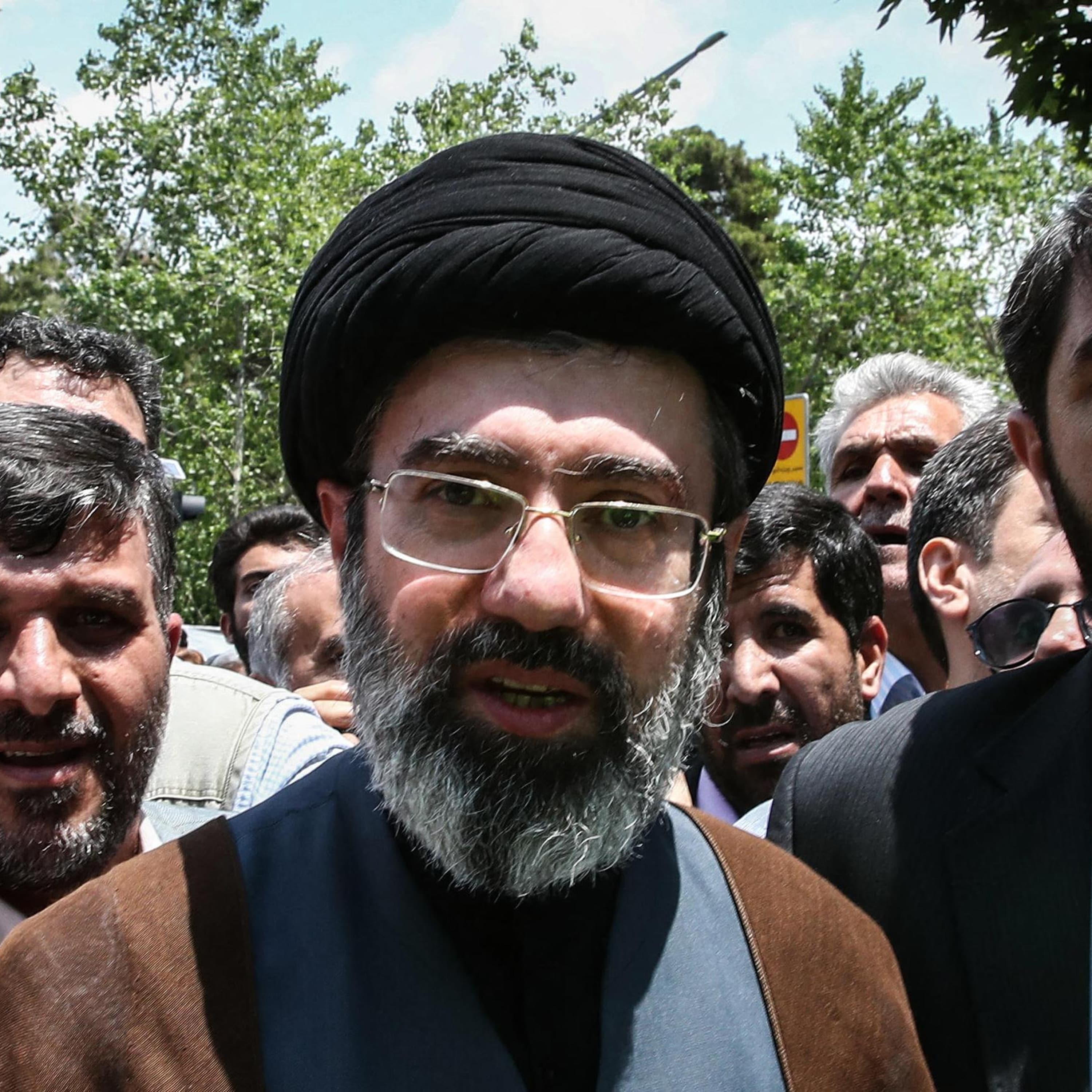
Today in Focus
Will Trump make a deal with Iran’s new supreme leader? - The Latest
00:11:30
Mojtaba Khamenei has been chosen to replace his father Ayatollah Ali Khamenei as Iran’s supreme leader, while the country continues to be heavily bombarded by US and Israeli forces. Lucy Hough speaks to diplomatic editor Patrick Wintour
Loading summary
Transcript24 lines
- [00:00]
Lucy Hoffman
This is the Guardian.
- [00:11]
Tommy John Advertiser
Guys. It's no use putting it off. The best time for an underwear refresh is now. Tommy John underwear is designed for a perfect fit that stays put all day. There's zero chafe, thanks to four times more stretch than competing brands. And their innovative horizontal quickdraw fly is a game changer. With over 30 million pairs sold, there are thousands of men out there more comfortable than you. Don't settle for less. Go to tommyjohn.com today for 25% off your first order with code comfort. That's tommyjohn.comfort. tommy John comfort perfected.
- [00:50]
Patrick Wintour
The potential is he's going to last three hours or three decades. He's in mortal danger because the Israelis have said they to assassinate whoever was chosen. Trump has been relatively, by his standards, quiet about condemning him since his appointment. I imagine he's also looking for a way out of this war, given where oil prices are.
- [01:16]
Lucy Hoffman
Ayatollah Ali Khamenei's son has been named as Iran's new supreme leader. So who is he and what does it mean for the war? From the Guardians TODAY in focus, this is the latest. With me, Lucy Hoffman. I'm joined by Patrick Wintour, the Guardian's diplomatic editor. Patrick, thanks so much for coming up to the studio. So we are now 10 days into this war, 10 days since Iran's supreme leader, Ali Khamenei was killed in a US Israeli airstrike, his successor, his son Mujtaba, has now been announced. What do we know about him?
- [01:52]
Patrick Wintour
Well, it's an extraordinary thing to think that we need another injection of unpredictability and uncertainty into this war. But that is one element of his appointment because I think there's actually only one video extant of Moshtabas speaking in public. And although he has been a huge power behind the throne for two decades as sort of deputy chief of staff inside the supreme leader's office. So there's this contrast between knowing little about him in public, but he is clearly incredibly influential privately.
- [02:26]
Lucy Hoffman
Right. And he'd never held elected office or even really been in any public facing senior position. Right. Unlike others that were close to Ali Khamenei. So is his choice a sort of symbolic one because it is a dynastic handing down from, from father to son, do you think at a time obviously of war?
- [02:45]
Patrick Wintour
Well, actually, I think the dynastic element was a big obstacle to overcome because it's resonant of this being a monarchy, which was what the revolution was designed to get rid of. So that has actually been A problem, and I think it's been one of the causes that has been. A lot of people have been resisting his appointment for that very reason. Why he's been chosen is partly in a wartime. There's uncertainty about what to do. And there was no clear, obvious candidate apart from him. The candidate that probably the supreme leader Ali Khamenei had wanted had died in a helicopter crash two, three years previously. And I think there was no absolute certainty even that Khomeini wanted his son to become leader. But the irgc, which is the Islamic Revolutionary Corps, works alongside the official army, is incredibly powerful, and I think they were advocating his case very strongly.
- [03:38]
Lucy Hoffman
Right. So the IRGC was close to Mujtab Al Khamenei, and they seem to have been very influential in this decision. So does that mean that Mujtabat Khamenei will be in charge of the war efforts from now on? How clear cut is that?
- [03:51]
Patrick Wintour
I think nominally you will be in charge of the war efforts. I mean, I think you might be more in charge of these decisions about how to end the war rather than how to conduct it. I mean, that is a kind of military issue. And I think the big strategic decision has been made by the Iranians, which is to attack not just Israel, but also these Gulf states, which is obviously a very effective thing that they've decided to do. But it's also causing them a huge amount of diplomatic angst. So I think it'll be more involved in those kind of political, diplomatic decisions rather than which missile being sent where. And one of the elements of this war is, I think we've seen a big devolution of power in decision making about targeting. And that was announced in effect by the IRGC very early in the war.
- [04:35]
Lucy Hoffman
How prepared was the Iranian regime for this to happen? I mean, clearly Iran must have been looking overseas at what happened in Venezuela with the strikes and the capture of Maduro. They were also aware that there had been direct strikes on Iranian very senior officials a few months ago. So there must have been contingency planning for the event of Ali Khamenei's death.
- [04:58]
Patrick Wintour
Well, there's been planning and discussion and rumors around his success for 20 years, given he's 86, but was 86 rather, the assassination and the effectiveness of the assassination, because so many other people were wiped out, did take people by surprise. And indeed, there was doubt as to whether Machopol himself had survived because not only has his father died, his mother's died, I think his wife has died, and many other relations. So you, you wonder about actually his emotional state, just as a human being, as well as his own physical state, because there were rumors that he'd been killed as well, and we've yet to see him in public, and so we don't know exact physical state he's in.
- [05:43]
Lucy Hoffman
But also stepping into a role, given what's happened to his father, I mean, unimaginable security around him, one expects, given the infiltration of Israeli intelligence into Iran that allowed them to carry out this strike on Ali Khamene. I mean, we heard from Donald Trump last week saying that Mujtaba Khamenei would be an unacceptable choice. Israel has indicated that it would try to. To kill him. Is it safe to say that his, his days are fairly numbered?
- [06:11]
Patrick Wintour
Well, the potential is he's going to last three hours or three decades, given his age. But, yes, he is in mortal danger because the Israelis have said they will try to assassinate whoever was chosen and they will also try to assassinate the people that chose him. The Gu states have been mentioning this privately, that actually Trump has been relatively, by his standards, quiet about condemning him since his appointment. He was a bit more cautious and talked about, let's wait and see. Because if he is still in favor of this Venezuela option of finding a leader inside Iran, he needs to. He needs to find somebody. And it may be that this is the character he needs, particularly since I imagine he's also looking for a way out of this war, given where oil prices are. He can't just assert is the way he does is I will choose the next supreme leader. That is just not going to happen. This, this is a sovereign nation which is incredibly proud of its own history and its rights, and it's simply not going to let that happen. So I think he needs to, for a moment, reflect on whether this is a man that has a younger man, whether there's a possibility he's more pragmatic and less stuck in his ways because his father had become incredibly entrenched in his thinking. So at least he should test out what this new leader represents.
- [07:37]
Lucy Hoffman
But for Iranians, the name Khamenei will be synonymous with the brutal crackdown earlier this year on protesters. Tens of thousands reportedly killed, many of them very young university students. I mean, for them, this must be devastating to have the son of a Hamane who carried out such a brutal crackdown on its own people.
- [07:59]
Patrick Wintour
Yes, I mean, I don't think there's any point pretending that there's a huge element of continuity in this appointment. I mean, it's the name is enough. And I think there was also an argument which is pretty subterranean and hard to grasp, but I think there was an attempt to try to delay the announcement by more reformist groups who are arguing, well, we don't really know what the political context in which we're going to be operating when this war ends. And would it not be sensible for the current transitional leadership, which was of three people, to remain in situ until we knew how the war ended and what Iran was needed? Iran would obviously need to have a huge debate about its future at the end of this war and whether you are sort of, in a sense, predetermining or kind of precluding how that debate can go by making the announcement of the new leader before the debate can start. That was the argument that was going on inside the leadership. There was also an argument about whether, in fact, it is just simply too dangerous to try to bring together this body that was to elect the new leader, the assembly of Experts. And there was a lot of subterfuges whether, and it's still unclear whether they did actually meet fully in person or whether any parts of the assembly met today.
- [09:15]
Lucy Hoffman
In Focus we'll be doing a longer look tomorrow morning at the view inside Iran. But for now, is it safe to say that Iran is entering the second week of this conflict in a relatively strong position, given you touched on oil prices, but they have shot to over $100 a barrel, which at the levels not seen since the Ukraine war in 2022 or the start of that conflict. But also the fact that if the intention of the US And Israel was to bring about regime change, the fact that a member of Ali Khamenei's own family has been appointed shows that that has been unsuccessful, to say the least.
- [09:52]
Patrick Wintour
Yes, I think to a degree, the appointment could be seen as an assertion of sovereignty by Iran against America. But to say that Iran is winning this conflict is probably deeply premature. I mean, the whole of the state is being demolished in terms of the police force, the institution, political institutions of the state. And the Iranians simply have no control over their, their airspace. It's run by Israel and by America. There are, it's true, the oil price is a big problem. The Straits of Hormuz being shot is a huge bonus for the Iranians because in a way, they're not absolutely enforcing that. It's almost a kind of decision by the shipping companies themselves that it's too dangerous to go through. And the very fact that they've survived for a whole week is, from their perspective, is a triumph. And they will say and assert, and it's very difficult to measure that there's been, as there was in June last year, a rally round the flag effect, that no country likes to be attacked, however much they may disagree with their own government. There is obviously a section of society that still welcome the American offensive. But as more and more people die and more and more of Iran is blazed to ruin, the more there will be people that say that they oppose this American activity and that strengthens the regime.
- [11:22]
Lucy Hoffman
Yeah. And much could change very quickly, as we now know. Patrick, thank you so much for your time.
- [11:27]
Patrick Wintour
My pleasure.
- [11:28]
Lucy Hoffman
That's it for today. Thanks for listening to this episode of the latest, the new evening edition of Today in Focus. Today in FOCUS will be back with you tomorrow morning with the view from inside Iran with the hopes and fears of Iranians about what comes next. Also, do listen to our sister podcast Politics Weekly UK, on the political response to the oil price shock. The latest will be back with you tomorrow night. This episode was presented by me, Lucy Hoff. The senior producer was Ryan Ramgobin. The lead producer was Zoe Hitch. This is the Guardian.
- [12:11]
Patrick Wintour
Par le tu francais hablas espanol? Par le italiano?
- [12:15]
Babbel Advertiser
If you've used Babbel, you would Babbel's conversation based technique teaches you useful words and phrases to get you speaking quickly about the things you actually talk about in the real world. With lessons handcrafted by over 200 language experts and voiced by real native speakers, Babbel is like having a private tutor in your pocket. Start speaking with Babbel today. Get up to 55% off your Babbel subscription right now at babbel.com acast spelled B-A B B E L.com acast rules and restrictions may apply.
- [12:50]
1Password Advertiser
A password manager should be the first security purchase you make for your team. Why? Because compromised passwords are the number one way bad actors attack companies and small businesses are their favorite targets. But unlike a lot of security challenges, passwords actually have a pretty simple solution. 1Password lets you manage all your business's credentials so you can feel confident that your data stays secure as your company grows. Find out more@1Password.com specialoffer and start securing every login.
- [13:21]
Tommy John Advertiser
Guys, it's no use putting it off. The best time for an underwear refresh is now. Tommy John Underwear is designed for a perfect fit that stays put all day. There's zero chafe, thanks to four times more stretch than competing brands and their innovative horizontal quickdraw Fly is a game changer with over 30 million pairs sold. There are thousands of men out there more comfortable than you. Don't settle for less. Go to tommyjohn.com today for 25% off your first order with code comfort. That's tommyjohn.com comfort Tommy John comfort perfected.