← Today in Focus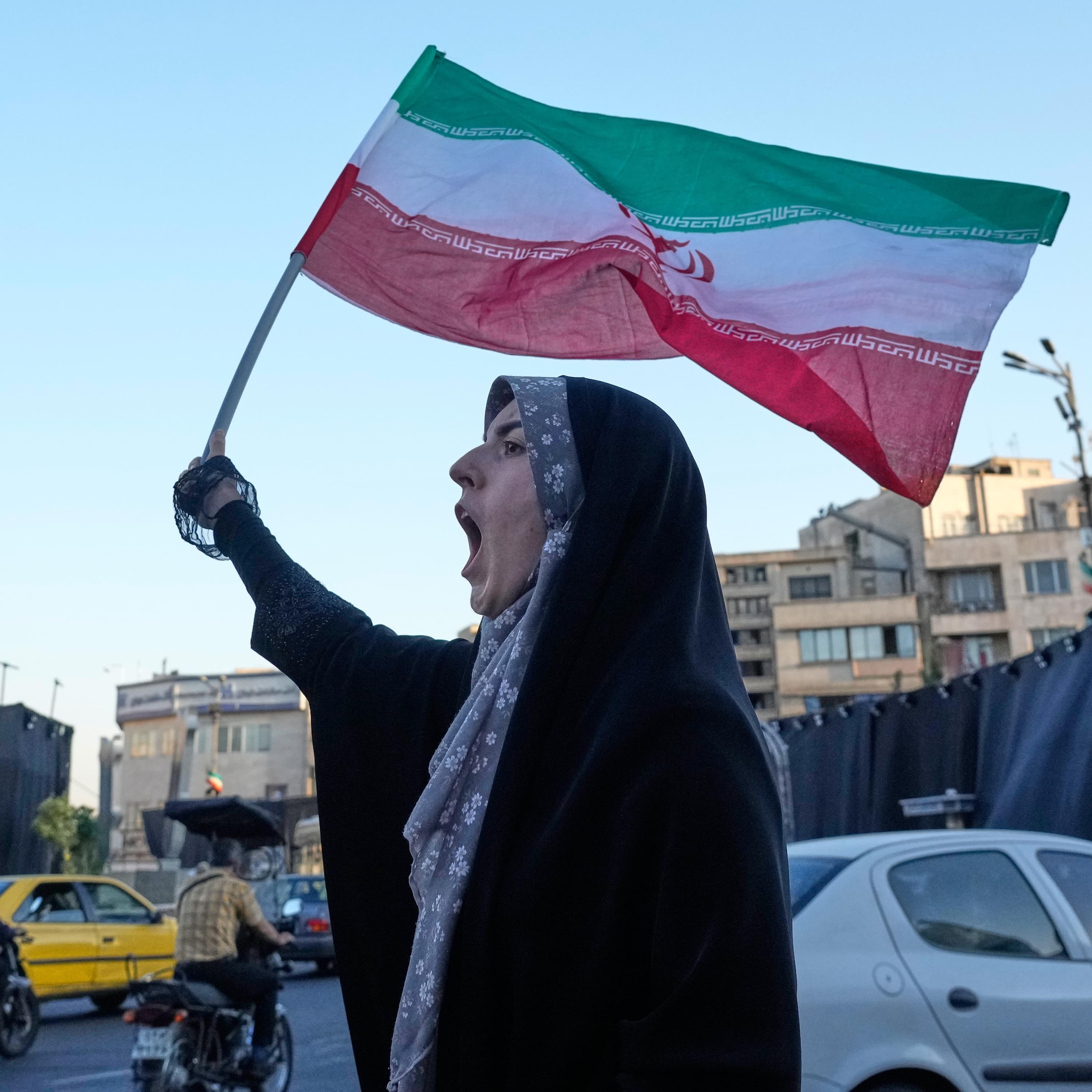
Today in Focus
Is Trump’s deal with Iran embarrassing for the US? – The Latest
00:11:27
The US and Iran have reached a deal to end the conflict in the Middle East, but competing claims have left the details shrouded in uncertainty. Nosheen Iqbal speaks to the Guardian’s senior international correspondent Julian Borger
Loading summary
Transcript29 lines
- [00:00]
Podcast Advertiser
This is the Guardian. Today in Focus is supported by Paramount, the Agency. All episodes streaming June 21st on Paramount. In the world of espionage, truth is a moving target and every decision carries a dangerous consequence. This new mission explores what it means to live as a double agent. Twice the lies, twice the risk. The lines between ally and enemy blur like never before, and survival depends on trusting no one. Starring Michael Fassbender, Jeffrey Wright, Jodie Turner Smith and Richard Gere. Don't miss the Agency. All episode streaming June 21st on Paramount. Plus.
- [01:10]
Julian Borger
The US emerges from this as a very much weakened player on the world stage. They went to a war and achieved none of their aims. The regime then claimed to have looked the US and Israel in the eye and faced them down as the fight. The military, who were the ones carrying out the suppression of dissent, are now completely in charge. As far as we can tell, it's a different Iran, but by all accounts it's not a better Iran in any way.
- [01:42]
Noshi Nikbal
From the Guardians Today In Focus, this is the latest with me, Noshi Nikbal, Julian Borger, your senior international correspondent for the Guardian. And last night we finally have something close to approaching a peace deal. I mean, in characteristic Trump form, he sort of declared ships of the world, start your engines, let the oil flow. What exactly has happened? What's in this agreement?
- [02:09]
Julian Borger
Well, bottom line, we don't really know. There are no public published details. There's no text as yet. So confusion surrounds. So we do know what it's not about. There doesn't seem to be any detail about the nuclear issues, which we should remember is what the US and Israel first went to war about. What it is about is Hormuz and the opening of the Strait of Hormuz. But even there we don't really know the details. When exactly will it open? Trump is saying on Friday. The Iranians saying over a 30 day period after this deal is done. We don't know whether different versions on whether Iran will be henceforward taking tolls or some kind of fees. Trump again insists no, but Iranian media is saying yes, from now on it'll be under Iranian control and there will be some swarm of fees. The other part of it we don't know is about cash. The Iranians are saying that some of Iran's frozen assets will be unfrozen and will be delivered before even Friday and the signing and then more of it afterwards. And that is not clear certainly from the US side. So a lot of uncertainty about the details.
- [03:43]
Noshi Nikbal
So I mean, without pointing out the fact that the US has won a victory and something that wasn't a problem when it first began this war, like reopening the Strait of Hormuz, which was, of course, open before it began attacking Iran. How did we get to this moment? I mean, I'm thinking particularly of Pakistan as a peace broker, which has also conducted its own skirmishes on the border with Afghanistan since these talks began. I mean, how has that happened? And what role is Pakistan playing?
- [04:10]
Julian Borger
Well, Pakistan has played its cards very well. And I think it was mostly the head of the army, Field Marshal Asimouniyah, who seemed to have got on the right side of Trump before all this began. Trump used to call him his favorite field marshal. I think it's because he praised Trump during or after an earlier confrontation between Pakistan and India. And Trump likes that suggested he was
- [04:40]
Noshi Nikbal
nominated for a peace prize.
- [04:42]
Julian Borger
Yes, that always helps with Trump. And so they came forward and they were acceptable to both sides. And so they have pursued. They haven't given up. They pursued both sides and they've been quite dogged in their diplomacy. And eventually, eventually it paid off, but it has paid off because it does suit both sides now to get out of this mess.
- [05:06]
Noshi Nikbal
Well, Julian, from a diplomatic and political perspective, there is a lot of focus on the sort of pantomime of Trump in this, on oil prices, on energy prices, on the performance of the stock market. But when it comes to the actual true cost of this war to the Iranians, to the Iranian people, can you tell me what that's looked like over the last three months?
- [05:24]
Julian Borger
There has been a horrendous cost. We're Talking about maybe 3 to 6,000 people killed, many more injured. The estimates of the damage done, 200 to 300 billion. But also, don't forget the Lebanese. The Lebanese have suffered as many casualties in what people see as a sort of sideshow to the Iran war. But of course, it is part of the war, and the Lebanese have lost similar number of people and seen villages across the south flattened and much of their territory now occupied. The damage and the suffering has been spread over the region.
- [06:09]
Noshi Nikbal
And it's the civilian infrastructure as well.
- [06:11]
Max Rushton
Right.
- [06:11]
Noshi Nikbal
And I'm thinking about, you know, the water reservoirs that have been taken out, the Minab school bombing, the bridges that have been bombed, and as you've said, in the south of Lebanon, entire villages being completely razed to the ground. The question of Lebanon, of course, is quite important here, isn't it? It's quite complicated because Israel say that they're not going to be withdrawing their military from the region. And I wonder if that's the case, then, how contingent is this deal on the situation there between Israel and Lebanon?
- [06:40]
Julian Borger
Well, if you listen to the Iranians, it is very contingent. They've said it's an integral part of it. Also, Pakistan's Prime Minister Shabaz Sharif also said that this is also about Lebanon. So this is another vulnerability in the deal, because we've heard from the Israelis already, as you said, that they have no intention of going anywhere. They're going to stay there. You could imagine they'll be further clashes with Hezbollah. And so this is a big weakness, that there is a third player here, Israel, that has various motives. One is security, the other political. From the point of view of Benjamin Netanyahu, he's coming out to elections, has not really much to show for it in terms of security. So he is very much a wild card now when it comes to this ceasefire, this agreement holding.
- [07:33]
Noshi Nikbal
Nonetheless, this process is now rolling, and we're due to see a memorandum signed on Friday which will then kick off, I believe, 60 days of intensive technical talks in which you imagine that Iran's nuclear deal, or lack thereof, the question of sanctions, will be discussed. Julian, how much faith do you have in those talks and what exactly what else is on the table there?
- [07:57]
Julian Borger
They are going to be very difficult talks in a short timeline, because these issues about Iran's right to enrich uranium, what happens to its sizable stockpile of highly enriched uranium, these have been there for many years. Of course, they were addressed in the 2015 deal done by Barack Obama that Trump famously walked out of. And now they've become the center of the issue once again.
- [08:30]
Noshi Nikbal
Well, he said it was a rubbish deal, didn't he? I mean, he criticized Obama's deal to the nth degree and now has a worse one.
- [08:38]
Julian Borger
Well, this is a real problem in terms of coming to agreement, a deal this time, because it'll be evident if the deal that Trump comes to is worse than Barack Obama's. And this would be political, very difficult for Trump. And so those. But parameters on the negotiations, that will be hard. But it's worth remembering that before this war started, two days before this war started, the two sides were fairly close to a deal by all accounts. And it's hard to imagine that the deal they come to in Geneva, if they come to one, will be very different from that one that was on the table back in February.
- [09:15]
Noshi Nikbal
And in the meantime, we've had this absolute devastation in the region, complete instability. Nonetheless, Julian, we know that the Trump administration will declare this as a victory Irrespective of actually the reality of that. And can you just, I guess, tell me the situation for the us? I mean, how much worse is it really for them?
- [09:32]
Julian Borger
Well, of course, you have an economic cost that is immediate and will last over months, if not years, in terms of inflation, petrol prices, agriculture, inputs to agriculture. So there is an economic cost, but also in terms of US standing in the world. I mean, they went to a war and achieved none of their aims so far and was seen to have been held at bay by really the use of drones and of asymmetrical warfare. They've been shown not to be able to protect their allies in the region. Their bases in the region have been shown to be vulnerable. They were as hit very hard or something that they tried to keep secret. So the US emerges from this as a very much weakened player on the world stage.
- [10:29]
Noshi Nikbal
And in the meantime, the Iranian regime can probably claim this as their victory, right?
- [10:32]
Julian Borger
Well, by surviving, the regime can claim to have looked the US and Israel in the eye and face them down and survived. It probably makes them stronger in terms of internal opposition. The military, who were the ones carrying out the suppression of dissent before now, are now completely in charge. As far as we can tell, the secular part of the regime, the presidency seems to be very much weakened. So it's a different Iran. But by all accounts, what we can see so far is not a better Iran in any way.
- [11:13]
Noshi Nikbal
Julian, thank you for your time.
- [11:15]
Julian Borger
Thank you. Thank you for having me on.
- [11:18]
Noshi Nikbal
That's it for today. Thanks again to our senior international correspondent, Julian Forger. And do check out our sister podcast, Politics Weekly, where they are discussing the social media ban for under 16s as announced by the Prime Minister today. Thanks for listening to this episode of the latest Today in Focus will be back with you as usual tomorrow morning and the latest will be back tomorrow night. This episode was produced by Annie Levesper. The senior producer is Ryan Rumgobin and the lead producer is Zoe Hitch. The presenter was me, Noshi Nikbal.
- [11:53]
Max Rushton
33 days, 33 episodes, no off switch. From the goals and the glory to the politics and the problems of the World Cup. If you want football analysis from a podcast that's been overanalyzing the game for more than 20 years, this is it. Join me, Max Rushton and our expert team of football journalists every day of the tournament. Can England end 60 years of hurt? Probably not. Or will this be another year of falling just short? Probably. World Cup Daily. Listen wherever you get your podcasts or watch the full episodes on YouTube, this is the Guardian.
- [12:30]
Barclays Brief Host
Today's markets move fast. Get the insights you need in 10 minutes with the Barclays Brief, a new podcast from Barclays Investment Bank. Through sharp dialogue and scenario based analysis, our leading experts analyze key market themes each week. So whether you're managing a portfolio or leading a business, the Barclays Brief podcast can help you make smarter decisions today. Stay sharp, Stay brief. Find Barclays Brief wherever you get your podcasts.
- [13:00]
SOFI Personal Loan Advertiser
Today we'll attempt a feat once thought impossible overcoming high interest credit card debt. It requires merely one thing a SOFI personal loan. With it, you could save big on interest charges by consolidating into one low fixed rate monthly payment. Defy high interest debt with a SOFI personal loan. Visit sofi.com stunt to learn more. Loans originated by SoFi Bank NA member FDIC terms and conditions apply. NMLS 696891 Former politics reporter Jane Coston
- [13:32]
Podcast Advertiser
is now hosting Crooked Media's Daily News podcast what a day, five days a week with stories constantly flooding your for you page, it's hard to separate what matters from all the noise. That's why every weekday, Jane and the Whataday team scour the biggest headlines and bring you the stories that matter most to your life, all in just 20 minutes. Listen to what a Day wherever you get your podcast or subscribe to what a Day on YouTube for the video version.