← Tom Bilyeu's Impact Theory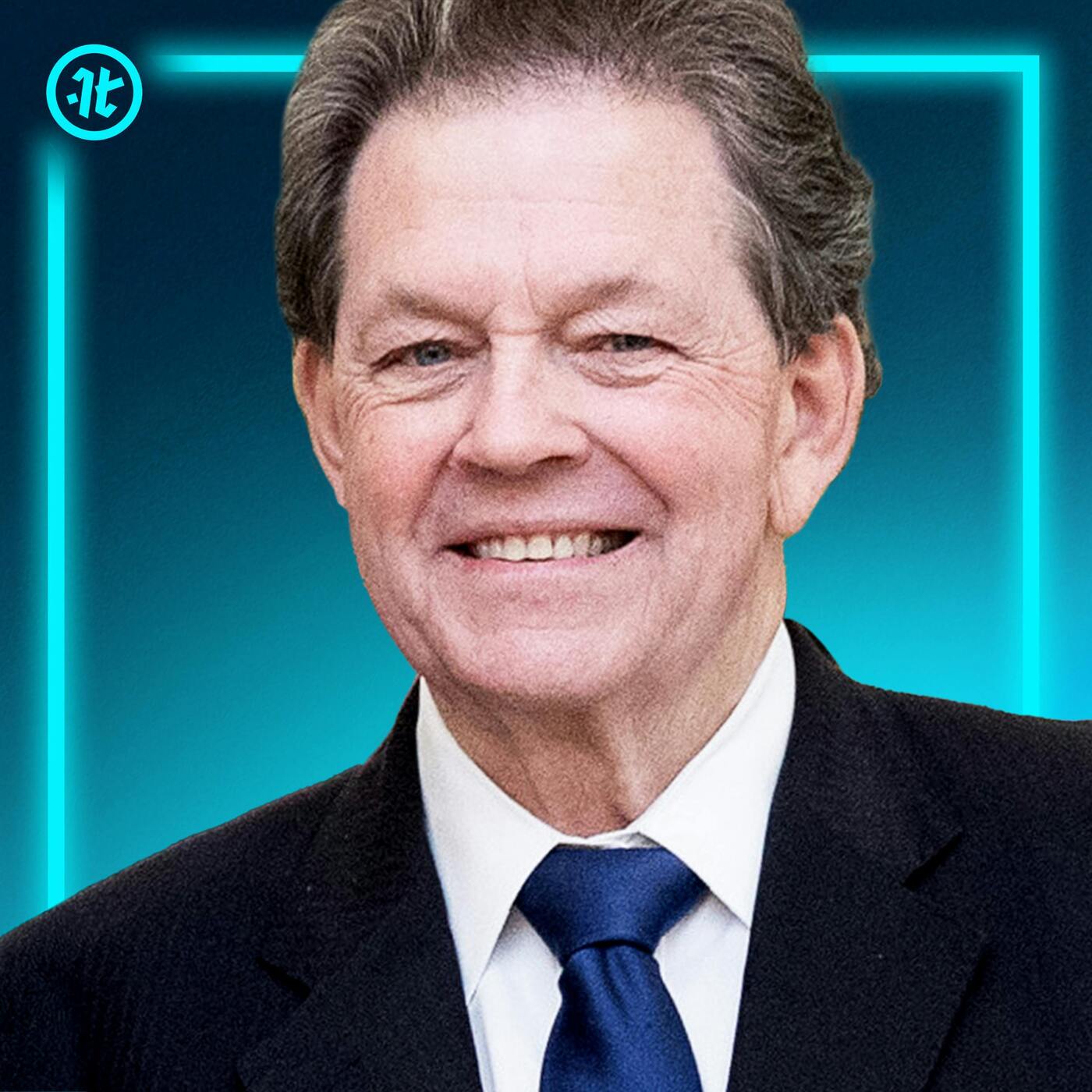
Tom Bilyeu's Impact Theory
Why Wealth Inequality Is Rising—And What You Can Do About It Before It’s Too Late | Arthur Laffer X Tom Bilyeu Impact Theory
00:55:21
Loading summary
Transcript129 lines
- [00:00]
Tom Bilyeu
You didn't start a business just to keep the lights on. You're here to sell more today than yesterday.
- [00:06]
Arthur Laffer
You're here to win.
- [00:08]
Tom Bilyeu
Lucky for you, Shopify built the best converting checkout on the planet. Like the just one tapping ridiculously fast acting sky high sales stacking champion at checkouts. That's the good stuff right there.
- [00:21]
Arthur Laffer
So if your business is in it
- [00:22]
Tom Bilyeu
to win it, win with Shopify. Start your free trial today@shopify.com winner with
- [00:29]
Arthur Laffer
the American Express Platinum card. You can access over $3,500 in annual value with benefits and eligible purchases across travel, entertainment and more. There's nothing like Platinum. Learn more@americanexpress.com Explore Platinum Enrollment Requirements monthly and other limits in terms of Apply
- [00:45]
Tom Bilyeu
welcome back to part two of my conversation with Arthur Laffer. Okay, so there's one thing in all of this that I still worry about, which is, um, whatever the government makes mandatory is the only thing the average person is going to use. So if the government is making the hyper, it's not technically hyper inflated, but the very inflated currency, the mandatory one to pay your taxes and all that, that's the one people are going to understand. I don't think the vast majority of people understand crypto, nor will they embrace it unless they're forced to. They need to, because otherwise they're getting hammered by inflation. And so going, yes, they are, but
- [01:22]
Arthur Laffer
they have said that. Yeah, go ahead. Sorry.
- [01:25]
Tom Bilyeu
Here's the thing. They don't understand inflation. That, that is a hill I will die on. But I to your point, intuitively, they know something is going wrong. Okay, so that's one. The wealth inequality. Even though that's the right thing to point at in terms of what drives people crazy from a. There's just a algorithm embedded in us from evolution that makes us hate inequality. Perfect. However, you can distract people from that by giving them relative growth. So if they believe that, oh, I'm making more money today than I was yesterday and buying that car, that house, that whatever, is a little bit easier today than it was yesterday and I'm going to be able to amass some amount of wealth that I'll be able to pass on to my kids so that I have reason to believe that their life is going to be better than mine and therefore all of my sacrifices are worth it.
- [02:11]
Arthur Laffer
Yeah.
- [02:11]
Tom Bilyeu
The second you break that, you are in a real problem. And we have broken that. And right now things are getting harder and harder for people to afford. And so that makes them go, wait a second, that guy's making a Whole lot more than me, which they never would have worried about or thought about if things that they wanted were getting effectively cheaper for them.
- [02:33]
Arthur Laffer
You're right.
- [02:33]
Tom Bilyeu
So the question becomes, since we agree on that and we know we're moving in the wrong direction, what precisely is Trump going to do from a policy perspective? Or more importantly, what. What are you advising him to do to get it moving in the other direction so that real wages are going up? Not the nominal where it's like, yes, I'm making more dollars.
- [02:55]
Arthur Laffer
Gotcha, gotcha.
- [02:55]
Tom Bilyeu
That one. Obviously I'm not saying for you, I'm saying for the audience, but so that the, the dollars I'm making, sure are more, but in terms of what they buy, it is less. So real wages is where it's like, hey, the actual difference between how much I'm making and how much something costs has changed and I'm in a more powerful position. Okay, how do we get there?
- [03:15]
Arthur Laffer
Yeah, well, you know, I break it into five kingdoms of macroeconomics. If you look at a big macroeconomics textbook, you've got five sections in there, at least if you're talking about the US and developed countries. First section is taxation. Second section is government spending. Third section is monetary policy, inflation, all that stuff. Four sections, regulations. And fifth section is international trade. And I sometimes add one piece through strength, which is defense security. Sometimes when I look at those five grand kingdoms, I look at, let's say Joe Biden, he's a loser in every single one of them. Just, just across the Trump in his first term, cut personal income taxes, cut corporate taxes 100% expensing. Cut the death tax dramatically in the tax Cuts and Jobs Act. He did a great job on taxation, on government spending and that. He did the defense stuff, that was pretty good. He reduced the rate of increase of spending there until it came to Covid and then he blew it on the COVID budget. But even when he blew it on the COVID he did get the vaccine in operation, warp speed by within 10 months, which is pretty impressive, by the way. They were expecting eight or nine years there. If you look at his monetary policy, he was one and a half percent inflation during that period there. That was what he had there. If you look at regulations, he decontrolled energy, he decontrolled healthcare, price transparency. I could go right to try. He did all of that stuff, which is pretty cool on regulation and on trade. I'd love to talk to you about trade data. Take a longer. But all the deals he did in his first term were Lowering tariff barriers, lowering quotas, lowering restrictions on trade, not increasing them. The Japan deal, the usmca, the South Korea, the Brazil and the Colombia ones were all freer trade, not less. This term he got the tax cuts and jobs act permanent. He got no tax on overtime. So all those guys, all those firefighters in California and all the people in Palestine, Ohio, who spend 80 hours a week at 9 11, you know, do all the work and take all the risk, it doesn't, you don't tax the living crap out of them anymore. You're not going to tax them for putting in 90 hours a week at the highest rates. Interest on loans should be tax deductible as long as interest income is taxable. Interest loans should be tips. Why in the hell should you spend $1 billion trying to collect $1 million from tips? You know, there's just some things that are just not worth it. He did that as well. What he did, he put in workfare in there, he put in the medical price transparency and the big beautiful bill. He put in a bunch of other things there that I won't go through the details on, but are all pretty damn good. What I see him doing on trade is trying to negotiate to get better free trade deals. That's my belief. He's a free trader all the way. He just loves to negotiate them to reduce their tariffs. We have much lower tariffs than any of the other major countries and he wants them to bring theirs down. And that's exactly. And the deregulation, I mean, he's doing that really well. So I think in the five grand kingdoms, Trump is an outlier, doing really well on taxes, government spending. I think he's doing well on monetary policy and regulatory policy and on trade policy. And I think his use of trade to negotiate peace, like in Ukraine, like in China, with Taiwan, like in the four countries in Africa that he's done with Pakistan and Afghanistan, what he did in Gaza, you know, he really knows how to leverage those types of tools to bring the peace down. He is very Reagan esque in every respect except his personal demeanor. He is a CEO. Reagan was soft spoken, was lovely high. Reagan was as radical a revolutionary as Trump is. I mean, my godfather was Justin Dart who was head of Reagan's kitchen cabinet. Believe me, he was Donald Trump, he was a CEO. Donald Trump is doing all the right things there are to be done. And I couldn't be more happy than I am about how he's doing it. So that's my story. I'm sticking to it. Let me give you an example where I, I was wrong and some of my advice to him, I. He scared the hell out of me on trade. He scared me to death. And you know, I've just.
- [07:34]
Tom Bilyeu
Because of the tariffs.
- [07:36]
Arthur Laffer
Yeah. And to other, you know, this, whenever I see a president getting involved in that stuff, I'm like, here's the depression, you know, 1929 when they passed the Smoot Hawley tariff. In the fourth quarter the stock market fell by 35% when it was signed into law by Hoover. On 6-30-19. June, June 30, 1930, the market fell to 8, 13% of its previous high unemployment rate. It's really bad. I was there in the White House when Nixon put in wage and price controls, when he did the 10% import surcharge, when he excluded foreign made capital with a job development credit. I was there. I watched the country go to hell in a handsome basket. These president guys don't know straight up from sick and they're really bad. And you know, there ain't no lesson to be learned from the second kick of a mule. And so when I hear a president talking about using trade, I'm scared. He called me. Now this is a true story. He called me, I think in 2019 at home. It was in the evening early. I had, had not had my first bourbon yet, but I was preparing Maker's Mark a little bit. Oh, I love it. And he said, arthur, I want to talk to you about trade. I'd love to, sir. He said, you know, I'm a free trader. And you know, basically I've known him for a long time. Not well. I've known him, but not well. I never sat down, chatted with him alone. And you know, he ran an international company and I believed him always to be a free trader. I don't know of any CEO of a big company that's not a free trader. Fred Smith, all the rest of them are all free traders. And I then said, in addition, anyone who imports two foreign wives has to be a free trader. He didn't giggle, by the way. And what he said to me was the following. He said, you know, if you look at the major countries in the world, the US is the freest trade. Big country. Now maybe you get the Isle of Man, you maybe get Jersey, Guernsey and Sark or Monaco or maybe Hong Kong is freer trade than we are, but we are a really free trade. It all came about from World War II. At the end of World War II, we granted all of these combatants both hostiles and Friendlies, the right to use protectionist trade legislation to develop their infant industries. We allowed them to do that, but they never gave it back. And as they grew and finally became big, they have all these tariffs against America. We have very little against them. That's what's called reciprocity. He said. There's also another thing that is there too, as well, which is called leverage. When you look at these countries, these countries, big countries with large markets, have a lot of leverage over little ones because they don't bear the gains. They don't bear the loss of the gains from trade nearly as much as the other. The point here is that everyone's hurt in a trade war. Everyone is. No one wins in a trade war, but they don't all lose equal amounts. And little countries, especially little relative to the US Lose more than we do. So it gives us a leverage factor on them. The last thing is today it's flexible. Back in the days of the Smoot Hawley tariff, you had to pass legislation. It took you two, three years to get the coalition. Finally it passed it there. It takes equally as long to undo it. It's just a very cumbersome, inflexible thing today with executive orders, he can raise a tariff on you today, cut a tariff on me tomorrow, you can get a tantrum and put a tariff on Ford in Canada, that guy who runs Ontario, and then drop it the next week because he gets cool. Yeah, it's flexible. So reciprocity, leverage and flexibility are new features of the trade system. What he tried to describe to me was these three features gives him the ability to negotiate other countries to lower their tariff barriers here. He said, I'm going to scare the bejabers out of these people, get them to come to the table to negotiate free or trade deals with them. That's what he said to me. Literally. I'm a free trader and I've watched what he's done and I've seen what he's done. He has done exactly that. He uses international trade as a negotiating tool to achieve all sorts of global good objectives in the system. So that's where I am on Trump on trade.
- [11:50]
Tom Bilyeu
We're hitting pause for a moment, but there's plenty more ahead, so don't go anywhere.
- [11:55]
GoFundMe Narrator
This is a paid message from GoFundMe. Meet Juan Naula. When his son was hospitalized for a viral infection, Juan started a GoFundMe to pay for medical expenses.
- [12:05]
Juan Naula
It was 5k to pay the bill for my son, and I need only 22 hours. It was amazing. People really trust on GoFundMe.
- [12:13]
GoFundMe Narrator
How did Juan raise $5,000 in less than a day? He posted a short video on GoFundMe telling his story in 30 seconds.
- [12:21]
Juan Naula
30 seconds. Be specific, be quick and tell what are you going to be using the funds for? I was nervous to do it because it doesn't feel okay to ask money. But you shouldn't be nervous. Sometimes you just have to do it and see the results. We were able to save my son's life thanks to gofundme that we still have my son with us.
- [12:45]
GoFundMe Narrator
Start your GoFundMe today at gofundme.com that's gofundme.com gofundme.com this message reflects one person's experience. When you manage procurement for multiple facilities, every order matters. But when it's for a hospital system, they matter even more. Grainger gets it and knows there's no time for managing multiple suppliers and no room for shipping delays. That's why Grainger offers millions of products in fast, dependable delivery so you can keep your facility stocked, safe and running smoothly. Call 1-800-GRAINGER Click grainger.com or just stop by Grainger for the ones who get it done.
- [13:26]
Tom Bilyeu
Thanks for sticking around. Let's get right back into the action. What's the metric that you look at to decide whether it's net effective or net problematic?
- [13:38]
Arthur Laffer
What the final results I expect to
- [13:40]
Tom Bilyeu
be as of when, like how long are you going to give this?
- [13:43]
Arthur Laffer
But there is no moment, you know, which with Trump, it's like a Calistoga or Conestoga wagon coming down a mountain with rocks that sort of with no driver, you know, it's going to be bumpy, bump. If you think the harmony is going to be achieved next week, think again. It's just going to be a new issue, a new bang thing. He keeps disrupting, he negotiates. He is a change agent all the time and you don't need to change agent forever. But when this dust settles and the smoke clears, I think we're going to have a much freer trade world, a much more peaceful world. I think he's going to solve the Ukraine, Russian situation. I think he's going to solve the China, Taiwan situation. I think he's gone long distance on solving the Gaza, Israel type of situation, Hamas. I think he's going to do all these other ones and I'm watching what he's doing and how he's doing it and every day, in every way, I'm getting a little bit more optimistic on how he uses these tools. He is a CEO. He is not a pollster in charge. He's not a other thing. He takes these tools and negotiates and brings them to achieve really good results. Is where I come out on trade with Trump. That's now, I think in three, five years. And I'm sorry, I'm 85 years old. Because you're probably 27 or something like that. I don't know how old you are. 26, but yeah, okay, 26. All right, you're live a wrong time and you can flip me off 10 years from now and I may not be around, but I'm going to be around. But I mean, the dream is that we're honing in on the horizon effect, which is a freer trade, more peaceful world. The way Reagan left us after nafta, I think Trump is going to leave us with much lower tax rates. He's going to get that tax rate below 28%. He's going to get the corporate rate, I would guess 15, 15 on all these. He's just pumping all the time, moving us in that direction. Bang, bang on the rocks and everything in that wagon. But I am really excited. But it's the horizon effect I look at and the same one I did with Reagan. Remember, we didn't get the 28 tax rate until 1986. I mean, he had been in office five plus years before we got that. Now we passed that bill 97 to 3, which is amazing. We got every lived Democrat to vote for our bill to cut the rate down to 28%, to raise the lowest rate to 15. I mean, how did Reagan do that? He did it by just working his tush off all the. Hi there.
- [16:10]
Tom Bilyeu
Hello.
- [16:10]
Arthur Laffer
Hello.
- [16:11]
Tom Bilyeu
But did he know or was it that he actually was able to deliver tangible prosperity? Because my concern with Trump is that what we're seeing is somebody who talks a Reagan game, but really is erratic. And that sort of.
- [16:26]
Arthur Laffer
It's.
- [16:26]
Tom Bilyeu
I'm all over the map. I'm using this as a weapon and I buy into the way that you describe it. But in terms of how it's playing out in reality, it. The tariffs have turned into an incredible cudgel. They've generated billions of dollars, maybe even hundreds of billions of dollars so far.
- [16:40]
Arthur Laffer
Well, you enjoy a piece I'm writing in the Wall street will come out this week. You'll enjoy it because it's what you do with that money.
- [16:47]
Tom Bilyeu
And yeah, so I'll be very eager to hear if you've got anything you want to tease us with now.
- [16:52]
Arthur Laffer
But I'll tease with it right now, right? They'll say which would you rather do? Give money to people who don't work or cut tax rates on people who do work?
- [17:03]
Tom Bilyeu
I would rather cut tax rates on people who do work. And then that is not true. There's no way you believe that. Arthur, you know better than that. There are people that are angry right now. There is a cross, a cross world study. Hold on, you got to hear this.
- [17:17]
Arthur Laffer
I'm not going to do a poll. But you go Arthur, poll number if this.
- [17:23]
Tom Bilyeu
You know enough people when you say Arthur.
- [17:25]
Arthur Laffer
Milei always yells at me when I talk to me. Professor, sorry. I said look at. Remember I'm on your side. I'm like, I'm just pushing you a little bit. But I'm not.
- [17:36]
Tom Bilyeu
Same here.
- [17:37]
Arthur Laffer
But no, I've got people.
- [17:40]
Tom Bilyeu
If, if you map socialists as people that want to help the poor, you will be eternally confused. If you map them as people that want to hurt the rich, they will suddenly make all the sense in the world.
- [17:49]
Arthur Laffer
Exactly. You're right.
- [17:50]
Tom Bilyeu
But that means they don't want to vote for things that are going to help the wealthy. They don't want to vote for tax cuts for people that are making money. They want to get more money so that they can give it to the people who are starting something.
- [18:02]
Arthur Laffer
When you are started. You said the politicians, all they care about is maintaining power. Now let's take a look at what happened when Reagan cut tax rates. He didn't give it out in handouts. Reagan didn't do that. He cut tax rates. He cut the Highest rate from 70% to 28%. That's not chopped liver guy. He cut rate from 46 to 34. He got rid of, I mean the capital gains tax was way.
- [18:26]
Tom Bilyeu
Didn't you say it was 12% GDP growth?
- [18:29]
Arthur Laffer
Yeah, it 12% in 18 months. We grew at 18.
- [18:33]
Tom Bilyeu
Trump is not giving us that.
- [18:35]
Arthur Laffer
No, but he is. It's just starting. Reagan was able to do that because he caused a recession depression in first two years and almost all of that was just bounced back in first part of 83. Trump did not make the mistake of phasing in tax cuts. He didn't make that mistake. So therefore you're not going to get the huge bounce. But those growth rates right now are 3 plus percent, 4% and I'm telling you they're going to come in 4 or 5%. You're going to get real serious growth. And when that stuff starts hitting then you're going to start seeing people dancing in the streets, you know, tussles and tousles all over Baton Rouge and all this stuff. And it's going to be all, it's going to be a party time in the US for a while. It'll be the 20s, I'm guessing.
- [19:17]
Tom Bilyeu
All right, so you really think that we're, we're going to see that kind of tangible growth for the average, not,
- [19:23]
Arthur Laffer
not 12% in, in the 18 months?
- [19:25]
Tom Bilyeu
Yeah, no, you were clear.
- [19:26]
Arthur Laffer
Four or five, 6%. The bounce back's not going to occur. But the rest of the rest of the Reagan period was huge too. We won the election in 84 with 49 states. I told you how I was on the executive committee of the Reagan Bush Finance Committee, which is fairly cool. I was the only poor person on it. All the rest were her billionaires. And I worked with Reagan really closely. I knew Reagan very well. He come over the house for dinner. I've known him forever and ever. My godfather was his best friend. I've always gotten my positions in life through privilege, not through earning them. And I love it for getting privileges. Much more fun than actually having to do the work. And you look at what happened with Reagan and you saw what Reagan could have won. President of the world. Mondale was a great guy, but don't run against God. You're going to get hammered. We even were able to get that silly guy, George Herbert Walker Bush elected in 88 because of the Reagan coattails. What a loser he was. I mean, Trump is right on that trail there. Not as dramatic, but the down wasn't nearly as dramatic either. When he came in, it wasn't a 12% unemployment rate. Reagan had to go up to well over 10%, I think. So I am very much in the camp that when these are, the smoke clears and the dust settles there, you're going to see a very bullish economy. You're going to see a stable currency. And it may not be the dollar as we know it. It may be some tether dollar or something like that. He's going to do the inflation that the people he's going to appoint to the Fed are going to be really good. Good price rule people like Paul Volcker. I mean, you know, all these things are coming together in a very cool way. And you know, I'm amazed at the guy given what he's gone through. But, you know, he, he doesn't ask his staff what should I do. He tells his staff what he's going to do and what they have to do to stay keep their jobs and that's the way he should be. He's not a pollster in general. He's just not. He doesn't look at those polls, you know, if he did scare the hell out of himself. But he doesn't. And he's just doing the right thing.
- [21:31]
Tom Bilyeu
Talk to me about the Fed. I want to know what's the right thing there.
- [21:34]
Arthur Laffer
The right thing you do is use a price rule, which I went back and what we did Prior to 1913, we defined a dollar and what you had is the supply of money adjusted to the price level. You know, that's what you did back before that and it did perfectly. What you need is a price rule. The way Volcker did it was he looked at spot commodity prices and if they were rising too rapidly, he would sell bonds in the open market, take money out of the system, reduce the Fed's balance sheet, and then if it was going down too fast, he would do just the opposite and expand the Fed's balance sheet. And sooner or later, if you stabilize spot commodity prices, the price level stabilizes right along the way. Exactly. What we did from 1776 to 1913 was a price rule. It happened to be gold and silver from 1776 to 1913, which worked really well. This time you can just use the CPI or something else. That's just what Volcker did. And you know when Volcker did it, the inflation rates, I mean I told you it was 21.5%. Prime double digit mortgages were 15%. He brought it down to way down. I mean if you just look at it, the inflation just collapsed. And that's what I think the Fed people are being looked at in terms of doing that and structurally reforming the entire Federal Reserve System. There's no need to have 400 PhDs of Larry Summers at the Fed being employed there. We don't need 400 PhD economists at the Fed. Believe me when I tell you that these people should try to get. There's been huge creep in the functions of the Fed and it's been ruining the system. We need to really structurally change it. And I think that's what he's going to do.
- [23:17]
Tom Bilyeu
Given that we are excited by it,
- [23:19]
Arthur Laffer
you should be very excited by this.
- [23:22]
Tom Bilyeu
That's what they're going to do.
- [23:24]
Arthur Laffer
I think they're going to do that. Yes. I mean I'm, look, I'm great at forecasting the past. I'm a lot less good at forecasting the future. But I have no choice here. I have to. And I think that's what's going to happen. The next Fed term is going to react rock and roll and shake the foundations of the Fed. And that's very happy.
- [23:45]
Tom Bilyeu
That is the way that you describe it in terms of effectively steering by price is interesting. I'm going to set that aside for now because I don't. My intuition is that's not where we end up. So when I look at the. We have fiscal dominance. So the government spending and debt obligation is so massive we can't raise rates and we are going to have to print money because we don't have. Trump is not interested in balancing the budget. So you've got, we know we're going to be running hot right now we're 2 trillion roughly a year. So that's going to have to be printed to make up for that. And given that, and he's screaming for Jerome Powell to lower rates, which is from where I'm sitting, absolute insanity that is going to flood the market with even cheaper money. You're going to get bubbles. I think we're already in a massive AI bubble and I think that that's only going to get worse if we lower rates. So that given that that's what Trump is signaling, what is it that makes you think instead of doing that we're going to get a Volcker style?
- [25:04]
Arthur Laffer
Now I'm going to use inside information with you, if you'll forgive me. I've known Trump for a long time and I, you know, he's been very successful in many, many ways comes from there. And not to that you've got to take Trump seriously, but not literally. And I think you're taking him literally when you sit there and say, right, you know what Trump does is he's on all sorts of sides of all issues, but he uses the chaos and the mayhem to be able to get things through and to get them done. When I look at what Trump's plan, when I look at what he's going to do is he wants lower inflation, he wants inflation to be effectively zero. Does he want the real return on capital to be zero? No. I mean when you look at let's say the end of Clinton when the 10 year was yielding 4 plus percent and it's yielding 4 plus percent right now. All right, the composition of our 4 plus percent right now is probably 2.5% inflation. And then the real yield, the TIPS yield is probably one and a half, something like that. When you had to Clinton, it was just the reverse. What you want to do is you want to have a very high real return on capital which is the tip shield. And when you have a very lower expected rate of inflation, those two rates always move in the opposite direction. And I think what we need to have is a fed that stabilizes the value of the dollar so that a price level, now a dollar bill, is worth today what it will be worth next year, five years from now, 100 years from now. We need a monetary system like the gold standard was from 1776 to 1913. That's what we need. And I think that's the direction we're going to go. When I look at the lessons of
- [26:50]
Tom Bilyeu
how are they going to do that though, are they going to re peg to gold?
- [26:53]
Arthur Laffer
Well, no, I think they're going to use the spot commodity price index or they may use some of the cryptos. I mean, they're talking about all sorts of things now, just conversations. I'm not saying is it Trump or not, I don't know. But there are all sorts of things of a crypto dollar where you have a tether for a dollar, where, you know, you guarantee it's stable, you know, a stable coin. You can design a currency today with crypto to guarantee it's stable in value. You can do it and you can do it with complete confidence of its secrecy. Because if you read Singh's book on codes, you can make codes that cannot be broken. And the blockchain is a way of guaranteeing that you don't have the double payment problem. I mean, all of these things are there and available now that have never been around before. I mean, the dollar bill was an amazing creation back in 19, what, 13, whatever it was. And, and we're now at one of those right away. And I just see market forces bringing that in. And any government that doesn't take advantage of that stupid. And if this government doesn't do it, which I think it will do it, you've got places like Buchal is El Salvador, you've got places like Malays, Argentina. You've got all these other places in the world that are all doing it. And you know, we can't fight this, this thing of change, of getting a stable currency. You just can't. And it's like the dollarization of the world. Back in the day when the dollar meant something, we had dollarization, but we don't now. They can cure the dollar, they can, or they can allow us alternatives to come in and provide an alternative currency that's stable in value. I love that these cryptos are coming in and challenging the dollar. I just love it.
- [28:43]
Tom Bilyeu
Taking a short break. But there's more impact theory after Stay tuned.
- [28:48]
Arthur Laffer
If you work in university maintenance, Grainger considers you an MVP because your playbook ensures your arena is always ready for tip off. And Grainger is your trusted partner, offering the products you need all in one place, from H VAC and plumbing supplies to lighting and more. And all delivered with plenty of time left on the clock. So your team always gets the win. Call 1-800-GRAINGER visit grainger.com or just stop by Grainger for the ones who get it done.
- [29:18]
GoFundMe Narrator
When you manage procurement for multiple facilities, every order matters. But when it's for a hospital system, they matter even more. Grainger gets it and knows there's no time for managing multiple suppliers and no room for shipping delays. That's why Grainger offers more millions of products in fast, dependable delivery so you can keep your facility stocked, safe and running smoothly. Call 1-800-GRAINGER Click grainger.com or just stop by Grainger for the ones who get it done.
- [29:49]
Tom Bilyeu
Thanks for staying tuned. Now let's get back to it. And when you say take advantage, are you talking about building a bitcoin reserve?
- [29:57]
Arthur Laffer
Well, I don't even think you need a reserve. No, I just think bitcoin can do it itself. Now bitcoin does not. Bitcoin is a fixed quantity, or at least supposedly a fixed quantity of something. When you have a fixed quantity, the prices vary. So bitcoin serves beautifully as a store of value. That's true. But when you see something like tether and some of these other ones, they have a fixed value and the quantities vary. You have a price primal and a quantity dual. With Bitcoin you have the quantity is fixed and the prices move. With a stablecoin you have the quantities move and the price is fixed. And what we need is a stable coin for transactions purposes. And in that regard we don't need to have reserves. We don't need to do. The bank of England ran the gold standard for two centuries without having effectively any reserves except for a transactions volume of that. It just. You don't need it. You just let the quantity of of the entity vary. And we can do that really well by making sure it's stable in terms of goods and services. The way you do that is you can take it like tether in terms of dollars and then it have it pay interest on that or allow the currency to appreciate by the amount of inflation. And it ain't rocket surgery. It can really be done quite simply. You and I could sit here, I'll do the Programming, you do the computer stuff. We can make that program and just guarantee that we have a currency that is stable in terms of goods and services, in prices, forever and ever. Amen. Why not now? I mean, and they're doing it. It's not. Back 15 years ago, there was none of this. Now it's all over the place. There are 55 stable coins. And you want to have the competition amongst these alternative cryptos. I mean, you really do. Because it's great. One does something, then another one, and they compete, get the. The consumer gains all the gains from competing crypto stable coins and crypto value coins. So you see where I'm coming from and you understand what I'm talking about?
- [32:07]
Tom Bilyeu
I do.
- [32:08]
Arthur Laffer
And I read all the math on this stuff. I mean, you can make it completely secure and you can make it take care of the double payment problem. Bingo. Blockchain is incredible. I mean, and they can do. Now blockchain trades 43,000 a second, and they're going up to 200,000 a second. I mean, it's a. You remember when you have to go to the store and put your card in that machine and you wait, don't pull it out yet. Okay, you can pull it out. That's just clearing it. To make sure you take care of the double payment, you write a check. Your bank doesn't let you use it until they clear that check with the other guy's account. That take five days, all of that's gone. All of those transactions are gone. This is a period of incredible efficiency gains in the marketplace and transactions. And I watch this happening before my very eyes and I'm just blown away. I'm 85, but I can't believe that. I mean, the world is really. I'm just ecstatic by what the world is creating. Ah, well, okay, I go against your pessimism, but I do like your logic. Your logic is much better than your feelings, by the way. Your logic is super high. You, you just want to be pessimistic. Did you beat your little sister or something when you were a kid or. I'm just joking with you.
- [33:26]
Tom Bilyeu
The, the funny thing is I am a extremely optimistic person by nature, but I have to ground. I don't trust my emotions. So I always grounded in logic. And the problem is that when I think up from first principles, I take the exact opposite of you, which is that the math does not justify your optimism. I've tried to anchor us in terms of what the difference is in the base assumption. So you think everybody will just migrate to Crypto. I do not. Because they didn't migrate to assets. Crypto right now is best understood as an asset. Now the reason that I say that, that's only. I know you're gonna bear with me. The reason that I say that is because the, their life is not set up to make that an obvious thing that they understand from the time that they're born. And so now they have to learn about it and they have to migrate themselves over to that system. And I'm saying that they're busy trying to make ends meet, trying to fall in love, you know, trying to keep their head above water. And the reality is that they.
- [34:32]
Arthur Laffer
That's not a first principles. That is a second principles. You believe that people are emotionally incapable of doing the right thing.
- [34:39]
Tom Bilyeu
That literally is first principles. The human mind works in a certain way. I think that you're falling prey to man as economic animal and Darwin.
- [34:48]
Arthur Laffer
I'm the Darwin of economics. I believe perfect.
- [34:50]
Tom Bilyeu
Then. Then you will agree wholeheartedly that humans are an emotional creature first and foremost. We do not think through things logically. We are emotion based. So listen, the, the. There has been a study where. Well, first of all, yes we do. When people get depressed enough. But if you selectively damage the area of the brain that is responsible for generating emotion, a human being will cease to be able to make a decision. So they can tell you why you should have fish instead of beef. And then they won't be able to, when you sit them down, say, do you want fish or beef? They won't be able to decide. We use emotions as the thing that propels us in a direction. So given that anyway, we could lose a lot of time there, but ten toes down on that's first principles.
- [35:33]
Arthur Laffer
Before we started, I said I had a story for you on first principles. And let me tell you my story on emotional people. I looked and I asked myself, where's the most socialist state in the nation? And I came to the conclusion it has to be Massachusetts. And I asked my what's the. What's the most socialist city in that state? Cambridge. What's the most socialist institution there? Harvard. What's the most socialist moment there? What department there? Sociology. And what's the social most socialist moment? And it's in the front lawn of the sociology department at Harvard University, Cambridge, Massachusetts, when Bernie Sanders is giving a speech, Elizabeth Warren is in the front row. Everyone's going along this stuff. So what I did, I went to my house, I got some pillowcases and I packed them full of $20 bills. Tied a little dot. I went over here to Nashville, bna the airport, flew to Logan. I got off there, I got an Uber, took me right over to Cambridge. I went right to Harvard University, I went right to the Sociology department. I went to that lawn where Bernie Sanders was giving his speech and I got one of those fold out chairs. All these people tearing off their clothes, screaming and hollering, redistribution. All this run. Oh it's Bernie's hair was flopping back and forth. And so I stood up on this little chair, there's a slight wind blowing and I opened up the pillowcases full of $20. I threw them all and they floated over the crown in there. Within 20 seconds, every one of those $20 bills was picked up. Every single one. They are as capitalist incentive based as anyone. All of their emotions went to the wind when one of them has a girlfriend and the other one wants to share that girlfriend with the first one. They're like all the rest of us. They live on those incentives. It's, they just like the emotional crap of this. But when push comes to shock, we can manipulate them with perfectly good economics all day long and twice on Sunday. I love that story by the way. It's hypocrisy by the way.
- [37:37]
Tom Bilyeu
Just in it obviously it is fun. So again, any theory has to describe the world that I actually see. And the world that I actually see is a UK that's fallen on its face is Argentina that has struggled for over 100 years because they actually embrace socialist policies. Is a world where you had the USSR but it fell only to be replaced with Putin. You've got China, that Mao, which God. I want to ask you about Mao. Since your time there in the 70s, Mao killed tens of millions of people. These things actually happen. They actually take control of people.
- [38:11]
Arthur Laffer
You're right. Are we Mao? Are we China?
- [38:13]
Tom Bilyeu
The, the thing. Well, we're, we're getting there.
- [38:17]
Arthur Laffer
Well, I don't think so. That, that's where we do disagree. I think that's the real disagreement.
- [38:21]
Tom Bilyeu
Really fast. Let me just put a bow on that and then, then we'll debate that. So the bow on that is that America is historically from just a number of years that humans have existed. It's a total anomaly from the fact that every empire before it has collapsed. It's literally right on cue. We're now marching towards 130% debt to GDP. So you, you look at all of this stuff and we fit the historical patterns. No one before us has ever escaped and kept doing the right thing. Everybody does debt and money printing until they collapse literally everybody. More places have lived under tyranny than have lived under a thriving democracy. So it's like you put it all together and that tells me that humans are a certain way. And from where I'm sitting, we have an opportunity to get out of this death spiral, but we will not get out of this death spiral by going, ah, this ain't, it's all going to work itself out. So I'm like, no, this isn't going to work itself out on accident. We are going to have to really get into this. Now the reason that I say that,
- [39:20]
Arthur Laffer
that's what I do. I'm an activist. I'm a policy shock. I'm not someone who sits back and waves my hands and oh, don't worry, it'll take care of itself. I'm in there every day fighting Prop 13. All the tax cuts, I, all those were my babies. I worked on them to get them to go there. I am an active change agent. So I'm not someone who just sits
- [39:37]
Tom Bilyeu
back and goes, now that is for sure inarguable. Now I will say, I think we're
- [39:43]
Arthur Laffer
going to get it changed in the right direction. That's my thing. I'm working on it day and night. Property tax limitations in almost every state in the nation getting that tax rate down to 15% federal tax. And I think I'm going to get that, you know, 15% corporate tax, I think I'm going to get that. I'd love to get. I mean, I think we're going to get a lot of. Trump gave me credit for price healthcare, price transparency. That's one I really were. I was chairman of the board of the Centennial over here. I saw how crappy the system was. So I'm an activist and I'm a revolutionary. I'm just not a commie. I really believe in using incentives. I think the commies are cute little stupid people and they don't know, they don't know what they're doing. And they act in one way like the picking up the $20 bills and protecting their girlfriends and shoot this. But their behavior, their, their speeches are just silly. And I listen to aoc. I listened to this one, you know, there. And Bernie Sanders, I dare him to debate me. I dare him. I dare sayas or piketty. I've asked all. Come on, let's do it. Manu Romano, let's go through it. They won't and for obvious reasons, they won't. They'll lose their shirts. I've had about five debates on income inequality and each one of one and the other side concedes. Duh.
- [41:01]
Tom Bilyeu
I mean, that's awesome. We definitely need more of that.
- [41:04]
Arthur Laffer
It's just common sense. And then I try to go in there to policies and you see how I explained it with regard to a check versus lowering tax rates. You've seen that. Like, you know, and the numbers really do bear me out. And you know, I've been pretty successful presidents, pretty successful with Argentina, with Chile, with all those little alls my students down in Chile there. You know, those are the things I try to do. And I think we're winning on this one and I think we're going to finish and you're going to be really rich. You're going to be really happy. Do you have kids?
- [41:35]
Tom Bilyeu
I do not.
- [41:36]
Arthur Laffer
Oh, see, I've got six kids. So you can tell what an optimist I am.
- [41:39]
Tom Bilyeu
And what 14 grandkids, two great grandkids,
- [41:42]
Arthur Laffer
something like that, or great grandkids. Yes.
- [41:44]
Tom Bilyeu
You know, it's amazing, man.
- [41:45]
Arthur Laffer
Get into my diary, haven't you?
- [41:47]
Tom Bilyeu
Of course, of course.
- [41:48]
Arthur Laffer
But isn't it just. I mean, I've just never been happier.
- [41:51]
Tom Bilyeu
That's amazing. And I will say that comes across and Lord knows I hope that I am as energetic and sharp as you at 85. It is thrilling to see somebody with your experience.
- [42:04]
Arthur Laffer
Dick Cheney, one of my dearest friends, classmate of mine at Yale, Dave Gergen, just by. They both co. Croaked recently. I mean, get all these people, Lieberman, all. All of my classmates at Yale and all. If I want to talk with them now I have to use a Ouija board. You know, it's, I mean. But I'm going to live a lot longer and I'm going to enjoy the. And we're going to have a thing there where you're going to say, you know, Dr. Laffer, you were right on those issues.
- [42:28]
Tom Bilyeu
Lord knows I hope so. Speaking of issues that I want to see, who is mapping this correctly? So I think that we are starting to make choices. Much like China, we're taking positions in companies. I think that is a very big mistake. What's your read on the intel situation?
- [42:49]
Arthur Laffer
And we did. We took it on. What was the one that Biden did? That one, that sun, that sunlight shine one. What was it? Solyndra. He did it in Solyndra. The big government buyout of that Intel's just a lousy thing that they did it in Columbus, Ohio. They did all the buyouts and everything. They gave them so much money the government did Ohio as well as federal. All of them did intel and they're a loser. They, they fell behind and they became dependent on that. I don't like the government taking positions in companies. It's very hard for them not to given the size. I would love to shrink government back down to where it was in 1910. That's me, you know. 1910 the federal government was about 3% of GDP, you know. And at that time we became the preeminent economic force on planet Earth with 3% of GDP. It's a little higher than that today. I thought I'd mention that to you. Just I know you aren't aware, but the government's got a lot bigger. But I think we can shrink this quite substantially now on the state stuff. I moved to Tennessee from California because it's the lowest tax state in the nation since I've been here. We got rid of the death tax and gift tax. We got rid of the unearned income tax. I'm trying to get a property tax limitation like Prop 13. You know what I did there in California with 13? I'm going now working with Ohio, I'm working with Missouri. I'm working with all these states non stop on getting good policies in. I think going to get government to be much smaller 15, 20 years from now than it is today. That's me now. I'm wrong a lot. I never try to be wrong. I really, I am wrong a lot. You could just ask my first wife if you want to find out how bad that can be. But I really think I'm not wrong and I really think we're at a big change in the US on bringing in free market economics back in. Your problems that you describe are true, but you know the stock market when I told you in 1973 was by law you had to pay 34 cents per share traded. It's now zero. Airline decontrol was amazing. Truck decontrol was amazing. Energy decontrol has been amazing. You should see the stuff that have happened there. You know, it used to be in America that you couldn't sell a product that was manufactured except that these manufacturers suggested retail price discount houses were illegal. We then got rid of Hubert Humphrey and we've now got discount houses all the hell all over the place. We are moving in the right direction and we're solving social issues with it. The bald eagle is back. My hometown, Cleveland, Ohio, Youngstown, in Cleveland, two crappiest places. If God had come back to earth in the 1950s and Jesus come back to Earth and had made the mistake of landing in Cleveland to prove that he in fact were the Christ. He wouldn't have to walk on the water. Hell, anyone could walk on the water. He'd have to sink in the water water back then, you know. Today the water is clean, Cuyahoga River's clean, Lake Erie's got the fish. I mean it's amazing the progress we're making. LA 3 stage smoggles, you couldn't go to school, people were there, all gone. The air in the Los Angeles basin is massively improved. I mean I could take you through all these things. We are still have lots of problems as you point out very correctly, you're right. But the black footed ferret is hopping around, you know all these things. We are making enormous progress. If you look at the air quality in this planet, it is improving enormously without those stupid goofballs in the. What is the something accord there, the quality air accord or whatever those people are. You know, we're doing it, we're getting there and the markets are adjusting and really providing this stuff. And I'm just very excited about the future as you can tell. But I think we're solving lots of problems and we are have still a lot to go. I mean debt is way too high. I will concede that to you here. I don't think it's rogue off high 2018 of total net wealth is too high, but it's not. I'm going to kill my country. And especially when you see what's happening with the currencies and all that stuff. Well, you've heard me lecture there. I'm just trying to fuse you with some of that lithium so that you too can see the star spangled banners and happiness and dancing girls and lights and shining and
- [47:07]
Tom Bilyeu
you don't have to
- [47:08]
Arthur Laffer
you die to have heaven. You could have it here.
- [47:12]
Tom Bilyeu
Awesome statement. Let me ask in terms of what you see going on in the stock market today, what do you make of that? To me this looks like a liquidity, I'll say problem where assets are going sky high because debt is so cheap. We've printed so much money we people are trying to escape inflation. And so when I look at a company like Xai raising money at like 150x my heart skips a beat because we're so detached from fundamentals. What do you see?
- [47:48]
Arthur Laffer
Thank you. This is the best question of all. What we have seen happening over the last 20 years or so is you've seen private equity replacing stock market equity. And for good Reason, it's the regulations, it's all the taxes, all the treatment, everything like that. So the stock market is a smaller share of total wealth than it has been historically, if you look at it. And yet all of a sudden the stock market starts really going way up. I think I see what the stock market sees. I think I see a very, very boisterous, wonderful future. And the stock market is reflecting its expectations of higher profits and greater prosperity in the future. And stock market doesn't tell you what has been, it tells you what it expects to be. And I think the stock market is expecting the type of world I'm describing to you. And so therefore I look at the stock market as reflecting what my view of the world is rather than telling me a bigger problem is here.
- [48:53]
Tom Bilyeu
So when you look at the stock market, you don't think business fundamentals. That's not really relevant. This is more of a sentiment. Well, so we've got whatever seven to 10 stocks that produce the entire performance. And those are detached from business fundamentals, certainly from anything historic, not troubling.
- [49:16]
Arthur Laffer
That's just you're using historical numbers rather than future numbers. And that's what I think the stock. If you knew that there was going to be a huge boom in the economy next year and that profits were going to increase tenfold, would you sell all your stocks now or would you buy more?
- [49:32]
Tom Bilyeu
I'd buy more.
- [49:34]
Arthur Laffer
Thank you. I think that's what's happening now. I'm exaggerating, obviously, the numbers, but that's
- [49:38]
Tom Bilyeu
sidestepping the business fundamentals question because I agree that's a fundamental.
- [49:43]
Arthur Laffer
Yeah, but you say the transactions costs are going to be gone. I mean, when you go buy things and look at all this stuff, the huge, huge change in productivity that's going to come about by replacing all of these transactions and banks and clearances and all that stuff. It's huge. By having transparency and healthcare prices, all of these things are going to be huge generators of productivity increase. I think that's me and I think the market's reflecting that.
- [50:11]
Tom Bilyeu
Yeah. I'll say once again, you and I agree on like the simple statements and then we take away very different conclusions. So that's all right.
- [50:19]
Arthur Laffer
I agree.
- [50:19]
Tom Bilyeu
I, I think that AI is going to be transformative in ways that we can't even imagine.
- [50:24]
Arthur Laffer
Thank you. That's what I do too, for sure. Like in the stock market.
- [50:29]
Tom Bilyeu
Yeah. In, in a way that.
- [50:32]
Arthur Laffer
What is Nvidia? But that I was a big investor in Nvidia in the beginning and then I got Scared. And I sold it four years ago. How stupid is that? But at least I held it for a lot of up. And by the way, I'm also just for your viewers, I am not a guy you want to follow his market advice. If you follow my market advice, you're going to lose a lot of them.
- [50:54]
Tom Bilyeu
Yeah. I mean, so. Well, I think that probably points out something fundamental which people need to understand, which is that markets are, first of all, they're gambling. And second, it is people gambling based on emotion. Once you understand it's gambling based on emotion by people far more sophisticated than you, it becomes very difficult to make money. If you're trying to trade, if you're just going to buy and hold bet on sectors over the long run, that's all I do.
- [51:21]
Arthur Laffer
And I still lose.
- [51:23]
Tom Bilyeu
Yeah, it all comes down to when you sell.
- [51:25]
Arthur Laffer
But. Well, no, well, I, there's no, no, it doesn't come down to that. I start losing the day my check clears. Yeah, I just keep driving. I could sell it any day and I still lose. But there is no money back guarantee with my statements about the stock market. Just for the record. But I am very optimistic, as you can tell. And I am fully invested in the market. Fully, fully, fully, fully. And I love it.
- [51:46]
Tom Bilyeu
All right.
- [51:46]
Arthur Laffer
I've got all my trust funds for my grandkids and my great grandkids and I'm just wallowing in fun.
- [51:53]
Tom Bilyeu
Okay, so you and I both agree that we've got a shot at the future being incredible, but it's not going to happen by accident. What should, what should individuals do? Whether that's how they invest, how they vote.
- [52:04]
Arthur Laffer
Give money to good politicians and get those politicians that want to shrink government to lower tax rates, to free energy markets, decontrol the place, give them and get involved politically. People deserve the governments they get. And if you don't take care of that government, who does? Me. You know, come on, I'm working my tush off day and night. To change government in the way you and I see the world, you gotta do the same thing and so do all your viewers. Get out there and get in there and get, and do the right markets, get the good politicians in and get these guys out to our bed. It's not Republican, it's not Democrat, it's not liberal, it's not conservative, it's not left wing, right wing. It's just good economics. You know, I'm a Kennedy Democrat, I'm a Reagan Republican, I'm a Clinton Democrat, I'm a Trump Republican. You know, I Was a Gary Hart's economist when he ran for president in 88. I was Jerry Brown's economist when he ran in 1992. He wanted to get rid of all taxes and put in two flat rate taxes. The 13% flat tax, if you remember that. I did that with him. I think Jerry Brown was cool. I wish he'd won. It's not party. Get your guys to get in there and become political activists because it's your future, it's your kids future, it's everyone's future. Get them out there. If they aren't involved in politics, they don't deserve to have good results. How's that?
- [53:22]
Tom Bilyeu
That was amazing. Arthur, I cannot thank you enough for coming on. I can't thank you enough for all the books that you've written. Where can people follow you?
- [53:31]
Arthur Laffer
Right through you. You know, there I think it find me in the Internet. I have a thing there, but I don't. I don't even do emails. I don't know how to do emails. I have. I had a flip phone until Buchala's security people broke my flip phone. I had to get this new one and I'm butt dialing everyone all the time. I don't know what the hell to do with this stupid thing. And so there is a thing called the Laffer center. If they want to get involved with it. 1065 Inc. It's called. And I have a firm here in Nashville, Laffer Associates, which is. But it's just small, just me and ten other people. But we do all the work we do here and we just put it on the line. And you know, I, I have made a vow that I never go to work for government because once you pay a paycheck, you're an employee. And once you're an employee, you have an oath of loyalty. You know, I worked in the Nixon White House as I mentioned to you in 1972. And I found out what I don't do. Well, I don't work for government. Well, but, but when I'm not there, when I go in with Trump or with Reagan or with any of the others, I never took a job with any of them. And I did get offered really nice jobs, but I didn't take them because I want to be independent and tell him what I think is right. I hold his confidences, you know, if he talks to me and stuff, I try not to listen to what he's going to do, but I then keep my mouth shut about it and I, but I never operate against them in any Way, shape or form. But when I see my colleagues and you know, my colleague at Yale, classmate of mine's married to Janet Yellen, I know all of them there. I know Austan Goolsbee, he has my position at the University of Chicago, I had 10 year professor there as well. And I see them in these people, I mean, especially you know, Romer, I mean, you know Romer and Jared Bernstein and all these guys, they will rebut arguments they know to be true in order to curry favors with their political benefactors. And I'm not willing to do that yet. Okay, When I go in there, I talk with him, he hears what I say, he can't fire me, he can't hire me, he can't double my pay, he can't have my pay, you can yell at me. But all of that. So you know, it's like with you, you know, we can have a good firm discussion, but you know, I'm trying to be straight with you, you know that. And I'm trying to give you the best and you, you make the decisions that you make and present. God knows he has 10 times more information than I do. He makes it. But all I want to do is make sure that he understands what I'm talking about, let's say in trade or in deregulation or taxes, all that stuff, stuff. And make sure he understands and uses that in his calculations. I'm not going to talk trash about him or good, I'm just going to step aside and that's what I view my role at in this work. Now in state stuff, I go in and do tax plans and do all that stuff and campaigns and stuff like that. Man, I was very involved in the Tax Cuts and Jobs act, as you know, in the 86 tax act. It was my paper, the complete flat tax that they use Kemp casting as well as Bradley Gephardt with that. I really get involved in all that stuff right down the nitty gritty. But I never take a job with a politician and I never ever, ever. Once they pay you, you're an employee. And then you gotta say nice things about your boss even when he does it wrong. I was with Nixon as George Schultz's right hand person when I was 29 years old, 30. I remember telling my mom, I said, mom won't believe it. I just wrote a speech for Nixon, Mom. I wrote a speech for the President of the United States. I mean, he loved the love. He only changed two words, Mom. Only two words he changed. He said wherever I had is. He put is not. And wherever I put is not, he put is. But mom, it's my speech. And I learned, you know, that that's not where I belong as in government, I belong outside giving really what I consider measured, correct base advice. And then I go home, play with my Great Danes and my family and my kids and all that. But you follow me. It's really you get, you get, you get, you get co opted. When you buy into being a government official. You do and you're completely right. They want power and power and power. My job is to just blow up all this, all the positions of power until we, we get to the world that you and I really want is a 3% of GDP. Government, state and local, 1 1/2%, 4 1/2% total. We have a low rates, broad based property tax that never exceeds 1% of market value. You have an income tax or flat tax rate, that's it. And get the hell out of the way and let the market solve the problems. Yeah, you're going to get problems. Free markets have problems all over the place. They do it. But government's even worse than free markets
- [58:22]
Tom Bilyeu
when you talk about problems, ain't that the truth. Arthur, thank you so much for joining.
- [58:27]
Arthur Laffer
My pleasure.
- [58:27]
Tom Bilyeu
I really appreciate it. Everybody at home, if you have not already, be sure to subscribe. And until next time, my friends, be legendary. Take care.
- [58:35]
Arthur Laffer
Peace.