← Tom Bilyeu's Impact Theory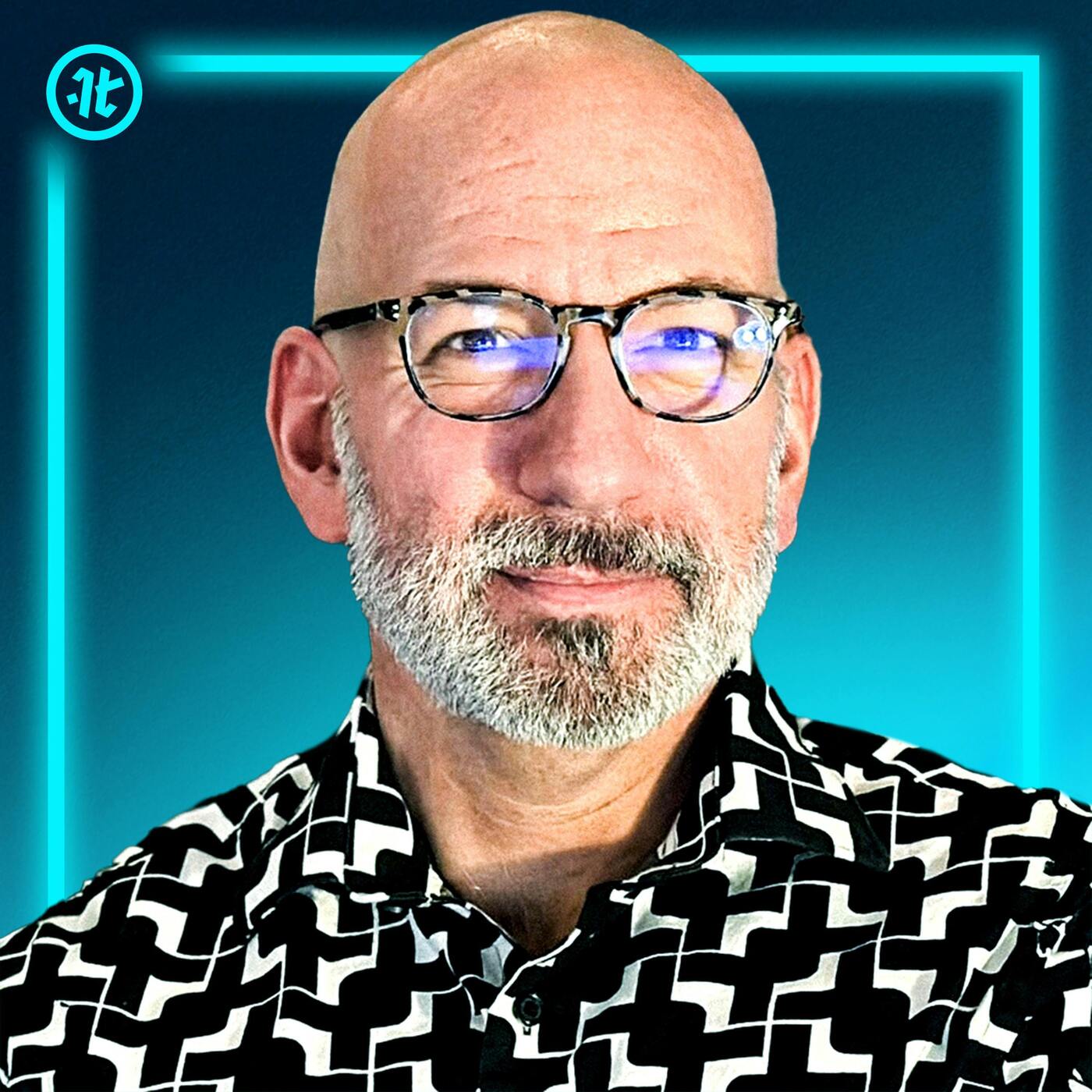
Tom Bilyeu's Impact Theory
Peter St-Onge Talks Dot-Com Crash, AI Bubbles, and Building Wealth Amid Market Turbulence | Impact Theory w/ Tom Bilyeu
00:53:28
Loading summary
Transcript35 lines
- [00:00]
Grainger Announcer
If you work in university maintenance, Grainger considers you an MVP because your playbook ensures your arena is always ready for tip off. And Grainger is your trusted partner, offering the products you need all in one place, from H VAC and plumbing supplies to lighting and more. And all delivered with plenty of time left on the clock, so your team always gets the win. Call 1-800-GRAINGER visit grainger.com or just stop by Grainger for the ones who get it done. If you work in university maintenance, Grainger considers you an MVP because your playbook ensures your arena is always ready for tip off. And Grainger is your trusted partner, offering the products you need, all in one place, from H VAC and plumbing supplies to lighting and more, and all delivered with plenty of time left on the clock, so your team always gets the win. Call 1-800-GRAINGER visit grainger.com or just stop by Grainger for the ones who get it done.
- [01:00]
Host
Peter St. Ange, welcome to the show.
- [01:03]
Peter St. Ange
Thanks for having me on, dude.
- [01:04]
Host
It's a pleasure. I've been watching your content from afar for a while now and am very excited to sit down and have a conversation with you.
- [01:12]
Peter St. Ange
Yeah, likewise. There is a ton going on both in markets and in the economy, so I don't think we're going to have a shortage of things to work through here.
- [01:20]
Host
I definitely do not think so. All right, all right. Dear audience, imagine this. Today's guest had made enough off of investing to retire to a tropical island at the age of 25. One day, though, he returns to the mainland to get some cigarettes, only to discover he's now dead broke, lost everything in the 2000.com crash. He becomes a bartender in Japan to make ends meet and decides to get his PhD in economics. So presumably he never gets wiped out again and he is here today to help us avoid catastrophe. Peter, what I want to know is what have you learned that people today would benefit from but might be missing?
- [01:55]
Peter St. Ange
What I try to do in investing is think as little as possible. Like the more steps you have in your thesis, the more things are going to go wrong. You know, it's like when you're betting, what are they parlays where you do, you know, you have the this and then the other thing comes in and it doesn't work. The odds are very low. And so, and you know, when it comes to investing, like I want to ask the simplest question. So right now I think that AI is the dot com. I think if you look across the various metrics, media coverage, public opinion, fed rates, if you look across them, I think that we are closer to 97, 98 than we are to 20009798 meaning there's still a lot more to grow, 2000 meaning the bubbles about the pot. So that's where I think we are. But if for example, capital expenditure were to Suddenly collapse, if OpenAI were to cancel a bunch of investment, if data centers are being pinched because of energy problems, okay. So if those things happen, then I think you'd have to pull in the horns a little bit and at least prepare for the possibility that AI could have a winter just like dot com had a winter. Right. So if you look at dot com usage, usage of the Internet and you trace that from 1995 all the way to today, you can't see the.com crash in usage. Right. You know, it's not like everybody, yeah, so like everybody in 2001 didn't stop using the Internet. Right. In fact it actually escalated because you have social media coming in the, you know, so called web 2.0. So usage didn't collapse, values collapse. And so that's what I think you want to keep an eye on. I think we are guaranteed that AI is going to be widely used. It's going to have a huge impact on society, probably bigger than the Internet. I think it will be bigger than the Internet in terms of the economy and profits. However, it is entirely possible that it would be punctuated. Now generally when you look back through history, a specific bubble popping itself is not going to cause a recession. That will take everything down. Right. Like you constantly, even during the best boom, you constantly have little boom bust cycles where investors got excited about something and it didn't turn out the way that they wanted. If you take uranium for example, or what's happening to gold and silver right now, you've always got these little markets that jump up and then go back down. That doesn't cause a recession. Historically, what causes a wide economy, wide recession, that is sometimes it can be wars. Has to be a pretty catastrophic war. We haven't had one of those in 80 years. But most of the time it's the Fed. So the Fed jacks down interest rates to get a tissue fire going to get the economy burning bright so that politicians can win the next election. That creates inflation. They strangle the inflation by jacking up rates. So that is the standard story. It's the 500 year old story of the boom bust is entirely created by governments. So in other words, there's one possibility that CapEx crumbles in AI because nobody can turn a profit or whatever. Okay, so there you would want to trim, but you wouldn't necessarily go over into gold or something defensive. You would maybe move into the broader market. Instead of being 40% AI picks and shovels, you reduce that to 20% or whatever the number is. But then at the same time, you want to keep an eye on the possibility that there's a sort of national recession that hits everything. And there you flip into really defensive things like, like canned soup, Campbell's canned soup, not canned soup in the basement, which you would save that if things got a lot worse. So. Right. So, you know, you kind of want to keep an eye on the various failure possibilities. And that, that's where I went wrong in the dot com. Right. Is that I was buying it because I thought that, you know, people who, who were skeptical were going to turn over, but I hadn't thought through, you know, number one, what's the end game on it? And number two, I didn't understand how recessions worked back then. So I had never heard of Austrian economics. I had an economics degree, but it was a mainstream Keynesian degree from McGill. So they didn't teach economic history, they didn't teach Austrian. Austrian economics is really just classical economics. This is rebranded. It is the exact same. You can go back to the Spanish scholastics in the 1500s and it is Austrian economics. So they didn't teach any of that. So I didn't, I didn't know what signs to look for people a crash
- [06:32]
Host
course really fast in that what, what is exactly classical economics or Austrian economics?
- [06:38]
Peter St. Ange
Economics as a field is the study of choice. People think of it as a study of money. It's actually study of choice. Why do people do things? And a lot of things that people choose to do involve money. And there's a lot of profit in analyzing those choices. So, you know, most of what economists do tends to deal with money, but it's not really about money, it's about choice. And classical economics really going back to Aristotle, they tried to model like why do people do. And the sort of pinnacle of that two millennia long inquiry is a model that we use today that anybody who's gone to college would have been exposed to it whether they liked it or not. You have the supply curve and the demand curve and these basically trace out the fact that people want things. How much they want it depends on what the price is. But then if the price is high, you don't want it as much. But if the price is high, people want to offer it to you. And then there's some intersection of that, you know, so for example, people want to get married in order to increase. So they are a supply of husband. And in order to increase their attractiveness to wives, they go to the gym or they get a job. And then, you know, women, on the other hand, you know, they now regard them as an attractive product. But the question is, what's the price? In other words, will. Will he love only me or will I have to share him with other women? All right, so you can take this supply and demand and you can apply it to lots of different things that involve choice. And if you sort of go through that all the way from Aristotle, through Turgot and Bastiat and all the way through Rothbard and today, you've got a really, really beautiful way to understand not just how the world works, but then these sort of emergent features that come out of it, like inflation and jobs and productivity growth, GDP growth and things like that. All right, so that is the sort of classical Austrian economics, Keynesian economics is this freak that was bolted on top. So this guy named John Maynard Keynes, he was not an economist. He wasn't trained as an economist. His dad literally bought him a professorship at Oxford or Cambridge. It was Cambridge, which is what one did back then. He like, he was a layabout, the family was rich, the father was like, you know, you get amount to anything. But Keynes was willing to be a whore for the point of view that government can make it better. Right? So classical economics generally felt that people are the best judges of what's best for themselves. So, you know, you should let people marry who they want, you should let them choose what job they want, you should let them start a business. And the general job of the government was to stay out of the way because anytime the government got involved, it was going to screw it up. So there had to be a darn good reason for the government to get involved, like if a crime is being committed or if it's a war or something like that. Keynes, on the other hand, he was the standard bearer for an idea that's lasted almost as long, which is that government can do it better. And of course, there's always a constituency for this because government is corrupt. And so certain people are going to think that they can bribe government and then they can get special privileges so they can get trade protection or they can get money handed out to the industry and so on. So Keynes was willing to be that guy. Predictably, of course, governments wanted to fund departments and professors who were pushing this pro government narrative. And so today, when you go to a university, Keynesianism is dominant. Basically it says that no matter what the question is, government has a role to play. And of course the problem is government is made of men, it's made of people. And so we all understand that companies can't be trusted. They're going to try to rip you off, they're going to try to charge you more money, they're going to try to stiff you. But of course, why would governments be any different, right? Like people who go work for the government do not get purified in some ritual where like their Jedi council. Now they are just as greedy, just as deceptive. In fact, they're probably more so because nobody's watching them, right? Government, you have what's called a principal agent problem. So nobody's really keeping track of government, which is why you have so many Somali leering centers. But anyway, so the argument of Keynes is to sort of pretend that government is this angel. And so because some market is not perfect, like health care, for example, there are some people who can't afford coverage. And so we're going to give that to the government and the government's going to use its angelic omniscience to fix it. And of course, they always make it worse. So within economics, generally speaking, if you get a degree in economics, almost everything you will have been taught is Keynesianism. So it's pro government. Government can fix everything. Oddly enough, economics today, not to get too far into inside baseball, but economics today is broken into two classes. Typically you'll get micro, which is little stuff, and macro, which is big stuff. Micro is like how to run a business. They do the supply and demand. Because classical economics, macro is like inflation and unemployment rates and stuff. Micro is actually true. It's almost entirely because it's based on classical economics and micro is good to go. Macro is essentially pure propaganda, just going on how the government can fix anything. But so broadly speaking, I had gone, so I went to McGill in Canada. It was a completely mainstream program. I did my graduate degree at George Mason, which is an Austrian program, but my undergrad was mainstream. And so I had not learned about any of these things. I didn't know how business cycles worked. And under Keynesian, business cycles are almost like the weather. Like you get an earthquake or the weather's bad one year, there's no cause to it. Literally under Keynesian, it's called animal spirits. What is an animal spirit? How do you predict animal spirits? It just kind of pops up like Everybody's feeling really good and all of a sudden everybody's feeling really bad. There's no explanation for it. Now if you go back to Austrian or classical economics, it's what I said earlier, right? You screw around with the money, with the interest rates.
- [12:35]
Host
We're hitting pause for a moment, but there's plenty more ahead, so don't go anywhere.
- [12:40]
Grainger Announcer
When you manage procurement for multiple facilities, every order matters. But when it's for a hospital system, they matter even more. Grainger gets it and knows there's no time for managing multiple suppliers and no room for shipping delays. That's why Grainger offers millions of products in and fast, dependable delivery so you can keep your facility stocked, safe and running smoothly. Call 1-800-GRAINGER Click grainger.com or just stop by Grainger for the ones who get it done.
- [13:11]
Host
Thanks for sticking around. Let's get right back into the action. Well, so finish that statement. So I assume Austrian is going to be a screw around. You have a Fed Federal central bank. You screw around with the interest rates, that's going to have a knowable set of effects. And so somebody in the Austrian school is going to look at this whole animal spirits idea as patently ridiculous. They're going to say there are forces at work. These forces are complicated, so it's not perfectly predictable, but it's a pretty knowable reaction.
- [13:39]
Peter St. Ange
Yeah, it's, it's pretty simple in terms of the cause and effect, which is that when it's really cheap to borrow and then you make it really expensive to borrow, you're going to end up wiping out a bunch of businesses that could only survive on the cheap capital. Those are called malinvestments. If you look at a chart of recessions and a chart of Federal Reserve interest rates, they're almost one to one. I mean, it's perfect. Covid was an outlier because we can speculate where Covid come from, but generally recessions are one for one. They jack the rates, low, inflation takes off because money's cheap. When interest rates are low, borrowing is really cheap. And effectively most borrowing is printed by banks. When you go to the bank to borrow money for a mortgage, they don't go back in the vault and get it. They literally create it. They're given a license, they're given permission to do this by the government. The rates are low, money takes off, money is printed. That makes inflation go up. At that point, the Fed wants to get out of the headlines. People are getting upset. They don't want the pitchforks to come out over the inflation. So they jack up rates, that ends up strangling the economy. That then is a recession. Whereas in the Keynesian model, the idea is that everybody's kind of chugging along, doing great, they're really happy, they're really optimistic, and all of a sudden they're really pessimistic. And it turns out that a lot of them made a mistake. So the idea would be that everybody had a really good IQ in 2005, but then everybody got suddenly stupid in 2008 and all the businesses went under. It's comical. The only reason, I mean, it's a stupid theory, and it has existed for centuries in inflationism. But it survives because it's extremely useful to governments. It says that the market is the problem, the stupid investors are the problem, the stupid businessmen are the problem. And so the government, though our wise overlords, have to come in pure of intent and fix it all. So once I understood Austrian or classical economics is very easy. You look for the interest rate, you look for liquidity. Like since 2008 crisis, the Fed pivoted now to where it dumps money in the markets, does it, using something called quantitative easing, where it basically prints the money in the basement. Although literally, it types it on a spreadsheet, it says 10000 and it says this is money. And then it goes out and buys stuff.
- [16:06]
Host
All right?
- [16:06]
Peter St. Ange
So you look for liquidity coming in through that. If you're looking at the US Economy right now, you would look at liquidity coming in from other countries, building factories here. That's going to be a big boost. It's just starting now. So anyway, you look at money flows, and sort of the granddaddy of those money flows is the Federal Reserve. To the point. A lot of people have commented on the fact that when you get bad economic news, the market does well. And then when you get good economic news, the market tends to go down. You saw this during the government shutdown. Government shutdowns, historically, they're very destructive for gdp. I love them because I keep hoping that they'll go all the way and just get rid of the government for good. But they are bad for gdp. And what's interesting is that in this most recent government shutdown, we had stocks, loved it. Stocks were off the charts. They were swimming. And. And it's kind of weird if you think about it, but the reason is because the Fed is so dominant in markets now that stock markets in general markets across the board understand that if anything bad happens, if you lose 100, the federal give you 200. Like the Fed will dump so much money into the market that it'll feel good. You saw that during COVID right? So for a moment there, we had literally locked down 40% of GDP, right? We had just about cancel the entire economy. And then look at stocks. Why? Because the Fed dumped, I think at the time it was 9 trillion that they ultimately dumped in, which is like 40% of all the money in the world, all of the dollars in the world, and then the rest of the world did as well. So, you know, the investors absolutely made out before we were talking about, you know, sort of the K shaped economy. You got the people on the top part of the K, the people on the top part of the K love the Federal Reserve. Whenever anything bad happen, all that money gets dumped out. And it doesn't get dumped down the main street because of qe, because of how they inject it. They inject it in the financial markets. Injecting it there means that the rich people get it first, they get to spend it before the inflation took off. Something called Cant Milan effects. But the end result of it is that if you understand that the Fed is causing the business cycle, the business cycle does not exist on its own business. People do not suddenly get really stupid all at once and then get really smart again two years later. It's not how it works. Right. Once you understand that the Fed is creating these things and then you understand exactly the mechanisms, interest rates and liquidity there was dumping money in, then it becomes a lot easier to spot the recession coming.
- [18:38]
Host
All right, so that's been my journey as well. Not as an economist at all, but somebody who is trying to help other people by making content about how to save their money to survive. Covid only to learn about money printing and Keynesian economics and Austrian economics and being just completely bewildered that this thing was hiding in plain sight, that it's obviously going to result in a K shaped economy, that you're going to make the rich richer mechanistically. And so trying to get people to understand, okay, this is how the mechanism works. I've given up thinking that I can save everybody. So now I just try to figure out how do I get people to understand how you move? If you're on the bottom, how do you get to the top? By understanding things like money printing. It has a mechanistic effect. When you pour money into the system, you do it in a specific way, because it's done in a specific way and you can trace the outcome of those mechanisms. Now I have used that to influence my investing strategy. It's made me a ton of money. And at the same time, though I remain hyper aware that the system is complicated enough that I can't predict exact outcomes. So I look at sort of big moves in terms of. Like you were talking about liquidity, you mentioned it very briefly, but like, how much money is coming into the system. If I see a lot of liquidity coming into the system, then I have a good feeling that the stock market's going to go up, even if it's a bubble. To me, looking at the vast majority of the stock market, especially AI, it's just completely unhinged. But the money has to go somewhere to hide from inflation. And so it's flooding into the market. But I look at the current state of the market right now and I don't have great words to put to this. I'll fumble a bit, maybe you can say it better. But I look at it and it. It feels skittish. So it feels skittish up and down, like they'll see gold. Oh, like I've got a narrative. China's buying all the gold. Yeah, word, like, AI bubble, let me get safe rushing to gold. But then gold will plummet and it's that narrative starts falling apart. Or AI like, oh, they're putting too much money into infrastructure. We're not at 98, we're at 2,000. I gotta get out right now. And they pull out and then there's so much money on margin that when people pull out because they just have that momentary panic, you drop down below a level that liquidates everybody and so you get these huge explosions. So we're recording this at a time where, like in the last couple weeks we've lost trillions of dollars in value in the stock market just super rapidly. Now I look at that and I go, nah, let's see where we are in a few weeks, a few months, like. Because the fundamental system of the Fed fixing everything with one mechanism of pumping dollars into the system remains true. As long as that remains true, I know the money has to hide somewhere.
- [21:17]
Peter St. Ange
Yeah, you're absolutely right. There's a name for that. It's called the Fed put, which is the idea that whenever stuff goes down, the Fed's going to step in and make it all better. I think Greenspan is really credited with that. So that was the early 90s, and the Fed traditionally was supposed to be an umpire, like a referee. And what Greenspan turned the Fed into was really a bailout machine, like a permanent bailout machine for everybody. You didn't even ask for it. You know, the Fed would see some problem coming down the pike. They would see like short term rate spike and they would like pre bail out Everybody in the 2008 crisis. Well, that contributed to the 2008 crisis, right? Because if it's, it's essentially running a casino where if gamblers win, they can take it home. If they lose, the house is going to cover them. Right? So the first night you do that, there's going to be a lot of happy people. And if you do that for five years, you're going to have a really, really big casino and you're going to have a lot of money going out the door. And that's exactly what happened with the Fed. So we saw that in the 2008 crisis where what really set it off was that I think it was Lehman Bear Stearns and then Lehman and W basically said he was not going to bail them out, he was going to let them fail. And by that point we'd had about 15 years of the Fed put of the Greenspan regime where anything bad happened, the Fed cleared it out. So what had happened is that Wall street became enormously grotesquely over leveraged. Right? They were the gamblers who knew that everything was going to be covered. And then W put that in the doubt and they said, holy crap, you mean we actually, like, if we lose money, it's actually our money? You've got to be kidding. And then for those who don't remember, I teach MBA and it was always shocking teaching 18 year olds because I'd be like, you know, back in the 2008 crisis, as if everybody remembered it. So for those who weren't around for the 2008 crisis, they ended up reversing course because all the Wall street lobbyists lined in and said it's going to be the next Great Depression. What they should have done is not bail them out, let all of the banks on Wall street go bust. And then Warren Buffett would have bought them up for a song out of bankruptcy. The shareholders would have wiped out. The banks would have still existed, but they would have had new management. I think there was one bank that was clean, which was BB&T Bank. He used to send boxes full of Atlas Shrugged out the schools. Okay, so he was a good guy. Yeah, no, he was solid. Unfortunately, BB&T got bought up. I think bank of America, one of those. So it is no longer Wells Fargo maybe at any rate. So that's what we should have done is just let them Go let the shareholders get wiped out. Wall street would have to cut off the mistresses and sell the yachts instead. Of course, what we did was, I think it was 1.8 trillion, which is a lot of money back then, bail them out. Nobody went to jail. You know, all just a misunderstanding, folks. And then what they did after that is that like, it was frustrating for Wall street to have to actually pick up the phone and call for their bailout. So now it's all automatic. So we saw that in 2023 when Silicon Valley bank collapsed and we had about a half dozen banks collapsed and nobody got bailed out because everybody was pre bailed out. So the Fed had. It was btfp, I think they had this program where the banks could essentially declare how much they thought their assets were worth. So they got to put a fictitious. Which is fun. Imagine if that's your business and you're bankrupt and the bank and you're like, no, no, listen, here, lend me more money. I'm going to collateralize it with my shoe, which is worth $7 million. So it's really cute. But now everybody gets bailed out. So the problem now, after 30 years of this permanent bailout machine, is that Wall street is massively overleveraged. Exactly what you're describing. The zigs and the zags are just all over the place. The problem is you talk to people and, okay, stocks look overvalued. Historically. AI is like.com, some of the valuations are ridiculous. Question is, do they get more ridiculous? But what else do you. Right. Houses have gone up 40%. Gold and silver, that's normally where you go, you know, if you want to, like, take a break and kind of sit out the market, you go to gold and silver, well, that's like more volatile than Bitcoin. What else are you going to do with the money? Now you can do stuff. You can build a business. That's kind of the obvious way to do it, which I think a lot of people are turning to that and hopefully some people in your audience are thinking about that. There is a lot more space opening up for that. The tariffs, trying to reshore production to the U.S. trump has been pushing for a lot of deregulatory actions that can open up different markets. There needs to be a lot more work there. Yet when I look at somebody who actually produces, manufactures things in the U.S. i'm like, you must be a masochist. How the paperwork, the lawsuits, why give me those things?
- [26:23]
Host
Through the lens of economic, it is getting better. So You've got Trump. Tariffs as economic force. What are they? How are they playing out? Regulations as economic force. I don't think Americans understand what a burden economically regulations are. So they've heard like, oh, deregulate. And that helps somehow free up growth, but they don't understand how or why. So walk us through those two things as far as forces.
- [26:50]
Peter St. Ange
All right, so tariffs, okay, on their own, a tariff is a sales tax. It's a bad thing. If you don't like the government, you shouldn't like tariffs. However, they have two strategic goals, which is what Trump has been pushing. One of them is to get other countries to lower their trade barriers, which are enormous. Like Canada, for example, they tax milk, like at 94%. It's just goofy. There's a bunch of Canadian banks in the US you can't have any American banks in Canada. Right. So other countries have been very naughty and we've let them get away with it. So that's why one goal, the other goal is to reshort production. So part of the reason why Trump's been yanking tariffs up and down, critics say, well, it's got to be predictable or who can make plans. And I think that's actually intentional. He wants it to be difficult and painful to produce cars in Germany for export to the U.S. he wants them to just give up and say, you know what, screw it, I'm just going to build it in Alabama, which is happening. So that's what's interesting. So there's something like 4 trillion of investment that's incoming. For perspective, in a normal year, the US has 4 trillion in the entire economy. That's rebuilding highways, that's updating factors. The whole nine yards, every trillion dollars statistically is worth about a million jobs. Okay, so that's a big deal. It's actually working. The tariff inflation has been almost non existent. The Fed originally estimated there'd be 0.8% one time, which is not that big to begin with. It turns out that almost all of the tariffs have been eaten by China. The reason being that if China is a really low price producer, even if you Jack that up 25%, they're competing with other Chinese, they're not competing with us. So effectively, they're going to end up eating all the tariffs. So they've paid probably 90% or plus. And by the way, that's what happened with Trump's first tariffs. So I had been saying from the beginning that, no, I don't think tariffs are going to cause inflation and they have a good chance of being Useful for reducing export barriers and for reshoring production. So those are a big deal. However, it takes a long time to build a factory. So Taiwan Semiconductors is huge Factory in Arizona, $100 billion, four years from planning to actually hiring people. In other words, that's not hitting manufacturing yet, and it won't for a long time. Even a shoe factory, something simple is going to take 12, 18 months. So we haven't seen the jobs yet. What we're seeing right now is the factory building and the investment coming in.
- [29:12]
Host
Now, people that are critical of that will say, look, people are making promises because they're just trying to buy time till Trump either loses the midterms or he gets booted in three years. And so it's not that these things take that long. When there's the will, they'll break ground immediately and get to it. There isn't the will because this is just a political shell game. What would you say to that?
- [29:33]
Peter St. Ange
Yeah, there's always going to be some of that. China, for example, made big promises in Trump's first term, and they didn't live up to it. He's rung like 500 or a trillion dollars out of Korea, Japan, a lot of that is dragging their feet. At the same time, a lot of it is genuinely moving. You've got the Taiwan Semiconductor. I think every single German car company is already building production in the US and fundamentally, it's about business risk for them. Right. So, yes, they're going to say big numbers in the beginning to try to get Trump off their back or to get their own government off their back, because their own government is trying to look for some bargaining chip to try to get rates down. So, yes, they're going to be doing that early on. But the question at that point is, is it genuinely more productive to produce in the US and there you've got two parts of it. One of them is the tax rates, which are lower in the US now than they are most of our trade partners, including China. And then the other one is the regulations. Now, regulations in the US Are so much more harmful and expensive than they are in Korea that I think Koreans are absolutely going to try to drag their feet, even, like semiconductors are coming in. But a lot of that is just to get on Trump's good side. They're doing the absolute minimum. On the other hand, Europe, that's for real. The tax rates in Europe are extortionate. Many countries, they're more than 50%. Like, I don't know why people even work in Europe. You don't beyond a certain point and the regulations. There was one estimate that in Germany, regulations are two to three times more burdensome than they are in the U.S. to the point that one out of five, one out of five employee minutes in Germany is dedicated to regulatory compliance, which is insane. Those regulations don't create anything before the regulations existed. Like really, you know, the big era for the takeoff of regulations is really the 60s and 70s. You back to the 1950s. It's not like the German economy was. It wasn't like Mad Max, right? People weren't, it wasn't the purge. They're not productive and they consume a fifth in Germany, probably 7 to 10% in the U.S. that's of employee minutes. But the rule of thumb in regulation is that whatever it costs you in compliance, filling out forms, it's about seven times more in terms of gdp. So that's why I think regulations is kind of the big story for how you cut prices, for how you get the economy to grow. If we held regulations to where they were in the 1950s in this country, environmental regulations, labor mandates, the lawsuits, there's a whole bunch of regulatory handouts that are bribed into existence to give trial lawyers their own yachts and mistresses. If you got rid of all of that back of envelope, you would double the economy. You would cut prices by 20 to 30%. Regulations are absolutely massive. I think if you were to rank like the top interventions, right? The top ways that you could make America, the American economy, prosperous. It's neck and neck between getting rid of the entire income tax and rolling back regulations to 1950s levels. And then you could argue the Fed getting rid of the Fed, which is surprisingly easy. You just pass a law saying that Fed can't buy anything. That's it, it's gone, it's irrelevant. But anyway, those three things are just massive. And so that's partly when we were having all these debates about tariffs. Even if nobody moves production here, even if Canada still doesn't allow American milk, you're talking a couple percent of GDP on tariffs, regulations, you're talking 100%. I mean it's just astronomical tax rates. And the Fed, of course, you're talking much, much bigger amounts.
- [33:22]
Host
Taking a short break, but there's more impact theory after. Stay tuned. Thanks for staying tuned. Now let's get back to it. Okay, now another economic force that I look at when I'm trying to assess the economy now and where to have my money and for anybod paying attention. So I, because I can't See the future clearly. I diversify across economic forces. But one of the things that I see happening right now, and please, by all means, push back if you think I'm crazy, but it really does feel like, given the debt that we have racked up, given the fact that we still deficit spend to the tune of $2 trillion a year, that we're at 38.5 trillion just in national debt, that the dollar as a world's reserve currency is on borrowed time. So, 99, I think we're at like 72% of all global transactions are settled in US dollars. It's now like 58 and declining. China just made a. Xi Jinping made an active pitch to make the yuan the global reserve currency. There's massive speculation that he's trying to back it with gold so that people don't have to, you know, quote, unquote, trust him that it'll be a pegged currency pushing into hard money. So I look at that and I go, ooh, like, the U.S. treasury is not necessarily a safe haven like it used to be. And so the decoupling of the US from the world, the sort of aggro that Trump is giving everybody, I'm going to invade Greenland. No psych. Just kidding. Not going to do that, like, tariff hokey pokey up and down. Like, all of that is creating an acceleration of what was already going to happen. We were going to globalize for reasons that are beyond the scope of the time you and I have together. But does feel like Trump's personality and approach is accelerating that China's move to replace the US Dollar, accelerating that some of the economic warfare that we waged against Russia, that we're actively waging against Iran, just. It makes people go like, I don't know if I want to be in the dollar. Do you see that as an economic force people should be paying attention to?
- [35:31]
Peter St. Ange
When it comes to the value of a currency, you have two things you can do with a currency. One of them is you can transact in it. The other is that you can save in it. So a store of value, overwhelmingly, the value of a currency is the saving part. That's much, much more important. And, you know, like we see this, for example, with dogecoin, okay? So doge is primarily used for transaction. It's not very good for savings because it doesn't hold its value, because you can print a lot of it. Doge doesn't do anything. Compare that to Bitcoin, right? Where the main value of Bitcoin is as a store of value. That's been enormously successful. Yet a lot of transaction crypto like litecoin and whatever, they all fail, and they should, because transactions is not really the value in a currency, it's savings. And so that means that Donald Trump's fights, I'm not too worried about that. Because if people are not transacting as much in the dollar, yes, it reduces the advantage that the dollar has in, in liquidity. In other words, when you exchange it, how much do you pay in commissions and such? Yes, it reduces that a little bit. What I'm much more concerned about is the dollar as a store of savings there. It comes down to the Fed, what the Fed just did with this, what was it, 20, 25% plus inflation on official numbers, arguably 40%, depending how you're counting. That kind of thing, I think is catastrophic for the dollar as a store value. Before the 1970s, the dollar was seen. It was good as gold. You could literally exchange it for gold. Since then, twice now, the Fed has just really dropped the ball in the 1970s and again under Powell. So those are very dangerous to the dollar. The thing is, you can't beat something with nothing. So to a certain degree, some of the currency demand is going over into gold. Gold just passed the dollar in central bank's holdings a couple months ago. So some of it is going over into gold. But gold is very illiquid. So until a country actually adopts gold, which historically doesn't happen until you have a massive blow up, until that happens, gold's going to have a ceiling on how much it can adopt. Really, what would theoretically destroy the dollar would be another currency. So you're talking about that with China, for example. Now for a couple years, China and Russia had been floating, backing a BRICS currency with gold. When they were doing that, I took it very seriously. Now over the past year and a half, they've kind of watered that down to now. They want to have a currency basket where essentially they all throw some currency into this, kind of like an IMF sdr. That I think is an absolute garbage idea. Nobody wants it. They'll use it for internal captive trade. Yes, that's the transaction part. But nobody's going to save money in that intentionally. Why? Because most of those countries are basket cases. India had hyperinflation, Russia had hyperinflation. In fact, recently it had hyperinflation. China is not freely traded. The Chinese government can come in and cancel your yuan whenever it wants. So I think that a currency basket, if they keep going down that path, then I Don't think BRICS is a danger. The question is, could some other currency, and realistically, what currencies have the scale of the dollar could really hold that much as a store of value. You've really only got the euro and possibly the yen. Both of those countries are in many ways more dysfunctional, certainly Japan, than the U.S. the bank of Japan, their central bank, currently owns half of all Japanese government debt, which is something like 235% of GDP. In US terms, it would be 70 trillion, of which 35 trillion would be held by the central bank. Japan is an absolute mess. They're not replacing the dollar for sure. Europe is also a mess. I mean, they're losing members. They're in constant danger. They're having these, what would be constitutional battles in our country between Hungary and different countries. So I don't think Europe is going to do it either. Now, we shot ourselves in the foot a couple of years ago. The number that you were talking about earlier, where our share of transactions collapsed in the past couple of years, that came from seizing Joe Biden's handlers, seized Russia's central bank dollars because of the Ukraine war. And that's something that we hadn't even done during the Cold War when we were, our proxies were shooting each other. And that, I think, was a huge deal. I think that's what's driving a lot of the dollar, the decline in dollar usage right now, because, remember, most of the value is coming from its savings. And, and what they did by seizing the Russian central bank dollars, they sent a message the entire world that if you're on the wrong side of the US Then even your central bank dollars, which those were always like the holiest off limits, even those we can seize. So that, I think made a big difference. And, you know, of course, Trump being as aggressive as he is and putting everything on the table, you know, he's not the one who sees the Russian dollars. But if you take the seizure under Biden, then you combine that with Trump's reputation, then, you know, I think that's, that's another factor that's driving countries out of the dollar. So, in short, I think that as it's currently running, BRICS as a currency basket is not a threat. The euro is not a threat, the yen is not a threat, gold is. But there's a certain ceiling on gold. So I think the, the biggest question there would be if somebody, you know, Russia, China, somebody else, if somebody does actually back their currency with gold and they do it with a large country, not Switzerland, that I think could be a serious problem. Now what if that happens? Well then foreigners start dumping their dollars, right? So today if you go to a country like Mexico, a rich Mexican, he'll have like a month or two worth of pesos, okay, to pay his mortgage and whatever groceries. But most of his like to the extent that he's holding currencies, those are going to be in dollars. That's true in Egypt, it's true in Indonesia, true in China, it's true all over the world because the dollar is seen as a safe haven. Now if, if some other currency starts to steal that demand, then all these foreigners are, they're going to need those dollars anymore, right? They're going to prefer to hold whatever the other currency. Is this backed with gold because it'd be stronger, it won't inflate away. If that happens, then all those dollars are being dumped, right? And there's something like two. There's roughly twice as many dollars in the world as there are in the US they don't exactly know how many dollars. The Fed has tried many times to count it. They have estimates, they have papers on this, but there's something like twice as many dollars as are needed. So roughly what I think is about 20 trillion extra dollars lying around. So if foreigners no longer want to hold those, see, we have to use the dollars because of legal tender laws which Lincoln passed and which the Supreme Court unwisely judged incorrectly judge this Constitution. By any rate, we have to use $. We are the only country in the world that has to use the dollars. So foreigners don't want those dollars they come dumping back here we get inflation that ultimately, if there's twice as many dollars and inflation would ultimately be about 100% so that would be catastrophic. The main thing to watch there is does brics or somebody else get serious about backing with gold?
- [42:51]
Host
Okay, so now let's make this tangible for people. We just put a lot of the, not all of them, but we've put a lot of major forces that are on the think are pretty active right now. If we adopt your view that there's, as of right now, there's no serious contender for the dollar. So you can't just go buy somebody else's debt because you're actually better off with US debt. How are you thinking about this moment? We've got AIs in a bubble. We have a Fed whether we want one or not. And so we know that there's going to be the debt coming due in 26 is going to force their hand to lower rates. They're going to have to or flood the zone with more money to be able to pay for the debt. Like we don't have a choice there. It's already the number two line item on the budget. So we're in an environment where the Fed is going to do Fed things, where we've got a stock market that's running way too hot, but we don't have anywhere else to go. And we're also globalizing. So there's a lot of big question marks there. What are you actively doing with your investments in lieu of that?
- [43:57]
Peter St. Ange
Yeah, I mean, partly you want to decide what you think the big trend is in the economy. So what is the economy producing today? What do you think it's going to produce tomorrow? What are the companies that are going to benefit from that? But if you zoom out what we were talking about earlier, how there's this K shaped economy where the rich get richer, that has been bought and paid for. They spent very good money lobbying to create that economy and you're a fool to bet against it. I think. So. When you're looking in the long run, going back to the year 2000, for example, stocks have returned 11% nominal. That's extraordinary. In historical terms. That's extraordinary. And that's a 25 year cycle. We're not talking three months here. And the reason of course, is that we have a system where the Fed serves the rich, treasury serves the rich. Everything gets bailed out. If that's the reality, you can hate it, but you have a responsibility to your investments into your children to play it. So assume that the good things are going to be reinforced. They're going to try to turn good economic news into inflation by printing extra money on top of it. Assume that if something bad happens, they're going to try to bail that out as much as they can. Keep an eye on interest rate hikes, keep an eye on liquidity. But I think your overall bias has to be optimistic. Not for good reasons, not optimistic because the world is a wonderful place, optimistic for asset values because the world is run by thieves and it will continue to be run by thieves. So I think that's the sort of the meta investment. That's where I'm invested. For example, I buy gold and silver. I don't wear gold and silver. I buy it because I believe that the Fed is irresponsible. I think those kinds of bets, you know, in the near term, yes, you'll have reversals. When silver quadruples, it's going to give Some of it back. I mean, this is, you know, this is the way of the world because people who originally bought it now have too much silver.
- [45:55]
Grainger Announcer
Right.
- [45:55]
Peter St. Ange
So, you know, this is just how markets work. But when you zoom out and look at the sort of, the sort of, the big forces, I think you have got a sort of structural advantages towards rich people, which means towards people who own assets. You have structural pushes towards continued inflation. It is inconceivable that that's going to reverse on its own. If you go back through history and look at periods of inflation, they do not end on their own. You do not get. I think the closest we had to an inflation that fixed itself was Paul Volcker. He was a mistake. Jimmy Carter appointed him as a hard money Fed chair. I don't think Jimmy Carter knew what he was doing. I think in retrospect, he would never have done that. It was a mistake. We got lucky. But historically, when you look at inflations, they don't reverse on their own because it's too profitable. It's very profitable to print money. So governments will keep doing it as long as humanly possible until something breaks. Until something breaks so bad that the people get upset and then they get out the pitchforks. So the system at this point, when you look at how it's handled past crises, it's kind of got a playbook worked out, which is that anything, anything bad happens, you dump a trillion on it. If the fire doesn't go out, you dump another trillion. You just keep going. Right. Covid had turned out 9 trillion is what it took. Yeah. So that's the playbook if you own assets. Right. So if you sort of zoom in on the period through Covid, So all through from 1916 on 2016, on 1916 too, you were making money every year because the economy was doing well. And then when the economy collapsed, what happened? You made even more money. So without ruling out the possibility that we could, it's possible we have a bus that's so big that they can't bail it out. But when you look at a system like that, that is corrupt beyond belief, but it's corrupt in turning you into a millionaire at the expense of people who don't hold assets. But at that point, as an individual, you have two options. You can sit it out and bitch about it how, you know, the rich get rich and here I am. Or you play it.
- [48:06]
Host
Yeah, no, I mean, I think that playing it is the, the only way to go forward. Getting people to understand what's really going on becomes the thing that I'm trying to scream into the void. You've mentioned a couple times something that certainly is a view that I share. You use the word corrupt. I always say that the Fed is immoral. I think that it is immoral for the government to put us in a situation where we have to gamble in the stock. We can't just save our way to prosperity. When you say it's corrupt, and I've heard you say it is literally corrupt all the way up and down. In what way?
- [48:45]
Peter St. Ange
Well, the Fed specifically is a banking cartel and the way that it worked in the 1800s is that banks would. So banks on their own cannot counterfeit because you'll have a bank run and then the bank goes under. And in the 1800s if you went bankrupt then you had to go to debtor's person. So we should bring that back. But since that's not happening, like for real, that we should bring it back or that.
- [49:12]
Host
Yeah,
- [49:14]
Peter St. Ange
I think it's an interesting concept. You would definitely have less innovation, you would have fewer startups in Silicon Valley. It's a fascinating question. And you do have trade offs. In the debtor prison era, companies were without a doubt, they were more careful. I think you make a very good case for reintroducing debtor prisons and banks because banks are supposed to be safe. When grandma puts her money in the bank, in her mind she thinks that the money is sitting in a vault somewhere protected by steel. Actually the money immediately went out the back door to a hedge fund in Argentina where it's leveraged for X and it's all backed by bailouts. I mean it is vile. So yes, in the case of banks, I think you probably do want debtors prisons. But how did we get the debtors prisons? Okay, why? It's corrupt, right? So in our current system if banks print on their own, they can't in the free market. And so one of the first things that you do as a banker is you start trying to bribe politicians to do what's called suspension of specie redemption. Okay, Meaning that you deposit your money in the bank, but if the bank gets into trouble, it doesn't have to give you your money back, not in gold, it can just give you IOUs. And that's what was pushed in the 1800s that then led to wildcat banking, meaning that banks just printed stuff. They printed as much money as they could possibly pump out the door. And so the solution to that was the Fed, which is a cartel. It's essentially all the banks get together, they say, hey listen, if we all print unlimited, using governments to bail it out, then we're going to have these constant boom busts and then the people can see it and then they might pass regulations like Andrew Jackson giving her the Second bank of the U.S. so in order to prevent that from happening, let's create this really formal sounding thing called the Federal Reserve. The metaphor they used was a reservoir of water. The idea being that there's all this money in there, that if anything goes wrong, and of course the government doesn't have any money, the Fed doesn't have any money, where do they get it from? So it's printed money. But at any rate, so the idea was that the Fed was going to replace these sort of ad hoc suspensions and they were going to do as a cartel. So everybody was going to grow at the same rate. And so we were going to use fractional reserves so that everybody could effectively counterfeit in proportion to how they were to how big they were beforehand. So it'd be like if you wanted the government to take over the car industry and you said, okay, so it'd be hard to do with cars, but you're giving a third of the control of the new Department of Cars to Ford, you're giving a third to. And so that's effectively why the Fed used fractional reserve. It basically split up a cartel so that all the major banks got their share. But. Right, it's a counterfeiting cartel. It's unconstitutional. The only monetary role in the Constitution is that the government is allowed to mint gold and silver coins very specifically and they can't be fraudulent. They actually have to contain the goal that it says, which is regulating the money supply means making it regular. In other words, if you say it's not so goal, it has to be honest, goal. It's the only, the only. Actually it's the only economic function remotely close to finance or monetary that the government has. So it's clearly unconstitutional. This is an illegal organization that's printing money. We have RICO statutes for that. So maybe we can give them warning so they can get out of business before they get arrested. But frankly, I think we should be doing that. But in the meantime, you know, the Fed does exactly what it's supposed to do, which is that it prints money for Wall street, it subsidizes capital, makes it cheap to borrow. The vast majority of money borrowed is not poor people borrowing to make ends meet. It's rich people borrowing, you know, 3 billion at a time for Uber. So, you know, when you make loans cheap, you are you're giving about 98% of it the rich people to begin with. And then when you add to that the Fed put the Greenspan in 2008 world where the Fed bails out financial markets whenever anything goes wrong, then you add on top of that the fact that whenever there is a crisis, whenever there's a war, when there's a government shutdown, whenever there's a Covid, the Fed uses QE to dump money into not helicopters for everybody to enjoy, but into the financial system through quantitative easing. You put all those factors together and it is absolutely a rigged game. I think once people understand what the Fed is, I think typically they get angry. If you're listening right now and you are not yet angry at the Fed, a great book is Murray Rothbard's the Case against the Fed. It's short. Ron Paul effectively rewrote it as End the Fed. They're both great books. Paul talks a little bit about the adventures of him trying to restrain the Fed and essentially getting told to take a hike. Because Congress doesn't have any control over the Fed, nor does the President is what the Fed claims, which does beg the question who? Exactly. Like, if the Fed's running the economy and the President doesn't control the Fed and Congress doesn't control the Fed, who's running us? We are occupied by an army.
- [54:24]
Host
That is distressingly accurate. Peter, this has been incredible. Where can people engage with you?
- [54:30]
Peter St. Ange
I put out daily videos. They're about three and a half minutes on economics and liberty, so those go out on X the Artist Formerly known as Twitter. So Prof. St Ange P R O F S T O N G E. I also do a weekly newsletter on substack, same name, where I go more in depth on stuff.
- [54:48]
Host
I love it, man. Thank you again so much for taking the time. I appreciate it. And to everybody at home, if you have not already, be sure to subscribe. And until next time, my friends, be legendary. Take care. Peace.
- [54:59]
Grainger Announcer
If you work in university maintenance, Grainger considers you an MVP because your playbook ensures your arena is always ready for tip off. And Grainger is your trusted partner, offering the products you need all in one place. From H Vac and plumbing supplies to lighting and more. And all delivered with plenty of time left on the clock. So your team always gets the win. Call 1-800-GRAINGER visit grainger.com or just stop by Grainger for the ones who get it done.