← Tom Bilyeu's Impact Theory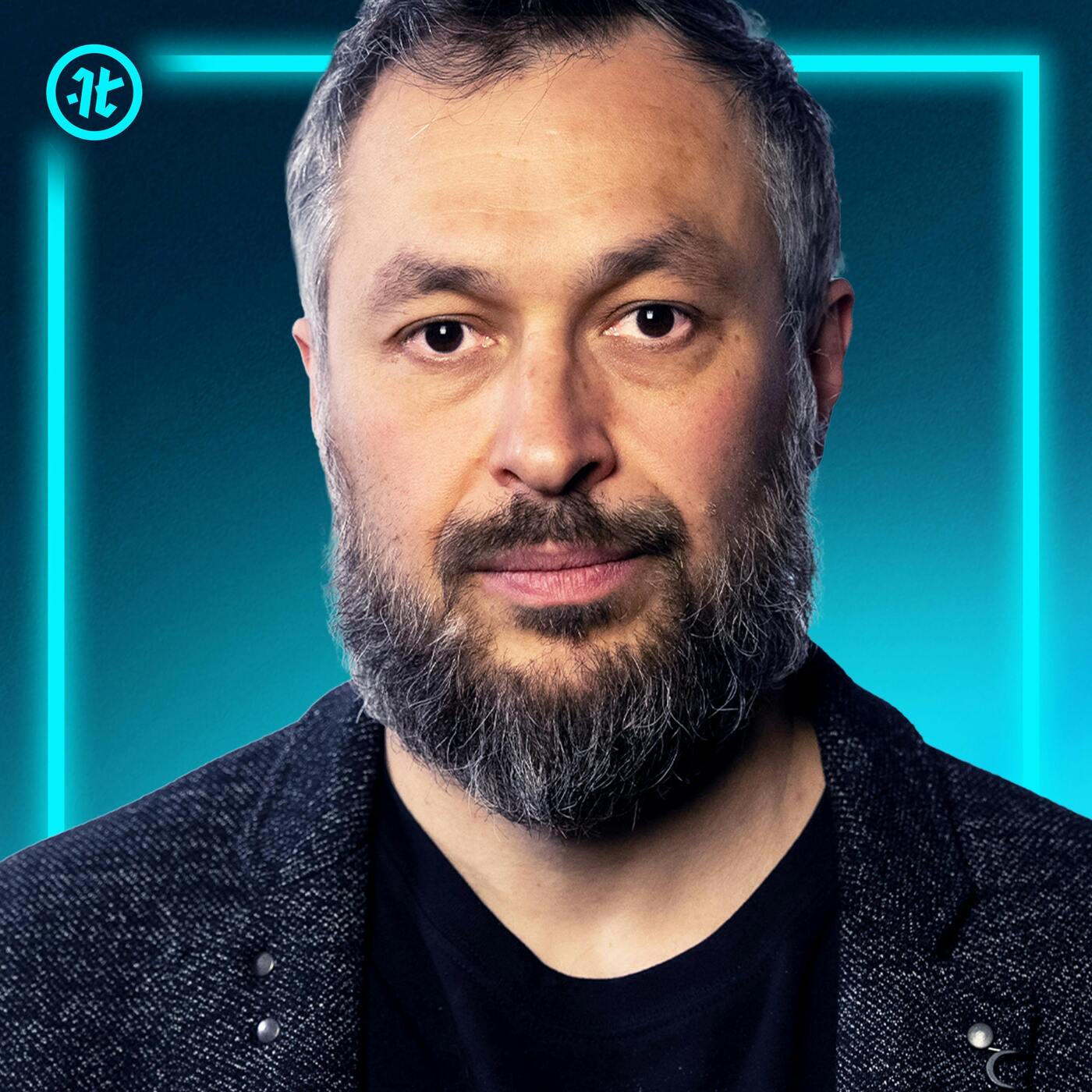
Tom Bilyeu's Impact Theory
How Solana’s Founder Sees Crypto Transforming Global Finance, AI Innovation, and American Opportunity | Anatoly Yakovenko Pt 2
01:00:24
Loading summary
Transcript158 lines
- [00:00]
Grainger Advertiser
When you manage procurement for multiple facilities, every order matters. But when it's for a hospital system, they matter even more. Grainger gets it and knows there's no time for managing multiple suppliers and no room for shipping delays. That's why Grainger offers millions of products in fast, dependable delivery, so you can keep your facility stocked, safe, and running smoothly. Call 1-800-GRAINGER Click grainger.com or just stop by Grainger for the ones who get it done.
- [00:30]
Grainger Advertiser 2
If you work in university maintenance, Grainger considers you an MVP because your playbook ensures your arena is always ready for tip off. And Grainger is your trusted partner, offering the products you need all in one place, from H VAC and plumbing supplies to lighting and more. And all delivered with plenty of time left on the clock. So your team always gets the win. Call 1-800-GRAINGER visit grainger.com or just stop by Grainger for the ones who get it done.
- [01:02]
Tom Bilyeu
Welcome back to part two of this incredible conversation. Without further ado, here we go. Okay, so you brought up the ussr. What do you think would happen to crypto if the. What I think is the Democratic Party fully embracing socialism? What happens to crypto in that scenario? Because that gives me a way to get outside of a system where they can snatch all my stuff.
- [01:29]
Anatoly Yakovenko
I'm again, an optimist. I think you, you start seeing the ebbs and flows. People call one side socialist, the other side fascist. But when you actually look into it, or if you're an immigrant with experience in either one of those, you're like, yeah, come on, give me a break.
- [01:44]
Tom Bilyeu
Now, in my defense, they call themselves a New York socialist. So you look at that and you think this is a watered down American version that we don't have to worry about.
- [01:54]
Anatoly Yakovenko
You do worry about it. And people should push back and be critical of bad proposals and really actually test people. The problem you're trying to solve is solved by building more houses or building more hospitals. And you haven't built any of those things in the last 10 years. So you're full of shit. Give them that feedback. And I think the loop, the feedback loops in the U.S. are fast enough that the people who want to get elected want to get elected so badly that they will do the right thing if you push them on it. This is, I think, the best part. They want to get elected, right? That's their career. That's the career they chose. So there is incentive for them to like, do the right thing if that's what will get them elected. So it's Ultimately up to the people and the voters to kind of push them and meaningful, measurable like results. Where a lot of problems come in is like people like, you know, claim that they solved housing affordability with subsidies but no new houses being built. So you got to call them in that bullshit. You haven't solved anything because you have the same number of houses. No matter how you move the numbers around some more people, your house is somebody screwed you. You haven't solved affordability unless you build stuff. But that requires kind of, that's ultimately up to the people. And I think there's enough smart people that kind of push back on stuff that I think ultimately things work out. I think neither like even the worst administration like Gensler and Warren and all this stuff during the last four years had no meaningful impact on crypto adoption slowing down. Like I think stablecoin growth went like 5x or something like that during those four years. And this is because a lot of the adoption is happening outside of the US and because they don't have these trusted financial systems that can guarantee that when I send you money, you actually receive it. Especially cross border like Argentina to China. Who are you going to trust? Right? If you go through the traditional finance channels that are trusted, you're paying a lot and it takes 14 days, like 10 plus days to settle. It's just business people that need to get products and services shipped immediately to sell them will use the rails that work and crypto actually works and it removes all those intermediaries and removes a whole bunch of failure cases. So you're not going to be able to stop that from United States no matter what the next administration tries to do. So from my perspective, I think kind of it doesn't really matter like I think who's in charge, it matters for founders. Like founders will just move offshore where they don't have to deal with the hassle of like paying the lawyers and figuring out like all of the stuff. They'll just move to Singapore or some other place like that like they did during those four years. But I think in terms of products and real adoption, not much will change. Like it'll, it'll continue growing no matter what.
- [05:08]
Tom Bilyeu
So I have a giant region of my brain dedicated to America needing to avoid becoming a has been which happens all throughout history. And so I am, I, I am also optimistic, but my optimism is really about humans are the ultimate adaptation machine. We can get very good at anything that we apply ourselves to. But history tells me that countries can and do go wrong for very long periods. Of time and that people will suffer. And so I have a much higher degree of paranoia than you do. So I look at this and I'm like, ooh, who's in power matters a lot. Because it's cold comfort to somebody who's not going to leave America that America is moving in the wrong direction.
- [05:54]
Anatoly Yakovenko
Yeah, for sure it does. It matters to people's lives. I mean, like, it's crazy that the Palisades fire homes haven't been rebuilt yet. But it's nothing to do with lack of bricks or mortar, like shorted USSR level shortages where they just didn't have any of that stuff. It is a self induced shortage. Like it's purely our own politics that's preventing those homes from being built, which is nuts. Right. But it's a different problem than literally factory says that they built all the bricks, but the bricks don't exist. So I think we have a lot of problems that are of our own choosing. And I think what's important is that people actually kind of look at why we have those problems and take agency in action to go address them and push back on. Like, you know, like I, I think if you look at it, there's so many stocks that you cannot possibly track them all and invest all of them. There's so many layers of government. Like we have very decentralized government. You have city, county, state, federal and many layers of federal. There's like 12 people that you have to track of to do a good job that affect your specific where whether you can build stuff locally. And it's just too much for any single person to do that. I think that's kind of part of the problem. Who do you actually push back on? To unblock buildings in California is like a difficult question. And a lot of it is very much local people that don't want the value of their house to go down because. Right. Stuff like this. So a lot of it is of our own choosing and we can fix all those problems. You just got to kind of actually just talk them out. Go throw a block party and talk to your neighbors. Make some hot dogs in your hot dog stand.
- [07:53]
Tom Bilyeu
That's good.
- [07:54]
Grainger Advertiser
I like that.
- [07:55]
Anatoly Yakovenko
I'm very much, I'm extremely bullish in America because I think ultimately people do have a sense of fairness and have a sense of belief that they can solve their own problems. I think that's very much a true American entrepreneurial spirit. And people that come here from all over the world come here because of that. So they're almost self selected through survivor bias. Like, the biggest defenders of capitalism are going to be ex. USSR immigrants, if you. If you ever meet any.
- [08:27]
Tom Bilyeu
Yeah, well, I have thankfully sat across this very table from several of them, and there's no doubt that there's some of that. And I don't know how much we want to take this conversation there, but I will say that there seems to be a very big difference between somebody who comes to the country under duress, fleeing, like you're a Cuban refugee, and you end up on Florida and you're like, I got to get to work, rebuild my dental practice or whatever. And you like, scrimp and scrape and re. Go to school and all that. And you build it and like, that's gangster. And what you're going to tell your kids, work hard, all that works. When you throw the bat symbol up and you say, anybody that wants to come here, we've got federal aid for you, that's going to attract a very different kind of person.
- [09:13]
Anatoly Yakovenko
Yeah. Subsidies break incentives 100%.
- [09:16]
Tom Bilyeu
Yeah. So I'm. I'm worried that we're headed in that direction. But let me look through your eyes. You were. I think we only talked about this before the camera started rolling. You came to America at 11 from what is now the Ukraine. And how much of that colors your perception of America?
- [09:35]
Anatoly Yakovenko
So when I was a kid, I thought United States was like Manhattan, just coast to coast with no nature, just like skyscrapers. Yeah.
- [09:44]
Tom Bilyeu
Sounded my kind of place for the last.
- [09:46]
Anatoly Yakovenko
No, it was bizarre, right? Because the west, like the western films and stuff like that, colored my idea of America. And then like, gangster Chicago, New York films, and I had just had this belief that America was just rebuilt into just skyscrapers coast to coast. It's kind of silly, right? Like, so landing in Chicago, I was both disappointed because kind of like, it was a shock that there was like, country and farms and all of this. Like, literally, it was just bizarre to me that there were farms in America. That's funny. And at the Same time, though, 91 Chicago was like the center of music and basketball and sports. And I was a kid that didn't have access to any media, so I was like a sponge, absorbed all of it.
- [10:35]
Tom Bilyeu
That's crazy. Now, did you feel an unlocking of opportunity in coming to America?
- [10:42]
Anatoly Yakovenko
My first dollars that I made was that winter. Me and my friend, we walked from house to house asking people we could shovel their snow. We didn't have any shovels, but they would use their shovels. And they gave us like a couple bucks and then we spent it on candy. And movies.
- [10:57]
Tom Bilyeu
And was that like, oh my God, I can't believe how good this is.
- [10:59]
Anatoly Yakovenko
Or were you too. It was great. It was awesome. Like, we bought like upper deck basketball cards and played Street Fighter in the arcade. But then we fully bought into the dream. No.
- [11:13]
Tom Bilyeu
So he was also from.
- [11:15]
Anatoly Yakovenko
Yeah, yeah. There was like a little community of expats. As soon as a. Like you couldn't leave the Soviet Union, this is how you know it was bad. Because they didn't want locking you in. Yeah. They didn't want all the smart engineers to leave, so you couldn't leave so that you. My parents were denied exit visas, but as soon as the USSR kind of fell apart, end of 91, my parents left. And they would only let you take 50 bucks per person of value. So this is when my parents landed in $50 per person. The immigration folks were telling us that US is in a recession. This was like 91, 92, and it was bad and whatever. My parents were like, you have no idea. We've been in a depression for like 80 years. We'll take your reception.
- [12:06]
Tom Bilyeu
Thank you very much. Yeah. Wow, that's wild. Okay, so go ahead.
- [12:11]
Anatoly Yakovenko
They were. Yeah, I mean, they were extremely like proud that they got jobs immediately, never got any assistance. Worked their entire life for like love to pay taxes like these. They're like. Right. Like they felt so blessed to be in America that they want to pay taxes. They don't want any handouts or anything like that. They moved to a place like. The reason I think I can credit a lot of my success is that they moved to a city in like Chicago area with high property taxes because they had good schools. So I had access to AP classes and acts and you know, I was able to just on my own merit, like study and get decent grades and go to Urbana Champaign. Take engineering. That's it. That's it. From like 50 bucks a person. That's a trajectory that anyone can achieve here because you have access to the best schools in the world and you don't actually need to go to Harvard to succeed. Like, UIC is an excellent engineering school. Like best in the world, but it's a state school.
- [13:20]
Tom Bilyeu
Taking a short break. But there's more impact theory after. Stay tuned.
- [13:25]
Grainger Advertiser
When you manage procurement for multiple facilities, every order matters. But when it's for a hospital system, they matter even more. Grainger gets it and knows there's no time for managing multiple suppliers and no room for shipping delays. That's why Grainger offers millions of products in fast, dependable delivery. So you can keep your facility stocked, safe and running smoothly. Call 1-800-GRAINGER Click grainger.com or just stop by Grainger for the ones who get it done.
- [13:56]
Tom Bilyeu
Thanks for staying tuned. Now let's get back to it. Going back to what you're saying about AI, what do you think is AI's role in all of this? Is it the big thing to watch and it completely terraforms planet Earth, or does it integrate with crypto in a way that is going to be more grounded but highly useful?
- [14:17]
Anatoly Yakovenko
I think oddly, these are like two parallel lines. Crypto is transforming finance and I think all financial systems are going to be rebuilt on top of crypto rails because they're cheaper and trustless. You don't need to trust an intermediary. And it's going to happen slowly. Basically every failure will cause you to go switch your processes to crypto. And it kind of happens in tradfi. I don't know if you Google for it. Goldman Sachs has lost, or Citibank has lost hundreds of millions of dollars with an accidental transfer out of the country or whatever that then gets challenged and you can't crawl it back. And this is with traditional finance, they just flub a transfer and their processes are too slow. So as soon as something like that happens, you start, how do I fix this? That never happens. And use cryptographic signing and double signing and all this stuff that you can do in crypto and you start removing those processes. It's just a slow thing. But AI is also basically rebuilding how technology is made, I think. I just can't imagine any company with engineering, any kind of engineering, chemical, whatever, biology software that's not using AI.
- [15:37]
Tom Bilyeu
How much do you use it
- [15:40]
Anatoly Yakovenko
every day? Like basically probably more than I tweet, I send commands into Claude. Wow. So 20, 30 times a day.
- [15:50]
Tom Bilyeu
Now are you doing like a copilot thing where you're just constantly.
- [15:54]
Anatoly Yakovenko
I have, I pay for all of them. So you have GROK and chatgpt and Claude and Gemini. And I use Claude for coding, so it's what generates the code. And I use the other three to basically build like a planning document that I can then give to Claude so
- [16:14]
Tom Bilyeu
that you're essentially architecting the system. And then you say, here's what this whole thing is going to be now.
- [16:19]
Anatoly Yakovenko
But I'm not actually like, it's weird, but it's very much like I'm a manager now of the AI. Yeah, I don't need deep understanding of the details. I just kind of have a high level of the thing that I want to do, but I want the. I try to create an adversarial environment for the AIs between the agents to come up with a planning document that is precise and concise and unambiguous. And then I'm like, claude, here's the doc. Go build it.
- [16:52]
Tom Bilyeu
How close will it get you? Because I've done vibe coding and I find that it always terminates where it gets in a loop and it will fix one problem only to break another.
- [17:02]
Anatoly Yakovenko
Yeah, this is where I think AI is a massive accelerator for experienced engineers. Because you kind of step back and you're like, okay, I'm dealing with college grad that knows everything but is a college grad. So you're, you have to kind of like smell their. What they're doing and course correct them. And I think if you've been like an engineer 10 plus years and you've dealt with like teams that are new grads and whatever, you kind of can like start kind of use your experience to guide them. So for me, it's a massive accelerator. Like, I don't know if I want to. For the side projects I'm working on. I don't think I need to ever hire for them. Whoa, it is that weird. Like I can build the product and ship it and maintain it myself and kind of like basically I would hire somebody to replace that one person that's me, because I can go be that person for another project. Yeah, but I don't think you need a team for a lot of things now, which is weird.
- [18:09]
Tom Bilyeu
Very weird.
- [18:10]
Anatoly Yakovenko
So that is like, I think you'll see actually this probably benefit big companies the most. Like the Googles of the world will be able to ship a lot more products and maintain a lot more products because one, they have the experienced engineers and you basically assign one product per engineer, and that's 60,000 products at Google, 60 at Microsoft. You know, insane number of breadth that they can cover.
- [18:36]
Tom Bilyeu
Now, when you reach into the future, three, five years, what do you see?
- [18:41]
Anatoly Yakovenko
Like, how dramatic is the transformation for engineering and science? I think it's very dramatic. It'll just be an invaluable tool. Like, I don't buy into this. Like, your national output will be based on the amount of silicon and energy. Like kind of the Elon science fiction thing is like, that's like planetary scale versus some alien civilization. Like how much sun energy you're converting into intelligence thing. I think that's too far out. The bottleneck is ultimately, it's really hard to succeed. It's both easy and Hard to succeed as a business in the United States because consumers already have everything. They already have effectively perfect lives. This is why all our problems are self induced. Nobody wants to build housing because they're all kind of have decent housing and they don't understand the like the opportunity cost that it creates for everyone else that's trying to rise up. Right. Like so it's just hard to convince somebody to download a new app or to use a new product or to do change their behavior in any way because they're so comfortable already.
- [19:59]
Tom Bilyeu
Yeah, yeah, tell me about it. Trying to get them to try a new video game I imagine is going to be a pretty brutal task.
- [20:05]
Anatoly Yakovenko
Yeah, yeah. So that's I think is like we're very blessed and the vast majority of kind of lifting people out of poverty is happening outside of the United States because we are already so saturated with stuff that people need now.
- [20:24]
Tom Bilyeu
Do you think about. Go ahead.
- [20:25]
Anatoly Yakovenko
Like there's real big, huge improvements that can happen I think in healthcare and medicine where you can probably get a better diagnosis right now out of AI for like a good number of cases and better prescriptions and all this stuff. So a lot of healthcare like probably 99, 95% of it is non emergency. Like you don't need like a human AR person to like stitch you up. Vast majority of healthcare is you call your doctor, they poke at you, run a test and give you a drug. A lot of that seems like AI could do that, go to like a bender. Futurama machine pokes you, that spits out a drug.
- [21:11]
Tom Bilyeu
Yeah, it's interesting. So elon was saying 3 years that at scale surgeons will be AI and robotics. Even if he's off by 3x that's still only 9 years that at scale the best surgeons in the world are AI. So when I start trying to reach into the future about how much things are going to change, it feels to me like 10 years from now the world is pretty unrecognizable.
- [21:39]
Anatoly Yakovenko
Yeah, I think robotics is like kind of like start it. You gotta trust this timelines on robotics like starship. Like it feels like all the theoretical problems are solved and it's just engineering. It's really hard engineering. So if it's not five years, it's within 10 or 15 for sure.
- [21:59]
Tom Bilyeu
And do you see anything in your experience that says intelligence is going to asymptote in any way or does this feel like more chips plus more efficient algorithms just equals it gets smarter and smarter?
- [22:15]
Anatoly Yakovenko
I think the scary part is that will happen and it's Scary because it's just hard to fathom the changes. Yeah. Like the problems that we have right now are self induced because we have too much. But what if the world is like the worst kind of my AI doomerism isn't that AI takes over us, like Terminator is that it entertains us more than anything else. That would be like the most subversive AI you can build is one that just tells the best joke. Nobody can tell a better joke, right?
- [22:52]
Tom Bilyeu
Yeah, I think about that a lot. In fact, I think about that a lot with crypto. So for instance, AI superintelligence comes along or quantum computing, whatever. But you get to the point where it's like, I've got a better bitcoin this, that or the other. Do you think about that? That sort of. The fundamental structure of even crypto is up for grabs if you've got something super intelligent.
- [23:13]
Anatoly Yakovenko
Yeah, there's, there's stuff that, that's hard to solve right now. And that's so kind of my how I think of it is that we have enough compute to solve Newton's laws, like really, really well to a T. And this is like starship and robotics. All that stuff fits within that. But when you start going to atomic level subatomic interactions, it's the N body problem at maximum scale and there's just not enough classical compute to solve it. And quantum is limited by that too. Like, I think AI will get to a level of being able to do, write papers and solve mathematical problems and proofs and stuff like this, but it's just really, really hard to go and build a quantum computer with low error correction. So if we didn't have AI, I would say that quantum computing is like 50 years away. Because AI can accelerate scientific research, it's hard for me to tell whether just the breakthroughs will start accelerating and we can get there faster. And if we can get to true quantum computing, then we break that through that information barrier, being able to solve the N body problem at scale for large systems. And that's where I don't know, that's science fiction, diamond age, whatever. That's exciting that I could have a chance to maybe live long enough to see some of that.
- [24:48]
Tom Bilyeu
Agreed. Do you have advice for the bitcoin community about switching their protocol to be quantum resistant?
- [24:54]
Anatoly Yakovenko
Yeah. So for, for Solana, what I'm advocating for is you start seeing Microsoft and Google and Apple kind of pick a standard that they're comfortable with for quantum resistant encryption. Once that's finalized, that's my kind of like let's ship that within a year. Support for that for Bitcoin. I think they maybe could go a little sooner and pick a standard that is simpler, like the most simplest possible form of quantum resistant cryptography. The problem is all of those blow up the signature sizes by 10x. So this is the stupid block size debate. 20 megabyte blocks are fine, just suck it up, it's not a big deal. We have a lot more bandwidth now than 10, 15 years ago. That's interesting. So it'll grow the ledger 10 times faster and people are going to complain. But I think it's fine. I think that's basically just suck it up.
- [26:00]
Tom Bilyeu
So block size, World War II basically is what you're.
- [26:05]
Anatoly Yakovenko
Yeah, I think segwit actually kind of makes it, I think easier because the witness is segregated. So your witness size blows up and you could just download the ledger, which is transactions without the signatures and see the proof of work proofs for those and then verify the and discard the witnesses kind of. But you still should keep a copy of them. And this is. You don't want a third party intermediary to control that. If you really, really want that. Oh shit, I got a superpower collapse. I need to be able to sell these bitcoins somewhere else. You need that guarantee that somebody else always can get a copy of the ledger and process transactions. And this is where I think that debate isn't bullshit. If you actually buy into this self sovereign store wealth that can survive a superpower collapse, you do need the most trust minimized system. Solana is not that we have a totally different problem that we're trying to solve. There's no point to solve the bitcoin problem twice. Right?
- [27:06]
Tom Bilyeu
Right. So knowing that you guys are the execution layer and I don't know if you feel like you need to explain that, but what is your guys future? What, what are you pushing into?
- [27:17]
Anatoly Yakovenko
So out of that stack of broker dealer transfer agents exchanges, big deep stack of people that are all taking a spread, the one that I have nerded out on is the exchange part and it's got this weird problem. So like imagine you're sitting in Singapore and there's a container ship full of iPhones and it just sinks right outside of your window. That's a market moving event for Apple. That real value that the company Apple depends on and now has disappeared. The news wire for that event has to travel speedily through fiber to New York to trade on it. So there's like a 60, 70 millisecond worth of latency before you can take action on it. So the New York Stock Exchange with its nanosecond trading or whatever, is 80 milliseconds behind the real world in that scenario, Regardless of how fast that centralized exchange goes, that signal exists everywhere in the world. And a decentralized distributed system like Solana, our ultimate goal is that as soon as you see that signal, you can actually submit a transaction and its ordering becomes immutable in that moment in Singapore. So then by the time that speed of light through Fiber Newswire goes to New York and you look at the market for Apple token stock, tokenized Apple stock on Solana and one in New York Stock Exchange, the one on Solana has already priced that information in and there's no arbitrage. So we've eliminated a whole bunch of middlemen by solving a fundamental physics problem and reducing spreads and improving prices for consumers. And to me, this is the coolest thing I could be working on where I have the ability to have impact. Starship is very cool, but I'm not a rocket scientist, I'm a nerd that has spent my career optimizing software and stuff like that. So this is like this really cool physics problem that if we solve it and we do it well, it solves real, it benefits consumers. Like prices will get better fundamentally because we are able to encode more information faster around the world.
- [29:32]
Tom Bilyeu
Now does that only play out when. Because when you were talking about 80 milliseconds or whatever being like this interminably long time, it's funny to me obviously thinking that's just such a. Not even the blink of an eye. So is it that by solving those problems that much faster or communicating that information that much faster, you shut the ongoing ability for people to like front run transactions like what is.
- [30:00]
Anatoly Yakovenko
Yeah, we have to solve it in a way where we don't create a intermediary that is essential that can create this non contestable market. So exchanges are one of those places where you can create, if you control the exchange and there was no regulation like before 1930, you can just extract unlimited number of dollars from trading and markets break down. And that means you can't have a system with corporate stock that the public can invest in and gain profits out of. Our whole world collapses. Right. So the way that regulation works in the United States is they've basically created these slices of exchange, broker, dealer, transfer agent, et cetera. And they've kind of capped how much you can extract. They said you guys can't make any more than that. I don't care what you do, but if you make too much, we will bring down the hammer. Because if you make too much, you're screwing people over. But these systems are so regulated that they're stuck in their technology and the amount of physical information they can encode is limited because of this. Like, because New York Stock Exchange has to exist in New York and designed in a very specific way with a very specific order book to follow regulation. So they are minimizing how much money they make, which is good for consumers, but they're also minimized with how much information they can encode.
- [31:28]
Tom Bilyeu
Right.
- [31:29]
Anatoly Yakovenko
And that means that consumers actually get worse pricing, like on stocks. So crypto through happens. Chance was just created. Bottoms up. Nobody knew what we were, what we were doing in a way that was just not. Nobody thought about this as an exchange or something like that. So we were able to build these systems from first principles and kind of think of it, what does this look like without any essential third parties? Because we have to do it in this decentralized way. So we have to build it without control. And when you're thinking about solving the store value problem, where carrying this thing across state lines in the Soviet Union, that's a different problem than how do we eliminate exchanges or essential third parties that have control of this information and can use it to extract pricing value. So totally different problem set. So we're not thinking about store value. So we're not constrained by ledger size or something like that. What we want is we actually want a high throughput system. We want people to go build validators inside data centers with a lot of bandwidth and stuff like this. But we want to make it so anybody can do that. And that creates a contestable market. So we have lots of data centers. If you were a nerd in the 90s, you could build an ISP by going to a data center, which is literally a closet at like a Bell Labs or at a Mama Bell whatever place, and like put a computer with some network cards and plug them in and all of a sudden you're the ISP for your neighbors. So that was a very contestable market in the 90s. We want people to be able to go find their local data center with one gigabit connection which is available everywhere. Build a validator and participate in this and create a fair open market where there is no intermediaries and information can flow into the system without anyone being able to extract from it. And that will result in better pricing for consumers. So this is where we can eliminate all these middlemen and Give you a token with cryptographic guarantees that SpaceX issued it and you're not paying all these bips. You're talking about 2%. Hilarious thing is that 2% merchant fees. Apple is 30% on transactions. All these things are huge. But finance is like 50 basis points or lower.
- [34:00]
Tom Bilyeu
Wow.
- [34:01]
Anatoly Yakovenko
So we're trying to.
- [34:02]
Tom Bilyeu
Razor thin.
- [34:04]
Anatoly Yakovenko
Yeah, we're trying to eliminate that razor thin edge. And is it important? The scale of trading and volume is so large that it does become important. You're talking about like trillions per day right at scale. So if you take derivatives and Forex and all this stuff, if you can shave those basis points off, that is money given back to consumers and an aggregate, it makes a huge impact.
- [34:35]
Tom Bilyeu
I didn't realize just how much was being traded daily. Now, is that what you see as the ultimate use case for Solana is to be the transaction layer of the.
- [34:45]
Anatoly Yakovenko
Yeah, it's the message bus for finance. Like, we want it to be as close to this giant global information like sync as we can as physics allows.
- [34:59]
Tom Bilyeu
We're hitting pause for a moment, but there's plenty more ahead, so don't go anywhere.
- [35:04]
Grainger Advertiser 2
If you work in university maintenance, Grainger considers you an MVP because your playbook ensures your arena is always ready for tip off. And Grainger is your trusted partner, offering the products you need all in one place, from H vac and plumbing supplies to lighting and more. And all delivered with plenty of time left on the clock. So your team always gets the win. Call 1-800-GRAINGER visit grainger.com or just stop by Grainger for the ones who get it done.
- [35:35]
Tom Bilyeu
Thanks for sticking around. Let's get right back into the action. One thing that made crypto so popular with traders is the volatility. Solana being one that delivered a lot of wins for a lot of people. But it came at the like, you needed big swings. Do you want to see, like to you, is the volatility of Solana advantageous or something that you hope diminishes over time?
- [35:58]
Anatoly Yakovenko
What I hope eventually is that the fees generated by providing the service, like as a message bus, are discount cash flows that people can backtrack into the value of it and be like, okay, there's a fundamental hot dog stand here that creates hot dogs and it's worth owning for that. And it's a very, very boring thing. Like, I don't care about this thing being money and beating Bitcoin or anything like that. This is actually, I think, why a lot of bitcoins are like, Solana is pretty Cool. But fundamentally what I care about is that we're delivering consumer value that can be captured by the protocol, and those captures are future cash flows.
- [36:43]
Tom Bilyeu
And would you see Solana at any point paying dividends?
- [36:46]
Anatoly Yakovenko
So when you stake, and especially if you run your own validator, you create blocks and people pay tips to be included in those blocks as priority fees, and you capture those priority fees, and that is effectively you run your own business, you run a validator business, or you pay somebody else to run it, you are making money off that hot dog stand. So Solana is not like a corporation or a traditional what you would invest in a stock. It is kind of like thousands of hot dog stands that all share the same protocol and all work together, but because they have this guarantee that every hot dog stand cannot break any other hot dog stand and they can provide a service from that redundancy. Right. Because they can be everywhere and take information from everywhere that creates value. Like there's network effects that are captured from that.
- [37:41]
Tom Bilyeu
Okay, that's one way to make money. Certainly logical, easy to track. The Solana hot dog stand, you're a validator, you make money off the tips. That makes sense. Made money off Solana, though, just by holding the token, and it went up in value. So I could, I mean, I guess it's all theoretical right now, but I could sell it and presumably assuming price holds, I would make a. A pretty penny off that. So that's the second way of making money. Is there going to be.
- [38:04]
Anatoly Yakovenko
Well, it's speculation. You're not making money, you're speculating. You can speculate at anything.
- [38:08]
Tom Bilyeu
For sure. For sure. Now on that, though, that's the part that requires the volatility to be interesting. In your answer, I heard that the volatility is not interesting to you. Far more interesting that people judge it by how much value are we adding to a user. And so treat it like you would treat a standard investment. That makes sense. But is there going to be a third way? Which is I speculate on the token. I'm holding it, and much like I give it to a bank and the bank pays me for me loaning them the money, are people going to be able to get any sort of rewards for staking?
- [38:51]
Anatoly Yakovenko
I mean, staking is a part of the protocol to be able to participate to build your own hot dog stand that can.
- [38:59]
Tom Bilyeu
But can I do it without that? So, like take. You can stake Gemini. I can just do. I think you just hold bitcoin with them. Right. And they pay you in bitcoin.
- [39:08]
Anatoly Yakovenko
You can you're. If you participate in the staking protocol, you're effectively paying somebody else to, to run your hot dog stand.
- [39:14]
Tom Bilyeu
Got it. So you're saying I'll contribute my coin to your hotdog. Yeah, got it.
- [39:19]
Anatoly Yakovenko
And there's a very contestable market for those that offer different rewards and fees. And you can go pick any of the thousand out there.
- [39:28]
Tom Bilyeu
Why do those guys care about like what are they doing with the token?
- [39:32]
Anatoly Yakovenko
So the only thing that the token does fundamentally from if you look at the software is it prevents spam. So if we have this like information bus where information is valuable, people will just submit arbitrary amount of spam like they do to your email inbox. They just send you infinite amount of data and it becomes impossible to figure out what is valuable, what is it?
- [39:55]
Tom Bilyeu
But let's say that I'm a validator and why would I pay someone rewards for loaning me their tokens?
- [40:04]
Anatoly Yakovenko
So the more tokens, if we could allow infinite validators or we had no limit of how many validators block producers there are, you end up with effectively a spam problem where you have infinite number of validators and they all submit information at the same time. So you have to limit it somehow. So what Bitcoin does is proof of work where you use electricity and your mining equipment to create a block. And that limits the number of blocks created in the network to roughly one every 10 minutes. We need a high frequency of blocks, but we also need to limit them. We can't have infinite blocks because again you run up into the spam problem where infinite amount of people want to make a block, there's limited capacity and that thing gets through. Right. So how do you limit that is with the coin itself. So if you stake with somebody, their proportional weight of how many blocks they can make per second goes up. So if you make more blocks per second, you earn more tips. So this is the feedback loop. And then they're incentivized to give you their tips or portion of their tips as much as they can given their economics of their own business.
- [41:12]
Tom Bilyeu
Totally understand.
- [41:14]
Anatoly Yakovenko
And anybody can run this hot dog stand validator and give you back rewards. And because of that it's very contestable market. So if you're in Singapore and you're the only validator in Singapore, you can go and find people local in Singapore to stake with you and you can ingest information local to Singapore. That could be valuable.
- [41:34]
Tom Bilyeu
Very interesting. So what do you guys have cooking in 2026? So for people that pay close attention
- [41:39]
Anatoly Yakovenko
to what you guys do what's the alpha ibr? Increase bandwidth, reduce latency. This is our motto. So the biggest change that's cooking is alpenglow, which is this. My B State school engineering degree is not a PhD in computer science for consensus. So when I built Proof History and Solana, we built something that solved the next generation problem, which is how fast can you make blocks without interruption? But we kind of did it with just brute force engineering at that time. And basically over the next eight years it's just a ton more research has been done on building new consensus algorithms that solve the problem that we identified. And I think the reason for all of Solana success is we were able to increase the bandwidth per block and reduce the latency of how fast we can make blocks at the same time and how quickly we can come to agreement on them. So this alpenglow upgrade is bleeding edge next generation consensus algorithm that was developed in Eth Zurich by a bunch of really, really smart folks. They're ripping out all my code, which is great. The only way an engineer can actually retire is once all their code has been ripped out. I'm halfway.
- [43:08]
Tom Bilyeu
Do you want to retire?
- [43:09]
Anatoly Yakovenko
No, no. But I'm writing now with Claude, I'm writing even more code, so it's terrifying that I may never get to retire now.
- [43:17]
Tom Bilyeu
Do you just have like constant ideas of things you want to create and that's why you're always doing side projects or.
- [43:22]
Anatoly Yakovenko
Yeah, that's been probably my, I don't know, disease or whatever mental illness since being a kid is just always trying to build something.
- [43:32]
Tom Bilyeu
What are you building right now?
- [43:35]
Anatoly Yakovenko
I wanted to see part of this idea. How do I trust software is humans write software and it's really, really hard to trust it because humans create bugs and there's an idea called formally verified software, which is you mathematically try to prove the properties of the software that you wrote. So there's these formal verification specs, but they're extremely complicated. It's just really, really hard to write formal verification for software because again, you're trying to take the software that was written to solve a problem, like to move money around or whatever, and then you're trying to mathematically model it. It's almost like I don't know if people remember differential equations in calculus and proving them. It's mind bogglingly boring and not hard, it's just tedious. Claude is really good at generating formal verification. So my toy project is, it's on GitHub called Percolator. I was trying to see if I can write a risk engine for a perpetual decentralized exchange that's formally verified so other people, I don't have to launch a product that can just build a formally verified system that's proven that other people can then go fork and build products with. And they can, and they can understand the formal proofs and the properties that they prove. And therefore they can trust the software to be bug free for those properties. And this is, I think, this step where we can take go from how fast we can replace traditional finance. It's risky. I have the system that I'm trusting humans and every once in a while they screw up and I lose tens of millions of dollars or whatever at a bank or something. Switching to software is still risky. What if there's a bug? What if there's a hacker and stuff like that? Can we create a mathematical guarantee that those bugs don't exist? It's just one way that I see AI really rapidly accelerating crypto is through that.
- [45:38]
Tom Bilyeu
That's interesting. So you think that will become possible in the near ish future with AI?
- [45:42]
Anatoly Yakovenko
It was a year ago I tried to do this and it just generated nonsense. And basically over the last month, like with the new release of Claude, it was just a dramatic shift.
- [45:55]
Tom Bilyeu
Hmm.
- [45:56]
Anatoly Yakovenko
It's crazy how good it's gotten.
- [45:58]
Tom Bilyeu
That is wild. That's one of the most exciting things about AI. We use it like crazy in the game development. It sped us up dramatically. Now you're talking about formal verification. This is something that's haunted me. So I have to constantly train my mom and my dad, who are boomers, literal boomers, and that I'm like, even if you think I'm calling you and I'm asking for money, it is not me, it is AI. You need to be very careful. And I just cannot understand why we have not yet put some sort of cryptographic signature where if a video, let's say, has me in it, that I can stamp it and say this came from me.
- [46:34]
Anatoly Yakovenko
How would they trust that? It's your public key.
- [46:38]
Tom Bilyeu
That's for you to find out. I don't know how to solve it.
- [46:42]
Anatoly Yakovenko
Yeah, this is the civil problem, right? You tell them, here's the Sybil problem. Yeah, here's my public key. Only trust messages for me. And somebody will craft a public key that is just almost exactly like yours. They will like, get it to be as close to yours as possible. When they call you, they fake the picture, Right? Like you're. But why?
- [47:01]
Tom Bilyeu
If I can sign a transaction, why can't I sign a piece of media
- [47:07]
Anatoly Yakovenko
you can, but they will sign it with a public key that looks very similar to yours because you're saying the
- [47:12]
Tom Bilyeu
visual representation is the problem. But why not like an SSL type
- [47:16]
Anatoly Yakovenko
certificate that says so again, domain phishing, right? You go to Google where all the O's are zeros.com people will fake the domain.
- [47:27]
Tom Bilyeu
This must be harder than I think
- [47:28]
Anatoly Yakovenko
otherwise this is like the human brain problem, right Is we're really good at recognizing similar things. So if you can trust a domain and the problem is people generate a domain name that is one letter away and it looks exactly just like the domain you went to. And this is where 95, 99% of the phishing attacks with NFTs and stuff like that is that there's a launch, somebody's really excited for the launch and they have to be first to click to win it. And a scammer will post a domain that is almost exactly like the real one and you like, you fail the check. So yeah, these are really, really hard, tough problems. The way that people solve them is they build layers of trust where you have effectively smaller and smaller allow lists. You and your parents have a specific device app that you use with this specific kind of thing. Maybe it's signal, maybe it's imessage these other third party channels that an attacker can't hack all at once. So when they present they sign a piece of media to you like column, you're like send me a message over our signal conversation that we established before that kind of thing.
- [48:42]
Tom Bilyeu
So you don't see currently a way to solve for it Looks like me, sounds like me, but it's actually not me.
- [48:48]
Anatoly Yakovenko
No, it's just the human brain cannot do this.
- [48:53]
Tom Bilyeu
Wow, I really thought this was just a matter of time. That's wild.
- [48:57]
Anatoly Yakovenko
Computers can do this and robots. So maybe you like have a robot that you trust but then somebody could replace us. Like it's just really, really, really hard.
- [49:08]
Tom Bilyeu
Wow. Well that's interesting though because if I can go into, let's say that I have a bot, it's just on my computer and I say, okay, I care about these people, official government posts, whatever. And I go in and I say this is the official one, this is the official one. This is the official one. Then at least it's like it can warn me. No, no, that didn't come from the official account. So at least from the group of things that regularity I could have some sort of.
- [49:38]
Anatoly Yakovenko
My advice is throw more, more block parties, get to know your neighbors well.
- [49:43]
Tom Bilyeu
But I'm talking about like global stuff where, you know, you've got the Trump goes on and tells some nation, tells Greenland we're coming to get you. It's like, well, there's no way that's him. You know, something like that. Where world leader says a thing we built.
- [50:03]
Anatoly Yakovenko
You know, people built massive Republics and Empires 2000 years ago where everything was fake.
- [50:09]
Tom Bilyeu
Yeah.
- [50:10]
Anatoly Yakovenko
And they did it through basically like you trust your neighbors because you can smell them, you can shake their hand. You throw a party with them. Right. And out of those 200 neighbors, you trust their feedback first. Right. And we all like the fundamental, like, foundation of republic is that like, okay, we'll all look at, we'll all watch out for each other's property, like all our neighbors, right, that you throw a block party together and then there's some other neighborhood of 200 people that does the same thing. And we all, each one picks a representative from each neighborhood to go to smell each other somewhere, right. And shake hands. That that's the foundation of a republic, is that you throw a block party and you get to know your neighbors. And all of this digital verification, you try to diffuse it through intermediaries, but those that you trust personally, that you have a really high trust with. So my advice to people is like, go throw a block party, shake hands, get to know your neighbors, smell them, sell them some hot dogs.
- [51:15]
Tom Bilyeu
Yeah, that's wild, man. All right, so what are some signals that you want people to look out for in 26 that say that Solana's hitting the strides or the marks that it expected to hit?
- [51:26]
Anatoly Yakovenko
The ones that I'm excited about is like more real world assets, more stablecoins, stuff like that.
- [51:32]
Tom Bilyeu
Do you have people lined up that are going to be putting things on the chain?
- [51:37]
Anatoly Yakovenko
Yeah, a lot of this stuff happens like, so Labs works on random little products. I'm the CEO of Labs, but there's other organizations like Jito and Solana foundation and Anza. They do all the work at this point. So there's a bunch of announcements on Solana.com, which is run by the foundation. They work with a lot of third parties to go like, you know, like, super, was it securitized or whoever else, like issues SpaceX stock on Solana. That would be an announcement coming from them.
- [52:12]
Tom Bilyeu
And so that would be somebody that says, okay, we bought this on the traditional market and then tokenized it and put it on Solana.
- [52:19]
Anatoly Yakovenko
Yeah, these are like the version 0 versions of this. They act as a transfer agent so they're able to this is how they interface within TRADFI and crypto. This is kind of the biggest pains in the butt is like where in the traditional finance layer can you set up an entity, get regulated and then become the bridge or the proxy or the interface between that and the crypto world.
- [52:44]
Tom Bilyeu
Now is it destructive of the traditional like bond of the stock so that it only exists at that point on Solana or does it exist in similar.
- [52:55]
Anatoly Yakovenko
Similar like stablecoins there's a one to one backing. So this is where like market structure regulation or stablecoin regulation can provide that guarantee that okay, we need to have a essential trusted third party to be the bridge for that interface because we don't have the.
- [53:14]
Tom Bilyeu
And they basically hold it.
- [53:15]
Anatoly Yakovenko
Yeah.
- [53:16]
Tom Bilyeu
So we have the physical thing or however that is recorded and now we have the one to one representation. So you know when you trade this that you're the one that owns it. Got it. Makes sense.
- [53:28]
Anatoly Yakovenko
So your cryptographic, if you think of it like as a cryptographic chain, your cryptographic chain goes to securitize so you know that you got something from securitize and they are the ones that are guaranteeing that that's backed by real stock. What I want to get to a world is where people just ipo like a startup raises money and does an IPO directly on chain and your guarantee is them to that startup their domain. Right. Like SpaceX.com or whatever. By the way, I've said SpaceX a billion times. There's no way that Elon would ever do this and I have no knowledge of him even considering it. But this is my dream that someday something really, really impactful like SpaceX would just IPO directly on chain and you have a full certificate chain to their domain saying SpaceX issued this token so you know exactly where you're getting it from. Yeah, that would, that would be like we've eliminated all the layers. That would be like the coolest thing.
- [54:29]
Tom Bilyeu
What are the regulatory hurdles to that? Because I could see a small company saying yo, this is a way for me to essentially raise money.
- [54:37]
Anatoly Yakovenko
Yeah. I think either market structures like this bill that's being mulled over right now in Congress, I think they just released a draft of this last night or something. So there's a bunch of kind of regulation and probably the right way to do it is if you have a future forward SEC give them the tools to go and build little experiment green lines on how to do it and they'll probably need to cap it by dollar amounts raised and stuff like that. So it would be impossible for SpaceX to do it in the near future. But my hope is that sometime in the not so near future, the companies that I feel like people should be investing in anthropic OpenAI, all of these that are building the future of science are private. And that's a shame. Right? Like, I think there's a lot of kind of overhead and regulatory hurdles for it to be accessible to the general public, which sucks. Yeah. Sorry.
- [55:40]
Tom Bilyeu
No, please.
- [55:40]
Anatoly Yakovenko
Not that you should put all your money into like high risk tech stocks, but having the ability and the option to put a small amount of them I think is part of the American dream. Right. Like, I think that's critical and to participate in that like kind of growth engine creation I think is really important.
- [55:58]
Tom Bilyeu
Agreed. How much do meme coins negatively impact, like the perception of ipoing right on chain?
- [56:06]
Anatoly Yakovenko
I think the biggest challenges are actually more that like when a company CEO gets to the point that they can ipo, it is such a high risk event that they like all the lawyers and everybody else will tell them, just minimize risk, just go with whoever, even if it's the vampire squid and they'll take 10% of what you're raising or whatever. Like some absurd amount, some absurd cut. Just minimize risk. I think it's more of a, you need like a CEO with a lot of agency and that's kind of f the system to kind of break the mold first. And they're not going to care about meme coins or anything like that. It's more of like, you need like somebody that's willing to be really, you know, personally want to do it. And you know, historically, like Google actually did a direct listing as a big fu to the banks and the financial world was like shitting on them. I was terrible, whatever. Because they didn't get a cut. And that was the wrong thing. Right. Like, it obviously became like one of the biggest, most successful companies that create a ton of value for people.
- [57:20]
Tom Bilyeu
Do you think at all about the meme coin phenomenon and what it means? What is it about the human mind?
- [57:26]
Anatoly Yakovenko
It's just like Ultima Online in my mind. I think there's something weird about. And I wish more of this was happening in the real world where you do throw a block party and meet people. There's persistence in the world. Like your neighbors can see your Halloween decorations. Right? And that is persistent. And this is, I think, very important to culture. So as soon as you have any sort of persistence, like Ultima Online was a persistent massive multiplayer game where if you made changes in that game, they would persist overnight and other people could see them. And that creates culture and trade and all this other stuff. And people will start valuing that with real dollars. So I think NFTs and meme coins are just kind of part of that weird phenomenon that because these systems are persistent, people start valuing them and start speculating on the value of those things. And you kind of get into these, like, hot ball of money over ultimately things that are digital that have no fundamental value.
- [58:31]
Tom Bilyeu
Yeah, it's interesting that one. To me, the meme coin thing is absolutely fascinating in terms of what it is that people are actually doing, like just gambling on culture. But they seem super surprised when people rug pull.
- [58:45]
Anatoly Yakovenko
It's a Keynesian beauty contest. Keynesian. This is where my wife catches me. You're a spy. You're a spy.
- [58:54]
Tom Bilyeu
That's hilarious. Say more about that. What do you mean?
- [58:58]
Anatoly Yakovenko
So they ran this experiment. I don't know if it was him as a professor or some university where basically you were given a bunch of options in a newspaper and you would over mail, you would send in the option that you think everybody else would pick, not the option that you would pick, but you're trying to guess what everybody else will guess. Right.
- [59:20]
Tom Bilyeu
Literally.
- [59:22]
Anatoly Yakovenko
So this is basically, I think, this kind of game that people like to play because it's a winnable game, Right. Like, you can kind of think, oh, I'm smarter than everyone else and I can guess exactly which meme coin everybody else will pick and I'll be able to sell it first. And that's how it runs. Even though there's no fundamental, like, discounted future cash flows that you would use to value your hot dog stand. There's no hot dog stand there.
- [59:51]
Tom Bilyeu
Yeah. What do you take away from the financialization of everything? Like, you can bet on everything Now, Poly market will let you bet on the most random. There are like apps now that let you, like, gamble on. I've got a gas bill due and you can gamble.
- [60:05]
Anatoly Yakovenko
I value the gas bill. Chicago School of Economics. Boy, I think this is financialization, is the absence of politics.
- [60:14]
Tom Bilyeu
The absence of politics. What do you mean?
- [60:16]
Anatoly Yakovenko
Well, to decide polls and which polls to trust and all this other stuff. Without a financial, open, contestable market to pick is a political game. Somebody will say, you trust this poll versus another one. They build a reputation, and that's one way to do it. But it's ultimately a very political thing. You're trying to build a trust reputation with people in a relationship. You're pitching to them, trust me, don't trust this other thing, right? And that's all politics. And when you force people to say doesn't matter, like none of this reputation stuff matters, put your money where your mouth is, you're removing the politics out of it. So the reputation political aspect of it is not valued anymore. You don't care about the reputation of the poll. What you care about is the liquidity and the amount of money at risk.
- [61:11]
Tom Bilyeu
Right?
- [61:11]
Anatoly Yakovenko
So you can measure that directly and objectively versus like I have to trust Nate Silver, but then he sold 538 to some other company and now do I trust him as much? Right? Like that's a very political thing. Like Polymarket or Kalshi or whatever, those brands could die, it doesn't matter. But the next market Kalshi is great. It's very easy to, I think, use it with Jupiter on Solana. Through that interface, what matters is the amount of liquidity and the amount of value at risk. And that gives you all the confidence you need to decide whether you trust how much you want to put faith in that poll or not.
- [61:52]
Tom Bilyeu
That makes sense. Man, this has been fascinating. Where can people engage with you?
- [61:58]
Anatoly Yakovenko
I am toly T o l Y on Twitter. It's probably or X as it's known to the new generation. Follow me there. Most of my posts are technical gibberish or technically gibberish.
- [62:14]
Tom Bilyeu
Fair enough.
- [62:15]
Anatoly Yakovenko
Either way, awesome.
- [62:17]
Tom Bilyeu
Well, thank you man for coming on. I really appreciate it. Boys and girls, if you have not already, be sure to subscribe. And until next time, friends be legendary. Take care. Peace.
- [62:26]
Grainger Advertiser
At vrbo, we understand that even the best of plans sometimes need a little support. So we plan for the plot twists. Every booking is automatically backed by our VRBO Care guarantee, giving you confidence from the very start. Whenever you need help, it's ready before your stay, through the moments in between and after your trip. Because a great trip starts with peace of mind and maybe be a good playlist. But we've got the peace of mind part covered.
- [62:53]
Grainger Advertiser 2
If you work in university maintenance, Grainger considers you an MVP because your playbook ensures your arena is always ready for tip off. And Grainger is your trusted partner, offering the products you need all in one place, from H Vac and plumbing supplies to lighting and more. And all delivered with plenty of time left on the clock. So your team always gets the win. Call 1-800-GRAINGER visit grainger.com or just stop by Granger for the ones who get it done.