← Tom Bilyeu's Impact Theory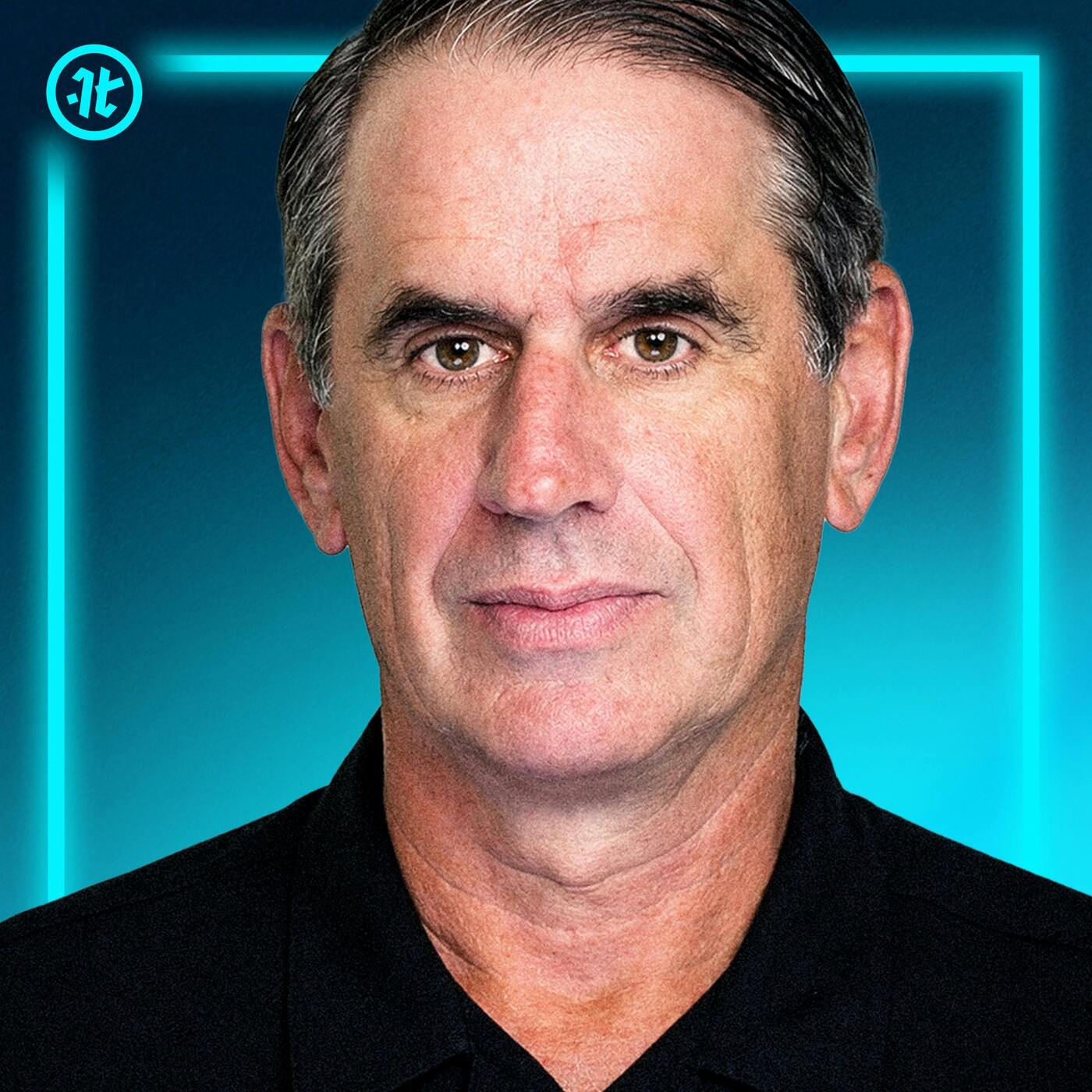
Tom Bilyeu's Impact Theory
Embracing Curiosity and Competition in the Age of AI with Bill Gurley | Impact Theory W/ Tom Bilyeu
00:49:30
Loading summary
Transcript64 lines
- [00:00]
Grainger Announcer
If you work in university maintenance, Grainger considers you an MVP because your playbook ensures your arena is always ready for tip off. And Grainger is your trusted partner, offering the products you need, all in one place, from H VAC and plumbing supplies to lighting and more. And all delivered with plenty of time left on the clock, so your team always gets the win. Call 1-800-GRAINGER visit grainger.com or just stop by Grainger for the ones who get it done. If you work in university maintenance, Grainger considers you an MVP because your playbook ensures your arena is always ready for tip off. And Grainger is your trusted partner, offering the products you need, all in one place, from H VAC and plumbing supplies to lighting and more, and all delivered with plenty of time left on the clock, so your team always gets the win. Call 1-800-GRAINGER visit grainger.com or just stop by Granger for the ones who get it done.
- [01:01]
Tom Bilyeu
One of the greatest tennis players who ever lived retired, came back just two years later and got absolutely destroyed by players with half his talent. So what happened? My guest today, Bill Gurley, has the answer, and it applies to everyone facing down AI. Bill is one of the greatest venture capital investors of all time. An early backer of uber, Zillow and OpenTable, he spent his career studying the exact pattern of who wins and who gets wiped out when a technology wave hits. He believed that Bjorn Borg, the tennis player whose career died fast, got left behind for the exact reason AI is going to destroy so many careers. Bill and I discuss the most dangerous response to AI how to navigate the AI transformation well, and why some people want AI while others fear it. Without further ado, I bring you Bill Gurley. Bill Gurley, welcome to the show.
- [02:04]
Bill Gurley
Thanks for having me on, Tom.
- [02:06]
Tom Bilyeu
Truly my pleasure. We were talking about that before we began. You are an incredible legendary investor, somebody who's been on my radar for a long time, specifically because you intersect with something that means a lot to me and to this moment. So where I want to start is between AI and massive political upheaval. This is a moment of profound transition for basically everybody. As an investor, how do you think about identifying what the future is most likely to hold, given there's no certainties? And how should people position themselves for that? Well, economically, when I'm talking about investment
- [02:46]
Bill Gurley
advice, I'm always very careful to separate kind of an individual from an institution. Right. I just think they're two very different things. For an individual, I think you have to. I always say, if you haven't Read A Random Walk Down Wall street by Burton McHale then I really don't want to give you advice because you need some kind of frame rock or bedrock before you dive in. And that book I think is the best way to get there at this point. You know, so much of AI is already reflected in the stock prices. So I don't think there's an insight you're going to have about AI that you're going to be able to, that hasn't already been accounted for. Unless you think it's going to be less disruptive then, then you might be able to go in and value buy some of the stuff that's been hit more recently on concerns, concerns of disruption. The, the piece of advice I would have for everyone about AI in general is the best way to protect yourself against AI is to be the most AI enabled version of yourself you can possibly be. So everyone, no matter what, what industry you're in, no matter what you're focused on, like you really need to understand what it's capable of in your field. Kind of on the edge. And curious people do that. Like the curious people have already done that. They don't need to be told to do that. I think the most dangerous thing you could possibly have about AI is to be skeptical about it and therefore to not be learning about it. And there are, there are a lot of people in that place, especially a lot of older people. I found a lot of academics are in that place. It's a really dangerous place to be because this thing is, is different. It's like really important and different.
- [04:29]
Tom Bilyeu
Now I have an algorithm that runs in my head that says people, just as a species, fear change, won't embrace it. Every technological change mows over a generation or two. Do you have like a framework that people can use?
- [04:45]
Bill Gurley
But not Everybody. My, my 89 year old father, you know, has bluetooth, you know, hearing aids and watches tick tock videos on woodworking.
- [04:54]
Tom Bilyeu
Like I like them already.
- [04:55]
Bill Gurley
Like it's possible like to not be afraid. But I agree with you, a lot of people do, especially when it threatens careers. That's where people get particularly protective and take on a bit of a victimization kind of mindset. And it's dangerous, like it puts you further. There's a great anecdote, I think it was Bjorn Borg, he retired real early in his, from an age perspective, like I think he was around 30 and he tried to make a comeback when he was like 36 or something. I'll probably get in the specific ages wrong but he in that Window where he was retired. The entire industry switched to these big headed graphite rackets. And he came back and he tried to do his comeback with the wooden racket. He had to get them made from a manufacturer because no one sold them anymore. He got obliterated. Like, like the, and, and we evolve with our tools, humans evolve with their tools. And if the industry moved to a bigger, better racket, like, you just don't have a choice not to. But I love that anecdote because it's easy to laugh at Bjorn Borg with his wooden racket. But you got to see that, you know, in yourself if you're a denier of these AI tools.
- [06:08]
Tom Bilyeu
So when I look at the history of this, it's pretty brutal. So you've got the industrial revolution 8 call it one to two generations, the great electrification, same thing, the Internetification. I think it, the data indicates, and I'm certainly open to a debate, but the data indicates that some of the deaths of despair that we see are from people that were north of say 35ish that just were never able to matter again. From a career perspective and especially for men, that's just it. Damage them, damages them psychologically so profoundly that they just spiral out and pull out of the job market essentially entirely. So when I think about your dad, I worry and I'm hoping that you have some countervailing insights here. I worry that he's just wired that way.
- [06:56]
Bill Gurley
Yeah.
- [06:57]
Tom Bilyeu
Is there, is there an insight you can give to somebody that's afraid right now that will reverse their viewpoint?
- [07:05]
Bill Gurley
I, I think it's hard to suggest that any idea is a, a solution for the world's problems. Like, you know, oh, do this and you'll solve world hunger. Do this and you'll solve like there are technological shifts that happen. We as a country went from 98% agriculture to less than 2% of the population over a very long time frame. But it happen and it survived and everyone was okay. So I mean, to a certain extent, and you said this, it's always been happening. So I don't. The one thing I know, I'll tell you something that I think is super effective, but one thing I know that's not helpful is rumination. Like sitting around just talking about it and complaining about it doesn't solve anything. And another thing I will tell you I'm highly skeptical of would be some kind of government retraining program. Like I just, I like I don't have any confidence in a government program that's going to solve AI job displacement. I Mean, I'm open minded and if maybe you could point to a policy that worked in another country that we're going to adopt, like they're a best practice. I'm open to it, we should do it. But I'm somewhat skeptical. I do see kind of this resurgence in open mindness around trade schools. I think that's kind of cool. There's a lot of anecdotes people will hear about friends that are electricians or plumbers or welders making over 200 grand a year and they're like, holy. So that's kind of cool just to have awareness of that so that people can know that those things are out there. But my, my, the thing I wanted to land with in, in my book, which I'm promoting over my shoulder here, running down a dream. People that have high curiosity and high fascination and probably high agency immediately see AI as a, a jet fuel, as a, as a rocket booster. It's like, holy, look at all the stuff I can now do by myself that I couldn't do before. And they're the ones that come to you and you go, man, you won't believe what I did this weekend when I set up this club. I went off and solved all these problems. I met a guy who does storage buildings in he. He lives in, in down by Brownsville. And he was, I met him fishing. He's like, you won't believe. I needed like three more sites in the city and it just immediately made recommendations. Explain why, like I, you know, I save so much time and money and he's like ecstatically happy, right. About what I could do for him. If you're high agency and you're curious about your field, it immediately starts solving problems for you. But you got to be in that place. And so the very first chapter of my book is called chase your curiosity. It's all about. And we studied over 100 people that have kind of started on rung zero of a ladder and gone on to wild success with no economic advantage, no networking advantage, and almost to a T. They were all continuous learners in their life. And I don't think that you're able to be a continuous learner unless you're fascinated with something like. And so, you know, one of my big themes is I want to encourage more people to believe they can have a career in a lot of fields that your parents probably would tell you not to chase because if it happens to overlap with your fascination, it becomes this perpetual motion machine. Things start falling into place.
- [10:40]
Tom Bilyeu
The only way I can think to get people on fire for that is the phrase that I use all the time. And it's not nearly as effective as I would like is skills have utility. And so I agree with you almost violently. And what I'm trying to get people to understand is if you get good at something, you can do something other people can't do. If you can out compete them, then you can have things they can't have. And you just trigger that like competitiveness, that drive. You've raised three kids. Have you found a better way to get people on that path to fascination?
- [11:12]
Bill Gurley
By the way, there's one other thing that I want to throw on top of what you said. People notice fascination. If you're fascinated with something, you come to the table with a lot of positive energy. When you learn new things, your face lights up. You love to talk about the field and people notice that. So if you're in an interview, if you're trying to close a mentor, if you're looking for peers, like it all gets easier and people want people root for it. They're like, oh, you're into that? You should talk to this guy over here because that's all he talks about. Like, so you get free connections, like, like opportunity comes at you when people notice that you're that person. Does that make sense? So you get a, you get a lot of stuff for free. The I think that our society has, unfortunately we've entered this kind of industrialization phase of the college journey and it's gotten way too competitive. The schools have not increased admission numbers. And so you end up with a situation where more and more the schools. I think both you and I went to a state school. Those used to be 30 years ago. They were the default. They were the safety place. Oh, I'll just go to state school today. You know, Those schools have 1400 SATs and are hard to get into. And because of that, there's this kind of mania that comes over parents and kids become a part of it starting in sixth grade. Jonathan Haidt calls it the resume arms race. We just start, you know, preparing for that college application around sixth grade. And you're taking Mandarin lessons and lacrosse lessons and taekwondo and you're volunteering and like the kids are so over scheduled and it's just a bunch. It's a pressure cooker.
- [13:03]
Tom Bilyeu
We're hitting pause for a moment, but there's plenty more ahead, so don't go anywhere.
- [13:08]
Grainger Announcer
When you manage procurement for multiple facilities, every order matters, but when it's for a hospital system, they matter even more. Grainger gets it and knows there's no time for managing multiple suppliers and no room for shipping delays. That's why Grainger offers more millions of products in fast, dependable delivery so you can keep your facility stocked, safe, and running smoothly. Call 1-800-GRAINGER Click grainger.com or just stop by Grainger for the ones who get it done. When you manage procurement for multiple facilities, every order matters. But when it's for a hospital system, they matter even more. Grainger gets it and knows there's no time for managing multiple suppliers and no room for shipping delays. That's why Grainger offers millions of products in fast, dependable delivery, so you can keep your facility stocked, safe and running smoothly. Call 1-800-GRAINGER Click grainger.com or just stop by Grainger for the ones who get it done.
- [14:10]
Tom Bilyeu
Thanks for sticking around. Let's get right back into the action. Is that bad because they just end up burning out and getting tired? Or is there some sort of creative play that kids need to do that they're not doing well?
- [14:21]
Bill Gurley
So. And you know, part of my journey writing a book was just to go read all the greats that have written about this stuff, and both those things you talk about, the, the. The top academicians are talking about. So Angela Duckworth, who wrote Grit, has said recently, if she could write it again, she'd put passion way above perseverance. Because she says perseverance without passion is suffering. She says it's just a grind. And we've taught kids how to grind. I think they come out of college exhausted by. Because learning about something you're not fascinated with sucks energy. Learning about something you're fascinated gives you energy. Right? And so they're completely different. And so, yeah, that. That's true. And then other people, from Rick Rubin to Ken Robinson have talked about this lack. And there's a chapter in calling in the American mind by height called the Decline of Play. So there's this notion that by not having more free time to just be curious and that you might not discover what you're actually fascinated with because you're in this. This. You're on this. You're on this conveyor belt to get to this college. You know, when, when I was young, when you went to college, they would not allow you to pick a major until the end of your sophomore year. And I don't think it takes a genius to know why that was. They wanted you to take all these core classes to look around, take a few electives and see what you're interested in. Before you comm at many schools you have to apply to the major. So you're talking to a 17 year old saying what do you want to do the rest of your life? You know, and they don't know. They just don't know. And it's okay that they don't know, but, but there's a lot of pressure. There's a lot of pressure. There's pressure on parents too. And so I do think one of the, one of the key ideas I had in writing the book, I probably read through a hundred biographies. I only wanted to include success stories. And there's about 10 deep success stories in the book from fields that were fields your parents wouldn't recommend. I just didn't want there to be a chapter on a consultant or a banker or a doctor. Like these are the fields they push people towards, you know, I wanted to give more permission to do these things that are fields you might not think are possible. And yeah, that's where a lot of fascination lies. You know, many of the people in the book switch from whatever career path they're on to their hobby. It's a common, common theme. But the hobby is the thing you're fascinated with.
- [17:00]
Tom Bilyeu
Yeah, no, there's. I, I've certainly in my own life gotten a ton of energy out of the things that I'm just naturally pursuing anyway. But let me run a counterfactual. You've spent a lot of time in China, which I think is. Especially now. I'm a big believer in Thucydides trap. I think the US and China are locked in this competition. That could get very problematic. Regardless of that, I think it's incredibly wise to look at what China does well, to learn from their leaders, to pay attention to all the things that they're doing extraordinarily well. And they've got a cultural value around this concept of nine, nine six. So grinding, busting ass, working from 9am to 9pm Six days a week. They're building extraordinary companies. So what is it that they're doing? Because they're hyper competitive at like the provincial level and in a way that we're not. So what did, how are they able to leverage that pressure cooker to these like really awesome results and then we're sort of like crumbling in some way under that pressure.
- [18:04]
Bill Gurley
Yeah. By the way, I've spent a ton of time in China and I'm pretty fascinated by it. So I could maybe I could go do a career just thinking about that, these things. I'll tell you two things about China. One, one thing that I don't think people realize, of all the places I visited around the world, the one place where I find the most cultural affinity between entrepreneurs, between American entrepreneurs and some foreign entrepreneurs, China, like the most like mindedness. And I judge that not by some type of analytical study. I judge it actually by going out to dinner, having a few drinks and laughing and sharing stories and how natural it comes. And it's amazing. CO2 used to run a conference called East Meet west where they'd bring all the entrepreneurs in one place from both cultures and there'd be late night poker game. I mean it was just a blast. And I don't know why that's true. I don't know why there's this like very cultural similarity between the two but, and as a result they love entrepreneurism, they're really great at it. The other thing I would say, and I don't know if this will be true going forward, but I think it was true in the past. You know, part of what Ding Xiaoping was able to unlock by bringing free enterprise to China was a massive impact in standard of living for the people. So marginal work effort meant, you know, moving from eight people living in a one room building in working in a rice field to, you know, a two bedroom apartment in the city with a completely different life. And you know, I've often thought about marginal work effort relative to marginal increase in standard of living as, as something that causes a harder work environment. And if you, you know, marginal effort in the, in the US might allow you to get Showtime and Netflix, not, you know, not just Showtime or not just Netflix. Like it's, it's not, it takes a lot more work in the US to systemically impact your quality of living. That could slow down in China. You know, like, like, like there's a point at which you're moving from, you know, a farm to the city where you get this huge leap. And they may have already, they may have already gone through that. They're very curious. I mean they're very smart, they're very entrepreneurial. I think there's a misperception that it's all, that it's all just work ethic. But, but, but to your point, Mike Moritz, I think famously about 10 years ago wrote a, I may have been in the FT or something. He just wrote a piece that said they just work harder than we do. Like flat out. And there's an interesting notion in that, in that in many fields, even Americans admit that work ethic is valuable, especially when you look at the Arts for some reason, like it's perfectly okay for the figured skater to str. Like to toil, right, to work hard. Kobe Bryant works really hard. And we're so fascinated. A cellist in the symphony. If they told you, oh, they studied hours a week, you'd be, wow, that's amazing. But when it comes to work, we, we adopt this workaholic and oh, you can't make people do that. So I find that fascinating.
- [21:44]
Tom Bilyeu
Now, do you have a guess as to why that is?
- [21:47]
Bill Gurley
If you went back to, you know, the 30s, 40s, 50s, when we were emerging as a country and, and really dominating the world in terms of industrial and exporting, I think, I think a lot of people would, would have, had, would have viewed almost any occupation just like the, the figure skater. But I think we've kind of moved past that in a way. And there's just more, you know, talk of, of victimization and what, I mean, remember what, what is it JFK said that's not what you can do, what your country can do for you, but what you can do for your country. That sounds very foreign right now, doesn't it?
- [22:27]
Tom Bilyeu
Yes. Yeah. So my take on this is everybody's stuck in a frame of reference. We can't interface with the world the way that it really is. So we begin to tell ourselves a story about that. When the culture tells you a story that the harder you work, the better your life is going to be. And that gets reflected back to you in real results, like what you were saying in China. And most people just are so ignorant to Chinese history, they don't realize in the 60s you had people starving to death in China, to death in the tens of millions.
- [22:57]
Bill Gurley
Right?
- [22:57]
Tom Bilyeu
And so this is for them, this is a very recent memory. So to watch 4 to 500 million people get pulled out of poverty because you inject this notion of the free market, the harder you work, the smarter you are, the better you perform. That idea of skills have utility, like that's going to be the realest thing in the world. And you remember what it was like when it was hard. We've now raised three or four generations that just think success is the way that it is and that the government just needs to tax more and everything's going to be great. And they, I remember this all too intimately because it wasn't but five or six years ago that I believed inflation was just a natural law. I didn't realize that it was man made. And so there's so much confusion that people have when your country's just Been successful for so long.
- [23:47]
Bill Gurley
Yeah.
- [23:47]
Tom Bilyeu
You end up in a career that you don't love. The marginal benefit to working hard isn't there. You're in a K shaped economy. So your boss is getting rich because he owns the company, but you're not. And so you're like, all right, well, this guy's an. He just wants me to work hard. But why? And so that. The thing that scares me to death about this moment is the reason I became successful was I grew up with. I was middle class to lower middle class. So I didn't grow up with money. I certainly wasn't poor. But I believed that I could do anything I set my mind to. But my parents made it very clear I was gonna have to work my ass off. And so I just put my head down for effectively 15, 20 years and just worked and worked and worked and worked and worked. And then it finally paid off.
- [24:31]
Bill Gurley
Yeah.
- [24:31]
Tom Bilyeu
But we now make fun of people who do that because we become culturally so divorced from that path.
- [24:40]
Bill Gurley
Yeah. And, and, and the data on the success rate of first generation immigrants that come here specifically because they believe it is the land of opportunity, which they have the mindset that most people in the US had 30, 40 years ago. They succeed a lot more in the US than people that have been here. Multi generationally. Yeah. But I mean, part of being able to affect change in your life and in your career, it comes down to a belief that you can. If you're convinced you can't, you won't. That's for sure. That's a certainty.
- [25:18]
Tom Bilyeu
So true. Bill, One thing that I find really fascinating to stick on that theme about you is I can feel you're somebody who's trying to help people. So you legendary investor help founders, you write a book, which we'll talk more about the whys in a minute. But you write a book that's effectively self help. But now you've also started a policy institute. I know some of the punchline of the policy institute, but if you would. Why are you starting a policy institute? What. What's the end goal? What trying to address?
- [25:50]
Bill Gurley
I probably would mention a great book by Arthur Brooks called Strength to Strength. I don't know if you've heard of it. It's actually.
- [25:57]
Tom Bilyeu
He's amazing.
- [25:58]
Bill Gurley
It's. The book was written for people who are kind of finished their first career and have a lot on their mind and have a lot of questions about what to do with the rest of their life. That's really. Which is a spot I found myself in. I had a Incredible career in venture capital. I loved every minute of it. But for a variety of reasons, I raised my hand and said it's time to move off the field and let the next generation play the game, which I did about four years ago. And I went on a listening tour of what to do next. And a lot of people wanted me to do what I think is the more natural thing. Run your family office, do a bunch of angel investing. And as I spent time imagining myself in those roles and talking to people about it, I became convinced that that was 100% not what I wanted to do. I've developed a pretty good rhythm about being able to synthesize and communicate, so I did that in my venture career through blogs and eventually things like podcasts. I tested doing it outside my field with a talk I gave at the All In Conference on regulatory capture, which had like four and a half million views. So if. Extraordinary talk, by the way, if I can do a talk about regulatory capture and make it that popular, maybe there's a skill there that I should develop. And I'm also really enamored with the, with the notion of effective policy. So I, I have a, a quote at the top of the page on my policy institute from Milton Friedman that says one of the great mistakes is to judge policies and programs by their intentions rather than their results.
- [27:42]
Tom Bilyeu
Oh, man.
- [27:42]
Bill Gurley
Preach. And I think we elect a lot of people because we like what they're saying, but no one follows up to see if they can actually create change. And so one of my sole goals will be to think about policies that are effective. I'm enamored by the provincial competition in China. And I wonder if shining a brighter light on state versus state competition could lead to some pretty amazing and positive things for our own country. An example of something I'm excited about. The other thing I kind of hold out as a success, there was a, there was a very negative opinion on nuclear energy about six years ago, not that long ago. And a few people, Steve Pinker, the Collison Brothers, Elon Musk, there were a few people who stuck their neck out and said, you guys are all wrong. Josh Wolf at Lux Capital, they said, this is fascinating technology, you know, we should be embracing it. And within a very short time frame, the global perspective on this shifted. And to me, that's pretty amazing that you can use the power of communication and conversation to flip a bit like that. And it's a big, big flip, huge flip. So I'm going to look to see if I can find more things like that. We're just highlighting things and communicating could potentially change things. The other thing is you get to go meet with and hang out with the top academicians in the world, which gives me a ton of emotional energy just chasing that curiosity. And these people are quite fascinating. And so that's another element of it. I've already been to the University of Chicago, which is the birthplace of the notion of regulatory capture where Professor Stigler won the Nobel Prize. They have a Stigler center and went talk to them about different ideas and I'm talking to some people about maybe making a regulatory capture index for countries as a way to, to identify policy that can push against it.
- [29:53]
Tom Bilyeu
That's awesome. If you don't mind. For people that don't know exactly what it is. Can you define regulatory capture?
- [29:59]
Bill Gurley
Yeah, I mean if you look up George Stigler, he, he's the one that in. Won the Nobel Prize in 1958. But the, the, the, the simple concept is most regulation ends up being written by the people that are being regulated, at least in the US and the way our government works. And so rather than, I have a phrase I use, regulation is the friend of the incumbent. So they use it to actually raise prices, prevent competition and further ensconce themselves in the leadership role they're already in. And I believe in some of the, the more regulated industries in the U. S Particularly finance and health care, this is a huge problem fully locked in. There's, there's more potential disruption in finance around crypto and stable coins I think than, than in, in the healthcare. I mean, I mean Mark Cuban's doing his thing, which I'm, you know, fully supportive of. But it's, it's hard. It is so ensconced, so locked in,
- [31:05]
Tom Bilyeu
taking a short break. But there's more impact theory after. Stay tuned. Thanks for staying tuned. Now let's get back to it. One story that you have from your own experience that I think would really help people get this is Tropos. Yeah, walk us through that. Because this one made me want to chew glass.
- [31:24]
Bill Gurley
Yeah. So a long time ago, like maybe 20 years ago, I invested in a company that, that used mesh mesh radio technology to allow and open spectrum to allow basically using WI fi outside and like covering entire downtown areas of a city. And we found many mayors all over the country that were excited about this and wanted to as a public good offer free data connectivity in their downtown areas, if you will. And I, I often tried to equate it to you know, if a city early on built a port that would make sense because industry moved in and out by boat. And then if they built the train station, that makes sense. Oh, no one said, oh, a city shouldn't be in the train business. Right. Because that's how. Who else is going to build it? And then the highways and cities are in the highway business. Right. So when industry moved online, it would make sense that a city might want to differentiate itself by having more connectivity and more options for that. But what we, what we ran into is there are many. I mean, first of all, the, the telecom space is probably equal to healthcare and finance in terms of regulatory capture. Maybe it leads it. But many of these, whether it's AT T and Verizon or Comcast, they have lobbyists out the yin yang, like they have so many lobbyists. And, and at a state level and they were able to pass laws that said cities can't compete with them even though they're getting their poll rights from the, the cities themselves.
- [33:14]
Tom Bilyeu
How do they justify that? Like, do they even try? Or is this just.
- [33:18]
Bill Gurley
But you'd be surprised. They get a lot of free enterprise Republicans agreeing with them because of the notion that they use the mindset that the government's bad at industry. The government shouldn't be in industry. Right, but, but I, I think that's ridiculous. Like, I think this goes back to maybe city versus city or state versus state competition. If a state, if a city wants to offer free connectivity for all of its citizens, I certainly think they should be able to. To. If the citizens are behind it and they have the, the money, why not? Not. Right, but, but that's, but I do, I, I do think that's the thing they were able to leverage to pass these laws is conservative people believing that they were keeping the government out of things they shouldn't be in. That's, that was the, the mindset they used to pay. Anyway, they passed these laws everywhere, all over the country. The thing that really killed us was we, we, the mayor of Philadelphia became excited about doing this and it put it on the front page of the paper. And the government in the city of Philadelphia in the state of Pennsylvania was just full of ex Comcast people. They were everywhere and they just crushed us. I think I said in the talk, we were like a sixth grader playing against Michael Jordan trying to compete in, in the back rooms of, of, of, you know, policy.
- [34:52]
Tom Bilyeu
Do you have a sense of what goes on in those back rooms? So I know Michael Jordan dribbles the ball. Well, he reads the court, he understands body language. What does a Person formerly at Comcast,
- [35:04]
Bill Gurley
I have to look up his name. I used it in the talk. There was a gentleman who was the head of the, the head of lobbying at Comcast, where I think New York Times or the Post, someone did an article where they said, this is the most important executive at Comcast. And he had been working for the mayor before he went into that role. The mayor went on to be the governor of the state, you know, and when he left that role, Biden made him ambassador to Canada. So he was in and out of those. And that article said he did, did like three or four dinners at his house for the Obama campaign. And so he was just, he was right in the center of all of it in a way that this startup in Silicon Valley had no chance. Like, we didn't have any of those relationships, right? And so just, just woven into the fabric of it all. There's a huge irony. When I gave that talk, you know, and I spent 25 years in Silicon Valley, it was titled 2851. And I, I use that title because I had a punchline at the end where I said, the reason Silicon Valley works so well is because it's so far away from Washington, D.C. and that was the distance in miles. But since I gave that talk, I'd say Silicon Valley's gotten more, like, rooted in Washington, D.C. than it ever has, than it ever has before. So there's a certain irony to that.
- [36:34]
Tom Bilyeu
Do you read regulatory capture as corruption?
- [36:38]
Bill Gurley
I think it can be both sides of the coin. I mean, you can look at what the crypto world did in getting Trump elected, and you can look at stablecoins, and you could say, you know, I can move money via stablecoin right now in seconds for pennies anywhere around the globe. And you can't do that through a bank. You can't do that through a traditional financial institution. They don't do it for that price. They delay it and they charge you way more money. And you could say, well, they're trying to change things. Like, now if they were to change things and win, I suspect over time, they would start doing the exact same things, you know, once they had those relationships. So I, I'm, I'm. And, and the, the other big thing that's, that's causing this right now is, is venture capitalists have gotten into military equipment, which is nothing I know anything about. But rest assured, without relationships, they wouldn't have been able to do that because the McDonnell Douglases of the world would have, would have used regulatory capture to cut them off. So it was probably imperative that they have those relationships to bring disruption to those fields and to fight back against it. But if they have it long enough, they'll certainly use it against the next guy. And by the way, I think this is playing out in real time in AI. I mean, there are many people, including David Sacks, that think Dario and the team at Anthropic. There's Anthropic's lobbying. The only company that has lobbied as much as Anthropic early in its life was FTX and sbf. Like that. He also lobbied heavily. But they have people on the ground in every state. They're the ones pushing for state by state regulation. And at the end of that talk I gave, I said I was worried that the AI people were begging for regulation to pull up the ladder. We'll see what happens. Like, I'm, I'm more fearful that that's their motive than anything else.
- [38:49]
Tom Bilyeu
Yeah, all right. You stop shy of saying yes or no, for that matter, to its corruption. So I have a growing thesis.
- [38:58]
Bill Gurley
Oh, oh, I, I'm sure they don't view it as corruption, although, you know, to the extent that you're in, you know. Yeah, I don't think they, I don't think any of them think it's corruption. I think they're just playing the game on the field. But, but the problem is, you know, I, I was really enamored. I'm kind of excited about stablecoins because I've just been so pissed off at the US financial system for not embracing what I would call instant digital transfer. So every one of the seven other largest countries in the globe had the government fix instant digital transfer a long time ago. In the UK it's called faster payments. You can go straight to Wikipedia and read about UK faster payments. They put it in 20 years ago and you can move money instantly for almost nothing. And in the US, you know, ACH is three day settlement. What the hell are we doing? It's 2026. And in China and Australia and recently there's something in Argentina called I think BRICs. They just pushed this through like six years ago. So here's a country that everyone would admit is behind us from an innovation standpoint who just did this thing that the UK did 20 years ago and you can go look at it and we still can't get, we still can't do it because the banks fight it. You know, there's a program called Fed now that's supposed to do this. That's on the slowest roll. You can Possibly imagine. And I would, when, when, when they would talk about Fed now in front of the financial committee, I would turn on, on what is it, C SPAN or whatever. And I would watch and I would see the congressmen and senators that would, would be anti Fed now. And I would immediately go onto that website that lists who their donors are and you'd see large banks. Boom, boom, boom, boom, boom. You know, and so the problem, the problem is, I mean I, I'm a big believer that Citizens United was a bad thing. Like these super PACs, like anything that allows more influence. And there's another crazy thing that I learned in the tropo situation is your senator and your congressman, the minute they get on committees, they start raising money outside of your geographic area. That should just be, I think it should be illegal, but it should certainly just send off an immediate alarm. Like we live in a day and age of blockchain. If you raise money from a campaign contribution from someone in California and you're a Tennessee congressman, like that should just be instantly like, what the hell are you doing? Like that's not your constituency. Right. It's not like, you know, so I, and there may be things to do there, like to create more awareness of those things, you know, okay, so you're
- [41:56]
Tom Bilyeu
somebody that thinks through how we start untangling some of these things. One of the things that I found really interesting that you mentioned earlier is what they do in China to create competition. The analogous situation here would be interstate competition.
- [42:11]
Bill Gurley
Yeah.
- [42:12]
Tom Bilyeu
Do you think that's a potential solve where it's like, yeah, if you want to do stupid decisions, you go do your stupid no free WI fi for you decision, but we're going to do free WI fi. Is that a way that we could start?
- [42:22]
Bill Gurley
I think it can be. I think it can be. And I, I've recently become aware of a professor at Harvard, Thomas Kane, who I'm just learning about, who's trying to analyze different policies in K through 12 and amplify the ones that are working better. That's I'm excited about with the Policy Institute. People have asked me, a lot of people have asked me about the proposal in California for a wealth tax. And my opinion on it is, okay, they can try it. Let's see what happens. Let's run a bunch of experiments. I've been told, and I'm still learning on this, that James Madison thought about this in the Federalist Papers, that he said people can move. We have a Federalist system where there's federal laws and state laws. Let's run a bunch of experiments and see what works. And I think people migrating is a great pointer to people are migrating towards probably towards good policy. Right. I'm sitting in Austin. It's just super hard for a lot of people to understand, and we should talk about it as loud as we possibly can. One of the fastest growing cities in the nation. Rents have fallen for four years. Years. That's good policy. Like half. Half of the country is up in arms because they say they have a housing crisis and housing too expensive. Just come look at what's happening right here. Just study it like it's solvable. And it's all a bunch of nimby, like build policy that they push through. Like they actually change the policy. And that led to more building and that led to rents falling, like zoning policy, building policy. It's happening. It's really happening. You can see it. There's a solution to this problem. And the states that have the problem and cry about it don't do what Austin's doing. They do a lot of other things. That's bad policy. And this is. Yes, I think state versus state competition is a super interesting construct. And I think I can do a good job of hopefully working with others and academicians of finding good policy and finding bad policy and shining a light on both. We can just make it positive. I'm fine with that. Austin has a solution to housing prices. Positive. Everyone should study it. Now, by the way, Houston's done something really similar in homelessness, and there are articles you can go find on that. Houston's had a number of policies and they've reduced their homeless population by 2/3. Go study that. Go talk about that.
- [45:01]
Tom Bilyeu
Now, given that we have big wins like that, whether it's housing or homelessness, and yet they don't matriculate out to the other states. Is that politicians suck at creating financial models? Is it that they're just too good at storytelling? Like. Like, is it that they get federal dollars and so they can paper over problems? Like, why doesn't that competition work in America in the way that it does in China?
- [45:28]
Bill Gurley
Some of it comes back to that quote Milton Friedman quote I had. I think people elect politicians based on what they think their intentions are versus what they're actually capable of doing.
- [45:40]
Tom Bilyeu
You can change that. Can we get. I don't know, pay attention?
- [45:42]
Bill Gurley
I don't know. I'm going to try. You know, I think shining a light on these policies that work and is. Is worth a go. Like, like, you know, similar to the nuclear thing that I mentioned. I think if we talk about it more and people that are good at communicating can highlight it more. Like, no one should be able to have a discussion in a city that has a problem with housing prices and not be able to respond to a question about, well, what are they doing in Austin? Like, that just shouldn't happen. It may take. It may take people like you, Tom. I mean, the, the. It. It's. It's not clear to me, and I don't want to, like, go deep into this, but it's not clear to me that the mainstream media is as interested in uncovering this stuff as they used to be. Like, and they used to be quite interested in it. It. You know, although, although, to be fair, on the Austin rent thing, you'll find plenty of articles. Like, if you just go do a search, there are plenty of people talking about it, but I think you can get more people talking about it. Like, like we are right now. Like, I think it's possible.
- [46:55]
Tom Bilyeu
Yeah. It's interesting. When I do, when I cover stories like this, they will. There'll be a base hit. It's rare that it really goes viral. If I want something to go viral, it both has to be. I have to get incredibly emotional about it.
- [47:08]
Bill Gurley
It.
- [47:09]
Tom Bilyeu
Which that may speak to just what people want from me and not necessarily something global. And it needs to be something that triggers their emotion as well. And I think that's a big part of the problem. So while I think, yes, it's good to shine a light on it and all of that, but as somebody who spent the last, call it, 10 plus years mastering the algorithms, which is basically mastering human emotion, you go down a path, path that I think people will recognize in the way that social media distorts behavior far more than it does something positive. So I worry about that on the policy side. I just keep coming back to, you know this about me, my audience certainly knows this about me, but I spent now almost 25 years as an active entrepreneur being able to pay people salaries by my ability to generate things that are profitable. And you. It forces you to focus on cause and effect, what actually works, what's profitable, cut what's not, focus on what is. And we don't have that feedback loop, certainly in the U.S. i think because of central banking, the ability to run deficits and money print. And if we don't get rid of that, I, I think you run in Ray Dalio's big debt cycle and there's no way around it, and the empire will collapse in roughly 250 years. And it just is what it is. Do you see a way out of that loop or are we trapped here?
- [48:37]
Bill Gurley
Yeah, you're channeling David Friedberg's in, in the same mindset. I. Look, I don't, I guess if I felt that way entirely, I would probably just go fishing for the rest of my life and wouldn't, wouldn't be talking to you right now. Like, what's the point of, like, I don't, I don't want to roll around in it if it's, if it's inevitable. And so I'm going to go tilt against it, you know, maybe now is it tilting?
- [49:05]
Tom Bilyeu
Are you just holding on to like a feeling that maybe it's possible or can you anchor on something that's like, no, no, no. I've seen this thing that tells me that we've got a shot.
- [49:15]
Bill Gurley
Yeah. I mean like on this state stuff, you know, it's not just like. So certainly Governor Abbott is very much about moving red tape out of the way here in Texas. And, and as a result, you know, Elon moved all his companies here and there's a lot of positive momentum around data centers and other things coming to the state of Texas, semiconductor factory, like all kind of stuff. And that's been true in Arizona. But I would also say like, if you look at Pennsylvania Shapiro, the, the highway went down and they got it working again in like 12 days. And he did it by moving red tape out of the way and, and then it's celebrated. And if a, if a politician is going to stand up and tell you hooray, look what I did, I got government out of the way, I think it's kind of funny. But why get him out of the way just for an emergency? Let's get him out of the way for everything. And so, you know, look, there's the part, part of why I love studying China, both the provincial competition, but also how fast they're building things. Dan Wong's book Breakneck. People need to be aware of what's possible. And it costs 4x400% more to build a fission nuclear plant, 70 year old technology in the US than it does in South Korea or China. Get in touch with that, that, get in touch with that like, and every politician that should scare the living hell out of them that that's true. And they should want to know why it's true. And, and you know, to me, why wouldn't you put a government task force together to go figure that out? Like, I think the NRC is all structured poorly. The Navy has tons of insight. They've. They've used nuclear technology forever with no incident whatsoever. Let's go solve that problem nationally and figure out what the hell's wrong. Wrong? Or let's just pay South Korea to build one here and tell us what's wrong. Let's go figure it out.
- [51:22]
Tom Bilyeu
That's it for part one. Make sure you are subscribed so you do not miss part two. Coming up soon.