← Tom Bilyeu's Impact Theory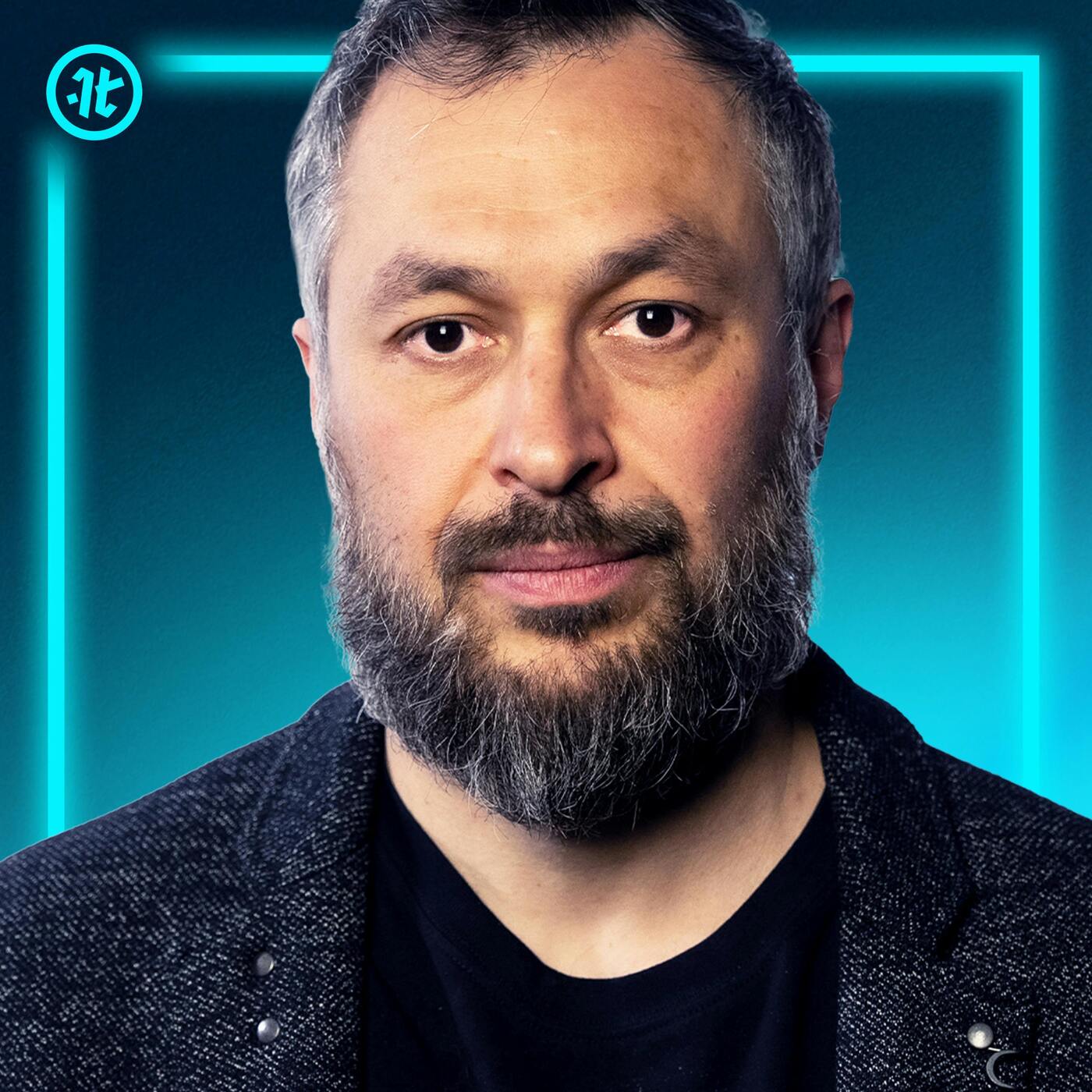
Tom Bilyeu's Impact Theory
How Crypto Is Reshaping Finance and Challenging the Status Quo with Solana Founder Anatoly Yakovenko
00:56:37
Loading summary
Transcript118 lines
- [00:01]
Tom Bilyeu
Nine out of the 10 largest banks get it. They get that. VantageScore, the modern credit score, is the leader in predictive power, improving mortgage default predictions and saving lenders billions. Better predictions, better for your business with VantageScore.
- [00:15]
Commercial Narrator
When you manage procurement for multiple facilities, every order matters. But when it's for a hospital system, they matter even more. Grainger gets it and knows there's no time for managing multiple suppliers and no room for shipping delays. That's why Grainger offers millions of products in fast, dependable delivery, so you can keep your facility stocked, safe and running smoothly. Call 1-800-GRAINGER Click grainger.com or just stop by Grainger for the ones who get it done.
- [00:45]
Anatoly Yakovenko
Crypto is eating the last big part of the world, which is finance. No human can comprehend it. The reason why America has been so successful is that we end up building things faster than anyone else.
- [00:57]
Tom Bilyeu
Do you think that crypto will completely replace fiat?
- [01:00]
Anatoly Yakovenko
Our government is aging. I think the Democrat leadership kind of shot themselves in the foot with crypto.
- [01:06]
Tom Bilyeu
What does the future of finance look like?
- [01:08]
Anatoly Yakovenko
I'm a super optimist. I think if all our problems are money problems, we're truly blessed.
- [01:16]
Tom Bilyeu
Anatoly Yakovenko, welcome to the show.
- [01:18]
Anatoly Yakovenko
Thanks for having me.
- [01:20]
Tom Bilyeu
So you have said that crypto will win against traditional finance, but I want to know why. What is it about crypto that's better for the average person today?
- [01:30]
Anatoly Yakovenko
The basic reason is that a lot of the kind of growth over the last, I think since the 80s, been software eating the world. I think this is a Mark Andreessen line and you kind of see technology, as it improves, start to automate more and more pieces of what we do with like humans and fax machines and stuff like this. And crypto is eating the last part, I think, of the last big part of the world, which is finance. And finance has been really, really hard to replace with software because there's just so much trust baked into finance. Like if you actually kind of go through the process, anyone that's been through the process of buying a house, you get all the work that people have done legally to make that as trustless as possible. You see that in the 800 pages of disclosures that you read and no human can comprehend it. There's just no way to consume that information and make a rational decision. So you trust the people in the process, the brokers, the dealers, etc. To kind of not screw you over. And we have laws and stuff to kind of keep everyone in line, but because of that, it's really expensive. The, the cool thing about blockchain and crypto is that you can start replacing some of those pieces with software and cryptography because we have mathematical guarantees that you cannot violate the cryptography portion. So you can trust that particular thing. It's still a really slow and hard process because we still have humans writing the software and that software is going to have bugs and stuff like that. And you see that come out as know, big hacks in defi and stuff like that. But I think slowly but surely you'll start seeing people replace their back office and kind of all the stuff that they do that's expensive, that some person that is doing a job can charge 20 basis points, can now be done with software. It'll get switched over.
- [03:25]
Tom Bilyeu
I've heard you talk about the current way that the financial system works is basically like a regressive tax on the entire economy. Which do you mean by that? And how would crypto solve that?
- [03:37]
Anatoly Yakovenko
Yeah, so my engineering brain, like, think of it as roads. Like if you have roads with potholes and tolls that, that are expensive, it that that's a cost that's paid by, by everybody in that, you know, economy. Like the cars wear down faster, you gotta spend more gas because the roads are inefficient, stuff like this. And when you straighten everything out and remove all the potholes, you remove that tax on the economy. So. So you're paying less, less of that tax in every transaction that you do.
- [04:07]
Tom Bilyeu
If you were going to remove the analogy and just say, like, these are the beats that create the expense or the friction or whatever, like what are the actual potholes?
- [04:16]
Anatoly Yakovenko
Yeah. Basically anytime, like, especially if you ever bought a house, there's always somebody that for every little fee and every person that you interact with, they charge some percentage of the sale of the house. They're doing the same amount of work no matter what. Right. This is kind of a, that little pothole or whatever that an expensive truck full of expensive items drives over. That's the cost that those items pay. And that cost is borne by the whole economy. So can we replace those with software? And I think the stablecoin is kind of the easiest product to understand. You have a ledger, right, that represents money in some bank account that has been invested in Treasuries. And then you have a digital representation of that that anybody can transfer on a blockchain like Solana or Ethereum. And the cost to transfer that doesn't require you to pass those funds through some intermediary like you have with a credit Card payment that has to go through the credit card issuer, Visa, but the transfer of whatever agent Visa, then the credit card issuer, the credit issuer, the bank, then the receiving bank than the actual merchant's account. All those little hops somebody charges a fee for. But on a blockchain, you've kind of virtualized all of that and replaced it with software where I can send you a token. The cost to send that token is the cost to move memory around in a bunch of computers. And blockchains are excruciatingly inefficient computers, right? We're talking about like doing the same computation tens of thousands of times over and over to give you those guarantees that nothing can go wrong. But even though that is the most expensive computer ever built, it is thousands of times cheaper than humans or agents that can charge a spread on trust and stuff like that. A very specific example, we launched a phone seeker and made it available everywhere in the world. And we had an option for credit cards or stablecoins without any incentive, same price. And about half the people picked the stablecoin option to buy this phone. It's 500 bucks and we sold like 150,000 of them. So it's roughly $40 million through both channels, credit cards and stablecoins. As a merchant, we had to pay a fee on the credit cards about 2%, and we didn't have to pay that fee on the stablecoin part. And we got the stablecoin funds immediately. We were able to use them immediately on the credit cards. We had to wait 60 to 90 days before we actually got the funds in our bank account. So that 90 days is a cost, the 2% is a cost. And with the stablecoins, we literally had the funds and we could use them immediately to pay salaries and to go build the phones and stuff like that. So that's a very clear example of inefficiencies that just for that one small kind of phone launch added up to like several, several engineering salaries. That's like three people salaries that I could have paid like I could paid for, right?
- [07:22]
Tom Bilyeu
So we have essentially a system that's made before the Internet, a system that overcame trust by essentially building all this human infrastructure around it. And everybody just sort of holds their nose and goes, I'm going to trust the credit card companies or I'm going to trust the escrow or whatever to get these things through. So assuming that we can solve the trust problem and people en masse really either become completely agnostic and the companies just integrate Blockchain technology.
- [07:50]
Anatoly Yakovenko
So you. Yes. You don't have to trust blockchain because you can verify it. And this is the, the. Ben, the reason why it's slowly overcoming traditional finance is that you're not replacing it with I gotta trust Joe at, you know, bank of America and now I'm trusting Vitalik at Ethereum. No, you can verify the, the that Ethereum or Solana work from the software itself. Because the software is open source, you can go download it yourself. Now, vast majority of people are not going to do that, but you have a business that wants to compete with those other kind of middlemen and wants to cut them out and create a service that's cheaper and faster. They can verify that Solana is open source software and they get exactly what they get out of it, what they expect. So somebody like Circle can issue a stablecoin on top of Solana without trusting me or anyone else. And this is how that replacement of trust of humans to software ends up benefiting consumers. So we, as a merchant, I ironically built the protocol initially and now I'm using it for its intended purposes. Right? So me, as a merchant, I could use Circle and know exactly that I'm getting digital dollars without paying all these intermediaries.
- [09:07]
Tom Bilyeu
Hmm.
- [09:07]
Anatoly Yakovenko
Okay.
- [09:07]
Tom Bilyeu
The reason I say there's probably still a trust element, or the reason I believe there is a, an aggressive trust element is just science doesn't advance one insight at a time. It advances one funeral at a time. People tend to get so locked into their frame of reference, their way of life, that something new is just like, I don't know how it works, I don't understand it. And so people are, some will just not do it because they don't understand it. And so even if it's like, hey, the system doesn't even require you to trust it, they still need to trust
- [09:35]
Anatoly Yakovenko
that it doesn't require trust. If you see. Yeah, absolutely.
- [09:37]
Tom Bilyeu
So we'll have some of that. But assuming that we can overcome that, do you think that crypto on near ish term timeline will completely replace fiat?
- [09:48]
Anatoly Yakovenko
So if you have a business and you employ somebody to write a check and to put it in a mail, into the mail and send it out, you're never going to replace that person because this is just too much risk, Right? You've already paid for them to, to do that job. And finance is one of those things. You just, as a business owner, you just never want it to. Right? The cost is like a pain in the butt, but you just never want to touch it. So that process is, like you said, one funeral at a time. It's going to take some time for these things to kind of to move. And the other part of it is that much like the Internet, I don't know. I had, I think, a very interesting experience with it because I arrived to the states in like 91 and neither me or my parents understood computers at all. Right. Like so because I was young, I immediately like my mind was very much malleable and I immediately adopted it. I was on chats as soon as my parents got me a computer and playing online games and whatever, trying to figure out IRC and stuff like that. My parents didn't understand any of it because to them it was very alien. And the idea that a link points to a document that goes to a different server, domains and all this stuff just took him a very long time to build that mental model that the web exists and how it works. I think the same problem with crypto is that you have mathematical cryptography that is really hard to understand and then it's hard to build a mental model around it that this secret seed phrase that you keep cannot be broken with atomic bombs, right? Like it is something that guarantees ownership and trust. And what a public decentralized ledger means is very similar to how your county keeps track of who owns the house. All those mental models for people to build will take time to wrap their head around. I think kids and stuff immediately get NFTs. And I don't know if you ever played Ultima Online. This is one of the first time I've ever.
- [11:50]
Tom Bilyeu
I know of it, but I didn't play it.
- [11:53]
Anatoly Yakovenko
My first experience with crypto, I would say, was Ultima Online because I wrote like some very dumb Visual basic scripts to mine to go farm wood and stuff like that, and then it would sell it on ebay. So for like cashier's checks, those were like, those were digital currencies, like late 90s. That's hysterical. Selling it on eBay, like whatever platform, RC channel or whatever it find, like eventually on ebay. That's pretty funny.
- [12:23]
Tom Bilyeu
Interesting. Taking a short break. But there's more impact theory after. Stay tuned.
- [12:29]
Commercial Narrator
Get a jump on next summer with vrbo's early booking deals. Don't wait to claim your dream summer spot, whether that includes a good porch swing or a poolside lounger. When you book early, you get the best places at the best prices. But back to poolside loungers. With vrbo you don't have to reserve any loungers. They're all yours in Fact, the whole private home is yours. Book with early booking deals and you can lounge around all summer long. However you please. Book with vrbo. When you manage procurement for multiple facilities, every order matters. But when it's for a hospital system, they matter even more. Grainger gets it and knows there's no time for managing multiple suppliers and no room for shipping delays. That's why Grainger offers millions of products in fast, dependable delivery. So you can keep your facility stocked, safe and and running smoothly. Call 1-800-GRAINGER click granger.com or just stop by Grainger for the ones who get it done.
- [13:30]
Tom Bilyeu
Thanks for staying tuned. Now let's get back to it. Okay, so yes, maybe replaces Fiat, but one funeral at a time. So not something that is going to happen overnight. But right now stablecoins is like a big deal in when you start talking politically, people are really talking about, hey, we got to get stablecoins. Do you have like a pithy breakdown of what a stablecoin is and why they matter so much?
- [13:58]
Anatoly Yakovenko
Yeah, stablecoin is a bear asset, which means that it's stuff that you own. Like if you lose it, it's gone. So this is something that is very different from a bank account where you can never lose it because the bank holds your money, they owe it to you. Right. You're effectively kind of lending it to the bank. But if you own a stablecoin, if you lose it, it's gone. Nobody's going to recover it. So it's kind of like old school stock certificates that you put on your safe deposit. If it burns down, those things are gone. So that's a very different ownership model. But the reason why you can implement it now is because of cryptography and all these things that blockchains provide. And the reason why you can lower the cost now is because since you own it, when you transfer it to somebody else, that's a peer to peer transaction. There's no third party. So when you transfer it, you have full guarantees that you received it because of the cryptography and blockchain. So the problems that we had with those original stock certificates are all gone. In a similar way that E Commerce in the 90s added SSL and everyone started seeing that cryptographic lock symbol and they knew that their credit card is not going to be stolen. When I transfer you a token, you have full guarantee from cryptography, the same exact guarantees as you do with like E Commerce. You can see that this particular token that I transferred to you was issued by Circle and you have full control over it so now you know that digital dollars that circle is selling. Right. Are now under your control.
- [15:34]
Tom Bilyeu
Now why does the Trump admin for instance, why do they care so much about this?
- [15:39]
Anatoly Yakovenko
Obviously I think politically it was probably just this weird environment where this is. I hope I'm not going to get in trouble. There's like kind of similar problem with like people adopting technology like my parents in the 90s. I think our government is aging. Right. Like we have this kind of entrenched problem where once the Senate moves forward, one death at a time on retirement at a time.
- [16:09]
Tom Bilyeu
Not exactly spring chickens.
- [16:10]
Anatoly Yakovenko
Yeah. So there's just a lot of really old people that don't understand it. And for whatever reason right now in the generation that we live in, Republicans are younger. So they see this.
- [16:20]
Tom Bilyeu
That's interesting.
- [16:20]
Anatoly Yakovenko
They see a technology, they get it more, they see the benefits of it and they're kind of more like kind of. They truly I think more believe in the people can solve their own problems given the tools and they see it as a tool to solve problems. They don't care that it competes with banks. And I think the old school Democrats, Warren and stuff like that are one, getting old. So they don't, it takes them a long time to understand anything new. And two, it disrupts how they control the systems that they've built up through the banking regulation and all this other stuff. So they don't want to disrupt it. They see it as like reducing power. This is kind of my theory. So you saw a lot of kind of this adversarial behavior from the previous administration towards crypto and the crypto people are like why like this? Like if you own a stablecoin on Solana, it takes, it's a redeemable 10 cent fee to open an account. Effectively no bank offers you that but you, you it's just you're paying for memory storage and all these computers and there's no overdraft fees, there's no fees at all. Right. So this is a net benefit to consumer and it's not through regulation where banks will find every which way to bypass the regulation and find a loophole to charge people fees. It's by design. It is impossible for the chain to start charging fees or doing something that through some weird loophole. So it should be a net benefit to consumers. But there was this massive resistance on the Democratic side and just like in a dynamic system, I think vast majority of founders were fairly liberal and were probably not Republicans or ever would talk to Republicans just simply because one side was so against this thing that we're building, and us as engineers see it as a net benefit. They were like, what the hell? I think that shifted kind of, I don't know, huge foot gun that I think the Democrat leadership kind of shot themselves in the foot with Crypto, how much of an.
- [18:30]
Tom Bilyeu
Especially because as we're recording this, you've got the revolution potential revolution going on in Iran. There's a whole sense for some people that like power to the people is a big deal. It's something that if you're Iranian, some are willing to die for just to be able to control their own destiny. How much of that is inherent in the engineers that are building crypto where it's like, no, no, no. I want to get the power away from the bankers. I want to put it in people's hands. Like, is there some of that or is this an engineering challenge purely about efficiency?
- [19:01]
Anatoly Yakovenko
I think vast majority of crypto people that I've talked to are fairly libertarian and kind of believe that contestable markets are like the best way to deliver the most goods and services to consumers. So I think at a harder contestable market.
- [19:21]
Tom Bilyeu
Meaning there's competition.
- [19:22]
Anatoly Yakovenko
Yeah, you want to eliminate points where this is probably the biggest kind of. If you're deep into the crypto nerd trenches, the hardest problem right now is called mev, which is math. Mev M E V. I've heard of math maximally extractable value. So finding points in these systems where if you operate in that whatever part of the stack you can maximize how much value you can extract because you have a uncontestable market, there's no way for somebody to use something else. So all the crypto people, I feel like from an engineering point of view, are against any kind of unnatural monopolies or natural monopolies.
- [20:08]
Tom Bilyeu
And so the view is the current financial system has a horrific.
- [20:12]
Anatoly Yakovenko
Yeah, you can. And you see that right now, like with the banking lobbyists fighting the stablecoin regulation because they don't want stablecoins to give consumers rewards. So you have this.
- [20:26]
Tom Bilyeu
Wait, I don't understand why.
- [20:27]
Anatoly Yakovenko
Well, if you deposit money in a bank, what's the savings rate that they give you right now? Low, like half of a percent maybe. But the treasury yield when they take that deposit and they put it in the in treasuries is 5%. So that difference, the spread your dollar, they're paying you half of a percent. They're getting 5%. Right. It's an astronomical 100x difference. In any kind of contestable market, that would be impossible. There's just no way that wouldn't compress.
- [21:00]
Tom Bilyeu
So when people are giving rewards, they're basically saying, hold on a second. I can beat the legacy system simply by doing the same trick, but actually giving some of the benefits back to the customer.
- [21:11]
Anatoly Yakovenko
Exactly. I mean, to grow your stablecoin business, you would offer the maximum reward you can. Maybe it's not 5% because you still gotta pay for operations and whatever, but it's four. And then that shrinks the margins in the banks.
- [21:25]
Tom Bilyeu
Very interesting. I have a growing distrust of banks. My audience will be well familiar with where I fall in all this. But okay, so basically in. One of the reasons that there's resistance to this is these guys are just using traditional business principles of like, I'm going to outperform my competitors by giving a benefit to the customer. And one of the ways they're doing that is just taking a smaller margin on differential.
- [21:52]
Anatoly Yakovenko
That's the whole point of capital.
- [21:53]
Tom Bilyeu
Very straightforward. Yes.
- [21:54]
Anatoly Yakovenko
It's very simple.
- [21:56]
Tom Bilyeu
Okay.
- [21:57]
Anatoly Yakovenko
Somebody's profit is my opportunity. Right. Like, as soon as, as soon as I can build something that is a competitive product for less, that's my incentive to go do it. And vast majority of time, as soon as you remove the friction for people. For people to solve their own problems, they will solve them.
- [22:15]
Tom Bilyeu
So as an engineer, are you looking at this and going, I don't understand why the rate of adoption isn't even faster, or is there a. Not a gotcha, but like a thing you get sort of why people aren't moving on it.
- [22:26]
Anatoly Yakovenko
The benefit to consumers is really small. Like you as a. You're. Most people have gotten so lazy that they don't want to pay for cash with cash over credit cards, even if the merchant offers them a 2% rebate. Right. Like, and that 2% is just not enough to change behavior. So we have, so we have these kind of like, even if the markets are contestable, people's behaviors have gotten so lazy that they're not, they're not incentivized enough to go make the switch.
- [22:57]
Tom Bilyeu
But it's a pretty big deal on the savings side. Like, if you think about, wait, I could be getting 4% of my money instead of 0.5% of my money. I get the, the sort of 2% on a transaction. But, like, who you start talking about savings.
- [23:12]
Anatoly Yakovenko
So I'm, you know, and to me, like, I'm totally fine with that. Like, I think if you built a product that is so convenient that people are willing to pay the spread, that's great. It Means that you've eased people's lives. Right. Like it is, it is like a lot of work to keep track of the minutiae of finances for humans. And if you like, fine, I'll pay more to do less. That means I can spend most of my time doing something else that I enjoy scrolling TikTok or whatever. But at least, like, at least people are making the choice to do that and there is an opportunity for a merchant to go fight him on it. What obviously, like really irks me is when that opportunity is taken away, like a merchant should be able to with a stablecoin to incentivize their consumers to go use that stablecoin for purchases. And maybe that's not going to be just a 2% price difference, but an exclusive product that is like the only way you can get this particular product is if you use, you know, a stablecoin. That's a way to start people to change behaviors. And a merchant is really incentivized to do that because 2% is on their top line number that they sell. Right. We sold a $500 phone, we paid 2% on the 500 bucks. But that's not our profit margin. Our Profit margin is $50. Right. If you've ever run a business, you know exactly the difference between your bom or like your cost of components and what you can sell for sure. Yeah. So that becomes actually a huge inc. And merchants are, I think, well positioned to do that. And I think it would be a shame if they were legally not allowed to compete.
- [24:52]
Tom Bilyeu
Yeah, agreed. And certainly there for a while, we weren't driving people offshore, stifling innovation. It's interesting, I never thought about the Republicans simply being younger than Democrats. But I look at, let's say, David Sachs, who's a crypto czar. He's I think, even a little bit older than me. So certainly not a super young guy.
- [25:13]
Anatoly Yakovenko
No, they're not. None of them are spring chickens.
- [25:15]
Tom Bilyeu
Old as a bag of dirt.
- [25:17]
Anatoly Yakovenko
So look, look at the congressman and senators and you start seeing like an age difference. And I'm like, okay, this is kind of. We're blessed to at least have two parties where there is competition.
- [25:28]
Tom Bilyeu
It's interesting. So when I look at them, so the thesis that I came up with was very much more along the lines of, okay, they tend to be, though not now, historically speaking, Republicans were, let's put the power in the hands of the people, keep government small. Let's be fiscally responsible. Again, I am hyper aware that they are not currently fiscally responsible. At all. And so my map was, oh, we see an opportunity here to we've got a debt problem and we're going to leverage stablecoins to create appetite for US debt by creating a regulation that says you can do a stablecoin but so that we avoid any sort of rug pull that you've got to have a provable one to one backed. Like if you've got a dollar's worth of stable coins, you've got a dollar's worth of Treasuries sitting on the balance sheet. That's not commingled with anything.
- [26:18]
Anatoly Yakovenko
And so yeah, and that is the right way to do it. And that's basically like, I think that's what the genius hack does. I think it's like a really good bill overall.
- [26:28]
Tom Bilyeu
If you were going to grade David Sacks on what he's done so far, where would you put him?
- [26:33]
Anatoly Yakovenko
Probably a plus. Like I think. Yeah, I think given the really hard, challenging problems that he's working on, I think they've done the maximum amount they can. I think market structure is just, is really complicated. I'm hoping they pass it this year, but we'll see.
- [26:47]
Tom Bilyeu
Market structure, what's that?
- [26:48]
Anatoly Yakovenko
Digital dollars. I think everybody can understand and grasp and that the fact that everybody wants dollars outside of the US to transact, like literally a merchant in Argentina will pay their supplier in China using USDT because it's the most convenient for both of them. That's great. And that creates demand for Treasuries and we need a lot of demand for Treasuries because our deficits are so huge. So barring the Congress cutting spending, I think we got to figure out all the possible ways that we can incentivize people to buy our debt. So I think that part is great. The other part of it is for securities. If you think about how the securities law came to be, there was this massive railroad boom in the late 19th century and your neighbor would be like, hey, buy my railroad certificate. And it was a piece of paper. And when you bought it, you had no idea that the railroad company existed, that they were actually building any railroads, or you were. All those. All those things could fail in all the possible ways you imagine, right? Somebody could create a fake certificate, somebody could create a fake railroad company or buy, you know, sell a bunch of stock and never spend it on actually building any railroads, stuff like this. So in that free for all that led to kind of the failures in 1929 and a lot of laws came about with the securities act to prevent that from happening. And the way they're designed is they separate a lot of those functions. Broker dealers, transfer agents, the issuer, all those things are different people. Much like when you buy a house, you have different people that do all the different parts of the transaction. And the reason for separating them is that hopefully if one of them is honest in this chain, that they catch the bugs of the other one or the fraud that anyone else could do, and they can surface that and you don't end up with a bad transaction and they report them and the bad guys go to jail. That actually works really well. Us, I think, is the best financial system that's been built in the world. But it's been built in that time before the Internet. So much like with E commerce when we built just cryptography, ssl, so you can pass a credit card through the Internet without it being stolen. When I transfer a certificate to you, that's a token. You actually have full cryptographic guarantees that some company, SpaceX, hopefully one day issued a token as their stock on Solana. And when you receive it, you know exactly that it was issued by SpaceX. Because there's a cryptographic chain from the token when you receive it all the way to the issuer. You can validate the certificates. Your browser should be doing it for you. So all of that effectively becomes cryptographically verified. So all those middle guys, transfer agent brokers, all those things can go away way. This is effectively what market structure is trying to resolve. That tension of all these people that are existing businesses and are making money and are part of this very successful financial system can be replaced with something that's cheaper and faster. And that's a good thing. But we need to do it in a way that doesn't create loopholes for people to take advantage and start doing the stuff that was happening before 1929. Okay. It's just really complicated to merge those two.
- [30:17]
Tom Bilyeu
It's a regulation or they're trying to deregulate essentially in a sensible fashion, away
- [30:21]
Anatoly Yakovenko
from the old, create a path for the new to have the same level playing field as the old.
- [30:29]
Tom Bilyeu
Because right now there's some regulation tied to that era that trips up.
- [30:34]
Anatoly Yakovenko
Yeah, there's rules that just don't make sense. If I transfer this token to you, there is no transfer agent or broker, dealer. You're. You actually received it like as if I gave you a physical stock certificate.
- [30:45]
Tom Bilyeu
But legally they're supposed to be. Got it? Got it. So they're essentially forcing a middleman into the scenario, which 100 years ago made sense, but today not so much. Got it. And undermines the entire advantage of the current system. Okay. The big thing. So I'm very invested in crypto, both from things that I'm building, it's integrated into our video game, to being as an investor. It's something I'm heavily invested in. And I have anxiety around the social engineering part of all this you were talking about. Look, this is a different kind of ownership. You've got this stablecoin. If you lose it, that's that, game over. Do you see that as a critical part that's going to need to be solved before we get mass adoption?
- [31:29]
Anatoly Yakovenko
Yeah. And this is, I think, part of, I think, TRADFI as well. Like, I think the biggest spend they have on security right now is effectively identity fraud. Like people stealing your credit card and spending it somewhere else or pretending to be you and like applying for credit and all of this.
- [31:48]
Tom Bilyeu
And that's nightmarish, however, because I've had it happen to me. You can call the bank and be like, nope, that, that's fraud. And they'll for the most part back it out. And so you want to talk about something that's worth 2% of the transactions, that one feels worth the 2% of the transactions. Do you just see that as an opportunity for this? In fact, let me, let me paint a picture really quick for anybody that's gotten this far, but they're pretty new to crypto. One of the big anxieties that people have is that you're now in the digital world. So you're clicking on links. Is that link real? Is that being spoofed? Was that email that reached out to me sending me the link, one letter off from the actual person that I'm expecting it to be? Is the person in discord actually who they say they are? Are they just spoofing that person? And so there's like, feels like a thousand ways that people can get you to do a thing that is technologically sound. But, like, they've moved you through what's known as social engineering over to clicking the wrong link or giving them access to your computer or God knows what. Because there's no banking infrastructure. It's just scammer versus you. And if you're tired of not paying attention one day and you click a link, like the number of people that I've seen get like their NFTs just cleared out of their wallet. Oh, it's terrifying. And so I'm relatively sophisticated with this stuff and I live in a constant state of paranoia. And so I'm just like will somebody please solve that problem?
- [33:19]
Anatoly Yakovenko
So this is where I think crypto adoption will probably be faster outside of the US is because interesting. You have like, you have all this investment in that's paying for with the two, with a 2% fee that everyone's willing to pay out of a convenience to basically solve this problem in Tradfi and it's also being solved in parallel in crypto without the 2% fee.
- [33:42]
Tom Bilyeu
So you're saying because of this legislation that's still slowing us down, people are solving it.
- [33:47]
Anatoly Yakovenko
But no, I think the, the problem is that the marginal improvement over the existing system in the US is minimal to consumers. But outside of the US where it's a bigger pain point, you don't have these banks and third parties that are effectively very trusted. Like I, I effectively trust my bank. Right. Like, I mean stuff will happen, but for the vast majority of people, you're right, like they actually have better UX and safety out of the traditional financial system, but outside of the US they don't have those traditional finance systems that they can trust. Like there's no way you can do that in Ukraine or anywhere else or like half of Eastern Europe, even if it's part of the EU still.
- [34:28]
Tom Bilyeu
Wow, that's wild.
- [34:29]
Anatoly Yakovenko
Right? So you, you' much better off actually using the tools that people are building to prevent all of the same phishing attacks. But on top of crypto rails, there's a ton of investment in that. Like wallets are becoming more sophisticated and identifying links and responding to phishing scams and all this stuff just like in TradFi. So I think you're going to see that adoption grow much faster outside of the US and especially cross border where that really like that trust that you have with a bank doesn't actually work. As soon as you go across borders, you do something in Mexico or vice versa, it becomes much, much harder to reverse that transaction once the money's gone.
- [35:14]
Tom Bilyeu
That makes sense. We're hitting pause for a moment, but there's plenty more ahead, so don't go anywhere. If you work in university maintenance, Grainger considers you an MVP because your playbook ensures your arena is always ready for tip off.
- [35:29]
Anatoly Yakovenko
And Grainger is your trusted partner, offering the products you need all in one
- [35:34]
Tom Bilyeu
place, from H VAC and plumbing supplies
- [35:36]
Anatoly Yakovenko
to lighting and more. And all delivered with plenty of time left on the clock. So your team always gets the win. Call 1-800-GRAINGER visit grainger.com or just stop by Grainger for the ones who get it done.
- [35:53]
Tom Bilyeu
Thanks for Sticking around. Let's get right back into the action. Okay, so that's, I think a good primer for people about where we are. Why this is on a long enough timeline seems pretty self evident that it will win less frictions, cheaper. If you grow up with it, you're not going to be weird about the transition, you're just going to go with it. Also, you can take the upside instead of the bank capturing the upside of loaning your money. What does the future of finance look like? So in a world where I think you said in 2026 that we're going to see something like a trillion dollars
- [36:27]
Anatoly Yakovenko
in stablecoins, basically I think that you're going to go from 1 trillion to 10 much faster than from 0 to 1. And I think that part's inevitable. Like I think the growth of stablecoins is, is, is like growing, I think faster than anyone expected. I think we're at like 300 billion, I think issued already. And 1 trillion to me is like an astronomical number. Like it's hard for me to imagine, but that means that all these funds are effectively digitally available in all these public permissionless blockchains. So this is where you start seeing that inflection point where in the Internet, to me in the late 90s you kind of went from 6 degrees to frontster and all those people were kind of experimenting with hyperconnection of humans. And that was happening right when we hit that 500 million people on the Internet mark that were active like Internet users. So as you start seeing like 1 trillion, we hit that 1 trillion number in digital dollars. You can build a very scalable business with hundreds of millions of revenues a year on top of crypto rails alone. And that's a similar moment, inflection moment where crypto native businesses will just not even think about tradfi. Just like Facebook didn't really think about anything outside of the Internet. Okay. So it's a weird world to think about. There's no way I could have predicted Facebook in the 90s that it would be such a huge, you know, thing and own no assets at all. Right. Like Facebook is just a social graph in fact. Right. Like it's just data. So who would have thought the data
- [38:16]
Tom Bilyeu
would be so useful?
- [38:17]
Anatoly Yakovenko
Yeah.
- [38:18]
Tom Bilyeu
So monetizable. That's the wild thing. Yeah, it's interesting. I had. Do you know Brian Johnson of Do Not Die Fame or Don't Die Fame? Yeah, the super optimizer. I had him on the show. I mean this has got to be eight or nine years ago. And that was what we talked about. We didn't talk about not dying, we didn't talk about AI. We talked about him saying that data was like a right and people needed to own their own data. And I remember thinking, what? Like why do you even want to talk about this? And obviously that ends up being like this super insanely impactful thing. So when I look at this, the sort of data idea that I see maybe years ahead of other people just because I've. The more I've researched money and finance, the more angry that I've gotten. So my background is speedrun, I told you a little bit about it. Did not grow up with money. Came into wealth through entrepreneurship. In that transition, realized I knew how to make money, but I didn't understand money itself. I certainly didn't know how to invest it. And so as I started learning about that, to try to help people during COVID blah blah blah, you end up going down a rabbit hole of understanding that when people say money makes the world go round, they're, they're really glossing over something that's kind of terrifying that right now because we've created this global K shaped economy, people can feel, but they don't necessarily understand what's driving it. So when I think about, oh, we've got this libertarian leaning ideology that's pushing people to put control of money back in the hands of people, I go, that is transformational. Because people don't understand. The reason you can't make ends meet right now is precisely because bankers and politicians understand how to create an extractive system where they run deficits, print money like crazy, use the hidden tax of inflation to confiscate wealth, and then only the people that understand asset ownership are protected. And since they all understand asset ownership, they're like, meh, I don't mind. And so the bottom essentially falls out of the world every so often, which is what we're living through right now. But my maybe overly optimistic eye is as we move towards a world that's built on cryptocurrency now it's like you get to choose what currency would you like to be in. And if you go into one like a bitcoin or something like that, that can't be inflated now you at least have that hedge. I think the big problem is people just can't build the new mental model. So it's like the generations that grew up with fiat, they're kind of screwed. But generations that grow up where it's like, yeah, this is just how money works. They don't have to understand like shadow banking and all that stuff. They can just be like, oh, I put my money in this one. It can't be inflated.
- [40:56]
Anatoly Yakovenko
Yay.
- [40:56]
Tom Bilyeu
Now I can actually save my way to prosperity. I don't have to invest my way to prosperity, which is the game that's being played right now. Do you think I'm overblowing it? Is that delusional? Never thought about it.
- [41:11]
Anatoly Yakovenko
I think I'm a super optimist. I think if all our problems are money problems, we're truly blessed.
- [41:17]
Tom Bilyeu
Wow.
- [41:18]
Anatoly Yakovenko
Because I think money's virtual. Like bitcoin is virtual. It is just data. Right. If you double the amount of bitcoin in the world, the world's not any wealthier. Right. Like I create more bitcoin networks. It's not marginally wealthier, but not really. As if I double the number of Teslas in the world, you can measurably say we have more stuff now. There's more stuff per person. There's twice as many people have fully autonomous cars that can't kill somebody. That's all good things. Right. But doubling the fiat is just a value of exchange. It's just super virtual thing. It sucks when we don't have contestable markets and there's middlemen that can extract that value without ever being challenged. I think that's where you start getting these hidden tax that drains the rest of the economy. The vampire squid. That. That part is bad.
- [42:08]
Tom Bilyeu
The vampire squid.
- [42:10]
Anatoly Yakovenko
This is what.
- [42:10]
Tom Bilyeu
I never heard that before.
- [42:11]
Anatoly Yakovenko
Oh. This is the. The meme of what to call Goldman Sachs, the vampire squid or whatever.
- [42:18]
Tom Bilyeu
Just because it's tentacles everywhere extracting every turn.
- [42:21]
Anatoly Yakovenko
But like I think if it's contestable, if you can go and bid against their business and charge less, then you start converge at a value that's appropriate to whatever service they're providing. I think that part is good. So I think how I think of store of value, I think is actually. I mean, I've gotten in trouble on Twitter for saying this, but if you look at the intelligent investor book store of value or commodities they don't have, they're not investable instruments. You shouldn't actually be investing in them because they don't have any model that can show that they're going to actually build something like create more in the future.
- [43:07]
Tom Bilyeu
So there's no fundamentals upon which to base your investment. Is that the.
- [43:10]
Anatoly Yakovenko
Exactly. So what the traditional fundamental valuation is called discount cash flow. So you look at the future and how much money this thing will make and think of Your investment, as if you're buying a hot dog stand, you're going to pay money, right, to own this physical thing and then you're going to sell hot dogs. And the cost of materials and your profit margin should tell you how much you should invest in this particular hot dog stand over another one. It's very straightforward, right? And if the hot dog stand doesn't sell any hot dogs, it'll make zero money. And you've just bought a stand that maybe you can eat your own hot dogs, but that's about it, right? It's pretty much useless. But there's still reason, I think, for store value to exist and for the reasons that you said. There is a lot of middlemen and a lot of these inefficiencies that are run by humans throughout all the stack, whether it's banking and even private sector or public sector that is effectively like Bitcoin can be a small hedge. And the example that I bring up is kind of unfortunate, but like, just in my lifetime, you know, roughly 50 years, I've seen one superpower collapse that was really bad. My family had to go through that and flee to come to America. Right. In 91. So just based on my priors, there's 2% chance of a superpower collapse per lifetime. Yeah, right. When that happens, you got to take all your stuff in a suitcase and go somewhere else. And you need enough stuff to go restart your life. So you need something that you can sell somewhere else. And bitcoin is very easy to sell somewhere else and also very easy to take in that environment. So without thinking of bitcoin as an investment, I don't care what price it is. It's a natural kind of rule of thumb. I can put 2% of my wealth into Bitcoin and if it drops, I put more in. If it goes up, I'm overinsured. I don't think of it as an investment. It is effectively an insurance hedge. When the worst thing that happens, where I actually have to flee because of my entire place where I'm living has collapsed to the point that it's unlivable. Right? Take all my kids and go somewhere else and then I sell my bitcoin there and I restart my life. So if you think of it that way, a store of value with the properties of bitcoin, that there's no essential third party that could ever prevent me selling it somewhere else. And that means that it's truly censorship resistant from an engineering first principles, right? It relies on extreme redundancy of the Internet Relies on cryptography. So nobody can mint extra bitcoin. Nobody can run miners long enough to prevent me from selling it when I actually need to flee. All those properties that bitcoin has because of its simplicity and the proof of work and all this stuff are actually the right product properties. Like, if you're selling this insurance thing, how would you build it? You'd probably build a bitcoin, right? And you're like, here's my insurance product for shit hitting the fan. Bitcoin is a very decent, very good implementation of it. I'm not sure what I would change about it. So this is my bullish reason for store value bitcoin to exist. My bearish reason is that it has no discount cash flows. There's no other way to price it fundamentally. But that's true about gold. And it has 30 trillion market cap.
- [46:46]
Tom Bilyeu
Gold has, historically, if it's been issued by the bank, it's gotten just as abused as anything else. But gold from a trusted party is interesting because it inflates at sort of a roughly knowable rate of around 2% a year. But what I've come to understand about a store of value is in a world of fiat, which we have been in exclusively in the US since 1971, Empires Always and forever will inflate the life out of the currency until it ultimately collapses. Like it, it just, it repeats over and over in history. They can't stop them. You get a good run. I mean, you get like 150ish years. So for most people it's like, I don't really have to think about it until you do. And then all hell breaks loose. And for anybody paying attention, what's going on in Iran, that's what kicked this most recent round of unrest off, was their currency started to hyper, not technically hyperinflate, like 50%. And so that's pretty bad. And people are going to react. And I didn't take the time to verify this, but supposedly purchases of bitcoin and in Iran have like just a straight vertical line because people suddenly realize, oh, wait a second, I don't control this currency. The government is doing policies that make bad things happen to this because it's not backed by anything. So once if something's backed by the full faith of the government and the government is no longer full of faith, then it's like, poof. That thing no longer has value. And so while I get what you're saying about there's no business fundamentals to invest with, I don't think people, certainly people do not always invest based on that. Oftentimes I think investing is people fleeing the stability of a currency and so, or instability. They're trying to get out of the fact that you can inflate a fiat currency, get into the stock market or gold, whatever, because they're like, well, there's a far more limited supply of this and my money is likely to hopefully grow outpace inflation. And now I've got a way to get out of the problem of the fiat currency. Because I look at the stock market today and I'm just like, none of this is about business fundamentals. None. And once you have a entire market that's not about business fundamentals, something else is happening. And to me it's. You've got people that realize, oh, they're going to print more money. And because they're going to print more money, my dollars are going to devalue. So I've got to go somewhere. And so I'm going to go into the stock market. But because there's a finite number of things in the stock market, just to pick one asset class, then it goes up in value because there's more money being printed. And then like you said earlier, value is not actually going up, but when you relate it to dollars, because there's more people chasing it, the same number of things, the price appears to go up. So I'm less, I think, tense about the fact that crypto as yet another asset class that people are investing in that isn't tied to business fundamentals. It doesn't have as good of a cover story, I will give you that. But I look at the stock market and go, that's largely a cover story. The fact that there are businesses that underpin it, does that seem crazy?
- [50:13]
Anatoly Yakovenko
Yeah, I would push back on that a bit. I think US corporations are really good at producing products. Like, I think they produce the best products and actually really rapid adopters of new technologies. A lot of the problems right now is like, we're kind of in this weird. There's definitely a recession going on, but there is accelerated growth in a very particular segment, which is AI data centers and kind of mag7 adopting it as fast as they can, like always. Right. Your only free launch in finances, Perfect hedge, is like hedging diversification. I wouldn't put any eggs in one basket.
- [50:58]
Tom Bilyeu
Not even Solana.
- [50:59]
Anatoly Yakovenko
Yeah, no, this is my, my advice to everyone is read about like intelligent investor and like Kelly Portfolio management and all this stuff and like, think through those problems of what each asset class you're investing in what that serves do the, do the smart thing. But if you're a professional investor, the only way that you make these outsized returns is if you do this, you don't do that, you actually don't diversify and you make a big investment in something that is contrarian bet that is underpriced by the market massively. But that is what professional. That's their job. Right. And the win or lose. Right. And they most crash out. Some make a fortune and become legends.
- [51:46]
Tom Bilyeu
Yeah, yeah. It's interesting. I think that the world probably shares your view more than mine. I think that mine is more accurate right now. But I'll ask do you think that the going back to your hot dog stand analogy, do you think the AI justifies the price that people are paying?
- [52:08]
Anatoly Yakovenko
It's my, my guess is just like the Internet, it's both overpriced and underpriced. Like I think meaning if you knew
- [52:14]
Tom Bilyeu
who the winners were going to be
- [52:16]
Anatoly Yakovenko
and the timescale like I think it is like mind boggling of how fast the progress is just from a year ago. If you're a software engineer, how much of your work you can now do with AI like fully automated and how much scientific work you can do with it is growing exponentially. So we're going to see I think some really weird things happening over the next five years in terms of acceleration of product development. Software. Boring stuff. Yeah. But I think the fact that you can take a paper that somebody published and vast majority of scientific work is software. You have to go simulate and do a bunch of stuff, just spit out the code that implements it. Exactly. And then integrate into your product. It's crazy how fast that is. The overpriced thing is that like you said, we printed a lot of money since 2008, like 14 trillion according to the Fed or something like that. And, and that's sloshing around the system and now it's shooting itself out into all of these like AI company investments and they're building tons and tons of data centers. They're buying all the GPUs they can. Sure. All of that stuff is maybe overpriced by a factor of 2 to 10. Some small constant. But the wealth that was actually going to be created over the next 10 to 20 years should be way higher than that. So it's just kind of like 2001.com crashed. It took Microsoft 15 years to get back to the same valuation and now I think they're 10x that. So this is kind of cycles are much Much faster. But my gut expectation is that, yeah, there's an AI bubble, it's going to crash and there's going to be a recovery and the value created is going to be 10 times more than the peak.
- [54:14]
Tom Bilyeu
But yeah, it's interesting.
- [54:15]
Anatoly Yakovenko
So to me, it's just nobody knows when the crash is coming.
- [54:19]
Tom Bilyeu
Very true, very true. You're absolutely right about that. My thing is, if you're looking at it and you know, whatever, whether you use Warren Buffett, whether you use the Kelly's Smart Investor or whatever, they're all going to give you numbers that are completely unrelated to the numbers that you will actually see. Like X, I think raised money at like 150x. That means 150 years worth of today's revenue is what you're pulling forward. That's wild. It's certainly historic. It's a historic. Yeah, like you're not going to see gains like that. So my gut instinct is partly people are just excited. They really believe that the technology is going to be that transformative and they
- [55:02]
Anatoly Yakovenko
don't have any other option.
- [55:04]
Tom Bilyeu
That's my next. You got to go somewhere because the currency is being inflated. You've got to find the gains. So the wild thing to me is I'm curious how you think through this. Does everybody just think that they're smart enough to pick the winners? Are they going wide or are they just like, Nah, in 20 years I know it'll be fine and I don't need the money right now.
- [55:24]
Anatoly Yakovenko
I mean, like, I think it's a mix of they're managing other people's money and they.
- [55:31]
Tom Bilyeu
Different calculus.
- [55:33]
Anatoly Yakovenko
Right? So they, they get paid 2 and 20 no matter what happens. Right. They get paid less if it goes down. But, right, they're managing other people's money and there's a lot of it. And the only alternatives are Treasuries and investing in markets that you otherwise would like. Maybe China, you can't, because there's other risks there. It's just you may never be able to access it because they don't have this kind of property rights that you do in the West. So out of, out of the places that you have property rights, like the Western world, your amount of investable stuff is limited. I think for large part is why crypto has been successful is that you can't trust it anywhere in the world. You don't trust the property rights of your county. Keeping track of your houses. It's crazy that it's just a county office. They have a blockchain on Paper that tracks who owns what house. And it just works,
- [56:34]
Tom Bilyeu
for the most
- [56:35]
Anatoly Yakovenko
part, it works extremely reliably. And you don't have that globally because we can't trust the county in somewhere else. Right. It's funny how that works, right? So I think a lot of the financial system we have right now, kind of these astronomical numbers. Yeah, they're scary. There's a lot of debt between these companies. It's very circular. That could all unwind really quickly and suddenly. But it all seems goofy. Except that the difference between this and the Soviet Union is that the actual data centers are being built. There's actual physical stuff with GPUs that consumes energy and churns out intelligence. Those exist no matter what the numbers in the stock market do. Those things are real, right? They're physically real and people are using them. And that's the actual wealth that's being created and the actual input flywheel that's spitting up the economy. So even if we'll see a crash and we might not, you can look at the outputs and see those things being produced. And I think that part is unprecedented. The amount of energy that is required to build these things and the amount of energy that's being turned on and the data centers and the silicon that's being made, that growth is like going bonkers. So no matter what happens with the numbers, I think why the USSR failed is they would complete a four year plan in five years, but nothing was built. That's one way to get ahead. So the numbers were real. They would put them in the ledger and publish them. But the physical thing didn't exist. Here we have fake numbers maybe, probably. But there is actually real stuff that's being built. And I mean, I don't wish anybody to be in the wrong side of that trade. That sucks, right? That could be ruining to people's lives and it is oftentimes. But I think the, the reason why America has been so successful is that we end up building things faster than anyone else.
- [58:44]
Tom Bilyeu
That's it for part one. Make sure you are subscribed so you do not miss part two. Coming up soon.