← Tom Bilyeu's Impact Theory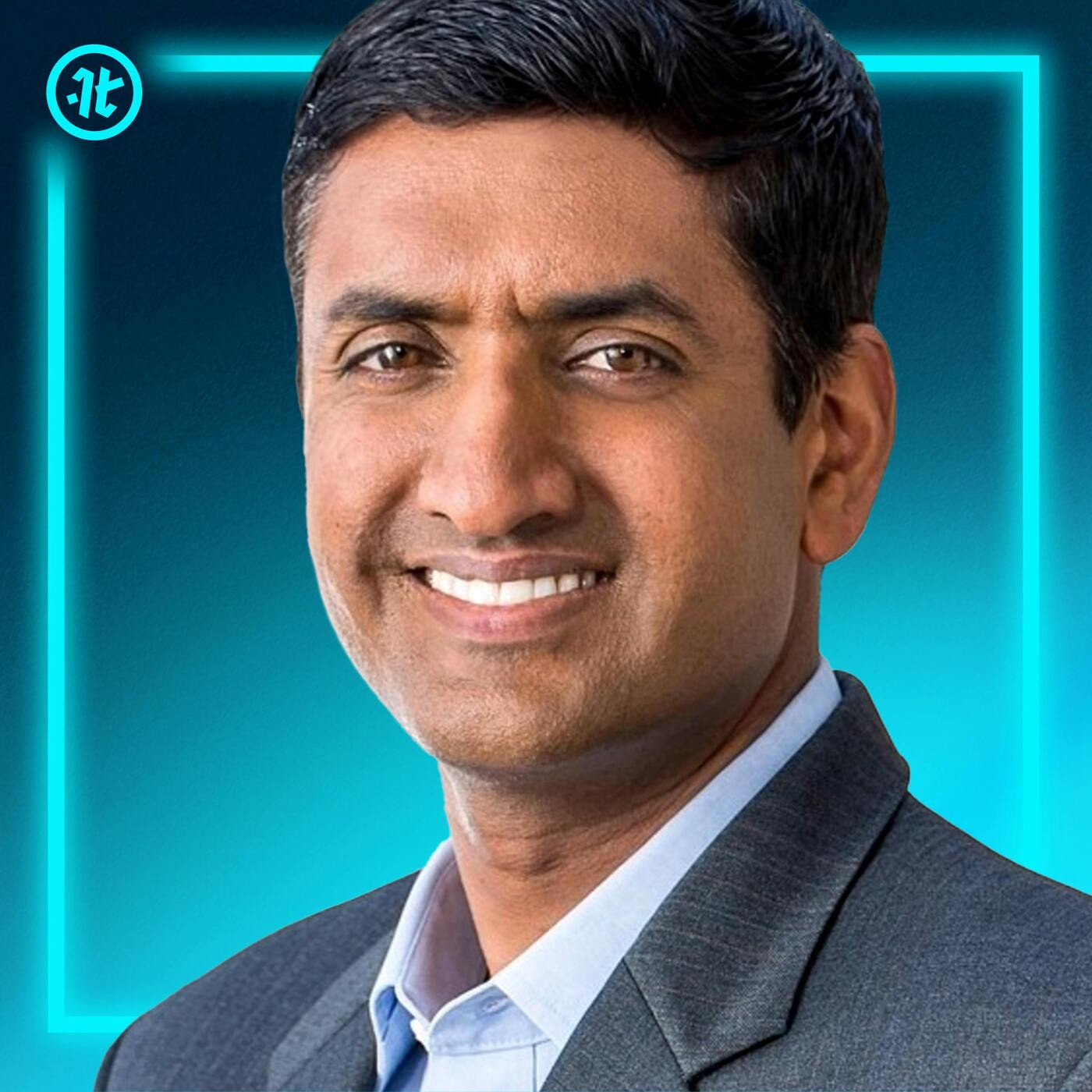
Tom Bilyeu's Impact Theory
From Declining Middle Class to Economic Patriotism: Solutions for America’s Future Ro Khanna Part 2
00:57:41
Loading summary
Transcript98 lines
- [00:00]
Commercial Announcer
With Vrbal's last minute deals, you can save over $50 on your spring getaway. So whether it's a mountain escape with friends, a family week at the beach, or sightseeing in a new city, there's still time to get great discounts. Book your next day now. Average savings $72 select homes only. When you manage procurement for multiple facilities, every order matters. But when it's for a hospital system, they matter even more. Grainger gets it and knows there's no time for managing multiple suppliers and no room for shipping delays. That's why Grainger offers millions of products in fast, dependable delivery, so you can keep your facility stocked, safe and running smoothly. Call 1-800-GRAINGER Click grainger.com or just stop by Granger for the ones who get it done.
- [01:00]
Tom Bilyeu
I'm Tom Bilyeu and this is Impact Theory. Welcome back to part two of my incredible conversation with Congressman Ro Khanna. Without further ado, I bring you Ro Khanna. I'm very eager to see people not accumulate debt. So the four year college degree thing to me is just a question of, well, can you do it without accumulating debt? If you can, great. If you can't, probably a terrible idea. But let me put forward a radical idea that I've never said out loud. I want to see what you think about this. If you want to fix education, acknowledge that you live in the age of AI and hire basically hall monitors, effectively babysitters to sit at the front of the class. A very limited number of them, but let's say one for every 10ish students. And then they just interface with AI all day. And you, you give each school a budget to buy their AI system and then you just let the AI systems compete for who outputs the best students. And that alone would be so much cheaper and so much better than what we do now that we should do. It would. It is immoral to not do that. I'll go that far.
- [02:14]
Ro Khanna
Here's why I disagree with it. Not now. I'm not saying that we shouldn't use AI as tools to supplement teaching, but when I think of the teachers, and I'm curious when you think of your teachers, who had the biggest impact on you? I don't remember the details of what books I read in 9th grade English and I probably don't remember the details of the history I learned in 10th grade social studies. But I remember Mrs. Robb believing in me, encouraging me to write, challenging me to write. I remember Mr. Longo pushing me to care about public service, to love public service, to develop my ideas. And I think that so much, yes, they're the hard skills. I'm not going to say that they don't matter. But to get someone to be good at those hard skills, you've got to give them purpose. You've got to give them a sense of why it matters. You got to get them to love things. And I think that is not AI, that's emotional. I had this conversation with Jensen Huang at Nvidia, and I said, do you think AI is going to really displace jobs? And he said, yes, it's going to displace jobs. But, you know, I spend most of my time as CEO of Nvidia setting goals and talking about resilience and inspiring people. And I just think that, that human quality is ultimately the most important in success. I imagine it was the most important for you.
- [03:37]
Tom Bilyeu
So I love that. And that's why I'm saying you want more people in the classroom, not less. But you just want to make sure that we accept that the question has been asked and answered. Is it a good system to expect each individual, each new generation to go and train themselves to death and then go in and teach? Or are we better off with AI, which has been trained on the entire corpus of human knowledge and gets better every day and will most likely on acute tasks like history or whatever, always outperform an individual human? You put them in place to give the instruction. Right. This experiment's being run right now in schools in Texas where they're having the kids spend two hours a day with tailored. Because that's the thing. Even if it's one, AI can still tailor its rate of progress to that exact student. And with two hours of AI instruction, those kids are, like, outpacing their classmates that aren't using AI by, like, tremendous degree. It's. It's really incredible. And this is going to be the
- [04:40]
Ro Khanna
birth of something beautiful, you know, because I, I certainly am always a data person and want to look at what we can do. And my, my. I'm. I'm not a. I represent Silicon Valley. I'm not a Luddite or someone who says that let's not use AI. Certainly, it's powerful tools. And I think the question is, how do we. How do we blend the, the uniqueness of teachers going all the way back from Socrates onto the teachers you and I had with the tools of technology?
- [05:07]
Tom Bilyeu
Yeah, I, I agree. So I want to see humans in the class, and I want to see them be people that can inspire a child to dream bigger. To want more, to not be an indoctrination engine, or if we're going to indoctrinate kids, which we are, inevitably, that we have a nationwide curriculum from an indoctrination perspective that everybody agrees on. And it's just real basic. For me, it's a growth mindset. Just take everything Carol Dweck has ever taught and just be like, here it is. This is the,
- [05:40]
Ro Khanna
you know, one of the things I was just in China that I think we do so well in America to your freedom point is we love to challenge, right? Even, you know, you, you could be an administrative assistant or a CEO in this country and you perfectly can say that the president is someone you think is utterly wrong and, and believe that your opinion matters just as much with fervor and certainty. And it's not just that you have the freedom of speech to do it, you have the self confidence to do it. One of the things I used to do as a student is I used to love arguing that my teacher was wrong about something and that now I argue that people may be wrong. And it's given me an ability to challenge the system. And so I feel like that you don't want it to sanitize, right? Like, are you going to say the AI is wrong or you want to make sure people are developing a spirit of challenging the system, questioning authority, taking risk. And I think, I know these things seem soft and we definitely need to get our math, reading and technology skills up. But I think it's actually what makes America exceptional. I think it's why I am very bullish on the American experiment long term.
- [06:50]
Tom Bilyeu
Yeah, I could not agree more. It's one of the things that makes me very nervous about what I see happening in America culturally, which is a move to a very socialist stance of like, we want to make sure that everybody's outcomes are the same. You said what you believe, which is you want to make sure that people have the same opportunity that you had. And I think that is absolutely critical. I think it's immoral to do anything other than that. But from the perspective of God, the universe, whatever it is that you believe in, has seen fit to give us different talent, intelligence. And so there's always going to be different outcomes. So having the ability to take a swing to think that you're right only works if we're going to allow the marketplace to slap you around and say, nope, you're wrong. And right now I believe that America has lost the stomach for letting people fail and to make sure that we catch everybody we are robbing us of what you're talking about, which is, all right, guys, we're going to make sure that you all get educated. All right, guys, we're going to make sure that you don't have to worry about your health care. However, after that, this is going to be a question of your talent, your intelligence, your discipline, your hard work. You've all got access to the AI. You've all got access to the healthcare. Let's go. But some of you are going to get rich, and some of you guys are going to crash and burn. And by the way, some of you are going to be lazy as hell. And, and you're not going to do anything. You're not going to develop yourself. No beef. But then we're going to get a very uneven distribution of outcomes. And I really think we have lost the will for that. And there is, and I think it comes from things have gone so well for so long that people think that amazing outcomes and growth are a law of nature. Not realizing it is tied to exactly one thing. And that exactly one thing is entrepreneurship. There is nothing else. Uh, it's the only thing that generates jobs. It's the only thing that generates taxable revenue. Like it is the whole game. It's the thing that is innovation itself. Like it just. That is the thing. Uh, and we're losing sight of that to our detriment. Uh, and I see, I'll. Let's call it the AOC Mamdani Wing as representing that. And that one really scares me. Like, I look at that and I go, ooh, this doesn't work.
- [09:19]
Ro Khanna
Let me ask you this, though. You know what they're speaking to is the 70% of Americans who have lost the American dream. And they're saying, look, we can't afford our housing, we can't afford rent, we can't afford health care. And I agree with you on the entrepreneurship and the innovation, but don't you think some of the issue was people being subject to forces well beyond their control, that the shop owner in rural America who couldn't compete with Amazon didn't know that wasn't that he or she didn't work hard. The factory worker that couldn't compete with China or Mexico, it wasn't that he or she couldn't work hard. The small town that couldn't compete because all their kids were leaving for Silicon Valley or Seattle, it's not that they couldn't work hard. And so there have been so many forces of globalization, automation that have hit the economy, that a lot of people are saying we did everything right. You know, we worked hard. Yeah, we're not entrepreneurial. I mean, not everyone can start a business. That's why 1 or 2% of people in this country do that. I don't know, maybe it's a little bit more. You would know the statistics. We didn't put everything in our job. We had pride in our job. And then we wanted to support our family. We wanted to go to church, we wanted to coach Little League. And our grandparents did that, our parents did that, and we couldn't do it. And now we see no possibility for kids doing it. And it's not because we're not working hard. It's because the system screwed us. And I really think that's a large part of what explains whether it's Trump, whether it's Bernie, whether it's asc, it's this righteous anger at a system that people feel has failed them. And even if they're willing to work hard.
- [11:08]
Tom Bilyeu
Taking a short break. But there's more impact theory after Stay tuned.
- [11:13]
Commercial Announcer
When you manage procurement for multiple facilities, every order matters. But when it's for a hospital system, they matter even more. Grainger gets it and knows there's no time for managing multiple suppliers and no room for shipping delays. That's why Grainger offers millions of products in fast, dependable delivery so you can keep your facility stocked, safe and running smoothly. Call 1-800-GRAINGER Click grainger.com or just stop by Grainger for the ones who get it done. When you manage procurement for multiple facilities, every order matters. But when it's for a hospital system, they matter even more. Grainger gets it and knows there's no time for managing multiple suppliers and no room for shipping delays. That's why Grainger offers millions of products in fast, dependable delivery so you can keep your facility stocked, safe and running smoothly. Call 1-800-GRAINGER Click grainger.com or just stop by Grainger for the ones who get it done.
- [12:14]
Tom Bilyeu
Thanks for staying tuned. Now let's get back to it. You and I are in violent agreement about that. So that's why we started the interview where we started it. I want people to understand it is not unknown forces. It is. It is a force. I can walk you through it over and over and over. It is. I'll oversimplify again, but it's debt and inflation that that is what's robbed you of this. If you make homes unaffordable and then put people in a position where you are creating inflation and the only way to Hide from inflation is to own assets and the only asset you understand is a home. And that's unaffordable. You are saying, I, the government am going to put a boot on your face and I'm going to stamp on it forever and that's it. Like it. I really want people to understand that is what has happened. And so now the question becomes how do we undo that? Now you're one of the few people that I really hear banging the drum eloquently. And so I want to just amplify this as much as possible. You've, you have talked about this as economic patriotism. We need to get people to understand you've got to bring some very meaningful percentage of manufacturing back to the United States. An absolute must for a whole host of reasons. By the way, national security being one of them. Thucydides trap. If people don't know it, look it up. It's a very real thing. China's going to be a real, China is a real thing. So you're preaching to the choir. Amen, brother. Like keep going with that. But getting people to understand nothing, nothing comes even close to matching. As long as the government is deficit spending, your neck is being stepped on. And if we don't stop deficit spending because of the, the physics of the economy, you're in a, just a horrible position. Now there are things I think thing number one, stop deficit spending. Thing number two there it's so simple to make houses more affordable, which is, that is free market, baby. Let builders take a risk to go build a whole bunch of apartment complexes in that neighborhood that you really don't want apartment complexes and they will find that balance. Like if you look at, there are
- [14:37]
Ro Khanna
several places, I agree with this in terms of we got to double our construction of housing in this country. I mean that, that, that to me and I, I think there's more and more recognition in California. We messed that up. I mean for until now. I mean now finally Scott Wiener and had a bill to say, okay, let's have more, more housing. But look at my district in Silicon Valley, prime example. You got $5 trillion companies in the, in the place that have arisen in the last 20 years, 25 years. And yet the place from a housing perspective still looks like the Valley of the Hearts Delight with orchards. Like you can't have that. You can't have the most economic activity in the world and housing growth be, be restricted. And so it's not a surprise that you have all these multi millionaires now bidding up the housing prices. So that the working class can barely, can't live there. And I do think that the debt and inflation is one of those causes. But restrictive zoning has been another reason. And the fundamental income inequality I think is also a reason if you're, if you're living as a plumber or as a teacher and everyone around you is working at Google as an ad stock. And it just so happened we had this tech boom, well, you know, that makes it hard to have housing be affordable.
- [15:58]
Tom Bilyeu
I totally agree. And so the good news is you're being very specific. And once something is specific, then we can look at the cause and effect and we can say what exactly do we need to do? For people that don't know yimby, it would be, yes, in my backyard. So nimbyism, which is the thing that you'll hear most commonly is not in my backyard, meaning, yeah, yeah, yeah, you can go do it somewhere else, but don't build those apartments in my neighborhood. So I think that there's a lot of things that we could do with that to make sure that we're getting more housing. Houston is a great example. Houston just says, yeah, it's easy to get a building permit, no problem, go do your thing. And because of that, housing prices in Houston have been ridiculously stable. And so people that want that number to go up, yeah, they're bumming because it's just sort of a steady across line. But it does mean that people can actually get onto the property ladder. And again, given the need to get on the property ladder, to have an asset that you understand you gotta do it. It's one of those, like I keep coming back to. The government has certain moral obligations. One moral obligation would be to give people access to a home that is affordable for, call it the median income in the country. So it's like, bro, you can't put people in a position where they cannot get into assets unless you're prepared to not inflate the currency. So you can't both inflate the currency and make it impossible to get into an asset. So pick your poison if you want to reharm the currency.
- [17:28]
Ro Khanna
I, I agree with you on the Houston permitting and building and I, from the things I've read that Houston has been better than some of the places in, in California on that. Would you do anything more though? Would you? You know, some people, for example, say for first time homebuyers at a certain income level, help them with their down payment, lower their interest rates at 2 to 3%. Other people say no, you know, if you do this too much, you're going to create a bubble. And that at its extreme, is what led to the 2008 crash. I mean, where are you and how much do you help beyond building people get into home ownership, I'll come down
- [18:08]
Tom Bilyeu
to cause and effect on it. So if somebody can show me that, hey, the government getting involved can really do something, if the program fits these metrics, I'd be all for it. My gut instinct is it won't work. When the government gets involved, they do create bubbles. They create distortions. They give rents to the wrong people. Housing developers know, oh, I know you're going to be able to get a loan for this amount. They'll know that loans get handed out in certain bands. So they're only going to build houses that match those bands or they're only going to price houses in those bands. Like it creates distortions. In the market. It is probably much better to make sure that everybody's getting their education, that we're not inflating the purchasing power of their dollar away, that we're not sending all of their jobs overseas, that we're not importing cheap labor. And then we say, okay, and now we're relaxing some of these restrictions so that the people in the local market who are capitalists, who are just trying to. They're going to take a risk and they're going to say, I can build a better house than the next person. I can get better loans than the next person. And so I'm going to win in this housing market. And you let all those guys compete with each other. Some of them are going to go out of business, are going to go bankrupt, and the buyers will get to take advantage of that jockeying and that competition so that when you're uncertain about something, letting the free market do its thing is almost always the right answer.
- [19:34]
Ro Khanna
We're, we're in the. I mean, I would on housing, I agree on the doubling the housing construction, I agree on expediting permitting for building. But I do think we need to stop sort of private equity subsidizing private equity to be buying single family home.
- [19:48]
Tom Bilyeu
Yeah, stop, stop ridiculous competition where you're letting people just gobble that stuff up or have some sort of progressive system where it's like, all right, if you want to buy that third house, like, go for it, but damn, like you're paying some crazy like tax or whatever facts like a consumption tax, where it's like, oh, if you want to get into that thing, like we, we are trying to save, let's make no bones about it. We are trying to save these houses for first time home buyers. And so if you're a third time home buyer, they're going to be like just, you can do it because fine, having 50% tax or whatever is great. We can do amazing things with that. So that kind of thing, I have no problem.
- [20:33]
Ro Khanna
And that's an interesting idea. I didn't even thought of it. Maybe I'll have my team look at that. But a consumption tax, whether it's for private equity or second or third, third home and then some, some sense of, in my view of well crafted program for first time homebuyers. But. Well, let me ask you this on a broader philosophical level. Most people think sort of the New Deal, the GI Bill, when we came back to the United States. Well, let's start before that. Europe didn't allow everyone to go to high school. High school was an elite thing in Europe. 20, 30, 40% of people went to high school between 1910 to 1940 in Germany, in France, in England. The United States had no high school for everyone, public high school for everyone. It helps us become the dominant post world war economy. We make that bet and then we have the GI Bill and we say, you know, we're going to help people who served in the war get housing, get education, and that's credited for our economic development. Are there fundamental things that you would say in the last hundred years or last 50 years that the federal government has done really well or where you say, yeah, that is something that is foundational to the American dream? Or are you, are you just deeply suspicious of the, the federal government? And, and if so, how far back? I mean, where, where do you think? What are the programs that you think the federal government should have and is doing? Well?
- [21:59]
Tom Bilyeu
Well. So again, if I go back and look at the results, then it is undeniable that the setup Post World War II was amazing. So we had the incredible baby boom that we had. Baby boomers really came in to like some good stuff for a reason. Thanking our troops, honoring their service. You're always going to get big applause from me. So doing a GI Bill and saying, hey, thanks for risking your life to protect our freedoms. Yes, we're going to make sure that you get educated and all the other benefits. Love that. Totally here for that. So when you look at that boom period, some of it is demographics and that becomes very, it becomes impossible to replicate. But nonetheless, they made some really good moves there. I'm also very impressed with what the US did to establish itself As a reserve currency. The. Even though I absolutely despise and think that it. Evil is probably the right word, though. Everything's a trade off, so there are certainly upsides. But in 1913, when we passed the Federal Reserve act, we did people all the dirt of inflation. So I don't love that one. But we. We made America. America is amazing. So my thing is, you and I are exactly the same age. We were both born in 76. And I'm like, yo, growing up in the 80s was dope. Being 12 in 1988 was dope. I believed I could become anything I wanted to. I have so many memories of, like. Because the easiest way to explain how I grew up, I didn't have cows, but my neighbors did.
- [23:39]
Ro Khanna
Where did you grow up?
- [23:40]
Tom Bilyeu
Tacoma, Washington.
- [23:41]
Ro Khanna
Okay.
- [23:43]
Tom Bilyeu
So I was almost rural. And even being that kid, I was like, I can be anything I want. This is amazing.
- [23:51]
Ro Khanna
You did pretty well.
- [23:52]
Tom Bilyeu
You did pretty well. Extraordinarily well. And so I want everyone to have that same feeling. I don't expect everyone to actually win. To your point, not everybody wants to be an entrepreneur. It's very stressful. I don't recommend it for everybody, but I want people to believe, okay, the game is not rigged against me. It did not feel rigged against me when I was a kid. And right now, it is provably rigged against people. So I feel like we had a great run there for a minute. The debt accumulation caught up to us. We made some very troubling decisions with letting the government basically back a lot of loans in housing, back a lot of loans to students to get educated, and. And that came home to roost. And so there are obviously other issues, but, like, you start stacking those things up and it. It starts getting bad. But I. Dude, I'm the most patriotic guy you're ever going to meet. Like, my mission is literally to get people to feel the way I felt when I was 12 in 1988. Like, I want.
- [24:54]
Ro Khanna
I know you're not. We share the same aspiration. We share the same kind of hope about America. Right. Even though we have such different backgrounds. My grandfather spent four years in jail alongside Gandhi fighting for India's independence. My parents are immigrants, but I grew up in Bucks County, Pennsylvania. 99. White, Indian, American, Hindu faith. Going to Phillies games at the 700 level at the vet, watching Rocky movies, believing you could do anything in America. And then this country elects me to represent arguably the most innovative place in the world at the age of 40. Obviously, you can't have a story of like, mine. And. Or like yours, and not believe in the American experiment. And it pains me that the country my parents came to, the country I grew up in, that there's not that same confidence, there's not that same hope, there's not that same spirit. That's what I want to invoke and to build in this country. We're both doing similar work from different angles and perhaps different ideologies. Who do you think putting you're not political, but is there a president in your lifetime who spoke to that, who you said, you know what, that's the, that's the direction I want America to go. Or have you just been. Think that we made mistakes over the
- [26:06]
Tom Bilyeu
last 50 years, 90s Clinton, minus the blowjobs, like that. You had me at hello. That felt dope. Like when it was happening, it felt awesome. Now behind the scenes, I'm sure in terms of presiding over what was going on with China and all of that, that there mistakes obviously that we would look back on. But being fiscally conservative, ironically as a Democrat, dope building the. I mean they were basically saying doji things. Back in the 90s.
- [26:37]
Ro Khanna
Yeah, reinvented government. 300,000 federal workers were either, you know, reassigned or let go in terms of. But it was done with Congress. It was Al Gore's reinventing government. And the challenge with this Doge thing is they were like, oh, we don't have to work with Congress. We can just do whatever. And they didn't really do much. I mean, in terms of the actual.
- [27:01]
Tom Bilyeu
Here's my whole beef. This is a populist moment. And in a populist moment, there are very predictable psychological things that are happening. And those psychological things are. There was a cross cultural study done that showed if people, in times of wealth inequality, if people can vote for something that will help the poor, they won't do it as readily as they will vote for something that punishes the rich. So if they have two. If they have two. And this is cross culture. You know, I got to say something.
- [27:38]
Ro Khanna
I gotta interrupt here because you're so spot on. There was a study about when Elizabeth Warren would talk about we can have childcare at $10 a day or whatever. I mean I. For that. And then she'd say, and we will tax the wealthy to do it. That the collapse would be more for taxing the wealthy than for the. The program. So it's interesting, that study. That's fascinating.
- [27:59]
Tom Bilyeu
Yes, it is heartbreaking because this is the thing that's driving us apart. So my whole, my whole mission is to Pull people back to the middle. You have to be in the middle no matter what. These are our countrymen, these are fellow human beings. We share geography. We've got to understand you're going to compromise. I don't care what side you're on. Just like I compromise with my wife even when I think that she is just not looking at the world the right way. And she compromises with me when she thinks I'm not looking at the world the right way because we're married. And so it's like we don't want to self destruct. So anyway, I'm trying to get people back to the middle, but, um, the way that we're going to get there has to be grounded in what is real. And in a populist moment, we have to recognize what is real is that people want to punish the wealthy more than they want to help the poor. And when you understand that, all of a sudden the voting and the cheering and all of that, it all starts to make sense.
- [28:56]
Ro Khanna
But do they want to punish the wealthy more or do they want to punish society's enemies? So, you know, Trump comes in and says it's not just the wealthy. He blames China, he blames Mexico, he blames immigrants, he blames trans kids, he blames that, that they villain of some kind. And you could say my party says that the wealthy should pay more. And maybe, maybe it's punitive, but there's a populist, right, that is also looking for things to blame 100%.
- [29:25]
Tom Bilyeu
So who's the villain? This is why people always talk about, you know, if only we could have an alien invasion and then we could all be united being against the alien. I don't know if you've ever read it, but there's a comic book called the Watchmen. And spoiler alert though it is like 40 years old.
- [29:43]
Ro Khanna
So are you a big comic and all that stuff?
- [29:48]
Tom Bilyeu
Ro? I, I am a big believer in the power of myth. And so what you see behind me are some of my favorite myths.
- [29:56]
Ro Khanna
Someone once told me asked me that a young guy to like, extract to explain the difference between the Justice League and Avengers. And I started going down the rabbit hole on chat GPT and I can tell you I, I can talk for two hours on economics, but I was just, I was confused. I left, I left not being able to piece that, that together. And so I've given up on that, on that goal.
- [30:20]
Tom Bilyeu
That's hilarious. Yeah, I think it speaks to a certain personality type. It's definitely not something I expect everybody to get into. But it's. Humans are meaning making machines and we tell ourselves stories as ways of transmitting a whole lot of very important information in an emotional fash passion that's easy to remember. That's why religion works. That's why Star wars works. That's why the story I was talking about with the Watchmen works. And in that story, basically a guy fabricates an alien invasion to try to bring people back together. And it's, it's a very fascinating story and it's a very big question as to whether he was a villain or whether he was somebody actually saving America. It's, it's. Or the world. It's very, very fascinating. So, yeah, we, we have to be very careful right now. People want a villain, they'll get a villain no matter what. And so how do we talk people down now? For me, Mom, Donnie is a villain.
- [31:24]
Ro Khanna
Really?
- [31:24]
Tom Bilyeu
And
- [31:26]
Ro Khanna
have you met.
- [31:27]
Tom Bilyeu
Yeah, yeah, that's. This is the part where I wanted to talk to you the most. Very sensible, very smart man.
- [31:34]
Ro Khanna
You know, I've endorsed him. I've gone to campaign for Abigail Spanbergers running for governor of Virginia. I've gone to campaign for Mikey Sheryl, and I'm going for Mandani November, November 1st. So I, you know, all cards on the table, I'm supporting him. So let's. Let me ask you why you. Why you feel that way?
- [31:53]
Tom Bilyeu
Because I'm going to recommend policies. Good.
- [31:56]
Ro Khanna
Well, I. Would you be open to having a conversation with them or that's. No. Yeah, yeah, of course. Let's have a conversation. Let me. Let. Tell me why. Let me tell you. Let me make the case for Mamdani's rise and you tell me where. Where you have the strongest objections. Mamdani says, look, New York, we think of it as Goldman Sachs and Broadway and finance. But you know, the real people building New York City are the. Are also the construction workers and the cab drivers and the bodega owners. And costs have gone skyrocketed for them and they aren't being appreciated. And I want a New York City that's for young people and working people and that celebrates it as much as for the billionaires who are making the financial engine of the United States and country work. And I really think he galvanizes folks on that. And then he galvanizes folks on, of course, the Israel Palestine issue, which we can get into if you have an opinion on. But those are the two things I think animating his campaign.
- [33:06]
Tom Bilyeu
We're hitting pause for a moment, but there's plenty More ahead. So don't go anywhere.
- [33:12]
American Express Announcer
With the American Express Platinum card, I can unlock experiences like no other since I'm always booking my next trip. I love that I can earn points on travel. Plus I get a resi benefit. So you know, I'm hitting the restaurants everyone's tied, talking about. And you can find out your welcome offer after you apply, which could be as high as 175,000 points. For experiences like no other, there's nothing like Platinum. Learn more@americanexpress.com Explore Platinum Terms apply.
- [33:43]
Tom Bilyeu
Thanks for sticking around. Let's get right back into the action. Yeah, so the part that you just represented, I'd be like, yo, this, he's my guy. Who's this guy? I gotta meet him. Like, this is what I'm about to. I love that. I love that he's honoring hard working people that really are helping build the city. And there's no doubt about that. But once if you try to map what he's actually talking about from a policy perspective with the words you just said, you're going to be very confused because it's like, wait, but the things that you're going to do are going to hurt all of those people. And once you map him from, oh, you're tapped into the resentment of all of those people and you're the populist leader who's going to promise the socialist things that lead to first, just the destruction of the economy, but after the destruction of the economy, it leads to death. And I am, I'm not a scholar, but, ooh, am I getting close every day to being a scholar of the atrocities of the 20th century led by Marxist thinkers. And he embraces a very distressing number of their ideas. And so I'm just like, he's going to hurt the very people he propose, purports to want to help. And so he only makes sense when you think of him as somebody who resents the wealthy far more than he wants to help the poor.
- [35:09]
Ro Khanna
But what about if we're in a FDR like moment in this country? You know, we've gone in income inequality from 53rd in the world to 128th. We've got extraordinary wealth generation, you're a example of it, through hard work, through entrepreneurship. And we've got a lot of people for struggling and for reasons that you've discussed in terms of debt and inflation. And we've discussed in terms of globalization and automation and the decline of unions and the neglect of rural and factory towns and the working class. And what if Mamdani is saying we need a correction to this capitalism. And you know, FDR and his coalition at socialists, and FDR had saved basically capitalism from itself. And if what we need is to take seriously the critiques of capitalism, of unfettered capitalism, to have our own vision of a free enterprise system that is going to work and reduce some of these inequalities, I call it progressive capitalism, moral capitalism. I imagine you would have at the central premise of that, reducing debt. But even if that's not my central premise, what do you just think about the goal of capitalism? Correcting itself among the money, pointing out that it must correct itself or we're going to have massive resentment.
- [36:32]
Tom Bilyeu
So the way that I approach all of this is from cause and effect. So economies have physics, and when I hear somebody go, okay, we want to, we want to get to Mars, and we have tried everything and nothing has worked. And so, guys, I'm telling you, we got to point the rocket down. I'm going to be like, hey, I understand you want change. Hey, I get it. Things aren't working. Heard we're totally on the same page. So. But pointing the rocket down is the only thing guaranteed not to work. And so this is where I always ask people to read a series of books which will make clear exactly what happens when you try these policies. Oh, and by the way, so I'll list the books in a second. You don't have to go any farther than the 70s and 80s in the Bronx. His very policies, the very things that he's saying that he wants to do now have already been tried. So my number one lesson to entrepreneurs is, oh, cool, you're about to do a thing. The number one question to ask is, has anybody tried this before? And if the answer is yes, go find out what happened.
- [37:39]
Ro Khanna
Because what about on free buses?
- [37:42]
Tom Bilyeu
Right?
- [37:42]
Ro Khanna
His point on that is a lot of the people on these buses aren't paying their bus fare anyway, and it's kind of a deterrent to some. And so if you made it free, it's something that the city can afford and makes public transportation easier. It's not a huge revenue loss. I mean, is, are you, are you opposed to all his ideas or are they specific ones? And I don't, you know, I mean, I obviously have my own platform and want to be accountable for my, my ideas. And I work with Mamdani, I work with Massey. I sort of trying to build a unique coalition of what the time requires. But I, I'm curious, obviously his, he, he. Does his platform concern you more than Donald Trump's platform.
- [38:27]
Tom Bilyeu
His platform does concern me more than Donald Trump's platform. But Donald Trump is doing his best to make me more concerned with every passing day. So
- [38:38]
Ro Khanna
do you vote for Trump?
- [38:40]
Tom Bilyeu
For sure. When, when Trump did the big beautiful bill, he lost me. So, yeah, any. Anybody that's trying to map me is like, oh, my God, I love Trump so much. They're always going to be confused.
- [38:54]
Ro Khanna
You're an independent thinker and you're not political. I'm just, I'm, I'm asking him more. One of the things I've loved about this conversation is it's sort of intellectually open and curious, which I think we don't have in our politics. I'm asking him more, as you know, you would, as a friend over dinner, not, not. And trying to. Oh, you're a Trump supporter.
- [39:10]
Tom Bilyeu
Yeah. So the talking about Mamdani, specifically the. Even if I map him as like, no, he's really well meaning. If he's well meaning, he does not have any historical context. So to the bus thing, one thing you learn as an entrepreneur very fast is every division needs to be a self sustaining economic engine of its own. Why? Because anything that can't output something that is more valuable than its inputs, so the labor costs, the parts, the whatever it tells you, the world does not want that thing. And so when you use other things to cover the losses from that area, you're really just doing an emotional thing. There's no logic to that. The world has been asked and has given you an answer as to whether it wants that thing at that price. And the answer is no, I do not.
- [40:04]
Ro Khanna
But they're public goods, right? I mean, we have public schools, we have public health. I mean, there are public goods where we don't take that. That view. Public record,
- [40:14]
Tom Bilyeu
sure. So when you're talking about something like the roads, you're saying, okay, everybody, we've got all this infrastructure, we are going to be taxing people and then we're going to efficiently deploy that to build the things that we think are going to give the maximal output. And what you're running into is, okay, we have an unbalanced budget. Because if you have a balanced budget and you just want to say, pick anything, we want to make buses free, we want to make ice cream free, Whatever then matter, because you've got a balanced budget. And that's the thing you've decided that you want to allocate funds to. And people can argue, no, no, no, I don't want buses for free. I want taxis for Free or I don't want ice cream for free, I want the subway for free, whatever. And then I think most people go, well, the subway, the buses, those are better because more people can move around from. It'll open up job opportunities and things like that. And you'd hear me be like, yeah, that's way better than ice cream. When you have an unbalanced budget. Then I'm like, hold on. You have to figure out why this thing is not able to make money in and of itself. And so I have a feeling you're going to come down to your housing is the problem. And you need to address housing. You need to make housing affordable. So I think a big problem that I'm going to have with mom Donnie is that he is speaking to people's emotions. And I unfortunately, I only care about emotions in as much as to get people to do the right thing. You have to meet them where they are. So they have to understand that you get how bad things have gotten for them. But then you've got to walk them through what's actually going to solve the problem. Mamdani, in my opinion, is on the Civil War revolution path. So if we follow his policies, well intentioned or not, they end with more deficit, they end with violence breaking out. Keep in mind, every country except Japan that has ever been over 130% debt to GDP for more than it's like 18 months has ended up in open conflict. So I think given we're already seeing political assassinations, we're already seeing riots, we're, we're not going to be Japan, we're not going to be the next country that can stay over 130%. We're at 122%. So I think he's got the most energy in the Democratic Party. So I don't look at this and go, oh, but it's isolated to New York. I go, no, no, this is where the country is moving. This certainly is where the Democratic Party is moving. And through the physics of the economy, this becomes a problem.
- [42:31]
Ro Khanna
So what would you do? And so let's say Mamdani now wins, is a reasonable guy. He says, okay, what should I do to bring down housing costs, grocery costs, busting because you know, he can't deal with the federal debt. That's out of his hand. He's mayor of New York. What would you tell him to do?
- [42:47]
Tom Bilyeu
Okay, so one, I want to make clear if he becomes the elected mayor of New York, I want him to do well. I want him to succeed. I want him to make life. No, no, no. This, this is like the most atypical thing for somebody to want most people. I just said he's a villain. So if the villain gets elected, I still want him to win for New Yorkers. So let's start there. So I would come with sincerity and say, all right, listen, man, this is all about cause and effect. This is all about physics. So if your deficit spending, you're going to have a problem. Please look at the Laffer curve. There's only so much that you can tax people before they leave and you actually end up taking in less tax. The US post World War II had a 90% protect progressive tax rate. We collected less tax per taxpayer than we do now per taxpayer. So it isn't a winning solution. So let's be very careful. But hey, if you've got ideas and you want to tax people a little bit more because he's saying, look, it's only 2%. Okay, Rad. So 2%, I think it's livable. I don't think you're going to see a ton of flight. But if they're seeing things play out poorly elsewhere, they're seeing they're not getting a return on their investment or they see that you're. That's really just a Trojan horse. You want to do more, you've got to be very careful. So number one, hey, I'm sitting in the lobby of your office. Just to get one thing across. Make housing affordable. Make it affordable. Don't do rent control. It will make it worse. You need only look at The Bronx, literally 70s and 80s Bronx, baby. We tried exactly this. It doesn't work. So we both agree we want to make it cheaper. Don't do it through rent controls. That would be like. If I was going to give them one thing across the board, it would be that.
- [44:25]
Ro Khanna
But my understanding is New York, like half departments already are rent, rent controlled
- [44:30]
Tom Bilyeu
or like the problem. That's why it's too expensive. But I'm saying the very thing he's railing against, he's right to rail against it. His solution is the only thing that's going to make it worse.
- [44:43]
Ro Khanna
I think if the point is that we need to build more housing in New York, I think he could be open to it. My sense is that, you know, he's been open to the abundance agenda. I don't know if you read sort of Ezra Klein and Derek Thompson's book, but they've been talking about we got to build more, we got to have expedited permitting. So I don't think he'd be, it'd be out of the question for him to support that. As he talks about the rent controlled apartments that already exist, he doesn't want their rent to go up. And that, that I think is, you know, Blasio I think did it three years or something. I mean it's already in place in New York. But I, I hear you that you know his challenge, I think he's going to win the election. I think his challenge will be okay. Now, how do we in the next year really show in New York City that costs are going down? Because it's, it's governing is very different
- [45:30]
Tom Bilyeu
than campaigning, as you well know. Yes, that, that is a very big thing. And so that brings us to the other part is the DSA is hyper toxic in my opinion. And part of the reason it's hypertoxic is they reject ideas that I think are evolutionarily placed in us. And the easy one to round to is the family. And they held an event where they were talking about abolishing the family. And this is in the last like six months.
- [46:05]
Ro Khanna
So I didn't, I didn't see that.
- [46:07]
Tom Bilyeu
Oh God. It, it might have even been the new. Yeah, yeah, yeah. It might have even been the name of their meeting. So it won't be hard to find. But. So I don't know how much he goes in on that kind of thing. I would have to see that play out over time. But I would want to see him bring people together in the middle. I want that of every politician. This is my huge complaint with Trump is he's constitutionally incapable of bringing people back together in the middle. Which is wild because he's, he's bringing people together. Yeah. Internationally he's. But I think there it works because it's just carrot and a whole lot of stick and that's not going to work with your own populace. Or maybe it will and I just am blind. I don't know. He strikes me as the wrong person to help us find the middle in America.
- [47:00]
Ro Khanna
So what is your advice to someone like me who works with mass. He was kind of. Obviously I've got a progressive capitalist view. There are places where you disagree with me on wealth tax or maybe Medicare for all. There are places you may agree with me which is that we need to support entrepreneurship, innovation, we need to create economic opportunity in places and for people who haven't had them. And I'm building this coalition where I'm supporting mamnani, I'm supporting moderates like Mikey, Cheryl, Abigail, Working across the aisle with people like Massey. What as a citizen would say, you know, I don't agree with Ro 100% but I, I can see being supportive of his efforts where my real goal is to try to figure out how do we bring this country together. And Mamdani speaks for 30%, at least in the Democratic Party and Massey speaks for a percent and Marjorie Taylor Greene speaks for a percent. I mean, what would you want to see from someone like me? Even where we have ideological disagreements lead
- [48:01]
Tom Bilyeu
them to the physics, so follow the money. How does this actually work? It really is the economy. Everything's the economy. So what people are actually lamenting is the economy. I can't afford the things that I want. I don't think my life tomorrow would be better than it is today. And I don't think my kids lives will be better. Oh, and by the way, I don't even feel like I can afford kids. So.
- [48:22]
Ro Khanna
Yeah, I mean, the same exact diagnosis of the problem. We have a very similar read on the cultural challenge of America. We have a very similar read on the aspiration of America and we have very similar life experiences being the same age. And you know, I think you would embrace economic patriotism and making America dynamic and humming again. And I think it's the mechanisms, your cause and effect, it's the specifics that, where we may have certain disagreements and need to figure out, but it's specifics of how do you build that kind of coalition with where you can get the broad 50 plus percent of Americans on board because otherwise you can't get things through a Congress and a Senate. I think that the physics matter of the economics, but my sense is in this country right now, the temperament may matter the most in that this country is exhausted, we're tired, we're looking for inspiration, we're looking for a common purpose. We want to believe in the American dream again. And we're desperate for people in the House and the Senate leaders who are going to take that as opposed to just villainizing things and pretending that that's going to bring back the American dream.
- [49:33]
Tom Bilyeu
Yeah, I mean, honestly, getting more people like you is probably the only answer. And when I say like you, I mean very specifically you, I think will respond to results. And as long as people are responding to results, nobody's going to get it right out of the gate. But I love that you have a Trump. You took Trump's words, I believe, from the executive order and we're like, cool, I'm going to turn this into a bill and let's see what happens. The bad news is I don't think you're going to get Republicans and Democrats on board with it because the political moment we're in is so dumb. So
- [50:14]
Ro Khanna
yesterday I did a. I had reached out to Benny Johnson, who was friends with Charlie Kirk, and I'd reached out to him just saying, you know, I know this is a terrible time in your life and I'm sorry for your loss and horrific what happened to Charlie. And he said, well, come on my podcast, let's talk about it. And he was very fair. It was a half hour conversation about condemning violence, figuring out how we lower the temperature. And, you know, if you look at my ex feed, it's sort of Rokana, you're going and talking to a Russia paid agent and why are you going over to the other side? You. And we just live in this moment where if I say anything that positive about Trump, like I gave him credit for the hostage deal, you get attacked. And I think what people want is just balls and strikes and, you know, and being honest, right? It's like if I came here and I didn't talk about the support of a wealth tax, that'd be pandering. It'd be like, I know your politics, but they want someone who's going to say what they believe, be consistent about it, let their cards out there and call balls and strikes. And I think we're just so caught up in the gamesmanship of politics.
- [51:26]
Tom Bilyeu
Ro, I think you're wrong. So I think there is a certain type of person I'll definitely include myself. I want balls and strikes. I don't trust myself to be right. So I'm glad that when you think differently, you're going to tell me you think differently and you're going to make me think about that. And if I can follow your logic, then at least I'm just dealing in cause and effect. But what makes populist moments rhyme all throughout history is human psychology doesn't change. So the times, the circumstances, they change. But the way that people respond to wealth inequality, for instance, you can see it in monkeys. Monkeys respond to unequal pay. So if you give a monkey a cucumber, they're both happy to do the task for a cucumber, but you start giving one of them a grape, which they prefer over cucumbers for the same task, and the cucumber monkey goes ballistic. So this kind of thing is just baked into our DNA. And what I think happens in populist moments is economic insecurity makes people afraid being Afraid sucks. And so we transmute the emotion of fear into anger, and we seek a populist leader who points it at somebody. Like you were saying, they give us an enemy, and now I can focus on that enemy, and I at least feel good. Now, this study, I hope, distresses you as much as it distresses me. But neuroscientists took people who had their skulls opened, and so they were putting electrodes in their brain while they were having surgery, and they stimulated all the different emotions. And then they asked them, love, happiness, fear, anger, all that. Which one do you want me to stimulate again? The answer was universally anger. Anger is the emotion. When we're given the option to hit it, we will. And the reason, I think, is anger is devoid of anxiety and uncertainty. And the thing that people hate is being anxious and uncertain. But when you're mad, you have clarity. You know exactly what to do. You feel right, you feel righteous, you are ready to move. And so when you get in a populist moment, what those leaders ride on is they're able to capture all of that anger that feels so good, and they stoke it, and you feel even better, and they tell you, ooh, I'm going to go slap that other side around. I'm going to get you what you want. I'm going to get it to you for free. And people just go gaga for it. And in these moments, the person that sounds like you is like, well, you're not making me feel angry. I want to feel angry. Row. What the hell?
- [54:13]
Ro Khanna
You would. You could rise in a populist moment with anger at the debt, right? I mean, that's your villain, the debt.
- [54:19]
Tom Bilyeu
And I have to be careful of that. That's why I have a. An internal mandate that if I want to respect myself, I have to be pulling people back to the middle. If I whip them into a frenzy in any direction, debt or otherwise, I don't get to respect myself because I just be making it worse.
- [54:41]
Ro Khanna
What do you think breaks the populist moment from your reading of history? And how do you think we break that moment in this country, other than solving the fundamental issue of do you
- [54:50]
Tom Bilyeu
want to know what history tells me, or do you want to know what the sort of fantasy land of unwinding it would look like?
- [54:58]
Ro Khanna
Well, what do you think is a practical way forward to heal kind of the extremism, the division in the country?
- [55:05]
Tom Bilyeu
There's only one. It's called a beautiful deleveraging. It's Ray Dalio's. So, Ray Dalio, if people don't know him. He is the most successful hedge fund manager of all time. He built the largest hedge fund in the world. And he built it by understanding this big debt cycle that I'm talking about. And he said every empire has gone through it. It's all very predictable. And so he mapped out every empire over the last 500 years. It's gone through this. And he said there's six phases and they go through it. And he said there's only one way to back out of it. And it's what he calls a beautiful deleveraging. And it's basically economic pain in four flavors done in just the right way that people don't riot in the streets. Not all of the capital flees. And you restructure the debt to keep going. And so you tax the wealthy more, you forgive a bunch of debt, you restructure the debt, you print money and you do austerity. And you have to do them in like. Oh, God, like these micro little adjustments to watch to see how it happens. Because when you forgive a debt, for instance, that's somebody else's money. And so you're just saying, sorry, you don't get any of your money back. You just got wiped out. Obviously that person is going to freak out. So you can only do that.
- [56:27]
Ro Khanna
You're saying forget parts of the federal debt or.
- [56:29]
Tom Bilyeu
Yeah, but I think people forget the federal debt is owned by individual citizens, I mean, the world over. But meant like, I own a ton of federal debt.
- [56:39]
Ro Khanna
Treasury bond.
- [56:40]
Tom Bilyeu
Yeah, exactly this. There's not some amorphous thing out there. It's real people. Ultimately, it could be the people of China, though. They are divesting about as fast as they can for reasons.
- [56:53]
Ro Khanna
Japan owns more of our debt at
- [56:55]
Tom Bilyeu
this point, and they are divesting as fast as they can. So it is. If you look at the price of gold in the last year, it's hilarious. It's gone from like 2500 to 4200. That's insane. The last time gold moved like that was the 1970s. Guess what was happening in the 1970s? Inflation. So, yeah, this stuff just rhymes, man. It rhymes. It makes me very sad. Makes me very sad, bro. Ro, how do we solve it all? What's. What's your answer? If you were going to nutshell it for us, you're in the mix. I'm out here. I'm just a pundit. I. I don't have to actually get votes. So in the thick of it, what. What's the answer?
- [57:35]
Ro Khanna
Well, I believe the answer is economic patriotism. I Think it is figuring out how do we get people to have productive jobs that can support a family. How do we make sure that they have basic health care and education, that that allows them to be able to produce wealth, to be able to build wealth, to be able to feel like they're participating in a modern economy and not that, wow, you got a bunch of people in Rose District that are getting obscenely wealthy while my life is getting. Getting worse. So to me that is the, the key. And while we do that, we've got to have a plan, a path to lower the lower the debt. And, and that plan is going to be taxing the wealthy more. But also looking at the biggest ticket items like Pentagon budget, you can't lower the debt without 50, when 56% of the discretionary spending is on, on the military, without touching that and figuring out a path that we slowly lower the debt. But lowering the debt is something that's abstract. I think in the immediate we've got to give people a sense that they can build wealth, build jobs, build entrepreneurship and participate in the modern economy. And that to me should be our highest mission, the economic success of every family and community in the 21st century.
- [58:55]
Tom Bilyeu
I love it. Ro, this conversation has been extremely enjoyable. I thank you for taking the time and I certainly thank you for I
- [59:02]
Ro Khanna
learned a lot and I appreciate cause and effect and results I think is a underappreciated value in our government. I mean we'd be all better off if there was a results focus regardless of the ideological lens you start with, man.
- [59:16]
Tom Bilyeu
I agree. Where can people follow along with you or engage with what you're doing politically?
- [59:19]
Ro Khanna
You know, at ro, Khanna is great on almost all the social media platforms and on X I often reply to folks and so or they can email me@row khanna.com awesome.
- [59:32]
Tom Bilyeu
Ro, thank you for your service, man. I mean that sincerely. I really appreciate you taking the time and yeah, I wish you the best in making America a better place. It's wonderful.
- [59:43]
Ro Khanna
I appreciate what you're doing. For so many folks. It's really interesting talking to someone who shares a similar view. But of course you went out at did a lot, made a lot more money than I ever did and you're, you're doing great things in, in terms of inspiring others. But maybe we'll get a meal if you're ever in Silicon Valley or D.C.
- [60:00]
Tom Bilyeu
dude, I would do that in a heartbeat for sure.
- [60:03]
Ro Khanna
Thanks for having me.
- [60:04]
Tom Bilyeu
All right, bro. Thank you. Take care.
- [60:05]
Ro Khanna
Take care.
- [60:06]
Tom Bilyeu
All right everybody, if you haven't already Be sure to subscribe. And until next time, my friends, be legendary. Take care. Peace.