← Tom Bilyeu's Impact Theory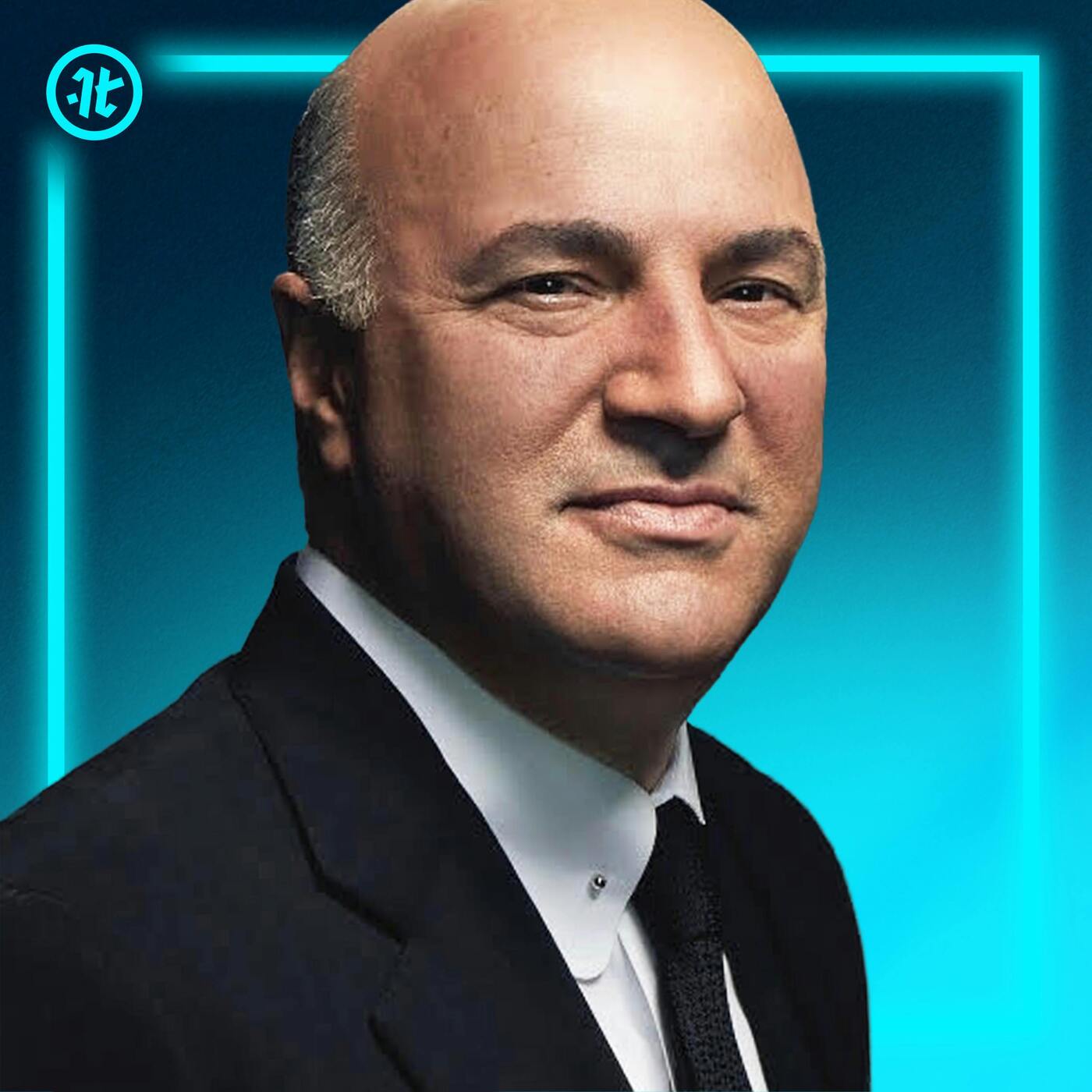
Tom Bilyeu's Impact Theory
Kevin O’Leary: Why Trump Might Save Us, China Can’t Compete, and the Middle Class Is Screwed | PT 1
00:52:11
Loading summary
Transcript43 lines
- [00:01]
Grainger Announcer
With VRBoCare, help is always ready before, during and after your stay.
- [00:07]
Kevin O'Leary
We've planned for the plot twists, so
- [00:09]
Grainger Announcer
support is always available because a great
- [00:12]
Kevin O'Leary
trip starts with peace of mind.
- [00:15]
Grainger Announcer
When you manage procurement for multiple facilities, every order matters, but when it's for a hospital system, they matter even more. Grainger gets it and knows there's no time for managing multiple suppliers and no room for shipping delays. That's why Grainger offers millions of products in fast, dependable delivery so you can keep your facility stocked, safe and running smoothly. Call 1-800-GRAINGER Click grainger.com or just stop by Grainger for the ones who get it done.
- [00:45]
Impact Theory Host (Tom Bilyeu)
America is in a precarious position. We show no signs of being willing to cut spending, so without massive growth, we will go bankrupt. But where is that growth going to come from? We're supposed to be the ultimate dealmaker on the global stage. We're supposed the ones holding all of the leverage. Donald Trump claimed he knew the art of the deal better than anyone. But what's the reality behind America's negotiating power? Are we making progress or have we lost our edge? Today, Kevin o', Leary, one of the most candid and incisive economic and entrepreneurial minds around, joins me to give a rare inside look at what's really happening. If you want to ensure your economic future, you are not going to want to miss Kevin's take on China, taxes and the future of the economy. This is an episode you simply can't afford to miss. Without further ado, I bring you Kevin o'.
- [01:33]
Kevin O'Leary
Leary.
- [01:36]
Impact Theory Host (Tom Bilyeu)
America prides itself on having the most leverage internationally on trade. Trump was supposed to use that strength to help America win. From your vantage point, though, are we winning or are we now falling short?
- [01:51]
Kevin O'Leary
Well, it depends which index you want to use to determine success. If you look at the stock market market cap valuation, the is happy with the outcome of the tariff wars. So far, inflation hasn't come back yet, although many, many pundits believe that you just have to wait a couple more quarters. It probably as a result of the uncertainty, has stalled the Fed for any rate cuts, which is frustrating. Trump, you hear that every day. I think Powell is wise to wait and see what happens as this comes through the system. But I want to make a point about the actual tariffs themselves and how you should look at it as an investor. Whether you're just putting aside a retirement fund or you're actually doing direct investing or you're a sovereign wealth fund, it's all the same. Think about it this way. Let's Take the negotiations going on with England, which is not in the EU, the EU itself, Japan, Thailand, Indonesia, Canada, Mexico, etc. Etc. Most of these countries have a VAT tax, a value added tax, which is a tax that is a consumption tax at the consumer level. So to keep it really simple, let's say an American company ships a product up to Canada into the province of Quebec like a stick of butter, and whoever buys it in the province of Quebec pays a 13% VAT tax, value added tax, and that goes to the Canadian government or the Quebec government. It's a split. They kind of split it almost half. Half. Well, Trump looks at that and says, well, wait a second, isn't that a tariff on an American product? And so all he's doing, and then he comes back and says to the Canadians, okay, I'm proposing a 35% tariff on you, on everything you ship into the United States. And they say, well, wait a second, that's a little heavy. We already have an agreement with you. But basically, what Trump is. And I think people should think this one through, there's no way on earth Congress is ever going to do an American consumption tax. It's just not in their DNA. There's no American VAT tax. However, what Trump has done is exactly that, and he's called it something else. So if the Canadian deal. Let's just take the Canadian deal, because it's easy to talk about, which is being negotiated as we speak today. As we speak. If they end up with a reciprocal tariff of 10%, let's say, which has already been established for the oil coming out of Alberta, Canada, the cheapest source of energy to Cushing, it's already been negotiated. And so it's a 10% tariff on that oil and that energy and that gas. What if that's for all of Canada? So basically, you've got a VAT tax up in Canada, let's call the blended rate 10 or 12%, and you end up with a tariff, a blended tariff on all goods and services, leaving Canada in the United States to 10 to 12%. Well, there you have it. Trump put his VAT tax in place. Everything's equal, even Steven, so to speak. I think that's where we're going now.
- [05:04]
Impact Theory Host (Tom Bilyeu)
Is that just a negotiating tactic, though? Because Trump will have us believe that we've been getting battered, abused, taken advantage of by the global community, and it's got to stop or America has. Something bad is going to happen. Is that actually true or is he causing mass chaos?
- [05:20]
Kevin O'Leary
Trump is. I mean, I always Say this about Trump. I, you know, I've known this guy for 17 years. We actually met when he started the celebrity, you know, Apprentice show. It was the same year that, that I did Shark Tank for Mark Burnett. So we both know Mark Burnett. We both sold forwards to the car companies, the ads in New York. And I think he has a remarkable presence and is an extraordinary salesperson. I mean, I've just seen him in action, but he is bo. He says outrageous stuff. And what I've learned to do, just to be pragmatic, because I have to live under his policy and invest under his policy, is to filter out the noise from the signal. I think the signal in the case we're talking about is reciprocal value added taxes. He calls his a tariff. The Europeans and the Canadians call theirs vat. Who cares what it's called? It's a tax. And so he can the economies live with reciprocal 10%. Yeah. What Trump is unhappy about that he'll never be able to fix. You take a country like Vietnam, they don't have enough people to ever have trade balance with the United States. They simply can't buy enough stuff to offset how much stuff we buy from them. Because many companies, including mine, have moved out of China to Vietnam or Cambodia or India. So these countries have massive trade deficits in the United States because we manufacture stuff there. Trump get all that stuff repatriated. Not during his mandate. You can't do that in 34 months. You can't move all the factories back to the U.S. but the policy itself will slowly self correct. I don't think we need to make plush toys in America. There's no value added in making a Barbie doll in the United States. That job is not a high value job. I think it makes sense to make chips here, you know, semiconductor chips. That makes sense to me. High value add. That makes sense to me. So Trump is trying to balance all that, but you gotta, you can't listen to all the noise. I mean, he's a walking press conference. Like, he just says whatever he wants to say when he says that. I'm so used to it now, it doesn't faze me whatsoever. I just focus on the signal.
- [07:38]
Impact Theory Host (Tom Bilyeu)
But is it moving us forward in international negotiations? I will talk very specifically about China in a minute, but right now I just like, if you were going to rate his negotiating skills, is he actually moving us forward? Because now that the, the whole idea of 90 deals, 90 days, it's just sort of dragging on. We're not seeing like enough wins that really make a Press conference worthy. Like is, is anything actually happening?
- [08:05]
Kevin O'Leary
Yeah, yeah. I mean we're never going to get 90 deals in 90 days. It's never going to happen. I mean it takes, used to take two years to get a deal done with one country. He's just accelerating it very, very quickly and he's getting sort of letters of intent. What the market really wants to hear is they don't care about the granular deal itself. They just want to know what the tariff itself is going to be. So if you're an investor in, in a country, in a jurisdiction like Switzerland for me or Canada for me, and there's other places I invest, I just simply like to know what's the deal? Is it going to be 10, 12, 15, 14, 13, 7. What the, what is the actual reciprocal tariff going to be? So I can adjust my capex accordingly and the rest of it I don't care about. I don't, you know, I don't care about the, you know, the, the detail. I need to know what the reciprocal tax is. And in the case of Canada, because it's the largest trading partner of 28 states, they're going to have to resolve that one pretty soon because both countries need each other on that. And the Canadians are going to have to give up their, their, their supply chain, you know, tariffs like on butter and eggs and milk against Vermont. They have 200% tariff. That's just not sustainable.
- [09:21]
Impact Theory Host (Tom Bilyeu)
So you seem pretty sanguine about the sort of what many people will point to as the chaos of Trump. But there are things that ring your danger bell. So from a, an outcome perspective, what would make you worried that yo this is putting us in a bad place, either specifically from an American standpoint or just from a global investor standpoint. And what would put us in a good place?
- [09:45]
Kevin O'Leary
Yeah, I mean the red bells would be ringing and I would be very concerned about unsustainable tariffs for a long period of time, like 35%. That wouldn't work, that would never work with anybody and it would cause major chaos in financial markets. I think Trump knows that. I don't get caught up in politics per se or show for politicians, even Trump. I show for policy. So I wait until I see the actual policy. And lately, because I'm involved in certain sectors like stablecoins or data center development, I have to get my hands dirty in Washington and I go there to meet with senators and governors and representatives in the administration to understand where they're taking their policy. And so because I have to know what that is or I can't be successful as an investor. My point is, I don't have Trump derangement syndrome. I don't care. I only care about policy. And so if I believe that Trump was going to do 35% tariffs on major economies that I'm an investor in, that would be a big problem. And you would see the markets correct pretty quickly around that. But the market doesn't believe that anymore. You've had this volatility in Trump's, oh, now it's 35%, now it's 10, whatever it is. The only thing that matters is, is what is the end game? What does it end up at? And if you told me it's 10% reciprocal worldwide. Yeah, I think the market's betting on that right now. And I think we're going to get there. And then at the end of the day, all this stuff was just a bunch of noise and volatility based on gnashing of teeth. But there's a lot of people don't like this guy. I mean, they just don't. And they're never going to get over it. And they can't believe he's president. I say deal with it. He's president for the rest of this term. Get over it now. If you want to do business, focus on that and just focus on policy.
- [11:47]
Impact Theory Host (Tom Bilyeu)
Taking a short break, but there's more impact theory after. Stay tuned.
- [11:52]
Grainger Announcer
If you work in university maintenance, Grainger considers you an MVP because your playbook ensures your arena is always ready for tip off. And Grainger is your trusted partner, offering the products you need all in one place, from H vac and plumbing supplies to lighting and more. And all delivered with plenty of time left on the clock. So your team always gets the win. Call 1-800-GRAINGER visit grainger.com or just stop by Grainger for the ones who get it done.
- [12:23]
Impact Theory Host (Tom Bilyeu)
Thanks for staying tuned. Now let's get back to it. All right, so China, I think, is the game. I've heard you say similar things. I'm routinely trying to refocus my audience on. Listen, China matters a lot. Everything else, for the most part, is a distraction. Do you think that we can apply enough pressure to China that they're going to be forced to come to the table? Because obviously Xi would have us believe. Nah, whatever. I don't care. I've minimized my exposure to the US More than you guys think. I can outweigh you. You guys are going to come on our terms.
- [12:56]
Kevin O'Leary
Nope, he can't do that. It's not going to happen. And we need to work a deal out with China. You're right though. Everything else is a distraction compared to China because these two economies are entering an economic war against each other. Hopefully it's not a military war ever, but an economic war and an AI war because the country with the best AI is going to win all the wars in the future. You got some essence of that in the Iran situation where very few American boots on the ground there. The entire operation was done using technology, some of it very advanced and robotics and everything else, and very, very precise missiles led by GPS technology that also uses a predictive AI. And so all of this stuff, that's the first time we've seen a 48 hour war that way. China was watching, the Russians were watching, everybody was watching. And it gives you an idea that this race of technology and, and AI and the economy are all kind of fit together. So here's, here's the, here's the way to view the Chinese situation from 30,000ft in my view. It's my personal opinion and I've been dealing there for over 22 years now. Ever. Remember they came into the WTO in, back in 2000 and there was a lot of assumptions about compliance back then. That was during the Clinton period. They never complied. They cheated. They stole ip. They built many of their sectors around American stolen ip, German stolen ip and nobody made them pay any consequences for that. They just kept saying, well, they'll, as they get bigger and they'll understand the value of democracy. This will be better for us. That never happened. They basically stole it all and then became very proficient at advancing it. So they're, they're particularly their tech, their automotive and you know, all kinds of different sectors are built off someone else's tech. Now you can find the DNA of any of this stuff just by reverse engineering anything they build over there. So we don't have to argue fact. I believe it's a fact. What matters is what happens now. Are we going to continue to let them steal American IP or are we going to somehow hold them accountable? And I think we're in it for decades now for various administrations. Nobody has taken them to task on this issue until now. And so you've got a whole bunch of issues wrapped up in this narrative going on the next few weeks, including the September 19 decision on TikTok, which is blatant spyware in the U.S. there's no question about that. And the law has been already passed. It's either going to go dark or somebody's going to buy it. And rewrite it under American laws. So who knows how that's going to shake out? And we haven't decided or know what she wants to do. Only he and Trump can decide. But I'd argue that by the time this narrative is over with China, they will comply. Because if they lost access to the largest consumer market on earth through massive tariffs, there'd be a lot of unemployed Chinese rioting in the streets. And if you're the Supreme Leader, you cannot afford that. You can't afford that. And so Xi is not an idiot. He knows that. He doesn't want to back down either does Trump. They're going to have to find that accommodation. But it's not just about tariffs. It's about IP access to their courts to resolve trade disputes, access to their financial markets. They get access to the New York Stock Exchange and the NYSE's rules are not even abided by.
- [17:06]
Impact Theory Host (Tom Bilyeu)
Have you heard Trump making noises about that or is he just focused on the trade aspect?
- [17:10]
Kevin O'Leary
No, no, Trump has already talked about this. It started in Geneva three months ago, whenever that was. But everybody knows that within the administrative narrative with China right now, at the level of discussion, they're trying to resolve these issues. Each of these is a separate issue. TikTok's a separate issue. Chip sales from Nvidia, separate issue. You know, all of these things are separate multi billion dollar issues that are unique to the China negotiation. They're not having that narrative up in Canada or in Mexico or in the eu. They're having that narrative with China because if China wants to play with the big boys and have equal access to the American market, they have to play by the rules. Now, the legal systems, the IP laws, access the financial markets under the rules and regulations of the sec. All of these are sub issues. But the old way of doing it is over. I mean, if China wants to keep stealing ip, it'll end badly for them because the US Is still the largest consumer market. That's the stick, that's the hammer. Trump has that leverage now. He may not have it forever. Congress understands that. And we obviously, I would like to do business in China. That's a huge consumer market. There's many products and services I want to sell there, but I don't want to get screwed doing it. And so, you know, I got to be honest with you that what's happened over the last 20 years, no one ever looked at the granularity of this. And I see it through a lot of the small startups I fund. Let's say you come up Let me give you an example. Let me give you a very simple example that I think your viewers would appreciate. Let's say I come up with a innovation and I patented called Drain Wig. It's a real product. It's so simple. You put it down your drain in your own home or in a motel or commercial, you know, resort or whatever, and it collects all the hair, and it does it in a unique way that actually works. Many designs have been tried to do this. They failed. Drainwig figured it out and they patented it and they sold it for 29.95. And it really worked. And so commercial institutions said, well, I can cut my plumbing costs by 60% by just stop. Right Huge. The minute it got to 5 million in sales, 40 knockoffs. 4. Zero knockoffs. 40 knockoffs on the market at 899.
- [19:51]
Impact Theory Host (Tom Bilyeu)
Wow.
- [19:51]
Kevin O'Leary
They didn't have to pay back the R and D the company had spent or all the money they spent creating the product in the past and creating distribution. It already had been done by them. And then they got knocked off. Company went out of business or changed hands as a result. That happens millions of times. Nobody made. You didn't hear that tree fall in the forest. It was a tiny little company of 5 million. Could have been $100 million plumbing supply company one day. But that didn't happen because it got knocked off by China. That's what I testified about in Washington. I gave them examples of that that they'd never heard of. They did their diligence and they realized that's how we're getting screwed. One innovation at a time. Screwed over and over again because nobody brought them to task. Well, I think there's a new sheriff in town. Maybe you like him, maybe you don't, but basically Congress has had enough and they're pissed.
- [20:49]
Impact Theory Host (Tom Bilyeu)
Do you think that we're going to see two egos that have no. They have no incentive to back down? Trump, it can be very pragmatic at times, but he's very bombastic in a way that I think Xi responds allergically to. I think Xi has proven with the zero COVID policy that he'll go hard in the paint and is perfectly willing to see his people suffer to get what he thinks is the right outcome. Does this get disastrous before we find resolution?
- [21:19]
Kevin O'Leary
I think it's a good debate for you and I to have because I think this will be the toughest negotiation. I think you're right about that. I don't think Chi wants. You know, when you're the supreme leader for life, you can't make many mistakes because you got to keep everybody happy. You're only the supreme leader while the people that support your supremacy back you up. If they see weakness and you've seen this happen in China before, you're gone pretty fast. And so he's got a pretty big pressure cooker there, a real balance. He cannot have mass unemployment. That would be mass inflation because he would have to print money people to buy bread, and the price of that bread would go through the roof. And so it's. And he knows that. He's not stupid. This is a smart leader. And I think that's the pressure cooker. So my guess is there's going to be a deal. And it doesn't cost a lot for Xi at this point to give up on IP theft. He's already stolen all he needs. And, you know, it's sort of at this point, he can compete. And I think he is. I think he's competing in aeronautics, he's competing in biotechnology, he's competing in AI. And he did it all on the backs of other people. He stole it all. And so now you can't take back what he's stolen. But he is advancing his own versions of all these things. And I think it's an easy gift for him to actually comply with the World Trade Organization, to have disputes. He's got, I don't know how many thousand disputes are unresolved at wto. So maybe he should get kicked out of that or at least fix that, which I think the WTO could pressure him and might do so. But they're going to need the lead of the US to start that. And I think China wants to be playing with the big boys, the G8, so to speak. I think they want to get there and I think they're going to be vicious competitors. But I think it's good and healthy to a competitor like China. And I'd like just for them to play by the rules. And I think that messaging is the one that the market is anticipating if we really thought it was going to be disastrous outcome. If you and I believe that and the majority of investors believe that this market would correct 40% right now. And I don't. I don't see that happening, man.
- [23:36]
Impact Theory Host (Tom Bilyeu)
Fingers crossed. I certainly hope you're right. The image that plays in my mind that I'm always looking for somebody to talk me off the ledge is that we have the perfect setup for Thucydides Trap. China has a long history of being the big dog in the world. They have the identity of we are the biggest and the best, that we're this temporarily embarrassed nation. We are finally clawing our way back to the top. Every time you have a rising superpower and a declining superpower, they end up colliding and they find themselves inextricably, typically pulled towards a kinetic war. I think we're already in the middle of a cold war with China. And so I look at, if I'm in Xi's mind, and I don't think like an American inside of a Chinese body in that I think of the, the way that a collectivist person would think that has, you know, come up through all of the horrors of Mao that personally affected his life. He sees what I call red light, green light capitalism of, hey, we understand capitalism is how you move forward, but we also know that if you kidnap enough of the top people and re. Educate them that you can keep a level of control on this thing. So to me, this is all going to boil down to. Because I think he is going to flex as hard as he believes he can possibly before there's a coup that he can't squash with violence. If I'm really honest, and it all comes down to how real is the housing crisis. If the real estate crisis over there is real and they're like, in 2008 levels of fragility, then I think he's going to realize, okay, I'm not going to be able to push this as far as I want. He'll go, you know, he'll push, but, like, ultimately, Trump and he are going to come to the table and both realize, all right, we're not on strong enough footing, so we're going to have to come to an agreement. But if the housing crisis isn't real enough, I think Xi will be able to out. He'll be able to get Trump past the midterm elections, and then it's over.
- [25:28]
Kevin O'Leary
So let's just break down what you just said there, because I, I think you're on to a very good point here, and I think we should look at it. You just described a scenario where if I were a, a young, bright individual in any country, anywhere, and I had the opportunity because I was an entrepreneur and I wanted to exploit my ideas and I wanted to build a business and I wanted to be an innovator, would I want to go to a geography that you just described, or would I like to immigrate to America where for over 250 years it's proven that if I'm good enough and my ideas are validated and they do solve a problem. I can build a business and create freedom for my family. So I started that basis as being what makes any country competitive. Can you create an environment even with all the faults that anyone has? Like, there is not a chance in hell I would want to go live my life in China. Not when I could starve or Supreme Leader could re. Educate me. I love that word you brought up. I don't want any of that. Why would I want that? And so in the pursuit of intellectual capital that creates all the innovation globally, who's going to win on this one? And I think the constant signal between these two economies is just that the human being who wants to live in freedom, who would rather go to a place with all of its faults. I mean, there's a reason people risk their lives to cross rivers under barbed wire to get into America. You don't see that happening in China. I don't see anybody trying to get into China. And that's why. And so I'm going to bet my capital on that. And I think the rest of the world is betting their capital on that. And it's sort of. Then you can get into the mishmash of who's the president and all the rest of that stuff. But I'm confident that my assumption is correct about the pursuit of freedom being the reason that economies are successful. And I think you can steal all the stuff you want, but if people don't want to move there, you have to rely on your own internal policy, which can be brutal. And ultimately, you'll never be the winner, you'll always be number two. And maybe that's okay for Xi. Maybe he can live as number two in perpetuity, because I'm pretty sure he'll die one day. I mean, I don't think he's a vampire. And so if they really want to compete and they want to win long term, the only successful philosophy, period, is democracy, period, period. That's it. Or a form of democracy that is so trusted, such as. Or trusted leadership, like the uae, which is not a democracy, but has proven for at least this last 50 years that they understand what democracy is and they rule that way. That's the only way it's going to work. You see a lot of people trying to get into the UAE and getting a passport there. They want that. They like the system, the policy there, but that's a very democratic. In a foreign country. And I'd argue that they are the petri dish they could have. That country is only 52, 53 years old. They could have chosen the Chinese way, they could have chosen the Russian way, they could have chosen Venezuela or Cuba or North Korea in a way they didn't. They took the best of culture around the world, the best of policy, and they created a behemoth economy that's competing now. And the metric I use is China's number two in AI spending. The US is number one. Who's number three? Uae. How'd they do that? And so it's sort of that, you know, I teach this stuff. I'm an executive fellow at Harvard, so I have classes with people explaining to them what I believe works, trying to convince them to think that through, and trying to convince at least a third of the class not to become consultants because that's what they. They just make consultants at these business schools. And those people live a life of mediocrity. It's a shame to see it happen. But that's a long answer. So I'm not as worried as you are because I think long term you can't beat what America has proven works.
- [30:20]
Impact Theory Host (Tom Bilyeu)
I agree with you on that. However, where is your confidence level that America, the voting public, is going to maintain their belief in that freedom? When I look at a Mamdani or I look at just the. Look at Minnesota and the types of candidates that are running for governor, running for mayors of local cities, there is a real populist push to the left for policies. Whether you call them blatantly socialist policies or you call them social democracy. For reasons that I can outline in detail, I believe that American youth is losing their enthusiasm for capitalism, full stop.
- [31:02]
Kevin O'Leary
Yes, I've heard that. And I think it's, it's a valid concern and it's, it's a fair point to bring up. And you definitely have evidence in New York City and other states, as you've detailed, 100%. But I've also heard that same claim back in the 50s. I go back and I look at history. There was a time when communism was rising up and it was occurring in places like New York City. There was a very bohemian vibe to it and people claimed that it was a better way of life. And young people swarmed to. Some of them are called beatniks. That far back. I've seen this movie before. And so what knocks it back, though? Well, I'll tell you what happens. Reality strikes. It's sort of like what you hear happening right now in New York, because that's a good case study. This Mondavi thing that's going on. If you listen to his rhetoric, it's basically money for nothing and chicks for free. I mean, and I totally get it. I totally get it. And it's very, it's a great message if you want to be elected as mayor. His problem is going to be delivering on that. New York is already the highest tax jurisdiction in America and it's obviously not that well run already. And so what happens for these kinds of cycles? And my argument to you is going to be very simple. The American democracy, the way it was built, it has the ability to self correct and does it self corrects in four to eight year cycles. And it has since it was formed. And you just saw it happen in the general election. The country was moving too far to policies that didn't make sense to the kitchen table in Champaign, Urbana, Illinois. And so boom, it's self corrected. It self corrects at the municipal level, at the mayoral level, at the state level. And it'll do it again. Because when you offer money for nothing and chicks for free, you can't deliver. The system doesn't provide for that. And so it's a classic case of you won't get fooled again. Because these young people that are voting for him are going to want the free food, the free, you know, grocery stores, the free subways, the free. And there's not a chance in hell he can deliver that. And so they will be pretty unhappy with him in the next cycle. Now, I'm not sure he's going to win. There's a fair amount of people willing to start to examine his policies. But my whole point, and I don't want to get too far, is that yes, people have gone into this. Young people today want communism, young people today want socialism. Not actually the majority of them want a job, they want to raise a family, they want to be able to support it. And about a third of them have that burning desire of the American entrepreneur that wants to create something magical for themselves. Not the greed of money, the pursuit of freedom which has driven this economy. And I live that every day and I can guarantee you every year and I'm the investor in them, I see a new crop of them. We're very healthy there, we're in great shape. So within my own family we have these debates. I've got young kids too, and believe me, Thanksgiving dinner is full of this rhetoric. But I look every year at how they too have advanced. The minute they got a paycheck and saw tax, they went from being screaming liberals to raging conservatives. And that's kind of what happens. I watched it happen in my own Family. It just happens. People want to know, where did half my paycheck go? Who did I just give that to? As soon as you get a job, you move from being that socialist and to that conservative. That's how America works.
- [35:04]
Impact Theory Host (Tom Bilyeu)
We're hitting pause for a moment, but there's plenty more ahead, so don't go anywhere. Thanks for sticking around. Let's get right back into the action. All right, I'm going to give you my best black pill pitch and then I hope that you can dismantle this argument. So I'm a big Ray Dalio person. I believe that Ray has gotten to the physics of how money works effectively by looking at debt. And we're. We're nested inside of a big debt cycle. And the problem is in the 50s, we had not reached phase five and a half, which is effectively where we are now. Phase six being total collapse. Just the debt becomes such a burden. There's nothing to do. You have to default. It seems to me that we're on that path, especially given the big beautiful bill. But I want to get distracted by the whys right now. Just the structure of the debt goes like this in a fiat money system where the only way out of the kind of interest payments that we have to make now to keep giving everybody the money for nothing and chicks for free is that you print money. Printing money makes assets go up. Houses are the only asset that people understand intuitively. So suddenly that housing becomes unavailable to the whatever 40ish percent of people that otherwise just aren't going to own assets because they don't understand financial markets. And so now you get this hollowing out of the middle class by pushing the people that otherwise would have been in the middle class up to the upper class because they do understand assets. And then you push the 40ish percent of people in the middle class and low down even farther because they don't understand assets. And that hollowing out creates this massive inequality, which triggers something that is so embedded in our DNA which if you've ever seen a monkey do a task next to another monkey doing the same task, you pay them both cucumbers, everybody's fine. You pay one monkey a cucumber and the other one a grape, and the one getting the cucumber freaks out. And that's what we have now. And so it the Ginny coefficient, which is the. Basically, it doesn't matter if everybody's poor, everybody's rich. What matters is are there poor people who can look to their neighbor and see them being rich. That's when people go ballistic, that's the setup that we have. The middle class essentially doesn't exist anymore. Housing is completely out of reach. Somewhat, somewhat of an illusion because it's really just money printing. But anyway you create that setup. So now even these kids that would they want to be raging conservatives, they still don't see how they're ever going to get on the property ladder. And so that resentment just builds and builds and builds.
- [37:30]
Kevin O'Leary
Well that's a very eloquent job you just did there. Of, of I read Ray as well. I'm an advocate of understanding his point of view and it's an important one for me. I'm basically a debt guy and always have been and, and I came up in, in the fixed income market and so 100% he, he's, he's a very valid thinker in strategizing that scenario and, and, and the question is why wouldn't that happen? So let's examine. Because one of the things you have to risk when you're an investor like me is if I really believed that that scenario is going to roll out my portfolio mix would be completely different than it is right now. But I'm basically believing that the debt markets, which they call them, the bond vigilantes are asleep right now. The smartest investors are not the equity guys. The smartest investors are the debt guys array and the reason is they take duration risk. So they have to be historians in the sense they look back to try and forecast the future. Now here's some things you got to think about. The big beautiful bill which caused chaos in the relationship with Elon Musk and Trump that's still playing out was Elon had the understanding in his mandate, his 120 day mandate that he would try and create a balanced budget. Instead we took on another 3 trillion of debt if we just score this budget the way it is. What Elon didn't understand, and I think he understands now is to get stuff done in Washington and the primary mandate of getting that bill through was to anchor the tax rate because the reason the American economy is and we just got new consumer numbers today, economy is on fire. It's doing so well right now and that's because this tax rate is competitive against the G20. We don't want to change that. We can't have our tax rates go up into the top quartile of tax the G20 because it'll slow down GDP growth. That was Trump's goal. He achieved it with a big beautiful bill. Now how do you deal with Balancing the budget, you got to find a way to save $3 trillion. Well, that's where his new task is. And he can't do reconciliation except every 12 months. But you may not, or you may know this. The government timetable starts in September in the new year. So as soon as you get past September, and this is what I don't think Ray is giving much consideration to. If the economy continues to grow, the amount of tax income that comes in just on a normal day basis goes up. In addition, if the tariffs are successful at a 10 to 12% rate, that in itself has not been scored yet, that brings in trillions of dollars against this deficit. The third aspect, and I give you on this one, is does Washington have the stomach to actually take these new revenue streams and deploy them into debt reduction as opposed to pissing them away with stupid programs? And that is the challenge that I think is next. Because it wasn't long ago that we had a balanced budget in America. It doesn't have to be this way. There may be, for example, just doing a means test on Social Security. Maybe not everybody should get that check. Maybe it's a different form of tax. Maybe if you're making over a million dollars a year, you don't need a $4,000 a month check. Check. And so that's one aspect. Health care could be better. That's another aspect. I'm an optimist in the sense that Ray hasn't given any credit to these other sources of income. He has taken the baseline assumed. It doesn't change. I'm not there yet. And apparently the market isn't there yet, either on either bond vigilantes or on the equity side where we continue to see new highs. I'm more in the bullish on America camp. And Ray, as you know, spends a lot of time where I do in Abu Dhabi. He's a global thinker and I like that. But even he knows where half of his dollars go, more than half, as the rest of the world's sovereign wealth goes. Where do you find it here in America? Because there's no other market like that. And if the rest of the world believed that collapse was imminent, they'd be sitting with all that cash under the streets of Zurich. So I don't, you know, I'm not agreeing is what I'm saying. I'm on the other side of that argument and I'm going to stay with it and I'm going to watch it and I'm going to be part of it. You know, I work very hard in Washington on behalf of. And my last point on the rate thing is 70% of jobs in America, 70 70% are created by companies between 5 and 500 employees. Those are my people. Those are the companies I invest in. I am their advocate in Washington. I actually read the tax act. You didn't read it? I read it.
- [42:49]
Impact Theory Host (Tom Bilyeu)
It's just you, I think at this point, which thank God you did by the way. So the more info you can give people to look out for, the better.
- [42:56]
Kevin O'Leary
And I saw stuff in there I didn't like. And I worked with Senators Hagerty, Rick Scott in Florida and Ron Johnson with their staffers. And I said, guys, this is bad for small business in America. This line, this line, this line, this line, this paragraph, help me ward off this catastrophe because I can't do it. I can only be the advocate for these businesses. And if you don't believe me, why don't we talk to some of these businesses and thank goodness these great senators had the guts to get in there and fight for these changes. And I'm extremely proud to have been involved in that. That took out some extremely bad policy. But that's the way America works. If you really believe that it's going to hurt 70% of job creation, you have to stand up and go to Washington and sit down and meet these people. They're not stupid, they're pretty smart. And if they're influential enough. And those three senators, they are the pillar of small business in America and I'm so proud to know them. I mean it worked is my whole point. And so if you're a small business in America and you are first or second generation, my message to you is I have your back. I have your back as I do for all the companies I've invested in. And I now work policy also, you know, I'm just a guy that says, look, here are the facts. Let's fix this mistake before it becomes law. And thank goodness we did. And now I'm a believer in this bill. Now, are we going to solve the 3 trillion. Yes, in the ways I spoke of previously.
- [44:36]
Impact Theory Host (Tom Bilyeu)
Well, talk to me about how we unlock growth because as I look at it as of right now, my bet is, and I'm literally moving my money in accordance with this bet that America, the bond market cracks within the next 10 years barring a radical change in policy or the unlocking of growth. That that's just math. So.
- [44:57]
Kevin O'Leary
Well, you're talking, you're talking mass inflation there, correct?
- [45:02]
Impact Theory Host (Tom Bilyeu)
So yeah, they're going to either have to print Money or, or openly default. They're both defaults in my opinion. But how do we, how do we open that growth? Because there is that, that, that's a real thing. If we can unlock enough growth like we can really do it. But what would that take?
- [45:17]
Kevin O'Leary
So let's examine that with granularity because it's important what you're raising there. In order for that scenario to play out you'd have to have a lack of confidence in the U.S. treasury bill, period. You would have to find another place that people are comfortable putting their liquidity in every country on earth outside of the US treasury bill, which is considered the risk free asset. And so right now it is. And under your scenario in the next decade that is no longer the case. It would be more like a Venezuelan telco bond. And so you know, it's. Is that going to happen now? Why would that happen or why would it not happen? I want to point you to some policy that is going to become law hopefully on Friday, the stablecoin Act. So let's talk about the stablecoin act, okay. And talk about the treasury bill and talk about inflation, all in the context of what you're bringing up here. A lack of confidence in the U.S. treasury bill. Let's just stay focused on that. That. So when this law passes and you're a the US So just to describe this, the Genius Act Hagerty bill. Senator Hagerty, we're going to create a product in America that is now legal that allows you to create a digital dollar. So a product that you buy. Let's. USDC is the one I'm using out of a company called Circle. And the full disclosure, I was an early shareholder in Circle. I believe in what Jeremy Allaird was proposing, although nobody believed him. Seven years ago, nobody. And today he is the CEO of a very successful public company that trades today that generates and creates these stablecoins. Why is this important? So if I can buy a stablecoin as I do right now and he is forced by law or this pending law to be audited. For every stablecoin he has, it's backed by a US dollar. He has to prove it to be totally transparent. So instead of holding paper dol I could just own USDC on my phone, which I do right here on this phone I have a whole bunch of usdc. I can send it to anybody on the in the world I want if they have a corresponding account and you know, just transfer it, which I do. But think of it this way. Let's go back to your, your, your point about the T bill, under your scenario the T bill has to collapse as a secure form of risk free investing. If I live in Turkey, you and I talked about Turkey just a little while ago, or I live in Venezuela, or I live in any unstable regime, I can take my local currency and I can buy a stablecoin backed by the US dollar. The law says this, it must be backed up by the dollar or an equivalent including the t bill under 92 day duration. So complete liquidity. Can you imagine if I had that option in Turkey and I'm just working there as a plumber and I'm watching my currency have 12% variations in volatility year to year. Or I can take half of it or maybe 2/3 of it or all of it and put it in USDC on my phone. I'll buy that USDC even though it pays me no interest whatsoever just to have the stability of my trust of the T bill. So all of a sudden what you didn't take into account and Ray didn't take into account is every country on earth I believe over the next three to five years is going to take advantage of an ability to digitally own something. They have faith in the American economy and the American T bill. Now under your scenario, and it's fair to be a critic, you're arguing that the country will continue to mismanage itself with deficits, that at some point this faith cracks. I'm not there. I think what's happened with this legislation is we have found a way to let every human being on earth buy into the trust of the two year or 90 day, I should say T bill. And if there's a better place to put their money, they'll put it there. But there isn't because they're not going to put it in China ever, ever. They don't trust Qi at all. And I'm talking about people that don't have to live in China like the rest of the world. Who do they trust? Not the President of the United States, the American economy. They know the President's going to change every four or eight years but they trust the way the country operates and how it's delivered value for 250 years. That's my argument and so far it's worked. So I don't think in your scenario you've taken into account the innovation America brings forward, not the regulation, the innovation that's going to solve for demand of the most trusted piece of paper on earth, the American T bill. That's my case. It's a great debate I'm having with you and I think the listeners should think about it and I think I just won that argument. Argument.
- [50:51]
Impact Theory Host (Tom Bilyeu)
All right. It is a great argument and I'm very glad that you're making it. There are a couple caveats that will determine whether you win in reality, which is are they going to make that inflationary or is it going to be you can only buy the debt backing it on the open market? That would be question number one.
- [51:07]
Kevin O'Leary
Yeah, well, in the context of, you know, the liquidity of the T bill, the more liquid it gets, the more the market determines its value. The. You'd agree with that, right?
- [51:20]
Impact Theory Host (Tom Bilyeu)
Sure.
- [51:21]
Kevin O'Leary
Okay. So between circle and tether, the two different stable coins that until the law was passed, you could call them rogue if you wished, they're now bigger than most countries in terms of owning T bills, bigger than most countries, the sixth largest. And I, I think probably by 24 months from now they'll be the third largest, bigger than any country or bigger than 90% of countries ownership. And that diversity is global. I'd argue the people that can own these things are going to be the billions of people around the world. And so that's pure open market price discovery. Your scenario is going to be very difficult if it's not liquid. But I'm arguing it gets more liquid by the second and the demand for T bills, the more the world's volatile, the more there are rogue nations, the more people that live in these rogue nations don't trust their governments, the more liquid stablecoins will become. So I think there's always going to be rogue nations. There's always an Iran, there's always a North Korea, there's always a Russia. All of those people are not stupid people in the UST bill they will trust and I rest my case. You're on on that. And so in my scenario, the probability of what you're worried about never happens, which is a lack of liquidity, the inability to get out of a bill, to buy a T bill and not be able to sell it for what you paid, plus interest, very difficult for that scenario to happen in the way I'm seeing the world coming together.
- [53:01]
Impact Theory Host (Tom Bilyeu)
That's it for part one of my conversation with Kevin o'. Leary. Part two drops tomorrow and you are not going to want to miss it. So make sure you are following the show wherever you're listening and seriously following is really the best way that you can support us. So if you like what we're doing, please give us a follow. It helps more than you know, and it will make sure that we get more of these kinds of conversations to you guys. Until then, my friends, be legendary. Take care. Peace.
- [53:27]
Grainger Announcer
When you manage procurement for multiple facilities, every order matters. But when it's for a hospital system, they matter even more. Grainger gets it and knows there's no time for managing multiple suppliers and no room for shipping delays. That's why Grainger offers millions of products in fast, dependable delivery so you can keep your facility stocked, safe, and running smoothly. Call 1-800-GRAINGER Click grainger.com or just stop by Grainger for the ones who get it done.