← Tom Bilyeu's Impact Theory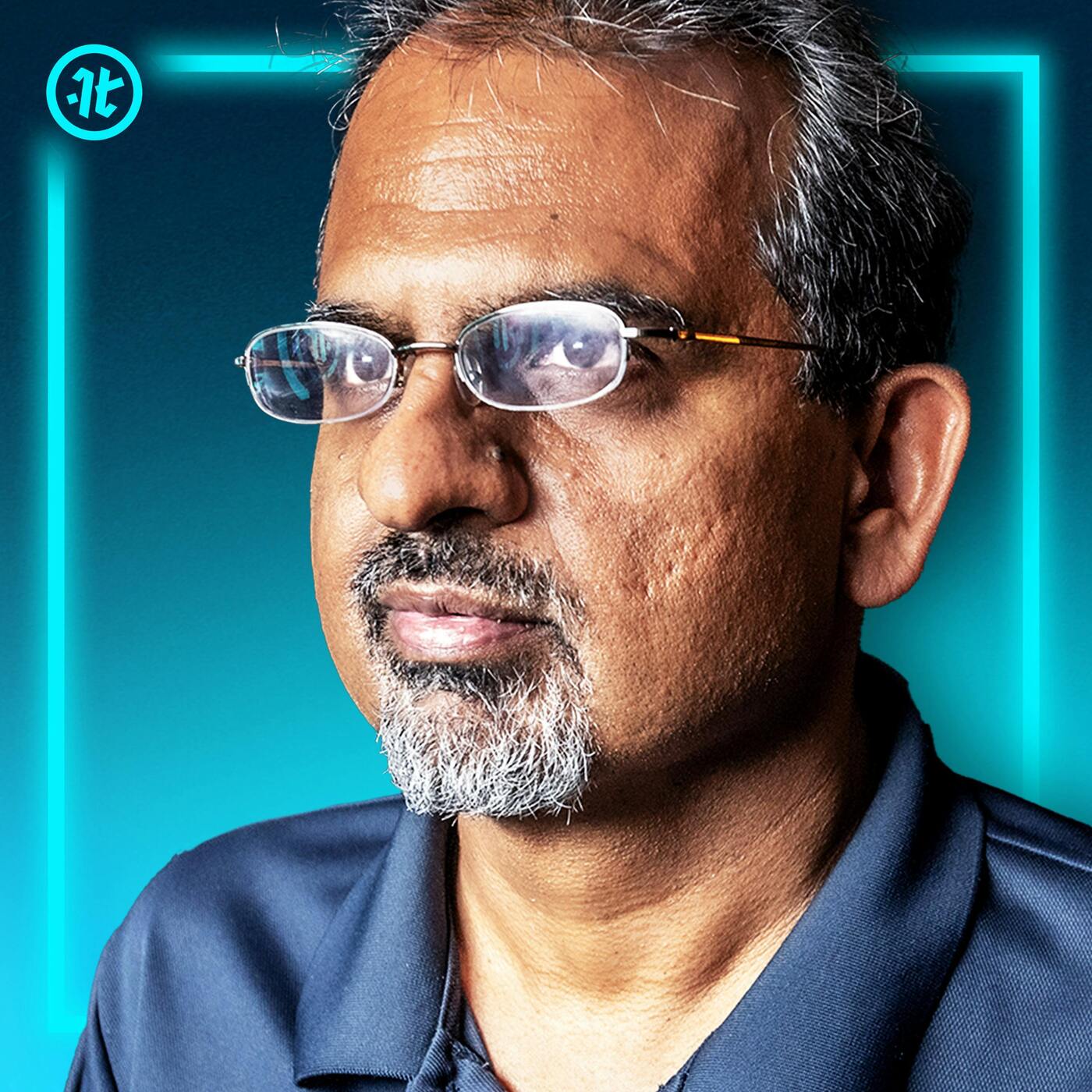
Tom Bilyeu's Impact Theory
New Physics Reveals the Truth Behind Simulation Theory & Life After Death | Rizwan Virk PT 2
00:51:24
Loading summary
Transcript133 lines
- [00:01]
Commercial Narrator
With the American Express Platinum card, I can unlock experiences like no other.
- [00:05]
Rizwan Virk
Since I'm always booking my next trip.
- [00:07]
Commercial Narrator
I love that I can earn points on travel. Plus I get a resy benefit. So you know, I'm hitting the restaurants everyone's talking about.
- [00:14]
Rizwan Virk
And you can find out your welcome offer after you apply, which could be as high as 175,000 points for experiences like no other.
- [00:22]
Commercial Narrator
There's nothing like platinum. Learn more@americanexpress.com Explore Platinum Terms apply if you work in university maintenance, Grainger considers you an MVP because your playbook ensures your arena is always ready for tip off. And Grainger is your trusted partner, offering the products you need all in one place, from H vac and plumbing supplies to lighting and more. And all delivered with plenty of time left on the clock. So your team always gets the win. Call 1-800-GRAINGER visit grainger.com or just stop by Granger for the ones who get it done.
- [01:00]
Tom Bilyeu
I'm Tom Bilyeu and this is Impact Theory. Listen up, because what we're talking about today is going to change everything. This is part two of my incredible conversation. If you're just tuning in now, go back and listen to part one. I highly recommend that you start there and then join us here. So without further ado, let's get right back into the action. One thing I want to try to map is, okay, so we're both speculating like mad. For sure, for sure. I don't know that the things that I'm saying are true. I assume you have a same sense of like, well, I'm mapping it like this. But do you have a. What is the. What is the thing that you see that you're trying to connect the dots of? So like by saying like, have you seen in your own life? Like, I really feel like an old soul. I feel like I had to have been here before. I hear all these people with near death experiences and like they're clearly referencing another realm. And I'm trying to bring all these together in a modern technological context and like here's what I've come up with. Or is there something else that you're mapping?
- [02:01]
Rizwan Virk
I think yeah, so what I'm mapping is experiences that people have had with near death experiences in the modern world and other weird phenomenon like whether it's reincarnation or its transfer of consciousness or memories of other lives with also what the ancient mystics have been telling us that this world is Maya, or illusion. And so again, they had to come up with metaphors for what does this mean. And there was a yogi from India named Swami Yogananda who came over to the US back in the 1920s, and he became one of the first Indian yogis to really spend time here in the us. He wrote a book called Autobiography of a Yogi, which was like Steve. Steve Jobs favorite book. And, you know, he gave it out at his funeral.
- [02:51]
Tom Bilyeu
What was his big insight?
- [02:52]
Rizwan Virk
He was given a message that the world is like a movie or a film projector. And so he was reinterpreting the ancient ideas of Maya and illusion. And his insight was that the characters are dying, but the actors are still there outside of the game. And that the world itself is made of light and shadow, that it's not substantial.
- [03:17]
Tom Bilyeu
And that sounds very much like Plato's cave.
- [03:20]
Rizwan Virk
It is very much like Plato's cave. So if you think of the different metaphors, whether it's Plato's cave, whether it's the world is a dream, as in Buddhism, I mean, literally, the word Buddha means to awaken. What is it you're awakening from? The concept of Maya or Leela in the Hindu traditions, the concept of the illusion in, say, the Islamic traditions, or the here and the hereafter within, say, the Judeo Christian traditions, each of them are using different metaphors, right? And Shakespeare used the metaphor of all the world's a stage and the men and women are merely players in it. That idea of play is one that has persisted over time. And so Yogananda used the latest technology, which was the film projector in the 1920s. That was new. That was a new way to understand. Now, he didn't literally mean there's a big projector that's projecting onto a screen, but he said it's like that. And I think that's where we are today. When we say video game, we're talking about what we know of as video games. So we're using that as a way to describe something that is very complex. And it's difficult for us to get our heads around that idea. And in the same way that before there was a massively multiplayer, there were massively multiplayer online role playing games, we would use other metaphors at the time. So there may be new metaphors that come up in the future. But this is where I'm trying to tie the idea that the world is made of information with this idea that the world is some kind of a hoax or illusion where players are kind of choosing to get in. And when they get in, then they forget. They experience it and then they come out and then they Review the game. There's an old story in the Hindu traditions of Sushila and Narada. I don't know if you've ever heard this story. And so let's say Narada is this proud warrior and he goes to the God Vishnu. Remember, in that tradition, the world is the dream of Vishnu. But he says to the God Vishnu, I want to understand what illusion is, what Maya is. And he says, well, I can't tell you what it is, but I'll show you. Sounds a lot like the Matrix, doesn't it? In fact, Morpheus is the Greek God of dreams. And so he says, here, step into this pool of water. So let's say this proud warrior steps into the pool of water and suddenly he's a little baby girl named Sushila. And he grows as a princess in this kingdom in ancient India. She grows up. She ends up marrying a prince from a nearby kingdom. And then later the two kingdoms go to war. Her husband goes to war with her father and her brother's kingdoms, they all die. And now she's really sad. Obviously, her whole family's been killed. Then she goes outside the village and she sees a blue water and she steps in it. And then suddenly she's back. She's no longer Sushila. She's the proud warrior Narada. And then the God Vishnu says, that is Maya, right? It was an element of forgetting, of immersing yourself in this character. And now you can step out. Now, that's just a met. But I think our metaphors today have the ability to bridge this idea that information science is eating all the other sciences. And I think you and I would probably agree on that in that the physical sciences, in the end, they're coming down to how is information being processed with this idea that there may be a consciousness or a part of ourselves that exists outside the physical world. And we don't necessarily agree on that part of it, but that this idea of how does the information get rendered into something that appears real, that provides us with a way, a framework to think about that, I think.
- [07:15]
Tom Bilyeu
So if we're in a simulation, then I imagine there's a server and the server processes data in a certain way and the software has been written in a certain way. And so if I'm an npc, I run an AI logic that AI logic follows a set of rules, even if probability is part of it. Do you want it to remain a mystery or do you feel like this is a knowable thing?
- [07:33]
Rizwan Virk
I feel like there are elements of it that are knowable. And they're knowable because of glitches that happen and things that don't seem to be able to be explained, you know, in a purely physical model of the universe. Even little things like, okay, have you heard the term synchronicity, which was coined by Carl Jung and he called it an acausal connection between, you know, an internal thought and something that happens in the external world. And of course, in a modern techno scientific world, we would dismiss that there's any connection between you thinking a thing and something happening in the real world. But the other day I was just explaining this idea of a technological synchronicity. I was browsing the web looking for a backpack and there was a specific brand that somebody told me to look at. So I was looking at their website and then I forgot that, and then later I was on my iPhone and suppose I was in Facebook or I don't know, some social media and there's an ad for that exact same backpack. And I said, oh, that's weird. I was thinking about this backpack, I had an intent for this backpack and now I'm seeing an ad for that. Now if you didn't know about how technology works, if you didn't know there's a server that tracks your intents, that there's something called a cookie that whenever
- [08:47]
Tom Bilyeu
you have an intelligence, I was so nervous. You were going to be like, oh my God, can you believe? And I was like, yes, very much so. As an advertiser I can believe absolutely.
- [08:54]
Rizwan Virk
And I was in the advertising business, so I know all about this for a while where we advertise mobile games. And so the closer you can register somebody's intent, the more likely you are to make the sale. That's why Google has done so well as a company. Because, you know, before you showed ads to everybody and now if you know somebody searching for X, you can show them an ad for X. But if I didn't know that, it would look like it's just weird, mysterious and it would be dismissed as that's just coincidence. There's no way. But in a technological universe, or rather an information based universe, suddenly things that seem disconnected and are often attributed to pure chance might actually have some explanation or some intentionality behind it, which could be technological in nature. But if we don't acknowledge that the world is technological in nature or that that information is stored somewhere, somewhere outside of the physical world, then they just become mysteries or they just become dismissed.
- [09:49]
Tom Bilyeu
Why don't you take psychedelics
- [09:54]
Rizwan Virk
well? So it's funny, I was on a panel at a conference the other day, From Psychedelics to Synchronicity. And I said, why am I on this panel? You know, I've never taken psychedelics. That said, I have spent a lot of time with people that have taken psychedelics.
- [10:10]
Tom Bilyeu
But why haven't you?
- [10:12]
Rizwan Virk
Well, I haven't just because one, they put you in an altered state of consciousness, which is. Okay, that part I don't mind. I've explored lots of altered states of consciousness, but usually through yogic breathing, you can do it through drumming, shamanic.
- [10:27]
Tom Bilyeu
So you find the altered state useful. You just don't want to do it through drugs.
- [10:30]
Rizwan Virk
Yeah. Just because all drugs have side effects. And I think this is something in a technologically deterministic world, we think all of our technology. So. So I study science fiction academically. So how does science fiction influence the world? And I think it influences in such a way that we're. We're used to thinking of medicine and pharmacological approaches to everything as being infallible. Right. So in Star Trek, when Dr. McCoy, or if. I don't know if you're a Star Trek fan.
- [11:00]
Tom Bilyeu
Not really, but I know in the
- [11:01]
Rizwan Virk
original Star Trek or Dr. Crusher, in the Next Generation, you know, when they figure out how to cure something, you know, nobody ever has a side effect. That's not how it works. If only, if only. Right. But it's a science fiction version of medicine. And so there are bad trips, there are side effects. There are also reasons why medicines interact with each other in ways that we don't know about. Right. Even now we're having to use AI to try to figure out because there are so many different pharmacological substances that could affect us. And, you know, psychedelics wasn't really a big thing when I was exploring these altered states of consciousness, sort of in between, let's say, the 60s and 70s and now where psychedelics are becoming more respectable. And there are a number of people like this gentleman, Danny Goler, I don't know if you've heard of him. So what, what he did was he was taking dmt and he's taken it before, and he said he was shining a laser on the wall like a laser like a scanner from your grocery market. And he said he started to see what looked like little numbers and figures and script. In fact, he said it looked kind of like Katakana, Right. Which is what you have on your, you know, on your T shirt there. But. But it wasn't Katakana because that's Japanese. But you started to see like it was fast, these little figures and it was part of the structure of the physical world. And then he ran 100 people through that, always on DMT, always on specific versions of DMT. And I'm not familiar enough to know, you know, the different versions of.
- [12:35]
Tom Bilyeu
Do you think they would have seen that in 1998 before the Matrix comes out?
- [12:41]
Rizwan Virk
I don't think they would have seen it exactly that way, but they might have seen something because I've had people tell me on, on dmt. In fact, first time somebody told me this was after I had originally written about the simulation hypothesis. I was here in LA and I had Sean Stone, who was the, the son of Oliver Stone. And he said, oh yeah, I know it's a simulation. I said, okay, well how do you know it's simulation? Like I've written a book and I think it's likely we're in a simulation, but I don't know 100%. And he said, well, because when you take DMT, you see the grid lines of the simulation and it just looks as if you're kind of perceiving more. And I thought that that was pretty interesting as well. And so I started to take the idea seriously that perhaps we can open our perception and we can see more. That said, you know, I, for me, it's more an issue of pharmacological side effects, unpredictability. You know, I've had some health issues, so I've been on various medicines. I don't want to take any chances.
- [13:34]
Tom Bilyeu
Yeah, quick break, but don't go anywhere. There's more to come after this short break from our sponsors.
- [13:41]
Grainger Commercial Narrator
When you manage procurement for multiple facilities, every order matters. But when it's for a hospital system, they matter even more. Grainger gets it and knows there's no time for managing multiple suppliers and no room for shipping delays. That's why Grainger offers millions of products in fast, dependable delivery so you can keep your facility stocked, safe and running smoothly. Call 1-800-GRAINGER Click grainger.com or just stop by Granger for the ones who get it done.
- [14:11]
Commercial Narrator
Tired of overpaying with DirecTV? Dish offers a reliable low price every month without surprises. Get the TV you love and start watching live sports news and the latest movies, plus your favorite streaming apps all in one place. Switch to Dish today and lock in the lowest price in satellite TV starting at $89.99 a month with our two year price guarantee. Call 888, add dish or visit dish.com today.
- [14:43]
Tom Bilyeu
All right, we're back, let's get into it. Okay, so I think you and I have a different base assumption about self reporting. So I don't trust it in the least. I think humans are so fallible, most aggressively me. And so I walk away from that going, ah, that feels like there's a problem. Pretty easy explanation from just the aberrations of the human mind given the human mind is so similar from person to person that of course whenever a thing starts to go awry, it's going to have a similar reaction. It's not like when one person has hypoxia, they're going to feel like they're being shoved in a meat grinder and then another person has hypoxia and they feel like they're floating on a cloud. Like the odds of it being that different seem low. So of course you would get patterns. At least that's my take. So when you look at self reporting, what is it that makes you go, ooh, there's probably something here?
- [15:35]
Rizwan Virk
Well, for me I think it's the similarity of the stories.
- [15:39]
Tom Bilyeu
You don't think that can be explained by our common biology?
- [15:43]
Rizwan Virk
Not necessarily. Like, I'm not saying it 100% can't be right, but I don't think you necessarily would get, you know, such similarities. And there are times when, you know, people have stories from near death experiences that go way back before there was a term called near death experience. Right. And then later it takes people to collect those stories. And so I think yes, it's possible that it's just random neurons firing that leads to random weird things. But again, that's not a really good explanation that's still relying on weird random things. Right. Or as you start to see these patterns, I think they become, they become more interesting when it's across different populations in different cultures. So you know, you can, you can look at near death experiences in different places around the world and you get similar. Now you do get differences, right? It's like with DMT you get enough similarity, but you also have differences. Which leads me to believe that they're also interpreting it, what they're seeing. Which gets back to this idea that there's still an element of putting things together. It's just with near death experiences, what is the interpretation? When is it occurring? It's occurring when they're dead potentially. Which leads me to believe that there is a part of reality, there's a way to view things outside. I mean, there's cases of remote viewing, for example, which again make no sense in a materialistic point of View. I've met Hal Puthoff, who ran Stanford Research Institute's remote viewing program back in the 70s from the CIA. I mean, they had many, many instances where a remote viewer who knew nothing about what was going on, including an instance where there was an airplane that had went down somewhere in Africa. And this guy, I think it was Pat Price, one of the remote viewers, who was really good at it. I think there's a spectrum he was able to pinpoint within the continent of Africa. Now, if you look at the size of it's bigger than it is in a Mercator map, right? We think, oh, it's just as big as this part of Europe or whatever, but it's huge. He was able to pinpoint exactly where it was. And Jimmy Carter said that's would admit later that's how they found this crash plane out there. Now you could say, well, that's just random coincidence. Well, yes, except certain people tend to get random coincidence more. Now that can't be explained in the materialist model. So I think you have to look at the glitches, the outliers, the things that don't work and say, well, what if there's a better model? Just like I was saying with the backpack example. What if there is something that ties this together? What would that look like? And then we can start to speculate about what that might be. Well, in games we have a virtual camera. And in remote viewing, they give them coordinates, oftentimes latitude, longitude coordinates. And you can just put the virtual camera anywhere. And if you're in the right state, if you're not locked into your avatar, you know, you can pan around and see what's going on in the other part of the world as long as you have the coordinates. So I feel like we need to explore those and figure out if there is a techno scientific basis for it. But because we say, well, you can't do it 100% of the time, therefore it's not real, then that's, I think, the materialistic paradigm that says, well, we have no mechanism for that, therefore it's not real. And we take it the other way and say, well, you know, exceptions are how science gets expanded. You know, whether it's anomalies like Mercury's orbit. Nobody could explain it until. Until they had to have a different model. Einstein's theory of general relativity was able to explain it. Or these crazy people would report rocks falling from the sky. I mean, as scientists, we know that's ridiculous because there are no rocks in the sky. Turns out science is Incomplete. Guess what? Science is still pretty incomplete today. But when they looked at it with a different kind of lens and they said, okay, what if, you know, the Earth is one planet and what if there's like, you know, these asteroids and meteorites and things then now we have a mechanism for how rocks could be falling from the sky, whereas before we dismissed it because we didn't have the mechanism. And I'm saying we should look for the mechanism. And the simulation hypothesis is a good way to frame how some of these things might happen. In my personal opinion. That's really why I wrote this, this book was to try to bring some of these weird things into all the findings. And the fact that my background, like yours now, is in video games and in information science.
- [20:14]
Tom Bilyeu
If this is a simulation, do you think that it's just meant to simulate Earth or do you think that there are other planets with life? What do you think about the great big universe?
- [20:22]
Rizwan Virk
I think it would make sense that there are other planets with life as well. That said, you know, there's a game called no Man's Sky.
- [20:31]
Tom Bilyeu
It's a great game.
- [20:32]
Rizwan Virk
Yeah, some people like it, some people say it's cool.
- [20:34]
Tom Bilyeu
When it came out, people slashed it for pretty just reasons. But over the whatever five or six years that it's been out, it's pretty impressive. They've done a nice job of like continuing to push and develop and all of that. But it's whatever 2 to the 64 power number of planets or something, it's
- [20:54]
Rizwan Virk
like godly number, was it 18 quintillion worlds? Right. Massive. Now if you didn't know, you know, 2 to the 64 is 18 quintillion. That number wouldn't necessarily make any sense. But they obviously didn't design all those worlds. Right. They fill them in as needed.
- [21:11]
Tom Bilyeu
Right. Rules based, rules based, procedurally generated procedural
- [21:14]
Rizwan Virk
generation while you're there. But when those worlds are needed, they get rendered and then the player can go to those worlds. So at that point, you know, they're doing exactly what we talked about.
- [21:27]
Tom Bilyeu
But in that example, the player is the only observer. Do you think that there are other planets with observers on it or.
- [21:36]
Rizwan Virk
There certainly could be. There's no reason why there shouldn't be
- [21:40]
Tom Bilyeu
more than is it possible that we are being observed and that's the only reason that we're running.
- [21:47]
Rizwan Virk
That's very possible.
- [21:48]
Tom Bilyeu
Like if we're in an NPC universe, are we the ant colony that the aliens are happen to be coming by to check out right now? And so we're We've got the processing power.
- [21:57]
Rizwan Virk
There are people that believe that.
- [22:00]
Tom Bilyeu
Have you read the Three Body Problem?
- [22:01]
Rizwan Virk
Yes, I have read the Three Body Problems.
- [22:03]
Tom Bilyeu
Oh, man. Such an interesting concept that you could have these, like, really tiny particles that we'd never see that could fly through our bodies because they're so small, but that can actually watch and record and listen.
- [22:14]
Rizwan Virk
Yeah. What was the term? What was the term?
- [22:17]
Tom Bilyeu
Oh, man, I forget.
- [22:18]
Rizwan Virk
Starts with a piece of the. The particle.
- [22:20]
Tom Bilyeu
Yeah, I can look it up.
- [22:21]
Rizwan Virk
A single particle. Yeah. If you have your laptop there.
- [22:23]
Tom Bilyeu
Let's see. Let's see.
- [22:24]
Rizwan Virk
Particle. Now, you know that that's an interesting novel in many ways because it gets us into this question of alien life. Also technological progress. Right. The aliens wanted to stop our physics from developing so they could come and invade.
- [22:40]
Tom Bilyeu
Spoiler alert.
- [22:41]
Rizwan Virk
Yeah, spoiler alert. If you're gonna watch the Netflix series.
- [22:43]
Tom Bilyeu
So fun.
- [22:44]
Rizwan Virk
That's what it was. Not P starts an S. So font was the single particle in another dimension that they're able to send out. They also have the Dark Forest theory. Yeah. In the second novel.
- [22:55]
Tom Bilyeu
Yeah.
- [22:55]
Rizwan Virk
Yeah.
- [22:56]
Tom Bilyeu
Don't make a peep.
- [22:57]
Rizwan Virk
Yes, exactly. Because if somebody knows you're there.
- [23:00]
Tom Bilyeu
Yeah.
- [23:00]
Rizwan Virk
They're gonna shoot. Now. Now you're into interstellar game theory, which is a fun area to think about.
- [23:07]
Tom Bilyeu
But do you think aliens are a thing or.
- [23:11]
Rizwan Virk
I don't see why they wouldn't be. Right. And I've talked about evidence. Well, I've talked to enough people in the government, and I don't know if we want to go down this rabbit hole.
- [23:20]
Tom Bilyeu
Whatever you've got, let's hear it. I mean, we're so deep and we live inside a video game that I think we can handle aliens.
- [23:26]
Rizwan Virk
Because now I'm in academia, and in academia, people are looking at me, and I'm getting my PhD at a later age, so I care a little less about the stigma associated with topics. They're like, you might not want to talk about UFOs and aliens.
- [23:40]
Tom Bilyeu
Really?
- [23:40]
Rizwan Virk
And I said, I just wrote a book that says the world isn't real. Yeah. A.
- [23:44]
Tom Bilyeu
And do they know what era we're in? Like, yeah.
- [23:47]
Rizwan Virk
Plus, I mean, aliens is not even. It's not even out of our current scientific understanding that we know there are planets. Like, if you go back, all the aliens were from Mars or Venus. Right. If you go back to the 50s and 40s, because that was the general knowledge of the population. They didn't know anything beyond that. Now we happen to know there are other solar systems, and now we know for sure. There are other planets, so there's no reason why there wouldn't be aliens in different parts of the galaxy. And in fact, if you were designing a massively multiplayer game, you know, you might have, you know, like, different servers, and then you would see, you know, how these different empires might evolve over time and how they might interact with each other. That said, there is a phenomenon and the UFO phenomenon that's been around since the 1930s and 40s, and you have reliable witnesses saying they saw metallic craft engaging in or performing with performance characteristics in ways that we can't understand and that we can't duplicate. Now, I think that's almost a given. If you investigate this. I know for the general public that's not a given, but actually, for the general public, it probably is. But within, say, the techno scientific community, it's not a given. I think in the general public, people will generally admit that they've all seen weird things. I had a professor at a major university tell me he talked about this subject. Nobody, you know, nobody said anything personal. And then afterwards, people would come up to him, other professors, and say, oh, you know, I saw this weird metallic object movingly across the screen, or not the screen. Now we're back in the simulation, right across the screen. And so, you know, I've talked to people who've been in these government programs, and they're telling us our pilots are seeing things that we can't explain, and they're not China and they're not Russia. And you could say, well, is it a Lockheed Martin skunk works, you know, secret thing. And then you talk to people who worked in these aerospace companies and say they'll tell you that they had samples of stuff that came from somewhere else and they didn't know where, and they're trying to reproduce it. And so it's very possible we could reproduce some of this behavior. Today there's a guy named Lou Elizondo, who used to be in charge of the Pentagon's UFO program, that Harry Reid, Senator Harry Reid, actually got $22 million for back in the day, and they came up with what they called the five observables. It's like, let's see if I can get this right. Instantaneous acceleration, hypersonic velocity, no visible means of propulsion, transmedia, all these characteristics that we don't know how to do with our aerospace technology. So somebody, whether it's, you know, a secret government lab, it's maybe a breakaway human civilization, it's maybe a civilization that's been on Earth that is hidden there's something called the Silurian hypothesis. Have you ever heard of that word? So science fiction fans might know that term. It comes from Doctor who. And in, in Doctor who there's this reptilian race that's been like underground for millions of years, for example. So the bottom line is there's a phenomenon and we don't know what it is. Now this gets back to how science fiction influences how we think about things. When you say UFOs, people conflate that with aliens. Could be aliens. Could be something else. I was gonna say.
- [27:14]
Tom Bilyeu
What do you mean, what else could it be?
- [27:16]
Rizwan Virk
Could be time travelers, right? There's, there's a guy.
- [27:18]
Tom Bilyeu
Let's go. So now we're into time travel.
- [27:21]
Rizwan Virk
So.
- [27:22]
Tom Bilyeu
So you think time travel is possible or it's just skipping around the simulation essentially?
- [27:27]
Rizwan Virk
Well, I think in the simulation you can make it possible if you were inside a simulation. I think in a physical material universe where time goes one way, it's impossible. Right. But I, I think, I mean there are closed time like curves and that, that are allowed within Einsteinian physics that might allow you to be able to repeat certain things. There's obviously time dilation.
- [27:50]
Tom Bilyeu
I never thought about time travel in the simulation.
- [27:52]
Rizwan Virk
In the simulation, time travel would be a sense of going back and being able to rerun a portion. But to inject other avatars or NPCs into that, that part, you can, you can stop a simulation, you can save it, you can run it forward. So now we're totally in science fiction territory at this point. One of the first guys to talk about this idea that we're in a simulation in modern times, I mean, obviously the idea has been around in various forms forever, was Philip K. Dick, you know, who wrote the books behind Blade Runner, Minority Report, you know, man in the High Castle. And he said all the way back in 1977 in a speech at a science fiction convention in Metz, France, we are living in a computer programmed reality. And the only clue we have to it is with some variable has changed, some alteration occurs in our reality. And so he kind of believed that you could go back and change things and rerun parts of the simulation, which in an NPC simulation you could do that, right? I mean, when you run a simulation, you never run it once, just once. You always run it more than once. Why? Because you want to see what would happen. And so this gets back to this broader idea that perhaps we are on a branch of a simulation that's running to see where we will end up.
- [29:19]
Tom Bilyeu
Quick break. But don't go anywhere. There's more to come after this short break from our sponsors.
- [29:24]
Rizwan Virk
Premier hosts on VRBO deliver quality vacation
- [29:27]
Tom Bilyeu
rental stays with fast responses and clear
- [29:29]
Rizwan Virk
instructions so you don't have to worry about surprises.
- [29:31]
Grainger Commercial Narrator
I asked our host a question about the house last night and he got
- [29:35]
Rizwan Virk
back to me super quick. See, that's the premier host move right there. I wish I had a premier group chat. I asked them where we should have
- [29:42]
Grainger Commercial Narrator
dinner last night and they left me on red.
- [29:44]
Rizwan Virk
I know you saw it. It says it Classic group chat move. Don't walk into a surprise book a top rated vrbo. Stay with a premier host if you
- [29:52]
Commercial Narrator
know you verbo if you work in university maintenance, Grainger considers you an MVP because your playbook ensures your arena is always ready for tip off. And Grainger is your trusted partner, offering the products you need all in one place, from H vac and plumbing supplies to lighting and more. And all delivered with plenty of time left on the clock, so your team always gets the win. Call 1-800-GRAINGER visit grainger.com or just stop by Grainger for the ones who get it done.
- [30:25]
Tom Bilyeu
All right, we're back. Let's get into it. When you talk about an RPG one, I think immediately I'm at like a theme park or the Void or whatever and this is a game and I'm logging in to do the thing. And in that case it's not experimental, so I'm not looking for a given outcome. I've just set up a game and this we're like the Sims. If it's an APC universe, then I get that you could just be running it to see what happens. Like you said before, is this the world where they blow themselves up or the world where they reach interstellar travel? I can't wait to find out. But yeah, it seems like that the rerunning assumes that we're in an MPC version.
- [31:07]
Rizwan Virk
I think that, yeah, the rerunning tends to lean towards this idea. But now if you combine this with this idea in quantum physics that we talked about earlier, that was just so weird, the delayed choice experiment and Schrodinger saying there is one of multiple simultaneous histories. Perhaps while we're playing, we're able to perceive, you know, a particular history. But that doesn't mean there wasn't another history that might have been run in another run of that simulation. And so it may be that we play the game multiple times, it may be that we can choose different paths to bring it in. So there is an area where it overlaps, but Yes, I agree with you in that that tends to, to lean more towards an NPGC type of simulation and the video game, a single video game at a time. But you can save the state, you can change the variables and you can rerun the state. And that could be the past. Getting back to the crops example, both of these things could have happened and maybe it actually explored what would have happened if this happens. And it might have explored what would have happened if that happened. Just like in the chess board, if I make a move, I can explore, you know, I can, I can simulate what might happen, but then I come back to the present and I play the game forward. Maybe I can do the same thing with the past.
- [32:27]
Tom Bilyeu
Are you working on a new book?
- [32:30]
Rizwan Virk
Well, so, you know, the simulation hypothesis is coming out. The new version, right? Yeah, it's an entirely new version because we didn't have a lot of AI. It was mostly speculation about AI when I wrote it originally. And so, you know, in July of this year, 2025, the Simulation Hypothesis V2, being a software guy think of it that way, comes out with a lot more about virtual reality. Developments about Bostrom simulation hypothesis, which, you know, we haven't talked that much about his argument, but. But it's out there. And then I'm also looking at perhaps doing another book in the future which will combine a little more of the religious and mystical element with the simulation hypothesis.
- [33:14]
Tom Bilyeu
And what, what do you think is going on there? Is it religions are people grappling with the simulation and they just don't have the metaphorical language, or are they actually in touch with whatever is creating the simulation? How do you see that?
- [33:29]
Rizwan Virk
I think that whether it's religious mystics and so religions get formed in couple of ways. Primarily I have a friend who, who calls it, you know, observation or insight. And there's something called a theophany. And a theophany is when something intervenes in the physical world and somebody sees, God grabs you, God grabs you. Or in the case of Islam, the angel Gabriel grabbed, you know, the prophet Muhammad when he was asleep in the cave and said, here, listen to this. Or something happens, right? The other way is you have mystics and yogis who are out trying to find insights, whether it's the Buddha, you know, meditating under the Bodhi tree, or you've got Milarepa, Tibet's most famous yogi. You know, they're going through and trying to perceive what's, what's out there. And if there's a part of them that maybe is outside the Physical world. In either case, somehow there's an awareness that something from outside the physical world that we can't normally see or perceive is able to be acknowledged or understood. And now they have to explain that to people. So this is Plato's cave again. So if you read the full allegory of the cave, not only does the guy break his chains, he leaves the cave. Everybody else is still in the cave looking at the shadows on the wall. What's the first thing that happens to him? He's blinded by light because there's. There's the sun out there. So the first thing that happens is you can't really figure out what's going on. Second thing is he eventually, you know, gets used to the light, explores the world outside and comes back in and tries to tell people, hey, there's a whole world out there. And you know what they do, the people in the cave? They say, no, that's ridiculous. You know, there's no world out there.
- [35:17]
Tom Bilyeu
That is for sure what would happen.
- [35:19]
Rizwan Virk
Exactly. And that is pretty much what happens often at the beginning of most religions. Right. Whatever religious paradigm came before is the orthodoxy that, you know, tends to prevail for a while while the new one catches on. But. So they use technological metaphors. You know, the Buddha's wheel, which is the wheel of Samsara, or wandering where you go through multiple lives. Now, they couldn't say back then, oh, it's like a video game and you're playing a character, and then that character's life ends. And then you choose another character, but you're at a higher skill level or a higher difficulty level level. They didn't have that terminology, or they couldn't talk about quantum mechanics. So that, you know, they say things like, all that we are, we create with our thoughts. I mean, that's a description, but it's not a real description. I think today, as science and technology advances, we can come up with better descriptions that might describe what's actually going on there. Or they couldn't say it's a. You know, it's a quantum computer in superposition. They can just say, all possible paths have been explored. And so they use metaphors. And so my goal is, can we take the metaphors of old. And using simulation theory. Some people say simulation theory is a religion for atheists. Right. Because it provides them an out to say, okay, this world isn't. Isn't the whole thing that there's something else beyond this world, which is the basic principle of most religions.
- [36:47]
Tom Bilyeu
It's interesting. So I don't believe in God, but I never refer to myself as an atheist. And in no way does thinking of the simulation give me a religious experience. That's interesting. It just feels like you move the miracle somewhere else. My relationship to that is there's clearly something that I don't understand. There is clearly whatever a first mover would be, whatever forever is like I can't conceive of. There was nothing and then instantly there is something. So I mean, I am at a loss when I try to like terminate at what. What created this. Why does anything exist you can go to, oh, bro, it's just a simulation. But then you're like, yeah, but where's the array? Where, where is the server sitting? Is it in a rack somewhere?
- [37:39]
Rizwan Virk
It's in a cloud, we like to say.
- [37:41]
Tom Bilyeu
So if it's in the cloud, if it's on a rack somewhere, like, then what's that world? So you're always going to find yourself left with and what's the thing? Bigger question. Yeah. So I don't know. I stand in awe before the natural world or the simulation, however you want to think about it. And that sort of provides the reverence, I guess. But yeah, I wouldn't say that it. It does a stand in. The simulation doesn't do a stand in for religion. For me, the unknown, the sense of awe, of wow, there's a thing I can't comprehend, but it doesn't have doctrine, it doesn't have ritual. And so those things can be very, very helpful. But honestly, I think because I grew up in a Judeo Christian ethic, like, I feel like, okay, I have grounded morals, I can articulate them. I just can't say that I believe them because God told me to.
- [38:37]
Rizwan Virk
Right. And that makes sense. I think there's different ways to look at it. And again, it gets back to the NPC vs RPG versions. This is why I think I'm one of the few people that really try to delve into what it would mean if it was this kind of a simulation. What would it mean if it was that kind of a simulation and, you
- [38:56]
Tom Bilyeu
know, religion, which do you hope it is?
- [38:59]
Rizwan Virk
I hope that it's more of the RPG version.
- [39:02]
Tom Bilyeu
So you want to have a soul or a body or something that exists in the other plane just because it's more interesting or what does that give you?
- [39:11]
Rizwan Virk
You know, I'd say it gives me a sense of meaning and purpose. Like we all want a sense of meaning and purpose. And that is also the point because
- [39:20]
Tom Bilyeu
you want to do the hard things here. Learn, learn and then take it back out.
- [39:25]
Rizwan Virk
Right. And also do the things that I felt I was meant to do. And what does that mean?
- [39:31]
Tom Bilyeu
That's interesting. That's a strong one for you.
- [39:33]
Rizwan Virk
Yeah. Because I feel that I was meant to do certain things while I was here. Now that meant to do. Why?
- [39:40]
Tom Bilyeu
Meant.
- [39:42]
Rizwan Virk
Because it's difficult to explain. Because it's more that I feel that there was a reason why I stumbled into, say, simulation theory, which was part of my plan, which was how do you bridge the gap between people that are in a totally materialist point of view and people that are in, you know, a religious point of view? And I've spent time with people that are in all kinds of. Into all kinds of weird things. And. And I realize at the beginning there it's a. It's a common metaphor that we can use to try to describe reality, but it also has, you know, this ability to delve down into the rules and really get into the scientific side of things, if you will. But why do I feel that I was meant to? I mean, I think that's just the intuition. I mean, I'm a big believer in intuition and I feel like different people in the same circumstances.
- [40:32]
Tom Bilyeu
Are we born with intuition?
- [40:34]
Rizwan Virk
I think intuition could be thought of as another interpretation of quantum mechanics. So there are. There are interpretations, as in we're picking
- [40:47]
Tom Bilyeu
up on what the rules are?
- [40:48]
Rizwan Virk
No, but there are interpretations of quantum mechanics that say that there are multiple possible futures and they're sending us back information about what would happen if we did this, what would happen if we.
- [41:02]
Tom Bilyeu
And the way that that calculation comes back is as bodily intuition, bodily intuition,
- [41:09]
Rizwan Virk
hunches, sense of certainty, or sometimes it's just a visualization, precognitive dreams. Okay, here's an area that science says that's just random shit, right? So this actually happened to me as an entrepreneur. So one day I'm working on my software startup and one morning I have this weird dream about this competitor of ours that I hadn't thought about in a long time. I used to compete with our product. This is way back. And I was like, that's odd. I mean, I've never had a dream with this guy in there. It's not like, you know, one of. Member of my family, somebody I'm in a relationship with. It was just. It's been over a year since I've even heard anything about this guy. And I've had zero dreams where this guy has appeared. I walk into the office and I get a call from IBM, which was our business partner at the time. Just like today, if you had an app in the App Store, you would have to be partnering with Apple or with Google or with Epic to be in their app stores. And he says, oh, we're making a competitive product to your product. I just wanted to let you know because we're a partner of yours before it happens. And I said, well, IBM is a huge company. How come I've never heard of this product before? He goes, oh, do you remember that guy that used to be your competitor in the past? We bought his company about a year ago and we're just going to announce the product they've been working on today. And I'm like, wait, I had the dream before I had the call, not after. So it wasn't a regurgitation of something that happened that day. Now, most dreams are not precognitive. Most dreams are not in any way that meaningful, depending on who you talk to. But the fact that this happened before 4 shows me there's something weird going on with time here, that I got the message about this guy before I got the call. And again, getting back to the backpack example, if you didn't know there was something else going on, you would just assume that's weird, it's magic. But if you know that there is some information somewhere that you can access, then that wouldn't be such a weird thing to believe at that point. But also, in what they call the transactional interpretation of quantum mechanics, the future is sending us information. And we're like, by observing, we're choosing not just the present, but we're also somehow pulling these in. And I believe this is. You know, people talk about manifestation, visualizing yourself successful doing all these things. I believe the basis of that is visualizing these different futures. And maybe there are certain futures that are easier for us to visualize because we were, you know, we were meant to learn lesson X or learn to have lesson Y. But it may just be that we run the simulation forward and that that's just us remembering that we ran the simulation forward in the. In the present moment. So it's like a pre. Visualization, if you will. You might visualize something just to see what might happen. And then you actually go and you live it.
- [44:01]
Tom Bilyeu
So the simulation feels very purposeful to you. It's not like rules got set and then, hey, let's just see what happens in the simulation. There's more of a. There's meaning behind it. It's. I mean, if I were to sort of visualize what I imagine you're Imagining there's a soul that needs lessons could be more like a person, or it could be a true soul. They log into this experience, inhabit a body. There are things that they're meant to learn and discover and express. Explorer. And it's on a quantum computer of some kind, so we can run forward. You talked about time travel, so maybe we can run them back. I'm not sure what advantage there would be to that, but that there's such a profound lesson to be learned and there's such a meaningful point to being in the simulation that we're able to do what most people who are not awake would assume to be magic.
- [45:04]
Rizwan Virk
Yeah, I think I have a strong preference for that version of simulation theory, personally. At the same time, I acknowledge there could be an NPC version of the simulation running, but I don't view the two necessarily as mutually exclusive. In fact, I think we all play roles in each other's stories. We may be running, we basically enter sort of NPC mode because we've sort of forgotten the specifics, but we remember kind of basic highlights of things, and these weird experiences happen along the way that are common human experiences. We just don't have a mechanism for them, so we dismiss them. And I believe that the simulation provides us with these things as clues to what the game might be like. And that's what the glitches can often be. They can often get us to go in a certain direction or to try to achieve a certain thing, or to try to not go a certain path. Because maybe we ran that path forward and said, what would happen if I did X? What would happen if I did Y? And they're very different sort of outcomes of the game. Kind of like in the choose your own adventure books from long ago where it says, turn to page 58. If you. If you do this, turn to page 172. If you do that, there's still lines, you know, kind of like, I know behind you and behind me there's this sort of geometrical shapes. If you think of each of those as a particular point of the universe in time, and all the matter in the universe is arranged a certain way. And then each of the times, you know, the lines go like this. It's like two branches. And you can explore the branches a little bit. And then as you play the game, you're actually defining your real path through the simulation.
- [46:56]
Tom Bilyeu
Which religion is most in tune with making the lessons of running the simulation accessible?
- [47:07]
Rizwan Virk
Well, this is sort of why I like to look at the religious side of the this as well is. I don't believe that any one religion by itself has the entire truth. It's like the old story of the, you know, the blind men and the elephant, right? Each of them are touching different parts of the elephant. One says it's like a snake, you know, they're touching the trunk. One says it's like a house. They're touching the body. One says it's like, you know, a slender thing like the tail. One says it's like a tree. They're touching the legs. And I feel like each of the mystical doctrines that are behind the religions, because the religions are a formalization for that culture in that point of time. And so they're going to speak not just in the language, but also in the culture of the time. And of course, each religion wants to say, okay, that, you know, we have to freeze it at this point in time and that's it. Nobody can have those insights today. I mean, today people are taking dmt. They're coming up with their own insights. They're doing the same kinds of things that people did back then. So I don't think any one religion has. Has a monopoly on it. But I believe that if you look at the commonalities behind religions, that's where simulation theory, I think, is effective. It becomes a connective thread for some of the principles behind each of these religions. So if you think of the principle of the here and the hereafter, okay, that that is the basis of most religious thought, which is the physical world is not all there is. Then there's the ethical side. You know, whether it's the Ten Commandments, whether it's the Golden Rule, you know, whether it's karma in the Eastern traditions, or whether it's the scroll of Deeds, which you have to look at your deeds in Judgment Day within the Islamic world, or going to heaven or hell with in the Christian traditions, all of those, you know, maybe are talking about some aspect of being inside a game and there being something outside of the game. But I don't believe any of them gets it right because they have to put it in language and terminology for the people of the time.
- [49:15]
Tom Bilyeu
You don't think, though, like something like yogic breathing, which you were talking about before, which can create, like, very altered states of consciousness, meditative practices in general, whether yogic or not, you don't think that that does anything extra to make this stuff accessible, whether it's the intuition you were talking about or.
- [49:35]
Rizwan Virk
Well, I wouldn't say that it doesn't do anything. I think that that does make it more accessible if your goal is to try to understand the nature of reality. Right. Most of religion, most people who follow religion are just trying to go through their daily lives. And so, you know, the, the religion might find some guidelines for how to live those lives. So you have the physical rules of the simulation. There might be, there might be, you know, behavior rules which are not physical. Like I said, Grand Theft Auto and how you treat or, or the movie Free Guy, if you've ever seen that movie. Yes, yeah, Ryan Reynolds, where, you know, they were going, running around the, the city and they were just abusing the NPCs. And then some of the NPCs realized by putting on the glasses, they could see the heads up display. They could see the additional information that the people who have players could see that they can't see. So yeah, I believe those things help. I mean, there are shamanic traditions that do that as well that are not yogic per se, whether they do it through drugs, pharmacological substances, or through drumming. There are Sufi mystics who do dancing rituals to get into an altered state. There's the whirling dervishes, for example. So I think you have the mystical tradition across different religions tends to try to understand more than just how to behave. They try to understand what's really going on behind the scenes. But I think most people are just playing the game the way they were meant to enjoying. And I put that in quotes because, you know, clearly the world has a lot of suffering in it. There's a lot of challenging parts to the game, otherwise the game would not be any fun.
- [51:17]
Tom Bilyeu
All right, so if religions are like the ultimate self help book and this is potentially a video game, be prescriptive for a second. What does playing the game well look like?
- [51:29]
Rizwan Virk
Let's assume for a second that the Life review is real. Okay? So if you know that you're going to have to live what it's like to be the person that you are, you know, interacting with, are you going to do something bad to that person? You might like steal their stuff, right. Or you know, shoot them, whatever the case may be, or cheat them in a business deal. Let's use, you know, more modern examples. Example, let's say you cheat somebody out of stock in a company. They had the idea with you, you were going to do it together, you decided to do it yourself. You don't give them any stock, okay? Now if you knew you would have to experience what it was like to be the person that was cheated, would you cheat Them as much. I mean, this is very common in the entertainment industry. This is why you have so many lawsuits against each other. Right Back and forth. I think there's a. On the one hand, it would change your behavior. On the second point, I think, is when bad things happen, rather than, you know, there's an old character from the 70s named Carlos Castaneda who supposedly went to Mexico and learned a lot about peyote and a lot of drugs. And he wrote all these books that were. It was called the Godfather of the New Age Movement back in the 70s. And whether he was just on a lot of drugs or he really did that, we don't know. Most people think he didn't. But there was a character in the book who says the ordinary person views everything as a blessing or a curse. You can view it as a challenge instead. And I think that is the way to think about it. When you have some difficulty, view that as a challenge. And perhaps your difficulty level has been raised and it's trying to set you on a different path. And then three, think about the things that have always attracted you. Like, why do you want to be a game developer? I mean. I mean, is anybody else in your family building games or doing a podcast? No. What is it that makes you. You think of that as part of your storyline. And I think when you think of it that way, you live a more meaningful and purposeful life rather than just a bunch of random interactions. And then you feel that you can influence things as well. We can argue whether you can or you can't, but at least you feel that way.
- [53:44]
Tom Bilyeu
This has been amazing. I find this topic so fascinating. Where can people follow along with you?
- [53:49]
Rizwan Virk
So they can go to my website, which is zenantrepreneur.com which was the title of my very first book called Zen Entrepreneurship. They can follow me on Twitter @riZ, Stanford or X. I should say like the university, or on Instagram @riZcambridge, like the city where I was living when I set up the account. And they can get the books pretty much anywhere. But I would suggest people go to their local bookstores to. To. To get the books.
- [54:14]
Tom Bilyeu
Let's go support the locals.
- [54:16]
Rizwan Virk
Absolutely. I love it.
- [54:17]
Tom Bilyeu
Well, thank you, man, for coming on. I really appreciate it. All right, everybody, if you haven't already, be sure to subscribe. And until next time, my friends, be legendary. Take care. Peace.
- [54:25]
Grainger Commercial Narrator
When you manage procurement for multiple facilities, every order matters. But when it's for a hospital system, they matter even more. Grainger gets it and knows there's no time for managing multiple suppliers and no room for shipping delays. That's why Granger Granger offers millions of products in fast, dependable delivery so you can keep your facility stocked, safe and running smoothly. Call 1-800-granger. Click granger.com or just stop by Granger for the ones who get it done.