← Tom Bilyeu's Impact Theory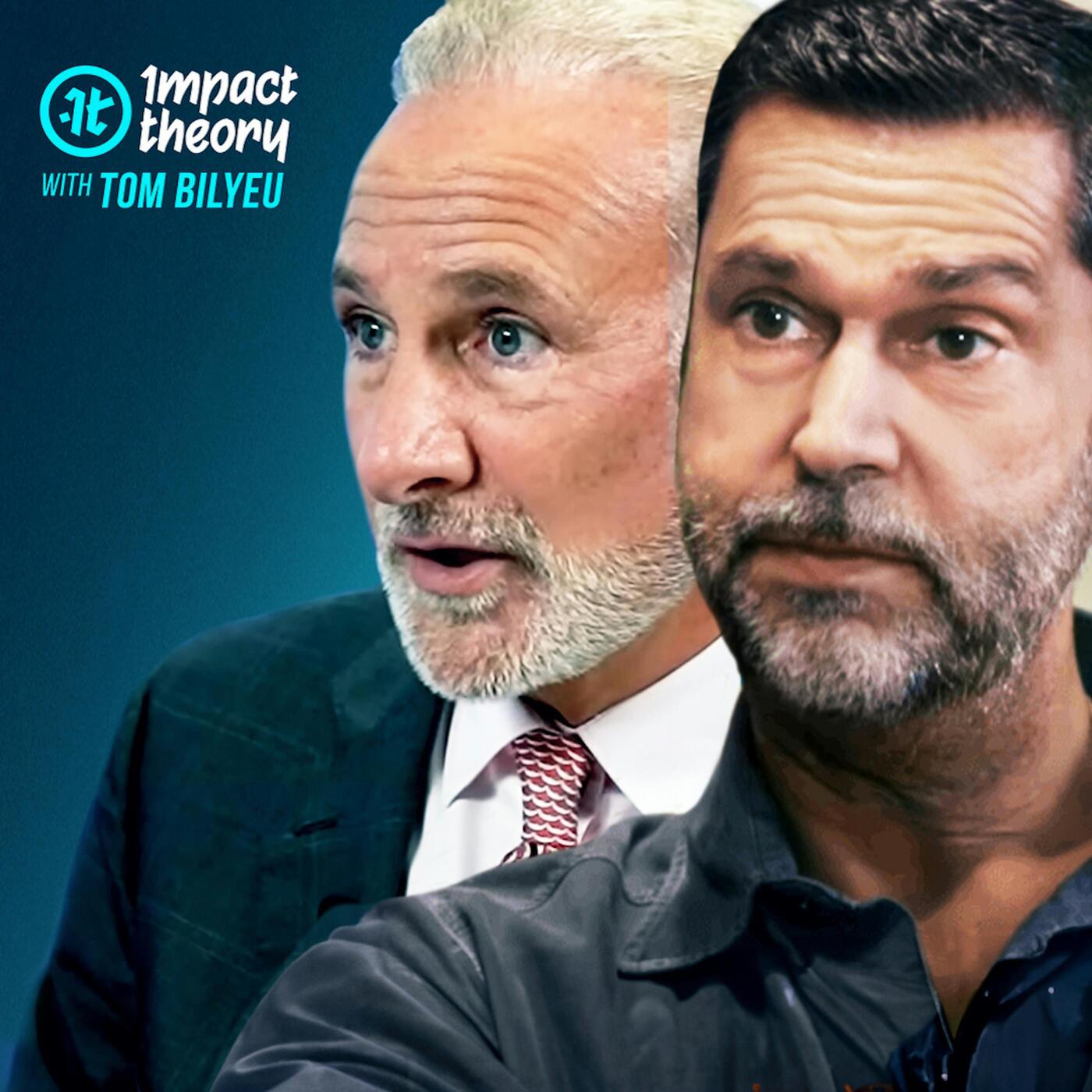
Tom Bilyeu's Impact Theory
Peter Schiff vs Raoul Pal Debate: Bitcoin Going To $0 or $1 Million & A Great Depression Coming? PT 1
01:31:38
Loading summary
Transcript169 lines
- [00:01]
Tom
Nine out of the 10 largest banks get it. They get that. VantageScore, the modern credit score, is the leader in predictive power, improving mortgage default predictions and saving lenders billions. Better predictions, better for your business with VantageScore.
- [00:15]
Peter Schiff
When you manage procurement for multiple facilities, every order matters. But when it's for a hospital system, they matter even more. Grainger gets it and knows there's no time for managing multiple suppliers and no
- [00:27]
Raoul Pal
room for shipping delays.
- [00:28]
Peter Schiff
That's why Grainger offers millions of products in fast, dependable delivery so you can keep your facility stocked, safe and running smoothly. Call 1-800-GRAINGER Click grainger.com or just stop by Grainger for the ones who get it done.
- [00:45]
Tom
You are living through a period of volatility brought on by ancient economic forces and a radical new shift in culture. The realities of the debt cycle have created the need for massive money printing. Right at a time where the culture is shifting from a traditional response to a digital native response. There is no clearer flashpoint than cryptocurrency. So joining me today for a debate about crypto and what the future holds for the economy is Raoul Paul and Peter Schiff.
- [01:15]
Raoul Pal
You are being slaughtered and you don't realize this.
- [01:18]
Peter Schiff
There could be a dollar crisis.
- [01:19]
Raoul Pal
They're debasing the currency by 15% a year.
- [01:22]
Peter Schiff
I mean, it is inevitable that it's going to happen, but does that just
- [01:25]
Tom
mean that we're crazy and that it's going to be fine?
- [01:27]
Peter Schiff
I'm not saying everybody is wrong. I'm saying that people that believe in bitcoin are wrong.
- [01:31]
Raoul Pal
You're missing the point.
- [01:33]
Peter Schiff
Why the hell would anybody buy these? These are obviously going to go to zero.
- [01:36]
Raoul Pal
I'm not concerned about the cliff of death.
- [01:39]
Tom
How do we make sense of these numbers? Or is this a guaranteed slaughter and we just don't know when? The tension between the way the two of you think has been really instrumental in helping me and I think countless others build a worldview that will help them navigate different moments in the economy. Well, I think right now we're going through a period of just massive transition. And so I come to the debate between crypto, not crypto with that in mind. So to oversimplify your guys stances, I see Raul, I see you as pro crypto. Peter, I see you as anti crypto. I know those are really gross simplifications. So I'd love to start with Raoul if you could walk us through your position, how you see crypto, why you think it's valuable, and then Peter will come to you for Your take.
- [02:30]
Raoul Pal
Okay, so I think we will both agree that things are pretty screwed up. We'll all agree what is really screwed up is the world is massively in debt, the workforce is shrinking, population growth is slowing down, it's slowing down GDP growth. So there's not enough GDP growth to pay or service the amount of debts out there. And what we found since 2008 that the answer to this debt issue has been printing of more money. Debasement of currency. People think of it in terms of, at first they think it's going to be inflation, as in the price of CPI goes up, but it's actually not. It's actually something much worse is wages don't rise, but assets go up because optically you're debasing the currency. Your future self is getting poorer because assets are all about storing wealth for future deferred consumption. But what's happening is you can't afford as much of that now. And so your future self is in fact poorer. So a classic example is a 35 year old now in the United States getting married, having kids, a house is very expensive now compared to when Peter and I were young, it was relatively cheap. 3 times incomes. Now it's like 10 times incomes. So there's no real way of getting up the ladder. The equity market is much more expensive. Your kind of percentage share of the S and P is so much less. So the advantages that your parents had are not available to you. So that's a problem for society overall is this issue of debasement of currency. The governments are doing it because there's no way of paying the debt. So what you're going to have to do is continue to print money. So then if that is the case, and I found out in this everything code analysis that I talked to you about, what we found is since 2008, they reset interest rates. It's like a debt reset. The debt jubilee happened. It was everybody was given the chance to not pay interest and everybody reset their debts on this three to five year time horizon. And so four years is the middle and we've got this perfect four year cycle. All assets are now incredibly correlated with this cycle, whether it's emerging markets, whether it's the dollar, whether it's rates, whether it's crypto, whether it's gold, whether it's equities, everything. So if we've got a super correlated environment where asset prices keep going up because of debasement of currency, that is the optics, because the value of the currency is going down, then your job is to find something that offsets it. So the rate of debasement by my calculation is about 15% a year on a globalized basis. So your hurdle rate is 15%. Now, equities have done something not far off that, but that just means you're not actually making any money, you're actually just standing still. Nasdaq, which is in a secular trend, has actually beaten that 15% hurdle rate somewhat. So it's actually helped. The traditional way of doing it would have been gold. And I've been a long term gold investor, I've always liked gold. But gold has not done particularly well in recent years. Against debasement on a globalized basis, it still works beautifully well as a global currency and against global debasement over time it works. But the really strong debasement we've been having in recent years, it just hasn't done well enough. And many of us from the macro world started thinking, okay, well we need to find what is this hedge, what is the right way of doing this. And that's where crypto, which I've been involved in for a long time, started to really fit in here, because it offers a bunch of ways that the financial system can use it. In an overly indebted system where you've got a collateral and then like 30 uses of that same collateral, so nobody owns anything. You own a fraction of what you think you own in an indebted system. Same with a bank. You have money in a bank, it's not your money, it's actually the bank's money. And that's been proven time and time again. Bank bail ins in Europe were particularly bad. So we've got a broken financial system and the blockchain rails are something that's actually very useful. We can figure out who owns what at any point with instant settlement. So it reduces a lot of the risk of the settlement layer. But also you gave the rise of cryptocurrencies which also have this supply and demand dynamic that's interesting. There's a limited supply and it has the properties somewhat of digital gold. And that's worked very well if you look at that, because you've got this technology adoption of the blockchain plus this store of value or this collateral layer, it's massively outperformed everything. So it's been a phenomenally good asset. Even with these massive drawdowns on route, we have enormous drawdowns. Monstrous. And still it's the best performing asset in all recorded history, almost on any time horizon. So it makes it very difficult to allocate any money in anything else. And that's why I've struggled. I just do every chart against Bitcoin or every chart against the Fed balance sheet and try and say, okay, well, what goes up? Gold has actually gone down versus the Fed balance sheet. I think that's more of a temporary state of affairs than a permanent state of affairs. Again, I'm actually not an anti gold person whatsoever. I just think when you've got technology plus gold, call it that as a narrative, you're always going to do better. And in our job to help people navigate this journey, if you're 65 years old, golf does a great job for you. If you're 35 year old, you ain't going to get anywhere. You're going to have to. You have to gain wealth, not just protect wealth, because you don't have it when you're young. And that's the difference here. This is the core difference to me is there's a suitability factor for different types of people and you're trying to solve different problems.
- [08:48]
Tom
Very well laid out. Peter, what's your position? How do you come to your worldview?
- [08:53]
Peter Schiff
Well, I agree with Raoul that inflation is a problem. Unfortunately, it's the path of least resistance for politicians to go down. It's the way they finance their spending, it's the way they buy their own reelection. It's the way they avoid having to be honest with the electorate and tell them the truth about how broke they are. And it's really a hidden tax. Instead of taking your money by taxing you openly and directly or even indirectly through a sales tax, they surreptitiously rob you of your purchasing power by just creating money out of thin air, usually with a complicit central bank. And then they spend that into circulation and that drives up prices, whether it's goods prices, asset prices. But what's happening is the value of each monetary unit is going down as more of them are spent in the circulation. And that's going to continue. In fact, that's going to accelerate based on the fiscal predicament that we're in, based on the demographics. Certainly in the US we have the baby boom. I'm one of the younger baby boomers, born in 1963. 1964 is the end of it. But I'm 60, I'm going to be 61 in March, so I'm theoretically four years away from cashing or collecting Social Security. But there's a lot of people in my generation, there's not a lot of people in the generations that follow with the ability to make good on these commitments. So the Ponzi is imploding. So inflation is basically, that's what they're going to do. Now. I think that they're playing with fire here. I think politicians and central bankers probably think they can control it and it won't run away from them and turn potentially into hyperinflation. And I wouldn't be so sure. I think a lot of politicians have overestimated their ability to keep that genie anywhere near the bottle once, once it's, once it's out. So I think there's a lot of inflation and so it is a problem that you need to deal with. But I don't think the solution is to invent a make believe asset and then all pretend that that make believe asset has value because of some artificially imposed constraint on supply and ignore the fact that there's an unlimited number of other cryptocurrencies that exist that, you know, for most practical purposes are actually better than Bitcoin. They're cheaper to use, they're faster to use. To the extent that you want to use Bitcoin, which nobody does, because it's not a very good cryptocurrency. I mean, it's certainly not a store value, but it's not a good medium of exchange or unit of account. I mean, there are plenty of other cryptos that actually fit that bill better to the extent that somebody wanted to use them for that purpose, but they don't. I mean, everybody uses a crypto to gamble. I mean, that's the main use case. And in fact, that's what's happening now with these ETFs. The ETFs have simply provided yet another way to gamble on Bitcoin. And it's ironic, now you have all these people buying Bitcoin through a third party custodian who's charging a fee. I mean, you're getting everybody back into the very financial system that they were supposed to be leaving. And I keep hearing these people on television say, well, you know, it's so hard to buy Bitcoin. It's so difficult. And this makes it easy. Now everybody can buy it. I thought everybody could buy it. Before the beauty of Bitcoin was supposed to be it was so simple and easy. You didn't need a third party, you need a custodian, you need storage charges. I mean, so it's. All they're doing is now trying to convince Wall street to buy this asset which has no fundamental value, has no income, has no Earnings? No, nothing. But as long as we keep buying it and nobody sells it, well, the price will keep going up. And we can all operate under the delusion that we're getting rich as long as nobody tries to get out. And everybody keeps pretending that they've got all this money because on paper, they've got something. But it's gonna be very different when people try to get out. And I think it's gonna be very noticeable with these Bitcoin ETFs. Cause I think a lot of the money that's going into the ETFs is trading money. I think a lot of it came out of gold stocks. I mean, if you look at what's happened in the last week or two, gold stocks have been clobbered. Even though the price of gold is unchanged to slightly higher. You've seen 10, 20% drops in big gold stocks. I think maybe they've been selling them to put money into Bitcoin ETFs. But I don't think that money is married to those ETFs. I think it's there for a trade. A lot of people might even have stops beneath the market looking to get out if the market turns. But I think people are gonna find it's a lot easier to get money into these ETFs than to get it out. I think it's just gonna go to money heaven. Because, you know, when we've had these big drops in bitcoin before, you know, what tends to happen to stabilize the market is all of a sudden there's a bunch of tethers out there. And bitcoin gets bought using fake dollars. But when these ETFs, when people who own the ETFs sell. Now the ETFs take the Bitcoin that they own and they sell them on the market. They can't get tether. They need real, actual dollars to return. They can't send the shareholders tether. So there could be just a real vacuum. You saw like a little blip yesterday. I think Bitcoin dropped from 63,000 or 60. Yeah. Or 64,000, wherever it was, to under 59,000, $5,000 in, I don't know, like 30 seconds. And, you know, it came back. But I mean, it could drop a lot more than that in 30 seconds or a minute. And I think it will. Maybe there's some trouble. We'll see A lot of these bitcoin mining stocks in the last couple days have been clobbered. I don't know, you know, what's special about them, but they've dropped substantially in the last couple of days. So we're starting to see some resistance here in some of these names buckling. But you know, this is just, to me it's a speculative mania and this is not the answer to the problem. People are creating a whole different problem with the, with these crypto tokens. So if, oh, I wanted to say. So it's not like I don't, I'm anti crypto or I don't see value in crypto. It depends on what you're talking about. So if you're talking about blockchain, if you're talking about the potential to use a cryptocurrency actually as a medium of exchange and a unit of account, which would mean it would be tied to something with value. Stablecoin, obviously if you tie it to something like the dollar or the euro, you don't have the real long term store value. You don't have an inflation hedge. But you do have a medium of exchange. You have a unit of account. I think the ideal marriage is between gold and blockchain. If you tokenize gold and put it on a blockchain, you can have a medium of exchange and a unit of account, but you actually have a real store of value. You have something that is a superior monetary instrument to any of the fiat currencies that are out there. And it's far superior to Bitcoin because once you tokenize gold and put on a blockchain, the transactions are faster and cheaper than the transactions with Bitcoin. But you have a real commodity that can store value. See, when people try to say, well, Bitcoin is, you know, yeah, it doesn't work as a currency, but it's a great store of value. It's a lousy store of value because there's no value. You have to have value before you can store value. Bitcoin has a price and people confuse price with value. You could put a price on anything. Doesn't mean it has any value. It just means that somebody wants to buy it. But they may want to buy it for all sorts of reasons. People want to buy bitcoin because they think it's going to keep going up. It's the greater fool theory. I'm going to buy it because somebody else will buy it and pay more. But that doesn't work. Eventually it collapses and you can't store price. You can store value and sometimes price can be very low and there could be good buying opportunities. You can get a good deal if something of Value has a low price because of the market at that moment. But bitcoin only has price. It has no value. And so it can't be a store value. And just because some people bought it and got rich. And Raoul maybe made a lot of money in bitcoin. I mean, I know a lot of people who did. I'm here in Puerto Rico with a lot of bitcoin whales. There are a lot of guys here that got into bitcoin ether or you name it, early on. And yeah, they made a great trade. They got into it when nobody was buying it. They put a big money on it and it went way up. But, you know, the majority of the people who own bitcoin are not making a lot of money in bitcoin. I mean, bitcoin, yeah, it's back up to 60,000, but it was at 60,000 three years ago. You know, it's had a roller coaster. It went down below 20,000. Now it's back up. It's kind of been moving sideways over the last few years. So it hasn't done anything as far as kept up with inflation over that time period. Yeah, if you bought it a year ago after it dropped, and you sell it now, you have a good trade. But if you wrote it all the way down and all the way back up, you haven't made anything. And of course, if you don't sell it and it goes right back down and there's no way to know, let's say bitcoin collapses again from the 60,000 level, just like it did a few years ago. It may not stop it. 19,000. What if it goes to 10,000 or 5,000? Who the hell knows how low the next drop is going to be? And maybe after that happens, they manage to get the price back up again and then it collapses and eventually it collapses and never comes back. So I think people who are getting out of the dollar or the euro and buying bitcoin have jumped out of the frying pan into the fire. So you don't have to reinvent the wheel. If you want to get out of fiat currencies, you can own gold, but you could also own other good inflation hedge assets, real assets. You know, most of my money isn't in gold either. I have actually now I put a lot more money into gold stocks personally, in the last week because I just thought they were giving them away. And so I wanted to buy more. But I have a lot of assets around the world that I own. I own shares of businesses that generate a lot of income selling Products providing services that people really need and that people will pay higher prices to get. And those companies pay me lots of dividends. And as inflation drives up prices, those companies increase their prices and pay me higher dividends. And I own real assets that are not losing value. I own the property, the plant and the equipment, the iPad, whatever these companies own that are tangible, real assets. If I'm a shareholder, I own a piece of those real assets. And you can own real estate, farmland or land where you can grow trees or mine metals. Real land, productive land, or you can have lands with factories on them or things like that. People own residential real estate now or commercial real estate, depending on where that is. Some of these markets could, could have some problems in the near term. But real assets are something that you want to own when inflation is the concern and likely to get worse. You don't want to own paper, you don't want to own bank deposits, you don't want to own annuities, things with a fixed income, cash value in an insurance policy, muni bonds. These are all the things that lose value. Inflation taxes those assets. And what inflation really does is it transfers wealth from debtors, from creditors, rather to debtors. So the debtors get their debts wiped out, and the creditors see their assets wiped out, their savings. And the biggest debtor in the history of the world, maybe even the history of the universe, as far as I know, is the United States government. And so the United States government is the main beneficiary of inflation. And clearly they're going to create it. They create inflation because it suits their purposes. The only problem for them now is they've got this national debt with such a short maturity that they're in the predicament where if interest rates go up, which they should, they're in a huge problem because they can't pay, which means the Fed has to play an even important role in monetizing that debt, which is why the risk of inflation running away is so great.
- [21:46]
Tom
So we're definitely going to go down the where do we go from here debt, how this is all going to play out. But I want to keep the, the, the first collision point here in focus, which is, is bitcoin the right answer to the problem? You guys both seem to agree on the problem. We're printing money, we're creating inflation. You've got to find a safe haven. Where do you go from there? So my question is, always, is a big part of the appeal of bitcoin and cryptocurrency in general, simply the volatility and this is a culture that is responding by becoming gamblers, or is the appeal of bitcoin specifically, is this a change in the frame of reference of the old guard that looks at gold, which is the result of an exploding star, literally. And so, hey, you're not going to come by any more of that very easily. And so that's why all cultures over time have gravitated towards that provably scarce resource. So is, is volatility the thing? And one way to put our finger on whether that is what is driving Bitcoin's adoption or not. Raoul, would be a question for you, which is why didn't Satoshi tokenize gold and make that bitcoin? Why didn't he back it by anything other than thermodynamics?
- [23:06]
Raoul Pal
Well, we kind of have a tokenized gold and it fucks everything up. It's called the futures market. Because still gold is a very physical asset, as Peter rightly says, and to move it around the world is difficult. So you're moving claims around the world even on blockchain. Now as far as I'm aware, the Macau exchange for Gold is going to tokenize. There's a bunch of people tokenizing gold. We've seen gold things. Great, it's maybe a more efficient settlement rail or an ownership rail, but it's not instant transfer of the actual asset itself. If I transfer you a bitcoin, it goes straight into your ledger wallet, let's say, and you own it, it's yours. It's self custody. Gold is more difficult to self custody just because of its size. Now many people around the world do self custody of their gold and that's fine too. Again, I don't have an issue. But in a world of 8 billion people where we live on the Internet, it actually is nice to have an asset. And Peter's absolutely right. We've memed a trillion dollar currency into existence. We've memed it. It's just human narrative. But guess what? So is gold. So is everything that we do, including religion. Everything is a meme. Memetics rule the entire way that humans understand the world around them. And because we believe something to be true, it is true to us. So we believe that this digital asset that is scarce is valuable. Peter's right. There are other blockchains that are much more effective. And by owning those cryptocurrencies, they're not currencies. And this confusion over there's all these cryptocurrencies, they're all competing against bitcoin, they're not these are networks where you own a tokenized part of a network and the network generates fees, you make money. It's like owning shares essentially, but somewhat different. Bitcoin itself is, because we believe it to be true. It has the sorts of properties that we as humans think of as holding value, as does gold. Certain other things don't. Paper physically doesn't. Right. Even paper money, but paper itself, it destroys copper over time, destroys silver over time, erodes, but gold doesn't. So gold has this long term value. In a digital world, those properties have been mimicked, but even honed down to a way that everything is knowable in gold. Well, when the price is high enough, the gold price becomes cyclical because the miners will find new ways of getting gold out of the ground. And so supply adjusts and brings down price, which is fine in bitcoin. You can't do it. So it's really a function of demand in everything in bitcoin. So it's the function of how many people believe this to be true, that this asset has value. And when you go back and say, well, people shouldn't do this. Nobody has the right to tell people what they should or should not do. This is the best performing asset the world has ever seen. It's, it is up 6 million percent since we first put it on real vision in 2013, 2014, it's up 380,000%.
- [26:24]
Peter Schiff
Wow. You know, if Bitcoin is 1,010 years from now, you could still make the argument it's the best performing asset in the world if you want to start from that point in time. So it doesn't matter if the people didn't own it when it was pennies.
- [26:42]
Raoul Pal
That's a little bit disingenuous because it actually is the best performing asset in the world on a 10 year, 5 year, 4 year, 3 year, 2 year, 1 year basis.
- [26:49]
Peter Schiff
It can't be on a 3 year basis because it's about unchanged. Right. It was at 6, it was over it's record.
- [26:56]
Raoul Pal
You're taking an all time high as the yardstick. Right. Three years ago was March 2020. Was March 2021. It was much lower.
- [27:08]
Peter Schiff
Well, when did it hit 60, 65, 69,000. When was that?
- [27:12]
Raoul Pal
Like November 2021.
- [27:14]
Peter Schiff
All right, so from, from that point. But yeah, okay, so we can take a big rally. It's just, it's. Peter, Bitcoin is up 40% in the last few weeks. So obviously everything looks like a valley when you're up on this hill.
- [27:29]
Raoul Pal
Question is, has bitcoin performed very well over its lifetime. The answer is provably, mathematically yes. That's okay. Doesn't mean you have to like it. Doesn't mean you have to like it. But it's provenly gone up more than any other asset.
- [27:46]
Peter Schiff
Look, let's see what happens when the people who own it want to get rid of it and do something with it. It's been around since the choice I
- [27:53]
Raoul Pal
want to make, it's been around 14 years. We've gone through four cycles where it's gone down 90% and it still is the best performing asset. So your oh my God scenario goes down 90%. I've gone through three of those myself. It doesn't. It still doesn't.
- [28:12]
Peter Schiff
All right, well, you're going to go through another one and it may not come back next time. But the point I want to make a couple of points that address what you said. So I agree that it is easier to store bitcoin. I don't know. Obviously we don't need these ETFs, that's just the manufactured to try to pump up demand. But yes, it's easy to store your bitcoin relative to gold. But the difference is when you're storing gold, you're storing something. And so since you have something, it takes some effort to store it. When you're storing bitcoin, you're storing nothing. So what good is the fact that it's easy to store nothing? Yes, I've got a very safe, secure supply of nothing. And Bitcoin though. As long as people think it's going to go up, as long as they maintain that delusion and more people want to buy it, sure it will have a price. And if enough people don't sell it, then some people can. Right. There are always going to be some people get out.
- [29:18]
Raoul Pal
That is the nature of all investments.
- [29:22]
Peter Schiff
No, it's not. No, it's not. When you talk about gold, Gold is an actual commodity that is used. Does what in industry? It's used. It has properties that are important.
- [29:34]
Raoul Pal
What share of gold usage of gold that's mined is actually used in manufacturing?
- [29:40]
Peter Schiff
No, about half of it is used in jewelry.
- [29:43]
Raoul Pal
That's jewelry. That's just storing of gold on your physical body. How much is actually used?
- [29:50]
Peter Schiff
No, that's used. I got a gold watch here. I didn't, I didn't buy a tin watch.
- [29:54]
Raoul Pal
And why did you buy a gold watch? Because you want to wear gold.
- [29:58]
Peter Schiff
Because it's. No, I can go swimming with the rot watch. It doesn't rust. It Looks beautiful. It lasts.
- [30:05]
Raoul Pal
It scratches. Scratches because it's gold.
- [30:08]
Tom
Guys, let me jump in here. I want to ask a very pointed question on that fact. So gold, if half of it is being used for jewelry, I think that's a very valid point. My question is, how would you feel if somebody were wearing their cryptopunk as
- [30:23]
Peter Schiff
a piece of jewelry, but they're not wearing their bitcoin, they're wearing something that has bitcoin written on it? You don't need the bitcoin. If you want a gold watch, you gotta have gold.
- [30:34]
Raoul Pal
Actually, it's not true, Peter, because if you have an inscription on bitcoin, like a bitcoin ordinal, which is an nft.
- [30:41]
Peter Schiff
Yes, I know what those are. I created some myself and they are
- [30:44]
Raoul Pal
stored on the blockchain. You actually need bitcoin for it to exist.
- [30:49]
Peter Schiff
Yes, you need a satoshi. Yes, you need a satoshi.
- [30:51]
Raoul Pal
When you look at on Twitter, I have my cryptopunk. That actually is also a claim on Ethereum.
- [30:57]
Peter Schiff
Yeah, all right. But it's all part of the speculation of bitcoin. It's not about wearing your jewelry. But again, gold. Gold is a conductor of electricity. It is the best conductor we know. It's the best conductor we have. It's used for all sorts of things in electronics, it's used in medicine, it's used in dentistry. It would be used more if the price was lower. But the price is high. But the reason that the price is high is when you own gold, you are storing the future use of that gold. A thousand years from now, somebody could use that gold to conduct electricity. You don't know what they're going to use it for. I talked about this telescope that we sent into space, this Hubble telescope, and they had to coat these huge mirrors with gold. Now, that was very expensive. They didn't want to coat it with gold, but that was the only metal that was going to work. So they had to buy gold to coat these mirrors. So when you own gold, you own all those properties. Those properties are not going to go away over time, and you're storing them for future use. Bitcoin doesn't have anything that anybody uses for anything. I mean, as long as people want to gamble on it, there's a price. But people don't have to buy gold for money. There's always going to be people who need gold in industry who are going to be buying it. And central banks. Yes, central banks buy it as a monetary asset because they need something to back up their fiat. They can't just back up one currency with another currency. They need something real. So central banks have been buying more and more gold. They have a lot more that they need to buy because their reserves are still too low. But you don't have that with bitcoin. You don't have industrial demand, you don't have central bank demand, you don't have jewelry demand. You just have speculative demand. And that's very fickle. Yeah, if the market's going up, the speculators will buy, starts going down, they're going to want to get out. But eventually the story blows up. People stop believing in the fairy tale. You talk about all these young kids that think they've reinvented the wheel and think that they know more than their parents or their grandparents. It's like, look, little kids believe in all sorts of things. They believe in the tooth fairy, they believe in the Easter bunny and Santa Claus, but they don't believe in these things for their whole lives. As they get older, they start to see the truth. And I think the same thing is going to happen with bitcoin. People are going to grow up and they're going to learn from the mistakes of their youth.
- [33:32]
Tom
Premier hosts on VRBO deliver quality vacation rental stays with fast responses and clear
- [33:36]
Peter Schiff
instructions so you don't have to worry about surprises. I asked our host a question about the house last night and he got back to me super quick.
- [33:44]
Tom
See, that's the premier host move right there.
- [33:46]
Peter Schiff
I wish I had a premier group chat. I asked them where we should have dinner last night and they left me on red. I know you saw it. It says it. Classic group chat move. Don't walk into a surprise book. A top rated verbo.
- [33:58]
Tom
Stay with a premier host if you know you verbo.
- [34:02]
Grainger Announcer
If you work in university maintenance, Grainger considers you an MVP because your playbook ensures your arena is always ready for tip off. And Grainger is your trusted partner, offering the products you need all in one place, from H VAC and plumbing supplies to lighting and more. And all delivered with plenty of time left on the clock. So your team always gets the win. Call 1-800-granger. Visit grainger.com or just stop by Granger for the ones who get it done
- [34:32]
Tom
really fast. I want to jump in here. I don't want to just move past this idea of that gold would be used more if the price were lower. But the price isn't lower. Why is the price lower? Because it's really thought of as a store of value, as a flexibility. So store of value and Flex seem to be the thing that actually drive the value of gold. And I think I have a hypothesis that the core thing that drives the difference between you two as archetypes is a belief that either digital things are real or digital things are not real. And if you believe, like I do, that the future of the world is more digital, where people will spend more of their lives in the digital world, where I heard the story of a kid, their parent came to them and said, why do you want a fortnite skin? Those aren't real. And the kid was befuddled. They had no idea what the parent meant by it's not real.
- [35:20]
Peter Schiff
Yeah, but that argument is really a straw man. Because I believe in digital things, like, you know, music. I don't have to go out and buy a record. I can listen to music digitally. There are a lot of things that I can do digitally. But just because I believe in digital, that doesn't mean that I can eat digital food. Right? Food can't be digital because I'll die if the only thing I eat is digital food. I'm not going to get enough calories and I'm going to die. I need actual food. I can't replace food with a digital image. And that's the same thing with gold. Gold is a real metal. Digital gold is not gold. It's nothing. Now, yes, if I want to have a character and I want him to have all kinds of gold, fake gold, jewelry in some video game, sure. But I mean, it's not worth that much because you could replicate it indefinitely. You don't need actual gold to have an image of gold on a computer screen. That's why for a while, they had people that were buying digital real estate. Oh, I got beachfront property. Well, who cares about beachfront property in a computer game? There's an unlimited supply of that. I mean, if you want an actual beachfront property in the physical world, that's more scarce than a digital beach, you know, that your avatar can lie on. So it's very different. It's not like I'm not into technology. Sure, I can appreciate it, but I can't live in a digital house. I can't eat digital food, and we can't have digital gold. Gold's gotta be real in order for it to be gold and do the things that gold does.
- [37:04]
Raoul Pal
So here's an interesting thing. Tom is in a digital world we talked about, and as you rightly say, every day is more digital than the last. That is a endless trend that we are seeing. And in a Digital world, we can make infinite amounts of anything digital, and we've seen that. So stuff like email has gone from being something we paid for to something that's free. Cloud compute, everything compute itself is exponentially declining in cost because everything digital almost goes to zero because you can make infinite amounts. So that's a real problem in a digital world. Until the invention of blockchain, which creates digital scarcity. That's a mathematical way to create scarcity. So scarcity is the asset. That is why gold is valuable. It is a scarce asset. That's why silver is less valuable than gold. There is more silver. There's plenty of silver. That's why copper is less valuable than gold. Scarcity is what we as humans value. And in a digital world where everything can be created infinitely like food, in the physical world, what you need to maintain value is something. And that's what blockchain did. So that's why younger generations who live more in the digital world say, okay, this is great, because I'm living in this digital world and I want it interchangeable with my physical world. And therefore I'm happy that digital assets have value. And I can think of bitcoin as the foundational value layer for all of this. And that makes sense.
- [38:44]
Peter Schiff
Being scarce is not enough. You have to be scarce and you have to have valuable properties that people want. And so gold has very valuable metallic properties. It's the most useful metal on the periodic table. And yeah, there's not a lot of it. So it's something that we need. It's very useful, yet it's scarce. So it's going to have a high price. I mean, something like air. We all need air, right? Air is very valuable. Without air, we die. But there's so much of it. It doesn't have a high price because there's a lot of air in the atmosphere as opposed to how much gold there is in the ground. So you could say, yes, bitcoin is scarce, but it doesn't have any value. And so there could be one bitcoin. If nobody wants it, then it's worthless. Right now, yes, people want the 21 million Bitcoin, but I'd rather talk about the 2.1 quadrillion Satoshis. Because when you talk about gold, in order to actually do something with gold, you need a certain quantity of gold, right? A little speck of it isn't going to do anything. You need a particular quantity to do a job. But with bitcoin, you know, whether I have an entire bitcoin or one Satoshi doesn't matter. I can't. I can't do any more with a bitcoin than with a satoshi because I can't do anything with either one. And so there really is 21, quadrillion, satoshis. So there's plenty of satoshis to go around. Everybody can have a few hundred thousand of these things on the planet Earth. But not only is there an unlimited supply of, or there's a limited supply of these satoshis, there's an unlimited supply of other crypto tokens that can be created. More than 20,000 have already been created. In theory, 200,000, 2 million can be created that have properties that are similar to or even improve on the properties of bitcoin. And so what, I mean, what is value about you? Yeah, it's all the rage now. People are talking about it. But in 100 years, will anybody even remember what bitcoin was? I mean, most people probably won't know about it. I mean, how many people even know about, know Tulip Mania or stuff like that that happened in the past or Beanie Babies? I mean, these things are like fads. They come and they go. I mean, some people may study it if they study history, but to think that in 100 years anyone's even going to be thinking about bitcoin.
- [41:09]
Raoul Pal
What gives you the confidence to say you're so sure? What would say, make you say, you know what? I don't know. This is interesting because it's obviously, obviously people like it. It attracts a lot of investors, a lot of smart people. If you go and see Dan Moorhead or Dan Tapiero, do you say, listen, guys, you guys are morons. You're just believing in. So you wouldn't say that. You wouldn't.
- [41:32]
Peter Schiff
Well, look, there are a lot of people. A lot of people on Wall street have done foolish things in my lifetime, whether it was dot coms, subprime mortgages. I mean, people were doing a lot of foolish things with their money and they lost it. And I know Wall street has a tendency just to try to make money off of any fad. I mean, whatever's popular. There's an expression, feed the ducks while they're quacking. And that's what Wall street does. It's like whatever the public wants, they supply it and they take a fee. And so if they could get a lot of interest in bitcoin, then they're going to create these products and they're going to make it so that people can trade. They don't care. They're operating casinos, they're making money. But what you should think about is not, okay, maybe I'm wrong, Maybe there's a slim chance that I'm wrong, But there's a slim chance that you're right. I mean, you're betting on a long shot. The odds are it's not going to work, Right? So it's a real long shot that this project is actually going to succeed. Right.
- [42:33]
Raoul Pal
Would you be less concerned about the whole thing if gold had actually gone up?
- [42:38]
Peter Schiff
No. I mean, look, gold has gone up.
- [42:42]
Raoul Pal
So gold mining, for example, Gold mining equities have gone nowhere in 45 years.
- [42:48]
Peter Schiff
Well, gold mining equities are not gold. Gold mining equities are not gold. So gold. Gold in the last hundred years has gone up 100 fold. So the dollar has lost 99% of its value. And even if you go back to the year 2000, gold has gone from under 300 to over 2000 in the last 20 years. So it's just that during the last 10, 11 years, where Bitcoin has been on the scene, gold has been very stable, while bitcoin has gone way up. That's in your reference point.
- [43:19]
Raoul Pal
Let's assume you were less fixed on your view and you saw this new thing and saw that people also thought of it in the same kind of way that people thought about gold. And doesn't it make you go, yeah, that's fascinating. I wonder if this really could work in the digital age. But instead you'll say, no, no chance. They shouldn't buy it. They're all idiots. What makes you so sure? Like, I would never say about gold, that's stupid. I would say I understand it. Of course. Gold is interesting, but it's a weird way to approach it, is here is literally tens of millions, if not hundreds of millions of people owning something, and you're saying they're all morons. I'm right. Regardless of the performance of 6 million percent, it's all just beanie babies. Is that really what you think?
- [44:16]
Peter Schiff
I'm not saying they're all morons. There are people that are trading it because it's going up and they think they'll get out before the music stops. And maybe they will.
- [44:24]
Raoul Pal
How long does this go on for? I mean, we're 14 years in, Peter. We're 14 years in.
- [44:30]
Peter Schiff
But what you're saying is, why don't I accept that nothing is something? Why don't I believe in this fantasy like everybody else? Why am I the same person when you have all these insane people? You should be asking yourself is why do I believe this nonsense? I mean there are other smart people. I'm not the only person.
- [44:50]
Raoul Pal
I can hold two competing ideas in my head at all times. And it's a probabilistic game.
- [44:55]
Peter Schiff
It's not that I don't understand Bitcoin. I understand it, that's why I know it's worthless. But there are plenty of other smart people who look at it the exact same way as me.
- [45:05]
Tom
I'm going to jump in really fast because the only way forward is to identify the base assumptions that drive your guys worldviews. So as we go through this, Peter, what comes to the forefront from you is that the belief system is if something doesn't have intrinsic value, then all it is is gambling. Do you agree with that statement around your beliefs?
- [45:28]
Peter Schiff
If it doesn't have intrinsic value, it's not going to be money. You know, and now currency is a money substitute. And currency doesn't have any intrinsic value unless it's backed by gold or something else. But then its value is derived from what backs it up. But fiat currencies which we use now have no intrinsic value. But they have governments behind them, they have laws that make them legal tender. They have a government that demands payment of taxes in that currency. So you can have a fiat system that will work. It won't work as good as an honest system based on gold, but it can work temporarily. And sometimes temporarily can be a long time. But my premise is that if bitcoin doesn't have an actual use beyond my giving it to somebody else or selling it to somebody else, whatever, other than as a potential exchange, if its only use is I can buy it and sell it to somebody else, who buys it and sells it to somebody else. It's a Ponzi, it's a pyramid, it's a chain letter. There are a lot of ways to describe what this is. And they've been doing this for hundreds of years. It's not new. All that's new is the digital part. But all the other factors have been tried and over and over again. It's just a modern version of this. And it's going to end the same way that in all these prior pyramid schemes have fallen apart.
- [47:06]
Tom
Okay, so I'll say it a different way because I feel like I understand your beliefs, but I'm having a hard time getting you to agree that I understand. So gold is backstopped by the fact that it can be used by other things. Therefore it is the wiser store of value because the price Is never going to fall below what its usefulness in the real world is.
- [47:30]
Peter Schiff
Well, yeah, gold is a commodity like wheat, like oil, like corn, like cotton. And people need gold just like they need these other commodities. The difference is, you know, gold is a better commodity to store because it doesn't tarnish, it doesn't rot, it doesn't decay, and it's relatively easy to store. I mean, it's certainly a lot easier to store gold than cattle or oil. You know, of all the commodities that you could choose to store, gold is the easiest. And so that's one of the reasons that we use it now. Is it easier to store bitcoin? Yes. But then again, you give up the fact that you're storing something, you're storing nothing.
- [48:12]
Raoul Pal
Right.
- [48:13]
Tom
What I'm trying to get to is the core of why, Raoul, I think rightly, from a. Just understand the world. I'm not saying who's right or wrong. I'm just saying to understand the world. Raoul's reaction makes sense if you believe that belief in the item, the memetic ability to transfer the belief in the item is the thing that matters. And I think, Raoul, tell me if I'm wrong, but that you believe gold's value is driven in the vast majority by the mimetic belief that gold is a great way to store value.
- [48:47]
Peter Schiff
Well, no, its value is derived from its properties. But I agree with that. Bitcoin is purely a function of your belief of confidence. It's a giant con game. As long as we all believe it has value, then it can have a price and people will want it. But the question is, can you put your faith in that confidence enduring over time, that in the future people will be just as infatuated as and hold these beliefs just as strongly in the future? And I think the far off into the future you want to extrapolate, the harder it is to believe that that will be the case tomorrow. Will people stop believing in bitcoin tomorrow? Probably not. In six months? Well, probably not. But in 10 years, in 100 years, the further you go out, at some point, yeah. What's the odds? And so you can't be a store of value because at any point in the future, there could be absolutely no confidence whatsoever in bitcoin. To me, it's more of a fad. Yes, people are infatuated with it now because it's gone up and people have gotten rich and there's all this money being pumped into it. But who's to say that that's going to be the case? In the future, I think a lot of money is going to be lost in bitcoin. In fact, you know, far more people are going to lose money in bitcoin than have made money in bitcoin.
- [50:16]
Tom
That is very possible. So what I want to be clear, what I'm trying to do right now is simply state what you guys believe to be true, not convince you of anything else. Because we are in a battle for ideas in the greater world. And so I want people to understand the base assumptions that drive your guys's worldview so they can form their own. Peter, I feel very confident in saying that you believe the reason that gold has value is because it has intrinsic physical properties that people can use and that makes it valuable. And so that becomes a game of I don't need people to believe. So even if belief drives a certain amount of this, it really has usefulness. And that is ground truth for Peter Schiff and gold.
- [50:59]
Peter Schiff
The properties don't always have to be physical. They could be intangible. Right. You know, there's a value there. So I'm not, I'm not against agreed intangible assets.
- [51:10]
Tom
Okay, perfect. So now on the bitcoin side, on Raoul, your argument and take this up and tell me if I'm wrong, is that we are entering a phase of perception where the memetic value, the belief that computers for instance, are the future, it's a bedrock that people grow up with that, a certain subset of the world. And I actually put myself in this so I don't have to project into other people that they believe that the thermodynamics that you can represent on the blockchain to produce the bitcoin is, is real, is as real as an exploding star. Therefore, all that's needed is the memetic spread of that belief. And if that belief takes hold and it one hypothesis, I don't know that this is true. But one hypothesis about why gold is not going up in this time of massive inflation and uncertainty but bitcoin is, despite volatility, is that that belief is becoming more and more common. Now, who ends up being right on a long enough timeline, financially we will get to. But I just want to lay out and Raoul, please tell me if you disagreed with what I just said. That seems to be the set table.
- [52:28]
Raoul Pal
Just so we clarify something, just using technology, ChatGPT4 and the World Gold Council, 7 and a half to 10% of gold supply every year is used for use. So 90% is memetics to 92.5% it's we believe it to be so. Okay, so that is an element of humanity. But what you're touching on is okay, the technology itself, there are some elements of that. If we believe it's scarce enough, we can attach a value to it. That's mimetics. There is also the elements of. Okay, the bitcoin mining itself has created opportunities. So for example, we are seeing in the Middle east using gas flare offs, which is wasted energy, reusing that energy to create tokens which then are used to release that. We're seeing it with load balancing. So there's an element of, it's a way of sharing electricity in a world that doesn't do that very easily. But it's also something more. The physical property here is actually the physical property of the blockchain itself. The reason this goes up so fast is not because of mania, it's because it's an adoption of a technology. It's Metcalfe's law. So what you're finding is networks. As they gain adoption price gets a bit crazy. Now, in 20 years time, will bitcoin price be as crazy? Highly unlikely. Because it gets to maturity and it looks more like a mature asset. So people get confused. What we're doing here is saying what bitcoin's price is doing is saying, yes, there's the element of mimetics. It has this scarce value. Nothing in the digital world has scarcity. So this is interesting for humanity. It's not proven, it's not had a thousand years of history. It's interesting. It also has interesting properties in how it can reuse wasted energy or rebalance energy loads. Okay, that's interesting. But also what is the future expected value of the blockchain itself? Now we may say today or we would have said a year ago. Well, bitcoin blockchain is not very useful. But now we've started to see these ordinals and inscriptions which is using the blockchain for other things. We're seeing other use cases of layer twos built on bitcoin. There's more incentivization in a network, the more people that invest in it or join it to create other use cases. That is there's money around, there's money to do stuff with it. So we don't know what the future of the bitcoin blockchain is, but if enough money's attracted to it, it will create other use cases because it's a network with a lot of people on it. So network value is a weird thing for somebody who it doesn't Live in the digital world. In a digital world, that's what's created all the value in Amazon, Google, Apple, Facebook. It's what's creating the value in Tesla. It's what the value is in ChatGPT, it's network effects. So we've got this incredible asset which has these scarce properties that solves a problem that we had in the digital world. It has some physical properties because what we can do with electricity and how it's mined and then it has the future expected value of the network. That to me makes it a very interesting asset. Now the question is, does it exist in 50 years time, 100 years time? I don't know. Nobody knows. Would humans use gold in 100 years time? Nobody knows. Just because they use gold yesterday doesn't mean they use gold tomorrow. So everything changes. People have used cowrie shells, they've used stone, they've used all sorts of things as a store of value. Bushels of wheat, that was a very common store of value back in Egyptian times. So take nothing for granted but observe when new things are happening and we're actually seeing people using these things in different and unique ways, you pay attention and it's driving a lot of value. That for me is enough because we're getting two elements here. We're getting the store of value plus the adoption of this technology that's driving
- [56:50]
Tom
it Is for you the volatility of the asset, the mimetic belief. Is that what makes this interesting to you or are you Bitcoin maxi, who really believes this needs to replace physical gold for reasons of anti seizure, better ability to store ownership, et cetera.
- [57:15]
Raoul Pal
So I believe in the latter, but that is a future. We're not there yet. And I'm an investor at core. My job is really to also make money out of trends. I'm trying to better my future as we all are. And so yes, I believe in the philosophy. That's how I got into it. I saw that this was probably a better answer for many of the issues within the financial system. Not for gold per se. Gold is fine, it'll continue being gold, I have no issue with that. But it just seemed to me that this was something that was going to solve the philosophical problem and the real problems of the financial system, the real core of it, who owns what in an overly indebted society? It's going to really do something there. And so if I can make money out of a solution, well of course I will. So it's both. But really, you know, how much longer am I on this planet. I'm 56 years old. Maybe I'll live for 50 years if I'm super lucky. What is my job? My job is, yes, if I think this technology is a good thing for humanity, I will help promote it the best I can. But it's also my own life and my family's life. And if I think it has investment properties that outperform other assets, of course I'll invest in it. Even with the volatility, because risk adjusted, even if you take from drawdown adjusted volatility adjusted whatever ratio, still the best risk adjusted reward of any asset we've ever seen. Fidelity produced this fabulous chart which is like, it's a dot plots chart of risk adjusted returns for all of these assets. And there's like gold and Nasdaq looks really quite good and et cetera, right? They're all clustered and there's a blank sheet of paper. And then somewhere up there in the far right is Bitcoin. The risk adjusted return is alien. We have never seen anything like this. So regardless of what people say about the volatility, everything else, the risk adjusted return is like an alien asset. We've never had anything like this. Which is why to me, when I simplify everything down, I just say this is the best macro opportunity of all time. We've got the best risk adjusted return asset that has the highest performance of any asset in history. It's being adopted at the fastest rate.
- [59:47]
Peter Schiff
You're looking in the rearview mirror. It may not look that way in the future. In fact, it's more likely to revert to the mean or way below the mean. It seems like if it's gone up so much in the past, there's a lot of risk that it's going to go down. I think you're ignoring that.
- [60:00]
Raoul Pal
You see all of these like Nasdaq and you're probably a bearer of the NASDAQ too. But all of these things are secular trends in a logarithmic charts because they're, they're secular trends. They're not cyclical. This is not the commodity.
- [60:14]
Peter Schiff
Bitcoin hasn't been around long enough to be a secular anything. It's been around for 12, 13 years. And really it's been around in the eye of investors for a much shorter time period, maybe five years.
- [60:26]
Raoul Pal
I mean, I've been investing since 2012, so I'm 12 years into this.
- [60:33]
Peter Schiff
Yeah, yeah, you, but most Wall street hasn't been into it that long. They got into it really 2000 time frame around there after it really went Up. They kind of got interested in it. They weren't looking at it back then.
- [60:46]
Raoul Pal
Well, that makes me even more bullish. Right? That makes me even more bullish. If they haven't really adopted it yet, they're in it.
- [60:53]
Peter Schiff
What do you mean, they're in it? They got all these ETFs now. They're in it. They've been promoting it. They've been touting it. There's been bitcoin commercials now for years. I mean, the top advertisers on cable TV are crypto companies. I mean, they're pumping and pumping and pumping and pumping and spending a lot of money to try to con the public into buying this stuff. And so they've suckered a lot of people in, but there's a limit to how much longer they're going to be able to do it. You can't do it forever. The bottom is going to drop out. And as far as the NASDAQ look. Yeah. I mean, there's a lot of liquidity. There's a lot of inflation. It's been driving tech stocks higher. I'm not short these stocks. I mean, I think the market could go up because I think the dollar is going to go down. But at least in the tech stocks, you know, a lot of these companies are real businesses. They may be overvalued, but they have some value. You mentioned a lot of companies that you say have networks like Tesla or Apple, but they make a ton of money selling products. Right. You know, I got a lot of Apple products myself. Apple is earning a lot of money. You know, you can argue about what the price of the shares should be, but you can't argue that there's a valuable business there. But with bitcoin, there is no business. It's nothing. It's like in sales, they say sell the sizzle, not the stake. Well, in bitcoin, there is no stake. It's just sizzle. So it's all being hyped up.
- [62:19]
Raoul Pal
It's not certainly true because the people who mine it get given block rewards. So they get.
- [62:23]
Peter Schiff
Well, yeah, if you're mining it, you make some money. Sure. I'm not talking about bitcoin. Mining could be profitable for now as long as I could sell it above thy cost of mining it. But that's different.
- [62:34]
Raoul Pal
But that crazy talk about intrinsic value.
- [62:36]
Peter Schiff
Selling Bitcoin, it's the same as business.
- [62:38]
Raoul Pal
See, Peter, it's the same as all mining. If the cost of production is above the price of the asset, people don't mine. And so supply is Reduced, or in this case, that the amount of hashing in the network, that is security the network gets.
- [62:56]
Peter Schiff
When it comes to bitcoin, the supply has really is very little to do with mining because almost all the bitcoin have already been mined. So the question is, with the 19 million odd Bitcoin that exists right now, forget about the couple of million more that they could bring on stream over the next few decades. The question is, with the 19 million that exists or however many haven't been lost, do people want to hoard them or do they want to sell them? And if they want to sell them, is there enough new demand to buy them? If not, the price crashes.
- [63:30]
Raoul Pal
What happens if China sold its gold? Oh, the price crash. Why would they do that? What happens if the Fed sold their
- [63:37]
Peter Schiff
gold but somebody would buy it? Somebody needs it.
- [63:40]
Raoul Pal
This is not an argument. 10% of all gold supply is used for industry. So if a central bank comes in and dumps their gold, like the uk,
- [63:50]
Peter Schiff
they have dumped gold, central banks have dumped gold before it gets absorbed in the market.
- [63:56]
Raoul Pal
The price went down. And so maybe the price of bitcoin goes down when people sell it. No shit. That's what markets do. Until you find the clearing price, it's normal. I don't see why it has to go to zero.
- [64:09]
Peter Schiff
Well, you know what, one of the things that I've learned over the years with bitcoin is it is like a religion and people believe in it the way they believe in a religion or a cult. And when you get to that type of mentality, there's no rational argument that you can make. I can't logically try to tell somebody that there's no God if they believe in a God. I mean, it's a belief system that you have and it's almost impossible to entertain that you might be wrong. So you believe in it. Believe in it. I mean, there's nothing I can do about it. And if you end up losing a lot of money, you lose a lot of money. And the problem is, you know, some people that lose a lot of money can't afford it. The best thing about bitcoin is that most of the people who are going to lose a lot of money are young and they got plenty of time to earn it back. And it's going to be a valuable lesson that people learn that they can carry into their older years the memory of all the money they lost in bitcoin.
- [65:02]
Raoul Pal
Could it possibly be you that learns the lesson?
- [65:05]
Peter Schiff
I don't think so.
- [65:07]
Raoul Pal
Okay.
- [65:08]
Peter Schiff
I mean, maybe I'm wrong. Maybe Warren Buffett is wrong. Maybe a lot of smart investors, maybe we all got it wrong and you guys got it right. I don't think that's the case. But you know, I suppose anything is
- [65:21]
Grainger Announcer
possible if you work in university maintenance. Grainger considers you an MVP because your playbook ensures your arena is always ready for tip off. And Grainger is your trusted partner, offering the products you need all in one place, from H VAC and plumbing supplies to lighting and more. And all delivered with plenty of time left on the clock. So your team team always gets the win. Call 1-800-granger. Visit granger.com or just stop by Granger for the ones who get it done.
- [65:52]
Tom
What would have to happen for you guys to reverse your opinion? So Ral, what would have to be true of Bitcoin down to zero for 10 years, 100 years, whatever before you give up? Peter, same to you. What? What would have to be true for you guys to reverse your opinion?
- [66:07]
Raoul Pal
For me, simply if people stop using the network, if there's less activity on the network, people start becoming disinterested. Then it's shown that its store of value principles erode. It would be the same with gold. And that's one of the reasons gold has been somewhat lackluster, because there's been less adopters of gold in a new digital world. So it's not done as well as it would have done historically in the kind of debasement environment that we've had. So if I were to observe in bitcoin itself, forget all the other crypto and I'm no bitcoin maximalist, as you all know. If we saw that people were using it less, there was less activity, less value was being transacted, less new people were joining the bitcoin network that is having wallets, then I would say, you know what, there's something wrong here. And is that persistent over time? If it's persistent over time, then the network may not work. And we've seen many of those things happen in the past. There's a possibility that happens. I don't think it's the highest probability, certainly not this decade. Could it happen after that? Of course possible.
- [67:24]
Tom
Now why don't you worry about that during the bear markets?
- [67:26]
Raoul Pal
Because, so, for example, in 2022 is a great example, is the market went down 70 odd percent, 75%, the number of active wallets in crypto went up 22%, 42%. So adoption was still ongoing. While price went down, activity was less. But then we're seeing okay, so if we step back and we hear, oh, governments are going to build on blockchain rails. CBDCs, all the banks want to put assets on blockchain rails. We're hearing gaming companies want to put these metaverse gaming experiences on blockchain rails. We're hearing, I was at the world's largest, one of the world's largest commodity trading firms in Switzerland last week speaking to one of their senior agricultural commodities physical traders. I'm like, and she's an investor in my digital asset asset management company. And I'm like, are you guys using blockchain? Surely you should be solving supply chain. She goes, oh, we've been using blockchain since 2021. So we are doing eight, I think, of the world's largest agricultural commodities houses are putting their letters of credit, their shipping, All of the kind of transit proofs, the supply chain and the settlement, all on blockchain. So going back to your question, Tom, when I see this, and I see the price of Bitcoin down 75% or the whole crypto space down 80%, you say, I have to ask myself, is adoption stopping or is just this a cyclical factor that's driven by the business cycle? And until I would see otherwise, unless these things go away, then I can only assume that tomorrow is more digital than today and tomorrow more people will use blockchain technology than they did yesterday. Simple as that.
- [69:36]
Tom
Peter, what would you have to see for you to change your mind?
- [69:39]
Peter Schiff
I don't know. It's going to be tough. I mean, obviously it hasn't been changed yet. I mean, I've been watching bitcoin from a few dollars a token to 60,000, right? So price obviously isn't going to do it. The whole time I've been observing bitcoin and involved in interacting with the whole community and I've seen it grow and I've seen more and more people believing in it and speculating on it. But what I haven't seen is a use case. You know, people make a big deal about, oh, Peter Schiff, you know, Schiff gold. We accept bitcoin. Well, we started early on with working with Bitpay where we enable people to take their bitcoin through bitpay. And Bitpay just lets you sell your bitcoin kind of point of sale and get dollars to buy gold. But I haven't seen any real increase. It's a tiny part of our business. Every once in a while somebody buys gold with bitcoin, but they don't actually buy it. With bitcoin, they sell the bitcoin and then they buy the gold with dollars. But I remember back in 2017 when Bitcoin kind of popped on everybody's radar for the first time because it kind of went from obscurity and it had that big run to 20,000 from under 1,000. All of a sudden, people start talking about it. A lot of companies started to announce, oh, we're going to. We're gonna sell products in bitcoin. We're gonna accept bitcoin. And there was like a rush of that, and that all went away. I mean, nobody today is talking about how they're taking bitcoin. I mean, the only company, amc, the movie, the meme, stop for a while stock, they said, oh, we're gonna take bitcoin at our theaters. Just part of the mania. You know, that stock is down like 99% since I got hyped up. Elon Musk announced at one point he was gonna sell cars for bitcoin. And I don't know how many months later, he pulled the plug on the whole thing and said, no, we're not doing it anymore. But so we haven't seen that adoption. It hasn't become any more of a currency than it was when it was first created.
- [71:44]
Raoul Pal
That's a very fair thing. It hasn't, because the problem is it keeps going up. So you're disincentivized to sell it. Or it's very volatile, right? It's not very good.
- [71:54]
Peter Schiff
Well, it's not very good at the main thing it was designed for. And I remember when I first heard about it, when I first heard about bitcoin, the way it was sold to me was, hey, you can circumvent all the AML requirements. You don't have. You get out of the banking system. You can transact anonymously in private, and you don't have to worry about the government spying on you. You can be out of the banking system.
- [72:16]
Raoul Pal
I got into it for an entirely different reason, which is, as Dan Tapiero would call it, it's the security truth machine. It's the value of the ledger. It's the value of having a new way of creating trust in the world. In a world where trust is broken. You don't know how much gold the Federal Reserve has, right? This is a trust problem. We've got the same trust problem with the future.
- [72:41]
Tom
I'm going to channel the comments section right now. And they are all saying Peter Schiff is religious about gold because Tom asked a question. What would need to be true for you to change your mind. And you've spent the last five minutes telling us all the reasons you won't change.
- [72:52]
Peter Schiff
Well, I'm not talking about gold. I mean gold's been valuable for thousands of years. It's not like it's up to me.
- [72:58]
Tom
What would have to be true for you to change your mind about bitcoin? If the answer is nothing, that is religious conviction. From where I'm sitting, I've been given
- [73:05]
Peter Schiff
the Same answer for 10 years. What will prove me wrong about Bitcoin would be if Bitcoin replaces the dollar, the euro, you know, as a currency. When I go to the grocery store and not only does the grocery store accept payment in bitcoin, but all the prices are in satoshis. But do we do that with gold that my landlord.
- [73:33]
Raoul Pal
Have you gone to the supermarket with the gold bar?
- [73:38]
Peter Schiff
No. But gold is not being used as money right now. It's being used as a commodity. It's being used as a metal. Bitcoin can't be used as anything. So it has to be a currency. It was created to be a currency. So let me see it function as a currency. It hasn't done that at all since it was created.
- [73:58]
Raoul Pal
You're applying a different set of standards, my friend.
- [74:00]
Peter Schiff
No, I'm not. It's like you're also asking me what would have to happen for me to believe that Santa Claus is real. I don't know. You know, I mean you're asking me it's a fake asset, it's phony. I can't imagine what could happen to convince me that something that isn't is. You know, it's the more question is what gets you to stop believing in it? Because you're the one that is that believes in a fantasy. I live in reality.
- [74:29]
Tom
So he answered that his answer just to recap is that the energy in the network adoption usage would have to go down very finite. Totally understand. But you in your just gave a very concrete answer. I don't know how less worried about that. But what I'm trying to do so I'm just trying to paint a sense of what the base assumptions are that build your guys worldview. With that answer Peter, I. It's very helpful I come back to your core thesis is if it isn't real, physical, tangible and does not have real physical tangible use cases then it will never cross your threshold.
- [75:07]
Peter Schiff
It doesn't have to be physical to be useful. But bitcoin doesn't do anything. All it is is a speculative vehicle That I can trade, yes, I can hold it and I can sell it. But my ability to sell it rests on the fact that somebody else wants it. And why would somebody else want it? Because they think they can sell it and they think they can sell it at a higher price. If they think they can sell it at a lower price, they're not going to want it. So the demand for bitcoin is a function of the fact that everybody expects the future price to be higher. But the minute you no longer have that expectation for an appreciating price, there's no buyers because there's nothing you can do with it between the time you buy it and the time you sell it. And so it just goes down. There's no reason to own it.
- [75:57]
Tom
I am very much not trying to convince you. I simply want this position to be understood. You can still reject it and say that doesn't work for you and I'd completely understand. But I think one position that's worth putting on the table would be that I look at the economic situation that we're in right now and I say I need a flight to safety. So I have invested in gold that that is one potential flight to safety. I have unease about that because I have a thesis that the every new child born now is going to believe in digital things more than physical things. In this case now I could end up being wrong and over time that will be in the wash. But again, just trying to be understood, not trying to be convincing, that the use case then for someone with that belief set becomes that if there are only 21 million, there will only ever be 21 million and people keep losing them. So that number's actually deflating. Now I have a place that mimetically people believe in that I can, I can buy and hold that. I don't need the price to be volatile. In fact, with my personality I would rather it was not volatile. And now as it matures, there's no volatility or at least low. There's a place for me to park my money that cannot be inflated.
- [77:13]
Peter Schiff
Now I feel good buying bitcoin today at 60 odd thousand of bitcoin. Do you think that's safe? Do you think that's a safe place for your money?
- [77:21]
Tom
Do I think it's safe? No, I don't think anything is safe in a short time horizon. On a long time horizon, right now it feels the safest.
- [77:32]
Peter Schiff
But even if in the short run it can go from 60,000 to 20,000, you still think it's safe even though you might need to sell it when it's 20,000.
- [77:42]
Tom
Well, so again, I don't consider myself a partner in this debate. I'm merely trying to steer it. So I just want to make sure that that idea is understood. Again, rejected is fine. Just trying to place it as a thing to be understood because I think this is the core thing that breaks between again you guys archetypes. That's where I think this breaks is when I look at bitcoin and now I'm just speaking about bitcoin. I see. Ah, that's, that's an inflation has that hedge that resonates with me because I believe in the same thing that Raoul happens to believe in, which is the network effects. Just memetically people believe in it. And then I ask myself, is tomorrow, when I say is tomorrow going to be more digital than today? I mean will people have a baseline understanding of the world as a digital place or a physical place? I think they will have a baseline understanding of the world as a digital place more than a physical place. Now that that may have horrendous knock on effects. I'm not even speaking to that. I'm just saying I think that is where it's going.
- [78:50]
Peter Schiff
Maybe you're right, maybe you're wrong. But regardless, buying Bitcoin is not safe. It's highly speculative. You're speculating on a bunch of things that you think might happen, but you're not playing it safe. Nobody should operate under the delusion that I'm buying Bitcoin because I want to play it safe. You should not put any money into bitcoin that you are not 100% willing to lose all of it. So if you're saying, yeah, this is risk money, I can lose every penny that I put into Bitcoin and I'm okay with that. I mean, I hope I don't lose all my money. I hope it goes to the moon and I buy a Lambo. But if I lose it all, I'm okay because I got other resources that I can fall back on. You know, that's how you have to look at it. You can't think that, oh, I'm going to put my money on my, all my money in here because it's real safe.
- [79:34]
Tom
Yeah, I think that's a very, very fair point and is exactly how I look at it. So just to put a fine point on it. So for you to change your mind, it would have to become a currency that replaces the dominant currencies in use today.
- [79:49]
Peter Schiff
Yeah, I'd have to achieve Some kind of scalability as a medium of exchange, unit of account. And yeah, eventually the volatility would obviously have to go away. It'd have to stabilize at some price. It could gradually rise over time, slowly, depending on how much inflation there is in other currencies. But maybe no other currencies. Maybe all the other currencies go away and all that's left is bitcoin. That's all we have left. There's no more euro, there's no more yen. The US Government wants bitcoin. Bitcoin is how you pay your taxes. Bitcoin is if you get a welfare check, it's bitcoin. That's what you get, right? If all this happens, then I guess I was wrong. But if all it is is a speculative vehicle, if all we have is more ways to bet on the direction of the price, then nothing has been proven. And yeah, the price could go up. Could it go from 60,000 to 100,000? It could, but it could go from 60,000 to 10,000 or a lot lower. And my question would be, and I'm sure if bitcoin falls today from 60,000 to 20,000 or 10,000, all the people who have been telling me how great it is, they're going to be saying the same thing and they're going to be saying, well, don't worry, it'll come back. It'll come back. Well, maybe, maybe not. Maybe it won't come back. Maybe the next time it really drops, it'll just drop again. There's no way to know. They always say past performance is no. A guarantee of future results. So just because bitcoin has come back in the past doesn't mean it's going to come back in the future.
- [81:18]
Tom
Do you do speculative investing? Do you have a portion of your portfolio?
- [81:22]
Peter Schiff
Yeah, I mean, I do. I mean, I've been buying. That's what I said. I bought a lot more gold stocks this week. I regard that as highly speculative. But I bought them. I thought, I think, you know, I think they're cheap. I think I'm going to make a lot of money on my gold stocks. We'll see. But I know I'm speculating. I didn't buy any physical gold, but I bought gold stocks. Now when I buy gold stocks, I own some physical gold because the gold mining companies have gold in the ground. They haven't mined it yet. So as a stockholder, I have a share of that unmined gold.
- [81:54]
Tom
Okay, as for both of you, when you're speculatively investing, do you look for volatility or do you avoid it?
- [82:02]
Peter Schiff
Religion.
- [82:04]
Raoul Pal
If I'm speculatively investing, I'm looking for volatility with a risk adjusted return that I think is in my favor. Obviously, we get bets wrong. We get bets right. That's the idea. So you look for a strong trending asset with some hypothesis that is relatively provable over time that should continue to drive the asset, whether it's the Indian stock market, a technology company, or bitcoin, or even gold.
- [82:33]
Peter Schiff
Volatility is something you want if you're a trader. I mean, if you're trying to trade a lot of volatility, you can trade. But when I talk about speculating in an asset like a mining company, I'm not looking for the volatility. I'm looking to buy something that I think is cheap. But I'm also hoping that there's a catalyst so that in the future it will become expensive. And so I want to buy something when I think it's cheap and not a lot of other people want to buy it and I want to hold it till I think it's expensive and everybody wants to buy it. And I may be wrong, right? I'm making a gamble because I'm betting on things changing. I'm betting on whatever exists today, whatever perception people have that those perceptions are wrong and they're going to change in the future. And so I don't care about volatility. I mean, I just want to buy. I care about price. I want a low price. And what I like about the gold stocks is nobody really owns them. There's just a handful of people. If you look at the major holders, institutions, endowments, pension funds, hedge funds, they own either no gold stocks or just a tiny amount, but most of them don't own any. In fact, I joked on my podcast, Nvidia's increase in its market cap in a single day basically exceeded the entire gold mining industry in one day just to gain. Not the market cap of the whole company, just the increase on that one day. So it's a tiny little segment of the market that has the potential to be a lot less tiny. And if that's the case, I can make a lot of money in these stocks. Meanwhile, I do get some dividends. A lot of my gold stocks are not my best dividend payers, but I 3,4% dividends. So I collect some interest, some income on a lot of these gold stocks, but I'm giving up some income because I get better yields in other investments. But I think there's a lot of Potential for appreciation. I recognize I could be wrong, in which case I don't get the appreciation. But I think, you know, some of these stocks could go up five or ten fold. Some of them, the smaller ones, could go up 50 or 100 fold. So I think there's a lot of upside potential relative to the downside risk in these stocks. So that's why I'm buying them. But I look at them as speculative.
- [84:48]
Tom
If you had a time machine, you could go back in time and buy Bitcoin 10 years ago, would you do it?
- [84:55]
Peter Schiff
Of course. I mean, I'm not an idiot. Well, first of all, if I had a time machine, I could do a lot of things and I'd be the. But of course. Look. Yes. Do I regret. I mean, I remember when I was sitting at my desk, my studio in Connecticut in Weston, and a guy working with me on my campaign, they were showing me Bitcoin, and the guy was like, let's just buy some. You know, what the hell? And I looked at it, and I don't remember if it was under a dollar or over a dollar, because I can't remember. But I remember it was like 2010 when I looked at it. And I remember I thought about it. Yeah. So I could. I mean, I can throw 10 grand in it. 50 grand. I don't know. I thought about it and I didn't do it. I was like, you know, this is ridiculous, but what am I, you know, I just. I went away from it. But I thought about it. I thought about all the odds, and I didn't see this kind of bubble potential. I mean, I thought, yeah, maybe it could go up, but I just didn't want to deal with it. Now, obviously, do I wish I had made a decision to have thrown 10 grand, 50 grand, 100 grand into it? Sure, yeah. It'd be worth hundreds of millions, assuming I didn't sell. But again, I don't know what I would have done had I made that decision. Maybe I would have put it all on Mount Gox and then lost it there, but maybe some of the Mt. Gox money is coming back. I don't know what I would have done if I had bought it, but, yeah, clearly. I mean, I wish I'd have bought it, but, you know, even if I had bought it, even if I would have bought it, I wouldn't have told other people to buy it. I would have had to kept quiet about it because I never believed in it. So I would have bought it. Just betting on other people being dumb enough to Buy it and pay a higher price. Right. I wouldn't have bought it because I actually believed in it. I would have bought it because I believed other people would be foolish enough or greedy enough to buy it. So I would have had to. Kept it quiet. I couldn't have, like, encouraged other people to buy. So I would have. So I think publicly I wouldn't have had a different, you know, I would have been singing the same song. I just would have made a lot of money if I would have. If I would have bought it.
- [86:58]
Raoul Pal
So you don't think there's a remote chance you might have been more enthusiastic about it had you have bought it? Been involved in the community, made some money, attended some of these conferences, saw what's going on with the technology. Could it have been a different Pizza Schiff? And it could have been Schiff crypto written on the wall there? I think there's a chance it could have been. And maybe you missed it.
- [87:23]
Peter Schiff
Well, look, I like to think that I have integrity and that I would have had the same outlook. But is it possible that had I bought it like so many other people did, might the fact that it went way up, might I have decided that rather than being a lucky gambler, I was some kind of a genius and I maybe operated under the same delusion? I mean, it's possible. Look, you know, there's, you know, power corrupts, so maybe money corrupts or it distorts your perception. I mean, it's. It's easy for me to see the bubble when I'm not inside it. So maybe if I was in the bubble with you guys, maybe if I was a crypto billionaire, maybe that would distort my perception. So maybe I would be out there just as crazed as you guys.
- [88:16]
Raoul Pal
Peter, in what world do you think it's acceptable to insult asset holders and think that's a normal thing? That they're idiots, they can't see it? They're speculated. Why has that become an acceptable way of interaction? I don't do it to Apple shareholders. Well, I mean, look, I mean, it's not. So there's some sort of psychology around gold that it feels like it's being threatened and that therefore there's an attack.
- [88:48]
Peter Schiff
Look, there's an attack going back.
- [88:49]
Raoul Pal
I mean, it's kind of strange.
- [88:51]
Peter Schiff
I remember Raoul, I talked to a lot of people during the 1990s who were in love with various dot com stocks and they all went to zero. I talked to a lot of people who thought they would get rich owning their home and multiple homes during the real estate bubble. And so I know the psychology and the way people act when they're trapped in a bubble and they can't see it now. There were plenty of smart people that own these stocks that went to zero. There are plenty of smart, smart people that own real estate. So I'm not saying there are some really smart people, I mean intellectually smart, high IQ smart, that own Bitcoin. I'm not saying they're dumb. I'm just saying they're making a mistake and their judgment is being clouded by the money. They can't. Everything is going to be obvious in hindsight. See, a lot of the things that I was saying when I was warning about the housing bubble and the subprime market, a lot of the things I was saying in 2003 and 4 and 5 and 6 that were being dismissed, all of a sudden people were saying the same thing. Oh, yeah, of course, yes, yes. This, that's Peter.
- [89:55]
Raoul Pal
All house prices higher or lower than they were then. Are technology stocks higher or lower than they were?
- [90:03]
Peter Schiff
A lot of them went to zero. It doesn't matter.
- [90:06]
Raoul Pal
Most time I check, the NASDAQ is up.
- [90:09]
Peter Schiff
Yes, if you bought Amazon, if you bought ebay, there are some stocks that made it. But if you bought pets.com or the globe.com you lost everything. There were a lot of stocks. Most of them went to zero.
- [90:25]
Raoul Pal
You just need to own the NASDAQ. It's an index and it has the top 100 technology companies. So the bad ones get dropped out, the good ones survive. And you made an enormous amount of money by backing technology. But you're saying that people were stupid to buy technology in 1999.
- [90:40]
Peter Schiff
Well, I'm talking about individual stocks that I'm talking about people were they people, they were cult like.
- [90:46]
Raoul Pal
You would have picked the stocks better than those people for sure. Because you saw it was all a bubble.
- [90:51]
Peter Schiff
The Nasdaq, The Nasdaq went down from 5,000 to 1,000. So it went down 80%. And the only reason it didn't go down 90% was because the Fed slashed interest rates to 1% up. And so you had the Fed rescue the market.
- [91:05]
Raoul Pal
It's up 15x.
- [91:07]
Peter Schiff
I know where it is now. It's another bubble. So let's see where, let's see where the next bottom is. You know, I mean, it's not. I mean, we're going. It's a serial bubble blowing. It's the same inflation that you're talking about that is driving these asset bubbles. I'm not denying that, that happened, you know, And I own, I own some stocks that are into technology that have gone up 10. I don't own none of these stocks. I have some.
- [91:32]
Raoul Pal
So out of interest, what value do you get out of owning your gold? What is it that it does for you?
- [91:38]
Peter Schiff
Gold is a small part of my portfolio, physical gold, but it's a store of value. It's a safe haven. It's an insurance policy. I look at gold against what? Peter Raoul, when you ask me, why do I own gold, you should say, why do you own dollars? Why do you have dollars in the bank account? Why do you have euros or yen? Right. Why don't I just spend all my dollars and buy assets, Buy real estate, buy stocks. See, gold is liquidity for me. It is an alternative to the dollar, to the euro. It's not an alternative to real estate. It's not really an alternative to stocks. It's an alternative to the dollar.
- [92:16]
Raoul Pal
So what are you most overweight in, do you think your savings mainly in real estate or, you know, how do you feel?
- [92:24]
Peter Schiff
Well, those are investments. Savings can be in gold, but real estate would be an investment, unless it's my, you know, my primary residence or something. Then it's so more of a.
- [92:32]
Raoul Pal
As an investment, you're speculating and going up. Right, because that's what an investment is.
- [92:36]
Peter Schiff
Well, an investment would have an income component. So if I have real estate, I got rental income. If I own stocks, I have dividend income. So my, my, my investments are generating a return. You know, if you're speculating, you know, you're betting on the price of that.
- [92:54]
Raoul Pal
Is Amazon an investment? Well, Amazon, because it doesn't pay a dividend. Right. So I'm confused because it sounds like it's a bad investment for me.
- [93:01]
Peter Schiff
Well, Amazon has earnings, so it could pay a dividend if it wanted to. But it's reinvesting.
- [93:06]
Raoul Pal
It could do, but it doesn't. That makes it okay.
- [93:08]
Peter Schiff
Okay, but you're asking me do I think Amazon is a good buy? No, I don't. I think Amazon is overpriced. It's obviously been overpriced for a long, long time. And that hasn't stopped it from going up. But I do think that there is a major decline in Amazon's future, whether it happens in nominal terms or in real terms. So nominal terms would be the dollar price goes down in real terms, the gold price goes down. But one of those two things is going to happen. I don't own Amazon. I'm a good customer. We buy from Amazon every day. So I know they, you know, there's definitely value in that business model. The question is, what's it worth? You know, what's the. What should the price be? And I think the market has been overpricing it for a long time.
- [93:56]
Raoul Pal
Saving for your next milestone, Turn your everyday errands into cash back opportunities. Thanks to the Blue Cash Everyday card, we can earn 3% cash back in the US on essentials like groceries at supermarkets, online retail purchases, and gas stations. That's how we started growing our family's little nest egg. Take the next step with Blue Cash every day from Amex. Learn more at americanexpress.com Explore BCE terms and cash Back Cap app.