← Tom Bilyeu's Impact Theory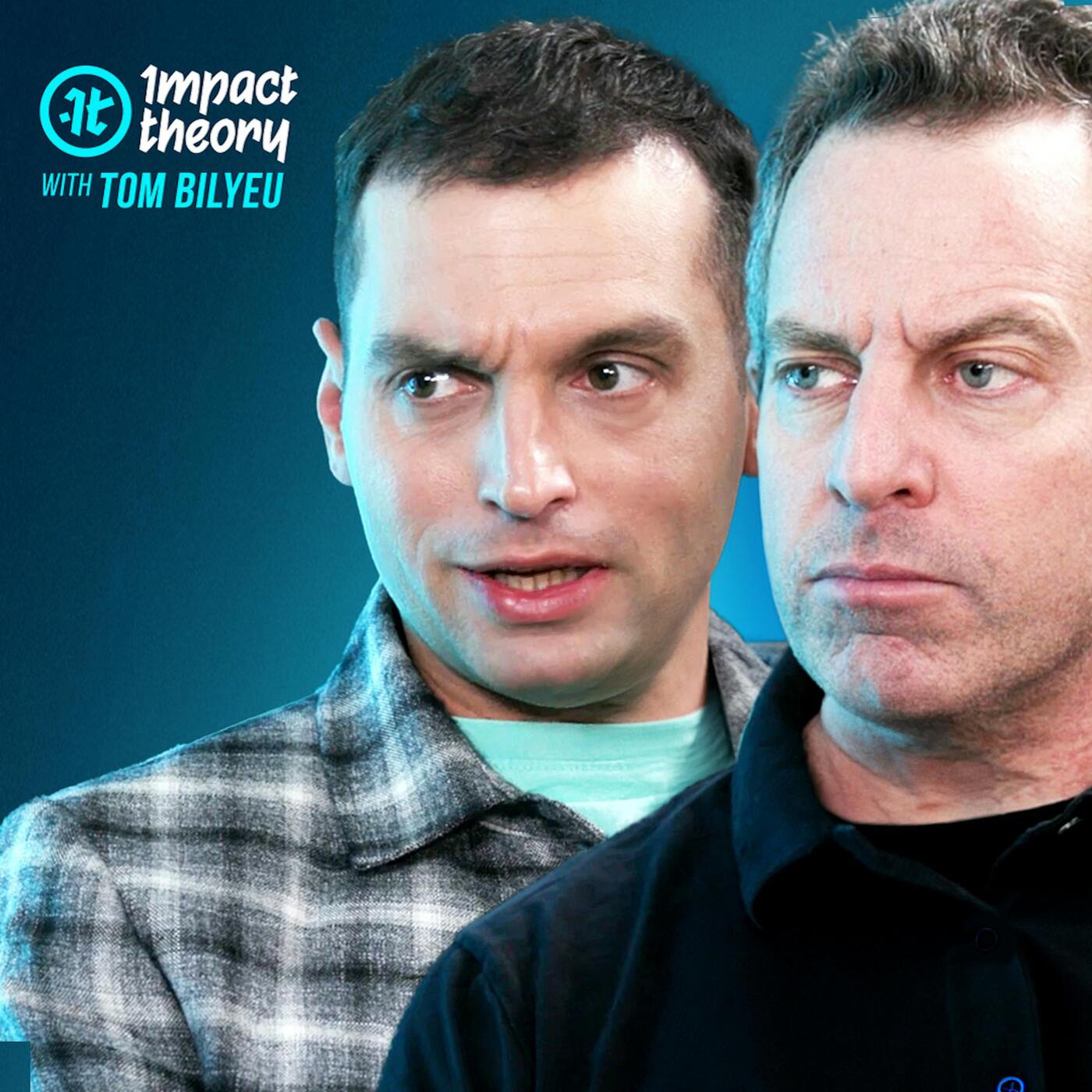
Tom Bilyeu's Impact Theory
Sam Harris & Konstantin Kisin Debate: Corruption, Israel-Hamas, Tucker Carlson, DEI & Migrant Crisis PT 1
01:02:45
Loading summary
Transcript80 lines
- [00:00]
Sam Harris
Early birds. Always rise to the occasion for summer vacation planning because early gets you closer to the action. So don't be late. Book your next vacation early on VRBO
- [00:09]
Grainger Advertiser
and save over $120. Rise and shine average savings $141 select homes only.
- [00:15]
Sam Harris
If you work in university maintenance, Grainger considers you an MVP because your playbook ensures your arena is always ready for tip off. And Grainger is your trusted partner, offering the products you need all in one place, from H vac and plumbing supplies to lighting and all delivered with plenty of time left on the clock so your team always gets the win. Call 1-800-GRAINGER visit grainger.com or just stop by Grainger for the ones who get it done. What social media and just the democratization of everything has given us is some insight into how rotten our institutions were in the first place.
- [00:54]
Konstantin Kisin
There's a kind of wokeification of the right that is happening.
- [00:57]
Sam Harris
It's like professional wrestling. Nobody cares. That is fake. If I was caught doing that, I would lose 100% of my audience.
- [01:05]
Konstantin Kisin
You have to hear what they have to say.
- [01:07]
Sam Harris
But that's a self reinforcing.
- [01:09]
Konstantin Kisin
Sorry Sam, let me just finish the point.
- [01:11]
Sam Harris
The smell of bullshit is detectable far enough off that you just don't have to spend time with it.
- [01:17]
Konstantin Kisin
You're not going to put new media back in the tube, right? That's toothpaste is out. It's out there. People are going to have those conversations whether you like that or not.
- [01:26]
Sam Harris
And we have Islamist stealth groups in every western society, certainly in Americ and the uk.
- [01:35]
Host
We are living in an age now of conspiracy. People believe that the people in power, the experts, the institutions are lying to them. And I want to know, does this create problems that we should be worried about? And if it does, why should people listen to the two of you? Why are you guys trustworthy?
- [01:54]
Sam Harris
Well, you want to start?
- [01:55]
Konstantin Kisin
No, you go first.
- [01:56]
Sam Harris
Okay. Well, I mean it's something I'm quite worried about. I think. I think we're getting profoundly misinformed by the tools we've built and I think it's a multi level problem. On the one hand, many of us feel that what social media and just the democratization of everything has given us is some insight into how rotten our institutions were in the first place. Right. So it was just much more transparency. The emperor has no clothes in many cases. But I think it's in part that's true. But I think what has also happened is that the institutions have become corrupted by the tools we have built. So as my friend Barry Weiss pointed out when she left the New York Times, that Twitter had effectively become the editorial board of the Times when she left. And that's not simply a matter of shining sunlight onto the distortion of the priorities of the times. The tools effectively distorted the priorities of the times and for some period there, almost ruined it. So I just think we have to acknowledge that we have built a machine for propagating hallucinations and distortions of reality that. That we don't know how to use. And so, yeah, to come to your question about why either of us are better brokers of information, I mean, I think you have to look at
- [03:36]
Host
what
- [03:36]
Sam Harris
we're specifically doing and the incentives we have built in our various platforms to motivate us to work. And, I mean, I've been very careful about this phenomenon of audience capture, which is what happens to even people with real integrity and the best intentions. They notice a signal in their audience. They notice an appetite for a certain message, and because they're incentivized to feed that signal, they do it. And they wind up becoming radicalized by their audience. Because this may be less true of you, given the kinds of topics you touch, but maybe not. I'm really not political by tendency. I just hate politics. I just view all of it as just this massive opportunity cost. And so whenever I touch politics, I'm really not aligned, right or left, in any kind of predictable way. And so I wind up pissing off people on both sides. I certainly piss off the far left and the far right, I would think, equally at this point. And so whenever I'm touching a very topical, polarizing issue, I'm pissing off some considerable portion of the audience. And so I've just learned to simply not care what the audience wants. I can honestly say that I'm never even feeling the impulse to be blown around by the wind of sentiment in my audience. It's just not what's happening. I find what I think is interesting and consequential, and I talk about it. And since I deleted my Twitter account, I almost never even see what's coming back at me. So for better or worse, I don't see what's coming back at me. And so I'm just calling it as I see it. And I'm very happy to build a system that allows me to do that.
- [05:44]
Host
Okay, so you don't have the deranging incentives that a lot of people have. Konstantin, talk to me about. Is what we're going through problematic? And if so, in what specific way? So I Think Sam laid out. Yes, it's a problem, but why exactly what does this derangement do to us as a culture so much that we should do podcasts about it?
- [06:08]
Konstantin Kisin
May I also pick up on some of the things that Sam mentioned as well? One of the things I would say first and foremost is I've never made the claim that other people should listen to me, and I am not intent on making that claim in the future. The only area where I might invite people to listen to me is the invitation for critical thinking. I think that's an area where I hope that me saying that is helpful. But apart from that, people should make up their own minds. I think we're. I think a lot of the critiques that Sam has been making for some time are exactly right about the nature of institutions first and then the response from the media to them, because I think it's. I don't know if this is true, but I suspect we have the least corrupt institutions we've ever had. That's very possible. I'm not saying that is true. I'm saying that's a possibility. And what has happened over time is our insight into how corrupt they are has improved our ability to understand how corrupt they are. So of course they are corrupt, but they may be a lot less corrupt. And we can sort of logically think about that from the perspective of if power corrupts. When the New York Times literally had a monopoly on all information, I imagine they use that power even more than they have been in recent decades. Right. So what has happened is our faith in institutions has declined because we no longer are willing to tolerate the level of corruption that we now know is there. The problem is that at the end of the day, we still have to at some point be able to agree on what reality is. And we are now in a space where I think that the fragmentation of our reality has reached levels that are actually unprecedented, to the point where, if you think about words or names or anything, they no longer mean the same thing to. To most people, even more so than in the past. So the way I think about it now is if you take a name, Sam Harris, Donald Trump, Constantine, whoever, the person who's hearing that phrase has an experience of who that person is that will be quite often almost entirely different to what another person who looks just like them sitting next to them has of that same person. So what Sam Harris is to people depends on what Sam Harris content they've encountered, and we can go down the path. So how do you then have a conversation about ideas about people, about anything. I think the fragmentation of our reality is a really scary thing. And then you layer on top of that the other point that Sam made, which I think we're seeing play out. And you know, I've always been very hesitant to believe in the idea that audience capture is ubiquitous and affecting everybody. And I've late, I have realized over time is because I'm a very highly disagreeable person. So from day one I've been like, I really enjoy people, you know, I don't enjoy. I am willing to be unpopular with different people because I care about the truth. I care about. And I'm not saying that I have better access to the truth than other people. I just care about pursuing it in my own way. So on trigonometry, over time we have pissed off left and right. You know, like Sam during the summer of blm, we were very clear that what was happening was a problem. January 6th we were also clear that was a problem. But there were a lot of people for whom it was either or. Either BLM was a problem or January 6th was a problem. You couldn't say that both were a problem. Right. And we lost. I call it pruning. We prune our audience all the time. It's like, well, if you want to be extreme, this may not be the right place for you. And I'm much more interested in, you know, having a million subscribers on YouTube, which is where approximately we are now. But pursuing the truth as best Francis and I can, versus having 10 million subscribers and pandering to an audience, that makes me resent myself and them. But the other thing we all know is human beings do respond to incentives. So in the world in which, you know, it's very clear to me that the modern information ecosystem is not optimizing for truth, it's optimizing for outrage. It's optimizing for extremism, it's optimizing for engagement, which those two things produce. And I noticed this. I mean there's a kind of. I'm trying to introduce this concept into the culture and I don't know if you'll agree with me on this, but there's a kind of wokeification of the right that is happening.
- [10:51]
Host
Define that.
- [10:52]
Konstantin Kisin
Well, if you think about what defines wokeness in terms of tactics and behavior, it's glorification of victimhood, hypersensitivity and attempts to restrict the speech of others where it conflicts with their pre existing ideas. That is all happening on the right. And I really experienced this. I wrote an article in my substack that I then made into a video called Tucker Carlson and the Woke. Right, which was a response to his trip to Russia where he magically discovered that they have shopping carts and basically misled the American people about the idea that food is cheaper in Russia, which is complete BS in relative terms. Russian people spend way more of their household income on food. And it's not because they eat more, it's because it's way more expensive. And every single major influencer that I've discussed this, not every single. Sorry, I take that back. Most people who you would see on your X feed, on your YouTube that I've spoken to about, they don't give a shit. They do not care. They just think Tucker Carlson is this big name, has a huge audience, and that's what they care about. Now that worries me tremendously because if we are talking about making sense of things, making sense requires the ability to say, this has gone too far. We have now reached a stage where we're not talking about the truth. We are now pandering, playing to our audience, compensating for our own psychological traumas. In Tucker's case, I think it's his support for the war in Iraq means that he's anti every American intervention anywhere now. And that means if we're not, if, if the incentive structures are not there to optimize for truth, then we are going to get whatever it is that we're optimizing for, which seems to be outrage and the hottest take and the mechanism for challenging that just doesn't seem to be in place at all. So I, I think last time I was here, we spoke about the positive impact I thought new media was making. And I think in terms of the democratization of information, I think that was necessary. But I think I was a little blind, truthfully, to the long term impact. And you actually made the point at the time, as I recall, that I was a little blind to what the flip side of that coin was going to be. So I think we're in a very tumultuous time. And how our information system adjusts to that will, I think, determine where the world goes. All right.
- [13:24]
Host
One thing I find when people are debating a point is that they're not getting to the underlying assumptions that drive their worldview. And therefore my wife and I have a rule in our marriage, never argue about the tea. The biggest argument we ever got into was over a cup of tea, which of course is not actually about the cup of tea. It was about the underlying assumptions. And the tea just became the Lightning.
- [13:43]
Konstantin Kisin
Well, she's British, so we take that shit very seriously.
- [13:46]
Host
No doubt, no doubt. So I hear you guys both saying this is a problem. I hear we're even circling around the truth and the truth. If I were just listening to this and this was all I knew of the two of you, I'd say the truth matters, but I don't yet understand why. And I feel like the culture war is really a war where two people think they have the truth, but they have not agreed upon how you determine what is true. I'm hypersensitive, and I've mentioned this to you before. I know you and Jordan really derailed on how we define truth. So instead of necessarily right now getting into how we define what is true, I want to understand why the truth matters. And I'll say, just for simplicity, that the truth is the bedrock upon which you can build the rest of your life and you won't have a hard time making predictions. So this stupid example, but it will orient people, is nobody walks out of their second floor window because we all agree foundationally that gravity is real and you can just sort of take it for granted. So my thing has always been just to give truth a proximity. It's that which has predictive power. So I can predict that if I step out my window, I will fall and get hurt. It's predictive. So if we can all agree on that definition. Is that why you guys think truth matters? In that it just gives you a foundation and you can build upon, or is there some other reason?
- [15:04]
Sam Harris
Well, the truth matters because there is a reality. And if we're not tracking it to some pragmatic approximation in our lives, we're just going to bump into hard objects. It's just on every level, from our health to our figuring out what the weather is going to be tomorrow, we're in relationship to a system that is much bigger than ourselves. And if we're delusional about cause and effect and any picture of how things happen, we're just going to be perpetually victimized by our ignorance. Right? So representing having a map that fits the territory to a first approximation has been useful long before we could even form the concepts that would allow us to have a conversation about it. I mean, epistemology came online before we. We had the concept of epistemology, which is how we know things. So I don't think anyone has to defend the value of tracking the truth. I think it's. We're always just approximating it and we're never arriving at some final truth that no longer admits of any other argument or possible counter evidence. It's not that everything's always up for grabs equally, but it's usually a matter of a probabilistic sense of what's true. And the probabilities tend to get so high that we no longer are disposed to reconsider things. Right. So if you're going to ask, well, do we know anything about the biological basis of inheritance and does DNA have something to do with it? Well, 99.999% of biologists will say yes. DNA is the answer to that question. And it's not that we understand everything about it, but we understand enough that that's not where the new theory making is happening in biology. But the problem, and this is especially a problem in the current context of social media and alternative media. You can always find a crazy PhD or a PhD who's semi crazy and has just a hobby horse that he can't get off of, who will attest to anything no matter how crazy. So there are enough people with graduate degrees on any topic that the cigarette industry could find a bunch of PhDs to swear in front of Congress that cigarette smoking is not addictive, even when they knew it was. Since you can always find those people, it's not enough to have found one guy who will tell you that vaccines cause autism and will swear and swear and swear again, even when he loses his medical license. And we're wise again, given all the caveats about bad incentives and the possibility of even the most esteemed institutions becoming corrupt, we're wise to trust by default the consensus of experts most of the time. And it's not to say that there can't be a lone genius who proves the experts wrong and overturns our paradigm. That happens. But the extraordinary claims require extraordinary evidence. Heuristic, right? I mean, just if you're going to say that you have a new version of physics and it allows for time travel. Okay, we all need to triage our attention and our time and decide whether or not this is worth a podcast or worth certainly worth being invited to a conference. Often the answer is no. Usually the answer is no.
- [19:07]
Host
Under what rubric?
- [19:09]
Sam Harris
Well, again, there's no algorithm for deciding what's real, because that would be. Can I procrastinate computationally impossible? Well, I mean, it's just functionally impossible. We can't in advance know what we will later know. We just can't produce knowledge that way. Right. So it's always iterative. It's always a matter of error correction
- [19:35]
Host
in terms of what you approach and
- [19:36]
Sam Harris
respond to just in terms of how you model just how knowledge grows. It can't be a matter of if we had an algorithm for flawlessly producing each new increment of knowledge, we would essentially be able to model the total future of our knowledge. That system would bite its own tail. It's not computationally possible to do that. So we need error correction mechanisms. And so at the grossest possible level, you mentioned someone like Tucker Carlson. I mean, the reason why I find Tucker's career at this point so grotesque is that he's managed to build an audience that simply doesn't care when he lies, right? When he's shown to be lying. I mean, there are different ways to be un cancelable. One way to be un cancelable is to actually have pandered to an audience, found an audience that wanted to be pandered to in such a way that they don't care that what you say is no longer truth tracking, no longer even attempting to be truth tracking. This is a very Trumpian phenomenon. I mean, Trump is the quintessence of this. He's found people who don't care if he contradicts himself over the span of three minutes because he's just creating a mood of grievance and pandering to the grievances of his audience and demonizing the out group. And it's all theater. It's like professional wrestling. Nobody cares that is fake. It's like the fact that it's fake is priced in and they just want the spectacle. And so we have even so called news gathering creatures like Tucker who are just creating a spectacle and some kind of political theater. And it's got this very weird gloss of like super high integrity. I'm just telling you I've been wrong before and I'm telling you the way I see it. But it's. I mean, in the clearest instance we know from his private texts that were leaked in the Dominion lawsuit that he hated Trump all the while, couldn't wait for him to get out of our politics, thought he was a demonic force, and yet for years had been shilling for him for his audience. Right? So you can call that audience capture, you can call that hypocrisy and lack. I mean, it's all those things. But the crucial thing is if I was caught doing that, I would lose 100% of my audience. And anyone with a real reputation for integrity for their audience would suffer a similar consequence. But what we have are people who can be caught lying or can be demonstrated to be nuts. In many cases, someone like Alex Jones fits that description. And yet there's still this massive audience that wants to hear the next thing they have to say. And that's. I don't know what you call it, but it's not a conversation about reality. And yet people are using it in the same vein as we use any other product of journalism, as though it's providing some kind of guidance for what's happening and what's likely to happen.
- [23:05]
Grainger Advertiser
When you manage procurement for multiple facilities, every order matters. But when it's for a hospital system, they matter even more. Grainger gets it and knows there's no time for managing multiple suppliers and no room for shipping delays. That's why Grainger offers millions of products in fast, dependable delivery. So you can keep your facility stocked, safe and running smoothly. Call 1-800-GRAINGER Click Grainger do or just stop by Grainger for the ones who get it done. When you manage procurement for multiple facilities, every order matters. But when it's for a hospital system, they matter even more. Grainger gets it and knows there's no time for managing multiple suppliers and no room for shipping delays. That's why Grainger offers millions of products in fast, dependable delivery. So you can keep your facility safe, stocked, safe and running smoothly. Call 1-800-granger. Click granger.com or just stop by Granger for the ones who get it done.
- [24:06]
Host
So the the thing I want to hear, and I guess my base assumption in bringing the two of you on is that ideas matter. They will influence the individual life and one's ability to get to human flourishing. And every individual, when brought into a collective, means that a society either can or can't get to human flourishing. So that's my confession about what my North Star is. And when I hear people argue, like arguing about, hey, there's this crazy Trumpian phenomenon or there's this crazy Tucker Carlson phenomenon is arguing at the level of the T. To me, this is a conversation about what you said previously, which is the reason that the truth should matter to you, dear listener, is that you will constantly injure yourself by and now I'm using my own words by not being able to predict the outcome of your actions. And so if you are intaking all of your information from somebody who is I've heard you define a bullshitter previously, somebody who just does not care whether what they're saying has any internal consistency whatsoever. It's just about getting the right response out of their audience. And if you do that, you. If you take on that entertainment because it is very entertaining. If you agree with them, you will fail to achieve the things in your life you want to achieve because you will have built upon a foundation that just is not predictive at all. And if that really is true, re anchoring the conversation back to that seems to me and you guys tell me if I'm being naive, but seems to me the only way out of the death loop that is us birthing an age of pure conspiracy. Did you guys watch the Joe Rogan Terrence Howard interview?
- [25:54]
Sam Harris
I saw a clip of it that, that people were hurling at me for its. Yes, I hesitate to say it's entertainment value, but it, it was entertaining.
- [26:03]
Host
It is entertaining. And so if you guys are right and there is a problematic breakdown when people have lost sight of the fact that perhaps they're. Because there's two paths. They're listening to an interview like that because the establishment has lied so many times that when somebody says, hey, listen to me, I've been shut down erroneously, you need to hear these things and they're going to help us. Maybe that really is true. Or maybe it's we've now just given up pursuing quote unquote truth because we have no idea how to find it, nor do we know why we care about it.
- [26:42]
Konstantin Kisin
Well, may I add a couple of pieces there? First, I don't know that that's true. I don't think we've lost that. I think there's a few things going on. First of all, anything that involves a camera and a microphone will naturally over prioritize charisma. So one of the things that happens with any kind of mass communication is we human. This is why truth matters. Because actually being interested in what's true is the only way, I think, that we are able to overcome very faul heuristics that human beings have evolved with. And I'm not saying they're faulty for the ancestral environment 50,000 years ago, but they are faulty in the modern world. Right. And our cognitive biases will naturally lead us away, I think, from truth because that is a much harder path. In the same way that the reason it takes discipline to go to the gym and work out and lose weight is that it's much easier when you're surrounded by abundance to just shove food in your mouth and not do anything. Right. It's much more comforting. It's much easier to do so. I think that being interested in what's ultimately true is the way that we can overcome our inclination to believe things that charismatic people tell us to Believe things that match what we already believe to believe. I mean, that is essentially, to some extent the nature of the scientific method. Right? Is testing as reality as opposed to going, well, this seems right, or I believe this, or whatever. So I think that ultimately the reason I'm really interested in it is I think that it's the only way to overcome my own predisposition to believe things about the world that make me feel good, that are not, as you say, predictive and therefore useful. And unless you operate in the world from that perspective, unless that's what you're optimizing for, your brain is going to take you off on a loop. And now we live in a world where every whim of yours is catered to. And if your whim is to be entertained, if your whim is to hear a, you know, conspiracy, and I have to say I don't know why, and I'm actually really interested in investigating and finding out. I do have. I have found that I think in the US those kind of ideas about how the world is and who runs it and all of that seem to have a way broader appeal than they do in the UK where I live. I don't know why that is. It could be the flip side of the beautiful American idea that, you know, America is a nation of believers. And I don't mean necessarily religiously. I just mean if, you know, the idea that you can tame a continent in a couple of centuries and create this incredible country which is the most powerful and in my opinion, the greatest society in the history of the world, that takes. That's an act of faith in and of itself. And maybe the trade off is that, you know, Americans are very good at believing lots of different things, and this is one of them. So that's maybe why really being interested in is what I'm tempted to believe are accurate reflection of reality is the antidote to going off the rails on. On that front. And I think that's why I am so interested in it. It's really to guard against my own cognitive biases that I think we all have.
- [30:00]
Sam Harris
Well, let me give you an example of just how distorted I think our current moment is, because I find it surprising. So you take the war in Gaza, and we're now on the tail of all of these college protests. We've witnessed in our finest institutions, apparently, an endless number of people expressing sympathy for the Palestinians, even sympathy for Hamas, which is just officially a genocidal death cult. I mean, described itself as a genocidal death cult and everything, to my eye, Morally seems upside down. I mean, they can't distinguish the difference between people who use human shields versus people who are deterred by the use of human shields. They can't distinguish people who intentionally burn families alive from people who inadvertently kill innocent people trying to kill the people who burn families alive intentionally. So there's just so many asymmetries here. But what's amazing is you have these protests on college campuses effectively silencing even some of the most powerful people in our society. Even just celebrities who you think would be totally unconcerned to express their opinion, they're being silenced. They understand that there's a difference between Hamas and the idf. They won't say anything in support of Israel because it's just too toxic. In Hollywood or. Among Fortune 500 corporations, they're so worried about being boycotted and public backlash, especially on social media. And yet on the other side, there are people signing. Celebrities are signing letters in support of the Palestinians, and they're not at all concerned to be mistaken for people who support Hamas or even outright anti Semitic. So there's that asymmetry of public opinion. And yet there was just yesterday a Harvard Harris poll that revealed that 75% of Americans are all in for Israel. They think Israel should just route out Hamas tomorrow in Rafah. Right? Everyone's been debating whether the IDF should go into Rafah. And this is absolutely tortured debate. 75% of Americans say, go into Rafah and kill Hamas. That's where public sentiment actually is. And yet we have built a machine where even the most powerful people in our society are terrified of, of the 25% they're busily offending, either by their silence or by their support for Hamas. Effectively 75% of America, and they don't even know it. Because everything is so distorted. The whole information landscape is so distorted based on the capture of certain elite institutions by some very confused people on the left. And what we've done on social media, I mean, everyone's just looking at X, thinking, oh, my God, everyone supports, everyone thinks Israel is guilty of genocide. I should keep my head down here. I know Israel is not guilty of genocide if the word means anything, but this is just too dangerous. And yet, in terms of the actual public sentiment of the people who could buy the tickets to your next film, it's completely reversed in reality.
- [33:34]
Konstantin Kisin
And I think one of the reasons that is, there are obviously lots of reasons, but one of the reasons is in the social media age, the cognitive bias of, oh my God, I am seeing horror on my screen. Therefore this is wrong automatically is very hard to overcome. And it's very difficult to argue against that. When you're seeing, look, I'm a father. When you see babies being pulled at, dead babies being pulled out of rubble by their parents, like, there is no, there's no human being alive unless they're a psychopath, that doesn't go, oh my God, this is awful, and this should stop immediately. Right, but does that really reflect the nature of reality? No, but we also have a significant portion of the population that cannot think past their emotions and.
- [34:29]
Sam Harris
Yeah, but, but that notwithstanding, 75% of Americans think they should go into.
- [34:33]
Konstantin Kisin
I think your point is well taken. I wasn't disput think that at all. And I think your point about the fact that there are different conversations happening in different places, I think is absolutely right. My point is, I think one of the reasons for that is 75% of Americans are not sitting and looking at their phone every day for eight hours, watching children being blown apart and whatever. So, but, but, but those people who are interested in what's going on and are looking into it, they are not able to think past. I have seen one image.
- [35:08]
Sam Harris
Yeah, dead babies.
- [35:09]
Konstantin Kisin
And dead babies are bad. I think we can all say that, right? I mean, it's uncontroversial. But being confronted with the nature of war and thinking that it's horrible, I think is a useful thing in terms of really being reluctant to get into wars unless it's absolutely necessary. On the other hand, you have to be able to see past your emotional visceral reaction in some situations and say, why is this war happening? What is the objective of this war? Who is responsible for this baby being pulled out of rubble? Who is it? Is it the people who are going in to kill terrorists, or is it the terrorists who are using the baby as a human shield?
- [35:46]
Host
How do you run that moral math? How do you get everyone to run the same moral math?
- [35:51]
Konstantin Kisin
I don't think you can. I don't think. Look, this sounds elitist and snobby. I don't think everyone's capable of it. And we see evidence of that every day. A lot of people like to operate solely by emoting, and we now have tools that encourage them to do so.
- [36:07]
Sam Harris
Well, people can get better at consuming video. We know we're bad at this, and we should spell out why people are bad at this. So you see a video of some guy being beaten senseless by a crowd, right? And it starts in the middle of the emergency. He's already down and he's getting punched and kicked by five people. He certainly looks like the victim. Right. But you have to understand that you don't know what happened just before the clip started. Right? So I've seen video like that where I assumed, okay, this guy is. This is an atrocity. This guy's obviously the victim, and yet I find out that this guy just stabbed someone and he's being subdued by a bunch of unarmed, terrified people. Right. So it was exactly backwards. And so we know that even when things seem absolutely obvious based on the clip, they could be exactly the opposite of what you think. And so it is with scenes from Gaza. I mean, it's just. I mean, this was. I remember Rogan at one point was analyzing. I forget who he was talking to, but he had some clip of, you know, five guys being bombed in Gaza as though this were proof of war crimes. And these were obviously unarmed young men and who were just walking. They seemed to be guilty of nothing other than walking. And they got hit by. Looked like a drone or it was not clear, but they were killed. And yet we have no idea what happened before that clip started. Right. So we don't know whether they just planted an ied and it was absolutely obvious that they were combatants and it was totally valid within the rules of war to target them. You just don't know. Right. So we have to become better consumers of our own emotional reactivity in response to admittedly disturbing imagery, whatever the actual accurate interpretation.
- [38:17]
Host
Do you have a method for that?
- [38:19]
Sam Harris
Well, it's just to continually price in my uncertainty about those kinds of variables. But the truth is, honestly, my method has been to spend much less time on social media. I deleted my Twitter account. So now when I look at X, it's just because someone has driven me there. Like, you have to see this. And then occasionally I'll look at my feed. So I have a feed on X that's not following anyone on which I have basically clicked nothing apart from occasionally getting sent a video that has brought me there or a post that's brought me there. And I am amazed at what a digital sewer it is in terms of what it is. The algorithm seems to just want me to be terrified of the world and probably racist in at least two directions. Right. It wants to show me black people beating up white people and white people beating up black people in classrooms all over America. Like, how much this happens, who knows? Or security cam of just somebody being horribly murdered for whatever reason and. Or just accident. I mean, it's just. And then, you know, obviously there's A, you know, the occasional cute cat video. But it's just, it's like we, we have built.
- [39:38]
Konstantin Kisin
There's white cats beating up black cats.
- [39:41]
Sam Harris
That'll happen. But we've just, we've built a. We've created a psychological experiment and enrolled everybody. Yeah. And it's like, it's. It's analogous to watching local news all the time. I mean, I learned 30 years ago or longer that I didn't want to spend much time watching local news because there's always just some depressing car chase or somebody was raped. It's like, I don't need to know this. It's not actually going to change what I do. And it's just this taundry regurgitation of human misery. And there's always. At least. No matter how small the locality, maybe, certainly in any big city, any big city is big enough to always have some horror that can be broadcast into your brain about which you're going to do absolutely nothing. And it doesn't make sense for you to even be cognizant of it. And yet it's there to depress you. And social media has become this on a global stage. And it's just, I mean, again, it's not that I want people to be oblivious to what's happening in the world. I mean, I do want to know. I do. I want to have a map that fits the territory. I want to know what the rates of violent crime actually are, et cetera. But those data are communicated very differently and they often don't track the imagery that we all get in our heads just by looking at a scroll. Right. I mean, you see, this is what's so distorting about these videos. I mean, most people on the left, certainly anyone left of center in America, thinks very likely that we have an epidemic of lethal police violence against young black men. It's totally rational if you're a black parent to have the talk with your young black son. If he goes out there, he's much more likely to get killed by the cops than his white friends. And this is just an intolerable legacy of racism in America, as far as the stats go. The best understanding of the dynamics of actual police violence and the thousand people every year thereabouts who get killed by the cops. We know that's bullshit. It's just not what's happening. The likelihood that you're going to get killed once you come into contact with the cops if you're black is not higher than if you're white. But everyone's seen 12 videos that makes it seem like they're these lunatic cops performing lynchings. And they haven't seen the analogous and in fact more numerous cases where white people have. Unarmed white people have been killed by cops, again, disgracefully in many cases. But the actual stats just show you how infrequent it is that an unarmed person of any color gets killed by the cops in America. It's just not happening very often. I mean it's around, it's maybe 40 people a year, a majority of whom are not black. And of the thousand and even though among those unarmed people who get killed by cops, most of them are not peacefully, most of them are trying to kill the cops, they're wrestling with the cops, they're trying to get the gun out of the cops hands. It's not like the cops are routinely killing nonviolent people in America. And yet we have a, a kind of pornography of racial grievance that is continually advertising a different story to us. And again, given the dynamics of social media, that is always going to prevail. I mean that's just like, because of just the algorithmic incentive to spread the
- [43:31]
Konstantin Kisin
outrage other than Sam, the pursuit of truth, which I think the point you were just making is actually a very good example of where the genuine pursuit of truth and context in Russia, there's a Russian saying everything is understood in comparison. And what you're talking about is a very good example of where actually finding out what the data is not only is useful, but it actually can change your life, especially if you are a young black man because you are then less likely to go into that police interaction with the expectation that you will be killed, which means you're gonna act differently, which means that you're probably less likely to be killed as a result. Knowing that context, knowing the, what the statistics are, is going to inform you to behave in a different way. And this is what I was going to make. I'm actually really reluctant to get involved in the Gaza conversation beyond some basic obvious things just because I don't know enough about it. But I think one of the critical things in analyzing this conversation, like many others, is the importance of history. And that's the context in which we really human beings operate in the history of human beings. Thomas Sowell, who, you know, I pretty much worship at this point, he's written extensively about the idea that the best way to understand what people are likely to do in the future is to look at what they've done in the past. And you can slice that 100 different ways if you find clay tablets from ancient Egypt, they're going to be likely basically discussing the same things that human beings discuss now. You know, my son doesn't, you know, a mother complaining about her son not being around and all this other human stuff. So when. When we are looking at the conflict in Gaza, I only bring it up because we've been talking about it. I've been trying to say to people, well, if we are going to talk about this seriously, let's look at previous situations in which conflicts of this nature have broken out for one reason or. And how has that happened? People give the example of Fallujah. And I think Coleman Hughes actually did a very good job with Joe talking about this on his podcast. But beyond that, whether it's Japan at the end of World War II, whether it's what happened in Germany at the end of World War II, whether it's previous situations in which a group of people have attacked another people and then lost that fight, how does that normally go? How have we treated this in history? That gives you a context that is very useful for offsetting the visceral experience you have when you're confronted with the reality of war, which is horrific. So in that sense, as you know, my big concern about the direction of the west is that we are becoming divorced from our history on so many different ways, and we are being sold a bunch of lies about how we got here and who we are. And that's just one tiny sliver of that. That one tiny sliver. So the fact that the overwhelming majority of people in our societies, and I include to some extent myself on this, are either uneducated or miseducated about history, is a lot of the reason we are where we are. Because that context gives you the ability to. To be the guy who doesn't get killed by the cops, effectively.
- [46:59]
Host
Right.
- [47:00]
Konstantin Kisin
That context, that truth, is how you know that you need to act in a particular way to. To get the best possible outcome in that situation. Which is why I'm just always talking about the need to teach kids history and contextualize. This is one of the things I personally was very fortunate to get from what was actually a reasonably good Soviet education system. And also my parents, you know, all
- [47:24]
Host
right, there's an idea that's under the surface of all this that I think Sam, ties back to what you were talking about, that social media deranges people because you're seeing things that aren't necessarily true.
- [47:35]
Konstantin Kisin
But.
- [47:35]
Host
But cognitive biases, like recency bias. I've seen a bunch of these attacks and so my mental model just begins to map to the things that I've seen. And so this must be true also maps what you're talking about, where people are steering by, not what gives them predictive validity of future action, but instead how do I make sense of the way that I feel. And if they're making sense of, oh, I see this thing and I don't like the way that it makes me feel, it must be wrong. And here is the post hoc explanation of why the baby being pulled from the rubble is wrong. Not putting it into historical context or context of what war is or anything like that. Just I have a feeling this feeling is not good, therefore this is bad. And I need to give some rationalization. All right, so you put that in the social media blender and now all of a sudden I don't know which way is up anymore and I just react to my feelings. The reason I think this question is so important is when people don't have a method by which they determine the truth, truth which is about predictive validity, you will not end up running the same mathematics. So everyone needs to agree on what the outcome is that we desire and then they have to run the scientific method. That to me is the only way that these deranging problems of our current moment of social media plus we haven't even talked about AI but those two things put together I think are going to be maximum in terms of their impact on derangement because it gives everybody an N of one frame of reference. And there have been a couple times where you guys have said things that I have seen the public light you both up for because they just disagree so violently.
- [49:14]
Konstantin Kisin
And really, what would be an example with me, I may not have noticed it because I really don't give a
- [49:20]
Host
shit, but yeah, so you were saying something about the Israel Palestine conflict and the reason that people think that it's bad and that war is bad and that this has to stop. But I think the reality is there's actually two things going on. The moment you bring up Israel Palestine, if you're talking about anything other than the following two narratives, you're not talking about the reality of why people respond the way they respond. Number one is the Norm Finkelstein stance, which nobody just addresses him head on. He does not believe Israel should exist as a state. Period, end of story. Every word he says after that is predicated on Israel should not exist as a state. And if you're approaching him anyway and people that believe what he believes without simply debating whether, whether Israel has A right to exist. You're arguing about the tea. He's never going to agree with you. He's just going to start yelling and shouting because he has to square.
- [50:10]
Sam Harris
He's an example of one of these PhDs that we need not invite to the conference.
- [50:14]
Konstantin Kisin
Well, we actually just had, we actually just had him on and we had a hour and a half of look actually very useful. I think it's very useful. This is why we will continue to have some of these people on the show. Because if these are people to whom a lot of other people are listening, you have to hear what they have to say.
- [50:35]
Sam Harris
But that's a self reinforcing.
- [50:37]
Konstantin Kisin
Sorry, Simon, let me just finish the point. You have to a hear what they have to say and then see the method that people have increasingly become addicted to is the idea that the way to get to the truth is to quote unquote, destroy someone with facts and logic in a debate. I believe quite often, and this is what we try to do on the show, the way to do that is to have a conversation and just go, okay, let's hear what you have to say and let's ask you some probing questions and then people can see for themselves the cognitive flaws and biases in what you're saying. For example, in our conversation with him and Bassem Yousef, who are two of the big anti Israel, pro Palestine talking heads, it became very clear that neither of them had ever thought about how this might be resolved. That's a useful piece of information to know when you're listening to these people. Right. Another thing, you know, with Norman, for example, we spent the first 20 minutes hearing his family story and he talked about how, you know, his parents were Stalinists and he thought that was a bit extreme. So he's just a Maoist, you know, that's a helpful piece of information.
- [51:44]
Host
Wait, was he being serious?
- [51:46]
Konstantin Kisin
Yeah.
- [51:47]
Host
That wasn't tongue in cheek.
- [51:47]
Konstantin Kisin
He's a Maoist. Yeah.
- [51:49]
Host
Okay.
- [51:49]
Konstantin Kisin
He's a Maoist.
- [51:50]
Host
I would love to ask a follow up question.
- [51:54]
Konstantin Kisin
Do I need to then have a debate debate with Norman Finkelstein to destroy the idea of Maoism or is it sufficient for most people to go, okay, that's the perspective from which she's coming.
- [52:02]
Host
I would like to answer that question directly. So I. You guys both have the right to live your life however you want according to my value system. And so I want you to thrive in ways as you define it. But I think it is incredibly important that people that have the ability to parse through things not based on Emotion, but based on predictive validity towards an agreed upon outcome that is noble and honorable. And therefore this was something you brought up earlier and I wanted to address, which is I would request of people that are like the two of you that you address any problem that gains sufficient momentum in culture. And so it can't be derived based on I think this person is a good faith actor. It just can't. It has to be derived around. But this idea is gaining sufficient cultural momentum and therefore if I choose to step into that, that into the arena of helping people make sense of the world, I'm going to address these ideas. Obviously that's an ask that I have no right to make of anybody, but that's what I want from people that I see as uniquely capable. Now I have a frame of reference where I look at human beings as flesh based AI and I just want to point the Constantine flesh based AI at a given problem and see how he addresses it. I want to point the SAM flesh based AI at a given problem and see how he handles it. Now that's brought a ton of pain and suffering into both of your lives. I get that.
- [53:29]
Konstantin Kisin
I don't know why you keep saying that.
- [53:30]
Host
It all yours Sam's.
- [53:32]
Sam Harris
It's certainly pain and suffering on his podcast.
- [53:36]
Host
So. And also there, there's a more deranging thing and that thing is Sam, I have watched people on the left and right come up with really contrite ways to discredit you.
- [53:49]
Konstantin Kisin
You.
- [53:50]
Host
And so there are people that now just memeify. Like one side is just, you're just obviously a racist, you don't like brown people. And so the they are never going to debate you on the point of jihadism. They're just like, he hates brown people. Boom, done. You don't have to listen to Sam. He's totally deranged. And then on the other side, it's Trump derangement syndrome. Covid broke him and they don't have to listen to you. And those memes have gained so much momentum that now it's a pretty small group of people that can do what you guys can do. I'm going to say, I mean, 100 maybe. And like as we start whittling people out of that pool, I get very uneasy as someone who believes that this moment actually does matter, that we are in the grips of ideas always throughout human history, ideas rule the day. And we are now living with a deranging device in our pockets that gives us velocity and volume of information that is absolutely impossible to parse, all while Having destroyed religion, which I really want to talk to you about this. I think religion, which I don't believe in, but I think religion is the only medium through which memes can travel across time and across all IQs, from a literal moron to a literal genius. Somehow some way religion is the medium by which the memes can propagate. And so when people cannot parse what is true, they at least previously could just check it against Noble book. These noble books have terrifying problems. And so I would love podcast to Stan, to use your word, I would love it to be the solution. But I'm just saying that is the thing and of one frame of reference. Even if people agree on what the facts are, they do not agree on what the facts mean. They are not aimed at the same thing. And so. So when we don't have people that are capable of just walking people through the arguments, and I hate to say it, willing to face the social consequences of doing so, the, the crazy making just explodes. And let me ask the following to see if you guys agree with that. If there were a bill before Congress, and I know you can't vote here, but just bear with me, that forced a limitation on the amount of time that people could spend on social media. If you guys believe it's a deranging instrument, one would think you'd be for it. Would you guys be for it? Or is there something that I think
- [56:14]
Sam Harris
that's the wrong way to affect the change? I agree that's maybe a separate conversation about just why you wouldn't want government doing that sort of thing. But I want to address the Constantine's intuitions here about how you error correct, because I'm sure there are examples where if you just give someone enough rope, they're going to hang themselves. So you just flip on the mic and have the conversation. But there are many more examples where you have platformed someone and given them access to your audience. And even if you're doing the work of journalism, trying to debunk their their errors in real time, some people are so unscrupulous and they're so facile in their shtick. I mean, this is all they do, right? They're just the vaccine causes autism guy, or they're the Holocaust never happened guy, and it's just impossible to clean up the mess fast enough. It's asymmetric warfare here.
- [57:31]
Konstantin Kisin
I don't want to derail your point. I just want to interject one thing that may be useful for this conversation, which is I think the work of journalism is not to have everybody on and do that with them. I think you have to pick certain people based on your perception. First and foremost, the North Star for us, and I'm not saying we have always succeeded at all, but the North Star for us is, do I think this person is operating in good faith, as in, if I challenge an argument that doesn't make sense, will they respond to that with an attempt to engage with that argument, or are they going to line up for skate?
- [58:07]
Sam Harris
Right.
- [58:08]
Konstantin Kisin
Norman Finkelstein, I have to give him credit, didn't do that. I don't think he didn't answer many questions, but it was a genuine conversation. So that's different to getting someone like Alex Jones on, who's basically a character act.
- [58:22]
Sam Harris
Yeah, but carry on, please. There are many people, so. And this is the problem with alternative media or whatever, what I often refer to as podcastistan or substackistan, where I'm quite happy to be out here. I'm happy to be just accountable to no one but myself on my own podcast. But the liability here is that there's something like 4 million podcasts now, and there's just this wilderness of information and the kinds of messages that are getting promoted. I mean, the kinds of people who wind up on Joe Rogan's podcast to take the most popular podcast, I mean, the range in quality and the range in attitude towards just the intellectual honesty is so vast that, yeah, I do think it becomes irresponsible just to turn on the mic and talk to the guy. And you can't use the justification that so many people have, prior to you have turned on, just given this guy the mic, that now you have a journalistic reason to have him on, because so many people are talking about what Finkelstein is saying about the war in Gaza. He just radiates crankishness. I mean, there's a reason why this guy is a marginal figure in mainstream channels and why I think a lot of actual scholars on the topic probably wouldn't debate him. But the problem here is so insidious and it's very hard to recognize. I mean, occasionally I'll do a postmortem on something that's happened on someone else's podcast on my own. And I think I did this for RFK Jr going on Jordan Peterson's podcast. RFK Jr is a presidential candidate. He gets whatever it is, like 20% of the vote, apparently nationally. So he seems worth talking to. But I would argue the only reason why he's in that position in the first place is so many People have thought he should be talked to. And I decided not to have him on my podcast because he is such a confabulator. He can make a mess that you can't even detect as a mess until after the conversation is over. And so he did this to Jordan. He tells this story to Jordan about how Jake Tapper of, I think at that point ABC News was working with him for three weeks to produce a documentary on how big Pharma is just utterly corrupt. And at the last minute, the documentary was about to air and Jake Tapper called him just inconsolable, saying, listen, I've been in journalism a long time. This has never happened to me. But corporate spiked the whole story. And the implication being, which he drew out in the podcast is that Big Pharma got to corporate. So Big Pharma completely controls the situation. The whole story is false. Jake Tapper has been trying to debunk this for years, trying to get him to stop talking about this for years. And the last time he talked about it, Tapper wrote an article on CNN's blog just detailing how this was just a tissue of lies. There's literally no way for Jordan hearing that story for the first time in a podcast to know that there's anything amiss, right? And he just absorbs it like, oh man, that's a smoking gun right there. Wow. And how many of those are going to come tumbling out of RFK's mouth? Who knows, right? The guy is confabulating whether he's actually consciously lying or he's just so. He's just uncoupled from. It comes back to the concept of bullshit. The reason why the bullshit is so insidious is that with a liar, the liar is actually tracking the truth. And he's trying to, I mean, it's malicious. He's trying to insert his lie into the space provided so that you don't detect it as a lie. And he's tracking what's true in the world. He's tracking your expectations of logical consistency. The bullshitter is just talking. So some people have a professional concession in some species of half truth or utter bullshit. And alternative media is just. And social media combined are amplifying this stuff to the ends of the earth. So now we have to talk about still, we have to talk about whether vaccines cause autism. And we have a presidential candidate who, who's banging on about this. He also thinks that maybe the HIV virus doesn't cause aids, right? And these are the kinds of things that get spoken about to an audience to an uneducated audience of tens of millions on Rogan's podcast and others. And it's dysfunctional and it's not what we used to have. Again, it was a flawed system. But we still have within the ivory tower and within certain journalistic organ organs, we have a set of rules and editorial standards where we're going to say, all right, listen, we have to fact check this before this goes out. We just don't run with this live. We have to do enough journalistic due diligence in advance of the conversation. We have to have noticed all the things this person has gotten wrong before they ever come to our microphone and we have to hit them with that stuff so that we can sort of of pre bunk a lot of the bullshit that's going to come out in this conversation. And if you're not doing that, I do think it is irresponsible on important issues. Right? It's good theater on unimportant issues. But when things are important, when lives hang in the balance, when you're influencing an electorate of who's going to be president or whether they're going to support the next war or stop the next war, I just think it's. Again, we're slow to realize the influence of many of our platforms. We're reaching millions of people.
- [64:31]
Grainger Advertiser
When you manage procurement for multiple facilities, every order matters. But when it's for a hospital system, they matter even more. Grainger gets it and knows there's no time for managing multiple suppliers and no room for shipping delays. That's why Grainger offers millions of products in fast, dependable delivery, so you can keep your facility stock stocked, safe and running smoothly. Call 1-800-GRAINGER click granger.com or just stop by Granger for the ones who get it done.