← Tomorrow, Today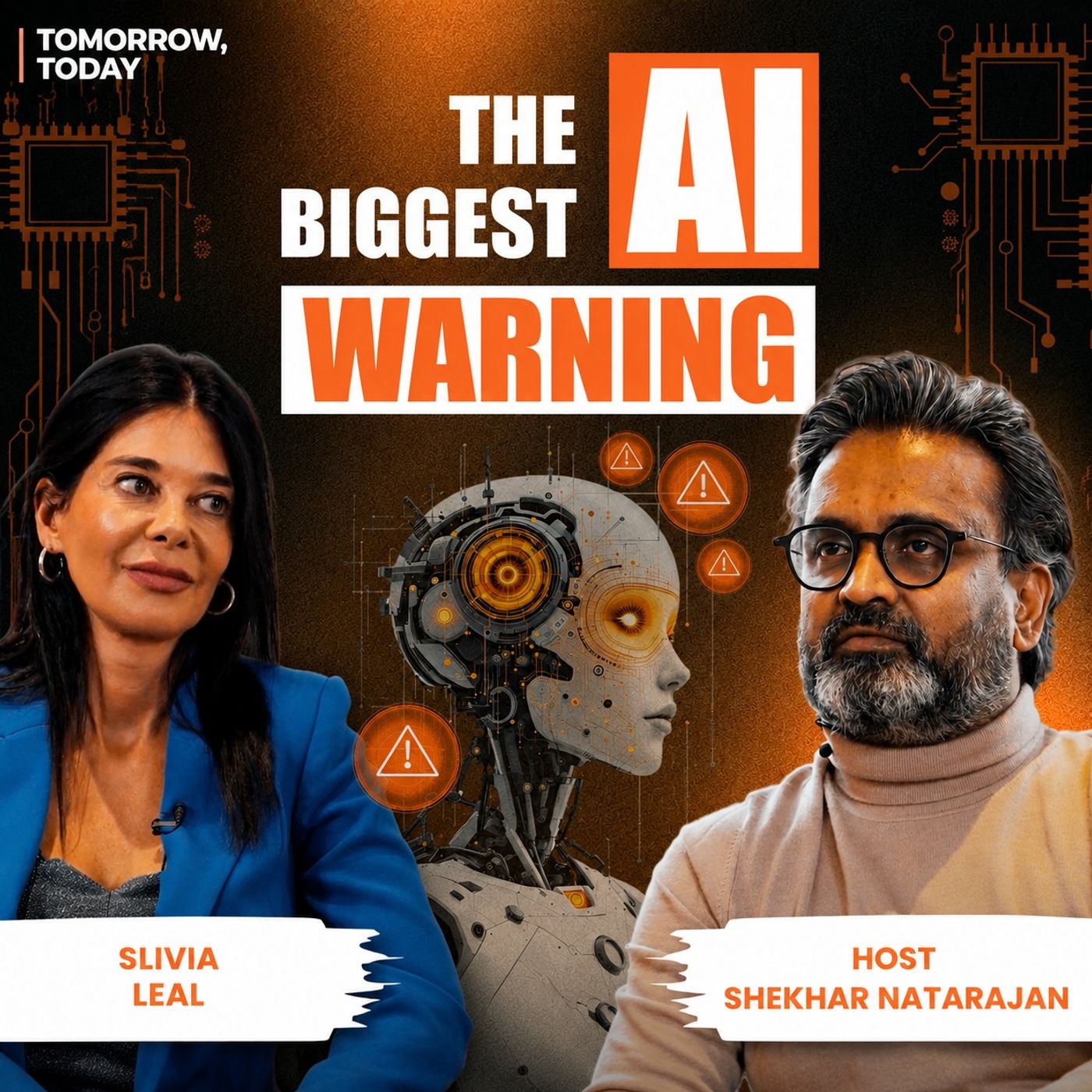
Tomorrow, Today
AI, Trust & The Future of Work | Silvia Leal on Innovation, Cybersecurity & What's Coming Next | Tomorrow Today
01:46:33
Artificial Intelligence is no longer a future possibility it's reshaping industries, redefining careers, and challenging the way governments, businesses, and society think about innovation. In this episode of Tomorrow Today, host Shekhar Natarajan sits down with internationally acclaimed futurist Silvia Leal for a thought-provoking conversation on the opportunities and responsibilities of emerging technologies. From AI, cybersecurity, and quantum computing to digital trust, lifelong learning, reskilling, and leadership, Silvia shares why the biggest risk isn't technology itself but our inability to adapt to it. Together, they explore whether governments should regulate or enable innovation, why AI will create new opportunities alongside disruption, how quantum computing could transform cybersecurity, and what individuals must do to stay relevant in a rapidly evolving world. More than a discussion about technology, this is a conversation about mindset, resilience, and preparing ...
Loading summary
Transcript580 lines
- [00:00]
Sylvia Lyle
I'm like Don Quixote. That was before. Because I fight and fight and fight because I want people to understand and feel what I feel.
- [00:15]
Shekhar Mitrajan
What is the role of the government on technology and what EU is known in the rest of the world is it's considered an innovation killer.
- [00:28]
Sylvia Lyle
With artificial intelligence, everything is going to change again. It's starting there at the beginning. We have a reskilling urgency, but nothing happens.
- [00:44]
Shekhar Mitrajan
If I have to build the same company again, I would build it no more than having seven people in the company.
- [00:55]
Sylvia Lyle
The problem is that they get in your company, they stay there, they wait, they wait, they spy, they get information, they get data, they know your projects, they know everything.
- [01:29]
Shekhar Mitrajan
Foreign. Welcome to another episode of Tomorrow Today with Shekhar Mitrajan. It's my great pleasure and an incredible honor to have my very best friend Sylvia Lyle on the show. Sylvia is a futuristic, an amazing tech communicator, super nice soul. You have won like so many awards. You're considered one of the leading figures in Spain when it comes to technology. You know, she's an influencer, thought leader, opinion leader. The list goes on and on and on. But beyond all of that, she's one of my best friends and I'm very
- [02:25]
Sylvia Lyle
happy to be here with you, Seka.
- [02:27]
Shekhar Mitrajan
I'm like, I'm super honored to be here. So without further ado, like, let's actually jump into like, who is Sylvia and like, what does she do and what makes her unique? What are, what is our special, like, you know, secret sauce? I would love to go through all of that and get to know you more and have my audience know and appreciate who you are as a person.
- [02:52]
Sylvia Lyle
I will say that I'm a person who has a lot of passion for everything. And of course I have a lot of passion for technology and I like what I do. I feel I'm very lucky communicating what I feel. And I think we will have a nice time here because we'll be talking about technology, employment, about many things that I really love. You love that. Yes.
- [03:22]
Shekhar Mitrajan
So tell me this, Sylvia. So like, you know, like your, your degree is not in technology. It is, it is sociology, right? And so nothing to do with tech, nothing to do with change management. But you're so fluent in all of this and you, you basically represent oecd, you're part of like the EU Council. Like you're a futuristic. How does that all happen? Like, this seems to be so divergent, right? Sociology versus technology.
- [03:56]
Sylvia Lyle
Well, it has sense because in fact my degree is in economy and my PhD is in sociology, but my whole career is in technology and I never decide that. But it was life that said, Sylvia, your place is this. Your place is this one. And the point is the following one. When you talk to an engineer, when you are working with an engineer in a digital project, they have a mind focus on data, coding, speed and people. With the sociology view, we focus on feelings, we focus on people, lives, the impact on technology. And this is the blind spot in the project. Because when a project doesn't get the expected results, 90% of the times is because of fear. So why I'm working with the European Commission, the European Commission, the OECD and so many companies, because I'm like a seatbelt for these projects.
- [05:09]
Shekhar Mitrajan
Got it, got it, got it. So, so tell me more. Like you know, how you got started in life? Like what was your, what was your formative years like? How do you know technology so well? Where did it start for you?
- [05:25]
Sylvia Lyle
I started working for Bristol Firestone and then I changed to SAP. I was working for SAP to twice, I was working three times. I decided I needed new air. So I went to work for a company called Whole Theme. And then I got bored because I needed a lot of projects, energy and everything else. So I went back to SAP and from SAP to Banco Santander and Instituto Empresa, that is business school, at the same time. So I was very happy because I have two jobs at the same time. Banco Santander and Istituto de Empresa. So then I wrote a book about technology, it was a bestseller in Spain and I started to. To work like a speaker.
- [06:16]
Shekhar Mitrajan
Got it, got it, got it, got it.
- [06:19]
Sylvia Lyle
Very funny, very intense and very hard.
- [06:22]
Shekhar Mitrajan
Very hard. I'm sure, I'm sure, I'm sure. So, like, it doesn't surprise me because like, you're not only Spanish women, like who, who has a lot of energy,
- [06:34]
Sylvia Lyle
but also I was in peace because,
- [06:38]
Shekhar Mitrajan
you know, women in general are very multi talented. You know, men cannot even write and then cook at the same time.
- [06:44]
Sylvia Lyle
Well, in fact, in January this year, In January, I wrote my new book. In one month, in 20 days.
- [06:51]
Shekhar Mitrajan
Wow.
- [06:51]
Sylvia Lyle
And I think it will be another bestseller. I have a book with 18 editions and I think this will beat that one. Very good, I'm sure. So I like my job, I have passion, so I work.
- [07:06]
Shekhar Mitrajan
Got it? Besides, like working, what do you do?
- [07:08]
Sylvia Lyle
I have two kids, teenagers. And yesterday I couldn't come before because I went to a concert with her. So I really work as a mother. And I love studying all the time and spending time with my friends.
- [07:30]
Shekhar Mitrajan
Very good. So you are considered the successor of Panset by abc. Like, you know, actually quoted you that way. How did that happen? Like, what was your feeling? Because it's such a big honor to be considered that, like, particularly like in Spain and. And being a tech leader and like, being visionary there.
- [07:50]
Sylvia Lyle
Well, Madrid's council said that I'm like Don Quixote. That was before, because I fight and fight and fight because I want people to understand and feel what I feel when I talk about technology and when I work with it. And what happened with Eduardo, Pun said, was that the media realized how intense I was with my messages and how much I try to get people to love technology the same way I did. So they decided to put me that name. And it was a mix of feelings because it's. Of course you feel a lot of pride, but a huge responsibility because he was a giant and he got us to love science. So I tried to keep his fire alive. But in technology and focus on trust. Trust in technology, because I know you like that.
- [08:59]
Shekhar Mitrajan
Yes. So tell me about the. Your journey from IE Business school to rtv.
- [09:08]
Sylvia Lyle
It was a sense of urgency because I was working with 100 people, 200 people, and it was evident.
- [09:20]
Shekhar Mitrajan
What is RTV?
- [09:24]
Sylvia Lyle
I was working with iBusiness School as a director of the programs, the IT and innovation programs. And I decided to change to the television.
- [09:35]
Shekhar Mitrajan
What is rtbe?
- [09:37]
Sylvia Lyle
The public television in Spain, the most important one. And I.
- [09:43]
Shekhar Mitrajan
So you're like. You're like a journalist too, huh?
- [09:45]
Sylvia Lyle
Yeah, well, also, I have my own TV program. It was a studio.
- [09:50]
Shekhar Mitrajan
Oh, okay.
- [09:50]
Sylvia Lyle
Of eight episodes. And I was traveling all around the world. And they said, Sylvia, you have to put on the table 100 people you think are so special you would like to interview and put in your program all around the world. And I went to see Tesla. I couldn't meet Elon Musk, but it was amazing. And I moved because I wanted people in Spain, not only in, to understand what was going on.
- [10:23]
Shekhar Mitrajan
So what was that experience like working for rtv?
- [10:26]
Sylvia Lyle
Oh, that's a master class. Because when you are in your classroom, they pay to listen to you and they know if they wanted the title, they have to listen to you and do everything. But when you are on the tv, you have three seconds before they decide whether to change or not channel. And you have to be very good with the rhythm, your body language, and you need a very good story. And you need to get into the heart to move to the brain, even in an IT program, because I was talking about technology all the time. So how was a masterclass? It was an amazing experience and it was like a master to become a speaker.
- [11:16]
Shekhar Mitrajan
So that hundred. So how many companies did you visit? 100 companies or 100, like tech leaders in the.
- [11:22]
Sylvia Lyle
Well, I had several courses, but about 200, more or less.
- [11:26]
Shekhar Mitrajan
200?
- [11:26]
Sylvia Lyle
Yeah.
- [11:27]
Shekhar Mitrajan
And so what, what did you gain out of that? What was the pattern in all of that?
- [11:31]
Sylvia Lyle
Well, I was the director of the programs and sometimes I also was responsible for some. Last year, for instance, I was responsible for closing the important, the most important programs at IE Business School. And they were the masters, but they were CEOs, they were CFOs, they were CTOs, people with a lot of money.
- [12:00]
Shekhar Mitrajan
But what was the learning from that exercise for you besides getting exposed?
- [12:07]
Sylvia Lyle
I work for IE Business School I 10, 12 years and the exercise was what I got. There was a lot of contacts and so many things. Knowledge. Because sometimes I went to the classes and I got so many things and many friends and businesses.
- [12:29]
Shekhar Mitrajan
Got it. Got it. So you, you actually then moved to oecd? Yeah, European Union Policy rooms.
- [12:38]
Sylvia Lyle
Well, with the European Union, I have been collaborating since I think I've been there about 15 years, more or less. Right now I'm working.
- [12:47]
Shekhar Mitrajan
So what do you do there?
- [12:48]
Sylvia Lyle
Yeah, I'm advisor and right now I'm working with a project, I'm working on a project related to the impact of artificial intelligence in the retail and food industry. Last year, the impact of artificial intelligence in the automotive industry.
- [13:09]
Shekhar Mitrajan
Got it. But like what is the impact in food?
- [13:13]
Sylvia Lyle
We were talking about how to change the habits, the impact in how we cook, the impact on how we sell, how we move people to eat more proteins, we talk about insects and artificial intelligence. That's crazy, but very interesting. And I have been in quite a lot of meetings about how to work with artificial intelligence to make people understand or not, whether to eat insects or not to eat them. Because if you change the way in which we eat and we live, which is so many things, and because this is also very important.
- [13:56]
Shekhar Mitrajan
But how is artificial intelligence, what is EU trying to do? Because it's not EU's job to basically figure out like water is getting grown.
- [14:06]
Sylvia Lyle
They are trying to understand how could impact how we produce, how we consume, how we sell, how we'll understand the impact of eating this or the other thing. We are trying to understand the whole scope.
- [14:23]
Shekhar Mitrajan
Got it. So you are providing thought leadership on the impact of AI. Yeah, but obviously there are positive impacts and there are negative impacts both. And so how do you Talk. How do you think about deciphering what is positive impact and what is negative impact?
- [14:38]
Sylvia Lyle
I know, I. I always give both.
- [14:41]
Shekhar Mitrajan
You give both?
- [14:42]
Sylvia Lyle
Both. So I give both and you choose. And with the European Commission, when they ask me, I give both impacts.
- [14:49]
Shekhar Mitrajan
Yeah.
- [14:49]
Sylvia Lyle
So what happens is that I'm.
- [14:51]
Shekhar Mitrajan
But you're not a food expert, so how do you come up with like.
- [14:54]
Sylvia Lyle
Because I talk about producing an artificial intelligence. Selling and artificial intelligence.
- [15:00]
Shekhar Mitrajan
Got it. So you talk about producing and artificial intelligence, but like, it's a very complex topic. What are the second order, third order, fourth order impact? How do you know that?
- [15:11]
Sylvia Lyle
Because I'm not the only expert there.
- [15:14]
Shekhar Mitrajan
Got it.
- [15:14]
Sylvia Lyle
We are a lot of people with many disciplines, many countries, and we talk and talk and talk and they create reports.
- [15:22]
Shekhar Mitrajan
You create reports.
- [15:23]
Sylvia Lyle
So I learned a lot.
- [15:24]
Shekhar Mitrajan
Okay, so when you, when you create those reports, what happens to the reports?
- [15:29]
Sylvia Lyle
They publish them and they send them to the governments and my name is there.
- [15:34]
Shekhar Mitrajan
Okay. And then once you do that, what does the government do with that?
- [15:39]
Sylvia Lyle
Sometimes nothing. But this information.
- [15:42]
Shekhar Mitrajan
Got it. Who's. Who's commissioning those studies for you to spend time there as an advisor?
- [15:47]
Sylvia Lyle
Yeah.
- [15:48]
Shekhar Mitrajan
So you're going there, you're spending time. Do you get paid for it or is it just voluntary work?
- [15:52]
Sylvia Lyle
I pay for it when I travel. If I do it online, I don't get paid, but it's prestige for me.
- [15:58]
Shekhar Mitrajan
Got it.
- [15:59]
Sylvia Lyle
And a lot of knowledge because I know what will happen five years in advance.
- [16:03]
Shekhar Mitrajan
Got it. So it's basically voluntary work that you're trying to do. Very good. Beautiful.
- [16:08]
Sylvia Lyle
But when you travel, you get paid. I mean, I used to get paid. It depend on the project.
- [16:12]
Shekhar Mitrajan
Can you get me into YouTube?
- [16:14]
Sylvia Lyle
No.
- [16:14]
Shekhar Mitrajan
Why? I like to get.
- [16:18]
Sylvia Lyle
I have secrets.
- [16:22]
Shekhar Mitrajan
I love to get paid. Like, oh, this is like.
- [16:24]
Sylvia Lyle
I thought I'm your best contact with them.
- [16:26]
Shekhar Mitrajan
I thought you're my best friend.
- [16:27]
Sylvia Lyle
It's through consultants.
- [16:29]
Shekhar Mitrajan
Got it, Got it.
- [16:29]
Sylvia Lyle
No, no, I will give you some names, but I know you don't need them. You have a lot of contacts. Everyone knows whose.
- [16:40]
Shekhar Mitrajan
Well, I. I think like, you should go tell my wife because she thinks like, no one knows me.
- [16:47]
Sylvia Lyle
Give her my number and I will let her know how many people is very happy about your job. Yeah, thank you. What you are doing every day.
- [16:56]
Shekhar Mitrajan
Yeah, thank you. Thank you.
- [16:59]
Sylvia Lyle
About values and trust.
- [17:01]
Shekhar Mitrajan
Absolutely. Values and trust, for sure. So when you. It's one of the reasons why I was actually asking you all these questions is. See there's a lot of discussion about the role of the government. What is the Role of the government on technology. How do we. Should the government enable, should the government regulate? And what EU is known in the rest of the world is it's considered an innovation killer, not an innovation enabler ecosystem. Right. Because they try to basically force regulations even before the technology arrives with the worry that it is going to impact people. And so like, it's very critical for people to know that that is not their intent, but basically they have a process to understand how information is sourced from subject matter experts, understanding the positives and the negatives and then how they go and kind of enforce it. So tell me a little bit about like the, the places where you, how long you've been working with EU.
- [18:08]
Sylvia Lyle
Almost 15 years.
- [18:10]
Shekhar Mitrajan
15 years.
- [18:10]
Sylvia Lyle
In 15 years, the age of my first son.
- [18:13]
Shekhar Mitrajan
Wow.
- [18:13]
Sylvia Lyle
Yeah, that's why I was calculating.
- [18:15]
Shekhar Mitrajan
Yeah, yeah. So 15 years. You've been. So of the 15 years of like contributions that you made, what are the biggest contributions that actually came to life with the EU that you worked with?
- [18:26]
Sylvia Lyle
Well, I know they send the reports, the government analyzed them. And I was working about a, with a project called Eader and those were recommendations for small companies. And I know some interesting things came out from that project. And I have also been working. I was the speaker of the Group of Education in the E Skills program in the European Commission. I think it was seven, eight years ago. And I was the person who was talking the result of the group. And I think it worked because the messages arrived to the governments. But the European Commission is too focused on risk, on frameworks, is to focus on safety, on protecting. And it's fine, but it's killing not only innovation, but companies because I'm an investor in some companies and we develop software and it's, it's not possible to protect it. You have to go to the United States, you have to come back, you have to pay a lot of money. And it's like a book. They protect your software like a book, at least in Spain. And I'm not very, I can't say very good things about regulation in Europe and in Spain because it's clear innovation and it's not helping people understand the incredible moment we are living. Because it's all the time about risk and protection and not about opportunities. And I don't like that.
- [20:09]
Shekhar Mitrajan
But it is ironic that they actually like engage in the process of entertaining thoughts. But like, you know, so why can't like people like yourself and others go and express dissatisfaction or provide like alternate ways of thinking about it and see like, you know, how to change the System because it's critical. Like, you know, so there is like leadership and there's victimship. Right. So like, you know, like, so how do we, what do you think? Like, you know, role of someone like you and others should be in guiding you versus basically like, you know, they being stuck. Because I, I firmly believe that there is. See, I also believe in what they do because if it is go, if it goes like really crazy, like the way it goes in United States, more harm is created than good. Right? So while like innovation is beautiful, you cannot like be innovating, you cannot be driving like an autobahn with like no seat belt, no steering wheel, no brakes and everything is flashing like you know, 100 kilometers an hour, but you can't control the car. And it is basically running at 250. Yeah, you're going to just go and crash and die. So you have to balance both. So how do you think we should solve that problem? What do you think is the answer here?
- [21:30]
Sylvia Lyle
Well, I can't say. They don't listen to me. They do listen to me.
- [21:33]
Shekhar Mitrajan
They do.
- [21:35]
Sylvia Lyle
For instance, this year, the Mobile World Congress, I was the person opening on Wednesday, the Spanish Pavilion. So they listened to me. But it's not enough. They also try to put this knowledge, these ideas, this motivation on the public. And they have so many things to do. They don't. They give money, they give money. We had the digital kit, kit, digital. And they give money to the company, so they move to artificial intelligence, they create web pages, whatever. But they pay you to do something. They don't motivate you. So I think they should do something in the media. They should do something with the leaders, with the politicians, the people, the CEOs of the companies. It should be something general coming from those people who understand what's happening. Many people understand what's happening, but they are not putting this on the schools, universities, and has to be solved.
- [22:40]
Shekhar Mitrajan
See, while the system is imperfect, I'll give you an example where there was a very tangible impact. I saw and I'll talk to you about the approach we took and I want you to critique it. Like, what do you think about it? So there was a massive problem with Katrina. When Katrina happened, the Hurricane Katrina, a lot of disaster, like lot of communities got destroyed because of that. And like, you know, it is very deeply personal to me because I also know, like, you know, when I used to work for Walmart, there used to be a picture right outside the supply chain officer's office where basically the Walmart trucks were lined up all the way Right. Almost like several miles to go, help people in need. Right. And it was the most proud moment everyone talks about in Walmart. Like they, no one called for it, but the private parties went and kind of helped. Okay, so based on that, when Obama became president, what he did was something brilliant. So he said, I'm going to bring all the private parties together and I'm going to bring all the public parties together, right, Like FEMA and others, and I am going to have them engage in tabletop exercises, not just for Katrina, but if there was a massive disaster which happens, like let's say, like, you know, someone drops a nuclear, you know, weapon in Potomac river, we need to know exactly by the minute when the entire country is going to shut down. Because Potomac river is not like it's in the East. But, you know, at what point in time the entire, like, you know, country is going to get impacted because of that. And how do we bring private parties and public parties together to respond? What's the role? What are the connections? Who are the people? And how do we simulate all of this as tabletop exercises? And we used to run those tabletop exercises with specific methodologies, which is how I got involved in it for almost like seven years. And we created a lot of artifacts on how to respond where he, because he firmly believed if the public got into, if basically government got into it, it would basically prevent the private parties from acting. Because that picture of Walmart was the reality. Walmart responded, not the government. Right. So if basically the private parties are involved in the process, they know their duties and responsibilities, how do we go about it? So it was a beautiful example. I don't know if, like, you know, they continue to do it anymore or like, what happened to it. But I was there when like Obama was there, like for almost eight years. I used to represent the private sector and lot of good conversations that we had.
- [25:53]
Sylvia Lyle
So,
- [25:55]
Shekhar Mitrajan
like, I think that sort of. What do you think about that sort of methodology?
- [25:59]
Sylvia Lyle
I liked that. The point is that if the private world solve it, the other say, okay, I will do something else. They are already solving it. What happens here when we are talking about the IT world, for instance, and we are talking about the IT labor market, if the government is not solving it, the point is that companies can't hire people, they can't grow, and they have huge problems. So they have to do it. So it's not a decision. They have to do it. But they don't know, because in Spain and in many countries, no, why don't
- [26:36]
Shekhar Mitrajan
you bring them together?
- [26:38]
Sylvia Lyle
Yeah. Why? That's the point. It's taking them too long. Because with artificial intelligence, everything is going to change again. Is starting. We are at the beginning with agents is going to be amazing. We should be on the street and have a lot of places training people with new skills. I think we have a reskilling urgency, but nothing happens. So I think I'm optimistic and I think it will happen because it needs to happen. But the sooner the better. But it will happen with the agents. AI agents really arrive to our daily lives. Many things will happen.
- [27:27]
Shekhar Mitrajan
Got it. So you seem to be an eternal optimist, but most people are afraid. Why is that?
- [27:35]
Sylvia Lyle
No, no, it's not true.
- [27:39]
Shekhar Mitrajan
Like you kept up with EU for 20 years.
- [27:40]
Sylvia Lyle
Optimistic, pessimistic, afraid or not afraid. Yeah, I'm optimistic. I'm afraid. But I realize the other side of the coin what happens is that I could do two things. I will say, okay, no hope, let's see what happens. Let's do nothing. If you see the pool is empty, you don't jump. So I prefer, it's my way of living to be optimistic. See a door, try to imagine the map and let's go and see what happens. And since happens. But it's better to be okay. Optimistic.
- [28:24]
Shekhar Mitrajan
Yeah. So if, what, what does the history say though? Like, you know, like, you know, being an optimist and, and, and, but like the pain on the other side, like, you know, because I, I realize I'm talking to a lot of people, like my, some of my friends who have lost jobs, who have basically like been uprooted. Like, you know, a lot. Like, you know, they've been like, they're very smart guys, working for Amazon, working for Google, working for like meta. Like, you know, there's so much layoffs, there's so much like anxiety. Like the, the confidence is like shaken up. People in trauma are in trauma.
- [29:03]
Sylvia Lyle
Yeah.
- [29:03]
Shekhar Mitrajan
And you cannot like tell the people in trauma like, you know what, like be an optimist because that's the, because they're in trauma. Like, please, like, you know, so please empathize with me first before you say like become an optimist. How do you deal with that scenario of the social aspect?
- [29:17]
Sylvia Lyle
That's true. And this is not the first time. And every time a new technology arrives, like artificial intelligence, the Internet, wherever this happens. And the other day I read some news that said that many CEOs are leaving the companies because they say I'm not capable of managing this. So this is happening. What happens is that there is a trauma There is a, a period of time in which many people is suffering and they will suffer, but they have other options. So it's hard to lose your job. I've been there. Well, I've not been there, but every day I have to fight for my, how to say it? I have to be there all the time. Because technology is changing. And for me it's like a new job, let's say every six months. Because I have to change absolutely everything. And it's hard because you have to retrain, train your brain, you have to learn new things. But you can create a new company. You could become an advisor. There is a way to do things. So what would I say? Those people that I'm sure they have a second chance. And with artificial intelligence, the biggest opportunities are for those people with a lot of experience. So complaining takes you nowhere. You have the right to complain, but takes you nowhere.
- [31:01]
Shekhar Mitrajan
But artificial intelligence is also something which is, which is basically completely changing the fundamentals of how we do a lot of things, right? In the sense. See, like, you know, when I was growing up, there was a guy who saw me creating mechanical Ganesha in my neighborhood. And he said, like, you know, okay, I think you should become an engineer. And my mom said, like, you know, you have to tag with this guy. And like, you know, I, I then became an engineer because in those days, if you're not an engineer, if you're not a doctor, and if you have not done Commerce, BCom, Bachelor in Commerce, you're good for nothing. There's like every other, like every other profession, like psychology, sociology, education, anything is considered a good for nothing job. Artist, nothing. Like you cannot like so. Or you have to be a superstar cricketer. Like, you know, only then, like, you have arrived in India, right? So now, and during that time, people used to look down upon professions like being a carpenter, being a plumber, right? And now I feel like in the age of AI, those jobs are going to be the hottest jobs in the world, right? No, being like new being, being like a specialist, like that is more favorable than being a generalist. Like, you know, and so I don't like, I don't know if it's a short term trauma or it is a longer term problem, right? So what is it?
- [32:43]
Sylvia Lyle
Everything is changing. And the point is that, for instance, I have my PhD in Sociology. I have to tell you that when I decided to do it, many people laugh. They said, Sylvia, you have three MBAs. Three. You have.
- [32:59]
Shekhar Mitrajan
Why did you like, not get satisfied with one mba? Why do you have to do it twice.
- [33:06]
Sylvia Lyle
Because you asked me at the beginning and you said, sylvia, what do you do? I spend time with my kids. I work and I used to.
- [33:16]
Shekhar Mitrajan
I know, but like why do you need to do MBA three times?
- [33:18]
Sylvia Lyle
Because they.
- [33:19]
Shekhar Mitrajan
But what if you not run the first time?
- [33:21]
Sylvia Lyle
Normal mba, International mba. MBA with a focus on technology. Because you know, my neurons develop a lot Studying.
- [33:32]
Shekhar Mitrajan
Did you really learn different things? Three different MBAs?
- [33:35]
Sylvia Lyle
Yes.
- [33:36]
Shekhar Mitrajan
What was the first one?
- [33:38]
Sylvia Lyle
Well, the focus was different international MBA. One focus on E Business and the other one was an MBA in Spain, France and here in. In England. So I enjoyed that.
- [33:54]
Shekhar Mitrajan
These are all MBA degrees or this were like professional series courses?
- [33:57]
Sylvia Lyle
No, it was a. An MBA here in Bradford University. Nantes, Bradford Business School, Universidad. I have a lot of MBA titles.
- [34:10]
Shekhar Mitrajan
Wow.
- [34:10]
Sylvia Lyle
But yeah, I will do them again.
- [34:15]
Shekhar Mitrajan
And why will you do another mba?
- [34:17]
Sylvia Lyle
Not anymore. Because my husband. My husband, I wanted to. No, I. I PhD and I wanted to study something else.
- [34:30]
Shekhar Mitrajan
So you have only one PhD or you have more than one PhD?
- [34:32]
Sylvia Lyle
No, no. You will like this. I have one PhD and I wanted to study more. And my ex husband said, Sylvia, they will think she's not learning anything. Why so many?
- [34:50]
Shekhar Mitrajan
That's why I thought too. I will ch my role.
- [34:57]
Sylvia Lyle
And I decided to write books. And I have already written 12. Well, 13 right now.
- [35:04]
Shekhar Mitrajan
So I'm just kidding with you.
- [35:06]
Sylvia Lyle
Yeah.
- [35:06]
Shekhar Mitrajan
No, no. But I love you. You don't have to explain it.
- [35:09]
Sylvia Lyle
This is very good because if you want to learn something, write a book about it. So how do I learn writing books? And you will love my new book because it's about a very interesting histories about technology.
- [35:28]
Shekhar Mitrajan
History of technology.
- [35:29]
Sylvia Lyle
Yeah.
- [35:29]
Shekhar Mitrajan
How did technology evolve?
- [35:31]
Sylvia Lyle
Yeah, but I can say no, but they are really funny. So I say, well, funny. A robot decided to die in Korea. And what happens next? Employees say please repair it because we don't want to work. This is true. So I explain the story, I explain it technically and then I give my opinion and 12 anecdotes. And I think it will be really successful book.
- [35:58]
Shekhar Mitrajan
Oh, I like, I like. I already love it.
- [36:00]
Sylvia Lyle
Like because it's. It's very. It's very interesting.
- [36:04]
Shekhar Mitrajan
Can you tell me how to write my book?
- [36:09]
Sylvia Lyle
Tell me what you want to learn about and write a book about that.
- [36:13]
Shekhar Mitrajan
Got it.
- [36:14]
Sylvia Lyle
And do it. Enjoying it? Pretty much.
- [36:17]
Shekhar Mitrajan
So. So that's not. Okay. So every time you have a itch to learn, you write a book?
- [36:23]
Sylvia Lyle
Yes.
- [36:24]
Shekhar Mitrajan
Good. How many books are you gonna have? How many PhDs are you gonna have already?
- [36:29]
Sylvia Lyle
Thirteen. My manager says they shouldn't eat each other. So he stops me. I love him. He's very good. Very good advices for me. Yeah. Because I will be writing books every week. I'm publishing them every three months.
- [36:50]
Shekhar Mitrajan
Got it.
- [36:51]
Sylvia Lyle
No good. He stops me like a horse.
- [36:55]
Shekhar Mitrajan
No. So you are. So your passion and your thirst for knowledge is incredible, by the way. Like, I was just messing with you. So. No, like, you know, like, for me also, it is very critical. I have two masters as well. And then, like, I have, you know, I've been privileged to go to good schools and then. But for me, like, it was. I had a different reason. My reason was I could not make it into the top school in India. And I thought, like, because I did not make it into the top school in India, I'm not good enough. So then I got into a good school. Then I realized, you know, like, what I was trying to prove myself was stupid. Right? Like, it was not about the school as much. It was about seeking knowledge. So every, every. It's not a very bad idea, by the way, that you got. In fact, it's a very good idea that you got three masters. You have to go tell your ex husband that. And I think you should, if you want to do. I think you should do more PhDs too. It's the, the break that it gives and the connection that it lets you make and basically grounding you back to the realities of the business and the concepts of business and the diverse perspectives that you get in a classroom. You can never, like, underwrite it. So life is about lifelong learning. It's never like, you never stop that. And so, so that is the reason why I used to pursue multiple degrees. So I've been asked the same question, like, why are you not satisfied, like, one degree, why did you have to get another one? What did you learn new? And for me, that question was very profound. But at the same time, I had to go dig myself and find out why was the reason why I was seeking that. In my case, it was about basically broadening my horizon, about kind of the, the thirst for knowledge. Right. Like, you know, understanding what it meant and, and being like, stooped in it and having that disconnection moment. Because when you go there, you're disconnected from the professional world, only focused on that. So you're only focused on learning. So you unlearn everything you learned. You relearn something new, and then basically you, you go off into the, into the, into the world again.
- [39:18]
Sylvia Lyle
But in my case, there was something else.
- [39:21]
Shekhar Mitrajan
What was that?
- [39:22]
Sylvia Lyle
I'm a woman in the IT world. And I'm not an engineer and I'm the speaker and the voice of technology in Spain, in many places. I mean, in the most important event.
- [39:37]
Shekhar Mitrajan
Is it important and is that important that, like, you are the only person or if, like there are, you're surrounded by men, like, because, like, you know, you're just as good as them.
- [39:47]
Sylvia Lyle
I said it in the beginning, but it was hard and many people wanted to do. I. I was, for instance, I said before, the director of the IT and innovation programs in Instituto Impresa IE Business School, one of the most important business school in the world. Many people wanted my job. So with my studies, I said, ah, I have this, I have this, I've had this, I had this. You can't criticize me, because what do you have? So I compare and I feel safe, you know?
- [40:23]
Shekhar Mitrajan
But was it. So why do you need to validate them? You have to validate yourself. Like, you know, it was.
- [40:29]
Sylvia Lyle
It's.
- [40:29]
Shekhar Mitrajan
The vision is for you, not for others to get validated. Yeah, but like, yeah, you didn't. Anyway, so for. I think, like, see, first, I think you're an incredible person. I don't think anyone should bring you down, and you should not feel anyone trying to bring you down is like an important thing for you because you should not, like, even care about it.
- [40:47]
Sylvia Lyle
But we are humans. I know, but sometimes you are weak. Sometimes you have a problem. A project is.
- [40:53]
Shekhar Mitrajan
Are you like you? Please don't tell me you're weak. I don't think you are. Like, you know, you're like one of
- [41:01]
Sylvia Lyle
the strongest persons I've known sometimes.
- [41:03]
Shekhar Mitrajan
Oh, my God, please don't do that.
- [41:06]
Sylvia Lyle
I am.
- [41:08]
Shekhar Mitrajan
You're tough. You're very tough.
- [41:09]
Sylvia Lyle
I'm tough. I'm human. So that gives me a lot of energy. I feel so proud of having those titles with me that it gives me energy, security, contacts, many things. So we have to study. It's amazing. It's for your whole lifetime.
- [41:35]
Shekhar Mitrajan
Yeah. The only thing I think you should study for, this is my opinion, sister, is you should study for yourself, not to validate others. Okay? Because you're. You're really amazing. You're incredible. So you have to believe that. And if you. Of course, you have to trust me. If you don't.
- [41:53]
Sylvia Lyle
I do, I do. I'm going to leave and come back.
- [41:59]
Shekhar Mitrajan
So tell me about your first book. It had 18 editions.
- [42:03]
Sylvia Lyle
Yeah.
- [42:03]
Shekhar Mitrajan
No, no, it was like your master's degree too. Like, it never ended with one.
- [42:07]
Sylvia Lyle
The first one. The. The first book was about innovation and was my PhD transformed in a book for everyone. The one with 18 editions and was bought by Amazon. It's not mine anymore. It was called whether you renew yourself or you die. And it was very successful. And it was about how important it is it is to embrace technology.
- [42:39]
Shekhar Mitrajan
Is it not your book? How is it not your book?
- [42:42]
Sylvia Lyle
No, I, now it's my book, but I don't have the rights right now. I sold them to Amazon, so I got enough so many books around Spain, so. And they wanted to buy the rights. Yeah, the rights. And they created an audiobook with my voice. And it was very successful, useful. And it was about the seven technologies that will change our world. And it didn't mention artificial intelligence. It was about big data at the time. So then I wrote a book about artificial intelligence, and then I wrote a book about trends, etc. But I. This one was about seven technologies that would change our lives. And they did.
- [43:33]
Shekhar Mitrajan
So in that book you talk about like, you know, people are professionally recyclable.
- [43:37]
Sylvia Lyle
Professionally recyclable. How to do it, why to do it.
- [43:40]
Shekhar Mitrajan
Well, if you say that to me, I feel like garbage. What do you mean by professionally recyclable? Please explain.
- [43:52]
Sylvia Lyle
Yeah, I, I, I talk about second. Second chances and prosperity. Got it?
- [44:00]
Shekhar Mitrajan
And when you, when you're talking about recycling, it's like we re.
- [44:03]
Sylvia Lyle
Skilling is real skilling.
- [44:05]
Shekhar Mitrajan
Got it?
- [44:06]
Sylvia Lyle
But if you don't have a, you don't have a way where you are, you, you can do anything else because they are firing people with your profile, opening new company advice, whatever. But you have to study. You have to understand that every 15 or 18 months, 18 months, everything might change again. Because with technology the processes are changing a lot. It means that you need to understand that if you don't have a job anymore, for instance, for your friends, you could open a company, help friends, be an advisor, many things to do. But you need to understand that today it's estimated that every 15 or 18 months processes will change. So you might be changing the way of doing things and technology you advise about, or everything might change. And it will change every 18 months. And you should understand how important it is that even if you are on your 50s, your 60s, your 40s, you should sit down with a person on the 20s and ask and learn and be comfortable. Because education is not a vaccine anymore. You need the reinstallment every 18 months. 18 months. Right now let's see what happens next. Because with agents,
- [45:39]
Shekhar Mitrajan
why are you, what do you think about like AI and jobs?
- [45:47]
Sylvia Lyle
I will give you the numbers according to the European Commission and also ecd etc, the jobs that will be generated are a lot more than those that will be destroyed. But there is a trauma and many people.
- [46:03]
Shekhar Mitrajan
What jobs are created?
- [46:04]
Sylvia Lyle
Yeah, the numbers are 97 million destroyed, 170 created. Why this is more important? Why? Because when, for instance, quantum computing arrives, artificial intelligence will explode. Today there is not capability for everything, everything. What happens now is that if you look around today, only 1 in 100 elements have been analyzed to determine whether if it could heal or not a person. When computing, quantum computing arrives, we could analyze them all immediately. What happens then is only an example. There will be a lot of people analyzing what happens with all the rest of the elements. So you have a lot of jobs there. What happens when quantum computing arrives is that cyber security will change completely because your password will not be valid anymore and a lot of jobs will be created there. When quantum computing, how will jobs get created?
- [47:18]
Shekhar Mitrajan
Like, because your passwords are lost.
- [47:21]
Sylvia Lyle
A lot of jobs because post quantum computing is already arriving?
- [47:27]
Shekhar Mitrajan
No, no. What jobs are created there? Like, you know, like. You mean cyber security?
- [47:31]
Sylvia Lyle
I'm the investor and an investor.
- [47:34]
Shekhar Mitrajan
No, no, no, no, no. I'm saying like, what jobs would be created? What are the types of jobs?
- [47:39]
Sylvia Lyle
People specialize in cybersecurity, but in a new kind of cyber security.
- [47:46]
Shekhar Mitrajan
Got it.
- [47:46]
Sylvia Lyle
That can't be deciphered. You know, for instance, a lot of companies right now are very worried because the hackers are getting a lot of data, they are harvesting the data, and when quantum computing arrives, they will put the data on the table with estate secrets, family secrets, company secrets. And that's coming. What I mean about this is that we think the labor market as it is today, but in an area as for instance, cybersecurity, of analyzing elements for healing, lots of jobs will be created. But also for instance, in sustainability, a lot of people analyzing what to do to stop the climate change. We have to open our minds, but we still don't have that technology. But it's coming. So we shouldn't think of artificial intelligence as what it is today, because today is almost nothing. Because when quantum computing arrives, it will be democratized for all the industries, for all the companies. Because what quantum computing allows is to do all the calculations at the same time. That's the key. That's why anyone could have your password. And that sounds amazing, sounds crazy, but creates a lot of opportunities. So we need to break our minds and jobs will be created through these challenges or dreams.
- [49:41]
Shekhar Mitrajan
But like, if, if quantum computing can solve so Much so quickly. Do you need as many cyber security people?
- [49:51]
Sylvia Lyle
Yes.
- [49:52]
Shekhar Mitrajan
How?
- [49:53]
Sylvia Lyle
Because you have new rules. Yeah, you have new rules how to keep your information protected. Has to be any way that can be deciphered by the new quantum computing. So everything changes.
- [50:11]
Shekhar Mitrajan
But so where do you learn that? Because education. No, no, no, I'm not talking about you. But like if I'm like, let's say like I'm Shekhar Natarajan, I got impacted today and you're saying the dream of like you know, cyber security is coming.
- [50:25]
Sylvia Lyle
Yeah.
- [50:27]
Shekhar Mitrajan
Like which, which, which company do I go and work or which, which education institute I have to go study. So I understand the implication and start building it.
- [50:37]
Sylvia Lyle
Do you know where this information is in startups?
- [50:40]
Shekhar Mitrajan
I know.
- [50:41]
Sylvia Lyle
For instance, I'm working with a startup that is called Secrets Vault that is working on something in this area. How do I learn this? Because they are learning on the field, because this is not in the books. So how to do it? Investing and talking to them and going to where they present the pitch and it's the way to learn what's happening.
- [51:08]
Shekhar Mitrajan
But if you have AI and I can code a lot of things, why do you need so many jobs in cybersecurity? Like, like I understand your argument that you would need like so many people in cybersecurity or you need cybersecurity protections. Yeah, but I'm just like theorizing now like if code can generate code. Yeah, like you know the future companies are not going to be built with like hundred people unicorns. Yeah, it is going to be like a 10% unicorn or a 5% un. Which means that if net effective number of jobs will be still lower than the pre AI economy. So where are the jobs getting created?
- [51:42]
Sylvia Lyle
New way of, new ways of authentication, new ways of protecting your data, new ways of managing.
- [51:51]
Shekhar Mitrajan
No, I get all of that. See like that also happens today. Like you protect the data, you have all of that.
- [51:56]
Sylvia Lyle
But today those databases you have will have no value.
- [52:03]
Shekhar Mitrajan
True. What I'm saying is today if there are 100 companies doing that, even those hundred companies will be obsolete. Now a new company which solves that problem will not have 100 people, but
- [52:15]
Sylvia Lyle
it will be more complex.
- [52:17]
Shekhar Mitrajan
It will be more complex, but it will need still fewer people or not.
- [52:21]
Sylvia Lyle
Because it depends on the complexity. Yeah, it depends on how you do it. You might need a philosopher for the cyber security. So don't think about today, it's about how we imagine the future.
- [52:35]
Shekhar Mitrajan
No, I, I understand. But like, see like this, like the reason why I bring this Up.
- [52:39]
Sylvia Lyle
Yeah.
- [52:39]
Shekhar Mitrajan
Is I met this guy, I forget his name. Mark. I'll get the final name. Like very sure, like. So he was talking about this very beautiful principle where he's like an economist.
- [52:51]
Sylvia Lyle
Yeah.
- [52:52]
Shekhar Mitrajan
And he predicts markets. Like I saw him in all these family for office events and Mark, they come to me like I'll. Before the end of the show I'll tell you the name.
- [53:03]
Sylvia Lyle
Yeah.
- [53:04]
Shekhar Mitrajan
So his, his analysis was what people tend to do is extrapolate numbers in a. In a very like linear fashion. Yeah, right. So exactly. His example was when Internet came out they predicted that E commerce is going to be like $10 trillion by year 2014. Right. E commerce is not anywhere close to that. In US it's still only less than $800 billion. So 14 trillion didn't happen because everyone was just extrapolating the numbers. I see a similar argument with jobs as well because we don't know even though there may be complexity. And I don't disagree with you.
- [53:53]
Sylvia Lyle
Yeah but think about what I told you about. Because you have taken the cyber security field. Think about the elements that will heal everything. So many diseases. How many people analyzing within an element.
- [54:10]
Shekhar Mitrajan
Why do you need analyzing things? You have AI to analyze.
- [54:13]
Sylvia Lyle
You need to analyze it because maybe today we don't know how to cure cancer and we could cure it with.
- [54:19]
Shekhar Mitrajan
But AI can cure cancer. That's what like that's what Google DeepMind is doing.
- [54:24]
Sylvia Lyle
Yeah, but I'm talking. Listen, if we have the same cancer.
- [54:29]
Shekhar Mitrajan
Yeah.
- [54:30]
Sylvia Lyle
The same element. Yeah. Might work for you and not for me.
- [54:35]
Shekhar Mitrajan
That is what AI is supposed to
- [54:36]
Sylvia Lyle
do with digital twins. So you need a person working with the digital twins and with your digital twin. With my digital twin. At the digital twin. Of all those people who are listening to us, who is doing that today? No one. Someone needs to do the data twin. Someone needs to analyze the data twin. Someone needs to analyze what will happen with all the elements in the world. You see how many jobs and someone needs to teach them system how to do everything. Someone has to look at you in the eyes. So how many jobs right now? Compensating. Open your mind about that area.
- [55:20]
Shekhar Mitrajan
That's why you are a futurist. I'm not. I can't see that yet.
- [55:24]
Sylvia Lyle
You can't?
- [55:26]
Shekhar Mitrajan
No, no, no. Like I know. I think. See what? The way I see is slightly different than the way you say it. You're absolutely right. I was actually. The reason why I tell you you're right is I was actually at Humanx last week. It's supposed to be the largest AI shown. And so though AI has basically everyone talks about LLMs, Nvidia and basically they talk about all these data centers, no one is really talking about all of the challenges AI is already creating today, which is like around safety, anonymization of data. Like how do you build like inference optimization, how do you basically create agent safety, how do you deploy agents in the workforce, how do you basically communicate with agents, how are you building the workflows for the agents? So there was a whole host of companies which like no one talks about that is now emergent. The only thing people talk about is the general use of AI. So from that perspective, I completely agree with you that there is going to be a new, like, you know, age of companies. It's very similar to what happened in Internet.
- [56:41]
Sylvia Lyle
Absolutely right.
- [56:42]
Shekhar Mitrajan
You know, HTTP arrived, then HTTPs arrived and Zero Trust arrived and HSM arrived. And each of those ended up creating a set of jobs and set off like new ways of doing things. So there are a lot of jobs which are going to get created. But the only thing that I'm not sure, Sylvia, is the jobs that are going to get created, they are not going to be the same level of human resource requirement in the future. That is what I believe in today. Because I know when I started the company in 2023, I was very quick to hire 60 people into my company. Okay. Because we thought like, we are operationally heavy, we got to do all of that. Now if I have to build the same company again, I would build it no more than having seven people in the company. Same, same trajectory of revenue, same type of company. I would only do it with seven people today because code is so easy now. You can, all you have to do is say, I got a spec, let me go and give it to like, you know, one of these cloud coders. It will code the thing, it will test everything. It will also go put it into the GitHub. It will like basically like have the entire thing provisioned and it is fully functional for you. Right. And all of it takes less than like a day to do. When my previous cycles used to be like three sprints, 10 people on each, everyone working through. So what we haven't reached is, and it also brings a lot of challenges. How do you secure the code? And other things, it causes other things to be managed. But I don't essentially know the efficiency of the jobs in the AI world yet. And that is where the jury is out there. And I hope you are right.
- [58:35]
Sylvia Lyle
No. And we don't know.
- [58:37]
Shekhar Mitrajan
Yeah.
- [58:37]
Sylvia Lyle
The point is, if we feel pessimistic today. Yeah.
- [58:41]
Shekhar Mitrajan
We'll leave out on the opportunity to learn.
- [58:43]
Sylvia Lyle
We will not do it.
- [58:44]
Shekhar Mitrajan
Yeah.
- [58:45]
Sylvia Lyle
So I might not be right.
- [58:47]
Shekhar Mitrajan
Yeah, and me neither. I don't want to be right.
- [58:51]
Sylvia Lyle
But yes, if we believe it will be like that, we will try to get it. That's the point. If not, the Chinese people will get those jobs. That's the point.
- [59:04]
Shekhar Mitrajan
Why? Why do you need Chinese people to do the job?
- [59:06]
Sylvia Lyle
Because it cost like time. In Spain, someone can't find a person to. To do something.
- [59:14]
Shekhar Mitrajan
They go to China.
- [59:14]
Sylvia Lyle
They go to China and they do it online or whatever. One less job. Yeah. Because in Spain we have a different problem. We have 2 and a. 2 million people. 2 and 400,000 million. Well, a lot of people. More than 2 million people without unemployment right now. And 90% of the companies are looking for talent and they can't find it.
- [59:41]
Shekhar Mitrajan
Can I immigrate to Spain? You're welcome.
- [59:45]
Sylvia Lyle
No, no, but more than 2 million people looking for a job and 90% of the companies looking for talent.
- [59:58]
Shekhar Mitrajan
So can you recommend me for some of the jobs?
- [60:01]
Sylvia Lyle
Of course.
- [60:03]
Shekhar Mitrajan
Good. So see, that actually brings us to a question which is very, very important that we all need to recognize. Right. All these big companies are very fast to hire. And also, you know, for most of these companies, people represent a number on the balance sheet.
- [60:27]
Sylvia Lyle
Yeah.
- [60:28]
Shekhar Mitrajan
Right. And like, you know, you're only as good as the number on the balance sheet today, tomorrow you are no one to them. And they're not preparing the future workforce. Right. And there is no institution to create what the future work is. No one is also telling like what is going to be that work. Like in your example, you articulated something which appeared smart to me, which is, hey, you know, when the quantum comes, there's going to be a whole host of problem on cyber security. So I think we need to know what those are. And I think companies need to start helping reskill. And also people need to know what reskilling is. So how do we go about that process?
- [61:08]
Sylvia Lyle
And the point is that sometimes we think they are not interested. They don't know how to do it. They think, and we were talking about that before, once you get your degree, you don't need to study anymore. But I want to tell you something. I posted a tick tock video. I think it was one year and a half ago and it was about how to study for free in Harvard. No.
- [61:42]
Shekhar Mitrajan
Really?
- [61:42]
Sylvia Lyle
Yeah, man.
- [61:43]
Shekhar Mitrajan
I should have learned that.
- [61:47]
Sylvia Lyle
I explained how the massive online open courses work and how you could Do a. Well, a MOOC in Harvard, Stanford or wherever. I got 2 million, 3 million people watching the video. And I don't remember it very well, but I think it was something like 200,000 people saying, I like it. Something like that. And I thought, no one is interested about this. No, no, they don't know it exists. I have received so many messages about this that my mind about this thought of people doesn't want to study anymore, change completely. So I think the point is that to have. We have two kind of people, those who don't want to study because they think they already know everything. And this amount of people is smaller every time. And those who want to do it, but they don't know how to. And I think the media or this kind of podcast or influencers, etc. Will be the changing point.
- [63:04]
Shekhar Mitrajan
So I got my next job. I make TikTok videos.
- [63:09]
Sylvia Lyle
Well, I was really surprised. And I had another video about Worldcoin. 3 million people watching the video and it explained the risk of biometrics with this company. And I got a call from the COO of the company asking me to review my video. Yeah.
- [63:34]
Shekhar Mitrajan
They asked you to remove the video?
- [63:36]
Sylvia Lyle
Yeah.
- [63:37]
Shekhar Mitrajan
Why?
- [63:38]
Sylvia Lyle
Because they thought I didn't understand the impact on Europe. And we talk and the video is still there. I mean, there is an impact and people is interested and they want to study, they want to understand and they don't want to commit mistakes. But someone has to explain things. So you have a job on TikTok?
- [64:06]
Shekhar Mitrajan
I have a job with TikTok, so long as it stays with United States.
- [64:15]
Sylvia Lyle
The video was amazing. Yeah, they called, they wanted to ask to talk to me and. Yeah, it was a good conversation. Do you remember the CEO of War Coin was asking me, do it? No.
- [64:33]
Shekhar Mitrajan
So I. I believe in the power of social media, actually.
- [64:37]
Sylvia Lyle
Yeah.
- [64:38]
Shekhar Mitrajan
And you know, I like, you know, you've been. You've been also looking at it and following as much as like, I am like, you know, we've been talking about like angelic intelligence.
- [64:51]
Sylvia Lyle
Oh, I love that.
- [64:52]
Shekhar Mitrajan
And basically, like over the last four and a half months, we got around like 3 billion social media views and close to like 10 million followers, you know, globally. So I feel like, you know, we underestimate the power of social media and our ability to influence. And that's a very important point that we actually try to do that. And I feel like more people need to come up with like, assessment of what are the jobs, how do they get trained, what is the training, you know, regime for that, what is the Role of education. What does college do? What does university do? Do we need a four year degree? Right.
- [65:33]
Sylvia Lyle
Because today it's all about opinions.
- [65:36]
Shekhar Mitrajan
Yes, yes. Yeah. So you say you are not an opinion leader. What are you?
- [65:44]
Sylvia Lyle
I'm an opinion leader for some companies I do and I'm.
- [65:52]
Shekhar Mitrajan
So how do you classify yourself?
- [65:54]
Sylvia Lyle
I classify myself as. It depends on the event, on the people I'm talking to, and for my kids. I think this is the key. A person who loves technology and works for people to feel the same. Maybe in the newspaper, maybe in an event, in a company. I don't have a job with a title, so I'm a very good example of what is coming.
- [66:34]
Shekhar Mitrajan
Got it. So tell me, like, what is one thing that has changed after your book has released?
- [66:41]
Sylvia Lyle
What I've changed? Well, in my book I said we will talk more to artificial intelligence, generative artificial intelligence, that to our partners. And in some cases I was right. I wrote this in 2016, so we knew this was coming. But many things have changed because I thought that this will happen in big companies and I never imagined this will begin at the schools. So what has changed? It has been democratized a lot more than what I thought.
- [67:27]
Shekhar Mitrajan
Generative AI.
- [67:29]
Sylvia Lyle
Yeah, generative AI.
- [67:31]
Shekhar Mitrajan
And also, what prediction did you get wrong? Well, Metaverse.
- [67:36]
Sylvia Lyle
No, that's not wrong. It was not the right time. No, no, no, don't laugh because they sold us a library without books. The Metaverse is a repository.
- [67:50]
Shekhar Mitrajan
You know how many people actually follow Metaverse now?
- [67:53]
Sylvia Lyle
But the Metaverse is nothing. It's a library without books.
- [67:58]
Shekhar Mitrajan
Yeah, it's like it's a mall without, like stores.
- [68:00]
Sylvia Lyle
Look at the companies, the giants, what's happening? They are all investing in immersive experiences. Now, the name is spatial computing, but immersive experiences are coming. But it was very easy to sell the garden, go and buy a shop. It was a mistake.
- [68:26]
Shekhar Mitrajan
But I got that guy's name. His name is Michael Moroski.
- [68:29]
Sylvia Lyle
Okay.
- [68:29]
Shekhar Mitrajan
Yeah, so he was the guy who predicted. Anyway, he thinks like, AI is a hype cycle.
- [68:35]
Sylvia Lyle
Yeah. But AI is not important because of AI can do. And this is very, very powerful. The real power of AI is what can you can get when you put it with the games, with immersive experiences. When you create a mixture of technologies, what you can get there is amazing. So artificial intelligence is really an accelerator of all the other technologies. That's very important for the future.
- [69:14]
Shekhar Mitrajan
Got it. So what sectors you think is going to get impacted with AI?
- [69:20]
Sylvia Lyle
AI will impact everything. But the problem will be for those for middle management, for companies selling low value services and will impact everything because of the gross impact in human resources, finances, how you sell, how you buy, which company is not selling, buying, hiring. So every, everything.
- [69:51]
Shekhar Mitrajan
Got it? But like where is the most promise
- [69:56]
Sylvia Lyle
services? I guess because of the agents, the eye to eye, the artificial intelligence selling to artificial intelligence, artificial intelligence buying from artificial intelligence, artificial intelligence making, marketing to artificial intelligence. So services probably in general.
- [70:19]
Shekhar Mitrajan
Got it. So what, what is the risk that you're taking very seriously today about AI
- [70:28]
Sylvia Lyle
cybersecurity? Because you know, with AI the other day there was a new. There were some news about a clock and it had been able to detect a lot of weaknesses in very solid systems. So they decided to stop it.
- [70:50]
Shekhar Mitrajan
So we didn't need Quantum then, huh? Not as yet.
- [70:57]
Sylvia Lyle
That will be another level. And you will say, Sylvia told me, Sylvia told me. And cybersecurity. I'm really worried. Especially I'm telling you a secret about Spain is not secret. The government gave a lot of money to small companies. I mean a lot of money. Money to create a website or to put some technology on the table. And you have to decide whether to implement a software or a cybersecurity. Most of the company decided to put a new software on the table, but they didn't have money for cyber security. So right now we are one of the countries with higher attacks every day. So cybersecurity, at least in my country, but I think everywhere, because artificial intelligence and agents working for cyber attack, ants, cyber hackers or whatever, I don't even know how to name them, working for them, very dangerous. I don't even think we can imagine how bad it could be. Because the problem is not when they attack and they say, pay me some money, otherwise you will not open the company today. No, no, no. The problem is that they get in your company, they stay there, they wait, they wait, they spy, they get information, they get data, they know your projects, they know everything. And when there is nothing else they could get out from your company, they say, you pay me or you will not open the company today. So I'm worried about that. Silent attacks.
- [72:54]
Shekhar Mitrajan
Got it. What is the role of trust in AI?
- [72:58]
Sylvia Lyle
The role of trust in AI is the key role. Because today we can't trust because everything has been so fast that we didn't put the controls, we don't have the IT governance. The data is not okay everywhere. 90% of the projects fail, those that fail because of the data. So so many things that need to be controlled and put on a dynamic that Today I'm worried about that, but we will solve it.
- [73:36]
Shekhar Mitrajan
Got it.
- [73:36]
Sylvia Lyle
But cyber security.
- [73:38]
Shekhar Mitrajan
Through cyber security.
- [73:39]
Sylvia Lyle
Yeah.
- [73:40]
Shekhar Mitrajan
What about character? Character of AI? How do you keep the character of AI?
- [73:47]
Sylvia Lyle
I like this question because you and me, we could have the same company, the same artificial intelligence. You have your values, I have my values. And we should have our artificial intelligence tools adapted to our culture and our values.
- [74:06]
Shekhar Mitrajan
So I think that sounds like angelic intelligence.
- [74:08]
Sylvia Lyle
I like. Sorry, I'm not paid, but I'm a fan of angelic intelligence.
- [74:20]
Shekhar Mitrajan
Yeah, it's good. It's good. So what is the reunion of humans
- [74:25]
Sylvia Lyle
and sciences, Human and sciences, Sciences and technology. Today we are realizing that the code is created by the machines, is quite well developed and we need humans controlling everything, providing the values, etc. So I don't like those countries, it happened everywhere that put in one area the sciences, I mean the social sciences, and in the other one the technology, math, science, etc. So I don't know if I'm answering to your question, but I think everything is going to change. Human careers and knowledge will be more valuable. This doesn't mean that coders will not be important for companies. What I'm trying to explain is that those people with a human careers and the degrees will be more important in the new economy. And during a lot of years we said, he's a sociologist, he's not providing value. That changed a lot.
- [75:45]
Shekhar Mitrajan
So in the future you think like people should not just have technologies, but they should have other disciplines too.
- [75:52]
Sylvia Lyle
The future. The future. My son right now is 15. He wants to study politics. I'm not very happy because.
- [76:03]
Shekhar Mitrajan
Do you think like there's going to be politics in the future?
- [76:05]
Sylvia Lyle
Yeah, I think so.
- [76:07]
Shekhar Mitrajan
You think why do you need AI? Like AI can solve everything?
- [76:10]
Sylvia Lyle
No. They will be fighting against each other. Yes. Let's put a bet on the table. They will not only sell to each other, but fight.
- [76:23]
Shekhar Mitrajan
You will see.
- [76:24]
Sylvia Lyle
And we will need the politicians, so we will need everything. We will need people with IT knowledge, we will need people with the company knowledge or business knowledge or whatever. And we will need the connectors between those two worlds. And if you can do the three things at a time, you will be a superhuman. You will have a job for sure. Good.
- [76:56]
Shekhar Mitrajan
So the professional stuff that you're talking about, right. The ability to like really be neuroplastic.
- [77:08]
Sylvia Lyle
Yeah.
- [77:09]
Shekhar Mitrajan
Is very important in the future. So whatever, like, you know, we thought like was very bad.
- [77:14]
Sylvia Lyle
Yeah.
- [77:15]
Shekhar Mitrajan
Is actually something which is really a strength in the future. Like let me tell you why. As an example, if I'm a coder and I'm coding today. Right. I'm only spending time coding today. And I'm focused on coding today on one thing. But in the future the code is developed mostly by AI and I'm trying to basically make sense of that code. So my time is limited. So what is expected of my job? I have to look at many different code basis at the same time, different applications. So I have to context switch all the time. Right. I'm. I'm looking at, let's say I'm looking at a payment problem. Then I'm looking at like a invoicing problem. Then I'm looking at like probably a routing problem. I'm looking at like multiple problems and my logistician. So I have to talk my language. So, so I have to context switch. So ADHD is a strength. Yeah, but ADHD was such a problem when I was growing up.
- [78:19]
Sylvia Lyle
Yeah. The world has changed.
- [78:22]
Shekhar Mitrajan
Neuroplasticity is very important because you got to like, you know, keep thinking and be very like. You have to learn a lot because
- [78:30]
Sylvia Lyle
our role will be to be the boss of many artificial intelligence working in lots of things. The other day, I think it was three months ago, an agent sold a car by $1 because of a social engineering. A guy was trying to manipulate the. It was like a chatbot, an agent. And got the car for $1. Yeah, it was a very good car. New, very good car. I don't want to, to, to say more about that because it was a very good one. He knew what he wanted. $1.
- [79:15]
Shekhar Mitrajan
How did he get that for $1?
- [79:17]
Sylvia Lyle
Social engineering. He started to talk, to talk, to talk, to talk and convince the machine to do the transaction. $1 and a very good car.
- [79:31]
Shekhar Mitrajan
And it sold. It sold for $1.
- [79:34]
Sylvia Lyle
Yeah. And the transaction worked.
- [79:37]
Shekhar Mitrajan
And so that car is this.
- [79:39]
Sylvia Lyle
No, I, I will not say. But imagine that I, I can do it for like I choose the company. And he said, I want this one. I will put my time here and we'll get this card and I will only pay $1. He got it. What I mean is that agent didn't have a supervisor. So you will have to be working with a lot of agents doing these kind of things and stop it. It happens because the social engineering is very powerful. So you are right. Your neuronal plasticity and this agile way of working will be very important.
- [80:27]
Shekhar Mitrajan
Absolutely. So let's talk about what are your aspirations for technology? What, what do you see next coming? Like, you know, besides I know you talked about Quantum. I know that you're excited about AI. What's coming after that?
- [80:44]
Sylvia Lyle
I think what's coming is the democratization of all those technologies. And I think digital twins will be something real for all of us. And I think that we will probably feel the huge change in the health area.
- [81:05]
Shekhar Mitrajan
How does like digital twin change your relationships?
- [81:09]
Sylvia Lyle
The relationships. But what do you mean about the. In the.
- [81:12]
Shekhar Mitrajan
The digital twin twin can actually love you. It'll keep telling you, like all the things you like.
- [81:18]
Sylvia Lyle
Digital twins are representations.
- [81:20]
Shekhar Mitrajan
Oh, they're only data twins. They're not like. They're not like lover twins.
- [81:24]
Sylvia Lyle
Well, you could create a detail. Today I read Mark Zuckerberg is getting a detail twin, but for something different. My digital twins, the one I dream about, are for.
- [81:39]
Shekhar Mitrajan
Do you think like, you know, relationships will be like something that people will have digitally?
- [81:43]
Sylvia Lyle
Well, some people is already talking to generative AI and they think they are talking to people. And I mean, it's like one lady
- [81:55]
Shekhar Mitrajan
actually lost $862,000 because she thought that. That she was talking to Brad Pitt.
- [82:03]
Sylvia Lyle
Yeah, because this happens.
- [82:05]
Shekhar Mitrajan
What I mean is that, is that good or bad? She was lonely.
- [82:10]
Sylvia Lyle
Yeah. No, but listen, when you are using this kind of technologies, they want you to pay. So you are always right. Sometimes they will try to make you feel you are not right because it can be all the time. But they want you to pay. And you will only pay if they are on your side. So if you want to suicide at the beginning, but it's happening right now. A few days ago, it happened again and artificial intelligence helped a person to die and said, we will meet in the future. So are we crazy? We are talking to machines that are calculating words. But you said before this person was lonely. Yeah. We have a problem. So if we use this technology to solve loneliness, it's okay.
- [83:09]
Shekhar Mitrajan
But it is creating loneliness.
- [83:11]
Sylvia Lyle
But it should be only, you know, very controlled and with.
- [83:19]
Shekhar Mitrajan
Do you think like relying too much on technology is not going to cause loneliness? Because if you have a digital twin,
- [83:25]
Sylvia Lyle
what happens with the television? My parents watched television.
- [83:29]
Shekhar Mitrajan
Doesn't make it right.
- [83:30]
Sylvia Lyle
Yeah, no, but it's the same many people. I watch television. That's my life. Because they are all. Or whatever. It's about understanding the situation and, and doing it well.
- [83:44]
Shekhar Mitrajan
Do you think people are like that? Discerning though?
- [83:47]
Sylvia Lyle
I think people don't even understand what artificial intelligence is. So how can we handle it properly?
- [83:56]
Shekhar Mitrajan
So like. So social engineering is easy then. So are we not creating a dangerous society?
- [84:03]
Sylvia Lyle
Yes.
- [84:04]
Shekhar Mitrajan
Are you not worried about it?
- [84:05]
Sylvia Lyle
But But I'm worried about it. And that's why I'm trying to put my brick to try to stop it coming here.
- [84:15]
Shekhar Mitrajan
For instance, talking about the topics.
- [84:18]
Sylvia Lyle
Yeah. And writing books. I also. You don't get money writing books and
- [84:25]
Shekhar Mitrajan
talking to people, talking to regulators.
- [84:28]
Sylvia Lyle
Every time someone writes to me, I answer always.
- [84:34]
Shekhar Mitrajan
You know, there was a famous quote by Sam Altman in 2015 when he was with Y Combinator. He said, machine learning is going to destroy humanity, but there will be great companies along the way. Something along those lines. And I was, I thought like, maybe this guy is like just like you know, inadvertently said some of that. But he was actually like not superficial about it. He really meant it. You know why? Because someone was asking him while he was in India in AI Summit, hey, what do you think about like, you know, suicide problem? Okay. And he said he, he had this remarkable like moment of confession. He said it's a 1% problem. And like, and then he gave his explanation. The world's largest AI company, which is supposed to be the best company in the world, the CEO of that company gave an example, like a kind of an explanation. He said 10% of the world use AI chat GPT. His charge GPT, not 10% of the world, they use chargept. So that makes it like 800 million. Of the 10%, 10% have depression problems. So the 10% of 10% is 1% for him. And I was like surprised for two reasons. One, he thinks 1% is a small number. 1% still happens to be a lot of big number. Right? It's like 80 million people. The second, that is not like small number. Like no one, like 80 million people didn't even die during World War II. Okay. So the second problem is here's a guy who runs artificial intelligence company who doesn't know how to do math. Right? So the reason why that is problematic is he's just like doing leap of abstraction. So hey, I'm thinking there are 10% using ChatGPT and only 10% of that population is like victim victimized by it. Well, it is wrong. The assumption is wrong because a guy in village is not using artificial intelligence. Most of the guys are living in the cities and for all you know, all the people who are using 90% may be suffering from depression. So that math is wrong. How could you like have. The world's largest AI company doesn't know how to do math and we gave that monkey the keys.
- [87:15]
Sylvia Lyle
I didn't care. The problem is that it's not. They don't know how to do it. No, they don't care.
- [87:20]
Shekhar Mitrajan
They don't care. They were trivialized the problem, you know, and it actually, my blood boy and I use that word monkey and all that stuff. Not like out of. I don't use it like mostly, but, you know, I was very angry and disturbed about it. The reason is my brother suffers from bipolarity. Right. And I carry two phones in my pocket all the time. One to answer my mom's call, one for my office. I still have the second phone, though. My mom passed away because my brother only has that number. And I don't know if that fellow is sitting in front of ChatGPT feeling lonely and asking it to write a suicide note and it's gonna give one and he's gonna die. I don't know that that's the fear I live in. And that's. That's not a trivial problem. And most people don't talk about bipolarity because it's a taboo still in the society
- [88:16]
Sylvia Lyle
that.
- [88:16]
Shekhar Mitrajan
It's such a very perverse way of thinking about society. And we have just given that guy the power to screw us.
- [88:24]
Sylvia Lyle
Yeah.
- [88:25]
Shekhar Mitrajan
You know.
- [88:26]
Sylvia Lyle
Yeah, it's. It's happening. So it's a tool that could help
- [88:30]
Shekhar Mitrajan
him make a lot of money.
- [88:33]
Sylvia Lyle
No, no, I mean your brother not to feel lonely. That could also help him do something else.
- [88:40]
Shekhar Mitrajan
Yeah.
- [88:41]
Sylvia Lyle
So.
- [88:42]
Shekhar Mitrajan
So what's the. You know, you're a big, big Drucker fan, right? Like, you know, predict the world that you want to live in. So tell me, like, what world are we going to get into? Like a dystopian world or a utopian world or why do you think one or the other will happen?
- [88:57]
Sylvia Lyle
No, I think some years ago we thought about the future with drones everywhere. And I think it will be very similar to what we are living now. I believe in the ubiquitous technology everywhere, but you don't see it.
- [89:16]
Shekhar Mitrajan
And I think AI is hyped. Do you think?
- [89:19]
Sylvia Lyle
I think we have a. We will have AI democratized, but fusionated with other technologies. So it will be AI, but also games powered by AI. Immersive experiences powered by AI. Internet of things powered by AI. I think it will be spatial computing where you are interacting with technology all the time and you don't realize it's a human world. So this described by Philip K. Dick in ubic and I think he was right. More technology. Technology everywhere. But invisible. Yeah.
- [90:13]
Shekhar Mitrajan
Should we. Should we worried about the. Should be worried about the invisible technology or should we not be worried about the invisible?
- [90:18]
Sylvia Lyle
No, no, no, no. Because it will not Be intrusive and like a coin. And you could use it well or not. It will depend on us, but like everything else.
- [90:32]
Shekhar Mitrajan
Got it. But we are not discerning to your point. You said like, so how do we manage that?
- [90:37]
Sylvia Lyle
How we manage that? Yeah. It's always the same. Education, education, literacy, education.
- [90:44]
Shekhar Mitrajan
I think you and I need to go start a company on education.
- [90:46]
Sylvia Lyle
Yeah. Because I always say if you don't study, you are successful. Successful.
- [90:53]
Shekhar Mitrajan
Yeah.
- [90:54]
Sylvia Lyle
And you get a film and someone puts a lot of money to create a movie to explain your history is because you are the exception. So education.
- [91:09]
Shekhar Mitrajan
Got it. So rapid fire questions for you. Okay. The technology with the most transformative potential that is being still underestimated.
- [91:19]
Sylvia Lyle
Quantum computing.
- [91:20]
Shekhar Mitrajan
Quantum computing. Because you made investment. I'm sorry.
- [91:30]
Sylvia Lyle
No, because why don't you invest in my company? I. I think quantum computing.
- [91:36]
Shekhar Mitrajan
Oh, like you didn't answer my question. Why didn't you answer?
- [91:38]
Sylvia Lyle
You didn't offer it to me.
- [91:41]
Shekhar Mitrajan
I'm just kidding.
- [91:42]
Sylvia Lyle
No kidding. Yeah. Quantum computing is like magic. It's amazing. I love it. Every time I read about some. Quantum computing is like reading science fiction. And it will really change many things. Two particles that if you move one in China, the other one moves in the same way anywhere or in two different planets. That's real. That technology.
- [92:13]
Shekhar Mitrajan
Very cool. The technology that is being overhyped right now. Metaverse. You know how many users of metaverse now? No, not 0. 900.
- [92:26]
Sylvia Lyle
900.
- [92:26]
Shekhar Mitrajan
Yeah. All of them are meta employees though.
- [92:29]
Sylvia Lyle
Really? And they are leafing.
- [92:31]
Shekhar Mitrajan
They're out there probably early birds. AI the metaverse or spatial computing. Which one will be mat will matter Most in like 20 years from now?
- [92:40]
Sylvia Lyle
Now which one?
- [92:41]
Shekhar Mitrajan
AI the metaverse or spatial computing? Which one will matter more?
- [92:48]
Sylvia Lyle
Sp Spatial computing. Because it will have embedded I artificial intelligence.
- [92:54]
Shekhar Mitrajan
Right answer.
- [92:57]
Sylvia Lyle
I think I got the point.
- [93:01]
Shekhar Mitrajan
The most important medical breakthrough AI will
- [93:03]
Sylvia Lyle
enable in the next decade, Democratization of digital twins. And you will be able to analyze absolutely all the elements that could cure us.
- [93:20]
Shekhar Mitrajan
The profession that will be most transformed by AI in the next five years.
- [93:24]
Sylvia Lyle
Doctor.
- [93:26]
Shekhar Mitrajan
Doctor.
- [93:26]
Sylvia Lyle
Yeah.
- [93:27]
Shekhar Mitrajan
Why?
- [93:28]
Sylvia Lyle
Because if he will be the person talking to the patient, he will be analyzing with artificial intelligence everything, deciding whether it is okay or not. Working with the digital twin, talking to the patient and looking in the eyes. And that will change because today they don't look in your eyes because they don't have the time they need to write. So, doctor, I mean, the physics.
- [94:04]
Shekhar Mitrajan
Hopefully people don't become AI doctors today. People are Google doctors.
- [94:10]
Sylvia Lyle
Google doctors. So Nova Nordisk Novo Nordis just signed a contract with I think it was Cloth or Gemini to calculate new molecules, etc. They will work together. I don't know if it was OpenAI, cloth or Google, but Novo Nordisk has decided to this kind of digital simulations.
- [94:42]
Shekhar Mitrajan
Got it?
- [94:43]
Sylvia Lyle
Yeah. It was announced today. Yesterday or today.
- [94:46]
Shekhar Mitrajan
But AI hallucinates. Why are they using it?
- [94:49]
Sylvia Lyle
Because then you try, you get a result, you put it on another AI and you know if it's hallucinating or not.
- [94:56]
Shekhar Mitrajan
That is also hallucinating.
- [94:57]
Sylvia Lyle
Then. And then another one.
- [94:58]
Shekhar Mitrajan
That is also.
- [94:59]
Sylvia Lyle
But you have another question.
- [95:00]
Shekhar Mitrajan
Then you're hallucinating again.
- [95:01]
Sylvia Lyle
Then your criteria.
- [95:08]
Shekhar Mitrajan
Good. So you're just improving the hallucination and then getting closer. Okay, good.
- [95:12]
Sylvia Lyle
At the end is your responsibility. Okay.
- [95:14]
Shekhar Mitrajan
Okay. There still like no one orders. So they cannot say like AI screwed up.
- [95:18]
Sylvia Lyle
Good one. No.
- [95:20]
Shekhar Mitrajan
Never knows the profession that will be transformed. Okay, I already asked that the profession that will be most durable and least transformed with AI.
- [95:29]
Sylvia Lyle
Teacher. Teacher.
- [95:31]
Shekhar Mitrajan
Teacher.
- [95:32]
Sylvia Lyle
Yeah. They need to talk to kids. They need to motivate kids. I don't care whether math or how you do it. Talking to kids, motivating them.
- [95:44]
Shekhar Mitrajan
You think AI doesn't have a role in that?
- [95:46]
Sylvia Lyle
Well, it's a tool for them.
- [95:49]
Shekhar Mitrajan
It's a tool?
- [95:49]
Sylvia Lyle
Yeah.
- [95:50]
Shekhar Mitrajan
Just like a physician.
- [95:51]
Sylvia Lyle
Yeah.
- [95:51]
Shekhar Mitrajan
Okay. So why is not a doctor durable then? You're not like a teacher.
- [95:57]
Sylvia Lyle
It's different. The doctor will be talking to you.
- [96:00]
Shekhar Mitrajan
Oh, you just broke my heart.
- [96:01]
Sylvia Lyle
Listening to you, looking in your eyes.
- [96:05]
Shekhar Mitrajan
Teacher is also doing that?
- [96:06]
Sylvia Lyle
No, but the doctor is not doing it today because he doesn't have the time.
- [96:10]
Shekhar Mitrajan
The teacher is also not looking at you individually.
- [96:12]
Sylvia Lyle
No, but the good teachers, they are doing it individually. Yeah.
- [96:16]
Shekhar Mitrajan
Okay, good. I like. I'm not going to argue with you.
- [96:20]
Sylvia Lyle
If you pay for that. And some of them do it good.
- [96:26]
Shekhar Mitrajan
Humanities or stem? If you had to pick one for your child, which one? Not politics.
- [96:32]
Sylvia Lyle
Humanities.
- [96:32]
Shekhar Mitrajan
Humanities. The single most important thing any profession can do right now to prepare for AI era. Single most important thing any professional guy who's working or girl who's working can do right now to prepare for the AI Era.
- [96:47]
Sylvia Lyle
What's the answer?
- [96:48]
Shekhar Mitrajan
I don't know.
- [96:48]
Sylvia Lyle
Study.
- [96:50]
Shekhar Mitrajan
Study more.
- [96:51]
Sylvia Lyle
How? Understand Using AI using and training courses.
- [96:58]
Shekhar Mitrajan
So do you really believe in what is coming out of AI?
- [97:02]
Sylvia Lyle
Yes.
- [97:02]
Shekhar Mitrajan
You do?
- [97:03]
Sylvia Lyle
I I. Many things are coming with with AI.
- [97:06]
Shekhar Mitrajan
Like do you really take all of that information and think it's real?
- [97:09]
Sylvia Lyle
Yes.
- [97:10]
Shekhar Mitrajan
You think?
- [97:11]
Sylvia Lyle
Yes.
- [97:11]
Shekhar Mitrajan
Oh my God.
- [97:12]
Sylvia Lyle
But I might be wrong. But many things are coming for human resources, finances. But we don't know who is. Right.
- [97:23]
Shekhar Mitrajan
No, that's what I mean. Like, you know, like, so I have, I have. I. I'll give you one example. Like, I know it's rapid fire, but I'll take, I'll give you this example and then like, you know, we'll move on to the next question. So when we were shooting with Natalie Nehal and Jason Silva. Thanks to you.
- [97:37]
Sylvia Lyle
Yeah.
- [97:38]
Shekhar Mitrajan
You know, we did the study on, we were talking about longevity.
- [97:42]
Sylvia Lyle
Yes.
- [97:43]
Shekhar Mitrajan
And one of the questions is how does longevity impact the society in general? And I had my hypothesis about all of that. You know, criminal justice is going to change, relationships are going to change, everything is going to change.
- [97:54]
Sylvia Lyle
Yes.
- [97:54]
Shekhar Mitrajan
Right. So one of the studies that came out of it was, it said women after the age of 45, 20% of them will have Alzheimer's. That's what AI said. Honest to God. Okay, that's not true. I'm telling you, you cannot simply believe that sucker.
- [98:17]
Sylvia Lyle
No, no, no, no.
- [98:18]
Shekhar Mitrajan
So then, then I said, you know what? Like, this doesn't seem right. Let me go research. So then what? It like, then we actually tried to like find the explainability of how it actually happened.
- [98:29]
Sylvia Lyle
Yeah.
- [98:29]
Shekhar Mitrajan
So we have an explainability capability. So we went and researched and it took like two dissimilar, like publications and citations. One it said like, you know, after the age of 45.
- [98:42]
Sylvia Lyle
Yeah.
- [98:42]
Shekhar Mitrajan
Women have the propensity to have higher propensity to have Alzheimer's than men do. And then the second citation somewhere along the way said 20% of the women before they die have like Alzheimer's. Mostly. Now it put the two facts together and told me the fact is 45, like women after 45, 20, 20 of them get like Alzheimer's, which is like basis and absolutely false.
- [99:07]
Sylvia Lyle
Yeah.
- [99:07]
Shekhar Mitrajan
So if I become like a Google student, just like a Google doctor.
- [99:12]
Sylvia Lyle
Yeah.
- [99:13]
Shekhar Mitrajan
I'm screwed, my friend.
- [99:15]
Sylvia Lyle
Yeah.
- [99:16]
Shekhar Mitrajan
So you need to know how to discern what's coming out of these, the criteria.
- [99:22]
Sylvia Lyle
That's because they are hallucinating all the time. Yeah, but it's your criteria. So you get it. You think about it. You check it with another artificial intelligence, and then it's your criteria because it's a tool that is calculating all the time. The most the. The world that has the highest probability of being there.
- [99:49]
Shekhar Mitrajan
Got it.
- [99:50]
Sylvia Lyle
So we can't believe everything, but you take it. And sometimes it's so crazy that brings you new ideas for your business or whatever. So.
- [100:03]
Shekhar Mitrajan
Got it.
- [100:04]
Sylvia Lyle
Would you believe anyone who comes and tell you something? No, it's.
- [100:08]
Shekhar Mitrajan
No, I Mean, see, I will believe you what you're telling if you are like a subject matter expert. Yeah, right. And it is still like for me to verify it, but like, what happens is when we simply rely on tools, we give up our cognitive capability.
- [100:23]
Sylvia Lyle
But I might be trying to sell you something, so you should be discerning whether you should believe me or not. Because if I'm trying to sell you something, the reality might be manipulated.
- [100:36]
Shekhar Mitrajan
Got it? Good point. EU AI act, Is it too strict, too loose, or just about right? The new EU act for AI they just implemented, is it like. Is it just too strict, too loose, or is it just about right? You're gonna have a lot of friends or enemies.
- [100:56]
Sylvia Lyle
I don't know what to say.
- [100:58]
Shekhar Mitrajan
Yeah, it depends on my consultant friend.
- [101:05]
Sylvia Lyle
Too many enemies. Depends.
- [101:07]
Shekhar Mitrajan
Okay, let's. Let's skip this. I don't want to get you in trouble. Europe versus America versus China on AI governance. Who's getting it right?
- [101:15]
Sylvia Lyle
Who will win the battle?
- [101:18]
Shekhar Mitrajan
I don't know. It's your. My job is to ask you questions.
- [101:21]
Sylvia Lyle
I guess. China will win.
- [101:23]
Shekhar Mitrajan
China will win. Why do you think?
- [101:24]
Sylvia Lyle
Because they are spending a lot of money on software.
- [101:27]
Shekhar Mitrajan
Okay. The country doing the most interesting work on reskilling its workforce for the fourth revolution.
- [101:34]
Sylvia Lyle
Finland.
- [101:35]
Shekhar Mitrajan
Finland?
- [101:36]
Sylvia Lyle
Yes.
- [101:36]
Shekhar Mitrajan
How do you know?
- [101:37]
Sylvia Lyle
Because in 2019, they launched a project called Elements of AI to train 100% of the population in AI. Six years ago.
- [101:53]
Shekhar Mitrajan
Wow.
- [101:54]
Sylvia Lyle
For free.
- [101:55]
Shekhar Mitrajan
I did not know that. Were you selling me or are you like AI Doctor? I hope you don't have any connections into Finland government. I know it's the happiest place to live, but like
- [102:16]
Sylvia Lyle
the.
- [102:16]
Shekhar Mitrajan
The visit or discovery that most reinforced your optimism about technology,
- [102:24]
Sylvia Lyle
You know, it has been very special experience for me because I met Anthony Atala, the guy who invented that. And bioprinting is amazing. The capability of printing or creating human organs, impossible to distinguish from the original ones, is a dream.
- [102:51]
Shekhar Mitrajan
Very good. Eduardo Panzer, he gave me an ear.
- [102:55]
Sylvia Lyle
Printed ear, printed here.
- [102:57]
Shekhar Mitrajan
Oh, wow. Wow. Is that printed?
- [103:01]
Sylvia Lyle
No, not this one.
- [103:05]
Shekhar Mitrajan
So you can lose one year and have your print. Okay.
- [103:10]
Sylvia Lyle
He was. He's an amazing guy.
- [103:14]
Shekhar Mitrajan
I thought I was the most amazing
- [103:16]
Sylvia Lyle
guy for you, but, like, you're the second one.
- [103:22]
Shekhar Mitrajan
Eduardo Panset, in one sentence, what he. What did he give to Spain that you want to continue? Eduardo Poncet.
- [103:29]
Sylvia Lyle
Oh, interest for science.
- [103:36]
Shekhar Mitrajan
He's the father of science.
- [103:37]
Sylvia Lyle
Yeah. Science is interesting. Yeah. That message came from him.
- [103:44]
Shekhar Mitrajan
Very good. The technological prediction that you got most wrong.
- [103:49]
Sylvia Lyle
Metaverse exoskeletons.
- [103:52]
Shekhar Mitrajan
Oh, not metaverse.
- [103:53]
Sylvia Lyle
No. Exoskeleton.
- [103:55]
Shekhar Mitrajan
Where does Metaverse fall in your place?
- [103:56]
Sylvia Lyle
No, because the Metaverse. You laugh, but you will say, all right. Immersive experiences. All right.
- [104:04]
Shekhar Mitrajan
Yeah.
- [104:05]
Sylvia Lyle
15 years, more or less. No, no, I mean, I. I agree with you.
- [104:11]
Shekhar Mitrajan
Like, I like Metaverse was ahead of its time.
- [104:14]
Sylvia Lyle
Yeah.
- [104:14]
Shekhar Mitrajan
And it was like a mall without a store in it.
- [104:17]
Sylvia Lyle
Yeah.
- [104:17]
Shekhar Mitrajan
I think, like, once you arrive in physical AI, I think it will solve most problems. I agree with you.
- [104:23]
Sylvia Lyle
I'm sad because I thought you could. This is getting boring.
- [104:31]
Shekhar Mitrajan
Complete the sentence. The world will be better in 2040 because.
- [104:35]
Sylvia Lyle
Because of human imagination.
- [104:41]
Shekhar Mitrajan
Not because of Sylvia Lyle.
- [104:43]
Sylvia Lyle
No, human imagination.
- [104:44]
Shekhar Mitrajan
I think it's also going to be better because of you. So you're contributing.
- [104:48]
Sylvia Lyle
I'm trying to contribute.
- [104:51]
Shekhar Mitrajan
And we all have an obligation to the world.
- [104:53]
Sylvia Lyle
Yeah, absolutely. Everyone.
- [104:56]
Shekhar Mitrajan
Yes.
- [104:57]
Sylvia Lyle
Not just us. Everyone, including everyone.
- [104:59]
Shekhar Mitrajan
Including your politician son.
- [105:05]
Sylvia Lyle
I will support him, but it's getting very difficult for me.
- [105:08]
Shekhar Mitrajan
Why? Because he's 15 year old.
- [105:10]
Sylvia Lyle
Yeah. And he's such a. He's such a good boy that he's going to suffer a lot.
- [105:16]
Shekhar Mitrajan
Becoming a politician.
- [105:17]
Sylvia Lyle
Yes, I think so. He has a very nice soul. Yeah. So. Well, who knows? The world needs.
- [105:27]
Shekhar Mitrajan
Maybe the world needs better politicians. Why? Why do you feel bad about it?
- [105:31]
Sylvia Lyle
Because I think he will suffer. Let's see what happens. I would support him.
- [105:38]
Shekhar Mitrajan
Got it. But I thought, like you said, like, short term trauma is good because you actually look for the long term gain.
- [105:45]
Sylvia Lyle
Yes.
- [105:45]
Shekhar Mitrajan
So maybe his short term trauma of being a politician may actually be a good thing. Because maybe he's going to socially engineer better things for people in the future.
- [105:53]
Sylvia Lyle
For instance. Yeah. Yeah.
- [105:55]
Shekhar Mitrajan
Let's hope for the best.
- [105:56]
Sylvia Lyle
I will keep you updated.
- [105:58]
Shekhar Mitrajan
Yes. So with that, like, you know, I want to really thank you for your time. I know, like, you came all the way here. I love you a lot. You are my absolutely amazing friend. And whenever I'm in Spain, like, I'm gonna find you and we're gonna spend time again.
- [106:14]
Sylvia Lyle
I hope so. Because if not, I will chase you.
- [106:19]
Shekhar Mitrajan
Thank you, Sylvia. This has been amazing.
- [106:21]
Sylvia Lyle
Thank you.
- [106:24]
Shekhar Mitrajan
It.