← Tomorrow, Today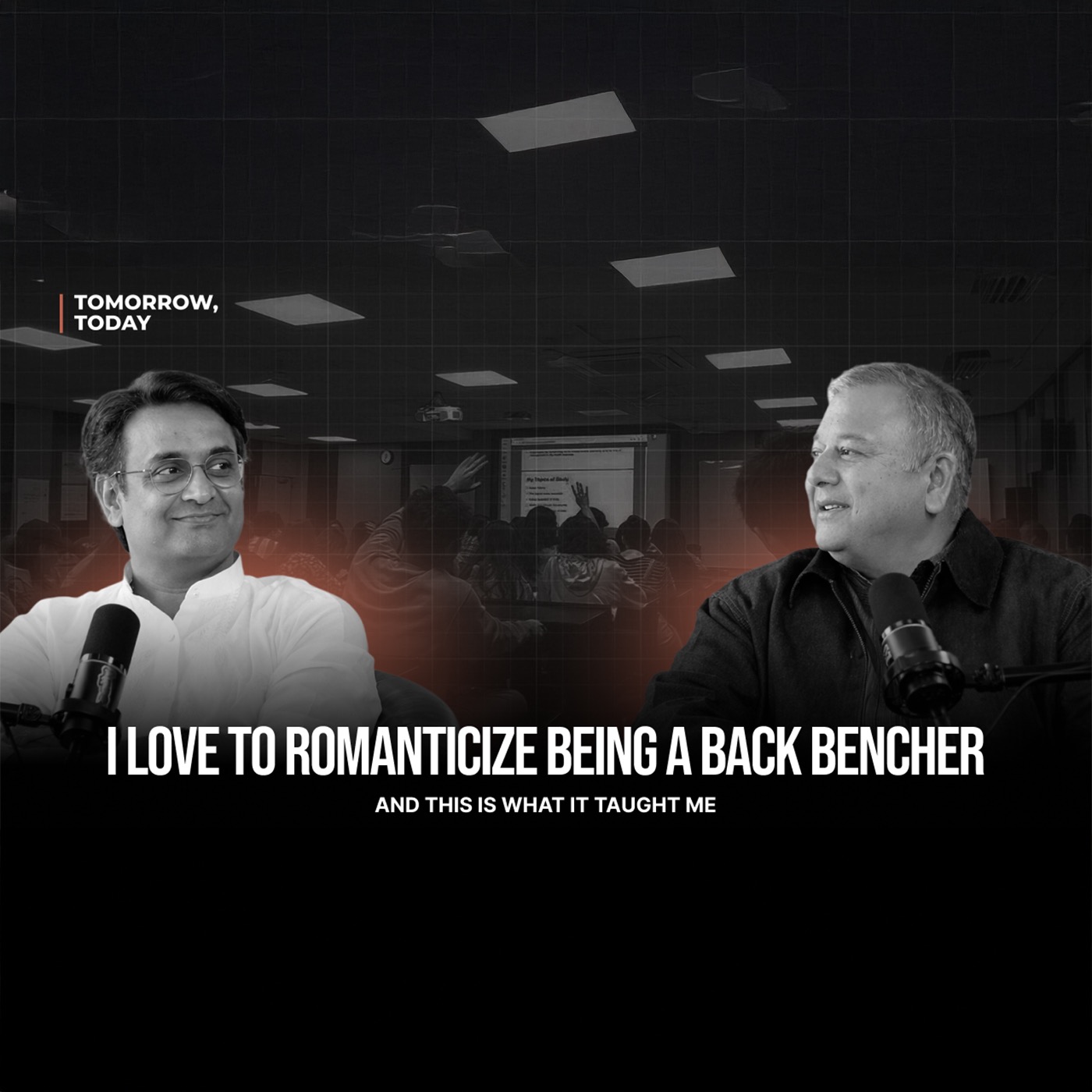
Tomorrow, Today
Cosmic Intelligence & the Power of Flow | Peepal Baba on Purpose, Nature & True Success
01:45:36
Loading summary
Transcript214 lines
- [00:00]
A
January 26, 1977. You were age 11.
- [00:05]
B
Yes.
- [00:06]
A
And you decided to start planting the first tree in Pune. What did you hear that no child at that age heard. And what actually got you into this? I want to really hear the backstory.
- [00:25]
B
Don't try to write your own story. The story is already written, darling. It is already written. You just play the part.
- [00:35]
A
Yes.
- [00:36]
B
Go with the flow.
- [00:42]
A
When I was really expressing myself was when I did not have the burden to prove something to someone.
- [00:48]
B
Yes.
- [00:48]
A
And that actually gave me the escape velocity.
- [00:56]
B
I call it cosmic intelligence. I call it CI. You know, the cosmic intelligence. Intelligence has its own way of doing it. It has its own algorithm.
- [01:08]
A
I started going to this global CEO program with, like, a lot of, like, top CEOs of the world. You know, elected me as a president of the class, and I had to go give a speech like, to inspire these guys. What is the next evolution of leadership?
- [01:27]
B
Human population will never grow above.
- [01:30]
A
Why do you say that?
- [01:32]
B
Nature. Nature doesn't like imbalances in the species. Come. Human population has reached its peak. Foreign.
- [02:04]
A
Welcome to today's show of Tomorrow Today with Shekhar Natarajan. I'm really excited to have a pioneer in environmentalism, people. Baba, he's. He's like a phenomenal soul in this universe, one that I really admire. I've watched a lot of videos, sir, and I have actually come to be inspired with all of your vision, the work that you've done. It's truly an honor to have you on the show, and I'm sure the audience are also going to really love what they're going to hear from you. Some of your podcasts and some of the shows have been so funny, so down to earth, so insightful. I've been reading and learning a lot about you, and I'm really excited to spend the next two hours with you unpacking who you are, what got you into this, and how do you see the world in the future.
- [03:01]
B
Thank you.
- [03:02]
A
So let's get started, sir. So January 26, 1977. Okay. You were age 11.
- [03:13]
B
Yes.
- [03:14]
A
And you decided to start, you know, start planting the first tree in Pune. What did you hear that no child at that age heard. And what actually got you into this? Like, I want to really hear the backstory.
- [03:32]
B
Honestly, it was not my decision. It was my grandmother's decision. At that age, at the age of 11, you. You don't understand things. You don't understand environment. There was. There was no vocabulary. Such as climate action, climate change, climate mitigation, global warming, carbon credits, carbon Greenhouses, everything was okay. The world was a perfect place. Everything was fine, you know. But yes, my grandmother, since she was very interested in gardening and kitchen gardening and vegetable gardening, and she loved the trees and the shade of the trees and everything. She would always tell us stories about birds, bees, butterflies. And, you know, we had a teacher at our Spicers Elementary School, where I was studying in Kirki. So all put together, it was just an ecosystem, I would say. So it was not at all my decision. And my grandmother just pushed me into it and she said that, look, the birds will be happy, the butterflies will be happy, the insects will be happy, the beetles will be happy. And I used to catch a lot of these beetles and grasshoppers and put them in, you know, empty jam bottles and so would take them to the class. And even the A class teacher was also very proactive in these things. So basically, the world was a beautiful place. There was no stress, there was no hardly there were any vehicles on the road. We never use the keyword pollution. There was no smog, there was no smoke. I think we were born and we started on, on, on this path when everything was okay. So I have no reason to say it was a decision, it was a challenge, and I took it up. And because I saw this and I saw that I had nothing to see. In fact, everything was okay. But, you know, as they say, nature would have it, you know, so maybe God wanted me to start practicing at a very young age because ultimately maybe it was in his flowchart, it was in his that maybe after 40 years, you know, his work would be needed. So this is how I look at it. It was not my decision. It was the ecosystem which pushed me, created that.
- [05:55]
A
Very interesting, very interesting. The your. I was seeing one of your interviews. Mrs. Williams was your teacher, right. And she had indicated that, like, if everyone planted 20 trees, world would be a better place.
- [06:14]
B
Yes, yes, right.
- [06:15]
A
And you exceeded that number by many notches. Yeah, 1.2 crores.
- [06:23]
B
That was People trees.
- [06:24]
A
People trees.
- [06:25]
B
Another crore of neem trees. Neem trees, another 28 lakh jamun trees. And then ecological restoration of about 7 lakh acres of land. It just happened.
- [06:34]
A
So do you like, was she wrong in the estimate or were you actually trying to
- [06:43]
B
see again, exceed that expectation? No, no, no. Again I'm saying that's the beauty of the whole thing. You know, when I write my diaries, I write my books, I write my paragraphs, I record my own life story, you know, so there was no decision. There was no, you know, we have to do this, we are going to do this. There was no plan that next six months, I'm going to do this next week. You got into it. It was like some, you know, some super energy. It hooks you on and drags you along. You don't want to do it, but you are doing it because you feel pleasant, you feel happy, you feel contented, you feel nice about yourself. You feel good. When your plants are growing and the flowers are coming, the fruiting takes place, the figs are coming, the monkeys come, the squirrels come, the, the, the birds are making nests on it. You just feel good about it. It's my happy song. You know, if, if you like singing songs, it doesn't mean you have to sing for the stage. You don't have to sing it for money. You don't have to sing good songs for, as a profession. So you just do it because it makes you happy. So I see my work, whatever, I, I, I'm, I'm scared of even calling it my work. You know, it is something, God's work. Yeah, yeah. Otherwise, it's not humanly possible to do what has happened. And the way, you know, nature gave me friends, the networks, the communities, the village populations, the people participation, the mobilization, the micro donations, the funding, me traveling, I, I was one person who just liked to spend time in my garden and, you know, listening to the parrots and the sparrows. I, I'm surprised with myself. You know, I've been. For 40 years, I've been on the, on scooters and motorcycles, traveling across all of the entire country. I'm surprised at myself. You know, I, I didn't want to do this, but somebody, something makes you do it. So I think, I think, you know, you call it artificial intelligence. I call it cosmic intelligence.
- [08:57]
A
I don't call it artificial artificially.
- [09:02]
B
It's like, you know, I call it CI, you know, the cosmic intelligence. Many people ask, you know, what made you do it? Well, I don't know if, you know, you tell me what made me do that. It was CI, you know, it was cosmic intelligence. And cosmic intelligence has its own way of doing it. It has its own algorithm, you know. Yeah. But one thing is for sure, I loved every moment of it. I enjoyed it. I have no regrets. And I learned a lot. I grew from within and from without. And I, I think I'm a better person today. So it was all CIA. It's just the ecosystem getting you to do its work.
- [09:44]
A
So tell me a little about your upbringing, your family, your grandmother, Right, because you talk a lot about her. Like, you know, she was your first angel, God, philosopher, everything. And tell me more about her. What made her who she was, Your father, your mother. Because at that time, and then I'm sure at that, right, like I even I had a lot of secret desires and passion. Like, you know, like I would want to go play cricket or I would want to go paint and my father would tell me like, you know, hey, like that is not going to get you food. You should try to get into engineering, you know, like so like my, my life's choices were actually an outcome of like the nature and the nurture that I had. And I'm sure like yours had some other influence, like, you know, something more beyond like, you know what you're talking about. So tell me, unpack it for us a little bit.
- [10:47]
B
Okay, so my father's father's an army officer. He retired 20 years ago. Now he's 87 years old and he lives in the city only. And my mother, yeah, so my father's army officer. His dad, he settled in Pune. My mother, she's 81 years old. My father is 87 years old and they both live in the city itself. When I was born in Chandigarh, then my father was on the border, he was on the battleground. And you know, Indo Paco was very active and the Chinese aggression had just taken place. So my mother took me from Chandigarh to Dalhousie and that is where we stayed for one year. And my grandmother joined in because my grandmother, because my mom was alone, she had just completed post graduation from Punjab University in Hindi literature. And my grandmother joined in and this changed.
- [11:49]
A
And her name is Pushpa Amar.
- [11:51]
B
Her name is Pushpama and she's from a village called Kathunangal in Amritsar district. And she came from there. And her husband means my Nana Ji. He had left a couple of years ago. So when she came she brought in a lot of excitement and lot of energy into the house, you know, because she came from a hardcore rural background,
- [12:17]
A
you know, so mother side, father side,
- [12:19]
B
this is in fact the, the agro background, the agriculture background came from my Nana and from my dada means from a parental and maternal both, both, both sides. And they were very well off farmers. And you know, today we call them organic farmers. They were into natural farming and they didn't get into any pesticides, into chemicals and, and it was not even a fashion those days. But they were good farmers. There was large scale farming they were doing. And from my paternal side, also from a maternal side. So I Think for the la. The first one decade, apart from good schools, I studied in Christian missionary schools. And my father was being posted from one and a half years here and two years there. And, you know, but I had a lot of influence from my grandparents. I think more than my parents. Parents came much later. It was my grandparents, so my paternal grandfather, my maternal grandmother. So. And both were, you know, they were very spiritually, very down to earth people. Very much connected to the soil and very human centric, very spiritual, very meditative. We saw a lot of prayers in the house, satsang and all that. And I won't call them rituals, but it was very pure energy, you know, and a lot of reading, a lot of good books. One of the first books I read was Mahatma Gandhi's My Experiments with Truth. And they were. There was a truck trunk, you know, there was this box and we had books on Vivekananda and then Saraswati and Aurobindo and then Acharya Rajneesh and all these books in Hindi and English lying around. And, you know, you could just pick up a book, read a few pages here, pick up this book, read. I was very happy reading books. Sitting in my garden, watching the trees, listening to the birds. I thought, this is life. I didn't want to be a doctor. I didn't want to be engineer. I had no ambition in life. I had no competition in life. In school when they used to say that, you know, I was in the football team in one of one or two schools in which. So I used to play football because I loved football. And they would say, no, you have to run fast. You have to put a top goal. And you know, once or twice when I did score, score, I felt bad. I felt bad, you know, because the team was losing. They were looking so sad, you know, I said, I don't want to. I don't want to play to hurt anybody, you know. So that spirit of competition and, you know, getting ahead in life, it was never there. Because that's the way my grandparents taught me, that's the way now. I didn't know it was happening over that time. But now when I write my diaries and all that now I realize, you know, they used to always say, no, no, no. Why? Why do you have to get ahead in life? Where will you reach in life? What will happen even if you get ahead in life? Even if you are number one in the class, you know. So I had this thing that I used to fear that I would get the highest marks. I was very happy being third Fourth second in the class. So you can call it a psychological disorder or whatever it is, but there was no competition in life. There was nothing, you know, I want to be this, I want to have to do that. I was very happy reading, reading books. I read a lot at a very, very young age. I read books on anthropology, on sociology, I read on psychology, political history, social history. History was my favorite subject. I read on literature, I read poets, I read a lot of prose fiction, a lot of prose from good essays and William Blake. And there was a lot of reading in my life, I think a lot of books. And probably that blunted by competitive spirit, that blunted my. Because I felt that life is so beautiful. Like, why do you have to spoil it by getting ahead of anybody? Because somehow I don't know when it happened, I actually used to romanticize about being a good backbencher.
- [17:12]
A
Me too.
- [17:15]
B
So I thought when you are in a backbencher, nobody expects anything from you. First, the expectations go off. Secondly, you see things the way nobody else has seen.
- [17:27]
A
Yeah, from the back.
- [17:29]
B
From the back, you know. So I had always been a back end person, you know. So I like to see. I like to see. Okay, observe. I go to railway stations, I go to the airport. I always end up Airport about 2, 3 hours before many people ask, why do you go? I just go and sit there and just look at people. I just observe people, you know, how they are, you know, playing with their phones and the laptops and everybody is so busy with themselves. So I hope you get the whole spirit of what I'm trying to say. And, and when you have been programmed that way, right from childhood, my parents never told me you have to be this. My grandparents never told me you have to be this. My grandfather would have been very happy if I would have just asked him to give me a shop of one of his shop and a few acres of land and I could have, you know, had my crops and my harvest and sold it out in the market. He would have been a very happy person. So the farming background, it was very grounded and very to the nature. Yeah. So I think that was a very, very important part of the ecosystem in which I came up. And then army background. There was a sense of discipline, there was a sense of timing, there was no urgency. But there was a lot of this thing that you have to be courteous, you have to be well mannered. You know, your dressing should be like this. Your shoes have to be black and they have to leather shoes, they have to be polished and you have to Have a nice haircut. You can't keep long hair. So that little, little elements of army thing just, just came, came. There was. Nobody forced it on us, but it came. And then that very resilient kind of thing because we used to listen to battle honor stories. We used to listen to war stories. We. My father's, he's. He's done about three big wars. The 1962 Chinese aggression, the 1971 war, the 1965 Indo park bought. Well, he was in the thick of battle. And you know, we still, even today, whenever I come to Pune, I ask him, okay, tell me one story. Even at the age of 87, his stories haven't finished. There's so much to listen to. So it was a ecosystem. It was just an ecosystem. And then constantly that thing, you know, that what are you doing for society? What are you doing for the community? What are you doing for people? Again, there's no guilt in it, but a sense of responsibility that, no, you know, I'm taking in free air, I'm taking free water. I'm, I'm living on this planet, so I might as well do my bit,
- [20:21]
A
you know, to enable the world.
- [20:23]
B
So I think this is what one
- [20:27]
A
of the most beautiful things you said is basically like, you know, best things happen when you don't push yourself too much. Right. Like, you know, because I could relate my story with you on this one. So when I was a kid because, like, you know, we, I, I had this taboo growing up. My brother has bipolar depression. Oh, so he had bipolar. And we never knew, like, when you are growing up, like, you know, one, you don't discover medical, like mental health challenges, then you don't disclose it. But like, it was very obvious, you know, you would have all of these highs and lows. And so for me, like, you know, I, like, I always felt the reason why we were going through all of that problems is because of where we were living. And so I wanted to always push myself to get out of it, get out of that, like, oh, Hamesha. Like, you know, that used to be my psyche and that used to put a lot of pressure on me. In fact, like, I used to do very well in all of the exams leading up to the main exam. And when I come to the main exam, I would choke.
- [21:43]
B
Oh, right.
- [21:44]
A
I, like, even now, sometimes I get like those weird dreams. So my father saab used to tell me, like, why are you running? And, and so when I came to engineering and like, like, you know, I completely transformed myself, like into a free will guy. Attendance 60% to write your engineering exams and so that you can go sit in the exam. I used to have 59.5. Yeah, 59. Then I used to go like beg my professor and say, and I. And so I used to do that. So sitting in the back bench enjoying like girlfriend. So that like, you know, my best time of my life when I was really expressing myself was when I did not have the burden to prove something to someone.
- [22:46]
B
Yes, absolutely right.
- [22:48]
A
And, and that actually gave me the escape velocity. Like, you know, like a lot of people think that they have to perform and they have to like do something and they pressure themselves into it. And even parents do that a lot to the kids.
- [23:11]
B
My grandparents used to say a beautiful thing, you know, they would say, okay, even if you are a prime minister or the president of a country, who cares?
- [23:18]
A
Yes.
- [23:19]
B
One day you are going to die.
- [23:20]
A
Yes.
- [23:20]
B
And you are not going to take anything of what you have created. So dust unto dust. And why are you running out to, you know, so sometimes I used to say, okay, fine, I'll give this exam, I'll give that exam. Because we used to hear there was a lot of always that peer pressure. Why, why do you have to be what others are trying to be? You know, so whatever you want to do, you do, you do. Yes. You need livelihood. So just manage in such a way that you get enough to eat and have a comfortable house and this thing. That's all. Otherwise everybody's going to die, you know. And later in life when I, you know, Acharya James and all that happened, and even my grandparents, they would always say a very beautiful thing, which is I think my go to comfort space even today. And that is count your life not in years, but in days. You know, like I just turned 60, so I think I'll live up to 70. That's how I think. So it's about 10 years. 10 multiplied by 365 is 3,650 days. So now I have to plan that. How much fun can I have in 3,650 days? Every decade is 3,650 days. But if you say, oh, I live for 10 years, so it sounds big. Ten years, you know, the moment you break it down into days, then you say, okay, fine, 3650 days. Out of which 50% I'll be sleeping. 20% I'll be sitting in the washroom. 10% I'll be bathing and I'll be changing my wardrobes. 10%, maybe I will do some 20% livelihood. Ultimately, how much Do I have. I'll have only 650 days left with me. 650 days. I want to watch some good movies also and I want to do some good work also. So time is very less. Time is very, very, very, very, very, very less. So be careful what you want to do in life. That's what my grandparents used to always. And my grandparents, they were such happy souls. No competition, nothing. In fact, my grandparents, they were very successful farmers for the sheer reason that there was no competition. They never worked on cash crops, you know, they were mainly on vegetables and fruit farming and then mango orchards. And my, even my paternal grandfather, you know, like it was basically land which he rented out to smaller farmers. He was very compassionate. And we had buffaloes and dairy and milk. And it was very easy going, very nice. And whatever could happen, you do, if you find it very difficult, don't do it, you know, that's okay. So that was the programming that. Those were the codes I picked up for my life also.
- [26:30]
A
Very beautiful, very beautiful. So you touched a little bit on osho.
- [26:38]
B
A little bit.
- [26:38]
A
I know. So you were like, you know, the reason why they call you Baba is because like you were Swami Prem Parivartan.
- [26:47]
B
No, no, you did not do that. People Baba happened much before that.
- [26:50]
A
Even before that.
- [26:51]
B
Ah, even before that. It was during my college days and I used to, I had been planting over 10 to 15 years. I had been even during my DAV college days and my Allahabad University days, my Pune University days when I did my post graduation over here. So I used to plant these people trees. My main thing when I learned about afforestation, I learned about soil, I learned about biodiversity, about bees and insects. And everything was through people trees. My grandmother would say, you pick up one tree, pick up one plant, pick up one species, start planting them and the species will teach you. So the tree will teach you and pick up that species which nobody is planting. So people tree was something which the pwd, the cpwd, the government departments, the botany department, the horticulture department, nobody planted it. They said no. If it grows naturally, the birds, you know, they, and you know, it would come up. So Nani would say no, the, the population of people trees is coming down because of development works and widening of roads and everything. So she would insist that this ficus species, you know, the people tree, the banyan tree, the pilkhan tree and the gula tree, okay, so you should plant these trees. And these are big canopy trees. So they are, that they are like a microcosm. It's A microforest in itself. More than 140 species of birds. Come on that and so many insects and fruit, figs and fruit flies and squirrels and everything. So since I was working with the people plant species for such a long time, so just a tease like, so Baba means a wise man. People means the people tree and people Baba. In many villages of Haryana, of Punjab, especially of Rajasthan also, they don't point out to the people tree because it's a sacred fig. It's the bodhi tree. So they will not say this is a people tree. They will say people Maharaj. They will say people Baba. It's out of respect, right? So I was identified with the plant, okay? So honestly, it was not my name. I got identified because I was working for them. That is how people Baba came. So it became a nickname. And people found it very convenient to address me by that time because wherever I went on my two wheelers and I walked into villages and everything, I would be carrying these people saplings with me. You know, I would ask the, the local panchayatmen and the local elders of the villages that, okay, fine, you know, if you have a place around the well, around the pond, may I? You know, ha ha, you can. Because everything was free. So they would say, no, no, no, but we would prefer if you put some neem trees. We would prefer if you give us some jamun trees. I would buy them and I would plant them also, whatever the people said. So I was not rigid about it. And there were many, many places where they did not allow me to plant the ficus trees. So I said, no problem. They said, no, you plant this, this, this, this, okay. So I planted those also. And then I would go around, I would. And villages were very, very. Those days were very beautiful days. They would always say, okay, okay, we will water the plants, we will take care of them. Don't you worry about, you know, things were these days, urban living. Everybody lives in apartments and bungalows. It's. They have their own silos. The community is not on the ground. So things are very different now. And again and again I would say those were very happy days. Those were very beautiful days. Things could happen at a much easy pace and, and you know, so we, of course I had to make sure that the people trees were. Had fantastic protection from Guy Bhais Bakri, Neel Gai, human encroachment. It is not about just digging a pit and putting a plant over there. It's for next five years you got to see that it's properly manure, properly Irrigated, properly protected, fenced. A lot of things go into this thing. So that is how the people Baba thing came up. Right. And Swami Prem Bhan came much later. That was. I don't know how it happened. It was. It was a very graceful, very beautifully. It just, you know, I used to hear a lot about Osho for all the wrong reasons, of course. And he was. Many people used to say he's the sex guru. And you know, he's a rich man's guru, he's a this and that. And he was very controversial. But something, something about him attracted me. What was it? I don't know. My grandmother had a lot of books. She would have those old tapes, you know, she would put on that Phillips and Panasonic tape recorder and she would listen to that. I just liked his mesmerizing voice. I like to listen to him. And at night, if I couldn't get good sleep, the only thing you had to do was listen to Osho and you could sleep. It was very nice baritone voice. And it made sense. It was not making sense, but it made sense.
- [32:31]
A
What would he say? Like, I know that even some celebrities actually joined him.
- [32:39]
B
Praveen Babi. There were a lot of.
- [32:41]
A
A lot of people.
- [32:42]
B
Yeah, Bollywood was sitting there. Yeah, yeah. He was different. What attracted me, you know, he attracted most of the people for different reasons. For me it was. I've read so much, I was a voracious reader, but I haven't come across this grammar, vocabulary, different vocabulary, this, semantics, this, you know, the way he plays with words. And as a literature student, I found it very fascinating. Yeah, very fascinating. And it made a lot of sense to me. Some things made sense to me. So that was the point of attraction. And obviously I got into the trap when I started reading his books and I started listening to him, you know. And Pune Ashram is just about where we are sitting, is just about 8km from here. So I was doing a post graduation over here started, you know, so that interactions were there with the other sanyasis also over there.
- [33:50]
A
And so you were wearing a saffron?
- [33:53]
B
Sometimes. Sometimes. And because I've always been a very modern person, you know, my old ritualistic and this thing. My. My grandparents never liked it that way. My parents also, you know, as being an army officer's son. So they always wanted me to be prim and proper and I liked it that way. I liked it simple, nice, you know. But I realized that, you know, what he is saying from within, I am also a Sanyasi at heart. I Felt that. I felt that way. So naturally, intensity, magnetic field. You know, you start this thing. Now, of course, I came in touch with a few people, and then, of course, the sinas took place and everything. And ritual. I don't go into the details of it, but it affected me a lot. Now, a very significant thing. Here was a gentleman. Here was a Zen master. Here was an enlightened or a realized human being who was talking ecology. He was talking trees, he was talking about bamboo, he was talking about grasses. He was talking like, prakritihi parmatma.
- [35:12]
A
Nature.
- [35:15]
B
Nature is God.
- [35:16]
A
God is nature.
- [35:17]
B
No, this really struck me, so I said, no, no, no. Here is a gentleman who's making a lot of sense. And whatever I am doing in action and whatever I have been reading, you know, he's summarizing it very well for me. For me. So I see him as a. One of the greatest environmentalists on the planet.
- [35:41]
A
Oh, sure.
- [35:41]
B
Oh, sure. Because, I mean, to most of his ashrams in India, mostly about 50, 60%. And I've seen that the way they've constructed the ashram, they've never cut down a tree. They've never harmed the river flowing, the nala or the. Any kind of rivulet or the brook flowing through it. I have never seen any boulders being moved out. So he would always say, whatever you want to build, build around it. So that was a very beautiful thing. And what happens is you want to fall in love with a person, you know, and it stuck me. He's very gentle. He is so pleasant. He never harms anybody. He's got an opinion of his own about the world. That's fine. And even I think that way, I may not be that expressive. I don't have that strength and that courage to go out in the society and tell people on their face. But he is. Whatever he says is making sense. That was it. And so parents, grandparents, teachers. I'm very lucky. The ecosystem, army life. And then finally, Acharya Rajneesh. I think that sealed my fate. So, as I've always believed, the first 20 years of your life decide the next 60. So the first 20 years were damned for me, you know, it was. And then I couldn't escape. It was all set for me. And of course, the forest taught me, the trees taught me, the birds taught me. Forest teachers do a lot of things, you know, and when you go out on the highways, you think, you know, you carry a lot of things from your school and college and your books and your libraries and what your parents give you. But but the more you travel, the more you get educated. You know, every 50 kilometers the cuisine changes, the culture changes, the costume changes, language changes, the dialect changes. And it was beautiful. So the more I traveled and why did I travel? Because so some power, some energy was taking me around planting trees. And honestly, I never had a plan. No, no, I'm going to go to Maharashtra. I'll do this. I'll go to this thing Marathwada. I'll go to Aswana Bhatbir and then Latur and Parvani and Nanded and Babaleshwar and Loni and Pravaranagar and Kopragaon and all that. And I'll go and plant team trees over there. No, there was no plan at all. And that's the beauty of everything that I never had any plan. It was always today, it was maximum this week and it just from this week, from today, tomorrow came out. So it's never had any plans like that. But the clarity was there that okay, fine, if I do this, maybe this will happen. If I do this, maybe this will happen. And that maybe I never argued with that. Maybe if it went this way, I went that way. If it took me this way, I took, I went there. So you just, you know, flow, Go with the flow. Go with the flow. That's what. So that is how people. Baba and then Swami Prem Paribata and Swami Prem Bharatan. I'll just clarify that I was born into a Jain family and when I was born, my name is Azad, you know, so my name was Azab and Hamari family. Everybody has this kind of name. Azad Kranti Swatantra, you know. Very. Yeah, yeah. Indian Express even did a one full page feature on our family because most of us are born on the 26th of January and the 15th of August. It's a very freakish family, you know. Like, you know, half the family being born on the 15th of August, half the family being born on the 26th of January, you know. Yeah, yeah, yeah.
- [39:38]
A
When are you born?
- [39:39]
B
The 26th of January, January. I am in that group, you know, that is my name was Azad. And then when this thing Sanyas thing happened and all that, so it became Swami Premari Parivartan. Now what happened was Swami Ibrahim Parvatan went on to my ration card from ration card cylinder Mila and then the license came in and then State bank of India, my account Kulgya and then Aadhaar card came in and then, and within two years. And then I had to go to The Gazette, Indian Gazette. This is a proper process, legal process. You change your name and everything. A few years ago, I just thought, okay, let it be. I'll just take back my. My initial name, Azarjen. I went to. So then they said, no, no, no, there's a ruling, Supreme Court ruling. You can change your name only once. You can't go around changing your names like that, you know? So I didn't follow up on that. And everybody started calling me by name, Parivartan. And I'm telling you, everything happened in my life by accident. It was never by design. So many people think, oh, you thought people, Baba. Okay, you thought so, Swami. I said, baba, I didn't plan for anything. I didn't think about anything. It just kept happening. I just enjoyed what was happening.
- [41:02]
A
So, so you were following Osho. And when people do that, like, you know, I was. I was hearing a lot about, like, him and because I was researching on you. So people would run away from things to get into, like, become his disciple, right? But you, you did not like, run towards him. You actually ran away as well from him. So what made you, like, reverse that course? Like, you know, from.
- [41:31]
B
It was neither running towards him nor running away from him. Because he never said anything like that.
- [41:38]
A
He never said, come join.
- [41:39]
B
You know, people see people who run away from things. I think that's escapism. Your house is not making sense. You are having fights with your wife and you can't get along with your parents. You can't take on the responsibility of your kids. So you leave everything and you go to the ashram. That's how I used to see how things happen. It happens even today.
- [42:00]
A
Yeah.
- [42:01]
B
If you go to ashrams in Vichikesh and Haridwar and you go to these pilgrimages, you'll find a lot of that population coming over there. Right? But that's what you mean. For me, it was seeking.
- [42:12]
A
No, for like. But like, everyone says like, you know, attachment is the biggest problem. So you have to give up attachment so you could seek like, like wisdom in life.
- [42:19]
B
I think attachment is a beautiful thing. Why? Why? Why? Why do you have to be detached? You know, I think it's so stressful to be detached. And if you are, maybe if you are attached with things and you are seek, you know, you're getting joy and pleasantness out of it. You will not get obsessive with will. It will help, help to nourish you. And nourishment is not obsessiveness, you know? So I thought, I think Osho was one of the most balanced persons. And he, he made so much sense to me. He and you know everything. One beautiful thing about him, he would always say, keep the human in the center because this is acme of civilization. This is the acme of evolution. This 1100 grams of, you know, brain. This is the acme of evolution. Keep whatever you want to do in life. It should be human centric. Anyway, okay, the other day, some people were talking about artificial intelligence. So I said, only once, and then keep human in the center. Then whatever you think is good for the human being, do it. We'll get to that topic, whether it's economic, economic policies. You talk about gdp, you talk about wealth, you talk about health, you talk about wellness, you talk about where is the human in it. Yes, where is the human in it? And this is something which, you know, he would always talk about. So he would always say that this is the peak of consciousness. This is the peak of. It's never been so refined, you know, the human consciousness the way it is right now. Don't spoil it. Don't spoil it with wealth. Don't spoil it with. And he, he was, he never told us to shun wealth and shun money and good life and good lifestyle, good cars or good women or anything. He said, you are here to celebrate. Okay, I'll tell you what. Maybe that will sum up the whole thing. Two sentences. This is one thing we learned from him. He said that, look, God created a perfect world, right? He gave you gardens, he gave you flowers, he gave you skies, he gave you Himalayas, the deserts, the rivers and everything. And Antarctica, the Arctic, the equator. Everything he has given. And he sent you here to celebrate that right now. Don't try to reinvent the wheel. Don't go around messing up what he has created. And this is something I remember 1989, I heard this from him and it's been with me ever since. Do your own thing, but don't mess up what he has created, what nature has created, the creative energies have created. They have taken 4.5 billion years to create that. Create that. You are here only for 70, 80 years. Don't mess it up. Don't mess it up. That's all. I understood that, you know, and it was a very pleasant presence. He never said anything against the world. He never said any. Yes, he would talk against the politicians, he would talk against rituals, he would talk about. Against superstition, he would talk against, you know, human fallacies. But he never talked about anything against ecology, environment and birds and nothing, you know, he was so much at ease with it, you know, it was almost like, you know, I finally got my Buddha, who represented what I was working for. He was so beautiful. He was so graceful about his thoughts about nature, about environment, you know, he brought you immediately down to the ground and he gave me so much peace. Of course, he was always talking against politicians and this and that. But then, you know, if you look back and you say he was right, what are we doing again? He would say, you are messing up what God has created. So just come here, be graceful. You know, for him, life was poetry. Don't create a drama out of it. Don't do that. He would call it the theatre, you know, you are here. It's a perfect life. Everything is fine in its place. Day, night, season, weather, everything is fine. The sun is in its place, the moon is in its place. The tides are coming, the rivers are flowing. Just. Just go and enjoy that. And go, for God's sake, pack up after 70, 80 years and go back from where you came. Don't mess it up. That's all. This is one thing I understood from my teacher, my master, that I. I call him master because Master G. Volten Teacher. So teacher, so I, you know, so it was never that. No, no, no. He's my God. He's my nothing like he was. Still follow his preachings, know, matter of following. I read up because he. He left us about around 700 titles, 700 books. So I think I've hardly read not even 50% of what he has written.
- [48:15]
A
Wow.
- [48:16]
B
So the next 10 years, the next 10 years, I would like to complete all the 700 books that he has left for us. And I think that would be beautiful. And every time I read a book, I have to read it two, three times because there are layers and layers of wisdom in it, you know, Layers and layers of wisdom. So many people say, you know, we want to go and see the ashram. Don't go there, you'll get messed up, you know, because higher intelligence skill here, you know, so there are so many people at the market, go meditate, do yoga, you know, once you have done that for two, four years, five years, six years, maybe once your soul is ready, you are ready, then maybe pick up his book and study. Now you don't have to go anywhere and meditate and anything. Meditation is nothing but understanding. Meditation is nothing but being relaxed with yourself. Meditation is nothing but sitting where you are and you are in silence and you are happy with everything that's around you and you are happy with yourself. That's what meditation is about. Meditation is not something jumping up and down and putting on music and, you know, trying to show to the world that I'm happy. Trying to show to the world that, look, I am in the act of meditation. That is not meditation. Meditation is being with you. I'm happy with myself. I'm happy the way I am. I'm happy, I'm relaxed, I'm contented. That's what meditation is all about. This is what I understood from my teacher. And, yes, it really helped me in my work because, you know, the kind of energy you need to work on the land, work with the soil, working with hydrology, with topography, with different kinds of soils and, you know, landscapes and different type of plant species and seeds and birds and mammals. And so I think you need that kind of comfort with yourself. Only then you can work over there.
- [50:28]
A
So do you meditate? How much do you meditate every day?
- [50:31]
B
I used to meditate a lot, honestly, till the age of 36. Yes. And then I understood that, no, work is meditation.
- [50:43]
A
You don't need to, like, practice anything
- [50:45]
B
different because your work becomes meditation. Work is my vacation. Work is my enjoyment. Work is my celebration work. Even my family members, they said, okay, now you should take a break. Where will I take a break? I work with the forest. I work on the mountains. When I go to the mountains, I have the clouds around me. I work in the monsoon. Where can you send me? What is vacation? This is vacation. I am on. I'm on vacation 365 days a year. Yeah. Where will you send me? You know. No, no, no, no, no. Where you don't have to work. Then I'll get. You know, I'll get more worried because I need to water my plants. I need to look after my plants. I. Look, just leave it. I'm very happy. What? The way I'm doing. I'm very happy the way things are. I don't need any improvement in my life. I'm happy the way I'm always on vacation.
- [51:53]
A
So you are. You're a literary literature major?
- [51:57]
B
Yeah.
- [51:57]
A
Yeah. So you must have read Keats. You must have read Shelley. You must have read everyone. So who has defined the tree in the most beautiful way?
- [52:10]
B
I think all the Romantic poets, they. Keith, Shelley, and then even, for that matter, tennis. Wordsworth was. He was too good with that. And they're talking about flowers and they're talking about rivers. They're talking of the sky and the blue sky. Everybody, I think, no, not anybody in particular. In particular.
- [52:37]
A
But, like, what caught Your attention more like, you know, who's whose description. Like has sat with you. Like, you know, you mentioned Osho.
- [52:43]
B
No, if you talk about the tree, then we have Indian writing in English. Professor Nissim Ezekiel. In fact, he taught us American literature in Pune University. Used to come from Bombay University. And he was a. He used. On killing a tree. He used to teach us by Jeev Patel. And you know how, how a tree, you, you just can't chop a tree and say that it's dead. You know, the whole process is. It's a complete poem by itself. I would not, you know, say that this particular poet or that particular poet, trees, in fact, they were invoking the trees, they were invoking nature, they were invoking the forest to get the, to write their own poetry. Right? So I think tree is one of the most beautiful things that God has created. And when we talk about colors, it's the flowers, it's the insects, the butterflies, the. Many people tell me, you know, that you, you've taught literature. I've. I've taught literature for so many years that I was just trying to say that, you know, the kind of work that I am doing out there on the land, it doesn't gel with a person with, you know, a literature majors, as you said. But I think because I studied literature, I'm able to appreciate what I see on the land. When we create those forests. That is where, you know, and that period, 1878 to mid-90s, that century where so many romantic poets came up and they were writing, you can, Whether it was Wordsworth's daffodils and you can actually see that work, the poetry taking shape on the land, it's too intense for me. So I, I won't be able to put it in the words in just a few seconds or a few minutes. But I think if. Okay, I'll put it this way. If I had not studied literature, I would not have been people.
- [55:08]
A
But Baba got.
- [55:13]
B
Gave me that strength that even a person like Shakespeare, a person, you know, all the, all the classics that were written, all the masters I would call in literature, everything makes sense. When you work in the forest, everything makes sense.
- [55:35]
A
But you wouldn't have realized that when you were going through it.
- [55:37]
B
No, no, never.
- [55:38]
A
Like, once you do that, like, everything is like, you know.
- [55:41]
B
Yeah, yeah, yeah, yeah. It was something like, you know, otherwise I would have been forced into science. I, I still read books on science. I recently bought a book on quantum physics and I like reading. I, I don't want anybody trying to tell me that this is your subject and you have to perform in this. I don't like that performance thing, you know, I do it because I'm hungry for knowledge. I. I just want to know how things work. Simple. Not even know because.
- [56:11]
A
And you know, like, you know, because I feel.
- [56:14]
B
Okay, let me complete this. I feel. World is chemistry.
- [56:18]
A
Yes.
- [56:18]
B
Everything is chemistry. I'm talking to you. This is chemistry. This is breath chemistry, you know, oxygen, nitrogen, what's so many hormones, enzymes in my. The pituitary gland, the pineal gland, endocrine, the liver, the kidney. Everything is chemistry. The cosmos, the gravity. Gravity is such a. I just remembered that one day somebody asked my grandmother, if you had to give one word to God, what would it be? G for God. G for gravity. She said, Have you seen gravity? But it's all around us. You won't be sitting in front of me. You won't be standing in front of me. If there was no gravity. The sun, the moon, the planets, the solar system, the Milky Way, the galaxies, everything, you know, you talk about black hole, you talk about everything. Everything is the same. And that old woman from a village.
- [57:22]
A
Wow.
- [57:23]
B
I was very little, and I didn't understand the importance of that thing then. But now when I read quantum physics, I read this, I read. I. I think one thing everybody should read is astronomy. Astronomy, you understand where you are. You understand, you know, we think you are nothing. You're not even a nanoparticle in the scheme of things. You know, when you talk about planets, you. We can't even compare ourselves to Jupiter.
- [57:59]
A
You're not talking about astrology, you're talking about astrology.
- [58:01]
B
No, not astrology. That is astronomy, pure astronomy. Read about solar systems, read about asteroids, read about meteorites, read about black holes. Read about, you know, Stephen Hawking's beautiful classics are there. So read that. And the more you read, you understand. You know, actually, there is nothing to do on this planet.
- [58:30]
A
It's all there.
- [58:31]
B
Sometimes I feel all the secrets are hidden. It's. It's there. Everything is happening. Everything is happening on its own. I sometimes feel that, you know, when the human population reached a certain level, so the cosmic intelligence, they uploaded a device called religion. 4,000 years ago. They said, this will keep the population in check. In check. And people started fighting with each other, and 5,000 wars took place. And the religion, you know, so it controlled the population. Then 200 years ago, it said, that will not be enough. Let me introduce technology. Let me introduce the industrial revolution and then countries. So now, you know, technology, your religion. These are Devices of nature to control the population of a species and the identity. When you sit inside a forest and you look outside, this is what you. If you sit in a building, in a city, and you will not know it because you are into it. You can't. But when you go away from a city, you go away from that field, I would say. And suddenly you look back at your urban spaces. You look back at the way you have been living life. You realize, oh, my God. And then, you know, you. I don't know. I can talk about it all day long.
- [60:08]
A
No, no, no. Like, this is fascinating because, like, you know, we all think we are creating things on our own. But like, a lot of things are basically, like, unconsciously, you know, we, we go through that. So I'll, I'll give you my own kind of like, learning about all these things. A lot of people give me a lot of credit for a lot of things I'm not like, even responsible for in life accidentally. You know, Like, I, I stepped on this concept recently called angelic intelligence. Like cosmic intelligence, wisdom based intelligence.
- [60:52]
B
Right.
- [60:53]
A
And like, so I, I started going to this global CEO program with like, a lot of like top CEOs of the world, you know, eclectic guys. And like all of them, you know, elected me as a president of the class.
- [61:14]
B
Okay.
- [61:15]
A
Of that class. And I had to go give a speech like, to inspire these guys. What is the next evolution of leadership? You know, like, what should I talk about? And I said, like, the best leader I've seen is my father.
- [61:28]
B
Why?
- [61:28]
A
Because he was an angel to many people's lives.
- [61:30]
B
Yeah.
- [61:31]
A
And like, whatever good karma he did, that karma came like, as a boomerang in my life. Every time I thought, I'm going to be dead, something picked me up and moved me. So I said, like, you know, I'm, I'm. I'm going to talk about this angel, like, thinking subconsciously, like, like, it was not like a word that I construed. It's not like, you know, consciously. I like, sat on in that idea. And I just related a story of like holding my son who looked like my father and me trying to like, give like all the karma, good karma that I got to my son, pass it back. The best way I could do it, like in the age of technology, is to do it in technology and multiply it in many folds. Angelic intelligence.
- [62:15]
B
Right.
- [62:16]
A
So. And like, you know, people think, oh, masterful, great. You know, this is like so amazing. But when you, when you stop and ask me, was it a conscious thought, hell no. Unconscious. So the nature has a way to like, select and nature has a way to communicate. And nature actually has a way to instrument things the way it wants it through a contract that we, we actually like have no control on.
- [62:49]
B
Correct, Correct.
- [62:50]
A
And like, more people, like think they're somehow. They are these inspired souls, like, you know, who are here to change the world. And so people use this word, visionary. Yay. Wo, like, come on. Like, you know, and somehow you've been contractually, like ordained to do that.
- [63:14]
B
Yes.
- [63:14]
A
You know, don't take the credit for that.
- [63:16]
B
Correct.
- [63:16]
A
You know, like, let the flow happen. Let the world take you in the place it is taking. So.
- [63:23]
B
And every religious text mentions that. Angels, Lucifer, Satan, prophets, this that matter, swarg, narc. Everything.
- [63:34]
A
Yes,
- [63:38]
B
everything is documented in religious text.
- [63:40]
A
Absolutely.
- [63:41]
B
So basically when we. When human beings are weak enough, they don't understand how things are happening and they don't give that themselves, that space for the cosmos to relate to you and the cosmos to teach you what it wants to teach you. To some people, just for the benefit of humanity or not for the benefit of him, they put it out on the paper and they say that this is the way it is. So religious have come out of that only. And so what you are saying is everything is angelic. Everything is. It's good energy. What is energy? Yeah, angel is a good energy.
- [64:26]
A
Good energy.
- [64:26]
B
So ultimately it is the good energies which are keeping us alive. And it opens and it is making you and me sitting here, we are talking about these things. Yeah.
- [64:38]
A
And. And like, you know, angels are in me. For me. The angels have been jabibi. May you go astray. Like you are directionless or you're moving in the wrong direction. Someone comes like knocks, sends into you and says, like, go here because this is what you're destined me is. They open the door for you. So. And that happens like so many times in your. In your case, I think like Osho was your grandmother, was, you know, like your father. Your parents were like, you know, people who came across. So one image that comes to me which I think is super fascinating, like you get on a royal infield. I've seen some of your videos. You know, you carry the plants around. You basically go to a place where you plant the trees, Right. Tell me, like, what is the reception of the people when you get there? Like, like how do they. Like what happens is that energy.
- [65:25]
B
Like, like they're confused. They are confused. They are amused. No, no. They don't know my name.
- [65:33]
A
Name. Yes.
- [65:34]
B
And I'm a Levi's baba Levi's, Pantone jacket's panther, you know, and there was a time, I would say the year 99, 2000, 2001, 2002, 2, 3, 4, 5, 6, 7. In fact, I used to wear kurtas and I would wear pajamas. I would, you know, add chota sa bal tura choti voti dal tad. A very traditional. I used to, I taught yoga for seven years. I took big meditation camps for the Indian Army Northern Command. And I did a lot of things. They were all experiments. And I didn't even know that why am I doing all this? It was as if, you know, some angels were taking me around, showing me the country, connecting me to groups, connecting me to the Indian army, to the bsf, to the csf, to very educated networks of people, to beautiful groups of people who would actually microfund me at a later date. Or technology groups, academia, like universities, colleges. I don't know how it was happening. It was just happening. Now motorcycle or a two wheeler or a scooter is a vehicle which transports you from point A to point B, right? It's very difficult to carry your saplings and your water and your digging tools in a train or a buyer or bus or public transport or a Metro or something. Doesn't make sense, you know, that, that, that gives you a sense of freedom. You can wake up anytime in the morning. There was a time when for nearly a decade, I used to plant at night. So what I used to do, I used to recce the place. I would dig the plants. Of course I had volunteers. I always had volunteers. I never worked alone. I always had friends around me. So a lot of crazy people, you know, who would, and they would come for the, for the thrill of it. Not that they were interested in environment. They were not interested in the birds, bees, butterflies. Okay, it can be done this way. We would also like to try it. They would also come on the vehicles and they would also be there, there. And you know, and many people, of course, they created their own foundations, they created their own angels. And I think that is a real impact that how people learned and they did their own thing. So as you said, what was the reaction? I think first, they were amused. Second, they were very curious. Third, it was entertainment for them. And fourth, it was an opportunity for photographs. And even those days, you know, when that old cameras were there, people would ask somebody from some kind of a studio to come and click and take a group photograph. And they found it amusing because they never seen something like this. And an educated person and many of times English sentence, you know, And he comes in a motorcycle and you know, he does his own thing and he's not asking any help from us. People used to come up and they would support. So I think the reaction used to be amusing curiosity and. But that really set the storyline because then they got connected in a very beautiful way.
- [69:19]
A
Way.
- [69:21]
B
So there was no preaching involved. And they would tell their children, look, uncle is doing this. Look, Bahia is doing this. This is the way you should be planting trees and saving. And it would leave them with a good taste. It would leave them that this, it can be done. It can be done. A person without any resources, with very minimal resources, if he can do it, then why can't we do it? We have land, we have money, we have, you know, and I'm telling you like of all the work, if I have done only 2% rest, 98% people, it's the communities who have done it. Yeah, under my guidance, under my supervision.
- [70:16]
A
And to just like put this in perspective. So you planted 24 million?
- [70:22]
B
No, no, we have see audited once. They are 25 million.
- [70:27]
A
25 million.
- [70:28]
B
If you say up to December 2025, the audited ones. We, we have our audits by the big four. We have PwC, Dollite, we have KPMG, we have Grant Thornton, you know who. We have more than 172 CSR partners in the last eight years. And we've done about 2 70,000 hectares of land in 21 states, in 226 districts of this country. So the scale just exploded. I had no role to play in. Just happened.
- [70:59]
A
So 25 million is audited.
- [71:02]
B
Audited. So none of the standing trees. But we don't go by that. We, you know, our work is ecological restoration. Our work is habitat restoration. Our work is birds, bees, butterflies. Our work is when you fence an area and you create, you need to create succession in that you need to bring in. I may have planted only 62 species over there, but when the auditors come and count it, they will find 160 species over there because the birds have done their job, the insects have done the job, the pollinators have done the job. So we are giving them a safe haven for the biodiversity to thrive. Our keyword is biodiversity.
- [71:47]
A
So how many do you think you have planted? You have any?
- [71:50]
B
We have. If you say audited. Audited. Number of trees. 25 million audited. Number of urban forest? 272 audited area. 2 70,000 hectares. Wow. Right now there are so many ponds, there are so many Temples, there are so many schools that we just. We just do it. We don't even count it. We don't even document it. We don't even. Because we are not here to. But what has happened over the past decade, the government intervention is there. You know, the ministry, Ministry of corporate.
- [72:31]
A
Are they helping or hurting you?
- [72:32]
B
No, no, no. Nobody hurts us. Nobody can hurt us because we are with nature. Nobody can hurt the forest. You know, they think they are hurting the forest. They can't. That's a different algorithm I'll talk about. But people think they will be able to eliminate Aravli. That is not the story. The story is you need to think about what Aravali is going to do to you. Yes.
- [72:58]
A
Nature has a way to take back control.
- [72:59]
B
So you think, you know, we cleared this forest. Now, darling, now the story begins. What this land is going to do to you. So it's the other way around. We humans, actually, we humans have such a super ego, we think we are actually. You are doing nothing, man. You are just playing into the hands of nature which is uploading something so that the human population can remain under seven and a half billion. I can discuss that later. So we will Never grow over 7.5 billion. Never, never, never, never. With all this talk of 8 billion, this thing. No, we can never, never, never, never. You do a head count right now. We will be anything between 7 billion to 7.5 billion. Human population will never grow above 7.5 billion.
- [73:57]
A
Why do you say that?
- [73:59]
B
Nature, nature doesn't like imbalances in the species count. This is like, you know, 49 years of working with multiple species. Even, even when the pigeon population takes place, when the crow population, when this population, that population, even the sex of the, the, the, the cobra, sorry, the reptiles and the amphibians and everything, we've seen it happening now.
- [74:27]
A
They get out of control and they come back.
- [74:29]
B
It's nature at play. Now. This is a very deep thing, you know, like you need to be working out there for years and years together to understand how this program plays out, how this software plays out.
- [74:45]
A
Explain.
- [74:45]
B
What you see is hardware outcome, the south, the software that is going on, you know, you, the very subtle things that are going on to, to develop that understanding. So many people say, oh, Iran, you know, the US and then just see what happened. This thing, Gaza, Palestinians. No, no, no, no, no. You are looking at it as an economic battle. You are looking at as oil war. You are looking at a religion. This thing. No, no, no, this is species. Nature is nature. Excuse. How will it balance a species. We are the only species which are consumers. We are the only species which creates global warming. We are the only species which creates climate chaos, climate change. We are the only species. So why will nature allow this species to thrive? Nature is too intelligent. So it gives you religion. And then it gives you nice old buddies, you know, old, old people, heads of states, old egos. Old egos which kill young people. Who is dying? Soldiers are dying. Who's dying? Young people dying. Old people dying. Old people are not dying. Young people are dying. Who will create children? Who will create. Take the population forward. We will never, never, Never go beyond 7.5 million. And you just wait for two years. We will come down below 7 billion. Human population has reached its peak and enters on the reversal. Now our relevance is over. Why do you think AI has come in? We have brought it. No, CI has brought it because we are creating a mess out of this place. First it brought AI and then it brings in people like you who are trying to give wisdom to AI because nature has to see now that AI takes the right path. Are you understanding what I'm saying? You know, if you just sit back, you need to sit back and look at things. The problem is we get into the center of things and we try to look at things. This is not how it works. You have to be a backbencher. You need to look back. You. You want to see Dehradun, you need to go on Mussoorie is Mall Road. When all the lights are out after 9pm to 10pm sit there on the Mall Road on a bench and look down upon Dehradun and you will understand how the city operates. If you are on Rajpura Road in Dehradun, you will never understand Dehradun. So if you are in the vortex of things, you will never understand them. What was Sannyas? What was Buddha doing? What were our prophets doing? What were Sadhu, Sant Kabir ye Sabj? They went to the forest. Forest. They had to create that distance. You need to go be a backbencher to look at how the world is operating, to how the entire software hardware is operating. Then you understand. Then you understand. So many people were saying, you know, oh, 12 countries are at war. And this. And I said, it's okay. So what? Let it happen. It's so beautiful. Let it happen. Ukraine killing 30,000 Russian soldiers every month. Of course they have to do it because nature doesn't want Homo so sapien species to destroy the world. Yeah, just imagine if religion was not there 4000 years ago. We would have been at 50 billion. All these wars that have taken place. 5000 wars. I'm a history teacher, you know. 5000 wars have taken place in the name of religion. We would have been starving if there was no religion. It is because of religion that we kept fighting and we kept are population and control. And then it gave industrial revolution. Then it gave technology. I give a very small example. We get. We. We. We become very happy. Highway, Bang, Toll Road, Expressway. 13 lakh 74000 people got killed every year.
- [79:47]
A
Because of the roads.
- [79:48]
B
Because of the roads. Palace, tunnel, trees, shade. Everything was there. How many people used to die? 10,000, 12,000. And now we think. And now when the high, high speed crash takes place there are very little. They are fatal. Now we are not looking at that. Now this comes when you get away from the urban magnetic field and you go into a forest. You be with nature. You sit in a garden and you just look at the world. And then you realize and you make notes. What do you think I do? This is what I am doing. I'm doing all this. Villa Panthe. Now you know. So many people say that. So a very good publisher approached me. He said sir, you should write this. You should write a book on this. I am writing a book on it. It will be out by July this month. And it is all how I see the world. Jesse Drishti, Vasi Srishti. I think it's. There's nothing to this world. There is actually nothing to this world. It is how you see them. See the world. The world will be the way it is. Or it is preordained. If you are creating a company, the software was already there. Angels want you to do that. Now they will get you to do it. Even if you want to wriggle out of it, they won't let you wriggle out of it. They will make sure your company succeed. This is how the world works. This is how nature works. This is according to me. I could be wrong. So many times I have thought I've been bitten by snakes. I've been bitten by this.
- [82:00]
A
So some people start and fail. Why does that happen?
- [82:04]
B
Huh? Because nature doesn't want it to be by nature. Adjust Kartana algorithm. That person will perform better. He's an idiot. Why should I put my energy into this? You need to respect the way things are going on. You need to respect that energy which is handling everything. We think. And the moment you you become comfortable with this idea. I am not doing anything. Life becomes beautiful because you become relaxed. You Become relaxed because I'm not doing it. But I will do what I think is right. When you use the keyword blessings, what is blessing? Blessing means there is some energy which is telling you. Keep going, keep going, keep going. Nudging you, nudging you. Keep going, keep going. That is called blessing and prayer. Prayer is not asking. Prayer is something looking back. Thank you for the blessing. Thank you for the blessing. Thank you for the blessing. Gratitude. Keep holding me. Do that hand holding. Because I don't know what is in front. The blessing comes in. Don't worry, I know where you are headed because I am sending you. That is what blessing, prayer, your work and everything. That is how it is. What did Buddha understand? What did Mahavira understand? What did Nanak understand? What did Kabira understand? What did Muhammad understand? Surrender. They understood. Oh, this is the source code. This is everything. You go to Nepal, you go to these places, you know, you have 10,000 branches of Buddhism. You know, the prophet said such beautiful things, but just look at the mess people have created. It is people, not the masters. This is a big difference. The masters have said the right things, but the people have. So you understand these. When you become a backbencher, you just, just, just take yourself back, sit somewhere and you look at the world. But then, yes, definitely, you need to have that kind of reading. You need to have. I, I always tell my students, also, please read about economics, read about philosophy, read about anthropology, read about history, read about this thing. I'm not saying you need to specialize just a little bit, understand, you know, you, you talk about Ladakh, you talk about Nepal. Do you even know its geography, what geology it has, what was its history? How is that how it has come up? Germinated, harvested itself in forms of languages and the culture and the dress and the political milieu over there for the last 2,000 years, We go around commenting on things without even understanding the roots. So I think reading is very, very important. You can't have the entire knowledge, but at least it gives you that much sense that you are able to, you know. ABC Samajani shrugging. That's what I feel.
- [85:38]
A
So, rapid fire questions for you favorite tree that is not a people tree.
- [85:44]
B
Neem tree.
- [85:45]
A
Neem tree. One place on earth that made you feel the smallest.
- [85:49]
B
Bhutan.
- [85:50]
A
Bhutan. Very good. Osho in one word.
- [85:54]
B
Celebration.
- [85:55]
A
Celebration. If trees could talk, what would he? Would humans behave differently?
- [86:03]
B
Thank God trees are not talking. They would be abusing them so much. Thank God trees are not talking.
- [86:12]
A
The last book that changed how you
- [86:13]
B
see the world That's a beautiful. There's a book by Oshawan Tao. Yeah. Zen.
- [86:22]
A
Zen, yeah.
- [86:23]
B
This thing so that I'm forgetting the title. But yes, I read it to. To two and a half times and that really it really. But yes, the first book, if I have to just say one book. My experiments with. My Experiments with Truth by Karamchand Gandhi. Yeah.
- [86:44]
A
Sunrise or sunset? Which one you like?
- [86:47]
B
I like sunsets. I like a good ending, a good completion.
- [86:51]
A
Good, complete. If you could plant one tree on
- [86:54]
B
the moon, would you people tree?
- [86:56]
A
Okay. Would you plant that on the. On the moon?
- [86:58]
B
Definitely.
- [86:59]
A
Why do you want to plant it on the moon?
- [87:02]
B
Because that's my first love. So if I have to go to the moon, it's moon is always symbolized as a lover's this thing. So I might as well go and plant a people tree.
- [87:17]
A
So the most stubborn tree you have ever met?
- [87:22]
B
Most stubborn tree. I would say the, you know, the, the trees, the vegetation that grows on the Aravli because they're very slow growing. The thorny bushes, the care tree, the range of plants that grow in semi arid areas. They're very sturdy, but they are very slow growing. You got to take a care, a lot of care about them. And it's only nature which can actually protect them. Human beings can't. Only if nature wants it to come, it will come. So yes, the answer would be plants growing in the Arabli region.
- [88:04]
A
What does the soil smell like after the first rain? Can you describe that in one sentence? I used to like the smell of the, the rain, like you know, whenever the rain.
- [88:14]
B
Oh God. There's a specific word for it. But then it's the best aroma in the world, you know. It's so beautiful. Yeah, it's. I'm forgetting that name. There's one word for it, but yes, it's beautiful. It's beautiful, brings back that energy, you know, and it prepares you for the monsoon. Yes, yeah, yeah, yeah. I've always loved it.
- [88:38]
A
So if you were not people, Baba, who would Azad Jain become?
- [88:44]
B
I would be a teacher.
- [88:45]
A
Teacher.
- [88:46]
B
I think I was born a teacher, I will die a teacher. And whatever I'm doing today, I'm basically trying to teach people, you know, so. Yes, but I have a laboratory. I have two 70,000 hectares of land where I have set up my laboratory. And that is where I train people and trying to give them skills and give them some wisdom related to biodiversity, wildlife, nature. So I think if even if I was not into environment, maybe I would have been teaching something else. But yes, Born a teacher, will die a teacher.
- [89:18]
A
Wow, you're so clear about it. So let's talk about artificial intelligence. Is it a. Is it a. Is it a blessing? Is it a curse? What do you think it is?
- [89:34]
B
It's a blessing. And there's nothing artificial about it. I believe only one thing. The source code is the same. You call it cosmic intelligence, you call it artificial intelligence. You call it red intelligence, you call it black intelligence, you call it old intelligence. No, intelligent intelligence is intelligence. And intelligence has come because cosmic intelligence wanted it to come. So intelligence, it's very organic. We think it's inorganic. We are only the channels through which this intelligence is flowing. It's flowing from here. It comes to our fingers. We come and we play the piano on the laptops and we think we are creating it. But actually it is the cosmic intelligence which is creating this kind of intelligence because it wants a certain balance on the planet. And this is the way I look at it. You know, when I first heard about artificial intelligence, my first comment, I, I think it was Delhi iit. I said, there's nothing artificial about it. There's nothing artificial about it. Because this artificial word has also come from Homo sapiens. It's so organic. Don't you see the beauty of this? Don't you see the beauty? Because energies have come together and said that Homo sapiens brain, it's unidimensional. We want multi dimensional intelligences. So how do we do it? Compute. Best version, Microprocessors. This is not working well because it's my emotion, it's my feeling, it's my anxiety, it's my depression, it's my irritability. It is not predictable. It is not predictable. It can't be. It can't be trusted. For a woman, menopause, hormonal disbalance, anxiety, mood swings. How can you give the entire library of intelligence to that woman, a man, man gets. How can you give intelligence? So we need something. Artificial intelligence. No, no, no, no. There is nothing artificial about it. It is organic. It is intelligence.
- [92:25]
A
But like it's getting used in the wrong way though.
- [92:28]
B
No, that is what you think. That is what the cosmic intelligence invented this intelligence for. It has to control the Homo sapien
- [92:39]
A
population by how, like, you know, demeaning people. So if you look at like grok, your software, banaya, meaning people grok.
- [92:48]
B
This is how we look at it. Again, I'm saying, look, from a backbencher's point of view, look, you go and sit inside a forest, you live on
- [92:57]
A
the west like imagine, right? You know, like you, you have a daughter, very beautiful, right? So someone takes your daughter's picture, undresses the picture, puts it on the social media, never to be taken off. You think it's good?
- [93:14]
B
No, it's not good. But that is the way the world is going to be.
- [93:22]
A
And like, we don't have an obligation to change it.
- [93:26]
B
But see, but do we not have
- [93:30]
A
the obligation to change it?
- [93:31]
B
Yes, we have an obligation to change it. We must try and change it. I'm talking about something else. You will get the strength to change it, provided you first believe. You first trust. This intelligence has been made for a reason. Okay? Now, I think this is not right. I think this is not right. Let me find out a way to improve it or to correct it. That's all that I can do, right? You just wait for two years, the whole world order will change. I said this in November, before all these wars and everything coming up. I, it's, it's. It's one of the podcasts, you know, and that person was asking me, no, no, give me a date. I can't give you a date. And I'm not talking 20 years. I'm not talking five years, I'm not talking 10 years. I'm talking maximum two years. I'm also 60. I worked under seven prime ministers and 25 chief minister. I have seen life. I've been around for 50, for five decades, working on the ground, on the field. So I think whatever is happening, it is happening for good. All these wars, something beautiful is going to come out of it. And AI will mature. By the end of this year. We are in 2026. It will mature. It will blossom. In 2027, you will have Gen Z taking over all this old trash rubbish which is right now heading various countries on the world. They will all go out. New order will take place. AI will be in the right hands. I, I will not say I intelligence will be in the right hands. Enhanced intelligence. You should actually call it EI Enhanced Intelligence, not artificial intelligence. Why, why are we calling it artificial? What is artificial about it? What is artificial? We should give respect to intelligence. Why are we calling it artificial? What is artificial about is enhanced intelligence. So we need that intelligence to sort out our lives. It is enhanced intelligence which will tell you, what have you done to the glaciers? It is enhanced intelligence will tell you, goddamn, what are you doing to the forest? What are you doing to the butterflies? What are you doing to the birds? What are you doing to the soil, to the hydrology, to the groundwater, to you know, all that mess you have created. It is enhanced intelligence which will tell you, it will give you that data, it will give you the facts, it will process everything for you. You think you and me can sit down and nobody is going to listen to you and me. I have been shouting at the top of my voice for last 49 years. Very few people on social media, they listen to me. But when enhanced intelligence comes into play then it will start taking decisions. So I think this is the I, I'm very positive about it. Pickpockets will come wherever the carnival is there, wherever the party takes place. So things like Grok and things like whatever you were mentioning, these will happen. But it's just one or two person deep fakes this, that this is. You go to a forest, termites, bloodshed, you can't say this is the negative part of it. This is not, you know, it's, it's. If 95% is beautiful, 5% so creation, destruction, destruction, creation, it has to take place. And this is enhanced intelligence is not artificial. This is nothing. From day one I have been telling what is, what is artificial about it. There's nothing artificial about is so beautiful. We need it.
- [97:54]
A
So long as we use it for the right reason.
- [97:58]
B
Let's hope so. We have the right type of brains to use it. And nature will make sure. Nature will make sure. We have to trust nature. You need to trust the world, you need to trust how things happen. I think the software hardware that is running this entire. Otherwise how do you think, you know, we are moving at 3 lakh kilometers per hour and, and, and we don't even know that we are moving. So there is a big, this. All that I'm trying to say is there is a bigger, bigger, bigger, bigger, bigger, much larger intelligence at play. This is just a nano piece of, of it which we are calling artificial. It had to happen and it may have evolved into beautiful things on the other planets, on the other planetary bodies which we can't see. How is it that in this vast universe we are the only ones? No, not possible. There has to be something out there. We can't see it. That's. And as such we have come here, let's have a good time and 70, 80 years of our life and let's go. But whatever is happening is happening for the good, you know, and it's all karmic.
- [99:24]
A
Also very karmic.
- [99:26]
B
If somebody is dying in the war and somebody is, is suffering from anxiety, if somebody is, it's all karma.
- [99:34]
A
It's all karma, angelic Intelligence. What comes to your mind?
- [99:40]
B
I would rather say instead of saying artificial intelligence, this should be angelic intelligence, because the angels have. Angels will now select a lot of people to do its work and good people will come forward. And such a beautiful thing that people with a spiritual seeking, with a spiritual background. I would not say religion, I'm not in favor of religion, but spiritual seeking, where you connect with the universe, you work with good energies, they understand intelligence and they handle it. I think angelic intelligence is going to be the future. It is going to be the most relevant thing.
- [100:28]
A
I want everyone to listen to this.
- [100:30]
B
Yeah, yeah. It is going to be the most valuable. No, no, I'm saying it for a reason. You know, 49 years ago when we started planting trees and now everybody says, oh, you planted trees. Okay. How did you visualize what visualize? We never did. We did it for the butterflies, birds, and we never had this vision. We. The vocabulary didn't exist at that time.
- [100:51]
A
You know, like, everyone who listens to like my speech and whatever they hear, they hear the beauty of the idea. But like, you know, and growing up, I had this frustration that I'm from a slum. I don't have access. But God wanted me to go through all of those experiences because how would you code? What does dignity look like? What does poverty look like? What does like not having access. Like, my grandmother did not want to take medication and did not want to go hospitalize herself after she got a stroke because they wanted to prioritize my education. Sacrifice, unlimited sacrifice. Mere ma. Like she stood in front of the headmaster's, you know, you know, office for 365 days, you know, without giving up, so that I could get into the school, the same school my brothers were going, right? All of these things I have experienced in life at the time when I was experiencing it was very frustrating. Like, you know, friends, like people used to wash the house after I left. And I used to feel very demeaned. But when I think, look back and say, did this actually improve my consciousness, my empathy to people? And what, like, makes a human beautiful and like, you know, code that into the algorithms that way. Experience, you have to experience to code it, you know, So I think of it that as a blessing now. I used to think of it as a curse at that time, you know, so that is the essence of like, what you are saying and that is like, you know, like I not, you know, if there was any takeaway for me in this one, like, you know, it is the, the way you connected the nature the way you connected like, you know, the consciousness and the thoughts, you know, that makes me even more inspired to go do what I'm trying to do.
- [103:05]
B
Yes. And Slumdog Millionaire movie, it touched the heart somewhere. That is why it got so many Oscars. But. Really, you know, wrenches you out of your.
- [103:23]
A
Yeah. Elements.
- [103:25]
B
Yeah. So when I saw, I. I've seen it about seven, eight times. Slumdog Millionaire. And every time I see, you know, you know, you're joining the dots. And the day you understand that you arrived, you become relaxed. Yes. And this is what I try to do. Don't try to write your own story. The story is already written, darling. It is already written. You just play the part. Yes. Go with the flow. Enjoy it. Enjoy. Don't try to change the storyline. Don't try to change the script. Yes. Don't do this. Don't do. You know, okay, fine. If. If I have to do some project, I would. I would try it once, I would try twice. But I get, you know, like messages from my angels, the spirits of the forest. I would call it. No, Parivatean, this is not for you. Don't. Don't do it. You tried it twice. Don't do it. I leave it. I go to some other thing and it happens. So don't try to write your own script. Don't write, you know, all this, This is poetry written by idiots. I think there's nothing like that. Life is there to be celebrated, accepted the way it is. Go with the flow and, you know, enjoy whatever you do in life. Create meaning in it, create wisdom in it, create compassion in it. Everything has. Makes sense. Super.
- [105:12]
A
So thank you, sir. Thank you so much for spending like two hours with us. It has been. I really enjoyed talking, I really enjoyed listening to you. And I'm sure, like the audience are going to really love this as well. Thank you so much.
- [105:23]
B
So much. Thank you. Thank you. You better rush your blessings.