← Tomorrow, Today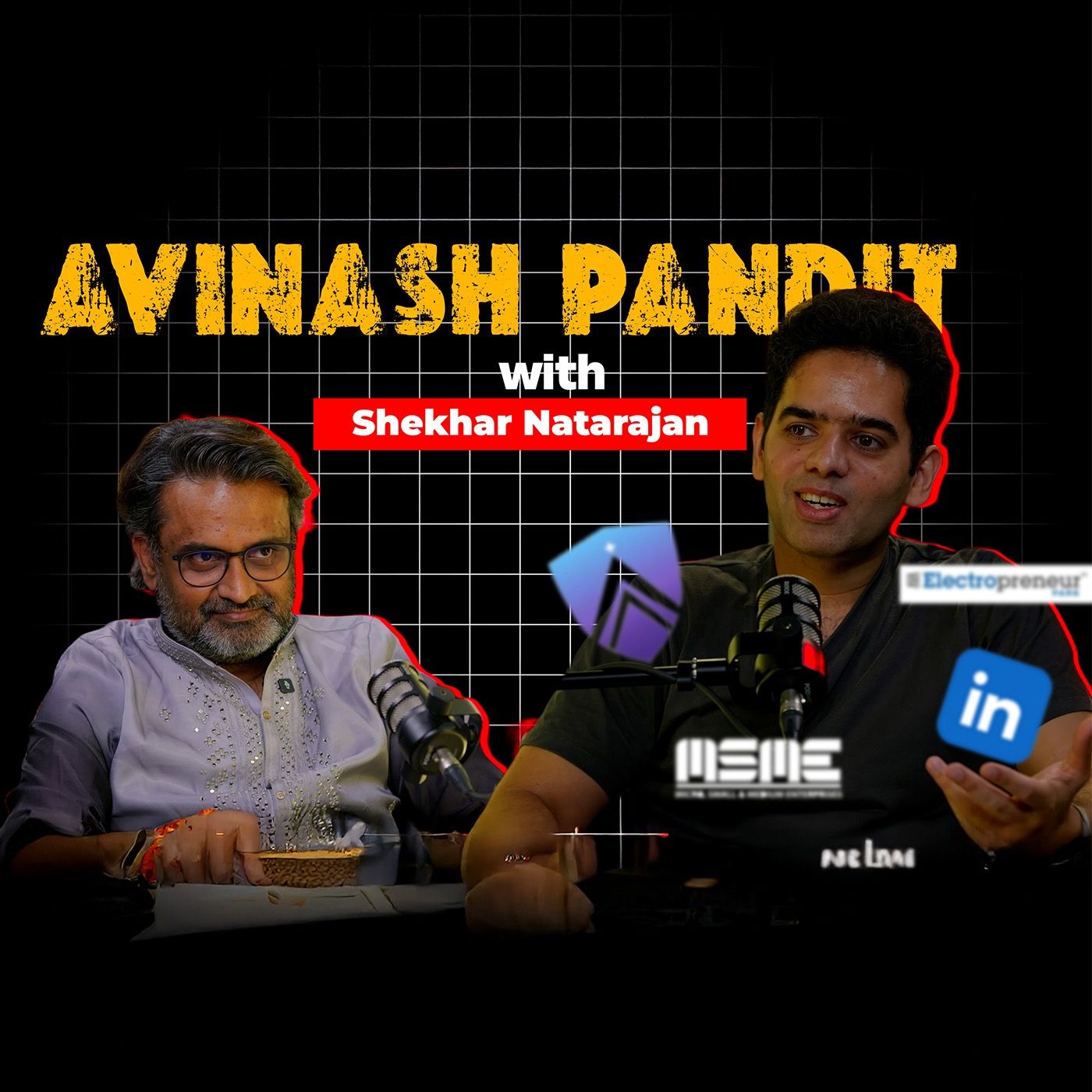
Tomorrow, Today
How AI Will Transform Education Forever | Avinash Pandit x Shekhar Natarajan
01:08:12
What does it truly mean to prepare the next generation for the future? In this thought-provoking episode of Tomorrow Today, Shekhar Natarajan sits down with Avinash Pandit, one of India's most respected education leaders, to discuss the future of education, outcome-based learning, leadership, entrepreneurship, and the impact of AI on society. From growing up in an army family to becoming a visionary educator and entrepreneur, Avinash shares invaluable lessons on building resilience, developing future-ready skills, and creating meaningful impact in a rapidly changing world. 🔹 In this episode: • The future of education in the age of AI • Why outcome-based learning matters • Leadership lessons for students and entrepreneurs • Building skills that remain relevant in the future • Entrepreneurship and lifelong learning • Preparing young minds for an uncertain world • Mindset shifts needed to thrive in the AI era This conversation is for: ✅ Students ✅ Parents ✅ Educators ✅ Entreprene...
Loading summary
Transcript156 lines
- [00:00]
A
Many of these IITs students vie for because it can literally transform your life. I literally got flashbacks of what happened during my Jee days in the first couple of weeks of iim, which company they wanted to go and what function in that company they wanted to go. So Lok Aki Bohote. I am from IIT Delhi. I want to go into Goldman Sachs IBT London desk. And I was sitting there clueless as to what I wanted to do in my life.
- [00:26]
B
Which is good actually by the way, let's talk about the Nokia case.
- [00:30]
A
Nokia market share stable. And the interesting thing was the Indian leadership told us not to look at the product. We could literally see that their product is not right, that they are bleeding because there is no product market fit anymore. But you know, nine months after that the whole mobile division was literally shut down of Nokia. I think one of the most important things for the top layer is to ask the right questions and our answers, probably all the right answers, but to the wrong questions.
- [01:10]
B
Welcome to yet another episode of Tomorrow Today, Vishekhar Natarajan. It's a real pleasure to have Avinash Pandit here in the sets today. He's trying to redefine education, an outcome based education in India. Avinash, welcome to the show. You are a pioneer in the space. I'm super excited to have the conversation because education is very close to my heart and we'll touch on a lot of topics, we'll keep it very conversational, we'll take it any direction and we'll have fun.
- [01:42]
A
Sure, sure.
- [01:44]
B
Okay. And so there are no right answers, There are no wrong answers. You know, just be yourself. So let's go to the very formative stages of your life, like you know, like early days, you know, where did you grow up? Like if you go back yourself and transport when you were like a 7 year old kid and you were sitting at the breakfast table, your mom, your dad, what's going on through the family, who are they? How do they think? What were you thinking?
- [02:17]
A
I think that that's a long, long time back. How do you, how old do you think I am by the way? Shikhar, I know your age, so that
- [02:27]
B
was a trick question. So yes, I think like you are 41. 42.
- [02:31]
A
Yeah. I mean many people have told me that I look more like 25. But yeah, was a long, long time back. So my dad comes from army background. Right. So most of my childhood we've traveled every three years to some different location. Right. So home. I think what army makes you realize is that home is a Feeling rather than a location. Right. So I've been to Pathankot, Aurangabad, Pune, Chandigarh. My dad was posted in border areas like Kashmir, but I've traveled throughout. My dad was a doctor, my mom was a doctor. I got a twin sister by the way, who again has become a doctor later on. But early in my days I think what
- [03:22]
B
they were in the armed forces and they were basically doctors.
- [03:25]
A
Yeah, my dad was a doctor, he was in army and my mom was a teacher. So whenever we used to travel she used to take up a teaching, teaching job. I think what was important was. And my dad was a ranked officer by the way. Right. So I think from early childhood I've studied and made friends with people from across the ranks. Even that small privilege, Right. A ranking officer's kid. I think I knew it from the beginning that I was slightly more privileged as compared to, you know, the rest of the population. My parents had studied the, they could teach me if I had any particular problem statements. Many of even these things were not accessible to my peers. Right. The other thing which was important was the values and ethos which army brings. Right. So taking everybody together, honesty, integrity and sticking by what we feel is right is very, very important. So all of these were net. Net. The values which I grew up with. But if you, if you just ask specifically breakfast, then I've had the same breakfast for probably as long as I remember. I just have two eggs and a, and a bread.
- [04:44]
B
Like so what kind of ethos the family was known for in the sense like, you know, like for me like my dad was the sort of the epitome of hard work. Like he would like leave at like 5:30 in the morning, go on a bicycle 15 km to work and then like you would see like, you know, he was, he used to deliver telegrams, my father and then he would spend the whole day, come back. So that's how I know my dad. My mom is like, she used to be the strongest person I knew.
- [05:19]
A
Yeah.
- [05:21]
B
So tell me more about your family, like you know who they are.
- [05:24]
A
So my dad comes from a very, very underprivileged background. They were six siblings and they were almost on the verge of poverty. Right. So he lost his mother very early in his life and his eldest sister Netnet ensured that all of these siblings were raised properly and they were almost on the verge of poverty at one point of time. So all of these guys are self made, all of these brothers, sisters. My dad joined army because it was paying, right. So he joined army because it put Food on the table. And he is purely a self made man. Same goes true for my mother as well. Right. So I think when I talk about the values, the values are also of, let's say middle class Indians as they are of army. Right. So definitely hard work, honesty, putting in all the efforts in whatever job you undertake. These, I'll say these are more Indian middle class values. Definitely. These were what I was raised with, which is what I sometimes feel. Right. That our parents, I think same holds for you as well. I've seen hardships which we cannot even imagine. I think the same hardships millions of Indians even currently are facing.
- [06:49]
B
So obviously education is a very big role in like, you know, like in growing up. Like did your parents tell you, like, you know, you got to be a doctor, you got to be an engineer. Do you have to do this? Like what was it like in your house? Like the role of education, having a relevant degree? Because that's an aspiration of every like, you know, middle class family in India. Like Mera Kushna Hojai, like basically engineer.
- [07:14]
A
So education I think was, was very important, at least in my household because I think both of my parents had come out of their situations because they had studied. Right. So I think, I don't think there was like a mandate that we either had to become a doctor or an engineer. I think it just happened that your sister is engineer.
- [07:36]
B
Like my sister's a doctor and you're an engineer.
- [07:40]
A
It just happened.
- [07:41]
B
They're twins too, by the way.
- [07:43]
A
Yeah, I mean, see, growing up I, I was pretty good with numbers since beginning, like so physics, maths, chemistry. I used to enjoy, enjoy these. My sister was more, I mean she'd seen my mother, she'd seen my father treat patients. So I think that became her, became her passion. But it was not mandated per se. But yeah, education I think was put. Education had very high importance because they themselves had come out of those situations.
- [08:24]
B
So now like, you know, basically let's fast forward a little bit in terms of your trajectory. So like, you know, obviously you prepared for IITs. I'm sure like, you know, that was everyone's dream. If you're in math. I'm sure your sister actually prepared for Ames as well or NEET now. Right. So tell me what happened. Like I'm sure like, you know, you, you had dreams of going to IIT and like, you know, either you had it or like you got shattered and then you had to rebuild.
- [08:58]
A
So I think, see, one thing which I would want to say before I give this story Is this is what I always tell the students that I think these type of exams test those students on one single day at one given point of time. Right. That does not define their, let's say 30, 40 year old carrier. And I am a prime example of that. I'm literally a prime example of that. So I gave J way back in 2001, 2002 and at that point of time there were 3,000 seats in IIT there used to be two exams, there used to be like a screening exam and a mains exam. And I'd gotten 6,000 rank in each. Each one of those probably was like the worst day of my life. When I was, let's say 17 years old. I think I've seen many more worse days in life after that. But for a 17 year old me, probably it was one of the first failures which I had seen. I'd always stopped my school. I used to consider myself pretty brilliant and it was literally earth shattering that I could not get into a prestigious institute in India. I did my engineering from a college called Army Institute of Technology, it's in Pune. And after that life followed. Right. But I've seen so much of life after that that that one particular exam on that one particular day has stopped mattering later on.
- [10:30]
B
But in that moment it was like a very devastating thing.
- [10:33]
A
Of course, I mean it was. All of these institutions are the dream of majority of Indians, I think because of two factors. One is that they give access to opportunity many of these IITs students vie for because it can literally transform your life. And that relates to what opportunities these institutions bring later on. Which is what I'm trying to do by the way. Right. Democratizing access to opportunities is something which I'm trying to do in my current educational venture.
- [11:05]
B
So. But I agree with you, you know, like over the last 25 years I've been in the United States and I work for a lot of very large companies and very large roles, mostly executive roles like you know, like in the C level or like one, just one below. And I had the opportunity of hiring a lot of amazing talent. And you'd be shocked that like most of the talent didn't come from like MIT and Harvard.
- [11:30]
A
Yeah.
- [11:30]
B
Like in fact like they couldn't actually even look and tie their shoes together, those kids. Yeah.
- [11:35]
A
I think what happens is many of these students who actually get into IIT, they've prepared so hard for it that IIT seems to be like the final destination for majority of them. But life starts right after that. Right after that, yes.
- [11:52]
B
And like And I think like, you know, there is also a sense of like, you know, to your point, entitlement that you like tend to have when you get there that like makes you feel that like, hey, I have arrived at iit so like, like you know, the life is just beautiful after that. And some sometimes basically like, you know, you not only get cocky but like you like, you know, you become less hungrier, you know, as a person. Right. So basically like, you know, you just, that whole makeup of yours becomes such that basically you become less risk averse and like, you know, you're just like, you know, you're, you're, you're good within yourself and you feel like, you know, oh, like what, what is, what, what's going to go wrong? But the guy who went to Florida International University, that fellow will say like, you know, I have nothing to lose in my life. They get more hungrier.
- [12:46]
A
No, no, exactly.
- [12:47]
B
And they work harder. So hard work is actually like a compensation. In fact it's a better compensation for being smart.
- [12:53]
A
I completely agree.
- [12:55]
B
So, so like now take us forward. Like you know, you went through the army school, like so what did you study, what did you do there and what was your specialization in?
- [13:05]
A
In engineering. So I did my engineering in electronics and telecommunication. But this was early 2000s, right. So it service companies were growing at that point of time and used to hire in droves.
- [13:21]
B
Yeah.
- [13:21]
A
Right.
- [13:22]
B
So this is like the hcls, the cognizant.
- [13:24]
A
Yeah. So wipro, Infosys, HCL Tech Cognizant. Yeah, Satyam was also there at that point of time. But yeah, I started my journey with Infosys after my engineering and I was there for about three years or so. I actually topped the batch, the training batch in Infosys. I think Infosys, what it really gave me was a passion for coding, right. And net net ensuring that I never get scared of code. After that I did. I had never coded before. They trained me for six months but probably it was the best groundwork for what came ahead. But yeah, I think the service companies then and even now for that matter are based on cost arbitrage, right. They price on a per person utilization basis. And I think pretty soon, probably by the second year in Infosys, I realized that I could do so much more as compared to what I was doing there. I literally was working, let's say three hours every day was in the top quartile, like top 25% of the employees and rest of the times I spent improving myself in table tennis, in snooker, swimming, you know, Going to gym, learning age of empire, playing counter strike. So I did so Infosys for me was, I think there were two things. One was, it was like a second college for me because I could do so many things in Infosys. But it also laid, I think the groundwork for, you know, what really came ahead. I utilized what I, what I learned in Infosys all across my later years.
- [15:19]
B
That's interesting that like, you know, because like you I thought like the, the cost arbitrage actually puts more pressure on you to be always more efficient than what you are. Looks like that didn't bother you.
- [15:38]
A
I think the problem with all of these older companies is that as you rise, you write less code and the domain might change, the code structures and stacks will change. Right. So as you rise higher, if you are not in touch with what is happening in the world, you will soon lose touch and on the timelines, Coding perspective. So let's say. I can 2x the time and tell my manager that it's going to take seven, eight days. He's going to probably 1 1/2 2x that and going to give it to his manager without asking me questions. So I think Infosys was a bit of that, at least at that point of time. I think probably I foresee Indian IT services to be majorly impacted for sure because of AI. And I think one of the reasons is this as well.
- [16:48]
B
So you think that they're not really geared to actually take on the AI?
- [16:53]
A
I really don't think so.
- [16:55]
B
Is it a problem with reskilling or is it a problem with the fact that the arbitrage is a problem? You could code yourself today. Code is generating code. That's one problem. The second problem is basically even if the code is generating code, I still think that there's a lot of jobs to be done in the world of AI because it's all probabilistic in nature. So it surfaces more problems to solve that we are not unaware, like we are not aware of. But I fundamentally think like people are not even trained to think that way like to solve those problems.
- [17:31]
A
I have a very, very strong feeling that companies will start setting up their own offshoring units inside of India, which is already happening by the way with GCCs.
- [17:42]
B
Oh, use GCC.
- [17:43]
A
The GCCs. See problem is that majority of these IT service companies have only few products per se. Product which has been there since 20 years, which is like the back end of banking for probably 25% of the retail banking in the world. But such products are very few. That is maintenance of legacy code improvements. But majorly IT is ensuring that all of this is running without any problems. All of this is pattern recognition. Pattern recognition. AI can do a substantially better job in any of these or managers. Example, I think one person who is utilizing AI properly can probably do the work of 10, 20 people at this point of time. So model on arbitrage, but the model is billing on a per user, number of hours billed. I think that model itself is breaking down. When all of these AI companies go public, the cost increases, but I think the productivity gains are still so much that Indian IT companies are unless they fundamentally change their model itself. They have domain expertise. But domain expertise is what Net net. Even that is understanding, let's say 50 years of data and figuring out patterns in terms of what is working and what is not working. I think EIA is going to be better than 10 managers of any of these IT service companies.
- [19:31]
B
Vishal actually wanted to invest in Vishal. Sikha wanted to invest in OpenAI at the time like when OpenAI was conceived and he was shot. So Infosys would have been in a different place and time now had that happened. But like, you know, I think there
- [19:48]
A
are so many cases Xerox, You know, all of these smartphones, feature phones. I think it's just that either you improve in terms of what is happening, you adapt or you die.
- [20:13]
B
So then you decided to actually go to get your management degree. What was the urge for that?
- [20:20]
A
Yeah, so as I said in Infosys I really felt that I could do so much more with my time and MBA just made sense at that point of time. Right. So I felt that I could actually learn how to do business. By the way, no one in my family has ever gone and done any businesses. Right. So but yeah, I thought will be good to just go and learn how businesses operate. Gave this exam called CAT. I got very good percentile. So I got 99.88 percentile in CAT. I got calls from all the IIMs, went into IIM Calcutta. Right. IIM Calcutta was a completely different ball game altogether. Right. So the I literally got flashbacks of what happened during my jee days in the first couple of weeks of IIM because it was filled with IITians. It was filled with IITians who knew exactly which company they wanted to go and what function in that company they wanted to go. I am from IIT Delhi. I want to go into Goldman Sachs IBD London desk, the IBD's investment banking division. And I was sitting there clueless as to what I wanted to do in my life.
- [21:45]
B
Which is good, actually, by the way, in hindsight, like, you know, like, I don't sometimes, like, you know, when you actually create a path for yourself, and if that path doesn't mature you, you are, like, actually thrown off your balance.
- [21:59]
A
That makes so much. So, so much sense.
- [22:01]
B
Yeah, like, so, like, you know, like, like, what I've come to realize is because, like, you know, that happens. Like, you need to know. You need to have, like, a sense of what actually excites you. What actually, like, you know, makes you wake up every day and go do something. Right. You should have that clarity of thought. But it should not be like, you know, I'm going to do. This is my first step, this is my second step. This is my third step. Because life is anything but that. Like, you know, there's nothing certain about anything that you want, too.
- [22:34]
A
Yeah, that is. That is so true. And that is such a good philosophy to have.
- [22:38]
B
Yeah. Yeah. You know, like, I graduated from my. From Georgia Tech. Georgia Tech. Industrial engineering will be like. Like, you know, it was like, just like, random admission. I had, like, you know, my brother had an admission from University of Alabama, Tuscaloosa.
- [22:59]
A
Got it.
- [23:00]
B
Okay. And Tuscaloosa, Alabama, say, Atlanta was only four hours in a bus ride. So my choice of university to go to Georgia Tech was to be close to my brother because he had, like, bipolar depression.
- [23:17]
A
You're being too modest.
- [23:19]
B
It was actually that. Actually, to be honest, it was that because I had other universities, you know, I'd gotten into, like. And I said, like, no, I really want to go there because I want to stay close to my brother, because if something happens to him, I want to be there for him. So it was supposed to be like, you know, I find out that it's like, the top school for industrial engineering for the last 20 years, and basically industrial engineering, Like, you know, what was my actual first job after graduating from the top school for industrial engineering? I must have been a bad student, by the way. That could have been. The other thing is to go via computers in the office of Information Technology.
- [24:03]
A
Oh, interesting.
- [24:04]
B
Okay. And then I was working in a multimedia lab. Okay. In the same. In the same lab. And so it was part of the library system. So when I had that. So I could have sulked because all my friends were going to Capital One. What time for the business analyst job, though? It was like, you know, it was like, very good. Like, business Analyst in capital 1 million. Prescriptive. So I used to see all these guys prepare for the same damn questions also. And everyone would crack Industrial engineering business analyst. So anyway, everyone chose their life of choice. And I didn't sulk about any of those things. And I said, like, you know, I was in multimedia lab, and my lab manager said, why don't you build a movie resume and give it to someone? Because, like, you know, you're helping kids make movies and like, you know.
- [25:10]
A
Yeah, so.
- [25:12]
B
So Adobe Flash, Adobe Illustrator. Illustrator. I'll create a multimedia, like a very, like, it's almost like a, you know, you have subliminal things coming behind the scenes. It's animated. And then I had like, the music from Matrix Revolutions. Navaraska last. And I put it on a. A cd which is the size of a business card. And I never used it. But then I got a job like in. In as a corporate specialist in a rubber band company. It was in industrial engineering and process engineering. I took that. Okay. So six months I stayed there. And then I was. I figured like, you know, I was working for a manic depressant who fires one day and like three hours the next day, Like, I was literally sleeping on the couch. I recollected that I had access to LexisNexis from the library. And then I looked up like, Coca Cola. I did not know Coke Consolidated and bottling company was called Coca Cola. And basically Coke was KO the way it is actually, like, you know, traded in the stock market. Consolidated bottling company. So I found the exec. I sent that movie resume. He saw the movie resume, job, Milliamir. So that was my journey.
- [27:00]
A
Got it, Got it.
- [27:01]
B
So, like, how accidental all these things are.
- [27:03]
A
But can you prepare for that journey? I think, and this is what I have seen also, probably what is the most important in our working life is one, how much efforts that you put in, but also the relationships that you build along the way. Yeah, right. Because a lot of these opportunities just show up because you have built the right relationships while working.
- [27:32]
B
Yeah.
- [27:32]
A
So you, for example, the first time your manager told you to do something, he would have told you to do something because you really work towards the prior goals and you build a relationship with him.
- [27:43]
B
Yeah.
- [27:43]
A
So I think the accidental is also the probability can. Can be improved substantially if you have the right relationships, the right relationships in
- [27:52]
B
the workplace and the right context also and like, right people to guide you in the. In. In the right way. So which is the problem with the current education system? It's all like, tailored like, you know, to. To. I don't know, like, you know, when you go to like education system. Like everyone, like everyone is uniquely different. Like just as your fingerprint but the way you actually deliver education is all the same. Yeah.
- [28:12]
A
Right.
- [28:13]
B
So there's no special care to. For a person who needs like special attention and like what makes them unique.
- [28:19]
A
Yeah, right.
- [28:20]
B
It's. There's no personalization. I always found it very interesting that whole education system, it's all screwed up. But anyway, like who might fix it? But anyway, so from there you finished IIM Calcutta and then you did what?
- [28:32]
A
Yeah, so in. Yeah, so I am. Very, very bad. As I said, I. Depression because there were people from IIT Janko I think this is one of the things that you get by being a part of premier institutions that you get exposure. Right. So many of these kids who came into IIM already had done a lot of things which mattered. Debit credit. These guys are scoring A plus. We were like really struggling to normal curve center B plus at the other side used to be A plus here it used to be like a D. So But I think IIM Calcutta Kendar probably after a month or so I, I made myself a promise that I will put in my best efforts. Right. So I graduated IIM Calcutta with a in the dean's list which is given to the top, let's say 5%. So many of these IIT kids who came with me were behind me by the end of it. So I joined this consulting company called Boston Consulting Group. So it is one of the top strategy companies in the world. So just a McKinsey Bain at Carney, Oliver Wyman. So these are the top let's say strategy consulting firms. And I think IM gave me a very good base of what will go into a business, what will make it succeed, what will not make it succeed. But your first principles are thinking here that figure out what is the top problem and then break it down into smaller subsections and then get solutions for them. This is what the thinking and first principles, thinking in terms of frameworks is what consulting really, really taught me. So bcgma I've worked across many sectors. I've worked in fintech, consulted big banks. I've worked in consumer electronics. Just in Nokia was one of the companies which we was a very interesting case. I've done commercial vehicles, I've done industrial goods. So got a sense of businesses across and worked from literally the top CXO layer to the bottom layer in terms of getting the work done.
- [31:15]
B
Let's talk about the Nokia case.
- [31:19]
A
Yeah. So Nokia was a very, very interesting case study. So consulting may at Least in top Strategy consulting firms, CEOs and they have mandate either to increase the top line which is revenue or they give mandate to increase the bottom line which is the profit. Improve. Or this is like early 2010s. Samsung was really taking away the market share in the top segment. Smartphones may shift Torah market. Samsung was taking away the top end of the market or niche Chinese manufactured Indian brands. This is Spice, Lava, Micromax And Nokia was getting squeezed from both the sides. And the interesting thing was the Indian leadership told us not to look at the product. We could literally see that their product is not right, that they are bleeding because there is no product market fit anymore. Was not worth at all at the price point at which they were selling. And they came to us saying retail strategy, fixed CRU retail strategy. And no matter how much I think BCG pushed back, they said don't look at the product. So we ended up by the way giving them a retail strategy which helped them increase the market share for let's say two, three months. But you know, nine months after that then the whole mobile division was literally shut down of Nokia. I think the in Topcom and you worked as the top layer in many of the companies. I think one of the most important things for the top layer is to ask the right questions. Does not matter how hard the team works, does not matter. If the efforts are not in the right direction. The it will not matter. I think from a consulting standpoint we gave them probably all the right answers but to the wrong questions.
- [34:04]
B
So from there you basically ended up like consulting for more companies. And then like you what is your career trajectory from there?
- [34:11]
A
Yeah, so I think so. BCG had consulted this company called Hero Honda and Hero wanted to separate from Honda and expand internationally. And BCG had done that case study with Hero. Right. So they wanted someone to stick back and help them build their international business. So I was the person who stayed back. Right. So ended up helping Hero MotoCorp enter into 37 countries internationally. In Southeast Asia we were present in a large part in African continent. We were present in Latin American continent and a small portion in Middle east as well. Right. So that was what I did after Hero and. Sorry, that was what I did after BCG and then Hero. Net Net. I took care of almost everything apart from pnl. Right. So product pricing, distribution, marketing strategy gave a very, very good hands on feeler of what actually running a business will look like. Orange is what execution is very different from strategy creation. Kafibar and I think you would have also realized you Know you've done so many things in your life. Strategy is good as a broad playbook, but execute that you need to throw away the framework at some point of time and then actually just focus on getting things done. And the market teaches you if you listen closely enough, I think the market itself will tell you this is right, this is wrong, this is what you need to do. And I've seen numerous examples of that Nigeria strategy and Nigeria is one of the biggest markets in Africa. Very different from let's say a Kenya or Uganda on the, on the other side of the continent. Bikes are used as commercial vehicles. During BCD time. Also we, when we actually went and launched there, the requirements were so different and of course we had gone and tested it out. But road conditions are different, the loading factors are different. Based on the loading factors is very different. Engine strong conditions is very different. It's a multi retail framework rather than exclusive retail like in India. So the retail strategies are very different. So going on the ground, you know, putting your ear and actually listening to what the market is saying. So I think Hero gave me a very good foundation in that. Right. And then I think HERO is when inetnet thought that I've now had experience across the top companies in India. I've done consulting, I know cross sectoral, I have cross sectoral understanding and then why not, you know, eventually get into startups. So after Hero then I went to this company called OU and in OU I was heading there US and Canadian. So I launched their US in Canadian market and then, then I was eventually heading the revenue of 14 countries in Southeast Asia, Middle east and then Japan. So I think Oyo was also a very, very good experience. And the talent density was so, so good, so immense. I think many of the OU alumni have done exceptionally well. Very good mix of strategic brain and hustle culture which is to get actually go get the things done and reframe the problem statements if required. This was also the time during COVID by the way, when I was in Oyo and travel was one of the worst hit segments. The company shifted from being a growth oriented company to a company which wants to break even and become profitable. So we had to trim down the workforce by a large extent. I had to probably that was one of the phases in my life which was one of which was very difficult for me to handle as well. I mean coming from an army background, we are made to think in a way that we take everyone along us. He had to literally fire 35, 40% of my team and jobs. They are Working with me, for me, I really felt responsible for majority of them. So I mean I tried to help as many people as I could but it was probably one of the most difficult phases of my working career. And post Oyo then I went into education. Education sector. Right. Education. May I think I've seen the market up close. India may I think probably the most important problem statement is giving the right access to opportunities as we were discussing. Also I think majority of these premier institutions are built on the premise that they will set you in life opportunities limited only with let's say the top institutions. So I think education eventually what I realized was democratizing this access to opportunities is probably what is the most important problem statement at present, which is what I'm trying to solve for at this point of time.
- [40:33]
B
Very interesting. So then you ended up like starting Zenith.
- [40:39]
A
Yes.
- [40:40]
B
So what is the, what are the, what are the close parallels you've seen? ISB looks very similar.
- [40:45]
A
So this will, this will fall under alternate education or new age colleges. Right. I think ISB was probably the first institution to do it. So there are IMs, there is FMS and so on and so forth. As we said, a different paradigm is required in terms of how management education is taught. And they set up an institution which gives access to these different frameworks. Better teachers from the industry who have actually lived that life and also access to opportunities. We are doing something very similar for engineering. Right? Something very, very similar for engineering. So we are giving a BTech in AI. The degree is in partnership with KR Mangalam University. But it's a BTech in AI. The curriculum is what is required in the world at this point of time. Right. It is not. Let's say if you look at traditional colleges, the curriculum is actually 20 years. 20 years old. I say engineering probably eight years before me as well. But you will see that 90% is same. So Duniya, every. I think at least since the. Since we have got AI in the world, I think we are seeing technological shifts happening every six months. So 20 years is almost like lifetime. Lifetime. So the curriculum is up to date and updated every six months. We've created it with international AI experts. We have people from Cohere, we have people from Meta, we have people from Tesla who helped us design this curriculum. It's being taught by industry experts, the people who actually are working in those particular domains. And we also have something called as a mini mba. Right. So we are giving a minor in business. I think where the world is heading to is that technology or business distinction. That is Slowly fading away. Right. So this is what we are trying to do along with giving access to the opportunities, whatever network that me and other co founders have created and we have a big placement team as well. So access to opportunities is made institutional, not left to students. College colleges, placement opportunities, students manage. So in our institution it is institute led.
- [43:41]
B
So you have four co founders along with you and then you have like 100 crores behind this whole idea. So tell me a little bit more about like when would like people start seeing success on the other side? Like you know, is it like three years? Is the first batch coming out when like 20, 29 or 30? 30.
- [44:03]
A
Yeah.
- [44:04]
B
But you're already seeing signs of good progress and other things.
- [44:08]
A
Yeah. So see the students will start seeing the results as early as end of their first year. Right. So by end of first year they will, they will be skilled enough to be deployed in the industry. Right. So we are expecting that majority of the batch will have at least one paid intern by end of their first year. And by the end of fourth year they do at least four to five paid internships. Of course we will provide the right tools, we will provide the right opportunities, but we also expect that the students really put in their effort as well to get into these opportunities. Right. But the expectation is not that the first sign of success will be in 2030. It should be by the end of their first year itself.
- [45:02]
B
Very good. And then the, how do you, how do you basically gauge the, the efficacy of the curriculum itself? Like I know that it's developed by people who are actually, you know, working in like professional settings and they're keeping you updated of what is current and what is not. So but the technology is also changing so fast. So the research is very important, like what's happening in the top AI labs and so on and so forth. How do you capture that essence of what you're trying to do in this curriculum?
- [45:34]
A
So India may, I think in, at least in AI, India is not at the frontier. You are sitting out of us, so you will also probably have similar things to say. But India is not at the frontier. So this is one of the important reasons why we got international exports in the first place. So Indian companies, where they are at, what stacks they are working on, how they are utilizing AI, how the AI adoption curve is happening in Indian companies. So I get very deep connects in the startup ecosystem, in the venture capital ecosystem. My co founders, so we have Vivek and Anoop who are from IIT bhu. They have run a company called Programming Partshala which has upskilled around 20,000 students, placed over 1,000 students in top mang and AI companies. So they get a very good understanding of what is happening in these top tech companies in India. And then we have Rohit as well, who is the promoter of KR Mangalam. And he brings in a lot of expertise and AI itself. He's been an AI researcher but he also gets that expertise of ensuring that when students come to Zenith they feel it as a second home. But we have a good sense of what is happening in India. International experts, what is happening in the Frontier research labs outside, outside of India.
- [47:15]
B
Very good. And so as you think about like the next evolution of Zenith, like what does it look like? Like you know, how, how are. Is education like the way it is today? Will it change because of Zenith and other companies which are coming or other institutions which are coming around it? Or are you guys challenging the status quo? Or like are you, are you enabling it? Are you basically disrupting it? How should we see Zenith as a company? And also the idea, I'm sure like the others are working on a similar idea.
- [47:48]
A
Like you sure. So I think all of us who are working in alternate education or these new age colleges per se, we are trying to improve the final outcomes for students, right? As I said, I think the opportunities were accessible to only a few and we are trying to democratize it, right? So the whole paradigm is very, very different. You can't give access to opportunities without ensuring that the students have the right skill sets. I think basic level in traditional colleges, students. That needs to be fixed. So I think the problems in traditional education are very, very deep and it will take substantial amount of time to really overhaul that. So all of us who are in this alternate education ecosystem are net trying to solve this particular problem statement.
- [49:01]
B
So is AI in India? Like where is it? Like what is the state of AI in India? Because like you know, a lot of people are running around like trying to claim that like AI is going to cure the world, whatever it is going to do. What's the state of affairs?
- [49:19]
A
See India may Jitna Many tech people are really scared of, of AI businesses. If I need to give like a example, tech people have those binoculars, they can see that there is this big wave coming and they are literally trembling with fear because it is going to impact substantial number of jobs in it but it is going to impact even more number of jobs in business or business. In India, 93% of jobs are business related, let's say in sales, marketing, product distribution, retail, AI is impacting not just is impacting each and every one of those right I know couple of VCs who've told their startups that fire everyone below 10 lakh and completely replace them with AI right up sales pre sales can completely be automated through voice AI marketing Lelo static dynamic content everything can be generated through AI product LELO one person can do the job of 5 product people of before engineering in it is like a very it's literally the tip of the iceberg and I think it will undergo substantial shift we were talking service companies will substantially reduce I think GCCs are expanding already product companies will expand a bit but overall the jobs are going to shrink rapidly and problem there is no safe space left white collar Joe ecosystem I think AI is going to impact each and every job there is not going to be any hiding space so if AI is
- [51:13]
B
going to like reduce all the jobs what jobs are going to be existing in the future then
- [51:19]
A
I mean yeah I think we will need to see how the market changes even I cannot fathom the type of jobs which are going to be what I definitely know for sure at any given point of time let's say three and a half lakh service companies let's say Google. If you draw the salary bands it will form like a big pyramid I think this pyramid is going to shrink rapidly but it's also going to shift up shift up One person is able to do the sloka kaam he he will be compensated he will be compensated more you know so I think what is going to be important for future directionally is having the right skill sets not just in tech but also in business because somebody is going to replace those pre sales jobs somebody is going to write the software for marketing so having the right skill sets but also the right network because gatekeeping is going to be very very important so Aaj date me let's say. In future it's going to get even 10x worse so I don't know where or how the jobs are going to evolve but what is going to be important is having the right skill sets in tech in business and having the right network so that you get access to the limited opportunities which are going to be there.
- [52:59]
B
So how, how does like the economy with like 1.4 billion people survive then in that kind of thinking? Because like see like you know like everyone was coming out as an engineering student at the time like they were coming out you and like you and I know like their dream was to go into like you know HCL cognizant and this and that and like make up a career there. Now that dream doesn't seems to be like a viable kind of a journey anymore. So entrepreneurship is also like, you know, a wild journey. Not everyone can be an entrepreneur though, they want to be one. So, so what happens to like what kind of skills are needed actually in the future?
- [53:40]
A
I think what is important at this point of time to, for any, any person working or student is to really start building as early as possible. It's never been easier to start building whatever you are passionate about and get really deep into that. Creating a marketing agency is very easy. Collaterals, video collaterals, static collaterals, both easier banana. But intuition, Lana, is very difficult. And you might still say it's, it's still pattern recognition. AI can decipher what is worked, what has not worked. But what about new category launches where you really need to go and understand the final consumers. Right. So starting to build and getting really, really deep into getting an expertise in what you're doing is going to be very important. So if there has to be one thing, it is that start early and start actually building in whatever domain that you are.
- [54:49]
B
So the other thing I wanted to ask you is like you mentioned that the PM jobs are disappearing. Like you know, the project man, the product, the product managers.
- [54:58]
A
Yeah.
- [54:59]
B
So what happens and what, what like, so those are all interesting and super provocative conversations. Like or like comments. So do you really believe that like the PM jobs are gone or.
- [55:14]
A
I think you will conquer that and white collar jobs. White collar jobs, at least in India is office or computer digital ecosystem, which is completely related to let's say working on a computer.
- [55:33]
B
They're going to get disrupted.
- [55:34]
A
They are going to get disrupted. It's all about recognizing what has happened before and taking the right decisions based on what has happened before and taking it online. I don't see any job not getting impacted. So product manager, sales, maybe Joe Telecollers, for example. Improvement. If there was a voice AI company and there was a bot that you were talking to, you would have realized in the first five seconds that you're talking to AI. You cannot, you cannot decipher if this is a AI or a human at this point of time. Improvement. Same goes for any other job. The way jobs are structured, I think there are very few people who are actually adding value, who are doing something different or who are really building something. Every layer has slightly more context. I think all of these jobs will get disrupted.
- [56:51]
B
So let's talk a little bit about your, your, your support system in your House, right? Like who is that? How do they. Because like entrepreneurship is a very tough journey, highs and lows and all that stuff.
- [57:09]
A
So I have, I mean I have, my wife and I have got two kids also by the way. And a very interesting fact is that she is also an entrepreneur. So she has her own preschool. But yeah, I think. So. She comes from a chota family background by the way. Her father has a pharmacy and my wife is very, very level headed. Right. So nothing disrupts her calm, emotional calm. And I think Indian startup ecosystem having a family is looked down upon which is actually very, very surprising. I've become a much better person after having a family. You look forward to something other than work. You develop patience after having, after having kids. You know how to manage people much better. You know how to prioritize your work because you also need to spend time with your family. So your family really, really keeps, keeps you grounded and which is very surprising. Indian startups, it's almost risk averse company effort. Putney Karoge. So it's actually looked down upon which is very, very surprising.
- [58:50]
B
So changing gears basically Galgotia University and what they did, right. Like so how do you, how do you even like think about that scenario? Like because like we get such a negative, you know, rap because of all of that.
- [59:03]
A
Nitu I think traditional colleges per se have focused more on marketing rather than building the core skills to make students successful. And this was one of those examples marketing but actually skill sets. So we imported something and showed that it was our own. If we would have actually focused on building those skill sets of students we would be in a much better place as an economy as well.
- [59:42]
B
And so neet also neet exam like you know, like it keeps repeating all the time that like the papers get leaked and like you know, so is there something fundamentally wrong about the education system?
- [59:53]
A
I really feel for, for the students, right. Because I mean I remember when I was preparing for IIT this was when I was 17 or 18. That was the top thing at my on my mind. And when I didn't get through I literally had felt devastated that this was the worst day of my life. Doing that with millions of students in India that they have prepared so hard given that exam and then saying that this exam will be conducted again. I think there is no worse mental torture for students. They are young at their age, that is what their final dream is. I think government agencies need to be held accountable for such lapses and we need to have some strong punishment so that such actions are not happening again. And again this is not the first time it has happened. It has happened in the past. We've not learned anything from it. So yeah, it's really disheartening even from students perspective.
- [60:59]
B
So like you know you're in a space which has been like hotly debated for a long time. Right. Like so what is that like thing that you're doing differently that other edtech companies have not done? Like I know that you're not ed tech in the first place. Yeah, I think that you got to distinguish like what are you versus EdTech.
- [61:14]
A
So I think see education, You should not be VC backed because venture capital education is something where your horizon has to be longer term. When you get money from venture capital firms who want to accelerate growth, see rapid results, your time horizon starts shrinking and that is when bad decisions happened. I think education, Long term success. So we are not a VC backed company. Right. We don't plan to raise money from venture capitalists ever. So the thought process itself is very, very different.
- [62:12]
B
How did you secure the first hundred crores?
- [62:15]
A
Yeah, so Rohit as I said is also the promoter of KR Mangalam University and he had very similar thought processes in terms of what are the problem statements which are currently there in Indian education ecosystem and what we can do. So the funding is infused by, by Rohit. So it's a family office driven sort of thing. Funding.
- [62:45]
B
So let's get to some very quick rapid fire questions. Infosys in one word.
- [62:52]
A
Oh, it was, it was a good training ground for me to get it in one word.
- [63:00]
B
Training ground.
- [63:00]
A
It was a good training ground.
- [63:02]
B
I am Calcutta in one word.
- [63:04]
A
That was also a good training ground but in business domain and Infosys was a good training ground in terms of the coding and programming domain.
- [63:11]
B
BCG in one word.
- [63:14]
A
First principles. First principles. Thinking.
- [63:17]
B
Oyo in one word.
- [63:20]
A
Hustle.
- [63:22]
B
Zenith in one word.
- [63:24]
A
Future.
- [63:26]
B
Single most overrated skill in 2026.
- [63:33]
A
White collar jobs.
- [63:36]
B
Single most underrated skill in 2026.
- [63:38]
A
Building.
- [63:39]
B
AI in one word.
- [63:42]
A
Disruptor.
- [63:43]
B
Most overrated thing about Indian higher education
- [63:48]
A
I think everything is, everything is overrated. I don't think many things are. Very few things are being done right.
- [63:56]
B
The most underrated thing about the higher
- [63:57]
A
education in India I think the will and motivation of students, probably the Indian students are the most motivated that I've ever seen. They just need the right direction.
- [64:12]
B
Gurgaon in one word.
- [64:18]
A
So Gurgaon is a city trying to find its soul. I think every, each of the older cities has a soul. Gurgaon is a accumulation of lot of people from outside who are trying to find, you know, trying to make a soul out of, out of themselves.
- [64:36]
B
The Indian middle class. In one word,
- [64:41]
A
aspirational.
- [64:43]
B
One thing your father said about your career that you would never have forgotten.
- [64:46]
A
He, my father had said, said to me a long time back that put in your best even if nobody else is looking.
- [64:58]
B
The thing 22 year old would have, would not believe about your life today, you being a 22 year old and where you are today. What would you.
- [65:07]
A
Oh, when I was, when I was in college or when I was in Infosys, I would not have dreamed that my career would span so many countries, so many continents, so many industries. I would never have imagined that.
- [65:24]
B
The most surprising thing about being a builder for 20 years,
- [65:30]
A
how often you're proven wrong. I think every time you start building there is something new that the market teaches you.
- [65:40]
B
So let's wrap up the discussion. So the three things that you would want like the audience to remember from this conversation.
- [65:53]
A
I'll start with the single most important thing. I think AI is here to stay. It is not going away and it is going to impact each and every thing of, of our lives. Right. So if you're not conversant, please start building that competence and respond and they'll be, they'll just go in the negative direction. The other way is to just take stock of where we are and just prepare for, prepare for the future in the best way possible. So get the right skills, go very deep in whatever you're doing and then start building.
- [66:38]
B
And the second one,
- [66:43]
A
second one. I think I don't know who the audience is. I think for, for students, they should just remember that life is a very long journey and the worst day that they think at this point of time is going to be hundred times worse over the course of their lives. But they will, they will learn how to manage, they learn how to, how to manage that. And for working professionals, I think yeah, there's a tsunami which is coming, so best to be prepared.
- [67:20]
B
And what about entrepreneurship?
- [67:23]
A
See, entrepreneurship is, the probability of success in entrepreneurship is very very, is very low. But there is no time. There has not been a time in, in history where it has been easier to start up. Right? All the access there used to be information asymmetry. Historically there is no information asymmetry. You have all the tools at, at your disposal. So this is the, probably the best time to take that bet.
- [67:57]
B
Well, Avinash, this has been a fantastic conversation. Thank you so much for coming on the show and I'm sure this is going to be the first of many shows that I'm going to do with you.
- [68:06]
A
Yes. Thank you. Thanks a lot. It was a pleasure.
- [68:08]
B
Thank you so much.