
Podcast
Tom's curiosity shop
Hosted by Thomas Prosser · EN
3episodes
Episodes
Newest firstAll episodes
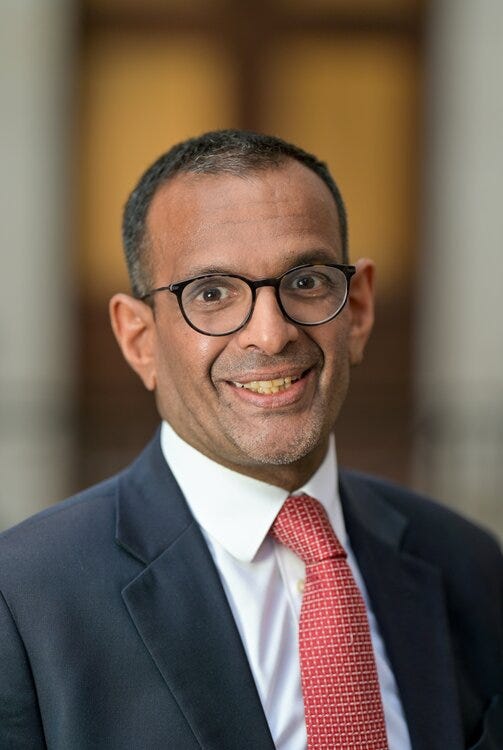
A podcast with Anand Menon - Why is so much political commentary misleading?
Sep 27, 202200:28:40Tap to summarizeRecently on Tom’s Curiosity Shop, I’ve reflected on the quality of political commentary, arguing that much analysis is misleading. Though media evaluation of policy agendas and the conduct of politicians tends to be better, analysis of policy effects and the role of parties is very poor, even in the ‘quality’ press. When assessing policy records, commentators tend to mistake noise for the effects of policy interventions, research suggesting that performance metrics are mostly outside the control of politicians. For example, it’s very difficult to evaluate the economic policy records of governments; most variables which influence economic development are outside government control!Why is so much commentary misleading? What are the implications of this? I had the pleasure of discussing these issues with Anand Menon, professor at King’s College London and Director of the UK in a Changing Europe thinktank. Anand is one of the UK’s best known academic commentators, regularly appearing in the UK media. As Director of UK in a Changing Europe, he is famous for his rigorous and impartial analysis of Brexit.Given his experience as an academic and commentator, Anand was the perfect guest! I hope that you enjoy our conversation. If you do, please think about subscribing to Tom’s Curiosity Shop – it’s free!You can listen to the podcast or a transcript is below.Tom: Hello Anand, it’s great to have you with us today. Could I start by asking whether you think that analysts and voters can accurately evaluate the effects of government policies?Anand: With great difficulty, I think. One of the reasons it's particularly difficult at the moment is there's just so much going on. So, if you take the obvious example from a UK perspective, we left the European Union. There had been a long, quite boring debate for four years before then about the economic impact this would have. And of course, when we finally did leave, then COVID struck.So, untangling the macro-economic impacts of Brexit from those of COVID is virtually impossible. Even at the best of times, it's hard because politics and economics are very complicated and there's a lot going on at any given time. But at the moment, it’s particularly so. I think Brexit is still the best example. People are talking about whether Brexit is impacting on the economy and it is.But discerning what is Brexit and what is Ukraine and what is a hangover from lockdown is hideously difficult. The other thing which applies to the media but particularly to voters is that there’s quite a lot of evidence around what we call "motivated reasoning." People will interpret evidence through their own ideological lenses. So, one of the striking things, again, with regard to Brexit, though U.S. listeners will recognize this from their own politics, is that people who back Leave think the economy is doing better than people who back Remain, even when confronted with exactly the same economic data. So, there is an element of bias to our interpretation as well. Tom: But in recent years, there’s been a quite of lot of commentary which simplifies things greatly. Rather than evaluating the influences which you identified, such commentators might attempt to blame specific events on processes like Brexit or politicians like Joe Biden or Boris Johnson. Would you therefore say that lots of commentary is misleading?Anand: I think a lot of commentary is misleading. A lot of commentary is explicitly partisan and it's important to know who you're listening to at any given moment. I remember being with a friend of mine in the United States around the time of the Democratic convention in 2016, and we were watching the commentary on Fox.My friend turned to me and said, "My God, these people really don't like the Clintons" because Bill Clinton was in the audience and you sometimes don’t appreciate, that in the U.S., you have very partisan media where even the news commentators are sort of biased.UK in a Changing Europe is strange, in that we're a bunch of academics who try and play the role of a think tank. My experience is, people really appreciate it if you're in a debate and say “I don't know” or "actually, we can't really tell that now." So, there is a space, I think, for doubt. But I think the reality of the media environment nowadays is certainty and clarity. It tends to get more clicks than honest lack of knowledge.Tom: So would you say that this is what’s driving this? The desire for clicks and subscriptions?Anand: Yeah, I think so. And I think there’s the danger of echo chambers. That if you're on the left, for example, and you produce headlines that appeal to left-wingers, they'll click on it because it's what they already think. The trick to effective commentary, I think, is to be able to bridge those divides so that both sides will listen to you. I would like to think that when members of UK in a Changing Europe go on the media, people genuinely don't know what they're about to say. I think one of the problems with public debate is, all too often, you know exactly what someone's going to say. In the U.S., there are the big partisan debates around guns or abortion or things like that. But in the UK, we have Brexit; and if you get someone on from a particular side talking about Brexit, you're pretty certain what they're going to say. And so, the debate just becomes very parochial and awfully predictable. Tom: As an academic who does lots of media work, is it easy to get drawn into simplistic arguments and explanations?Anand: There are certain basic steps we would take to avoid it. If the BBC ring up and say, "Can you come into the studio to talk about X?", your first question is, "Is there anyone else going to be there, too?". We will always say no to being the second person in the debate. We will insist on either being the only person, as in here’s someone who's an academic who's going to comment impartially, or being the third person.So, during the Brexit referendum, we were often the third person and the presenter would come to us and say, "Actually, is that right? Does that make sense?" There are certain tricks you can learn to avoid being forced into a corner. I mean, sometimes you get a pugnacious interviewer who will try and wrong foot you. A very, very common question that was posed to us on air during the referendum was, "How are you going to vote? or afterwards, "How did you vote?". So, you need to learn different tricks for sidestepping that one, but there are ways around it.I suppose that the importance of politics depends on context. By context, what I mean is there are moments when you get the windows of opportunity which academics call critical junctures. In the United Kingdom, I’m pretty convinced that we're living through one of those moments. Lots of things that were inconceivable a few years ago are no longer inconceivable. For example, this morning I dug out a Financial Times editorial from just before the election of 2015. It very grudgingly said, "Yeah, you should probably vote for the coalition. We need the continuation of the same government. Not because we think they're great, but because we think Ed Miliband is obsessed with inequality."Since then, UK political debate has become obsessed with inequality. And we're doing things that were condemned in 2015 as Marxist, when they were proposed by Ed Miliband. So, the windows of the possible have opened far, far wider than they were then. At times like that, politicians can be absolutely central to shaping outcomes and the direction of public policy. Now, that's not to deny for a moment that in the process of making a policy, experts, civil servants play a key role in some of the detailed stuff. For example, with the cost-of-living crisis, the Treasury will have off-the-shelf things that it wants to try to address.But the decisions about whether we do it via capping prices, whether we have to tax people more to do it, whether it's a long-term mortgage on the British taxpayer, that's a political decision. And so, the broad outlines are shaped by politics, I think, particularly at times of flux like this when the traditional way of doing things is seen as bad. But equally, in periods where things are calmer and there's less change, I think there's less room for manoeuvre. Actually, one of the things we saw pre 2010 is the gap between the two political parties narrowed a lot. In terms of policy alternatives, there wasn't a lot to choose between the two.Tom: Recently, we’ve heard a lot about Liz Truss being a Thatcherite. But looking at this from another angle, the Truss energy plan is one of the biggest government interventions in recent history! How much of a dissonance between commentary and reality do you think that there is? In lots of cases, it seems that analysts are just evaluating noise?Anand: To an extent, and I think we're partly confronting a phenomenon that will be very recognizable to your American listeners, which is we've had a Tories leadership contest in which Liz Truss was trying to get the votes of Conservative members, and in a broad sense that's like a primary. You're talking to the party and the party tend to be, in the case of the Conservatives, to the right of the British population. Now, the question is whether, as in many American elections, a right-wing politician tacks back towards the ce...
Transcribe →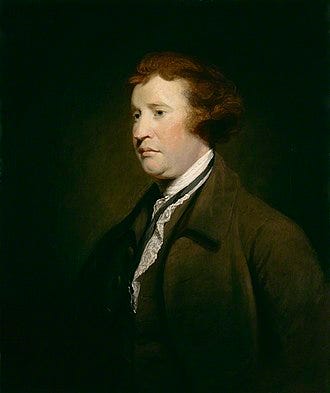
Why Edmund Burke matters – a conversation with Jesse Norman
Aug 29, 202200:38:34Tap to summarizeThis is a public episode. If you would like to discuss this with other subscribers or get access to bonus episodes, visit www.thepathnottaken.net
Transcribe →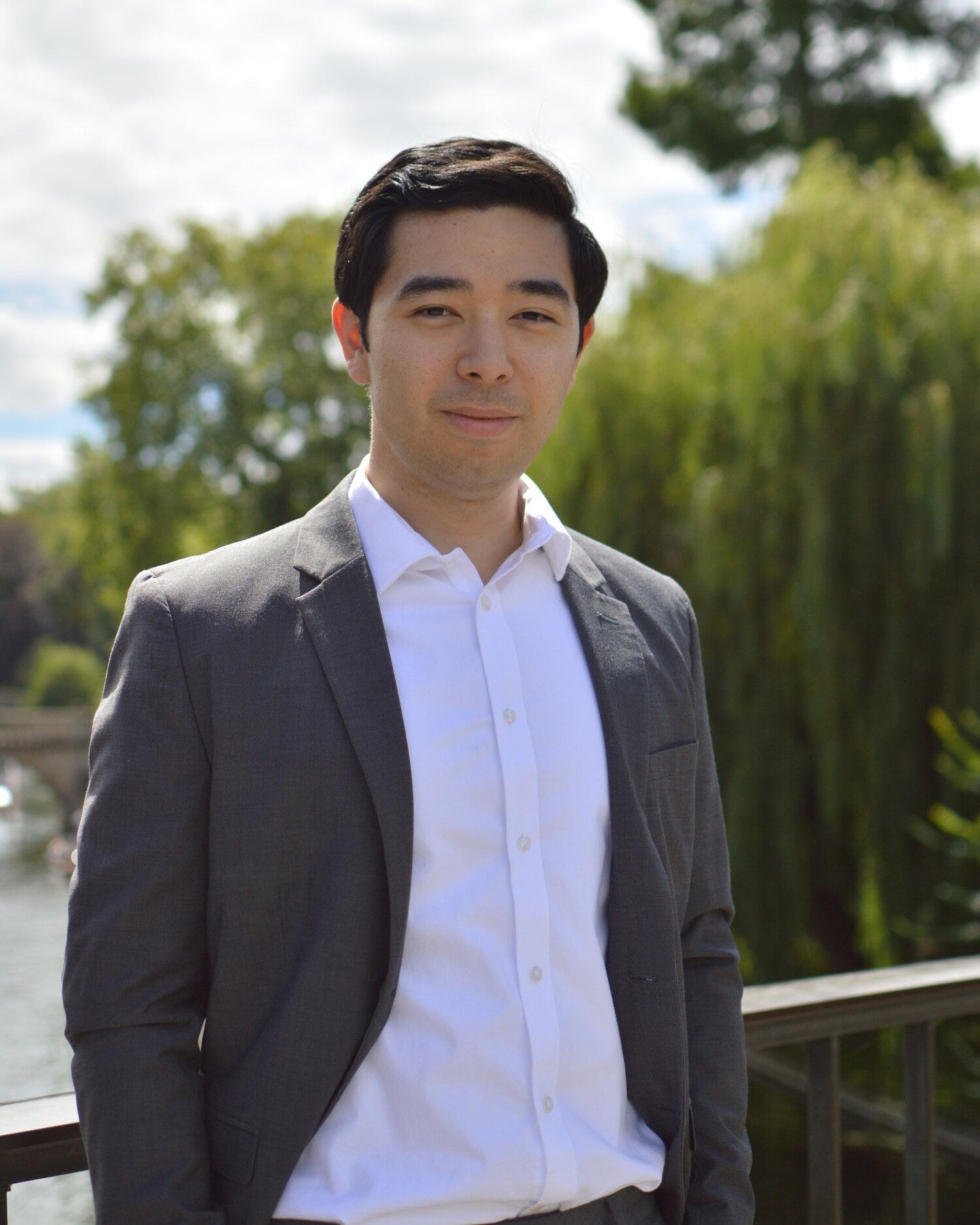
Luxury beliefs with Rob Henderson
Feb 23, 202200:42:09Tap to summarizeI’m really excited to release my first podcast! Occasionally, I will do podcasts with special guests, exploring themes which have featured on my Substack.This week, I had the pleasure of speaking with Rob Henderson, an academic and essayist who is well-known for his theory of luxury beliefs. Rob is doing a PhD in psychology at the University of Cambridge and writes essays for a range of online outlets. In a series of essays which have gone viral, Rob has introduced the concept of luxury beliefs. Luxury beliefs are ideas that confer status on the rich at very little cost, while taking a toll on the lower class.One example of luxury belief is that all family structures are equal. This is not true. Evidence is clear that families with two married parents are the most beneficial for young children. And yet, affluent, educated people raised by two married parents are more likely than others to believe monogamy is outdated or that all families are the same. Defunding the police is another example of a luxury belief.You can listen to the podcast on the player above, or there’s a transcript below.Tom: So Rob, thank you so much for joining us. If we could start with a general introduction to the concept of luxury beliefs, and perhaps you can also talk about your own background, because you’ve had an extremely interesting life.Rob: Sure. Thanks again, Thomas, for welcoming me here today. Well, my idea of luxury beliefs I define as ideas and opinions that confer status on the upper class while often inflicting costs on the lower class. I can give a few examples of this as we move along here. But the way that I arrived at this idea was through my unique life experiences and my interactions with students and graduate at elite universities. Right now I’m a fourth year PhD student about to finish my program here at Cambridge. Before this, I studied psychology at Yale as an undergrad, and I worked as a research assistant at Yale. Before my entrance into these posh universities, my life was a lot different.I was born into poverty in Los Angeles. My mother was an immigrant from South Korea, and she became addicted to drugs, she didn’t know who my father was, I never met him, and when I was three she was no longer able to care for me, so I was placed into foster care in LA and spent my early childhood living in just a bunch of different foster homes all around the city. Some of these homes had 8-10 kids living in them, a lot of foster siblings, a lot of kids coming and going, it was really tough for me as a kid.I was adopted by a working-class family when I was almost 8, and we settled in this rural town in northern California called Red Bluff. It’s consistently ranked as one of the most dangerous cities in California. My adoptive parents, we sort of had this nice little family together, but then they got divorced a couple of years, about a year and a half later, and my adoptive father subsequently severed ties with me. He was angry at my adoptive mother for leaving him. So that was hard on me, after not knowing my birth father, and then the foster homes, and then losing my adoptive father. It was just a really tough life. My adoptive mother, we subsequently moved into a duplex, and I was raised by a single mom for a while, and there was just a lot of drama and disorder all throughout my youth.So, when I was 17 right after I graduated high school, I joined the military out of desperation, just to get out of all of this stuff I’d been mired in. All of my high school friends were in similar situations, in families and home life, just completely falling apart. All of us were doing very badly in school. So I left, enlisted, and then long story short, that process of military helped me get my life together and get on a better track. And that was how I ended up attending Yale and Cambridge.So those experiences have shaped the way that I view the system, my interactions with these students. And, as well, my readings of these classic sociological texts, as well as more modern research from psychology. So, Thorstein Veblen’s Theory of the Leisure Class, Pierre Bourdieu’s Distinction, Paul Fussell’s Class: A Guide to the American Status System. And then you have recent research from psychology indicating that higher status, wealthier individuals tend to be the most preoccupied with status. And so, I became just extremely interested in exploring this idea of why it is that there are these interesting class divisions in political and moral views, and how things should be.And the way that I think about it is, luxury beliefs are the new status symbol. In the past, the upper class displayed their status and their social rank with their material goods, and today they still do so to some extent, but as material goods have become more affordable, it’s a less reliable indicator of class. So now, affluent people, elite students of these top universities and the like, they display their positions now with luxury beliefs, which are these sort of novel and unusual beliefs, but they often have detrimental secondary consequences, these knock-on effects for people who don’t have access to the same kinds of resources.Tom: That’s fascinating. You had an amazing life, and I recommend listening to Rob’s podcast with Bari Weiss for more on his life story. But today we’re really going to dig deep into the ideas. In your writings and podcast appearances, you emphasize economic drivers of luxury beliefs. But you’re a psychologist, of course. You’ve just submitted a psychology PhD at Cambridge. And so, I was wondering, can you tell us a bit more about the psychological drivers of this phenomenon, and also how they articulate with economic drivers? With regard to recent political developments, there’s a lot of talk about economic drivers. But in something like right populism, the academic literature shows that economic factors aren’t actually that great a predictor of right populist views. Unfortunately, there’s not much research at all on liberal or left-liberal views, but it’s a fascinating question, so if you can elaborate on that a bit.Rob: It’s an interesting question. I guess there are different ways of thinking about it from a psychological perspective. So, I mentioned some research earlier. There’s this research from Cameron Anderson, I think at Berkeley, who’s basically found – and not just Anderson, but others – that the most highly ranking people in society, the people with the most wealth and the most prestigious occupations and high social standing, if you ask them questions about how interested they are in having influential positions, or power over others, or control over resources or all those other things, they’re the most interested in those things, which is perhaps a little counterintuitive. I think I would have predicted in advance that the people of the lowest end, the lowest rung of society would be the most interested in obtaining influence, resources and power and so on, but it’s not. It’s the people at the top who want more. So that’s one perspective here. It’s really something about wanting to gain more influence when you’re already in that position. And there’s also an evolutionary psychology perspective here about people who- naturally, humans favor having the respect and admiration of their peers, and they want to be well-liked and well-regarded because – very simplified – but in the ancestral environment, you needed the validation and acceptance of your peers in order to survive in those small-scale communities.So, the psychology that arose in that environment remains with us today. So, when you’re around people who hold a certain worldview and certain socio-political beliefs, it’s very uncomfortable to challenge that. I can even feel that myself. I’ve ridiculed and challenged a lot of the luxury beliefs, but even I can feel myself… and I don’t know how much of it is conscious versus implicit or unconscious, but I can feel myself speaking in ways that I have never spoken in before, entertaining ideas that I would have never entertained 7-8 years ago when I was still a lowly enlisted service member. So, a lot of this is going on under the hood in our psychology. And this is because we want to get along. Now I’m in academia, I want to get along with my peers, I have to behave and speak in a certain way and so on. And even if I disagree, I have to couch it in a certain way, so that I’m not despised. So, all of these things are, I think, psychological drivers here. But there’s also the desire for - Pierre Bourdieu, he was a sociologist, but he called it ‘distinction’, which is this desire to signal against the group that you don’t want to be associated with. And so, if a belief is conventionally held by working class or lower middle class people, a very simple way for you to distinguish yourself is to question that belief or say you believe the opposite of that. And I think that’s what we’re seeing with upper middle class and upper-class people. What’s the prevailing view of the conventional, ordinary person in society? I’ll turn that on its head, challenge it or question it, or say something different just so that I can stand out from those people. So, those two things in common - wanting to distinguish yourself from the masses, but then also wanting to fit in with your social group, with your social circle – have cultivated what I call luxury beliefs.Tom: Fascinating. It’s really notable that there’s so little recent research on the economic foundation of left-wing/liberal ideologies. There have been multiple studies of right populism. And I think that there’s little recent research on the economic foundation of left-wing/liberal ideologies because it goes a little too close to home for academic researchers.Rob: Well, have yo...
Transcribe →