
Podcast
Tools and Weapons with Brad Smith
Hosted by Microsoft, Brad Smith · EN
Microsoft Vice Chair and President Brad Smith speaks with leaders in government, business, and culture to explore the world’s most critical challenges at the intersection of technology and society.
As a 30-year veteran of an industry driven by disruption, Brad Smith hosts candid conversations with his guests that examine, reframe, and explore potential solutions to the digital issues shaping our world today, including cybersecurity, privacy, digital inclusion, environmental sustainability, artificial intelligence, and human rights.
13episodes
Episodes
Newest firstAll episodes
Connecting the Unconnected: Doreen Bogdan-Martin
Jun 2900:34:47Tap to summarizeFor nearly 160 years, the International Telecommunication Union has helped the world communicate across borders, from the telegraph to the telephone, television, satellite, the internet, and now AI. In this episode of Tools and Weapons, Brad Smith sits down with Doreen Bogdan, Secretary-General of the ITU, to discuss why connectivity remains one of the world’s most important foundations for opportunity. The conversation explores the 2.2 billion people who are still unconnected, the estimated $2.8 trillion needed to connect the world by 2030, and the partnerships required to reach the hardest-to-connect communities. Doreen shares stories from the field, including a refugee camp in Chad where a small computer center gives people access to learning, health care, financial tools, and family connections. Brad and Doreen also discuss the rise of AI for Good, the challenge of scaling solutions that address real-world needs, and the role of global cooperation in shaping responsible AI governance. From early warning systems that can help save lives during natural disasters to digital skilling and infrastructure investment, this episode examines how technology can create opportunity when access, trust, and partnership come together. Listen to the full episode and join the conversation about building a more connected and inclusive digital future.
Transcribe →
AI's Mythos Moment: Rishi Sunak on preparing governments for AI
Jun 100:59:34Tap to summarizeAt a moment some are calling the “Mythos Moment” for artificial intelligence, the conversation around technology is shifting in real time. In this episode of Tools and Weapons, Brad Smith sits down with former UK Prime Minister Rishi Sunak, now working at the center of global AI policy and innovation, to explore what happens when breakthroughs move faster than the systems built to govern them. The discussion looks at the risks that could define this era, the policy choices shaping global AI development, and what leaders must do now to build trust while enabling innovation. From cyber threats to economic disruption, this conversation examines what it will take to navigate one of the most consequential technology moments in decades. Listen to the full episode and join the conversation about how we shape the future of AI responsibly.
Transcribe →
Special Edition: Tracking AI diffusion in Q1 2026
May 2800:32:14Tap to summarizeJuan Lavista Ferres, Microsoft Chief Data Scientist and Director of the AI for Good Lab, joins Brad Smith to unpack the latest AI diffusion report and what it reveals about how artificial intelligence is spreading around the world. In this quarterly update, Juan shares new data on where adoption is accelerating, how AI is reshaping software development, and why emerging divides between regions and communities could shape what comes next. From rising productivity to widening gaps between urban and rural communities in the United States, the conversation explores both the promise and the challenges of AI at scale and what it will take to ensure the benefits are broadly shared. In this episode, you’ll learn: Where AI adoption is growing fastest around the world Why the U.S. is seeing an urban-rural AI divide How AI is changing software development and knowledge work What diffusion trends could mean for jobs, productivity, and growth Links aka.ms/AIDiffusionReport2025 https://www.linkedin.com/in/jlavista/ aka.ms/toolsandweapons https://www.linkedin.com/in/bradsmi/
Transcribe →
Ryan Roslansky: Turning AI Anxiety into Skills for the Future of Work
Mar 3100:41:48Tap to summarizeA lot of people are asking the same question right now: Will I be left behind? In this episode, Brad Smith sits down with Ryan Roslansky, CEO of LinkedIn and Executive Vice President at Microsoft, for a practical conversation about AI, the future of work, and what people can do now to stay ahead. Drawing on ideas from his new book, "Open to Work: How to Get Ahead in the Age of AI," Ryan shares a framework for thinking about careers in the era of AI that starts not with job titles, but with tasks. Together, Brad and Ryan explore how work can be divided into three categories: tasks AI will automate, tasks AI can augment, and tasks that remain deeply human. They discuss why the most valuable skills may be the ones hardest to automate, including curiosity, courage, communication, and compassion. They also talk about how AI can become a genuine thought partner at work, helping people save time, sharpen ideas, and focus more energy on judgment, relationships, and creativity. Ryan explains why careers are no longer ladders but climbing walls, why cross-disciplinary roles are emerging, and why adapting to AI is as much a mindset shift as a technical one. This is a conversation for anyone early in their career, mid-career, or helping the next generation navigate a changing workplace. It’s about turning anxiety into action and using AI to build a more meaningful future of work.
Transcribe →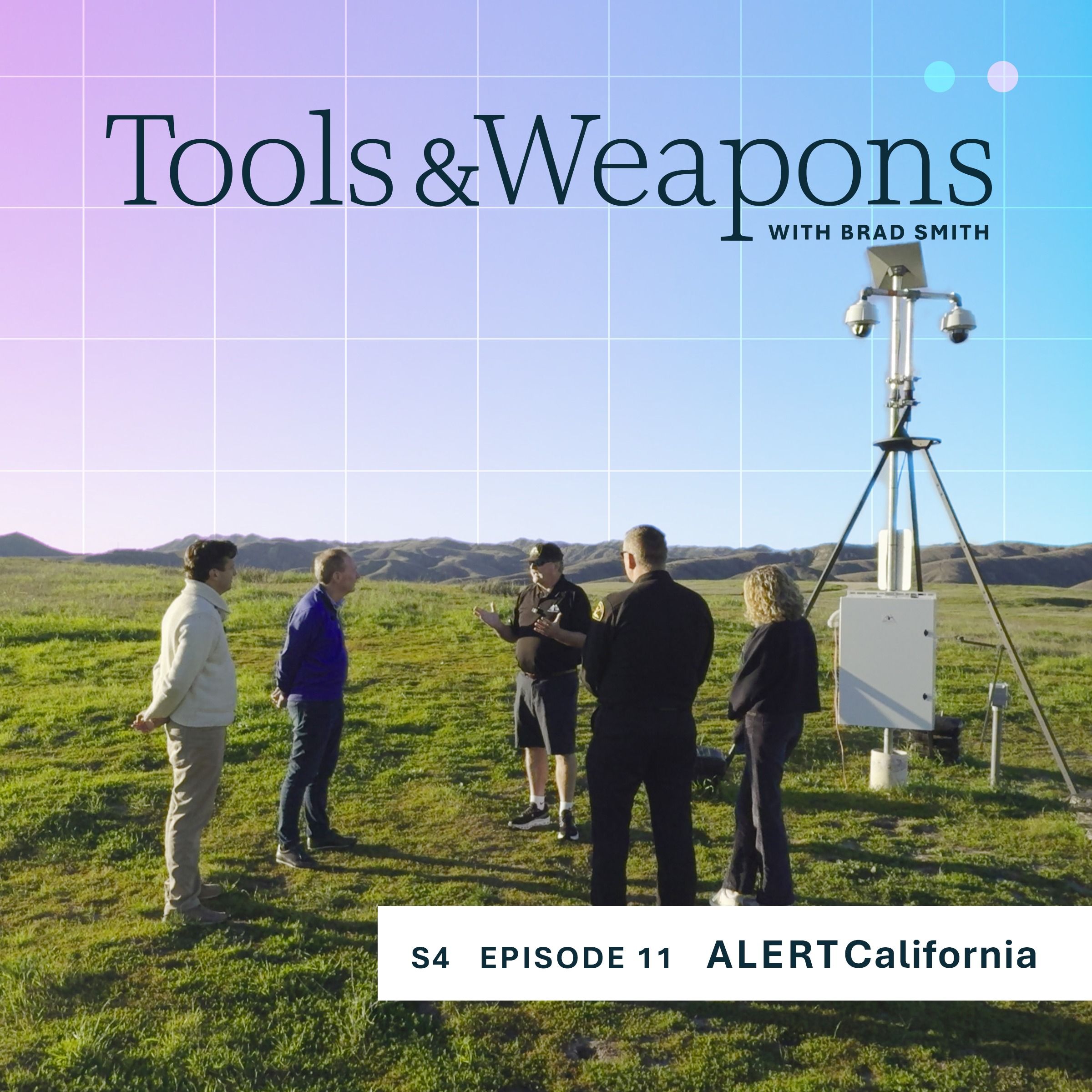
Everybody Goes Home: How technology is helping prevent wildfires from spreading
Mar 1200:18:45Tap to summarizeWildfires devastate communities, ecosystems, and lives, and they are becoming harder to stop. But what if firefighters could spot a blaze in its earliest moments, before anyone even calls 911? In this episode of Tools and Weapons, Brad Smith travels to California to meet Deputy Fire Chief Zachary Wells and Dr. Neal Driscoll, a professor at the University of California, San Diego and one of the leaders behind ALERTCalifornia, an ambitious early warning and situational awareness system designed to detect wildfires as quickly as possible. Brad speaks with Wells and Driscoll about how their partnership, along with contributions from Microsoft’s AI for Good Lab and other collaborators, has helped build a system that improves situational awareness for emergency responders and expands access to life saving information for the public. They also discuss the future of wildfire technology, from predicting how fires might spread to making advanced tools more affordable and accessible to communities around the world.
Transcribe →
His Excellency Khaldoon Al Mubarak: Investing in an AI-Driven World
Feb 1200:27:33Tap to summarizeFrom the collapse of the pearl trade to becoming a global powerhouse in oil and gas, the UAE has repeatedly reinvented itself through resilience and long-term thinking. In this episode, His Excellency Khaldoon Al Mubarak, CEO of sovereign wealth fund Mubadala, joins Brad to explore how Mubadala thinks about long-term capital investment, why the UAE is positioned as an early leader in AI adoption, and what history can teach us about preparing for the world’s next major technological shift. Khaldoon breaks down the role of sovereign capital in shaping emerging technologies, and why patience may be the most powerful competitive advantage in an era defined by rapid change.
Transcribe →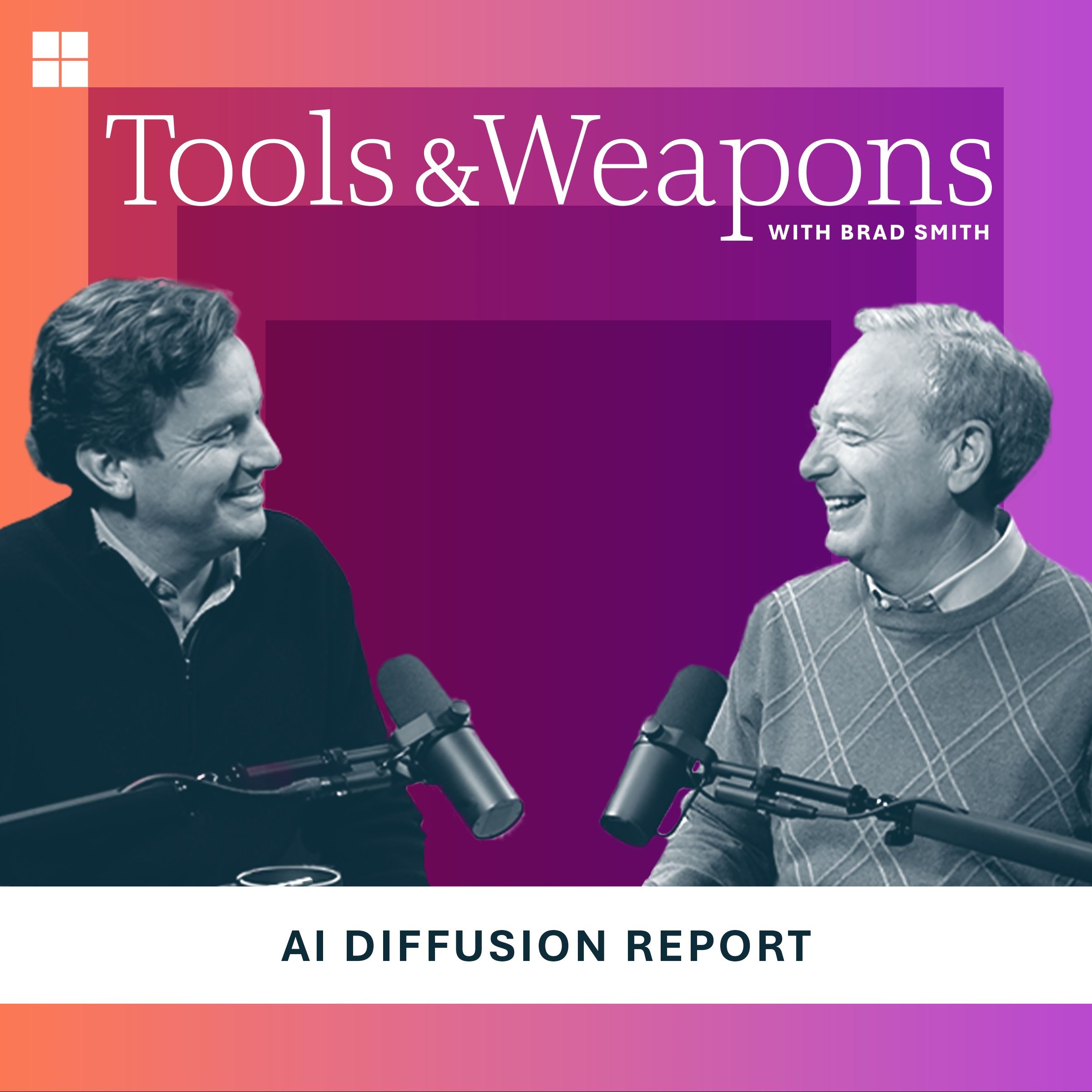
Special Edition: Key findings from the Microsoft AI Diffusion Report
Jan 800:19:28Tap to summarizeGenerative AI is spreading fast, but not evenly. In this special edition of Tools and Weapons, I sit down with Juan Lavista Ferres, Director of Microsoft’s AI for Good Lab, to unpack the latest AI Diffusion Report and what it reveals about who benefits most from this new technology.We explore why diffusion, not just invention, determines long-term impact, examine the widening gap between the Global North and Global South, and spotlight the countries setting the pace, including the United Arab Emirates, Singapore, and South Korea. We also discuss the rise of models like China’s DeepSeek and what shifting adoption patterns mean for the future of AI worldwide.
Transcribe →
Ed Policy: How tech is changing the game in Green Bay
Nov 2000:20:46Tap to summarizeFrom chalkboards to tablets, technology has transformed the NFL. In this episode, Ed Policy, president and CEO of the Green Bay Packers, joins Brad to explore how digital tools on the sidelines and innovation hubs like TitletownTech are reshaping the game and driving economic growth beyond Lambeau Field. From growing up in an Ohio football family to steering a uniquely community-owned franchise into the future, it's a conversation about leadership, tech, and purpose in a changing world. Ed also shares the three principles guiding every decision: win football games, keep the Packers in Green Bay, and strengthen the community.
Transcribe →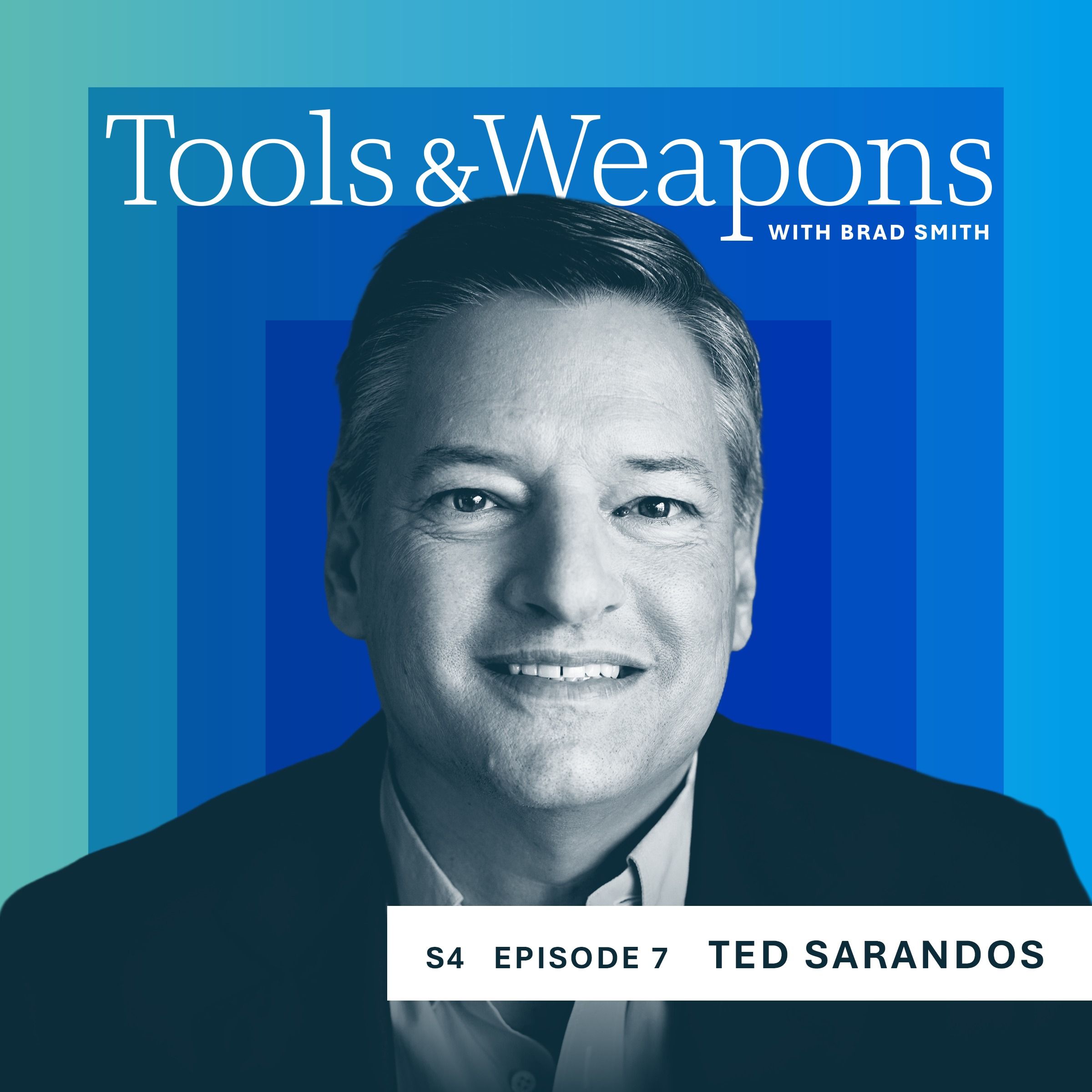
Ted Sarandos: Netflix and how tech changed storytelling
Oct 2300:28:32Tap to summarizeNetflix co-CEO Ted Sarandos joins Brad Smith for a conversation about the constant reinvention behind one of the world’s most influential entertainment platforms. They explore how bold leadership and a culture of innovation keep Netflix ahead—not just as a media company, but as a force shaping industries and audiences alike. Ted shares how intuition and data combine to turn daring ideas into practical solutions—from scaling storytelling across 190 countries to relentlessly creating content that gets under the skin of viewers and makes them feel deeply connected to the stories they watch.
Transcribe →
Satya Nadella: Leading through the AI Revolution
May 16, 202500:23:54Tap to summarizeI often sit down with Satya Nadella, my boss, and Microsoft’s third CEO—but rarely with microphones. In the final segment of our Microsoft CEO trilogy, we talk about his journey from his early days playing cricket to leading Microsoft, the link between poetry and programming, and how the company is leading the next wave of technological transformation—redefining how we build and interact with technology.Click here for the episode transcript
Transcribe →