← Top Traders Unplugged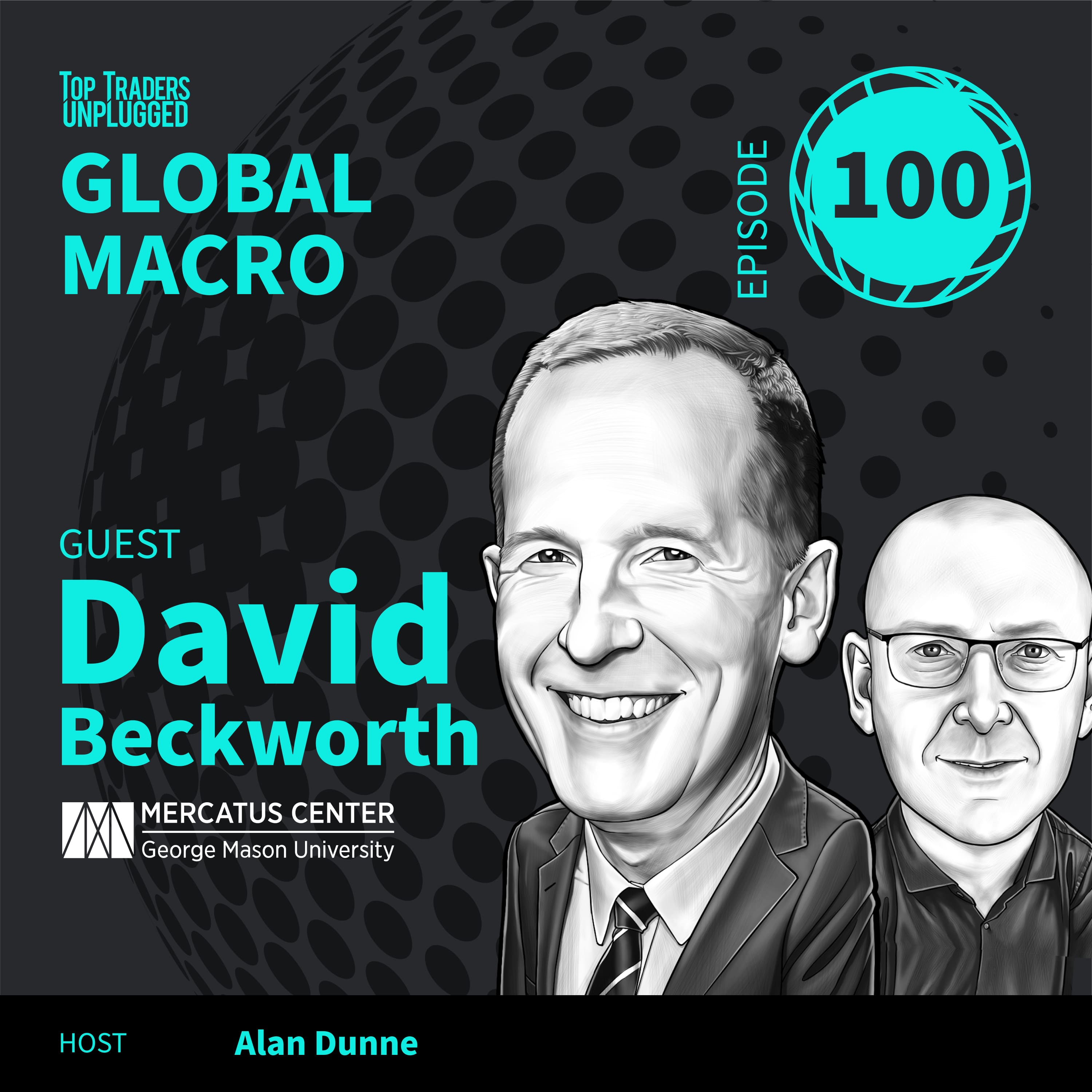
Top Traders Unplugged
GM100: Central Banks in the Dark: Inflation, AI, and the Limits of Control ft. David Beckworth
01:04:28
Loading summary
Transcript56 lines
- [00:02]
A
I do think there'll be some real net gains there because it's easier and some of it will displace currency, some of it will be net new, but I guess I'm hopeful for it. There are real challenges though in this implementation with financial stability concerns, this logistical concerns, but we get past all those hurdles. The question is, it's an empirical one. How much does it really matter? And I'm not sure at this point.
- [00:28]
B
Welcome to top traders Unplugged. In markets, success doesn't come from predicting what happens next. It comes from being prepared for what you can't predict. In each episode, we go deep with some of the world's most thoughtful minds in investing, economics, and beyond to understand how they think, how they prepare and how they decide, and the experiences that shaped how they see the world. No noise, no shortcuts, just real conversations to help you think better and invest with confidence.
- [01:01]
C
Today, I'm delighted to be joined by David Beckwourt. David is Senior Research Fellow at the Mercatus center at George Mason University. He is a researcher focused on the Federal Reserve and its operating policy system. He has previously served as a international economist at the Department of Treasury and also hosts his own weekly podcast, Macro Musings, which I definitely recommend for people who want to delve deep into all things macroeconomics. David, great to have you on. How are you doing?
- [01:31]
A
Great. Thanks for having me on the podcast, Craig.
- [01:34]
C
Not at all. No, I enjoy listening to yours. You get really into the weeds on a lot of really big macroeconomic issues. So anybody who's that way inclined, I definitely recommend listening in. We probably won't go as deep, but we'll probably try and keep it as broad as well as deep today, but more so to get the implications of what all of this might mean for markets and investors. But one thing we do like to start off with is to get a sense on how our guests got interested in their chosen field in the first place. So what got you interested in economics?
- [02:05]
A
I took a class as at an as an undergraduate in college Principles of Macroeconomics. And it was just to fulfill a requirement, but it just lit my fire. I and at the time I didn't think I could do this for a career. It didn't even cross my mind. But I remember studying in macroeconomics, the first class in it, and it's like, wow, this makes so much sense. That helps explain many things in the world. And then later I was working on a master's degree and I took a few more econ courses and finally it just all clicked. Hey, I could do this for a career, for a job, and went back to grad school. And my first job out of grad school was at U. Department of treasury, as you mentioned. And then I went to the academic world. Now I'm at a think tank, but it's all been just a great, fun journey. Feel incredibly blessed to do what I do and to talk to people like you.
- [02:52]
C
And you also have the benefit of talking to lots of interesting guests on your own podcast. And macroeconomics, I mean, do you find that helps your own thinking? I know you write your own substack as well, having that kind of the platform to share ideas and I guess to get the insights of experts.
- [03:11]
A
Absolutely. I call it my continuing education because as you know, as you host your own podcast, it takes preparation to do a show, right. So you got to read what they've done, their works. And like you mentioned, we tend to go in deep. So it's a lot of preparation on my part, but it also keeps me attuned on what they're thinking. And it has, it has influenced my thinking. One concrete example is my thinking on the Fed's balance sheet has evolved and changed over time as I've talked to a number of guests. So that's just one example. But other examples, talking about the role of the dollar in the world, all those things I've been informed by talking to other people, they bring up arguments I haven't considered. I try to be gracious on the podcast, but I get pushed sometimes and it's good. It's good for me. I definitely have learned a lot and it just opens up new conversations. So even when I'm not doing the podcast, I could go somewhere, I go to a conference and people know me because of the podcast, and I want to say something or add a thought, you know, of course, I get lots of email feedbacks as well. So it's a great opportunity for, I think, for networking as well as growing. And I think in this day and age of AI, where some of our work can be replicated by smart machines, I think it's incredibly important that the people connection, the networking is probably of increasing value for folks like us.
- [04:31]
C
Absolutely. Yeah. No, I definitely find it very, very helpful. And as you say, macroeconomics is endlessly interesting and the debates are never solved. And maybe that's a good jumping off point because it's interesting, the transition we've had in markets in the last month or two, in February, AI was all the chat disinflation, positive supply Shock, then obviously we've had the situation in Iran and that's an adverse supply shock. So maybe that's a good starting point. I mean, what's the appropriate policy response to this adverse supply shock that we're seeing now in Iran?
- [05:07]
A
Well, the textbook answer is, and I'll give you my, my version of the textbook answer. I have, I have a specific answers, you know, but I'll give the textbook kind of central banking dogma view on this and that is if you have inflation expectations anchored, if you are a credible central bank and in the past you've proven yourself, you've earned the trust that you do fight inflation, you do stabilize inflation over the medium run, then the goal is to look through a temporary burst of supply side or productivity driven inflation. And the reason being is you, the Fed or a central bank of any kind cannot really solve oil shortages, they can't solve pandemic shutdowns. So anything that affects the productive capacity of supply side of the economy is something that the Fed in the near term really can't deal with, whether it's positive or negative. Now in this case we're talking about negative supply shocks. So the best thing is just to kind of step back, do no harm. It's kind of like a medical doctor, but we're central bankers, do no harm and let that go through. Now that works again only if you've got credible inflation fighting credibility. So you think of like, you know, there's, there's a bank where you've earned up, you've saved up your credit and you can start to spend that down and you know, as you have more and more supply shocks. So this is the challenge is even if you are viewed as credible, if you have enough supply shocks, eventually people begin to question, well, are they really going to get inflation back down? Because the average person on the Street's not going to distinguish between demand driven inflation and supply. But if again it's credible and you think that the Fed or the ECB or the bank of England is going to do their job, then you look through it. So that's the standard story. Look through it as long as you have the ability to keep inflation expectations anchored. So that's kind of the standard story for emerging from, sorry for advanced economy central banks. Emerging central banks don't have that privilege because they don't have that credibility. So what's a practical way to do this? And this is where kind of one of my hobby horses I'm known for, and to me a way to implement this would be through Something called nominal GDP targeting. It's also been called nominal income targeting because every dollar spends a dollar earned. So however you want to think about it. But the idea is this. So if we accept that central bank standard view, look through supply shocks, the challenge is how do we know in real time what is inflation caused by a supply shock or a demand shock? And we don't. We might have a sense, but it's really hard to know. I mean, go back to 21, 22, right? There's the debate, is this supply driven, Is it transitory or is it too much fiscal stimulus? And you're trying to thread that needle. It's difficult, it's impossible. Unless you're a God, you don't know what's driving it. So acknowledge that we don't know much about the economy real time and just aim on stabilizing total spending or aggregate demand. And what that does is aggregate demand or nominal gdp. It's comprised of real GDP and inflation. So if there is a negative supply shock, real GDP would go down, inflation would go up. But long as you keep aggregate demand at the sum of those two on its target, say 4% in the U.S. then that's all you need to worry about. It's a nominal anchor. It keeps the dollar size of the economy on a path. And what it does is it allows supply shocks to kind of fall wherever they may. And so all the central bank has to do is to keep the, the dollar size or the euro size or the pound size of the economy anchored, grow that and allow supply shocks to cause short term price variation. So you get the long term anchor. But you don't have to play God, try to divine is this supplier, is this demand. You kind of step back and let the chips fall where they may.
- [08:57]
C
And why have central banks struggle so much with supply shocks, do you think? I mean, if you look here in Europe, we've got the ECB and obviously the, the instance that is always pointed to is 2008 that tightened with oil prices, had a run up at that point, and then obviously they were easing later in the year with the global financial crisis. And then as you say, 20, 21, 22, they were slower to respond. Is it this issue that it's just hard to disentangle supply and demand dynamics, is that it?
- [09:32]
A
I think that's, that's part of it. It's just in real time, it's hard to know. But the second part is central bankers send their blood to respond to inflation, right? They tend to be conservative. They want to, you know, they want to be aggressive. I mean, I think the typical DNA of a central banker is hawkish even you get some who might be more dovish, but in general they want to be known as central, as the person, the central banker who kept inflation low. They don't want to be known as, you know, the, the person who led to a repeat of the 1970s inflation. So I think it's in their DNA. And, and as a result, because they think in terms of inflation targeting, again, this is where I think nominal, nominal GDP targeting kind of releases this constraint. I think it's in their nature to say, hey, we got to err on the side of being cautious. We don't want inflation expectations to be unmerged. So 2008 is a great example. Both in Europe and in the us, inflation was going up, but it was going up because of commodity prices, which would be a textbook story of a supply shock. And yet we saw in the ECB, they tied in. And in the US from like the summer of 2008 up until the fall, they were actually talking up rate hikes, which is crazy, right? In retrospect, why would you be talking up rate hikes as we're about to go over this cliff of the economy? And I just think it's confusing, it's hard to know in real time, and you want to do it. So here's the thing. A central banker, you ask anyone at the ecb, bank of England or the Fed or any central bank, they'll tell you, oh yeah, we got to look through supply shocks. But in practice, they tend to err on the side of let's just hammer down inflation, no matter what the causes. We don't know. And what I'm suggesting is nominal GDP targeting would allow them to automatically look through supply shocks without having to try to figure it out. But that's a long journey. That's a long story. And no one yet has adopted this vision.
- [11:27]
C
So we've talked about what you think this should do. I mean, what do you think is likely to be the response in this scenario?
- [11:34]
A
Well, I think in the case of the Fed or ecb.
- [11:37]
C
Yes, maybe the Fed.
- [11:39]
A
Yeah, in the case of the Fed, I do think it's probably wise right now just to kind of sit back and see where this is going. The Fed does have some challenges. So let me list the challenges, then I'll tell you why. I still think they should sit through it at this point, try to look through what I think are supply shocks. The challenges are we went through the code inflation as we Just talked about. So if you look at many measures of consumer measures of inflation expectations, they're elevated. If you look at measures of the Gallup poll or other surveys of what's the top problem, inflation is still much higher than unemployment. There are other problems, but inflation is persistently a problem. One of my favorites that I like to look at, those are surveys, right? So you can question surveys, look at revealed preferences. If you go to Google Trends and you put in the term inflation, at least in the US it spiked, it went way up and spiked during 2122. It's come down, but it didn't come down all the way. People are now searching for inflation at a higher structural level, higher than free 2020 and recently it's picked up. And, and so what all that means is I think consumers, households are much more price sensitive. You know the saying one spitting twice shy. I mean they're going to be much more, they're much more price sensitive. So it before, you know, 2020, you could maybe have inflation go up and it wouldn't budge. But I think there's a much quicker reaction now. So the Fed has to be mindful, they have to be weary that you know what, we don't have as much grace as we did before. The inflation credibility. It's there, but not as much so they have that as that's something they got to worry about. But I do think depending on how long this war goes on, they could sit and look through it because there are countervailing forces. So you mentioned the oil shock, the war shock that is pushing prices up. We also have AI which would be a positive supply shock pushing it down. So I do think it's probably wise just to wait and see. However, some of the recent developments, it could get worse. And if you persistently have negative supply shocks, the spate of negative supply shocks that persistently keep inflation elevated, then your inflation credibility gets eaten up, your credibility is shot and then the Fed would have to step in and bite the bullet and tighten because there will be more long term consequences if they don't.
- [14:07]
C
Yeah, I mean the whole area of inflation expectations is interesting. And there was this Fed paper, Fed staffer a few years ago, I think it was Rud, he wrote it kind of, I guess questioning the whole academic interpretation of inflation expectations and how consumers build their expectations. And I guess when you go to university, there's the adaptive expectations hypothesis, various mechanisms for how, I mean do you think are central bankers overly obsessed with inflation expectations or do they have the correct model for how inflation expectations are actually formed or what are your thoughts on that?
- [14:47]
A
I do think it's a bit mysterious what is the right way to do this for sure. So I think it's important to look at a range of measures. So look at household surveys, which again, by themselves aren't going to tell you everything. But also look at the bond. What is the bond market telling you? They got skin in the game. Now those measures are, as you know, they're clouded by term premium risk premiums that come off of treasury securities or government bond securities. But look at all of that. And I would say, I remember that paper. I mean, I think one thing at a minimum you can say is inflation expectations do tend to track actual inflation at some point. So if inflation starts to go up, then inflation expectations will go up as well. So if you prefer adaptive expectations, you can still tell a similar story. It's like you don't want to jump the gun, but you, you know, if it's supply shock, but you, you do want to, you don't want to see a persistent update of, of actual inflation. And again, to me, this is one reason I like going back to that Google Trends because this is, no one's telling people to go look up inflation on Google Trends. If people are thinking about it, they're searching it. And so that, that to me gives a better sense of where people, where their mind is. So I, I think in an ideal world we look at revealed preferences. Some measure revealed preferences. Here's another one that was really fascinating. I have not looked at this in some time, but it shot up during the pandemic inflation. So the U.S. treasury Department offers a saving bond. I believe it's called the savings I bond, but it's basically this, it's a savings bond, but it actually adjusts for inflation every six months. So it's kind of like a tips, but it's a savings bond that adjusts for inflation. And if you look at the time series, there's a very stable low uptick. Man comes late 21, 22, that thing shoots up and it's revealed preferences. People are beginning to really worry about inflation and they start buying these inflation hedge saving securities. So things like that I think would probably be your safest bet. Unfortunately, we don't have a lot of them. So we were, yeah, central bankers rely on imperfect measures. So and again, for me, that's why I fall back on something like nominal GDP now because nominal GDP is, it's the, it's the currency size of the economy. You keep that anchored, you don't have to have the precise measure of inflation expectations. You don't have to have the price precise measure of inflation. The flip side is GDP is not measured precisely. There's data revisions. And so my answer to that would be is it's better to look at forecast to nominal gdp, get consensus forecasts. And should a central bank ever go into a nominal GDP targeting regime, I suspect there would be new data collecting methods. The data would become endogenous to what we were targeting. But that's why I think it's important to look at a broad measure of nominal activity as opposed to a narrow measure. So, yes, all of this is as much an art as it is a science.
- [17:50]
C
You touched on AI a little bit. And as I said, the markets, if you went back to February, were kind of transfixed, I think with AI. This is Citrini report that came out. I think it was the last week in February and at that stage bond yields were falling and people were talking about this parallel with the 1990s and Greenspan and maybe the Fed could cut rates to accommodate a productivity boom. So a few things to get into on this one is obviously we've got this adverse supply shock meeting a positive supply shock. Presumably that makes it, as you've kind of alluded to, extremely tricky for central banks. If the kind of adverse supply shock goes away, if the war in Iran settles down and we're back to the kind of the base scenario. I mean, on the positive supply shock, how deep and meaningful do you think that's going to be over time?
- [18:51]
A
Well, if it lives up to the expectations of some of its biggest fans, it sounds pretty dramatic. I mean, I think the evidence is very weak right now. We don't see really strong, robust productivity numbers, a lot of enthusiasm. I mean, there's a lot of investment spending, sure. But I don't think we've seen evidence that it's truly like profound. And maybe it takes time, like all major technological innovations take time to disseminate widely. But if you're asking what happens if it does really up gdp, if we really see fundamental changes, well, then in that case, I would argue that that's going to push up real interest rates. That's actually going to raise. It's not going to give you room to cut rates. It's going to be, by the way, you can tell simple stories. If this productivity boom from AI really takes off and we're all much more productive and the return to capital is going to go up and that's going to push up, you know, other rates across the economy. Or alternatively, if you tell a more macroeconomic story, people, they have less incentive, you know, to save. You can tell several stories. But if productivity goes up, the bottom line is that we would expect real rates to go up and the Fed have less room to cut. Now that would again, this would probably over the medium run, this wouldn't be immediate. You wouldn't see anything like that in the short term.
- [20:09]
C
Well, that's the standard economic textbook approach, I guess. And I mean people, you know, I did talk about the Greenspan area. I mean other economists point to that era and say, you know, in 96, you know, Greenspan held off on raising rates, but then obviously by 1990, thousand, because of the productivity and an investment boom, he was raising interest rates, which is in line with what you're saying. But I heard you speaking to some other economists before and drawing the parallels back with the 1800s, in the late 1800s and I suppose that was the Gilded Age and it was the Industrial Revolution and it was a productivity boosting era, positive supply shock and prices went down and obviously there was a, I suppose that's what's called a favorable disinflation or a positive deflation, which is not something we've had too much of. Now if we get that kind of. Given that we have inflation targeting, would central banks, whole models have to be reworked, their whole policy frameworks if they weren't going to respond to that?
- [21:20]
A
Great question. And this is definitely an area of interest to me because yes, I do think one way to share the benefits widely of rapid real economic gains like from AI is through a gently, mildly falling price level. So that Centrini paper you mentioned, I made a big splash. I mean, that's amazing. This paper is kind of a thought piece, a white paper and it rattled markets, right? I mean, anybody would love to have that kind of success with their writing, right? But that paper I think missed some important things. And you know, to the extent, again we have such rapid gains, one way that everyone can share in it is to lower prices gently falling. And the problem is most central bankers, most macro economists, dare I say when they think of deflation, they think of the Great Depression, which is, which is fair, it's recent in terms of, it's vivid, but that's a collapse in aggregate demand. But what we're talking about would be an increase in aggregate supply. So if you could, here's the thing, if you could stabilize, like my approach, stabilize total nominal income growth or aggregate demand, you so, so imagine we could stabilize, you know, the, in, in the case of the US the dollar wage growth that is at a right now it's around 4%. We keep that and then you have such rapid gains, prices fall, real wages are effectively going up. And, and so I, I think, I think you could more easily implement something like wage what you've just suggested with a nominal GDP target because you can say, hey, we're keeping the nominal size stable and growing. But with inflation targeting, yeah, I, I do think you could actually have some problems because inflation targeting, it wires our brains to think that 2% inflation is always in every way an optimal inflation rate. There, there's lots of research that shows, you know, in certain environments a mildly negative inflation rate is optimal. Now people, there's reasons people don't like it. They think, you know, wages are sticky on the downward side. Again, I, I think you can have downwardly wage, nominal wage stickiness, but still have real wage growth. There's some evidence from this post Bell, and this, this period of the late 1800s that way nominal wages weren't sticky downward. I mean, downward wage stickiness might be just a phenomenon of the world we're in where we typically have higher rising inflation. Maybe it would change, I don't know. But I want us to be dynamic and open to the possibilities. But, so let me give you a scenario where things could go wrong. And there was actually a great paper and I have to think of the author's name, Larry Christiano from Northwestern and some co authors. And this is at a Jackson Hole conference, I think 2010, somewhere around there. But they did a paper where they took a typical Taylor rule that is inflation targeting. And they show if there is going to be higher productivity, particularly higher expected productivity growth, they make this point that that would imply higher real rates. But the low inflation is Taylor rules with actually lower rates. And what they said is you could actually create some imbalances. You could actually have asset prices go really, really high and you could have some destabilizing asset booms. So it's not just a question of do we prefer 2% inflation versus say 1% mild deflation. It's a question of maintaining stability in the macro economy. So I do think we need a monetary policy framework that's robust to any situation. And again, I hate to sound like I'm on my soapbox here, but nominal GDP targeting does that. Now maybe central bankers could adjust their inflation target, but I do worry if you're doctrinaire, it has to be 2% everywhere and always. You're going to have, you're going to facilitate asset price booms if you have rapid productivity growth.
- [25:19]
C
Yes, I mean, that is the obvious implication and this is obviously very relevant now because we've got a new Fed chair coming in and Kevin Warsh has said lots of different things, but one thing he has very explicitly said is he seems to be a believer in AI. And I saw him on CNBC last summer saying it, AI makes things cheaper and we're on the verge of a big boom and policy has to facilitate it. Or words to that effect, which sounded to me like lower rates and a potential asset boom. What's your take on what Kevin Warsh is likely to bring to the Fed?
- [25:55]
A
Well, I think he probably wouldn't say that now given the, I think since circumstances have changed and that was said, I believe, back when AI was hot and taking off and, and yeah, I would, I would push back on that argument as I did earlier. I think if anything it would be higher rates. I mean, you, you could, to be charitable here, you could say at a minimum, if, if, if we have productivity growth, real rates go up, inflation comes down, maybe you keep nominal rates where they are. You could tell that story. But I, I think where he will make a big difference. So, you know, I, I don't think the rate conversation is as salient as it was, you know, when this came out. But today I think his, his big contribution, and we already seen evidence of it, is in rethinking the Federal Reserve's operating system and its balance sheet. I think that's where he's going to make a big contribution. He already is. There's Fed officials who are changing their tone, speaking a little bit differently about this issue. He still has to come in though, and, and it's a committee and convince members that, hey, we need to do something different. So that is the one thing I think you and your listeners know is the Federal Reserve and the FOMC is a committee. It's not one person. I think the President of the United States has this impression. You pick a chair and boom, he does your bidding. And I suspect Kevin Warsh would not do the bidding as much as President Trump would like. But moreover, it's a committee. He can't just get everyone to vote the way he wants to. There's going to be conversations. So I do think there's some built in protection against some of the political pressures.
- [27:31]
C
Yeah, I mean, the way he described it in that interview last summer as well, I don't know if he's thinking this moved on, but it was in broad sense it Was the balance sheet is too big, it's influencing financial markets. We should reduce the balance sheet, which is a form of tightening and that would facilitate lower rates. And it has a nice story because that's going to help Main street and not Wall Street. It's kind of how it's couched. But I mean, is that, I mean, a lot of economists say it sounds great, but that's not how it works in reality. What would you say to that?
- [28:08]
A
Yeah, I don't think it would have much of an effect on interest rates. It might have effect on financial conditions during the transition period. But I think what it would do is it would definitely reduce the Fed's footprint and financial system. I mean, right now the Fed is probably the biggest, you know, counterparty in repo transactions, treasury markets. The Fed is the largest single holder of fed U.S. treasuries. It would also, I mean, I've made this point repeatedly, if you could shrink the Fed's balance sheet sufficiently. Now I'm not saying you go back to the size it was in 2008, but if you reduce it sufficiently, you could also bring back interbank overnight lending in the US Which I think is an important missing market right now. There's price discovery, there's, you want banks to go to each other before they go to the central bank. You want the central bank to be available, but you want banks to actually discipline each other and such. And so I do think he, he had some of that flavor. Now you're right, he was talking more about rates. But I, I do think he would say more generally that the, the Fed's presence in financial markets is too large. And those are just three examples, Repo Treasuries. And then also if you shrink the Fed's balance sheet, you pull out reserves. Banks aren't just sitting a bunch of liquidity, they have to go find it or go to the Fed itself.
- [29:34]
C
Maybe taking a step back. I mean, as you say, it wasn't always like this. So maybe before the financial crisis the Fed's balance sheet was much lower. So just curious to get your thoughts on kind of QE in general. I mean, QE came in as a policy response to the financial crisis and then became kind of a normal part of the Fed's operating policy tools. Then obviously they rolled it out again heavily in Covid. And I mean, I'm sure I've read some of the Fed people, I think it might have been Waller kind of suggesting that when they do QE that has a positive impact. It's stimulatory but when you do, QT doesn't really have an impact. It kind of goes along in the background. You can kind of take it back. It's kind of like in some analogy, it's like the fire brigade come to the house or something like that. But anyway, it seemed a bit best of both worlds kind of thing. And I mean the other thing is QE is still a bit of an experiment. We're still not sure of the long term implications. Obviously, you know, they're still struggling to unwind it in terms of the size of the balance sheet. I mean of all the people you speak to, your own thoughts. I mean, what's the verdict on QE now? Is it so questionable or is it here as a core policy tool now?
- [30:57]
A
I think it's definitely a part of the regular toolkit now and I would personally want to use it should the occasion arise, should there be a necessity in the future. I think it's an important toolkit when you hit the zero lower bound. Yeah. So I think you want to keep it, but what you want to have is an operating system that's robust to it, one that can completely unwind it and that's what we don't have right now. So yeah, let's keep QE as a tool. Let's use it only when necessary. When we do use it, we reverse it. Does QE matter? I think it does. I think it definitely has an effect on long term yields. It has some ability to lower things. It's not huge, but it's something. I mean I had a recent guest on who and I think this is pretty consensus view like the QE1 through QE3 lowered 10 year treasury yield by about 1 percentage point, 100 basis points or right around, maybe a little bit more, but somewhere around there. And part of it is just the immediate kind of you step into the market, you buy things up. Kind of a mechanical story that. And that would also be tied to the portfolio balance channel, but in general just stepping in. But part of this one recent guest mentioned that it's the expectations it creates. Financial markets come to expect this. And so he estimated about 2/3 of that 1 percentage decline was due to kind of this expectation, this kind of insurance, this built in insurance. And he argued if you do qt, you are actually, it's not just a benign pretty experience, you are actually reversing that, that built in insurance. So but I do think it is important to completely undo it because there are effects that build up and we can talk about those if you Want I do think there is a ratcheting effect because that's balance sheet and it has long term effects that aren't optimal for the U.S. economy.
- [32:48]
C
Yeah, I mean this ratchet effect is something you've written about. I know you've spoken to Rajul and Rajan about it as well. I mean it's slightly technical. I mean, how would you describe the ratchet effect and should investors be worried about it?
- [33:05]
A
Well, the ratchet effect and it's a bit tricky because if you look at the total asset size of the Fed or even this liability side, it was close to 9 trillion. Came down about 6 1/2 or 6.7. It did shrink. Right. So hey David, give the Fed some credit. But the issue is look at reserves. All right, so look at bank reserves or settlement balances as they're called in other places. It did come down some, but the key thing to note is bank reserves or settlement balances are now higher than they were before the pandemic. COVID pandemic started and we did QE4 and after every QE it's got higher. So as much as we try, we are not able to reverse the Fed's footprint in the banking system, therefore the financial system. So if you can't undo reserves, you're not going to be able to completely undo your, your assets side. This treasury is holding as well. So why does this happen and why does it matter, Dave, what's the big deal? So what? Well, the big deal is this. The reason that this ratchet effect occurs is because when banks are flooded with all this liquidity from the Fed, and to be clear, it's a two, it's a two way transaction. They're not forced, but you know, banks will eventually their balance sheets will hold a lot more reserves. And from a bank's perspective, that's a deposit at the Fed. It's highly liquid, it's overnight, it pays now, it pays decently, but it's a highly liquid asset that affects them behaviorally on their funding side, on their liability side. When banks think about how are they going to fund their operations, they can do a longer term funding term deposits, CDs or they can do short term runnable deposits. And those of course are the riskiest. Right? If you, if you fund with short term runnable deposits, there's a chance that the depositors will quickly get up and leave. And what QE does is think of as the banks, they get flooded with all these assets that are highly liquid, they're very safe, it makes them complacent or comfortable. Well, we can just fund with more runnable, you know, sources of liquidity ourselves. And so it actually changes the funding structure of banks in the US and then they become, because they change their funding structure, they become dependent upon those reserves the Fed injected. So if the Fed tries to reduce those reserves, it causes problems for banks. We get short term rates shooting up. And that's why QT can never undo itself, is because it affects banks. So if you look at reserves, you might think, man, all this liquidity in the financial system must be, it must be great. Well, a lot of that liquidity is think of it as re lent out through the banking system or tapped. And so net aggregate liquidity might actually be less than what appears on the surface. And this creates fragility. So the Fed can't shrink its balance sheet. It has to get bigger and then it grows bigger. Now of course, this is not just QE. It interacts with regulations that were introduced after 2008, particularly the liquidity coverage ratio which says you have to hold 30 days of liquid assets if you had to run. And so between the two of those, banks are just, they're sitting on their hoarding, lots of liquidity. And this affects everything from again we mentioned earlier, banks don't lend to each other as much. They also don't do as much lending to the real economy. They're sitting on reserves versus investing in the real economy. So there are real costs to this. Liquidity is less than meets the eye. There's less real lending through banking. Now there's lending through other channels in the aggregate. I'm not saying credit has gone down. In fact, maybe we'll talk about it later. But there's private credit has stepped in and filled some of this gap. But through the banking system there's a real cost and I think it would be better to try to move away from that.
- [36:52]
C
Okay, so I mean there's a lot of, I mean, I guess for lay people or even market participants who are not experts in the plumbing of the banking system, there's a lot to digest there. But I think as you said, a point is interesting because QE has had this effect that banks now have a lot of reserves on their balance sheet and they're safe assets and that encourages them to be a bit riskier with their funding structure, which is kind of ironic because it was kind of a bank run or the global financial crisis in the first place was a bank run. The interbanking lending dried up. But now we've created that risk again. It Sounds like, I mean a few things there. But one thing I'm kind of curious about, people will often talk about liquidity and saying, oh, markets are still awash with liquidity. Obviously terms like money, liquidity, financial conditions, they are often sound similar. Would you say liquidity conditions are still ample in global markets now, or is there too much liquidity in the system or how do you think about that?
- [38:01]
A
I would say it's probably close to neutral. I mean again, it looks like there's, on the surface, it looks like there's plenty of liquidity, lots of reserves, lots of liquid assets out there. But those liquid assets are effectively like accounted for, tapped into. So banks are sitting on them. They aren't really functional. Maybe that's the way they're sitting on bank balance sheets. And I don't think it's as much liquidity as one would think. And in fact, this is why the Federal Reserve itself is now doing what they call temporary management purchases. The Fed is now actually adding more. It's buying more Treasuries. Injecting more reserves or T bills. Yeah, buy more T bills and it's injecting more reserves because they are worried that liquidity isn't as ample or flush as otherwise would be. And so we saw this, I think late last year overnight, overnight market rates, they went above the Fed's range. So one way, so there's different ways to ask that question or to answer that question. One way is to say our interest rates, overnight interest rates within the, the corridor the Fed has set, you know, has, has an upper bound or lower bound. And what we saw late last year as we're doing QT is short term rates begin to go above that. So repo rates and for the, from the Fed's perspective, this is probably a fair one. That means liquidity conditions are tightening. And so it had to stop qt. And even this year it did some in, you know, it added a little bit more liquidity into the system to offset that. So I would say maybe we're a little bit on, on the positive side, but we're not that far from neutral. And even though there's lots of safe assets, lots of liquid, like apparently it looks like things are flush, but it's all a counterpoints all being used up. Governor Michelle Bowman, the vice chair of the Federal Reserve for supervision, she talks about how the liquidity coverage ratio we talked, I mentioned earlier, it's supposed to be something that gives banks like a chest of treasure they can use should there be a panic or a run. But what effectively it does is it tells banks, you gotta hold this much, whether good times or bad times, and it ends up being a minimum buffer. They don't even want to tap into it. And then having all that cash on their balance sheet, it's assigned to supervisors, to other people, and they don't want to shrink it. So it's supposed to be something you tap into, but they won't even tap into it. And so there's talks of reforms we can talk about, but it's this kind of perverse outcome where as we add more liquidity, it gets bigger, baked into the system. So I, again, this is maybe from the US Perspective, I'm not as informed about maybe in Europe. And from the Fed's perspective, I think they're probably right that we're just a little bit past what would be neutral.
- [40:57]
C
Yeah, I mean, the question is this all technical detail or does it matter? It's the kind of thing that you will hear people in the market saying, oh, you know, the markets have got addicted to Fed liquidity, that the Fed's footprint has got too big, they can't get out. Every time they try and come back from asset purchases, they have to unwind it. And that basically, that we've moved into this system, this ample reserve system where the markets are addicted to the Fed's liquidity, hasn't caused a problem yet, but potentially could do. Is that overly dramatic or is there any substance to that kind of argument?
- [41:40]
A
I mean, there's an element of truth to it. I don't want to overstate it. Again, the element of truth is after the Fed injects liquidity during crisis times, and I would argue even in the most recent period, QE4, they continued to inject reserves, probably well past what I think any reasonable outside observer would say. So I think it's, again, QE is an important tool when you need it, but they could have stopped much sooner than they did. That liquidity, it goes into the system. And again, banks begin to fund with riskier assets. So now they need the reserves themselves to be, you know, to hedge themselves, to protect themselves. Then we have the liquidity coverage ratio, which they interpret as a minimum buffer, not something you tap into. And those things again, they, they compound into. The third thing would be supervisors. Supervisors say, oh, you have this much reserves, you need to keep that much. And so then if they want to grow, like, if they want to get more runnable deposits, they need to get more reserves, otherwise interest rates go up. So it does create this ratchet effect, which Again, if the Fed wants to control rates and this supply driven, ample reserve system, it is, it's the Fed didn't mean this to happen. And it's not as if there's some nefarious motive here. It's just the way this is set up. It tends to grow on itself. And that's why we need some serious reform on the Fed's operating system and its balance sheet. So your question, is it a big deal from the Fed's perspective? If they want interest rate control, it is a big deal. Is it a big deal overall? I mean, my own philosophy, I think it is because it means a bigger footprint. Footprint for the Fed. You don't have to agree with that. You know, people might say that's fine, you know what, what's the big deal? Maybe more intervention is optimal. But I philosophically, I think it's a big deal and I think practically it's a big deal for the Fed in its operations.
- [43:37]
C
Okay, want to just talk about bonds in the bond market and debt sustainability and you know, there's been a lot of concern about this for a while, but you know, by and large bond markets are still stable. Obviously yields have risen with inflation expectations in the most recent period. But notwithstanding the fact that the fiscal deficits are at extremely high levels, which would typically be associated with a recession and that they've become the norm, bond markets have been stable to date. But there is a lot of talk about that. We will ultimately get to the point of fiscal dominance and that will eventually impact the conduct of monetary policy. What's your thoughts on that?
- [44:23]
A
Yeah, I think fiscal dominance or fiscal unsustainability is probably the biggest challenge over the medium to long run for central banks. I do think it's something that we don't take seriously enough. I also understand that the incentives aren't there to be addressed in a meaningful way. At least in the US Congress has no incentive to touch the biggest, most important part of that is entitlement. So no one wants to do entitlement reform reform. There's only so much you can do. If you, you could tax, you could increase taxes, but that's only going to get you so far. There's only so much you can do. Cutting discretionary spending like defense. At the end of the day, the biggest part of this unsustainable path the CBO is projecting is entitlement. So there, there needs to be some kind of entitlement reform, but no one wants to touch that. So what that means is we're going to continue to see Fiscal, large fiscal primary deficits for a long time. And I do think that's going to at some point force the Fed's hand. And by that I mean the Fed's going to have to, you know, step in to keep treasury markets stable. It's going to have to buy more debt. It's going to have to maybe at some point do yield, yield curve control. We're not there yet. Now, some would argue we are there. I mean, some would say we, we are there. I, I was a little more worked up earlier this year about this. If you go back to my substack. I was, I was concerned because of some of the rhetoric coming from the President. You know, the President was saying, hey, you need to cut rates. And his initial reason was not to stimulate the economy, but to keep the price of our financing costs down, you know, which is pretty stark. Example. So I think there are symptoms of this problem. I mean, I love stablecoins and I think they're great innovation. They have some challenges, but one of the motivations was it'd be a way to buy up extra debt.
- [46:07]
C
Right?
- [46:08]
A
The President's rhetoric about cutting interest rates, the. These to me are signs that there's problems. Also, there was talk about ending the Fed's ability to pay interest on reserves to banks that also, oh, it'll add a trillion dollars over 10 years. I think that's wrong. It wouldn't. But all of this rhetoric is, to me, echoes that. People are getting concerned about the looming fiscal challenge we had.
- [46:35]
C
Now, skeptics will say people have been worried about this for a long time, but actually the problem is much bigger. People remember James Carville's comment about the bond market. And I think the debt to GDP ratio was about 40% back then. So you'd wonder what were they worried about now? It's over 100. I suppose what we've heard now is maybe we'll have some kind of greater coordination between the Fed and the treasury and war obviously knows. Scott Besant via the Hedge fund World Is that a concern? If we had some kind of Fed treasury accord, or would that be sensible or what might it look like?
- [47:19]
A
I'm not positive what it would look like, but I think one thing a Fed treasury accord could look like would be better coordination on who manages the debt. So because the Fed is the largest single holder of debt, it has an influence on what happens to the maturity structure that the rest of the world holds. So you can think of the Fed as effectively putting its thumb on the scale of what the maturity and the cost structure of the US Debt is inadvertently. It's not trying to do that, but because it holds so much debt and it's, you know, again, we mentioned it shrank from about 9 trillion, down about 6.7, and now it's going to continue to grow. That means the Fed's going to be holding a large share of Treasuries. As those things roll over, they have to buy new ones. As a result, the Fed's going to be having effectively a say in the structure of our debt. I think that's not ideal. I think that's the Fed's job. So one way this accord could work, and this is something I've recommended, others have recommended as well, is to do some kind of Treasury Fed asset swap. So have the. Here's one example. The treasury could issue a bunch of new treasury bills, swap them for the Fed's treasury bonds. So now the Fed has only treasury bills on its balance sheet, and the bonds go to the Treasury. You do this asset swap, there's no net effect on aggregate debt, so there's no debt ceiling issues, but it puts the Fed back where it should be. It just holds treasury bills. Those things can run off faster, they're more liquid, and you allow the term structure to be completely determined by the Treasury. That, to me, is one concrete way I think things could go, and I think there'd probably be a constructive way and it might be something he's imagining. But are you suggesting maybe a more worrisome where.
- [49:14]
C
Yeah, I mean, obviously more worrisome, obviously direct financing, et cetera, which is kind of ironic because war should also been critical, obviously, of the expansion of the balance sheet. And he's kind of said they've been complicit in the deficit expansions. But, yeah, I don't know what it would mean. But I'm just curious, with the asset swap that you're talking about, would that have a market impact in terms of treasury markets?
- [49:39]
A
It would have some, but I think it would be a much milder effect than if we tried to just roll off treasury bonds from the Fed's balance sheet. So let me step back. Part of my proposal is Warshaw wants to shrink the Fed's balance sheet dramatically. One way to do that would be to sell off treasury bonds. That would be hugely trouble. It would shake markets up. It would bring back to mind the event in 2013 when we had similar conversations. So what I'm suggesting, and this is something that's actually been done in an emerging market. So I got this idea from A guy named Peter Stella, he used to work at the IMF and he traveled to emerging markets and this is what they did in order to deal with the situation. If you can get the treasury bonds off the Fed's balance sheet and back to the treasury, these aren't treasury bonds that are in the market, they're on the Fed's balance. So you're not changing the supply that the rest of the world has, you're just changing the structure that the Fed has and the treasury has. And now you are injecting treasury bills to the Fed. The Fed could roll those off, they could sell those. So you could affect the short term rates, could be affected by that. But treasury bills are much more liquid. It could handle that shock more than if you rolled off the bond. So it's a way to minimize disruption.
- [50:58]
C
It just smells a bit suspicious in that the Fed has bought these long term bonds to kind of keep interest rates down and now it's going to give them back to the very people who issued the bonds in the first place. You know, it feels like somebody's benefited there a little bit. Has somebody lost out?
- [51:14]
A
Well, I'll say this. So right now, as we know, those long term bonds are why the Fed has experienced operating losses, right? So those long term bonds pay 1% and then we're paying like 4 to 5% on the reserves to banks. So the Fed has all this interest rate risk. Right now we're losing money now, I guess right now, to be clear, it may stop losing money, but the point is it's been losing money because of this issue. That interest rate risk is being born ultimately by the taxpayer. Right. The Fed is not sending money or remittances or profits back to the treasury, which then helps shrink the deficit, which then is better for the taxpayer. But it's very obscure. It's very. They have this strange accounting trick. They do deferred assets. So it's kind of like we don't really think about it because we don't see it. What this would do is it would say, look, the government and therefore the taxpayers, we are taking a hit right now because of this interest rate risk. Let's transfer this interest rate risk back to the Treasury. So it's explicit. The treasury is not going to bear it and as is the taxpayer, let's don't hide it on the Fed's balance sheet. So I don't think it's going to affect again the rest of the Treasuries out in the market long term because again, the Fed hold I forget how many long term bonds it holds right now, but those have already, but they've been pulled out of the market already. So I don't think we're going to affect the structure of the remaining debt at least in the near term. Now if the treasury refinances and does more bonds, that's a different story. But you're not disrupting the amount of bonds in the market, but you are transferring interest rate risk from one part of the government, the Fed to another. And I think it's the more transparent way to do it.
- [53:08]
C
Okay, interesting. I mean what we've seen in markets last year was concerns about US policy credibility, posted tariffs and at various times the dollar selling off, US equities and bonds selling off and concerns around the reserve status of the dollar over the longer term. Now you touched on stablecoins as well. Stablecoins have then appeared as this other mechanism which might boost the dollar's international standing as people would buy stablecoins which would be backed by dollar assets. So I mean do you think which of those effects might dominate over time, do you think?
- [53:57]
A
Well, I was very enthusiastic about dollar be stable coins. I still am, but less so. My enthusiasm's been dialed down a little bit. So I was like look, this was a great way to extend the Runway for the fiscal problems in the U.S. it gives us a little more breathing room. It doesn't solve our fiscal problems and maybe you could argue it allows us to kick the can down the road instead of addressing it immediately. We have more time. I mean look, you mentioned already the treasury markets don't seem very worried about our fiscal problems. Right. Let's check this morning at the time of this recording the 10 year treasuries at 4.3% which blows my mind given the outlook. And stablecoins would continue to support that. That was one of my early perspectives as well as yeah, it will spread the footprint of the dollar. Now I guess I'm less certain of how big this effect will be, both the reach of the dollar and its effect on the, on, on Treasuries. For this reason right now, you know, we, we have a little over 30 trillion in marketable U.S. debt. Let's go out 10 years. All right, let's go out 10 years, let's grow the economy 4 or 5%. We're getting close to 50 trillion in, in debt. I believe if I did my calculations right, if, then if you look at the amount of projected growth in stablecoins and the most aggressive forecast over the next decade is about 4 trillion. Now maybe it'll be more than that, but 4 trillion out of this big number, you know, close to 50 trillion. That's, it's not, it's, it's, it's something. But it's not like going to make a huge dent in the growth of debt that we face. So it's yes, on the margin, it helps. It's not going to solve our problems. Moreover, that 4 trillion number really should at minimum divide that in half because some of the treasury bills that are, that support stablecoins, they may have been supporting bank accounts. There might be some substitution. So really what you want to know is what is the net new demand for treasury bills that stablecoins will create? And as opposed to if a stable coin people start using it and previously they had regular bank accounts, so now simply the treasury bills go from behind a bank to a stable coin. So once you start doing those calculations, you're like, well maybe this isn't that big of a deal. It's something, it's a nice innovation. I think it's great for people overseas who have maybe unstable currencies and there they use physical currency. I do think there'll be some real net gains there because it's easier and some of it will displace currency. Some of it will be net new. But I guess I'm hopeful for it. There are real challenges though in this implementation with financial stability concerns, this logistical concerns. But we get past all those hurdles. The question is, it's an empirical one, how much does it really matter? And I'm not sure at this point.
- [56:55]
C
And who do you think will be the big issuers of stablecoins and what will that look like? Will it. Will banks have their own stable coins? Will big corporates issue their own stable coins? Will some trade at par, some trade at a discount? Is that what the world would look like?
- [57:09]
A
Expect that in the US we're not going to see a whole lot of stable coins like retail use. It's going to be tokenized deposits. I think tokenized deposits will be what, if anything, will be the substitute. I think we'll see stablecoin issues being done overseas. I mean, I do think there will be companies. I mean, Tether is the largest stablecoin issue. It's outside the US circle. In the US we now have stablecoins that are a part of the US regulatory umbrella because of the Genius Act. I don't think maybe some banks have them. Visa has stable coins. Many payment providers are now doing stable coins. I suspect there's going to be network effects, first mover advantages, tether. And tether goes a lot of emerging markets. One of the challenges stablecoins, I just mentioned logistics is interoperability. I mean, you want to have a digital dollar that I can go from me to. If you're on circle, I'm on tether. We need technology allows us to easily transfer across us and then also from crypto world into regular off on ramp. So there are challenges, but I suspect it'll be more emerging world activity than say advanced economies.
- [58:23]
C
Okay. I mean one thing that we have heard a lot of in the past, but maybe less so in the recent times is the whole shadow financial system, the operations of hedge funds, et cetera. Now obviously private credit, if you include private credit in that, then that has been to the fore. I mean, has the growth of private credit made the system more or less risky? I guess the consensus view is maybe when banks had problems and they suffered losses on their balance sheet, then that had a big economic impact if they retrenched on lending. But you mightn't see the same effects in the private credit world. Or is that reasonable? Or are there other dynamics that we need to think about with private credit?
- [59:12]
A
Well, I think we shouldn't be surprised that there is this thing called private credit or shadow credit creation because we shut down the banks from doing it. So it's going to go somewhere and so private credit's doing it. I'm not worried about it yet. I mean, there's been several reports that come out that say it's growing, maybe there's some risk, but it's not sizable enough. We don't know enough. To be fair, we really don't know enough. There could be interconnections that might raise some concerns. But at this point I am not overly worried about it. And I suspect even if it did become an issue, the Federal Reserve would be there. So, you know, I suspect especially if these are dollar, you know, dollar credit creation, I think the Fed would, the Fed doesn't want to step in, but I think it probably would. But at this point, I, I just don't see the evidence that it's overwhelmingly a problem. I mean there's, there's, it's, it's something we need to pay attention to, but it, it's something I'm not losing sleep over at this point.
- [60:10]
C
Okay. Yeah. I think ironically a lot of the private credit funds have credit facilities with the banks. So it's kind of like.
- [60:17]
A
Yeah, exactly.
- [60:18]
C
Explain that. Yeah, okay. Yeah. Just conscious of time and we always like to get some perspective before we wrap up for reflecting on your own career, obviously you've been had the podcast as a source of learning, but for people who are earlier in their career or want to learn more about macroeconomics, what would you recommend? Any particular books that have been particularly influential for you or any other sources of learning that you would highlight?
- [60:51]
A
Well, I would recommend books by George Seljan. He was one of my professors in grad school and he's actually engaged online. He's semi retired now. He was also the think tank, but he's written a lot about the stuff we talked about. So he has a book I would highly recommend. It's called Less Than Zero, the Case for a Falling Price Level in a Growing Economy. And it's a great discussion of what we touched on, like should AI explode? And it's a nice accessible, very accessible treatment of this and there's been more serious work along these lines. So I'd recommend that. He also has great histories of the US Financial system, arrival of the Fed. He's talked about the gold standard. He, he's expert in a number of areas. If you want someone who's covered a lot of ground, I would rec. I start with him. I. I would also recommend, you know, going back to a point I mentioned earlier, it's, I think it's important as a young scholar or market person just to build networks, you know, and that's why I think some as. As awful as online social media can be at times, I do think it's important to be online, to get on X, to get whatever platform you're on, to develop networks, friends, people who aren't in your immediate office. So go to conferences, get out, you know, get in the real world and make connections. I think that's probably important. You learn from people who have insights that you don't have.
- [62:17]
C
Very good. Well, appreciate that. And thanks very much for coming on and taking us through all of those issues. Felt like we went through a lot of stuff very quickly and trying to get as much out. But for people who want to, I guess, delve into it macro in much more detail, your own podcast is a great source too. Macro musings. So if people want to follow your work, that's probably the best opportunity. But from all of us here at Top Traders Unplugged, thanks for tuning in. We'll be back again soon with more content.
- [62:51]
B
Thanks for listening to Top Traders Unplugged. If you feel you learned something of value from today's episode, the best way to stay updated is to go on over to your favorite podcast platform and follow the show so that you'll be sure to get all the new episodes as they're released. We have some amazing guests lined up for you, and to ensure our show continues to grow, please leave us an honest rating and review. It only takes a minute and it's the best way to show us you love the podcast. We'll see you next time on Top Traders Unplugged. This podcast expresses the views of its hosts and the guests appearing on the podcast as of the day, the date of its recording and such views are subject to change without notice. Top Traders Unplugged do not have any duty or obligation to update the information contained herein. Furthermore, Top Traders Unplugged make no representation to its accuracy and it shall not be assumed that past investment performance is an indication of future results. Moreover, wherever there is a potential for profit, there is also the possibility of loss. This content is made available for educational purposes only and should not be used for any other purpose. The information contained in this podcast does not constitute and should not be construed as investment advice or an offer to sell or a solicitation to buy any securities or related financial instruments in any jurisdiction. Certain information contained herein concerning economic trends and performance is based on or derived from information provided by independent third party sources. Top Traders Unplugged may believe that the sources from which such information are obtained are reliable. However, Top Traders Unplugged cannot guarantee the accuracy of such information and has not independently verified the accuracy or completeness of such information or the assumptions on which such information information is based. This podcast, including the information contained herein, may not be reproduced, copied, republished or posted in whole or in part in any form, without the prior written consent of Top Traders Unplugged.