← Top Traders Unplugged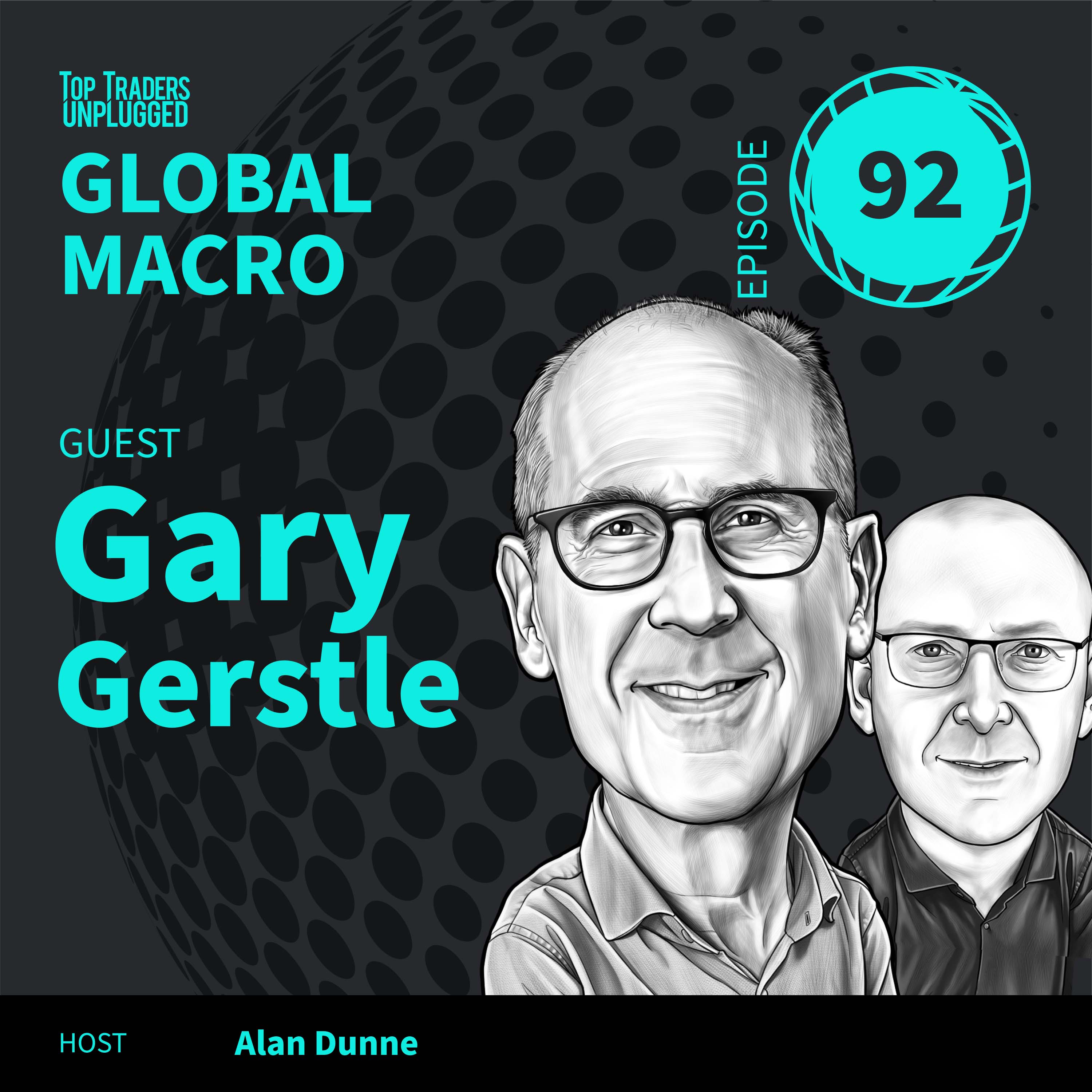
Top Traders Unplugged
GM92: Politics in an Age of Hard Borders and Rising Hegemons ft. Gary Gerstle
01:10:02
Loading summary
Transcript473 lines
- [00:00]
Gary Gerstel
Foreign.
- [00:07]
Alan Dunn
This is a pretty scary vision of the world and that is the vision embodied in this national security strategy.
- [00:14]
Gary Gerstel
So whether that world is going to come to be is up in the air. But what this document reveals, it reveals a plan for world order that is based on powerful regional and ethno nationalist hegemons who got to run the world.
- [00:35]
Alan Dunn
Through their power rather than through a commitment to universal human rights. And it's profoundly threatening.
- [00:45]
Podcast Announcer
Imagine spending an hour with the world's greatest traders. Imagine learning from their experiences, their successes and their failures. Imagine no more. Welcome to Top Traders Unplugged, the place where you can learn from the best hedge fund fund managers in the world so you can take your manager, due diligence or investment career to the next level. Before we begin today's conversation, remember to keep two things in mind. All the discussion we'll have about investment performance is about the past, and past performance does not guarantee or even infer anything about future performance. Also, understand that there's a significant risk of financial loss with all investment strategies and you need to request and understand the specific risks from the investment manager about their product before you make investment decisions. Here's your host, veteran hedge fund manager Niels Kostrup Larson.
- [01:40]
Alan Dunn
Welcome or welcome back to another conversation in our series of episodes that focuses on markets and investing from a global macro perspective. This is a series that I not only find incredibly interesting, as well as intellectually challenging, but also very important given where we are in the global economy and the geopolitical cycle. We want to dig deep into the minds of some of the most prominent experts to help us better understand what this new global macro driven world may look like. We want to explore their perspectives on a host of game changing issues and hopefully dig out nuances in their work through meaningful conversations. Please enjoy today's episode hosted by Alan Dunn.
- [02:25]
Niels Kostrup Larson
Thanks for the introduction, Niels. Today I'm joined by Gary Gerstel. Gary is Paul Mellon professor of American History Emeritus at University of Cambridge. He's the author of a number of books, notably the Rise and Fall of the Neoliberal Order. He is currently Joy Foundation Fellow at the Harvard Radcliffe Institute at Harvard University where he's working on a new book, Politics in Our Time Authoritarian Democratic hope in the 21st century. Gary, great to have you back. How are you doing?
- [02:55]
Gary Gerstel
Good. Wonderful to be back in cold Boston and Cambridge.
- [03:00]
Alan Dunn
It's like Boston and Cambridge used to be. I guess Trump must be right. There is no climate crisis facing us.
- [03:06]
Niels Kostrup Larson
Exactly.
- [03:07]
Gary Gerstel
Interesting.
- [03:09]
Alan Dunn
These are interesting political times certainly are.
- [03:13]
Niels Kostrup Larson
Yes, we're coming up to the end of the year. So it's a good time to take Stock on year one of Trump 2.00. We are welcoming you back. You were on, I think it was about 18 months ago, so if anybody wants to go back and hear that episode which was very much focused on your last book, the Rise and Fall of the Neoliberal Order, in the context of what we were seeing at the time, which was, I guess the end of four years of biodynamics. So we had transitioned into a different, I suppose, regime. But we've since had the first tier of Trump 2.0. Before we get on to that, I mean, you know, we've, we've had the end of the neoliberal era. What do you think we've got to replace it so far?
- [04:01]
Gary Gerstel
Well, that's a million dollar question. I think we, we can say with, with confidence now that even though there are elements of neoliberalism still present in economic practice, we are no longer living.
- [04:17]
Alan Dunn
In a neoliberal order. If we think of some of the principles that structured that order, they are, they have either been abandoned or, or severely weakened.
- [04:28]
Gary Gerstel
One can think of free movement of people, the raising of borders, of, of walls, hostility toward, toward immigrants.
- [04:39]
Alan Dunn
The freedom of movement that was characteristic of the neoliberal era is, is under assault just about everywhere.
- [04:46]
Gary Gerstel
We no longer live in a world that valorizes free trade and globalization above all else. Protectionism that the US Is issuing is, is the order of a day.
- [04:58]
Alan Dunn
Used to be that protectionism was a dirty word and if you uttered it in politics, you were marginalized in politics and you had no political future. And now the US has put in place a, a very powerful tariff regime which is at odds with any conception of neoliberalism.
- [05:18]
Gary Gerstel
The neoliberal order also valorized the free movement of capital, and that's still, I think, quite alive in the world. But we've seen a pretty profound alteration.
- [05:30]
Alan Dunn
In how people think about the relationship of states to markets. And the Trump administration has been quite interesting in this, this regard, although that.
- [05:42]
Gary Gerstel
This is a Republican Party that has long sanctified free markets.
- [05:47]
Alan Dunn
Trump now doesn't hesitate to use government.
- [05:49]
Gary Gerstel
Power to shape markets for purposes of.
- [05:53]
Alan Dunn
National security, for, for reshoring manufacturing.
- [05:59]
Gary Gerstel
We don't even have a full list.
- [06:00]
Alan Dunn
Of all the companies that the government is investing in of.
- [06:04]
Gary Gerstel
If a left of center government were.
- [06:06]
Alan Dunn
Doing this, there would be cries of socialism everywhere.
- [06:10]
Gary Gerstel
But I think the degree to which government is now willing to shape the private economy for what it takes to.
- [06:17]
Alan Dunn
Be public purpose or national security interest.
- [06:20]
Gary Gerstel
We've also seen quite a change, sea.
- [06:22]
Alan Dunn
Change from the era of the neoliberal order.
- [06:26]
Gary Gerstel
So we are moving into an era where governments are going to structure the economy, the movement of people, the free flow of information, much more than had.
- [06:40]
Alan Dunn
Had had been the case. I think the open question is, are.
- [06:46]
Gary Gerstel
We moving into what some people consider a post liberal future, meaning one that does not hold the principles of liberal.
- [06:56]
Alan Dunn
Democracy, hi, elections, rule of law.
- [07:02]
Gary Gerstel
Are we moving into an era which values power, civilization, community, more than a.
- [07:11]
Alan Dunn
Set of human standards and values that the whole world is expected to adhere to?
- [07:18]
Gary Gerstel
Or is this future going to be a future in which democracy revives itself.
- [07:24]
Alan Dunn
In which the principles of liberal universalism revive themselves?
- [07:29]
Gary Gerstel
I can't tell you where we're going.
- [07:31]
Alan Dunn
To be in five to 10 years.
- [07:32]
Gary Gerstel
Except to say that the authoritarian impulse.
- [07:38]
Alan Dunn
Is very powerful in the world. And I think the democratic ethos and the democratic forces are somewhat on the defensive.
- [07:47]
Gary Gerstel
It's still a very fluid situation.
- [07:48]
Alan Dunn
So I don't, I can't tell you in five or ten years whether we're going to be living in a post liberal authoritarian world or whether democratic values and hopes will revive themselves and lead to a kind of democratic renaissance.
- [08:01]
Gary Gerstel
I think that is now one of.
- [08:04]
Alan Dunn
The, the million dollar question or the million, the million pound, the million euro question that we will be grappling with.
- [08:11]
Gary Gerstel
But I think the, the outlines of.
- [08:14]
Alan Dunn
A post neoliberal economy have become quite clear.
- [08:18]
Niels Kostrup Larson
Yeah. When you were last on, which was about 18 months ago, you did make this point that democracy is under threat, that there are authoritarian impulses are on the rise around the world. And certainly that's become even more apparent in the last 18 months, as you say. But also there seems to be an apathy. There's not an enormous pushback against that. You might have expected more pushback. I mean, viewing the US from, from a European perspective, or have you been surprised by that?
- [08:52]
Gary Gerstel
I think Trump's second election was a.
- [08:55]
Alan Dunn
Devastating blow to anti Trump forces in the United States. And Kamala Harris made the defense of democracy one of her, her principal.
- [09:07]
Gary Gerstel
Campaigning points.
- [09:08]
Alan Dunn
And she made a, also made a point. I think her final appearance before the election was at the site where on the Capitol, where Trump effectively authorized an assault on the Capitol and a, and a coup by the president against his, his, his own government.
- [09:26]
Gary Gerstel
And one thing one has to credit Trump for is hiding nothing during the campaign.
- [09:33]
Alan Dunn
His desire to be an autocrat, to be a dictator, to accumulate enormous executive power. He said on countless occasions, I am your retribution. The Cruelty with which America has been uprooting immigrants and, and, and deporting them from, from American society. None of that was hidden during the campaign. And, and so I think the, the.
- [10:04]
Gary Gerstel
Shock that Trump, despite all that, was.
- [10:06]
Alan Dunn
Reelected by a majority of the American people by a greater margin than happened in 2016.
- [10:13]
Gary Gerstel
Really through the resistance to.
- [10:14]
Alan Dunn
Trump for, for a loss.
- [10:16]
Gary Gerstel
And then came an extraordinarily well coordinated.
- [10:21]
Alan Dunn
First hundred days of the Trump administration.
- [10:25]
Gary Gerstel
Shock and awe, like the Iraq war and at least one executive order a day, sometimes two, three or four, attract attacking Trump opponents across an incredibly broad front. The imposition of tariffs, the, the pursuit of the desire to deport immigrants, the.
- [10:48]
Alan Dunn
The attack on science, the attack on, on universities.
- [10:52]
Gary Gerstel
I think no one was prepared for.
- [10:55]
Alan Dunn
The, the disciplined and forceful nature of.
- [11:00]
Gary Gerstel
This attack, which further threw the forces.
- [11:03]
Alan Dunn
Of resistance against Trump into disarray. Trump's first term had been characterized by.
- [11:09]
Gary Gerstel
Similar political impulses, but enormous degree of chaos and incompetence. And Suddenly this Trump 2.0 was disciplined. They had a clear plan.
- [11:24]
Alan Dunn
They had administrators in, in place.
- [11:27]
Gary Gerstel
I don't know how many chiefs of.
- [11:29]
Alan Dunn
Staff Trump had fired sacked during his first term. During his, his first year in, in.
- [11:37]
Gary Gerstel
Office, he still got the same one he started with. Do you ever hear her name in the news? Susie Wiles.
- [11:42]
Niels Kostrup Larson
Okay.
- [11:43]
Gary Gerstel
The fact that she's never in the news, the fact that she's still in place is, is a measure of how.
- [11:51]
Alan Dunn
Much more disciplined this Trump offensive has, has, has been.
- [11:55]
Gary Gerstel
And so I think the combination of.
- [11:56]
Alan Dunn
The shock of the victory and how ready the Trump forces were to execute their plan through the opponents of Trump into deep disarray and explains what from.
- [12:10]
Gary Gerstel
Europe and other places seems to be.
- [12:12]
Alan Dunn
An extraordinarily weak response.
- [12:15]
Gary Gerstel
But the final chapter on resistance has not been written. There have been several no Kings protests.
- [12:22]
Alan Dunn
And the last one, which was this.
- [12:25]
Gary Gerstel
Summer, I think may have drawn more people, millions out in the streets demonstrating.
- [12:33]
Alan Dunn
Than any previous demonstration in American history.
- [12:36]
Gary Gerstel
And also in the last month or.
- [12:38]
Alan Dunn
Two, the Trump administration has had some serious setbacks across a broad front. And more, more may be coming.
- [12:48]
Gary Gerstel
So you can see the resistance beginning to stir. And for Europeans and, and people in.
- [12:56]
Alan Dunn
Ireland who are wondering whether there is a resistance, there is.
- [13:00]
Gary Gerstel
And I expect it to mobilize quite.
- [13:02]
Alan Dunn
Considerably over the next few months, especially as we go into another election year.
- [13:09]
Gary Gerstel
And the victories of Democrats and special elections and in the New York mayoral.
- [13:16]
Alan Dunn
Election and last night, Miami elected its first Democratic mayor in 30 years. Thirty years, there are signs of awakening. And I think the Trump administration is in some trouble. And we already, the balance of forces have shifted, which is going to make the next year really interesting and worth paying a lot of close attention to.
- [13:41]
Niels Kostrup Larson
Very good. I mean you talked about the discipline of the administration this time, the success, I guess with the executive orders and getting their agenda out. I mean, at times from a market perspective, there's been differing views as to what the objective. Was there a grand plan or was it being made up on the hoof? And some suggestion that there was this plan of shifting the economy more in favor of Main street away from Wall street, but different interpretations of whether policies such as the Big beautiful bill really were motivated by that. How would you characterize the agenda from 2.0 from that perspective?
- [14:28]
Gary Gerstel
Well, first let me say that the.
- [14:29]
Alan Dunn
Breadth of 2.0 is extraordinary.
- [14:36]
Gary Gerstel
It's the economy, it's universities, it's science, it's immigration, it's culture built into the.
- [14:46]
Alan Dunn
Attack on wokeness in American life. It's attempt to restore great moments in American history to their, to their rightful place.
- [14:56]
Gary Gerstel
So want our listeners to keep in.
- [14:59]
Alan Dunn
Mind that the, the breadth of this campaign has just been staggering. Probably the, the, the broadest campaign in the first few months of a presidential administration since Franklin Delano Roosevelt's famous 100 days or first year in office and 1933. So it's been very impressive that way.
- [15:21]
Gary Gerstel
If we focus on the economy.
- [15:24]
Alan Dunn
Quite interesting. And.
- [15:27]
Gary Gerstel
The.
- [15:29]
Alan Dunn
Trump campaigned on putting in place a.
- [15:34]
Gary Gerstel
A broad tariff regime that would fundamentally end the global character of the free trade world.
- [15:44]
Alan Dunn
Characteristic of, of neoliberalism.
- [15:48]
Gary Gerstel
And the ostensible reason.
- [15:49]
Alan Dunn
And the, and the publicized reason for.
- [15:51]
Gary Gerstel
That was a long term campaign to.
- [15:54]
Alan Dunn
Reshore manufacturing and shift the, as you suggested, the emphasis on the economy from Wall street to Main Street. A sense that Wall street had been accumulating too much power, too much wealth. Main street had suffered.
- [16:11]
Gary Gerstel
And Trump, you know, for 10 years now has put himself forward as the.
- [16:15]
Alan Dunn
Tribune of working class America and the forgotten America, which is not all of America.
- [16:21]
Gary Gerstel
It's not multiracial workingclass America, although he.
- [16:25]
Alan Dunn
Did attract a lot of Latino support in the last election. It's, it's white working class America in towns devastated by deindustrialization that has been going on for 30 or 40 years.
- [16:37]
Gary Gerstel
And, and those places have been forgotten.
- [16:40]
Alan Dunn
And the, and the neglect and the suffering and the unemployment and the opioid epidemic has ravaged these communities. And you know, Trump has, this is his core MAGA constituency and his promise is to put tariffs in place that would reshore manufacturing and bring back the Good jobs that had fled and they would be located in the areas that had suffered the greatest industrial, economic and capital flight.
- [17:08]
Gary Gerstel
There are a couple problems with that, several problems with that ambition, although I should say that it's a broadly shared.
- [17:15]
Alan Dunn
Ambition, not just by the Trump administration.
- [17:17]
Gary Gerstel
This was the goal of the Biden administration. So we can see an interesting continuity there. The first point to be made is that even if manufacturing is brought back.
- [17:29]
Alan Dunn
In a big way, it's not going to bring back the jobs that characterized manufacturing during the 20th century heyday. The autumn automation has advanced so far. The use of robots has advanced so.
- [17:41]
Gary Gerstel
Far that this can re employ no.
- [17:43]
Alan Dunn
More than a small fraction of those people and communities thrown out of work.
- [17:48]
Gary Gerstel
And there can be no broad economic.
- [17:50]
Alan Dunn
Recovery without deep investment in the service economy. So that's the first point to be made.
- [17:55]
Gary Gerstel
The second point to be made is that, and this is something that I.
- [17:59]
Alan Dunn
Think the Trump administration, like the Biden administration, has severely underestimated.
- [18:05]
Gary Gerstel
What's the length of time required to reshore manufacturing? What, what are we looking here? What, what are we looking at exactly? Well, you can't do it in two years, you can't do it in four years. If Biden had gotten a second term, you would have seen results after eight years. It's a 10, 15, 20 year project.
- [18:23]
Alan Dunn
All right.
- [18:23]
Gary Gerstel
Well, it's good that American politicians are thinking in the longer term because they're famous or infamous for thinking in two year election cycles. Well, what do you do in the interim? And this became a problem of the Biden administration. It's becoming a problem of the Trump.
- [18:39]
Alan Dunn
Administration.
- [18:40]
Gary Gerstel
What have you done for me lately? And the neglect of rising prices that is now hurting the Trump administration is.
- [18:47]
Alan Dunn
The same neglect of rising prices that hurt the Biden administration severely.
- [18:53]
Gary Gerstel
And then what about the constituency of Republicans who don't really want to reshore manufacturing, they just want lower taxes. And this is what they were sold in terms of the, of what tariffs would do they because they're not committed. There's a big portion of the Republican.
- [19:12]
Alan Dunn
Party that is still traditional, that doesn't.
- [19:14]
Gary Gerstel
Want high tariffs, that just wants the.
- [19:18]
Alan Dunn
Market to be free and taxes to be low.
- [19:22]
Gary Gerstel
And this was the selling point for.
- [19:24]
Alan Dunn
These people, that tariffs would raise so much revenue that internal tax rates on the wealthy could be lowered.
- [19:33]
Gary Gerstel
And this was embodied in the big.
- [19:35]
Alan Dunn
Beautiful bill that is so far the signature legislative achievement of the Trump administration and Trump. The Trump administration made a big point in terms of arguing it was shifting from internal revenue to external revenue.
- [19:50]
Gary Gerstel
And the promise was that the receipts.
- [19:52]
Alan Dunn
From external revenue on tariffs would be so great that this more traditional business oriented part of the Republican Party would be rewarded with lower taxes domestically which would allow them to invest and use the money as AC as they saw fit without having to worry about government interference.
- [20:12]
Gary Gerstel
So this brought a wing of the Republican Party that historically has been hostile.
- [20:17]
Alan Dunn
To tariffs on board because it was, it was paired with the tax cut.
- [20:23]
Gary Gerstel
And that has worked in the short term. But, but it's important to keep in mind that these, there are two very.
- [20:30]
Alan Dunn
Different factions in the Republican Party.
- [20:33]
Gary Gerstel
One is a genuine MAGA faction that wants to reshore manufacturing for the benefit of Main Street.
- [20:41]
Alan Dunn
And then there is the more traditional Republican group that simply wants lower taxes, free use of capital domestically to engage in the ventures that they want to engage in.
- [20:51]
Gary Gerstel
And if the economy falters, which it.
- [20:53]
Alan Dunn
Has not yet done really in a major way, you're going to see the splits between these two groups become far.
- [20:59]
Gary Gerstel
More pronounced because then there's going to.
- [21:01]
Alan Dunn
Be an awareness of trade offs and.
- [21:04]
Gary Gerstel
Who'S whose vision of trade offs is.
- [21:09]
Alan Dunn
Going to win out in that set of circumstances.
- [21:13]
Niels Kostrup Larson
Yeah, you touched on a few of the pillars, I guess of the, the Trump platform, you know, tariffs, migration, tax cuts. I mean the other one that was mentioned, you know, quite a, a lot earlier in the year when people were saying don't just view the tariffs, look at the full package was deregulation and the supply side, which as you say is kind of very much traditional Republican philosophy. I haven't seen as much of that coming through practically. That's still a key part of the agenda. Do you think we'll see more evidence of that coming through as the administration goes on?
- [21:51]
Gary Gerstel
Well, the biggest area of deregulation has been in relationship to the tech industry.
- [21:57]
Alan Dunn
And to, and to AI. This is a real break from the Biden administration and the, and silica part.
- [22:10]
Gary Gerstel
Of what happened in 2024 is that.
- [22:12]
Alan Dunn
Silicon Valley, which has historically been with the Democrats, converted in a very major way to support Trump. And if you remember Trump's inauguration, if.
- [22:24]
Gary Gerstel
You were watching it, five or six.
- [22:28]
Alan Dunn
Titans of the American tech industry were given very prominent seating places and that was a reward for, for their coming on board.
- [22:38]
Gary Gerstel
The Biden administration had at one of.
- [22:40]
Alan Dunn
Its goals to subject the tech industry in, to a, a more serious form of regulation that it, than it had ever been subjected to before, really an EU style of regulation that these, the, the, the, the principle being that these.
- [22:57]
Gary Gerstel
Industries are so large and so powerful and so crucial that they simply can't be left in the hands of an.
- [23:04]
Alan Dunn
Elon Musk or even a more responsible group of private capitalists that they. There has to be some kind of serious regulation. And so the Biden administration set out to regulate crypto, to regulate AI, to.
- [23:19]
Gary Gerstel
Look into breaking up some of these enormous behemoths.
- [23:26]
Alan Dunn
Microsoft, not Microsoft, because that had already been subjected to antitrust regulation. But Google was in the crosshairs, Facebook was. Was in the crosshairs. So the threats to this industry is, were.
- [23:40]
Gary Gerstel
Were real. And this, uh, prompted a flight from.
- [23:44]
Alan Dunn
The Democratic to the Republican Party and certainly had a influence on Trump's electoral victory, especially Elon Musk's use of Twitter to support Trump and his contribution of, I think, 250 to $300 million spent on supporting Trump and, and, and his campaign.
- [24:10]
Gary Gerstel
So they have been amply rewarded by.
- [24:14]
Alan Dunn
The freeing of AI, the, the freeing of crypto, the scuttling of antitrust moves on the part of the government to break up these big institutions.
- [24:25]
Gary Gerstel
And so if you want to look.
- [24:27]
Alan Dunn
For a way in which deregulation has really flourished since the Trump administration has come into office, then this is the place to look. And there I think you can see deregulation really, really being in the driver's seat.
- [24:42]
Gary Gerstel
At the same time there, the Trump.
- [24:45]
Alan Dunn
Administration has made for proponents of deregulation, some interesting moves. And in return for allowing NIDIA to.
- [24:57]
Gary Gerstel
Sell more chips to China.
- [25:01]
Alan Dunn
They have to pay a substantial portion of their revenues to the U.S. government. I think intel, for the sake of being allowed to do what it wanted to do, I think had to sell 10% of its corporation, or not sell it, but essentially give 10% of its corporation to the government.
- [25:19]
Gary Gerstel
So at the same time that the.
- [25:21]
Alan Dunn
Manifest policy is one of deregulation, the latent policy has been the encroachment by the US Government on the freedom of action of some of these firms.
- [25:35]
Gary Gerstel
And that is something that's, by and.
- [25:37]
Alan Dunn
Large been flying under the radar. And it's worth watching to see how that's going to develop and mutate over the second and third and fourth years of the Trump administration.
- [25:49]
Niels Kostrup Larson
Yeah, we had Morris Upsfeld, who was previously at the imf, on, and I asked him that question, why are these policies typically not prescribed? And he said, well, for the very reason they're typically not good for economic productivity or growth or fairness or efficiency or incentives. But, yeah, so that's very much flies in the face of the deregulation, I suppose, philosophy. I mean, you touched on the challenge facing Trump as he heads into next year with prices and as you say, affordability is now the buzzword all of a sudden. I mean, I guess. Were people naive to think that he could actually solve this in the first place?
- [26:36]
Gary Gerstel
Do I think that they were naive to think that Trump was going to.
- [26:40]
Alan Dunn
Bend every effort when he got into office to roll back prices? Yes, the answer to that, they were. They were naive to think that, again.
- [26:53]
Gary Gerstel
Trump hid nothing.
- [26:55]
Alan Dunn
Yeah, he, he, he's, you know, he's, he said he was going to take care of Biden inflation in a flash.
- [27:03]
Gary Gerstel
But if you listen to the whole.
- [27:06]
Alan Dunn
Suite of things he was proposing.
- [27:09]
Gary Gerstel
He never made clear, other than unleashing energy.
- [27:13]
Alan Dunn
Productivity and exploration and fossil fuels.
- [27:18]
Gary Gerstel
He.
- [27:18]
Alan Dunn
Had no scheme for, for rolling, for rolling back prices. And so, yes, I think people were naive to think this, although I understand.
- [27:28]
Gary Gerstel
That people, everyone, myself included.
- [27:30]
Alan Dunn
Well, I try and break out of my media bubble, since I'm trying to understand the entirety of what's going on in America. But everyone across the political spectrum lives in their media bubbles, and that constrains the news that is, that is coming to them.
- [27:45]
Gary Gerstel
And I think what we have to understand is the degree to which people.
- [27:50]
Alan Dunn
Were angry about the high inflation of the Biden years. And, and even though it had been brought under control by the end of the Biden administration, people were living with vastly higher prices without a corresponding increase in, in their wages. And the anger is brewing now and is expressing itself in these elections.
- [28:14]
Gary Gerstel
And the hardship regarding affordability, except in the fossil fuel sector, has been increasing.
- [28:24]
Alan Dunn
Across a broad front. Housing is as expensive and unaffordable as it's ever been. And Trump has no program for bringing down housing costs. There's been no effort to reign in food prices, which are continuing to increase. And this is something that I see on a daily basis. I do most of the shopping for my family in terms of food, and the expenses are quite extraordinary.
- [28:55]
Gary Gerstel
And then there are two additional sources.
- [28:57]
Alan Dunn
Of, of expense that Trump has no solution for.
- [29:02]
Gary Gerstel
One is the, the, the freedom given.
- [29:06]
Alan Dunn
To AI is leading to the construction of these enormous data centers, which require enormous amounts of electricity.
- [29:13]
Gary Gerstel
So electricity rates are now beginning to.
- [29:15]
Alan Dunn
Go through the roof because there's simply not enough capacity on the grid to generate enough energy for these AI data centers, as well as customary things.
- [29:27]
Gary Gerstel
And so that's going up. And then there's going to be another whammy that hits in January because of.
- [29:33]
Alan Dunn
The Republican refusal to extend credits for.
- [29:37]
Gary Gerstel
People living on a Affordable Care Act.
- [29:40]
Alan Dunn
Obamacare for health insurance. Those ranks vastly expanded during COVID because of subsidies that the government was offering that were allowing people to buy better insurance and the higher rates. And, and the, the GOP Republican Party has refused to continue those subsidies. So in January, which is now around the corner basically tomorrow, health care insurance has got to rise for millions of Americans in, in a very steep way. So housing, electricity, health insurance.
- [30:17]
Gary Gerstel
These costs are all rising.
- [30:19]
Alan Dunn
And Trump has no, has no plan for reducing these costs and except getting the Federal Reserve to reduce interest rates, which they may well do in December, but that's not going to be enough. And if they're reduced too much, they're simply going to have the effect of intensifying inflation.
- [30:40]
Niels Kostrup Larson
Yeah, well, I mean the picture you paint with obviously the affordability crisis, rising costs, the challenges for people, particularly at the lower income, obviously very clear. At the same time, we've got the rising stock market, people holding assets are doing well. And this is part of the narrative of the K shaped economy. I mean, from a political perspective, you touched on this fracture within the Republican Party ideologically. How do you think that plays out going into next year? The obvious trajectory would be a resurgence maybe for the Democrats in the midterms and the cycle just repeats itself. Is that how you see it or how do you think it plays out?
- [31:24]
Gary Gerstel
Well, I think democratic victory in 2026 is imperative for America and the future of the Repub.
- [31:34]
Alan Dunn
For liberal Democratic reasons.
- [31:37]
Gary Gerstel
For Trump, elections remain important, but they.
- [31:40]
Alan Dunn
Must be elections that he wins.
- [31:42]
Gary Gerstel
It used to be, it used to be that autocrats once, once they came into power, beginning with Hitler and continuing with Latin American dictators and so on and so forth, once they, they came into power, they got rid of elections. You know, they didn't want to go through them anymore. But that has changed. Autocrats in the world now want elections as, as a way of affirming the.
- [32:04]
Alan Dunn
Legitimacy of their rule. But they must be elections that they win. And so they do everything they can to curate the election, to intimidate the opposition, or in, in the worst case scenario just to declare a result that goes against them is invalid, as Maduro and Venezuela did.
- [32:25]
Gary Gerstel
It's very ironic that Trump wants to.
- [32:29]
Alan Dunn
Invade Venezuela to get rid of Maduro for being a dictator, when in fact.
- [32:33]
Gary Gerstel
His own techniques for ensuring his the.
- [32:37]
Alan Dunn
Continuation of himself or Maga in office are modeled very closely on what Maduro act actually did.
- [32:47]
Gary Gerstel
So, and I think one of my worries is that the use of National Guard troops, the sending of the military into all these cities, ostensibly to stop crime and to arrest immigrants, is really.
- [33:01]
Alan Dunn
Meant to legitimate the presence of these forces in northern blue Democratic voting Cities for the 2026 election so that he can use these forces to intimidate people.
- [33:14]
Gary Gerstel
Who are likely to vote against him to either make them wait in long lines, to pull them out of lines.
- [33:20]
Alan Dunn
To make them show their IDs, maybe.
- [33:22]
Gary Gerstel
You arrest a few and deport them.
- [33:23]
Alan Dunn
On the sp, not to scare all.
- [33:26]
Gary Gerstel
Other immigrants from showing up. So this is a, this is a very real threat. And that is why it is imperative that the Democrats do everything in their power to make sure that this is.
- [33:39]
Alan Dunn
A fair and free election and that it has integrity.
- [33:42]
Gary Gerstel
And I have felt for some time that if that's the case, the Democrats were going to win, do very well in Congress. It's typical that off your elections allow.
- [33:53]
Alan Dunn
The opposition party to, to, to gain votes.
- [33:57]
Gary Gerstel
And then there are indications now that the Republican Party is in real trouble.
- [34:02]
Alan Dunn
The, the elect, the elections that have.
- [34:05]
Gary Gerstel
Been happening, the off year elections that have been happening have all gone against Trump. The swing in votes from Republicans to Democratic Party seems to be somewhere between.
- [34:17]
Alan Dunn
13 and 15% so that even districts that at heavy Trump majorities are now in trouble.
- [34:25]
Gary Gerstel
So I think from the perspective of today, things are looking very good for the Democrats in 2026. And Mamdani by in New York City, his win is significant because he's the one who has squarely put the issue of affordability on the map. He is a socialist. What sells in Brooklyn and Queens is.
- [34:48]
Alan Dunn
Not going to sell in most of America. So there's no prospect of a socialist wave sweeping over America in 2026.
- [34:57]
Gary Gerstel
But he has shown a couple other things. One, a resolute focus on the affordability question. And embedded in that is a downplaying.
- [35:08]
Alan Dunn
Of the cultural issues that are important to the Democratic Party having to do.
- [35:13]
Gary Gerstel
With gender, sexuality.
- [35:17]
Alan Dunn
Feminism, diversity.
- [35:20]
Gary Gerstel
Those are all things that Mamdani believed in.
- [35:24]
Alan Dunn
But in his campaign he pushed them into the background. And by resolutely focusing on affordability, he.
- [35:31]
Gary Gerstel
Has shown Democrats across the country the.
- [35:34]
Alan Dunn
Way to conduct a campaign that they have to conduct if they want to win. He's also got a, a brilliant social media profile which can compete with what Trump has used so successfully.
- [35:51]
Gary Gerstel
And he also has a political machine. It's fitting that he's rediscovered the power of political machine in New York City which had been the innovator of the original and best political machine that politics.
- [36:06]
Alan Dunn
Has ever seen in America.
- [36:08]
Gary Gerstel
That is a so called Tammany, mostly Irish Catholic machine of New York City, which reliably delivered New York City for the Democrats for the better part of 100 years, he has discovered how to, rediscovered how to do this not through Tammany's auspices, because if it had gone through Tammany's vestigial auspices, Andrew Cuomo would.
- [36:32]
Alan Dunn
Have won that election.
- [36:34]
Gary Gerstel
But he has assembled an army of.
- [36:37]
Alan Dunn
Grassroots operatives going door to door and.
- [36:41]
Gary Gerstel
The importance of grassroots in person, door to door campaigning. So his resolute focus on affordability, his appreciation for social media, his understanding of the importance of people to people contact and relationships, and developing an army of.
- [36:59]
Alan Dunn
Operatives, he's given the Democrats a playbook for 2026. And if they follow this playbook, not.
- [37:07]
Gary Gerstel
The socialist part, but the other part, then there's hope for the Democrats actually.
- [37:13]
Alan Dunn
Bringing home significant victories in 2026.
- [37:18]
Gary Gerstel
Now we also have to ask, well, will the Republican Party understand the peril.
- [37:25]
Alan Dunn
That it's in and will they adjust?
- [37:29]
Gary Gerstel
Trump has survived for 10 years and flourished because he's been a great counter.
- [37:34]
Alan Dunn
Puncher and quite flexible and able to adjust to the moment in terms of what's required.
- [37:42]
Gary Gerstel
There are a lot of premature declarations that he's demented, that he's losing his energy.
- [37:53]
Alan Dunn
I don't see that there have been predictions of this for 10 years now.
- [37:57]
Gary Gerstel
Let's, let's get over it. For a man who's 79 years old.
- [38:01]
Alan Dunn
It'S remarkable for the energy and drive and the mental acuity that, that he has.
- [38:08]
Gary Gerstel
But there is a way in which he is becoming a second term president, tiring of all the domestic stress, wanting.
- [38:17]
Alan Dunn
To make his mark in foreign policy, where presidents traditionally have a greater freedom of action.
- [38:25]
Gary Gerstel
And it there are signs that he.
- [38:27]
Alan Dunn
Doesn'T quite have the zest for the kind of combat that has made him famous, notorious and so successful. So I think the question is, will.
- [38:39]
Gary Gerstel
His people, his advisors, be able to.
- [38:43]
Alan Dunn
Make the kinds of adjustments that are necessary to recover some of what the Republican Party has lost, the early indications. He gave a pretty sorry speech about the affordability crisis yesterday in the United States. If that's all he's got to come up with, he's got to deepen the crisis of the Democratic, of the Republican Party.
- [39:05]
Gary Gerstel
But there's a lot of time left.
- [39:06]
Alan Dunn
And a lot of time to adjust.
- [39:09]
Niels Kostrup Larson
I mean, you talked about Mamdani, his tactics, strength in that sense, but not the socialism. I mean, the one. Well, one of the things that both Biden and Trump shared were large deficits. So, I mean, what do you think the path forward from an economic policy is for the Democrats next year and beyond, you know, around the world, the response to the affordability Crisis has been more fiscal response, fiscal supports, but we've already got deficits of 7 or 8% GDP in the U.S. are there reasonable, meaningful policy levers that, you know, that the Democrats can point to as an alternative to solve affordability without boosting the deficit?
- [39:58]
Gary Gerstel
Well, I think this is. No one's talking about that right now.
- [40:01]
Alan Dunn
Because the Democrats are so far removed from national power at the moment that it, the, the urgent, the urgent question is to, to get back into power. And I think the, you know, how to address the affordability crisis without enlarging the deficit is going to be an urgent question that the Democrats are going to have to face.
- [40:30]
Gary Gerstel
The US has more flexibility on those.
- [40:33]
Alan Dunn
Grounds than, say, Britain does. You know, I look at Britain and I see the kind of extraordinary constraints under which it's operating and in the US because of the size of the economy, its diversity, its dynamism, and also the dollar as a currency of last resort and the still barely diminished ability of the US to sell its Treasuries to a hungry global market. I think it has more, has more flexibility there. But I think the, the Democrats of.
- [41:10]
Gary Gerstel
The future are going to have to take a very serious look at the.
- [41:15]
Alan Dunn
Biden administration and their desire to, on.
- [41:22]
Gary Gerstel
The one hand.
- [41:24]
Alan Dunn
Vastly increase investment not just in physical infrastructure, but in social infrastructure, which would include affordability of, of housing and, and health care, without triggering the kind of inflationary surge that occurred under the Biden administration. Now, I think the Democrats are still inclined to blame the inflationary surge on the extraordinary circumstances of COVID and certainly that's, that's part of the story.
- [41:55]
Gary Gerstel
But I think they're going to have.
- [41:56]
Alan Dunn
To have a, have to have a more serious reckoning.
- [42:00]
Gary Gerstel
At the same time, they're going to have to avoid the trap that the Republicans have successfully landed them in in multiple occasions, which is that the Republicans are the party that ends up so irresponsible in fiscal matters. Usual, sorry, the combination of spending increases.
- [42:20]
Alan Dunn
And tax cuts worsening the fiscal situation in the United States.
- [42:25]
Gary Gerstel
So it falls to Democrats. This is true of Clinton, it's true.
- [42:28]
Alan Dunn
Of Obama, to come in and put the fiscal house in order.
- [42:31]
Gary Gerstel
It's a dirty trick that the Republicans have foisted on the Democrats again and again, and they're gonna have to find.
- [42:38]
Alan Dunn
A way to escape that trap the third time around.
- [42:42]
Gary Gerstel
So the plants we're doing that are not yet in place.
- [42:47]
Alan Dunn
And the Democrats or, and the, the people in the Biden administration who I.
- [42:51]
Gary Gerstel
Know and talk to are not talking.
- [42:54]
Alan Dunn
About that at the moment, but they're going to have to face that issue if and when they come back into presidential power.
- [43:06]
Niels Kostrup Larson
You mentioned some of the kind of policies in terms of the diminishing certain institutions and reduce power, et cetera. And obviously from a markets perspective, everybody's focused on the Fed and the ongoing attacks on Jay Powell and the pressure to lower rates and now the pressure on Lisa Cook to resign and then putting on Steve Moran on the board as well to try and influence policy. What's your perspective on that in terms of the Fed in particular, but other institutions? How bad can things get, do you think, in this administration in terms of the centralization of power, I guess, and the subordinating of these institutions.
- [43:56]
Gary Gerstel
Define bad for me.
- [43:57]
Alan Dunn
When you say bad, what do you have in mind?
- [43:59]
Gary Gerstel
And then I'll respond more specifically, I worry maybe.
- [44:03]
Niels Kostrup Larson
How worrying? From a markets perspective, credibility is obviously a key factor. I mean, I guess on the one hand they want more influence, but at the same time you're talking about the central role of the dollar. There is obviously a need to attract foreign investors into treasuries, et cetera, so they have to balance those kind of mutual objectives. But obviously putting in a very dovish Fed chair would significantly undermine credibility in the institution and arguably in the dollar as well.
- [44:36]
Gary Gerstel
Right. I think we haven't talked about the.
- [44:39]
Alan Dunn
Supreme Court yet and the Supreme Court's.
- [44:42]
Gary Gerstel
Willingness to enormously expand the power of the executive to hire and fire anyone.
- [44:49]
Alan Dunn
Working in the executive branch of government to a far greater degree than has been the case for almost the last hundred years. And the Supreme Court seems willing to countenance the trumpet what the Trump administration wants to do in that regard. And that is extremely worrying. The Supreme Court, however, has also given an indication, an early indication, that it will not apply that standard to the Federal Reserve, which means that Trump's ability to fire a Fed head of the Fed during his or her term, to fire Fed governors during their terms, may be much more limited than he would like.
- [45:32]
Gary Gerstel
On the other hand, he's clearly going to get a, a Fed chair to his liking because Pal's term is up.
- [45:42]
Alan Dunn
In half year and there's no chance of. I can't imagine a scenario in which Pal is reappointed and maybe Moran is the new Fed chair at at Hass.
- [45:53]
Niels Kostrup Larson
Is the current favorite or Hasset the.
- [45:55]
Alan Dunn
Current, the current favorite.
- [45:57]
Gary Gerstel
And so he's got to get someone much more to his liking. But Trump cannot command the laws of.
- [46:05]
Alan Dunn
Supply and demand in the economy as, as, as simply by from what he.
- [46:11]
Gary Gerstel
Wills or desires and, and one check that has always been in place with.
- [46:17]
Alan Dunn
Trump has been the stock market, which.
- [46:21]
Gary Gerstel
He sees as a key indicator of.
- [46:24]
Alan Dunn
Economic health, or lack thereof.
- [46:27]
Gary Gerstel
It was interesting in the early.
- [46:31]
Alan Dunn
Months.
- [46:31]
Gary Gerstel
Of his administration, especially when the first.
- [46:35]
Alan Dunn
Imposition of tariffs, the, or the infamous liberation day in early April, and that sent shutters down Wall street and there was.
- [46:46]
Gary Gerstel
You know, considerable run on the.
- [46:48]
Alan Dunn
Market for a few days before it stabilized.
- [46:53]
Gary Gerstel
And Trump said something interesting then, which I never heard him say before, saying that the market is so high that.
- [47:02]
Alan Dunn
A meaningful correction in the short term is not going to harm the pocketbooks of investors or those with assets in the stock market.
- [47:11]
Gary Gerstel
I never heard him say that before.
- [47:13]
Alan Dunn
And I thought, oh, okay, he may have some longer term ambitions in mind here.
- [47:21]
Gary Gerstel
But since that time, the, the concerns.
- [47:26]
Alan Dunn
About the economy and its well being have increased significantly.
- [47:32]
Gary Gerstel
There are indications of much greater nervousness.
- [47:35]
Alan Dunn
On Wall street than have been the case.
- [47:38]
Gary Gerstel
How AI plays into this is crucial because part of what predicted, what was.
- [47:46]
Alan Dunn
Predicted for the Trump's imposition of tariffs was a severe downturn in the US economy that has not yet occurred. And the question is why? It may be that simply businesses are able to absorb the costs of tariffs for six months or a year. So in another half year they're not going to be able to do that and we're going to see further rises.
- [48:06]
Gary Gerstel
But it's also clear that the excitement.
- [48:09]
Alan Dunn
About AI, and not just AI, but about robotics and all the advances being.
- [48:13]
Gary Gerstel
Made there has given the stock market.
- [48:16]
Alan Dunn
And investors a confidence and a surge that was unexpected even as recently as half to three quarters of a year ago.
- [48:26]
Gary Gerstel
And now we're seeing concerns about the AI bubble and conflicting signals. Is it really a bubble? Is it not a bubble? I expect to see some shaking out of that and we look like we were going to get something of that.
- [48:37]
Alan Dunn
Sort a week or two ago.
- [48:39]
Gary Gerstel
Now the market has bounced back again. But I think we're in some hot, some hotter water with regard to AI. And it would not surprise me at.
- [48:48]
Alan Dunn
All if there was a 10% correction in the market sometime over the next six months.
- [48:54]
Gary Gerstel
And then the question is, what is.
- [48:56]
Alan Dunn
Trump's tolerance for correction?
- [48:59]
Gary Gerstel
There are other sign, there are other troubling indicators as well. The most notably Trump's firing of the.
- [49:12]
Alan Dunn
Director of the Bureau of Labor Statistics because that bureau issued a jobs report not to his liking. And so reflexively, he simply fired that.
- [49:23]
Gary Gerstel
Person and put into play someone who.
- [49:27]
Alan Dunn
Does not have nearly the incom, the competence.
- [49:29]
Gary Gerstel
And then there was a month in.
- [49:32]
Alan Dunn
Which figures didn't get reported because of the government shutdown.
- [49:36]
Gary Gerstel
So far, I think Wall street is.
- [49:38]
Alan Dunn
Confident that they have enough reliable information so that they can make the decisions they need to make about investment, that they are getting reliable information about where the economy is going and where it's not going.
- [49:53]
Gary Gerstel
It's, it's not out of the question.
- [49:55]
Alan Dunn
However, that Wall street will become concerned about the adequacy of numbers and statistics that are coming out of the Trump administration. And worries might deepen that the Trump administration is hiding the real information that they need. And if that, if, if, if that perception seeps into Wall street, it's got to also seep into all the international buyers of U.S. treasuries.
- [50:24]
Gary Gerstel
And that is something that the Trump.
- [50:26]
Alan Dunn
Administration will be very worried about because that is something that can trigger a serious run on the stock market and on Treasuries and put the US Economy into a condition of fragility that is going to worry Trump a great deal.
- [50:46]
Gary Gerstel
So how much he thinks about this versus simply getting someone at the Fed who's going to lower rates, I don't know. But Bessant has to be thinking about this.
- [51:01]
Alan Dunn
You know, he's got a lot of connections on Wall street and at a certain point, that kind of worry is going to concern members of the Trump administration.
- [51:13]
Niels Kostrup Larson
You mentioned maybe Trump's energy levels coming down marginally. I mean, gone back a while. There was a suggestion he may alter things for a third term or in some shape or form. I mean, where do you think that is now? Do you see him moving aside at the end of this term? Or is that still a risk that we have some kind of change to normal proceedings?
- [51:44]
Gary Gerstel
Well, we may have a change to normal proceedings, but I don't think it's.
- [51:47]
Alan Dunn
Going to be in the form of a third term for him.
- [51:50]
Gary Gerstel
I should say. I have no special access to Trump's brain. So this is entirely in the realm of speculation. And in the first few months, the.
- [52:07]
Alan Dunn
Wondrous months of his second administration, he.
- [52:11]
Gary Gerstel
Was dropping hints about a third term.
- [52:14]
Alan Dunn
I've not heard those in the last couple months.
- [52:20]
Gary Gerstel
I think that, and given that this.
- [52:22]
Alan Dunn
Is three years off, he's got to be 81, 82.
- [52:31]
Gary Gerstel
I don't think he's going to have.
- [52:32]
Alan Dunn
The zest to camp.
- [52:34]
Gary Gerstel
If you think of the extraordinary campaigning.
- [52:36]
Alan Dunn
He did in the last month, the 2024 election, this is really remarkable for a 78 year old man to keep up that pace.
- [52:47]
Gary Gerstel
And you saw the toll it was.
- [52:48]
Alan Dunn
Taking on him on a rare occasion.
- [52:50]
Gary Gerstel
But those occasions were quite rare.
- [52:52]
Alan Dunn
And he kept it up until the very end.
- [52:55]
Gary Gerstel
I don't think he's got the zest.
- [52:56]
Alan Dunn
For that a third time around.
- [53:02]
Gary Gerstel
So I'm less worried about him insisting.
- [53:04]
Alan Dunn
That he's a, that he is, he deserves a third term and is president for life.
- [53:11]
Gary Gerstel
The only way in which that can happen is if he simply says there will be no election in 2028, that there's no need because the, the American people want Trump. So if he declares elections to be.
- [53:27]
Alan Dunn
Finished, I can see him staying on.
- [53:30]
Gary Gerstel
Bert, right now, I think that's not in the cards and I don't see.
- [53:33]
Alan Dunn
Him having the energy to run for, for a third term.
- [53:37]
Gary Gerstel
But those people who are thinking that his days are numbered as president, that he's no longer capable of, of pursuing.
- [53:47]
Alan Dunn
His goals, of, of having the kind of energy required, I think that's a kind of foolishness and a, and a wishful kind of thinking that.
- [53:57]
Gary Gerstel
Does not.
- [53:57]
Alan Dunn
Help us understand the power that he still retains.
- [54:00]
Gary Gerstel
His flying to Israel over what, a.
- [54:03]
Alan Dunn
24, 36 hour period. The degree to which he's traveled abroad to, to other places.
- [54:11]
Gary Gerstel
His hosting the Kennedy center gala event.
- [54:14]
Alan Dunn
A few nights ago where he was the emcee and spoke for 37 minutes.
- [54:19]
Gary Gerstel
And did a whole lot of other things. You know, he's still in, he's still very capable, resourceful man in terms of his energy and pursuing the goals that.
- [54:29]
Alan Dunn
He wants to pursue.
- [54:30]
Gary Gerstel
So short term, I don't think we're going to see him withdraw and the.
- [54:36]
Alan Dunn
White House being operated by others. But I don't worry right now about him demanding a third term. I think his, his energy for that is not going to be what it needs to be.
- [54:48]
Niels Kostrup Larson
Yeah. And I mean, in terms of the next three years, obviously, as you get towards the latter part of a presidency, typically it's a lame book presidency. And particularly if there was a swing in the midterms, would you see the intensity of the policy agenda weakening over time? Or if the Democrats won, is there some kind of backlash from Trump in terms of trying to tilt the balance back towards Republicans?
- [55:19]
Gary Gerstel
Well, he's got to do everything he.
- [55:21]
Alan Dunn
Can while he's in office to frustrate and defeat the, the Democrats and preserve what he's built in the gop, which is really a different political party than the one existed before he entered politics in 2016.
- [55:36]
Gary Gerstel
So it's hard to, it's hard to predict what's going to happen that it wouldn't be, it wouldn't surprise me if there's no more legislation for the Next three years. Other than appropriations, which have to happen. In his first term, he, he passed.
- [55:57]
Alan Dunn
Almost no legislation other than the tax cut.
- [56:01]
Gary Gerstel
He hates legislation. Congress has been supine. Allow him to roll over. His penchant for exec executive orders reveals that he thinks Congress is an atavism from another era that no longer has any purpose. So he's already not consulting with Congress on a whole series of issues, not.
- [56:25]
Alan Dunn
Even with his Republican majority.
- [56:28]
Gary Gerstel
So I don't see, I don't anticipate.
- [56:33]
Alan Dunn
Him having a big legislative agenda and.
- [56:36]
Gary Gerstel
He won't be able to jam it.
- [56:37]
Alan Dunn
Through anyway if, if, if the Democrats control at least one house of Congress.
- [56:43]
Gary Gerstel
I, I think there are people in his administration, the real zealots of maga, who are going to do everything in their power to complete the work they, they feel needs to be complete before.
- [56:57]
Alan Dunn
They lose power, the presidency and, and 2028. And that's going to be ridding America.
- [57:05]
Gary Gerstel
Of millions of immigrants. It's going to be staff radically diminishing.
- [57:11]
Alan Dunn
The size of the federal government. It's going to mean the staffing the.
- [57:14]
Gary Gerstel
Federal government that remains with layers and.
- [57:18]
Alan Dunn
Layers of MAGA appointees.
- [57:22]
Gary Gerstel
So there's going to be a rush to, to accelerate the takeover of the.
- [57:29]
Alan Dunn
The, of the deep state, to dismantle the, the parts that they don't like and to make the parts that they do like the property of a MAGA elite bureaucratic core. That's going to be very hard for the Democrats to dislodge.
- [57:45]
Gary Gerstel
So they are going to do whatever they can to institutionalize their achievements in the federal government, to make the task of the Democrats and their agenda that.
- [57:57]
Alan Dunn
Much more difficult to achieve.
- [58:01]
Gary Gerstel
And they have a very shrewd sense.
- [58:03]
Alan Dunn
Of power, how to exercise power, how to control the bureaucracy.
- [58:08]
Gary Gerstel
And so I expect the zealots in.
- [58:11]
Alan Dunn
The ranks of the Trump administration, led by J.D. vance, probably, and Stephen Miller and Russell Vaught, the head of the Office of Management and Budget, to pursue those aims with zeal in the expectation that 2028 is going to be a moment of reversal for the Republican Party.
- [58:33]
Niels Kostrup Larson
Okay. I mean, taking a more global perspective, I mean, some of the themes that we've talked about are evident around the world. I mean, you've mentioned the uk, the challenges there in terms of the policy levers. But the affordability crisis is the same here in Ireland, in the uk, rising debt levels around the world. And equally, what we've seen at elections is generally whoever is in power has shown an inability to tackle these problems and has been thrown out. We saw that obviously conservatives in the UK and now labor immediately under pressure in Germany, the previous government out, and now they've thrown at the debt break. So generally there's been a shift towards more economic nationalism. The rise of the right. Is that the global. That's the characterization globally of the new order that's replacing the neoliberalism?
- [59:35]
Gary Gerstel
Yes. I think we have to understand the surge toward authoritarianism, toward ethnonationalism, toward reasserting.
- [59:47]
Alan Dunn
The priority of nations over multilateral and multinational organizations. We have to understand these as part of a global trend and a reaction against what many people in different parts of the world feel has been an overinvestment in global institutions. The channeling of the benefits of globalization to a relatively small elite and the part of the. The societies that benefits most directly from this kind of globalization.
- [60:25]
Gary Gerstel
The hostility toward immigrants is one of.
- [60:28]
Alan Dunn
The most urgent issues facing Europe, as is the case in the United States. And it's not an issue that's going away. And progressives in the left, if they want to come back into power, have to find a way to address that issue in ways that have, until this moment, escaped them.
- [60:49]
Gary Gerstel
I think we also have to pay attention to the different conception of world order that has taken root in the.
- [60:57]
Alan Dunn
Trump administration and that is present in other countries like China and, and Russia. I've just read, I don't know if you have yet, the National Security Strategy of the United States of America, this manifesto issued by the Trump administration to guide its national security strategy going forward.
- [61:20]
Gary Gerstel
And there. There are two elements of that report.
- [61:23]
Alan Dunn
That jump out at. At me.
- [61:26]
Gary Gerstel
The first part is the first thing.
- [61:29]
Alan Dunn
That jumps out at me is that.
- [61:31]
Gary Gerstel
The Western Hemisphere gets more attention than.
- [61:34]
Alan Dunn
Any other part of the world. And it's the first region of the world that this national security strategy addresses. If we flash back to the Cold War, the idea that the first foreign policy issued, identified by the United States would, would be the Western Hemisphere, as opposed to the Soviet Union and China and the worldwide spread of communism.
- [62:02]
Gary Gerstel
This is inconceivable. In, in that moment, what does the focus on the Western Hemisphere reveal? It reveals first that the US Once again wants to turn the entirety of.
- [62:17]
Alan Dunn
The Western Hemisphere into its own lake.
- [62:21]
Gary Gerstel
And private province, as was the case.
- [62:23]
Alan Dunn
In the late 19th and early 20th century. And that Western Hemisphere stretches from Greenland.
- [62:30]
Gary Gerstel
In the north, not quite to Argentina.
- [62:32]
Alan Dunn
Although there's a lot of sympathy for the current ruler of Argentina and the Trump ranks, but certainly from Greenland in the north to northern South America and the south, Venezuela. A desire to assert US Primacy through throughout this region.
- [62:49]
Gary Gerstel
So we can expect very aggressive policies.
- [62:52]
Alan Dunn
Throughout the Western Hemisphere on America's part, as currently is being demonstrated through the.
- [62:59]
Gary Gerstel
Blowing up of alleged narco terrorist boats.
- [63:01]
Alan Dunn
In the Caribbean and in the Pacific, which has received an enormous amount of national and international attention.
- [63:08]
Gary Gerstel
But it also reveals something else, that we should now conceive of the world as a series of power blocks, and each of each of them controlled by a regional hegemon. And the regional hegemon in the Western hemisphere, in the U.S. and by implication, who are the other regional regional hegemons? One is Russia under Putin, and the.
- [63:35]
Alan Dunn
Other is China under Xi and the Communist Party.
- [63:41]
Gary Gerstel
And the focus on the US early on on the Western Hemisphere is also a tacit admission that the US Is going to have, have to extend similar privileges to hegemons in other parts of the world. And that helps us to understand the privilege that Trump is extending to Putin.
- [64:00]
Alan Dunn
In terms of setting the terms of peace with Ukraine.
- [64:04]
Gary Gerstel
There is more in this document about protecting Taiwan than there is on protecting Ukraine. But it also asserts the right of Xi to exert regional control in his.
- [64:17]
Alan Dunn
Part of the world.
- [64:19]
Gary Gerstel
So it's no longer a world governed by international law. It's a world governed by powerful regional hegemons who agree to respect each other's sphere of influence. That sphere of influence extending not just to the borders of the hegemon, but beyond to a region that they will.
- [64:42]
Alan Dunn
Be allowed to dominate.
- [64:45]
Gary Gerstel
And the harshest, harshest criticism by far.
- [64:48]
Alan Dunn
In this document is directed at Western Europe. Trump hates the EU as a transnational.
- [64:56]
Gary Gerstel
Entity, and he also indicts Europe for. And this document indicts Europe for two things. One, its civilizational weakness, which I think means its inability to control the immigration of Muslims into Europe, which for the Trump people, is another indication of a. Is of an Islamic invasion of Europe that occurred in the 800s and in the 1400s and was repelled at great cost. And they want to see a similar reassertion of Europe, European civilization, which means.
- [65:38]
Alan Dunn
White Christian civilization in this moment.
- [65:43]
Gary Gerstel
And I think there's also a critique of Europe for not having its own defense capacity. There's no value or praise given to NATO or the Western alliance. It's a declaration that Europe has come.
- [66:02]
Alan Dunn
Up short, because you can't take Europe seriously in the world unless it's bent on becoming its own regional hegemon. And if it's going to do that, it has to be responsible for its own defense and expend the kind of money on defense that it has been unwilling to.
- [66:23]
Gary Gerstel
And then the third critique of Europe is the, is that it has interfered with freedom of speech, a basic liberty. There's no criticism of freedom of speech in Russia, there's no criticism of freedom of speech in China. There's criticism of freedom of speech in Europe.
- [66:43]
Alan Dunn
What's the, what is, you know, and.
- [66:45]
Gary Gerstel
The, the criticisms of Europe's lack of regard for democracy are really projections of Trump's own lack of regard for democracy in the United States. Why is this going on? It's meant to empower the right in Europe and to turn, to make Europe not simply its own hegemon, but to make it a right wing hegemon allied.
- [67:10]
Alan Dunn
With Putin to the east and that Trump's America to the West. This is a pretty scary vision of, of the world and that is the vision embodied in this national security strategy.
- [67:25]
Gary Gerstel
So whether that world is going to come to be is up in the air. But what this document reveals reveals.
- [67:38]
Alan Dunn
A.
- [67:39]
Gary Gerstel
Plan for world order that is based.
- [67:40]
Alan Dunn
On powerful regional and ethno nationalist hegemons.
- [67:48]
Gary Gerstel
Who are going to run the, who are going to run the world through.
- [67:52]
Alan Dunn
Their power rather than through a commitment to universal human rights. And it's profoundly threatening to what the EU represents.
- [68:02]
Gary Gerstel
And it is a call to arms in Europe.
- [68:05]
Alan Dunn
I think this the call and on.
- [68:07]
Gary Gerstel
The one hand to develop an independent.
- [68:12]
Alan Dunn
Military capacity, but more than that, to.
- [68:16]
Gary Gerstel
Stand up for the EU values that are most important. Because if the US is Trumpified, which.
- [68:23]
Alan Dunn
Block in the world is going to be able to be to carry the principles of universal human rights into the future?
- [68:32]
Gary Gerstel
It's got to be the eu.
- [68:33]
Niels Kostrup Larson
Yes, well, very sobering on that. Very thought provoking and sobering note. We'll have to leave it, but very much appreciate you coming back on Gary. Always fascinating to hear your insights. When is your book due out?
- [68:49]
Gary Gerstel
Well, I'm writing it now. I hope to finish it by the.
- [68:52]
Alan Dunn
Beginning of not 2026, but the beginning of 27. So hopefully it will appear in the latter stages of 2027. That's my hope.
- [69:03]
Niels Kostrup Larson
Very good. Well, people should keep an eye out on that. But yeah, very much appreciate you coming on to speak to us again and I'm sure we'll have you on at some point again in the future and see how all of these themes evolve. But from all of us here on Top Traders Unplugged, thanks for tuning in and we'll be back again with more content soon.
- [69:25]
Podcast Announcer
Thanks for listening to Top Traders Unplugged. If you feel you learnt something of value from today's episode. The best way to stay updated is to go on over to itunes and subscribe to the show so that you'll be sure to get all the new episodes as they're released. We have some amazing guests lined up for you, and to ensure our show continues to grow, please leave us an honest rating and review in itunes. It only takes a minute and it's the best way to show us you love the podcast. We'll see you next time on Top Traders Unplugged.