← Top Traders Unplugged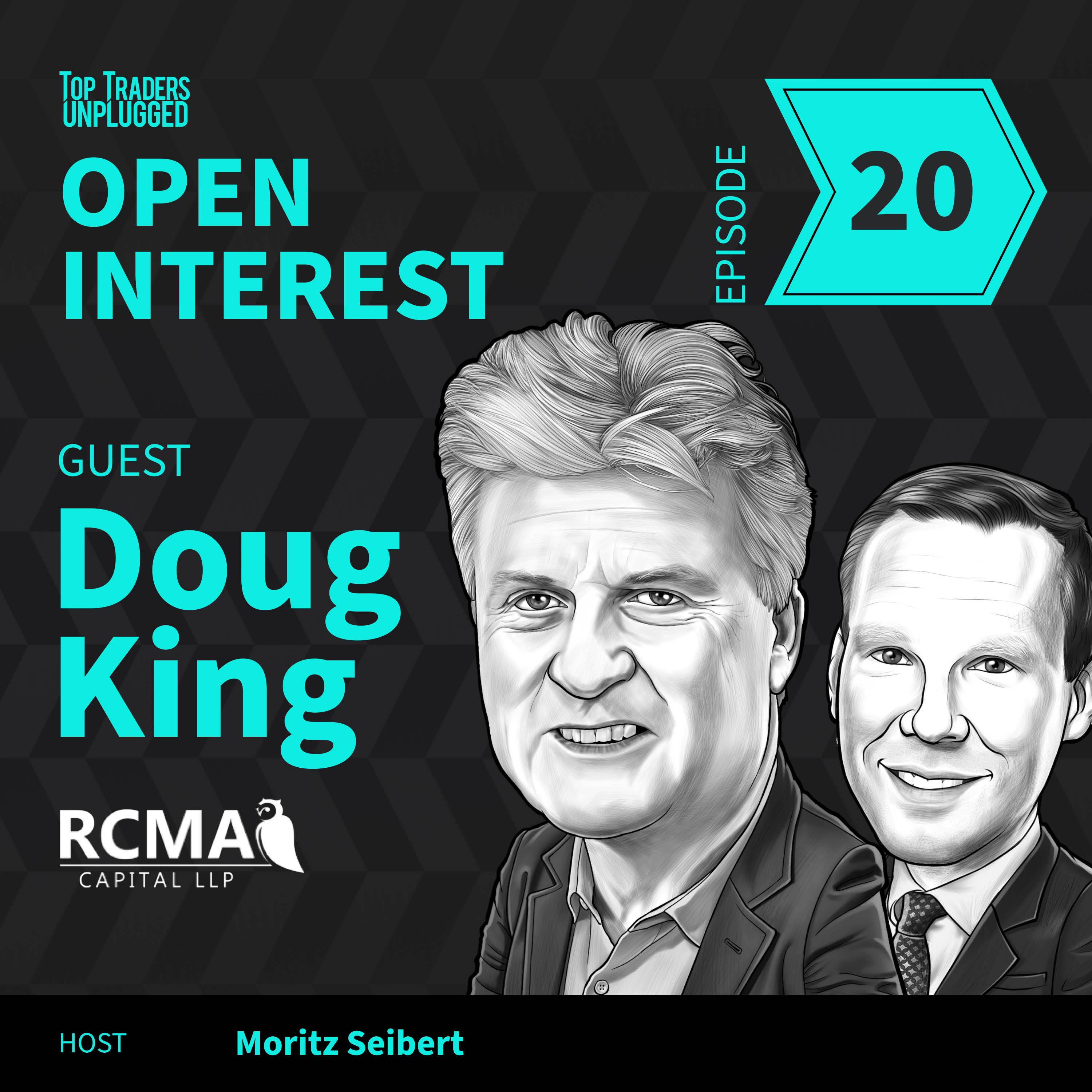
Loading summary
Transcript66 lines
- [00:00]
Doug King
Foreign. But there'll be moments where we will have rocket ship moments where distortions come and that's you've got to be in it. Don't try and second guess when they occur because you won't be able to do that. And you'll come late because it's all gone. And then you'll wake up and everybody's making a load of money and you're deciding to come in at the wrong point of that, of that cycle.
- [00:29]
Niels Kostrup Larson
Imagine spending an hour with the world's greatest traders. Imagine learning from their experiences, their successes and their failures. Imagine no more. Welcome to Top Traders Unplugged, the place where you can learn from the best hedge fund managers in the world so you can take your manager, due diligence or investment career to the next level. Before we begin today's conversation, remember to keep two things in mind. All the discussion we'll have about investment performance is about the past. And past performance does not guarantee or even infer anything about future performance. Also, understand that there's a significant risk of financial loss with all investment strategies and you need to request and understand the specific risks from the investment manager about their product before you make investment decisions. Here's your host, veteran hedge fund manager, Niels Kostrup Larson.
- [01:25]
Moritz Siebert
Welcome to another episode in the Open Interest series on Top Traders Unplugged, hosted by Moritz Siebert. In life as well as in trading, maintaining a spirit of curiosity and open mindedness is key. And this is precisely what the Open Interest series is all about. Join Moritz as he engages in candid conversations with seasoned professionals from around the globe to uncover their insights, successes and failures, offering you a unique perspective on the investment landscape. So with no further ado, please enjoy the conversation. Hello and welcome to the Open Interest series on Top Traders Unplugged. This is episode number 20 and I'm your host, Morit Siebert. Today I have a very interesting guest joining me. A commodity trader, a hedge fund manager, a UK football club owner, and an all around very fascinating person who's not a regular guest on the podcast circuit. So this is special. And the person I'm speaking about is Doug King, the former global head of petroleum trading. Before we start, let me give you some background on Duck. Duck studied mathematical engineering in the UK and then joined Cargill as a graduate where his career quickly accelerated and he became the head of the UK grain business. In 1997, he moved to Geneva where he became the head of gasoline and crude trading and subsequently the global head of petroleum trading. In 2004 Duck founded the Merchant Commodity Fund, which is a commodities focused hedge fund that operates out of London. And in 2010, he and his business partner, Mike Coleman, who by the way, has been a guest on Top Traders on Plug Together, purchased the RCMA Group, a diversified physical commodities trading business based in Singapore. And in 2016, they built an oilseed rape processing plant in the UK, which at the time was a greenfield investment and the first of its kind since more than 30 years. And today this plan processes about 25% of the entire UK rapeseed crop. In 2023, finally, Doug acquired full ownership of the Coventry Football Club, which plays in the UK Championship League, which is one week down from the Premier League. And you would have guessed it, they're on top of that league right now. So, Doug, let me bring you into the conversation. Hi and welcome to Trouttaters Unplugged. Thanks for joining me today.
- [03:46]
Doug King
No, cold and good to be here.
- [03:48]
Moritz Siebert
Isn't it a nice Christmas gift ahead of Christmas to finish the year with Coventry as number one.
- [03:56]
Doug King
Wow. Straight onto the football. I like that. Yeah, look what a season we're having. Yeah, it's one of those. It's a standout one. It's all ahead of us. Everybody's excited up in the West Midlands, but our feet are on the ground until we get there. But we're in an incredible position, best position we've been in for a long time, so there's a lot of excitement.
- [04:18]
Moritz Siebert
Great. We're not going to make this all about football, but I remember when you and I had our prep call probably two or three weeks ago, we spoke about commodities and you running a hedge fund, and I asked you whether it's okay to speak about your involvement with Coventry and you said, of course it is. It's all public knowledge, so I hope I'm not reciting you incorrectly. But you went then on to say, in the hedge fund we trade commodities, and with the football club we trade players. So it's kind of all the same, but different.
- [04:46]
Doug King
Something like that. Something like that.
- [04:49]
Moritz Siebert
All right, that was a cool statement. Now, like, looking back, you had this career at Cargill, joined them as a graduate, traded grains in the uk. You then moved to Geneva, where a lot of the Cargill traders, I think they're still based in Geneva, it's still a big trader for them. Right. And you ended up running their petroleum business globally. So you have this background as a physical commodities traders and. And then you decided to leave the group and start a hedge fund. What triggered that decision? Why not stay At Cargill in that big position, why start a hedge fund?
- [05:28]
Doug King
I think when I went to Cargill in Geneva in 97 into the oil business, I'd obviously been in the traditional Cargill businesses of grain and non grain products. And to move into petroleum exposed me to, I would say the US hedge fund industry for the first time. I remember discussing trade ideas with great legends such as Paul Tudor Jones about gas oil cracks and they were looking at getting involved in petroleum in their hedge fund. So that was an eye opening moment. And I think after those discussions it sort of whetted my appetite for future career path as to wouldn't it be cool for me to at some point get into the hedge fund world?
- [06:17]
Moritz Siebert
Right. And so you did, I think you started RCMA or the Merge and Commodity Fund at that time in 2004.
- [06:24]
Doug King
Yeah, 2004 we kicked that off. Mike Coleman, who you mentioned in your intro, he was the one who put that together and asked me to come in and copy co start that. And yeah, we did it. Obviously we, we knew where we were in the cycle. Asia was booming or about to boom. And we felt that fundamental trading and you know, looking at commodities as a, as a merchant would rather than anyone else would be advantageous at that point. Where there were very few sort of, I would say companies or hedge funds that gave access to investors into the commodity world at that point.
- [07:06]
Moritz Siebert
That's right, hence your name, the Mergent Commodity Fund, or MCF for short. If I were to ask you, how would you categorize that fund? Is that a 100% fundamentally driven discretionary commodities trading fund or are there some quantitative, systematic, maybe repetitive elements where you're exploiting inefficiencies in the market? How do you operate that thing?
- [07:27]
Doug King
The former is where we are I think obviously over the history of the fund, which has run for nearly 21 years, which is a long time, we've looked at obviously optimization and timing techniques where we were excited in potential fundamental strategies just to improve our execution and improve our ability to not leave too much on the table. But we're very bottom up focused. We go and do the supply and demand work. We then look at the cash markets very carefully so we're never removed from reality. And I think when I go to conferences or on commodities around the world, I reckon around 80% have never ever seen a commodity. So we know commodities and we understand a futures derivative price and a cash market price can diverge, giving different signals and they're the sort of things that we look at to give conviction to.
- [08:27]
Moritz Siebert
Our strategies right before we take that deeper dive. You only trade commodities or do you have some exposure to macro markets such as interest rates and equities and currencies and stuff like that? Or is it purely commodities?
- [08:41]
Doug King
It's purely commodities. We do the full set, though. We do different. We call them buckets. So we do oil, we do gas, we do industrial, we do softs, we do ags. We don't do precious. We do do base, precious. We don't class as a commodity. People can handle that themselves. They don't need me to decide whether we should be along the shore gold or silver, when we've never done those. We do commodities that are really impacted by fundamental supply and demand, global movements and substitution arbitrage, that type of thing.
- [09:17]
Moritz Siebert
Well, maybe silver is at that point in time. Maybe it is imb man. Maybe it is a London inventory. So maybe something you should actually be buying.
- [09:26]
Doug King
No comment on that. I wish I'd been on it of late. It's been crazy.
- [09:30]
Moritz Siebert
Well, that's, you know, it is. It is what it is. So you run all these different markets. You've mentioned the Axsoft, you know, the petroleum markets, crack markets. Do you have a large team that's running all these S&DS, the supply and demand analytics, or is it. I mean, because it's so diverse. I mean, all of these markets are so different.
- [09:50]
Doug King
Yeah, we over the, over the length of the fund, we run bigger, we've run a lot more assets. I think for sort of five, six years we ran a huge amount of assets really in commodity land of around between one, one and a half billion dollars. We're a smaller fund today where we've been averaging over the last probably five, six, seven, eight years, somewhere between 200 and 600 and so on that basis, we are a pretty small team. And I mentioned all those buckets that we look at, but we, it just is our tool set. We look for the best opportunities across those. And we may not trade those or any of those sectors for long periods of time, maybe even years, if there's no story that we think is relevant to giving us a risk reward profile that we're looking for.
- [10:39]
Moritz Siebert
What are they talking about? Stories. Speaking about stories. What are the current themes and stories to get you guys excited?
- [10:46]
Doug King
I was at a conference in Paris a couple of months ago. It's always interesting when you go and do conferences because you have to give a presentation or a viewpoint of where we are. And it was really interesting looking at commodity cycles and having been in commodities for a long Time you always at certain points feel that it isn't going to be a cycle this time, but it always is a cycle or it seems to be a cycle. And why is that? Is that there's always huge innovation in commodity land. I remember in 2006, 7, 8, everybody thought you would never be able to produce enough oil at the speed that we wanted to consume it. With the industrial revolution in Asia and people were talking, we got to 150 and everybody's talking 200. I remember Goldman Sachs talking 200 bucks a barrel. And then we get the innovation of shale, which frankly, whatever anybody else says, that was a shock to see what could be done. And it happened to be in a country that was able to handle that. All the shale really, or the only real shale of critical mass has been in the States. And to add in 15 years, 9 million barrels a day of additional oil production onshore in a safe environment. Wow, innovation wins again. So commodities, I think are quite disappointing in respect to constantly moving upwards. So it's always a cyclical. I mean I look at the price of oil today at 55, I remember breaking 50 in 2005, thinking, here we go, we're off on the revolution. It's going to be scarcity. And here we are 20 years later and we're similar pricing because of the innovations and substitutions that we've chatted about. And I would give you the same story in grains with gmo. The GMO revolution, any sort of weather you get, it seems around the world today just doesn't affect these great seeds. And so you seem to be way above the sort of population trend with how much you can produce food wise without you're going to huge land grab. There is some land grab, but you don't need huge land grab to manage your population growth. So again, I think those are the things have made and will always make commodities cyclical. So I guess where we excited today is in the electrification theme. We do think that base metals, your copper, aluminum, lithium, this is not so straightforward. Maybe to find different production areas or to manage demand so easily. And obviously then it boils down to how quickly the electrification theme throws out. And he talks about the data centers, everybody talks about the electric vehicle growth that certainly we're seeing in China and even into the trucking sectors. So I think that's the area where we are now pivoting because the other broader commodity land looks, let's put it like this, well supplied.
- [14:07]
Moritz Siebert
Yeah, I find the commodities very fascinating personally. I mean they always change like you say they're cyclical. Look at natural gas. I mean, you have Henry up, really not much happening. Then LNG because of the Ukraine war and Europe needing that gas, competing with China for it, driving up the price. Cocoa is a recent example of the past two years up and down. I mean, go through the list. Each of these markets are very cyclical, I find. And like you say, the buy and hold approach is just nothing for commodities.
- [14:38]
Doug King
I totally agree and I've argued, I mean, maybe I've hit all the conferences over my time and all these passive index funds peddling their wares. It's like really, that's how you lose all your money. I remember when they launched the USO and UNG contracts to great fanfare in 2007.
- [14:57]
Moritz Siebert
The ETF.
- [14:58]
Doug King
Yeah, the ETF. And you know, if you'd invested there and just closed your eyes, you'd lost all your money and then some more. All of it, everything gone, especially USO.
- [15:09]
Moritz Siebert
Was impacted with WTI going negative. I think the May contract, it was. And you know, they have this static role and exposure to these contracts. Shifting gears with your hedge fund, you're now trading futures. So you've turned into a, let's call it a paper trader. You used to be a physical trader, it's now futures only. If one of your investors asks you, maybe in a due diligence call or something like that, Doug, what is your edge? What would you respond to them?
- [15:39]
Doug King
It's a really interesting one because ultimately our approach to trading commodities has not changed in the 20 years that we've been doing it. And obviously we therefore have a 20 year track record of doing that. And being in any business for 20 years means that probably you haven't mucked it up too many times. Obviously there would have been some hiccups, but therefore you understand how to monetize and risk manage and get the necessary returns that you've been able to give to keep your investors with you. Yeah, they do like a story. Investors, they change. They sort of. It's a weird one for me. They get excited about commodities so they try and find a commodity manager. And then they, and then they, and then they phone you up and they say, okay, you know, are you following all the, you know, all the ships or are you following all the tank tops of the oil? And for me it's like, wow, if you trying to go that granular, you're going to miss loads of stuff out of the situation. And that isn't, that isn't how we work. What we look for is deep diving into A lot of theoretical work, a lot of demand stressing of what may or may not happen. And then we look physically and I think you say I've gone from physical to paper. But all the major trading houses use physical really to then leverage paper. That's what they do. They don't sit there and say I'm just going to move a million cargoes around and make a few pennies to all that risk. They get the physical information and then they trade derivatives on a highly leveraged basis to monetize great profits that you obviously saw in 21, 22, 23 from the major Glencores, Vitols Trafiguras of this world, who had an absolute bonanza with what they could see and how they could work those distortions in the market. So I say what makes a great footballer? Maybe they're good at football and they stand out and it isn't like because they've looked at something systematically that allows them to always be a good footballer. All the experiences that I have led and my team has led through all the cycles, all the moments, all the experience and still being there, getting the returns that people want. That to me is where I would answer that question. I'm probably decent at what I do.
- [18:13]
Moritz Siebert
Yeah, I guess so. Look, I mean, maybe the one thing that you're missing relative to what you could do at Cargill is playing that convergence of futures to spot all the way to the final end. Unless you take delivery in the fund, which I think you may have mentioned to me that you did once or twice just to figure out where prices or where cash prices actually were. But other than that, you say you could pretty much do what you did before.
- [18:37]
Doug King
Yeah, I mean it's really interesting talking over a long period of time. We did take, and have taken fiscal delivery on a couple of occasions with the hedge fund. We took some natural rubber physical delivery more on a cash and carry type of product where you could retender the physical commodity more than full carry the following month. So it was a pretty straightforward physical to futures convergence. The sugar. We did take delivery of some raw sugar at one point, which was exciting to say the least. We were very bullish sugar at that point and we really wanted to see how much was there to be given at the expiry point just to ensure that we weren't daydreaming about how scarce the market we felt was. And so we did take a physical delivery and we actually had to work with a major trading house to execute that. Listen, I'm talking about it and Feeling nervous and sweating as I talk to you. But we did do that. But that was a long, long time ago now.
- [19:46]
Moritz Siebert
Yeah. And it sounds like a lot of hassle. I'm sure when you have that physical position and you need to get rid of it at some point and they're coming.
- [19:53]
Doug King
Exactly.
- [19:56]
Moritz Siebert
Look, when you have the fund, do you run concentrated positions? I know you said, look, you. If there's nothing going on in a market, you don't have a position which is, which is like we trade. If nothing going on, why would you have a position? Not having a position is having a position which is neutral. But do you kind of like force the fund to at least be like in two or three things to have a little bit of diversification? Or could it be like, no, it's LNG is all we're doing or copper is all we're doing because we're so bullish on it.
- [20:24]
Doug King
We are okay being concentrated, but not just into one thing. We have limits, obviously. We've got a pretty robust risk system and investment system that our investors are aware of, how much we can deploy in certain themes. We can't make it just all in on one theme and I think that's appropriate. So from any sort of given day, we would probably have somewhere between five and 20 strategies. We probably have two or three themes, maybe four. If there's excitement everywhere, then we'll be everywhere. If there's no excitement, let's say grains for a period in say 17, 18, 19, the grain markets were just well supplied, full carry, nothing happening, spec comes in, spec goes out, nothing to say. So we don't want to be wasting any of our risk bullets in there. We have no, there's no supply and demand story. We really. I say to my investors, what we should be doing for you is in very boring, let's say oversupplied, sort of lower volume years, we should be grinding out a good return or a decent return, certainly with the cost of money where it is today. But there'll be moments where we will have rocket ship moments where distortions come and you've got to be in it. Don't try and second guess when they occur because you won't be able to do that and you'll come late because it's all gone and then you'll wake up and everybody's making a load of money and you're deciding to come in at the wrong point of that cycle. So as long as we don't lose too much money in years where it's difficult, choppy Then that's the sort of message that I would give to our investor base.
- [22:15]
Moritz Siebert
How do you figure out when it's time to get out of a, say a loss? Like to stop out of position, close a position that isn't working, like for us in the systematic world. It's kind of like you have a stop loss or you have a risk budget and there's a, you know, certain price level where the position just needs to go. How do you do that? Like, how do you figure out when you're wrong?
- [22:36]
Doug King
Is similar to how you would do a robust risk process that we've developed over the years. Drawdown of risk budget, further drawdown of risk budget and then full drawdown of risk budget and out. Then you're sidelined for a period of time. We reduce our risk envelope as we draw down significantly at portfolio level. So we target volume in our hedge fund of around 21% annualized Vol. If we're drawing down and, and, and obviously out of step with, with markets, we will run much lower volume than that. So if we're really out of step, we'll be running volume no more than half of that until, until we're able to show that we're getting ourselves back towards, you know, a higher water period where we'll expand the envelope again so we, we never have a moment where. So for us, losing money is very poor because we have to grind it back rather than shoot it back with the target volume that we would like to work with. So that is always, you know, I always think you mentioned the earlier discussion. You know, cocoa goes up, it goes up and rockets up to, you know, 10,000, whatever it did, coffee up to over $4. And you think, wow, they must have made a lot of money in that. And the issue is, it's like we have to make money the right way. And when we have high vol in our strategies, that, that isn't ideal for us just because we can't maintain positions with that volume very easily with our risk process. So, you know, the WTI moving to negative. You know, we could see we made quite a lot of money that year, but we could not handle the volume. The position size was too small. I mean, it just couldn't handle it.
- [24:26]
Moritz Siebert
It just stole the thunder of my next question. It would have been like, you know, on winning trades, I mean, yeah, getting out of losing trades is, is obviously important. At some point you gotta stop the bleeding. Right? But on, on winning, on winning positions, be that in cocoa. I mean, let's use Coco, because you've mentioned it, it goes from whatever like 3,000 to 12,000. It does a 4x kind of like performance move, but with your, with your vault control you probably then, like you said, wouldn't be able to keep the full position on because the thing is now just too big and it's moving around in your portfolio too much.
- [24:58]
Doug King
Yeah, really difficult. The way we're set up with our risk process and how we have always been in the fund with our investor base to handle that. The difficulty also when you get markets like that is we have a saying in our hedge fund of real not or not real. And ultimately when you get stress in markets like cocoa or coffee or whatever, a large part of the final move of that will be margin call stress. And that isn't real, that's financial stress. So my viewpoint then is everybody goes, oh, there's no cocoa. I mean Jesus, the chocolatiers are all running around and say it's 10,000, go to 20,000. But the issue is finding out what is real cash valuation of what people are really doing is the key aspect. And that gets really tricky in those high stressful breakout moments where you can get really hurt very quickly.
- [26:05]
Moritz Siebert
Yes, I think the squeeze is a real thing and the financial margin stress. So for instance, a year ago or 18 months ago, when Coco was doing the highs, the ice exchange increased margin requirements for that market and you know, lo and behold, the next day with no increased margin requirements, pop, there you go. You know, positions need to be released. If you had a short position and it's now costing you 20% more to hold on the exchange, some let it go the next day and that just squeezes the market even higher.
- [26:37]
Doug King
Yeah, absolutely right. And we've seen it. You know, I did a presentation several years ago on the cotton market in, in Singapore where long term cotton merchants have gone out of business through being just running their business carefully and they're buying physical and they're hedging futures until they can unwind it the other way. And they are driven into huge margin core futures, short explosions that end the business of 130 year merchant, you know, which isn't what they will derive. You know, they weren't determined to do that. And I think that a lot of the agriculture markets especially were very, very slow in changing their trading ranges. They had way too low limits. And so you'd be lot limit gone, lot limit gone, lot limit gone. And it wasn't even a big move. And this is, you know, talking 2007, 2008, 2009. And so it was Untradable. And then there was a synthetic option market that was trading outside of the lot limit that people would go, my God, I have to get, I have to get out. And it was just, and it was meant to be a futures market but you couldn't see it, it was opaque. And so these exchanges for me were extremely slow to work out where they were in that period of 2005 to 2008. Widening the ranges, allowing people to trade in liquid markets, they made them very illiquid and that caused huge stress and a lot of people to blow themselves up in that period.
- [28:17]
Moritz Siebert
And maybe also with respect to your volume target of around 21, do you have a preference? Trading spreads, product spreads, calendar spreads, all that type of stuff. Playing the curve or are you more. Yeah, we're keen to take the outright position, be that long or short and go for the ride.
- [28:35]
Doug King
Whenever I'm asked that for me, we're trying to find the solution and that's it really. If the solution is flat price, it means that the price is in our view too low or too high and needs to correct to rebalance the supply and demand. At other points there'll just be a period of scarcity or surplus that is not really the flat price of the commodity. It's the fact that it's got itself out of whack for a particular demand surge or supply supply surge. A bit like the, you know, let's say the COVID and the huge oversupply we needed to go, well, we had to force it back into the, into the spigot ultimately had to move into deeper levels of storage. And so it's not really a flat price curve, it's a flat price trade, it's a curve trade. So for me it's just finding the right solution. Some of the best trades that we've had have been relative value trades where especially let's say a full carry where you can leverage very highly on a very low downside trade with a level of storage that we're aware that we're going to hit. And then obviously we start to tighten up through either, let's say OPEC cuts or demand increases and we get a flip of the curve. We suddenly got to move from carry to inverse to release more product to solve the short term scarcity that's been created. So you know, we, we, we try and find the right solution for the right problem in commodity land.
- [30:15]
Moritz Siebert
You mentioned even looking back today, you're still getting the sweats when you think about this sugar trade, this physical sugar trade. You did in Brazil or wherever that was. But when you, when you look over, you know, when you look back over the entire career with, you know, the, the Commodity Hedge Fund, but also with, with Cargill, I mean, is there like, I mean, usually people have like, there's like one or two trades that are like, really standout trades in either direction. Could be a massive success, could be a massive failure. But is that like one trade where you say, that's the one that I'll never forget.
- [30:44]
Doug King
I'll give you two on those. And maybe I shouldn't be talking about these, but I will talk then. We had a great year in 2014, against the curve. It was a difficult year, but we got really bearish on petroleum. I remember it was around June time, and the reason we got very bearish on petroleum was that. And this was when we were 115, 120, there was a lot of Middle Eastern action. You know, everybody was talking very high elevated prices. Remember going to a pirate conference and Gary Ross was super bullish. And we got bearish because we felt that the shale growth year on year on year in the States was just eating OPEX pie. And we felt the global GDP at these pricing points was going to hugely disappoint. So we did a lot of modeling on global GDP and what that meant to oil demand. And we just felt like global GDP instead of being 3 or 4, is going to be more like 1, 2. And so with that, the ore demand growth and with the shale growth at the pricing point, we felt was hugely ready for probably a big curve change from inverse into contango and then a subsequent significant fall. So we got excited, started putting the position on in June. And then the whole of ISIS exploded in Iraq. And they were on horses riding around in Iraq and everybody thought they were going to go to Basra and stop all the Iraqi oil. And so we quickly got out of that position with licking our wounds, going, wow, okay, wasn't expecting that. But we came back in quite aggressively in, I think, July, August. And then we had a fantastic five, six months into the end of that year where we were right. Global growth did disappoint. Surpluses started to build meaningfully at high pricing points. And then opec, I guess, somewhat fortuitously for us, decided that they'd had enough of shale growth and we're going to have a price war. So we went from about 120 to about 40 in five months. And I think we made 60% on the year. We were very, very standout on that year. We, I remember I think I got a call at the end of that year from CNBC saying you're the top performing hedge fund of the year. We want to come and interview you. And I went, whoa, really? Are we. So we had an interview with CNBC and talked about, you know, the strategy and the trade. And so that was, that was a pretty interesting one that we, we, we did our own thing. We do do like doing our own thing and not following sort of general, you know, situations. And I think that's the right thing to do. And I guess the only other one was we, we were involved with that nickel excitement.
- [33:40]
Moritz Siebert
Oh, the LME trade.
- [33:41]
Doug King
Yeah, the LME nickel excitement. We, we got bullish. Nickel had a position on, obviously was moving quite well and then it started obviously to move ridiculously out of control. Clearly something was up. And I remember getting up of the morning very early. We had a final bid of position. We wanted to liquidate. I think it was up 100% on that morning. So I did liquidate pretty much everything and then obviously was shocked when the futures exchange decided that they would not honor the futures trades. For me, that was absolutely horrific work from that exchange. They decided to open it. It was a futures exchange. I know there was a lot of legal antics against that and rightly so, obviously I don't think it came to anything but that was a moment of excitement and then huge. It's never happened before. How can they actually cancel a future straight when they've opened the market? But anyway, that was disappointing for us.
- [34:51]
Moritz Siebert
Awful. It was. You weren't the only one that got trades cancelled. There's quite a few and some have followed on to, to sue the lme. But they got out of it. You know, they kind of like said, oh, we, we were just protecting ourselves and, and the clearinghouse. Whereas, you know, you could also see this, that they bailed somebody else out who had the other position. So I think that was a, a terrible, a terrible episode in the long history of the lme.
- [35:17]
Doug King
It was, it was. And I did remember seeing the LME executives and I think at the, at the Geneva Commodity Conference and I did have a long, long discussion about that.
- [35:29]
Moritz Siebert
Yep. Well, there we go. It's in the rearview mirror now. Hopefully that doesn't happen again in the future. Look, we, we've touched on the football, we've touched on your hedge fund, the. When you started the merging commodity fund, RCMA was at that point in 2004, not part of the group. It's now the RCMA Merchant Commodity Fund. Maybe give us just Five minutes on. How did the RCMA thing happen?
- [35:57]
Doug King
So when we started the Merchant Commodities Fund, we actually had a fund manager name called Ashleen analytics was the fund manager and we set up the Merchant Commodities fund that has been constant over the last 21 years of existence. And in 2010, Mike and myself felt that we wanted to diversify into a physical commodity sort of profile alongside it. So we acquired the RCMA Group, which at the time was the largest distributor of natural rubber in the world, actually the largest independent one. So it used to buy a lot of natural rubber in where it was created within the, you know, the rings of the equator. So a lot of it from Indonesia, a lot of it from Africa and we distributed it into Europe and to the us Obviously that was being run on our behalf by an executive management team. And gradually we expanded that footprint of RCMA Group into other commodities. So natural rubber, coffee, sugar, cotton. And at its peak, I think we had maybe 500 people in 30 countries trading. Yeah, basically it was a small trading house, wasn't that small. It was, it was a me, it was a, you know, we were turning over a few hundred million and it was being run. And what we felt was that the physical knowledge we were getting from that business was helpful for our derivative positioning within the hedge fund. And I think, if you remember the time, I think Cargill had Black river and they were using their hedge fund of Black river was linked obviously with cargo. I think Trafigura had one, Galena were linked together. So to me it was like we were sort of modeling the physical information, getting it directly from our own sources rather than having to rely on external sort of information flow. That was our logic and why we renamed Ashlein analytics to RCMA Asset Management. So we linked the physical with the hedge fund manager at the time was our theory. It confused a lot of people, I have to say. So looking back, probably wasn't the right thing to do. But we built that to diversify into a different, let's say, income stream for us personally, but also to support the physical information flow into the derivative business of the hedge fund. That was the logic. But we were running with very low prices over that period or, you know, certainly 14, 15, 16. These were difficult years where wholesale margins became, became very poor. Credit exposure to a lot of countries where we were shipping products was high. You know, when you're shipping and taking cotton to Bangladesh or coffee or sugar into Sri Lanka, you know, you've got to be really careful on your counterparty exposure. So for me it was like I didn't really fancy it after a while and we basically disbanded it. Apart from, as you mentioned, building the rapeseed crush in the uk.
- [39:13]
Moritz Siebert
Okay. So it's no longer operative today on all these markets except for the rapeseed business that you. Exactly right.
- [39:19]
Doug King
Yeah, exactly right.
- [39:20]
Moritz Siebert
In England. Okay. Because I would have tied this back to the question I had. What is your edge? That could be. If you have that physical business, you get all that information flow from know the physical business across the markets you've mentioned from rubber, cotton, sugar, whatever you did there. Power trading. I think you also did.
- [39:37]
Doug King
Yes, we did.
- [39:38]
Moritz Siebert
And, and that ties into your then hedge fund, which can be a great advantage.
- [39:44]
Doug King
I, you know, it can and it can't. But it is helpful, it is helpful to, to know. Yeah. If you're a fundamental trader, cash information is critical. We look really, really closely at basis, you know, the spread between cash and future futures. We talk to people in physical. We don't talk to the derivative industry, we talk to the physical industry. That is where we value the information. So for us, having our own commodity trading house, physical concentrating house, we felt will be very interesting. However, it can get quite micro but you know, it can be a bit heavy or it can be a bit tight, but then it solves itself rather quickly or yes, you can, you can get, you have to be careful. And I always think the key thing in trading is what's your filter, what's relevant, what's not relevant is the key aspect of any very good trader is the noise removal. Things that you might think are important are not important at all to me. Whereas other things that you might think are critically important to me. So that to me is the skill set of the company or the trader, something that we have honed over many years, I guess.
- [41:04]
Moritz Siebert
And also who do you speak to and who do you listen to? Even if you speak to fellow traders, they may be talking their book and not necessarily giving the information that is objectively right.
- [41:14]
Doug King
You're absolutely right with that. They know we're a hedge fund. They may want to get us excited or not listen, we're doing our own work. We're more interested in, in how easy or difficult it is to move different things or how heavy you're having storage, that type of thing. We're with the weeds. We're quite a micro analyst sort of company where we want to find reality of commodities. I remember a story last year or two years ago we had a lot of investors coming around talking to us about copper and the market in copper was I think it'd gone up to 11,000 at that point, a ton. And they said, are you on the copper trade? I mean it was the copper trade. Surely you're on the copper trade. And we went, no, we're not on the copper trade. Ah, why are you not on the copper trade? Well, we said there's a huge amount of derivatives, we're hearing it everywhere. But the cash market hasn't really moved. The basis has puked, has fallen massively. It's just a demand for futures, it isn't being driven fundamentally at this point. We like the S and D, we understand why people are doing it, but it's way too early. And lo and behold, I guess six months later we're back at 9,000. And because the market was just excited for futures, everybody hears the story and off they go. But you're not getting the physical follow through. Now if we had basis or fiscal follow through, matching that growth or just being slightly behind it, we might have taken a different approach.
- [42:43]
Moritz Siebert
Right, well, great. Doug, I know this is a busy pre Christmas period actually for both of us. You have a soccer game coming up, a football game I should say, not a soccer game.
- [42:55]
Doug King
We do tomorrow.
- [42:57]
Moritz Siebert
Yeah. Is there anything you want to mention? Anything important that I forgot?
- [43:03]
Doug King
No, listen, I think that the hardest thing in any money management or business if you like, but money management hedge fund is you have to make money the right way. And everybody looks at high volume moments and think traders must be coining it and having a great time. But it's difficult times. You want to stick with a very convicted position. But you have to de risk and then you have to re risk and then you have to de risk. These things are quite draining in respect to a theme that you've invested a lot of time and effort into building. And we've always. That's always a challenge for any money manager is you've got to be disciplined enough to accept that. You may have to do that several times when your supply and demand or your story is so strong. But there's noise, there's a liberation day or something over here day and people are just generally de risking not for your commodity reason, but for global reasons or for other reasons. And that's always a challenge for us, the noise around driving our themes. But I guess we've survived so far.
- [44:20]
Moritz Siebert
So yeah, it's never easy. I do have one final question which is like business and recruitment, like you know, these days, I mean commodity hedge funds, I think as you've said, they go in and out of favor Sometimes nobody wants them. Somebody, sometimes they're all the hype. Now with, I mean, do you find, how difficult is it to find people? Are they, you know, showing up on your doorstep or is everybody just, I want to go to Millennium and these pot shops and they're paying me these, you know, these big salaries and guarantees or how attractive are you as a firm? Do you get a lot of interest from people?
- [44:54]
Doug King
I think we do. We always, we can always acquire people into our business. So if we expanded our assets again, we would look at a particular key people that we know have that skill set. I think that the difference of our company, let's say to a Millennium, you go to Millennium as a hedge funder, you are on the tightest leash of your life. You better start well, you better not have any slippage at all on any of your risk processes. And if you fail two, three times, you'd be out the door in three months, six months, whatever. Now, look, you know, that's high pressure, that's focused. We have very stringent risk processes because we have to. But the way I look at it is slightly differently to that. But when these big, large asset gathering companies, you know, move into commodities, they're going to have 20 or 30 of you in this method, and they have to run it in a different way. We're a different type of fund. So people, I think, understand that. And there's always people who we could, we can get into our door to, you know, who want to come into that environment rather than a, here you go, here's your three months. Get on with it. Oh, didn't work and then you're out. And why didn't it work? And you can't get another kick at it for another three, three years or so. Yeah, it's very difficult to get in.
- [46:18]
Moritz Siebert
Excellent. I think it's one of the most interesting businesses in the world, to be quite honest. But, you know, that's me. That's probably also you, but. Hey, Doug, thanks for joining me on the podcast today. Really appreciate it. That was really great. I think it's been a fascinating conversation. Thank you for sharing your insights, listeners. I hope you'll find it interesting also. And as usual, I'll put the most important takeaways of my chat with Doug into our show Notes. And as ever, should you have any questions, please reach out to us and send us an email. You can contact us at infooptraders Unplugged. So, last but not least, this is the last episode of Open Interest, not forever, but for this year. So Let me say thank you for listening all like throughout of 2025. And let me also wish you Happy Holidays, Merry Christmas and all the best for hopefully.
- [47:06]
Niels Kostrup Larson
Thanks for listening to Top Traders Unclogged. If you feel you learned something of value from today's episode, the best way to stay updated is to go on over to itunes and subscribe to the show so that you'll be sure to get all the new episodes as they're released. We have some amazing guests lined up for you, and to ensure our show continues to grow, please leave us an honest rating and review in itunes. It only takes a minute and it's the best way to show us you love the podcast. We'll see you next time on Top Traders Unplugged.