Loading summary
Transcript84 lines
- [00:01]
Zibby Owens
Hi, this is Zibby Owens and you're.
- [00:04]
Allegra Goodman
Listening to Totally Booked with Zibby, formerly.
- [00:07]
Zibby Owens
Moms don't have Time to Read Books. In my daily show, I interview today's latest best selling, buzziest or underrated authors and story creators whose work I think is worth your time. As a bookstore owner, publisher, author, and obviously podcaster, I get a comprehensive look at everything that's coming out and spend my time curating the best books so you don't have to stay in the know, get insider insights and connect with guests like I do every single day. For more information, go to zibbymedia.com and follow me on Instagram at Zibby Owens.
- [00:45]
Allegra Goodman
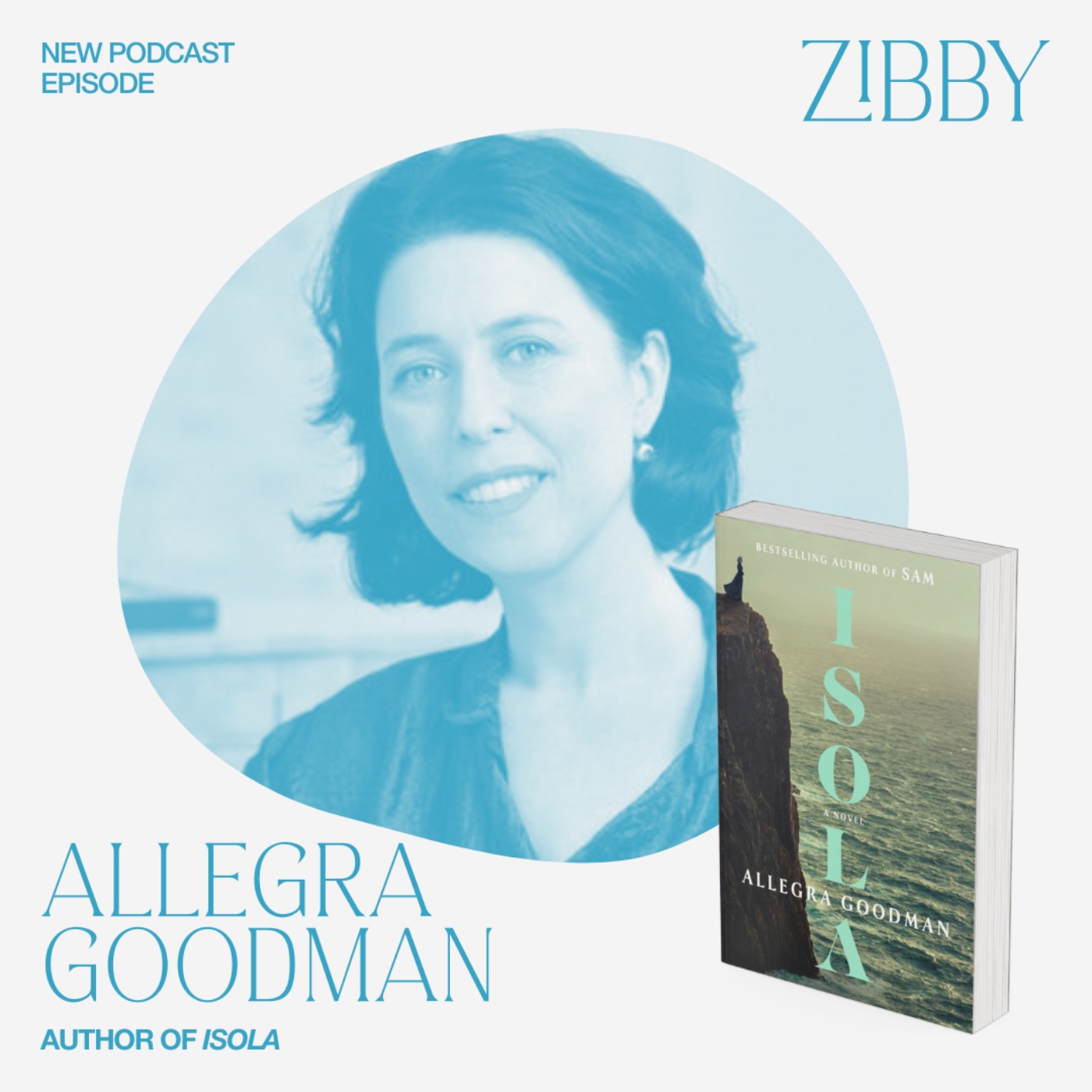
Allegra Goodman is the author of a novel. This is her second time on my podcast. Previously she was on for her national bestseller, Sam, which was a Read with Jenna selection. She is the author of six novels, two short story collections, and a novel for young readers. Her fiction has appeared in the New Yorker and elsewhere and has been anthologized in the O. Henry Awards and Best American Short Stories. She lives with her family in Cambridge, Massachusetts, and her new novel, Isola, has been published by the Dial Press.
- [01:15]
Zibby Owens
Welcome, Allegra. Thank you for coming back on Moms don't have Time to Read Books to discuss Isola, your latest novel. Congratulations.
- [01:22]
Thank you.
- [01:23]
Please tell listeners the general premise of the book and then I want to dive into this fascination you had with the story and how it wouldn't let you go.
- [01:33]
The book is the novel is based on a true story of a young French noblewoman who sails to the new world in 1544, 1544, I think, and she is marooned on an island in the Gulf of St. Lawrence. And there's a little bit known. There were two contemporary accounts of what happened to her, but they conflict with each other. They know that she was real. They know this happened. So I had a lot of space to imagine, you know, her life there on this island. And I was just fascinated by this whole, this whole scenario. So that's how I started writing this book.
- [02:08]
So in the author's note at the end, which I only, you know, do like, I wanted to have a whole book of your author's note because it speaks so much to the writing process itself. But you're like, I was writing Sam in the morning. And then I was like, you're like cheating on Sam the book by trying to write this and that. You said you found your way in when you finally figured out her voice and how. And the whole book, you know, it is characterized by this. As if you're listening to this woman speak to you. Right? Tell me about that. And the whole experience and the backstory of this, which is absolutely fascinating.
- [02:44]
Well, it's actually kind of a moms don't have time to read or write type of origin story because I got the idea for this book 22 years ago. I have four children. We were. We drove up from Massachusetts to Canada on a road trip. My kids were 10, 7, 3 and 0. Like, we literally had a newborn. I am not sure why I agreed to this. It's all very fuzzy in my mind. I think it was some kind of euphoria after birth and. But I ended up taking out a whole stack of books for kids about Canadian history, which I thought I would share with my three sons, the three older boys. And of course we got up to Canada and like, nobody was interested in reading those books with me. But I was not getting any sleep because I was nursing the baby all night. And I read all of them, you know, these stacks of books that were sort of like YA books about Canadian history or children's books. And I stumbled upon this passage about this young woman, Marguerite, who sailed to the New World and was marooned. And it was literally like in parentheses in an aside in the middle of a chapter about Cartier's voyages to New France, which is Canada. And I was like, wait, what? What? You know, I'm sort of, you know, deliriously like, sleep deprived with this newborn in my lap, you know, looking at this. And I was thinking, this is such a great thing to write about. This would be such a fun thing to do for a novel. But the whole idea of writing a novel set in the 16th century stressed me out.
- [04:15]
I can't imagine why.
- [04:18]
This is like, I am. I was not a historical novelist. I wrote contemporary novels. And the idea of doing that kind of research and you in my sleep deprived state, I sort of put it aside. But I kept. It was always in the back of my head all that time. And, you know, kids got older, they grew up. And really my youngest was, I think, a senior in high school. No, she was in college by the time I returned to this idea. But I was still in at that point. I had more time to write and to do research and to read, to do all the reading required to, you know, write a book like this. But I was still, you know, wondering how to tell this story. So. And I was intimidated by the fact that it was so long ago and that so little was known about this woman and I thought, let me just try to write the first sentence, you know? And I got away from my computer and I just had a notebook, and I just started writing by hand, just trying to write the first sentence, which I thought could be in the first person, like Robinson Crusoe type story where she was telling her story. And I just kept writing this first sentence over and over again until I got to sort of the 20th iteration of it. And I heard her sort of saying, I never knew my mother. She died the night that I was born. So we passed each other in the dark, and. And all of a sudden I heard this woman's voice speaking to me. And at that point, I. I just had the confidence to keep going as if she was telling me the story and I was transcribing it. Of course, it's more complicated than that because you have to figure out the structure of the book and other issues. But really that was the key for me just to having the courage to write this book.
- [06:01]
Do you ever think, like, hearing you.
- [06:02]
Say that, I'm like, maybe she really.
- [06:04]
Was speaking to you, and maybe this is the universe and the way that these things work and that, like writers, we really are just like vehicles for stories that are out there. Right. It's like other worlds that way.
- [06:17]
I mean, there may be something to that, honestly, and there's definitely something to the fact that stories and books have to be written when they're ready to be written. You know, even if I'd had all the time in the world when I was younger, 22 years ago, I might not have been able to write this novel. I might have need to grow up a lot more and to have experienced a lot more in order to bring that to this book. So I do. I am kind of a believer that there's a. There's a time, you know, and sometimes it may require some patience and some waiting and maybe doing other things first. But the imagination works in mysterious ways.
- [06:55]
So, yeah, you have one scene where not to give things away or whatever, but where someone is saying, like, I can't sleep without this person. I've never really been alone. Like, this is the worst feeling. And, like, just tapping into that human emotion of anyone who has lost anyone for any reason or is missing someone for any reason. Like, these things transcend time. It's not like people living back then didn't feel love and loss and all the feelings.
- [07:28]
I totally agree with you. You know, and. And when I heard her speaking, it was sort of. She was a real person just talking to me like A person, not like a historical figure or not like somebody who lived hundreds of years ago. And those emotions, people did feel lost. They did fall in love. They did feel betrayed. Women did struggle, just as they do now. Worse, in fact, in many ways, you know, and. Yeah. And that. That moment was very real to me, that. That this young woman had. Had never. Had never been alone. And I was really interested. I'm glad you brought that up, because I was really in the. Interested in this whole idea of what it was like to be completely isolated. And actually, I haven't told this to people, but, you know, that title, Isola, which beats island in Italian, is from an Italian map that they used. But I was really fascinated by that word because it also sounds like I alone, I solo, but in a feminine form. And she has to. She has to experience life without the people that she loves and the people who raised her and the world that she knows and somehow come back from that. And so as a novelist, that was what really, really interested me.
- [08:41]
Wow. And they say no man is an island. And yet.
- [08:46]
Yet sometimes you are stuck on an island.
- [08:48]
Yes.
- [08:48]
And you're a woman.
- [08:49]
Yes. My gosh. Even her voyage there, I'm like, the Weevils. And I mean, it's like, whoa, this is not fun. I'm like, get me off the boat. Please take me off the boat.
- [09:02]
Yeah, get me off the boat. And then she finds out what it's like off the boat. And that's hard. It's hard.
- [09:08]
Like, maybe the boat wasn't so bad. I. The power to withstand the most difficult circumstances. I mean, that is what we have to draw on today and every day. Right. We might not be on an island by ourselves, but we can certainly feel that way sometimes. And how do you get through it?
- [09:29]
Yeah, absolutely. What do you draw upon?
- [09:32]
You know, what do you draw upon? My gosh. Did you consider ever sort of other viewpoints, third person, like, other ways to tell the story, or were you just like, no, I'm in. This is it.
- [09:45]
Allegra Goodman
Today's episode is sponsored by Acorns. Here's a fact that may not surprise you. 66% of men are investing in the stock market compared to just 48% of women. Here's another one that won't surprise you either. Multiple studies have shown that women are better investors than men. Why? Because men are overconfident and women actually do their research. The investing gap means less women have the chance to build wealth now and can have huge repercussions down the road when it comes time for them to retire. The good news is that Acorns make it easy for everyone to start investing. I've been using Acorns for over a year now and have absolutely loved how easy it is to use the returns that I've gotten and absolutely everything about it. Acorns is a financial wellness app that makes it easy to start saving and investing for your future. You don't need to be an expert. Acorns will recommend a diversified portfolio that matches you and your money goals. And you don't need to be rich. Acorns lets you get started with the spare money you've got right now, even if all you've got is spare change. Sign up now and join the over 13 million all time customers who have already saved and invested over $22 billion with Acorns. Head to acorns.com/books or download the Acorns app to get started. Paid client endorsement compensation provides incentive to positively promote Acorns tier one compensation provided investing involves risk. Acorn Advisors LLC, an SEC registered investment advisor. View important disclosures@acorns.com Books Today's episode is sponsored by Wayfair. After the holiday Hustle There is nothing like giving your home a little tlc. Whether you're tidying up, clearing out or just want some new looks to start the new year, Wayfair has got everything you need, all within your budget. I am obsessed with Wayfair. I used Wayfair to decorate both Zivi's bookshop in Santa Monica and my office for Zivi Publishing here in New York City. I love the items. They are all such high quality. The couches are soft and beautifully constructed and the chairs and everything for the office. All of our items are first rate. They came so quickly and were exactly as advertised for such a great price. I'm obsessed and I know you will be too. Whether it's for your home or your office, some spring accents, lighting, art, entry tables, rugs, holiday storage closet, organization appliances, accessories. They have everything and it's so convenient. The huge selection of home items that Wayfair has makes it easy to find exactly what's right for you. There's something for every style and every home, no matter your space or budget, Wayfair makes it easy to tackle your New Year's home goals with endless inspiration for every space and budget. Whether you need a light refresh or an organization overhaul. Plus free and easy delivery. Even on the big stuff. They'll even help you set it up. So give your home the refresh it needs with wayfair head to wayfair.com right now. That's W A Y F A I R.com Wayfair every style, every home.
- [13:07]
Zibby Owens
I was committed to the first person for this one, and I usually write in the third person myself. I think it was partly because I was obsessed with Robinson Crusoe when I was a child. And I had this idea that, you know, he was a man. First of all, he wasn't escaping the kinds of things that she was escaping. You know, when he got to his island, he was also on a relatively tropical, warm island. You know, one of the big problems he had was the sun was burning his skin all the time, and he made a parasol, and she's on a subarctic island. So, you know, I was really. I was really interested in that. I was also really interested in her as a woman, that one of the things she realizes is that she's obviously in great danger on the island, but she was in danger at home. You know, she was not safe where she was. And I was interested in exploring that. You know, Robinson Crusoe, when he gets saved, he can go back to being a white male, you know, at home. She can.
- [14:03]
Oh, my gosh. Sam and Marguerite, as you mentioned in your note at the end, are both survivors. Right. Why do you think you are drawn to stories of survivors like this?
- [14:15]
I think as a novelist, I've always been interested in questions like, sort of, how do you live? What's the best way to live? But also, more than that, sort of, why do you live? What is it for? And when you explore somebody trying, struggling to survive in different contexts, you are. It's. It's a way to frame that question in a clear way. You know, at some point, Marguerite says, you know, she. She learned how to survive on that island to a certain extent. You know, she. She could. She learned hunt. She learned to keep warm, to sustain herself. But she had. But it was so much work, and it was so hard. Then the question became, in isolation, why do you do it? What's the point of it? And I was interested in exploring that question.
- [15:01]
Did you ever, like, put the book down and be like, okay, now I just need to, like, wrap myself in a blanket and indulge in the creatures of home? Because, yeah, like, I felt very lucky.
- [15:10]
I mean, to have heat.
- [15:11]
Yeah, exactly.
- [15:12]
Heat in the house. Yeah, yeah.
- [15:15]
Like creature. Let's not take anything for granted.
- [15:18]
No, no.
- [15:21]
So if Marguerite were to meet Sam, what would that. And they were living in the same time, what do you think their conversation.
- [15:26]
Would go like, ooh, well, they might have some good talks about climbing rocks. I think Sam would actually be very impressed with her. Mm. I think Sam. I think she. You know, Sam was not a big reader. She's one of those kids that doesn't like to read. And she's always like, why do people read those long books about people who lived a long time ago? And I think that Marguerite, she would have thought, like, she had credibility, you know, this is the person who had to fight. Fight her way. And I think so Sam, I think, could have learned from Marguerite. I think Marguerite would have had to catch up a lot to figure out Sam's world. Of course, it's many hundreds of years later, but, yeah. And they could have talked a little bit about some of the men in their lives, actually.
- [16:14]
True. Yes, Very true. So you. I mean, one of these books is. One is so long ago.
- [16:24]
Yeah.
- [16:25]
Totally different skill sets. Recreating worlds versus sort of transcribing our current world. Which are you going to next? Like, which are you going to keep going through different times or a different time altogether? Or are you just going to let the women kind of find you and speak to you?
- [16:41]
All of the above. All of the above. I actually, now that I've written one historical novel, I don't feel that same stress anymore. I feel like it's like, oh, wait, I love doing research. I love reading for a year, you know, So I. I had forgotten that about myself. And so I think I've gotten over that hump of just being completely intimidated. But I'll never stop writing about writing contemporary stories about people who live now either. I mean, one thing you could say is that all novels are historical novels. Right. I remember. You know, if it happened last week, that's history, and there are many interpretations. If you asked your friend what happened last week, we may have a very different idea of that conversation than you do. So that's one way of looking at it. Or I taught a class where one of my undergraduates said, I want to write a historical novel set in the mid 2010s. And I was like, okay.
- [17:39]
I know at our publishing house, I say that we don't publish historical fiction, which I say is before 1976, because that's when I was born.
- [17:49]
Exactly. Exactly.
- [17:50]
I'm like, I don't know. We got to cut it off somewhere, right?
- [17:53]
But for this kid, like, you know, 2000 was before she was born, you.
- [17:57]
Know, oh, my gosh, I feel so old every day.
- [18:01]
No, totally. And then she was like, could you help me with, like, some of the details of, like, time those times, you know.
- [18:09]
Oh, my gosh. My. My son. I have four kids, too, and my youngest son is 10, about to turn 10, and I was putting him to bed and he was, like, finding the gray hair that the colorist, I guess, missed in trying to, like, mask the. Mask the gray. And he was like, you know, like, he's like, you're almost 50 and I'm not, like, in the double digits yet. You're getting so old. And I was like, shut up.
- [18:34]
Yeah, you'll understand when you're older.
- [18:38]
You'll like, you're lucky to be here. What are you talking about?
- [18:41]
Yeah, exactly. It's going to happen to you, too, with your kids. Yeah.
- [18:45]
God willing. God willing. How do your kids feel about your writing and what. What is your relationship like with them now? And, you know, hearkening back to those early days.
- [18:54]
Oh, it's so funny. So my kids think it's really funny that I came up with this idea on that trip, of course, and some of them are too, too young to remember that trip. You know, My oldest son has read the book and loved it. He's actually an economist. He turned into an economist. And he's completely fascinated by the business of publishing, which is, as you know, bananas. So.
- [19:17]
If he could just sort it out for us, that would be good.
- [19:20]
Yeah, totally. Yeah, exactly. So he's an economist, but he reads everything. I will be. I will say I didn't raise any novelists or any writers, per se, fiction writers, but I did raise four readers, and he does read everything my second son has. The other three haven't read the book yet. And my daughter's really funny. She read Sam. And then people said to her, like, at a reading I gave, oh, do you read all of your mother's work? And she said, I only read the books that are dedicated to me. I don't know if she probably won't read this one, but it is going to be published in England and she is actually working in London.
- [19:57]
Oh.
- [19:57]
So I think at that point she might be more motivated because she said, like, I will be your press agent in London. I will bring all my friends if you do an event. So, you know.
- [20:06]
Well, that's good.
- [20:07]
So they cheer me on in their way, you know. That's sweet.
- [20:10]
Sort of boots on the ground. Yeah. By the way, I love on social how you're doing these, like, Q and A short videos. Where did that come about? I love, love it.
- [20:20]
Honestly. It came about because sometimes I visit colleges and Universities and students will, like, raise their hand and they ask, like, great questions and there's often not time to answer them all, or I think, oh, shoot, I should have said such and such after the event is over. And so I started collecting questions that the students would ask or that readers send to me and just thought I would, you know, post some things when I was in a quiet moment and there weren't other people, you know, waiting. So. So I've enjoyed it. I like. I don't teach very much, but I like talking about literature and talking about craft and, you know, answering those things because it is a mysterious process for a lot of people.
- [21:01]
Allegra Goodman
Well, I love it.
- [21:03]
Zibby Owens
Thank you.
- [21:03]
No, it's great to have this short, short form sort of answers to questions and use yourself as a resource. I mean, people. Yeah, you know, it's. It's so. It's generous, honestly, just to put it all out there. So that's good. Okay. Any projects coming up we should know about?
- [21:19]
I actually have. I have a contemporary book about a Jewish American family that's coming out, I think, in 2026, after this one, and I'm really excited about it. Some of. Some of that book has been published in the New Yorker, and it's about. And this is very much sort of of our time, you know.
- [21:37]
Yes.
- [21:38]
I. Years ago, I wrote a book called the Family Markowitz, which was a book of. Of interlocked short stories about a Jewish American family. And I wanted to do what a contemporary family. And it's a book, and it takes it. It's in the third person, and it's from the point of view of the parents, the grandparents, the aunts and uncles, the children. It's those three generations of this Jewish family. And it's sort of a. What it's like to live now in, you know, in this world in America. And that's a very Jewish book for those readers who are sort of like, you started out by writing very Jewish fiction and now you're not doing so much, you know. And of course, Isol, there's only one Jewish character in this book in Isola, and it is a book of psalms. You know, it has a lot of liturgy that is, of course, Jewish, but this book is really about contemporary Jewish life. So I'm excited about that one, which is to come after. After Isola.
- [22:29]
Can't wait to read that. What's it called? Can. Do you have a title? Can't say it.
- [22:32]
Allegra Goodman
I am.
- [22:32]
Zibby Owens
I'm still working on the title.
- [22:33]
Okay.
- [22:34]
Okay. But I would love to talk to you about it. Okay.
- [22:37]
We'll make a date for 2020. I'm like, do I ever make any progress? I'm still sitting here in the same chair talking. All the authors like new books. It's like years later. Okay.
- [22:47]
Oh, my gosh, no. We're so grateful to you.
- [22:49]
No, I should, like, at least move desks. I don't know. Anyway. But anyway, I get so excited. I mean, I really am excited to read that book too, so. I love the way you write. Anyway, congratulations. Congratulations on Isola. I can't wait for it to be out in the world and all of that. So congrats and I'm so glad you.
- [23:06]
Thanks so much, Zibby. Thanks for having me.
- [23:07]
Marguerite found you.
- [23:10]
All right, have a great rest of your day.
- [23:12]
Thank you. You too.
- [23:13]
Bye.
- [23:13]
Bye.
- [23:14]
Thank you for listening to Totally Booked with Zibby, formerly Moms don't have Time to Read Books. If you loved the show, tell a friend, leave a review, follow me on Instagram ibyowens and spread the word. Thanks so much. Oh, and buy the books.