← Totally Booked with Zibby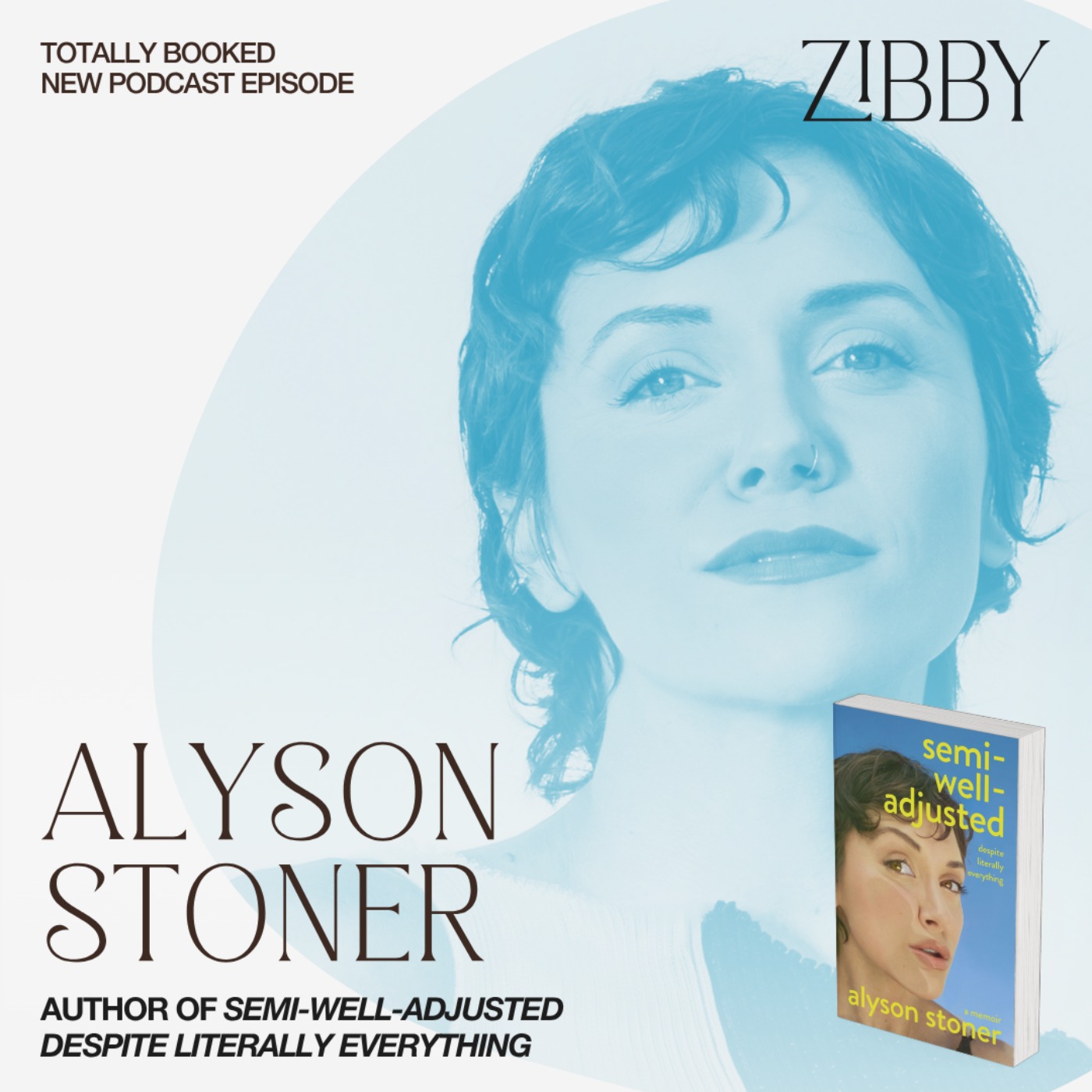
Totally Booked with Zibby
Alyson Stoner, SEMI-WELL-ADJUSTED DESPITE LITERALLY EVERYTHING: A Memoir
00:28:50
Loading summary
Transcript69 lines
- [00:00]
A
It's that time of year again, back to school season. And Instacart knows that the only thing harder than getting back into the swing of things is getting all the back to school supplies, snacks and essentials you need. So here's your reminder to make your life a little easier this season. Shop favorites from Staples, Best Buy, and Costco, all delivered through Instacart, so that you can get some time back and do whatever it is that you need to get your life back on track. Instacart. We're here. Ready to order? Yes. We're earning unlimited 3% cash back on.
- [00:31]
B
Dining and entertainment with a Capital One Saver Card. So let's just get one of everything. Everything. Fire everything. The Capital One Saver card is at table 27 and they're earning unlimited 3% cash back.
- [00:42]
A
Yes, Chef.
- [00:43]
B
This is so nice. Had a feeling you'd want 3% cash back on dessert. Ooh, tiramisu. Earn unlimited 3% cash back on dining and entertainment with the Capital One Saver Card. Capital One what's in your wallet?
- [00:55]
A
Terms apply. See capitalone.com for details.
- [00:59]
B
Today's episode has been sponsored by Digipod. As someone who's passionate about books and authors, I'm always excited to share resources that can help bring your stories to life. That's why I am thrilled to tell you about Digipod, a print on demand company that truly understands what authors need to make that happen. Here's what I love about Digipod. They don't just print your books and send you on your way. Their team holds your hand throughout the entire process with incredible customer service. They deliver professional grade printing quality, consistently beat their competitors, turnaround times, and they can handle rush orders. They simplify the whole printing process and make it incredibly easy. To achieve your vision for your books, head over to DigiPod Zibby that's Di G G Y P pod.com Zibby set up a free 15 minute printing consultation and get 10% off your first print order. You'll talk with their experts who will walk you through exactly how to set up your print job and answer all your questions. And by the way, I've seen the books and they are amazing looking. If you've been thinking about printing your book, this is the support you want. Again, that's digipod.com Zibby for your your free consultation. Hi, this is Zibby Owens and you're listening to Totally Booked with Zibby, formerly Moms don't have Time to Read Books in my daily show. I interview today's latest best selling, buzziest or underrated authors and story creators whose work I think is worth your time. As a bookstore owner, publisher, author and obviously podcaster, I get a comprehensive look at everything that's coming out and spend my time curating the best books so you don't have to stay in the know, get insider insights and connect with guests like I do every single day. For more information, go to zibbemedia.com, and follow me on Instagram ibyoans Alison Stoner is the author of Semi well Adjusted Despite Literally Everything A Memoir. Alison is a multidisciplinary entertainer, author and the founder and CEO of Movement Genius, a mental health company providing therapist led content to improve well being. As the writer and host of the award winning Dear Hollywood Podcast, Stoner advocates for industry and policy reform centering the protection of children in traditional and digital media. With multiple certifications and 15 years of group facilitation experience, they've led and contributed to programming for the United nations, the World Health Organization, LGBTQIA centers, and leading universities. During childhood, Stoner appeared in over 200 films, TV shows and tours including Camp Rock, Phineas and Ferb, Step Up, Cheaper by the Dozen and iconic music videos with Missy Elliott and Eminem. Today they're focused on impact driven and community based initiatives such as designing Artist well being Essentials, a robust digital toolkit including expert led education, and tools for performers to pursue their passions in a healthy and sustainable way. Next, Stoner is releasing their debut memoir Semi well Adjusted Despite Literally Everything. Welcome Alison, thank you so much for coming on Totally Booked with Zibby to talk about Semi well Adjusted Despite Literally Everything. Congratulations.
- [04:20]
A
Thank you for having me. Thank you.
- [04:22]
B
Could not put your book down. Oh my gosh. The amount you have gone through in your life, the stories, the fact that you're such this accomplished entrepreneur at this point and you're a great writer, like, it's pretty impressive as a package, honestly. I'm not just saying that.
- [04:36]
A
That's very kind. I will say writing actually was my preferred form of personal processing from a young age. So I wasn't ever planning on sharing it in this way. But in many ways, while it's very trying to dig into the deep crevices of your own psyche and relay them to the entire world, it also was really beautiful that I could couple my processing with the medium that comes most naturally.
- [05:05]
B
And why did you want to share this with the world? Why not process for yourself?
- [05:10]
A
That's a great question, because I want to be clear that personally, I'm less inclined to share my early experiences unless I see a greater purpose. I can reserve that kind of processing for therapy and for healing in my own community. But what I noticed is that there's been this repeated pattern of memoirs and documentaries highlighting the experiences of former child performers and or high performing children. And they repeat very similar cadences, downward spirals. And yet no one has unpacked the surrounding ecosystem and no one has presented ways of potentially intervening. And so now that I'm a mental health practitioner, I thought I can not only share some of these untold stories from sets growing up, I can also present ideas that hopefully connect new dots across media culture, child development, industry protocols. And now that we're all in this increasingly digital and interconnected world, experiences that were once reserved for, for young people in the public eye are actually now things we're all facing things like issues with privacy and mental health, issues related to technology use, parasocial relationships. So I jokingly say, you know, come for the childhood chaos, but stay for the cultural critique. And hopefully this book really services a lot to a lot of timely conversations, of course.
- [06:48]
B
And you do a really good job of explaining the ecosystem as you mentioned. I mean, there are some things I could not believe when I read them, that they didn't do background checks, that background checks weren't required on the workers who are surrounding the kids. So there were no, there could be child sex predators on set and there wouldn't have been any. That was one of your suggestions too at the end where you come up with this great list of how people can be more protected. But that's just one of the reasons, and as you point out, and I'd love to hear your thoughts on how people could be better, but that no one really had training in dealing with kids. Like even a camp counselor, you get like a little bit of training. Speaking FORMER CAMP COUNSELOR but as someone who just like deals with kids routinely, what should people have known? How can the industry institute something like that?
- [07:34]
A
I think there are assumptions that children are simply adults in training and that the cognitive structure of a child's brain is the same as an adult's and in reality a child. You know, for anyone who's raised children, you recognize they haven't fully developed the capacity for logic and reasoning. Some ages you're still hardly differentiating between fantasy and reality. You obviously haven't formed your own sense of identity. So a lot of your behavior is based on whatever is modeled or normalized or, you know, feels like a strategy to make sure Your essential needs are met. And so the training on set, if anything, it mostly reflects things like best practices. Don't cuss around the children. Well, sure, that's a starting point, but we're actually working with people who are in fundamentally different states of development and states of being. And so I designed a couple of different tools already. One of them is the Artist well Being Essentials Toolkit. And it equips performers with specific exercises such as getting into and out of character, things that are unique to the performing arts experiences. But also, it can't always go back to just the individual, because these families and these young people are navigating a completely foreign environment. They have no way of assessing the short and long term implications of removing the child from school or having their social network shift from bonding with someone in the neighborhood to signing autographs for fans who are their age or competing against all these other children in this room. So there are a lot of ways that I think we can create preventative resources, onboarding manuals that you would receive for any job. And then we also have to look at larger solutions, of course, around policy and legislative protections. Because what's this saying? When you can't rise to your values, you'll fall back on the structures. And so the structures right now aren't they're not sufficient enough?
- [09:45]
B
Well, it's really wonderful that you're an advocate, someone who's been on the inside, and that you're helping all these families. It's really amazing.
- [09:52]
A
Hope so. That's the commitment.
- [09:55]
B
Well, you share. After reading your whole story, you see why you feel so compelled to do this. And you went through so much on set, and it seems, yes, so glamorous to be a child star. But some of the things you went through and some of the ways that the industry just didn't take your mental health into account were really staggering. There's one moment where, when you finally sought treatment for your eating disorder, and that was hard, right? You had to pull yourself out of the fray and admit to all of this. And then you get that audition, which, by this point in your story, we know how you feel when you get the, yes, I have to prepare for this. That hit of adrenaline, and you're literally getting treatment and auditioning for the Hunger Games, which is so ironic, right? And, yes, you had the frame of mind to say, okay, actually, I can't do this. But nobody else was really protecting you. Talk about that time in your life and how you came, how you had the inner strength to change the course of the. Of Your narrative.
- [10:51]
A
Oh, I appreciate that connotation. I'm not sure it felt like strength so much as real desperation and a real assessment that my health was deteriorating rapidly. And if I didn't do some kind of intervention, even self imposed, I would potentially reach some kind of fatal end via eating disorders, burnout, et cetera. So I, I remember being in treatment and as a performer in the industry, people want you to be, of course, ready at their beck and call. And it's a lot of last minute auditions. It's a lot of pressure to maintain momentum. You know, if you're out of sight, you're out of mind. And so I can understand from a professional standpoint how my team was trying to hold a career together while I sought support, you know, elsewhere. However, when you yourself are the product being commodified, there are a lot of confusing signals where your inner, you know, your, your psychological and physiological needs are absolutely dismissed. And what is prioritized is whatever keeps the business running. And So I was 17 still at this time, and I had to make some really hard decisions. But what happened in treatment that I'm forever grateful for, it was actually the first environment where I experienced consistency, stability. I was surrounded by adults who weren't on my payroll, who weren't commissioning checks, who actually were there in service of my well being. Wow. That was a novel idea. And because of that environmental shift, I was able to actually heal and recover. It's hard to heal when you're going 150 miles an hour and when 15 adults depend on you to support their livelihood and feed their families at home. So while I know there's a lot of stigma around help seeking and especially professional treatment, and particularly inpatient, that was actually, I think, the degree of a shift that was needed to counter the kind of extreme circumstance that I was in.
- [13:10]
B
Wow. And you have this ability to just put on sort of a happy face, Right? You just want to say yes. You're so eager to please in all the best ways, like it's from the greatest place. And yet you often, well, now you're much better as you talk about in the book, but you were still stifling down your own needs emotionally and everything. How are you going to make sure that in the course of book publicity for this deeply emotional thing that you don't fall into the same trap of just pushing yourself and pushing yourself?
- [13:42]
A
That is a great question. And I set up some systems and structures before entering the campaign. Now I will be doing, you know, around 50 to 100 interviews, appearances over the span of a short period. And I recognize that if I aspire toward the ideal morning routine and perfect quote unquote self care, according to social media, I will set myself up for failure. So I'm not aiming for perfection here. What I am doing is trying to pick a few key ways to stay afloat. And for me, it's the basics. It's sleep, it's nourishing my body and it's having someone as a support lever in case I need to say, hey, I something, you know, something's gone awry. But I'm really grateful that I've been practicing. I've been flexing these muscles now for so long. And in fact, my entire company, Movement Genius, is dedicated to these kinds of micro resets and stress relief techniques so that we don't experience what some people call trigger stacking. If over the course of the day you never take a moment to, you know, open the can of pop that that's just being shaken constantly, yeah, it's gonna explode at the end of the day. But if we can find ways to just allow a little bit of that tension to release, it I think makes a huge difference. And I think we all need that at this point. Modern life and pace and oof. It's a lot to be alive in 2025. I think the name of the book Semi well Adjusted is the unofficial mood of this year.
- [15:27]
B
I think that's why it's res. Because everyone, nobody feels like they're totally well adjusted. Right. We're all just trying to do our best.
- [15:33]
A
Well, if I can quickly build on that sometimes. My former partner presented this and I thought it was really helpful. So you know, our mind and body systems follow an ancient speed of evolution. Meanwhile, our systems and governments, et cetera, live somewhere in medieval structures. And then technology is at this absolutely faster than fast pace. And so we've got to negotiate all of these different paces all within our minds and bodies on a daily basis. So of course we're feeling the effects.
- [16:09]
B
So how do you use your tools? And actually there was one scene in the book that was so devastating and we see you trying to engage all the tools that you know so well. And you don't have to talk about this. I'm sure it's a super sensitive, I mean it's obviously a sensitive subject, but you chose to explain it or you chose to talk about it in the book. This horrific moment where your raped by this man and you go into all this detail and you're sitting in your car after just trying to use Whatever tools you can to get through it. Tell me about that and also why you included that, how you want to help people with it and just like how you're feeling about that whole thing. And I'm so sorry it happened to you and to all the other people that this man attacked.
- [16:53]
A
Yes, thank you. I wanted to include it for a few reasons. One of them was because after I experienced it firsthand, I learned how prevalent it is. It was shocking to think of how many people in my life, just by sheer statistics, had experienced something similar or even worse and more extreme. And I recognized that this person was in a position of power and he absolutely abused that power. And I also recognized I had a history of experiencing different dynamics that led to me feeling taken advantage of or being taken advantage of. And while, you know, my therapist at the time made it clear re victimization is still you're not going to blame the victim and survivor for another person's absolute mishandling of a situation and, you know, non consensual imposition of power. And simultaneously I just was so confused and wondered, what can I do? Is there anything else I could have done? That event in particular was out of my control. But from here, where can I go? And the reality is, unfortunately, we still collectively have to actively create safer spaces and have different kinds of shifts in society where it is safe for people of all identities and embodiments to go out and live their lives. And for me personally, I threaded it all the way back to being a child, where on set I was conditioned to make myself available to whomever for whatever aim. I was never instructed to have any sense of bodily autonomy, let alone to set boundaries, let alone to even recognize that a boundary had been transgressed. Now I'm not at all blaming myself. I had done lots of work already leading up to this moment. I truly was in a position where I could not get out. However, I do see a pattern for myself in making sure that from here on out, I know where I start, where I end. And I'm constantly reminding myself of my conscious agency. And I'm going to do the best that I can with that agency and then recognize that, yes, still some things happen beyond our control.
- [19:31]
B
I'm so sorry. Like, that's. I'm just so sorry.
- [19:34]
A
Thank you.
- [19:35]
B
Today's episode has been sponsored by Wayfair. I am so sad that summer is winding down. I look forward to it all year. But there is something nice about getting back into a routine, going back to school and all that. But it does make me want to refresh my spaces and upgrade my style for the new school year, I decided to get a new light fixture from Wayfair, which I'm really excited about because I was really tired of our dining room always being a little bit too dark. So as summer winds down down you also can get back into a routine you love with Wayfair. Wayfair, if you don't know, has bedding and linens and lighting and storage and it's really your one stop shop for everything from desks and bookcases and office chairs or whatever. Anything I get, it comes so quickly. The light fixture had overnight delivery and came. It looked perfect and it totally was hassle free and easy. And really, Wayfair has everything your home needs for this season. The huge selection of outdoor and indoor items and back to school and everything makes it easy to shop for items on a budget. Or if you want to splurge, there's something for every style and every home, no matter your space or budget, plus free and easy delivery. Even on the big stuff. It's just great. I'm obsessed with Wayfair, so get organized, refreshed and back to routine. For way less head to Wayfair.com right now to shop all things home. That's W A Y F F A I R.com Wayfair Every style, every Home Today's episode has been sponsored by Quince. As summer winds down, I am all about refreshing my wardrobe with staple pieces for the season ahead. Quince totally nails it with luxe essentials that feel effortless and look polished, perfect for layering and mixing. Their styles are so versatile I find myself reaching for them again and again. In fact, you'll see me wearing them all over my Instagram feed. Think cashmere and cotton sweaters starting at $40, washable silk tops and classic denim pants. The best part is that everything with Quince is half the cost of similar brands. By working directly with top artisans and cutting out the middlemen, Quince gives you luxury without the markup. And Quince only works with factories that use safe, ethical and responsible manufacturing practices and premium fabrics and finishes you'll see on Instagram. I love my Quince skirt. I've been wearing it all summer and it is a fabulous fabric. It's long, the pattern's amazing and it's just amazing. Plus the price was great, so I just absolutely adore it. Elevate your fall wardrobe essentials with Quince. Go to Quince.com Zibby for free shipping on your order and 365 day returns. That's Q-U-I-N C E.com Zibby to get free shipping and 365 day returns. Quince.com Zippy.
- [22:35]
A
If you love to travel, Capital One has a rewards credit card that's perfect for you. With the Capital One Venture X card, you earn unlimited double miles on everything you buy. Plus you get premium benefits at a collection of luxury hotels when you book on Capital One Travel. And with Venture X you get access to to over 1000 airport lounges worldwide.
- [22:55]
B
Open up a world of travel possibilities with a Capital One Venture X card.
- [22:59]
A
What's in your wallet terms apply. Lounge access is subject to change. See capital1.com for details.
- [23:07]
B
You have another moment where I really felt your like, sense of despair and where does my life go from here? When you realized your bank account was down to zero and you had been taken advantage of by many, many people that you trusted and realized that your education was not what you had been told it was that you hadn't, you know, that you weren't ready to sort of go back on. And even though you always knew you would go to college because you're super bright, obviously that you couldn't even get back on track then and you just had this moment where you're like, oh my gosh, like now, now what? Like it's all gone. What was it all for? How do you feel about that moment? And also I'm just How do you keep coming back from these hard times?
- [23:51]
A
Well, you don't have a. You have a choice, I suppose. But I, I had to believe that there was something beyond this experience. I had to. What's important, I think to, to name here is that this experience is unfortunately not uncommon for children who are in similar or adjacent positions, whether it's athletics or academia or entertainment, are ways where we might be initially trying to support a young person's development and we see a knack for a special skill and we invest all the energy and resources into that part of their lives and we don't realize that every other domain has been disrupted or dismissed. And so for me, it was almost as if each pillar that would have held up a person to support their future trajectory was just crumbling left and right and you know, the finances. I can feel the catch in my throat. Beyond feeling shocked and first in denial, I, I also was so scared. I was so scared that I wasn't going to be competent enough to recognize and to prevent it from happening again. Who's to say I thought I was giving my best Shot at being responsible and conscientious with spending and SA and even investing, and it still happened. And I was scared that, you know, I was at the age where I'm now out on my own, so I'm no longer at home, able to lean on family, and I've gotta make something work, and I have to make it work quickly. And then, of course, I was scared of all of the relationships I was losing in the process and having to reckon with other people's behavior and decision making, and without receiving any messages from them that they were admitting to being in on it. You know, it wasn't until many years later that I actually received some texts acknowledging that people understood the gravity of what happened. So in some ways, I was almost like, am I, you know, am I being gaslit? What's real? What's not real? How did this happen? And then with education. That's the one. Oh, that just. That hurts the most. There's the most grief around because beyond material access and, you know, knowledge, access to information, access to tools to language, to spaces where people can learn, I mean, that's so critical. And so I. I have a lot of grief there, but I also didn't want to lose any more time. So I, as quickly as I could figure out how to do so, enrolled myself in different certification programs and just said, okay, it's not going to be what I thought it was going to be. But I can't try to keep focusing on the past and remedying it. I really just have to pick up where I am right now and work.
- [27:06]
B
With what I got. I mean, hats off to you. Seriously, all these turns that you had to, like, really turn the car all the way around. I mean, it takes a lot of strength, obviously, and I wish you hadn't been in those positions, but it's inspiring to see how you were able to do it. I know it will inspire so many other people.
- [27:24]
A
I hope so. And again, just to be clear, this kind of quote unquote, resilience, it was earned in tiny breadcrumbs. It was not like I woke up feeling particularly courageous. It really was trying to make sense of the situation at hand and aligning myself to the values I, you know, purported to uphold. And really quickly. An image that I think can be helpful sometimes. My friend Joan Ball, another author, she mentions that purpose often in our society is painted as a north star, and you're supposed to figure out the destination and then reverse engineer how to get there. Well, for a lot of us, purpose ends up looking a lot more Like a constellation. We don't exactly know where we're headed or where we'll end. All we have to do is make our best guess for now and then maybe bounce around from star to star to star and let that kind of process of sense making lead to a more emergent experience of purpose. The advocacy I do today, I would have never guessed, I didn't even know I would be capable of sitting in on meetings with Uniform Law Commission, drafting language for a bill to protect minors. I mean, and trust me, it's accompanied by a lot of search engine activity. I'm sometimes on the phone while googling terms like, what am I doing here? How'd I get here? But, you know, doing my best to keep up and to contribute something.
- [28:58]
B
That's amazing. How do you feel about like your whole cohort of stars and people who continue to be famous and not. You talked a lot about Demi Lovato and your break with her and how you've sort of reunited and you mentioned a lot of other people along the way. When you find yourself in this part of life, looking back, help trying to help other kids, like, how do you feel? Like, do you have the wind in your sails from the community or are you going it alone?
- [29:29]
A
Oh, you know, I, I have to say I started this deeper inner work potentially at a younger age than many of my peers. So what I'm noticing is that more people are beginning to come Forward in their 30s and wonderful. Anytime you feel ready, please do so. I will say it has felt over the last 10 plus years quite lonely and I didn't want to just sound like someone shouting from the abyss. Hey, care about this? Cause I really had to think, how do we connect? How do we connect this issue to the audience member who's only ever seen this picture perfect facade? It can be really hard to empathize with this particular group of people because we're painted as, you know, reckless, entitled, luxury seeking, child performers and gosh, that could not be further from the truth for most of us. But I, I'm hoping I'm starting to see more and more people come forward and I think social media in some ways can be a service for this movement because we get to cut out the middle person. We don't have to wait for Netflix to sign off on our life story. We can just post something about it right away. So I'm hoping not only for their own healing journeys, that they come forward when they're ready, but also societally that we use that as a proxy to examine what we're doing. When we share content of young people online now, I see a lot of the same patterns playing out. Really good intentions, supportive, caring parents, proud guardians. And yet none of us were given a digital literacy manual to actually understand where that data goes, how that might affect the young person's educational pathway, professional trajectory, and just their right to privacy where they can express, process, release, experiment, make mistakes and not have it captured into a permanent digital footprint.
- [31:40]
B
So I have four kids and one of them had the opportunity to get a manager and all that and is like really into the whole thing and we decided not to do it. But what would you say to parents who have a child who is talented and who is motivated and wants to keep acting and doing all the stuff, but doesn't want to necessarily be subjected to some conditions that which you're trying to change have not totally changed?
- [32:06]
A
Absolutely, yes. First I would say please check out the Artist well Being Essentials Toolkit. We designed it for this exact reason. You're going to receive education on so many different areas and specific tools for navigating these unique situations. Even lessons specifically for guardians around red flags, pitfalls, things to look out for. And in addition to that, make sure, you know, pace yourself and spend some time in that information gathering stage. Listen to people who have been through it and make the most informed decision. And I like to think of the whole pie and if we're dividing it into the different dimensions of our life and well being, if you start to notice that this part of your child's life is taking up disproportionate space in their overall development and well being, that might be your clue as to what capacity you can participate in that activity before you need to set some parameters. And yes, of course the industry, if they like you, they're not going to encourage you to take a break. So you're going to have to clear about your own boundaries going into the space and to feel empowered with your parental rights to actually follow through on those boundaries.
- [33:26]
B
So just last question, like, would you do it again? Would you go to LA with your mom? Would you have gotten on the flight that you literally like were returning the rental car and went back for the ad? Would you have just said, what if I had just gotten on that flight? Like, what would you do? What would you do differently?
- [33:44]
A
At six years old, I didn't have the ability to decide. At 32, I would absolutely never do that again.
- [33:55]
B
Well, Alison, thank you, thank you for sharing your story. This was so powerful and so well written and I read a lot of books. So this was. I mean, really, it's really strong and I'm so happy you shared it. Thank you so much.
- [34:07]
A
Thank you. I'm deeply flattered. Coming from an avid book reader, that means so much.
- [34:12]
B
I know you will be getting lots of praise. I just know it.
- [34:15]
A
Oh, thank you.
- [34:16]
B
Anyway, thank you so much. Thank you for listening to Totally Booked with Zibby, formerly Moms don't have Time to Read Books. If you loved the show, tell a friend, leave a review. Follow me on Instagram ibyohans and spread the word. Thanks so much. Oh, and buy the books.
- [34:40]
A
Ready to order? Yes. We're earning unlimited 3% cash back on.
- [34:43]
B
Dining and entertainment with a Capital One Saver Card.
- [34:46]
A
So let's just get one of everything.
- [34:48]
B
Everything. Fire everything. The Capital One Saver card is at table 27 and they're earning unlimited 3% cash back.
- [34:55]
A
Yes, Chef.
- [34:56]
B
This is so nice. Had a feeling you'd want 3% cash back on dessert. Ooh, tiramisu. Earn unlimited 3% cash back on dining and entertainment with the Capital One Saver Card. Capital One what's in your wallet?
- [35:08]
A
Terms apply. See capitalone.com for details.
- [35:11]
B
If you're a lineman in charge of keeping the lights on, Grainger understands that you go to great lengths and sometimes.
- [35:17]
A
Heights to ensure the power is always flowing.
- [35:21]
B
Which is why you can count on.
- [35:22]
A
Grainger for professional grade products and next day delivery.
- [35:26]
B
So you have everything you need to get the job done. Call 1-800-GRAINGER clickgrainger.com or just stop by.
- [35:34]
A
Granger for the ones who get it done. Acast powers the world's best podcasts.
- [35:45]
B
Here's a show that we recommend.
- [35:50]
A
If you've ever dreamed of quitting your job to take your side hustle full time, listen up. This is Nikayla Matthews, aome, host of side Hustle Pro, a podcast that helps you build and grow from passion project to profitable business. Every week you'll hear from guests just.
- [36:04]
B
Like you who wanted to start a.
- [36:06]
A
Business on the side.
- [36:07]
B
If you can't run a side hustle, you can't run a business. They share real tips and so I started connecting with all these people on LinkedIn and I thought target supplier diversity was having office hours.
- [36:16]
A
Real advice Procrastination is the easiest form.
- [36:19]
B
Of resistance and the actual strategies they.
- [36:23]
A
Use to turn their side hustle into their main hustle. Getting back in touch with your tangible.
- [36:27]
B
Cash and sitting down and learning to give your money a job like it changes something.
- [36:33]
A
Check outside Hustle Pro every week on.
- [36:35]
B
Your favorite podcast app and YouTube. Acast helps creators launch, grow and monetize their podcasts everywhere.
- [36:45]
A
Acast.com.