← Totally Booked with Zibby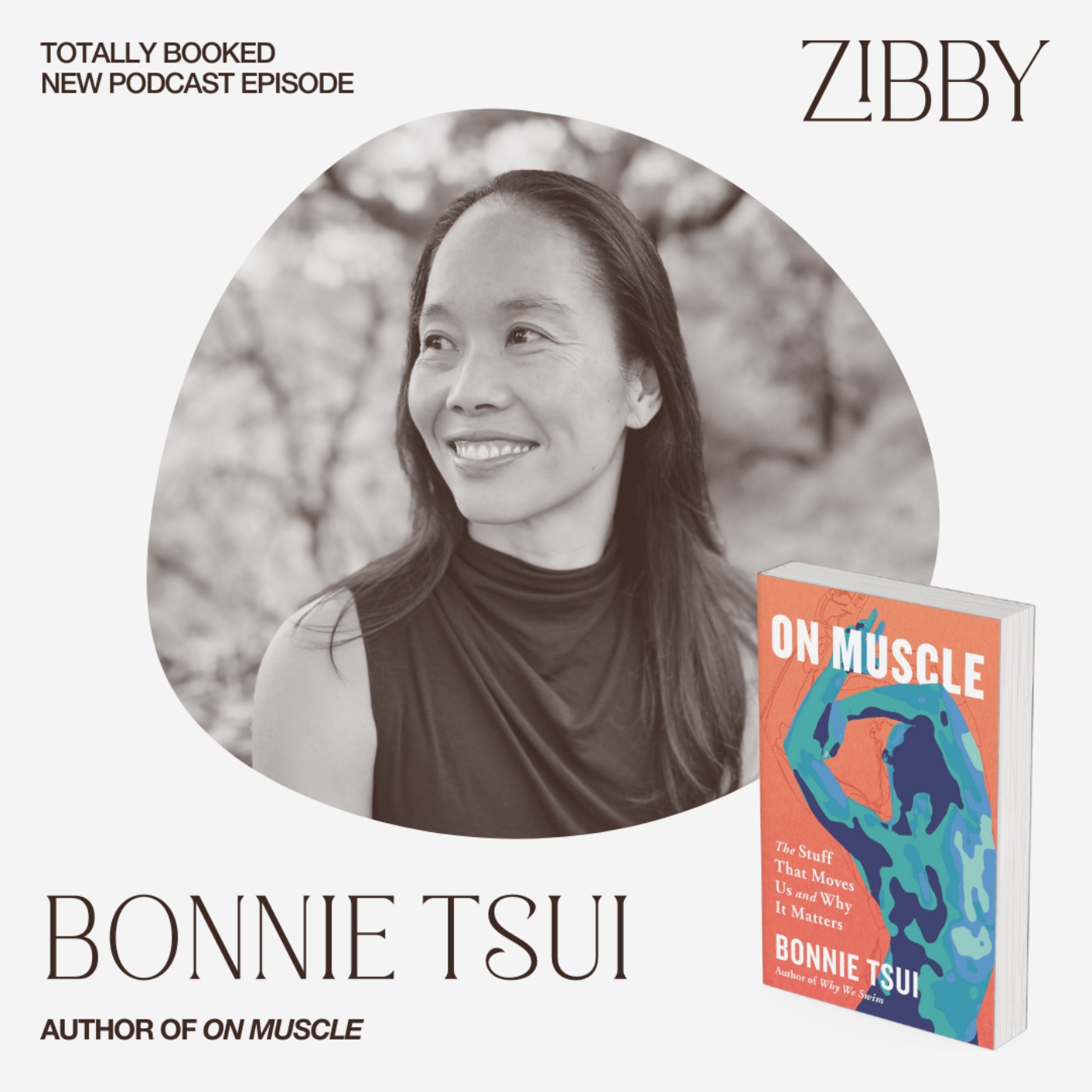
Loading summary
Transcript79 lines
- [00:01]
Zibby Owens
Clips from the Totally Booked Live series are now up on Instagram. TotallyBookedWithZivvy. Check it out.
- [00:11]
Instacart Ad
Instacart is on a mission to have you not leave the couch this basketball season because between the pre game rituals and the post game interviews, it can be difficult to find time for everything else. So let Instacart take care of your gameday snacks or weekly restocks and get delivery in as fast as 30 minutes because we hear it's bad luck to be hungry on game day. So download the Instacart app today and enjoy. $0 delivery fees on your first 3 orders. Service fees apply for 3 orders in 14 days. Excludes restaurants Race the rudders.
- [00:44]
LinkedIn Ad
Raise the sails. Raise the sails.
- [00:46]
Bonnie Tsui
Captain, an unidentified ship is approaching.
- [00:49]
LinkedIn Ad
Over Roger Wait, is that an enterprise sales solution? Reach sales professionals, not pro professional sailors. With LinkedIn ads, you can target the right people by industry, job title and more. We'll even give you a $100 credit on your next campaign. Get started today at LinkedIn.com results terms and conditions apply. Want a workout that actually works? Hydro delivers a full body workout that hits 86% of your muscles in just 20 minutes. Rowing with Hydro combines strength and cardio with thousands of workouts led by Olympians in breathtaking locations. No wonder nine out of ten members are still active one year later. Try Hydro risk free@hydrow.com and use code RO to save up to $475 off your Hydro Pro Rower. That's H Y-R-O-W.com code RO.
- [01:44]
Zibby Owens
Hi, this is Zibbee Owens and you're listening to Totally Booked with Zibby, formerly Moms don't have Time to Read Books. In my daily show, I interview today's latest best selling, buzziest or underrate and story creators whose work I think is worth your time. As a bookstore owner, publisher, author, and obviously podcaster, I get a comprehensive look at everything that's coming out and spend my time curating the best books so you don't have to stay in the know. Get insider insights and connect with guests like I do every single day. For more information, go to zibbymedia.com and follow me on Instagram. Ibby Owens Bonnie Tsui is the author of On Muscle, the Stuff that Moves Us and why It Matters. Bonnie is a longtime contributor to the New York Times and the best selling author of why We A New York Times Book Review, Editor's Choice and A Time Magazine and NPR Best Book of the Year. It's currently being translated into 10 languages. Bonnie is also the author of American Chinatown, which won the Asian Pacific American Award for Literature, and Sarah and the Big Wave, a children's book about the first woman to surf Mavericks, and a Junior Library Guild Gold standard selection. She was, by the way, on this podcast before. Her work has been recognized and supported by Harvard University, the National Press foundation, the Mesa Refuge, and the Best American Essays series. She lives, swims, and surfs in the Bay Area.
- [03:14]
Interviewer
Welcome, Paddy.
- [03:15]
Bonnie Tsui
Yay.
- [03:15]
Interviewer
On muscle. So exciting. The stuff that moves us and why it matters. Congratulations.
- [03:20]
Bonnie Tsui
Thank you. It's great to be talking with you again about bodies in the world.
- [03:25]
Interviewer
Yes, exactly. After why We Swim and you were a contributor to the anthology and all the good stuff and your children's book, anyway, you've been just all over the place. Okay. I have to say, as I was reading the book, there was a part where you talk about the test, like the mortality test, if you can stand on one leg for 10 seconds. So I literally got up. I was reading on the bed with my son while he was reading, and I, like, holding the book, like, got up and started balancing on one leg and then balancing on the other leg, and he's like, what are you doing? So then the two of us were balancing.
- [03:59]
Bonnie Tsui
You're like, we're gonna live forever. It's amazing. Yeah.
- [04:01]
Interviewer
I was like, can I balance for 10 seconds? I don't know. Yeah. And then I end up, like, doing these yoga poses, and he's like, what are you doing now?
- [04:11]
Bonnie Tsui
Oh, my gosh. I love that.
- [04:13]
Interviewer
Your book made me move like, I could not physically sit still while reading this book about movement and muscle and all of that, so.
- [04:21]
Bonnie Tsui
Well, mission accomplice done. Okay, great. Love it. My work here is done. No, that was. I'm so. It makes me so happy to hear that, because I really wanted this book. And it's funny, right, because we often think about our brain and body as being kind of divorced from one another, or at least, like, not as unified. And. And I love hearing that when you were reading the book, you did want to move and engage bodily with it. Because that's how I felt when I was writing it. Like, I wanted to transmit that sensory experience of what I was learning and feeling in myself, in Onto the pages. And so that's just so heartening to hear that you felt that reading.
- [05:01]
Interviewer
Well, you turn your sort of journalistic brain onto muscle in all of its different parts, even after the body has died or after, you know, like, all of the. The full range. And that was very interesting. But the overlay of the whole book was really, like. It could have been called, like, On My dad because it was so much about your relationship with him, which was so incredibly poignant. And the book felt to me like the olive branch to, like, really connect with him in a deeper way. So talk about your inspiration for the book, how your dad plays into everything.
- [05:43]
Bonnie Tsui
Well, obviously, for so many of us, our family, right, and our parents specifically, have they reach into our lives in ways that sometimes we don't even understand until later life. And so I think I always felt. When I was a child, I felt really close to my dad. And you gathered that from the pages of the book. And, you know, he was the artist and the martial artist and the person who trained my brother and myself up in his studio to be like these, you know, these people who. These tiny humans who understood the power of physicality, but also the aesthetic appreciation of the body. Right. And art. And I. I'm myself because of that. Right. And so, you know, after my parents split up and he moved back from New York, where we lived and I was born, to Hong Kong and then on to mainland China, where he lives now. You know, it's. It's hard. I mean, it's like. It's also hard when your parent. When your parents divorce, when. Or separate, when you're in your formative years, like, as a teenager, like a young teenager, and then through those. That time into young adulthood, and you kind of are navigating that. What the world is anyway for yourself. And I was navigating myself. Right.
- [06:57]
Interviewer
Who.
- [06:57]
Bonnie Tsui
Who was I? Without this very signal person in my life. And I think I've sort of spent. It's not an exaggeration to say that I've spent the last many decades kind of still trying to figure that out and. And also, like, appreciate his influence on my life. Like, even if he's not geographically near, we aren't as close contact as we were when I was a kid. But those feelings are powerful, and they last a long time. You know, I'm. You know, I have children of my own, and I. And I. And I look at them and I think about what. What my influence on them will be. And so it's a very point. You know, it's like it's all full circle. And I think for all of us to. To come together in various points of the book and to be able to, like. Because I started writing this book during COVID and so I could not see him, and it really wasn't until the very, very end, almost when it was almost like Missing the deadline to finish the manuscript. Like I wasn't sure if I could see him in person because, you know, China was the first place to shut down and then the last place to open up to the world, the rest of the world again. And so that there was this funny irony of like trying to figure out how to physically be in the same place as this person who the book, as you so rightly point out, is really about that relationship foundationally.
- [08:13]
Interviewer
Wow. Well, your dad was, you know, very accomplished as a martial artist, as you said. And I think brown belt or what, you know, brown.
- [08:22]
Bonnie Tsui
All the belts, all the belts, all the belts.
- [08:24]
Interviewer
He was, you know, and he. You have this through line of the book, you know, making a muscle, you know, and how it starts there and sort of it ends all the way. It was just like this perfect ending, the way you wrap everything up. But you talk about how his appreciation for the physical ran through everything. Right. And when he did eventually see you and said, oh, you look strong, that was the highest praise ever. And that you were measuring your shoulders against each other to see the, you know, how strong.
- [08:55]
Bonnie Tsui
I mean, this is what I grew up with, you know. And it is funny. I mean, it is. I look at the world differently now after like examining muscle in this like 360 degree way. Right. Like I wanted to, I wanted to be as curious about it as he seemed to have been for me, like when I was watching him, you know, throughout my childhood. And so even now, yeah, like when we met up again at the end of the book, like I to understand that this is still something that preoccupies him. You know, he's like almost 80. He still lives this way. It's fascinating.
- [09:32]
Interviewer
You point out too, like he was so far away and yet all of the modern conveniences didn't deepen your relationship. Like you're like, he's not into FaceTime or email or whatever. He's not good on the phone. Like he's like when you're with him, he focuses on you and you feel like. But that's so hard to feel that there's. That something is out there, but out of your grasp.
- [09:57]
Bonnie Tsui
Yeah. And I think all of us really had that presented in stark relief during COVID Right. Like that. That we did not appreciate and understand what it is to be in someone's presence and to feel physically connected with them, even if you're not touching, like tangibly touching someone in the room. You know, if I was in that room with you, we would be reading each other's body Language or posture, making eye contact, maybe we know, like a shoulder squeeze or something. And it's just, there's, you know, I kind of get, I gave myself like chills up my spine just saying that because I do feel that that connection is so imperative to us as human beings. And so when we miss it and we don't get to have it and then we do get to have it, it's just there's no substitute for it. And that, and I think like examining muscle and what muscle enables us to do, to physically move and to be closer and further away and from, from each other as individuals and then in community and moving together is so powerful. I think that just made me, I wanted to communicate that through the book and, and how precious that is.
- [11:08]
Interviewer
Well, one part was particularly, just particularly poignant to me. It ends with you sitting with your father in law who has als. And I'm so sorry as you detailed that diagnosis. And you have this really memorable scene with your father in law in his wheelchair after getting all this knowledge about the body and movement from. I think his name is Matt, who.
- [11:31]
Bonnie Tsui
Is, yeah, Matt Sanford.
- [11:32]
Interviewer
Matt Sanford, right. Who is a quadriplegic. Who.
- [11:35]
Bonnie Tsui
Or paraplegic.
- [11:36]
Interviewer
Yeah, paraplegic.
- [11:37]
Bonnie Tsui
Okay.
- [11:38]
Interviewer
I, I, he was a paraplegic, quite whatever. Anyway, relied on his, on yoga training to really make more connections throughout his body and to feel some of these shivers up and down his body and that sometimes there are ways to use yoga and the body to do things that maybe science hasn't exactly brought to the forefront or said was impossible or whatever. And you have this scene with your father in law where your hands are on his knees and you're like, we're gonna go for a walk and he's in the wheelchair, but you just push down on his knees to make him feel like he goes on a walk and his whole face lights up. And then you're like, we'll go on a walk another day. Oh my gosh, Bonnie. I was like crying. It was so beautiful.
- [12:23]
Bonnie Tsui
It was, you know, and it's hard to, I think sometimes it's hard to know what to do to help someone. And ALS is a big thing, right? It's a big, big thing. And I think you also have to understand, you have to hold at the same time the reality that you can't do anything to change the reality. And yet there is something that you can, you can do in the moment physically to touch and to bring relief in some way. And that's what Matt Sanford taught me. Like I was really, I won't ever forget like the time we spent together because he taught me not only the thinking behind adaptive yoga, but also how we can better connect to each other, even through discomfort, even through not knowing the right thing to do, to kind of keep trying, to reach out, to try. And I think that really was a huge lesson to me because we all exist on this continuum of illness and health and ability to disability and life to death. And so to situate yourself on that continuum and you're constantly moving along it as you move through life, that was, you know, that helped me understand so much about just who we are like and, and also like what we're capable of physically, you know, over our lifespan. And also that, you know, muscle is one of those. Muscle is so amazing because it is like, probably one of the most adaptable tissues in the body is always changing. And so that, like, that philosophically teaches us that we can also keep changing and improving and doing better. Yes.
- [14:09]
Zibby Owens
Today's episode has been sponsored by Fast Growing Trees. Did you know Fast Growing Trees is the biggest online nursery in the US with thousands of different plants and over 2 million happy customers. They have all the plants your yard or house needs, like fruit trees, privacy trees, flowering trees, shrubs, and so much more. Whatever plants you're interested in, Fast Growing Trees has you covered. Find the perfect fit for your climate and space. Fast Growing Trees makes it easy to get your dream yard order online and get your plants delivered directly to your door in just a few days without ever leaving home. Their alive and thrive guarantee ensures your plants arrive happy and healthy. Plus, get support from trained plant experts on call to help you plan your landscape, choose the right plants and learn how to care for them. I am obsessed with the fiddle leaf fish fig tree, an indoor plant that I got from Fast Growing Trees. It is so beautiful and it just came right to my door. No annoying trip to a nursery or I once had to go in midtown in New York City, not even midtown, all the way to the flower district to find a tree and put it in the car. And that was such a pain. Anyway, now these came right. Everything comes right to my door and it's amazing. This spring they have the best deals for your yard. Up to half off on select plants and other deals and listeners to our show get 15% off their first purchase when using the code readbooks at checkout. That's an additional 15% off at fastgrowingtrees.com using the code readbooks at checkout fastgrowingtrees.com code readbooks now's the perfect time to plant indoors or out. Use Readbooks to save today. Offer is valid for a limited time. Terms and conditions may apply.
- [16:00]
LinkedIn Ad
Does it ever feel like you're a marketing professional just speaking into the void? Well, with LinkedIn ads, you can know you're reaching the right decision makers. You can even target buyers by job title, industry, company, seniority, skills. Wait, did I say job title yet? Get started today and see how you can avoid the void and reach the right buyers with LinkedIn ads. We'll even give you a $100 credit on your next campaign. Get started at LinkedIn.com results terms and conditions apply. Optimize your nutrition this year with Factor.
- [16:32]
Bonnie Tsui
America's number one ready to eat meal service. Factor's fresh Never frozen meals are dietitian approved.
- [16:38]
Interviewer
Ready to eat in just two minutes.
- [16:40]
LinkedIn Ad
Choose from 40 weekly options across eight.
- [16:42]
Bonnie Tsui
Dietary preferences like calorie smart, protein plus and keto.
- [16:46]
LinkedIn Ad
Eat smarter at factor meals.com listen50 and use code listen50 for 50% off plus.
- [16:53]
Bonnie Tsui
Free shipping on your first box.
- [16:55]
LinkedIn Ad
Factyourmeals.com listen50 code listen50.
- [17:03]
Interviewer
Well, the story of Matt Sanford maybe talk a little more about it. He was in a car accident. I think his father and sister were killed and he lost function of his body. And then now he is a guru. So just tell us more because I.
- [17:17]
Bonnie Tsui
Summarized so this is in the, the flexibility section of the book. And so Matt Sanford is this like pretty renowned yogi I guess. And he, and he's a yoga teacher who really specialized and pioneered adaptive yoga. And so when he was 13, he was in a car accident with his family as you, as you recalled. And, and his father and sister were killed and he lost the, he became paralyzed from the chest down. And he, you know, he was an athlete. He played basketball as a kid. He was just like very embodied. And I think like one of the things that he talked about when he was telling me about how he came to the practice of yoga and how to be doing what he's doing now is that he remembered very vividly being told, you know, now you have to focus on keep making your upper body strong. Right. So like and you would see and he's like sort of and it was almost like a doctors would tell him like, you know, if you feel phantom sensations like down your spine in your legs, that's that's not real, right? Like that's in a nutshell. But like, and so he was always, he felt very shattered, right. Because you, he's like that. That is. I do feel something. I feel something that's like a buzz or like a vibration or like some energy, electricity. And so he for a long time he felt very divorced. Like he felt like he was like not he wanted to be integrated. And so I think like this we all want to be a whole beings but you can't kind of ignore you're not you're paralyzed body in favor of your every non paralyzed body. And so that's like a very. I think he was talking about how like that was. Maybe that's ableist thinking but that, that, that does. It's not true to his experience. And so it's so it's so interesting because he talked about how he would have these sensations and it wasn't exactly. It's not like he's. You know we're not talking about like a spontaneous regeneration of nerves that have been severed. You know it's not that but that we have knowledge in our bodies and information. You know, not just proprioception like these kind of receptors all over lar like generally speaking like an externally but also like inside and interoception which are other receptors but that we're talking about how things that we're feeling, we feel hunger, we feel tired, we have you know, muscle spindles are like, you know, sensory. We get information receptors about like you know when you feeling like you're stretching beyond what your muscles can handle that's interoception. So that's like information that we're getting from inside our body that we're not necessarily conscious of. And what he was feeling again like the science is like catching up. I love like when the science catches up to intuition that, that people have talked about for a long time but it's about, it's all about like even when you move your body passively. If I move, you know and Matthew was explaining to me like if I move my legs with my hands my body is getting information about my body in space even if my legs are paralyz. And so it's like interoceptive information. And again we get into the weeds in this, in the book but it's so. It just made me think about understanding the health of the body and mind. Like it is important to move even if you can't voluntarily move those parts of your body anymore. Because that is about integrating your. Your. Your all of the parts of yourself so that you feel whole, you feel balanced, you feel the energy flowing because the body still needs to move even if like certain muscles are not under your voluntary purview anymore. I don't know. It was really profound and amazing to learn.
- [20:45]
Interviewer
I found that so interesting and just so encouraging too for many people who might feel just so stuck and yet there's this other way, which maybe they already knew. But also I've spent a lot of time, and this is going to be embarrassing, Googling proprioception before the book. Because I don't think I have proprioception.
- [21:06]
Bonnie Tsui
Oh, no.
- [21:07]
Interviewer
Yeah. I can't tell when someone's close to me at all. So I'm constantly being surprised. I'm constantly jumping and being like, ah. Because yeah, you can come right next to me and I won't feel it.
- [21:18]
Bonnie Tsui
That's hilarious.
- [21:19]
Interviewer
I don't know what's wrong with me. And maybe I'm losing my hearing too. And so people are just constantly surprised me. But I'm like, what is wrong with you?
- [21:25]
Bonnie Tsui
Something about running into things. Because I always run into things and that is like. Yeah, like feeling your body in space is like the general explanation of like. Yeah, what proprioception is. But I constantly run. Like I know that the counter is there, but I constantly run into it with my hip. You know, anything.
- [21:40]
Interviewer
Me too. I have a bruise on my hip right now from like walking in. Yeah, right. But I'm like, what? Where do I end? And the world begins, basically.
- [21:48]
Bonnie Tsui
Hey, we can still fight. We are doing great. Even if you, if you're running into things, you. Yeah, you're still like, I remind you, your body in the world.
- [21:57]
Interviewer
But you, I mean, but I am not surfing. Like, you have another piece of the book. And this is, I guess back to the combination of muscle and your dad and everything. But yeah, you've used your muscle to literally walk on water. Right. You talk about surfing and what it feels like and how you've like mastered that. And then you have this connective moment again with your dad where he's talking about how before anyone's awake, where he lives, he goes on these dark morning runs and you like to be out on the water and you both are finding quiet in the world through movement and. And that was just so beautiful.
- [22:29]
Bonnie Tsui
Thank you. And you know, and it was funny to be talking to him about that because in the beginning of the book I talk about how when we were kids, after dinner, at like 10 o' clock at night, he would take us in the dark to run like a mile to like our pediatrician's office to the parking lot, because there was a parking lot where he could run around and do his exercises. And then my brother and I could play, but we would do that. And it Was funny because when, when I was talking about this with him, like the surfing part, and when he would get up in the pre dawn light, pre dawn night, like I would to exercise now, it totally. I realized as we were talking about this later on that I thought, oh, this is what we used to do. This is what we used to do. And so it kind of felt connective in a way that, you know, maybe we didn't realize consciously in the moment, but it was, it did feel right and it did feel, you know, again, over this gulf between, you know, of, of distance, geographic distance. I live in California, who lives in China. That we can still. There's a echo, there's like an echo of these movements past. And I think that's helpful to me. I don't know.
- [23:42]
Interviewer
Yeah, it's beautiful and inspiring. And you talk about like all the feats that the body can actually accomplish, none of which I have accomplished either, by the way. So just like how people can push themselves and develop their muscles, just do all these. I mean, it's amazing what people can. What the body can do. I mean, it sounds so obvious, but you really like spell it out for us.
- [24:04]
Bonnie Tsui
Well, I think that I wanted to include those stories of these great, you know, stories of people who, both ordinary and extraordinary, who could do incredible things, who accomplished incredible things. But those stories tell you how much power and possibility you hold in your own body. And I think that's what I would want people to take away from the book. Right. That they are inspired by not just learning about muscles and how important muscles are in their own lives, your own lives, our own lives, but that to know, to learn what someone else went through could be galvanizing. To like try something new or like get up and take a walk or, you know, try like just. Just to keep trying. And I think that's like. To keep pushing against all the forces that would like push you down, I guess, is. Is the thing. And that's what, like, that's what we. We're resisting. We're. It's resistance against like all the things that would be difficult. And you know, even though you feel like you're getting pushed back down, that you keep rising. I love that.
- [25:14]
Interviewer
I know every, every chapter is like a metaphor for life. Yeah, right. It's all eat it.
- [25:20]
Bonnie Tsui
It was Zibby that was so fun to get to do, by the way, like to. To like understand how our language betrays our thoughts. Like how we talk about the body and be like, you know, grid through it, like muscle through it. And we're like, no, relax. Like, all that. All of those words are like bodily states of muscle. Like, it's. Isn't that interesting.
- [25:37]
Interviewer
Yes. Crazy. I know. Basically, we have no original thoughts.
- [25:41]
Bonnie Tsui
We have to just our body's talking about.
- [25:45]
Interviewer
Okay, so what. What else are you working on? Not that you need to be working on anything else, but what's coming next for you and all of that.
- [25:53]
Bonnie Tsui
I. You know, this. This book has been a really heavy lift. I keep thinking that it's just, like, such a good metaphor that I'm just like, you know, you and I are talking, and it's, like, a little over a month out from publication, and I'm trying to tamp down my anxiety by, like, going for swims and serves and, like, lifting weights. And I'm just hoping to enjoy the ride, like, when it comes, because it's. You know, books take so long, and you put so much of your heart into it, and then when you put them out in the world, you don't have control over the baby anymore and the uncertainty around its safe passage into the world. So I just. I'm very appreciative of you for. For being part of that journey of safe passage into the world. And I just hope that people read and enjoy the book.
- [26:45]
Interviewer
Yeah, well, they will all be jumping in, which also have a whole chapter on jumping, and this one man who, like, jumps into the water every single day and the power of jumping. So we will be jumping into your book. And thank you so much for talking about it with me. And, you know, it was just so. Yes, I learned. But I'm telling you, these moments, these poignant moments in the book were unexpected. And I mean, not totally unexpected, because you're a beautiful writer, and I knew that. But that you weave them in so well and make us really feel and, like, think about our own relationships. And I certainly was thinking about my own relationship with my dad and all those moments. And anyway, it was very. It was deep on every level. I could find an analogy of muscle.
- [27:30]
Bonnie Tsui
But it was joy. And I also want the joy to be like, you know, because there's joy in movement. And I want. I want us to remember that, like, that exercise as play or movement is play. Something that we all need and can have, like, as we get older, still, like, it's not something that you need to give up.
- [27:50]
Interviewer
And yet, ironically, I'm just going to sit in my chair all day.
- [27:53]
Bonnie Tsui
No, you're going to get you on zoom. You're going to do some jumping jacks.
- [27:58]
Interviewer
Oh, yeah, right.
- [27:59]
Bonnie Tsui
You know you're going to do some burpees.
- [28:02]
Interviewer
No burpees in my future. Literally the last time I did burpees, I like slipped a disc in my back and I was like, oh my God. Yeah.
- [28:08]
Bonnie Tsui
All right. No burpees, no burpees. Tell me you guys are good.
- [28:13]
Interviewer
All right, well, thank you. Congratulations, Bonnie. So exciting. Yay on muscle.
- [28:17]
Bonnie Tsui
Great to see you.
- [28:18]
Interviewer
Great to see you too. All right, bye and hope to see you in the store in la.
- [28:21]
Bonnie Tsui
Yes. Okay, bye.
- [28:23]
Zibby Owens
Thank you for listening to Totally Booked with Zibby formerly Moms don't have Time to read books. If you loved the show, tell a friend, leave a review, follow me on Instagram, ibbeoens and Spread the Word. Thanks so much. Oh, and buy the books.
- [28:45]
Instacart Ad
You were made for taking care of your dog's every need. And Farah Pets was made for taking care of their digestive needs. Farah's probiotic supplement is made with innovative ingredients, herbs and botanicals specifically formulated to help your dog thrive. Because when it comes to your dog's gut health, we were made for going above and beyond, just like you. Visit farapets.comdog to get 20% off today. That's f e r-a pets.com d o g Farrah Pets we were made for this. What makes a great pair of glasses at Warby Parker? It's all the invisible extras without the extra cost. Their designer quality frames start at $95 including prescription lenses plus scratch resistant, smudge resistant and anti reflective coatings and UV protection and free adjustments for life. To find your next pair of glasses, sunglasses or contact lenses or to find the Warby Parker store nearest you, head over to warbyparker.com that's warbyparker.com Ever wonder.
- [29:46]
Interviewer
What your lashes are destined for? The cards have spoken. Maybelline New York Mascara does it all. Whether you crave fully Fan Lashes Lash Sensational big bold volume from the Colossal a dramatic lift with falsies Lash lift or natural looking volume from Great Lash. Your perfect lash future awaits. Manifest your best mascara today. Shop Maybelline New York and discover your lash destiny. Shop now at Walmart.
- [30:13]
Zibby Owens
Clips from the Totally Booked Live series are now up on Instagram totallybookedwithzivi. Check it out.