Loading summary
Transcript57 lines
- [00:01]
Zibby Owens
Hi listeners of Totally Booked with Zibby this June we have one episode coming out every single day and to celebrate that I've started the June Listening Club. You can sign up on zibbedia.com or you can just keep listening and every day there'll be a little quiz on Instagram. We're giving prizes away every single day this month you're gonna get amazing stuff. You would all be invited to a party and a zoom at the end of the month to celebrate with a special certificate. So sign up on Zibbe Media today. Make sure following Totally Booked with Zibby on Instagram and get ready to listen. Make it a challenge. June is crazy. Find some airtime for yourself. Put it on in the background. Get ready to listen, learn, laugh and enjoy life.
- [00:50]
Instacart Ad
Instacart is on a mission to have you not leave the couch this basketball season because between the pregame rituals and the post game interviews, it can be difficult to find time for everything else. So let Instacart take care of your game day snacks or weekly restocks and get delivery in as fast as 30 minutes because we hear it's bad luck to be hungry on game day. So download the Instacart app today and enjoy. $0 delivery fees on your first 3 orders. Service fees apply for 3 orders in 14 days. Excludes restaurants BetterHelp Online Therapy bought this.
- [01:23]
BetterHelp Ad
30 second ad to remind you right now, wherever you are, to unclench your jaw, relax your shoulders, take a deep breath in and out. Feels better, right? That's 15 seconds of self care. Imagine what you could do with more. Visit betterhelp.com randompodcast for 10% off your first month of therapy. No pressure, just help. But for now, just relax.
- [02:01]
Instacart Ad
There's nothing better than treating yourself. Except maybe treating yourself to high end top quality pieces at half the cost. That's what Quince is all about. From European linen apparel starting at just $30 to handbags crafted from the finest Italian leather, Quince can elevate an everyday outfit at a fraction of the price. By working directly with top artisans and cutting out the middlemen, Quince gives you luxury pieces without the markup. Go to quince.com style everyday, affordable luxuries with free shipping and 365 day returns.
- [02:35]
Zibby Owens
Hi, this is Zibby Owens and you're listening to Totally Booked with Zibby. Formerly Moms don't have Time to Read Books in my daily show, I interview today's latest best selling, buzziest or underrated authors and story creators whose work I think is Worth your time. As a bookstore owner, publisher, author, and obviously podcaster, I get a comprehensive look at everything that's coming out and spend my time curating the best books so you don't have to stay in the know, get insider insights and connect with guests like I do every single day. For more information, go to zibbymedia.com and follow me on Instagram ibeowensk.
- [03:19]
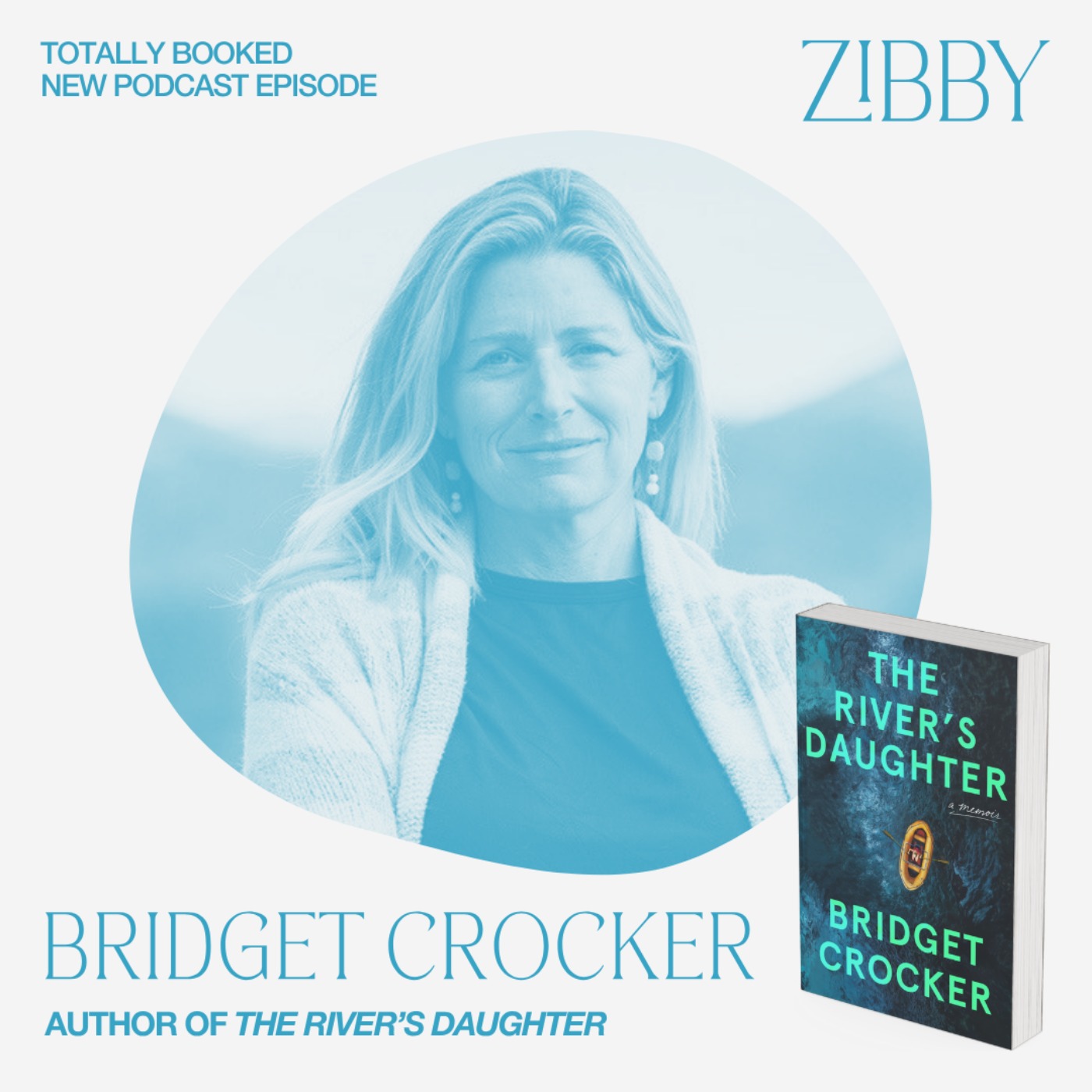
Bridget Crocker is the author of the River's A Memoir. By the way, I loved this book so much. I really am obsessed with it. It was so good and I could not put it down. Bridget Crocker is a trailblazer in women's empowerment within the outdoor industry. A leading whitewater rafting guide, she has led remote river expeditions down many of the world's greatest river canyons. She is a contributing author to Lonely Planet guidebooks and the Best Women's Travel Writing series. Her work has been featured in magazines including Men's Journal, National Geographic Adventure, Trail Runner, and Outside, as well as Patagonia's blog, the Cleanest Line. She lives in Malibu, California.
- [03:56]
Welcome Bridget. Thank you so much for coming on Totally Booked with Zibby to talk about the River's A Memoir. Congrats.
- [04:03]
Bridget Crocker
Thank you for having me. It's a real pleasure to be here.
- [04:06]
Zibby Owens
Oh my gosh, your book was so good. I couldn't put it down. It kept me up late. The ending killed me. I mean, the whole thing, oh my gosh, I don't know. I have so much respect for you for so many reasons and the book in and of itself was so good. But your life, oh my gosh. Just really amazing. Sorry, sorry to gush.
- [04:29]
Bridget Crocker
Just oh my gosh, no, keep gushing. No, it's really touching to me that the ending moved you. I mean, I think that's the reason why this book is out in the world. Because of that promise that I made to my father so you know that that is coming through and that love is coming through. It means a lot.
- [04:46]
Zibby Owens
You guys went through so much together. This is right up there with some of the most complicated father daughter relationships in literature that there are. But that part where you end up and not to like have any spoilers and obviously you should tell people about the book. But when you got to a place where he could apologize and you could forgive him and you learn more about him and were willing to just be like, okay, but don't mess it up this time, you know?
- [05:12]
Bridget Crocker
Yeah, I think, and I think that, you know, I, I began writing this book. It took me 22 years to write this book and it's, you know, I can just give a little intro.
- [05:22]
Zibby Owens
Yes, please. Sorry, Bridget. What is. Bridget, what is your book about? So sorry for our listeners, our listeners.
- [05:29]
Bridget Crocker
And friends who are dying to know. What is this book that kept Zibby up late at night? You know, I grew up on the Snake river in Jackson Hole, Wyoming. And this is a book about growing up, you know, in a troubled family and finding the nurturing and care that I needed. From the river. From the Snake River. I learned to communicate with the river at a young age and could hear the voice of the river. And, you know, that relationship led me into a career as an international river guide. And, you know, my. My main goal, it was my ticket out. My main goal was to get away from my family. And so I. I ended up moving to Zambia where, you know, because they can't find me in Batoka Gorge on the Zambezi River. And while I was there, I was able to travel and to see things through a different cultural perspective, to learn things about my family and to see us in the context of our story. That led me back to my family where I was able to work with my father especially to heal the multi generational cycles of poverty and abuse that we'd endured. So it's a bit of a prodigal daughter story and also just a healing in nature story and kind of a rollicking high adventure story as well. I wanted it to be fun, too. It's not just a slog.
- [06:56]
Zibby Owens
No, it's not a slog at all. You even have a little celebrity infusion in the middle there with some drama. But there's so much to it. I mean, you got through so much in your childhood, but then the sexual stuff with guys, I just like, you kept ending up in these situations and by the time you took that guy's gun away, I was like, no, I can't have another. She can't have another bad thing happen in this situation. You know, I'm like closing my eyes to see what happens next. But you handled it all. You learned, like, you show us how, how you gained so much strength, like, from. And it all takes place with this nature background and like starting with your back up against the tree and being so powerless and then sort of ending with you, like, in charge of the rivers and being able to, like, throw the gun in the bushes. I don't know, I just feel like it was such a. Such an arc.
- [07:54]
Bridget Crocker
Yeah. And thank you. I think a lot of that growth and strength and it's a coming of age memoir. So it's about, you know, coming into myself and my power and starting out at kind of a deficit of being very disempowered. I very much credit my relationship with rivers and becoming a river guide and having to captain my own ship, you know, literally, and being in charge of other people, but being able to rely on my relationship with the river. I trusted that, you know, and that's what enabled me to have the confidence to, you know, be hurling myself over Horizon lines, Class 4 and 5 rapids and, you know, and be very successful at it because I had that connection with the river and was able to communicate and, you know, the river would tell me where to go and I'd end up having great runs and developing my skills. And as that progressed, that confidence, then I saw where in my personal life and in my professional life there was a real disparity of how I was responding, you know, to threats. You know, I was very competent on the river and responding to threats and able to overcome them, the obstacles, you know, on the river and off. But in relationships on land, you know, with predators, human form that was. I was still so conditioned to go into fight, flight or freeze, you know, and to go into that cave inside myself and hide out and wait for it to pass. And I think the real crux moment is when I'm. I'm on the river and one of my co workers comes at me and sexually harasses me on the river. And my instinct is to go inward, but the river's there holding up a mirror of like, wait, this isn't who you are, you know, who. What are you doing? And gives me that confidence too. And just like the pulling, you know, pulling me forward into the next version of myself, which is what rivers do, you know, constantly moving into the next version of ourselves and growing. So that's, I think my main goal in writing this book is to show how do you do that? Like, how does you know? Like, when you're teaching someone to surf, you don't just say, well, just stand up on the surfboard. You know, you have to go through the steps of how do you. How do you stand up? So that was a big part of what I wanted to impart to readers, is to show how do you progress and stand up.
- [10:23]
Zibby Owens
Wow. Well, you also, in many different instances in the book, stand up for other people in a really big way. And I feel like, particularly in Africa when you were, you know, and you stood up to your dad for racism when you were like 13 years old and Then again, when you're in Africa and defending it at a beautiful, like, sort of party situation, I think, where there were, like, people, like, standing behind you and just being like, no. Which ends up getting you, like, getting dunked in a pool, you're just, like, outspoken. When you see injustice and whether it's a man towards you, whether it's towards a group of people, you're just, like, a badass. You're just like, I'm just gonna stand up for it without any fear for myself. Tell me about that and gaining that and how it feels to feel that empowered.
- [11:16]
Bridget Crocker
I love that question, and I love being able to talk about this. You know, I think as someone who suffered a lot of injustice and being controlled, I could recognize that in other people very easily. And, you know, there's a scene when I moved to Zambia and I start working on for this rafting company, and there's some real injustice that's happening, some incredible racism. And because I'm white, you know, I had. I had power to step in on their behalf. And I see now, in writing the book and just thinking about this deeply, I wasn't enabled. I couldn't stand up for myself, but I felt that I could stand up for other people. And I think that that is, like, the basis of white saviorism, where we have people who come and they're trying to constantly save others. And I saw how that inability to maybe stand up for ourselves when we're disempowered, there's a place where we have to turn it back and just focus on ourselves, you know? And I wasn't able to get to that place, but I could see it, you know, in the world around me.
- [12:25]
Zibby Owens
Wow. Well, it's. I mean, I know it comes from not the best place. Right. It doesn't come from. You have to go through a lot to have that characteristic. But it is so beautiful. I mean, it's amazing how you do that. Whatever happened to Teresa, your aunt, Was that in the book? Did I miss it?
- [12:43]
Bridget Crocker
No.
- [12:43]
Zibby Owens
I feel like I need a conclusion to that. Like, the last we saw her, you had parted ways at the restaurant, and then we didn't hear from her again, and I just wanted to know what the update was.
- [12:53]
Bridget Crocker
We've been estranged, you know, for most of my life. Yeah, okay.
- [12:57]
Zibby Owens
Sorry. I didn't know if there was an update. I found myself wondering about all these characters and, like, what's up with Danny? Where is he? Can I get, like, a psych?
- [13:09]
Bridget Crocker
I've lost touch with him as well. Aw, I know.
- [13:13]
Zibby Owens
Well, A lot of people are going to be really surprised when they read this book. I bet you won't be strangers for long. Okay, talk a little bit about this. Being able to talk to the rivers, which I know is what starts the book. And then when you get to Africa, people think maybe this is like a curse, that you're a witch or something like that. And how different cultures treat what this ability to really hear from the river what you need to get out of it. And do you really think it's the rivers or is it a part of your brain, sort of a self talk thing? Or do you think it's, do you actually hear it, like it's a sound?
- [13:50]
Bridget Crocker
Well, I think, you know, culture is a, it's the reflection of landscape, you know, and so wherever it is that we live, the place that we're surrounded, you know, the landscape that we're immersed in, that's gonna be what's reflected in ourselves, our thoughts and our culture. And I was so fortunate to grow up in Jackson Hole, which is, you know, people call the Serengeti of North America. And you know, I grew up in a very vast wilderness area. And when I visit wilderness areas, like there's, there's a quality in wilderness, like real wilderness where there are no people. And, you know, I was also raised by backpacking guides who, you know, in wilderness areas. So there, I think it's hard for people who haven't experienced wilderness to understand. Like you can feel that it's alive. You know, there's, there's a palpable quality in wilderness areas, whereas it's alive there. You know, everything's interconnected and you can feel that energy. When I, I have this ability to just sort of get into like a focused meditative state where, you know, you're, when you're really in, especially in it. And I credit my ADHD with this, right? I can be hyper focused on things and I create, you know, that brings the creativity and also the ability to focus deeply. And when I am able to focus deeply, I get, you know, messages. And sometimes I do hear a voice and sometimes it's more just in, you know, kind of this tickling that happens, you know, behind my third eye or like I can feel it in my body and. But there's an idea attached to the feeling. And so there is a communication that's happening and being, you know, it's in the same way that you can communicate with your dog, right? There's, it's not, it's not unlike that or there's, you know, you just for me, you know, being able to focus on the river and learning, you know, the sounds and, and the, and the feeling, then that becomes a way of communicating and you know, like the opening scene where I fell into the river and was, you know, had blanked on what I should do and I hear a voice clearly yell swim when there are no human humans there besides my friend and I who didn't hear the voice and, and who never said swim. So yeah, you know my there. I get this from a lot of folks like well how you know, people are curious, like how can I connect to nature more deeply? And I think the, you know the answer to that is to just, you have to sit still still and listen and absorb it and like put your phone down and you know, get, get away from all the clamor of, of human made world and, and remember like who we are and where we come from and really sink into that.
- [16:43]
LinkedIn Ad
Does it ever feel like you're a marketing professional just speaking into the void? Well, with LinkedIn ads you can know you're reaching the right decision makers. You can even target buyers by job title, industry, company seniority skills. Wait, did I say job title yet? Get started today and see how you can avoid the void and reach the right buyers with LinkedIn ads. We'll even give you a $100 credit on your next campaign. Get started at LinkedIn.com results terms and conditions apply.
- [17:13]
Grainger Ad
If you work as a manufacturing facilities engineer, installing a new piece of equipment can be as complex as the machinery itself. From prep work to alignment and testing, it's your team's job to put it all together. That's why it's good to have Grainger on your side. With industrial grade products and next day delivery, Grainger helps ensure you have everything you need close at hand through every step of the installation. Call 1-800-GRAINGER Click grainger.com or just stop by Grainger for the ones who get it done.
- [17:44]
BetterHelp Ad
BetterHelp Online Therapy bought this 30 second ad to remind you right now, wherever you are, to unclench your jaw, relax your shoulders, take a deep breath in and out. Feels better, right? That's 15 seconds of self care. Imagine what you could do with more. Visit betterhelp.com randompodcast for 10% off your first month of therapy. No pressure, just help. But for now, just relax.
- [18:27]
Zibby Owens
Well I just love that you start with those pictures in your closet in the place when you're in your darkest moments and you're curled up sort of escaping yourself and self soothing honestly. And then you get to live out that moment. I mean, it's just. It's so cinematic. Is this gonna be a movie, by the way?
- [18:45]
Bridget Crocker
It's.
- [18:45]
Zibby Owens
The whole thing is so cinematic.
- [18:47]
Bridget Crocker
Yeah. Yes. My film team's working on that right now.
- [18:51]
Zibby Owens
Amazing. It's really incredible throughout the things that you were dealing with, from physical abuse to sexual assault to poverty, to just this notion of you being sort of the only named person in your town with your same last name, like just this feeling other. And to cope with all of this, you self medicate a lot with drugs and alcohol. And that could be its own sliver of memoir. Right? Just the immersion into that. Like you pepper it through everything and you have a thing at the end where you sort of wrap things up and where you are now with it. But can you talk a little bit about that and how you feel looking back, or when you know what your whole relationship is to addiction?
- [19:36]
Bridget Crocker
What a wild question for you to ask me. Today is my 22nd sobriety birthday. Stop.
- [19:42]
Zibby Owens
Oh, my gosh. 22 is my lucky number. So there you go. It was meant to be. Congratulations.
- [19:49]
Bridget Crocker
Thank you very much. Yeah, you know, dealing. And I love that you brought in othering too, because, you know, that is the thing that helped me to understand, you know, and see where other people are being othered, you know, and to know that that deep loss and. And that those feelings of grief that come with that, of just of disconnection and that intense pain and grief, it becomes unbearable. And so the drinking and the using is a way to numb that grief and make it go away, but it doesn't fix the problem, and it just spirals into its own problem. I also grew up in a family of addicts. There's addiction in my family. And so it was the family culture. And genetically I'm predisposed to it. You know, it was in some. And sometimes, you know, and in river culture, it's a way to connect too. Like, it's a way for the guides to go off and kind of have our own moment or, you know, it's a way to have. Have like a ceremonial thing that people are doing together, you know, and so sometimes it would be about that. But, you know, I can tell you that I don't, you know, doing the real healing so that I don't need to numb out to my feelings anymore. And I can feel them and process them in real time. Now is such a bless. And it's, you know, I'm just so much more content and, you know, learning how to manage my nervous system that was a big part of it, too. I had such radical anxiety from growing up the way I did that my nervous system was like firing at this high voltage. That was part of what made it made me a very successful guide because, you know, there's an inordinate number of people with ADHD and with anxiety disorder who are river guides because, you know, things are coming at you so quickly and our nervous systems are more attuned to be able to respond more quickly, too. But yeah, you know, to manage my anxiety. And now, you know, I run and I meditate to manage my anxiety instead of using drugs. And that has worked really well for me.
- [21:55]
Zibby Owens
So you don't take antidepressants? Not that this is any of my business.
- [21:58]
Bridget Crocker
No, I don't. You know, when I first I started having these like, radical panic attacks when I was about 30, it all kind of caught up to me physically. You know, I've been ignoring, you know, the signs from my body. I had like, my throat would close off, you know, I wouldn't be able to breathe. And I ended up at the, in the emergency room several times with like, you know, thinking I was at a blocked airway or something. Was even hospitalized once overnight, you know, misdiagnosed with epiglottitis, which is like a kid's disease. So I kept ending up like in the emergency room. And finally I got it. And this was like in the, you know, this was like 1998 or something. I finally got a doctor who was like, you know, do you, do you self medicate with drugs and alcohol? I'm like, what do you mean? And then, you know, he was like, you know, I want to try. We're going to try giving you some antidepressants. I'd like you to also see a therapist. And then, you know, from there I started going to a 12 step meeting. And, and what I realized was the antidepressants also, they weren't doing the trick either. And biologically, when you're in extreme fight or flight, we're supposed to run. We're supposed to expel the adrenaline. And so I was like, I think I'm just gonna start running. And that's when I became a runner. And I'm telling you, for me, it's worked really great. When I feel anxious, I go for a run. I feel much better. It's. It's pretty simple. And I, I took antidepressants for about six months. It made me feel insane and I. It just didn't work for me very well. So this was, this is What I've been doing since. Since then, and it's. It's worked great.
- [23:44]
Zibby Owens
Wow. So how far are you running? Like, what's your running?
- [23:47]
Bridget Crocker
You know, I'd like to run about four miles is kind of like my normal, you know, kind of sweet spot or even walk, you know, a fast walk. And I like to listen to music sometimes. Like, I'll drop my kids at the swimming or water polo practice, and I'll go on the track and just put on Beyonce and just, you know, like, let the mind flow. Or I love to run to the Hamilton soundtrack is like, my favorite. I get super excited. Can really, like, get the aggression out. But, yeah, even just going for a hike in nature, like, I go for my husband, and I like to take a hike after dinner. Usually we just do an evening walk and just on the trails out here around my house and, you know, just to be outside, too, is such a calming. Has a calming effect on my nervous system.
- [24:37]
Zibby Owens
And you still live in Malibu?
- [24:39]
Bridget Crocker
I do.
- [24:40]
Zibby Owens
I know that, you know, you referenced the Woolsey fire in the book, but were you affected by this fire?
- [24:46]
Bridget Crocker
Yeah. You know, as, you know, everybody in the community is affected, and all of our businesses are, you know, still struggling to stay open. My home did not burn this time, but, you know, so many of our friends, there were, like, 20 kids in my younger daughter's class who lost their homes. And it's just something that we live with in Malibu. It's part of, you know, it's like if you live in Florida, you deal with hurricanes, we deal with fires. And what's. My husband grew up here. He grew up in Topanga. And what's amazing is, like, all of the, you know, the people who grow up here, they have this skill set that just sort of springs into action, you know, and, you know, my kids have that now. We all. We've. I've adapted. And so we have these skills that. And we work very well as a community when there is a fire. I mean, I'm sure you've seen that with your experience with the Palisades fire, like, how amazing the community is. And after the Woolsey fire, I remember thinking, like, saying to my husband, like, we can't live here. Like, we have to move. And he said, we can't leave now. We're going to miss out on the really beautiful part of the community coming together. And I was like, well, I don't really care about that. I just want to be safe, you know. But then, you know, as we did, and I realized, like, I didn't know how to stay was the real issue. Like, I run. I'm a runner, right? So I was like, we gotta run, we gotta leave. And that in the book, you see how like, I run, you know, and my husband does not. He digs in. And I finally said to him, like, I, you know, the truth is I don't know how to stay. And he's like, well, stick with me, I'll show you how, you know. And we just kind of like, you know, walked through it. And he was right. You know, the beauty of that community coming together, of our community and like, what people, the interconnectedness that happens, that was the thing that I was always running towards, looking for, you know, looking for connection, looking for community. And I had no idea. Like, by staying and investing in your community, you gain more community. Like, it's a very basic, simple principle. But I, it took me until I was, you know, like in my 40s to learn that.
- [26:58]
Zibby Owens
Oh my gosh.
- [26:59]
Bridget Crocker
Yeah, it's. I mean, it's been one of the biggest gifts of my life, actually, to that sense of belonging and being part of being a valued member and a part of a community.
- [27:07]
Zibby Owens
It's so crazy to me that, like, you're just another mom at pickup at your kids school in Malibu and this is your story. You know what I mean? Like, people could make so many of the wrong assumptions about you. Like, don't you just want to tell everybody? Or maybe that's why you wrote the book, just to be like, yeah, no, no, I'm not, you know, Well, I.
- [27:27]
Bridget Crocker
Mean, part of it, you know, my husband's a lifeguard and so we're a lifeguard family. And so we're, you know, we're water people. And I can sort of translate my what, what I do into that world. But there would always be this sort of like, yeah, you know, I guide rivers and. And we would. We do these like, incredible trips with our kids too. And so our kids would come back from spring break and like, you know, what did you do? Like, oh, Well, I paddled 83 miles, you know, in my little kayak by myself, you know, on the San Juan river and at like 11, you know, and people are like, what, we went to Disneyland? But, you know, so it would kind of start to seep out, you know, and I do. I feel like I am who people understand who I am and I can be fully myself and in my community. And you know, at first I wasn't sure how that would go. And also people have such like, ideas about what Malibu is Because it's, you know, like the mo. It's sort of this archetypal place that people have in their minds. It's. And it's. It's, you know, very glamorous, and it's very ritzy, and, you know, it's. It's. Everybody here is rich and, you know, everybody here is snob. You know, they're all snobs. And I've got to. I've got to say that that is not my experience at all. I mean, it is filled with very hardworking people who know how to survive really extreme things. I mean, it's a place of extreme beauty. It's very similar to where I grew up in Jackson. Like, there's extreme beauty and. And there's the culture of people who also are very, you know, hardworking, loyal, devoted people and very connected to this place and to each other. You know, I. I couldn't. I just can't say enough beautiful things about, you know, the people who live here. And, you know, and they've been very accepting of me and my life and my lifestyle, my history. You know, I've been very open. But, yeah, you know, there are. There are people who don't know our story, and, you know, our families had to, like, come together. Like, okay, we're in. And it was a family decision. Like, we're going to put this in the world now. And our girls are old enough that. Because my kids don't know a lot of this stuff either, you know, we. It's not something that I wanted to burden them with when they were young. So we're. We're going through the book and reading it together and talking about it. No, they know, like, a general sense of, like, mom had a. Had a kind of rough childhood. And, you know, they were very close to my father. They're very close. You know, they don't have a relationship with their grandmother. As you know, we've been estranged for a long time. So, you know, they understand, like, there's something going on there. There's a reason why, you know, they're estranged, but they don't know all the details. And so, you know, it's going to be out there now. And, you know, when we meet, when I first gave the book to my husband to read, like, you know, how do you feel about this, you know, being out there? And he kept coming back to me and saying, like, how many more sex scenes are in this book? You know, like, how. How many more abuse scenes are in. I. You know, I was like, well, just skip ahead to page 100. You know, that's, that's where the Whitewater starts. And it, it gets really fun. And he's like, no, I'm going to read the whole thing, you know, and, and then at the end he came to me and said like, it's not up to me to, to say if you can publish this or not. Like this story is bigger than us. Like it's not, it's beyond us and it's got to go out there and it's going to help a lot of people. And that's been our intention from the beginning.
- [31:01]
Zibby Owens
Well, Bridget, congratulations. I hope I see you sometime in LA Malibu area. I have like a hundred more follow up questions. So many questions about people in the book and, but thank you. It was really inspiring and congratulations on 22 years.
- [31:15]
Bridget Crocker
Thank you very much. Thanks for having me.
- [31:17]
Zibby Owens
My pleasure.
- [31:18]
Bridget Crocker
Bye bye.
- [31:19]
Zibby Owens
Thank you for listening to Totally Booked with Siby formerly Moms don't have time to Read Books. If you love loved the show, tell a friend, leave a review. Follow me on Instagram Iby Owens and Spread the word. Thanks so much. Oh and buy the books.
- [31:41]
Grainger Ad
If you work as a manufacturing facilities engineer, installing a new piece of equipment can be as complex as the machinery itself. From prep work to alignment and testing, it's team's your job to put it all together. That's why it's good to have Grainger on your side. With industrial grade products and next day delivery, Grainger helps ensure you have everything you need close at hand through every step of the installation. Call 1-800-GRAINGER clickgrainger.com or just stop by Grainger for the ones who get it done.
- [32:11]
Warby Parker Ad
Every idea starts with a problem. Warby Parker's was simple. Glasses are too expensive. So they set out to change that. By designing glasses in house and selling directly to customers, they're able to offer prescription eyewear that's expertly crafted and unexpectedly affordable. Warby Parker glasses are made from premium materials like impact resistant polycarbonate and custom acetate. And they start at just $95, including prescription lenses. Get glasses made from the good stuff. Stop by a Warby Parker store near.
- [32:41]
Quince Ad
You, ready to level up your everyday. Quince makes premium essentials without the premium price tag. From quality clothing and stylish accessories to travel staples and high end home goods, Quince has it all. And by partnering directly with top artisans and ethical factories, Quince delivers high quality at half the cost of similar brands. Shop elevated essentials without the markup at quinte. Go to quints.com levelup for free shipping and 365 day returns. Quince.com levelup.