← Totally Booked with Zibby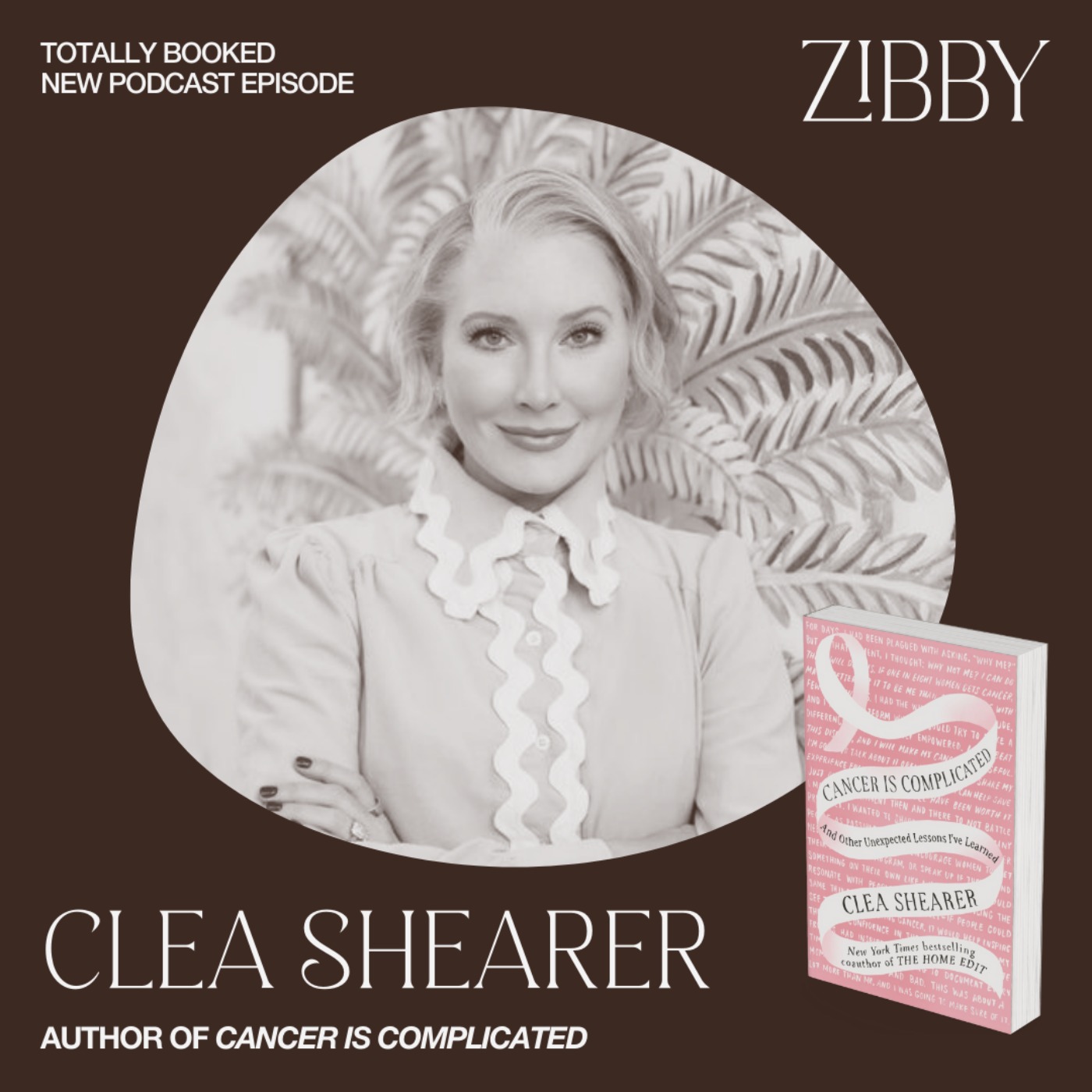
Totally Booked with Zibby
Clea Shearer, CANCER IS COMPLICATED: And Other Unexpected Lessons I've Learned
00:30:33
Loading summary
Transcript75 lines
- [00:00]
Clea Shearer
Ready to order? Yes. We're earning unlimited 3% cash back on.
- [00:04]
Zibby Owens
Dining and entertainment with a Capital One Saver Card.
- [00:06]
Clea Shearer
So let's just get one of everything. Everything.
- [00:09]
Zibby Owens
Fire everything.
- [00:10]
Clea Shearer
The Capital One Saver card is at table 27 and they're earning unlimited 3% cash back. Yes, Chef. This is so nice.
- [00:18]
Zibby Owens
Had a feeling you'd want 3% cash back on dessert.
- [00:20]
Clea Shearer
Ooh, tiramisu. Earn unlimited 3% cash back on dining and entertainment with the Capital One Saver Card. Capital One what's in your wallet? Terms apply. See capitalone.com for details.
- [00:30]
Zibby Owens
Did you know? Adults 60/ lose more than $60 billion each year to financial exploitation. Greenlight's new Family Shield plan empowers you to monitor your accounts for suspicious activity, protect yourself with up to $1 million identity theft coverage, and reassure loved ones that you're safe with location sharing and place alerts. Get peace of mind today@greenlight.com protect that's greenlight.com protect Today's episode is sponsored by the Foxed Page, a podcast and YouTube channel that dives deep into the very best books. It's basically your favorite college English class, but very relaxed and way more fun. No exams, no participation, and only books you really want to read. Kimberly Ford, best selling author, one time professor and PhD in literature, offers up entertaining, often funny talks that will leave you feeling inspired and a little smarter. She digs right into everything from J.D. salinger to Miranda July, from Demon Copperhead to Madame Bovary, from Pride and Prejudice to Lessons in Chemistry. The talks on individual books are the heart of the podcast, but enriched read segments tackle ideas like unreliable narrators, while old favorite talks treat you to a fresh adult look at childhood gems like Harriet the Spy and Are you there God? It's me, Margaret. Want to get the most out of what you read and be entertained along the way? The Fox page is for you. Hi, this is Zibby Owens and you're listening to Totally Booked with Zibby, formerly Moms don't have time to read Books. In my daily show, I interview today's latest best selling, buzziest or underrated authors and story creators whose work I think is worth your time. As a bookstore owner, publisher, author, and obviously podcaster, I get a comprehensive look at everything that's coming out and spend my time curating the best books so you don't have to stay in the know, get insider insights and connect with guests like I do every single day. For more information, go to zibbedia.com and follow me on Instagram Iby Owens Leah Shearer is the author of Cancer Is Complicated and Other Unexpected Lessons I've Learned. Clea is the co founder of the Home Edit, a mother, a wife, and most recently a breast cancer survivor. Having grown up in Los Angeles, she graduated from Parsons School of Design in New York City and currently resides in Nashville. In 2015, Clea and her co founder Joanne Teplin started the Home Edit, a global home and lifestyle company with the goal of reinventing traditional home organizing and merging it with design. The Home Edit has become a household name with a social following of over 9.8 million people, three New York Times best selling books, the Home Edit, the Home Edit Life and the Home Edit Stay Organized, a successful line of organizational products sold in over 31 countries and an Emmy nominated Netflix show, Get Organized with the home edit. In 2025, the pair made their debut as host of Extreme Home Edition, airing on ABC and streaming on Hulu. In her spare time she can be found traveling, reading her Kindle and trying to learn how to cook. FYI in this episode we talked about her upcoming surgery and how she was nervous as it was happening the next day. Unfortunately she did have some complications from the surgery and that is where we are right now as I am recording this. So please follow Clea on social media where she gives you the up to date accounts of all of her surgeries and health issues and you will be rooting for her every step of the way. Welcome Clea. Thank you so much for coming on Totally Booked to talk about Cancer is Complicated. Thank you so much.
- [04:10]
Clea Shearer
Thank you so much for having me. So excited to be here in real life but still close enough.
- [04:19]
Zibby Owens
Your book was so good I inhaled it. I haven't read anything as helpful. I have not had cancer but now I have had friends who have and now I just feel like I get it. I can be a much better friend support if it happens to me. I know what to expect. I I love being able to plan so that's really helpful. So thank you for sharing your story. Why did you decide to do that?
- [04:42]
Clea Shearer
You know when I first got diagnosed I was just like most people would be a ball of fears and tears and just felt really despondent and something a few days post diagnosis kind of just like clicked in my brain about me being I should be the 1 in 8 women to get breast cancer. If I can check off seven people from that list and be the person to have it then then why not? I mean I have you know all the resources, everything at my disposal and if I can do this journey so someone else doesn't have to. Then I felt like that was a real honor. And I decided from that moment that I was going to really try and make my cancer purposeful and share and document everything, which I did on social and ended up, you know, turning this into a book. But I just, you know, you know, I. I felt like I had a real opportunity, and if I'm going to have cancer, you know, I. I don't half ass anything, so I'm gonna. I'm gonna make sure to. To make it as impactful as possible and hopefully help people along the way.
- [05:50]
Zibby Owens
That's so amazing. And I love in the book how after you got home from the hospital, you were like, the flowers aren't in the right order. I have to rearrange.
- [05:58]
Clea Shearer
That was 100% my mom. You know, a double mastectomy is a. Is a big surgery, and my mother was just like, standing over me like a hawk, and I'm just like, trying to arrange the florals that have come. And she's like, clea, sit. Sit down. So it's. It's hard for me to relax. I actually have a very big surgery tomorrow.
- [06:18]
Zibby Owens
I saw that on social.
- [06:19]
Clea Shearer
I saw you posting, which I'm nervous about, but. And I never really get nervous about surgeries at this point, but I'm sure I'll be arranging things again tomorrow too, so. Oh, actually, I'll be in the hospital for 24 hours, but when I'm home, you can count on the fact that I will be moving around and rearranging bits and pieces because I can't sit still, which is a terrible quality for a cancer patient. Terrible.
- [06:42]
Zibby Owens
Well, you've. You found your way around it. I feel like you've made the whole thing, the whole thing put to good use. I also feel like the book was this love letter to your mom because the way that she took care of you and the time you got to spend and you say sort of towards the end, like, I hate to say I enjoyed it, but like, when she was leaving after the first time and she was like, we had a lot of fun, right? As you guys are watching Iron Chef and bonding and everything. And that there are these. And that's why, of course, you say cancer is complicated, but all these moments with her. Tell me about your relationship and everything.
- [07:13]
Clea Shearer
Well, my mom flew in last night, so she'll be here with me for tomorrow's surgery. You know, my mom and I have always been very, very close, and I'm only going to say very nice things. About her because she can probably hear me from the other room, so. I'm just kidding. But my mom and I have always been very close. I mean, I. I still call her mommy, you know, like, she is my. She's my mommy until forever and. But when I got diagnosed as close as we've always been, something just completely shifted. And it's kind of like in. When you have one child and you're like, there's no way I can love another child as much as I love this child because my heart is completely full. And somehow when you have another child, your heart just grows like another heart or something like it just. And that's kind. I think the way I feel about my relationship with my mom. I didn't know that we could get closer, but I think there's. There's nothing quite like something like this to put everything into perspective and to make you really, really, really want to just be around the most important people in your life. And my mom just showed up and continues to show up every single time. And, you know, I just. It's crazy, but there's a lot of treasured moments that occurred during my, my battle, so. And that still occur. She's. She's here now. So, you know, it just. I hold a very special place in my, in my heart. And she's the best.
- [08:42]
Zibby Owens
You're so lucky. That's amazing. And your husband too, was like, at every appointment. I mean, he's a saint.
- [08:48]
Clea Shearer
Oh, yeah. John is a saint. My mom actually said to him, john, you've always been a prince, but you're a saint now. Like, I mean, he, his level of sainthood was really on full display. He never misses an appointment appointment, even just like a follow up, like nothing appointment. He is always, always there. And he didn't work most of that year, which I realize is, you know, not, not common. And, you know, we had the good fortune to be able to have him take so much time off, but he just, he was there for me for absolutely everything. And, you know, he was my moral support, he was my emotional support. He was my actual caregiver, you know, like, especially after surgeries and everything. You know, it's. He's just. He's the best. And he's, you know, also takes over as being mother and father to our kids. So, you know, it's. He's really amazing.
- [09:44]
Zibby Owens
And maybe I should back up and just have you explain really quickly what happened, how you found out about it just for people who are like, what are they even talking about? So basically that you you found out in the midst of this very, very successful full throttle ahead career with the home edit and everything else, and like, it was going to be your year. And then all of a sudden you felt what? Well, you ignored the first lump that may or may not have been related and then. Which we can talk about.
- [10:14]
Clea Shearer
Yeah. Like you said, February 2022 was a really big moment. Our company, the Home Medic, got acquired by hello Sunshine, Reese Witherspoon's company. I had just turned 40 on top of life. Everything was amazing. And the acquisition, I mean, like, we got acquired February 18th. And I was in the shower February 22nd and felt what I absolutely knew was a lump. You know, like, I think that when I had felt maybe something the summer prior, I think I just. I know I just wrote it off as, like, breasts are lumpy, you know, like they're not all perfect and smooth. But that day in the shower in February, I was like, oh, there is nothing else that this could be. I mean, why wouldn't it be the lump? Not just a lump, but like the lump that they tell you to look for. And, I mean, I freaked out. I immediately called my OB GYN to try and get scheduled for a mammogram. And I write about this in the book because it really changed the course of things for me. I. I was told that no mammograms were available, no appointments were available. This was February. And they said that they were fully booked through April and that the May books just weren't open yet. So I would just have to keep trying back. Like, not even, like, call back on, you know, April 30th. It's like, just. No, nothing was open. And I continued to press and I said, but I found a lump. Like, I'm not. I'm not asking for my, well, woman appointment, you know, which I understand takes a long time, but you, when, when you go in for your annual physical is a really different thing than if you have, like, the flu. They get you in, you know, like this. How is this possible? And the receptionist just apologized and said, you know, so it's the way it is. And I said, how does, how does medicine work this way? And it just. No. So I called my primary care doctor, who's fantastic, and she assembled a whole day of, you know, mammogram, ultrasound, you know, all the tests that I could get. And if it wasn't for her taking me seriously and this seriously, I believe that I would be in a very different situation.
- [12:38]
Zibby Owens
Well, I think your advocacy throughout the whole book is really important. And the advice you give to everybody else, that if you think that something is not right, don't just accept it. Like, you have to be your own advocate for your health. Like, even down to when your arm went numb and you were like, this is one of those times I'm going to have to call again.
- [12:54]
Clea Shearer
It happened a lot of times. And that's, you know, it's like when you deal with a health crisis, you start to realize this isn't. Like, it's not a well woman appointment. It's not. You know, when you call your dentist and they say, well, we can fit you in in six months, you're like, okay, well, you know, that's, that's fine. This is like your health telling you, your body telling you that you need to prioritize it, that you just, you can't kick the can down the road. Normally I would have no problem being like, well, I guess I just can't get seen for a few months. Like, sounds good to me. I just don't have to go to the doctor. And I just knew. Knew immediately that I couldn't afford that. And I just, I had a gut feeling that this was going to be cancer. And it felt the lump was large and it was actually two lumps that were right next to each other. So it felt like a much larger lump. But still it was 2 cm and 3 cm, which is sizable. So, yeah, you need to listen to your body. You need to advocate for yourself. You need to speak up when something's wrong or even if something just doesn't feel right. Like I had to do multiple times through my cancer journey. And I don't think that women particularly are taught to do that. I think that we're busy, we're working, we're raising families. We're the last thing that we deal with is ourselves. And I think that it's a lesson that I learned and one of the reasons why I wrote this book. I want people to learn from my mistakes and all the lessons I learned along the way. So that let me figure it out so that you guys are better equipped.
- [14:41]
Zibby Owens
No, that was great. Even telling people, like, how loud this thing is, what chair, how long you have to sit here for this, and even warning people like you do about which movies not to watch and how it can be such a trigger and why does Hollywood portray chemotherapy and always such. In dark rooms with like a sepia filter or whatever.
- [14:57]
Clea Shearer
I cannot watch a movie at this point. Like, it's like I am somehow drawn to a movie or TV show. That inevitably, like 60% of the way through, someone has breast cancer. It's always someone died of cancer, someone has cancer, someone's getting chemo. It's just like these shows, I think. Follow me. But I blame Hollywood because it sucks to always feel like every. All of these scenes are so dark and literally sometimes with lighting and everything, they're all so dark, they're all so tragic. And I just think that there's a lot of nuance with this disease. And not that it isn't terribly dark and tragic at many points, but I think it just scares us into feeling like there's no way we could go through it. And, you know, so I did want to make sure that the book showed the humanity of going through something like this. And it's not all terrible. Some days are really, really terrible. But there are also a lot of days that are really poignant and meaningful. You know, I wouldn't say there were that many fun days, but, you know, I tried to have fun. I went to Disneyland once and ended up in the er so, you know, again, learn from my mistakes. Don't go to Disneyland in the middle of chemo. Not, not a good idea. Not advised. But yeah, I, it. Cancer is not just being in a, in a sterile chair and a lineup of chairs with a, with a drip, you know, like that is. It doesn't. Some days it might look like that, but that's not what your life is going to look like. And I mean, one hopes, you know, you, you never know if there's like an extra, you know, circumstance. But generally speaking, I was like, no, I want, I want people to, to know what to expect, you know, the good and the bad.
- [16:56]
Zibby Owens
And I like how you talked about even in the aftermath of the treatment, which I feel like as a reader, we were sort of crossing off the calendar with you with the doses and all of that, and you finally get to the end, you ended up feeling depressed. Can you talk a little bit about that?
- [17:11]
Paige Desorbo
Hi, this is Paige Desorbo, and today I want to talk to you about Boost Mobile. So you're thinking about upgrading to the Amazing new iPhone 17 Pro, the most powerful iPhone yet with 8 times optical zoom. But are you also thinking about the traffic on your way to the store or transferring all your data? Well, good news, when you order a new iPhone online with Boost Boost Mobile, they'll send an expert to your home or work to deliver your brand new iPhone 17 Pro and get you all set up on Boost Mobile within minutes. No hassle. Visit boostmobile.com to get started. Delivery available for select devices purchased@boostmobile.com terms apply.
- [17:51]
Zibby Owens
If you love to travel, Capital One.
- [17:53]
Clea Shearer
Has a rewards credit card that's perfect for you.
- [17:55]
Zibby Owens
With the Capital One Venture X card, you earn unlimited double miles on everything you buy. Plus, you get premium benefits at a.
- [18:02]
Clea Shearer
Collection of luxury hotels when you book on Capital One Travel. And with Venture X, you get access.
- [18:07]
Zibby Owens
To over 1,000 airport lounges worldwide. Open up a world of travel possibilities with a Capital One Venture X card.
- [18:15]
Clea Shearer
What's in your wallet? Terms apply. Lounge access is subject to change. See capital1.com for details.
- [18:20]
Paige Desorbo
Hey, I'm Paige Desorbo, and I'm always thinking about underwear.
- [18:24]
Hannah Berner
I'm Hannah Berner, and I'm also thinking about underwear, but I prefer full coverage. I like to call my granny panties.
- [18:30]
Paige Desorbo
Actually, I never think about underwear. That's the magic of Tommy John.
- [18:34]
Hannah Berner
Same. They're so light and so comfy. And if it's not comfortable, I'm not wearing it.
- [18:39]
Paige Desorbo
And the bras? Soft, supportive, and actually breathable.
- [18:42]
Hannah Berner
Yes. Lord knows the girls need to breathe. Also, I need my PJs to breathe and be buttery, soft and stretchy enough for my dramatic tossing and turning at night. That's why I live in my Tommy John pajamas.
- [18:54]
Paige Desorbo
Plus, they're so cute because they fit perfectly.
- [18:57]
Hannah Berner
Put yourself on to Tommy John.
- [18:58]
Paige Desorbo
Upgrade your drawer with Tommy John. Save 25% for a limited time at tommyjohn.comfort. see site for details.
- [19:10]
Clea Shearer
I relate. For me, again, all of this is only my tale. So this is not what everyone will experience by any means. But when I reach the end of radiation, when I reach, you know, the end of my active treatment, I felt like I was just like dropped into space. And I had been kind of like army crawling my way through all of these infusions and sessions. And I had a date in my mind. November 22nd was going to be my final day of radiation, and I was going to be done and free. And I pictured myself in the Sound of Music, frolicking on the grass, swinging my arms, just thinking this is the best moment of my life. And I really tried to feel that way, but I couldn't access the happiness or the joy in, in any of it. And what I realized is I was really, I really had a bout of depression. And I, I have a few reasons why I think that, that I ended up feeling that way. But I would relate it to postpartum depression in the sense that, you know, you're. You're working, you're plugging away for nine months like just counting on that day and then your world is going to come into light and everything's going to be sunshine and happiness and. And I experienced postpartum with my firstborn with Stella. And you know it. You. You know that this should be the happiest moment in your life. Like, you know that. So you're like, why. What is wrong with me? Why am I broken that I'm not so happy to have my child and the pregnancy is over now I have my child. You know, the. My act of treatment was over and I had no evidence of disease for, for cancer. This is. Should be the best moment. I crushed it. And I think I felt the very, very long journey ahead. Like, I wasn't actually done because I was done with active treatment. But then you move into, if you're depending on what you're. If you're hormone positive or if you're her two positive or her two negative, like there that you, you know, adjunct treatment they call it. So I knew that there was a really, really long road ahead. And I felt all of a sudden untethered. I didn't have like, a plan. I didn't have things that I could check off. It was just this like, very, very, very long road ahead of me. And I had dealt with, you know, nearly a year of intense treatment and with like, very, like, I'm so goal oriented, you know, that I could feel like if I got to the end, then it would. I'd feel it in my bones. And I just, I didn't. And I think that because I didn't, I really just struggled with. I couldn't talk to anyone about it. You know, I felt selfish for like, you know, all these people my life have been with me, you know, through and through, through all this. And who am I to. I felt a lot of shame around feeling depressed. And so I didn't really share it with people, which I think is, you know, only makes you more depressed. It only makes it only the matter worse. So it was. It was a hard road. It took. It took me a couple of months to really get out of that. And I again, I realized I needed to talk to my doctor. And we changed certain medications, kind of moved things around. I was told I absolutely, without fail, need to get outside and move for 30 minutes every day, just certain things to try and get the fog to lift. And it did, but it did take a while. And I really wanted to be honest with that because I would bet it happens to a lot of cancer patients.
- [23:04]
Zibby Owens
Well, it's hard to not feel like there's something you can do. And even though you have your regimen now, obviously, and obviously your big surgery coming up, how are you preparing for that emotionally, whatever. Like, how do you go into something like that?
- [23:17]
Clea Shearer
This will be my 11th surgery, so I unfortunately, am a pro. This one, though, is going to be very big. So back. My first surgery, my first surgery ever in my life was my double mastectomy. I'd never had anything before, and not a great one to start with, but I had anything before. And then right after my double mastectomy, like within. Within that week. So seven days later, I developed necrosis and had to have emergency surgery for that. And then I've had a subsequent. I've had so many surgeries, both in reconstruction. I had to get my ovaries out because I'm hormone positive. Just a whole list of things. Basically. In April, I started having a complication on my right breast. It was never really keen to the implant like that. My skin was tissue thin. I lost so much skin with necrosis. But also my right breast is my radiated side. And radiated skin is just a nightmare to deal with in terms of reconstruction or really with anything but with reconstruction. So after so many attempts of trying to save my right implant, save my right breast, my doctor made the decision, had to be removed again. So I went from kind of a double mastectomy to reconstruction to kind of back to having like a single mastectomy. And so I had to wait a few months for my skin to really settle down, calm down, hopefully heal a little bit. And then tomorrow is my big. It's another type of reconstruction. It's called latissimus dorsi flap surgery, and some people call it the lat flap, but it's. It's basically where they take muscle tissue, skin from your back and rebuild your chest with it. So it's going to be a big one. I'm really nervous about it. I'm normally not nervous at all, but the recovery for this one sounds really daunting. So I'm. I'm anxious. I mean, I don't know if I'll be arranging flowers. I'm not. Not sure. It seems painful, very painful.
- [25:25]
Zibby Owens
And you don't have to be arranging flowers. And however, I mean, you have like, to really like. I know, I know. I mean, I feel like that, well, first of all, good luck tomorrow. And, you know, but I feel like it comes through that your instinct is to accomplish and to arrange and call down. And you, you know, you talk about getting rid of your wedding photos which you digitized, and you just, like, are ready to clear and pursue and get through the emails and do the work and go to the photo shoots and all of that. And life doesn't always obey what we want. And I think that's one of the most useful things. You're like, and again, cancer is complicated because look at what happened and look at how I had to pivot. So I think, you know, pivoting becomes a central takeaway from the book, how you deal with that.
- [26:12]
Clea Shearer
Absolutely, Absolutely. I mean, I open the book saying, not to quote myself, because I'm sure I'll get it a little wrong, but I open the book saying, if, you know, if you like something, if you're a planner, if you're a control freak, cancer is not the disease for you. And it is true, because, I mean, you just. You can't. You can't plan anything. Everything is a pivot. Everything is learning how to just take the information, take the hit, whatever it is, and pivot to a new plan, a new outlook, and, you know, a new something. And it just. It happens all the time. Like, you just. It is. It's almost laughable. It can't be laughable because it's cancer, but it's almost laughable just how your life is just out of your hands at that point. It's just. It's just out of your hands. And. And I. I learned very early just, I can't be attached to an outcome or a solution because it will change. Not likely change. It just. It will change.
- [27:17]
Zibby Owens
And you talk about your Judaism in the book. How has that affected your journey?
- [27:22]
Clea Shearer
Well, I am not a very religious person. I am a person who believes in higher power. And, you know, I have a lot of faith in the outcome of life working out the way it should. I really. You know, a lot of people turn to religion, especially in moments like this, and I. I didn't really find myself going in that direction. I think I still was trying to be really logical about everything and try to control as much as I could control. I always say, control the controllables. And so I didn't become someone who was, like, praying to get better. I felt like this was happening for a reason, and this was a new purpose that I. That I had. And I felt like I was really gonna wear that like a badge of honor. I wasn't trying to pray it away. I guess it was like I. I felt like this was for me to go through. And so, yeah, I mean, yes, I. I am proudly Jewish, a Jewish person who's obsessed with Christmas. But yes, proudly, proudly Jewish person. But yeah, I did not, you know, I, I've been asked the question, like, where, where does your like faith or religion come into play with this? And I mean, that's the honest answer. I'm, I'm not overly religious, but I, I do just, you know, like if I take my science hat off and like all of the, my logic in my brain, I do certainly believe, you know, that there's a hand moving us all. So. But I felt like I was actually moved to be in this place and to have this purpose.
- [29:09]
Zibby Owens
Well, it changes the narrative when you feel like there's a reason behind everything. Right. And good will come of it, no matter how bad it was or is or whatever. And then just quickly, in the book, you talk excitedly about meeting Reese Witherspoon for the first time and your company getting acquired. The book is published by Maria shriver. You're like BFFs with Christina Applegate. How have you gotten into this world of celebrity and success and TV and all of that?
- [29:39]
Clea Shearer
Well, I grew up in Los Angeles, born and raised, very proudly. And so it sounds a little silly, but when you, when you grow up in la, you're just around a lot of well known people, I guess, and maybe not in every circumstance, but, you know, between how I grew up and my friends and schools and then you have kids and they're all in schools with like Christina's daughter and my daughter were, went to preschool together and they were best friends. And so Christina and I became really close and it just, I don't know, it's just the, the way Los Angeles works. You know, you can't throw a rock without hitting someone relatively famous. So that's just the way it goes. And so that's kind of how like when Joanna and I first started the home edit, we really focused on celebrity projects as one of our differentiators, particularly for social, like something that, you know, really had legs. And we got a lot of, you know, press out of that and stuff like that. So I have a lot of people in my corner that I could turn to. And then some people were, you know, they, they came along in my life because of cancer, either mine or theirs. When Jenna Fisher got diagnosed, we weren't friends until we were connected and then we'd become really, really close. I had, obviously I wrapped up my, my active treatment while she was going through it. So I gave, you know, just a lot of the same kinds of, you know, things I put in the book and I, you know, Told her I was actually writing the book at the same time, so I would send her chapters and, you know, so we become really good friends. Olivia Munn was a friend prior to me having cancer, mainly through my husband. He's a celebrity photographer, so he knows a lot of these people. And Olivia checked in on me frequently when I was going through it, which I was just like, wow, that's so kind. We. We are not very close. And then by the time I had kind of wrapped up, she got the diagnosis for herself. And I think I was like, one of her first phone calls. And she wanted to keep it private, obviously, for a long time, as did Jenna. And, you know, people tell people when they want to, and maybe not at all if they don't, but. So Olivia is another person who I became super close with just because of our shared experience. And. Yeah, I mean, I know it's. I know it seems crazy because all these people are so well known and. But I. I don't know. They're just like normal people to me. They're just my friends.
- [32:18]
Zibby Owens
I love that. So if you could leave parting advice for people who want to tell their story right. You told your story in a very, like, on top of living it, you wrote it in a very fast paced, gripping, helpful way. What is your advice to people who want to try to do the same with their getting over whatever they are getting over?
- [32:41]
Clea Shearer
Do you mean if they want to write a book or if they just want to share?
- [32:44]
Zibby Owens
Either.
- [32:44]
Clea Shearer
Okay. I mean, I would say the. The most important thing is just brutal honesty. I think that. That, you know, you have to be really real with yourself and real with everyone else in terms of what you're going through. I don't think it benefits you or anyone else to not have that layer of honesty, because then it's like, what if you're just sharing your diagnosis, then. Then that's perfectly fine. But if you're. If you're trying to, you know, really kind of share your experience, then that's a different thing. And I think that brutal honesty is. Is the only way to go. And I think that if you're being really honest with yourself and want to share your experience, I think that you'll find when you dig deep, that your honesty will. Will develop things into different light. You know, like some. Some things are really, really awful. And then some things, like, how wonderful is it to have a friend visit you and sit with you for the afternoon while you're not feeling so great, or watch a TV marathon with your mom or someone else or whatever it is. I think that I just anchor everything in that brutal honesty. And I think that if you're honest with yourself and honest with everyone else, I mean, what more could you hope for?
- [34:02]
Zibby Owens
Clea, thank you so much. I loved it. Congratulations and good luck tomorrow.
- [34:07]
Clea Shearer
Thank you so much. I appreciate it.
- [34:08]
Zibby Owens
Okay, take care. Thank you for listening to Totally Booked with Zibby formerly Moms don't have time to read books. If you loved the show, tell a friend, leave a review, Follow me on Instagram, ibbyowens and spread the word. Thanks so much. Oh, and buy the books.
- [34:31]
Paige Desorbo
Hi, this is Paige desorbo, and today I want to talk to you about Boost Mobile. So you're thinking about upgrading to the Amazing new iPhone 17 Pro, the most powerful iPhone yet with 8 times optical zoom. But are you also thinking about the traffic on your way to the store or transferring all your data? Well, good news. When you order a new iPhone online with Boost Mobile, they'll send an expert to your home or work to deliver your brand new iPhone 17 Pro and get you all set up on Boost Mobile within minutes. No hassle. Visit boostmobile.com to get started. Delivery available for select devices purchased@boostmobile.com terms apply.
- [35:11]
Clea Shearer
Ready to order? Yes. We're earning unlimited 3% cash back on.
- [35:15]
Zibby Owens
Dining and entertainment with a capital one saver card.
- [35:17]
Clea Shearer
So let's just get one of everything. Everything.
- [35:20]
Zibby Owens
Fire.
- [35:20]
Clea Shearer
Everything. The Capital One Saver card is at table 27, and they're earning unlimited 3% cash back. Yes, chef. This is so nice.
- [35:28]
Zibby Owens
Had a feeling you'd want 3% cash back on dessert.
- [35:31]
Clea Shearer
Ooh, tiramisu. Earn unlimited 3% cash back on dining and entertainment with the capital One saver card. Capital One, what's in your wallet? Terms apply. See capital1.com for details.
- [35:41]
Paige Desorbo
Hey, I'm Paige Desorbo, and I'm always thinking about underwear.
- [35:44]
Hannah Berner
I'm Hannah Burner, and I'm also thinking about underwear, but I prefer full coverage. I like to call them my granny panties.
- [35:50]
Paige Desorbo
Actually, I never think about underwear. That's. That's the magic of Tommy John.
- [35:55]
Hannah Berner
Same. They're so light and so comfy. And if it's not comfortable, I'm not wearing it.
- [35:59]
Paige Desorbo
And the bras. Soft, supportive, and actually breathable.
- [36:03]
Hannah Berner
Yes. Lord knows the girls need to breathe. Also, I need my PJs to breathe and be buttery, soft and stretchy enough for my dramatic tossing and turning at night. That's why I live in my Tommy John pajamas.
- [36:14]
Paige Desorbo
Plus, they're so cute because they fit.
- [36:16]
Hannah Berner
Perfectly put yourself on to Tommy John.
- [36:19]
Paige Desorbo
Upgrade your drawer with Tommy John. Save 25% for a limited time at TommyJohn comfort. See site for details.