Loading summary
Transcript101 lines
- [00:00]
Rachel Zvia Back
Dreaming of getting the all new iPhone
- [00:02]
Zibby Owens
17 Pro, designed to be the most powerful iPhone ever. Then stay in bed and let a
- [00:06]
Rachel Zvia Back
Boost mobile expert deliver and set it up for you.
- [00:09]
Zibby Owens
Oh, actually they will have to get up and open the door.
- [00:11]
Rachel Zvia Back
Oh, right. Delivery available for select devices purchased@boostmobile.com terms apply.
- [00:15]
Sarah Gibson Tuttle
Hi. Who here loves when their nails are perfectly done? Me. I'm Sarah Gibson Tuttle and I started Olive in June because, let's be real, we all deserve to have gorgeous nails. But who wants to spend a fortune or half their day at the salon? And that's why I created the Mani system so you can have that solution. Lawn perfect manicure right at home. And guess what? The best part, each mani only costs $2. Yep, you heard me. $2. No more. 30, 40, $50. Salon trips that eat up your day. Now you can paint your nails whenever you want, wherever you want. And trust me, you're gonna be obsessed with your nails and everyone is gonna ask you, where did you get your nails done? And here's a little something extra. Head over to olivenjune.com and get 20% off your first mani system with code perfectmani20@oliveandjune.com per that's code perfectmanny20 for 20% off at oliveandjune.com perfectmanny20. You're all set for a nail glow up. Let's get those nails looking fabulous, shall we?
- [01:18]
Debbie Millman
Hi, I'm Debbie Millman and I host a podcast called Design Matters from the TED Audio Collective. Every episode I have conversations with designers, writers, artists and other luminaries of contemporary thoughts. People like Roman Mars, AI Weiwei, Ethan Hawke, and Ashley Ford. We not only talk about their crafts, but how they design the arc of their lives, what they've learned, what obstacles they've overcome, and how they've done it, and how they see the world. Join us for an inquiry into the broader world of creative culture. Find and follow Design Matters with Debbie Millman wherever you're listening to this.
- [02:02]
Zibby Owens
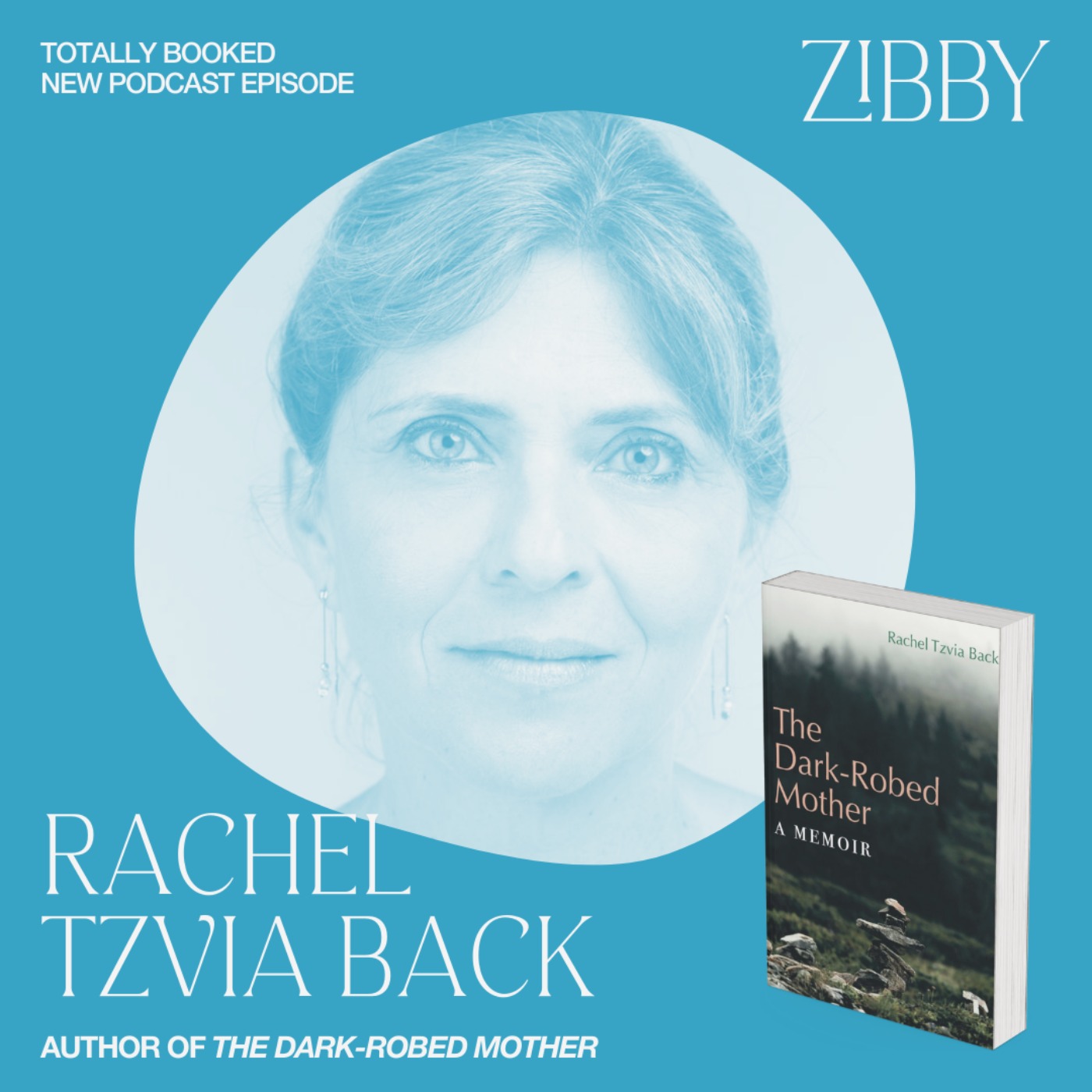
Hi, this is Zibby Owens and you're listening to Totally Booked with Zibby, formerly Moms don't have Time to Read Books. In my daily show, I interview today's latest best selling buzziest or underrated authors and story creators whose work I think is worth your time. As a bookstore owner, publisher, author, and obviously podcaster, I get a comprehensive look at everything that's coming out and spend my time curating the best books so you don't have to stay in the know. Get insider insights and connect with guests Like I do every single day. For more information, go to zibbemedia.com, and follow me on Instagram ibyoans. Rachel Zvia back is the author of the Dark Robed Mother, which is a memoir. She is a poet, a translator, and a professor of literature. She is the author of 12 books. Her poems and verse translations have received awards and recognitions, including the Times Literary Supplement Award, Penn Translation Prize, and finalist for the National Poetry Award in Translation. Welcome. Thank you so much for coming on my podcast. I loved your book so much.
- [03:12]
Rachel Zvia Back
Thank you.
- [03:13]
Zibby Owens
Okay, can you please tell everybody the background of your. Of your book and basically what it's about?
- [03:19]
Rachel Zvia Back
Okay, so it's a memoir, and it's a depression memoir. It's titled the Dark Robed Mother. The title, the Dark Robed Mother, is one of the epithets that is given to Demeter in the Ancient Hymn to Demeter, Demeter being the goddess of agriculture who loses her daughter to the underworld every year.
- [03:45]
Zibby Owens
Honestly, I didn't remember all the details of that. I mean, I didn't remember very much at all about that whole Greek myth and hearing it the way you told it, and the sadness of the mom and the darkness. Anyway, I loved how you related it.
- [04:01]
Rachel Zvia Back
It's so. It's always very moving to me how these ancient texts reverberate and retell us who we are. I have been reading the Hymn to Demeter for many years. I teach it, and still it keeps on giving me new perspectives. And there was this moment when I was rereading. It's a short text, it's under 500 lines in length. And there was a moment I was rereading it in preparation for a class, and I suddenly saw what wasn't there, and it broke my heart open, which is that it's the story of Demeter's grief, the mother, which is a big story. But there's this girl who is taken into the underworld, Persephone, and her story isn't told. What has drawn her? What has pulled her down there? Why is she living in darkness? What is it to live in darkness? What is it to live in darkness and return to darkness with a startling regularity? All of that is something that the hymn gives to us, which of course,
- [05:22]
Zibby Owens
parallels what you explore with your own depression. And you tell us in the book how it starts after the birth of your first child, how you didn't know what was happening. Finally, you got some medication. You had a moment of bright light, and then it kind of wore off. You had more kids, and then it Just like never came back and worked as well as it first had. And how you dealt with the darkness for the rest of your life as a high functioning depressive. And also how you read all the texts surrounding this and give your feedback on those too.
- [05:55]
Rachel Zvia Back
This is so true that you retold that beautifully that when I descended into darkness about two months after the birth of my first child, I didn't understand what was happening. And my last year medical student partner also didn't understand what was happening. And there's a moment in the book where I've been in this darkness for 10 months and really continue to function, but I'm suffering in very serious ways. And finally Yoni takes me to a psychiatrist at the hospital and it's this moment which just stays, you know, crystal clear in my mind where the psychiatrist looks at him and looks at me and I'm just weeping incessantly and Yoni's trying to explain what's been happening and she looks across at the two of us and she says, for two clearly intelligent people, you're not very smart. And I carry that with me in a somewhat light hearted way. Obviously I could have taken it otherwise but it felt like we really and understand what was happening. And I'll add to that that after I was given medication for the first time and I emerged from the underworld into the upper world and there was light everywhere and I thought, oh, this is what it feels like to be light hearted. I thought that that was a one time thing and I would get through it and it would be over and it wasn't and it isn't and that's.
- [07:35]
Zibby Owens
But at least you've got this book out of it.
- [07:37]
Rachel Zvia Back
But I got a book out of it. There you go. Okay, that's a writer talking. Let's capitalize. But you're right, I mean, I mean I would, I would it were otherwise. But here is where I. Not to overstate it, I know I'll try not to cry, but I know that there are depression memoirs that I stumbled upon through the last 30 years that saved my life. I'm saying that very bluntly, that just happened to fall into my hand. Maybe I was looking for them and they saved my life because they made me understand I wasn't crazy, I wasn't alone, I shouldn't be ashamed. And going back to your first question, where did this book come from? So having read I'm a poet, I'm not a prose writer, I'm a poet. That's my work and that's my passion. And this book announced itself after reading many, many depression memoirs and looking for a better representation of me and not finding me. And you know, better than most that in the end we write the book we want to read.
- [09:01]
Zibby Owens
Yes.
- [09:02]
Rachel Zvia Back
And that's what I did. And this is where I reiterate it is. What is it to live with high functioning depression, which is very confusing to everybody and can be overlooked in dangerous ways. And it's terrible for the people living in close proximity to it, and it's terrible for the person who is suffering in. Gets very little acknowledgement, very little representation. So I got a book out of it.
- [09:37]
Zibby Owens
Oh, my gosh. There you go. One of the most. I mean, there were many heartbreaking moments in the book, but when you write about your husband Yoni and your relationship, you talk about how when you first got together, you were this intrepid soul who went to Israel and lived alone, and you were just like, basically a total badass.
- [09:57]
Rachel Zvia Back
Right?
- [09:57]
Zibby Owens
And he loved that. He's younger than you, three years younger than you. He just said, I'm married to someone younger too, FYI. It's really nice. And he just looked up to you, thought you were like, so strong and amazing. And then when you went to that therapy session and he asked, the therapist asked about how he felt about you now, and he said, I'm just so disappointed. And I literally was like, tears are coming to. Really gonna cry again. Now he's like, I'm just so disappointed in her. That's so sad. It makes it feel like there was something you could do about it.
- [10:30]
Rachel Zvia Back
Like, yeah, so now you have me crying. But I mean, it was a powerful moment, but it was also a good moment because he needed to be able to say that. And it's true. And it's okay. I mean, it's, you know, it's. It's hard and it's painful. And I am not the woman he chose. You are, though. I am and I am not. I mean, I'm both. And here my beloved mother in law of blessed memory comes into the room. She and I were nothing alike. I mean, she was a very different kind of woman, but she was a powerhouse and she was a force to render with. And her four sons saw her as like the, you know, the. Just the model of what they wanted for themselves. And I think in some way, Yanni thought I, again, I was nothing like her. But in the spirit and the vigor and the intrepidness, I was. And then I fell apart and darkness descended upon me and I descended into it. And poor Yanni had to live with that. And it's rough. It's rough. It really is. And I have a lot of compassion for him. I have a lot of compassion for me. I have a lot of compassion for my.
- [11:51]
Zibby Owens
Well, yeah, that was another thing I thought you did that was so interesting that I've like, never seen before, was when you had interviews with your three children and what it was like growing up with you as a mother. Because as a reader, we can only take the author at face value, like, and that's what I want to know, what it was like for you. But then when you give us the context of what it was like for them, then we get to see you even in more dimensions than just your story. But how did that feel? That couldn't have been easy.
- [12:19]
Rachel Zvia Back
So when I think, and also have been talking these last two weeks on why this book needed to be written, so the one reason was to represent high functioning depression, and the other reason was to represent, or begin representing what it is to mother with depression, which I think I don't do a lot in the book. I do a little bit. And what it is to be mothered by a mother with depression. Now the latter piece, what it is to be mothered by a mother with depression, is startlingly underrepresented. It's really quite amazing because there are many, many adult children of mothers with depression. And if it's not, you know, the book written by Anne Sexton's daughter, you know, then there's almost. It's really amazing and it's something I've been pondering a lot. I knew I wanted to. To give my children representation and I knew I couldn't tell their story for them. My sister Adina, of Most Blessed Memory, was an oral historian and what she would do is interview. That was her mode. And I think that she just sent me the. Sent me the directions. This is what you do. You'll interview your children. And I embarked upon that. It was many things, but it was also really fun. And I say this to people who, I mean, your children are growing into adulthood, so it's still a little bit early, but when your children are young adults, it's an opportunity to sit down with them with some agenda. Right? They knew this was for a book and that I wanted to hear their story very specifically about what it was to be mothered by a mother with depression. And in the interviewer here you are interviewing me and so you ask the question and then I answer, and it's my space. So my children knew that it was Their space. This was not a dialogue. This was not. Yes, I remember this. You remember that this was theirs. And I think it was a gift for them. I think it felt safe enough for them to say what they needed to say. And they said hard things, but not things I didn't know. I knew them more or less. Some of the interviews were more difficult than others. And each child has his or her own world. And there was a lot of emotion in those interviews. But in an overview, I felt like it was a wonderful, wonderful opportunity for them and for me. And then I transcribed the recordings, and then I had to translate them because they. All three of them mostly spoken in Hebrew, so I had to transcribe them. And then I finished the chapter. I put it all together with the pieces that connect the interviews, and I sent the three of them the chapter. And I said, okay, this is your chapter. Read it. Weigh in. Tell me what you think. Tell me if it's okay. Tell me if you need me to change something. Tell me if you need me to revise something, I'm here for it. And they did. And there were things that they needed me to take out. And my daughter, who's very attentive to details, this is the funniest thing for me, she had opinions about some of the translation choices I made.
- [16:02]
Zibby Owens
You know, the words.
- [16:03]
Rachel Zvia Back
She said, no, this word is not exact enough. Which.
- [16:06]
Sarah Gibson Tuttle
Great.
- [16:06]
Rachel Zvia Back
You know, I'm there for it.
- [16:08]
Zibby Owens
Oh, my gosh.
- [16:10]
Rachel Zvia Back
But it was an opportunity. And I say this, I say that really, I feel like if. If people can take away from this book, like, this is something you can do. I think that we think about interviewing our parents as they get old and trying to capture their lives. Well, interview your children. I love that.
- [16:32]
Zibby Owens
I love that. I love that. Okay, I'm going to try to find a way to do this.
- [16:39]
Capital One Bank Guy
With no fees or minimums on checking accounts, it's no wonder the Capital One bank guy is so passionate about banking with Capital One. If he were here here, he wouldn't just tell you about no fees or minimums. He'd also talk about how most Capital One cafes are open seven days a week to assist with your banking needs. Yep. Even on weekends, it's pretty much all he talks about. In a good way. What's in your wallet? Term supply. See capitalone.combank capital1.na member FDIC.
- [17:09]
Sarah Gibson Tuttle
Hi. Who here loves when their nails are perfectly done?
- [17:13]
Zibby Owens
Me.
- [17:14]
Sarah Gibson Tuttle
I'm Sarah Gibson Tuttle, and I started Olive in June because, let's be real, we all deserve to have gorgeous nails. But who wants to spend a fortune or half their day at the salon? And that's why I created the mani system. So you can have that salon perfect manicure right at home. And guess what? The best part? Each mani only costs $2. Yup, you heard me. $2. No more. 30, 40, $50 salon trips that eat up your day. Now you can paint your nails whenever you want, wherever you want. And trust me, you're going to be obsessed with your and everyone is going to ask you, where did you get your nails done? And here's a little something extra. Head over to olivenjune.com and get 20% off your first mani system with code perfectmanny20@oliveandjune.com perfectmanny20. That's code perfectmani20 for 20% off at oliveandjune.com Perfectmanny20. You're all set for a nail glow up. Let's get those nails looking fabulous, shall we?
- [18:09]
Grow Therapy Announcer
Was January supposed to be your big fresh start? Well, sometimes the pressure to fix everything at once just can leave you feeling stuck. Grow therapy makes it easier to reset at your own pace. With therapy that's covered by insurance and built around your life, you can search by what matters like insurance, specialty, identity or availability and get started in as little as two days. And if something comes up, you can Cancel up to 24 hours in advance at no cost. Whatever challenges you're facing, GrowTherapy is here to help. Grow accepts over 100 insurance plans, including Medicaid in some states. Sessions average about $21 with insurance, and some pay as little as $0 depending on their plan. Visit growtherapy.com acast to get started. That's growtherapy.com acast growththerapy.com acast availability and coverage vary by state and insurance plan.
- [19:14]
Zibby Owens
Your sister, Idina?
- [19:15]
Rachel Zvia Back
Yes.
- [19:15]
Zibby Owens
Oh my gosh, this loss. You painted such a beautiful picture of her. I can totally feel like I got to know her through you. Which is another power, the magic of writing. Right? I didn't know this woman and I never would have. And now here she is, like, in my mind. It's crazy. She's such a wonderful woman. You two had such an amazing relationship. And the loss of her, how it just slayed you.
- [19:39]
Rachel Zvia Back
Yeah.
- [19:39]
Zibby Owens
Oh my gosh. Did it help to write about it? No, no,
- [19:46]
Rachel Zvia Back
no. It was obviously, it was the most difficult chapter to write. It was a chapter I was dreading to write and knew I had to. And the other chapters I proceeded with pretty, pretty easily. I would even say that chapter just ripped Me to shreds. And then when I. Through all the copy editing, like, that was always the chapter, I was like, can I not read it again? Can I not? But obviously it sits at the middle of the book. It's there at the center.
- [20:21]
Zibby Owens
Because, like, she was.
- [20:23]
Rachel Zvia Back
Adina was my soulmate, and her early death is unacceptable. Unacceptable. I was also, over the years of living with depression. And then adina died in 2008. There's a lot of confusion about what is depression and what is grief. And how do the two. How are the two similar? How are the two different? And obviously, there are many similarities. I mean, they're both born of some kind of loss, but the nature of the loss is different. And this, for me, is the critical element. And I speak this also with a great deal of critique toward our culture at large. That for me, grief goes on will never, ever end because Idina won't come back. And our society, our culture, doesn't make room for that. The notion is. So get over it.
- [21:24]
Zibby Owens
Especially, as you say in the book sibling loss.
- [21:27]
Rachel Zvia Back
Absolutely.
- [21:28]
Zibby Owens
That it's so lower down the totem pole.
- [21:31]
Rachel Zvia Back
Absolutely. And the term I use, which is not mine, it's a term by a psychologist, the notion of what is called disenfranchised grief, that there are griefs which are legitimate. And, you know, God forbid that you should lose a child or when you lose a spouse or when you lose a parent. Nobody talks about sibling loss. And for some of us, that's the center of our being, and how can it not be acknowledged? And I have a lot of respect for culture, for rituals of grieving and mourning in all of our cultures, and certainly in Judaism also the seven days and the month and the year. I like that. It's nice. But what happens if you don't fit into that? And what if seven years later, you're living with grief?
- [22:23]
Zibby Owens
Yeah. And why are other people to say when you should be over it or how much of it should be allowed?
- [22:30]
Rachel Zvia Back
Absolutely.
- [22:31]
Zibby Owens
So there's this tendency like, oh, it was just her cousin. Well, no, they were best friends and they loved each other. It was just her friend. You can't say that. You don't know how much people love each other based on only your relationship to each other.
- [22:43]
Rachel Zvia Back
Absolutely. That is such a truth. And I always remember I had a young. I work in a college near Haifa, and there was a young administrator who I saw on the college group that she had lost her father. And I went to express condolences, and she was. She was devastated. And I went back a month later. And she was devastated. Her father was 65, and you could say, well, you know, he didn't die too young. And this. And. And I. I saw her. I saw that for her, this was loss that you. She could not accept that this was grief that would continue. And I said to her, I said, oh, Cherie, the world divides into two. There are those of us who have experienced this loss, and we know what it is, and then there are everybody else. Stay with us. We'll take care of each other. And I think there's truth to that. There's a lot of judgment in our culture about grief.
- [23:47]
Grow Therapy Announcer
That's true.
- [23:48]
Rachel Zvia Back
Lot of judgment.
- [23:49]
Zibby Owens
This is going to sound so left field, but my husband is a big football fan, so we were just. Well, I wasn't really watching. I was on my computer and he was watching a documentary about the football player John Elway. It was like, big Broncos. But anyway, he's like a really big deal in Colorado, blah, blah, blah. And in this documentary, as I'm not paying much attention, we get to a part where he talks about his twin sister, who he's talked about the whole time. He's. I don't know how old he is now, 70 something. And he talks about when he lost his twin sister. And he starts crying in the documentary and how he was the first person to see her and the last person to say goodbye and how he just couldn't be the same. And I started crying. And I have twins, and I was thinking about my twins siblings. It's just that loss, that shattering of growing up with someone. And then I was watching that, and then I was reading your book, and I was just a mess. I was like, I can't anymore.
- [24:42]
Rachel Zvia Back
It's. It's a powerful, powerful reality.
- [24:45]
Zibby Owens
Yeah. So hard.
- [24:46]
Rachel Zvia Back
You have twins?
- [24:47]
Zibby Owens
I have twins.
- [24:47]
Rachel Zvia Back
Yeah.
- [24:48]
Zibby Owens
Yeah, yeah.
- [24:48]
Grow Therapy Announcer
Cool.
- [24:49]
Zibby Owens
Yeah. Can I just read at least one quote from the book? I screenshot it over and over again as I was reading, but I'll just. Okay, I'll just read a few of them. At first, it feels like I'm standing in a shadow, and I can't seem to step outside of it. I can see that there is light to the left and the right of me, but not where I stand. The shadow gradually expand, expands and lengthens, growing broader, until it is not a shadow at all. There is then a then, though I wouldn't be able to locate it on a timeline, when the it that was a shadow external to me becomes an it that is now inside of me, as though it has the properties of that imagined poisonous gas we feared and sealed our rooms against all those months ago.
- [25:27]
Grow Therapy Announcer
This.
- [25:27]
Zibby Owens
It has seeped under the door and into my body. So beautiful. My gosh, you're such a good writer. Let me read one more. Oh, I like this part about Adina. I'm sorry not to make you cry again, but. But now I know you cry all the time, so it's not that big a deal.
- [25:42]
Rachel Zvia Back
This is so true.
- [25:46]
Zibby Owens
Everything in me refuses this unacceptable reality. I will continue to refuse Idina's death for the rest of my life, which should have been intertwined with the rest of her life. It's a piercing summation of the mourner's secret position, writes Meghan o'.
- [25:59]
Rachel Zvia Back
Rourke.
- [25:59]
Zibby Owens
I have to say this person is dead, but I don't have to believe it. The words are highlighted in yellow in the clipped out article on my desk. The article's final words resonating with the impossible heartbreak of grief. I edit her words slightly for my truth. I have to say my sister is dead, but I don't have to accept it. Oh. So your whole experience when we put down the book, what do you want us to know?
- [26:25]
Sarah Gibson Tuttle
What.
- [26:25]
Zibby Owens
What should we take with us? What should the reader take with us? Even a reader who maybe doesn't have depression or how can life be improved? Now that we know, what do you want them to know? Here's another.
- [26:36]
Rachel Zvia Back
Tisha, thank you very much. I knew this as I was writing it, and now I feel it even more dramatically as I've been reading and talking to readers who are expressing their own reality. But I knew it before. Also, there is still stigma about depression. It has to be. Has to be acknowledged. You know, it's not what it was when I first descended in 1991. It's different. I know it's different. And there is. Obviously there are shelves and shelves of books and there's more attention, but there is still stigma. One of the ways in which I've been experiencing that quite, quite powerfully is that people keep on saying to me, you're so brave.
- [27:29]
Zibby Owens
Don't you hate. When people say, I hate it, I hate it.
- [27:32]
Rachel Zvia Back
It's the worst. And they think they're saying something. And I'm like, I'm so brave. What? I mean, if I were to write a book about some other illness, would you say, say that? And I know what they're experiencing is that I have exposed something that maybe I should not have exposed. So that's one of the things I'm hoping to shift in some small way that we should Be more aware, all of us, and more accepting. I feel like so many people are suffering all over. It's just everywhere. And if you're not living with depression, someone you love is living with depression. And how are you dealing with that? And there's a great deal of loneliness in every part of that. In every part. And I mean, one of the good here. I'm going to give myself praise. One of the good things about the book.
- [28:31]
Zibby Owens
Go ahead.
- [28:31]
Rachel Zvia Back
Is that it really does touch on many different relationships. So there's me and my mother. There's my mother and her mother, my mother and her brother, and there's me and my children.
- [28:43]
Zibby Owens
That's why I'm saying I think I know everybody in your family. I know. I feel like you've walked in with like your whole cast of characters, my
- [28:50]
Rachel Zvia Back
whole tribe and readers can find themselves there. And really that's what we want to do as writers is the. I mean, it's my story for me, but it's not my story for you, it's my story so that you can have your story spoken of and you can find yourself. The first time I read William Styron's Darkness Visible, it came out in 1990. I descended into depression in 1991, and somehow it ended up in my hands in 1992. William Styron and I could not be more different from each other in terms of our ethics. No, you know, religious worlds. And I saw myself in his slender volume. And I, for a moment, was not alone. And that's a great gift that he gave me and, you know, thousands and thousands of other people.
- [29:48]
Zibby Owens
Now you're giving it back.
- [29:49]
Rachel Zvia Back
And now I'm trying to give back.
- [29:51]
Zibby Owens
Like tikkun olafachad.
- [29:56]
Rachel Zvia Back
Okay.
- [29:59]
Zibby Owens
Ish. Yes.
- [30:01]
Rachel Zvia Back
Yes. Ish. Let's do tikkun olam.
- [30:04]
Zibby Owens
Ish.
- [30:04]
Rachel Zvia Back
Okay. That's a good term. I like that. I'm gonna adopt that from now on.
- [30:09]
Zibby Owens
You can have it.
- [30:09]
Rachel Zvia Back
Okay, thank you.
- [30:11]
Zibby Owens
Well, thank you. I'll tell you what I got from it, which is so much, but I got a To know you and a whole other family who I feel like are like my family friends now. I got to empathize so much and understand the experience even more intimately of what this particular. It's not just high functioning depression. It's really severe. I mean, untreatable, resistant to treatment. And how you can take something that could feel hopeless and turn it into something that you learn to live with and the bad and the good and all of that. And how isn't that really what life is, this mixed bag of what we get and how we deal. And so it's inspiring and beautiful. So beautiful.
- [30:54]
Rachel Zvia Back
Thank you. This was lovely. I feel very, very fortunate to have met you and to be in conversation with you now. Tell everybody where they can buy the book.
- [31:03]
Zibby Owens
Where would you like them to buy the book?
- [31:05]
Rachel Zvia Back
So the Dark Robed Mother is published by Wesleyan University Press, a lovely, lovely press. And you can certainly buy the book at Wesleyan University Press and you can also buy it on Amazon.
- [31:17]
Grow Therapy Announcer
Okay.
- [31:18]
Zibby Owens
It's amazing. Thank you. Thank you for coming in.
- [31:20]
Rachel Zvia Back
Thank you.
- [31:21]
Zibby Owens
Thank you for listening to Totally Booked with Zibby, formerly Moms don't have Time to Read Books. If you loved the show, tell a friend, leave a review, follow me on Instagram ibbyoens and spread the word. Thanks so much. Oh, and buy the books.
- [31:43]
Capital One Bank Guy
With no fees or minimums on checking accounts. It's no wonder the Capital One bank guy is so passionate about banking with Capital One. If he were here, he wouldn't just tell you about no fees or minimums. He'd also talk about how most Capital One cafes are open seven days a week to assist with your banking needs. Yep, even on weekends, it's pretty much all he talks about in a good way. What's in your wallet? Terms apply. See capitalone.com bank capital1NA member FDIC.
- [32:14]
Kachava Announcer
You know that wellness goal you set at the start of the year? It's not too late to stick with it and make your future self proud. Especially with The all in One Nutrition Shake from Kachava with 25 grams of protein, 6 grams of fiber, greens adaptogens and more. No fillers, no nonsense, just the highest quality ingredients. Stick with your wellness goals. Go to kachava.com and use code smoothie for 15 off. That's K-A-H-A-V A.com code smoothie.
- [32:44]
Reese Witherspoon
Picture this Me, Reese Witherspoon in London ordering fish and chips so often they might start wrapping me in paper. I'm traveling with my Wells Fargo Autograph Journey card, so I earn rewards wherever I book. Travel five times points with hotels four times times with airlines, three times on restaurants and other travel, and one point on other purchases. Imagine getting rewarded for eating a toad in the hole. Wait, what is a toad in a hole?
- [33:08]
Rachel Zvia Back
Visit Wells Fargo.com autographjourney Terms apply.