Loading summary
Transcript81 lines
- [00:00]
Zibby Owens
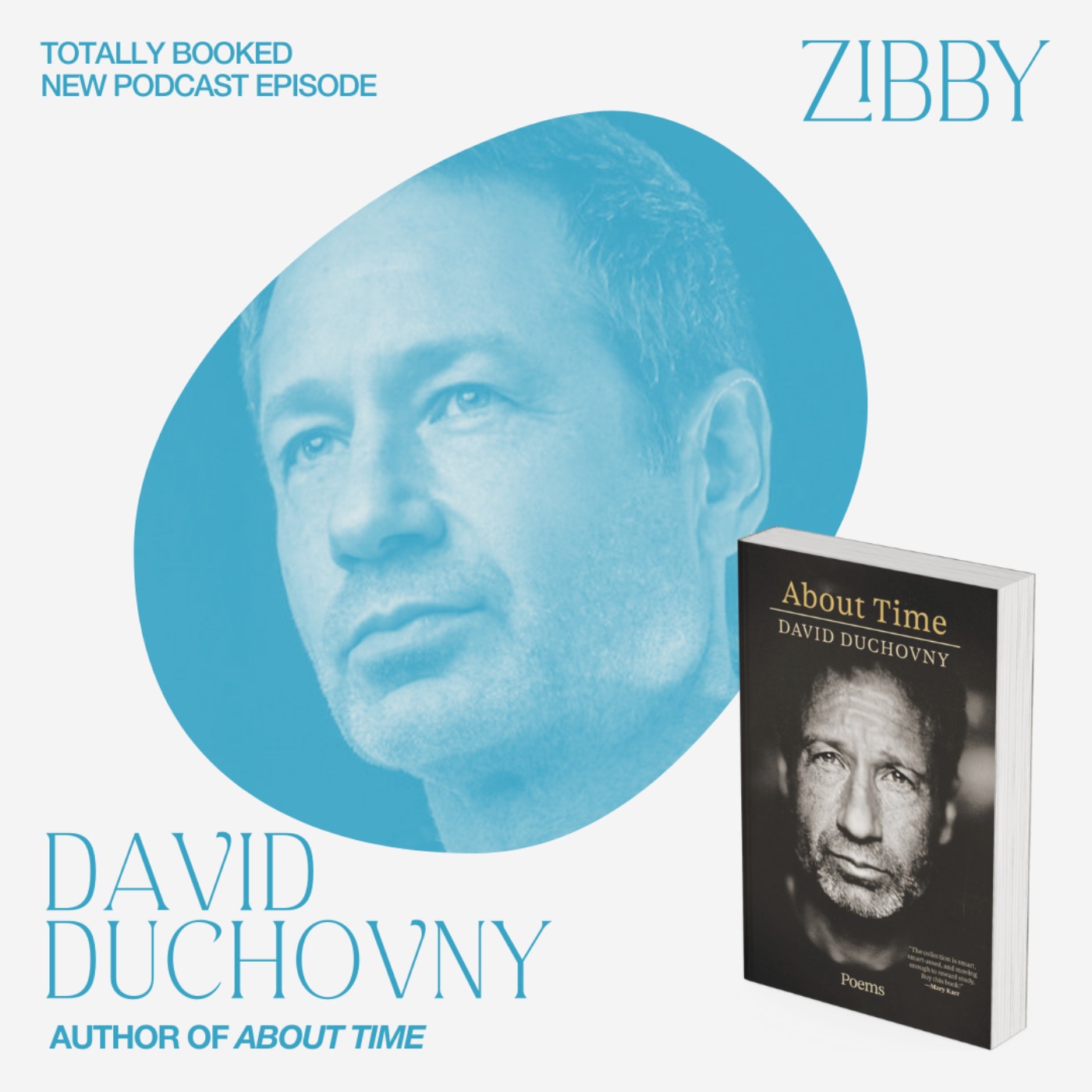
Hi listeners, we have totally booked live coming up this fall and I hope you'll be a part of it. We have three events in New York City, September 19th, 25th and 30th in New York where I'll be doing six interviews live each day. We also have a petite retreat in Greenwich on October 4th. Go to zibbemedia.com and event or and or eventbrite and search the events and please come. I can't wait to meet you in person. If you're a maintenance supervisor at a manufacturing facility and your machinery isn't working right, Grainger knows you need to understand what's wrong as soon as possible. So when a conveyor motor falters, Grainger offers diagnostic tools like calibration kits and multimeters to help you identify and fix the problem. With Grainger, you can be confident you have everything you need to keep your facility running smoothly. Call 1-800-GRAINGER clickranger.com or just stop by Granger for the ones who get it done. Today's episode has been sponsored by Digipod. As someone who's passionate about books and authors, I'm always excited to share resources that can help bring your stories to life. That's why I am thrilled to tell you about Digipod, a print on demand company that truly understands what authors need to make make that happen. Here's what I love about digipot they don't just print your books and send you on your way. Their team holds your hand throughout the entire process with incredible customer service. They deliver professional grade printing quality, consistently beat their competitors turnaround times, and they can handle rush orders. They simplify the whole printing process and make it incredibly easy. To achieve your vision for your books, head over to Digipod Zibby that's D I G G y p o d.com Zibby set up a free 15 minute printing consultation and get 10% off your first print order. You'll talk with their experts who will walk you through exactly how to set up your print job and answer all your questions. And by the way, I've seen the books and they are amazing looking. If you've been thinking about printing your book, this is the support you want. Again, that's digipod.com zibby for your free consultation. Today's episode is sponsored by the Foxed Page, a podcast and YouTube channel that dives deep into the very best books. It's basically your favorite college English class, but very relaxed and way more fun. No exams, no participation, and only books you really Want to read? Kimberly Ford, best selling author, one time professor and PhD in literature, offers up entertaining, often funny talks that will leave you feeling inspired and a little smarter. She digs right into everything from J.D. salinger to Miranda July, from Demon Copperhead to Madame Bovary, from Pride and Prejudice to Lessons in Chemistry. The talks on individual books are the heart of the podcast, but enriched read segments tackle ideas like unreliable narrators, while old favorite talks treat you to a fresh adult look at childhood gems like Harriet the Spy and Are you there God? It's me, Margaret. Want to get the most out of what you read and be entertained along the way? The Foxed page is for you. Hi, this is Zibby Owens and you're listening to Totally Booked with Zibby, formerly Moms don't have time to read books. In my daily show, I interview today's latest best selling buzziest or underrated authors and story creators whose work I think is worth your time. As a bookstore owner, publisher, author and obviously podcaster, I get a comprehensive look at everything that's coming out and spend my time curating the best books so you don't have to stay in the know. Get insider insights and connect with guests like I do every single day. For more information, go to zibbymedia.com and follow me on Instagram. Iby Owens David Duchovny is the author of About Poems. David is an award winning actor, director, New York Times best selling author and singer songwriter with an acting career spanning more than three decades. Duchovny is a two time Golden Globe winner and four time Emmy nominee. His novels include Truly Like Lightning, Holy Cow, the Reservoir, which he was on this podcast to discuss, which was a novella, and Better Effing Dent, which Duchovny adapted into the film Reverse the Curse. The film directed by Duchovny premiered at the 2023 Tribeca Film Festival. As a musician, Duchovny has released three studio albums, Hell or High Water, Every Third Thought and Gestureland. He is the host of the podcast Fail Better. All right, welcome back on Totally Booked. David, thank you so much. Here to talk about About Time, your poetry collection. Congratulations.
- [04:53]
David Duchovny
Thanks for having me on again.
- [04:55]
Zibby Owens
It's my pleasure, my pleasure. Okay, your whole argument in the beginning of this book is that poetry is so unnecessary. Why read it, why write it? And yet it's essential. Can you explain that a little bit?
- [05:06]
David Duchovny
Well, I mean it gets into the whole argument about, you know, what is what, what is the use of poetry, you know, And I think that one of the main draws for Me is that it's pretty useless. I mean, it's a. It's. It's. It's really just a form of expression that's kind of antiquated. Nobody reads it anymore. A great poet once said the best thing about poetry is you can't get rich doing it. So there's really no. There's no other motive, you know, there's no motive. There's no political motive, you know, which I think is, in fact. It's maybe the wrong word, but it's. In fact, a lot of our art over the past 10, 20 years is like, well, what is it saying politically? And that's not an issue with poetry or has never. It's not. It's not. Everything is political in some sense because it's talking about the world, but not. You can't really get into specifics in poetry that way. So there's a certain kind of lack of agenda that I like about it or I hope that I can maintain in it. You know what I mean? So I think all those things. The fact that nobody raises. Great.
- [06:18]
Zibby Owens
I mean, I read it, but it's okay.
- [06:21]
David Duchovny
You can't get rich at it. Great. It seems useless. Fantastic. So because it's useless or doesn't have an overt political agenda, then it becomes about just basic existence and language and communication and those kinds of things for me.
- [06:43]
Zibby Owens
And what does it do for you to write poetry?
- [06:46]
David Duchovny
I don't know. It's like when I'm involved in. When I have an idea for a poem or I start to write a poem, it's really like a puzzle, you know, because usually I just have an image to start with or a thought. And then the poem becomes an unpacking of that thought over and over. And the thought changes over the different unpackings of it or the image. For some reason, if I have it, I'm going to do it the honor of thinking that it came there for a reason. And I got to figure out what that reason is. So I unpack the image. And I'm always surprised. And I think that's the nice thing about. For me about writing poetry is, you know, I start with this one thing in mind, with this phrase or this image or this idea. And then the surprise comes as I unpack it, as I try to write around it. You know, a lot of poems are about the inability of me to say it, to get at it. So as I take different stabs at it throughout the poem, I'm surprised.
- [07:52]
Zibby Owens
So if poetry really has no use and you enjoy the Fact that it's not widely read, why publish it at all?
- [07:59]
David Duchovny
Well, roses have no use. People love them. There's many things in this world. Behold the lilies of the field. They toil not, neither do they spin. It's what our most ancient wisdom is about. Things that have no use at all. I think we get. We get wrapped up in what is the use of things in this culture? Because we're, you know, capitalist culture or whatever. You know, what. What is the use of it? How can this make money? How can this. How can this do anything out there in the world when in fact, you know, most of the things, if we were honest, most of the things in our lives that really feed us are not useful. They're beautiful.
- [08:36]
Zibby Owens
Well, the usefulness is in touching our emotions, not anything else. But if you argue that there's no use to bringing joy and connection to people, then I guess. But isn't that the most useful thing you could provide?
- [08:50]
David Duchovny
Yeah, I don't know if it's joy, the connection. Sure. Even if it's in connection of like, oh, this is impossible to do. You know what? We're trying. We're trying to put words. This poetry is often about itself, about the act of trying to speak. And it really calls attention to this thing called language that we all think means the same thing to us, but it doesn't. These words are just approximations. And a poem for me is throwing all these different kinds of words at things or breaking words up from their usual places that we usually think of them in, or the way we usually say them, and shedding new light on the fact that it's kind of artifice and it's all imprecise and trying to get back to kind of like. Oh, let's try to be precise here. And so, yeah, it's connection, for sure. Joy. Yeah, it could be joy, because I think connection is joyous.
- [09:50]
Zibby Owens
Okay, can I read a couple of them and see the backstory? Hear the backstory if you have to, maybe. Or a passage from one of them. Am I embarrassing?
- [09:58]
David Duchovny
You can read whatever you want. I'm being. I'm just being, you know, that guy.
- [10:04]
Zibby Owens
Okay, let's read something from Dead seven. I don't need an occasion to think of my father occasionally. Dead now seven years. Better than nothing I hope waits for him. An afterlife, a rebirth. Is it? If so, then is the old man young again in death, A seven years dead boy, growing steadily deadly as he watches me in life. Growing seven years, learning the netherworld ropes, Still a child by turns wide Eyed and sullen as he crawls, walks, runs into the walls of his newly unlimited understanding. His 75 years or so on earth useless except as a dream of power, a moderately successful campaign of tiny plastic soldiers. Who is his mentor there? Who reminds him, who comforts him and teaches him the otherworldly equivalent of fishing or algebra or empathy for the dead living all around him? Does he sit dead, little head in little dead hands on the curb, lonely and abandoned, he who held my hands and taught and did not teach me so many things of nature and that nature I age like a tree, each new ring and orbiting armor round an empty marrow, the things I did not learn closed off at the center of my being, unreasonable of interest only to those who would chop me down to see what I might deliver coldly from another age. Oh, so you see here, this was the problem, right here. The worm at the root, the uneven ring. I'm almost done, I promise. Older now than he in death, I see him confused, reaching for my steadying arm as a dead branch perjures life in the wind. His language, his access to our symbols impenetrable, the dead tongue mute. My need for him transcribed into his imagined need for me, My inarticulate want, his full fathom. Five, six, seven, now going on eight. My sweet silken boy calls to me. I am here. I respond, and ready and of absolutely no use. Yeah, that's so. It's so emotional. I mean, it's a way of trying to understand the loss of someone you love so much, which, of course, all of us are trying to do every day with various people. Tell me about writing this poem.
- [12:07]
David Duchovny
Well, clearly it was on, I think, the seventh anniversary of my dad's death, which is a while ago already. 15 years ago. That poem's probably 15 years old. Yeah. If he died in 2003, I think he did. Or four, I think three then. Yeah, that would be sometime 2010. And I guess I just had that thought on an anniversary, like, oh, seven years. And then this impossible notion of, well, what if. What if we can. What if we are born again, but we're not here. We're born into some other consciousness of realm of death, where. Where we grow, where it's not just the end of something. And then kind of, I guess I'm trying to think back, but I think I was excited by this idea of him being younger than me and me being. Me being his mentor or his father in some way. And feeling, yes, feeling for his confusion. You know, feeling as one feels for the confusion of one's own children. And that it moves me as I speak. So I'm sure it moved me back then to kind of pursue it further. What. What would be those things that a. A living dead person, you know, not. Not. Not our movie versions of living dead, not the Last of Us or, you know, the Walking Dead or whatever, but more of a consciousness, less of a spectacle. So just. And then I think it becomes, like, unclear who I'm talking about when I'm talking about me as his son or him as my son. And it's really forging. I think it's me trying to forge or renew a relationship with him now that he's gone. And that's why at the end, it's very sad that I'm ready finally, probably because I have been a father. I'm ready finally to have a connection with him and to help him. But it's too late. I'm of absolutely no use, you know, so. Because he's dead. So I. I guess that's where that poem comes from. If I'm. If I'm too explicated, I think it's. I think it's pretty understandable.
- [14:30]
Zibby Owens
What do you think happens? Do you. Are you someone who, like, talks to your dad or says, like, here's what I'm working on with my child, or what do you think?
- [14:39]
David Duchovny
Oh, I mean, I think they live on, but I think they live on in our. In our minds, you know, our hearts, our souls in some way. I don't think any. I don't think anything continues. But it does continue if we continue. He's alive now. We talk about him. He's alive. He's here. We talking about him. He's here. He's not here in the way he was when he was alive, but he's here. So that's a certain kind of a continuation of life. So as long as we continue to speak. As long as I continue to speak of him or write about him or address him in my mind in some way, then he has a certain kind of life, you know? And then I also want him to be happy with the way I talk about. Only if I'm going to write a poem about him. I don't want to lie about anything. I want it to be this. I'm trying again, imprecisely, using these words that I'm given to try and talk about a state of being that doesn't really exist, trying to get at it. So I would never want him to be embarrassed. Yet I also don't want to sugarcoat everything.
- [15:50]
Zibby Owens
What Was. It's none of my business, but what was your relationship with him like?
- [15:54]
David Duchovny
Well, my parents divorced when I was 11, so my relationship after the age of 11 was attenuated. Is that the word? It was. It was less. Less intense than when I was a kid. And I. I will always miss that. And that's the kind of absolutely no use thing. It's like, didn't get. Didn't get them. Didn't get it. Like, you don't get to have it. You know, that's the other thing. It's like things happen. Things happen in life and you don't get to do them over. You don't get to not have them happen. But you do get to try to figure out what they are, and you do get to figure out how you're going to live with it. So this, in a way would be my way of trying to live with the fact that we didn't have the kind of father son relationship that in my mind I wanted to, or looking back, I would have wanted. But that doesn't mean we don't have a relationship. And that doesn't mean his death doesn't mean we don't have a relationship either. You know, like, you could try to end this relationship through divorce or through death or whatever, but a father and a son are always have a relationship. A mother and a daughter. Cross sex is through a father and daughter, mother and a son. You know, those relationships never end. And it's called comfort, you know, if you lose a child to say that you still have a relationship. But it's true, you know, and luckily I haven't had that. To me, that's the most terrifying thing to confront in life, period. Is a child predeceasing you?
- [17:28]
Zibby Owens
I went to a funeral of a friend this week who was only in her early 40s, and her dad got up and kissed her casket and was like, how am I supposed to eulogize my daughter? This isn't the way it was supposed to be. It's just. Oh, I just. I keep replaying it. It's just so sad. I mean, for every parent. I'm a parent. You're a parent.
- [17:48]
David Duchovny
Yeah.
- [17:49]
Zibby Owens
Anyway. Terrifying. Back to poetry. So I think we. I think our conversation is an argument for the usefulness of poetry. Because it.
- [17:59]
David Duchovny
Are you gonna keep.
- [17:59]
Zibby Owens
It keeps this conversation? No, it keeps the conversation going. It opens up like, what would we be talking about if we didn't have the poem?
- [18:05]
David Duchovny
Sure. I mean, you know, for me to start the introduction to the, to the poems, that way it's A little defensive because again, I'm saying, you know, who needs to hear from, who needs to hear poems from an actor? It's the last thing. There's so many pressing. There's so many pressing issues. No, but I'm saying you do need to hear poems from them. Yeah, I'm anticipating the argument of like, who the fuck cares what this guy is feeling something about or is writing obliquely about rather than a plot filled novel that's going to entertain us on the beach or something, or, you know, his new Amazon series or whatever, you know, entertain us actor, you know, don't, don't, don't make us feel or think really. So don't try to be serious. Don't try to be real. You know, like it's all bullshit. Right. So, so there's all these kinds of things that are in my head. I'm anticipating arguments, clearly. I believe poetry has a use, you know, has many uses. But I'm trying to get out in front of, you know, that idea, contrary to that idea, which is, you know, it's nice to have a little poem here and there, but, you know, it's not really, doesn't really help me live, but in my life, you know, poems help me live that. They're like religious texts. I mean, the closest thing, I also like certain religious texts and they are very poetic to me. So for me, I do love novels and I love movies and I love those other forms of writing or adapting writing. But I find poetry to be deeply useful.
- [19:52]
Zibby Owens
Today's episode is sponsored by Quince. Fall is in full swing and it is the perfect time to refresh your wardrobe with pieces that feel as good as they look. Luckily, Quince makes it easy to look polished, save warm and save big without compromising on quality. Quince has all the elevated essentials for fall. Think 100% Mongolian cashmere from $50, washable silk tops and skirts and perfectly tailored denim. All at prices that feel too good to be true. I'm eyeing their wool coats. They look designer level but cost a fraction of the price and the quality just as good, if not better. By partnering directly with ethical top tier factories and cutting out the middlemen, Quince cuts out the middlemen to deliver luxury quality pieces at half the price of similar brands. It's the kind of wardrobe upgrade that feels smart, stylish and effortless. Quince's sweaters have become staples in my wardrobe. They are reliable and beautiful and I just get excited every time a Quince package arrives. Quince has really become a one stop shop. So keep it classic and cozy this fall with long lasting staples from quince. Go to quince.com zibby for free shipping on your order and 365 day returns. That's Q-U-I-N C E.com zy to get free shipping and 365 day returns. Quince.com zivi Today's episode has been sponsored by Live It Up Super Greens Moms. You do everything for everyone else and somehow your own wellness always gets bumped to the bottom of the list. That's where Live It Up Super Greens comes in. It's a daily habit that actually works. No hassle, no fuss, just scoop, mix and go. Whether you're tackling school, drop off, conference calls, Zooms or the laundry mountain, this is one easy win that supports two digestion, energy and immune health in just 30 seconds. Live it Up Super Greens is an all natural blend of over 20 superfoods formulated with organic vegetables, probiotics, digestive enzymes and naturally derived ingredients. Just one scoop a day can promote gut health, support your immune system and give you the feel good energy you can count on. It's designed by nutritionists, third party, tested for purity and made to be easy on your stomach. No grassy taste or chalky texture. Mix it with water, milk or a smoothie and make it a healthy habit you'll look forward to. You'd never believe a green drink tastes so good. If you haven't mixed Super Greens into your routine. Live it up is a must. Add it tastes so much better than the others and it's way more affordable. Live It Up Super Greens offers premium quality without the premium price. It's one of the most affordable ways to support your health daily. And by the way, it is absolutely delicious. I love it. Easy to clean up, easy to use, and amazing. Live it up has become a quick and easy way for me to stay on top of my health. So Live it up is offering you 15% off your first order, including subscriptions with code booked. Shipping is always free. Head to letsliveitup.com booked and use code booked for 15% off your first Super Greens order. These statements have not been evaluated by the fda. This product is not intended to diagnose, treat, cure or prevent any disease.
- [23:12]
Commercial Announcer
If you're a custodial supervisor at a local high school, you know that cleanliness is key and that the best place to get cleaning supplies is from Grainger. Grainger helps you stay fully stocked on the products you trust, from paper towels and disinfectants to floor scrubbers plus, you can rely on Grainger for easy reordering, so you never run out of what you need. Call 1-800-grange-granger. Click granger.com or just stop by Granger for the ones who get it done.
- [23:45]
Zibby Owens
Well, it's like a. It's better than a soundbite because it's the complete distillation of a concept. I feel like poetry, and I said this recently. We published a collection of poetry at my publishing house. Like, I feel like in this day and age of no attention, poetry should be having, like, its biggest moment ever, right? It's so short. Like, read a poem, you'll feel really good about yourself. It takes two seconds.
- [24:07]
David Duchovny
But they're hard, you know, they're hard because they should. They're not, you know, aside from maybe my Death of My Dog poem in this, they're not. You can read them, but they need to be read a few times. You know, like, even for me, something like, not comparing myself, but somebody like Emily Dickinson, deceptively simple. Most stuff is deceptively simple. The words that Jesus speaks, deceptively simple. The great rabbi masters, deceptively simple. They're all poetic because you can't say the most profound truths easily or simply. It's too simple and profound to say it clearly. You just can't do it. I mean, you can say, all you need is love. And if that's the kind of poems that you like, that's cool, but that's not the kind of poems I'm trying to like. I like it in a song. I don't necessarily want it. I like it as a reminder, but it's not to me, it's not, like, the best that poetry can do.
- [25:05]
Zibby Owens
Yeah. Well, what about some of your shorter poems like you have? Can I read one more? Really short, though.
- [25:12]
David Duchovny
You can read them all.
- [25:13]
Zibby Owens
This is the dog dying. I guess I'm just sort of drawn to grief. So. Sorry, but that's just me. Another brick. I put my dog down this morning and cried some morning. The loss of his mute, expressive soul. This afternoon at work, a blue sky punctuated only by disjointed loitering clouds. The world moves on in its blithe way and doesn't care about a little dog. It's already as if he never existed. But he did. He sure did. My dog is, like, right there. This. Like, this got me so much. Oh, my gosh.
- [25:47]
David Duchovny
Yeah. A couple things that I'm proud of in that poem. When I came upon that phrase, mute expressive soul, I thought, yeah, I kind of Nailed what a dog is.
- [25:57]
Zibby Owens
Totally.
- [25:58]
David Duchovny
And I'm proud of that. And then. He sure did. I think that came, like, five minutes. I think the poem just kind of came out, and I put it away. And then five minutes later, I think I went back to. He sure did. I mean that there's something childish about it. You know, there's something young about that. Like, he's something boyish about you. He sure did, you know, innocent. So I like that. I like that button at the end. And, yeah. The truth is, you know, obviously, the world doesn't care about. World doesn't care about little person. But we humans have a need to care about dogs and people and each other, and we have a need to say, we existed, we were here. We sure were. We sure were. We were here. So it becomes mourning for all of us in the future as well. And also, the Marlene aspect of it is always. It gets everybody. Not everybody. I don't know what it is about dogs, but we are opened up by them.
- [27:02]
Zibby Owens
It's true. So at lunch, right before this, my dog came over, and I kind of imitated her voice, and it came, which I never do. And literally everyone at the table was like, that's not what she would sound like. And, like, I know it was too Scooby Doo. I don't even know why I did that. But it's so true. Because we all have in our heads, like, maybe what the dog would sound like really, like, who it really is.
- [27:21]
David Duchovny
Or what it's thinking or, you know, we're constantly kind of, what do you think? You know, what do you. And then there are those camps that are like, he's just with you because you feed him. And then there are the camps that are like, no, that's real love. This is real, real, like, unselfish love. So I prefer to think of it the other way.
- [27:42]
Zibby Owens
Yeah. Not just the feed.
- [27:44]
David Duchovny
They love the food. Sure. But they also love us.
- [27:48]
Zibby Owens
Yeah. I mean, I know. I think of that sometimes, too. People who are mean to their dogs, like, how can you be mean to your dog? But then there are people who are mean to everybody who don't even care about life. So, I mean.
- [27:59]
David Duchovny
Yeah, well, I get frustrated. I get frustrated with my dog. Sure. You know, But I. I like to think I'm never mean to my dog. But, yeah, certainly, you know, and Brick was, you know, Brick, that dog. That's why. Well, another Brick, that was the name of that dog. So he had a rough, like, last couple of years. And it's frustrating, you know, to take care of a dog that's all over your house and throwing up and basically has dementia, you know, and it's hard to know, you know, when to stop the life for the animal, you know, just as it's hard for us to know that with people. But we don't really do that in this country. I wish that we would, but we don't.
- [28:42]
Zibby Owens
So when's the last time you wrote a poem and what was it about?
- [28:46]
David Duchovny
I added one to that collection, but it was too late and I don't know where it is. Let me see if I can find it. It's on my iPad, which is what I'm talking to you on. So I don't know if I have it other than on my iPad. I might have it in my notes. I've been working on an album too, so there's a lot of that. Oh yeah? Yeah, it's another dead one.
- [29:10]
Zibby Owens
Great. I'm your market.
- [29:12]
David Duchovny
Yeah. So memory is the language of the dead. So that's the last poem I wrote.
- [29:16]
Zibby Owens
Excerpt 1 line teaser memory is the.
- [29:20]
David Duchovny
Language of the dead. I feel my fluency growing even as brute remembrance fades from surround sounds, storyboards to melody to unheard and near atmosphere. Memory is kingdom of a dead. I have visited it in sleep, had my passport stamped by a three headed dog. Memory is thick with dogs.
- [29:41]
Zibby Owens
That's beautiful.
- [29:43]
David Duchovny
More dogs.
- [29:44]
Zibby Owens
More dogs. More beauty.
- [29:47]
David Duchovny
So that's gonna be a. I think that's on the Amazon audible. I. I had it in time to record my readings of the poems, but it's not in the actual book. But in the book, a couple of the last three poems of the most recent. God is a Change, man is recent, I say no is recent. And Homesick the mystery. Those are all probably the most recent. And they're towards the end, this one.
- [30:13]
Zibby Owens
Too, how you ended the whole thing. One door closes and you cross out closes and write opens. Another door opens. You cross out opens and closes.
- [30:22]
David Duchovny
I'll just keep circling.
- [30:23]
Zibby Owens
So that's.
- [30:24]
David Duchovny
That's the kind of knowledge I think that poetry can give us. It never, you know, it's. That's what I mean. It's not useful. It's like what the am I supposed to do with that saying, you know, what do you mean? It's like it's never stopping. It's like it's opening and closing at the same time. What do you mean? And I just say yes, that's exactly what I mean. You know, like it's. It's not useful, but it's useful in that it puts you Maybe in a state of mind that you recognize. And then there's that connection that you're talking about.
- [30:55]
Zibby Owens
Well, your sort of preemptive defense that the world doesn't need poems by an actor. The world doesn't really need anything.
- [31:03]
David Duchovny
But from an actor.
- [31:05]
Zibby Owens
Well, that's not true from anybody.
- [31:08]
David Duchovny
It's true. The world doesn't need any.
- [31:11]
Zibby Owens
It doesn't mean that they won't appreciate it and like it very much.
- [31:16]
David Duchovny
Yeah, no, I think sometimes maybe you can appreciate it more if it has no agenda on you. It's not trying to convert you religiously, politically, anyway. It's just kind of trying to put you in a state of mind that opens and closes at the same time.
- [31:40]
Zibby Owens
Yeah. Wow. Well, thank you. Thank you for taking your time to talk about. About time with me and to thank.
- [31:47]
David Duchovny
You for having me on again. I love coming on with you and I love the fact that you're a reader and you're. And you speak about books and you try to speak to people who read. You know, Maureen out just had a really interesting article. I don't know if you read it on Sunday. And she was talking about, like, the statistics aren't. Men don't read anymore. Like, readers are women. And Maureen was saying, you know, men who read are sexy. Now, that's Maureen. And there was a picture of James Dean reading a book on the article. But, yeah, I mean, I would like everybody to read. I think reading is what makes us human in many ways. And I wish that men would read more and men can write poetry. It's not just. I'm not saying women shouldn't read or I'm making a distinction. I'm just saying I. I want more readers. But I'm afraid it seems like it looks like because of phones and the way we're living, that people just are out of the habit of reading. And I think if they can get something out of a book, even one that says you can't get anything out of it, maybe I'll continue to read, you know.
- [33:02]
Zibby Owens
Yeah, I'm on the same. Pushing the same cause here. I agree. There's a fundamental empathy you get from reading that you can't get through watching things or hearing things or whatever. So, yeah, I agree.
- [33:15]
David Duchovny
Allowing somebody to take over your mind.
- [33:18]
Zibby Owens
Yeah, I know. I think it's the coolest thing. Like, how can you not do this? Anyway, all right, well, thank you so much, and best of luck with your collection.
- [33:28]
David Duchovny
I appreciate it.
- [33:29]
Zibby Owens
Okay.
- [33:29]
David Duchovny
Thank you. Nice to see you again.
- [33:31]
Zibby Owens
You too. Thank you for listening to Totally Booked with Zibby, formerly Moms don't have time to read books? If you loved the show, tell a friend, leave a review, follow me on Instagram, ibbeoans and spread the word. Thanks so much. Oh, and buy the books.
- [33:53]
Commercial Announcer
Consider this your sign to skip the what's for Dinner debate. Tonight, Outback steakhouse has a three course meal starting at just $14.99. Start with soup or salad, then take your pick of down under entrees with like our juicy towering burger or Flame grilled shrimp. And for dessert, New York style cheesecake. Plus $8 cocktails all day every day. Three courses starting at $14.99. Tell the group chat you'll see them at Outback. Price and participation may vary. If you're a custodial supervisor at a local high school, you know that cleanliness is key and that the best place to get cleaning supplies is from Grainger. Grainger helps you stay fully stocked on the products you trust, from paper towels and disinfectants to floor scrubbers. Plus, you can rely on Grainger for easy reordering so you never run out of what you need. Call 1-800-GRAINGER, click grainger.com or just stop by Grainger for the ones who get it done.
- [34:55]
David Duchovny
ACAST powers the world's best podcasts. Here's a show that we recommend. This area was sort of a shark tank for predators. Not just the Green River Killer, but.
- [35:09]
Zibby Owens
Others in who Took Misty Copsey?
- [35:13]
Commercial Announcer
I'm investigating the disappearance of a 14.
- [35:15]
Zibby Owens
Year old girl who vanished from the.
- [35:17]
Commercial Announcer
Washington State Fair in 1992.
- [35:21]
David Duchovny
How? Why? She was so sweet and so young. What happened to her?
- [35:28]
Commercial Announcer
Listen to who Took Misty Copsey? Wherever you get your podcasts.
- [35:34]
Zibby Owens
ACAST helps.
- [35:35]
David Duchovny
Creators launch, grow and monetize their podcasts everywhere. Acast. Com.