Loading summary
Transcript60 lines
- [00:01]
A
Hey everyone, it's Zivi. I am so excited to tell you about something I've created just for you, the Zip Membership Program. ZIP stands for Zivi's Important People. It's for anyone who loves books, stories and wants a little peek behind the scenes at what I'm up to and what's on my mind as a Zip member. You'll get exclusive essays, a new podcast called Zivvy's Voice Notes. No interviews, just usually discounts at Zibby's Bookshop, a free ebook, and more perks. I wanted to create a space to connect authentically and deeply, and I'd love for you to be part of it. If that sounds like your kind of thing, become a Zip today. You're already important to me. Now let's make it official. Go to zibioens.com and click subscribe. And if you already subscribe, you can upgrade to the Membership program. And now onto today's episode of Totally Booked with Zibby. Thanks for listening.
- [00:56]
B
Everywhere you turn, it's New Year, new Me. But growth isn't a glow up trend. It's a practice. Grow Therapy helps you do the real work with licensed therapists who meet you where you are, not where anyone else says you should be. Whether it's your first time in therapy or your 50th, grow makes it easier to find a therapist who fits you, not the other way around. Thank you. They connect you with thousands of independent licensed therapists across the US offering both virtual and in person sessions, nights and weekends. You can search by what matters like insurance, specialty, identity or availability and get started in as little as two days. And if something comes up, you can Cancel up to 24 hours in advance at no cost. There are no subscriptions, no long term commitments. You just pay per session. Grow helps you find therapy on your time. Whatever challenges you're facing, Grow Therapy is here to help. Sessions average about $21 with insurance and some pay as little as $0 depending on their plan. Grow accepts over 100 insurance plans, including Medicaid in some states. Visit growththerapy.com acast today to get started. That's growththerapy.com acast growtherapy.com acast availability and coverage by state and insurance plan. The new Wegovy pill is now available through weight watchers. Powerful GLP1 results in a simple pill at the lowest price available, and with Weight Watchers you can get doctor support and personalized nutrition programs. See if you qualify@weightwatchers.com ad not reviewed or approved by Novo Nordisk. Ondeck is built to back small businesses like yours. Whether you're buying equipment, expanding your team or bridging cash flow gaps, Ondeck's loans up to $250,000 help make it happen fast. Rate rated A plus by the Better Business Bureau and earning thousands of five star trust pilot reviews On Deck delivers funding you can count on. Apply in minutes@ondeck.com depending on certain loan attributes, your business loan may be issued by Ondeck or Celtic Bank. On Deck does not lend in North Dakota. All loans and amount subject to lender approval.
- [03:06]
A
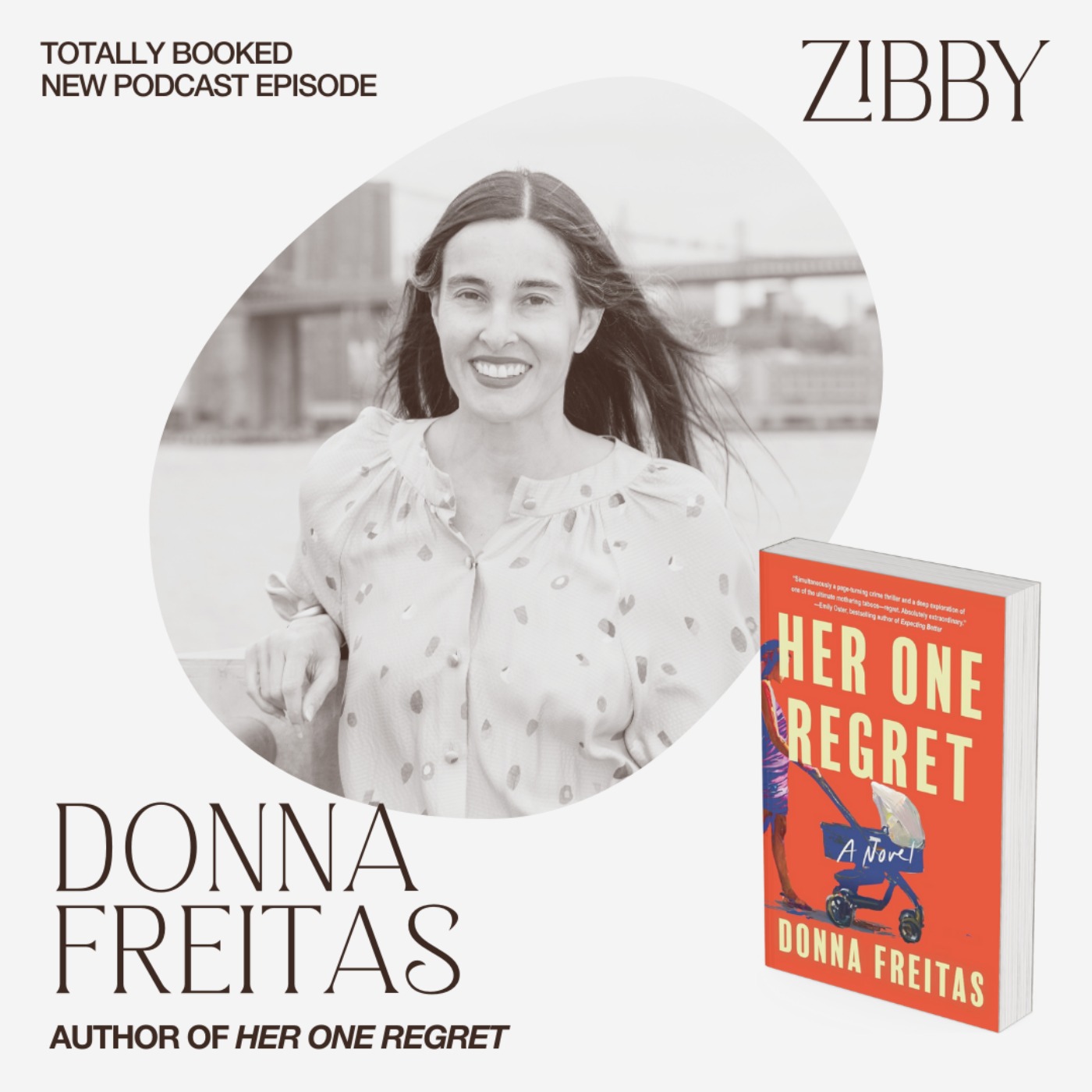
Hi, this is Zibby Owens and you're listening to Totally Booked with zbi. Formerly Moms don't have Time to Read Books in my daily show, I interview today's latest best selling buzziest underrated authors and story creators whose work I think is worth your time. As a bookstore owner, publisher, author and obviously podcaster, I get a comprehensive look at everything that's coming out and spend my time curating the best books so you don't have to stay in the know. Get insider insights and connect with guests like I do every single day. For more information, go to zibbymedia.com and follow me on Instagram ibeowens Today's episode is a special edition of the Minnie Rose Zibby's Bookshop Pop Up Live podcast series and I'm here today with Donna Freitas and I'll read you her bio before we kick things off. Donna is the author of a number of award winning, critically acclaimed books, including the novel the Nine Lives of Rose Napolitano, which was published in 20 languages, the memoirs Consent and Wishful Thinking, and over a dozen novels for children and young adults. She has a PhD in gender studies and Religion and teaches creative writing. Her work has appeared in the New York Times, the Washington Post, the Sunday Times, and many other newspapers and magazines and she has been interviewed on the Today show, cnn, and All Things Considered. A native Rhode Islander, she splits her time between the US And Barcelona. Yes, welcome.
- [04:42]
C
Thank you so much for having me.
- [04:43]
A
Oh it's a pleasure. And by the way, her one regret, this book, this novel is a Book of the Month Club pick, so if you are a member of that, you can still grab your copy. I think. Still going on, yes. If not, you missed out and you should join anyway. Okay, her one regret Donna, what is this book about? Tell everybody.
- [05:02]
C
Well, it starts with a disappearance and so there is a baby left alone in a parking lot and a whole bunch of people find the baby but they can't Find the mother. And really, this book turns on. So the big search starts for her. So she's a young and beautiful mother, and it makes national news, but really the book is powered by this question of was she taken or did she run? And so the whole book, you. You don't know. And there's three protagonists. There's a retired detective who gets involved with the situation or with the case. There's the best friend of the woman who disappeared. And then there's another from the town, Julia, who becomes really obsessed with Lucy, the woman who disappears, and she is at home with a newborn herself, and she becomes convinced that her neighbor is holding Lucy in his basement. And so, yeah, that's pretty much the overview.
- [06:02]
A
Amazing. There's so much about the dynamics of this smaller town and everybody knowing everything about each other, judging each other, the criticisms of moms and how they relate to each other. Sorry for the noise. If you can hear that. Talk a little bit about how you positioned this in a. Within the setting, what you were trying to show, and some of the larger themes, because I know you're quite passionate about a lot of this.
- [06:29]
C
Yeah. So, you know, we talked once about my previous book, the Nine Lives of Rosa Napolitano, which is nine different versions of a woman's life that turn on whether or not she chooses to have a baby. And so she's a woman who doesn't want children, and she's. Her husband's trying to convince her to change her mind. And so this book, her one regret and that book are connected for me, because the one version of Rose I did not write was the one where she has the baby anyway, and she regrets was the one I was too scared to write, I think. And I also thought if I wrote it, the book wouldn't get published. Well, I didn't know if that book would get published because I was writing about a woman who didn't watch children. But I thought, if I write that story, there's no way. And so I didn't. And one of the first emails I got about Rose when it was out in the world was from a woman who was like, I loved her book, etc. Why isn't there a version of Rose who regrets her baby? And then I began to get many emails with that question. And when I've done book clubs, I feel like no matter what it comes up, like, why isn't there a version of Rose where she regrets her baby? So I thought, you coward, Donna Freitas. And I began to think, I need to write that story. And that's where this came from. And I think for me, I'm always interested in the ways we judge women. We judge women so harshly, no matter what they do, whether they have babies, whether they don't, if they're good mothers, bad mothers, if they just. Every choice they make. I feel like women seem to be fair game. And I'm really interested in the ways we. We sort of gaslight women mothers. And, you know, one of the things that happened in my own life that's related, I think, to this topic too, is when I was getting the full court press to have a baby myself in my own life. If I said. When I said to people, like, I don't want a child, people would say to me back, you don't mean that. Like that. No, like, you don't mean that. And I just thought. But I do actually, like, I've known this for a long time. And I think one of the things that we say, if a woman speaks about regret in relation to motherhood, everyone says, you don't mean that. Like, that's not possible. So I think I'm very interested in the ways that we often don't allow women to have certain thoughts, or we make thoughts so taboo that they. They can never speak them.
- [09:01]
A
And you ended up deciding not to have children yourself?
- [09:04]
C
Yeah, I don't have kids, so I don't regret it. So I'm good.
- [09:09]
A
And yet you write about motherhood as if you. I mean, there's nothing that happens in motherhood that you did not basically capture in the pages of this book.
- [09:21]
C
Oh, thank you. You know what. What are the things that's happened because of Book of the Month is that lots of people have already read the book and they tag you. And I've realized that people don't know I don't have kids. And so I think that's such a. Like, it makes me feel good because, well, there's so many mothers in my life, and there has been many, many babies that are not mine, but my friend's kids. And now who are many, many kids who are grown. And, you know, I think I chose one path, which means, you know, there's a path I didn't choose which was I didn't become a mother. And I think, you know, part of what's wonderful about writing books, and you know this too, since you're a writer, is you live the lives that you didn't choose. You know, there are things that you get to experience on the page that maybe you don't in real life, and you Know, I think I really poured my heart and soul into imagining motherhood. And then there's just so many amazing mothers in my life. And so I really love writing about it. And I have so much respect for people who choose this path. But, yeah, I keep writing about motherhood. I think it's because when I was going through this in my own life and people were pressuring me so hard, I spent 10 years agonizing about this topic. And so it's really swirling in me, and so I keep writing about it.
- [10:38]
A
That's okay.
- [10:39]
B
Yeah.
- [10:39]
A
I mean, the best things come from the things that you are wrestling with and that you are thinking about yourself as opposed to just have some sort of mild interest in. Right. If you're invested, you can tell I am.
- [10:50]
C
I'm very invested.
- [10:51]
A
Can I read a couple things that really jumped out at me? Okay, so the book is told in different, alternating perspectives. And this is from Julia, who is the friend that Donna referenced earlier. So this is Julia waking to her son crying. And she's very stressed out, and her husband has left for work, and she's resentful and upset and everything. Julia waits. The sunlight filters through the curtains. Last night, she slept like the dead. The kind of sleep that obliterates all thought, even dreams. The kind of sleep she hasn't had in ages. If only she didn't wake up to this life again. If only she'd woken up in a different house. If only she'd woken up as a different person, unmarried, unmothered. Can a woman do that? Unmother herself? Julia keeps waiting for the moment she'll feel bonded to her son. That miracle other women talk about, when connection and unbelievable love will flood her person and overcome the dread, the sadness, the resistance. But it never happens. How could it, when all motherhood seems to involve is crying, feeding, changing on repeat, her every moment hijacked a level of exhaustion she never understood was possible. Plus, a newly oblivious husband and a total erasure of her person. How do other women do it? Discuss.
- [12:04]
C
I mean, I think this book grew from my greatest fear, which was that I would listen to everybody who was telling me to have a baby, and then I would find that it truly I knew myself and it was not for me. And so I had all these fantasies about, like, what if. What if I had a baby and then I regretted it? What would I do? Like, how would I live that? And so, you know, I think for me, Julia is the heart of this novel. And in many ways, she's the. She's the me I was Afraid I would become. And so I think in her, I was writing maybe the darkest version of early motherhood. And, you know, when I was working on this book, in many ways, Julia was the character that was most important to me, but also the character I was most afraid of. And my editor, Juliet Grames, who's also an author, who's wonderful. When she. When we decided we were going to do this book together, she was just like, donna, if you're going to do this, you've got to do it. Like, you've got to show how far the despair can go, because there are going to be women out there who have never been allowed to speak of what they're feeling. And you have, like. You've got to be willing to, like, go all the way. And so she was like, stop being afraid. Because I think in some ways, I was afraid myself to just really push this story as far as it could go. And so she, like, she kept pulling me. And so the Julia that you see is really, you know, the woman who is truly struggling with regret. And there's many different versions of motherhood in the book, but she is really. She is in it as deep as can be, and she feels really abandoned by her husband. Someone the other night, when I did an event, they were like, Marcus, that's the name of Julius's husband. Like, let's talk about him. And. And she was. She was like, where did he come from? And so I think in some ways, her husband is a composite of all the. The worst things I've seen and husbands of my friends over the years, I shouldn't say, or, like, people that I've known over the years and stories that I've been told. So, yeah, she has it rough.
- [14:26]
A
You're about to lose all your friends with that comment. Well, his husbands are now outed for this.
- [14:31]
C
I hope not.
- [14:32]
A
No, I'm kidding. Well, I feel like Julia, you push her to a point where she is at the precipice of literally wanting to leave, sort of testing the waters. She's in a situation where she gets a little bit in trouble. I don't want to give things away, but you really push her to the boundaries of what she can come back from. Did it make you feel better going there? Like, did you know? Like, what did that feel like, that moment? There's one scene in particular where she leaves and falls asleep and. Tell me about that.
- [15:04]
C
I mean, I think there were two things driving me with Julia. I mean, so I work with writers one on one, and one of the things that I always ask people when they're writing novels because sometimes I think this is true. Like, are you afraid to let your characters do bad things? And are you afraid to like, let bad things happen to your characters? Because I think often when we're writing fiction, we're like, the most important thing we can do is just sort of push as far as that we, we can go. And so Julia was an interesting character to write because she does all of these things where I feel like, you know, if I was reading the book, I'd be like, Julia, what are you doing? Like, don't do this, don't do this. And so, you know, it felt really interesting to push her that far. But also, you know, as I'm an, I'm an academic and a professor and I've done research about sexual violence for the last 20 some odd years. And I remember when my first book came out related to that research. And in the introduction I told the entire story of this one young woman that I'd interviewed and people 20 years later, or, I don't know, 18 years later, people still talk to me about that one woman. And that book is still taught and she is taught in classes at universities. And she has become, I think, a woman that allows other women to talk about their own darkest experiences because they resonate with her, but without talking about themselves. And so I think part of what's important about fiction and writing about these kinds of things that are so taboo is I think they let all of us talk about a topic that feels forbidden, but without necessarily revealing ourselves or our particular feelings about the topic. And so it felt really important to, to let Julia be or to try to create a Julia that might resonate with women who feel like they really can't speak the truth about their own experiences. And so I wanted Julia to, to be as on the edge, I guess, as I could make her. I don't know how edgy you think she is. Zippy.
- [17:18]
B
I'm curious.
- [17:19]
A
Like push, push the boundaries.
- [17:23]
B
Everywhere you turn. It's New Year, new me. But growth isn't a glow up trend, it's a practice. Growth therapy helps you do the real work with licensed therapists who meet you where you are, not where anyone else you should be. Whether it's your first time in therapy or your 50th grow makes it easier to find a therapist who fits you, not the other way around. They connect you with thousands of independent licensed therapists across the US offering both virtual and in person sessions, nights and weekends. You can search by what matters like insurance, specialty, identity or availability and get started in as little as two days. And if something comes up, you can Cancel up to 24 hours in advance at no cost. There are no subscriptions, no long term commitments. You just pay per session. GROW helps you find therapy on your time. Whatever challenges you're facing, Grow Therapy is here to help. Sessions average about $21 with insurance, and some pay as little as $0, depending on their plan. Grow accepts over 100 insurance plans, including Medicaid in some states. Visit growtherapy.com acast today to get started. That's growththerapy.com acast growtherapy.com acast availability and coverage by state and insurance plan.
- [18:49]
A
What was your relationship like with your own mother? If I can ask?
- [18:54]
C
Yeah, I had a great mom. So my mom died when I was fairly young. And actually in Rose the Nine Lives of Rose Napolitano, I think I gave Rose all the conversations with her own mother that I wish I could have had with mine if she had still been alive when I was struggling with this issue. And yeah, like, I realized that when I was, when I was reading the page proofs of the book, I was like crying when I was reading those scenes and I was like, this is so embarrassing. I'm crying on my own novel. And I was like, oh, I, I really gave Rose, like, what I had wished I could talk to my mother about. But yeah, my mom was awesome. It's funny, she, I think her, her number one purpose in life was to have. She wanted to have kids and she only had me because that was all she was able to have. She waited 12 years for me. It took her 12 years. And she was just this like, fantastic lady who, like, cooked with me. And she was a nursery school teacher. And, you know, I sometimes I wonder, like, what would she think of some of the books that I'm writing? But I hope, I hope she would. I think she was proud of the way that I asked really hard questions. And so I think she would know that I love and respect her enough to ask these hard questions and not have it really be about her.
- [20:14]
A
Yeah. So when you were. I'm sorry about the loss of your mom. I know. Yeah. When you were growing up and doing all the fun baking projects and all of that, were you sure you would become an author? Like, was that something you were interested in? Were you always interested in gender? I mean, that seems like something maybe you wouldn't know. I mean, tell me about what your interests were early on and how they became your career.
- [20:41]
C
I definitely, I had I didn't think I was going to become an author. I didn't know I was going to become an author until I had almost finished my PhD. So I'm. I was a late bloomer and I kind of became a writer by accident. I was giving a talk at an academic conference and a woman in the audience came up to me after and was like, you should publish a book about that. And I was like, oh, sure. And then it turned out she was a publisher and that's how I did my first book. And then I was like, oh, I like this so much. And I wrote another book. So I did. I definitely didn't imagine being an author. I knew I was. I knew pretty early I'd be a teacher and a professor. So I was. I've always. That's always been my vocation, I think, but I was always a pain in the butt, I think, with my questions. I was always asking huge questions and driving my parents crazy. And I think that in some ways my mother was setting me up to do something related to books because she. That was one of the things that we did together, actually. I think we went to the library together like three times a week. I spent all of my allowance on books. Like I was a reader from the time I was a kid. I was the kid who was getting in trouble for reading in the car and in the. At the table. And so reading was just like a huge part of my life. So. So, yeah, but I don't know. I don't know what I thought I was going to be a mathematician. I thought I was going to be a mathematician. I was going to study math in college and. And then I studied philosophy, much to my parents chagrin.
- [22:08]
A
What do you regret? What is like your one regret? Do you have one or many?
- [22:13]
C
I was just saying maybe this morning that it's funny that I wrote this book called her One Regret because I really like my life and I live a lot of the time in Barcelona and I definitely don't regret that. And my husband's right there and I definitely don't regret him. I don't know, I feel. I feel pretty happy. I think it's hard to have lost. I've lost both my parents and I think there are things I wish I had talked to them about that now I can no longer ask them. And so I think whenever, whenever. My friends now are like really mad at their parents or something or they're, you know, they're really frustrated with their elderly parents who they can't necessarily connect with or I'M like, you need to know that your parents are not here forever. And like, you have to be like, try to get to a point where you can just accept them for who they are and just receive what they can give you. Because I think the loss that I really struggle with is that my parents are no longer around for me to really talk to. And my mother, who I always think of, if there is a heaven, my mother's definitely in it. And she's watching me right now and she's judging me and she's often judging my cooking. This is what I imagine. But she used to say when she was alive, because it was very important to her that I learned all of her recipes. Like, we spent a lot of time in the kitchen and she would be like Donna in her Rhode Island, Rhode island accent, which I'm not going to do. Like, one day you're going to regret not listening to me. More like, she said that to me all the time. She's like, because I'll be dead and I won't be able to answer your questions. And she was totally right. I wish I could call her up and ask about certain recipes. And I'm sure she feels satisfied that, you know, she was right. But also I feel like when I make her meatball recipe, like, perfect, I feel like she's very pleased with me.
- [24:07]
A
What are some of the big questions that you still wrestle with that maybe you wish you could ask your parents or that you're. That keep you up at night now?
- [24:15]
C
I wish I knew more about my family heritage. Both my parents came from immigrant family, so they were first generation Americans. And I really wish I knew more about my ancestors and where they're from and how to connect with them. And that's something that I think about all the time. Like, ask more about my grandma's life and her, like, her family. So those are, those are things that I, I wish for. And there are just things that I want to know from my mom about herself. I think, you know, when you're young and especially when you're a jerky teenager, like I was like, many, like many teenagers are like, you're, you know, 20 something. I think you don't appreciate sometimes your parents as much as you do when you get older or as much as I did with my dad. I had my dad longer than my mom, so I feel like I got to spend more time with him where I really just appreciated him, which I didn't with my mother. And so I wish I could kind of go back and just really ask them about their lives. Like, I wish I could ask my mother about her experience of motherhood. And my father and I got to talk about that a lot because he just died a couple of years ago. And we became great friends after my mother died. It was a strange thing where when my mother died, we both just were devastated. And then we. It just kind of changed our relationship so that we. We began to talk once or twice a day. And so we talked every single day, at least once for 20 years, pretty much until the day he. Till the day he died. And so I felt like I knew a lot about how he felt about the world and life and fatherhood. And I feel so grateful for that. And I wish I had that with my mom. I was too young when she died to know how much I should have asked her.
- [26:10]
B
And.
- [26:11]
A
Yeah, how old were you?
- [26:13]
C
I was 29 when she died. But still kind of now when I look back at 29, I'm like, oh, my God, I was such a. I was such a kid. Yeah. So I was still like, when my mother died really shortly after I. Like within a few months of the first time I got married, I've had two husbands. And, you know, we were still doing things like fighting over my wedding dress and like, was I going to wear a veil again? I was like, giving her a hard time about it. Now I look back and I'm like, Donna, you should have just worn the veil. Like, it would have made your mother happy.
- [26:44]
A
So, yeah, there's a lot in the book that sort of speaks to the loneliness of motherhood and capturing the loneliness, not just of being a stay at home mom or not necessarily pursuing your dreams, but also even from Michelle's standpoint as her friend, the loneliness of keeping a secret and how isolating that can be and missing her friend and all of that. Can you speak a little bit about creating this sense of loneliness on the page and how do we cope with that? Sometimes I think loneliness is one of the most painful feelings.
- [27:20]
C
I agree. I think when I was writing this book, I realized, oh, this is, this is about. This is a book about women who go to bat for each other and so women who, who really love each other. I think if there's another theme in this book, it's women. Yeah, women who love each other. Like, women's friendship. Because even Julia is like, she's like, I'm gonna go to bat for Lucy. Like, I'm gonna find Lucy if, you know, I, you know, I'm gonna, like, she. She begins to really care deeply about. About Whether or not she's okay. And, and so I think one of the ways in which my own life but I think in a lot of women's lives that we handle loneliness is we, is through friendship and having those people in our lives that we can really tell anything or that we can, you know, even our darkest secrets. And so, you know, Michelle in the book is Lucy's best friend, the woman who disappears and she's determin her friend and to also defend her friend. And but in the process of doing so, she also experiences a lot of rifts in her own life and in her own marriage. And so in many ways, Lucy going missing upends Michelle's life. It upends a lot of people's lives, but it upends hers too.
- [28:44]
A
Yeah, and how. I know you teach and everything as well, but you really create this sense of page turning propulsiveness where you just don't know what's going to happen. You don't know the fate of anybody. And you're dying to find out, literally as you're reading. How do you, how did you do that? How. What is the trick?
- [29:06]
C
Well, thank you. I'm glad you think it's a page turner. I think for me, and this is what I tell all of the writers I work with and my writer student, my writing students. I think when you write, you have to find what's urgent for you. Like, you have to sort of be dying to write a story. And you know, when I wrote my memoir, for example, Wishful Thinking, which I know you've read to, Wishful Thinking is a story. Like, I decided to call the question on why did I come from such a devout family? I came from this devout Catholic family. But I, I joke that I'm a person of doubt. Like, I've just struggled with doubt my whole life. And you know, can I ever be a person of faith? Like, my mother was such an amazing person of faith. Like, faith was easy for her and it just wasn't easy easy for me. And so I called the question on it in the book and I just sort of gave the question to the book and I wrote toward an answer. And I think when I write, I'm always writing about something that is super important to me and I'm struggling with it. And so I'm just kind of clawing forward, like trying to find answers. And I do think that if you write that way, in theory, there is momentum and urgency and no matter what you're writing. So it doesn't have to be a thriller that doesn't have to like a missing woman at the beginning. If it's urgent for you, the reader will feel the urgency in your book. What do you think? Do you think that's true because you're a writer? So be.
- [30:35]
A
Oh, it's your show. Yeah, I think. I think you're right. You can tell. You can tell when an author is really into it and invested. But I think you also do things. I think you're selling yourself short because I think you're doing things from a craft standpoint with the pacing and the alternating viewpoints and shorter chapters and like scattering the clues where they are and twists. Like you, you also do a lot of tactical things in addition to feeling the urgency. So I think it's a combination.
- [31:05]
C
Well, that's good to hear. I'm glad. My editor would be happy to hear that, I think. But I've written a lot of novels and I do. I love the form. I think it's really roomy and flexible, kind of like our humanity. Like there's just a lot of space. Like it's. I always admire picture book writers because it's so spare that you just have no words and you have to do so much with no words. But with a novel, it's so expansive. You've got so many words, so some of them cannot be great. You know, you can write some not great sentences and still get away with it. But I love playing around with the form. And I've written a lot of books now and so I feel like I know the form really well and I like to use it to tell the story. So I have a lot of fun when. I guess I do have a lot of fun when I'm crafting a novel.
- [31:56]
A
Do you have another novel coming or what's next for you? I do.
- [31:59]
C
We're still struggling with the title, but it's gonna come out like next November, I think.
- [32:04]
A
So fast. Yeah.
- [32:05]
C
So we need a title soon. I have many titles, but so far no one has agreed on them. But it's sort of a funny story. So I wrote her One Regret. And one of the characters is this woman, Diana, who's a retired detective. She's in her early 70s. And I started writing this book. I wanted to. There was a. There was a summer during my childhood. This is one of the things I wish I could ask my parents about. I think I was 6 or 7. There were like 20 break ins in my neighborhood. So it was this really. The summer. I have these really intense memories about everyone in my neighborhood got an alarm system like I just remember just being really scared. And I decided I wanted to go back to that summer in the 70s and write about it and set a book there. And this book takes place in Rhode Island. Her one regret. So I, of course, I set, like, all my books in Rhode island, so it's set in my childhood home. And as I began to write it and I had multiple points of view, it occurred to me, I was like, oh, Diana would be, like, in her early 20s. What if this was her first? What if this is why she becomes a detective? And so I asked my editor what she thought and she got really excited. And so this is going to be the second book in a series that we're still doing the series titles. I said I wanted to call it an Ocean State thriller because they're all going to be set in Rhode Island. But so my next book is going to be Diana's first, like, case, and then they're going to go forward in time toward the present. And I already know what books three and four are going to be.
- [33:43]
A
Oh, what are they?
- [33:44]
C
So, well, the next one is going to be Diana's best friend in the. For. In the next book, when she's young, is a nun. And my mother, all my mother's friends were nuns, so because she went to a school where a lot of young women become. Became nuns at the time. And so I sort of gave Diana my mother's best friend. And. And I just thought, oh, the next book is going to be going to take place at the convent I was always at when my mother there was a convent and then a Victorian house in Narragansett down by the beach. And I would go there with my mom because she would hang out with her nun friends and I'd play on the porch. And I thought, oh, that's what I want to do next. I want to set it at the convent. So that.
- [34:29]
B
That's.
- [34:30]
C
That's where. That's what's happening there. I think there's going to be a dead nun. So, yeah. And there's going to be a nun main character. I feel really. I love nuns. I grew up around a lot of nuns. Someone asked me last night at my event that I did if I had models of women without children when I was young. And I was like, no. Yes, they were all nuns. So. So, yeah, so that's going to be the next one.
- [34:53]
A
That's amazing. That sounds great.
- [34:54]
C
Excited.
- [34:54]
A
Awesome. Donna, thank you so much. Her one regret out now. Amazing. So good. Thank you. And can't wait to find out about her first case and taking us back. So anyway, thank you so much.
- [35:09]
C
Thank you so much Zibit for having me. This was so fun.
- [35:11]
A
Thank you to Minnie Rose for hosting. Thanks everybody for coming. Thank you for listening to Totally Booked with Siby formerly Moms don't have time to read books. If you loved the show, tell a friend, leave a review, follow me on Instagram, ibbeowens and spread the word. Thanks so much. Oh and buy the books.
- [35:36]
C
Did you know that parents rank financial.
- [35:38]
B
Literacy as the number one most difficult life skill to teach? Meet Greenlight, the debit card and money app for families. With Greenlight you can set up chores, automate allowance and keep an eye on your kids spending.
- [35:51]
C
With real time notifications, kids learn to earn, save and spend wisely and pay.
- [35:56]
A
Parents can rest easy knowing their kids.
- [35:57]
B
Are learning about money with guardrails in place. Sign up for Greenlight today@Greenlight.com podcast.