Loading summary
Transcript91 lines
- [00:01]
Zibby Owens
Hey everyone, it's Zivi. I am so excited to tell you about something I've created just for you, the Zip Membership program. ZIP stands for Zivi's Important People. It's for anyone who loves books, stories and wants a little peek behind the scenes at what I'm up to and what's on my mind as a Zip member. You'll get exclusive essays, a new podcast called Zivvy's Voice Notes. No interviews, just usually discounts at Zibby's Bookshop, a free ebook, and more perks. I wanted to create a space to connect authentically and deeply, and I'd love for you to be part of it. If that sounds like your kind of thing, become a Zip today. You're already important to me. Now let's make it official. Go to zibioens.com and click subscribe. And if you already subscribe, you can upgrade to the membership program. And now onto today's episode of Totally Booked with Zibby. Thanks for listening.
- [00:56]
Christy
Hi, this is Christy from Back to the Bar. You've probably heard about GLP1 weight loss medications and the side effects that can come with jumping in too fast. That's why I love Noom. Makes getting started easy. Their microdose GLP1 program begins with a smaller dose and gradually scales up based on how your body reacts. The Noom GLP1 microdose program starts at $99 and is delivered to your door in seven days. Start your microdose GLP1 journey today at noom.com that's n o o m.com Noom micro changes big results average weight loss 8 pounds in first month. Meds and personalization based on clinical need and not available to all individuals. Medications are not reviewed by FDA for safety, efficacy or quality. Pricing based on first month only.
- [01:42]
Child (Dylan's child)
Mom, I saw Dylan's dad make dinner like actually cook and it was straight f fire. He said it was Blue Apron assemble and bake. All the ingredients showed up pre chopped and he just laid it out on a baking sheet and no cap. Dinner was on the table in like 25 minutes. Apparently it's chef design and it has like over 40 grams of protein. That's a lot, right? So maybe we try it.
- [02:03]
Unidentified brief interjection speaker
Just saying.
- [02:04]
Child (Dylan's child)
You can be the next Dylan's dad. Blue Apron get 50% off your first two orders plus free shipping with code. Listen, 50 terms and conditions apply. Visit blue apron.com terms for more.
- [02:13]
EQIP Health Representative
We live in a culture obsessed with dieting, weight loss and exercise and that can make eating disorder behaviors easy. To miss. But the reality is eating disorders are serious mental illnesses that take a major toll on your health and your life. But recovery is possible. Eating disorders are more common than you might think. Chances are you know someone who is struggling with one, or maybe you're struggling yourself. If you're concerned about an eating disorder in yourself or a loved one, I want to introduce you to eqip. EQIP is a fully virtual evidence based eating disorder treatment program that helps patients achieve lasting recovery. At Every EQIP patient is matched with a multidisciplinary care team that includes a therapist, dietitian, medical provider, and mentors, and you get a personalized treatment plan that's tailored to your unique goals and challenges. EQIP treats patients of all ages and all eating disorder diagnoses. It's covered by insurance and there's no wait list. If you think that you or a loved one could be struggling with an eating disorder, don't wait to get help. Visit Equip Health to learn more. That's Equip Health.
- [03:21]
Zibby Owens
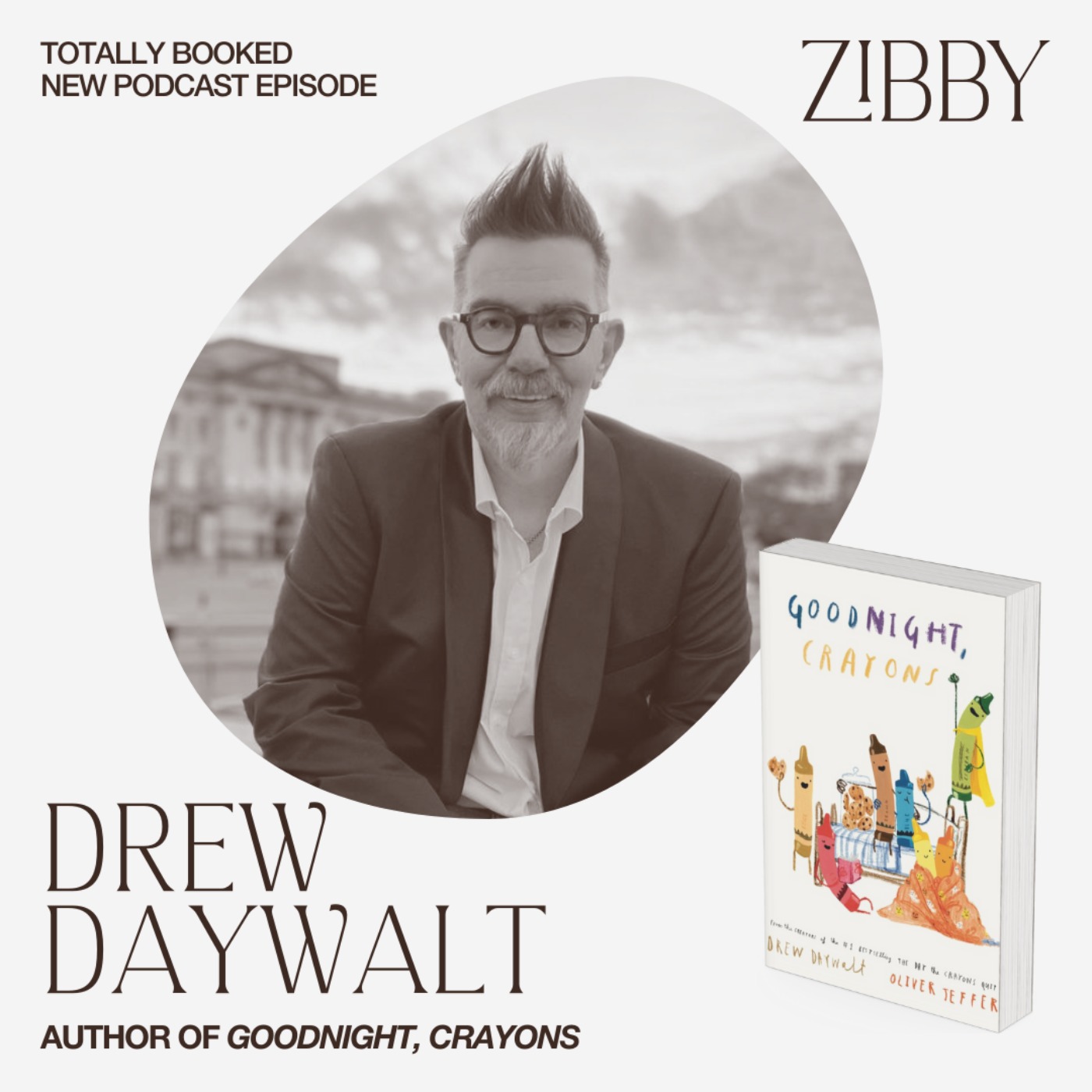
Hi, this is Zibby Owens and you're listening to Totally Booked with Zibby, formerly Moms don't have Time to Read Books in my daily show, I interview today's latest best selling, buzziest or underrated authors and story creators whose work I think is worth your time. As a bookstore owner, publisher, author and obviously podcaster, I I get a comprehensive look at everything that's coming out and spend my time curating the best books so you don't have to stay in the know. Get insider insights and connect with guests like I do every single day. For more information, go to zibbedia.com and follow me on Instagram ibyoans. Drew DeWalt is the author of Goodnight Krantz. Drew was amazed at the age of seven while sitting in the movie theater watching the credits roll on the original Star wars to see for the time that people actually made movies. They weren't just found items like mountains or rivers or clouds. That night at storytime with his mom Charlene, he noticed there were names of people on the front of books too.
- [04:27]
Interviewer (Totally Booked host)
That's when he learned about authors and.
- [04:29]
Zibby Owens
Writers and he never looked back. Drew is the number one New York Times best selling author of the Day the Crayons Quit, all of its sequels, and many other titles including the Legend of Rock Paper scissors, little Freddy 2 pants, and the middle grade novel they Call Me no Sam, illustrated by Mike Lowry. Drew lives in California with his wife.
- [04:49]
Interviewer (Totally Booked host)
Two kids, two dogs, two goldfish, a.
- [04:51]
Zibby Owens
Cat, and some Local raccoons who like pizza crusts.
- [04:54]
Interviewer (Totally Booked host)
Welcome, Drew. Thank you so much for coming on Totally Booked with Zibby to talk about all of your amazing books, including Good Night Crayons, which I have in my hand here. Congratulations.
- [05:03]
Drew Daywalt
Thank you. Yeah, that's the newest one.
- [05:05]
Interviewer (Totally Booked host)
The newest.
- [05:07]
Drew Daywalt
Fresh baked right out of the oven.
- [05:09]
Interviewer (Totally Booked host)
Amazing. This crayon series is so amazing. I've been reading them to my kids forever. I have four kids and it just. It doesn't get old. Like, you keep reinventing, you keep releasing. Where did this whole series come from? How did you think of it? How did you partner up with Oliver Jeffers, all of that stuff?
- [05:25]
Drew Daywalt
Oh, my goodness. Well, settle in, everybody.
- [05:27]
Interviewer (Totally Booked host)
Okay, There we go. I'm not going to do anything else the rest of this episode.
- [05:30]
Drew Daywalt
Yeah, you just made it real easy. You asked. That's the million dollar question. It's quite a story and it's really the story of my life, frankly. What led me to this? Well, I had a movie tank before I wrote children's books. I was and sort of still am, a writer director in Hollywood. I had a movie that Lawrence Bender and Quentin Tarantino's company, a band apart, had championed and they wanted me to direct it. So I wrote it and I directed it and we had some young stars. This is around 2002, 2001. And I did the movie and it came out and it was not what we all wanted. It was my first.
- [06:05]
Interviewer (Totally Booked host)
Was the movie now what you wanted or the response wasn't what you wanted?
- [06:08]
Christy
Or both.
- [06:08]
Drew Daywalt
Little of each. Little of each. It was a little bit of a feathered fish. The movie, it was called Stark Raving Mad, came out in 2002 to zero fanfare. Went straight to video back when there was no streaming. So they couldn't sort of, you know, they used to. Now they can hide a movie like, oh, well, we've made it for streaming. Look at it. There it goes. But back then it was either theaters or video and it went. This one went straight to video and that wasn't a good thing. The process was fun. The people were lovely. There was a lot of cooks in the kitchen, as is usual with a Hollywood studio film. And I was a first time director and I thought everybody's ideas were great, so everything went in the pot. So we had, you know, it was like, it was a garlic soup and it was. Then we threw in some hot fudge and some ketchup and some mayo and a cantaloupe and there, look here. Isn't it delicious? So the movie did not do well. And I was like, oh. And I was frustrated. I had a year of the phone stopped ringing because I was a script doctor and I was fixing. I was working all the time. And then the phone stopped ringing, and I was like, you know what? Gonna write that children's book. I always wanted to write. And I had, because I had gone to Emerson College in Boston in the 90s. And my teacher there was Jack Gantos. I don't know if you know Jack, but he wrote Lost in Norvell, and he got the Newbery Award years ago. But before he. He was Mr. I Want a Newberry. He was just Jack Antos, the cool teacher at Emerson. And he had told me when I graduated, he said, so, what are you doing with this degree? Because I had creative writing, but majors in, like, cinema and screenwriting. And then the other half was children's literature. And he taught the children's literature part. And he says, so, what are you doing after you graduate? He said, oh, I'm going to Hollywood. I want to. I want to be Quentin Tarantino when I grow up. He's like, well, you're not. And I was like, whoa. Because I had drive. I'd driven him crazy by taking his class over and over again for Creative writing for kids and children's literature and this, that, and the other. And I even audited them because I wanted to take them again. And I drove him crazy. And he's like, well, you're not. He said, you need to go to New York. You need to go into publishing, he said, because you're not Tarantino, but maybe you're Roald Dahl. And it was one of the nicest things anyone's ever said. And I was 22 at the time, many years ago. And I was like, I know better than this guy. And I went to Hollywood ten years after that. My movie tanks. I'm like, you know what? I'm going to write that children's book. So I wrote this. I sat down in my writing studio, and I found a box of crayons literally sitting on my desk that had been from my childhood. How they're ubiquitous, right? They end up in all kinds of crazy places, in car seats and under the couch. And, well, I had a box. And it was not just a new box. And I didn't have any children yet, so I had no reason as a grown man in his 30s to have a box of crayons on his desk there. It's, like, next to my pen holder. And, you know, all the stuff you have on your desk And I was like, obviously, this has meant something to me. It's followed me around. I took it to college, and now it's in my house and I'm 30. And so I dumped the crayons out on the desk that night, and that's. They looked exactly like they do in the book. Peach was naked, and I had pulled the wrapper off at some point for some reason. Blue was really little because I used it to death when I was a kid. You know, I like pink. Crayon was untouched because when I was a little boy, you know, that was, you know, back in the 70s and 80s, pink was for girls. I've since learned my lesson. But so that was reflective of that. And what I didn't know is that being my first children's book, it yanked me out of Hollywood. We'd whiplash fashion. And I kind of haven't looked back in the children's literature world and children. I feel like I got sort of knocked back by Hollywood. Right, you pushed back on your back. But I feel like millions of tiny little hands caught me. And that was the kids. And they were like, well, we'll take you. We'll do this. And I haven't looked back, so.
- [09:44]
Interviewer (Totally Booked host)
That's amazing.
- [09:45]
Drew Daywalt
I know it's a long answer. Sorry, but I love long.
- [09:47]
Zibby Owens
Are you kidding?
- [09:48]
Interviewer (Totally Booked host)
I love long answers. That's amazing. Was it literally the same. Same box of crayons, though, that, like, how was that not thrown away?
- [09:55]
Drew Daywalt
I don't know. I don't know. It was weird. Like, it's. You know, there are people in my life who think that it's supernatural, and I'm just like, well, okay, Obviously it was sentimental to me because I loved my crayons when I was a kid. Now I wasn't. It was basically crayons, Star wars and Dungeons and Dragons, you know, when I was little. But, you know, I had kept some things. Like I have, like, a race car, like a matchbox car from when I was little. And it was just like, sort of ended up on my desk, you know, it's like. I think it was just one of those tokens. And it was. It happened to be in the right place at the right time. I still have the box, but I way I kept it. And that now. That's 22 years ago, 23 years ago, and I still have that box of crayons. And now it's even. Now it's even more special to me because it's. It was part of the redirection. It was a. It was a. It Was a signpost, you know. Wow.
- [10:37]
Interviewer (Totally Booked host)
Is it right there? Can you hold it up?
- [10:39]
Drew Daywalt
Oh, I don't have it here. I don't have it here. I should, I should have. You know what? I need to learn to have it handy because it's like in a special drawer upstairs with all my most precious objects. I have someone that told me that Winnie the Pooh, the actual stuffed animals are at the Smithsonian.
- [10:51]
Interviewer (Totally Booked host)
I thought they were at the New York Public Library.
- [10:53]
Drew Daywalt
They might be. Now I know they travel, they move around. Yeah, yeah, but that was like, I was slow. So my sort of, I guess, unrealistic fantasy would be to have like, the crayons end up at the Smithsonian. That would be kind of neat.
- [11:04]
Interviewer (Totally Booked host)
That would be amazing. Oh, my gosh.
- [11:07]
Drew Daywalt
About that. They'd be like, no, that's ours.
- [11:10]
Interviewer (Totally Booked host)
So it just goes to show, like, the universe pushes us. I mean, this sounds so woo woo. But like, we can want what we want so much and yet it doesn't mean we're gonna get that. Like the universe, like, has its way and just find your place.
- [11:24]
Drew Daywalt
Yeah. I mean, whether you believe in coincidence or not, I do not. I believe in fate. I think the universe is. Woo woo. That's what I'm learning. I was a pretty pragmatic, you know, agnostic type. And, you know, the more I see in life, the older I get, the more I go, I don't know, man, there's some meaning to all of this. There's definitely meaning to all of this.
- [11:41]
Zibby Owens
Me too.
- [11:42]
Interviewer (Totally Booked host)
So do you ever. Are you ever just, like, sad about Hollywood? I mean, you bring it up here a lot. Most people would be like, whatever. Why was he even trying to do that? Like, look what he's done.
- [11:53]
Drew Daywalt
Yeah.
- [11:53]
Interviewer (Totally Booked host)
But to you, it still feels like a. It sounds like it still feels like a fresh wound almost.
- [11:59]
Drew Daywalt
Well, you know, maybe it was because, you know. But what was funny is in 2013 when Crayons came out again, took 10 years to publish it, from sitting down on that dark and stormy night and typing away at my computer with the crayons, the book came out. It debuted on the New York Times list at number two. And it quickly went up to one. And I think you see there like 400 weeks or something off and on. But that, that, that same week I get a phone call. This is in 2013. And it's an older gentleman. And he goes, is this Drew Daywalt? And I said, yeah, I didn't know who it was. And he goes, told you so, idiot. It was Jack Gantos calling from 20 years in the past.
- [12:36]
Interviewer (Totally Booked host)
No.
- [12:37]
Drew Daywalt
Yes. It was the greatest, like, you know, teasing I've ever gotten in my life. He's like, I told you so, and I'm so proud of you. And I was like, oh, my God, Jack. I'm like, thanks for the best advice I never took. Hollywood's tough, and a lot of the stories about it are true. You know, it's a. It's a brutal town, and it's a very tight pyramid. You know, the people at the top, you know, you see them all over social media and TV and the news and. But it's a very small percentage of the thousands of kids who pour into this town every year with hopes and dreams to be actors and singers and directors and writers. And I did pretty well. I was actually pretty happy with. The trajectory was good, but I just got yoinked out of it. And I was like, okay, because, you know, I worked with, like, my first film was with Shawn Levy and he has gone on. He did Night at the Museum, you know, the director, and he's. He did Stranger Things. He's. He just did Deadpool and now he's going to. He's doing the next Star wars movie. I was in a writing group with Christopher Nolan back when he was just Chris back in the 80s, and he did this weird movie backwards called Memento. And we remember when it was just a script and there was one studio that had told him, you need to rewrite this so that it's not backwards. The whole point of the movie is you're telling this story behind, you know, in reverse. And I remember him coming to the. To the group and asking us what we thought, and we're like, that's crazy. Keep it the way it is. So I have had, like, really good experiences too, and seen some of my friends and my peers really excel. And it's been fun to. I feel like I got sort of sideswiped and knocked out of the lane, but into another lane and then won that race, you know what I mean? So I have no complaints. And, you know, my first school visit, I had a librarian call me and said, you know, this is in 2014 or 13. And she said, do you do school visits? And I was like, what's that? I didn't know what that was. I was like. She's like, well, it's where the author comes to the school and talks to the kids. I'm like, why? Because I was like a martini swilling Hollywood. I was like, you know, and I wasn't a dad yet, so I Was sort of in a different space. I was like, yeah, I guess I'll come. What are they. What are they going to get out of me? And she. I'm like. She's like, well, do you have anything that you'd like to talk to? I'm like, well, I got this box of crayons. And she was like, oh, my God, yes, bring that. So I did the event and I was really nervous about speaking in front of kids. And she said, you know, just come in and talk to them like they're your own. Because mines were. At this point, my kids were little in the storyline and I read the story and I did a Q and A with this little kindergartner boy. I'll never forget him. He was sitting in the front. It was like the story time rug, you know, And I'm doing my thing. And at the end, you know, I was like. And the end. And I closed the book and everybody clapped. And he jumps up and he hops on my lap before anyone can do anything or stop him. And he kissed me on the cheek. And he says, I love you, Mr. Daywalt. I'm glad you decided to be a writer. I'm like, I'm done, I'm done. I'm in. You know, I never. No one in Hollywood ever did that, you know, so that was. That was a real. That was a real wake up call for me. So have I looked back? You know, occasionally go, it might be fun to do something, but I would want to do something in the kids space in Hollywood. But mostly I am perfectly content with author visits, school visits, you know, writing at my little writing chair and hanging out with my dog, you know.
- [15:44]
Interviewer (Totally Booked host)
Oh, my gosh, I love that story so much. It's amazing. So you must have analyzed, like, what is it about the series that made it take off in the way? Like, why is it resonating so much? What are your thoughts on that?
- [15:56]
Drew Daywalt
Oh, I got no clue. I leave that really well. You know, it's like self analysis. I did. I have had people come at me and say, like, especially. There was a very gifted editor once who came at me and said, she's like, I think I figured you out. I was like, wow, good, because I. I would love to hear that, because I haven't. And she said between books, like the Crayons books and like, Sleepy, the Good Night Buddy, which is about a lovey.
- [16:18]
Interviewer (Totally Booked host)
I love that one.
- [16:19]
Drew Daywalt
Rock, Paper Scissors, which is about, you know, the hand game. She says, you're giving voice to the voiceless. I was like, oh, wow. I think you might be right. And because I was the youngest of six and there was a big distance between me and them. There's a 10 year gap. There's like all of them, like in a cluster, and then 10 years and then baby Drew. Right. So I spent a lot of my childhood being told, no, you're. You're too little for that. You can't go, you know, no, you can't get on your brother's motorcycle. They were like 18 and I was like 8, and I was like, I wanted to be on the motorcycle too. And, you know, then you can't. No, you can't go with them. No, you can't do it. And, you know, and then brothers and sisters and stuff, you know, shut up and sit down. And, you know, I felt squelched a little because it's. The youngest always does, even though they also are the baby and they get spoiled. The other. The other side of that coin is, well, you get told you can't go along because you're too young for everything. And I feel like that must have obviously stuck in my craw somewhere, you know, So I think that's true. I think I do try and, you know, I do want to give voice to the voiceless, like, especially crayons. Because when I was writing that night, I thought, well, what would they think? I was trying to be empathetic, you know, how would they feel about my coloring? Obviously, it's comedic. It's a comedic take, you know, and I think we're all Duncan in a way, but I was like, what would they think? I was like, oh, man, I colored outside the lines. I peeled the wrapper off. I was rotten to my crayons. But now that I'm looking at it through their lens, it's not only funny, but poignant because they, they, you know, as characters, they had real strong wants. And I think children resonate with that. And I think children resonate with being told to sit down and be quiet because it's a lot of, you know, as soon as I always laugh because as when they're toddlers or when they're little, we can't wait till they can walk and talk when they're little infants. But as soon as they walk and talk, we tell them to shut up and sit down. Yeah. So I think kids resonate with that. I think that's. I think that's what it is. And there's also a universality to what I try to do with my books, you know, and I want kids to have access immediately to almost everything I write about like rock, paper, scissors, you know, almost any child can throw down with that crayons, you know, no matter where you are, you can probably get your hands on crayons, you know. And I want that. I want the things I do to be very sort of democratic and accessible to the children.
- [18:28]
Unidentified brief interjection speaker
Today's episode is sponsored by Wayfair. The new year is here. It's time to get back into an at home routine that you love and you can elevate your space with Wayfair. As you all probably know, Wayfair is like my favorite brand and I actually have a whole new storefront that I put together of all of my favorites which you can check out on my Instagram and then go to Wayfair.com to explore. From bedding and mattresses to storage solutions for every room in your house, Wayfair is your one stop shop. Refresh your living room with accent pillows, mirrors and even faux plants. For way Less I've refreshed some of my kids rooms with carpets and mirrors and blankets and it's so easy and convenient. Everything that Wayfair has for your home is easy to find and there is a huge selection. Get organized, refreshed and back on track this new year. For Way less head to Wayfair.com right now to shop all things home. That's W A Y-F A I R.com Wayfair every style, every home. And don't forget to check out my storefront.
- [19:41]
EQIP Health Representative
We live in a culture obsessed with dieting, weight loss and exercise, and that can make eating disorder behaviors easy to miss. But the reality is, eating disorders are serious mental illnesses that take a major toll on your health and your life. But recovery is possible. Eating disorders are more common than you might think. Chances are you know someone who is struggling with one, or maybe you're struggling yourself. If you're concerned about an eating disorder in yourself or a loved one, I want to introduce you to equip. Equip is a fully virtual evidence based eating disorder treatment program that helps patients achieve lasting recovery at home. Every EQIP patient is matched with a multidisciplinary care team that includes a therapist, dietitian, medical provider, and mentors. And you get a personalized treatment plan that's tailored to your unique goals and challenges. Equip treats patients of all ages and all eating disorder diagnoses. It's covered by insurance and there's no wait list. If you think that you or a loved one could be struggling with an eating disorder, don't wait to get help. Visit Equip Health to learn more. That's Equip Health.
- [20:46]
Sarah Gibson Tuttle
Who here loves when their nails are done perfectly? Me. I'm Sarah Gibson Tuttle and I started Olive in June because let's be real, we all deserve to have gorgeous nails. But who wants to spend a fortune or half their day at the nails nail salon? That's why I created the gel mani system. So you can have that salon quality gel manicure right at home. And guess what? The best part, each mani only costs two dollars. Yep, you heard me, two dollars. No more 60, 70, 80 dollar salon trips that eat up your day. Now you can paint your nails whenever you want, wherever you want. And trust me, you're going to be obsessed with your nails and everyone is going to ask you where you got them done. And here's a little something extra. Head over to oliveandjeune.com and get 20% off your first gel mani system with code DIYGEL20. That's code DIY GEL20 for 20% off your first mani system@oliveandjune.com DIY GEL20.
- [21:43]
Interviewer (Totally Booked host)
And so in all your visits and becoming the person you are sort of in the children's book world, like how do you want to use or how have you used that influence? I mean it's a, it's a weighty responsibility, right? To be like the guy.
- [21:57]
Drew Daywalt
It can be, it can be. You know, I think there are, there are guys who are really good at it, you know, like Matt de la Pena and you know, Lauren Long and like Christian Robinson. These guys are, there's so many, there's so many. I'm just naming those once off the top of my head. Kate DiCamillo. They can, they're really good at the responsible, a grown up part. For me, I just want to make children laugh because I know that for me books were an escape and a happy place. I know it's a cliche now, but it's true. You know, it's escapism at its best. And for me, some real happy places were sitting and watching my favorite movies and reading my favorite books. And the empathy, empathetic journey you take when you, when you sympathize with a character and go on the. You really are worried about them. You know, I remember reading the Hobbit in sixth grade. I was really worried about Bilbo and I thought, wow, that's an amazing thing. So I think the responsibility I feel at this point is I want to just make them laugh because sometimes kids, you know, we want to give them a lesson, but sometimes the lesson is, let's just let them laugh. So escapism and joy, and then if I can sneak in empathy, that's the mission I want. And I'm a literacy advocate as well. I think, you know, there's, you know, middle grades really in trouble. Kids aren't reading enough. Down. Down 80% since the 80s. I don't know if you've seen that statistic.
- [23:15]
Interviewer (Totally Booked host)
I mean, I'm kind of not surprised. I have two middle. I have two middle schoolers and two high schoolers.
- [23:19]
Drew Daywalt
Yeah.
- [23:20]
Interviewer (Totally Booked host)
And even the difference between them, with the rise in technology, I mean, it's. It's huge. They have no attention. You know, their attention is so much shorter. To sit down with anything is a big ask. So I'm not shocked by the number, but saddened.
- [23:33]
Drew Daywalt
Yeah. So I'm trying to get kids to read, you know, and like. Like, for instance, my. No Sam books happen to have one right here. Imagine that.
- [23:41]
Interviewer (Totally Booked host)
Amazing.
- [23:42]
Drew Daywalt
What a coincidence.
- [23:43]
Interviewer (Totally Booked host)
What a coincidence.
- [23:44]
Drew Daywalt
They're, you know, that's like 2010 to 20,000 words on the long end. But that's considered a novel now. And if you look at something, I mean, that's a different end of the spectrum. But if you look at something like, like the original Percy Jackson, you know, the lightning, it's like 85, 86,000 words. And that's 20 years ago now, which is also hard to believe. But this is the. This is where we're at. Like, there's shorter books for shorter attention spans because we're just trying to hook them back in and get them to read anything, even if it's fully heavily illustrated, you know, like, that's. I think, one of the reasons, like Jeff Kinney and Dave Pilkey are doing so well heavily illustrated. They appeal to the reluctant reader, you know, and we got to get kids off the devices and we're on them too. It's. It's such a. We're all addicted to the same thing all at once. It's crazy.
- [24:30]
Interviewer (Totally Booked host)
How old are your kids?
- [24:31]
Drew Daywalt
16 and 22. My daughter's. My daughter actually went to my alma mater. She's going to be a writer as well.
- [24:37]
Interviewer (Totally Booked host)
Oh, yeah.
- [24:38]
Drew Daywalt
But she wants to write like, sort of like Magical Realism and romantasy and that's sort of her world, so. But she's. She's a gifted writer as well. I'm really proud of her. But my kids weren't big on devices. I wasn't like, crazy about discipline, about keeping them off necessarily, but I was Very strict about keeping them off social media because that was just. That felt like a poisonous pit to me. It is a lot. And they read, they picked up books because they're like, I gotta do something. Dad's not gonna, you know, let us on social media. So that was a lot of time. And my son' Abby's not so much a reader, but my son Reese, he reads more than any of us. It's like a novel a week with him. It's insane. Yeah, it's crazy.
- [25:20]
Interviewer (Totally Booked host)
So there's hope. Some kids are reading.
- [25:23]
Drew Daywalt
Some kids are reading, and then they're gonna write. So I'm hoping that that's what. That's the way that pans out.
- [25:27]
Interviewer (Totally Booked host)
We just need the other people there to read what they write, keep it going.
- [25:31]
Drew Daywalt
Exactly, exactly. And that's. I think, you know, in some ways, I feel like a gateway drug. You know what I mean? Because if I can get kids interest, I know that's a really nice thing to put on a kid, but. You know what I mean? Like, but it's true. Like, if I can get the kids interested in laughing at something that's lighthearted and funny, and they go, wait a minute, I think I like books. You know, I was, at one point, I was a reluctant reader till I got the right book in my hand, the library, and got. She got the book in my hand, and that was. That was all she wrote. But if we can get kids to go, oh, no, I like books. Even if it's something heavily illustrated or a graphic novel or a comic book. Because in the 80s, we were getting picked on by, you know, the older librarians were like, that's not real literature. You know, instead of handing. They're trying to get us to read Moby Dick, and we're like, you know, I want to read about Batman. But now what we've all learned is that. No, that's good. They're reading about Batman. That's fine. It's the hero myth. It's Joseph Campbell. It's, It's. It's. It's rock solid storytelling. And at least they're reading a book.
- [26:28]
Interviewer (Totally Booked host)
So true. Oh, my gosh.
- [26:30]
Zibby Owens
Well, what do you.
- [26:31]
Interviewer (Totally Booked host)
What do you have planned for these crayons going forward?
- [26:34]
Drew Daywalt
Well, it's funny. I just. I'm just wrapping up a last edit on a book called Happy Birthday Crayons, which will. I think it's going to be 27 coming down the pike. We have the Crayons Book of Manners. So many of these little books, they're so fun to write. You know, initially, like seven or eight years ago now, they were going to just start producing these small books, you know, these little guys. And they were just going to be little spin offs. And there you go. And they were just. I think they're gonna have a copywriter do it and just going to be very basic. Like, this is the crayons, counting book one, two and three and, you know, that kind of thing. I was like, no, you know, I think do these. And my editor, Jill, who's unbelievable, you know, Jill Santa Polo. I told her, I was like, you know, I really. I'd like to do these myself. And she loved the idea. She's like, really? I was like, yeah. And my agent said the same. He's like, really? He went through every little book. I'm like, yeah, because we're going to build out the universe. And Jill and I have been like kids in a candy store on this because it's been so much fun because we are able to fully develop out the characters more than you can in one picture because it's also. It's already, you know, an ensemble. So you're already trying to fit an ensemble into, you know, 48 little pages with lots of illustrations. But then to have these little books, you know, you can feature one crayon or you can feature one character. And the response has been really good. So it's resonating.
- [27:52]
Interviewer (Totally Booked host)
FYI, I was a yellow crayon for Halloween at age 5.
- [27:56]
Drew Daywalt
Nice.
- [27:56]
Interviewer (Totally Booked host)
Just so you know, I really was. I'm just remembering that now.
- [28:01]
Drew Daywalt
How did that happen?
- [28:02]
Interviewer (Totally Booked host)
I have no idea. I had like a little hat and everything with the.
- [28:06]
Drew Daywalt
Well, that's awesome. I think I was C3PO that year.
- [28:09]
Interviewer (Totally Booked host)
Okay. Amazing.
- [28:10]
Drew Daywalt
We would have matched. We'd have been in the same color family. It's okay.
- [28:14]
Interviewer (Totally Booked host)
But why have the crayons not become, like a major film? You know, thing like with Wicked and all that? Like, why can't they have that mantle as well?
- [28:25]
Drew Daywalt
They're on the way. They're on the way. About 10 years ago, I sold the rights to Crayons to Universal and was one of my friends who was the head of Universal at the time. That's the bonus about getting old in Hollywood is eventually you're the age of all the bosses and, you know, all the CEOs everywhere. If you just. It's an atrophy game. So if you can just last long enough, you know. So he invites us in to pitch to do the movie at Universal Studios. And I've known him for years, and he knew I was a screenwriter too. And I brought a screenwriter in to do the movie and he was like, why don't you, you should be writing this. Why aren't you writing the screenplay? You're perfectly positioned to do it. I said, because I don't want to get fired off of this job. And everybody in the room laughed. And it was a boardroom, right? And everybody in the boardroom laughed. And I was like, I was like, you know what, I don't want you to send in, no offense to the 26 year old MBAs, but I don't want you to send in a 26 year old MBA to middle aged me and fire me because that's kind of sometimes how it happens with the screenwriter because I don't understand my characters. I said, that would be the most heartbreaking thing that would happen. And Infuria want to stay out of that. So I got a screenwriter and I pointed to the gentleman I brought in as he had a great pitch. And I said, so if you're going to fire somebody, fire him. And he's like, I'm right here, I'm in the room. And then my friend who's the studio head was like, he's like, I wouldn't fire you, you know, I wouldn't fire you. And I'm like, dude, you fired me in this room 10 years ago. And he went, oh my God. And I remembered I mentioned the movie. And he was like, I did, didn't I? And I'm like, yeah, you did. He's like, well, would it make any difference if I had you autograph some books for my daughters this time around? And I was like, man, I wish you could go back in time to that day you fired me. To my brokenhearted drive home. But so anyway, Universal had it for a while and then it went into turnaround and then Sony Animation picked it up and now it's being done at Sony Animation with my old friend Shawn Levy, who we started together in the business and he went on to do all those big fancy pants movies. So he's now an 800 pound gorilla. And when they said, who do you want to produce? I was like, ooh, ooh, ooh, Sean. And I contacted Sean and we hadn't talked to each other for years and when I went in the room with him to tell him that, you know, I'd like you to be the producer, he was like, he's like, you know, I've been reading this book to my kids for 10 years. I didn't know you wrote it. And he's like, I never looked at the name. I'm like, we should look at the credits. This is your business. But, yeah, we started together, and now the project is going forward. It's had lots of bumps in the road. You know, Hollywood, that's another reason that it's more fun to be an author is when you're the author, you're the author. And when you're a screenwriter, you're like a ronin or a mercenary. And you come in and you do your pass and you get fired, and you take your money and you go cry on your bag of money. Sometimes it's a little bag, sometimes it's a big bag, but either way, you don't get that sense of fulfillment. But there's a great team involved over at Sony. It's the same people who did like the Muppet movies. And I think some of the how to Train youn Dragon people are on this. And you know, the team that did into the Spider Verse, so they're top notch. And they just handed in a script I have to read this week, actually, the latest set of. Of writers, new writers down the road. But eventually, yeah, eventually it's going to be a film. Yeah.
- [31:29]
Interviewer (Totally Booked host)
That's exciting. Well overdue, but very exciting nonetheless.
- [31:33]
Drew Daywalt
Well, yeah, the first. The first generation to read it are now 20. That's crazy. That's crazy to me because it makes me feel old, but whatever.
- [31:40]
Interviewer (Totally Booked host)
Well, maybe when they have kids, you know, it'll be ready. Yeah, exactly.
- [31:44]
Drew Daywalt
I'm hoping that it's evergreen and it's everybody. Everybody still has crayons. Thank gosh.
- [31:48]
Interviewer (Totally Booked host)
So 100%. Oh, my gosh. Well, Drew, thank you so much. This has been such a delightful conversation, and thank you for the hours of fun that I've spent reading these books to my kids and so many other people. And it's just so nice to, you know, peer behind the curtain and hear how it all happened.
- [32:05]
Drew Daywalt
Thank you. It's my pleasure. Absolutely. My pleasure.
- [32:07]
Interviewer (Totally Booked host)
Thank you. All right, best of luck with everything.
- [32:10]
EQIP Health Representative
Bye bye.
- [32:11]
Interviewer (Totally Booked host)
All right. Bye bye.
- [32:12]
Zibby Owens
Thank you for listening to Totally Booked with Siby, formerly Moms don't have Time to Read Books. If you loved the show, tell a friend, leave a review, follow me on Instagram ibyohans and Spread the word. Thanks so much. Oh, and buy the books.