← Totally Booked with Zibby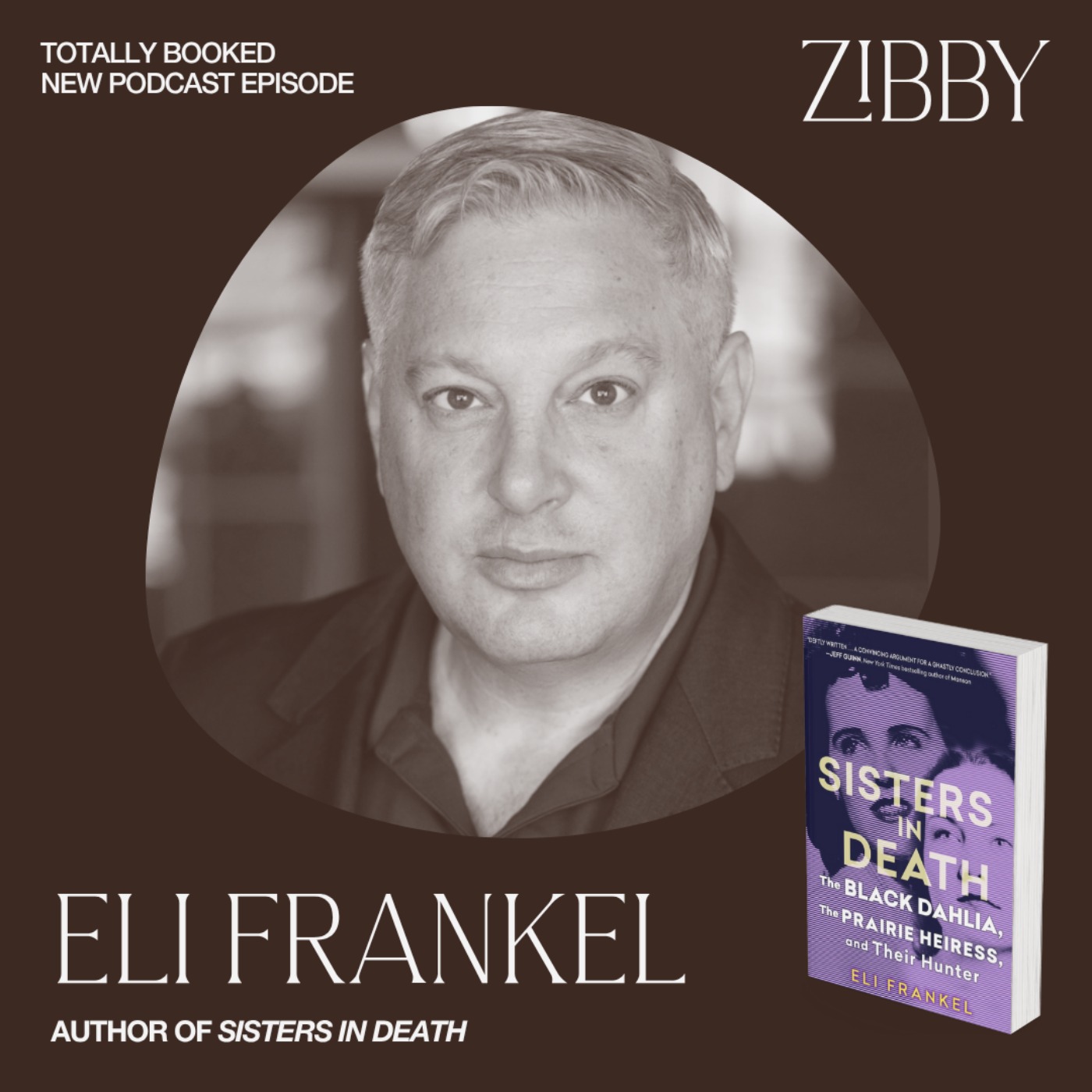
Totally Booked with Zibby
Eli Frankel, SISTERS IN DEATH: The Black Dahlia, The Prairie Heiress, and Their Hunter
00:23:16
Loading summary
Transcript89 lines
- [00:00]
A
Hi, it's Paige Desorbo from Giggly Squad. You ever stand in front of your closet and just say I have nothing to wear while you're literally surrounded by clothes? Because same so I started listing pieces. I'm over on Depop and honestly, it's been amazing. You can sell what you're done with and someone out there will love it. And the best part about it is there's no seller fee, so the money you make actually stays in your pocket, which feels very chic. It's also insanely easy. I listed something while watching TV and it sold before the episode even ended. So download the Depop app and list your first item today because your old outfit could be someone else's new favorite. Depop where taste recognizes taste. Payment processing fees boosting fees still apply. For More info visit depop.com A PSA.
- [00:47]
B
From Instacart It's Sunday 5pm you had a nonstop weekend. You're running on empty and so is your fridge. You're in the trenches of the Sunday scaries. You don't have it in you to go to the store, but this is your reminder. You don't have have to. You can get everything you need delivered through Instacart so that you can get what you really need. More time to do whatever you want. Instacart for one Less Sunday Scary we're here.
- [01:17]
A
You know Hannah and I love a good bedrotting session, reality TV snacks nearby and now I've leveled up with my self care game with this Shark Beauty Cryoglow, the number one skincare facial device in the us.
- [01:29]
B
Wait, I'm obsessed with it. I've had it for a while actually and it's the only mask that combines high energy LEDs, infrared and under eye cooling. I really need this because nothing wakes me up in the morning. You could do four treatments in one better aging, skin clearing, Skin sustain and my favorite the Under Eye Revive with Insta Chill Cold Tech. You put it on and it just feels so good under your eyes. Like I actually feel like I got eight hours of sleep.
- [01:53]
A
It's truly like a luxury spa moment while you're literally horizontal. It's perfect for post workout Sunday scaries or when you just want to glow while rotting.
- [02:02]
B
To treat yourself to the number one LED beauty mask this holiday season, go to sharkninja.com and use promo code Giggly Squad for 10% off your cryo glow. That's sharkninja.com and Use promo code gigglysquad for 10% off your cryo glow. Welcome to Totally Book Live at the Whitby Hotel. I am so excited to be interviewing so many amazing authors. And today I get to talk to Eli Frankel, who's the author of Sisters and Death, the Black Dahlia, the Prairie Heiress, and Their Hunter. Congratulations.
- [02:37]
C
Thank you. Good to be here.
- [02:38]
B
Yay. Okay, Eli, tell us about this book.
- [02:45]
C
Wow. Where do I start? So, yeah, I mean, I've been a huge researcher, very intense researcher, I guess you could say, of the Black Dahlia murder for about 20, 25 years now, but more as, like, a hobbyist, as a passive reader of everybody else's books and articles and thoughts online. And there's quite a bit of forums online regarding the murder and all kinds of evidence. And, I mean, there's hundreds of names associated with the investigation that occurred and a lot of evidence that was. That was brought forward. So it's a lot to get through. But eventually I got to the point where I started to realize there were areas of the investigation that had never been looked into. And I kind of crossed the Rubicon where I realized there's still investigation, there's still room for investigating this case. Not everything has been looked through and picked over. And so I decided I'm gonna try to acquire all of the primary research. Sorry, primary documents and records from this case and look into it as a hobby, just for fun, because as a true crime fan, I love researching different cases and getting deep into the weeds, as some people do, and Rabbit. And what I discovered in my investigation and looking at all these primary sources was that there was one particular suspect who had been essentially the top suspect back in the late 1940s, when the LAPD was investigating the case, and remained at the top of that suspect list until the case went cold in the early to mid-1950s. And since that time, nobody had done a deep dive into this suspect and who he was, what his past was, and the presence in the police records of another murder, which had occurred six years earlier than the Black Dahlia, which occurred in 1947. In 1941, there was another murder in Kansas City of a former classmate of this suspect that the police had a lot of interest in because there were eerily similar circumstances to the murder of Elizabeth Short, the Black Dahlia. And I, I just thought, this is a real opportunity to maybe try to find some information that isn't known out there about what is arguably the most famous unsolved murder case in American history. And that's what began my journey into investigating both of these murders, the suspect and a real exploration of Missouri and California back in the 1940s. The environment, but most importantly the lives of the two victims. And to me that was such an important thing, was that so much had been written about the Black Dahlia, about Elizabeth Short, but it always felt like it was sort of the same five to seven minute kind of overview of her life using all the same facts. And there's always been this kind of disdain that's been shown for her every the way we understand her life, who she was.
- [05:48]
B
Well, maybe back up for one second.
- [05:50]
C
I'm kidding.
- [05:50]
B
Does anyone know what the Black Dahlia murder even was? Right, so okay, yes and no. So go back. What was the Black Dahlia murder?
- [05:58]
C
Okay, so it's post war Los Angeles, things are a little rough. The country is coming back from the war, but LA is still in a, you know, is a little bit of a rough situation. It's overflowing with GIs returning from the war, it's overcrowded, the infrastructure's not ready for it. But it's about to become this model city of the future. Right. It's right on the cusp there of going from kind of old west town to new, you know, sort of sleek space age city that's gonna represent how cities are gonna be laid out. Freeways, cars, suburbs, all being part of kind of the cosmopolitan feel there. On January 15, 1947, a 25 year old housewife named Betty Bersinger is pushing her three year old daughter Anne in a stroller down a weed strewn lot when she stops, turns to her right and sees a murdered, a murder victim who has been severed in half and exsanguinated. And I know it's difficult to hear that, but those are the facts of the case. Exsanguinated means completely drained of blood. There were terrible mutilations all over the body. It becomes huge news and it really changes the city. They were never able to find the killer. It was a massive investigation involving over 1,000 investigators across the state. And it's kind of lingered as this sort of haunting story over the city. It's, it's referenced a lot at dinner parties or in meetings or just talking to people. You know, there's always this feeling like what happened with the Black Dahlia and what sort of evil was rampant in the city and reflects, you know, a lot of murders that were to come later on. So it has become subsequently this, I mean, in many ways an obsessive murder case for many true crime fans and researchers and historians, because it is so dense. And Elizabeth Short, the woman who was murdered Was in Los Angeles for only five months before her murder. But she came across so many people in Hollywood, so many people in, you know, across the city. And it ended up becoming a very convoluted case that I think has attracted people because it is sort of the ultimate enigma wrapped in a mystery, wrapped in a riddle.
- [08:12]
B
Let me spoil something here.
- [08:13]
C
Yeah.
- [08:14]
B
Eli solved this case. This. I know. It's amazing. It's amazing. No one has ever been able to do this, and you did it.
- [08:25]
C
Well, you know, listen, I think. Thank you. Thank you.
- [08:30]
B
Is it okay to give that away?
- [08:31]
C
Yeah, sure. I mean.
- [08:33]
B
I mean, I feel like that should be the selling point of the book. Like, let's lead with that. I solved the biggest crime ever.
- [08:38]
C
Thanks. I hadn't thought about that. Yeah, it's. So as Zibby was saying, it wasn't just about looking into the investigation and the lives of the victims. I also wanted to investigate every single suspect who the LAPD had looked into, which brought me to this point. And I did. I looked into the past. I looked into the, you know, the future moving forward from 1947 of all of every suspect of the LAPD and the district attorney looked at. And I just kept coming back to this one name that seemed very suspicious. And so in my investigation of this suspect, I discovered all these other bizarre deaths that had occurred across his life, really strange activities. And then, like, even his divorce records and some other important records that I got from going to Kansas City and St. Louis, which was part of the journey of, you know, meeting people, discovering, you know, archives and dusty files and going through them. I mean, it really was sort of a boots on the ground experience. And it just. Every. Every layer would reveal more about this person that just really fit the profile of who this killer was. So the evidence was organized. There's, I think, a very interesting narrative regarding who he was, what his psychology was, and what his motivation would have been in these two murders.
- [10:05]
A
Okay.
- [10:05]
B
But this is so crazy, because Eli and his wife Karen are really good friends of Kyle's and mine. I went to a summer program with Karen in, like, the 90s or something like that. And we met Eli maybe eight, 10 years ago. Maybe 10 years ago. This is not his job. He's never mentioned any of this stuff. And then next thing you know, he's like, hey, I wrote a book. Can you take a look at it? And I was like, what? And then I started reading it, and I was like, oh, my gosh, this is amazing. This book is amazing. It's gonna sell in Two seconds, which it did. And he's like, yeah, you think it's any good? I was like, yeah, yeah, it's so good. You have to read his writing. And he wasn't even a writer. I mean, this is nuts. He was just like running his kids around town and producing. So anyway, back up a little bit. It's one thing to be an armchair crime person, but you've essentially become a detective.
- [11:00]
C
Yeah, kind of. I'm sure detectives would say no, but yeah, in many ways I have. I mean it's. It's been a long years long process of reading thousands of pages of old documents and just picking out the little facts that are relevant to the case. Or reading 800 copies of the U News from University of Kansas city in the 1930s and having to scour every single newspaper to find just a few clues, or flying out to Florida or Boston to go interview the daughter of somebody who was really relevant to the case. But you know, in that sense, in some ways I feel like I have more resources available to me than the LAPD had in 1947. And it's just extraordinary. Through newspapers.com, ancestry.com, been verified, all these tools we have at our disposal now you can discover so much incredible information. Plus with old cold cases, we have the hindsight of what happened in the years afterwards. And a lot of times people who are suspects in murder case obviously display some behavior that may be indicative of that later on. And so you've got 40, 50 years of this person's life afterwards to discover. And that's something that obviously police didn't have in the 40s. So yeah, I mean, obviously it's very different than being a detective in a police department, but there's a lot of tools and a lot of kind of parts of the journey that I think reflect some of that investigative aspect as well.
- [12:31]
B
So tell everybody about your career prior to this, like your actual lifelong career.
- [12:36]
C
Yeah, so I mean, for decades I've been a television producer. I produce a lot of non scripted shows, reality shows, I've done game shows, everything.
- [12:47]
B
Brag about a few titles they might have heard.
- [12:49]
C
I worked on Survivor, Amazing Race, America's Next Top Model, Big Brother. I mean, the list goes on and on. And I produced Revenge Body, which apparently was mentioned earlier today. What are the chances?
- [13:04]
B
I almost said something to her when she said that, but I was like, this isn't gonna make sense later. So I'm just.
- [13:09]
C
I got where your show got mentioned. I was like, really? Here? And a bunch of other projects as well. But I also produced Helter Skelter, which is kind of the definitive documentary series that was on MGM Epics and is available on Amazon. I've been kind of an obsessive researcher into the Manson murders as well. I'm obviously big into some kind of la true crime. And it really was through Helter Skelter that I developed the research skills that I would then use in Sisters and Death. And I also had to do. Part of what you have to do as a documentarian is you have to start with the proposal for what the documentary is. And it has to be really detailed and long. And you have to explain who you're gonna be interviewing and what you think they're gonna say and how that's gonna support the story and the interlocking pieces. And it required going after all these people who, you know, hadn't heard, you know, hadn't been connected to the case in 30, 40 years, trying to convince them, will you participate with us and a lot of ex Manson family members and all that. So, you know, I really cut my teeth on sort of true crime investigation and figuring out how to contact people, how to get documents, how to find rare records. And all of that ended up becoming just crucial to my research into the Black Dahlia.
- [14:26]
B
Amazing. Today's episode is sponsored by Aura Frames. I'm so grateful to Aura Frames because I loaded mine filled with pictures of my late stepfather right after he passed away. Images of him with all of his grandchildren, my mom, my brother, everyone in our family. Not only did I display it during our memorial service, but I have it in our kitchen. And every time I make a cup of coffee or walk in the kitchen, which is a million times a day, I get to see him with different images and even videos up to 30 seconds showcasing how great he was. It's helping keep my family together. My kids get to look at it and be reminded of him. And it makes me feel closer to my mom, who's across the country. It's become such a personal, important thing in my home, and I am just deeply, deeply grateful. Plus, I have to say, in a time when I was really stressed, it took only about two minutes to set up and was so easy to collaborate on that I could ask all of my stepfather's grandchildren and kids to upload their own photos without my having to do it. It's really amazing, and I am so grateful. For a limited time, visit auraframes.com and get $45 off Aura's bestselling Carver Mat frames, named number one by Wirecutter by using promo code Zibby at checkout. That's a U R A frames.com promo code ZIBBY. This exclusive Black Friday Cyber Monday deal is their best of the year, so order now before it ends. Support the show by mentioning us at checkout. Terms and conditions apply. Thank you, Aura Frames, for bringing meaning into my life and joy into so many others.
- [16:08]
A
Hi, it's Paige Desorbo from Giggly Squad. You ever stand in front of your closet and just say, I have nothing to wear, while you're literally surrounded by clothes? Because same. So I started listing pieces. I'm over on Depop, and honestly, it's been amazing. You can sell what you're done with, and someone out there will love it. And the best part about it is there's no seller fee, so the money you make actually stays in your pocket, which feels very chic. It's also insanely easy. I listed something while watching tv, and it sold before the episode even ended. So download the Depop app and list your first item today because your old outfit could be someone else's new favorite. Depop, where taste recognizes taste. Payment processing fees, boosting fees still apply. For more info, visit depop.com hi, it's Paige Desorbo from Giggly Squad. You ever stand in front of your closet and just say, I have nothing to wear, while you're literally surrounded by clothes? Because same. So I started listing pieces I'm over on Depop, and honestly, it's been amazing. You can sell what you're done with, and someone out there will love it. And the best part about it is there's no seller fee, so the money you make actually stays in your pocket, which feels very chic. It's also insanely easy. I listed something while watching tv and it sold before the episode even ended. So download the Depop app and list your first item today because your old outfit could be someone else's new favorite. Depop, where taste recognizes taste. Payment processing fees, boosting fees still apply. For more info, visit depop.com.
- [17:43]
B
So I have to say one other aside, which is when I started this podcast a long time ago, you probably don't remember this. We were in the garage at our house. Your kids were having a playdate, and I was like, eli, you know everything about TV and everything. I really want to turn my podcast into a. A TV show. And you're like, no one's gonna buy that. And I was like, I'm sorry. I was like, no, it's gonna be great. And you're like, no, look, you know people, you know, there's not much to see. There's not much to see when you're talking about books, books you just read. What are you gonna see about an author? I would just like to say that I have sold this show to JBS tv. So it's not Netflix, but it's something. And now here you are and you're gonna be on it.
- [18:26]
C
I love that I was wrong.
- [18:30]
B
Thank you. I just wanted to hear you say you were wrong.
- [18:33]
C
I was so wrong.
- [18:35]
B
There you go.
- [18:35]
C
I should never doubt. The lesson is don't ever doubt Zibby.
- [18:40]
B
So funny. Okay, so in the acknowledgments, which were very long and I was very offended I wasn't mentioned, you talk about how Karen wouldn't let you keep any of the murder stuff in your bedroom. And she was sort of like, okay, do all that in the basement.
- [18:56]
C
Yeah.
- [18:56]
B
Talk a little bit about how you integrated this hobby while you still had a full time job. Were off jetting off to all these places to research managing your family, all of that. Like, how did you fit this in?
- [19:10]
C
Yeah, that's a good question. I've never been asked that and I. Okay, let me see if I can.
- [19:15]
B
Apparently people don't tend to ask men that question.
- [19:18]
C
Yeah, they really don't. It's true. I'm a pretty hands on dad and very busy with stuff with the kids and obviously my job producing and stuff as well. I mean, it was a lot of late nights and not getting a lot of sleep, to be honest with you. You know, I think my thought, what the hell is dad doing outside at 1am calling people, researching and all this stuff? I think my family thought I was crazy that I'm researching a case and I think this might be a book. But I don't know. I mean, it was one to three o' clock in the afternoon and then right after dinner and just finding an hour, 45 minutes here or there. And then in the last year or two of the research and writing, it just kind of became mostly a full time job. I think one of the great things about producing TV is you can kind of choose how much time you want to devote to it. And also Hollywood has slowed down a lot. And so instead of like, let's say you come up with a project and you got to set your pitches, it might be six weeks before you pitch a TV show, whereas it used to be six days. So there's more breaks built in. But yeah, I think it just goes to show that there Always is time to do the amazing things you've always wanted to do. It's, you know, you stuff your day finding a half an hour here, 45 minutes there, but eventually it begins to compound and take on a life of its own and just becomes integrated into your life. Anything else is.
- [20:36]
B
And so will this then be a TV show?
- [20:39]
C
I don't know. We'll see. It'd be interesting to come full circle, but hopefully, who knows what the future will bring?
- [20:47]
B
I mean, couldn't you make something happen that's a good thing?
- [20:49]
C
Yeah, I did. I do know a few people. Right. So, yeah, I've been so focused on the book and marketing and all that, so I haven't given it probably enough time on the TV side, but we'll get to that for sure.
- [21:02]
B
So I know the book is coming out soon, and I've been on the sidelines trying to coach you a little bit and how the whole industry's going. How are you finding this process relative to launching TV shows?
- [21:11]
C
Oh, it's great. I love it. And by the way, thank you for advising me to get on social media.
- [21:15]
B
No problem. I started his account for him. Yeah.
- [21:17]
C
That's all her.
- [21:18]
B
Yeah.
- [21:18]
C
I was like, how do I do this? She goes, download Instagram. So, yeah, I've been learning all that. It's fascinating. The publishing world is so different than tv. In television, when you make a show, you essentially hand it over to the network or the streamer and they take it from there. And yes, there might be a couple interviews with outlets, but really what they're interested in is who's on screen and kind of promoting the show itself. Whereas with publishing, that world is so interested not just in the book and the story of the book, but who wrote this, what their journey was, what their story is. It's personal. And I really love that because in tv, you just. You don't really know who makes those shows and what their inspiration was. And, yeah, like, Mike White might get interviewed, you know, about the White Lotus or something. That's a huge show and they want to know the origin story of it. But publishing is so much more focused on the personal journey of the development and of the project and what the inspiration is and what their message is they hope to get out there. And I just love that. It's really been exciting to be able to tell a little bit of my story and inspiration as well, so.
- [22:27]
B
Cool. So are you going to be solving more crimes?
- [22:30]
C
Stay tuned. Yeah. Got a couple really interesting stories in the works, so we'll see what Happens.
- [22:36]
B
So how do you find the stories then? You just go digging or.
- [22:39]
C
Yeah, you know, it's by hook or by crook. And every single murder case that I've gotten really interested in, I've just stumbled upon. I didn't. Every time I try to look for a really interesting story, it never comes, but it's. You're reading a newspaper from 1923, and then you glance to your right to column six, and there's something that just grabs your attention.
- [23:00]
B
Why are we reading newspapers from 1923?
- [23:03]
C
Oh, you don't do the same thing?
- [23:04]
B
I can barely. I have a stack from this week. I haven't even been able to.
- [23:08]
C
I don't read the news. I read the olds. You know, I go back in time. The olds. Yeah, yeah. So it's. I don't know, you just find something and you pull that thread and it begins to unravel and show a little more and then something else is revealed and there's all these layers and I just really get drawn into different stories and different worlds and eras and. Yeah, there's some. I got a couple really cool stories coming up.
- [23:32]
B
And do you feel like you understand or you can get into the mindset of the murderers knowing more what you know now? Like, can you do that or not.
- [23:41]
C
Really in the minds of the murderers or murderers? Murderers, yeah. Yeah. I mean, it is an unsettling process for sure, and part of it is reading a lot of like abnormal psychology books and articles and talking to psychologists. But every murderer in every murder case is different. And unfortunately, it requires learning every detail you can about the murder, which is really unsettling. And then going to doctors and psychologists and surgeons and asking, what happened here? Why was this done? What would the effect have been? And in doing that, you begin to, in a somewhat uncomfortable way, understand the mindset of the person who's doing it. It's horrifying. But I think it's important in the same way that if you were writing, let's say, a book about Joseph Stalin, you know, a 600 page biography, you would need to understand what Stalin's mindset is in writing about him, as uncomfortable and terrifying as it is. And similarly, you know, with true crime, it's important to honor and to understand the victims and at the same time to understand, or try to understand, as much as it's possible, the perpetrators.
- [24:57]
B
So when I first read this, when it was just a proposal with the manuscript, it had a different title. Yeah, what happened here?
- [25:04]
C
What happened? The publisher said, we're changing the title.
- [25:09]
B
Did you have any say in that?
- [25:10]
C
No.
- [25:10]
B
Okay.
- [25:11]
C
I mean, listen, I understood why the original title of the book was Werewolf. And the reason being is that at the time, serial killer hadn't been coined. It wasn't until around 1980, 1981, that that term actually came into use. And so the term that all the press and the police used was werewolf. There's a werewolf prowling the city, and then it kind of comes in at the end. Why that is such an appropriate term to use in this case. But they said it's a really cool title for a book about werewolves, and that's not this. So we're gonna change the title. And I actually. I really love the title. And I have to hand it to the publisher. It was one of their suggestions. I came up with, like, 200 tit. And they were like, we have one we really like. And the reason I think it works is that the story is about two women who never knew each other, lived in different states and born at slightly different times, and died six years apart from each other. But the book makes the point that there are so many similarities between the two women and in their deaths, and so in a way, they're tied together by virtue of what happened later on. And I think it also centralizes the victims in the story, which is what I was really wanting to do and not seeing them as just victims. So much of what's been written about Elizabeth Short is seen through the prism of what happened to her later on. And this sort of. Well, she wasn't responsible for her death, but she put herself in circumstances that may have led to what happened to her, which in the book I wholly rejected and I think disprove. So to me, having the victims, but again, not seen as victims, the two women, is really at the heart of the book, was really important and crucial to the story.
- [27:02]
B
Amazing. So do you have any interest at all now in solving contemporary crimes?
- [27:07]
C
Yeah, I do. You know, I'm still producing and pitching documentary projects, and there's a couple that are happening in the news right now that I'm working on. But, you know, in terms of documentary, it's much less intense. You have a director and other producers, and your time isn't taken up as much. My. I probably shouldn't say this for the sake of my career, but I love writing and researching, and it's really become my heart and my main focus now. I just feel like this is what I'm supposed to be doing, and I've been a producer for 25 years, and I don't know what's going on and why I'm writing books and doing this, but I'm loving the journey and I'm gonna continue hopefully.
- [27:48]
B
Well, you're really good at it. Congratulations. Yay. Well, thank you so much for coming on and I hope everybody discovers this new talent. Where was it that we were just watching about a rediscovery. Remember that? Like, what was that? Oh, right, right, right, right.
- [28:07]
C
I am Late Fame.
- [28:08]
B
That's right. Kyle's movie Late Fame. Kyle and Ethan and the Morning Moon team have a movie coming out and it's all about how in publishing a discovery versus a redis is like such a great thing. Anyway, I feel like Eli at this stage has his late fame coming to him in this regard and just couldn't be more excited.
- [28:27]
C
Thank you. I appreciate it.
- [28:28]
B
Okay, thanks so much. Thank you for listening to Totally Booked with Zibby formerly Moms don't have Time to Read Books. If you loved the show, tell a friend, leave a review, Follow me on Instagram ibbyowens and Spread the word. Thanks so much much. Oh, and buy the books.
- [28:53]
A
Hi, it's Paige Desorbo from Giggly Squad. You ever stand in front of your closet and just say, I have nothing to wear while you're literally surrounded by clothes? Because same so I started listing pieces. I'm over on Depop and honestly, it's been amazing. You can sell what you're done with and someone out there will love it. And the best part about it is there's no seller fee, so the money you make actually stays in your pocket, which feels very chic. It's also insanely easy. I listed something while watching TV and it sold before the episode even ended. So download the Depop app and list your first item today because your old outfit could be someone else's new favorite. Depop where Taste recognizes taste Payment processing fees boosting fees still apply. For more info, visit depop.com.
- [29:40]
C
We all.
- [29:40]
B
Love our pets, but we love to travel too, and sadly, they can't always come along for the ride. Don't stress. Trusted House Sitters connects you with verified.
- [29:52]
A
Sitters who will stay in your home.
- [29:53]
B
And care for your pets, all in.
- [29:55]
A
Exchange for a place to stay on their travels.
- [29:58]
C
So while you're off exploring, your pets.
- [30:00]
B
Get to stay safe and happy at.
- [30:01]
C
Home, right where they belong.
- [30:04]
B
Find a loving in Home Pet sitter.
- [30:06]
A
Today@Trustedhousesitters.Com hi, it's Paige Desorbo from Giggly Squad. You ever stand in front of your closet and just say, I have nothing to wear while you're literally surrounded by clothes because same so I started listing pieces. I'm over on Depop, and honestly, it's been amazing. You can sell what you're done with and someone out there will love it. And the best part about it is there's no seller fee, so the money you make actually stays in your pocket, which feels very chic. It's also insanely easy. I listed something while watching TV and it sold before the episode even ended up. So download the Depop app and list your first item today, because your old outfit could be someone else's new favorite. Depop where taste recognizes taste. Payment processing fees boosting fees still apply. For more info, visit depop.
- [30:54]
B
Com.