Loading summary
Transcript62 lines
- [00:01]
Capital One Advertiser
If you love to travel, Capital One has a rewards credit card that's perfect for you. With the Capital One Venture X card, you earn unlimited double miles on everything you buy. Plus you get premium benefits at a collection of luxury hotels when you book on Capital One Travel. And with Venture X, you get access to over 1,000 airport lounges worldwide. Open up a world of travel possibilities with a Capital One Venture X card. What's in your wallet?
- [00:27]
Capital One & Boost Mobile Announcer
Terms apply. Lounge access is subject to change. See capitalone.com for details. Dreaming of getting the all new iPhone 17 Pro, designed to be the most powerful iPhone ever?
- [00:35]
Zibby Owens
Then stay in bed and let a.
- [00:36]
Boost Mobile Expert / Trusted House Sitters Announcer
Boost Mobile expert deliver and set it up for you.
- [00:39]
Capital One & Boost Mobile Announcer
Oh, actually they will have to get up and open the door. Oh right. Delivery available for select devices purchased@boostmobile.com terms apply. Did I talk too much? Can't I just let it go? I wish I would stop thinking so much.
- [00:54]
Zibby Owens (Sponsor Reads)
Take a breath, you're not alone. Let's talk about what's going on. Counseling helps you sort through the noise with qualified professionals, and online therapy makes it convenient. See if it's for you. Visit betterhelp.com randompodcast for 10% off your first month of online therapy and let life feel better. Hi, this is Zibby Owens and you're listening to Totally Booked with Zibby, formerly Moms don't have Time to Read Books? In my daily show, I interview today's latest best selling, buzziest or underrated authors and story creators whose work I think.
- [01:35]
Zibby Owens
Is worth your time.
- [01:36]
Zibby Owens (Sponsor Reads)
As a bookstore owner, publisher, author and obviously podcaster, I get a comprehensive look at everything that's coming out and spend my time curating the best books so you don't have to stay in the know. Get insider insights and connect with guests like I do every single day. For more information, go to zibbymedia.com and follow me on Instagram. Iby Owens.
- [02:02]
Zibby Owens
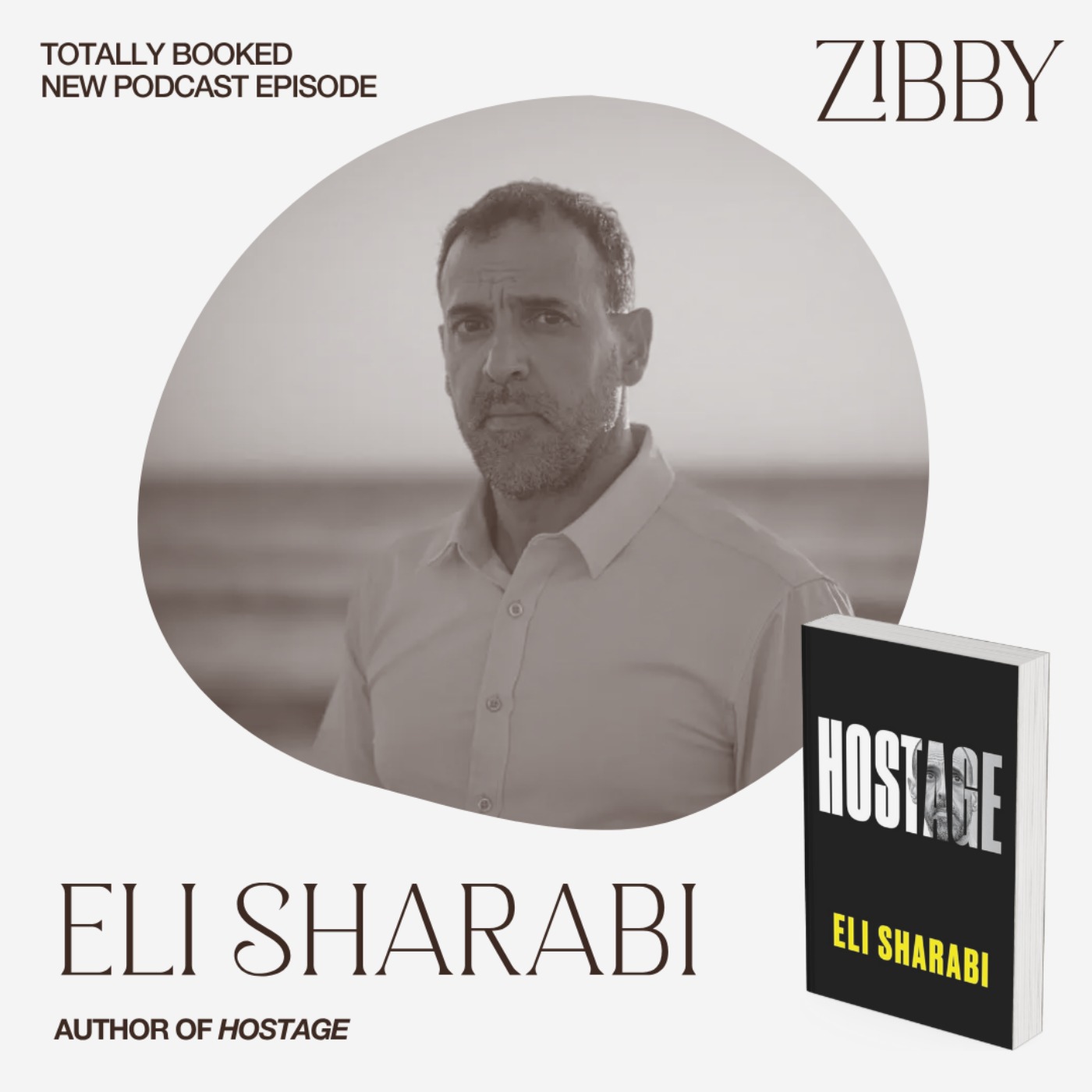
Today is October 7th. It's the second anniversary of the horrific attacks in Israel, and I've had the honor of interviewing Elie Sharabi just yesterday, which was unbelievably moving to talk to a former hostage. It was the first time I just. I could barely even speak. I was just in so much awe of him. His resolve, his determination, his strength. It was like talking to God. Anyway, our interview was quite short. That's all the time he had. But I took it and I will share it with you here. To all the families of hostages, the victims of October 7, all of the Jewish people in Israel in the Diaspora who have been attacked and hated so much as I have. In the aftermath of October 7, as the world split in two and suddenly the ancient antisemitism that we thought was buried came roaring back. To everyone who has gone through this, the 180. As Ellie says in our interview, I just want you to know that I am with you and have tried to do my part to help, as I know so many of you out there have done as well, and that the most important thing we can all do, Jewish, non, Jewish, whatever, is remember we are all human and just draw on our strength as people, our love of family, our love of each other to heal. Because that is what we are all in dire need of doing. As Elie's interview shows, here's his bio. Elie Shirabi is a former Hostage who survived 491 days in Hamas captivity following his abduction from Kibbutz Bayari on October 7, 2023. Sharabi has since become a global advocate for the remaining hostages, meeting with world leaders like US President Donald Trump, speaking at the United nations and sharing his story with audiences around the world. His memoir, Hostage, the first published account by a released Israeli hostage, became an instant number one bestseller in Hebrew and the fastest selling book in Israeli history. Born in Tel Aviv to Yemenite and Moroccan parents, Sharabi moved to Bayari as a teenager and later married Leanne, a British woman with whom he shared two daughters, Noya and Yahel, aged 16 and 13. A longtime resident of Beari, Shirabi served as the kibbutz's business manager as well as the chief financial officer of the the kibbutz Bayeri Printing and other private companies in Israel. Shirabi continues to work tirelessly as a leader in the campaign for the release of captives. This is our interview. Welcome. Thank you so, so much for coming on Totally Booked to talk about your book Hostage, which was just beyond amazing as a book, as a piece of history, as a testament, all of it. Thank you.
- [05:00]
Elie Sharabi
Thank you very much. My honor.
- [05:03]
Zibby Owens
One of the things that you say a lot in the book is that you were on a mission to survive. You were able to compartmentalize and focus on just survival. Can you talk a little bit about how you did that and what that meant to you?
- [05:15]
Elie Sharabi
Well, the minute they drugged me from my house, I understood I'm going to be in a hostage and I need to do everything I can to survive this hell. I knew I'm going to have lots of challenges ahead of me and I just need to make my promise to my daughters that I'M coming back. So for me to survive was my mission and I knew I'm going to do everything to do that.
- [05:51]
Zibby Owens
And you were able to use just every skill you had from all of your jobs and on the kibbutz and, and all of it and led the other young men through this horrific experience. How were you able to do that so well? And I mean, it definitely speaks to trying to get these types of jobs for all different types of reasons.
- [06:11]
Elie Sharabi
First of all, I'm very practical person. So I knew I need to separate between my emotion and my mission and. And I knew that all the experience I have as a manager, working with people and managing people and working with them and give them missions and deadlines and all this, it's something will help me to manage every situation with my captors and with the other hostages. And it's not really fair to expect someone is half of my age to have all this experience. So I knew it's. It's on me and a part of surviving and surviving good and surviving together with the other hostages. It's to manage every situation there.
- [07:05]
Zibby Owens
I know you take us through in detail what it was like then. How has it been for you now? You talked about another hostage having nightmares while you were underground in the tunnel. Do you have nightmares? Do you have other effects afterwards?
- [07:21]
Elie Sharabi
I didn't have a nightmare. I didn't have nightmares there and I don't have nightmares now. I was probably very good, as I said, to separate between, you know, my emotion and. And the hell that we had in. On October 7th in my house. And so for me, it's not something that is really was a problem for me. But of course, other hostages had nightma. It wasn't easy to experience that with them and talk about it. So I've tried to speak with them during the day about good things, but I will not have nightmares in date night.
- [08:08]
Zibby Owens
And what is your relationship with. In the aftermath of the starvation? What is your relationship with food like now? Do you feel like, what is it like?
- [08:18]
Elie Sharabi
I'm not, you know, first of all, I appreciate. I appreciate food. Suddenly everything is very tasty for me. I don't know why. I'm not spoiled anymore with food. But I'm not eating a lot now because I didn't have food, you know, for 16 months. I'm okay, I'm okay. I'm doing okay. I'm trying to eat. I love food. I'm trying to eat less now because everything I eat now I need to run more. So.
- [08:50]
Zibby Owens
Yes, you speak in the book About Leigh Bardugo's book. I emailed her and I was like, lee, do you know that Eli Sharafi is talking about you in his book? And she was like, I can't stop crying. But you write about it. Can I just read this little section out loud? Is that okay? You say we find ways to distract ourselves from the hunger, to pass the time in our cell, to distract ourselves from the distress and the pain. We have a book that reached us, Thea Hirsch and Ori Danino back in the previous tunnel. Shadow and Bone by Leigh Bardugo. We learn from Alon that the author is Jewish. We pass the book around between us. I'm short sighted, so I can't read it, but or and Ilan devour it again and again. Alia knows very little English and struggles to read it. So he doesn't. But as time drags on in, boredom mounts. He decides to try. He, he picks it up and start reading and starts reading. And then you say they obsess about this book. Something about it, besides being a way to pass the time, gives them strength. They told me that the protagonist learns to navigate her way through the darkness and that although fictional and the book itself a fantasy, her character holds lessons about surviving in the dark, about captivity. They take turns reading it over and over. Tell me about that. It's amazing.
- [10:02]
Elie Sharabi
Isn't that amazing? Isn't that amazing that a fantasy book have a parallel lanes, you know, and details like we had in the tunnels? What do you say about that?
- [10:14]
Zibby Owens
It's amazing.
- [10:14]
Elie Sharabi
So, because of, because. Well, I couldn't read that because I didn't have my, my glasses with me. But they were fascinated about that and sometimes it scared them how much it's, you know, by the details, it look like the, with the time we have in the tunnels and in captivity, sometimes it was scary for them as well. So because of that it was very, very important. And Elia Cohen could study English because of this book. I think it was his first book there. And he started to read line after line and asked us about words there and we explained that to him. And I think the second or third time he read that book, he just, you know, he didn't need to ask anymore. That's done. It's amazing for him. So yes, if you, if you have any connection with her, thank Araba by my name. You know, it's, it would be a great pleasure to meet her.
- [11:14]
Zibby Owens
I actually, I asked her to come on our zoom, but she had something going on. So I'll have to connect to you afterwards, but she was totally emotional about it and just couldn't believe it. So I hope you I hope you know that. Well the way that her book helped me you all then your book is sure to help so many other people through situations that of course are not exactly parallel but getting through anything. I mean the skills that you show us in this book were so unexpected to me. I thought it would be. Obviously it was so painful to read, right? But it was so hopeful. You were so in command of your emotions and it was really quite inspiring. Was that. Did you know it would have that effect?
- [11:57]
Zibby Owens (Sponsor Reads)
Today's episode is sponsored by Live It Up. If you are someone who wants real results and not watered down promises, it's time to upgrade your greens game. Most powders out there either taste like grass or overcharge you for hype. Live It Up Super Greens is different. My cabinet is now stocked with so many different products and it all tastes good. I have a hard time finding time to fit in all of my vegetables. Sometimes I don't even get to eat meals. This is the perfect solution for me and anyone else out there who's running around trying to just make life. Fit it all in and have a.
- [12:32]
Zibby Owens
Good time while you're doing it.
- [12:34]
Zibby Owens (Sponsor Reads)
Live It Up Super Greens contains more than 20 superfoods from organic vegetables and natural ingredients, all traceable nutrition designed and third party tasted. And did I mention it tastes good. A survey of real Live it up customers who take their greens daily report actual benefits. 98% say it helps them feel healthier overall and 96% say say it increased their veggie intake. 95% say it improved digestion. Bottom line, Live it up delivers premium quality at a price that actually sticks. No gimmicks, no bloated margins. Live it up has become a quick and easy way for me to stay on top of my health. It's such a simple step that fits into my morning routine without any hassle. And I love that I don't have to overthink it. One scoop and I am set for the day.
- [13:18]
Zibby Owens
Honestly, I was surprised by how good it tastes.
- [13:21]
Zibby Owens (Sponsor Reads)
Not grassy or chalky like so many others. I actually look forward to drinking it, which makes it easier to stick with. I've noticed I feel more balanced throughout the day when I make it part of my mornings.
- [13:31]
Zibby Owens
It gives me that feel good energy.
- [13:33]
Zibby Owens (Sponsor Reads)
I can count on without the crash right now. Get 33% off your first live it up order when you subscribe@letsliveitup.com booked and use code booked you can cancel anytime with a 30 day money back guarantee or to get 15% off when you purchase without a subscription. Head to let's live it up.com booked and use code booked for 15% off your first order. These statements have not been evaluated by the FDA. This product is not intended to diagnose, treat, cure or prevent any disease. Today's episode is sponsored by Wayfair. As you all know, I am obsessed with Wayfair. In fact, I have a new office chair waiting in my lobby for me today to make my pack feel even better. But let's talk about how the holidays are coming up because there's so much that we all can do to get ready to host for all the assorted holidays from Halloween to Thanksgiving. And actually I just picked up a few of these pumpkin white soup terrines because it always they look so pretty when I go to people's houses. And I was, I was like, I think I want some of those. So with Wayfair, as the holidays approach, you can get whatever you need to personalize your house like I just did, whether it's your dining table or a guest room or anything. It's so convenient that Wayfair has literally everything your home needs this season. There is such a huge selection of home items in every style and it really makes it easy to find exactly what's right for you. There's something for every style and every home, no matter your budget. Wayfair makes it easy to tackle your home goals this holiday season with endless inspiration for every space and budget. And there's free and easy delivery, even on the big stuff. No more huge delivery fees for furniture. Get big stuff like sofas, dining tables, beds, desks, and more. Shift free, which I have done and it's all amazing. So just find all your seasonal must haves, from furniture and holiday decor to appliances and cookware all in one convenient place. Hosting just got a lot easier. Get organized, refreshed and ready for the holidays. For way less, head to Wayfair.com right now to shop all things home. That's W-A-Y-F-A-I-R.com Wayfair Every style, every home. And now I have to go get my office chair. Today's episode has been sponsored by Quince. Cooler days call for layers that last and Quince is my go to for quality essentials that feel cozy, look refined.
- [16:01]
Zibby Owens
And won't blow your budget.
- [16:03]
Zibby Owens (Sponsor Reads)
Think $50 Mongolian cashmere, premium denim that fits like a dream, and luxe outerwear you'll wear year after year. These are the pieces that'll turn into your fall uniform. I'm eyeing their wool coats. They look designer level but cost a fraction of the price and the quality. And honestly just as good if not better. Because Quince partners directly with top tier ethical factories and cuts out the middlemen. They deliver luxury quality pieces at half the price of similar brands. It's the kind of wardrobe upgrade that feels smart, stylish and effortless. I am particularly a fan of the fisherman cashmere Mongolian sweater in brown. The light brown is already sold out. I am obsessed and it is so cozy and is a staple. Find your fall staples at quince. Go to quince.com zibby for free shipping on your order and 365 day returns. Now available in Canada too. That's Q-U-I-N c e.com Zibby Z I B B Y to get free shipping and 365 day returns. Quince.com Zibby no, probably not.
- [17:13]
Elie Sharabi
You know sometimes I still ask people why, why you're inspired and what you're inspired from. I don't really understand all the time what I'm saying. It's differently from other people. But you know I'm always been been optimistic, always try to find solutions and not to cry about any situation and self pity, it's like a curse for me anyway. So I'm trying to find all the time a solution and to look forward and that's it. This is me. This is me.
- [17:53]
Zibby Owens
Wow. How do you feel about the conversations now as we're talking? It looks like perhaps there will be a deal for the hostages. Do you believe it? What do you think?
- [18:04]
Elie Sharabi
Well, I really believe that. I'm very optimistic about that. This time it looks closer than ever. I'm very optimistic in that in the next, you know, a week or two we'll have sign deal that bring back my brother first of all and alone and the other 46 hostages that remain there bring back to their families. And I think that's maybe, probably, probably it will be the, the day that will start to heal as you know, as a state, as individuals, people in Israel are in trauma from October 7th.
- [18:46]
Zibby Owens
Of course, of course. I mean you mentioned that after you came out you were totally bowled over by the support for the hostages worldwide, not just in Israel, but diaspora Jews everywhere. Were you also surprised by how much hate there was coming towards Jews since October 7th?
- [19:07]
Elie Sharabi
Of course. It shocks me every time still. And you know, yes, I was. First of all I was very, very surprised about their support of the Israelis support the hostages, the hostage, family and Jewish all over the world. Their solidarity with the Israelis, it's amazing and I'm very grateful for that. And the hate that is all over the world for the Jews, it's unbelievable, unimaginable. That is happening still in 2025 and not in 1940. So when I meet parliament members in UK, in US, in Australia, two weeks ago, I'm talking with them and that they have to have a stronger voice against anti Semitism because any hate crimes that's going to happen and happened like a week ago in Yom Kippur, in Manchester, it's on their responsibility. This, you know, politicians, what do you think?
- [20:14]
Zibby Owens
Is there anything people like me who want to help, who want to fight against all of this hatred and unite our community, people who are following your journey and want to help you and all of the hostages and everything. Like what? What would be most helpful to you or to our. Into our tribe?
- [20:33]
Elie Sharabi
Each one of people, even Israelis, Jewish, non Jewish, I don't care. That can explain to ignorant people about facts, about not to hate other people. It's okay to have a disagreement is democracy. I don't have to think the same as you, but we can speak and especially not to hate each other. So just speaking against antisemitism all over the world, that will be more than enough for me as Israeli and as a Jewish.
- [21:13]
Zibby Owens
And so in addition to having to survive this excruciating time, you then had to come back and learn about your family. How is that something that you can ever quote, get through? Do you think about them all the time? Do you try not to think about how do you get through?
- [21:30]
Elie Sharabi
I don't need any Memorial Day for to remember my wife, my daughters, my brother. They're with me all the time. In any situation, if I'm listening to music in the car, if I'm going to meet their friends, in any situation, I remember my wife, my daughter. It will be through them my last day in life, you know, but it will be in this alongside my life, not instead of them. I'm intending to rebuild my life to have a full meaning life. I'm going to be very, very busy, happy. So this is me.
- [22:08]
Zibby Owens
Well, I'm. I'm so sorry for the loss and again, just have so much respect for you in every way for being able to write about it. I've known your agent Jen Joel for a very long time. By the way, how did you team up with her?
- [22:25]
Elie Sharabi
Actually my agent, Neil Blair from UK is working with her. So he connect us. So that was their connection between me and Jennifer. And I'm very about. I'm very happy about this connection. Anyway, me too.
- [22:44]
Zibby Owens
She's amazing. You're doing a huge event tomorrow night at Temple Emanuel in New York City. What are you going to tell everybody? What do you want everybody to know when they meet you in person?
- [22:55]
Elie Sharabi
First of all, that I'm not a poster anymore. I'm a real man. I'm back from hell, rebuilding my life, happy, very optimistic for the future. You know, I want to speak about appreciation in life to appreciate every basic thing that happening to you in life about that you have all the time the choice to decide one thing or another. This is what I want people will feel in, you know, tomorrow night and any, in any event, I'm making.
- [23:34]
Zibby Owens
Are you okay with being this public figure now? Do you ever want to just be like, no, no, I think I'm going to just watch TV and hang out?
- [23:42]
Elie Sharabi
Well, I probably. I'm not sure I'm going to watch tv. First of all, I didn't watch TV eight months now since my release because it's. Because I'm busy.
- [23:52]
Zibby Owens
Yeah.
- [23:53]
Elie Sharabi
And if probably I watch television, it will be something sport or something like that. I'm not going to waste my time watching television, especially not news. But you know, I'm just happy, just happy with my life. That's it.
- [24:12]
Zibby Owens
Amazing.
- [24:12]
Elie Sharabi
That's it. I'm happy with my life. My life changed 180 degrees. I become familiar figure. I don't know why. I will be more than happy to come back to be anonymous and maybe I'll succeed one day.
- [24:31]
Zibby Owens
Wow. Well, in the meantime, you're using your voice and your experience to help so many people and hopefully to just make such a difference because we need you to keep speaking out. And thank you so much. This book is amazing. Everyone should read it.
- [24:45]
Elie Sharabi
It's like, thank you very much.
- [24:47]
Zibby Owens
In addition, you're a great writer. So I mean, there you go. What more can you ask for?
- [24:51]
Elie Sharabi
Thank you very much.
- [24:52]
Zibby Owens
Thank you very much. Thank you.
- [24:53]
Elie Sharabi
It was my honor.
- [24:55]
Zibby Owens
Thank you.
- [24:56]
Zibby Owens (Sponsor Reads)
Thank you for listening to Totally Booked with Zibby, formerly Moms don't have time to read books. If you loved the show, tell a friend, leave a review, follow me on Instagram ibbyowens and spread the word. Thanks so much. Oh, and buy the books.
- [25:18]
Capital One Advertiser
If you love to travel, Capital One has a rewards credit card that's perfect for you. With the Capital One Venture X card, you earn unlimited double miles on everything you buy. Plus you get premium benefits at a collection of luxury hotels when you book on Capital One Travel, and with Venture X, you get access to over 1,000 airport lounges worldwide. Open up a world of travel possibilities with the Capital One Venture X card. What's in your wallet?
- [25:44]
Capital One & Boost Mobile Announcer
Terms apply. Lounge access is subject to change. See capitalone.com for details.
- [25:49]
Boost Mobile Expert / Trusted House Sitters Announcer
We all love our pets, but we love to travel, too, and sadly, they can't always come along for the ride. Don't stress. Trusted House Sitters connects you with verified sitters who will stay in your home and care for your pets, all in exchange for a place to stay on their travels. So while you're off exploring, your pets get to stay safe and happy at home, right where they belong. Find a loving in Home Pet sitter today@trustedhousesitters.com if you're a custodial supervisor at a local high school, you know that cleanliness is key and that the best place to get cleaning supplies is from Grainger. Grainger helps you stay fully stocked on the products you trust, from paper towels and disinfectants to floor scrubbers. Plus, you can rely on Grainger for easy reordering, so you never run out of what you need. Call 1-800-Hundred-granger, click granger.com or just stop by Granger for the ones who get it done.