Loading summary
Transcript77 lines
- [00:03]
A
Did you see the game last night?
- [00:05]
B
Of course you did, because you used.
- [00:06]
A
Instacart to do your grocery restock. Plus you got snacks for the game, all without missing a single play. And that's on multitasking. So we're not saying that Instacart is a hack for game day, but it might be the ultimate play this football season. Enjoy zero dollar delivery fees on your first three orders. Service fees apply for three orders in 14 days. Excludes restaurants Instacart We're Here this holiday season. Instacart is bringing magic to the people who make it magic for others. Get delivery and deals on everything you need this season. Whether it's a last minute holiday decor, emergency coverage for the holiday party, or just avoiding going out in the cold, Instacart is here. Plus November 24th to December 23rd is deal month with savings from your favorite retailers and deals on grocery, electronics, beauty, toys and more. Download the Instacart app to get a little magic delivered Today you know you've reached peak couple energy when your undies match. Meundies Match Me has you both covered literally in super soft ultra modal undies, socks, PJs and loungewear, festive prints? Check. Cozy vibes? Double check. And right now it's deal season. Get up to 50% off site wide for Black Friday and Cyber Monday. Take your couple game to the next level with Meundies Match Me. To get deals up to 50% off, go to Meundies.com acast Enter promo code acast that's Meundies.com acast code acast.
- [01:43]
Hi, this is Zibby Owens and you're listening to Totally Booked with zy. Formerly Moms don't have Time to Read Books. In my daily show, I interview today's latest best selling, buzziest, underrated authors and story creators whose work I think is worth your time. As a bookstore owner, publisher, author, and obviously podcaster, I get a comprehensive look at everything that's coming out and spend my time curating the best books so you don't have to stay in the know. Get insider insights and connect with guests like I do every single day. For more information, go to zibbymedia.com and follow me on Instagram. Iby Owens.
- [02:26]
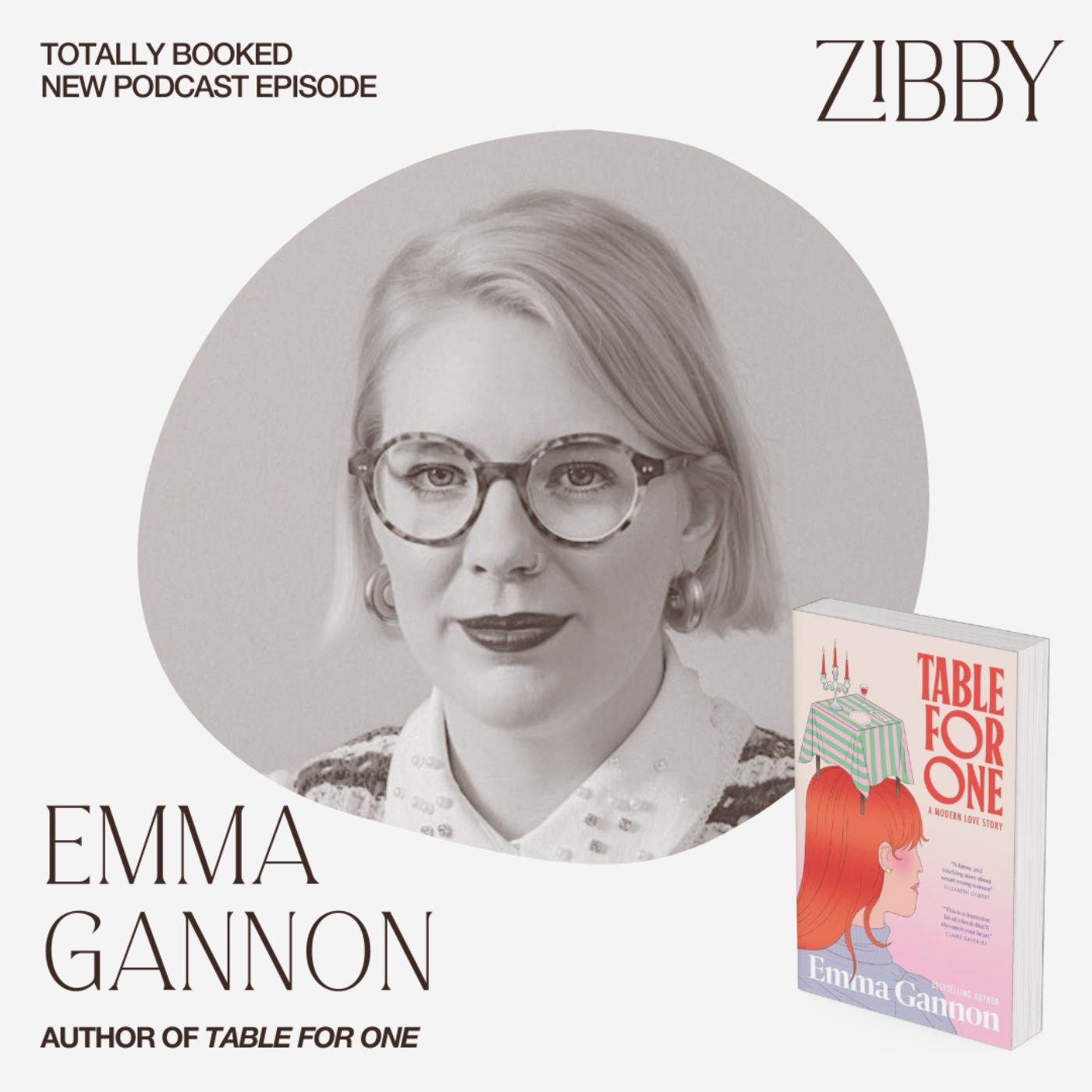
Emma Gannon is the author of Table for a Modern Love Story. This episode with Emma was filmed as part of our event series at the Core Club, a private club in New York where we do events with authors every month. And if you are part of our community and on the mailing list and Everything. You can always come anyway. Emma Gannon is the Sunday Times best selling author of eight books, including Olive, her debut novel, which was nominated for the Dublin literary award. Her second novel, Table for One, is out now with HarperCollins. Her popular newsletter, the Hyphen, was one of the first in the UK to reach thousands of subscriptions on Substack. Enjoy. Welcome, Emma. Thank you so much for coming. I'm totally booked.
- [03:08]
B
Thank you so much. This is so exciting. I was saying that my debut novel, Olive came out in the pandemic. So I did like loads of virtual events with people in the States. So this feels genuinely really meaningful. So thank you for being here.
- [03:20]
A
So, Emma, we're going to talk about your new amazing book which you've all gotten a copy of. It's called Table for One. I'm obsessed. Of course. Now we have tables for lots of you in here. Before we get into this book, give everybody a little background of how you got into writing, your career to date and how we got right here.
- [03:37]
B
Okay, so a whistle stop talk because it's as we, you know, all of us have had many zigzags, I'm sure, in our careers. But for me, I started off in the early days in like advertising agencies when you just fall into a job and started copywriting and things like that. And then I started a blog when I was about 20. Just, you know, I watched a lot of films with people blogging. It was the time where people were starting to do that. I was just very curious about it. And when I worked in advertising, I was talking to a lot of bloggers. And then honestly, it just kind of went from there. I decided to take a massive pay cut in my mid-20s and go and work at quite like a lowly job at Conde Nast because I was like, if I'm going to try and do this writing thing, I need to kind of put my ego aside and put my paycheck aside. I felt at the time to kind of really get into it. So that's what happened. And then I got an email out of the blue from someone at Penguin when I was about 26 saying, we love your blog. We know it's doing really well. And I got my first book deal at that time, which was called Control Alt Delete, based on the blog. And it was about being a 20 something growing up on the Internet during the time when it was like dial up and an actual monitor and boys and MSN and CDs, like, it was. I really wanted to write a kind of nostalgic millennial memoir. And then from there I got more into sort of writing about business and self help. So I wrote a book called the Multi Hyphen Method, which is about being like someone with many hyphens in your care career. Because I was never. I could never do this answer succinctly. I've done so many things. And then that became a bestseller. And then I had this just kind of whirlwind career, really. And then I started writing novels. I've probably missed out so much there, but that. That's kind of like the beats for me, I think.
- [05:27]
A
And Emma has a fabulous substack, if you have not already subscribed to it, called the Hyphen.
- [05:33]
B
Yes.
- [05:34]
A
The spin off of the Control Alt Delete. We're just going through the keyboard, basically. But it's really fabulous. So you all have to subscribe to that.
- [05:41]
B
Yeah. And also, it's funny hearing you introduce this because I had a podcast for years as well, for like five years, and I would do similar things and I interview other authors. I really miss it, actually. But it was called Control, Alt Delete, and that was really fun. I interviewed a lot of people and we did like a live podcast recording in Buckingham palace, which was apparently the first podcast the queen had heard of. I was like, okay, that was cool. In like 2018. But I felt, and I'm not speaking on behalf of anyone else here, that I had to choose between writing novels and doing a podcast. Because fiction for me takes so much out of me. And I felt like I couldn't do multiple things at that point.
- [06:21]
A
Fiction is really hard. You can't do it in a crowded room and it's. I don't know. Anyway.
- [06:28]
B
No, exactly.
- [06:28]
A
Yeah. Okay, table for one. Tell everybody what this book is about.
- [06:33]
B
So I've actually just finished writing another book, another nonfiction, which is a very woo woo book about creativity. Like, I'm fully unleashing my, like, inner, like, Julia Cameron, kind of. Where do ideas come from? The ether and the signals we receive? Like, I truly believe this book is kind of my, like, subconscious energy. Like, I would ask for so many tables for one during my life. Like this morning, even at the hotel, the woman was like, table for one. I was like, yeah, yeah. And I'm just like, the amount of times I say that word, I feel like it's turned into a book. But yeah, I also had a lot to, like, work through in this book. And anyone that's read it so far, you'll. You'll know. But it's essentially a Book about three different women of all different ages learning from each other how to be alone in life. So one is just out of fresh breakup, another is like a Gen Z influencer who, you know, it's like always talking about how amazing being alone is and always solo traveling. And then there's an older woman who is, has always been unmarried and happily single. And the three women are kind of trying to embrace singlehood in that way. And yeah, I, I've been with my partner for 15 years and I've never really had that experience of being single really. And I feel like I was living that fantasy out through this book. Essentially like the idea living alone.
- [08:00]
A
How does your partner feel that your fantasy is being by yourself?
- [08:05]
B
I have a theory that like a lot of women do fantasize about that.
- [08:10]
A
We won't do a show of hands, but they're raising them anyway. People in the audience here. That's funny. I mean, when I was thinking about the book, it didn't occur to me that it was about being alone because I feel like so much of the book is about the support of other people. I mean, as one of your characters goes through this horrific breakup, I feel like you have one of the all time great scenes. I feel like it's like a movie scene of friends just coming in, getting her out of bed and just literally when you cannot function, what is the role? How do your friends come for, come in for you? And that's exactly what they do. I feel like no matter what is happening, there is someone there for one of these people and often each other definitely.
- [08:54]
B
And I, and I definitely wanted this book to be about friendship and love and support and relationships because those are the most important things like in our lives. I'm at the end of my life, I'm, I'm going to be thinking about the people I love and my husband and my friends and stuff. But some of the most incredible times in my life have been also by myself. I went for a walk around Central park yesterday and like could have cried because I was just like, I, I feel really happy and I'm on my own. But I think it's because like the two things play into each other. Like the reason I'm happy and I can come to New York for 10 days by myself is because I have friends in my WhatsApp group. It's because I can FaceTime my husband. It's, it's, you can be brave when you have really good relationships. And I think there is a narrative sometimes, like with my parents generation that you don't go away by yourself and leave your partner at home. Or you don't. It's selfish to go, you know, and all that narrative. And I always push back on that. I think being by yourself is really important.
- [09:51]
A
I mean, we can all leave. We can just leave her alone here. Sounds like that's maybe what.
- [09:58]
When you structured the book, you have, like, multiple timelines and multiple characters. I mean, it's complex in its structure, even though it flows just so beautifully. Talk a little bit about how you accomplish your goals. And did it always look like this when you started writing it or many other iterations.
- [10:15]
B
I almost want to block out the experience of writing this book. It was so hard and painful. I know that's like a really. Maybe a kind of not a fun answer. Like, I really want to be like, yes, I just wrote it by a river. And, you know, like, Colin Firth in. What's that film? Bridget. No. Yeah, written Bridget Jones. No. It was. It was horrific. Like, it took me four years. It's why I write my substack, honestly, and my. And my other things, because I can then get that dopamine hit of, like, actually doing something. Because this was just so hard. Like, I don't know how else to describe it. Like, so many drafts, so many times my editor would send me back notes that would make me really angry because she was right. And just a lot of solo trips going, trying to figure it out. A lot of train journeys. Like, writing a novel is really wrestling with something very hard. Like, it's just so many characters and so many storylines, so many timelines. I think that's why writing a novel is kind of one of the things that people really do put up there of like, wow, that's really cool that you did that, because, yeah, you. You have to dedicate a lot of your life to it and, you know, curl up on a ball crying and be like, I can do this and pick yourself back up again. I'm not sporty and I don't run marathons and things like that. And I'll never climb a mountain. But, like, this is my version of kind of. This is hard. Yeah.
- [11:37]
A
But do you. Do you take any enjoyment at all? There are other things you could do.
- [11:42]
B
You know what? I asked myself that. Honestly, I was like, why did I do this? Partly because I had a two book deal with HarperCollins. I wrote the first one, which I did enjoy, so that was really fun. I took myself off to the seaside one weekend and just started writing and wrote like 10,000 words in a weekend, and it was so joyful. And I remember going to the shop and buying, like, some wine and some snacks, and the person at the checkout was like, oh, you're having a party tonight. And I was like, no, I'm alone in a. In a hotel writing my novel. I didn't tell her that, but I just made it really fun. So I think. I think. And I. I don't have kids, so I don't want to make this analogy really. But, like, surely, like, some experiences are hard and some aren't as hard. Or like, if you, you know, different births are different. Like, different friendships are different. It's like, I think you are birthing something with a book. I know it's not the same, obviously, but it's. Some are harder than others, some are easier than others.
- [12:35]
A
I think not just the birth. The kids, that's okay.
- [12:40]
B
Love them all the same. Yes.
- [12:42]
A
And you are now doing something so interesting, which is. So these are traditionally published. Table for one. And now Emma is doing another book, and I'm so excited. She brought me a copy because I've been like, dying to read it. A Year of Nothing. This is her next book. And you have chosen to publish it with something. A company called White Glove, which is a specially curated high touch self publishing. Essentially, you're taking the whole matter into your own hands, which is really awesome. So talk a little bit about that.
- [13:16]
B
Yeah. So is everyone here sort of familiar with substack? You read on there and things. So in the uk, I feel like it's. It's newer. Like, some people don't know as much about it, but essentially it's the revelation for writers. It's. People are very, like, casual about it, and I'm like, no, this is absolutely huge. The fact that I can write something and then someone pays me every month to receive my writing. So I don't need an agent taking a cut. I don't need a publisher printing anything. I. I'm literally writing to people directly their pockets. And it's a wonderful community. And it's. It's honestly, like, one of my favorite things to do. I think if I had to choose between books and substack, even though I don't think I'll ever have to choose, I would choose substack at this point because I just love the freedom of being able to tell my stories without fighting for it to get on the shelves. So, yeah, this is an experiment. So A Year of Nothing is my memoir. And you'll see it's shorter. It's like 25,000 words. About a year I had in 2023 where I just was really burnt out. And I know that word is used so for just like being a little bit tired, but I was medically burnt out, which is still kind of, you know, not a very kind of clear word. But I was exhausted essentially and I had really bad anxiety and I just couldn't really do anything for a whole year. Thankfully I had substance and I had other income streams but I had to strip everything away. And it was really scary because I would always pride myself on being a really busy, outgoing person and I wasn't that for the year. But being a writer, it's amazing sort of material, you know, like, what is it like for someone to do nothing for a year? I mean, loads of cool stuff happened, but just quite mundane stuff. I got to know my local area better, I borrowed dogs, I went swimming for the first time in years. I, you know, I made some of my own clothes. Like I just did all these crazy things that I would never have done before when my success was so out there in like being validated. So are partnered with this agency called White Fox and they, I pay them an upfront fee and then they do what I say.
- [15:27]
I want this cover, I want this font, I want this illustration. I would like it to come on out on this date, I would like to do these events. And the whole thing has been really exciting and I've loved it. And it comes out in January next.
- [15:41]
A
Year in the US as well.
- [15:43]
B
Yeah. So this is the amazing thing is, you know, ingramspark. I mean this is new to me but essentially there's like a distribution channel that all of the big publishers use and they all filter into Barnes and Noble and all of the others and all the ones in the uk and essentially I as a self published author could just tap into those same channels. So A Year of Nothing is available across 150 retailers and it's print on demand. So I don't have any stock and it's going to be digital. I haven't got an audiobook at the moment, but how crazy is that that I can sell my book worldwide on my own? We'll see what happens. I'm not trying to jump ship completely, but yeah, I think that's cool.
- [16:25]
A
It's very cool. Very cool. Take us back to the burnout. What was happening before? When you look back, are you like, oh, if only I had stopped doing X, Y or Z, maybe I wouldn't have reached this place. And what were some of the learnings? Because Meanwhile, you were doing this book at the same time.
- [16:43]
B
So how.
- [16:44]
A
What, how did you get there and how did you get out of it?
- [16:47]
B
I mean, I've been trying to do this, like, post mortem analysis on this burnout from like, what was that? It was wild. It felt really like grief. It felt really like my chemistry was changing. It was like. I mean, I just. I don't know if we have the language actually to describe what it's like to go through transformation as humans. Like, we change all the time and then sometimes it's like this U turn happens where you're like totally different within a year. And it's like a metamorphosis, isn't it? Like, it's overused, but it's like the caterpillar into the butterfly thing. But to become the butterfly again, you have to go into your cocoon and be like, completely melted down and it's really uncomfortable. I think it was many things. Like, 2022 was a really big year. I think it was the year that everyone went back out into the world after the pandemic. I got married that year. Like, three of my best friends got married that year. What else? I guess, I don't know. I mean, a few big. I bought, I moved. How? I don't know, it doesn't sound very important, but like, a few things happened and then, yeah, I just hit a wall and just had to stop.
- [17:54]
A
Those are, by the way, some of the most stressful things they say, like moving and marriage. And they could. It can be good things, but stress is stress on the body as well, so it is.
- [18:04]
B
I think I felt quite a lot of shame about, you know, I'd see some of my friends who were like lawyers and they're like flying around the world and they've got five children and they get up in the middle of the night and it's like they're not burnt out. And I think I had to really wrestle with the fact that, like, my tolerance level seemed like a lot lower than other people's and I needed a lot of time to recharge. And I was so much more introverted than I thought. And yeah, I think when I think in your 30s, you just have to become who you are. And I was like, oh, that's really annoying because it was better. It was more fun, like masking all of that and being like, I'll just go out into the world and do whatever I want. And then there comes a time where you're like, actually, your energy levels are saying this.
- [18:43]
A
So today's Episode has been sponsored by Quints. When it comes to holiday gifting, I want to give things people really love. Beautiful, timeless pieces they will wear for years. So that's why I'm going with quince. From Mongolian cashmere sweaters to Italian wool coats, everything is premium quality at a price that actually makes sense. Quince has something for everyone. Soft cashmere sweaters for $50 that look and feel like designer pieces. Silk tops and skirts for dressing up, perfectly cut jeans for everyday wear and outerwear that actually keeps you warm. I've been wearing my new quince coat with this fur collar on social media, so you should be able to see me wearing it on Instagram. Ivyowens I love it. And of course it would make a great gift. The Italian wool coats are also amazing standout pieces. Beautifully tailored, soft to the touch and crafted to last for the seasons. Every piece is made with premium materials from ethical, trusted factories and priced far below what other luxury brands charge. The craftsmanship really shows in every detail. The stitching, the fit, the drape. It's elevated, timeless and made to wear on repeat. There are just so many options. I can totally see myself giving my friends one of their beautiful options like a sweater or one of their coats for someone really special. And as if that isn't enough, they also have stuff for home, bath, kitchen and travel. Come on, find gifts so good you'll want to keep them yourself with quints. Go to quince.com zibby for free shipping on your order and 365 day returns. Now available in Canada too. That's Q-U-I-N-C-E.com zivi to get free shipping and 365 day returns. Quinns.com zivi.
- [20:39]
Today's episode is sponsored by Aura Frames. Okay, who else is looking for easy, thoughtful, fabulous gifts to give people that you love? I mean, who is not looking for that? Well, I have the answer for you. Aura Frames is the answer to all every holiday gifting moment. And you'll never have to struggle again to find the perfect gift. This is so personalized because you can load this digital frame with all photos of people you love, the recipient people they love. All you have to do to get unlimited free photos and videos is download the Aura app, connect to Wi Fi and you can preload photos before it ships. And you can keep adding photos from anywhere, in anytime and add a message before it arrives so you can share your videos all year long. And yet you're giving it right for the holidays. A gift box is included. Every frame comes beautifully packaged in a premium gift box with no price tag. So don't wait. Win the holidays now with Aura Frames for a limited time. Save on the perfect gift by visiting auraframes.com to get $35 off or a Frames bestselling Carver matte frames named number one by wirecutter by using promo code zibby at checkout. That's a U R A frames.com promo code Zibby Z I V Y. This deal is exclusive to listeners and frames sell out fast, so order yours now to get it in time for the holidays. Support the show by mentioning us at checkout. Terms and conditions apply. Now goodbye while I go fill another frame for a very lucky recipient in my family.
- [22:20]
Today's episode is sponsored by Wayfair. Oh my gosh, the holidays have come up so quickly. My kids all have given me their wish lists, but I have so many other gifts to give and also I need to just spruce up my home. And thanks to Wayfair, I have done that. I ended up just getting this adorable console table for our family room where I've put photos of my family and my late stepfather and a beautiful arrangement of flowers and it has really just changed my whole room around. It's making it perfect to celebrate the holidays all together with my home. And by the way, it came so quickly, right when I needed it and was super easy to assemble. I am a huge fan of Wayfair and I've even posted a picture so you can check on Instagram to see this beautiful table that that we have. And it was such a great value and has just every time I look at it, I'm so excited. There's really something for every style in every home, no matter your budget. And Wayfair makes it so easy to tackle your home goals and your gift list all at the same same time. So get last minute hosting essentials, gifts for all your loved ones and decor to celebrate the holidays. For way less, head to Wayfair.com right now to shop all things home. That's W-A-Y-F-A-I-R.com Wayfair Every style, every home.
- [23:43]
I think what that teaches people is so important. I mean, who's to say we should all have the same energy levels at all the time or even in our own lives from week to week? I mean, that's not, that's not a rule. It doesn't make you a less good person because you need to like take a nap or something. Obviously this was not taking a nap.
- [23:59]
B
But yeah, no, that. But that's it. Because my parents and also my siblings are all really extroverted and they have boundless energy. So me going off for a nap is like, what's wrong with you? And I've had to really. I mean, all my friends now are kind of writers and we're all very similar and we've got a WhatsApp group and someone's just like, off for a nap in my new pajamas. And I'm like, these are my people. Why did I not find these people earlier? Because I think I was around a lot of people who would never own up to being tired ever. And that can be quite damaging.
- [24:33]
A
I think. Everybody here. Anybody here tired today? Should we all take a nap? Yeah, do a little shut out my room like this.
- [24:43]
B
And writing can be an antidote. I think for me, like, people are like, how do you have time to write and how do you fit it in? And they come at me with this like, productivity mindset. And I'm like, no, no. Writing gives me energy. Writing tops me up. Like, I love. I mean, I know I said this was really hard, but it fills me up in a way that. The same with solitude, being on my own. Writing is a way of me processing the world, essentially.
- [25:10]
A
So you've had your blog that turned into substack for so many years now. What does that process look like? Are you in bed, on your laptop in the middle of the night? When are you doing it? Or are you sitting down regularly and doing it? Do you wait for inspiration to hit? How often do you do it? What are all your secrets?
- [25:29]
B
Well, with my substack, so I started that about three years ago and it, and it was, I think it was big in the US probably, but in the UK it was really small. And I was one of the first people on there to hit. I think it was like a thousand paid subscribers or something, which made like the news because it was like, oh my God. So that was really fun. And I think what it was was I just took the fun back into writing because I was burnt out and I had nothing to lose because I was already bedridden and, you know, a bit of rock bottom situation. So I was like, well, what have I got to lose? I'm just going to blog whatever I want and see who, who wants to read it. And then this is the funny, magical thing about life is the minute you don't care anymore is the minute everyone's like, oh, I'm interested. So I just wrote for myself. I Wrote about burnout. I wrote about all the books I was reading. I was reading. And I was writing very honestly because it was for a paid membership. So there's a paywall. So, you know on Instagram, where you. You're like, who's looking at this? Like, who's lurking at me? Find it really strange on Instagram because I'm like, I have no idea who's watching this. Whereas on Substack, it's like a room like this. I feel it's a closed, intimate community. So I was very honest. So, yeah, I just do what I want on there. I think what's really nice about Substack is it's not for me anyway. It's not a transaction per, like word count. People aren't emailing me, being like, where are my words? They are supportive and they. It's like a patronage. Like, I want you to keep working, so I'm going to support you, essentially. It's really nice.
- [27:02]
A
That is really nice. Oh, my gosh. So in table for one, you have the song Fast Car, which comes up many times, which is such a good song. And I was like, oh, I'm going to be so thoughtful. And when Emma walks in, I'm going to have Fast Car playing in the room and she's going to be like, oh, my gosh, that's so sweet. But I didn't do that. But I'm just like bringing it up because I could have, but didn't. Talk a little bit about some of the influences in this book, like music, like other books, because you have a lot of that sprinkled throughout this. The pop culture references. You have your own startup shutter box. Shutter box in here. You have like all of these external brands and songs and things in the story. Talk a little bit about that and being able to just make it all up or include real things when you want and how to balance all of that.
- [27:49]
B
Yeah, I mean, I think part of the reason I was struggling to write the novel at the beginning was I. I didn't have enough to say.
- [28:00]
There is an amount of life you have to live before you can write a book. And I think I didn't have anything to pull from because I was burnt out and slightly depressed. I wasn't reading books, I wasn't watching films. I think that is the biggest red flag for me is if I don't want to read a book, something's really bad. I love reading and I get so much joy out of it. And I kind of have a theory that the more you input of Good stuff. The more you can output the good stuff, you know, it's all about what you consume. And so during my year of nothing, actually, I read so much that I loved. I remembered music and songs I loved. I remember ordering all the Jacqueline Wilson books from when I was a teenager and rereading, like, kids books from my childhood, listening to Spotify playlists From, like, the 90s, just being really nostalgic. And I think if you're going to write a novel, you. I think you do have to be tapped into the culture around you and also the things you love, and then you kind of recycle it. Like, that's kind of how I see writing is like a little bit of recycling. Nothing is ever completely original. And I don't mind that. Like, with Olive, there's four characters, four friends. And some of the reviews were like, we've seen four female friends before with Sex and City and Girls and whatever. But, you know. And it was still a good review, but it was like, this is a trope, and I don't mind tropes personally, but you have to also understand that what you like filters into your own books. It just does.
- [29:30]
A
And talk to me about the brand of an author, because you've written about this, about changing your own brand, and what does that mean? And is that okay? You've obviously worked in advertising and all that. How do you feel about your own brand and the sculpting of it now?
- [29:45]
B
Oh, I just push back on it now. I remember meetings that I had with my publishers in the. You know, a few years ago, and it was like, let's build the brand of what you are as a fiction writer. And, you know, this is no shade to people with brilliant brands. Like, we know that Emily Henry's of the World. It's like, they. That is their thing. And it's like, you know that book when you see it in the bookshop. But I don't want to be that. I don't think. Like, as in, I don't. I want people to be, like, confused by me. Like, I'm okay with that. I like the fact that someone might pick up A Year of Nothing and be like, oh, is that the same person that wrote this one? Yeah, I quite like that. And I think I kind of just want to stand for that more, that we don't have to pigeonhole ourselves because we're always changing and evolving. And if you're trying to be too neatly like a brand, I just don't know. This hurts the soul a little bit, I think.
- [30:36]
A
So interesting. You also write about grief a lot. Talk to me a little bit about that. And you have some beautiful writing in this book about. About it as well. Just talk about how to convey such complex emotions in prose.
- [30:51]
B
Well, I think, you know, it's one of the things. I mean, it just feels quite pressing talking about it with you today. I'm not sure how much you want to say on the podcast, but, you know.
- [31:03]
There'S. There's a time in life, I think, where we just go through so much loss, and it's like, we can logically try to understand it, but then our body is also trying to understand it, and it takes a lot of time, I think, for it to just go in, to, like, sink in, essentially. I don't know. I. I just think we don't give ourselves enough time to, like, feel the feelings. And I don't mind sadness. Like, I. I really don't shy away from it, and I don't find it uncomfortable. I think, like, life is full of really sad times. It's also full of really good times. But I. I, like, have a Spotify playlist that's called, like, Sad Songs, and I will be like, okay, I need to, like, just go into that for the day and, like, feel all of it. And I kind of see it as, like, a wave. It's like, just go with the wave. Like, don't kind of try and fight the wave. And I think that's really what I was trying to get across in this book, but I didn't realize. I mean, I don't. I can't really talk about it because it will be a spoiler, but there is, you know, something sad that happens in the book. And it's such a cliche thing to say, but, like, the characters do take on a life of their own. And I didn't know how that was going to end, so I finished the book, and I just had to sit with it and be like, oh, my God. And I was crying. So there is something really amazing about writing. It kind of takes you with it, and I think that's the same with grief. It's beautiful.
- [32:24]
A
One of the characters in Table for One is this really sort of funny caricature of herself. Instagram influencer, wellness person, and a foil for the very real feelings that your main character was having after some really bad things happened. And then we have this, like, theoretically perfect person, which we find out, well, I won't even. It's so hard to talk about fiction. I'm like, I'm gonna dance around this. I'm gonna dance around that. But anyway, talk about the construction. And this is slightly different than the brand of an author, but more how people put forward who they are in ways that may not be the most authentic and, like, how you feel about that and Instagram in general and what your point of view is.
- [33:12]
B
Yeah, well, that's a good question because there's a character in the book who is in her 20s and she is really good at performing herself on the Internet as this, like, solo self love kind of person. And I've always wanted to write a character in a book where you've got the glossy outlook of the Internet presence versus the behind the scenes. I've always found that interesting because I've always been around it. I've always been with like, friends in the media or whatever, who you go for dinner with them and you're like, wow, your trip looked amazing. And they're like, it was terrible. And we lost my luggage and like, my boyfriend hates me and I just feel terrible and I'm like, wow, because your photos, like, looked really great. And it's just that sort of disconnect that we can all relate to. And I just had loads of fun writing about that because it's ridiculous. Ridiculous, isn't it? The stuff we try and pretend we do. But I think also. So my theory is, like, during our lowest moments, I think that's when we put the shiniest pictures up because it helps us to remember that life can be good. So I have a lot of sympathy for it and I also do it myself sometimes. But I'm trying not to do that as much now.
- [34:17]
A
It's a nice way to look at it. I like that. When you put your work into the world, what is it you most want people to get out of it? Do you want them to be entertained? Do you want them to feel that being alone is okay and that's like the message? Or is it different for each book? Or do you just want to entertain? Like, what is your. What it? How do you know when something is not worth putting out there? What are you trying to project?
- [34:42]
B
Well, it's funny because I. I'm not like, really confident in all areas of my life. Like, I have my issues with other things, but with creativity, I'm not. I don't have insecurities, really. Like, I. I'm not saying I'm like the best writer in the world. It's just that I love doing it and that's enough for me. I like. Like, it's not. I don't care how it's received. Of course I do, but I, it's not going to stop me. So it's kind of irrelevant. Like, even if I got terrible reviews, I'd be like, well, I'm going to do another one. Like, I love it and I think it's good and, and truly that's enough for me. And I've been doing this long enough to, to learn that lesson. I've not always thought that, but the joy of it for me just overtakes. I think I'm quite good with my gut instinct of what I want to do next. I think it just, it's like whether it circles background and doesn't leave me alone. That's, that's kind of the message. I remember reading Elizabeth Gilbert's big magic about 10 years ago and I think she says a similar thing, that it's, if it feels alive and it won't go away, then, then maybe it's the one for you. So, yeah, I think that's, that's it really. Yeah.
- [35:43]
A
Speaking of Elizabeth Gilbert and your, your reading and all the books that you're always recommending, are there any go to's that you always recommend that we all should read that? You're like, this is, this is my, my, you know, reading playlist, so to speak, that, that you highly recommend or something you're reading now that you're loving.
- [36:01]
B
I am loving. Well, actually on my substack because I won't remember them all. I've actually done a list of like 10 to 15 of my favorite books that have inspired me along over the years. There's like, Anne Lamott's Bird by Bird is on there. There's loads of stuff on there. I reread the same books as well because I feel like I have amnesia. I'm like, oh, yeah. I learned that once. I need to remind myself of the stuff that I already know, weirdly. So a lot of creativity books are on that. So check that out on the hyphen because it'll be easier and you can click through. But I was going to say, you know, you said, why do you know? What do you get out of it? How do you know if it's connected? I'm reading a book at the moment called Discontent by a Spanish author and it's amazing. And in the acknowledgments she says, I hope I've kept you company, whether I'm on your bedside table or on the tube or in the dentist chair or in the waiting room, like, I hope we meet again or something. And I was like, that's so lovely because I think that really, truly is all it is, is like you're just connecting with another person, aren't you? Like I wrote this and you get to read it and then somehow that means we know each other now. I don't know, I just, I find that really lovely.
- [37:08]
A
It's really lovely. Do you have any advice for aspiring authors?
- [37:12]
B
I go in between being really optimistic and really skeptical and pessimistic about the industry. So it's like whatever day you catch me on, I'll say something different. Like on one hand it's the most exciting time ever to be an author because you can start your substack or you could do a podcast trust and you can reach other authors or you can, you know, anything like the world, your oyster, you can do anything. The amount of self published books, for example, that people just ping onto Amazon as a PDF and then like does it does really well and then they get a big publisher on board. You know, so much possibility if you're getting loads of rejections, like take matters of your into your own hands. Doesn't mean it's going to work straight away, but you can keep going. And then also on the other hand, it's like it's a really hard job and there's no guarantees. And so it's like, are you willing to try this thing that might not work out? And you know.
- [38:13]
It sounds really cliche, but it's like you kind of have to love it that much to be willing for it to kind of flop. Really? Yeah. And then go and do something, you know, and then try again, try again, try again. It's. That's all, that's all there is to it is you keep going.
- [38:28]
A
Well, we're going to open it up to questions here in a minute, but in the book you referenced one of my favorite movie scenes of all time in Runaway Bride, when says she doesn't know what kind of egg she likes because she's been just liking the eggs of everybody she's been with and finally realizes what she likes. What kind of eggs do you like?
- [38:48]
B
I love that because that sums up the book. As Willow, the main character is trying to figure out what she likes. Again, I like scrambled eggs. There's like a tiny bit of milk but no butter. What's with the butter? Like have you ever had eggs where you're like, I thought eggs was healthy and like that is, that's really made me feel quite ill. So I think Julia Child wouldn't be a fan of that though she's all about the butter and there's nothing wrong with that. But for me it's like just straight. Just like simple scrambled eggs on simple toast. What about you?
- [39:19]
A
I also love scrambled eggs. Little salt. Yeah, Preferably made by my husband.
- [39:25]
B
They always taste better when someone you love makes them for you.
- [39:28]
A
Very true. Table for one. Emma, thank you so much for coming.
- [39:32]
B
Thank you for having me. I've followed Zi's work for years and I'm genuinely so honored to be here with you.
- [39:36]
A
So thank you, thank you, thank you, thank you for listening to Totally Booked with Zibby, formerly Moms don't have Time to Read Books. If you loved the show, tell a friend, leave a review, follow me on Instagram Ibyo and spread the word. Thanks so much. Oh, and buy the books.
- [40:01]
C
Hey, this is Paige from Giggly Squad and today I want to talk to you about Boost Mobile. The holidays are pure chaos. Gifts to buy, people to see, and somehow zero time for yourself. Boost Mobile is here to make at least one thing easy. When you bring your own device and switch to boost Mobile's $25 Unlimited plan, you get unlimited talk, text and data for just $25 a month. No trade ins, no contracts, no stress, just savings that actually make sense. Because, let's be real, it feels good to treat yourself while you're doing everything for everyone else. Visit boostmobile.com to start saving. After 30 gigabytes, customers may experience slower speeds. Customers will pay $25 per month as long as they remain active on Boost Mobile Unlimited Plan.
- [40:47]
A
If you love to travel, Capital One has a rewards credit card that's perfect for you. With the Capital One Venture X card, you earn unlimited double miles on everything you buy. Plus you get premium benefits at a.
- [40:58]
B
Collection of luxury hotels when you book.
- [41:00]
A
On Capital One Travel. And with Venture X, you get access to over 1,000 airport lounges worldwide. Open up a world of travel possibilities with a Capital One Venture X card. What's in your wallet?
- [41:13]
B
Terms apply. Lounge access is subject to change. See capitalone.com for details.
- [41:17]
C
Hi, it's Paige Desorbo from Giggly Squad. You ever stand in front of your closet and just say I have nothing to wear while you're literally surrounded by clothes because same so I started listing pieces. I'm over on Depop and honestly, it's been amazing. You can sell what you're done with and someone out there will love it. And the best part about it is there's no seller fee, so the money you make actually stays in your pocket. Which feels very chic. It's also insanely easy. I listed something while watching tv, and it sold before the episode even ended. So download the Depop app and list your first item today, because your old outfit could be someone else's new favorite. Depop where taste recognizes taste Payment processing fees boosting fees still apply. For more info, visit depop.com.