← Totally Booked with Zibby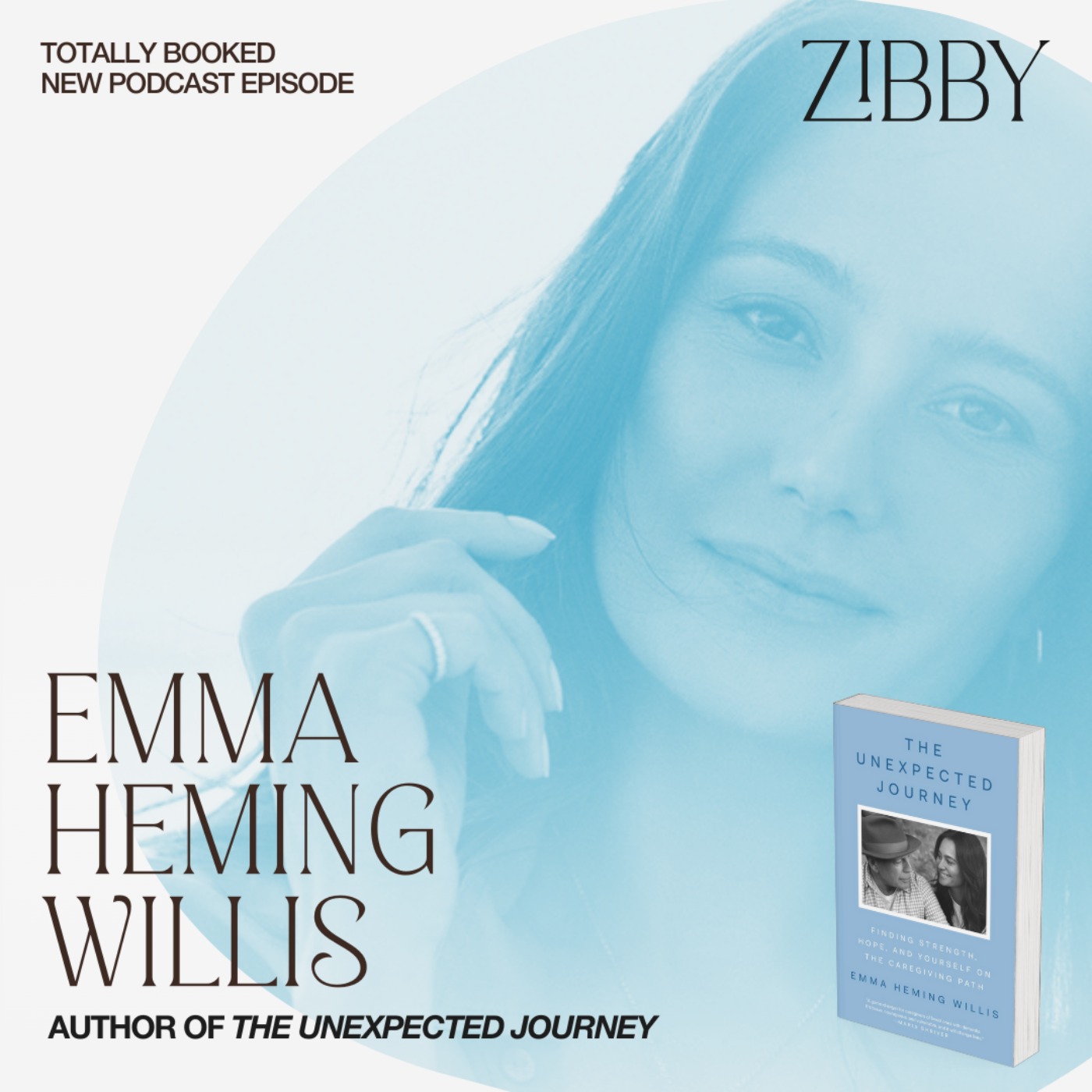
Totally Booked with Zibby
Emma Heming Willis, THE UNEXPECTED JOURNEY: Finding Strength, Hope, and Yourself on the Caregiving Path
00:31:22
Loading summary
Transcript124 lines
- [00:00]
Zibby Owens
Hi listeners, we have totally booked live.
- [00:03]
Coming up this fall and I hope.
- [00:05]
You'Ll be a part of it.
- [00:06]
We have three events in New York City, September 19th, 25th and 30th in New York where I'll be doing six.
- [00:12]
Interviews live each day. We also have a petite retreat in Greenwich on October 4th. Go to zibbemedia.com and event or and.
- [00:21]
Or eventbrite and search the events and please come. I can't wait to meet you in person. Foreign.
- [00:31]
Kim Holderness
Hi, this is Kim and Penn Holderness from the Laugh Lines Podcast. Boost Mobile offers the same nationwide coverage, network, speed and service consumers are used to, but at more affordable prices. Why pay more if you don't have to?
- [00:44]
Penn Holderness
Boost Mobile offering reliable nationwide coverage backed by a 30 day money back guarantee. Love your service or get your money back, no questions asked.
- [00:52]
Kim Holderness
While other carriers blow millions on super bowl ads, we put that money to work for you, delivering reliable 99 nationwide coverage at affordable prices.
- [01:02]
Penn Holderness
Start saving on wireless today with Boost Mobile's Unlimited plans. Starting at just 25amonth, the Boost Mobile.
- [01:09]
Kim Holderness
Network, together with their Roaming partners cover 99% of the US population. 5G speeds not available in all areas.
- [01:17]
Penn Holderness
Visit your nearest Boost Mobile store. Find us online@boostmobile.com Customers who cancel within.
- [01:22]
Kim Holderness
30 days of activation will have Boost service fees refunded, activation fees if applicable, and phone payments will not be refunded.
- [01:32]
Capital One Announcer
If you love to travel, Capital One has a rewards credit card that's perfect for you. With the Capital One Venture X card, you earn unlimited double miles on everything you buy. Plus you get premium benefits at a collection of luxury hotels when you book on Capital One Travel. And with Venture X, you get access to over 1,000 airport lounges worldwide. Open up a world of travel possibilities with the Capital One VentureX card. What's in your wallet?
- [01:58]
Penn Holderness
Terms apply. Lounge access is subject to change. See capitalone.com for details.
- [02:05]
Zibby Owens
Today's episode is sponsored by the Foxed Page, a podcast and YouTube channel that dives deep into the very best books. It's basically your favorite college English class, but very relaxed and way more fun. No exams, no participation, and only books you really want to read. Kimberly Ford, best selling author, one time professor and PhD in literature, offers up entertaining, often funny talks that will leave you feeling inspired and a little smarter. She digs right into everything from J.D. salinger to Miranda July, from Demon Copperhead to Madame Bovary, from Pride and Prejudice to Lessons in Chemistry. The talks on individual books are the heart of the podcast, but enriched read segments tackle ideas like unreliable narrators, while Old Favorite talks treat you to a fresh adult look at childhood gems like Harriet the Spy and Are you there God? It's me, Margaret. Want to get the most out of what you read and be entertained along the way? The Fox page is for you.
- [03:03]
Hi, this is Zibby Owens and you're listening to Totally Booked with Zibby, formerly Moms don't have time to Read books. In my daily show, I interview today's.
- [03:13]
Latest best selling, buzziest or underrated authors.
- [03:17]
And story creators whose work I think is worth your time. As a bookstore owner, publisher, author, and obviously podcaster, I get a comprehensive look at everything that's coming out and spend my time curating the best books so you don't have to stay in the know, get insider insights and connect with guests like I do every single day. For more information, go to zibbymedia.com and.
- [03:41]
Follow me on Instagram ibbeowens.
- [03:47]
Emma Heming Willis is the author of the Unexpected Finding Strength, Hope, and Yourself on the Caregiving Path. Emma and I recorded this in person, which was super fun. Emma Hemming Willis is a mother, stepmother, wife, advocate, and co founder of Make Time Wellness, a brand devoted to women's brain health. After her husband, Bruce Willis, was diagnosed with frontotemporal dementia, she became a passionate voice for care partners and families navigating neurodegenerative disease. Through her storytelling and advocacy, Emma hopes to help others feel less alone on the caregiving journey. This is her first book.
- [04:21]
Welcome Emma.
- [04:22]
Thank you so much for coming on Totally Booked to talk about the unexpected journey finding strength, hope, and yourself on the caregiving path. And it's your pub day. So congratulations.
- [04:30]
Emma Heming Willis
It's my pub day. Thank you so much. Thank you for having me on. And it's my pub day.
- [04:34]
Zibby Owens
Yay. You've had quite a pub day. This is like not the normal pub day going on all the shows all around. How has that been for you?
- [04:41]
Emma Heming Willis
It's definitely been a whirlwind, but I'm so. I'm just so grateful for the interest in this book because I just feel like it's such an important topic. So I am thrilled that, you know, with just the rollout of this whole thing and I just want to get in as many hands as possible.
- [05:00]
Zibby Owens
I think you're going to accomplish that. I have no fear. But the mission of your book is so giving and you can tell from the way you tell about your love affair with Bruce Willis and you're giving back and your mothering and all of that, that you could do this from such a good place, and that's not always the case. So this authenticity is just, it's so amazing.
- [05:20]
Emma Heming Willis
Oh, thank you so much. Thank you. It hasn't been an easy journey, but, you know, when you are navigating this, this, you know, journey with someone who has dementia and it's someone that you love, you just want to just wrap your arms around them and just care for them as best as.
- [05:38]
Zibby Owens
So one of my favorite parts of your story, and your story is very public, that Bruce Willis has frontotemporal dementia.
- [05:45]
Emma Heming Willis
You can call it ftd. It's ftd. It doesn't roll off the top.
- [05:48]
Zibby Owens
And you have become an unexpected caregiver for a life that was not what you had planned. Nobody plans this, of course. And you've had to adapt in so many ways and you've become a spokesperson on top of everything else, as if you didn't have enough on your foot. I mean, my gosh, you're like a glutton for punishment. But you have one scene where you've just spoken at a conference and you go backstage and you're like, this is so hard. And you just cried with some other woman, I think. Tracy. Yeah, tell me about that. And just the pressure on all sides.
- [06:22]
Emma Heming Willis
Yeah, I had gone to this FTD conference, this research conference with scientists and clinicians, and this was in Amsterdam and there was, you know, 750 people in attendance. And this, this event happens every two years. And what's so great about it is that it brings together all these researchers to just share sort of new findings in ftd because, you know, there, there hasn't been a lot, but I flown out to this event to be able to be there. I was a keynote speaker, I was on a panel, and I was participating in the Caregivers Day just to be there with other caregivers. And it's a four day event, it's a lot. And I just remember on the third day I went into, it was a breakout room and this really incredible advocate, her name is Katie Brandt, was just giving this really incredible presentation and she was speaking to new FTD caregivers. And I just remember being in that room, I was sitting in the back and I was just watching these new caregivers just hanging on to every single word that Katie was saying and just writing down note after note after note because those early stages of FTD are so complicated and they are so hard. And I walked out of there just sobbing. And I met with another researcher, Tracy, and she was like how are you doing? And I just completely broke down and that was actually the end of my. I was supposed to stay one extra day and I was like, I just can't do it. I think I've reached my max. And that was what that scene in the book was, was that it just becomes, it does become heavy. And I am navigating this in real time and you know, I'm trying to advocate and learn how to do that, but I also have to like make space for myself because I am human, you know, having a very human experience and just trying to just be mindful and, you know, just care for myself a little more. That maybe four days is maybe too much, but maybe now I know I can do two days. And, you know, you just kind of learn to sort of know what your bandwidth is.
- [08:42]
Zibby Owens
Well, throughout the book you talk about taking care of yourself is one of the main priorities. In fact, that's one of the goals of the book, is to encourage caregivers to, to make time for them, eat right, do the things that they will, survive longer and be able to care for the people that they love. So I feel like that is such a good example of you just walking the walk, which is really great.
- [09:04]
Emma Heming Willis
Yeah, I mean, you just have to sort of see what your limits are and you don't know until you know. But yeah, that is like the main theme of this book about, you know, caregivers realizing that if they don't care for themselves, that it is going to be really hard to continue to care for their person the way they want to and to be able to sustain the journey. So I didn't know that early on, you know, I wasn't, I definitely wasn't caring for myself. I was putting my husband's needs above mine, our children's needs. I mean, that's also what we do as women, right? Like, and I had spoken to Bruce's neurologist and he had told me about this statistic of caregivers passing before their loved ones. And that really just shook me to my core because I had never heard that before and it was my wake up call. So my hope is that in this book there are a couple of wake up calls to caregivers so that they really can learn that caring for themselves isn't selfish, but it's self preserving.
- [10:09]
Zibby Owens
I love that. And actually your kids became advocates for this as well, which I loved. And you wrote about this. There was one moment, let me just get it right, where one of your daughters said, mom, you have to get out and touch the grass, which I just loved. And that you also say. You said, you know, sometimes you feel badly about parenting through this crisis. Of course. How does anybody know? And you said, I also let the girls know. Is it okay if I read from this? I also let the girls know that I've never been a parent before. And the scenarios and situations I'm navigating as a parent and caregiver are all new. I feel like I'm making it all up as I go. That allows them to understand that I am human and I'm not on some parental pedestal.
- [10:49]
Emma Heming Willis
So.
- [10:49]
Zibby Owens
So I don't have that far to fall.
- [10:51]
Emma Heming Willis
Yeah, that's true.
- [10:52]
Zibby Owens
I love that.
- [10:52]
Emma Heming Willis
That's true. Yeah. No, my girls can see when I am wound tight. And that was Evelyn, who was like, mom, please just get out and touch some grass. Like, you need to get outside. And I'm like, no, you're right. You're absolutely. And you need to be sometimes reminded, unfortunately. So it was by my 11 year old, but it was a healthy. It was a healthy reminder. But, yeah, I mean, they are doing the best they can in an impossible situation. And, you know, I have a chapter in there about parenting while caregiving, and I really love that chapter because it was an expert that I had worked with who helped me to just learn how to communicate with our daughters and be able to, you know, bring them through in just the healthiest way. And, you know, she really breaks things down so well about, you know, when you tell them about a diagnosis, you wait for. For the questions that they might ask, and, you know, you know your child better than anyone, but, you know, then you sort of can. The point is, is that it's important to be honest. And I think sometimes, you know, my thought was like, I'm gonna lie. I'm not gonna say the whole truth. I'm gonna try and figure. But that's actually not the way to do it. It's important to be able to be honest with them. So I really love that chapter because I just think it really. The expert in there who helped me so much just really laid it out in such a. A beautiful and understandable way.
- [12:18]
Zibby Owens
Well, often when people talk about the sandwich generation, they don't talk about moms with young kids at home and preteens and going through all of that. I mean, I have four kids, and that's hard without caretaking for anybody else. So the added stress of that is just a lot. And you give really great advice also at the end about what to say to kids and how to help Someone through this, which is I thought was wonderful and a bit counterintuitive. You say, don't say you've got this. It can feel dismissive because honestly, I.
- [12:51]
Don'T always feel like I do.
- [12:52]
Instead, what truly helps is hearing I'm here for you no matter what. You're not alone in this. And I know this isn't easy, but you're showing up with so much strength and love. So that was advice to friends, but I think it applies everywhere.
- [13:05]
They don't.
- [13:06]
You don't got it. Nobody. Nobody has it. And you don't have to have that sort of false encouragement, like, meet people where they are.
- [13:13]
Emma Heming Willis
Yeah. And especially as caregivers, I mean, I think that we're also just like, thrusted into this role with no, no knowledge. I mean, I. For me, I didn't. I didn't know anything about caregiving, let alone dementia. So you are really just kind of learning on the fly. And sometimes I don't know if I have it. I still don't know if I have it because things are constantly shifting and changing. So, you know, even though that was for family and friends. Yes. You want your friends just to be supportive and encouraging. I think that's so important while you're going through it.
- [13:48]
Zibby Owens
Wow. And you have, of course, this added stress of being in a public family, having to talk about it, not having to. Making the decision to talk about it, finding community, which you also talk a lot about in the book, which is beautiful, and how important it is for people to be on your side and. And know what's going on with you. But you face scrutiny in every action. And even in the book, you're like, maybe I shouldn't say this. I'm going to get in trouble for this. And then I saw you on GMAI being like, I knew I was going to get in trouble for talking about this.
- [14:16]
Emma Heming Willis
And I was like, oh, she knew. She found that. No, I already knew. I mean, I knew by putting some of the information into the book that, you know, I was going to get judged. But it's okay. I think these are happening in families all the time where we have to make these really difficult decisions. And, you know, caregivers get judged. They really do. And I think just seeing how some of what, you know, we've put out there as a family to then see just, like, the scrutiny or judgment or whatever, I just think it's an interesting kind of, like, social experiment. Right. Where you can just see that if we're being judged for doing something that was right and safe, you know, for our. For our family. You know, imagine what it's like for others who are doing it too, as well, and just trying to. Just making the best decisions that they can. But caregivers, at the end of the day, they do get judged, and it's so sad because we're already judging ourselves. We're already hard on ourselves as caregivers, so it's really hard to hear it from others, too.
- [15:26]
Zibby Owens
Well, I like that you can own your decisions and be a model of doing what's right for you and your family, because it is hard. No one knows what they'll do under stress.
- [15:35]
Emma Heming Willis
Yeah.
- [15:35]
Zibby Owens
You talk a lot about loss because this is such a complicated thing to deal with. We're not good as people dealing with grief as it is. And as you say in the book, it's really an ambiguous loss where he's slipping away and it's not. He's there. And you debate sort of with. I think it was with. Who was it Patty.
- [15:58]
Emma Heming Willis
Oh, Dr. Pauline Boss, who coined the term ambiguous loss.
- [16:02]
Zibby Owens
Yes.
- [16:03]
Emma Heming Willis
Yeah.
- [16:03]
Zibby Owens
So talk a little bit about that. How do you cope with the grief itself? Right. You have the caretaking, you have the grief, you have the parenting. But this is something that you have to sort of come to terms with and you have to mourn the life you thought you were going to have.
- [16:17]
Emma Heming Willis
Yeah, I mean, you know, I feel like I'm consistently grieving. It's not that you grieve and you continue to move on. It's a process. And I feel like what's been so helpful for me is being able to talk about it, being able to connect with another person who's been on this journey, who understands what ambiguous loss is, to just understand just how tragic dementia is and what it takes from you and your person and your life. So being able to talk about the grief, I think is really important for people that it's so easy to want to just keep it inside. But what I tell my children, it's better out than in. It's really important to just to be open and to be. That's how you start to kind of process, you know, you start to kind of process the grief, which is forever changing.
- [17:09]
Zibby Owens
Yeah.
- [17:10]
Emma Heming Willis
I'm so sorry. Thank you.
- [17:13]
Zibby Owens
What. What do you miss the most about the old version of Bruce?
- [17:17]
Emma Heming Willis
You know, he's my best friend. You know, he. There's so much I just. You know, we were homebodies. We loved to lay in bed, watch movies, go for walks. We were. We just loved each other's company, you know, And I, and I just miss that. Like, I miss him and the companionship and our conversations and how funny, you know, just how funny and quick witted he was. There's. There's a lot. There's a lot to miss. There's a lot to miss. But, you know, we're in a new phase of our lives and it's not that it's okay, but there's still joy in our life. You know, it just looks different than it did before. And getting a diagnosis of dementia is terrible. It's like the worst of the worst. But I think it's also important for people to know that there is. There is still laughter and there is still joy and there are still new, beautiful memories to create. And that has really been what we do with Bruce today.
- [18:23]
Zibby Owens
You had this one moment where your alarm went off and you couldn't remember the alarm code and you went downstairs to turn it off and you're like, why is he not getting up? And then you were like, oh, so this is what it's going to be like, he's not going to be. I know it's like sort of a funny example, but also just the little things in life are all changed.
- [18:41]
Emma Heming Willis
Everything, everything, everything that you've been used to. I mean, Bruce was the one that kind of ran our whole house and did the things and organized all the stuff. And then slowly I realized, like, no, Wes is. It's my turn. Like, it's my turn to step in and, you know, run. Run the ship of our lives, which was, you know, a very, very different. But you know what, you realize that you're a lot more capable than you think. You know, I think it's important to not sell ourselves short. I think that there we can handle a lot that comes our way. And I've really seen that. You know, it's something I think that caregivers should be proud of because they take on so much and they have to change their whole angle of their life now to fit this new world that they're in. And I think that they. It's. It's just not something to gloss over. I think it's really important to realize that we are definitely stronger than we think.
- [19:38]
Zibby Owens
Well, you had advice to your kids, but I think it applies to you and really to anybody. It's great advice, but your kids have gotten the cards they've been dealt and they will learn how to play them.
- [19:49]
Emma Heming Willis
And they will learn how to play them.
- [19:50]
Zibby Owens
It's simple. But it's so good. It's like, yes, this is what's in front of us. And they will adapt and you will adapt and we all somehow find our way through this mess.
- [19:59]
Emma Heming Willis
No, we do. And that's one of the things that, like, I had heard over and over again, which just used to annoy me. No. Kids are so, so. They're so resilient. And I'm like, oh, but I don't know that if you understand this situation that we're in, I don't know if they'll, you know, bounce back from this. But you know what? Kids are really resilient. And us as adults and humans are actually really resilient. You know, there are things that you think that you're not going to be able to get through, and we do. And, you know, we find a way just to continue to put one foot in front of the other. And I think that's incredible.
- [20:31]
Zibby Owens
It is incredible.
- [20:32]
Today's episode is sponsored by Wayfair. The weather is finally cooling down and the days are getting shorter, so it makes me want to make my home spaces even cozier. And Wayfair is the place to go as your trusted destination for all things home. Wayfair has everything you need to comfy up your space this fall, from recliners to warm bedding and autumn decor. Wayfair even has espresso makers so you can make that latte at home. You know the one. I recently got an amazing carpet from Wayfair which makes our dining room feel like a whole new spot. Super cozy and ready for fall. My decor style is pretty classic and simple and Wayfair has everything that I need. Plus things come so quickly, which feeds into my instant gratification. So head to Wayfair for bedding and bath basics like cozy throw blankets, which.
- [21:27]
I also have from Wayfair autumn themed.
- [21:29]
Throw pillows, and all those seasonal decor items like pumpkins and warm colors and even some storage for everything you need. So there is something for every style and every home, no matter your space or budget. Wayfair makes it easy to tackle your home goals with room ideas and curated collections. Plus free and easy delivery, even on the big stuff. No more huge delivery fees for furniture and no need to shop at multiple stores. You can get it all in one place. So cozify your space with Wayfair's curated collection of easy, affordable fall updates. From comfy recliners to cozy bedding and autumn decor. Find it all for way less@wayfair.com that's W-A-Y-F-A-I-R.com Wayfair Every style, every home. Today's episode has been sponsored by Live It Up Super Greens Moms. You do everything for everyone else and somehow your own wellness always gets bumped to the bottom of the list. That's where Live It Up Super Greens comes in. It's a daily habit that actually works. No hassle, no fuss, just scoop, mix and go. Whether you're tackling school, drop off, conference calls, Zooms or the laundry mountain, this is one easy win that supports digestion, energy and immune health in just 30 seconds. Live it Up Super Greens is an all natural blend of over 20 superfoods formulated with organic vegetables, probiotics, digestive enzymes and naturally derived ingredients. Just one scoop a day can promote gut health, support your immune system and give you the feel good energy you can count on. It's designed by nutritionists third party, tested for purity and made to be easy on your stomach. No grassy taste or chalky texture. Mix it with water, milk or a smoothie and make it a healthy habit you'll look forward to. You'd never believe a green drink tastes so good if you haven't mixed Super Greens into your routine, Live it up is a must. Add it tastes so much better than the others and it's way more affordable. Live It Up Super Greens offers premium quality without the premium price. It's one of the most affordable ways to support your health daily. And by the way, it is absolutely delicious. I love it. Easy to clean up, easy to use, and amazing. Live it up has become a quick and easy way for me to stay on top of my health. So Live it up is offering you 15% off your first order, including subscriptions with Code Booked. Shipping is always free. Head to letsliveitup.com booked and use code booked for 15% off your first Super Greens order. These statements have not been evaluated by the fda. This product is not intended to diagnose, treat, cure or prevent any disease. Today's episode is sponsored by Quince. Fall is in full swing and it is the perfect time to refresh your wardrobe with pieces that feel as good as they look. Luckily, Quince makes it easy to look polished, save warm and save big without compromising on quality. Quince has all the elevated essentials for fall. Think 100% Mongolian cashmere from $50 washable silk tops and skirts and perfectly tailored denim, all at prices that feel too good to be true. I'm eyeing their wool coats. They look designer level but cost a fraction of the price and the quality just as good, if not better. By partnering directly with Ethical top tier factories and cutting out the middlemen. Quince cuts out the middlemen to deliver luxury quality pieces at half the price of similar brands. It's the kind of wardrobe upgrade that feels smart, stylish and effortless. Quince's sweaters have become staples in my wardrobe. They are reliable and beautiful and I just get excited every time a Quince package arrives. Quince has really become a one stop shop. So keep it classic and cozy this fall with long lasting staples from quince. Go to quince.comzybee for free shipping on your order and 365 day returns. That's quince.com Zivi to get free shipping and 365 day returns. Quince.com Zivi you wrote about the beginning.
- [25:36]
Of your relationship and how you were kind of standoffish. Not standoffish, that sounds bad. But you were like not so into the whole thing. And you kept saying no. And he was like quite persistent, almost in like too persistent way.
- [25:51]
Emma Heming Willis
Yeah, he's very confident. Very confident, Bruce. Yeah.
- [25:54]
Zibby Owens
And he was like, I'm going to marry her. And you're like, I don't even want to go out on a date with you. Like, good luck. Good luck with that.
- [26:00]
Emma Heming Willis
It took a while, it took a while to kind of get us to our first date. Like a couple of years actually. But I'm happy I went on that date with him.
- [26:08]
Zibby Owens
Yeah. Do you ever look back, knowing where life has taken you now and think like, you would have done anything differently?
- [26:15]
Emma Heming Willis
No, absolutely not. I wouldn't change a thing. I really wouldn't change a thing. I would change his diagnosis if I could. That would be something. But no, I mean, life is, you know, life has played out the way it's, it is playing out. And I'm just trying to figure it out in real time, I guess.
- [26:37]
Zibby Owens
So in addition to being an advocate and trying to raise money and do all these things to cure this and raising your kids and all that, now you've added a book, which is a huge deal in and of itself. It's like, what else? I'm like, what else is coming? So how did you fit in writing a book? Why did you decide to do this? Why now at this stage? Like, what was compelling you to do this?
- [27:02]
Emma Heming Willis
I mean, I realized that when we walked out of our diagnosis appointment, we left with nothing. You know, we didn't leave with a roadmap. We didn't leave with a piece of paper with some kind of like, here, you should call this person that one. That nothing and, you know, over time, I was able to put these experts and specialists around our family because we. I had some time to be able to do it. I had some resources and access, you know, and there's many caregivers out there that do not have that. And I realized that I was like, there's just so much incredible, like, wisdom and insightful information that I was gaining from these experts that I had. And, you know, I had to dig so deep for that. It wasn't like it was just there. It was that I really had to go and. And find it. And I knew I was holding on to something that was really valuable. And I knew I wanted to put it into a book and be able to share it with the next caregiver, because caregivers are not supported. I mean, they just are not. And I know that because I've been there and I've seen it, and I've seen. I see what that looks like. So this was just a way for me to be able to pay it forward. And I have to say, like, that book wrote itself. I knew. I knew what I wanted to say. I knew my experts. I knew how valuable the things that they were teaching me. And I just. I hate to say it. It wasn't a hard thing to write. Does that sound crazy?
- [28:29]
Zibby Owens
Okay.
- [28:30]
Emma Heming Willis
Does that sound crazy?
- [28:31]
Zibby Owens
It really.
- [28:32]
Emma Heming Willis
No part in that process of putting that book together was it difficult. Like, it just flowed.
- [28:39]
Zibby Owens
And now that you're doing all this publicity and you're gonna have to do all this stuff for the book, you don't ever feel like, why did I step into that?
- [28:47]
I literally say that all the time.
- [28:48]
Emma Heming Willis
I'm like, what have I gotten myself into? I literally just wanted to write a book, a roadmap that would help someone. Someone else. I didn't realize that there was a whole song and dance that goes along with it. I was like, no, the book will just let it come out and, like, let it speak for itself and, you know, it'll do what it's going to do. No, I didn't realize that that's not what you do. So anytime I'm about to go do something, I'm like, what have I gotten myself into? Because public speaking is just so hard for me. It's not my favorite thing. But I just realized that this. I just have to. Bruce would always tell me, emma, you gotta get out of your own way. And this is me getting out of my own way, because I know that this book will help someone else, because it has helped me. I still refer to It, I'm still looking in it. I'll open it up and be like, oh yeah, I should need to revisit that. I haven't been doing that. I need to, you know, I need these constant reminders as well.
- [29:42]
Zibby Owens
Well, you do pack in so much great information and self care, care for others. You have little worksheets. I mean, it's quite a user friendly guide for people who are probably already just so frayed and don't have the bandwidth for a lot. And you wrote it in such an accessible way that it, it just felt like someone was reaching out of hand.
- [30:03]
Emma Heming Willis
I feel like caregivers are like, they're so fatigued, right? Like, and I felt like it was important for me to be able just to tell them some things so that they don't have to like figure it all out all the time. Because sometimes that's all I want. I'm like, can someone please just tell me what to do? Like, I'm sick of making the decision. So I wanted just to be able to kind of take that decision making away from the caregiver so that it's there so they can just refer to it and be like, oh, okay, this is what I should do, or this is how I should ask, or this is how I get support or whatever that might be. I just wanted to make it accessible, tangible, actionable.
- [30:42]
Zibby Owens
And in terms of making decisions, I know every so often there are clips of your family together or your blended family or whatever. How do you decide what to post? I know this is sort of quite specific question, but as somebody who's like on social media all the time thinking about this, how do you decide like what's okay to post about Bruce now versus before? What would he want? What are like, who decides that? Who's in charge of that?
- [31:08]
Emma Heming Willis
I think it's whoever posts. You know, it's very hard to. I think we all have our own ideas. I have mine and everyone else has theirs.
- [31:17]
Zibby Owens
And what are yours?
- [31:20]
Emma Heming Willis
What are mine? You know, I think I just always want my husband to look great. You know, I think for me what's important right now, it's really about this book and it's really about caring for the caregiver. And you know, obviously the story comes from Bruce, you know, that is how I am here. But again, like, I think it's even bigger than him or me. I mean this is like a caregiving journey that is happening to 63 million caregivers in, you know, the United States, 11 million of which are caregivers. To someone with Dementia. And I just try to take the focus as much as I can away from him just to be able to be like what this book is and what this book isn't. This book is not a memoir. It is not a tell all. It's a book that hopefully people will see parts of my story and be able to connect to it, but also be able to find the support that they need to be able to sustain the journey.
- [32:23]
Zibby Owens
That was a very good pivot away from that specific question. You're very good.
- [32:28]
Emma Heming Willis
You're the first one to ask me that. It's a hard question to. It's a hard question to answer. Yeah, that was a good pivot though.
- [32:35]
Zibby Owens
That was a good pivot. You're not going to put this out, right? I don't know. I don't know. That was my favorite part. So when you think about your next part of life with the craziness of the book and everything else, like how. Give me an example. How are you taking care of you? I know there are things here and you're like meditate sometimes and do this and go for walks and exercise and all that. But like on a day like today, like what are you going to do? Just collapse? You watch tv, like what is your, what are some of your guilty pleasures when you're fried?
- [33:06]
Emma Heming Willis
Oh, guilty. But you know, watching just some tv, putting on Netflix, getting into bed with like a snack, that's like a guilty pleasure I think for me. Yeah, I like, it just depends. For me right now my self care is as crazy as this sounds, is advocating is raising awareness. For me, that is sort of what really like gives me hope. It really kind of changes this dark narrative that I also have in my head too. It helps. It just steers me away from that so I can also have purpose and meaning in my life, which wasn't there. It didn't feel like it was there for a long time when Bruce was diagnosed. So right now, like I'm going into these room now with other caregivers, I'm able to connect with them. And that for me is just like, that is my self care. It's like connection. I lived in isolation for so long, there was so many smoke and mirrors that I was putting up to try and, you know, protect Bruce and our family. And I'm like, I'm over it. Yeah, I'm over it.
- [34:09]
Zibby Owens
So you had such a good line about that. You said we are only as sick as our secrets.
- [34:14]
Emma Heming Willis
Yeah, I love that that's true. You know, I think it's just been so freeing to be able just to be in our. In our truth of what is. And that helps me too. Like, it. It is. It. It is so helpful and. And important for me to also have a community. You know, it's. It's okay for me to be able to share my story, even though it might be. People might judge me, criticize or whatever, but there is also so much love and support out there as well. So that is who I'm speaking to. Those are the connections that I'm making. That is how I'm caring for myself now in this journey versus where I was before, which was dark, dark place.
- [35:02]
Zibby Owens
And just. I don't want to keep you for too long. I'm sure you're so tired, but you talked about taking your girls to Japan and how you flashed back a little bit to when you were on the plane when you were young.
- [35:13]
Emma Heming Willis
Yeah.
- [35:14]
Zibby Owens
And you watched Armageddon and bald watching your future husband. Little did you know.
- [35:19]
Emma Heming Willis
I know.
- [35:19]
Zibby Owens
And then you came back again with them. Just like, talk about that full circle moment.
- [35:23]
Emma Heming Willis
Yeah. So when I was one of my first modeling, like, my bigger modeling jobs was a contract that I got to go to Japan for a month. And like, those were the times where you would be on a plane. It was an economy. And, like, remember, we all shared, like, one television, like, in the aisle. So you'd all put your little things on, and, like, everyone's watching the same movie, like, up in the aisle. Anyway, so Armageddon was on. And I remember just, like, being so into this movie and crying, and everyone's crying next to you on the movie, watching this whole thing. And I was going to Japan, and then, you know, that was just one of my favorite places. And Bruce and I said, you know, one day we're going to take the kids back. We're going to go. He loved Japan. We were going to. We had this whole idea of where we would go, the things that we would do. And that was a trip that the girls and I did last year. And, you know, it was like a. It was a beautiful trip. It's not. Wasn't the trip that it was supposed to be. We were supposed to have Bruce there with us. But I was able to take the girls. They love. You know, they love being in Japan. They're of the age now where they can, like, appreciate the culture and the food. And so it was a reimagined trip, a different type of trip, but it was still important. And I have a photo album that I made. You know, I pulled those pictures off the cloud and, like, put them into a photo album of, you know, like, special places and things that I'm doing with the girls that, you know, was supposed to be with Bruce. But this is the world that we are navigating right now.
- [36:58]
Zibby Owens
Is there anything you would say to yourself sitting there watching the big screen on the plane? Any advice you'd give to her?
- [37:05]
Emma Heming Willis
Just have some grace, you know, like, just that you're going to be okay. You know, I move through the world in so much fear and anxiety and, you know, just embrace life, have fun. You know, life is so. Can just goes by in a blink of an eye, and things can. Can change so quickly. So I just think that I'm just trying to, like, enjoy things more, like taking these trips with the girls. It's so easy for us to just say, like, oh, we'll do it. We'll do it another time, or we'll do it next year, or we'll do it. No, I'm like, when we have the opportunity, we're going, we're going, we're traveling, we're whatever it might be. Because that's what Bruce would want. He would want us to just be in the world, experiencing the world and being able to show the girls the world is, you know, it's such a. Such a privilege, such a beautiful thing that I'm able to do with them.
- [38:04]
Zibby Owens
And what would he say to you today, seeing you in your element?
- [38:08]
Emma Heming Willis
He'd be so proud. I think he would be so proud. He was always my biggest cheerleader. Always trying to just, like, get me out there. And, you know, I think he'd be really proud of what I'm doing and how I'm using my voice because. Because he also believed in that, too. The importance of speaking for people that are unseen and to be able to do good. And I think he would be proud of that.
- [38:37]
Zibby Owens
I'm sure he would. I'm so glad you have so many in your circle who are so proud of you and now the entire world who gets to hear your story. So congratulations, and thanks for taking the time to help others when it's hard enough to take care of yourself, I'm sure. So this is such an act of generosity, and I hope it will come back to you in space.
- [38:55]
Emma Heming Willis
Thank you so much. I don't know how you just did this whole interview without any notes. How did you do that?
- [39:00]
Zibby Owens
I'm just that good. Thank you for coming on so much. Thank you. Thank you for listening to Totally Booked with Zibby, formerly Moms don't have time to read books. If you loved the show, tell a friend. Friend leave a review. Follow me on Instagram ippyowens and spread the word. Thanks so much. Oh, and buy the books.
- [39:29]
Tide Announcer
Did you know Tide has been upgraded to provide an even better clean in cold water? Tide is specifically designed to fight any stain you throw at it, even in cold butter.
- [39:40]
Emma Heming Willis
Yep.
- [39:41]
Tide Announcer
Chocolate ice cream.
- [39:42]
Zibby Owens
Sure thing.
- [39:43]
Tide Announcer
Barbecue sauce. Tide's got you covered. You don't need to use warm water. Additionally, Tide pods let you confidently fight tough stains with new coldzyme technology. Just remember, if it's gotta be clean, it's gotta be Tide.
- [39:58]
Penn Holderness
Ready to order?
- [39:59]
Zibby Owens
Yes. We're earning unlimited 3% cash back on dining and entertainment with a Capital One Saver Card. So let's just get one of everything.
- [40:06]
Emma Heming Willis
Everything.
- [40:07]
Penn Holderness
Fire everything. The Capital One Saver card is at table 27, and they're earning unlimited 3% cash back.
- [40:13]
Zibby Owens
Yes, Chef.
- [40:14]
Emma Heming Willis
This is so nice.
- [40:15]
Penn Holderness
Had a feeling you'd want 3% cash back on dessert.
- [40:18]
Emma Heming Willis
Ooh, tiramisu.
- [40:19]
Penn Holderness
Earn unlimited 3% cash back on dining and entertainment with the Capital One Savor card. Capital One what's in your wallet? Terms apply. See capitalone.com for details. Your sausage McMuffin with egg didn't change. Your receipt did. The sausage McMuffin with egg extra Value meal includes a hash brown and a small coffee for just $5. Only at McDonald's for a limited time. Prices and participation may vary.