Loading summary
Transcript132 lines
- [00:01]
Zibby Owens
If you love to travel, Capital One.
- [00:03]
Erin O. White
Has a rewards credit card that's perfect for you. With the Capital One Venture X card.
- [00:07]
Zibby Owens
You earn unlimited double miles on everything you buy.
- [00:10]
Erin O. White
Plus you get premium benefits at a collection of luxury hotels when you book on Capital One Travel. And with Venture X, you get access to over 1,000 airport lounges worldwide.
- [00:21]
Zibby Owens
Open up a world of travel possibilities with a Capital One Venture X card.
- [00:25]
Erin O. White
What's in your wallet? Terms apply. Lounge access is subject to change. See capitalone.com for details.
- [00:30]
Paige Desorbo
Hi, it's Paige Desorbo from Giggly Squad. You ever stand in front of your closet and just say I have nothing to wear while you're literally surrounded by clothes? Because same so I started listing pieces I'm over on Depop and honestly, it's been amazing. You can sell what you're done with and someone out there will love it. And the best part about it is there's no seller fee, so the money you make add actually stays in your pocket, which feels very chic. It's also insanely easy. I listed something while watching TV and it sold before the episode even ended. So download the Depop app and list your first item today because your old outfit could be someone else's new favorite. Depop where taste recognizes taste. Payment processing fees boosting fees still apply. For more info, visit depop.com Did I talk too much?
- [01:18]
Erin O. White
Can't I just let it go?
- [01:22]
Zibby Owens
Take a breath. You're not alone. Counseling helps you sort through the noise with qualified professionals. Get matched with a therapist online based on your unique needs, and get help with everyday struggles like anxiety or managing tough emotions. Visit betterhelp.com randompodcast for 10% off your first month of online therapy and let life feel better.
- [01:48]
Hi, this is Zibby Owens and you're listening to Totally Booked with Zibby. Formerly Moms don't have Time to Read Books in my daily show, I interview today's latest best selling buzziest or underrated authors and story creators whose work I think is worth your time. As a bookstore owner, publisher, author, and obviously podcaster, I get a comprehensive look at everything that's coming out and spend my time curating the best books so you don't have to stay in the know. Get insider insights and connect with guests like I do every single day. For more information, go to zibbymedia.com and follow me on Instagram. Ibbe Owens.
- [02:32]
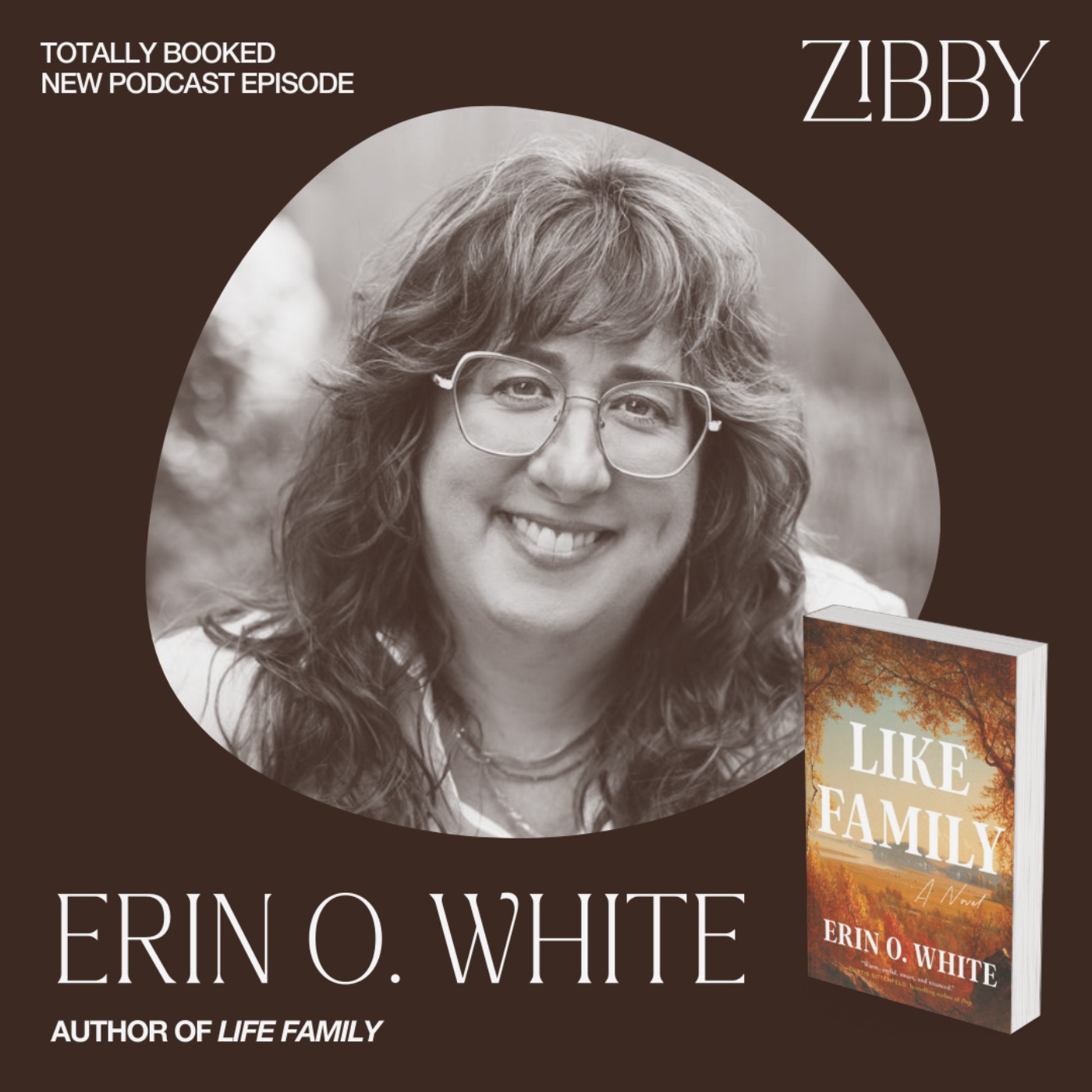
Erin O. White is the author of Like Family, a novel. By the way, this has already been picked as the Barnes and Noble Book Club Pick and also Sarah selects a 52 year old debut novelist. Aaron O. White is also an essayist and the author of the memoir Given up for your. After growing up in Colorado and living for 20 years in Western Massachusetts, she now lives with her wife and daughters in Minneapolis. By the way, I loved this book. Enjoy. Welcome, Erin. Thank you so much for coming on Totally Booked to talk about your absolutely beautiful novel, Like Family. Congratulations. I loved this book. You are a really gifted writer and I'm really excited about it.
- [03:12]
Erin O. White
Thank you so much. It's such a pleasure to be here and I'm so happy that you liked the book.
- [03:17]
Zibby Owens
I did. I really, really did. I felt like, like each chapter could just be a short story that you read in English class. And it's like fully contained and you're like. You get a sense of the character so fast and what they're thinking and feeling and all the little details. And, you know, even like the Bolognese scene when, when. When Caroline first meets Mike or something like that.
- [03:37]
Erin O. White
And.
- [03:38]
Zibby Owens
And you talk about how he was behind the bar and just like, filling. I know you said it better than me now I can't remember something like filling the garnish dish and you just, like, see it. That's all you need. That's only a couple words. Anyway. I feel like you do that in every scene that, like, immediately we get the picture. And I love that type of.
- [03:54]
Erin O. White
Thank you so much. Thank you.
- [03:56]
Zibby Owens
Okay, tell. Sorry for the rambling intro there. Tell everyone what Like Family is about.
- [04:01]
Erin O. White
It's not rambling at all. Like Family. Okay, so like Family is about three couples, sort of interconnected families who live in upstate New York. One of the couples has four kids and are married. They're married to have four kids and live on sort of like a gentleman, although it's actually a gentlewoman's farm a little bit outside of town. The other couple. So I should say also that two of the couples are lesbian couples and one of them is straight. The other lesbian couple is kind of like a cool business owning. They own a sort of like a viral bespoke pottery company in this town, and they have twins children. And then the last couple is a straight couple who've moved up from. Who've moved from Boston. And they have one child whose name is Luca. And the three couples moved sort of through the book, together and apart in their relationships and the way their families are intertwined.
- [04:58]
Zibby Owens
This is gonna sound crazy, but right before you, I interviewed a psychologist about this book, Love the Teen youn have. And she was talking about, like, identifying different things. And I was like, I need Luca to see Dr. Lockhart. Like, how can I. Could she help some fictional characters in my life right now, please? Because I feel like that would be really helpful.
- [05:21]
Erin O. White
He's a sweet boy.
- [05:23]
Zibby Owens
Oh, you had a line in there. Something like, there's no pain, like a child's loneliness or something. Oh, my God. That so got me. Oh, my gosh. You also had this other line about the role of souls and soulmates. And then you said something that I'd never heard before, something like how the soul is actually the only thing that does not need a mate. That you believe souls are fully formed and tell me more about that. I loved that.
- [05:53]
Erin O. White
You know, it's interesting. I think it's so interesting creating fiction because you can put so much of what you believe about the world, right. And about the cosmos into your characters lives. And then you can also sort of try on other ideas that maybe don't necessarily belong to you, but you feel like, belong to your character. So I feel like. And it's Caroline who says that, who doesn't believe that a soul has made it. And she's a very particular character in that she has. So she's extremely beautiful and sort of received by the world as this just like beauty. But she has a lot of sort of like, suspicions about how people really feel about her. And she is in some ways a bit of a fortress, which is why her friendship with the other. One of the other main characters, Ruth, is so profoundly important to her. And I think I sort of experienced her as a person who would want to own something essential about herself for herself. Does that make sense? Like, I really believe that she was a person who was like, I, even before I was a mother or a wife, I sort of was giving the world my sort of physicalness. Right. And I felt. And she probably felt like she belonged to people in various ways, but she's also quite a private person. So I was like, I bet she actually would think this.
- [07:11]
Zibby Owens
Yeah.
- [07:11]
Erin O. White
And it was a way for me to sort of illustrate her. But as also, like, also as having. And I really like to think about my characters in this way, as having a, you know, having a. Having a spiritual life that doesn't necessarily appear on the page, but of course infuses them right, as people and guides their thought processes and their motivations and is sort of their own private thing.
- [07:36]
Zibby Owens
Interesting.
- [07:37]
Erin O. White
So I think that's where I sort of got those musings for her. It's so fun to muse inside other people's Heads.
- [07:44]
Zibby Owens
Right. Nice to get out of our own.
- [07:46]
Erin O. White
Nice to get out of my own head.
- [07:50]
Zibby Owens
I also love the Jewish characters in the book and how you portrayed that not as a central driving force of the book, but just like a nice piece in the background with enough scattered about that it was meaningful but not overpowering.
- [08:04]
Erin O. White
Okay. I'm glad. I wanted to. Ruth, that character came to me so fully formed and I just knew that she was a Jewish person in a particular way. And I just wanted some of. I just wanted that to come through and the liveliness of her and her marriage and. And her. And also for Toby and for Evie.
- [08:21]
Zibby Owens
Yeah. And I love how you show different ways that sort of love and lust and passion and relationships evolve in different ways. I mean, that sounds like such an oversimplification, but the young, you know, rip our clothes off moments. The older, quieter. She just took off her towel and laid on her husband. Like, that's really. It's such a. It was such a nice arc, like a full circle how. How things evolve. And you treated it with such care.
- [08:52]
Erin O. White
Oh, thank you. I sort of think a little bit about the book is like a coming of middle age novel. Sort of the idea that like these people are just coming into early middle. So they're in their early 40s. And I think you hold so much of that. Those. I mean, you do your whole life, but you hold so much of those old passions. Right. And you have a memory of them and you're wondering about sort of like how your lives of desire and attraction will sort of follow you through middle age. But then you're also. You're also so embodied as a middle aged person. Right. In early middle age, if you've been married a long time, you said this super physical intimacy with the person you're married to. But it's so casual and so unspoken in so many ways. So I think that was part of what I was trying to do. Just like in that scene with Carolyn and Mike. Just like those are two bodies who have been together for so long. Right. And there's just that casualness about it, which is so great.
- [09:48]
Zibby Owens
Yeah. So nice. I guess I could have also given a referral to one of the other characters, to the doctor, now that I'm thinking about it. But what's her name? Starts with an S. Oh my gosh. I'm blanking on her name.
- [10:01]
Erin O. White
She's my teenager. That's right, Yes. I mean, my teenager in the book. She's not my real life teenager.
- [10:06]
Zibby Owens
Yes, I know Luca was a little bit younger But Cita gets some very surprising news early on. She is a typical acting out with teenager. Things evolve. You know, it leads up to this. This whole thing towards the end. Anyway, tell me a little bit about her as a character, about how we can better parent our teens. And like, what do you do when. When things in your past suddenly.
- [10:31]
Erin O. White
Yeah.
- [10:32]
Zibby Owens
Are things that your. Your kids need to confront as well.
- [10:35]
Erin O. White
Right. Yeah, it's. That's a. Yeah. Right. That's a huge question. I will actually just sort of share what it is because it's revealed on sort of page two of the book. So I'm not really giving anything away.
- [10:44]
Zibby Owens
I'm always very appreciative at all.
- [10:48]
Erin O. White
That's so much. I love the discretion. So Sid is a teenage in the book who finds out very early on in the book that.
- [10:56]
She was not conceived with an anonymous sperm donor like she thought she was, but that her mother had had an affair when she was very young. Not an affair outside of her marriage, but before she was married, had conceived Sita at the age of 23 and then had her, and then was estranged from the man she'd had Sita with. The man dies. That's happens in the early part of the book. And then Citade and her family are left to reckon with this secret that it's coming to come into life. It's a huge secret. And of course, I love the way that it works fictionally in my book. And I. And I think that it's interesting how in fiction you sometimes make things much bigger. Right. So that you can sort of make a point about. About an idea. And. And I think, you know, she's a kid who's just dealing with new information in a way that's just really painful. And it's also really beautiful because it's opening up these other new relationships with other people that she didn't know that she. But her parents are left really not knowing what to do because they've made a mistake. And isn't that so much of like, in a lot of ways, that's a lot of parenting teenagers, is you kind of don't always know what to do because oftentimes you have made a mistake. They haven't acted well necessarily. But maybe you have done something you wouldn't do if you had better information, because teenagehood is. I mean, it's the real deal.
- [12:15]
Zibby Owens
Yeah.
- [12:16]
Erin O. White
You know, it is just life coming at you fast with a person who's trying to figure out the world, and you're just kind of making it up as you Go along. And it's. And I have. And it's hard. My teenagers are older now, so I am through a lot of that.
- [12:33]
Zibby Owens
How old are they?
- [12:35]
Erin O. White
21 and 18. Okay. So, you know, but it is. It is. Every day is not an easy day, but, God, they're just. But also, you know, it's such a. It's a beautiful thing, too. I mean, I just. And that's a lot of what I wanted to capture is, like, you love a teenager in a way that is just really powerful and all of it, you know, their feelings are so big, but your feelings for them are really big, too. And I think we just don't always talk about that a lot. It's like, you know, you have an enormous amount of tenderness and love for them, especially as you come to that ending time of them living in your house.
- [13:12]
Zibby Owens
Yeah.
- [13:13]
Erin O. White
And then they're just all over the place figuring out the world. But, God, they're still so beautiful. Right.
- [13:19]
Zibby Owens
I have twin 18 year olds, so I get it. And younger kids. Yeah.
- [13:24]
Erin O. White
But, yeah, I mean, twin. So do you have twin 18 year old? Yeah, yeah, yeah. It's a lot.
- [13:32]
Zibby Owens
Yeah. We need, like, a support group.
- [13:36]
Anyway.
- [13:36]
Erin O. White
I mean, they're just amazing. And I was trying to imbue, sit up with a lot of what I just believe to be an amazing thing about being a teenage girl. It's just, you know.
- [13:45]
Zibby Owens
Yeah.
- [13:45]
Erin O. White
They hold a lot of life.
- [13:46]
Zibby Owens
Yeah. Well, you also. I mean, you have so many themes in here, but the female friendship also the like, almost like social competitiveness which you use is like, this Instagram couple is like a foil. And of course, early on you're just like, oh, they're just like normal people. Like, the whole Instagram thing's an act. Everything is an act. Like, not everything is an act. I don't know. But just like always wondering about other people. And that. That is not something that ends necessarily. Necessarily when you're 18. Right. That is.
- [14:15]
Erin O. White
Right. Right.
- [14:16]
Zibby Owens
It persists. And like the whole culture of perfectionism and, you know, not knowing what is true and what's not. I love how you sort of poke fun at that.
- [14:25]
Erin O. White
It is funny how it keeps going. Right. I mean, it's just like. Was it Woody Allen? Who. His name. We don't really say anymore, but Woody Allen, who said that, like, adulthood is just high school with money or something? Like, I think, you know, it really does. And I do. And I do think it also comes to a particular head in your late 30s, early 40s in a lot of ways, when you're still kind of really looking around at what other people have. You're sort of striving, you're wondering what you could still make happen. You're thinking about your life choices, all that kind of early, middle aged stuff. Whereas I feel like now at 50, 52, a lot of that has eased up for me just because of the crucible of these last 10 years where I've seen so many people, everybody experienced their own slew of life difficulties. And you look around and you realize, oh my God, like, all of us are in this together. But at the beginning of middle age, you're still like, I could maybe move this around, you know, I'm still maybe the captain of my own ship, you know, like, and there's a lot of still sort of like jealousy. And that's what I wanted to kind of capture in the book. But from my perspective of being older so that I could give them a lot of generosity and a lot of love. But I could also show them kind of in that sort of tortured, like, maybe I can still change this up way, which is, you know, sometimes a fool's errand.
- [15:47]
Zibby Owens
Yeah, true. Erin, take me to here in your life. When did you learn to write? When did you know you were a writer? Like, take me to the writing life. Today's episode has been sponsored by quints. When it comes to holiday gifting, I want to give things people really love. Beautiful, timeless pieces they will wear for years. So that's why I'm going with quince. From Mongolian cashmere sweaters to Italian wool coats, everything is premium quality at a price that actually makes sense. Quince has something for everyone. Soft cashmere sweaters for $50 that look and feel like designer pieces. Silk tops and skirts for dressing up, perfectly cut jeans for everyday wear and outerwear that actually keeps you warm. I've been wearing my new quince coat with this collar on social media, so you should be able to see me wearing it on Instagram. Iveowens. I love it and of course it would make a great gift. The Italian wool coats are also amazing standout pieces. Beautifully tailored, soft to the touch and crafted to last for the seasons. Every piece is made with premium materials from ethical, trusted factories and priced far below what other luxury brands charge. The craftsmanship really shows in every detail. The stitching, the fit, the drape, the it's elevated, timeless and made to wear on repeat. There are just so many options. I can totally see myself giving my friends one of their beautiful options, like a sweater or one of their coats for someone really special and as if that isn't enough, they also have stuff for home, bath, kitchen and travel. Come on, find gifts so good you'll want to keep them yourself with quince. Go to quince.com zibby for free shipping on your order and 365 day returns. Now available in Canada too. That's Q-U-I-C-E.com zivi to get free shipping and 365 day returns. Quinn's.com zivi.
- [17:50]
Today's episode is sponsored by Wayfair. Oh my gosh, the holidays have come up so quickly. My kids all have given me their wish lists, but I have so many other gifts to give and also I need to just spruce up my home and thanks to Wayfair, I have done that. I ended up just getting this adorable console table for our family room where I've put photos of my family and my late stepfather and a beautiful arrangement of flowers and it has really just changed my whole room around. It's making it perfect to celebrate the holidays all together with my home. And by the way, it came so quickly right when I needed it and was super easy to assemble. I am a huge fan of Wayfair and I've even posted a picture so you can check on Instagram to see this beautiful table that we have. And it was such a great value and has just every time I look at it I'm so excited. There's really something for every style in every home, no matter your budget. And Wayfair makes it so easy to tackle your home goals and your gift list all at the same time. Same time. So get last minute hosting essentials, gifts for all your loved ones and decor to celebrate the holidays. For way less. Head to Wayfair.com right now to shop all things home. That's W A Y-F-A-I-R.com Wayfair every style, every home.
- [19:13]
Today's episode is sponsored by Aura Frames. Okay, who else is looking for easy, thoughtful, fabulous gifts to give people that you love? I mean, who is not looking for that? Well, I have the answer for you. Aura Frames is the answer to every holiday gifting moment and you'll never have to struggle again to find the perfect gift. This is so personalized because you can load this digital frame with all photos of people you love, the recipient people they love. All you have to do to get unlimited free photos and videos is download the Aura app, connect to Wi Fi and you can preload photos before it ships. And you can keep adding photos from anywhere, anytime, and add a message before it arrives so you can share your videos all year long. And yet you're giving it right for the holidays. A gift box is included. Every frame comes beautifully packaged in a premium gift box with no price tag. So don't wait. Win the holidays now with Aura Frames for a limited time. Save on the perfect gift by visiting auraframes.com to get $35 off Aura Frames bestselling carver matte frames named number one by Wirecutter by using promo code zibby at checkout. That's a U R A frames.com promo code ZIBBY Z I V V Y. This deal is exclusive to listeners and frames sell out fast, so order yours now to get it in time for the holidays. Support the show by mentioning us at checkout. Terms and conditions apply. Now goodbye while I go fill another frame for a very lucky recipient in my family.
- [20:54]
Erin O. White
Okay, I. Well, it's, I mean to sort of like I've been a voracious reader since I was 4, 4 or 5 years old. Anything I get my hands on, read and read and read and read. Had a more scientific mind for many years. Worked a bunch of nonprofits in my early 20s, was living in Philadelphia and took. Was taking an LSAT class like through community ed at Penn, like, and then also signed up on a lark for a writing class that was sort of meeting next door. I was like, oh, isn't that funny? James Ron of the Rittenhouse Writers was running it. I was like, I think I'll do that too. And the LSAT class, I took the LSATs. But wow, that was boring.
- [21:36]
Zibby Owens
Contrary to what you might think about the lsat.
- [21:38]
Erin O. White
Yes, you might have. I was shocked.
- [21:40]
Zibby Owens
Yeah.
- [21:40]
Erin O. White
Because I hadn't really.
- [21:41]
Zibby Owens
Riveting as they sound. Yeah.
- [21:43]
Erin O. White
I would not read through the pamphlets all the way. Took the writing class, got pretty interested in it. Thought I would just, just ever shelved that law school thing just for a little while, but then really sort of just got into the writing, got my MFA and just sort of threw myself into it rather kind of foolishly without much of a plan. But then I ended up defending my thesis. Right. Just a couple months before I had my first kid. And so then I just moved into parenting and doing a lot of nonfiction writing, a lot of ghost writing, a lot of editing, various things like that. I wrote a memoir that was published in 20, and then I turned back to fiction and just played around with a whole bunch of things and then started this book, I think in 2021 or something. And then just kind of got to it. And you know how sometimes there is that saying that people say, just like, write the book that you want to read. And I think it was. I had sort of just even given myself just kind of like the permission to just write something super fun. I'm a true lover of domestic novels, domestic fiction. Lori Colin is my. Just my North Star. I love Mary Gordon, Sue Miller. All those old books gave me so much comfort, and I love them so much. And I wanted to write. I really wanted to write a queer domestic novel. I really wanted to create an American domestic scene that was populated by lesbians. And I didn't know if it would work and I didn't know if anyone would want it, but it did, it did work. And I had a ball writing it.
- [23:14]
Zibby Owens
Oh, my gosh, that's amazing. So when you finally finish it. I mean, not finally. Not to imply it took too long or anything like that.
- [23:22]
Erin O. White
No, no, no.
- [23:22]
Zibby Owens
It's just what happens with novels. How was the publishing acquisition journey and all that?
- [23:30]
Erin O. White
So that was very. I mean, extremely lucky and very straightforward for me. So Claudia Ballard took me on as. And was a grand champion of the book. And she's my agent. She did some revision work with me, which was fantastic. And then after a couple of months, she sent it out to some sort of people that she had had in mind for it. And I had a lot of great interest, which was wonderful. And it was. But. And my editor was Whitney Frick at Dial.
- [24:03]
Zibby Owens
Of course, everything Dial Press does, I like, love. It's, like, getting embarrassing. I like.
- [24:08]
Erin O. White
Right, Whitney.
- [24:09]
Zibby Owens
Thank you notes. I'm like, I'm serious. I like.
- [24:12]
Erin O. White
Anyway, I. And it was funny because I had a bunch of, you know, I had a bunch of meetings with wonderful editors and wonderful people. And Whitney is, you know, she's just. She's really one in a million. She's an extraordinary person. And as I said to her, I was like, I will just be happy if I get to write books for you, Whitney, till, you know, the rest of my life. She's a really gifted editor and a really beautiful person.
- [24:34]
Zibby Owens
So nice.
- [24:36]
Erin O. White
It's been great.
- [24:37]
Zibby Owens
Good. I'm so glad. I have to go back now and read your memoir. Tell me about it.
- [24:41]
Erin O. White
Oh, okay. So my memoir is a real. It's a really different story. So it's called Giving up for your. And it is about how in my early 20s, I was living in Philadelphia and really deep in sort of social justice work in some of the neighborhoods there. I became enthralled with Social justice, Catholicism. And I converted to Catholicism in my early 20s, sort of in the vein of Dorothy Day and Thomas Merton and those sort of big Catholic thinkers. My parents were raised Catholic.
- [25:14]
But they didn't raise us Catholic. But I really became compelled by it at the same time. I became compelled by that. I fell in love with the woman who's now my wife. So 27 years later. So the book is about that sort of just, like, real nature mess of sort of spiritual longing, desire for social action, and then this identity that was forming in me, which was just this massive love affair with this woman that I had just met. And so it's a very. Just like, a story of my early 20s and sort of just like the soup that I was kind of, like, growing up in and how that kind of played out over the rest of. Over sort of like the first decade of my adulthood.
- [25:55]
It was a lot to write, and I'm glad I did. But I'll never write another word about myself.
- [26:02]
Zibby Owens
Oh, no, really? Why not even, like, essays?
- [26:06]
Erin O. White
Well, I did actually recently write an essay for the New York Times about why I'm no longer cooking family dinner.
- [26:10]
Zibby Owens
Oh, my God. I read that. I read that.
- [26:13]
Erin O. White
Oh.
- [26:13]
Zibby Owens
Oh, my gosh. I forgot that was even you. I loved that so much, and I wanted to talk about it, and that is awesome. And, yes, thank you for saying that. You're just like, I'm not doing this anymore.
- [26:25]
Erin O. White
I'm not doing this anymore. It's great for a very long time.
- [26:27]
Zibby Owens
Yeah, it sounded like it. And you sound like a great cook, you know.
- [26:30]
Erin O. White
Thank you. I am. Yeah. I. You know, it's just as I know, you know, writing about yourself, creating art from personal. From your personal life is really hard. Right. Because in fiction, you. When things aren't working a particular way, you can really move them around you. It's so much more malleable. But when it's your life, you really have to just really dig in and make that meaning and really find the story and find the art. And I found it just really strenuous in a lot of ways. And I found I ended up, to be perfectly frank, revealing more than I would have wanted to. But I was sort of in the process of writing it, and I was compelled by the work so that when I kind of came up for air, I was like, I don't know, like, I love it. Like, I stand by it, but it's also, like, a lot. Do you know what I mean?
- [27:20]
Zibby Owens
Yeah.
- [27:22]
Erin O. White
Yeah. Okay.
- [27:23]
Zibby Owens
Well, now I even want to read it more, but that's.
- [27:27]
Okay. Are you sad to leave these characters? Are you ready to write about new characters? Are these going to characters continue or what are we thinking here?
- [27:35]
Erin O. White
I'm super sad. I can't return to them just because I feel like I got them to a great place and I just feel like they should just do what they.
- [27:43]
Zibby Owens
Want on their own.
- [27:45]
Erin O. White
And so I'm in with another group of people now.
- [27:47]
Zibby Owens
Nice.
- [27:48]
Erin O. White
And I don't know them all that well, but I'm having some fun. And it's all sisters. I love a sister story. So as all sisters and a mother and one errant brother over here on this side. So that's what I'm in now.
- [28:07]
Zibby Owens
Well, just from like a literary device standpoint in this book, I love how you start us out sort of in the freezing cold water and then in a way we end up in freezing cold water in another way sort of later on. And that we are somehow contained in this, you know, space that is at once therapeutic and calming and also terrifying, which is sort of emblematic of life itself, I would say. Was that a device intentionally? Tell me a little bit about sort of using how you use setting and. And devices to make meaning or reflect something. Or maybe I'm just reading into it.
- [28:44]
Erin O. White
I love that you noticed that. So for me, it's about that there's this pond in the book. For me, it's really about that. The book takes place in a fictional town in upstate New York, but in so many ways the setting belongs to the place where I raised my kids, mostly with my wife, which is western Massachusetts outside of Northampton. And we lived in a really rural area with a bunch of families. And we all really raised our kids together and our lives really revolved around a particular body of water where we spent a lot of time. And I do feel like, because I spent so much time thinking about how that water changed through the seasons, how I would be in it with my kids in the summertime, and then we'd be on it in the winter, and it was the same water and we kept returning to it. I did think about how you can use those elements of the natural world and fiction to really bring your characters kind of back to the same places in different ways with different perspectives. And it's a really fun part of writing is to find those settings that you can really see so clearly in your head and then put. And then sort of get them onto the page in different ways. So for me, it was. Yeah, it really was the water. I mean, it's a couple things. It's the water, it's the pond. And then it's one particular house that one of the couples lives in, which is modeled on a house of one of my dearest friends where my kids really grew up. And it was great to sort of just like be back inside. You know how that is. You're just like back inside a space that meant so much to you. So that was a lot of fun, too. So for me, it's like. Yeah, it's houses, I think, and then it's like those sort of a couple of touchstone natural places. I feel like in our lives we just sort of do return to. Yeah.
- [30:23]
Zibby Owens
Makes me want to, like, write a novel just to go back to some places that I miss, like as a therapeutic exercise or something.
- [30:31]
Erin O. White
Yeah. I mean, it's. Yeah. And I do think that is.
- [30:35]
Paige Desorbo
I.
- [30:36]
Erin O. White
So I was working on this in the pandemic when traveling wasn't super possible or like the tail end. My family had moved to Minneapolis from Massachusetts a few years before, and it really was beautiful and healing for me to go back all the time and just be in these places and to visit with my young children, you know, which is always a joy.
- [30:57]
Zibby Owens
Do you do any teaching? I feel like you're a really good writing teacher.
- [31:00]
Erin O. White
Oh, that's sweet. I don't do any teaching. I have in my past, but since I moved to Minneapolis, I don't. I do a lot of one on one editing and coaching.
- [31:10]
Zibby Owens
I have two newish friends who I've met through just like Instagram and retreats and all of that who live in Minneapolis who are so amazing.
- [31:17]
Erin O. White
So it's such a great city for writing.
- [31:20]
Zibby Owens
Yeah.
- [31:21]
Erin O. White
They're so nice.
- [31:22]
Zibby Owens
They're so nice. I did. I came last year. Two years ago, but I'll come back.
- [31:26]
Erin O. White
Yeah, come back. Yeah.
- [31:27]
Zibby Owens
They were so nice. They like, knitted part of the sweater.
- [31:30]
Erin O. White
So nice.
- [31:31]
Zibby Owens
Yeah. So nice.
- [31:32]
Erin O. White
Yeah. It's a great place to live. It's cold.
- [31:35]
Zibby Owens
Yeah. Okay.
- [31:36]
Erin O. White
Yeah. But it's a great city full of wonderful people. Yeah.
- [31:40]
Zibby Owens
Amazing. Well, Erin, you have a new huge fan in me. I really think. I mean it. You. I love how you write. I loved this book and your story, and I'm just going to be cheering you on as the book comes out and all the rest, so congratulations. Thank you.
- [31:55]
Erin O. White
It was such a pleasure to talk with you.
- [31:57]
Zibby Owens
You too. You too. All right, good luck with everything.
- [32:00]
Erin O. White
Okay. Thank you so much. Take care, Zibby.
- [32:02]
Zibby Owens
All right, take care. Bye.
- [32:03]
Erin O. White
Bye.
- [32:04]
Zibby Owens
Thank you for listening to Totally Booked with Zibby, formerly Moms don't have time to read books. If you loved the show, tell a friend, leave a review, follow me on Instagram ibeowens and just spread the word. Thanks so much. Oh, and buy the books.
- [32:26]
This holiday season, Capital One reminds you to give yourself the gift of 1.5% cash back with the Capital One Quicksilver Card.
- [32:33]
Erin O. White
Can I earn 1.5% cash back on birds Birds? What if you sent your true love two turtle doves plus a partridge and a pear tree?
- [32:41]
Zibby Owens
Sure, but why would anyone want that? The song was very convincing. Earn 1.5% cash back on all your holiday purchases with the Capital One Quicksilver Card.
- [32:51]
Erin O. White
What's in your wallet? Terms apply. See capitalone.com for details.
- [32:57]
Paige Desorbo
Hi, it's Paige Desorbo from Giggly Squad. You ever stand in front of your closet and just say I have nothing to wear while you're literally surrounded by clothes? Because same so I started listing pieces. I'm over on Depop and honestly, it's been amazing. You can sell what you're done with and someone out there will love it. And the best part about it is there's no seller fee, so the money you make actually stays in your pocket, which feels very chic. It's also insanely easy. I listed something while watching TV and it sold before the episode even ended. So download the Depop app and list your first item today because your old outfit could be someone else's new favorite. Depop where taste recognizes taste. Payment processing fees, boosting fees still apply. For more info, visit depop.com Dear Career.
- [33:45]
Erin O. White
Ladder, you've had your moment. You're linear and one dimensional. Ambition doesn't just go up anymore. It zigs and zags and squiggles. We're CEOs, executives, founders. We're advising companies, launching side hustles, taking breaks, defining our next act ambition on our terms. The possibilities are endless. Chief Lead on. Join us@chief.com.