Loading summary
Transcript69 lines
- [00:01]
Zibby Owens
Hey everyone, it's Zivi. I am so excited to tell you about something I've created just for you, the Zip Membership program. Zip stands for Zivi's Important People. It's for anyone who loves books, stories and wants a little peek behind the scenes at what I'm up to and what's on my mind as a Zip member. You'll get exclusive essays, a new podcast called Zivvy's Voice Notes. No interviews, just usually discounts at Zibby's Bookshop, a free ebook, and more perks. I wanted to create a space to connect authentically and deeply, and I'd love for you to be part of it. If that sounds like your kind of thing, become a zip today. You're already important to me. Now let's make it official. Go to zibioens.com and click subscribe. And if you already subscribe, you can upgrade to the membership program. And now onto today's episode of Totally Booked with Zibvie. Thanks for listening.
- [00:56]
Capital One Bank Announcer
With no fees or minimums on checking accounts, it's no wonder the Capital One bank guy is so passionate about banking with Capital One. If he were here, he wouldn't just tell you about no fees or minimums. He'd also talk about how most Capital One cafes are open seven days a week to assist with your banking needs. Yep, even on weekends it's pretty much all he talks about. In a good way. What's in your wallet? Terms apply. See capitalone.com bank capital1na member FDIC.
- [01:26]
Sarah (Founder of Olive and June)
Hi, it's Sarah. I'm the founder of Olive and June and can I tell you the one thing that always makes my day better? A fresh manicure. But who has the time or the money to go to the salon every week? That's why we created the Olive and June Gel mani system. It gives you that same mani that you get at a salon for so much less. It comes with everything you need. A pro level lamp, salon grade tools. Our damage free gel polish that lasts up to 21 days. All you do is prep, paint, cure and you're good to go. And the best part? It's super easy and so affordable. Each mani breaks down to $2. So let's skip that $80 salon appointment and get the salon quality look at home for so much less. And on your schedule, head to oliveandjune.com DIYgel20 and use code DIYgel20 for 20% off your first gel. Man. That's all ofanjune.com DIY Gel20 code DIY Gel20 for 20% off your first Gel.
- [02:23]
Grow Therapy Announcer
Mani system Was January supposed to be your big fresh start? Well, sometimes the pressure to fix everything at once just can leave you feeling stuck. Growtherapy makes it easier to reset at your own pace. With therapy that's covered by insurance and built around your life, you can search by what matters like insurance, specialty, identity or availability and get started in as little as two days. And if something comes up, you can Cancel up to 24 hours in advance at no cost. Whatever challenges you're facing, Grow Therapy is here to help. Grow accepts over 100 insurance plans, including Medicaid in some states. Sessions average about $21 with insurance and some pay as little as $0 depending on their plan. Visit growththerapy.com acast to get started. That's growththerapy.com acast growtherapy.com acast availability and coverage vary by state and insurance plan.
- [03:29]
Zibby Owens
Hi, this is Zibby Owens and you're.
- [03:32]
Interviewer/Host
Listening to Totally Booked with Zibby.
- [03:34]
Zibby Owens
Formerly Moms don't have Time to Read Books in my daily show, I interview today's latest, best selling, buzziest or underrate authors and story creators whose work I.
- [03:45]
Interviewer/Host
Think is worth your time.
- [03:47]
Zibby Owens
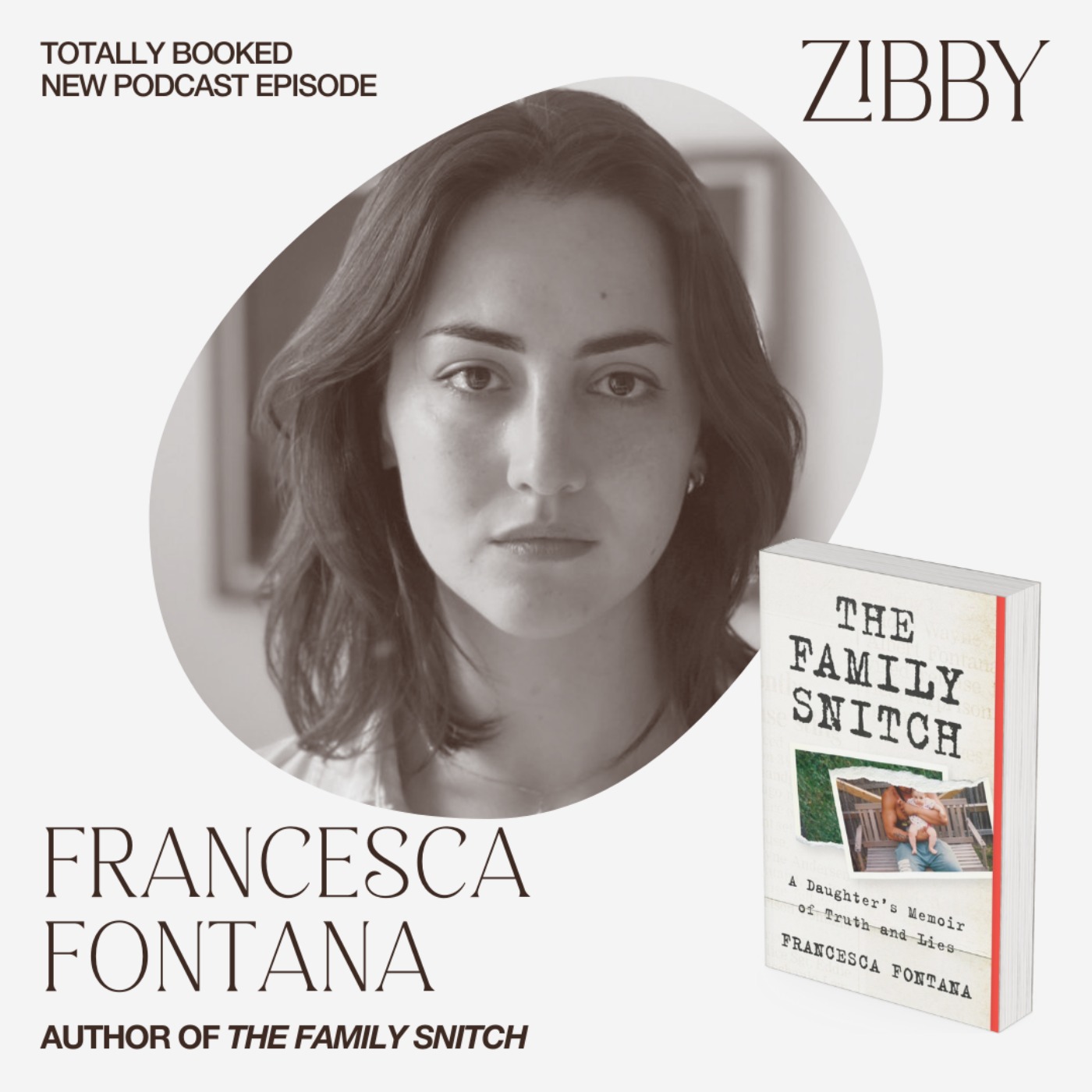
As a bookstore owner, publisher, author and obviously podcaster, I get a comprehensive look at everything that's coming out and spend my time curating the best books so you don't have to stay in the know, get insider insights and connect with guests like I do every single day. For more information, go to zibbemedia.com and follow me on Instagram at Zibby Owens I interviewed Francesca Fontana at the Totally Booked Live event at the Whitby and it was right before a big article came out in the Wall Street Journal excerpted from her book. She has been an award winning reporter at the Wall Street Journal for years where she also hosts this week in Markets the podcast. The book is called the Family A Daughter's Memoir of Truth and Lies, which is about her search for meaning in her with her father, who she finds out early on in the book had actually been in prison when she didn't know why he had been away. And she uncovers a lot about not only her father and his family, but about her mother's role in everything and in so doing she learns more about who she is as a person. It's really interesting and is also an investigative report as she tears through research and documents and tries to find the answer to who she is in terms of bio. Francesca is a graduate of the University of Oregon's Clark Honors College. And in 2020, she received a front page award for the Newswomen's Club of New York. This is her first book. And Francesca lives in Brooklyn with her cat. Welcome to Totally Booked Live.
- [05:24]
Interviewer/Host
I am so excited to be here with Francesca Fontana. The Family A Daughter's memoir of truth and lies. Congratulations on your debut memoir.
- [05:34]
Francesca Fontana
Thank you very much. It's very exciting to be here. Thank you for having me.
- [05:37]
Zibby Owens
Can we have a round of applause?
- [05:39]
Francesca Fontana
Thank you. Thank you very much. Great.
- [05:42]
Interviewer/Host
See, doesn't that feel good?
- [05:43]
Francesca Fontana
It really does.
- [05:44]
Interviewer/Host
Feels good to be applauded.
- [05:45]
Francesca Fontana
Who doesn't love coming into a room and clapping people?
- [05:48]
Interviewer/Host
Yeah, there we go. Maybe I'll have them do it again. Yeah, I know. Please tell everybody about your book.
- [05:55]
Francesca Fontana
Absolutely. So this book is really the story of my search for the truth about my. Specifically my father, Al, who, when I was nine years old, he went to prison and I never knew why. And my mother, who was the primary parent, she didn't know either. And so, you know, we ended up moving from our hometown of Chicago, where we all lived, to Oregon, which is about as far away from Chicago as you can get without crossing an ocean. And, you know, I grew up there kind of estranged from my father, and it was just. Just always this big mystery, this big hole in my family history of understanding where I come from. And I thought that it would remain a mystery until I started my career as a journalist, as a young journalist at the University of Oregon. And it was in my reporting to class that I realized that there's such thing as public records, and that with this, all these tools I was accumulating as a reporter, I could maybe find the answers for myself. And so that's what I did. I went back to Chicago in college and then kept returning for reporting trips. And I met my father as an adult, and I insisted to myself that I was there to do a job. You know, I was there as a reporter. I kept that hat firmly on. And that, you know, being his daughter was sort of secondary as I was really trying to crack this case of, you know, how he had ended up in prison. And really behind that, who was he? You know, and it turns out he was this kind of guy who knew a guy in these seedy circles of Chicago. And it took me much longer to admit to myself that really what was behind that search was, you know, the fact that I loved my father and I wanted to know who he really was. And I think that that's the foundation of, you know, love in any relationship. But certainly between a Parent and a child is, you know, you want to be known and you want to know them. And I think that that began to make it more difficult for me as I tried to stay the unemotional, objective reporter. You know, I had to start to reckon with the fact that, like it or not, I was also a daughter in this search. And as I was. As I was unraveling, you know, who he really was, and whether this person that I was meeting, this man could be, you know, someone I could respect or that's what I hoped. I think underneath it all was that I would find, you know, a father that I was capable of loving. And I was hoping to, you know, start this new relationship. But early in the search, I would. I would not admit that to myself. I'd be like, love. No, this is business. This is. This is just. I just need the facts.
- [08:47]
Interviewer/Host
So in your search for your father, though, you uncovered a lot about yourself and about your mother, your extended family, the judicial system in general. I was particularly drawn to how vulnerable you were about your own mental health issues, ocd, some of the habits that you had, some of the ways that you coped, that fortunately, one professor really helped you through and understood when you couldn't come to class and all that. Can you just share a little bit about that to this room of strangers?
- [09:20]
Francesca Fontana
Now that I'm more than happy to, honestly. It's easier than sometimes your close friends. So I didn't know it when I began the events of this book, but I had always been riddled with fear and anxiety as a child and later would be diagnosed with ocd. And it was a tricky thing because as a reporter, being obsessive and slightly compulsive is kind of a feature, not a bug. You know, it's actually, you know, fact checking something over and over again. It's. It's a good thing. And so it was hard for me to see until it was right in front of me how detrimental it was becoming, because it really. The OCD or the fixation, the obsession, I became increasingly preoccupied with the notion of truth, not only in trying to parse out whether my father was lying to me and trying to sell me a bill of goods about his own life, but in whether I could trust any of my own memories of him, you know, and whether I was injecting my own experiences with bias, and I became increasingly obsessive. I guess that's really the best word for it. They nailed it, but it was really the best word I became obsessive about. I couldn't trust What I perceived. And so, you know, as I saw the writing on the wall of who my father really was, and I was getting, you know, all of the answers I sought, it took a really long time for me to believe it and trust it. And I think that it was also wrapped up in something that's probably understandable or defensible, which is that I really didn't want to see that my dad might not be a great guy and he might not be someone, if I were not born to him, would choose to know. And I was also, I think, became preoccupied with whether his worst traits or his biggest mistakes were sort of faded to become my own. You know, I think that we all, I'm sure we've all said like, oh my God, I'm becoming my mom, you know, and never, never. Yeah, but so that story, that's like a universal truth. And so mine was like, oh my gosh, I'm terrified of somehow becoming my father because I know I saw how he hurt people and used people, and I was terrified of doing that to others. And so I think that that was something that I'll plug exposure response prevention therapy here. It's fantastic if you're having obsessive thoughts and can't get out of bed because of them. But in addition to getting the help I needed, I think that it was also, you know, my own growing up, you know, doing years of this, like, cat and mouse game with my father that I realized, not to put it into hyperbolic or dramatic terms, that it was really him or me. I could keep throwing good money after bad, trying to, you know, get him to tell the truth and sacrifice my own well being to a large extent, or I could live a life that was my own and. And unfortunately, he just could not have a place in it. And so that was the place that I ended up really having to stare those two roads down and weigh the sort of collateral damage of each of them.
- [12:42]
Interviewer/Host
So in the book, you alternate first person with some accounts where you're basically doing research and presenting the case as if you were a court reporter type of person and introducing us to the cast of characters. And then your father would end up being one of the guys who was doing this. And then we go back to you or your breakup or your relationship and then back to another court case. Tell me a little bit about how you decided to structure the book this way.
- [13:10]
Sarah (Founder of Olive and June)
And.
- [13:11]
Interviewer/Host
Okay, and then I have another question.
- [13:13]
Francesca Fontana
Great, great. I'll try to make this one brief. Well, I struggled because, you know, in journalism, typically, if you weren't there. You don't, you know, you don't have good primary sourcing. It's difficult to recreate a scene. And memoir is made of reconstructions of the past. And so I had to sort of create these guardrails for myself as I wrote, you know, when I was taking the reader into, you know, my father's memories or, you know, what the stories he was calling a memory or, you know, events that all of my reporting, you know, showed me of my mother's life, I had to take not necessarily novelistic liberties, but I really wanted to portray the experience without sacrificing, you know, journalistic rigor. And so really, the scaffolding or the all of the bones behind those, you know, delving into the past is all based on this, this wealth of reporting I did. But it's not interesting to just read a list of facts. It's really not. And in doing that, I think I really was able to put myself in the room, so to speak, with my parents, you know, in their younger years. And I think that that was sort of the guiding light in terms of how I structured the book. I wanted to make it clear to the reader because my contract with the reader with you is very important to me. I wanted you to know that I, you know, I am telling you a story and I have done my darndest to make sure that it is a true story, but I wanted to make that explicit and I and that sort of informed the craft behind.
- [14:54]
Zibby Owens
Today's episode is sponsored by Quince. Quince is all about elevated essentials that feel effortless. Designed for layering and mixing, each piece helps build a timeless wardrobe made to last with versatile silhouettes and thoughtful details. They're the kind of styles you wear again and again. I have not taken off my Quince parka this entire winter season. There's been a huge snowstorm lately. I wore it in and out of the snow every day. I mean, I just wear it every day. It's amazing. Quince has wardrobe staples with quality that is made to last, like 100% organic cotton sweaters, premium denim with stretch for all day comfort luxe cotton cashmere which blends perfectly for changing seasons and basically everything you need for a wardrobe that last. Quince works directly with safe, ethical factories and cuts out the middle mint. So you're not paying for brand markup, just high quality clothing. Quince uses the highest quality materials like 100% European linen and organic cotton. Speaking of which, my podcast producer, Chelsea, who is undoubtedly listening, got a new comforter off of quints which she also loves. We are both quince fans so refresh your wardrobe with quints. Go to Quince.com Zibby for free shipping on your order and 365 day returns. Now available in Canada too. That's Q-U-I-N-C-E.com Zivi to get free shipping and 365 day returns. Quince.com Zivvy Today's episode is sponsored by Wayfair. The new year is here and it is time to get back into an at home routine you love and elevate your space with Wayfair. From bedding and mattresses to storage solutions for every room in your house, Wayfair is your one stop shop. I actually have used Wayfair so much because over the holidays I stayed with my mother in Arizona and told her it was definitely time to redo the guest. She has my kids stay because she hasn't touched it in decades and it needed a refresh and I said you know what Wayfair? So we got beds, lamps, side tables. We've been doing the whole room. It looks amazing. Everything came within a few days in perfect shape. It has been so fun. Wayfair has everything like the most enormous selection of home decor items and exactly what we wanted for the space we had. And it's still a work in progress and and I will share some pictures on Instagram. We're obsessed so you should get organized, refreshed and back on track this new year as well. For way less head to Wayfarer.com right now to shop all things home. That's W a Y F A I R.com Wayfair Every style, every home.
- [17:51]
Boost Mobile Announcer
Big news. Boost Mobile is now sending experts nationwide to deliver and set up customers new phones at home or work.
- [17:56]
Creon Medication Announcer
Wait, we're going on tour?
- [17:57]
Boost Mobile Announcer
Not a tour. We're delivering and setting up customers phones so it's easy.
- [18:02]
Francesca Fontana
Let's get in the tour bus and hit the road.
- [18:03]
Boost Mobile Announcer
No, not a tour bus. It's a regular car we use to deliver and set up customers phones at home or work.
- [18:08]
Creon Medication Announcer
Are you a groupie on this tour?
- [18:09]
Boost Mobile Announcer
We deliver and set up phones. It's not a tour.
- [18:12]
Creon Medication Announcer
Oh you're definitely a groupie.
- [18:14]
Boost Mobile Announcer
Introducing store to door switch and get a new device with expert setup and delivery wherever you're at.
- [18:18]
Creon Medication Announcer
Delivery available for select devices purchased@boostmobile.com.
- [18:24]
Interviewer/Host
And in your search for all the facts about your dad you end up coming out with this great journalistic piece that you write and that's on the COVID of a section, not the main cover.
- [18:35]
Francesca Fontana
You clarify that, you clarified it in.
- [18:38]
Interviewer/Host
The book, but a big feature about your dad and the case and everything. And then you talk in the book about his reaction and the extended family reaction. And now I'm wondering, you wrote this whole book. How is that going over?
- [18:51]
Francesca Fontana
Well, promise not to uphold spoilers against me. So I no longer have a relationship with my father. And his family is large family with a capital F. They're very large and very tight knit. And there's this sort of Godfather esque mantra that you don't go against the family. And essentially, that's what I've done. Whether I like to admit it or not, I am exposing relatively private people, like civilians, to a wider world without their, you know, I mean, with their consent. But I'm the one holding the pen, so I wield a lot of power in that way. And so while I can't speak to what his reaction may be, I can say that, you know, my mother, who I have a very close relationship with, she is my everything. She, you know, has an interesting perspective because she saw firsthand, sort of the toll that writing the book took and writing that piece took and weighing the collateral damage of what it means to choose to write about others. And whether you like it or not, there's gonna be fallout. Not everyone will be pleased with being exposed. And I think that that's something that I've had to. It's always weighing heavily on my mind. And I think that I can say that I did my best at every moment when I was interrogating my father or my mother, the choices they made in their past, I couldn't move on without interrogating myself because that's just part of the deal. If I'm going to put them under the microscope, I'm going to put myself under the microscope. Does that answer your question?
- [20:37]
Interviewer/Host
And so if the motivation you came to realize was really the search for love.
- [20:43]
Francesca Fontana
Right.
- [20:43]
Interviewer/Host
The search for your father's love and the search for understanding. And yet the book has caused, or the article has caused an even bigger rift in a way. Are you still happy with all of your decisions along the way?
- [21:00]
Francesca Fontana
Yes, but I'll explain. Yes, because I.
- [21:04]
Interviewer/Host
And I didn't mean to suggest you shouldn't be.
- [21:06]
Francesca Fontana
Oh, yes, no, of course. It's something that I am actually. Really, I like to talk about. Because the decision to estrange yourself from your parent is never easy. You know, it is. It's a kind of grief. And I think for a long time I was Hesitant to, you know, really make that final cut, because, you know, then if it's sort of like Schrodinger's cat or, you know, Schrodinger's box, I'm not sure what it's called, but there's a cat in a box, and it's either dead or alive, depending on whether you look into the box. And I'm sure there's, like, math involved, but I don't know that. But really, I kept prolonging the inevitable, which was finishing my search and finishing the book, because I would have to open the box and see that, you know, there was no road left for my father and I. And so I think that having done my grieving for that relationship while everyone is still, you know, alive and healthy was a really interesting process. But in finishing the book, I feel that I've. I guess, really, when it comes down to it, you know, the thing that I was asking myself as the devil's advocate was, you know, are you writing this book to get back at him in some way? Like, are you writing this because you hate your father? And I thought about that for a good long time, and the answer is, no, I'm not writing this because I hate him or I want him to suffer or I want to, you know, get any kind of revenge or, you know, any malicious feeling. I wrote it because I loved him. And so, really, this book is sort of the story of my love for my father, you know, however it ends, however, you know, when you open the box, whether it, you know, is alive or dead.
- [22:47]
Interviewer/Host
And one last thing that I found so interesting is your own path to becoming a Wall Street Journal reporter. And you detail that as one of the storylines that along the way, despite setbacks and hurdles and everything, you. And despite the fact that you belittle, in a way, your own achievements at times and are like, well, I got this scholarship. It's only because I was at this random school. Not random school. You said something like this.
- [23:15]
Francesca Fontana
Oh, some random state school that nobody knows, you said, anyway.
- [23:19]
Interviewer/Host
And yet you end up at one of the most prestigious newspapers as a journalist. Can you just explain how that happened and what it's like to have achieved that?
- [23:30]
Francesca Fontana
It is something that, you know, I was so fortunate. I joined the Journal when I was 22, 23, and I was terrified, which is where all of that imposter syndrome came from. I was kind of trying to steel myself for the inevitable day that someone would come by and be like, you're not supposed to be here. You got to pack your stuff. Security's on their way. And I'd be like, of course, of course you found me. And it took a long time for me to really take pride in my work. And that's still, you know, an evolving process. Even with writing the book, I think I can be quite self critical. But the thing that's easier for me to take pride in, and maybe it's, you know, some sort of projection, but, you know, in getting to the journal and in crafting this career for myself, you know, I was the first person in my family to go to college. And all my mom told me when I was a kid was like, you're going to college. You know, I didn't and no one, you know, our parents didn't, but you're going. And it was an inevitability. And she, it makes me feel like I've done right by her to have taken all of the love and sacrifice that she put into, you know, raising me to show, you know, maybe I've made some good on that. And certainly I, you know, to be able to make a living as a writer is a gift and I do not take that for granted for one second.
- [24:54]
Interviewer/Host
Well, your path to doing it from writing for the small local paper during college to having one professor give you a little bit of encouragement, enough that you kept going to just like pursuing your dreams. It's really inspiring. It really is.
- [25:10]
Zibby Owens
Thank you.
- [25:11]
Interviewer/Host
And just to close, what do you want people to mostly take away? Like, what should people take back to their own family relationships, having learned more about yours?
- [25:21]
Francesca Fontana
You know, it's something that. Not to plug my excerpt that's coming out in the journal this weekend, but I write. It's in there. But I'll give you a little sneak peek. You know, something that was hard for me was coming to terms with the fact that, yes, I didn't know my father. He was this black box. And I did all this digging and then I found out who he was. It was harder for me to come to terms with the fact that my mother also kept secrets and I had to interrogate myself, you know, why didn't I consider her secrets to be lies by omission, you know, And I, what I realized is that, you know, while my father was keeping secrets to protect himself and his ego and his sense of, you know, that he could continue being who he is. My mother, every secret she kept about her past was about protecting my future. You know, she didn't want me to grow up knowing what she'd been through because she was afraid that somehow then I would grow up seeing that as a possibility for me. And so coming to terms with the fact that, yes, we all keep secrets, you know, we all tell white lies and that, you know, using the capital L word of liar, you know, can be. It should be wielded with intention. And I think that, you know, I found that really the source of my mother's secrets were loving and that there are two sides to that, to uncovering your family history. And, yeah, no, if I talk too much about my mom, I get a little weepy.
- [26:53]
Interviewer/Host
So, yeah, I guess if we cover things up for their own good, it's okay. It's kind of okay.
- [27:00]
Francesca Fontana
It is something that the boomerang will always come back. You know, it's kind of the lot of the parent is that one day your child will grow up and they'll want to know who you were when you weren't being mom or dad. And it's sort of this process that, I mean, I can only speak for myself. I'm so grateful that my mother, like, sent me off and was like, you know, I'll see you on the other side. And because everything she did was informed by, you know, this very strong, sort of unbreakable love that we share, I came back on the other side, you know, very happy to see her. And, you know, it only strengthened our relationship. So I'm not saying, like, keep secrets from your kids, but I am saying that all of the revelations I've had have only strengthened our love.
- [27:54]
Interviewer/Host
That's amazing. Congratulations. Thank you so much on the book the Family Stitch.
- [27:58]
Grow Therapy Announcer
Thank you.
- [28:00]
Francesca Fontana
Thank you.
- [28:00]
Zibby Owens
Thank you for listening to Totally Booked with Zibby formerly Moms don't have Time to Read Books. If you loved the show, tell a friend, leave a review. Follow me on Instagram ibbyowens and spread the word. Thanks so much. Oh, and buy the books.
- [28:22]
Capital One Bank Announcer
With no fees or minimums on checking accounts. It's no wonder the Capital One bank guy is so passionate about banking with Capital One. If he were here, he wouldn't just tell you about no fees or minimums. He'd also talk about how most Capital One cafes are open seven days a week to assist with your banking needs. Yep, even on weekends, it's pretty much all he talks about. In a good way. What's in your wallet? Terms apply. See capital1.com Bank Capital One NA Member, FDIC.
- [28:53]
Francesca Fontana
Lunch was great, but this traffic is awful. Um, can we stop at a bathroom? Are you alright? And keep having stomach issues after eating, like diarrhea, gas and bloating, abdominal pain. And sometimes oily stools.
- [29:05]
Sarah (Founder of Olive and June)
Sound familiar? Those stomach issues may actually be a pancreas issue called exocrine pancreatic insufficiency, or epi. Creon may help manage epi. Creon is a prescription medicine used to treat people who can't digest food normally because their pancreas doesn't make enough enzymes.
- [29:21]
Creon Medication Announcer
Creon may increase your chance of fibrosing colonopathy, a rare bowel disorder. Tell your doctor if you have a history of intestinal blockage or scarring or thickening of your bowel wall, if you are allergic to pork or if you have gout, kidney problems or worsening of painful, swollen joints. Call your doctor if you have any unusual or severe gastrointestinal symptoms or allergic reactions. Take Creon as direct by your doctor and always with food. Do not chew capsules as this may cause mouth irritation. Other side effects may include blood sugar changes, gas dizziness, sore throat and cough. These are not all the side effects of Creon. Call 800-633-9110 or visit creoninfo.com to learn more. That's C R E O-N-Info.com I'm asking.
- [29:50]
Francesca Fontana
My doctor about EPI and if Creon could help.
- [29:54]
Sarah (Founder of Olive and June)
We interrupt this program to bring you an important Wayfair message. Wayfair's got style tips for every home. This is Styles McKenzie. Helping you make those rooms sing today is Stick Style tip When it comes to making a statement, treat bold patterns like neutrals. Go wild like an untamed animal.
- [30:11]
Boost Mobile Announcer
Print area rug under a rustic farmhouse table.
- [30:13]
Sarah (Founder of Olive and June)
From Wayfair. Com Fierce this has been your Wayfair style tip to keep those interiors superior.
- [30:20]
Grow Therapy Announcer
Wayfair Every Style Every Home.