Loading summary
Transcript81 lines
- [00:01]
A
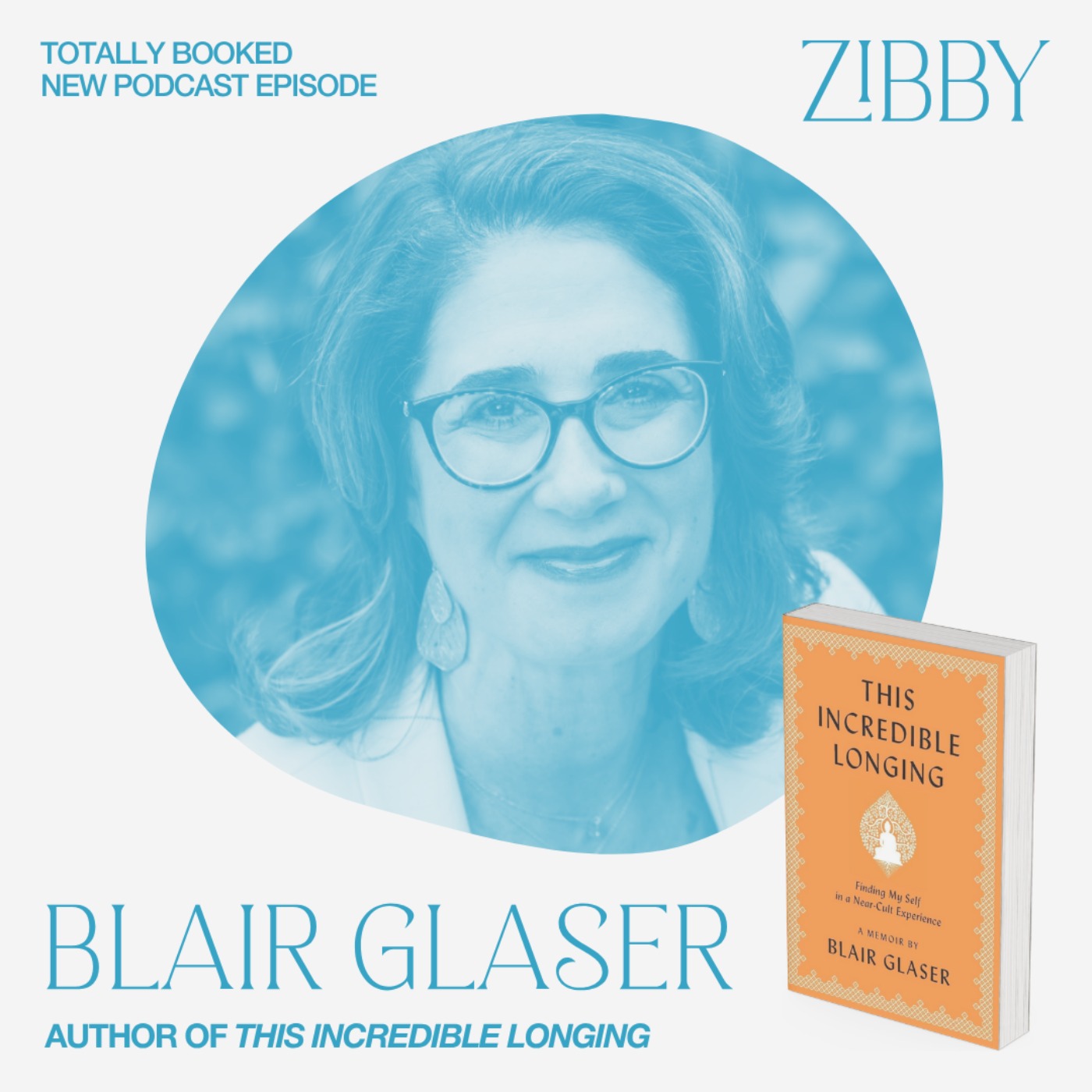
Hi, this is Zibby Owens and you're listening to Totally Booked with Zibby, formerly Moms don't have Time to Read Books. In my daily show, I interview today's latest best selling buzziest or underrated authors and story creators whose work I think is worth your time. As a bookstore owner, publisher, author, and obviously podcaster, I get a comprehensive look at everything that's coming out and spend my time curating the best books so you don't have to stay in the know, get insider insights and connect with guests like I do every single day. For more information, go to zibbymedia.com and follow me on Instagram ibbeowens Blair Glaser is the author of this incredible A Memoir. Blair happens to be the cousin of one of my best friends named Isabel Fisher Krishana, and it felt like I was talking to a friend that I'd known my whole life. Blair Glaser is a writer, leadership consultant, and licensed psychotherapist. She was the Internet's first actor advice columnist when her weekly column Ask Blair appeared on Playbill Online. More recently, her work has been published in the LA Times, Long Reads Courts, the Times of higher ed, and HuffPost, among others, as well as literary magazines such as Dorothy Parker's Ashes, Brevity, the Mantelpiece, and more. She lives with her husband and and dog ter Vanna White in Los Angeles. Welcome, Blair. Thank you so much for coming on Totally Booked to discuss this incredible longing finding myself in a near cult experience, A Memoir. Congrats.
- [01:39]
B
Thank you. I'm so happy to be here with you.
- [01:42]
A
Oh, I'm so happy to be here with you too. Listeners, you should know that Blair's cousin is like one of my oldest best friends in the world. And it makes me feel all warm and fuzzy because you guys look alike. I feel like I've known you for my whole life. Anyway, it's very nice. Hi, Isabel. Hi. Hi, Isabel. Okay, this incredible longing. Tell listeners what your book is about.
- [02:04]
B
My book is about my time leading up to and living in an ashram in my 20s, in the 90s.
- [02:12]
A
Amazing. You start us off on this path with this coincidental moment you have while you're walking across New York City. Hear this song in like some funny named shop. I can't remember the name. The Yo Yo Shop or something. Something.
- [02:25]
B
Anyway, actually I got lost in Tompkins Square park, which, if you're a New Yorker, is a virtual impossibility because it's so small. But I looked up and I had no idea where I was and I headed towards the nearest place I could find, and it was this. It was a hot dog shop called Soul Dog.
- [02:41]
A
That's right, Soul Dog, which is just too funny. And in it, you're hearing the music that has meant so much to you, and you can't believe it. And all of a sudden the guy says that, and you're debating moving. Well, I guess I should let you tell this, but you're debating moving to or staying in the city. And he's like, ugh. And starts weighing in about his own life. Take it from there.
- [03:03]
B
So at the ashram, I had a guru. Her name was is Guru Mai. I mean, you know, just for your listeners, like, if you think getting involved in a spiritual community and having a guru is weird, it was. But here I am in the middle of a hot dog shop, 10 years after I left the ashram, thinking about going to la, and. And this guy is playing music from the ashram, which was not a thing that people did. You could not get this record at Tower Record. So I'm like, do you know Guru Mai? And he said yes. And she told me not to move to la, and I did. And it was the worst experience of my life. And so I'm in this shop, I'm trying to get it off the ground. Ten years after I leave the ashram, I'm thinking about moving to la. My life was in shambles, and the confluence of events really made me think, rethink my ashram story and the impact that it had in my life.
- [04:03]
A
And then we go with you through this whole journey, and then at the end, we have, like, a twist that we didn't see coming in the media. I don't know if you can even talk about twists in your own life, because they're like parts of books. But it's quite a journey.
- [04:16]
B
Let's just say that it is indeed quite a journey. Yeah.
- [04:20]
A
Oh, my goodness. After spending all this time in the ashram, people are always like, oh, I'm just gonna, like, give up and, like, move an ashram or something, but, like, not give up, but you know what I mean? Like, I'm gonna change course and, you know, do that. And you really did it, so.
- [04:34]
B
Really did what?
- [04:36]
A
You kind of know what people might think or what you thought before you went versus the actuality. Where is the difference?
- [04:44]
B
Well, I think the best thing for me to do is to put it in some context. It's the early 90s. The mental health awareness that we have today was not the same. We didn't have the pharmaceutical Options that we have today. People weren't really talking about depression. And I was quite depressed. And in part of that post college depression. And I know that a lot of your listeners might have kids that are just getting into college age. And so there was a real identity crisis. I didn't have a lot of language for it. I was ashamed that I was feeling bad. And I remembered this mantra that I had learned on a date in one of the depths of that depression. And things started to turn around. Meditation started to fulfill me, and I wanted to get more involved. But I had a lot of feelings about having a guru. My family had a lot of feelings about that, and I knew that wouldn't go over well. But little by little, I did get very involved, as these things go. And, you know, the crux of my story, the subtitle to this incredible longing, is finding myself in a near cult experience. And I do think that that's a difference from the I got sucked into a cult or spiritual practice story, and I had to claw my way out of the abuse. That's not the story that happened in that time. What I gave myself was time to, yes, leave my life and go live in an ashram so that I could build skills to live in the world as an adult. And I did.
- [06:18]
A
So it's a happy ending, really.
- [06:20]
B
It really is.
- [06:21]
A
I mean, now you wrote the whole book and, you know, but you talk in the book also about your career shifts because you have all these skills, right? And like, anybody in their early 20s or after college or whatever, and we're all trying to figure out, how do I take these random things about myself and put them to use and make them a job? And I feel like you. Your winding path is sort of emblematic of that. And yet you end up finding all these things you're good at.
- [06:48]
B
Yeah, that was another thing. I really, you know, I was an actress before I went to the ashram.
- [06:53]
A
Oh, my gosh. Your story about the audition, I. You, like, changed your whole job and, like, missed a trade show so you could go to an audition and then you. They didn't have a record of you, and you just, like, cried the whole flight. I was crying with you. I was, like, on a flight, reading about you crying on another flight, like, decades ago. And I was like, oh, my gosh.
- [07:12]
B
Yeah, when you're in your 20s. I just didn't have the perspective that there would be another opportunity. It felt there was so much riding on it to get this big opportunity and have it be dashed. And I really thought when I arrived at the ashram that I was broken. But what I kept getting from the people in the community was, no, you're good at writing. You should do this piece of writing for this swami. No, you're good with people. Let's get this actress who's a mess that nobody knows what to do with and bring them to you. Was how I learned that I was really, really good at being able to manage people with distressing emotions and did become a therapist a few years after I left the ashram. But first I became a writer at Playbill Online. It was like online for the first time. So that is a big piece of my time at the ashram was discovering the talents that I had other than acting.
- [08:10]
A
But you're using acting still in your therapy, right? Isn't that.
- [08:15]
B
Yes. Not. It's funny. These days, I work mostly with executives on growing their companies and creating cultures that work.
- [08:24]
A
So no show tunes?
- [08:27]
B
No show tunes. No show tunes. But I do a lot of role play because I think that being able to lead is a piece of. It has to do with performance. It has to do with how you have conversations that deliver impact rather than conversations that deliver more inflammation. And so role playing comes in really
- [08:46]
A
handy in that impact versus inflammation. It's a good one.
- [08:52]
B
Underline, underline, under, underline, underline. Any executives out there, you know, it's very, very helpful to know the difference.
- [09:01]
A
Talk a little bit more about how your family felt about you at the ashram and how your relationship progressed while you were there.
- [09:09]
B
Yeah, I grew up Jewish, and even though my family was not incredibly religious, having an idol is a big no, no. And they were very scared. And so they kept trying to pull me out in a variety of ways. I knew that I needed to stay there until I was done. It's another part of the story. I actually left when I felt like I got what I needed, but they really fought to get me out, and they invited me into therapy, which I resisted for some time and finally decided to go. And there's a healing that happens in that part of the book that I think was a part of me starting to be done with the ashram.
- [09:52]
A
So. Interesting.
- [09:54]
B
Yeah.
- [09:54]
A
So it's definitely an extreme on the extreme end of Ways to Find yourself, you know.
- [10:01]
B
Oh, yes. Yes, it is. Yes, it was.
- [10:03]
A
As you went through it and as you look back on it now, what did all the discipline and all the moments and the gurus and the, like, all of the stuff, the day to day and the mental exercises and the meditation, all of it. What do you take away from all that? Because I know you, and I know you just wrote this great article, or there was a whole article about you and Fortune or Yahoo or whatever about, you know, some of your takeaways, but tell us some of the takeaways for those of us who can't necessarily escape to an ashram but want to reset.
- [10:36]
B
Sure, sure. I mean, there is a lot of science around meditation. And what I've really learned is that meditation is not a tool to escape your life. It's a tool to bear it. I do credit my time at the ashram, spending so many days in chanting and meditation and focus with the fact that I'm not on any pharmaceuticals. I think that if I hadn't had that discipline and I didn't have a practice to rely on to help me move through difficult phases in my life and difficult emotions, I would need help. And I don't have any judgment. I was a therapist for many years, and I think pharmaceuticals are amazing. But because of my background in the ashram, I felt like I really trust myself to deal with and handle stressful situations. And I'm an anxious person, but I know how to tolerate that anxiety.
- [11:39]
A
What is some of the. Like when you use meditation or reframing of things or however you know you want to phrase it, a lot of kids growing up right now are just balls of anxiety. Right. You referenced people about to go to college, but there are kids of all ages. Anxiety is spiking. We read about this in the newspapers all the time. Is there anything transferable to them? To them?
- [12:05]
B
You know, what's tricky about that question is that the times are so different. And I'm not exactly recommending that people leave their lives and go to an ashram, but I do think the gap years have become more popular. And if somebody is doing a gap year, then mental health can and maybe should be a part of it, being able to develop practices. And those practices are going to be pretty individual. Like, some people may just find relaxation playing an instrument. Some people may find focus and discipline through sports. For me, it was meditation and chanting. I've always been curious about the nature of things. I'm always in an existential quandary, which makes me very Jewish, actually.
- [12:56]
A
So does the anxiety. I mean, all of it, really. Exactly. Right, right, exactly.
- [13:01]
B
So I just want people to find their own ways of calming their own nervous system that doesn't have to do with looking at their phone. You know, it's not particularly original, but it is important. You know, Michael Pollan just came out with his new book on conscious.
- [13:18]
A
Yes.
- [13:18]
B
I have to say that I think what he says is so important that we are now being robbed of this time to be with our thoughts and to reflect on our thoughts. I remember bus rides to the Hamptons, you know, on that jitney with my Walkman, looking out the window and thinking about things and gathering my thoughts about conversations I wanted to have with friends, gathering my thoughts about what the next part of my life meant. And we just don't have that discipline in the same way anymore. And I think that that adds to the anxiety because we don't have ourselves as a trustful resource. We're not in some kind of inner dialogue where we realize that we can show up for ourselves in the same way.
- [14:06]
A
You just have this way of talking that's so comforting. Like, I find myself just listening to you being like, you're right. You're so right. Thank you.
- [14:15]
B
Well, then that's better proof than anything I could say.
- [14:20]
A
Okay. The process of writing this book. Tell me about that.
- [14:23]
B
Oh, my God. Okay. So up until the point of writing this book, I had really only been writing service pieces, and I wrote memoir, but in the service of showing people something I discovered. So this was a real learning curve. It was about nine drafts. I started in 2018. I didn't really get a solid draft until 2024, so do the math.
- [14:49]
A
And six years are we the sixth I think of.
- [14:53]
B
Thank you. I'm so bad at math, so I appreciate you pulling that out. And all I have to say is that once I really found the permission to just tell a story without explaining it and letting you and the readers decide what they made of it, it was the most freeing thing. And my voice just really started to gel, and that was a great process for me to go through. It was extremely freeing as an artist. And one of the joys of writing this book, ironically, I sat down to write a little business book. I had had a couple of books that I had put in a drawer, a couple of book proposals that I was shopping around, and a lot of consultants were like, you know, Blair, I did the book thing, and it cost me a lot of time and money, and it didn't bring me that much business, so I was letting go of. And then I had this guy steal some of my IP and put it in his book. And I was so mad. I wrote about that for Huffington Post, and I was so mad that I just. My friends were like, blair, you need to write. You're a writer. And I sat down, and this Is what came out a revenge book? In a way, yes. But not a book that I thought I was going to be writing. You know, it really had to do with the fact that I was in this course. And then the course material, the woman said, if you want to write a memoir about living in an ashram, then you're going to use first person. That was it. It was like I was taking a course, and all of a sudden that was the book. That was the story I knew I needed to tell. And I just want to say too, that to your point, I think now is the time to tell it, because we're in a phase where we're just not generally in the process of reflecting because we don't give ourselves the time that it might be a good reminder. The other thing I'll say is that it's a little bit of a cautionary because, you know, you have to keep your eyes open when you get involved in any kind of spiritual practice because things can get so culty.
- [16:49]
A
Yeah. You never know. Slippery slope, right? Were you. When you were writing, were there role model memoirs or did, like. Were you like, oh, if I could just write, like, Eat, Pray, Love or I don't know what. Like, were there books that were in. In your mind?
- [17:02]
B
Eat, Pray Love took place at the branch of Mahashram in India. So it is a very connected book, but it was not Eat, Pray Love. It was. I will tell you, this is the strangest thing. There are a bunch of memoirs I love that I reread to see how things were constructed and seen. Like, wild. Like the Glass Castle. Like, oh, God, there were so many. I'm thinking of the Liars Club. But it was Ann Patchett's the Dutch House, which is a novel written in first person, that really helped me see my way through the structure. Because she played plays around with time and because it's such a deeply reflective book, but the suspense is still alive. And that was really what I needed to nail. Because it's a book about living in an ashram. It's very reflective. So how could I keep the reader engaged and share my interiority, but also keep the pace moving and the suspense alive? And so I've learned it from Ann Patchett's the Dutch House.
- [18:07]
A
Who knew?
- [18:08]
B
Who knew?
- [18:09]
A
She is a master.
- [18:10]
B
Master.
- [18:11]
A
I actually have her new book I was gonna try to read. She has a new book on my aunt. Anyway, I don't know.
- [18:16]
B
I know. There's so many on my TBR list.
- [18:18]
A
Right.
- [18:19]
B
Yeah.
- [18:19]
A
Yeah. It's amazing. Did this sort of Open up the idea of writing more books, or are you like, I got my story out. That's done?
- [18:27]
B
No, you're done.
- [18:28]
A
One and done.
- [18:29]
B
Yeah. No, no, no, no. Not at all.
- [18:31]
A
Recently.
- [18:32]
B
Yeah. I was in, like, an author questionnaire in Sari Botton's memoir Land.
- [18:36]
A
Oh, yeah? Yeah.
- [18:37]
B
And I said, my optimistic is this is one of three.
- [18:42]
A
Okay.
- [18:43]
B
And maybe one of those books might be a service book, like a how to nonfiction. But I really want to write more stories.
- [18:52]
A
That's great.
- [18:53]
B
Yeah. And I do have an essay coming out in an anthology in 2027, so.
- [18:57]
A
Which anthology?
- [18:59]
B
It's called Every Mother's Daughter. I'm a woman who did not have children, but I've had three dogs that have taught me a lot about who I am in parenting. And so the essay is called My Three Dog Ters. And I'm looking forward to. There are a lot of great writers in that anthology, so I'll be excited for that.
- [19:18]
A
Amazing. And what advice would you have for someone trying to write their story?
- [19:23]
B
I really believe in understanding why you want to tell it, who you want to tell it to, and what you want the book to do for you. You know, there are stories that legitimately can be told and distributed to, like, a family or. I helped someone write their memoir specifically for a group of people who are looking at teen pregnancy. If you know why you want to write it and what you want publishing it to do for you, I think it will help you through how hard it is to get your book published.
- [19:59]
A
Yeah. And what was that? Wait, Tell me of the publishing piece for you.
- [20:03]
B
Well, I really. I did not want to self publish. I did not. That was my one thing. I really wanted to have the backing of a publisher. And so I went through the normal channels of querying agents. I submitted to a bunch of independent publishers that accept the book without an agent, and I got two acceptances, and I decided to go with Heliotrope because it's very established small press with authors like Sari Botten and Susan Shapiro, and I liked that.
- [20:35]
A
Yeah.
- [20:35]
B
That's awesome. Yeah.
- [20:37]
A
Well, Blair, I'm so excited for you, and it was a great story and highly devourable, and I'd love just learning more about you and your family and just all of that. So thank you so much for sharing it with us.
- [20:52]
B
Thank you so much for having me and inviting me to share.
- [20:55]
A
My pleasure. All right, thanks. Bye.
- [20:59]
B
You bet.
- [21:00]
A
Thank you for listening to Totally Booked with Zibby, formerly Moms don't have Time to Read Books. If you loved the show. Tell a friend, leave a review, follow me on Instagram Iby Owens and spread the word. Thanks so much. Oh, and buy the books.